Model based projections for COVID 19 outbreak size and student days lost to closure in Ontario childcare centres and primary schools - Nature
←
→
Page content transcription
If your browser does not render page correctly, please read the page content below
www.nature.com/scientificreports
OPEN Model‑based projections
for COVID‑19 outbreak size
and student‑days lost to closure
in Ontario childcare centres
and primary schools
Brendon Phillips1,2, Dillon T. Browne2, Madhur Anand3 & Chris T. Bauch1*
There is a pressing need for evidence-based scrutiny of plans to re-open childcare centres during the
COVID-19 pandemic. Here we developed an agent-based model of SARS-CoV-2 transmission within a
childcare centre and households. Scenarios varied the student-to-educator ratio (15:2, 8:2, 7:3), family
clustering (siblings together versus random assignment) and time spent in class. We also evaluated
a primary school setting (with student-educator ratios 30:1, 15:1 and 8:1), including cohorts that
alternate weekly. In the childcare centre setting, grouping siblings significantly reduced outbreak
size and student-days lost. We identify an intensification cascade specific to classroom outbreaks of
respiratory viruses with presymptomatic infection. In both childcare and primary school settings, each
doubling of class size from 8 to 15 to 30 more than doubled the outbreak size and student-days lost
(increases by factors of 2–5, depending on the scenario. Proposals for childcare and primary school
reopening could be enhanced for safety by switching to smaller class sizes and grouping siblings.
As nations around the world grapple with the psychosocial, civic and economic ramifications of social distanc-
ing guidelines1,2, the critical need for widely-available Early Childhood Education (or colloquially, “childcare”)
services have once again reached the top of policy a gendas3,4. Whether arguments are centred on human capital
(i.e., “children benefit from high-quality, licensed educational environments and have the right to access such
care”) or the economy (i.e., “parents need childcare in order to work, and the economy needs workers to thrive”),
the conclusion is largely the same: childcare centres are re-opening (at least in some capacity) and this is taking
place before a vaccine or herd immunity can mitigate the potential spread of SARS-CoV-2 (the virus that causes
COVID-19). Outbreaks of COVID-19 in emergency childcare centres and schools have already been observed5,
causing great concern as governments struggle to balance “flattening the curve” and preventing second waves
with other pandemic-related sequelae such as the mental well-being of children and families, access to education
and economic disruption.
Governments and childcare providers are tirelessly planning the operations of centres, with great efforts to
follow public health guidelines for reducing SARS-CoV-2 contagion6. However, these guidelines, which will
result in significantly altered operational configurations of childcare centres and substantial cost increases, have
yet to be rigorously examined. Moreover, discussions of childcare are presently eclipsed by general discussion
of school reopening7 and the harms versus benefits of school closure during a pandemic8,9. That being said, for
many parents, the viability of the school-day emerges from before- and after-school programming that ensures
adequate coverage throughout parents’ work schedules. Yet, reopening plans often fail to mention the critical
interplay between school and childcare, even though many childcare centres operate within local s chools10.
Consequently, a model that comprehensively examines the multifaceted considerations surrounding childcare
operations may help inform policy and planning. As such, the purpose of the present investigation is to develop
an agent-based model that explores and elucidates the multiple interacting factors that could impact potential
SARS-CoV-2 spread in school-based childcare centres.
1
Department of Applied Mathematics, University of Waterloo, Waterloo, ON, Canada. 2Department of Psychology,
University of Waterloo, Waterloo, ON, Canada. 3School of Environmental Sciences, University of Guelph, Guelph,
ON, Canada. *email: cbauch@uwaterloo.ca
Scientific Reports | (2021) 11:6402 | https://doi.org/10.1038/s41598-021-85302-6 1
Vol.:(0123456789)www.nature.com/scientificreports/
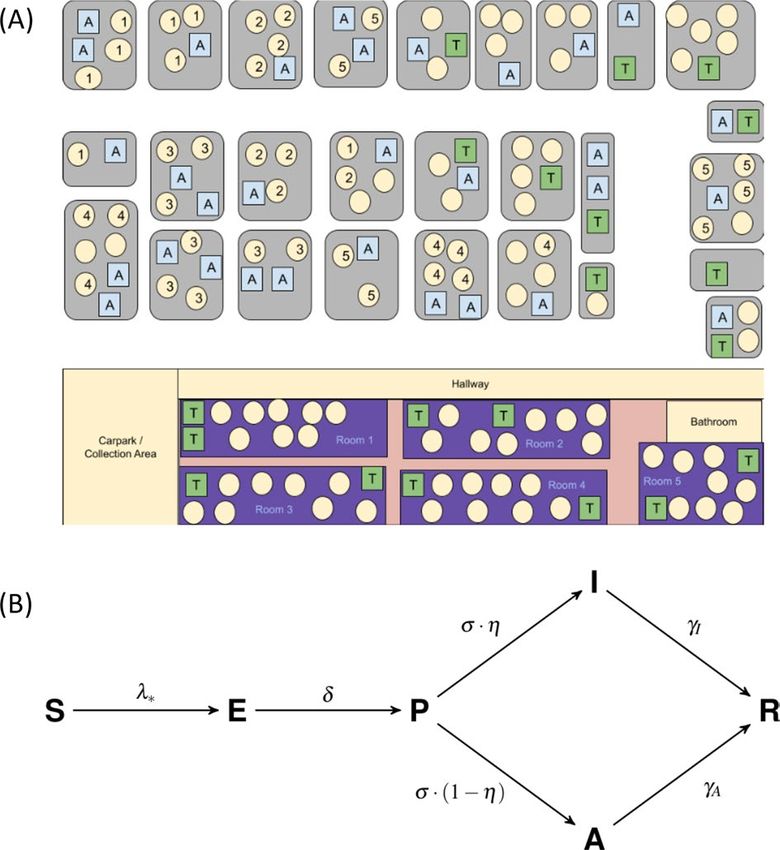
Figure 1. (A) Schematic representation of model population. ‘A’ represents adult, ‘T’ represents educator, and
circles represent children. Grey rectangles represent houses and the school is represented at the bottom of the
figure. Numbers exemplify possible assignments of children in households to classrooms. (B) Diagram showing
the SEPAIR infection progression for each agent in the simulation (see Methods for definitions of parameters).
In Ontario, Canada, childcare centres were permitted to reopen on June 12, 2020, provided they limit group-
ings (e.g., classrooms) to a maximum of 10 individuals (educators and children, inclusive)11. Additionally, all
centres had to come up with a plan for daily screening of incoming persons, thorough cleaning of rooms before
and during operations, removal of toys that pose risk of spreading germs, allowing only essential visitors, physical
distancing at pick-up and drop-off, and a contingency plan for response should anyone be exposed to the virus
(e.g., closing a classroom or centre for a period of time). Further school-specific recommendations have been
recently outlined by The Toronto Hospital for Sick Children10, which include specific guidelines for screening,
hand hygiene, physical distancing, cleaning, ventilation, and masking. While this influential report has become
the guiding framework for school reopening in Ontario, there remains no discussion of childcare operations
in relation to SARS-CoV-2 spread. Guidelines for primary schools call for either full re-opening with up to 30
students per classroom attending every day, or with cohorts of 15 students attending in alternate weeks. Most
recently and at the time of resubmission of this paper, Ontario has reported COVID-19 test positivity rates in
schoolchildren that are twice that of other ages (approximately 16% versus 8%) and schools have been closed for
a second time during the pandemic in order to minimize COVID-19 t ransmission12.
Simulation models of infectious disease spread have been widely applied during the COVID-19 pandemic,
as in previous pandemics13,14. Modelling is used to determine how quickly the pathogen can spread15, how easily
it may be c ontained16, the relative effectiveness of different containment s trategies17,18, the social and economic
impacts of lockdown1,2, and the role of schools in transmission19,20. Sensitivity analysis is crucial to assess whether
model predictions are robust to uncertainties in d ata21, which is particularly important during a pandemic caused
by a novel emerging pathogen like SARS-CoV-2. Agent-based models are particularly well-suited to situations
where a highly granular description of the population is desirable and where random effects (stochasticity) are
important. Such modelling has been used in both pandemic and non-pandemic contexts22–24, and is the basis of
our methodology in the present work focusing on SARS-CoV-2 transmission in schools and households. Our
objective is to use agent-based modelling to project the impact of student-educator (or in the case of childcare
centres, child–educator) ratios and sibling grouping strategies on outbreaks of COVID-19 and student-days lost
to classroom closure in a hypothetical childcare centre and primary school.
Model overview
A detailed description of the model structure, assumptions and parameterisation appears in the “Materials and
methods” section. We developed an agent-based model of SARS-CoV-2 transmission in a population structured
by household and classroom groupings, as might represent a childcare setting or a small primary school (Fig.
1a). Individuals were categorized as either child or adult, and contacts between these groups were parameterised
based on contact matrices estimated for the Canadian setting. Household sizes were determined from Canadian
demographic data, with classroom sizes and student-educator ratios determined according to the scenario being
studied. For the childcare setting we analyzed student-educator ratios of 8:2 and 7:3, giving a maximum class size
of 10 (representative of smaller enrollment at schools). We also analysed a student-educator ratio 15:2 (giving a
Scientific Reports | (2021) 11:6402 | https://doi.org/10.1038/s41598-021-85302-6 2
Vol:.(1234567890)www.nature.com/scientificreports/
total class size of 17) as well as classroom assignment. Individuals may spread the infection to their household
members each day, so that various patterns of effective contacts and interaction in the classroom may result in
qualitatively different spreading patterns. As such, children in this model can be assigned to classrooms either
randomly (RA) or by grouping siblings (or otherwise cohabiting students) together (ST) in an attempt to reduce
SARS-CoV-2 transmission. For the primary school setting, we considered student-educator ratios of 8:1, 15:1
and 30:1 with all students randomly assigned. For the 8:1 and 15:1 ratios, we also considered scenarios where
cohorts of 8 or 15 students attend the same classroom in alternate weeks, labelled 8(A):1 and 15(A):1 respectively.
In the primary school setting, we considered the higher student-educator ratio 30:1 as an example of larger class
size. Some plans considered in reopening Ontario educational institutions divides this larger class size into two
alternating cohorts of 15 students each with a single shared educator; we also label this scenario 15(A):1. Rota-
tion occurs each week, so that one cohort engages with online material while the other receives face-to-face
instruction for 5 days, after which the cohorts exchange roles. The student-educator ratios 8:1 and 8(A):1 were
also included for comparison to smaller class sizes. For primary schools we considered only the RA assignment.
SARS-CoV-2 can be transmitted in households, classrooms, or in common areas of the school, all of which
were treated as instances of homogeneous mixing on account of evidence for aerosolized routes of t ransmission25.
Individuals were also subject to a constant background risk of infection ( ∗) from other sources, such as shopping
centres. Figure 1b shows the progression of the illness experienced by each individual in the model. In each day,
susceptible (S) individuals exposed to the virus via community spread or interaction with infectious individuals
(those with epidemiological statuses P, A and I) become exposed (E), while previously exposed agents become
presymptomatic (P) with probability δ. Presymptomatic agents develop an infection in each day with probability
δ, where they can either become symptomatically infected (I) with probability η or asymptomatically infected (A)
with probability 1 − η. If a symptomatic individual appears in a classroom, that classroom is closed for 14 days
(in the case of alternating cohorts for primary schools, neither cohort attends class during this period); other
classrooms in the same school may remain open during this time. Asymptomatic students and educators return
at the end of this 14-day period while symptomatic students and educators remain at home, with symptomatic
educators being replaced by substitutes.
Children are less affected by the SARS-CoV-2 virus than adults, and account for a smaller proportion of
COVID-19 cases26. However, the role of children in SARS-CoV-2 transmission is still debated, and existing
epidemiological evidence is limited by lack of empirical studies in school settings, which have been closed for
much of 2020. Other studies show that children shed a similar amount of virus to adults27. To account for this
ambiguity, we used contact matrices drawn from populations under ‘business as usual’ circumstances as a proxy
of what contact rates would look like under a full reopening of schools and w orkplaces28. To account for the use of
safety measures within the school (and the compliance of children and teachers with best practices), we consider
low and high transmission rate scenarios (as seen in Supplementary Tables S1 and S2). The low transmission rate
scenario represents reduced transmission rates in children (vs. adults) and/or highly effective infection control
through consistent use of high-effectiveness masks, physical distancing and disinfection protocols (see “Meth-
ods” section for details). Similarly, the high transmission rate scenario represents inconsistent use (or non-use)
of masks, ignoring distancing guidelines, improper hygiene and all other factors facilitating disease spread. To
see the effect of shorter schooling durations, we also consider a ‘reduced time’ scenario in which students spend
less time in class. In total, the permutations on student-educator ratios, transmission rate assumptions, siblings
versus non-sibling groupings, alternating cohorts and schooling duration yielded a number of scenarios detailed
in Supplementary Tables S1 and S2.
Results
We first discuss the results obtained for childcare centre models, marked by class sizes varying between 10 and
17 (student-teacher rations 7:3, 8:2 and 15:2), different classroom assignment schemes and school day durations.
Primary schools, on the other hand, feature larger class sizes (student-teacher ratios 8:1, 15:1, 30:1), assignment
at random and possible division of students into weekly alternating cohorts. The results of simulations with the
primary school model are detailed in the “Primary School settings” section and the Supplementary Information.
The code used is available here.
Initial stages of the outbreak. The time evolution of the outbreaks are illustrated in Supplementary
Fig. S1, which shows the proportion of actively infected school attendees (both children and educators) per
day in twelve childcare centre scenarios. Many of the scenarios tend to produce a well-defined outbreak curve
close to the start of the simulation, even with classroom closure protocols in place. However, the outbreaks are
more strongly household-driven for the 7:3 and 8:2 ratios than the 15:2 ratio; this is apparent in the weekly
waves superimposed on the overall epidemic curve more strongly in the 15:2 scenarios on account of the impact
of weekends. The 15:2 ratio also tends to generate earlier, more intense outbreaks, while 7:3 and 8:2 student-
educator ratios produce fewer infections that are more sporadically distributed throughout the simulated time
horizon. In the case of high transmission, the maximum mean level of exposure (E) is 5.03% in the 15:2 RA
scenario (on average) 12 days into the the simulation, with peak 3.18% presymptomatic (P) and 1.63% asympto-
matic (A) proportions of attendees at days 12 and 19 respectively. Meanwhile, peak mean exposure in scenario
7:3 ST occurs on day 2, with 2% attendees exposed to the disease and presymptomatic cases never exceeding that
of the start of any simulation.
Supplementary Table S3 shows the 30-day peak value of each proportion of active infections in the child-
care centre and the times at which these peaks occur (given in days). Here we can see that active infections
peak far earlier with the ST assignment than with the RA assignment for both high ( αC = 0.75) and low
(αC = 0.25) transmission rates in most cases, with either equal or smaller peaks for most maximum proportions
Scientific Reports | (2021) 11:6402 | https://doi.org/10.1038/s41598-021-85302-6 3
Vol.:(0123456789)www.nature.com/scientificreports/
(a) 6.00
transmission
200
Effective reproduction
4.00
Low
100
Population size
number (Re) 2.00 0
0.00
6.00
transmission
4.00 200
High
100
2.00 0
0.00
7:3 ST 7:3 RA 8:2 ST 8:2 RA 15:2 ST 15:2 RA
Scenario
(b) Day: 1 2 3 4 5 6 7 8 9 10 11 12 13 14 15 16 17 18 No secondary spread:
Low transmission (αC=0.25) High transmission (αC=0.75)
0.8
Proportion of trials
0.6
0.4
0.2
0.0
7:3 ST 7:3 RA 8:2 ST 8:2 RA 15:2 ST 15:2 RA 7:3 ST 7:3 RA 8:2 ST 8:2 RA 15:2 ST 15:2 RA
Scenario
Figure 2. Diagrams showing the characteristics of COVID-19 spread in the childcare context. (a) Bar chart
showing the effective reproductive number Re of the entire population (with error bars denoting one standard
deviation), with a line plot showing the mean population size. For this childcare centre model, both low and
high transmission scenarios are shown. (b) Diagram showing the proportion of trials without secondary spread
(curve) in the childcare centre and the time taken to produce the first secondary infection (bar charts), both
sorted by scenario.
corresponding to the RA assignment independent of student-educator ratio. In the case of high transmission,
peak proportions decrease with the number of students per class in half of the tested scenarios (statuses P and I
with RA assignment, and status E). In the low transmission case, there is a reversal in trend, with peak propor-
tions increasing with decreasing number of exposed (E) and presymptomatic (P) students per class. There is no
obvious relationship between peak days for infected (I) and asymptomatic (A) individuals in the high transmis-
sion case, neither for asymptomatic (A) individuals in the low transmission case.
The basic reproduction number R0 is the average number of secondary infections produced by a single
infected person in an otherwise susceptible p opulation29. When there is pre-existing immunity (as we suppose
here), we study the effective reproduction number Re - the average number of secondary infections produced by a
single infected person in a population with some pre-existing immunity. Figure 2a shows the estimated effective
reproduction number Re and mean population size (the number of individuals in all households occurring in the
model) over the course of each simulation, computed by tracking the number of secondary infections produced
by a single primary case. The Re values measured from the simulation range from 1.5 to 4 on average, depending
on the scenario. These Re values encompass the typical range of R0 values reported in the literature30. This is the
expected relationship, not only because of pre-existing immunity, but also because the Re values in our simula-
tion capture transmission only in schools and workplaces, while the R0 values in the literature are measured for
SARS-CoV-2 transmission in all settings, including workplaces and other sources of community spread.
There is little correlation between mean population size (Fig. 2a, line), number of households (not shown)
and the corresponding Re estimate (Fig. 2a, bars), leaving only the number of children per classroom responsible
for the gross increasing trend in Re in both the high ( αC = 0.75) and low ( αC = 0.25) transmission scenarios.
Equation 3 shows that child–child contact within the classroom occurs at least 2 times more often than any other
type of contact; given that the majority of the attendees of the school are children, we can expect Re to depend
on the number of children enrolled in the school.
This is further demonstrated by the bar charts of Fig. 2b, which show the distribution of times between the
primary infection case and the first secondary infection. The scenario with the highest student-educator ratio
(15:2) shows both the greatest propensity for disease outbreak (that is, possessing the highest proportion of tri-
als with secondary spread) and the quickest start of the outbreak in both high and low transmission cases, with
15:2 RA having the highest proportion of trials where the first secondary infection occurred within a single day,
in the high transmission case. In comparison, scenario 7:3 RA showed the slowest average initial spread in the
high transmission case, while the low transmission case sees low rates for both 8:2 and 7:3. Assigning siblings
to the same classroom (ST) frequently results in faster secondary spread over the first 2 days (even in the first 2
weeks) in the 8:2 and 15:2 student-educator scenarios.
Outbreak duration. Each individual simulation ends when all classes are at full capacity and there are no
active infections in the population; aside from community infection, this marks the momentary halt of SARS-
Scientific Reports | (2021) 11:6402 | https://doi.org/10.1038/s41598-021-85302-6 4
Vol:.(1234567890)www.nature.com/scientificreports/
(a) Low transmission (αC=0.25) High transmission (αC=0.75)
ST RA ST RA
7:3
8:2
15 : 2
0 50 100 0 50 100 0 50 100 0 50 100
Outbreak Length (days)
(b) Scenario 7:3 ST 7:3 RA 8:2 ST 8:2 RA 15:2 ST 15:2 RA
transmission transmission
60
Number of Infections
40
Low
20
0
60
High
40
20
0
Common Areas Community Households Classrooms Total
Location
Figure 3. Diagrams showing the outbreak length in the population and the number of exposures in the
childcare centre setting. (a) Box plots depicting the distribution of simulation durations for each scenario. Taken
together with the stopping criteria of the simulations and measures of aggregate, these describe the duration of
the outbreak in a district hosting a childcare centre. Red dots denote the mean outbreak length (that is, mean
simulation length). (b) The mean number of infections occurring among all childcare centre attendees in each
location over time for each scenario. The height of each bar gives the ensemble mean and its standard deviation
is represented by error bars.
CoV-2 spread. From this, we get a description of the duration of the first outbreak (there could well be a second
outbreak sparked by some community infection among individuals who remain susceptible at the end of the first
outbreak). Box plots in Fig. 3a show that the 15:2 ratio in both RA and ST assignments gives a median outbreak
duration at least as large as all other scenarios (for both low and high transmission cases). Another general
observation is that classroom assignment (RA vs. ST) doesn’t change the distribution of outbreak duration for
student-educator ratios 8:2 and 7:3 as drastically as it does for 15:2, whereas ST assignment results in lower
median duration (24 vs 43 for RA assignment) and significantly lower maximum duration for the 15:2 ratio (61
versus 88 for RA assignment without outliers) in the high transmission case.
This is mirrored in the low transmission case as well. A possible explanation lies in the number of students
per classroom. The child–child contact rate (Eq. 3) is far higher than any other contact rate, implying that the
classroom is the site of greatest infection spread (demonstrated in Fig. 3b, where there is more infection occur-
ring in the classroom that in any other location in every scenario). ST assignment differs from RA assignment
in its containment of disease transfer from the classroom to a comparatively limited number of households.
This effect (the difference between ST and RA assignment) is amplified with the addition of each new student to
the classroom, so that while the difference between 7:3 and 8:2 may be small (only 1 student added), the effect
becomes far exaggerated when the student number is effectively doubled (15 students vs. 7 or 8).
The evolution of the numbers of susceptible (S) and recovered/removed (R) childcare centre attendees pro-
vides additional information on the course of the outbreak, since they represent the terminal states of the
infection process in each individual by the end of the outbreak. Figure 4a shows the proportion of susceptible
and recovered current school attendees (who have not been sent home due to classroom outbreaks). As with all
results so far, the 15:2 RA scenario most efficiently facilitates disease spread through the centre in both high and
low transmission cases, with the proportion of recovered attendees (R) overtaking the number of never-infected
attendees (status S) on day 34 in the case of high transmission ( αC = 0.75). Performance between 8:2 and 7:3
ratios with ST assignment is similar for both transmission rates, though all scenarios show smaller variation
over trials featuring lower infection transmission. As shown in Fig. 3a, scenario 15:2 RA gave the longest aver-
age simulation time in the high transmission scenario; this is also reflected in Fig. 4, where the longest outbreak
lasted 138 days.
Outbreak size and classroom closure. Figure 3b shows the mean number of infections in each location
of the childcare centre in all scenarios, as well as the total number of infections produced in each scenario (the
‘outbreak size’). As expected, many more infections occur in the high transmission scenario (αC = 0.75), and
the error bars of the plot show greater standard deviation of the results than in the low transmission (αC = 0.25)
Scientific Reports | (2021) 11:6402 | https://doi.org/10.1038/s41598-021-85302-6 5
Vol.:(0123456789)www.nature.com/scientificreports/
(a) S E P A I R
Low transmission (αC=0.25) High transmission (αC=0.75)
7:3 8:2 15 : 2 7:3 8:2 15 : 2
0.75
ST
Proportion
0.50
0.25
0.00
0.75
RA
0.50
0.25
0.00
0 25 50 75 100 0 20 40 60 80 0 25 50 75 100 125 0 25 50 75 100 0 30 60 90 1200 50 100
Days
(b) Total: Total: Total: Total: Total: Total:
transmission
20 mean: 51.1±37.2 mean: 71.0±60.0 mean: 60.9±41.1 mean: 91.3±74.7 mean: 170.6±102.9 mean: 324.6±243.4
Days missed per student
Low
median: 60 median: 61 median: 70 median: 71 median: 140 median: 271
10
0
Total: Total: Total: Total: Total: Total:
transmission
20 mean: 61.6±34.5 mean: 111.1±80.5 mean: 74.4±39.4 mean: 148.3±102.4 mean: 195.2±122.6 mean: 539.2±296.0
High
median: 60 median: 70 median: 66 median: 127 median: 134 median: 573
10
0
7:3 ST 7:3 RA 8:2 ST 8:2 RA 15:2 ST 15:2 RA
Scenario
Figure 4. Plots detailing the trends in outbreak progression through the simulation, and the number of
student-says missed in the childcare centre setting, both per-student and total. (a) Time series detailing the
trends in the mean proportions of current childcare centre attendees in each stage of disease progression. Larger
class sizes result in more infections in total, and more infections occur in classrooms than any other locations.
Shaded ribbons around each curve show one standard deviation of the averaged time series. Only trials showing
secondary spread were included in the ensemble means shown. (b) Box plots demonstrating the mean number
of face-to-face days missed per student over the course of the simulation due to class closure upon the detection
of an outbreak in the childcare centre setting. Text boxes give the means, standard deviations and medians of the
total number of days missed by all students in each simulations.
scenario. However, for each location, and regardless of the transmission rate scenario, the number of infections
increases rapidly with the number of children in the classroom in each room assignment scheme. The 15:2 ratio
is universally the worst ratio across all childcare centre scenarios tested. However, the difference between the
outbreak size in different scenarios decreases as the transmissibility of the virus drops (so to speak, the gap been
between the 15:2 RA and 15:2 ST scenarios decreases as αC decreases, and so with other student-educator ratios).
When the transmission rate is high, the relatively larger variety (by household) and prevalence of child–child
interactions has a multiplicative effect on the number of effective transmissions in the classroom. Lower trans-
missibility thereby decreases the classroom infection rates relative to the household transmission rates.
The numbers of student-days missed due to outbreak-driven classroom closure (per student and total) in the
childcare centre are given in Fig. 4b. For each enrolled child, a single day of classroom closure is counted as a
missed student-day if the child would have otherwise been in class, that is, any weekday on which the child shows
no symptoms). In all scenarios, the 15:2 student-educator ratio is quantitatively the worst strategy examined by
almost an order of magnitude, resulting in both the highest possible number of student-days missed as well as
an increase in the mean number of student-days lost per individual student (that is, normalizing by the number
of students in the centre). Here, RA assignment shows worse performance than ST assignment in all scenarios.
Both the low (αC = 0.25) and high (αC = 0.75) transmission scenarios favour the 7:3 student-educator ratio and
ST assignment, with a lower number of student-days missed. The poor performance of 15:2 ratio occurs because
it suffers from a multiplicative effect: larger class sizes are more likely to be the origin of outbreak, and when the
outbreak starts, more children are affected when the classroom is shut down. Moreover, since it’s possible for
a student or educator to be infected during a 14-day closure, not all attendees necessarily return to class upon
reopening; sick educators are replaced with substitutes, while ill students simply remain at home. As such, these
class closures result in otherwise healthy students missing potentially additional school days beyond the 14-day
closure period. The 15:2 strategy suffers particularly from this effect, since transmission is further facilitated
when more students are in a classroom.
Primary school settings. The primary school setting shows the same cascade of intensifying outbreaks
and rapidly mounting student-days of closure as class sizes increase (Fig. 5). This effect occurs in both childcare
centres and primary schools because firstly, in a larger classroom it is more likely that a student tests positive for
COVID-19. Secondly, when the classroom closes as a result, more students are affected by the closure. Thirdly,
because COVID-19 is characterized by presymptomatic infection and aerosol dispersal, there is more infection
in larger classrooms before the closure is enacted. Introducing more children into the classroom increases the
Scientific Reports | (2021) 11:6402 | https://doi.org/10.1038/s41598-021-85302-6 6
Vol:.(1234567890)www.nature.com/scientificreports/
Scenario 8:1 RA 8(A):1 RA 15:1 RA 15(A):1 RA 30:1 RA
(a)
Low transmission High transmission
150
Infections
100
50
0
Common AreasCommunity Households Classrooms Total Common AreasCommunity Households Classrooms Total
Location
Low transmission High transmission
(b) 10.00
Population size
7.50 300
200
Re
5.00
100
2.50 0
0.00
8:1 RA 8(A):1 RA 15:1 RA 15(A):1 RA 30:1 RA 8:1 RA 8(A):1 RA 15:1 RA 15(A):1 RA 30:1 RA
Scenario
Day: 1 2 3 4 5 6 7 8 9 10 11 12 13 14 15 16 17 18 No secondary spread:
(c)
Low transmission High transmission
Proportion of trials
0.75
0.50
0.25
0.00
8:1 RA 8(A):1 RA 15:1 RA 15(A):1 RA 30:1 RA 8:1 RA 8(A):1 RA 15:1 RA 15(A):1 RA 30:1 RA
Scenario
Low transmission High transmission
(d)
Days missed
30
per student
91.6±71.8 88.1±74.3 325.6±244.2 282.2±220.5 1517.5±963.1 149.9±100.1 137.4±96.7 540.5±288.9 501.8±334.8 1819.7±606.2
71 75 271 276 1408 129 132 572 424 1790
20
10
0
8:1 RA 8(A):1 RA 15:1 RA 15(A):1 RA 30:1 RA 8:1 RA 8(A):1 RA 15:1 RA 15(A):1 RA 30:1 RA
Scenario
Figure 5. The effective reproduction number, location-specific numbers of exposure and numbers of missed
student-days in various scenarios in the primary school setting. (a) Bar charts showing the mean number of
infections occurring in households and each location of the primary primary school over the course of the
simulation. (b) Bar charts showing the effective reproductive number Re in a population hosting a primary
school, with error bars denoting one standard deviation. Both low and high transmission scenarios are shown.
(c) Diagram showing the proportion of trials without secondary spread (line) and the mean time taken to
produce the first secondary infection (bar chart), both sorted by scenario in primary school setting. (d) Box
plots showing the number of missed student-days due to classroom closures in the primary school sparked by
outbreak. Red text boxes: the first line gives the mean and standard deviation of the total number of student-
days missed’ the second line gives the median number.
effective reproductive ratio ( Re ) for both low and high rates of transmission while cohorting/alternation has lit-
tle effect (Fig. 5a), and similar scenarios (that is, differing by only 1 educator per class or by weekly alternation)
give similar effective reproduction numbers Re (relative to Fig. 2a). Similar scenarios also give similar out break
characteristics, such as the times taken produce the first secondary infection (bar chart) and the number of trials
without secondary spread (line) in Fig. 5a.
There is little difference between numbers of missed student-days between the similar scenarios 8:1 and
8(A):1, as well as as 15:1 and 15(A):1 (Fig. 5d). Since the shutdown of a classroom affects both cohorts, there will
be very little difference in virus spread between scenarios allotting the same number of students per classroom;
this effect is also seen in Fig. 5a. Comparison of Figs. 5a and 3b show similar distributions of outbreak size for
all student-teacher ratios, signifying that cohorting does not significantly change the results of structured inter-
actions featured in the model. The true benefit of cohorting arises in the consideration of class sizes, given the
desire for contact time with all enrolled students. Comparison of Figs. 4b and 5d shows that the similar scenarios
15:2 RA, 15:1 RA and 15(A):1 RA all result in a comparable number of missed student-days in both low and high
transmission scenarios, as do the scenarios 8:2 RA, 8:1 RA and 8(A):1 RA.
Higher student-educator ratios facilitate faster disease spread through the school more than smaller ones
(Supplementary Fig. S2). One major difference is the weekly fluctuation of the curves visible in the cohorted
scenarios 8(A):1 and 15(A):1. These fluctuations correspond to the rotation of the student cohorts through the
Scientific Reports | (2021) 11:6402 | https://doi.org/10.1038/s41598-021-85302-6 7
Vol.:(0123456789)www.nature.com/scientificreports/
school term. Transitions between majority susceptible and recovered regimes is delayed (high transmission) or
prevented (low transmission) by cohorting; we see that alternating strategies result in better aggregate infec-
tion outcomes, even when classroom capacity is held constant. Scenario 15(A):1 also results in shorter mean
and median outbreak lengths in the entire population in both low and high transmission cases (Supplementary
Fig S2).
Sensitivity analyses. We conduct three analyses: in the first, we evaluate the impact of gradual increase of
class sizes (by increasing both the number of teachers and children) in both the childcare centre and primary
school settings. Secondly, we introduce a reduced time scenario to the childcare centre setting, representing a
case where the school-day is shortened to decrease child–child contact in the classroom. Finally, we investigate
the effect of varying other model parameters.
Unit increases in class size. Our examinations of both the childcare centre and primary school settings featured
scenarios in which class sizes varied widely; here we isolate the effect of adding a single child or educator/teacher
to each classroom in the institution. Supplementary Fig. S3 shows the effect of adding either a single student
(dark blue) or educator/teacher (light blue) to each classroom in the childcare centre. In all panels of Supple-
mentary Fig. S3, adding a single educator to each classroom in the childcare centre makes negligible difference to
each of the four measurements presented. Supplementary Fig. S3 shows that the effective reproduction number
Re increases when a child is added to the classroom in the centre, while adding an educator to each room doesn’t
significantly increase Re . Similarly, Supplementary Fig. S3 shows that the number of infections increases as a
child is added to each room, with almost no change upon the addition of an educator. Similar results are seen in
outbreak length (Supplementary Fig. S3) and the number of student-days missed per student (Supplementary
Fig. S3); in all scenarios, increases are seen upon the addition of a child to the classroom, with the addition of
an educator having very little impact. One can also see that, in each panel, the effects of the addition of a single
student to the classroom are exaggerated when students are randomly assigned to classes (RA) as to when sib-
lings are placed together (ST).
We conduct a similar analysis in the primary school setting, where all classrooms have a single teacher and
all classroom assignments in the school Bare random. In both low and high transmission scenarios, students can
either attend class for all available school days (‘Constant Attendance’), or they can be organised into weekly-
rotating cohorts (‘Alternating Cohorts’). In Supplementary Fig. S4, progressively increasing class sizes increases
the effective reproduction number ( Re , Supplementary Fig. S4), total number of infections in the classrooms
(Supplementary Fig. S4), general length of the outbreak in the general populace (Supplementary Fig S4) and the
mean number of student-days missed per student (Supplementary Fig. S4). For cases of both constant attend-
ance and alternating cohorts, per-student increase in the number of classroom infections ( Re , Supplementary
Fig. S4) was greatly enhanced in the high transmission case, due to the multiplicative effect of the new child–child
interaction produced by introducing one more student to the classroom.
Reduced hours scenario. Given the dependence of infection transmission probability on factors such as the
rates of contact between children (and adults), family clustering, classroom size and class time, one potential
avenue of risk reduction in both the childcare centre and primary school settings is the reduction of the time
that students spend in class. Eq. 3 shows that child–child interaction carries the highest contact rate and Fig. 3b
shows that the classroom is the largest site of exposure. In a reduced class time scenario, classroom contact would
decline in favour of household contacts. We model the effect of such a reduction in child–child interaction in the
primary school setting by halving all classroom and common area infection rates ( 12 β C and 12 β O , respectively),
and doubling the household transmission rate (2β H ). Reduced-time scenarios are denoted by (B), so that “5(B):2
ST” represents a scenario with 5 students and 2 educators per class, with reduced class time and siblings roomed
together. This analysis was not repeated for the childcare centre setting because of the necessity of childcare cen-
tres to remain open and provide flexible hours for parents with various daily schedules.
Supplementary Fig. S6 shows that reduced class time “(B)” scenarios are very slightly more conducive to
outbreaks (as compared to the other scenarios with a full school-day). However, Supplementary Fig. S5 shows
that the reduced-time scenario lowers the effective reproduction number ( Re ) in the general population (Supple-
mentary Fig. S6) and also decreased the number of infections in the classroom (Supplementary Fig. S5). In both
these cases, the reduced-time strategy outperforms weekly alternation strategies. Supplementary Fig. S6 shows
that both the reduced-time and weekly alternation strategies result in roughly identical increases in the length of
the outbreak in the general population, and both give higher mean numbers of missed student-days per student
(Supplementary Fig. S6). Note that the lack of a decline in missed student-days is artificial—students are still
losing class time, but by design, rather than due to class shutdown. It appears that way because time is measured
in days; one can wonder whether the class time lost to classroom shutdowns would truly outweigh the time lost
due to this plan, but that requires using hourly timesteps instead of daily timesteps in our computational model.
Varying model parameters. We conducted a sensitivity analysis on β H , β C , and Rinit (see Supplementary
Information for details). We found that variation in rates of household and classroom interaction and infection
(β H and β C ) and the number of individuals initially recovered (Rinit ) greatly impact SARS-CoV-2 transmission,
but did not change the relative performances of the 22 scenarios. The greatest influence on outcomes remain the
scheme of assignment of students to classrooms (RA or ST), the number of students per class (15, 8 or 7), and
whether the transmission rate in the classrooms is low or high (αC ). Other important factors include classroom
closure upon identification of a symptomatic case and the interaction patterns of asymptomatic infected individ-
uals in the household upon classroom closure (i.e. whether they continue to interact in close contact, as would
Scientific Reports | (2021) 11:6402 | https://doi.org/10.1038/s41598-021-85302-6 8
Vol:.(1234567890)www.nature.com/scientificreports/
be necessary for younger children, or whether children are old enough to effectively self-isolate). Our baseline
assumption was to assume asymptomatic infected individuals who are sent home due to closure of a classroom
are able to self-isolate. This assumption is conservative, since inability to self-isolate under these circumstances
would result in higher projected outbreak sizes.
Discussion
We developed and simulated an agent-based model of SARS-CoV-2 transmission in childcare centre and primary
school settings for the purposes of informing reopening policies. The model was configured to capture SARS-
CoV-2 transmission in a local school building, since many childcare centres operate across several classrooms
within schools. These services are an essential bridge for many parents who are unable to drop-off or pick-up
children around school hours due to work. Our findings suggest that variability in class size (i.e., number of chil-
dren in a class) and class composition (i.e., sibling groupings versus random assignment) influence the nature of
SARS-CoV-2 transmission within the childcare context. Specifically, a 7:3 student-to-educator ratio that utilized
sibling groupings yielded the lowest rates of transmission, while a 15:2 ratio consistently performed far worse.
Findings for the primary school ratios show a similar acceleration of negative impacts with increasing class size.
Findings from our simulations are sobering, as educators in the province lobbied for a 15 student cap on class-
rooms in Summer 2020. Our study suggests that classes of this size pose a tangible risk for COVID-19 outbreaks,
and that lower ratios would better offset infection and school closures. While school reopening g uidelines10,
public health agencies31, and public petitions32 have called for smaller class sizes, governments appear to be fol-
lowing some recommendations in reopening plans while not following others.
This accelerating effect of increasing classroom sizes occurs because of three factors working in concert.
Firstly, a larger class means that a student is more likely to test positive for COVID-19 at some point. Secondly,
when a larger class is closed as a result, it affects more students. Third, presymptomatic transmission and higher
densities of students ensure that more children become infected before classroom closure is enacted, resulting in
larger outbreak sizes due to more cases both before the closure, and after the closure as the infection continues
to spread in households. This particular mechanism is specific to institutional outbreaks for infectious diseases
with pre-symptomatic transmission worsened by aerosol transmission r outes25.
Policies related to childcare and traditional school reopening have not been well integrated33. In Ontario,
childcare classrooms were capped at a maximum of 10 occupants, overall (hence the 8:2 and 7:3 ratios in the
present study)11. Conversely, procedures for traditional “school” classrooms have been given the go-ahead for
15 children (hence the 15:2 ratio). While allowable class sizes will differ somewhat as a function of child age and
school location, it seems likely that early childhood and elementary school classes may actually surpass these
numbers in Ontario. Our findings demonstrate that the 15:2 ratio represents a significantly higher risk, not only
for SARS-CoV-2 spread, but for school closures. In one scenario (15:2 random assignment), the modeled out-
break lasted for 105 days. Given that childcare and schools are often operating within the same physical location,
this policy discrepancy is questionable. Based on our simulations, a lower ratio (7:3) is indicated. Moreover, it
appears that this configuration could be enhanced through the utilization of sibling groupings.
An examination of student-days missed due to classroom closure further elucidates the favourability of
smaller class size and sibling grouping as a preventative measure; again, this was observed in both high transmis-
sion and low transmission environments. In the most unfavorable scenario (15:2 RA), there were cumulatively
539 and 324 student-days missed in high versus low transmission settings, respectively. Conversely, in the best
scenario (7:3, siblings together), there were only 62 and 51 student-days missed. Thus, our simulations suggest
that the lower ratios and sibling groupings offer a safeguard against high disruptive classroom closures34,35. Given
this, a proactive and preventative approach that builds in realistic levels of reduced class time would be better
than a reactive strategy that yields unpredictable closure events due to outbreaks.
Several policy and procedural recommendations have emerged from this modeling exercise. First, it is recom-
mended that childcare and school settings, alike, consider lowering student-to-educator ratios. Commensurate
with the present findings, a 7:3 ratio (10 individuals per class including both children and adults) outperforms
a 15:2 ratio on key metrics. Second, there also appears to be benefit associated with sibling groupings. Thus, a
siblings together configuration should be considered. Third, the majority of transmission occurred in the class-
room. As such, it is important for reopening plans to consider social distancing and hygiene procedures within
classrooms - a recommendation that may only be feasible with fewer children in the classroom. It is unlikely that
classrooms with 15 or more children will afford children with the necessary space to socially distance. Finally, in
the primary school settings, significant benefits accrue for 15(A):1 relative to the 30:1 student-educator ratio, and
thus decision-makers should reconsider the conventional model of putting 30 students in classrooms every day in
favour of cohorts of 15 students alternating weekly. Implementing half-days in schools could also be considered.
These results are also relevant for authorities facing the possibility of re-closing schools in light of an impend-
ing resurgence of COVID-19 due to a second or third pandemic wave. For instance, a combination of tamping
down community transmission, in combination with restructuring schools according to some of these strategies
(such as implementing half days or alternating cohorts) could enable schools to remain partially open during
the resurgence, instead of needing to close them a ltogether36.
The impact of school closure on the transmission of COVID-19 is a widely studied topic37. However, mul-
tiple sources of bias must be considered, for instance on account of higher rates of asymptomatic transmission
in children38. Due to asymptomatic transmission, outbreaks in schools may be harder to identify, and public
health may classify adults in associated households as the index case of an outbreak, instead of asymptomatic
children who brought the infection into the home. A systematic review of studies of the impact of school closure
on COVID-19 transmission found that most studies identify an effect of closures, although a smaller number of
studies less subject to biases find no effect39. Empirical validation of our model would entail analysis of outbreak
Scientific Reports | (2021) 11:6402 | https://doi.org/10.1038/s41598-021-85302-6 9
Vol.:(0123456789)www.nature.com/scientificreports/
sizes as they depend upon classroom size. This would require both accurate data on school outbreak sizes as well
as knowing the class sizes in the affected school districts. This could be studied in future research.
Finally, the present study has a number of limitations that should be considered. While it is becoming increas-
ingly clear that COVID-19 risk varies as a function of social determinants of health (e.g., socioeconomic status,
race, ethnicity, immigration status, neighborhood risk), along with opportunities for social distancing40, the
present study did not take these considerations into account. This present study also didn’t directly consider
any difference in compliance between children of difference ages, though our consideration of low and high
transmission scenarios represent differing levels of compliance with health regulations in both childcare centre
and primary school contexts. Future simulation studies might consider how these social determinants intersect
with childcare and school configurations. Also, the measures presented - decreasing class sizes, dividing large
classes into smaller cohort alternating between in-class and online instruction, and limiting schooling to half-
days - could be subjected to a cost-benefit analysis, where their effects on disease spread are weighed against any
requisite impacts on learning, healthcare expenditure and the emotional well-being of students, teachers and
parents. Additionally, we have not considered the effects of COVID-19 testing, since asymptomatic individuals
are not prioritised in testing programmes, and many current health and safety policies simply ask whether the
individual is experiencing any symptoms of COVID-19, upon which they are told to self-isolate. In the present
model, classrooms are closed upon detection of a symptomatic case. This is representative of current reopening
plans, so the effects of random COVID-19 testing of asymptomatic individuals was not treated here. Finally this
study was primarily concerned with SARS-CoV-2 infection and student-days lost. That being said, there are many
important outcomes to consider in relation to children’s developmental health in the pandemic. Longitudinal
studies considering children’s learning and mental health outcomes in relation to new childcare and school
configurations are strongly i ndicated41.
Materials and methods
Population structure. There are N households in the population, and a single educational institution (either
a school or a school, dependent on scenarios to be introduced later) with M rooms and a maximum capacity
dependent on the scenario being tested. Effective contacts between individuals occur within each household, as
well as rooms and common areas (entrances, bathrooms, hallways, etc.) of the institution. All groups of individu-
als (households and rooms) in the model are assumed to be well-mixed.
Each individual (agent) in the model is assigned an age, household, room in the childcare facility and an
epidemiological status. Age is categorical, so that every individual is either considered a child (C) or an adult (A).
Epidemiological status is divided into stages in the progression of the disease; agents can either be susceptible
(S), exposed to the disease (E), presymptomatic (an initial asymptomatic infections period P), symptomatically
infected (I), asymptomatically infected (A) or removed/recovered (R), as shown in Fig. 1b.
In the model, some children in the population are enrolled as students in the institution and assigned a class-
room based on assumed scenarios of classroom occupancy while some adults are assigned educator/caretaker
roles in these classroom (again dependent on the occupancy scenario being tested). Assignments are made such
that there is only one educator per household and that children do not attend the same institution as a educator
in the household (if there is one), and vice versa.
Interaction and disease progression. The basic unit of time of the model is a single day, over which
each attendee (of the institution) spends time at both home and at the institution. The first interactions of each
day are established within each household, where all members of the household interact with each other. An
asymptomatically infectious individual of age i will transmit the disease to a susceptible housemate with the age
j with probability βi,j
H , while symptomatically infectious members will self-isolate (not interact with housemates)
for a period of 14 days.
The second set of interpersonal interactions occur within the institution. Individuals (both students and
educators) in each room interact with each other, where an infectious individual of age i transmits the disease
to some susceptible individual of age j with probability βi,j C . To signify common areas within the building (such
as hallways, bathrooms and entrances), each individual will then interact with every other individual in the
institution. There, an infectious individual of age j will infect a susceptible individual of age i with probability βi,j
O.
To simulate community transmission (for example, public transport, coffee shops and other sources of infec-
tion not explicitly modelled here), each susceptible attendee is infected with probability S. Susceptible individu-
als not attending the institution in some capacity are infected at rate N , where N > S to compensate for those
consistent effective interactions outside of the institution that are neglected by the model (such as workplace
interactions among essential workers and members of the public).
Figure 1b shows the progression of the illness experienced by each individual in the model. In each day,
susceptible (S) individuals exposed to the disease via community spread or interaction with infectious indi-
viduals (those with disease statuses P, A and I) become exposed (E), while previously exposed agents become
presymptomatic (P) with probability δ. Presymptomatic agents develop an infection in each day with probability
δ, where they can either become symptomatically infected (I) with probability η or asymptomatically infected
(A) with probability 1 − η.
The capacity of the sole educational institution in the model is divided evenly between 5 rooms, with class
size and student-educator ratio governed by one of three basic scenarios: seven students and three educators
per room (7 : 3), eight students and two educators per room (8 : 2), and fifteen students and two educators per
room (15 : 2). Classroom assignments for children can be either randomized or grouped by household (siblings
are put in the same class).
Scientific Reports | (2021) 11:6402 | https://doi.org/10.1038/s41598-021-85302-6 10
Vol:.(1234567890)www.nature.com/scientificreports/
Symptomatically infected agents (I) are removed from the simulation after 1 day (status R) with probabil-
ity γI , upon which they self-isolate for 14 days, and therefore no longer pose a risk to susceptible individuals.
Asymptomatically infected agents (A) remain infectious but are presumed able to maintain regular effective
contact with other individuals in the population due to their lack of noticeable symptoms; they recover during
this period (status R) with probability γA. Disease statuses are updated at the end of each day, after which the
cycles of interaction and infection reoccur the next day.
The actions of symptomatic (status I) agents depend on age and role. Individuals that become symptomatic
maintain a regular schedule for 1 day following initial infection (including effective interaction within the insti-
tution, if attending), after which they serve a mandatory 14-day isolation period at home during which they
interaction with no one (including other members of their household). On the second day after the individual’s
development of symptoms, their infection is considered a disease outbreak centred in their assigned room,
triggering the closure of that room for 14 days. All individuals assigned to that room are sent home, where they
self-isolate for 14 days due to presumed exposure to the disease. Symptomatically infected children are not
replaced, and simply return to their assigned classroom upon recovery. At the time of classroom reopening, any
symptomatic educator is replaced by a substitute for the duration of their recovery, upon which they reprise
their previous role in the institution; the selection of a substitute is made under previous constraints on educa-
tor selection (one educator per household. with no one chosen from households hosting any children currently
enrolled in the institution).
Parameterisation. The parameter values are given in Supplementary Table S4. The sizes of households in
the simulation was determined from 2016 Statistics Canada census data on the distribution of family sizes42.
We note that Statistics Canada data only report family sizes of 1, 2 or 3 children: the relative proportions for 3+
children were obtained by assuming that 65% of families of 3+ children had 3 children, 25% had 4 children, 10%
had 5 children, and none had more than 5 children. Each educator was assumed to be a member of a household
that did not have children attending the school. Again using census data, we assumed that 36% of educators live
in homes with no children, where an individual lives alone with probability 0.282, while households hosting 3,
4, 5, 6, and seven adults occur with probability 0.345, 0.152, 0.138, 0.055, 0.021 and 0.009 respectively. Others
live with ≥ 1 children in households following the size and composition distribution depending on the number
of adults in the household. For single-parent households, a household with a single child occurs with probability
0.169, and households with 2, 3, 4 and 5 children occur with probabilities 0.079, 0.019, 0.007 and 0.003 respec-
tively. With two-parent households, those probabilities become 0.284, 0.307, 0.086, 0.033 and 0.012.
The age-specific transmission rates in households are given by the matrix:
H H
H H
β1,1 β1,2 H c1,1 c1,2
H βH ≡ β H cH , (1)
β2,1 2,2 c2,1 2,2
H gives the number of contacts per day reported between individuals of ages i and j estimated from data28
where ci,j
and the baseline transmission rate β H is calibrated. To estimate ci,jH from the data in Ref.28, we used the non-
physical contacts of age class 0–9 years and 25–44 years of age with themselves and one another in Canadian
households. Based on a meta-analysis, the secondary attack rate of SARS-CoV-2 appears to be approximately
15% on average in both Asian and Western h ouseholds43. Hence, we calibrated β H such that a given susceptible
person had a 15% chance of being infected by a single infected person in their own household over the duration
of their infection averaged across all scenarios tested. As such, age specific transmission is given by the matrix
0.5378 0.3916
βH · . (2)
0.3632 0.3335
To determine S we used case notification data from Ontario during lockdown, when schools, workplaces, and
schools were c losed44. During this period, Ontario reported approximately 200 cases per day. The Ontario popula-
tion size is 14.6 million, so this corresponds to a daily infection probability of 1.37 × 10⁻⁵ per person. However,
cases are under-ascertained by a significant factor in many countries. We assumed an under-ascertainment factor
of 8.45 based on an empirical estimate of under-reporting45, meaning there are actually 8.45 times more cases
than reported in Ontario, giving rise to S = 1.16 × 10⁻⁴ per day; N was set to 2 · S . We emphasize that this
number may fall later in the pandemic as testing capacity increases, although some individuals may still never
get tested–especially schoolchildren, who are often asymptomatic.
The age-specific transmission rates in the school rooms is given by the matrix
C C
C C
β1,1 β1,2 C c1,1 c1,2 C 1.2356 0.0588
C βC ≡ β C cC ≡ β
0.1176 0.0451
, (3)
β2,1 2,2 c2,1 2,2
C is the number of contacts per day reported between age i and j estimated from d
where ci,j ata28. To estimate ci,j
C
28
from the data in Ref. , we used the non-physical contacts of age class 0–9 years and 20–54 years of age, with
themselves and one another, in Canadian schools. Epidemiological data on secondary attack rates in educational
institutions are rare, since childcare centres and schools were closed early in the outbreak in most areas. We
note that contacts in families are qualitatively similar in nature and duration to contacts in schools with small
group sizes, although these contacts are generally more dispersed among the larger groups in rooms than among
the smaller groups in households. On the other hand, rooms may represent equally favourable conditions for
aerosol transmission, as opposed to close contact. Hence, we assumed that β C = αC β H , with a baseline value
Scientific Reports | (2021) 11:6402 | https://doi.org/10.1038/s41598-021-85302-6 11
Vol.:(0123456789)You can also read


