MULTICULTURAL CITIZENSHIP RE-IMAGINED: ENGAGING MIGRANTS FROM CHINA - 2020 Henry Chan Lecture - Professor Wanning Sun - Australia ...
←
→
Page content transcription
If your browser does not render page correctly, please read the page content below
2020 Henry Chan Lecture

MULTICULTURAL
CITIZENSHIP
RE-IMAGINED:
ENGAGING
MIGRANTS FROM
CHINA
Professor Wanning Sun
November 2020

      Australia-China Relations
      Institute
      澳中关系研究院
Australia-China Relations
              Institute
              澳中关系研究院

The Australia-China Relations Institute (ACRI) is an independent, non-partisan
research institute based at the University of Technology Sydney (UTS). UTS:ACRI's
mission is to inform Australia's engagement with China through substantive
dialogue, and research and analysis grounded in scholarly rigour.

The analysis and conclusions in this publication are formulated independently by
its author(s). UTS:ACRI does not take an institutional position on any issue; the
views expressed in this publication are the author(s) alone.

Published by
Australia-China Relations Institute
University of Technology Sydney
PO Box 123
Broadway NSW 2007
Australia
✉ acri@uts.edu.au
M: @acri_uts
www.australiachinarelations.org

ISBN 978-0-6483151-7-9

© Australia-China Relations Institute, University of Technology Sydney (UTS:ACRI) 2021
The publication is copyright. Other than for uses permitted under the Copyright Act 1968,
no part may be reproduced by any process without attribution.
Foreword
Professor James Laurenceson
Director, Australia-China Relations Institute,
University of Technology Sydney

The Henry Chan lecture series, presented
by the Chinese Australian Historical Society
(CAHS), is an annual public lecture by a
scholar of Chinese heritage researching an
aspect of Australian history or society.

The Australia-China Relations Institute at the
University of Technology Sydney (UTS:ACRI)
is pleased to publish the 2020 Henry Chan
lecture, ‘Multicultural citizenship re-imagined:
Engaging migrants from China’, delivered
by Wanning Sun, a UTS:ACRI Advisory
Board member and Research Associate,
and Professor of Media and Communication
Studies at UTS. The lecture features an
introduction by Dr Stephen FitzGerald AO,
Australia’s first Ambassador to the People’s
Republic of China (1973-1976).

Professor Sun focuses on three major areas
in her lecture: recent changes in migration
from the PRC to Australia; the key issues
and challenges facing first-generation PRC
migrants; and, finally, practical ways in which
to re-imagine multicultural citizenship in
light of shifting geopolitical circumstances,
focusing on engagement and human rights.

The subject matter Professor Sun tackles is a
longstanding issue that only continues to gain
in importance. A Scanlon Foundation survey,
which was released in February this year,
tested Australian attitudes towards specific
national groups. It showed, worryingly, that
47 percent of respondents held negative
views towards Chinese-Australians. The
need, therefore, to progress discussions
on strategies for the improvement of social
cohesion becomes all the more urgent.
Professor Sun lays out the issues and
proposed solutions sensitively and adroitly.

W: australiachinarelations.org   @acri_uts         Multicultural citizenship re-imagined: engaging migrants from China   3
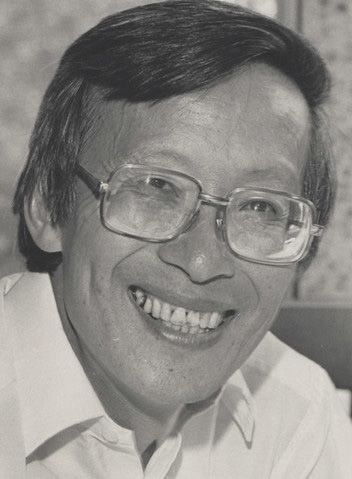
Introduction                                                                But what happened with multiculturalism
                                                                            in the 1980s, which saw the successful
                                                                            beginning of substantial immigration from
Dr Stephen Fitzgerald AO                                                    Asia, is instructive. When I was asked in 1987
Australia's first Ambassador to the PRC                                     to chair a review of our immigration policies,
(1973-1976)                                                                 what we found was that multiculturalism
                                                                            was ‘on the nose’. There was widespread
On this question of the settlement of                                       scepticism, great misunderstanding of what it
newcomers into Australia, I think it’s pretty                               entailed, and a view that it was being forced
evident that we’ve lost the plot.                                           on the community, discriminated in favour of
                                                                            migrants, and was a kind of social engineering
What was the plot?                                                          aimed at forcing change in the Australian
                                                                            identity itself.
The plot, when large-scale immigration from
Europe began after the Second World War,                                    The lesson was that the government had
was that government accepted that you can’t                                 neglected the basic principle that in a large-
just shovel large numbers of people from                                    scale immigration program, now from very
different cultural and linguistic backgrounds                               non-European countries, you had to work,
into your society and expect this to… just                                  not just at making migrants feel good, but at
work. To make it work, government itself has                                bringing the populace along with you.
to have programs to ease the transition -
for migrants, and for the people into whose                                 Multiculturalism, and the institutions and
communities they are moving – and it has                                    services to support it, have since the mid-
to support this with sustained and positive                                 90s undergone almost constant fluctuation
messages about immigration and immigrants.                                  and changes of course, with no sustained
                                                                            articulation of a philosophy to carry it. The
There was of course, no philosophy of                                       one clear line until very recently has been that
multiculturalism at that time, and the policy                               we need to maintain large-scale immigration
governments chose was assimilation.                                         because it’s good for the economy.
Migrants were expected to become
indistinguishable from the Australian-born,                                 Now, over the last 20 to 30 years this
and the Australian-born were expected to                                    economic argument can be counted a
facilitate this process. Many programs were                                 success, and it has brought to Australia
put in place to make this happen.                                           large numbers of people of very different
                                                                            cultural backgrounds including, manifestly,
Assimilation was not particularly benign,                                   the [People’s Republic of China (PRC)], and
humane or culturally informed. But the                                      different religions, including Muslims. But
important point for today’s discussion is that                              we have been shovelling them in with great
Australian governments recognised that you                                  regard for the economic benefit, and scant
had to have a settlement policy, and fund it,                               regard for the imperatives of successful
and actively promote it to the public as good                               settlement policy and social cohesion.
for Australia.
                                                                            If we don’t make the effort, what happens?
When the policy of assimilation was replaced
by a more culturally sensitive and inclusive                                A good settlement policy sees that immigrants
policy called integration in the early 1960s, it                            have the linguistic and other skills to survive
was grounded in the same principles.                                        and flourish, but we now see almost daily
                                                                            reports of immigrants without these skills,
And when multiculturalism overtook                                          and missing out, marginalised, exploited,
integration in 1973, ushering in much more                                  and even, in times of disaster and pandemic,
complex ideas about the nature of Australian                                endangered.
identity and citizenship, the government
accepted that there was even greater                                        If a good settlement policy champions
necessity for an active settlement policy.                                  inclusion, we now see encouragement to

 4    Multicultural citizenship re-imagined: engaging migrants from China                      @acri_uts   W: australiachinarelations.org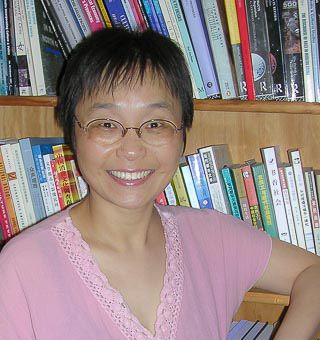
division – through silence when there should
be thundering condemnation, through the
time-tested dog whistle which gives a green
light to those who demonise the immigrant
and through the direct stigmatising and
scapegoating of immigrant communities from
many quarters, without restraint.

We’ve not only lost the plot. We’re in danger of
losing the values we like to pride ourselves on,
and losing social cohesion.

I now invite Professor Sun, who is one of the
best-qualified people in Australia to talk about
these issues, to present the 2020 Henry Chan
Lecture.

W: australiachinarelations.org   @acri_uts         Multicultural citizenship re-imagined: engaging migrants from China   5
2020 Henry Chan Lecture
Multicultural citizenship re-imagined: engaging migrants from China
Professor Wanning Sun
November 25 2020
Metcalfe Auditorium, State Library of New South Wales

A recording is available online at: https://www.youtube.com/watch?v=wghOI6bw-D0
E&OE | Check against delivery

The topic of my presentation is ‘Multicultural                               explicitly mention China, but we all know he was
citizenship re-imagined: engaging migrants                                   referring to China.
from China’.
                                                                             So Mr Tudge’s remark suggests that people
Sounds fairly abstract, so let me start with a                               have to choose – either you’re staying on as
tiny detail to get us started.                                               part of ‘their diaspora’, or you’re trying to
                                                                             become a ‘proud Australian’. But in order to
When a Qantas plane carrying 240 Chinese-                                    qualify as a ‘proud Australian’, there can be
Australian citizens from Wuhan touched down                                  no tension, no ambiguity, no ambivalence,
on Christmas Island in early February 2020,                                  no internal struggle for the individual about
a woman who had just disembarked from the                                    who they are and which country they want to
plane was asked by a journalist to say a few                                 identify with.
words. She said, ‘When we landed, the captain
said ‘welcome home’'. She then started to sob                                Tudge’s remarks signal to me, as an academic,
uncontrollably, and was choking on her words.                                a profound and worrying shift, if you like, from
                                                                             previous ways of imagining citizenship in
I’ve had a lot of time to think about why this                               multicultural Australia, whereby a connection
casual, even routine, remark from the Qantas                                 to your own country of origin as well as your
pilot had moved her so much. And I came to the                               country of residence, was not only tolerated but
conclusion that, apart from being really relieved                            also celebrated. Tudge’s remarks, together with
to be finally home after a long flight from China,                           statements made by many other commentaries,
she might have felt included as an Australian by                             force this question on all of us: what does
the captain’s welcome home message.                                          citizenship mean in a multicultural nation such
Australia is a multicultural society, which people                           as Australia? What should we aspire to if we
from all over the world with different cultures                              want to ensure that all citizens feel able to
and religions call home, and the captain, as                                 make claims, to fulfil their responsibilities and
a ‘true blue Aussie’, nicely if not consciously                              exercise their rights as citizens?
reinforced this message of Australia as a home                               Today in this talk, I want to share with you some
for people from different cultures and religions.                            of my own thinking on this question. I want to
Of course, it is possible I have read too much                               do this by taking on three tasks:
into this comment. But I see her tears not just                              First. I want to review some recent changes in
as tears of gratitude for being flown out of                                 Chinese migration to Australia;
China on a charter flight, but also for being
recognised as an Australian despite her being                                Second. I’d like to outline some of the main
Chinese, and despite having an ongoing                                       issues and challenges facing first-generation
connection to her motherland.                                                Mandarin-speaking migrants from the People's
                                                                             Republic of China (PRC) such as myself;
Unfortunately, public moments such as this
have become increasingly few and far between.                                Finally. I’d like to discuss some possible ways
More often than not, we hear comments that                                   of re-imagining multicultural Australia in the
end up making Chinese-Australians feel                                       geopolitical circumstances that we find ourself
excluded rather than included. For instance,                                 in today.
in late August, our acting Immigration Minister
Alan Tudge observed with regret that some                                    What I'm going to say here is based on my
communities are still seen by their former                                   own analysis. I’m fairly confident that the
countries as ‘their diaspora’. He did not                                    opinions I express are securely grounded in my
                                                                             observations and in my own evidence-based

 6     Multicultural citizenship re-imagined: engaging migrants from China                      @acri_uts   W: australiachinarelations.org
research. But I cannot of course claim that I           community in Australia. Today in Australia, the
                      speak on behalf of the entire first-generation          majority of Chinese migrants speak Mandarin
                      migrant Mandarin speaking community, and                rather than Cantonese, use WeChat rather
                      that is a point I want to stress.                       than WhatsApp as their preferred social
                                                                              media platform and write simplified Chinese
                      Let’s begin with a brief review of the recent           characters rather than using traditional
                      history of Chinese migration, particularly for the      classical Chinese characters.
                      benefit of people who are very young.
                                                                              As for the Australian public, what they have
                      We need to wind back a few decades to the               seen is a gradual change in the restaurant
                      late 1970s, the end of the White Australia policy,      menu: in addition to the Cantonese-style
                      the beginning of the end of the Cold War, the           sweet and sour pork, Mongolian lamb and
                      start of China’s economic reforms and its               honey prawns – we all have had them – we
                      open-door policy. It was then Australia resumed         now also have Chairman Mao’s pork, northern
                      immigration from the Chinese mainland starting          hand-made noodles and Shanghai pan-fried
                      from the 1980s and starting to accelerate in            dumplings.
                      the 1990s, after a few decades’ of virtually no
                      arrivals at all from China. To differentiate this       Many of those who arrived in the 80s and 90s –
                      cohort from the older-generation Cantonese              they are mostly now in their 50s and 60s – they
                      and southern dialect-speaking migrants, these           were allowed to stay initially on compassionate
                      PRC migrants are often referred to as the xin           grounds, while the more recent arrivals after
                      yimin (new migrants).                                   them (that is, the people who arrived in the
                                                                              90s and early 2000s) came on skilled visas.
                      Among the earliest xi yimin and earliest arrivals       And especially in the last decade or so, many
                      in this wave were the 45,000 Chinese nationals          international students have arrived, some with
                      who came around the time of Tiananmen – for             intentions to migrate. And now, these are the
                      those who are old enough to remember, that              ones we call ‘new-new migrants’ (xin xin yimin).
                      is – and they were allowed to settle in Australia       As a result, even within the PRC migrant cohort,
                      permanently. This is the generation that was            the inter-generational differences in social
                      later on referred to as ‘Hawke’s children’.             values, political views, cultural sensibilities
                      Professor Gao Jia from Melbourne University             and consumption habits can be very, very
                      actually has written a couple of books                  pronounced.
                      particularly on the experience.
                                                                              These new migrants have also challenged
                      The decision on the part of the Hawke                   many old assumptions about Chinese migrant
                      government to allow these individuals to                communities. For instance, they no longer live
                      migrate signalled the beginning of a major              in ‘ghettos’ or ethnic enclaves. They don’t fit the
                      demographic shift within the Chinese                    stereotypes of the Chinese migrants as being
TonyV3112 / Shutterstock

                      W: australiachinarelations.org   @acri_uts           Multicultural citizenship re-imagined: engaging migrants from China   7
Puppy8800 / Wikimedia Commons
mostly restaurant owners, laundromat owners, What is often forgotten is that this new cohort
or vegetable gardeners. is marked by diversity in terms of place of
origin, history of migration and sometimes big
In fact, a recent report has uncovered a large differences in politics, religion and ethnicity.
number of very successful businesspeople that
started as being born in China, educated in Too often, it is the minority on each end of the
Australian universities and started companies spectrum that gets most air time; that gets
in Australia. attention from media. At one end, you hear the
extremely active, sometimes quite belligerent
Their businesses can be found in all industry anti-Chinese Communist Party (CCP) activists
sectors across Australia, and they bring very and agitators. You hear a lot from them. And at
important economic benefits to the nation. the other end, all this scrutiny is on the hunt for
They bring diverse thinking, innovation and ‘spies’ and agents of the United Front.
growth to the Australian business landscape,
and they offer an important bridge between What is most important to remember is that
Australia and China. between these two extremes lie the silent
majority, and it is this silent majority which
Another interesting thing about this new really interests me. Their political views come
migrant cohort is their styles of organisation. into what I call 50 shades of grey. These 50
This is a sociological kind of perspective, if shades of grey are not only in relation to each
you like. Unlike the older Chinese community individual’s level of attachment to, identification
associations, which are usually based with and support for China or even the CCP.
on traditional leadership hierarchies, They are also in relation to a wide range of
organisational structures and channels issues in Australia, including indigenous issues,
of communication, the new cohort usually environmental issues, economics, gender and
organises and communicates online and via sexuality, religion and human rights.
social media.
This may not be newsworthy, and is very
What does this mean? hard for journalists to sensationalise, but
It means their spaces of association are often my research suggests that most Chinese-
virtual – and sometimes more virtual than Australians prefer not to be represented by, or
physical. There is also much less hierarchy in associated with, the so-called ‘pro-China’ camp
the way they organise, and the emergence of or ‘anti-China’ camp. They simply want to get
leadership in this community is more organic on with their lives.
rather than formally elected. Connections and This internal diversity, in itself, is not surprising.
associations among them also tend to be more Nor should it be a problem. But what does
ephemeral and fluid than old structure. become problematic is that, despite the
obvious plurality of views and values, many
8 Multicultural citizenship re-imagined: engaging migrants from China @acri_uts W: australiachinarelations.orgcommentators continue to assume that the from the place they now call home. To their
new Chinese-Australians are a monolithic growing bemusement and often anguish, they
group. In other words, they're all the same. find themselves often targeted as objects of
suspicion and distrust.
Clearly, such diversity also poses a challenge to
Australia’s multicultural policy, as it’s currently This ranges from really subtle insinuation to
understood. As early as 2011, almost Ten years blatant finger-pointing. We have seen the whole
ago, my friend and colleague Professor Andrew spectrum. At the tabloid end of the media
Jakubowicz, a sociologist, observed that: spectrum, you have people such as Andrew
Bolt from The Daily Telegraph who write articles
[M]ulticultural political analysis tends saying ‘[a] million Chinese here may not all be
to examine ethnic groups as a sub-set on our side’, and describing ‘Australians with
of interest group politics, and thereby Chinese ancestry’ as a ‘security risk’.
constructs a view of Australian society
Meanwhile, at the so-called quality journalism
that frames ethnic communities as interest end of the spectrum, you also have
groups with specific, usually first-generation, commentators such as Peter Hartcher, for
concerns. instance, who call for a change of immigration
policy that favours Hong Kong and Taiwan
Andrew also observed that the Chinese migrants rather than mainlanders, because he
community don’t really have enough in common believes that the former have values that are
to be thought of as a cohesive ‘interest group’. more compatible with Australian values.
For instance, the PRC may claim to be the
custodian of some kind of Chinese identity, but So it seems to me that there is a blind spot
refugees and individuals from Tibet and Uighurs in this narrative of the ‘untrustworthy PRC
from Xinjiang bring with them a long history of diaspora’. Why do I say this is a blind spot?
resistance and opposition. Because modern China has never experienced
anything else other than one-party rule.
So, this diversity poses a big problem for Migrants from this era, from this country – not
multiculturalism. Again, I quote Andrew. He said: to mention those who remain in China – did not
choose to live in a Communist country. They
The Chinese community…represents an
were born into that system. It’s not that there’s
emerging and unique constellation of factors the CCP and there's a range of other parties,
that multiculturalism was never designed to and these people have decided to side with the
accommodate or manage. CCP.
That was as early as 2011. Andrew already So it’s both unfair and illogical to assume that
foresaw that Australia’s multiculturalism was in PRC citizens and migrants are loyal to the CCP
trouble, because it had to reckon with what he simply because they live – or have lived – in a
called the ‘Chinese question’. nation that happens to be ruled by that party.
The second focus of my talk today is the range At the same time, just because many people
of key issues and major challenges facing the in China’s diaspora communities do not
Chinese community. support the CCP does not necessarily mean
that everyone wants to be a card-carrying
10 years on from Andrew’s article, Australia dissident, or want to cut their professional or
now is confronted with a much more polarised business ties with China. Left or right, many
geopolitical dynamics involving China and the politicians, the media and public commentators
US, with Australia caught in the middle. But are do not seem to recognise the internal struggles
we getting any closer to solving the ‘Chinese facing this group, in terms of what positions
question’? they should take, especially on issues where
Australia and China are at loggerheads.
You probably agree with me here that the
When I say internal struggles, I mean both the
answer, for me, is no. In fact, if you look at how
struggles within the individual self, and the
some politicians and media commentators
clashes of views within the group.
talk about Chinese-Australians, you could be
forgiven for thinking that we actually have gone Politicians and public commentators also need
backwards. to realise that the great majority of migrants
from China are individuals with complex agency,
In recent years, as China-Australia relations
who have the capacity to live with tensions
started to sour, many Chinese-Australians
and internal conflicts. Although some may be
I have talked to feel increasingly alienated
W: australiachinarelations.org @acri_uts Multicultural citizenship re-imagined: engaging migrants from China 9Chris Phutully / Wikimedia Commons
quite nationalistic about China, they are not my own research has unearthed a very high
necessarily doing the bidding of the CCP. level of interest among Chinese-Australians in
participating in Australian politics, the current
While a small minority may feel that they need political climate has made it all but impossible
the Australian government to protect them from for them to enter politics. Anyone with a
what they fear the Chinese government may mainland background runs the risk of being
do to them, most of them simply want to stop suspected of, or insinuated as ‘having links’ to
being pawns between the two countries. They or being 'associated with' the CCP.
don’t want to be put in either the ‘pro-China’ or
the ‘anti-China’ camp. They just want to get on But my current research on how first-generation
with their work and lives. Mandarin-speaking migrants use social media
suggests two things.
Political integration is never an easy process
for new migrants, we all know that. Despite First, members of this community love Australia
their success in business and their professions, and feel lucky to be living here. They are
many first-generation migrants do lack social active promoters of public diplomacy for both
capital and do lack social networks, English not Australia and China, and they don’t feel that
being their first language and it's a very difficult these two things have to be mutually exclusive.
barrier to overcome. Coming from a country
with one-party rule, they do not arrive already Second, there is a high level of ambivalence on
fully equipped with the political knowledge, the part of many individuals in this group about
competence and skills that are required to their identity, their sense of belonging, and as
become fully functional in a liberal-democratic a result they experience considerable what I
system. And despite their growing numbers, we call cognitive dissonance. But they live out this
see very few leadership figures emerging from tension, struggle and dissonance on a daily
this cohort, whether it's in the corporate sector, basis.
the public sector or various levels of politics. This may manifest itself in where they stand
As if these obstacles were not difficult enough, on big issues such as the South China Sea
what is also happening is a growing level of or Huawei. It may also manifest itself in daily,
what I call political disenfranchising. While mundane circumstances. For instance, in 2020,
10 Multicultural citizenship re-imagined: engaging migrants from China @acri_uts W: australiachinarelations.orgthe Mid-Autumn Festival also happened to be political, economic, cultural and social life is
on the same day as China’s National Day (a essential to achieving social cohesion.
CCP-designated national holiday).
However, as far as this particular cohort I'm
Many festival greetings that were circulated on talking about is concerned, I believe that
WeChat and other Chinese social media played there is a long way to go before we could
on the theme of ‘two festivals, one celebration’. effectively talk about integration. What I mean
I noticed in some discussions in my WeChat is that, before integration, something else
group somebody's remark caught my attention. needs to happen. And that something else is
He said, of course with a touch of sarcasm: engagement. In other words, engagement is
‘Oh, national holiday and lunar holiday, all in the precursor, if you like, or pre-requisite, if
one. One is official, the other is lunar. So do we you like, to integration, and at the moment, this
need to clear with ASIO [the Australian Security engagement is not happening. We therefore
Intelligence Organisation] before we celebrate need to go back to square one, and start from
it?’ Of course sarcastic, but this is the kind of there.
reality we're living with.
Australia’s Public Diplomacy Strategy document
Another issue facing this community has been from [the Department of Foreign Affairs and
anti-Chinese racism, which has been on the Trade (DFAT)] clearly states that:
rise for several years now due to the ‘China
influence’ discourse, and now has been brought Diaspora communities not only play a key
to the fore by the COVID-19 pandemic. role in projecting contemporary Australia to
the region, but also contribute to fostering a
In some of the WeChat groups I follow, people cohesive, harmonious and stable Australian
share their experiences of encountering racism,
and give each other moral support, sometimes society.
offering advice about how to respond when
So it is clear that the intention is to engage.
they encounter random racism – subtle or
blatant, verbal or physical, direct or indirect – in However, what we now see is a clear tension
the streets, in shops, or on public transport. between the government’s public diplomacy
agenda of engagement through the diaspora,
I see the sense of anguish, the anger and
on one hand, and the security institutions’
sometimes a sense of helplessness that follow
agenda, on the other hand, which sees this
these ephemeral incidents, that cannot easily
community as a security risk. This is clearly
be documented but nevertheless have long-
alienating rather than engaging. One is pulling
lasting and profound impact. Individuals may
and the other is pushing. This is the push-and-
see little point in reporting that somebody's just
pull dynamic within Australia.
shouted ‘Go back to China’ at them. But this
does not necessarily mean that they are not And on top of this dynamic in Australia, there
mentally and emotionally affected by it. is another set of push-and-pull dynamics
at work, with China’s soft power through its
Turning to my final topic of how we might
diplomacy agenda being the pulling factor, and
re-imagine multicultural citizenship, I
anti-Chinese forces within Australia being the
want to return to the challenge posed by
pushing factor.
Professor Andrew Jakubowicz: how to use the
‘Chinese question’ to ‘modernise’ Australia’s As far as I can see, this is a community that
multiculturalism. My answer – I'm just going to is living in the middle of this pushing and
put it there for you, feel free to disagree – is pulling. As far as I can see, a more ‘modern’
two-fold. The first aspect is engagement. The multicultural policy in relation to any group
second aspect is human rights. should adopt the following practices:
Let’s deal with engagement first. Migration 1. Stop expecting this community to choose
studies and multicultural studies scholars one country over another;
tend to contrast assimilation with integration
– as Stephen FitzGerald just mentioned, 2. Go beyond seeing this community solely
there's two options and obviously the current through the lenses of security risks and
consensus being that integration is preferable threats;
to assimilation. And Australia’s multiculturalism
has certainly been practised on the assumption 3. Stop treating this community merely as
that integration of new migrants into Australia’s potential voters, merely as partners in
transactional relationships; and
W: australiachinarelations.org @acri_uts Multicultural citizenship re-imagined: engaging migrants from China 114. Start treating this community as rights- Identity within and attachment to Australia
bearing citizens, with human rights. for ethnic immigrants depend on how
There really needs to be serious change – at well the system they enter protects their
the level of rhetoric, level of attitudes, policy, human rights from the omnipresent threats
and practice. At the moment, we are not even from racists and xenophobes. They will
ready to consider changing the rhetoric. That is not release their grip on the old if the new
why I say we still have a long way to go. emerges as threatening and potentially
dangerous.
Now I’d like to address the second part of this
modernisation process, modernisation of our Education has a role to play in facilitating
multicultural policy, that is. The second aspect engagement. Since most first-generation
is human rights. migrants from the PRC come as adults, by
Recently on ABC Radio National’s Breakfast default they miss primary and secondary
program, Hamish MacDonald interviewed education in Australia, which is where
Jason Li, who is the President of the Australia- knowledge about Australian history is taught,
China Forum. Hamish MacDonald suggested where informal citizenship education happens
that there is a real question about Chinese and where political understanding is absorbed.
government and CCP influence in Australia, You know, how does the Parliament work, how
and: do we vote, all this kind of knowledge is taught
not in tertiary education but in secondary
How do we address that without having and primary education, and they miss the
it impact on the Chinese-Australian boat. So we need to ask what our universities,
community that is here? adult migrant education centres, and other
educational agencies are doing to fill this
Jason Li’s response was: gaping hole.
I think the answer to that is that we have to Another problem, as far as I can see, is the lack
of engagement between the first-generation
proceed from the starting point of trusting
PRC migrants and earlier, dialect-speaking
our own citizens. So if you’re an Australian Chinese communities. This again is due to
citizen, you deserve that trust. Because, if a range of reasons – cultural, linguistic and
we start distrusting our citizens, if that’s our historical. And the current political climate
starting point, that goes against our values. hasn't made it easy for the various Chinese
communities to break down these barriers. In
I think Jason is spot on. order to prove one’s ‘cleanliness’ from Chinese
influence, some people from the Chinese
And I also take Jason Li’s point as a point communities – especially from the ABCs
about human rights. I hope that this will be (Australian-born Chinese) – feel that they need
the main message from my talk today, for the to go out of their way to identify themselves as
government, the politicians, the policy-makers non-mainlanders.
and public commentators. That is, Australia’s
Mandarin-speaking first-generation migrants The disconnection between various Chinese
are now rights-bearing Australian citizens, and communities is understandable, and has many
discrimination against them on the basis of reasons. For instance, the difference between
where they come from and what they look like is the Cantonese and Mandarin is huge. It's so
not compatible with human rights values. great that the two groups often have to talk
to each other through English. I myself – I've
It’s only when we respect the human rights of been here for 30 years – and I'm still trying to
these new citizens that Australia as a country learn Cantonese, and I’m still struggling: I still
can sustain its own moral outrage and its own can't go beyond ha gao, ha chang and siu mai.
moral purchase of human rights discourses Beyond the milieu of yum cha, my Cantonese
in its own criticism of China on human rights vocabulary is virtually non-existent, I'm
issues. embarrassed to say.
This human rights argument is not mine; I didn't But more than ever, Chinese-Australians of
come up with this. I actually borrowed it again various cohorts have to work together to
from Andrew. Recently, Andrew Jakubowicz fight anti-Chinese racism and take part in
commented on what he called Sinophobia in struggles for political rights. I'm not arguing for
times of COVID-19. And he wrote, I now quote: some kind of unity just because they happen
12 Multicultural citizenship re-imagined: engaging migrants from China @acri_uts W: australiachinarelations.orgto be Chinese. I don't buy that discourse. them. Therefore, I would like to say to my own
They all come in different shades of political fellow first-generation Chinese-Australians that
persuasions, right, and they have different if we want to develop a true sense of belonging
points of view. But there needs to be some kind here, and to start feeling really at home, we
of solidarity in the fight against racism and must be willing to engage.
disconnection is not actually working to make
that happen. After all, when Senator Eric Abetz By this, I mean showing more interest in the
recently questioned three Chinese-Australians, history of this nation and its multicultural
it was obviously on the basis of their race rather formations, finding ways of talking to your
than their country of origin. neighbours, making connections with other
Chinese communities, participating in activities
So when Osmond Chiu [one of the three and events in the neighbourhood, in your street,
Chinese-Australians questioned by Senator and developing connections and solidarity with
Abetz] wrote an article entitled ‘I was born other ethnic communities and of course with
in Australia. Why do I need to renounce the the so-called mainstream society on a wide
Chinese Communist Party?’ This is a very range of social issues.
legitimate question. But this question shouldn’t
be taken to mean that anyone who was born in Engagement can be both mundane and
China should be a legitimate target for Senator organised. I'll give you an example of mundane
Abetz. As another one of the three questioned engagement. Someone again in my WeChat
by Abetz, Yun Jiang said in her statement: group – I’ll call him Mr Huang – he recently
posted an image of a tree in his backyard, and
No Australian, regardless of ethnicity, should said that his neighbour popped over one day,
be subject to political loyalty tests. We are and said, 'You have to trim that tree, otherwise
all Australians first and foremost. it's going to be a safety hazard; it's getting
too big'. The neighbour also offered to lend
Engagement is a two-way street, I'm aware of him some tools from his own shed. Mr Huang
that, involving both the self who is willing to already had the tools to cut the tree, but he
engage, and others who can imagine a way of took up the neighbour’s offer to borrow some
engaging with others who are different from tools, simply because, as he put it:
Chen Hualin / Wikimedia Commons
W: australiachinarelations.org @acri_uts Multicultural citizenship re-imagined: engaging migrants from China 13I wanted to have an excuse to get to know with and develop a sense of belonging to this
my neighbour. So I popped over, went to his country that they now call home.
shed, and had a nice long chat with him and ENDS
got to know my neighbour.
It’s clear to me that Mr Huang only wanted to
connect with his neighbour. But that I think
is multiculturalism at its very, very everyday,
grassroots, mundane level – it's very important.
Making connections may also take the form of
collective organisation. For instance in 2020
year, The West Australian newspaper reported
that the Chinese community in Perth had heard
about some activists wanting to protest in
support of Black Lives Matter, but they were
worried about COVID-19 and didn't have enough
masks. So within one fortnight, they used
WeChat to organise themselves and donated
11,000 face masks to Perth’s Black Lives Matter
protest, in a show of support.
You may say that's not a big deal, but you must
remember that in today’s political climate,
civic actions such as this, from this particular
Chinese community, was very likely to be seen
as either orchestrated by the CCP or trying to
influence Australian politics in some way. This
is the backdrop against which they took action.
Nevertheless, they went ahead and did that. So
it seem to me that with their own actions, these
Chinese-Australian citizens made an eloquent
point about their citizenship in multicultural
Australia.
As I hope I have shown, the ‘Chinese question’
is a difficult one, but it’s a very urgent one.
Never has Australia experienced a migration
so massive and at the same time experienced
China both as a market and as a source of
migration. So the 'Chinese question' is an
urgent one. It is at the very centre of the
process of re-imaging multicultural citizenship
in our contemporary society.
One of my favourite writers is E.M. Forster, and
one of my favourite books written by him is
Howards End. And the key message from his
book is: ‘Only connect’.
My main message today is also to connect – to
start engaging – so that instead of alienation,
confusion and disengagement, this group might
start to feel that they are included, that their
rights are respected, and that they, too, are
‘true blue Aussies’.
I know, I know. Easy to say, and difficult to do, I
know that. But if we’re willing to work towards
this end, members of Chinese-Australian
communities should find it easier to identify
14 Multicultural citizenship re-imagined: engaging migrants from China @acri_uts W: australiachinarelations.orgBiography
Wanning Sun
Professor Wanning Sun is a UTS:ACRI Advisory Board member and
a Professor of Media and Communication in the Faculty of Arts and
Social Sciences at UTS.
She is a specialist in a number of areas, including Chinese media
and cultural studies; rural-to-urban migration and social change
in contemporary China; and soft power, public diplomacy and
diasporic Chinese media.
She is the author of three single-authored monographs: Leaving
China: Media, Migration, and Transnational Imagination (2002); Maid
in China: Media, Morality, and the Cultural Politics of Boundaries
(2009); and Subaltern China: Rural Migrants, Media, and Cultural
Practices (2014). Two of her edited volumes — Media and the
Chinese Diaspora: Community, Communication and Commerce (2006)
and Media and Communication in the Chinese Diaspora: Rethinking
Transnationalism (2016) — document the history and development
of Chinese language media in Australia, North America, Europe,
Africa, South America, and Southeast Asia.
Stephen FitzGerald
Dr Stephen FitzGerald AO is the Adjunct Professor at the Australia-
China Institute for Arts and Culture (ACIAC). He was China advisor
to Gough Whitlam in opposition and as Prime Minister, Australia’s
first ambassador to the People’s Republic of China, and later, at
the beginning of China’s opening to the outside world, established
the first private consultancy for Australians dealing with China.
He chaired the 1980s committee of the Asian Studies Association
of Australia and later became the chair of the Asian Studies
Council. He then founded the Asia-Australia Institute, dedicated
to making Australia part of the Asian region. He chaired the
government’s Committee to Advise on Australia’s Immigration
Policies. He has been advisor to the Federal and Northern Territory
governments, and the governments of Britain, Denmark and others
on governance-related aid in China and Southeast Asia. He is the
Distinguished Fellow of the Whitlam Institute at Western Sydney
University, a Board Member of China Matters and Vice President of
the organizing committee for Museum of Chinese in Australia.
W: australiachinarelations.org @acri_uts Multicultural citizenship re-imagined: engaging migrants from China 15The Henry Chan Lecture series
Who was Henry Chan?
Born in China in 1937, raised in New Zealand and living and working
in Australia, Henry Chan was a passionate advocate of the need
to learn more about Chinese Australian and New Zealand history
with a particular focus on its China roots and ongoing connections.
In 2000 Henry along with colleagues and friends in the Chinese
Australian community, founded the Australian Chinese Historical
Society. Until his death in 2008, Henry devoted almost all his
time to encouraging projects, seminars and talks about Chinese
contributions to Australian society.
The aim of the Henry Chan Lectures
Established in 2017 the purpose of the Henry Chan lectures is to
present an annual public lecture by a Chinese scholar researching
an aspect of Australia history or society. In doing so the Chinese
Australian Historical Society aims to continue one aspect of
Henry’s vision by highlighting the Australia China connection in
historical and social research, just as it carries on other aspects of
his vision in its many other endeavours.
The series so far
Lecture 2017: The inaugural lecture was presented by Dr Selia Tan
of Wuyi University, Guangdong who gave a history of the world
heritage listed Kaiping diaolou (guntowers) and their connection
with Australia.
Lecture 2018: Dr Chen Bing of Peking University, a translator of the
works of George Earnest Morrison gave an account of this famous
Australian from a Chinese perspective.
Lecture 2019: Li Jianjun of Beijing Foreign Studies University
presented on the works and impact of many Australian writers who
were published in China during the 1950s and 1960s.
Lecture 2020: Dr Stephen Fitzgerald and Professor Wanning Sun in
conversation on Multicultural Citizenship Re-imagined: Engaging
Migrants from China.
16 Multicultural citizenship re-imagined: engaging migrants from China @acri_uts W: australiachinarelations.orgThe Chinese Australian Historical Society The CAHS was founded by Professor Henry Chan (University of Newcastle, NSW) in 2002 and has been prominent in advancing the study of the history of Chinese in Australia ever since. Numerous seminars, workshops, and conferences on topics such as Chinese Australian family histories; the home villages in southern China of early Chinese Australians; clan organisations in Sydney; Chinese stores in rural Australia; the trans-pacific Chinese; the history of the Chinese Women’s Association of Australia; archival records and how to use them, etc. These activities have helped to promote public knowledge and understanding of the many contributions which Chinese people have made to Australia. As an historical society the main focus of the organisation is naturally on the past, though this has included such modern roles as advocating for an helping secure the heritage listing of 82- 84 Dixon Street and promoting the publication of a modern English translation of a 100 year old novel of the Australian gold rushes written in Classical Chinese – The Poison of Polygamy. The CAHS also recognises that perspectives of history are always being influenced by the present and that history of course begins now. With that in view the CAHS welcomes the topical and valuable contribution of Wanning Sun and Stephen Fitzgerald to the debate on citizenship in multicultural Australia and looks forward to viewing the impact on Australian history of this debate. W: australiachinarelations.org @acri_uts Multicultural citizenship re-imagined: engaging migrants from China 17
Australia-China Relations
           Institute
           澳中关系研究院

Australia-China Relations Institute
University of Technology Sydney
PO Box 123
Broadway NSW 2007
Australia
✉ acri@uts.edu.au
   @acri_uts
www.australiachinarelations.org

UTS CRICOS 00099F
You can also read


