GREYBACK
CANEGRUB
MANAGEMENT
←
→
Page content transcription
If your browser does not render page correctly, please read the page content below
GREYBACK CANEGRUB MANAGEMENT
This booklet is an updated version of the BSES publication GrubPlan 2012,
originally authored by Peter Samson, Keith Chandler and Nader Sallam.
Considerable changes have occurred since then, most noticeably the almost
total reliance on the insecticide imidacloprid for canegrub control, and much
heightened scrutiny of the impact of all pesticides on water quality.
This booklet deals only with greyback canegrub, Dermolepida albohirtum.
This is the major species occurring from Plane Creek north to Mossman.
This publication has been produced as part of the project Reviving GrubPlan
to ensure appropriate use and application of imidacloprid for control
of cane grubs. This project is a collaboration between Sugar Research
Australia Limited, the Queensland Department of Agriculture and Fisheries,
CANEGROWERS, the Australia Cane Farmers Association, Bayer Crop Science
and Nufarm Limited. It is funded by the Queensland Reef Water Quality
Program through the Enhanced Extension Coordination project.

We acknowledge the contributions to this publication by the following:
Bayer Crop Science
Burdekin Productivity Services Limited
Farmacist Pty Ltd
Herbert Cane Productivity Services Limited
Mackay Area Productivity Services limited
Mossman Agricultural Services Limited
Nufarm Limited
Plane Creek Productivity Services Limited
Sugar Research Australia Limited
Sugar Services Proserpine Limited

Sugar Research Australia Limited
Brisbane Office 50 Meiers Road, Indooroopilly QLD 4068 Australia
Postal Address PO Box 86 Indooroopilly QLD 4068 Australia
T 07 3331 3333
E sra@sugarresearch.com.au
sugarresearch.com.au

ISSN 2203-7705 (Print)

© Copyright 2020 by Sugar Research Australia Limited. All rights reserved. No part of the 2019/2020 Annual Report (this
publication) may be reproduced, stored in a retrieval system, or transmitted in any form or by any means, electronic, mechanical,
photocopying, recording, or otherwise, without the prior permission of Sugar Research Australia Limited. Disclaimer: In this
disclaimer a reference to ‘SRA’, ‘we’, ‘us’ or ‘our’ means Sugar Research Australia Limited and our directors, officers, agents and
employees. Although we do our very best to present information that is correct and accurate, we make no warranties, guarantees
or representations about the suitability, reliability, currency or accuracy of the information we present in this publication, for
any purposes. Subject to any terms implied by law and which cannot be excluded, we accept no responsibility for any loss,
damage, cost or expense incurred by you as a result of the use of, or reliance on, any materials and information appearing in this
publication. You, the user, accept sole responsibility and risk associated with the use and results of the information appearing in
this publication, and you agree that we will not be liable for any loss or damage whatsoever (including through negligence) arising
out of, or in connection with the use of this publication. We recommend that you contact our staff before acting on any information
provided in this publication. Warning: Our tests, inspections and recommendations should not be relied on without further,
independent inquiries. They may not be accurate, complete or applicable for your particular needs for many reasons, including
(for example) SRA being unaware of other matters relevant to individual crops, the analysis of unrepresentative samples or the
influence of environmental, managerial or other factors on production.
INTRODUCTION
Sustainable canegrub                      It is a systemic insecticide meaning         suSCon maxi Intel is applied directly
management                                it is also taken up by cane roots. It        as a granule into the soil whilst the
                                          primarily works by impacting the             SC formulation is mixed with water
Canegrubs are currently the major         canegrub’s nervous system.                   and applied into the soil as a diluted
economic pest of sugarcane in                                                          solution.
Australia.                                Mode of action
                                                                                       Both formulations are applied
With the advent of water quality          •	Absorption into the canegrub’s            subsurface with precision applicators.
monitoring in most Queensland                body by direct contact as they
sugarcane production regions (Reef           move through treated soil                 Note: There are many different brands
2050 Water Quality Improvement                                                         of liquid imidacloprid marketed.
                                          •	Ingestion when canegrubs
Plan), the environmental impact of           consume treated soil
using pesticides has come under                                                        Clothianidin
increasing scrutiny.                      •	Ingestion when canegrubs
                                             eat roots that have taken up              An alternative insecticide, Sumitomo
Use of the insecticide imidacloprid          imidacloprid through its systemic         Shield Systemic Insecticide®, is also
is currently the main method of              action                                    registered for greyback canegrub
canegrub control. In many catchments,                                                  control. The active ingredient is
imidacloprid concentrations in            •	Imidacloprid also has an anti-            clothianidin (200 g/L). It is also a
local waterways often exceed the             feeding effect, meaning canegrubs         neonicotinoid and is a suspension
guideline value for protection of            will move away from the treated           concentrate formulation. It is not
aquatic organisms. The guideline             root zone. As they limit their            widely used in sugarcane.
concentration value to protect 95%           feeding on cane roots, they
of freshwater aquatic organisms in           become stunted and either die or
Queensland is 0.11 micrograms per            fail to complete pupation.                Predictive risk-based
litre (0.11 µg/L or 0.11 parts per                                                     treatment decisions
billion) imidacloprid.                    Degradation                                  Greyback canegrub has a one-
In late 2019 the Australian Pesticides                                                 year lifecycle with egg-laying and
                                          Imidacloprid is not affected by high
and Veterinary Management Authority                                                    subsequent canegrub feeding activity
                                          soil pH. It can therefore be used in
(APVMA) also began a review of                                                         taking place when the crop growth
                                          both alkaline and acidic soils with no
neonicotinoid insecticides, which                                                      stage is too advanced to allow
                                          detrimental effects on performance.
includes imidacloprid. At the time of                                                  machinery access. It also means that
publication, it is not yet clear what     Imidacloprid is also compatible with         the grubs you see this year, will not
label changes will eventuate.             conventional liming and mill mud             be the same grubs infesting your
                                          practices.                                   blocks next year - they will be the next
It is timely for all production sectors                                                generation.
of the sugar industry to review how       Imidacloprid has a low vapour
chemical control of canegrubs is          pressure, so there is negligible loss        Consequently, this means that
managed.                                  through volatilization; however the          insecticide treatments are generally
                                          product needs a minimum 100 mm               made before eggs are laid, meaning
Continued access to chemical control      of soil cover for UV protection and          that growers have to anticipate
for canegrubs may well depend on          to ensure it remains in the correct          whether or not a canegrub infestation
growers, advisors and agribusiness        location.                                    will occur.
pulling together to ensure insecticides
are only used when necessary and are
applied correctly.                        Formulations
                                          For sugarcane, imidacloprid comes in
Imidacloprid                              two formulations:
The insecticide imidacloprid has          1.	controlled release granule (suSCon
been the mainstay of canegrub                 maxi Intel®)
management since its introduction to
                                          2.	suspension concentrates (SC) (e.g.
sugarcane in 2001.
                                              Confidor ® Guard, Nuprid® 350 SC).
Imidacloprid is a very effective              These are commonly called liquid
insecticide and belongs to the                formulations.
neonicotinoid group of compounds.

                                                                    SUGAR RESEARCH AUSTRALIA LIMITED GREYBACK CANEGRUB MANAGEMENT   3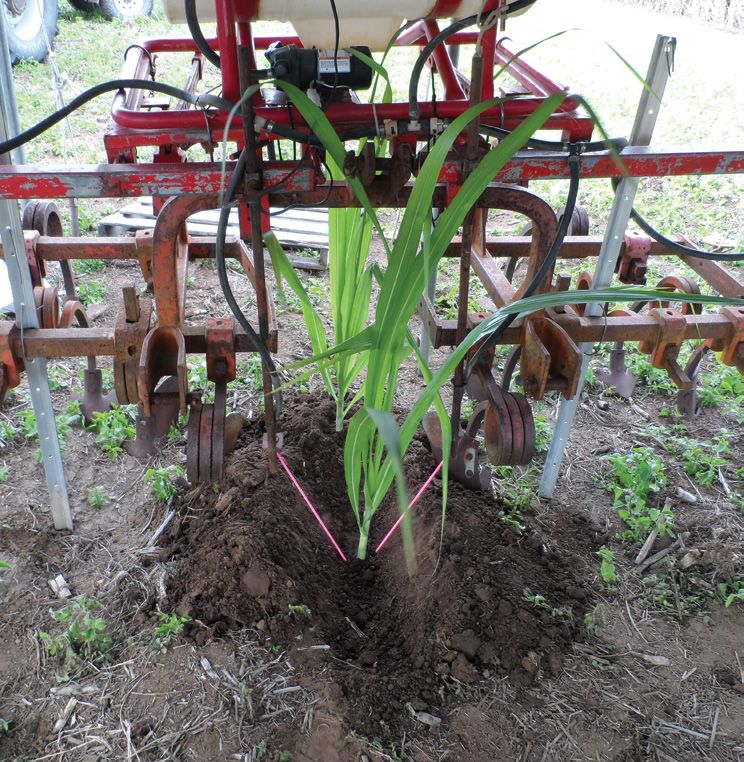
4 SUGAR RESEARCH AUSTRALIA LIMITED GREYBACK CANEGRUB MANAGEMENT
CONTENTS
Introduction                                                                          3
Biology and ecology of greyback canegrubs                                             6
   Identification of greyback canegrubs                                               6
   Life cycle of greyback canegrubs                                                   6
Monitoring and risk assessment                                                        8
Insecticide formulation options                                                      11
   suSCon maxi Intel                                                                 13
		     Registered rates for greyback canegrub                                        13
		     Length of control                                                             13
		     Method of application                                                         13
		     Application systems for suSCon maxi Intel                                     13
   Suspension Concentrates                                                           16
		     Registered rates for greyback canegrub control                                16

       Method of application in plant cane                                           18

       Method of application in ratoon cane                                          20
		     Timing of application to ratoons                                              20
Cultural controls                                                                    21
   Trap cropping: Manipulating harvest and planting
   sequence to attract beetles                                                       21
   Naturally occurring biological controls                                           22
   Tillage		                                                                         23
   Legume rotations                                                                  23
Imidacloprid and the environment                                                     24
   Imidacloprid in our waterways                                                     24
   Liquid application – critical to get it right                                     26
   Application issues                                                                27
References and further reading                                                       31

                      SUGARSUGAR
                            RESEARCH
                                 RESEARCH
                                     AUSTRALIA
                                          AUSTRALIA
                                               LIMITED GREYBACK
                                                     LIMITED GREYBACK
                                                                 CANEGRUB
                                                                      CANEGRUB
                                                                          MANAGEMENT
                                                                               MANAGEMENT
                                                                                     2020   5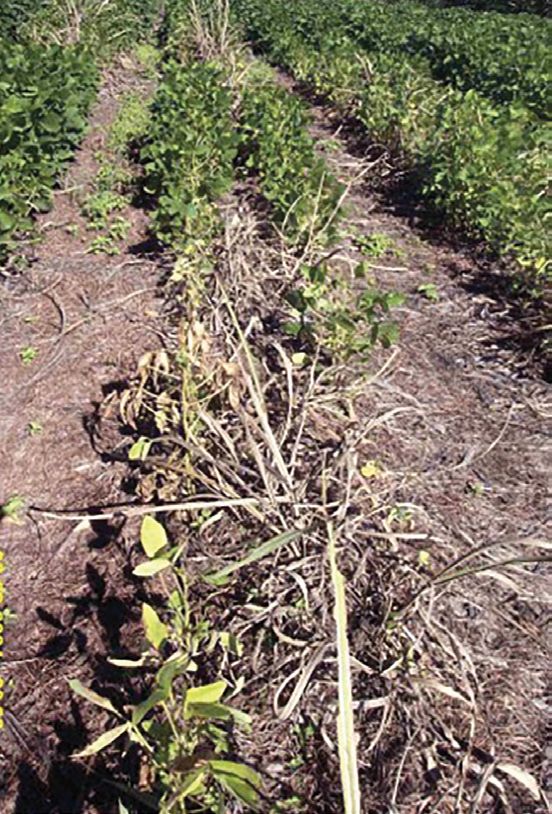
BIOLOGY AND ECOLOGY
          OF GREYBACK CANEGRUBS
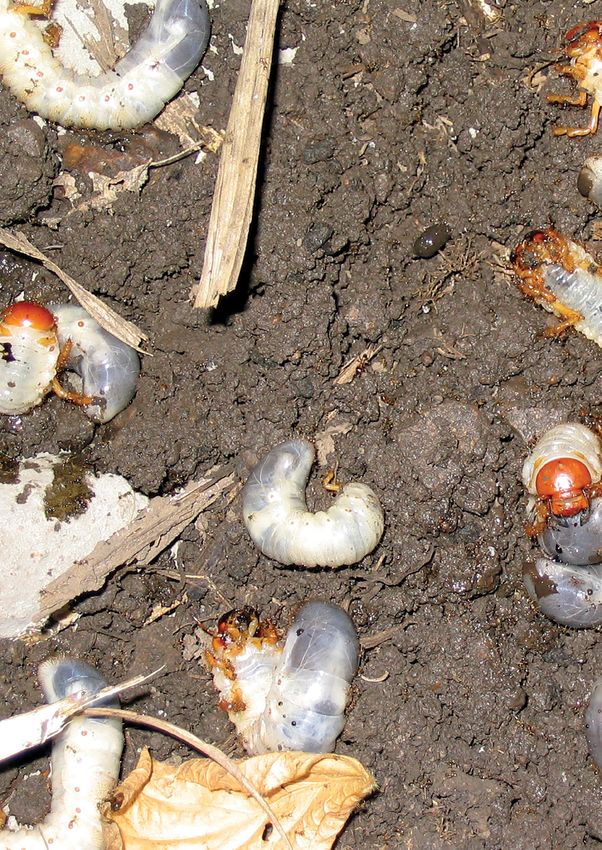
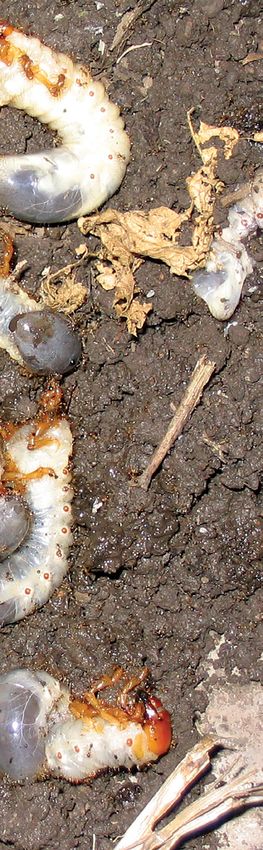
          Identification of greyback                                Life cycle of greyback                              of sugarcane and grass weeds. After
          canegrubs                                                 canegrubs                                           four weeks of feeding, larvae moult to
                                                                                                                        the second instar.
          The greyback raster consists of two                       Greyback canegrubs have a one-year
          nearly straight single rows, each with                    life cycle consisting of egg, larva, pupa           Second-instar larvae
          20-28 short hairs. The three larval                       and adult stages. The cycle begins with
                                                                                                                        Second-instar larvae aggregate under
          stages, or instars, are distinguished                     eggs being laid between October and
                                                                                                                        the stool and feed on cane roots.
          by the size of their head capsule,                        February, depending on the district and
                                                                                                                        After five weeks of feeding, the larvae
          which gets noticeably larger at each                      the seasonal conditions.
                                                                                                                        moult to the third instar.
          moult. Checking the raster pattern
          is necessary to distinguish greyback                      Eggs
                                                                                                                        Third-instar larvae
          canegrubs from other grubs that may
                                                                    Eggs are laid in clutches of 23-36 in a
          be present, such as French’s canegrub.                                                                        Third-instar larvae cause the most
                                                                    soil chamber, at a depth of 220-450
                                                                                                                        damage to cane. They feed heavily
          The adult beetles are large (35 mm                        mm. Eggs incubate over 14 days, and
                                                                                                                        on roots and stool and grow rapidly.
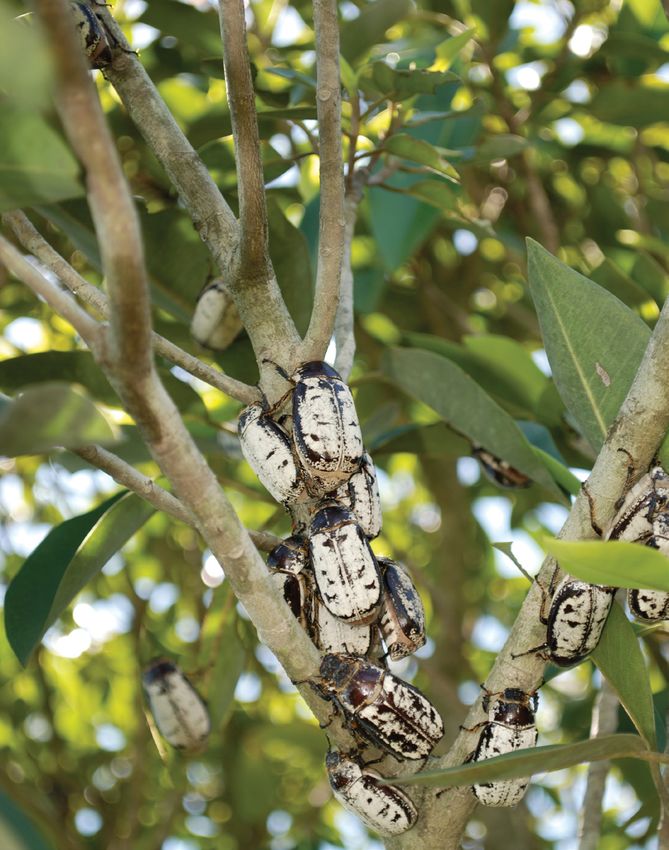
          long) and have wing covers coloured                       hatch with first-instar larvae emerging.
                                                                                                                        Active feeding continues for about
          by a coating of grey scales (which
                                                                    First-instar larvae                                 four months during the period of
          can be rubbed off). The sexes are
                                                                                                                        February to August, depending on
          distinguished by the number of plates                     First-instar larvae tunnel upwards to               district and s easonal conditions
          on their antennae – the males have                        feed on organic matter and the roots                Once the larvae have accumulated
          five plates and the females have four.

          Photo 1 - Greyback canegrub hair pattern. Photo 2 - French’s canegrub hair pattern.
          Photo 3 - Adult greyback beetle. Photo 4 - Egg cluster – note the match head for size comparison.

P.1                                                  P.2                                                      F.1
                                                                                                                    CANEGRUB IDENTIFICATION:
                                                                                                                    HOLD GRUB TAIL-END FACING YOU WITH ITS HEAD
                                                                                                                    DOWNWARDS. USE THE SHAPE OF THE HAIR PATTERN –
                                                                                                                    TWO SINGLE ROWS – TO DISTINGUISH GREYBACK FROM
                                                                                                                    MOST OTHER NORTHERN SPECIES.

P.3                                                  P.4

      6   SUGAR RESEARCH AUSTRALIA LIMITED GREYBACK CANEGRUB MANAGEMENT
enough fat, they burrow downwards                           emerge at dusk, crawl around the soil             Eggs are laid following dawn flights.
      and pupate. The third instar occupies                       surface and prepare for flight. Flights           Female beetles are capable of laying
      about seven months up to the time of                        begin around 7.00 pm and can last for             three clutches of eggs, but most field
      pupation.                                                   several hours.                                    populations probably lay fewer than
                                                                                                                    this. The lifecycle then starts again as
                                                                  Beetles are readily attracted to light.
      Pupae                                                                                                         the newly laid eggs incubate.
                                                                  The maximum flight range for adults
      Pupation occurs between July and                            has been recorded at 1.6 km.
      October at a depth of 150-400 mm
                                                                  Warm and dark nights tend to favour
      depending on soil moisture and type.
                                                                  beetle flights. Beetles settle in taller
      The pupal stage lasts about five
                                                                  feeding trees of 4-6 m in height.
      weeks.
                                                                  Feeding trees include figs, palms,
      Adults                                                      wattles and bananas. However, beetles
      Adult emergence is dependent on                             will also feed on cane leaves when
      temperature and is triggered by                             feeding trees are not available. Mating
      rainfall or irrigation. Emergence                           also takes place in the trees. Female
      usually commences in early October in                       beetles may feed for up to two weeks
      the Burdekin, but may not begin until                       as their eggs mature.
      December in other districts. Beetles

      Photo 5 - Third instar. Photo 6 - Pupae. Photo 7 - Adult greyback beetles.
      Photo 8 - Emergence holes of adult beetles.

P.5                                      P.6                                              P.7                                       P.8

F.2   GREYBACK CANEGRUB LIFE CYCLE

          JAN             FEB            MAR             APR            MAY         JUN           JUL         AUG          SEP         OCT       NOV-DEC

        EGGS                    EARLY INSTARS               LATE INSTARS                   LARVAE GO DEEP              PUPATION                 ADULTS FLY

                                                                                                SUGAR RESEARCH AUSTRALIA LIMITED GREYBACK CANEGRUB MANAGEMENT   7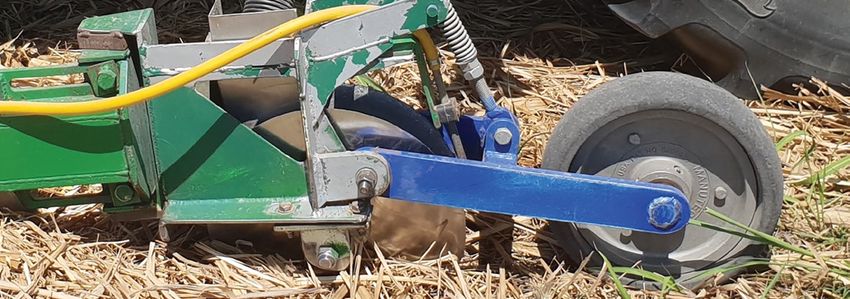
MONITORING AND
          RISK ASSESSMENT
          The aim of a monitoring system is               P.9
          to collect sufficient information on
          current grub status and trends to allow
          informed decisions on future grub
          management.

          Incorrect decisions could mean:
          •	fields that should have been
             treated for grubs are not treated,
             and cane is lost
          •	fields that did not need treatment
             are treated anyway, money
             is wasted and unnecessary
             applications may contribute
             to insecticide contaminating               Process                                  •	information should be sought on
             waterways.                                                                             the district-wide grub status. If
                                                        The steps required for a monitoring         reliable district information is not
          Without a monitoring system, decisions        program that will give growers              available, try to establish canegrub
          on which fields need treatment become         sufficient information to make good         pressure in your immediate
          largely guesswork.                            decisions on greyback canegrub              neighbourhood
          Research has shown that in almost             management are:
                                                                                                 •	decisions on grub management for
          every case where grub damage                  •	damage, showing as both visible          each field should be based on this
          occurred in a specific year, grubs were          symptoms in cane before harvest          grub information, together with
          present in those same fields the year            and gaps in ratoons after harvest,       other factors that may pre-dispose
          before.                                          should be assessed farm-wide and         fields to grub attack.
          In other words, grub damage did not              mapped every year
          suddenly descend on fields. The signs         • 	in addition, in fields considered
          of grub build-up were there at least              at high risk of grub attack, grubs
          one year earlier, although they were              should be sampled to determine
          often not visible – stools had to be dug          the current grub density (dig out
          to see if grubs were present or not.              cane stools)

F.3       PROCESS FOR FARM-LEVEL DECISIONS

                                                                                                  3: JULY ONWARDS
                     1: FEB – APRIL                   2: MAY - JUNE
                                                                                                  MAP GAPPY FIELDS ACROSS FARM
                     SAMPLE GRUBS IN                  MAP VISIBLE
                     HIGH-RISK FIELDS                 DAMAGE ACROSS
                                                      FARM

             MAY-JUNE
             DISTRICT GRUB STATUS                                         4: FIELD BY FIELD
                                                                          DECISIONS
                                                                                                            PRE-DISPOSING FACTORS

      8   SUGAR RESEARCH AUSTRALIA LIMITED GREYBACK CANEGRUB MANAGEMENT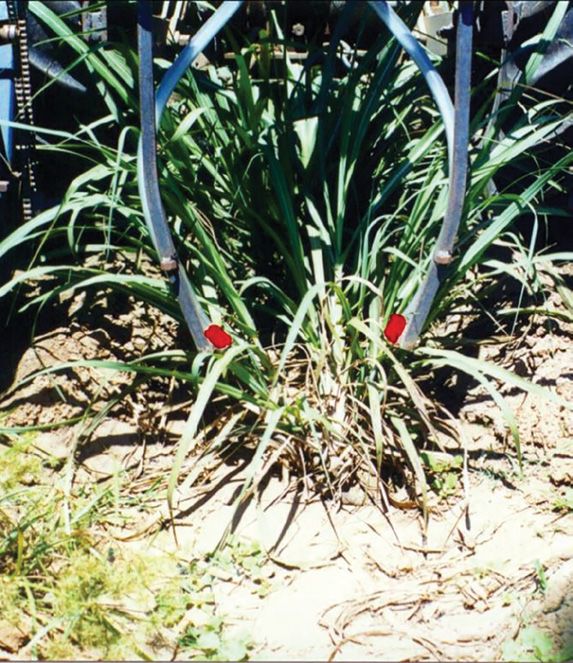
1. Sample grubs in high risk fields                       2. Map visible damage across farm                      Good growing conditions, e.g. good soil
                                                                                                                        moisture, may mask crop symptoms,
       Knowledge of the number of grubs in a                     A map of damage across the farm is
                                                                                                                        despite grubs being present. This is
       field this year is important in predicting                extremely valuable and serves many
                                                                                                                        another reason why it is important to
       the likely infestation level next year.                   purposes:
                                                                                                                        dig up stools in at-risk blocks to access
       Other observations such as visible
                                                                 •	the presence of light damage                        grub populations.
       damage are no substitute for actually
                                                                    symptoms in a field may indicate
       counting grubs. The presence of visible                                                                          Much more can be seen from the air.
                                                                    the presence of grubs, which
       damage means that numbers of grubs                                                                               Technology is rapidly advancing in
                                                                    should be checked by examining
       are already too high.                                                                                            the areas of aerial imagery and aerial
                                                                    a few stools for root pruning –
                                                                                                                        platforms. Unmanned Aerial Vehicles
       Sampling every block on a farm is                            these fields may need treatment
                                                                                                                        (UAVs), known as drones, are now
       neither practical nor necessary. We                          to prevent damage increasing next
                                                                                                                        available with fitted cameras and user-
       suggest a multi-stage procedure:                             year
                                                                                                                        friendly software. Aerial images can
       •	firstly, identify fields that might                    •	the presence of severely damaged                    be used to identify areas within cane
          be at risk – those susceptible to                         fields may indicate the need for a                  blocks that may have grub damage.
          greyback grubs and not currently                          change in harvest scheduling, to                    Ground-truthing by sampling those
          protected by insecticide                                  minimise crop and stool losses in                   zones is still necessary to confirm
                                                                    those blocks                                        that canegrubs are the cause of the
       •	secondly, prioritise those fields in
                                                                                                                        problem. Images from platforms like
          order of risk. High-risk fields will                   •	severely damaged fields will
                                                                                                                        Google Earth can also be used to
          be close to fields damaged last                           produce beetles later in the year,
                                                                                                                        identify problem areas on a farm or
          year, have a history of damage, be                        and so are a major risk factor that
                                                                                                                        neighbouring property, but ground-
          close to creeks and hillsides, or will                    determines the need for insecticide
                                                                                                                        truthing is still essential.
          already show signs of damage                              treatment of nearby blocks.
       •	thirdly, sample a selection of the                     A drive along headlands can show up
          high-risk fields until a decision                      damage symptoms (May-June). Heavy
          can be made to continue sampling                       infestation can be confirmed by giving
          additional fields (as long as grubs                    stools the ‘pull-test’ (i.e. can stools be
          are being found) or stop.                              pulled from the ground by hand, and
                                                                 if so, are the roots pruned and is the
                                                                 stubble gouged: Photo 14).

       Photo 9 - Crop suffering canegrub infestation. Photo 10 - Canegrubs uncovered after the cane stool is dug out.
       Photo 11 - Early signs of canegrub damage – note the cane is sprawling and is yellowish. Photo 12 - Advanced
       signs of canegrub damage – the cane stools are completely tipped out of the ground.

P.10                                                        P.11                                                            P.12

                                                                                                   SUGAR RESEARCH AUSTRALIA LIMITED GREYBACK CANEGRUB MANAGEMENT    9
3. Map gappy fields across farm                           Outside the Burdekin, there is little
                                                                  evidence that time of harvest is a
        Gaps in ratoons may indicate the                                                                      KEY MESSAGES
                                                                  critical risk factor, except where cane
        presence of grubs, particularly if gaps
                                                                  is cut early for plants. Early-plant cane   •	By the time you see visual
        were not present the previous year. If
                                                                  may be at greater risk than other crops        damage, canegrubs have
        grubs were the cause, then root and
                                                                  in all districts because of its greater        already established
        stubble damage will be apparent on
                                                                  height and attractiveness during
        those stools that remain.                                                                             •	Unless you monitor you
                                                                  beetle flights.
                                                                                                                 will not know what your
        4. Field-by-field decisions                               Given the predicted likelihood of grub
                                                                                                                 infestation risk is, and
                                                                  infestations next year, the expected
        Critical factors in predicting grub                                                                      you will not be able
                                                                  return on insecticide treatment
        infestations next year include:                                                                          to make an informed
                                                                  depends on economic factors – the
        •	field location, history of damage,                     expected number of harvests before             decision to treat or not
           crop age and insecticide protection                    plough-out, expected yields, the
                                                                                                              •	Unnecessary treatment
                                                                  cost of replacing crops if they are
        •	number of grubs and/or presence                                                                       contributes needlessly to
                                                                  prematurely ploughed-out due to
           of damage in the field this year                                                                      waterway pollution and
                                                                  damage, the sugar price, and the cost
        •	presence and severity of                               of treatment.                                  wastes money
           infestations in nearby fields                                                                      •	Canegrubs prefer some
        •	grub forecast for the district                                                                        soil types over others –
                                                                                                                 lighter soils are prone to
        •	for heavily irrigated districts such
                                                                                                                 heavier infestations
           as Burdekin farms, time of planting/
           harvest.                                                                                           •	Electromagnetic Mapping
                                                                                                                 (EM) mapping is useful in
                                                                                                                 showing where soil type
                                                                                                                 boundaries are on your
                                                                                                                 farm.

        Photo 13 - Gaps in ratoons are an indication of earlier greyback canegrub activity,
        but are unlikely to be visible when the crop is ratooning after harvest, so check the
        remaining root system for root pruning and gouging. Photo 14 - Washed ratoon root
        system showing damage caused by canegrubs.

P.13                                                         P.14

   10   SUGAR RESEARCH AUSTRALIA LIMITED GREYBACK CANEGRUB MANAGEMENT
INSECTICIDE FORMULATION
OPTIONS
If choosing to treat cane, the first PRODUCT ACTIVE FORMULATION LENGTH OF CONTROL REGISTERED
decision growers need to make is INGREDIENT FOR GREYBACK FOR USE IN
whether to use the controlled release CANEGRUB
formulation (suSCon maxi Intel) or one suSCon maxi Imidacloprid Granule up to 4 years Plant cane
of the liquid formulations (e.g. Confidor Intel (controlled-
Guard, Nuprid 350 SC) release)
Confidor Imidacloprid Suspension 1 year Plant and
The decision will depend on canegrub
Guard/Nuprid concentrate ratoon cane
pressure, length of control desired, 350 SC
equipment used and the intended
Sumitomo Clothianidin Suspension 1 year Plant and
month of application. Shield concentrate ratoon cane
Sumitomo Shield Systemic Insecticide Systemic
Insecticide
is included in the table as it is
registered for use in sugarcane, but is
not used by growers.
F.4
RECOMMENDED TREATMENT WINDOWS FOR PLANT CANE
TIMING OF EGG LAYING DEPENDS ON SEASONAL CONDITIONS
MAR APR MAY JUN JUL AUG SEP OCT NOV DEC JAN FEB MAR APR MAY JUN JUL
EGG LAYING
APPLY CONTROLLED RELEASE FORMULATION (suSCon maxi intel) GRUBS FEEDING
It is recommended Critical period for
NOT to APPLY LIQUID FORMULATIONS control of 1st and
apply liquid 2nd instars
formulations (3rd instars are
earlier than June. much harder to
There may be control)
insufficient
insecticide
remaining in the
soil when it is
needed to control
grubs.
SUGAR RESEARCH AUSTRALIA LIMITED GREYBACK CANEGRUB MANAGEMENT 11Photo 15 - suSCon maxi Intel granules.
F.5 RECOMMENDED TREATMENT WINDOWS FOR RATOON CANE
TIMING OF EGG LAYING DEPENDS ON SEASONAL CONDITIONS
MAR APR MAY JUN JUL AUG SEP OCT NOV DEC JAN FEB MAR APR MAY JUN
EGG LAYING
GRUBS FEEDING
Critical period for
control of 1st and
2nd instars
APPLY LIQUID (3rd instars are
FORMULATIONS much harder to
control)
P.15
12 SUGAR RESEARCH AUSTRALIA LIMITED GREYBACK CANEGRUB MANAGEMENTPhoto 16 - Replacement flute for Microband box, for
use with suSCon maxi Intel. Photo 17 - Twin hopper
delivery system for dual row planter. Application
rate is split evenly between the two planted rows
on the bed.
suSCon maxi Intel Method of application Calibration
suSCon maxi Intel is a controlled- Calibration of application equipment
Conventional planters
release granule containing 50 g/kg is extremely important to ensure the
imidacloprid. It is registered only for Application procedures are as shown desired rate of suSCon maxi Intel is
use in plant cane. for application of suSCon maxi Intel applied.
on page 14. suSCon maxi Intel can
Conducting calibration in the field
be applied at any time from planting
Registered rates for greyback under normal working conditions is
to drill fill-in, with the preferred
canegrub timing dependent on the canegrub
recommended to account for wheel-slip.
species being targeted. It is crucial For further information on calibration,
Conventional planting in single rows
that a consistent band of granules is refer to the Nufarm suSCon maxi Intel®
• 150 or 225 g/100 m row established 150-200 mm wide and Technical Manual.
about 150-200 mm below the surface
Use the higher rate for high yielding
of the completed hill. Soil cover
sugarcane crops when heavy
infestation is expected. Note: check placement of granules in It is very important to cover suSCon
large crops at fill-in stage to ensure maxi Intel granules with at least 50
Dual rows and/or double disc opener granules are not caught in leaf axils or mm of soil straight after application to
planters deflected out of the furrow by leaves. prevent loss by photodegradation.
The best crop size to apply suSCon
• 225 g/100 m of bed
maxi Intel after planting is when the Application systems for suSCon
In dual-row beds split the rate between main shoots are 300-400 mm in height
maxi Intel
the two duals (112.5 g/100 m row). to the top visible dewlap (TVD).
Microband fluted boxes were
Double disc opener planters commonly used to apply suSCon®
Length of control
Blue (chlorpyrifos based - now
Granules should be delivered between
suSCon maxi Intel provides protection discontinued) and suSCon®
the discs of either a single- or dual-row
for up to four years against greyback, maxi (imidacloprid based- also
planter so they are in a band or bands
French’s, Childers and Southern one- discontinued and superseded with
at least 70 mm wide. In dual rows the
year canegrubs, up to three years suSCon maxi Intel).
registered rate (225 g/100 m of bed)
protection for consobrina, Bundaberg
should be split between each pair of Most of these boxes have already
and negatoria canegrubs, and up to
discs. Granules should be covered by been converted to suit suSCon maxi
two years protection against rhopaea
100-150 mm of soil when planting is Intel. A replacement flute is needed
canegrub.
completed. compared to the old chlorpyrifos
products.
P.16 P.17
SUGAR RESEARCH AUSTRALIA LIMITED GREYBACK CANEGRUB MANAGEMENT 13F.6
F.6 Application systems for use at planting
APPLICATION AT PLANTING (NUFARM AUSTRALIA)
Applying suSCon maxi Intel at
Hill position after Furrow shape immediately
row is finished after application planting Conventional planters
(Figure 6)
Mix granules with incoming soil
behind the planter boards to form a
layer 20-30 mm deep and 150-200
mm wide across the row. Granules may
150-200 mm safely touch the sett.
This method is most suitable where
50 mm
there is 200 mm or less soil above
the sett in the finished hilled row, and
suSCon maxi Intel
especially where two-year lifecycle
150-200 mm species (such as French’s, or negatoria
canegrubs) are a major local pest.
F.7
F.7 APPLICATION INTO THE FURROW AT FIRST WORKING (NUFARM AUSTRALIA) Applying suSCon maxi Intel into the
furrow at first working (Figure 7)
Mound profile after Furrow shape immediately
final hilling operation after application Apply granules in a band 150-200 mm
wide across the centre of the furrow,
and 20-50 mm above the sett.
150-200 mm
This method is most suitable where
planting depth is 170 -200 mm and
when both one and two-year lifecycle
50 mm species are present.
20-50 mm
suSCon maxi Intel
150-200 mm
F.8
F.8 Applying suSCon maxi Intel into
APPLICATION INTO THE FURROW AT CUTAWAY OR FILL-IN
(NUFARM AUSTRALIA) the furrow at cutaway or drill fill-in
(Figure 8)
Apply granules in a band 150 -200 mm
wide across the centre of the furrow
and between 50 -150 mm above the
sett, depending on planting depth.
Furrow shape immediately
Mound profile after final
after application This method is recommended for
hilling operation
moderate to deep planting where
there will be more than 200 mm of soil
above the sett in the finished hilled
150-200 mm row, and where one-year lifecycle
50 mm canegrub species (e.g. greyback
20-50 mm
or consobrina canegrubs) are the
suSCon maxi Intel predominant species being targeted.
150-200 mm
F.9
F.9
EXAMPLE OF DUAL ROW APPLICATION WITH DOUBLE DISC OPENER PLANTER Double disc opener planters
(NUFARM AUSTRALIA) (Figure 9)
Hill position immediately Apply granules in bands at least
after application
70 mm wide and 20 – 30 mm thick in
each planting row.
100-150 mm Granules need to be covered by
100 – 150 mm of soil when planting
20-30 mm is completed.
suSCon maxi Intel 70 mm Do not remove soil or disturb granules
in subsequent cultivation.
14 SUGAR RESEARCH AUSTRALIA LIMITED GREYBACK CANEGRUB MANAGEMENTApplication systems for use at later workings in plant cane
P.18 P.19 P.20
KEY MESSAGES
Application depth and soil
coverage is critical
Furrow planting:
• 50 mm soil coverage
immediately after
application
• 150 - 200 mm soil
coverage after final hill-up
Double-disc opener planting:
• 100 – 150 mm soil cover
Photos 18 & 19 - Over the row applicator with deflector for use after planting
(Nufarm Australia). Photo 20 - Under-the-canopy applicator for use after
planting (Nufarm Australia)
SUGAR RESEARCH AUSTRALIA LIMITED GREYBACK CANEGRUB MANAGEMENT 15Suspension Concentrates Registered rates for Ratoon cane
greyback canegrub control • 16-22 mL/100 m of cane row.
Liquid formulation products that are
registered for use in both plant and Single row systems Use the heavier rate where high grub
ratoon cane include Confidor Guard populations are expected and in dual-
and Nuprid 350SC. Plant cane row bed systems.
Note: not all liquid formulation Low pest pressure (fewer than two
grubs/stool expected), September- Dual row systems
products are registered for use in both
plant cane and ratoon cane, so check November applications at fill-in and Dual row systems are not explicitly
the label of the product you are looking hilling-up only. covered by the current label. Bayer
to purchase. Crop Science recommendations for
• 11 mL/100 m of cane row
Confidor Guard are:
Moderate to high pest pressure (2
grub or more grubs/stool expected), Early Plant
recommended to apply no earlier than Application at final hilling-up before
June through to November, which sugarcane gets too big.
accounts for application from mid-
season planting to hilling-up. 1.8 m (or less) bed centres with less
than 500 mm wide rows
• 16-22 mL/100 m of cane row.
• When low insect pressure is
Use the heavier rate where high grub expected apply 16 mL/100 m cane
populations are expected. row in a narrow spray band or stool
Image 21 - Confidor Guard. Image 22 - Nozzle
set-up for liquid imidacloprid delivery with double It is not recommended to apply liquid splitter to each planted row and
disc planter (second nozzle for liquid fertilizer). formulations at early planting as there cover immediately with at least
This setup is not ideal as it would result in may be insufficient active remaining 100 mm soil.
contamination of the discs and therefore the soil
in the soil when it is needed to
surface.
control grubs.
P.21
P.21 P.22
16 SUGAR RESEARCH AUSTRALIA LIMITED GREYBACK CANEGRUB MANAGEMENT• When moderate to high insect • When moderate to high insect • When moderate to high insect
pressure is expected apply 16-22 pressure is expected apply 16-22 pressure is expected apply 16-22
mL/100 m cane row in a narrow mL/100 m cane row in a narrow mL/100 m cane row with a stool
spray band to each planted row or spray band to each planted row or splitter into the centre of each cane
stool splitter and cover immediately stool splitter and cover immediately row (not the centre of the bed) then
with at least 100 mm soil. with at least 100 mm soil. cover immediately with at least
100 mm soil.
1.8 m (and wider) bed centres with 500 1.8 m (and wider) bed centres with
mm or wider rows 500 mm or wider rows 1.8 m (and wider) bed centres with
500 mm or more wide rows
• Apply 16-22 mL/100 m cane row • apply 16-22 mL/100 m cane row
in a narrow spray band or stool in a narrow spray band or stool • Apply 16-22 mL/100 m cane row
splitter to each planted row and splitter to each planted row and with a stool splitter into the centre
cover immediately with at least cover immediately with at least of each cane row (not the centre of
100 mm soil. 100 mm soil. the bed) then cover immediately
with at least 100 mm soil.
Late Plant Ratoons
• All applications to be made directly
Application at planting OR Final pass 1.8 m (or less) bed centres with less to the base of the furrow or slot to
before sugarcane gets too big. than 500 mm wide rows a depth of 100-150 mm below the
1.8 m (or less) bed centres with less • When low insect pressure is final soil surface.
than 500 mm wide rows expected apply 16 mL/100 m
cane row with a stool splitter
• When low insect pressure is
into the centre of each cane row
expected apply 11 mL/100 m cane
(not the centre of the bed) then
row in a narrow spray band to each
cover immediately with at least
planted row or stool splitter and
100 mm soil.
cover immediately with at least Image 23 - Liquid imidacloprid delivery on dual
100 mm soil. row double disc planter.
P.23
SUGAR RESEARCH AUSTRALIA LIMITED GREYBACK CANEGRUB MANAGEMENT 17F.10
F.10 Mound with full plant cover across
PLANS FOR ATTACHMENT OF SPRAY LEGS TO FILL-IN IMPLEMENTS the bed (mainly Herbert region)
(BAYER CROP SCIENCE)
The use of Confidor Guard in this
planting system has not been
evaulated and therefore cannot be
Spray tank recommended. Seek advice from your
Productivity Services Advisor or Bayer
Representative.
Adjustable mounting
on toolbar Method of application in plant
cane
Adjustable nozzle Soil moisture is needed to allow the
assembly to
direct spray jet band of insecticide to move into the
Shroud to deflect root zone.
leaves from spray jet
Open orifice nozzle Liquid imidacloprid formulations
Spray jet must be covered immediately with
soil; it begins to degrade by exposure
Fill-in boards
or tynes to push to sunlight and is also prone to loss
soil into drill
Bottom of drill in rainfall or irrigation run-off if left
exposed on the soil surface
Confidor Guard and Nuprid 350SC can
P.24
P.24 be applied at any time from planting to
final hilling-up, provided due attention
is paid to application rates, timing and
soil cover. Application at planting is
not recommended where very deep
planting is practiced, as the product
may be placed below parts of the root
zone, which would be left unprotected.
Confidor Guard should be applied in a
narrow spray band 50-100 mm wide in
the centre of the planted row.
For Nuprid 350SC, the recommendation
is a band 150- 200 mm wide.
The treated band of soil should be at
least 50 mm above the level of the
setts and must be covered immediately
with at least 50 mm of soil. There
should be at least 100 mm of soil cover
over the treated layer after the final
cultivation or hilling-up operation.
Apply in no less than 1.5 L of water/100
m of cane row.
Crops must not be harvested, grazed
or cut for stockfeed within 21 weeks of
application.
Photo 24 - Simulated application into furrow during
fill-in. Note liquid stream should target base of
plant.
18 SUGAR RESEARCH AUSTRALIA LIMITED GREYBACK CANEGRUB MANAGEMENTPlacement of liquid imidacloprid in plant cane
F.11 F.12
PLACEMENT AT PLANTING (BAYER CROP SCIENCE) PLACEMENT AT FIRST WORKING.
(BAYER CROP SCIENCE)
Furrow shape immediately
Mound profile after final hilling after some soil cover applied
operation after application
Mound profile after final
hilling operation
50 mm +
Furrow shape immediately
50 mm + after application Confidor Guard
50 mm +
Confidor Guard
50 mm +
50-100 mm
F.13 F.14
PLACEMENT AT HILLING-UP (BAYER CROP SCIENCE) PLACEMENT AT FILL-IN (BAYER CROP SCIENCE)
Furrow shape immediately
Mound profile after final after some soil cover applied
hilling operation after application
Mound profile after final
hilling operation
50 mm +
Confidor Guard 50-150 mm 100 mm
50-150 mm
Confidor Guard
50-100 mm 50-100 mm
SUGAR RESEARCH AUSTRALIA LIMITED GREYBACK CANEGRUB MANAGEMENT 19F.15
F.15 F.16 F.17
SIDE VIEW OF POSSIBLE CONFIGURATION TWIN COULTER METHOD SINGLE COULTER METHOD
OF COULTER + TYNE IMPLEMENT FOR (SIDE-DRESSING) (STOOL SPLITTING)
APPLICATION OF IMIDACLOPRID LIQUID IN
RATOONS (BAYER CROP SCIENCE) • T wo slits in soil beside stool NOT • Single slit in centre of stool
MORE THAN 500 mm apart • Depth 100-125 mm
SIDE VIEW
ALSOOF
FITPOSSIBLE CONFIGURATION
A SLOT CLOSURE OF COULTER+TYNE
MECHANISM. • Depth 100-125 mm • Not possible in advanced ratoons
IMPLEMENT FOR APPLICATION OF IMIDACLOPRID LIQUID IN RATOONS
• C
an be applied later than other
methods
Pipe todeliver
Pipe to deliver liquid
liquid mix Tank with insecticide+water
mix behind
behind tyne tyne Tank with
mixture
insectide+water
mixture
Open tube to protect Toolbar
Open tube topipe
delivery protect
anddelivery Toolbar
pipe and nozzle/orifice
nozzle/orifice
Coulter
Coulter
Not more than 500 mm
Nozzle/orifice
Nozzle/orifice just just
inside end
inside end of tube
of tube
Tyne
Tyne
Method of application in ratoon Single coulter method (‘stool
cane splitting’)
KEY MESSAGES
Imidacloprid must be applied beneath • Single slit in centre of stool
Soil cover, application depth
the soil surface as it is harmed by • Depth 100-125 mm and slot closure are critical.
exposure to sunlight, and can be lost in
rainfall or irrigation run-off. • Not possible in advanced ratoons Plant cane
It should be applied behind coulters to Regardless of the application method, • 50 mm soil cover
a depth of 100-125 mm. Two methods the coulter or tyne slot must be immediately after
are recommended: completely filled in. application (planting to
• Twin coulters spaced 220-500 mm fill-in)
apart depending on ratoon growth. Timing of application to ratoons
• 100 – 150 mm soil cover
Coulters must not be wider than Imidacloprid liquid is preferably after final hill-up
500 mm applied to ratoons before they are too
advanced, or the coulters may cause Ratoon cane
• Single coulter (stool split).
crop damage. Imidacloprid is most • 100 – 150 mm applied
Apply in no less than 1.5 L of water/100 effective against young grubs. Hence, depth
m of cane row there is an optimum time window for
• Coulter / tyne slots
application; if too early, some of the
Soil should have moisture at coulter completely filled in
chemical will have degraded before
depth or should be irrigated within
the grubs arrive; if too late, grubs will
1 week (but no sooner than 48 hours
be larger than desirable and there may
after application).
also be coulter damage to crops.
Placement of liquid imidacloprid in The optimum window for application is
ratoon cane September to November.
Twin coulter method (‘side dressing’) Growers should aim to apply
imidacloprid either before or very soon
• Two slits in soil beside stool not
after the adults fly. Apply earlier (e.g.
more than 500 mm apart
September) in areas where early beetle
• Depth 100-125 mm flights occur, such as the Burdekin.
• Can be applied later than other
methods
20 SUGAR RESEARCH AUSTRALIA LIMITED GREYBACK CANEGRUB MANAGEMENTFigure 18 - Burdekin data showing canegrub damage
vs time of harvest. Photo 25 - Early-cut strip to be
used as a trap and protected by imidacloprid. Photo
26 - Trap crops (arrowed) established in the Burdekin.
These were not protected with imidacloprid, but
CULTURAL CONTROLS
could have been. Note how uniformly green the non-
trap areas are, although these areas were also not
protected by insecticide.
Trap cropping: Manipulating effective the trap is likely to be. dependent on the grub population
harvest and planting within an area, that is, the more grub
Trap crops can still be treated with
damage an area suffers, the more trap
sequence to attract beetles insecticide to protect them from
crops are required for effective grub
canegrub damage.
Trap cropping is rarely practiced today management.
as growers find it simpler to treat all In some situations, growers may not
The required number of trap crops
blocks at risk of canegrub infestation. only have to plant or cut cane early,
also depends on terrain. A farm in
However, it is still a strategy to but may also have to accelerate the
open country might require one trap
use where growers wish to reduce growth of the trap sections through
crop every 150-400 m. In more broken
the number of blocks treated with the use of irrigation and/or fertilisers
country, the frequency of trap crops
insecticide, especially in the Burdekin. to create an effective trap.
may need to be higher.
Trap cropping arose from observations Plant cane as trap crops
that egg-laying beetles were attracted Sorghum trap crops
to early-harvested seed-cane strips Adopting an early-plant rotation can
Plantings of sterile varieties of forage
that were significantly taller than focus grub pressure into early-planted
sorghum can also be used as trap
surrounding cane. While the exact fallow cane, which should be treated
crops. Sorghum traps can be cultivated
reason for selection of taller crops with insecticide.
in February-March to kill grubs, but be
is not certain, growers can turn this aware of potential erosion issues.
Ratoon cane as trap crops
beetle behaviour to their advantage.
Trap crops that are created by early-
Data collected in the Burdekin district harvesting blocks or sections within
in 1993/4, when grub damage was a block are termed ‘ratoon trap crops’.
severe, indicated that there was a very
high chance that a block of cane in a Plough-out crops, such as sections of
grub-affected area, and cut in the first lower value/older ratoons, can be used KEY MESSAGES
round of harvest would receive grub as traps and may not be worth treating
Trap crops can focus grub
damage. Later-cut blocks were less with insecticide.
pressure into:
likely to be attacked Imidacloprid offers protection of ratoon • Treated early-plant fields
Planting and/or harvesting dates trap crops, so young vigorous ratoon
blocks or strips can also be used. • Early-cut ratoons treated
can be manipulated for areas on the
property as part of a whole-farm plan
with imidacloprid liquid
Ratoon trap crops should be close to
for grub management. • Early-cut older ratoons
sections known to suffer grub damage.
A minimum of eight rows is necessary due for plough-out the
The greater the height difference
between the trap block/ strip of cane for an effective trap. The number following year.
and the remaining crop, the more of trap crops a farm will require is
F.18 P.25
GRUB DAMAGE VS. TIME OF HARVEST
100
89
80
65
% BLOCKS DAMAGED
60 56
40
40 P.26
20 12
1
0
0-4 5-8 9-12 13-16 17-20 21-24
WEEK OF HARVEST
SUGAR RESEARCH AUSTRALIA LIMITED GREYBACK CANEGRUB MANAGEMENT 21Photo 27 - Greyback canegrub infected with
Metarhizium (photo CSIRO).
Photo 28 - Healthy canegrub (left) compared
to Adelina infected canegrub (right).
Photo 29 - Healthy canegrub (left) compared
to canegrub with milky disease (right)
Naturally occurring biological controls P.27
Biological controls do exist naturally in soils.
The presence and effectiveness of these naturally
occurring organisms differs from region to region.
Biological organisms are most prevalent in the wet
tropic region.
Pathogens
Metarhizium anisopliae
Metarhizium is a soil borne fungus and is prevalent
in the Wet Tropics and to a lesser extent Central,
Bundaberg and Burdekin regions. There is a specific
Metarhizum strain that infects greyback canegrub.
It tends to maintain a fairly constant level of
infection within a canegrub population and does not
increase the infection percentage when canegrub
populations are high. This means that, by itself, it
cannot control an exploding canegrub population.
Metarhizium has been used in the past as a
P.28
commercial biological control as a product called
BioCane™. A specific strain of the fungus was grown
on sterile rice grains and mass produced. BioCane™
is no longer marketed.
Adelina sp.
Adelina is a protozoan and again is most prevalent
in the Wet Tropics. It differs to Metarhizium in that
it can respond to increases in canegrub population
and cause mortality rates of up to 100% in
canegrub populations. Pathogen incidence can
increase rapidly as canegrub populations increase.
The downside to this is that the pathogen may die
out following the complete mortality of a canegrub
population, resulting in a lag time in re-populating
soil in response to a subsequent canegrub
infestation.
Paenibacillus popilliae P.29
This is a bacterium and causes the disease
commonly called milky disease. It is most prevalent
in the Wet Tropic and Central regions. It usually only
causes a low mortality rate in third-instar grubs
(2 – 5% mortality).
KEY MESSAGES
Improving soil condition by reducing
compaction, reducing tillage and
increasing organic matter helps to
maintain naturally occurring pathogens
of canegrubs
22 SUGAR RESEARCH AUSTRALIA LIMITED GREYBACK CANEGRUB MANAGEMENTPhoto 30 - Digger wasp, Campsomeris sp.
that parasitises canegrubs.
Photo 31 - Canegrub damaged soybean next
to infested cane volunteers
P.30 Predators
There are numerous predators that feed on either canegrubs
or the adult beetle. These include birds such as Ibis,
bandicoots and pigs. However, they are unlikely to make any
significant differences on infestation numbers.
Parasitoids
There are some wasps that dig down into the soil, paralyze
the canegrub and lay their eggs on the larvae. The wasp
larvae then feed on the paralyzed canegrub. One example
is the digger wasp Campsomeris spp. These wasps can
sometimes be seen but are less common than they used
to be. They are unlikely to make a significant difference to
infestation numbers.
Tillage
Tillage does not eliminate existing canegrub infestations or
prevent new ones.
Tillage does however affect the level of natural pathogens
P.31
present in cane fields. Surveys in far northern Queensland
indicated that the percentage of greyback canegrubs that
were infected with Metarhizium was significantly greater in
fields that had been prepared for planting with zonal tillage
rather than full tillage.
Metarhizium spores are most prevalent under stools in the
row with fewer on the sides of the row and very few in the
interrow. Research has shown that full cultivation disperses
the Metarhizium spores where-as zonal tillage preserves the
spores within the root zone.
An integrated system for canegrub control should include
trash retention and minimum tillage.
Legume rotations
Canegrubs are sometimes found in crops of soybean that are
grown in rotation with sugarcane, and the grubs will feed on
soybean roots.
For greyback canegrubs, which have a one-year lifecycle,
grubs will only be found in soybean crops if beetles lay eggs
into that field.
Cane volunteers may attract additional egg-laying beetles to
soybean Although this is not proven, damage to soybean is
sometimes more prevalent adjacent to cane volunteers.
Legume rotations may also favour the occurrence of natural
canegrub diseases such as Adelina. Surveys in far northern
Queensland indicated that the percentage of greyback
canegrubs that were infected with Adelina was significantly
greater where there had been a soybean crop prior to
planting.
SUGAR RESEARCH AUSTRALIA LIMITED GREYBACK CANEGRUB MANAGEMENT 23IMIDACLOPRID AND
THE ENVIRONMENT
Imidacloprid in our A canegrub management water quality risk framework has also been developed
waterways under the Reef Plan 2050. It describes the risk attached to various canegrub
management practices. For canegrub management, the Sugarcane Water Quality
Imidacloprid is considered to Risk Framework 2017-2022 is:
be highly soluble in water and
moderately mobile in soil (moderate
RISK CATEGORY PRACTICES
soil adsorption). It also has moderate
to high toxicity to a range of aquatic Lowest risk Control of canegrub is based on monitoring plant damage and risk
organisms. (source: Pesticide (Innovative) assessments of likely pressure. An integrated pest management
Properties Database – University of approach and participation in a district monitoring program informs
Moderate – low risk grub management plans.
Hertfordshire) These characteristics (Best practice)
make it a relatively high risk to aquatic No more than one application per crop cycle unless monitoring
indicates economic thresholds are likely to be exceeded. For liquid
organisms.
formulations, coulter slots are completely closed or covered in.
The Australian and Queensland
governments have developed the Moderate risk Control of canegrub is based on monitoring plant damage and risk
Reef 2050 Plan, which is the (minimum standard) assessments of likely pressure.
overarching framework for protecting No more than one application per crop cycle unless monitoring
and managing the Great Barrier Reef indicates economic thresholds are likely to be exceeded. For liquid
until 2050. A component of this formulations, coulter slots are completely closed or covered in.
plan is the Reef 2050 Water Quality High risk Insecticides are routinely applied to plant or ratoon crops.
Improvement Plan. (superseded Often more than one application to a block over a crop cycle.
practices)
This plan has a target of protecting at
least 99% of aquatic species at the
end of catchments (basically in the Analysis of water from creeks and At the same time, recent and on-
estuaries). All catchments within the rivers in some cane production going research has shown that losses
Great Barrier Reef zone are included. areas has shown concentrations of of imidacloprid in either rainfall or
To achieve this, a freshwater imidacloprid commonly exceeding irrigation run-off, can be minimized by
imidacloprid concentration level has the freshwater guideline value. An careful application and following label
been set that aims to protect at least example of freshwater concentrations instructions, especially for application
95% of freshwater organisms. This is shown in Figure 19. In this example, depth and slot closure. Figure 21 shows
freshwater protection concentration samples were taken by SRA from two less losses when liquid imidacloprid is
(PC) is relevant to farmers as it relates locations along the creek system; mid applied at a consistent depth of 100
to the concentration of imidacloprid and lower sub-catchment. mm and with slot closure compared
found in the freshwater reaches of the to higher losses at 50 mm application
Monitoring run-off from paddock-
creeks and rivers that are adjacent to depth with either open or closed slots.
scale demonstrations shows losses
cane fields. of imidacloprid (Figure 20), both from
The draft national concentration irrigation run-off and rainfall run-off
level for protection of 95% (PC95) of
freshwater aquatic organisms is 0.11
micrograms per litre (0.11 µg/L) of the
active ingredient imidacloprid (or 0.11
parts per billion).
24 SUGAR RESEARCH AUSTRALIA LIMITED GREYBACK CANEGRUB MANAGEMENTFigure 19 - Imidacloprid concentrations in a
F.19
sugar cane sub-catchment, over a 14-week
period beginning 2 December 2019. The PC95 for
IMIDACLOPRID CONCENTRATION (ppb)
SUM OF PRIOR WEEK RAINFALL (mm)*
5 140
imidacloprid is 0.11 ppb (µg/L)
4.5
120
4 Figure 20 - SRA paddock scale monitoring showing
3.5 100
imidacloprid concentrations in furrow irrigation
3 80 runoff (Events 1 and 2) and in the first four rainfall
2.5
60
run-off events (Events 3 – 6). Liquid imidacloprid
2
applied to third ratoon during October 2019 and
1.5 40
1
run-off measured November 2019 to February
0.5
20 2020. The insecticide was also applied during the
0 0 previous three seasons.
1 2 3 4 5 6 7 8 9 10 11 12 13 14
Figure 21 - SRA trial results showing potential
WEEK
extreme losses in run-off. Losses in Plot 10 are
Mid-catchment Lower catchment Rainfall*
due to surface application in sections where the
row profile sank below the depth setting of the
F.20 applicator. Losses in Plot 9 are also attributed to
some row sections being surface applied.
IMIDACLOPRID CONCENTRATION (µg/L)
1.8
Figure 22- SRA trial results showing reduced losses
1.6
to run-off when imidacloprid liquid is applied at a
1.4
consistent 100 mm depth with slot closure versus
1.2
50 mm depth with or without slot closure. Data
1
from Plots 9 and 10 are discarded in this figure to
0.8
remove effect of surface application.
0.6
0.4
0.2
0
1 2 3 4 5 6
EVENT
Average Site 2
F.21
IMIDACLOPRID CONCENTRATION (µg/L)
140
120
100
80
60
40
20
0
PLOT 2 PLOT 3 PLOT 4 PLOT 5 PLOT 6 PLOT 7 PLOT 8 PLOT 9 PLOT 10
EVENT 1
100 - close 50 - close 50 - open
F.22
IMIDACLOPRID CONCENTRATION (µg/L)
4
3.5
3
2.5
2
1.5
1
0.5
0
-0.5
1 2 3 4
EVENT NUMBER
100 - close 50 - close 50 - open
SUGAR RESEARCH AUSTRALIA LIMITED GREYBACK CANEGRUB MANAGEMENT 25Liquid application – applicator depth was measured multiple less than 100 mm depth, for Central and
critical to get it right times across the block. Thirty-three Herbert, respectively.
percent of measurements were less than
Surveys of imidacloprid applicators The survey suggests that a combination
10 mm depth.
in ratoons during 2019 found that of improved equipment design and
application depth varies considerably Figure 24 and 25 illustrate the range operator care could greatly improve
depending on applicator and operator. of application depths achieved for 10 the application of liquid imidacloprid,
double disc opener units in the central with resultant water quality benefits.
Figure 23 shows the measured region and eight double disc opener Many of these improvements will
application depths for 25 coulter/ units in the Herbert region. Twenty-two also increase the effectiveness of the
tyne units in the Herbert region. Each and fifty percent of measurements were insecticide against canegrubs.
F.23
F.23
MEASURED APPLICATION DEPTHS FOR 25 COULTER/TYNE OPENER UNITS IN HERBERT REGION
MEASUREMENT NUMBER
0 25 50 75 100 125 150 175 200 225 250 275 300
0
Ground
surface
20
APPLICATION DEPTH (mm)
40
60
Minimum
80 application depth
100 mm
100
120
140
160
180
F.24
F.24 MEASURED APPLICATION DEPTHS FOR 25 COULTER/TYNE OPENER UNITS IN HERBERT REGION
MEASUREMENT NUMBER
0 100 200 300 400 500
0
Ground
surface
20
APPLICATION DEPTH (mm)
40
60
Minimum
80 application depth
100 mm
100
120
140
160
180
F.25
F.25 MEASURED APPLICATION DEPTHS FOR HERBERT STOOL SPLITTERS UNITS 1-8
MEASUREMENT NUMBER
0 20 40 60 80 100
0
Ground
surface
20
APPLICATION DEPTH (mm)
40
60
Figure 23- Application depths achieved by 25
coulter/tyne units in the Herbert region. Each colour
80
Minimum denotes a separate unit. Figure 24- Application
100 application depth
100 mm depths achieved by 10 double disc opener units in
120
the Central region. Each colour denotes a separate
140
unit. Figure 25- Application depths achieved by 8
160 double disc opener units in the Herbert region. Each
180 colour denotes a separate unit.
26 SUGAR RESEARCH AUSTRALIA LIMITED GREYBACK CANEGRUB MANAGEMENTPhoto 32 - Depth wheels set the level of the double disc / tynes. Photo 33 - Rake trash off to check slot depth and
closure. This open slot is a result of not having any mechanism to close it. Photo 34 - Except in loose soils, chains
do a poor job of slot closure. Often this is hidden due to trash cover. Photo 35 - StoolZippa™ is effective in most
soils but care is needed in sticky soils as “flicking” may occur bringing treated soil to the surface. Photo 36 - Single
press wheels are effective in most situations; Photo 37 - Double press wheels are effective in most situations.
Application issues P.32 P.33
Liquid imidacloprid formulations
Compacted and dry soils can make
application at 100 mm difficult,
especially for applicators using coulters
and double discs. Twin coulter side-
dresser units and single side-dresser
units have more trouble getting to the
correct depth than stool splitters.
Compaction on the shoulders of beds
may be a result of mis-matched row
and wheel/track spacing.
P.34 P.35
Soil coverage
Coulter / double disc opener systems
are generally more consistent in
applying more soil cover over the
insecticide band than coulter/tyne
systems.
Depth wheels
Most applicators use a pair of depth
wheels to set the coulter/tyne/double
disc depth. Depth wheels run in the
inter-row and if the relative height of
the bed profile to inter-row changes,
then this results in either too shallow P.36
(sometimes on the surface) or too deep
application.
Operators should get out of the tractor
to check that depth wheels are set
correctly and that a minimum depth
of 100 mm is maintained across the
block. Some operators deliberately set
a shallow application depth to avoid
stool damage. Often this is a result of
poorly designed equipment.
Slot closure mechanisms
P.37
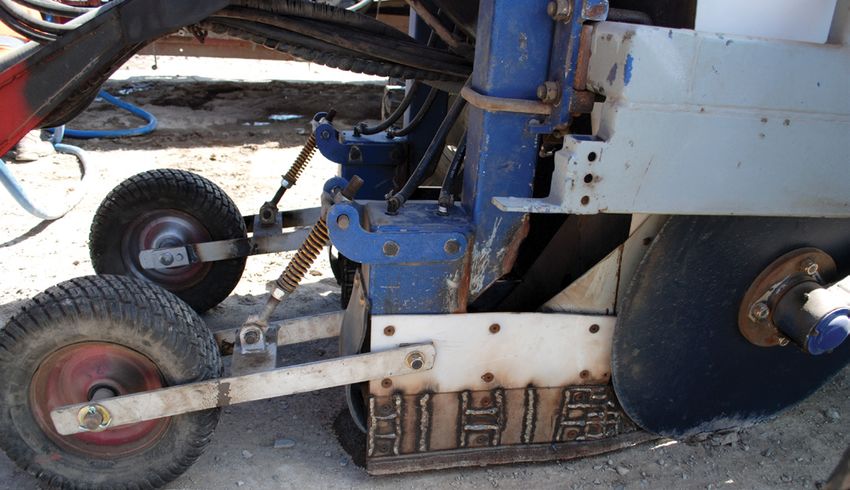
Many applicators do not have any
mechanism to close the application
slot. In very sandy soils, the slot may
close in on itself but for most others
some sort of press wheel or slot closure
mechanism is needed. Slot closure is
more difficult on moist soils with higher
clay content. Trash cover can hide an
open slot. Closing the slot must be done
in addition to applying imidacloprid at
the minimum of 100 mm depth as per
label requirements.
SUGAR RESEARCH AUSTRALIA LIMITED GREYBACK CANEGRUB MANAGEMENT 27Photo 38 - The nozzle on this applicator is angled too far back, resulting in shallow application and wetting of the press wheel. It is easily rectified by adjusting the angle forward.
The solid arrow shows the existing nozzle angle and the dashed arrow shows the correct nozzle angle. Photo 39 - Correct alignment of nozzle ensuring liquid reaches the base of
the slot. However, this applicator could be improved by the addition of a slot closure mechanism. Photo 40 - Coulter/tyne applicator showing the anti-drip valve, and the protective
metal tubing to house the delivery tube. This applicator could also be improved with the addition of a slot closure mechanism. Photo 41 - A twin coulter applicator - the horizontal
distance between the coulters must be 500 mm maximum. Photo 42 - Scraper fitted to double disc to minimize buildup of wet fertilizer granules on inner surfaces. This applicator
also could be improved with the addition of a slot closure mechanism and by directing the imidacloprid stream away from the discs so that the liquid does not contact them.
P.38
P.38
P.39
P.39 P.40
Anti-drip
valve
Delivery
tube can still
drip after
implement is
lifted at end of
rows
P.41
P.41 P.42
500 mm max
Stain on inside
of discs indicates
delivery tube
placement
or nozzle
selection needs
adjustment or
modification
28 SUGAR RESEARCH AUSTRALIA LIMITED GREYBACK CANEGRUB MANAGEMENTYou can also read


