Microsoft Dynamics 365 Licensing Guide - February 2018
←
→
Page content transcription
If your browser does not render page correctly, please read the page content below

Microsoft Dynamics 365
Licensing Guide

          February 2018

The Microsoft Dynamics 365 Licensing Guide | July 2017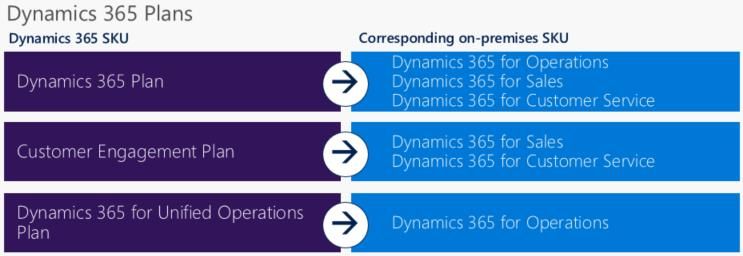
Contents
              Subscription Licensing Requirements .......................................................................................................................................... 2
              Microsoft Dynamics 365 Subscription License Types ............................................................................................................ 6
              Dynamics 365 Enterprise edition Applications ......................................................................................................................... 8
              Dynamics 365 Modular Applications ......................................................................................................................................... 13
              Dynamics 365 Plans .......................................................................................................................................................................... 13
              Microsoft Relationship Sales ......................................................................................................................................................... 15
              Custom Entities .................................................................................................................................................................................. 15
              Device Subscription License .......................................................................................................................................................... 16
              Additional Services and Software ............................................................................................................................................... 17
              Default Subscription Capacities ................................................................................................................................................... 19
              Microsoft Power BI in Microsoft Dynamics 365 .................................................................................................................... 22
              Microsoft Dynamics 365 Add-ons .............................................................................................................................................. 22
              Dynamics 365 Support Policies .................................................................................................................................................... 27
              Premier Support Services ............................................................................................................................................................... 30
              Licensing Programs .......................................................................................................................................................................... 30
              International Availability ................................................................................................................................................................. 31
              Microsoft Dynamics Lifecycle Services ...................................................................................................................................... 31
              Free Trial................................................................................................................................................................................................ 31
              Links for Additional Information ................................................................................................................................................. 31
              Appendix A: Key Team Members Features ............................................................................................................................. 33
              Appendix B: Customer Engagement Plan Applications ..................................................................................................... 34
              Appendix C: Dynamics 365 for Unified Operations Plan Security Roles by User SL Level ................................... 37
              Appendix D: Operations Customization and Licensing Requirements ........................................................................ 45
              Appendix E: Support Policies ........................................................................................................................................................ 47
              Appendix F: Change Log ................................................................................................................................................................ 48

The Microsoft Dynamics 365 Licensing Guide | July 2017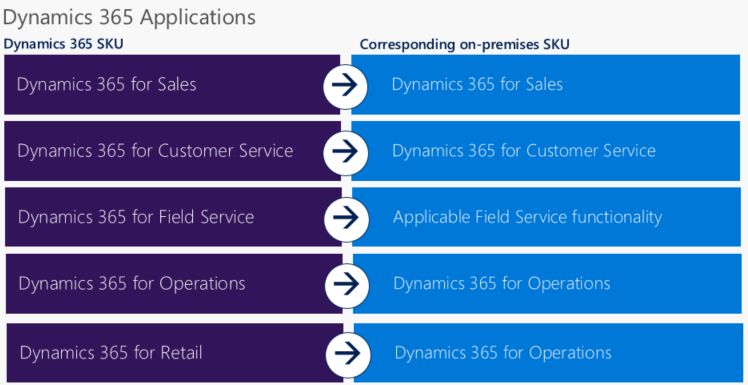
Using This Guide
             Use this guide to improve your understanding of how to license Microsoft Dynamics 365. Microsoft
             Dynamics 365 evolves Microsoft’s current CRM and ERP cloud solutions into one cloud service with new
             purpose-built applications to help manage specific business functions. Dynamics 365 applications are
             designed so they can be easily and independently deployed. A customer can start with what they need,
             yet the applications work together so, as the business demands, the customer can adopt additional
             capabilities with ease.
             This document does not apply to Microsoft Dynamics 365 on-premises, Microsoft Dynamics 365 for
             Operations on-premises, Enterprise edition, Microsoft Dynamics NAV, Microsoft Dynamics GP, Microsoft
             Dynamics SL, Microsoft Dynamics AX 2012, or Microsoft Dynamics CRM 2016 or prior versions. This guide
             also does not apply to the Microsoft Dynamic CRM Online or Microsoft Dynamics AX online services. This
             guide is not intended to influence the choice of Microsoft Dynamics products and services. The examples
             presented in this guide are illustrative. Microsoft reserves the right to review or update this document at
             any time without notice.
             Current online customers should refer to the applicable licensing guide for details on their entitlements
             and use rights, including benefits derived from Dynamics 365 licenses.
                   •    Microsoft Dynamics CRM Online Licensing Guide
                   •    Microsoft Dynamics AX Licensing Guide

             This document applies for users licensed with Dynamics 365 licenses.
             For help determining the right technology solution for any given organization, including the license
             requirements for a specific product or scenario, consult with your Microsoft account team or your
             Microsoft Dynamics Certified Partner.
             This guide does not supersede or replace any of the legal documentation covering use rights.

             Introduction to Microsoft Dynamics 365
             Microsoft Dynamics 365 is the next generation of intelligent business applications in the cloud. Microsoft
             Dynamics 365 unifies CRM and ERP capabilities by delivering new purpose-built applications to help
             manage specific business functions, including Dynamics 365 for Sales, Dynamics 365 for Customer Service,
             Dynamics 365 for Field Service, Dynamics 365 for Project Service Automation, Dynamics 365 for Finance
             and Operations, Dynamics 365 for Retail and Dynamics 365 for Talent. Designed to be personalized,
             enable greater productivity, deliver deeper insights and adapt to business needs, Microsoft Dynamics 365
             applications help businesses accelerate digital transformation to meet the changing needs of customers
             and capture the new business opportunities of tomorrow. Note that Dynamics 365 for Sales, Dynamics
             365 for Customer Service, Dynamics 365 for Field Service, and Dynamics 365 for Project Service
             Automation may also be referred to as Customer Engagement Plan Business Applications.
             Microsoft Dynamics 365 has two editions, Enterprise and Business editions. The Enterprise edition is
             optimized for complex organizations and those managing businesses at global scale. Microsoft Dynamics
             365 Enterprise edition includes the capabilities of Dynamics CRM Online and Dynamics AX products that
             existed in market pre Q4CY16. The Business edition is optimized for businesses outgrowing basic business
             automation software. Microsoft Dynamics 365 Business edition includes Dynamics 365 for Finance and
             Operations with future expected sales and marketing applications. This licensing guide will focus on the
             Enterprise edition. Please see here for the Business edition licensing guide.

The Microsoft Dynamics 365 Licensing Guide | February 2018                                                   P a g e |1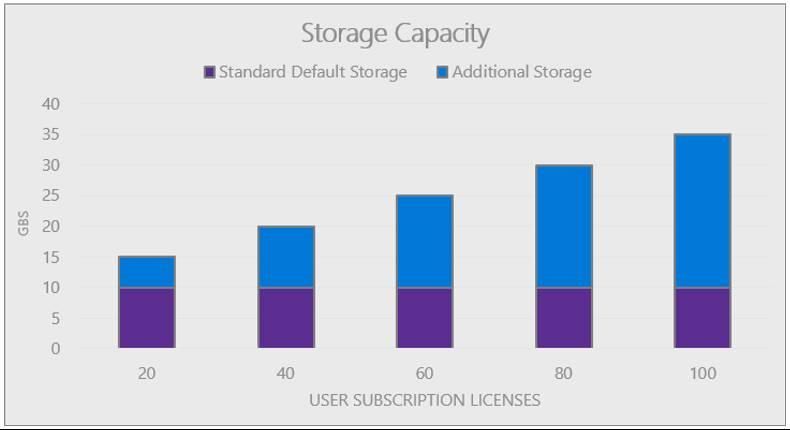
Subscription Licensing Requirements
             Licensing Requirements for External Users
             External users are end customers and third-party users of the organization or its affiliates and do not
             require SLs to access Microsoft Dynamics 365. External user access is included with the organization’s
             internal user SLs. Customer Engagement Applications graphical user interfaces may not be accessed by
             external users.
             In addition, external users include off-site vendors not on an employee-like relationship with the
             organization or its affiliates (e.g. IT help desk support vendors serving multiple customer organizations).
             However, external user access does not extend to the customer or the customer’s affiliate’s contractors,
             vendors, or agents providing business processes on the customer’s behalf or using Microsoft Dynamics
             365 to manage any portions of their business. In this sense, the customer may not use Microsoft
             Dynamics 365 to provide business process outsourcing services to its clients.
             Microsoft Social Engagement, a service included as part of select Microsoft Dynamics 365 licenses,
             does not distinguish between internal and external users. You must license external users, as well as,
             internal users who will access services with a Microsoft Dynamics 365 license.
             Figure 1: Internal vs. external users

             Licensing Requirements for Internal Users
             Customers must purchase Subscription Licenses (SLs) for their organization or their affiliates’ employees
             and on-site agents, vendors or contractors who directly or indirectly access the Microsoft Dynamics 365
             services.
             Microsoft Dynamics 365, Enterprise edition has two types of SLs:
                  •    User SLs are assigned on a “named user” basis, meaning each user requires a separate User SL;
                       User SLs cannot be shared but an individual with a User SL may access the service through
                       multiple devices.
                  •    Device SLs are assigned to license a device.
                       o     With the Customer Engagement Plan Business Application Device SL any number of users can
                             use the licensed device with a shared login, such as ‘truck1@contoso.com’ without the need
                             for separate User SLs. Individual users cannot be tracked as they all share one login. Customer
                             Engagement Plan device licenses are full devices – they include the same rights as the
                             equivalent user license.
                       o     With the Dynamics 365 Operations Device SL any number of users can access a licensed
                             device with individual logins without the need for separate User SLs. The Operations device is
                             a limited license with a subset of Unified Operations capabilities.

The Microsoft Dynamics 365 Licensing Guide | February 2018                                                      P a g e |2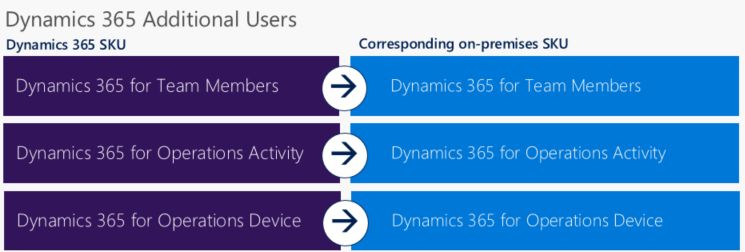
Since Microsoft Dynamics 365 may be licensed with User or Device SL, only the user or the device
             requires a SL, but not both. If the user of a device is licensed with a User SL, then the device does not
             need a Device SL. Likewise, if the device is licensed with a Device SL, then the user does not need a
             User SL. Customers can mix both User and Device SLs.
             Subscription duration requirements are determined by the licensing program under which a SL is
             licensed. Short term subscriptions are available exclusively through the MPSA licensing program. More
             information on MPSA is available here.
             The User and Device SL grants users non-perpetual rights (with no buy-out rights) to the use of the
             Dynamics 365 service. As long as you are current on your subscription payments and adhere to the
             Product Terms and the Online Service Terms, you will have access to the most up-to-date version of
             Microsoft Dynamics 365.
             Figure 2: Basic licensing requirements for Microsoft Dynamics 365

             The subscription licenses include access rights to the default Microsoft Dynamics 365 instances
             included in the subscription account, and every additional Microsoft Dynamics 365 instance
             (production or non-production) associated with the same Azure AD tenant. For more information on
             Azure AD tenants, please see here.
             Figure 3: Accessing multiple instances

             Multiplexing
             Multiplexing refers to the use of hardware or software that a customer uses to pool connections, reroute
             information, or reduce the number of devices or users that directly access or use the Microsoft Dynamics
             365 service. Multiplexing does NOT reduce the number of SLs of any type required to access the
             Microsoft Dynamics 365 service. Any user or device that accesses the Microsoft Dynamics 365 service —
             whether directly or indirectly—must be properly licensed.

The Microsoft Dynamics 365 Licensing Guide | February 2018                                                     P a g e |3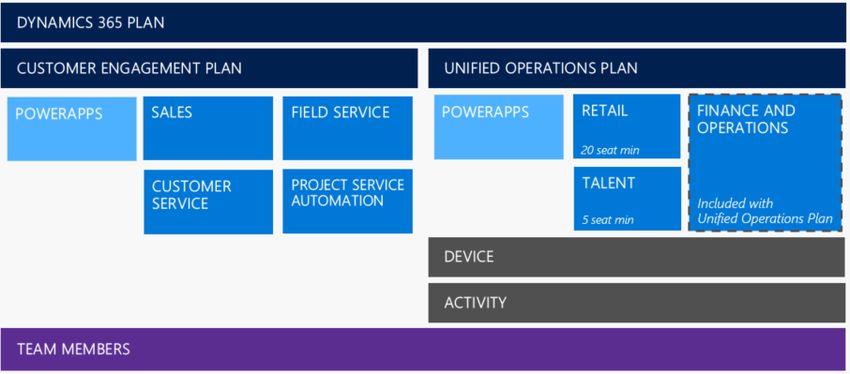
Microsoft Dynamics 365 SLs are required for users or devices that directly input, query, or view data from
             the Microsoft Dynamics 365 service. Similarity, Microsoft Dynamics 365 SLs are required for users or
             devices that input data into, query, or view data from the Microsoft Dynamics 365 service through a
             pooling device. Pooled connections use a non-interactive user account in Microsoft Dynamics 365 that
             can access the system but only via the web service layer. Internal users and devices accessing Microsoft
             Dynamics 365 data indirectly through a portal or via an API to a separate service such Microsoft Outlook
             must also be properly licensed, regardless of if they are set up as a Microsoft Dynamics 365 user in the
             service, for example:
                  •    Internal users and devices access Microsoft Dynamics 365 data indirectly through a PowerApp
                       must still be properly licensed for Dynamics 365.
                  •    Any user or device that accesses the service, files, data, or content provided by the service that is
                       made available through an automated process requires a Microsoft Dynamics 365 SL.
                  •    The number of tiers of hardware or software between the Microsoft Dynamics 365 service and the
                       user or devices that ultimately use its data, services, or functionality does not affect the number of
                       SLs required.
             For additional information about multiplexing refer to the Microsoft Volume Licensing Brief
             Multiplexing—Client Access License (CAL) Requirements.
             Note: Licensed users may manually rekey information (when coming from non-licensed users) into the Microsoft
             Dynamics 365 service. This scenario is not considered multiplexing.
             Figure 4: Multiplexing

             Dual Use Rights
             One of the advantages of Microsoft Dynamics 365 is dual use rights. This allows customers the option to
             deploy the server software either in Microsoft’s cloud or in a private on-premises or partner-hosted cloud.
             In some cases, customers may want to deploy both types of instances simultaneously. This might be done
             to help with migrating a Microsoft Dynamics 365 on-premises deployment to Microsoft Dynamics 365,
             running private Dev/Test deployments in Microsoft Azure. With Dual Use Rights, Microsoft Dynamics 365
             users licensed with the required User SL do not need to acquire CALs to access Server instances.
             Users or devices licensed with Microsoft Dynamics 365 SLs have use rights equivalent to a CAL for the
             purpose of accessing equivalent on-premise workloads. With Microsoft Dynamics 365 the server license is
             included with the SLs. For the Unified Operations Plan and applicable Unified Operations applications, this
             is the Microsoft Dynamics 365 for Operations Server and for the Customer Engagement Plan Business
             Applications this is the Microsoft Dynamics 365 On-premises Server. Customers may use downgrade
             rights to deploy an earlier version of a server, however, downgrade rights are limited to Dynamics AX
             2012 R3 Server for Microsoft Dynamics 365 for Operations Server, and Dynamics CRM 2016 for Microsoft

The Microsoft Dynamics 365 Licensing Guide | February 2018                                                       P a g e |4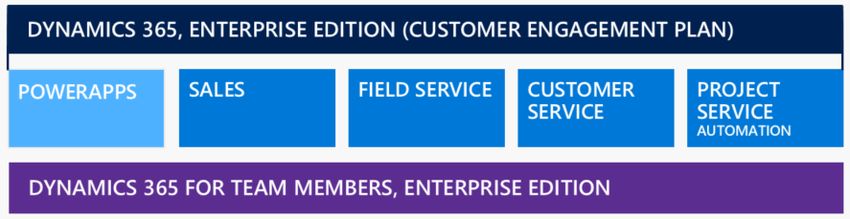
Dynamics Customer Engagement Server. Licenses for all supporting servers (e.g., Windows Server and
             CAL(s)) must be obtained separately.
             Users or devices licensed with the Microsoft Dynamics 365 Plan, Customer Engagement Plan, Sales,
             Customer Service, or Team Member SLs may access the on-premises Microsoft Dynamics 365 Server
             software provided via dual use rights.
             Users or devices licensed with the Microsoft Dynamics 365 Plan, Unified Operations Plan, Retail,
             Operations Device, or Team Member SLs may access the on-premises Microsoft Dynamics 365 for
             Operations Server software provided via dual use rights. Access to the Microsoft Dynamics 365 for
             Operations Server software provided via dual use rights is exclusive to those users assigned a qualifying
             Microsoft Dynamics 365 SL and External Users and not provided for users licenses with on-premises CALs.
             Figure 5: Dual Use Rights

             Figure 6: Dual Use Rights Mapping

The Microsoft Dynamics 365 Licensing Guide | February 2018                                                P a g e |5
+
Field Service (on-premises) is available for Dynamics 365 Customer Engagement Plan and Field Service
customers through dual use rights
Dual Use Rights included with Microsoft Dynamics 365 SLs are non-perpetual and will expire when the cloud
subscription expires.
Microsoft Dynamics CALs have no reciprocal rights to access functionality provided exclusively to
Microsoft Dynamics 365 User SLs, nor do Dual Use Rights imply equivalent capabilities between Microsoft
Dynamics CALs and Microsoft Dynamics 365 SLs.
Customers who have purchased Microsoft Dynamics 365 and are entitled to On-Premises software can
obtain their software as follows. Volume Licensing: Volume Licensing Service Center (VLSC), Cloud
Solution Provider Program: PartnerSource, Microsoft Online Subscription Program: CustomerSource.
Registration may be required.
Microsoft Dynamics 365 Subscription License Types
Microsoft Dynamics 365 simplifies licensing of business applications. The primary licensing is by named
user subscription. The Microsoft Dynamics 365 user subscriptions classify users into two types, “full
users” and “additional users”.
Figure 7: User Types
Full users are the users whose work requires use of the feature rich business applications functionality.
Examples of full users are sales people, customer service representatives, finance employees,
controllers and supply chain managers. These users have also been referred to in the past as Pro users
or Power Users. These full users are licensed with a Dynamics 365 Plan, or Dynamics 365 application
subscription (not including Dynamics 365 for Talent).
The Microsoft Dynamics 365 Licensing Guide | February 2018 P a g e |6Additional users often represent a large percentage of users in an organization and may consume
data or reports from line of business systems, complete light tasks like time or expense entry and HR
record updates or be heavier users of the system, but not require full user capabilities. These additional
users are licensed with Dynamics 365 for Team Members, Dynamics 365 for Operations Activity or
Dynamics 365 for Talent subscriptions.
There is also device licensing available for the Enterprise edition for shared device scenarios. See the
Device Subscription License section for more information.
Dynamics 365 for Team Members
The Microsoft Dynamics 365 for Team Members subscription is a named user subscription designed for
users who are not tied to a particular function, but who require basic Dynamics 365 functionality. This
license includes read access as well as some write access for select light tasks across all Dynamics 365
applications for a given tenant. As a result, as more Dynamics 365 applications are adopted across an
organization, any user previously licensed with Team Members subscription would be licensed already
to access those additional applications.
The Team Members SL user may access Dynamics 365 data from Dynamics 365 for Unified Operations
Plan and Dynamics 365 Customer Engagement Plan Applications. Note, at least one Full user must be
assigned to the tenant to administer and configure the service. A Plan subscription is the most cost-
effective option to provide ultimate flexibility for a user to administer and configure more than one
Dynamics 365 application.
The Team Members SL grants a user full read access across all the Dynamics 365 Enterprise edition
applications for a given tenant. In addition, the Team Members SL includes some limited use write access
across Unified Operations Plan and Customer Engagement Plan Business Applications as defined below.
Dynamics 365 for Team Members, Enterprise edition also includes the “PowerApps for Dynamics 365
Applications” license. Team Members users can use PowerApps to access Dynamics 365 within the bounds
of their Team Members license.
Team Member use rights for Dynamics 365 for Unified Operations Plan Applications
The Team Members SL grants a user the following Dynamics 365 for Finance and Operations, Dynamics
365 for Retail and Dynamics 365 for Talent rights for their own use and not for, or on behalf of, other
individuals:
(i) To record any type of time
(ii) To record any type of expenses
(iii) Manage personal information
(iv) Manage direct employee and candidate activities for hiring, onboarding, and human
resources
(v) Create requisitions
(vi) Create or edit the items related to the following capabilities: quality control, service orders
and departmental budgets
(vii) Approval of time, expense, invoices
Team Member use rights for Dynamics 365 Customer Engagement Plan Applications
The Team Members SL grants a user the following Dynamics 365 for Sales, Dynamics 365 for Customer
Service, Dynamics 365 for Field Service, or Dynamics 365 for Project Service Automation rights for their
own use and not for, or on behalf of, other individuals:
The Microsoft Dynamics 365 Licensing Guide | February 2018 P a g e |7(i) Write access to Accounts, Contacts, Activities, Tasks and notes
(ii) Record time and expense for Dynamics 365 for Project Service Automation, and apply for
projects
(iii) Set up and manage the knowledgebase and Interactive Service Hub
(iv) Update personal information
(v) User Reporting and dashboards
(vi) Edit Custom Entities*
(vii) Participate as an end-consumer of Dynamics 365 services such as responding to surveys, or
applying for projects
4
Customizations can only be performed against entities included in the Team Member use rights. Custom Entities may be either based on
entities included in Dynamics 365 or created by a customer or partner. Access to Custom Entities based on entities not part of Team Members
rights require a higher USL, depending on the required access.
Please review Appendix A for a more detailed list of the Team Members use rights.
Dynamics 365 for Operations Activity
The Dynamics 365 for Operations Activity subscription is a named user subscription intended for users
who may be heavy users of the application, but do not require the use rights of a full user. Dynamics
365 for Operations Activity use rights include all Team Member user rights as well as the right to:
(i) Approve all Activity related transactions
(ii) Create or edit the items related to warehousing, receiving, shipping, orders, vendor
maintenance, and all budgets
(iii) Operate a Point-of-Sale (POS) device, store manager device, shop floor device, or warehouse
device.
Please review Appendix C for a list of the out of the box Dynamics 365 for Unified Operations Plan roles
and associated user types.
Dynamics 365 Enterprise edition Applications
Application subscriptions are named user subscriptions where a user is licensed only for one individual
application. This is largely how business applications have traditionally been licensed. Application
subscriptions also include use rights to PowerApps for mobile app creation and use against Dynamics 365
data. Dynamics 365 will have the following Applications as part of the Enterprise edition: PowerApps,
Dynamics 365 for Sales, Dynamics 365 for Field Service, Dynamics 365 for Customer Service, Dynamics 365
for Project Service Automation, Dynamics 365 for Finance and Operations, Dynamics 365 for Retail and
Dynamics 365 for Talent.
Microsoft PowerApps
PowerApps and Microsoft Flow capabilities are included in all the Dynamics 365 applications and
Dynamics 365 for Team Members subscriptions so that users can create, modify and use mobile apps
based on Dynamics 365 data. Dynamics 365 Business and Enterprise edition Plans include PowerApps P2,
which provides users full create and run capabilities across data sources including the ability to model
business data in the Common Data Model (CDM).
The Microsoft Dynamics 365 Licensing Guide | February 2018 P a g e |8Microsoft Dynamics 365 for Sales
For your sales team, Microsoft Dynamics 365 for Sales provides licensed users with access to core sales
capabilities for a significantly lower price than comparable offerings from other vendors, including lead
and opportunity management, product, price list, and order management, as well as sales group
management functionality. Each Dynamics 365 for Sales User SL also includes rights to Unified Service
Desk for Microsoft Dynamics 365, Microsoft Social Engagement, Voice of the Customer for Microsoft
Dynamics 365, Dynamics 365 Mobile Offline, Dynamics 365 - Gamification, and Microsoft PowerApps
capabilities. Additionally, this license includes rights to configure and administer the Dynamics 365 for
Sales application.
For a detailed view of the use rights associated with Dynamics 365 for Sales please refer to Appendix B.
Microsoft Dynamics 365 for Customer Service
Microsoft Dynamics 365 for Customer Service is the recommended choice for your customer support
teams. It provides licensed users with access to core customer service capabilities for a significantly lower
price than comparable offerings from other vendors, including Enterprise case management, Interactive
Service Hub, Unified Service Desk for Microsoft Dynamics 365, SLAs and Entitlements, and other Service
group management functionality. Each Dynamics 365 for Customer Service User SL also includes rights to
Microsoft Social Engagement, Voice of the Customer for Microsoft Dynamics 365, Dynamics 365 Mobile
Offline, Microsoft Dynamics 365 - Dynamics 365 - Gamification, and Microsoft PowerApps capabilities.
Additionally, this license includes rights to configure and administer the Dynamics 365 for Customer
Service application.
For a detailed view of the use rights associated with Dynamics 365 for Customer Service please refer to
Appendix B.
Microsoft Dynamics 365 for Field Service
Microsoft Dynamics 365 for Field Service is the recommended choice for your field-based service
teams, leveraging tight integration between Dynamics 365 for Customer Service case management
capabilities and field service work orders to deliver business process driven, best in class field service
management. It provides licensed users with access to field service capabilities including work order
management, schedule, dispatch, and routing capabilities, repairs and returns management, and
inventory management. Each Dynamics 365 for Field Service User SL also includes rights to Microsoft
Social Engagement, Voice of the Customer for Microsoft Dynamics 365, Dynamics 365 Mobile Offline,
The Microsoft Dynamics 365 Licensing Guide | February 2018 P a g e |9Dynamics 365 - Gamification, and Microsoft PowerApps capabilities. Additionally, this license includes
rights to configure and administer the Dynamics 365 for Field Service application.
This User SL also includes the Field Service Mobile Application, a Microsoft application that is specifically
designed for Dynamics 365 for Field Service, distinct from the Dynamics CRM Mobile Client Application.
This application is technically limited to only Field Service entities and a maximum of 10 custom entities.
For a detailed view of the use rights associated with Dynamics 365 for Field Service please refer to
Appendix B.
Microsoft Dynamics 365 for Project Service Automation
Microsoft Dynamics 365 for Project Service Automation is designed for professionals who manage
projects and the associated customer engagement process end-to-end. This provides licensed users
with capabilities required for setting up a project organization, engaging with customers, project
scheduling and costing, managing and approving time and expense, and closing projects. Each
Dynamics 365 for Project Service Automation Service User SL also includes rights to Microsoft Social
Engagement, Voice of the Customer, Dynamics 365 Mobile Offline, Dynamics 365 - Gamification, and
Microsoft PowerApps capabilities. Additionally, this license includes rights to configure and administer
the Dynamics 365 for Project Service Automation application.
This User SL also includes the Microsoft Project Online Premium license. The details for this license can
be found on the Microsoft Project Online website.
For a detailed view of the use rights associated with Dynamics 365 for Project Service Automation please
refer to Appendix B.
Note: The SharePoint that comes with Project Online plans is a use rights restricted version that only
allows SharePoint usage within the scope of Project Online. Please see the Service Description for
additional details.
The Microsoft Dynamics 365 Licensing Guide | February 2018 P a g e | 10User SL Comparison Dynamics 365 for Sales, Customer Service, Field
Service, and Project Service Automation
The following provides a high-level summary of the use rights associated with each of the five User SL
levels. For a detailed comparison, refer to Appendix B.
1
Custom entities (either based on entities included in CRM or created by a customer or partner) may require a higher CAL or USL, depending on the
required access. Customizations can only be performed against entities included in the use rights.
2
Creating, updating and deleting via workflows can only be performed against entities included in the use rights (i.e. update an opportunity requires
Sales or Customer Engagement Plan).
3
No Access to Dynamics 365 User Interface. Case Management and Chat can only be submitted on users’ own behalf, as a supportee, not on behalf of a
customer or other individual.
4
Creation of PowerApps can only leverage data included within the individual application.
Microsoft Dynamics 365 for Finance and Operations
The Microsoft Dynamics 365 for Finance and Operations includes full read, edit and approval access
across the Finance and Operations application plus Microsoft PowerApps capabilities. Finance and
Operations provides the operations features and capabilities including but not limited to financial,
manufacturing and supply chain capabilities that are not included in other standalone Unified Operations
Plan applications.
The Dynamics 365 for Finance and Operations application cannot be licensed as a standalone application
and is licensed exclusively with the Dynamics 365 Unified Operation Plan or Dynamics 365 Plan SLs. For
Plan SLs purchase requirements, refer to Dynamics 365 Plans section in this licensing guide document.
The Microsoft Dynamics 365 Licensing Guide | February 2018 P a g e | 11Please review Appendix C for a list of the out of the box Dynamics 365 for Unified Operations Plan roles
and associated user types. For a description of how to create custom roles for Dynamics 365 for Unified
Operations Plan and how to license them please refer to Appendix D.
Dynamics 365 for Retail
The Dynamics 365 for Retail application is designed to help retailers manage their operations, deliver a
connected employee experience, and offer exceptional shopping experiences. By leveraging intelligent
forecasting and product recommendations, retailers may: (i) improve in-store and e-commerce
profitability, (ii) drive intelligent business insights to optimize strategy and cost, and (iii) accelerate buying
behavior through ubiquitous customer experiences.
The Retail application is optimized for full users, including headquarter and central operation employees
of retail organizations. Depending on the scenario, employees in retail stores will generally be licensed
with either the Operations Device SL or Operations Activity SL. Examples of these scenarios may include
store employees, store managers and point of sale devices. For Operations Device and Operations Activity
use rights, refer to those licenses descriptions in this licensing guide document.
There is a 20-seat minimum of Dynamics 365 for Retail (or Dynamics 365 Plan or Unified Operations Plan)
SLs required to license the application.
Retail deployments may also utilize the Retail Store Scale Unit, which is a retail server, cloud POS website
and channel database deployed locally in a store. It maintains connectivity with and extends a Dynamics
365 for Retail deployment, providing improved performance, business continuity and hybrid capabilities in
store.
The Retail Store Scale Unit installation and use rights are included with a qualifying minimum purchase of
Dynamics 365 for Operations Plan, Unified Operations Plan and Retail Application SLs and may be
downloaded and installed at no additional cost. All servers, users and devices accessing the Retail Store
Scale Unit must be appropriately licensed. The Retail Store Scale Unit is not available as a standalone
license. Required hardware, Windows Client or Windows Server and SQL licenses must be acquired and
licensed separately.
If dual use rights are being exercised and downgrade rights are utilized to downgrade to AX 2012, the
Retail Store Server is not an included use right and appropriate licensing must be obtained. Please see AX
2012 Retail Licensing Guide and refer to the AX downgrade mappings table in the Dynamics 365 for
Operations on-premises licensing guide to determine appropriate licensing.
Please review the retail section of Appendix C for a list of the out of the box retail roles and associated
user types. For a description of how to create custom roles for Dynamics 365 for Retail and how to license
them please refer to Appendix D.
Dynamics 365 for Talent
The Microsoft Dynamics 365 for Talent application helps organizations strategically attain, empower and
optimize human resources to achieve high-impact, sustainable results for the organization. There are two
sets talent experiences:
1) HR Experience: strategic HR experience to drive operational excellence through intuitive
experiences, visibility and collaboration and impactful programs.
2) Talent Experiences: hire the best talent faster, build high performing agile teams and maximize
the potential of your team.
The Microsoft Dynamics 365 Licensing Guide | February 2018 P a g e | 12Both experiences are licensed together in the Dynamics 365 for Talent application. Examples of full users
who would be licensed with Talent application SLs would include human resource professionals and
recruiters.
Users who sit outside of HR and recruiting, such as employees who need self-serve HR access and hiring
managers who will be hiring for their own teams would be licensed through the Team Members SL.
There is a 5 seat minimum of full Dynamics 365 for Talent (or Dynamics 365 Plan or Unified Operations
Plan) SLs required to license the Talent application.
Customers that purchase the full Talent SKU (5 seat minimum) are entitled to 2 environments/instances
for the organization (not per seat). Of those two only 1 can be used in production, the second one is only
for non-production use (UAT, pre-production, etc.).
Please review the Talent section in Appendix C for a list of the out of the box Dynamics 365 for Talent
roles and associated user types. For a description of how to create custom roles for Dynamics 365 for
Talent and how to license them please refer to Appendix D.
Dynamics 365 Modular Applications
Dynamics 365 Modular Applications allow you to take advantage of Dynamics 365 Enterprise Application
capabilities in a lighter weight, more targeted solution. Modular applications represent a subset of the
capabilities in their respective Dynamics 365 Enterprise Applications but are fully functional standalone
experiences that can also integrate with and extend Microsoft and third-party business applications.
Talent Modular Applications
Two Talent modular applications are available:
• Talent: Attract
• Talent: Onboard
The Talent Attract and Onboard applications are sold individually or together as a discounted bundle.
Pricing is per user per month with a one-year minimum commitment and there is no minimum purchase
requirement. These applications are only available for direct purchase and are licensed under the
Microsoft Online Subscription Program (MOSP).
Dynamics 365 Plans
Plan subscriptions are new with Dynamics 365. With one single user subscription, a Plan subscription is
the most cost-effective option to provide ultimate flexibility for a user to have access to any Dynamics 365
functionality to get their job done. Plan subscriptions provide users rights to use functionality across any
of the respective Plan applications as well as use of Microsoft PowerApps, the mobile application platform
service.
Enterprise Edition Customer Engagement Plan
Customer Engagement Plan gives you the flexibility to work with any application functionality. Customer
Engagement Plan includes flexibility to use Dynamics 365 for Sales, Dynamics 365 for Field Service,
Dynamics 365 for Customer Service, Dynamics 365 for Project Service Automation, and full PowerApps P2.
Licensing becomes simpler because all Customer Engagement Plan business application rights are
included.
The Microsoft Dynamics 365 Licensing Guide | February 2018 P a g e | 13Enterprise Edition Unified Operations Plan
Unified Operations Plan includes full read, edit and approval access across the entire ERP solution
(formerly known as Microsoft Dynamics AX) plus Microsoft PowerApps capabilities. Finance and
Operations Plan includes flexibility to use Dynamics 365 for Talent, Dynamics 365 for Retail, and full
PowerApps P2.
Please note there is a minimum quantity of SLs required:
• 20 Microsoft Dynamics 365 for Unified Operations Plan or Dynamics 365 Plan User SLs, 20
Dynamics 365 for Retail SLs and 5 Dynamics 365 for Talent SLs
• Customers may also license equivalent Microsoft Dynamics 365 for Operations Device SLs per
tenant
o Dynamics 365 Plan, Dynamics 365 Unified Operations Plan and Dynamics 365 for Retail
application SLs may be combined to satisfy the 20-user minimum for a Finance and
Operations and/or Retail deployment.
o Dynamics 365 for Operations Device SLs may also be applied toward satisfying the 20-
user minimum with 2.5 Device SLs to equal 1 Dynamics 365 for Unified Operations Plan
User SL.
o Dynamics 365 Plan, Dynamics 365 Unified Operations Plan and Dynamics 365 for Talent
application SLs may be combined to satisfy the 5-user minimum for a Talent deployment.
o For example, a customer could meet the minimum requirement with 10 Dynamics 365 for
Unified Operations Plan User SLs and 25 Dynamics 365 for Operations Device SLs
o The Microsoft Cloud Solution Provider (CSP) program does not allow for mixing of SKU
types to satisfy the minimum requirement. The CSP minimum is 20 Dynamics 365 Plan
SLs, 20 Dynamics 365 for Unified Operations Plan User SLs, 20 Dynamics 365 for Retail
SLs or 5 Dynamics 365 for Talent SLs.
The Microsoft Dynamics 365 Licensing Guide | February 2018 P a g e | 14Please review Appendix C for a list of the out of the box Dynamics 365 for Unified Operations Plan roles
and associated user types. For a description of how to create custom roles for Dynamics 365 for Unified
Operations Plan and how to license them please refer to Appendix D.
Enterprise Edition Dynamics 365 Plan
Dynamics 365 Plan includes access to Customer Engagement Plan functionality plus Dynamics 365 for
Unified Operations Plan.
Microsoft Relationship Sales
Microsoft Relationship Sales solution helps sales professionals build the relationships they need to win,
from a single, trusted vendor. This solution will help connect more businesses with the power of
relationship selling.
Microsoft Relationships Sales solution includes Dynamics 365 for Sales and LinkedIn Sales Navigator,
Enterprise edition. Microsoft Relationship Sales solution seats will contribute towards the Customer
Engagement Plan tiers. See Tiered Pricing section in this licensing guide document to learn more.
For more information and list of features included with LinkedIn Sales Navigator see
https://business.linkedin.com/sales-solutions/sales-navigator . For a detailed view of the use rights
associated with Dynamics 365 for Sales please refer to Appendix B.
Custom Entities
Microsoft Dynamics 365 for Team Members and higher provide the right to use custom entities.
Custom entities may only be created or replicated by a partner or user licensed for full Application or
Enterprise Plan use. Rights to create or replicate new custom entities are not included with Team
Members and Operations Activity licenses. Custom entities may be based on entities included in
Dynamics 365 or created by a customer or partner. If the custom entity is based on or replicates the
functionality of entities included in Microsoft Dynamics 365, or if the entity links to entities included in
Microsoft Dynamics 365, then users accessing the custom entity must also be licensed to access the
included or replicated entity. For example, users creating an entity that replicates the cases entity for a
ticketing system would still require the user to be licensed for cases. In other words, customizations
may only be performed against entities users are licensed to access.
The Microsoft Dynamics 365 Licensing Guide | February 2018 P a g e | 15Device Subscription License
Microsoft Dynamics 365 for Sales Device SL
With the Dynamics 365 for Sales device license, multiple users can access the Dynamics 365 for Sales
application through a shared device login. The use rights are equal to the that of the Dynamics 365 for
Sales User SL, except that access is limited to only the licensed device. Please note there is no Dynamics
365 Enterprise Customer Engagement Plan device license. For a detailed view of the use rights associated
with Dynamics 365 for Sales device please refer to Appendix B.
Microsoft Dynamics 365 for Customer Service Device SL
With the Dynamics 365 for Customer Service device license, multiple users can access the Dynamics 365
for Customer Service application through a shared device login. The use rights are equal to the that of the
Dynamics 365 for Customer Service User SL, except that access is limited to only the licensed device.
Please note there is no Dynamics 365 Enterprise Customer Engagement Plan device license. For a
detailed view of the use rights associated with Dynamics 365 for Customer Service device please refer to
Appendix B.
Microsoft Dynamics 365 for Field Service Device SL
With the Dynamics 365 for Field Service device license, multiple users can access the Dynamics 365 for
Field Service application through a shared device login. The use rights are equal to the that of the
Dynamics 365 for Field Service User SL, except that access is limited to only the licensed device. Please
note there is no Dynamics 365 Enterprise Customer Engagement Plan device license. For a detailed view
of the use rights associated with Dynamics 365 for Field Service device please refer to Appendix B.
Microsoft Dynamics 365 for Operations Device SL
With the Dynamics 365 for Operations Device license, multiple users can use a device that is licensed with
a Dynamics 365 Operations device SL to operate a point of sale device, shop floor device, warehouse
device or store manager device. A single device can provide any of the following functionality in any
combination.
• “Point of Sale Device” means one device located in the Commerce location, used by any
individual, for completing customer facing sales of goods or services transactions.
• “Store Manager Device” means one device located in the Commerce Location, used by any
individual, dedicated to performing the following tasks solely for that Commerce Location (i)
managing and replenishing inventory, (ii) balancing cash registers and processing daily receipts,
(iii) configuring and maintaining menu options displayed by the ISV Devices, (iv) purchasing
supplies and services required to run the Commerce Location operations, (v) managing
Commerce Location staff, (vi) processing reports required to analyze and manage Commerce
Location results, and (vii) managing master data related to Commerce Location operations.
• “Commerce Location” or “Store” means a physical location (static or itinerant) operated by you
when closing goods or services transactions with customers.
• “Shop Floor Device” means one device dedicated to performing manufacturing shop-floor
functions and that device may not be used for other purposes.
• “Shop Floor Functions” means clock-in and clock-out, starting and finishing production jobs
(including project activities carried out on the shop floor), reporting progress, materials
The Microsoft Dynamics 365 Licensing Guide | February 2018 P a g e | 16consumption and completion, viewing documents and instructions related to production jobs,
and viewing worker holiday balances.
• “Warehouse Device” means one device dedicated to Performing Warehousing Functions, and that
may not be used for any other purposes.
• “Performing Warehousing Functions” means receiving, putting-away, doing internal stock
transfers, picking, packing, capturing product attributes, and shipping goods plus performing
inventory count checks in the context of a warehouse management system and posting output
and materials consumption against production orders when captured as transfers of raw materials
and finished goods between a warehouse and a production line (all other types of transactions
are excluded).
Note: Dynamics 365 for Operations Device SL use rights are also available to Dynamics 365 for Operations
Activity users. When multiple users who only require these use rights work exclusively on shared devices,
it will generally be more cost effective to license those devices with the device SL. When a single user
utilizes one or more dedicated personal devices, it will be more cost effective to license that user with an
Activity USL.
Additional Services and Software
Microsoft offers additional services and software that work in tandem with Microsoft Dynamics 365,
including Microsoft Social Engagement, Voice of the Customer for Microsoft Dynamics 365, Microsoft
Dynamics 365 - Gamification, Interactive Service Hub, Dynamics 365 Mobile Offline, and Unified Service
Desk for Microsoft Dynamics 365.
Microsoft Social Engagement
Microsoft Social Engagement provides volume and sentiment analysis of social networking data and is
recommended for sales, marketing and customer service workers interested in social media discussion
of their products, competitors and industry.
All Microsoft Social Engagement functionality is included with Dynamics 365 for Sales, Dynamics 365
for Customer Service, Dynamics 365 for Field Service, and Dynamics 365 for Project Service Automation
applications.
Functionality Included with Select Dynamics 365 Applications
Social listening Social insights
Social sentiment detection Social Engagement
Social analytics Social Center: unlimited streams
Activity map Social Center: sharing streams
Trends & posts alerts Social Center: assign posts to users
Private messages Link to Dynamics 365
Export widgets to Excel Automation rules
Azure Event Hub integration* Intention analysis
*Note: Azure Event Hub functionality requires Azure subscription
Unified Service Desk for Microsoft Dynamics 365
Unified Service Desk for Microsoft Dynamics 365 (USD) consolidates numerous communication
channels (such as phone, chat, email, and social media) and relevant services into a single interface to
enable greater efficiency and productivity.
USD installation rights are included with Dynamics 365 for Sales and Dynamics 365 for Customer
Service SLs. USD is not available as a standalone license.
The Microsoft Dynamics 365 Licensing Guide | February 2018 P a g e | 17USD software is installed and run locally on the user’s device. The use rights expire upon expiration of
the qualifying User SL subscription term or Software Assurance subscription. Only licensed users may
use the software.
Interactive Service Hub
Interactive Service Hub provides a modern and intuitive end user experience for Customer Service and
knowledge management roles through an online user experience (UX) design. It unifies customer
interactions and pulls together all related information, enabling customers to be productive and view
what’s most relevant at all times. The interactive service hub includes a multi-stream dashboard where
users can view and act on their workload across multiple data streams as well as a single-stream
dashboard where users are provided an aggregate view of the workloads.
Interactive Service Hub is licensed with Microsoft Dynamics 365 for Team Members and higher User
SLs and Microsoft Dynamics CRM Server 2016 or later for Team Members CALs.
Voice of the Customer for Microsoft Dynamics 365
Voice of the Customer for Microsoft Dynamics 365 provides general sentiment, contextual feedback,
and transactional understanding based on insight captured through feedback and surveys. Customer
feedback is captured and leveraged to shape engagements with easy to use, mobile and touch-
enabled tools. Feedback is analyzed as part of a single customer record, enabling a direct response to
a specific customer concern, or as a whole, so that organizations can better understand their market
and programmatically respond to customer needs.
Full Voice of the Customer capabilities are licensed with Dynamics 365 for Sales, Dynamics 365 for
Customer Service, Dynamics 365 for Field Service and Dynamics 365 for Project Service Automation, or
Enterprise Plan license.
Voice of Customer capabilities are limited to a maximum of 200 concurrent surveys. Additional
limitations can be found here.
Dynamics 365 Mobile Offline
Dynamics 365 Mobile Offline capabilities enable offline entities, provides auto-reply for offline actions, a
strong security model and offline views and offline search.
Dynamics 365 Mobile offline sync is licensed with Dynamics 365 for Sales, Dynamics 365 for Customer
Service, Dynamics 365 for Field Service and Dynamics 365 for Project Service Automation, or Enterprise
Plan license.
Dynamics 365 - Gamification
The Dynamics 365 - Gamification service allows customers to incent their workers by turning work into
play via individual and team contests, as well as engaging the broader organization by enabling them to
build fantasy team competitions.
Microsoft Dynamics 365 - Gamification Commissioner, Game Manager and Player rights are licensed with
Dynamics 365 for Sales, Dynamics 365 for Customer Service, Dynamics 365 for Field Service and Dynamics
365 for Project Service Automation, or Enterprise Plan license. Fan and Spectator rights are licensed with
Dynamics 365 for Team Members.
The Microsoft Dynamics 365 Licensing Guide | February 2018 P a g e | 18Default Subscription Capacities
Dynamics 365 will come with many great default features. We want to start by giving you a run through of
what will come standard when you start a subscription for either the Customer Engagement Plan Business
Applications, or the Unified Operations Plan Applications. We have broken this default section down into
all Customer Engagement Plan Business Applications, Dynamics 365 for Sales, Dynamics 365 for Field
Service, Dynamics 365 for Customer Service, and Dynamics 365 for Project Service Automation, which will
leverage the same tenant and infrastructure will accrue across this one tenant. Unified Operations Plan
Applications leverages an entirely different tenant and will have its own set of default capabilities.
Customer Engagement Plan Business Applications
The following Customer Engagement Plan Business application subscriptions share the same tenant and
share infrastructure capacity: Dynamics 365 for Sales, Dynamics 365 for Field Service, Dynamics 365 for
Customer Service, and Dynamics 365 for Project Service Automation. They will have access to the
following shared Customer Engagement Plan Business Application default subscription capacities. If a
customer purchases Dynamics 365 Plan they will obtain default access to both the Customer Engagement
Plan Business Applications and the Dynamics 365 for Unified Operations Plan Application.
Role Use Rights Included in Team Included in Select
Members Applications
Spectator View Results on Leaderboards (web, mobile, and
TV screens) & chat with participants
Fan Draft personal Fantasy Teams & Earn points,
badges & trophies on team results
Player Play/Compete in Game (earn points, badges, and
trophies) & participate in Chat
Game Setup Games: Define game model, metrics,
Manager positions, & prizes
Commissioner Oversee Games: Admin, role management
Default Production Instance
The Customer Engagement Plan Business Application subscriptions offer one production instance per
tenant, shared across all Customer Engagement Plan Business Applications.
Default Non-Production Instance Capacity
The Customer Engagement Plan Business Application subscriptions offer one non-production instance
per tenant, shared across all Customer Engagement Plan Business Applications.
Default Microsoft Dynamics 365 Portal
The Dynamics 365 Portal provides you the capability to extend your Dynamics 365 for Sales,
Dynamics 365 for Customer Service, Dynamics 365 for Field Service, or Dynamics 365 for Project
Service Automation scenarios into cloud hosted web portals, each of which is easily configurable for
your employees, partners and customers.
One portal is included with any Dynamics 365 Customer Engagement Plan Business Application
subscription, per tenant, shared across all Customer Engagement Plan Business Applications. A
Customer Engagement Plan Business Application subscription is required to administer and configure
the portal. Each portal may only be associated with one instance.
Starting August 1st, 2017, access to the first included portal for the tenant, customers will be required
to purchase a minimum of 5 Full User licenses of Dynamics 365 Customer Engagement Plan, stand-
alone Dynamics 365 Applications (Sales, Customer Service, Field Service or Project Service
The Microsoft Dynamics 365 Licensing Guide | February 2018 P a g e | 19Automation) or a combination. Existing customers will not be impacted with this change until renewal.
New customers who need to purchase less than 5 users, may purchase the Portal “Add-on” (see
“Microsoft Dynamics 365 Add-ons section” below). Please note: Team Member Licenses will not
contribute to the minimum user requirement.
Internal users indirectly accessing Microsoft Dynamics 365 application data via a portal are required to
have the appropriate Microsoft Dynamics 365 license.
The Microsoft Dynamics 365 Portal includes the following capacity for each portal, with additional
capacity available for purchase as a subscription add-on to Microsoft Dynamics 365 Customer
Engagement Plan Business Application subscriptions. Unused capacity expires at the end of the
month and does not roll over to the next month.
Subscription Capacity – Per Portal Included Capacity Additional Increment
Page views: 1 million/month 500,000/month
Access/utilization of the Dynamics 365 Portal
Default Database Storage
The tenant for Customer Engagement Plan Business Application subscriptions includes by default
10 GB database storage as long at least one instance of the tenant is on v8.2. Additional storage
capacity is granted at no charge as an organization increases the number of full users and is
accrued at the rate of 5GB for every 20 full users. Full users have a Dynamics 365 for Sales,
Dynamics 365 for Customer Service, Dynamics 365 for Field Service, Dynamics 365 for Project
Service Automation, or Customer Engagement Plan license. For example, for every increment of 20
Dynamics 365 for Sales SLs, the included storage capacity increases by 5 GB. So, a customer with
20 Dynamics 365 for Sales SLs receives a default storage of 15 GB. The cap on the amount of free
storage that may be earned per tenant is subject to the technical limit of 30 TB.
The Customer Engagement Plan applications storage and the Dynamics 365 for Unified Operations
Plan storage are not shared.
Figure 8: Database Storage Capacity
The Microsoft Dynamics 365 Licensing Guide | February 2018 P a g e | 20Microsoft Capacity in Dynamics 365 Enterprise Customer Engagement Plan, and
Customer Engagement Standalone Applications
The Microsoft Social Engagement service included with Customer Engagement Plan Business
Application subscriptions includes 10,000 social posts per month, per tenant. Unused posts expire
at the end of the month and do not roll over to the next month. Additional posts are available for
purchase as a subscription add-on to the Microsoft Customer Engagement Plan Business
Application subscriptions as incremental packs of 10,000, 100,000, and 1 million additional posts
per month.
Dynamics 365 for Unified Operations Plan Applications
The following Unified Operations Plan Applications share the same tenant and share infrastructure
capacity: Dynamics 365 for Finance and Operations and Dynamics 365 for Retail. They will have access to
the following shared Unified Operations Plan Application default subscription capacities. If a customer
purchases Dynamics 365 Plan they will obtain default access to both the Customer Engagement Plan
Business Applications and the Unified Operations Plan Applications.
Default Production Instance
Each Dynamics 365 for Unified Operations Plan subscription offers one production instance per
tenant. The production instance comes with disaster recovery and high availability. As a reminder,
there is a minimum of 20 Dynamics 365 for Unified Operations Plan User SLs and/or equivalent Device
SL per tenant. 2.5 Device SLs are equal to 1 Dynamics 365 for Unified Operations Plan User SL. For
example, 25 device SLs plus 10 Unified Operations would meet the 20 user min. Also, the production
instance is monitored 24 X 7 for service health. To ensure the environment is used for live operations,
we will provision the production instance only after the implementation nears the ‘operate’ phase
after completion of the required activities in the Microsoft Dynamics Lifecycle Services (LCS)
methodology.
Default Non-Production Instance Capacity
The Dynamics 365 for Unified Operations Plan and Dynamics 365 for Retail Application will come
with one Sandbox Tier 1 and one Sandbox Tier 2 environment per customer. Additional non-
production instances can be purchased. Subscription duration requirements are determined by the
licensing program under which the sandbox is licensed. Short term subscriptions are available
exclusively through the MPSA licensing program. More information on MPSA is available here.
• Sandbox Tier 1: Developer Instance is provided for the life of the tenant. Additional
Developer Instances can be purchased separately as an optional add-on. This is a non-
production single box instance that customers can use to customize Dynamics 365 for
Unified Operations Plan and unit test their changes. The Non-Production Developer Instance
add-on license does not include any incremental default storage capacity.
• Sandbox Tier 2: Standard Acceptance Testing Instance is provided for the life of the tenant.
Additional Standard Acceptance Testing Instances can be purchased separately as an
optional add-on. This is a non-production multi-box instance that customers can use for
User Acceptance Testing, integration testing, and training. The Non-Production Standard
Acceptance Testing Instance includes 10 GB of default storage at no additional charge.
Default Database Storage
The tenant for the Dynamics 365 for Unified Operations Plan and Dynamics 365 for Retail
Application subscriptions includes by default 10 GB database storage. Additional storage capacity
is granted at no charge as an organization increases the number of full users and is accrued at the
The Microsoft Dynamics 365 Licensing Guide | February 2018 P a g e | 21You can also read


