MPERX Cheetah Python Cameras - User Manual with GigE Vision - Imperx
←
→
Page content transcription
If your browser does not render page correctly, please read the page content below
MPERX
Cheetah Python Cameras
User Manual
with GigE Vision®
The Imperx Cheetah GigE Vision® series of ruggedized CMOS cameras offer 25, 16,
and 12-megapixel sensors with Ethernet network compatibility. The camera combines
industrial grade components and superior processing power to produce high-
resolution images, a range of frame rates, low noise, and excellent near-infrared
sensitivity. The camera delivers exceptional durability and performance in the most
demanding applications and includes a GenICam™ compliant graphical user interface
for custom programming.
                                                                Document Version 1.1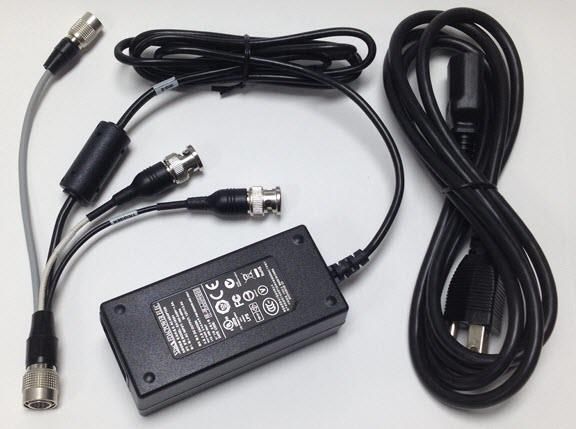
Cheetah Python Camera with GigE Vision - User Manual

            About Imperx, Inc.
            IMPERX, Inc. is a leading designer and manufacturer of high performance, high quality
            digital cameras, frame grabbers, and accessories for industrial, commercial, military, and
            aerospace imaging applications including flat panel inspection, biometrics, aerial mapping,
            surveillance, traffic management, semiconductors and electronics, scientific & medical
            Imaging, printing, homeland security, space exploration, and other imaging and machine
            vision applications.

            Fortune 100 companies, federal and state government agencies, domestic and foreign
            defense agencies, academic institutions, and other customers worldwide use IMPERX
            products.

            Imperx, Inc. | 6421 Congress Ave. | Boca Raton, FL, 33487
            US Phone: +1 (561) 989-0006

January 10, 2018                         Page 2 of 90                                  Rev 1.1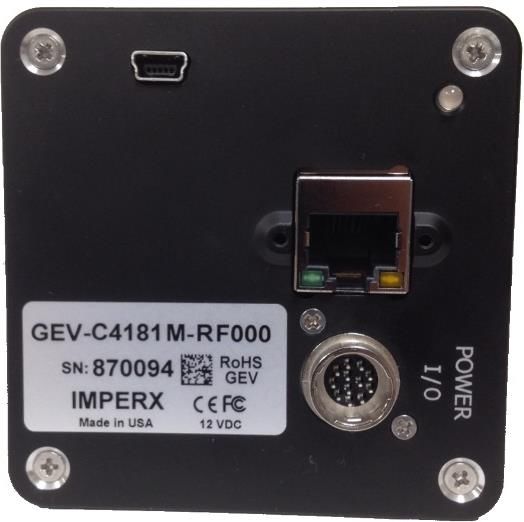
Cheetah Python Camera with GigE Vision - User Manual

            Warranty
            IMPERX warrants performance of its products and related software to the specifications
            applicable at the time of sale in accordance with IMPERX’s standard warranty, which is 2
            (two) years parts and labor. FOR GLASSLESS CAMERAS THE CCD OR CMOS IS NOT
            COVERED BY THE WARRANTY.

            Do not open the housing of the camera. Warranty voids if the housing has been open or
            tampered.

            IMPORTANT NOTICE
            This camera has been tested and complies with the limits of Class A digital device,
            pursuant to part 15 of the FCC rules.

            Copyright © 2017 IMPERX Inc. All rights reserved. All information provided in this manual
            is believed to be accurate and reliable. No responsibility is assumed by IMPERX for its use.
            IMPERX reserves the right to make changes to this information without notice.
            Redistribution of this manual in whole or in part, by any means, is prohibited without
            obtaining prior permission from IMPERX. IMPERX reserves the right to make changes to
            its products or to discontinue any product or service without notice, and advises its
            customers to obtain the latest version of relevant information to verify, before placing
            orders, that the information being relied on is current.

            IMPERX PRODUCTS ARE NOT DESIGNED, INTENDED, AUTHORIZED, OR WARRANTED TO BE
            SUITABLE FOR USE IN LIFE-SUPPORT APPLICATIONS, DEVICES OR SYSTEMS OR OTHER
            CRITICAL APPLICATIONS, WHERE MALFUNCTION OF THESE PRODUCTS CAN REASONABLY
            BE EXPECTED TO RESULT IN PERSONAL INJURY. IMPERX CUSTOMERS USING OR SELLING
            THESE PRODUCTS FOR USE IN SUCH APPLICATIONS DO SO AT THEIR OWN RISK AND
            AGREE TO FULLY INDEMNIFY IMPERX FOR ANY DAMAGES RESULTING FROM SUCH
            IMPROPER USE OR SALE.

January 10, 2018                         Page 3 of 90                                   Rev 1.1
Cheetah Python Camera with GigE Vision - User Manual

            TABLE OF CONTENTS
            1 About the Cheetah Camera .................................................................. 8
                1.1 General ...................................................................................................................... 8
                    1.1.1 GigE Vision Interface ......................................................................................... 9
                    1.1.2 Key Features...................................................................................................... 9
                1.2 General Technical Specifications ............................................................................. 10
                    1.2.1 GEV-C5180 Technical Specifications ............................................................... 11
                    1.2.2 GEV-C4181 Technical Specifications ............................................................... 12
                    1.2.3 GEV-C4180 Technical Specifications ............................................................... 13
                1.3 Ordering Information............................................................................................... 14
                    1.3.1 Technical Support ........................................................................................... 14

            2 Hardware ........................................................................................... 15
                2.1 GEV Output .............................................................................................................. 15
                2.2 Camera Power Connector ........................................................................................ 15
                    2.2.1 Power Connector Pins ..................................................................................... 16
                    2.2.2 Electrical Connectivity ..................................................................................... 16
                    2.2.3 Power Supply .................................................................................................. 19
                    2.2.4 Camera LED Status Indicators ......................................................................... 21
                2.3 Mechanical, Optical, Environmental ........................................................................ 23
                    2.3.1 Mechanical ...................................................................................................... 23
                    2.3.2 Optical ............................................................................................................. 25
                    2.3.3 Environmental ................................................................................................. 25

            3 GenICam API Module – Configuring the Camera ................................. 26
                3.1 Overview .................................................................................................................. 26
                3.2 Camera Configuration .............................................................................................. 26
                    3.2.1 Configuration Memory – Parameter Flash...................................................... 26
                    3.2.2 Camera Command Protocol ............................................................................ 27
                3.3 Camera User Set Description ................................................................................... 27
                    3.3.1 Startup Procedure ........................................................................................... 27
                3.4 GenApi Camera Configuration ................................................................................. 27
                    3.4.1 Device Control ................................................................................................. 27
                    3.4.2 Version Information ........................................................................................ 28
                    3.4.3 Image Format Control ..................................................................................... 29
                    3.4.4 Acquisition Control ......................................................................................... 30
                    3.4.5 Gain Control .................................................................................................... 33
                    3.4.6 Auto Gain and Auto Exposure ......................................................................... 33
                    3.4.7 Data Correction ............................................................................................... 35
                    3.4.8 White Balance ................................................................................................. 36
                    3.4.9 Strobe .............................................................................................................. 37
                    3.4.10 Pulse Generator ............................................................................................ 38
                    3.4.11 Canon Lens Control – Settings ...................................................................... 39
                    3.4.12 Canon Lens Control - Focus ........................................................................... 39
                    3.4.13 Canon Lens Control - Iris ............................................................................... 40
                    3.4.14 Transport Layer Information ......................................................................... 42
                    3.4.15 User Set Control ............................................................................................ 45

            4 Software GUI ..................................................................................... 46
                4.1 Overview .................................................................................................................. 46

January 10, 2018                                      Page 4 of 90                                                          Rev 1.1
Cheetah Python Camera with GigE Vision - User Manual

                   4.1.1 Supported Operating Systems ........................................................................ 46
                   4.1.2 Compatibility ................................................................................................... 46
                   4.1.3 User Interface and Functionality ..................................................................... 47
               4.2 Windows Software Installation ................................................................................ 47
                   4.2.1 Installing the Imperx Camera SDK Software ................................................... 47
               4.3 Camera SDK ............................................................................................................. 48
               4.4 Connecting to Cameras............................................................................................ 49
               4.5 Using the IpxPlayer .................................................................................................. 51
                   4.5.1 Menu Bar ........................................................................................................ 51
               4.6 Saving / Loading Configurations .............................................................................. 52
               4.7 Camera Parameters Panel ....................................................................................... 53
                   4.7.1 Device Controls ............................................................................................... 53
                   4.7.2 Version Info Controls ...................................................................................... 54
                   4.7.3 Image Format Controls ................................................................................... 55
                   4.7.4 Acquisition Control ......................................................................................... 56
                   4.7.5 Gain Controls .................................................................................................. 58
                   4.7.6 Auto Gain and Auto Exposure ......................................................................... 58
                   4.7.7 Data Correction Controls ................................................................................ 60
                   4.7.8 White Balance Controls................................................................................... 61
                   4.7.9 Strobe Controls ............................................................................................... 62
                   4.7.10 Pulse Generator Controls .............................................................................. 63
                   4.7.11 Canon Lens Control ....................................................................................... 64
                   4.7.12 Transport Layer Control ................................................................................ 66
                   4.7.13 User Set Controls .......................................................................................... 68
               4.8 Capture Panel .......................................................................................................... 68
                   4.8.1 Recording Acquired Images ............................................................................ 68
                   4.8.2 Saving Image Output ....................................................................................... 69
               4.9 Log Panel.................................................................................................................. 69
                   4.9.1 Channels to Log ............................................................................................... 70
               4.10 Statistics Panel ....................................................................................................... 70

            5 Camera Features ................................................................................ 72
               5.1 Exposure Control ..................................................................................................... 72
                   5.1.1 Internal Exposure Control - Electronic Shutter ............................................... 72
                   5.1.2 External Exposure Control .............................................................................. 72
               5.2 Frame Time Control ................................................................................................. 73
                   5.2.1 Internal Line and Frame Time Control ............................................................ 73
                   5.2.2 Camera Output Control................................................................................... 73
               5.3 Area of Interest ........................................................................................................ 74
                   5.3.1 Overview ......................................................................................................... 74
                   5.3.2 Horizontal and Vertical Window ..................................................................... 74
                   5.3.3 Factors Impacting Frame Rate ........................................................................ 75
               5.4 Subsampling............................................................................................................. 75
                   5.4.1 Pixel Averaging ................................................................................................ 75
                   5.4.2 Subsampling Decimation ................................................................................ 76
               5.5 Camera Triggering.................................................................................................... 77
                   5.5.1 Triggering Inputs ............................................................................................. 77
                   5.5.2 Acquisition and Exposure Control ................................................................... 77
                   5.5.3 Triggering Modes ............................................................................................ 78
               5.6 Strobes ..................................................................................................................... 79
               5.7 Video Amplifier Gain and Offset .............................................................................. 79

January 10, 2018                                     Page 5 of 90                                                          Rev 1.1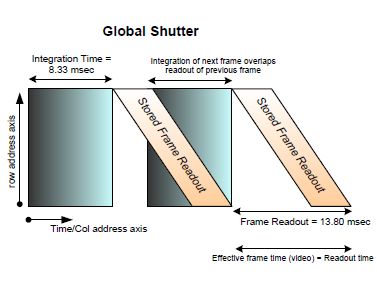
Cheetah Python Camera with GigE Vision - User Manual

                   5.7.1 Analog Gain ..................................................................................................... 79
                   5.7.2 Digital Gain ...................................................................................................... 79
                   5.7.3 Digital Offset ................................................................................................... 80
                   5.7.4 Black Level Auto-calibration and Offset .......................................................... 80
               5.8 Data Output Format ................................................................................................ 80
                   5.8.1 Bit Depth ......................................................................................................... 80
               5.9 Pulse Generator ....................................................................................................... 81
               5.10 Input / Output Control ........................................................................................... 81
                   5.10.1 Input / Output Mapping ................................................................................ 81
               5.11 Test Image Patterns ............................................................................................... 82
                   5.11.1 Test Image patterns ...................................................................................... 82
               5.12 White Balance and Color Conversion .................................................................... 83
                   5.12.1 White Balance Correction ............................................................................. 83
               5.13 Transfer Function Correction ................................................................................. 83
                   5.13.1 Standard Gamma Correction ........................................................................ 84
                   5.13.2 User Defined LUT .......................................................................................... 84
               5.14 Defective Pixel Correction ..................................................................................... 85
                   5.14.1 Static Pixel Correction ................................................................................... 85
                   5.14.2 Dynamic Pixel Correction .............................................................................. 86
               5.15 Flat Field and Noise Correction .............................................................................. 86
               5.16 Camera Interface ................................................................................................... 86
                   5.16.1 Temperature Monitor ................................................................................... 86
                   5.16.2 Exposure Time Monitor ................................................................................ 86
                   5.16.3 Frame Time Monitor ..................................................................................... 86
                   5.16.4 Current image size ........................................................................................ 87
                   5.16.5 Auto Gain and Auto Exposure Control (AGC/AEC) ........................................ 87

            6 Image Sensor Technology ................................................................... 88
               6.1 General Information ................................................................................................ 88
                   6.1.1 A/D Architecture and Frame Rate Controls .................................................... 88
                   6.1.2 Spectral Sensitivity .......................................................................................... 90
                   6.1.3 Bayer Pattern Information .............................................................................. 90

January 10, 2018                                    Page 6 of 90                                                        Rev 1.1
Cheetah Python Camera with GigE Vision - User Manual
REVISION HISTORY
Revision Date Reviser Comments
1.0 12/7/2017 R.Johnston Initial release.
1.1 1/4/2018 R.Johnston Revised active area specifications
January 10, 2018 Page 7 of 90 Rev 1.1Cheetah Python Camera with GigE Vision - User Manual
1 About the Cheetah Camera
1.1 General
The Cheetah Python series of GigE Vision (GEV) cameras offers a robust imaging platform
with the latest digital technology and industrial grade components including CMOS
imaging sensors featuring a broad range of resolutions and frame rates available in both
monochrome and color.
These cameras use a GenICam™ compliant graphical user interface for programming. The
following table provides information about the GEV-C5180 camera (Table 1).
Model Resolution Type Optics CMOS Model
GEV-C5180M 5120 x 5120 Mono APS-H ON Semiconductor NOIP1SN025KA
GEV-C5180N 5120 x 5120 ENIR APS-H ON Semiconductor NOIP1FN025KA
GEV-C5180C 5120 x 5120 Color APS-H ON Semiconductor NOIP1SE025KA
GEV-C4181M 4096 x 4096 Mono APS-H ON Semiconductor NOIP1SN016KA
GEV-C4181N 4096 x 4096 ENIR APS-H ON Semiconductor NOIP1FN016KA
GEV-C4181C 4096 x 4096 Color APS-H ON Semiconductor NOIP1SE016KA
GEV-C4180M 4096 x 3072 Mono 4/3” ON Semiconductor NOIP1SN012KA
GEV-C4180N 4096 x 3072 ENIR 4/3” ON Semiconductor NOIP1FN012KA
GEV-C4180C 4096 x 3072 Color 4/3” ON Semiconductor NOIP1SE012KA
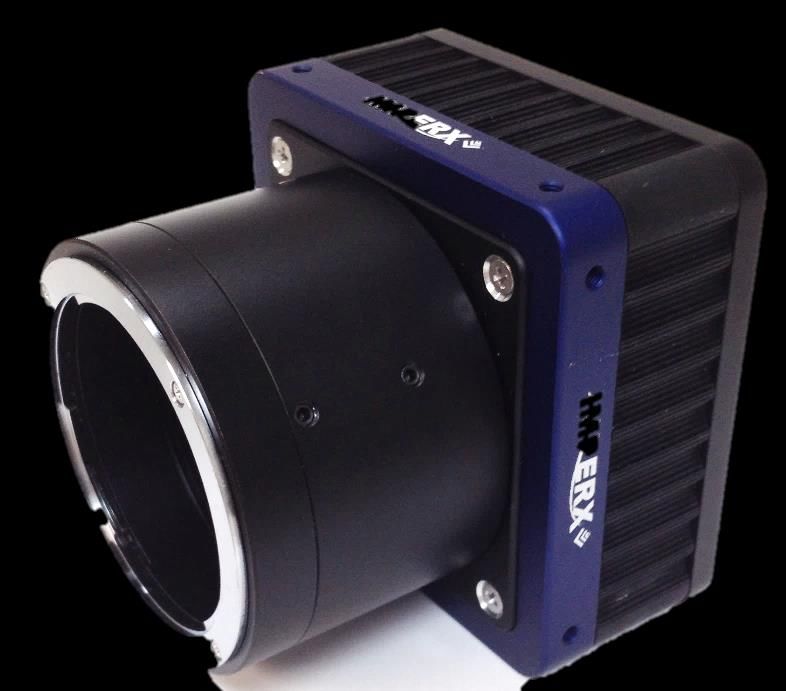
Table 1: The GEV C5180 monochrome, NIR, and color camera shown.
Cheetah CMOS cameras are ruggedized, high-resolution, progressive scan cameras. They
are fully programmable and field upgradeable. Programmable functions include automatic
and manual exposure control, frame rate control, area of interest, subsampling, pixel
averaging, automatic and manual gain control, offset, triggering options, strobes, output
control, defective pixel correction, and user-programmable look-up tables (LUT). The
camera provides support for active Canon EOS lens with Iris and focus controls. The
cameras use ON Semiconductor area scan Python CMOS image sensors and feature a
built-in image processing engine, low noise characteristics, and optimized thermal
distribution.
The cameras use global shutter operation for superior motion capture with exceptionally
high frame rates for high throughput applications. You can synchronize the cameras to an
external trigger source and vary exposure time using internal controls or an external pulse
width. The cameras support exposure times up to 1 second with 1µs increments. The
cameras also support analog gains up to 10 dB (3.17x).
January 10, 2018 Page 8 of 90 Rev 1.1Cheetah Python Camera with GigE Vision - User Manual
Built-in gamma correction and user-defined look-up table (LUT) capabilities optimize the
camera’s dynamic range features. Defective pixel correction (DPC) and hot pixel
correction (HPC) correct for pixels that are over-responding or under-responding. Auto
White Balance (AWB) is available in color cameras to correct for color temperature. The
cameras have a compatible interface that includes 8- and 10-bit data transmission, as well
as camera control functionality in one cable.
1.1.1 GigE Vision Interface
The GigE Vision interface operates on standards designed to enable high-speed video
transmission and control over Ethernet networks. The standard enables compatibility with
Ethernet CAT 5 and 6 cables and components installed on many PCs. In many cases, GigE
Vision provides a drop-in solution for existing networked cameras with its GenICam
compliant user interface (GUI) for programming the camera.
1.1.2 Key Features
• Global shutter (GS)
• Monochrome or color
• Large 4.5-micron pixels
• Enhanced near infrared (NIR) sensitivity version available upon request
• Frame rates up to 4.3 fps (C5180), 6.2 (C4181), 8.3 (C4180)
• High data transfer rates up to 1000 megabits per second
• Uses CAT5e or CAT6 cables and standard connectors
• Data transfer up to 100 meters in length
• Configurable pixel clock
• Exposure control: manual and automatic
• Gain control: manual and automatic
• Pixel averaging
• Subsampling
• Area of Interest
• Analog and digital gain controls
• Offset control
• Three selectable trigger sources: external, pulse generator, or computer
• Built-in pulse generator
• Two programmable output strobes
• Auto-white balance: once, tracking, or manual
• Two 12-bit look-up tables (LUT)
• Defective pixel correction (DPC); hot pixel correction (HPC)
• Two programmable external inputs (one opto-isolated) and two external outputs
(one opto-isolated)
• Flat Field Correction (FFC), user defined and factory
• Support for the Active Canon EOS lens
• Temperature monitor
• Field upgradeable firmware, LUT, DPC, HPC, FFC
• Two user-defined camera configuration memories
January 10, 2018 Page 9 of 90 Rev 1.1Cheetah Python Camera with GigE Vision - User Manual
1.2 General Technical Specifications
The following table describes features and specifications common to all Cheetah CMOS
cameras.
Specifications
Shutter operation Global only
Exposure time 40 s min, 1 second max in 1 micro-second steps
Area of Interest One
Analog gain 1x, 1.26x, 187x, 3.17x
Digital gain Up to 24dB
Subsampling Keep one, skip one
Pixel averaging (mono) 1x2, 2x1, and 2x2
Auto-white balance Yes
Test image Static, dynamic
Defective pixel correction Static, dynamic, user DPM
Hot pixel correction Static, dynamic, user HPM
Inputs 1-LVTTL / 1-Opto-coupled
Outputs 1-5v TTL / 1-Opto-coupled
Triggers Programmable rising/falling and de-bounce
Pulse generator Yes
In-camera image processing 2 LUTs; 1 LUT pre-programmed with Gamma 0.45
Camera housing High grade Aluminum
Supply voltage range 10 V to 33 V DC
Upgradeable firmware Yes
Upgradeable LUT, DPM, FFC Yes
Environmental - operating - 40°C to + 85°C
Environmental – storage - 50°C to + 90°C
Relative humidity 10% to 90% non-condensing
Table 2: Cheetah camera general specifications
January 10, 2018 Page 10 of 90 Rev 1.1Cheetah Python Camera with GigE Vision - User Manual
1.2.1 GEV-C5180 Technical Specifications
The following table provides specifications for the Cheetah GEV-C5180 camera with the
GigE Vision interface. Frame rates may vary based on computer or network speed.
Specifications C5180
Active image resolution 5120 x 5120
Active image area (H, V) 23.0 mm (H) x 23.0 mm (V) 32.5 mm (diagonal)
Pixel size 4.5 µm
Video output Digital, 8/10-bit
Interface GigE Vision
Host connector RJ45 connector for Ethernet cable
Frame rates 4.3 (8-bit), 2.2 (10-bit), 2.9 (10-bit packed)
Dynamic range 59 dB
Shutter speed 40 s to 1 sec
Area of Interest One
Analog gain 0 to 10dB
Digital gain 0 to 24dB
Black level offset 0 to 1024, 1/step
User LUT 2 LUTs: gamma and user LUT
Hardware trigger Asynchronous with trigger delay up to 1 second
Strobe modes Programmable width, delay
Trigger sources External, pulse generator, software
Trigger features Rising/falling edge, De-glitch, delay, strobe
Size (W x H x L) (72 x 72 x 33.8) mm
Weight 370 g
Lens mount F-Mount, APS-H optical format, active or passive Canon EOS
Power 12V / 450mA. Canon EOS 12V / 450mA
Table 3: Cheetah C5180 camera specifications.
January 10, 2018 Page 11 of 90 Rev 1.1Cheetah Python Camera with GigE Vision - User Manual
1.2.2 GEV-C4181 Technical Specifications
The following table provides specifications on the GEV-C4181 camera with the GigE Vision
interface. Frame rates may vary based on computer or network speed.
Specifications C4181
Active image resolution 4096 x 4096
Active image area 18.4 mm (H) x 18.4 mm (V) 26.0 mm (diagonal)
Pixel size 4.5 µm
Video output Digital, 8/10-bit
Interface GigE Vision
Host connector RJ45 connector for Ethernet cable
Frame rate 6.2 (8-bit), 3.3 (10-bit), 4.4 (10-bit packed)
Dynamic range 59 dB
Shutter speed 40 s to 1 sec
Area of Interest One
Analog gain 0 to 10dB
Digital gain 0 to 24dB
Black level offset 0 to 1024, 1/step
User LUT 2 LUTs: gamma and user LUT
Hardware trigger Asynchronous with trigger delay up to 1 second
Strobe modes Programmable width, delay
Trigger sources External, pulse generator, software
Trigger features Rising/falling edge, De-glitch, delay, strobe
Size (W x H x L) (72 x 72 x 33.8) mm
Weight 370 g
Lens mount F-Mount, APS-H optical format, active or passive Canon EOS
Power 12V / 450mA. Canon EOS 12V / 450mA
Table 4: Cheetah C4181 camera specifications.
January 10, 2018 Page 12 of 90 Rev 1.1Cheetah Python Camera with GigE Vision - User Manual
1.2.3 GEV-C4180 Technical Specifications
The following table provides specifications on the GEV-C4180 camera with the GigE Vision
interface. Frame rates may vary based on computer or network speed.
Specifications C4180
Active image resolution 4096 x 3072
Active image area 18.4 mm (H) x 13.8 mm (V) 23.0 mm (diagonal)
Pixel size 4.5 µm
Video output Digital, 8/10-bit
Interface GigE Vision
Host connector RJ45 connector for Ethernet cable
Frame rate 8.3 (8-bit), 4.5 (10-bit), 6.0 (10-bit packed)
Dynamic range 59 dB
Shutter speed 40 s to 1 sec
Area of Interest One
Analog gain 0 to 10dB
Digital gain 0 to 24dB
Black level offset 0 to 1024, 1/step
User LUT 2 LUTs: gamma and user LUT
Hardware trigger Asynchronous with trigger delay up to 1 second
Strobe modes Programmable width, delay
Trigger sources External, pulse generator, software
Trigger features Rising/falling edge, De-glitch, delay, strobe
Size (W x H x L) (72 x 72 x 33.8) mm
Weight 370 g
Lens mount F-Mount, APS-H optical format, active or passive Canon EOS
Power 12V / 450mA. Canon EOS 12V / 450mA
Table 5: Cheetah C4180 camera specifications.
January 10, 2018 Page 13 of 90 Rev 1.1Cheetah Python Camera with GigE Vision - User Manual
1.3 Ordering Information
Cheetah C5180 Camera Ordering Codes Sample Code: GEV-C5180M-RF000
Lens Filter
Interface Camera Number Sensor Type Type
Mount Option
GigE Vision C5180 – 5120 x 5120 M– R– F – mount 0 – none
C4181 – 4096 x 4096 monochrome ruggedized
L – Canon
C4180 – 4096 x 3072 C – color EOS active
N – enhanced mount
NIR
Part Number Example:
GEV-C5180C-RF000: Cheetah Color 25MP camera with F-Mount and GigE Vision Interface
NOTE: For any other custom camera configurations, contact Imperx, Inc.
1.3.1 Technical Support
Imperx fully tests each camera before shipping. If the camera is not operational after
power up, check the following:
1. Check the power supply and all I/O cables. Make sure all connectors are firmly
attached.
2. Check the status LED and verify it is steady ON. If it is not, refer to the LED
section.
3. Enable the test mode and verify communications between the computer and the
camera is established. If the test pattern is not present, power off the camera
and check cabling, IPX Player settings, and computer status.
4. If you still have problems with camera operation, contact technical support at:
Email: techsupport@imperx.com
Toll Free 1 (866) 849-1662 or (+1) 561-989-0006
Fax: (+1) 561-989-0045
Visit our Web Site: www.imperx.com
January 10, 2018 Page 14 of 90 Rev 1.1Cheetah Python Camera with GigE Vision - User Manual
2 Hardware
2.1 GEV Output
The back panel of the camera provides connectors to the GigE interface and other
external equipment. The panel also provides a status LED indicator. The panel includes:
1. A standard RJ-45 connector provides data, sync, control, and serial interface.
2. A male Hirose type miniature locking receptacle #HR10A-10R-12PB (71) provides
power and I/O interface.
3. A USB type B programming/SPI connector for factory use only.
4. A camera status LED indicator.
5. The camera’s model / serial number.
USB type B Camera LED status
connector for indicator
factory use
RJ-45 Ethernet
connector with 2
communications status
LEDs
12-pin power and
IO connector
Figure 1: Cheetah Python GigE output connectors.
The camera transmits serialized video data output and communications over the gigabit
Ethernet interface with consistently low, predictable latencies. The network interface is
compatible with IP/Ethernet networks operating at 1000 megabits per second using LAN
CAT-5 (CAT-5e) or CAT-6 cables. Shielded cables are recommended.
2.2 Camera Power Connector
The 12-pin Hirose connector provides power and all external input/output signals
supplied to the camera (Figure 2). The connector is a male HIROSE type miniature locking
receptacle #HR10A-10R-12PB (71). The optionally purchased power supply ships with a
power cable that terminates in a female HIROSE plug #HR10A-10P-12S (73). Refer to the
following power connector pins table.
January 10, 2018 Page 15 of 90 Rev 1.1Cheetah Python Camera with GigE Vision - User Manual
Figure 2: Camera Power Connector Pin-outs
2.2.1 Power Connector Pins
Pin Signal Type Description
1 12 VDC Return Ground Return 12 VDC Main Power Return
2 + 12 VDC Power - Input + 12 VDC Main Power
3 NC –NC Reserved
4 NC NC Reserved
5 GP OUT 2 Opto- Switch contact 2 General Purpose Output 2-
General Purpose Output 1
6 GP OUT 1 RTN TTL Ground Return
Return
7 GP OUT 1 TTL OUT 1 General Purpose Output 1
8 GP IN 1 Opto-isolated IN 1 General Purpose Input 1
9 GP IN 2 TTL/LVTTL IN 2 General Purpose Input 2
General Purpose Input 1
10 GP IN 1 Return Ground Return IN1
Return
General Purpose Input 2
11 GP IN 2 Return LVTTL Ground Return IN2
Return
12 GP OUT 2 Opto-Switch contact 1 General Purpose Output 2+
Table 6: Power connector pin mappings
2.2.2 Electrical Connectivity
The camera has two external inputs, IN 1 and IN 2. Input IN1 is optically isolated while
input IN2 accepts low voltage TTL (LVTTL). The camera provides two general-purpose
outputs. Output OUT1 is a 5v TTL (5.0 Volts) compatible signal and output OUT2 is opto-
isolated. The following figures show the external input electrical connections and the
external output electrical connections:
January 10, 2018 Page 16 of 90 Rev 1.1Cheetah Python Camera with GigE Vision - User Manual
A. Input IN 1- Opto-Isolated
Input signals IN1 and IN1 Rtn are optically isolated. The voltage difference between the
two must be positive between 3.3 and 5.0 volts. A 160 Ohm internal resistor limits input
current, but the total maximum current must not exceed 5 mA.
Figure 3: IN1 electrical connection
B. Input IN 2 LVTTL
Input signals IN2 and IN2 Rtn provide interfaces to a TTL or LVTTL input signal. The signal
level (voltage difference between the inputs IN2 and IN2 Rtn) must be LVTTL (3.3 volts) or
TTL (5.0 volts). The total maximum input current must not exceed 2.0 mA.
Figure 4: IN2 electrical connection
C. Output OUT 1 LVTTL
Output OUT1 is a 5v TTL (5.0 Volts) compatible signal and the maximum output current
must not exceed 8 mA.
Figure 5: OUT1 LVTTL electrical connection
D. Output OUT 2 – Solid state relay, optically isolated
Output OUT2 is an optically isolated switch. There is no pull-up voltage on either contact.
External pull-up voltage of up to 25 volts is required for operation. Output is not polarity
January 10, 2018 Page 17 of 90 Rev 1.1Cheetah Python Camera with GigE Vision - User Manual
sensitive. AC or DC loads are possible. The voltage across OUT2 Contact 1 and OUT2
Contact 2 must not exceed 25 volts and the current through the switch must not exceed
50 mA. On resistance is less than 5 Ohms.
Figure 6: Open drain logic driver.
Figure 7: Low side load driver.
January 10, 2018 Page 18 of 90 Rev 1.1Cheetah Python Camera with GigE Vision - User Manual
Figure 8: High side load driver.
2.2.3 Power Supply
Cheetah Python cameras use the PS12V04 Standard Power Supply shown in the following
figure, which includes power for the camera and a cable with Trigger input and Strobe 1
output brought out to BNC-terminated pigtails.
If using Canon EOS active lens control with the camera, use the PS12V07B power supply
(Figure 9).
2.2.3.1 Camera Power Supply
Figure 9: PS12V04A power supply (ordered separately).
January 10, 2018 Page 19 of 90 Rev 1.1Cheetah Python Camera with GigE Vision - User Manual
PS12V04A Standard Power Supply:
Cable Lengths:
Supplied AC power input cable (IEC): 1.8m (6’) 100 - 240 VAC, 50 - 60Hz 1A
Power supply output cable: 3m (10’) ± 15cm (6”) connector HIROSE #HR10A-10P-12S
Strobe & Trigger: 10cm (4”) ± 1cm (0.5”) connector BNC male
Electrical Specifications:
Over-Voltage Protective Installation
Short-circuit Protective Installation
Protection Type: Auto-Recovery
10 -15 VDC 12VDC nominal, 2 A.
Load regulation ± 5%
Ripple & Noise 1% Max.
Regulatory:
Class 1
Safety standards UL60950-1, EN60950-1, IEC60950-1
Safety (1) EMC UL/CUL, CE, TUV, DoIR+C-Tick, Semko, CCC, FCC
Safety (2) BSMI, FCC
2.2.3.2 Power Supply for Cameras with Canon Lens Control
Use the PS12V07B power supply if using Canon Lens Control with the camera. The power
supply provides power to the camera and connectors for Canon EOS lens control, trigger
input, and strobe output. Lens control, trigger, and strobe are terminated with male BNC
connectors (Figure 10).
Figure 10: The PS12V07A power supply with Canon lens control.
January 10, 2018 Page 20 of 90 Rev 1.1Cheetah Python Camera with GigE Vision - User Manual
Figure 11: A Sam Woo connector enables Canon lens control.
2.2.4 Camera LED Status Indicators
The camera provides a dual red/green LED status indicator on the back panel. The LED
indicates the following:
Camera LED Color Status Description
Normal operation, camera should produce a normal
Green steady ON
image.
Green blinking Trigger enabled.
Yellow steady ON Test mode enabled.
Red steady ON Communications or firmware load error.*
Green - Red blinking
GigE Vision firmware error.
(~1Hz)
LED OFF No power. Indicates power supply failure.**
Table 7: Camera LED status indicators.
*Re-power the camera and load the factory settings. If the condition is still present, contact the factory
**A faulty external AC adapter could also cause this. To restore the camera operation, re-power the camera and
load the factory settings. If the LED is still OFF, contact the factory.
2.2.4.1 Ethernet LED Status
The female RJ-45 connector on the back panel of the camera provides LEDs for indicating
Ethernet status. The LEDs indicate the following:
Ethernet Status LED (1) - Amber LED (0) - Green
1000 Mbps Link – No Activity Off Solid On
1000 Mbps Link – Activity Off Blink
January 10, 2018 Page 21 of 90 Rev 1.1Cheetah Python Camera with GigE Vision - User Manual
100 Mbps Link – No Activity Solid Mix Solid Mix
100 Mbps Link – Activity Blink Mix Blink Mix
10 Mbps Link – No Activity Solid On Off
10 Mbps Link – Activity Blink Off
No link Off Off
Table 8: Ethernet LED status indicators.
January 10, 2018 Page 22 of 90 Rev 1.1Cheetah Python Camera with GigE Vision - User Manual
2.3 Mechanical, Optical, Environmental
2.3.1 Mechanical
The camera housing is made of high quality series 6000 aluminum. For maximum
usability, the camera has eight (8) M3X0.5mm mounting screws located towards the front
and the back. The camera ships with an additional plate with ¼-20 UNC tripod mount and
hardware. All dimensions are in millimeters.
2.3.1.1 Mechanical Drawings
Side view
January 10, 2018 Page 23 of 90 Rev 1.1Cheetah Python Camera with GigE Vision - User Manual
Front view
Back view
January 10, 2018 Page 24 of 90 Rev 1.1Cheetah Python Camera with GigE Vision - User Manual
2.3.2 Optical
The camera (72 mm x 72 mm) cross-section comes with an adapter for F-mount lenses,
which have a 46.50 mm back focal distance.
Camera performance and signal-to-noise ratio depend on the illumination (amount of
light) reaching the sensor and the exposure time. Always try to balance these two factors.
Unnecessarily long exposure will increase the amount of noise, thus decreasing the signal-
to-noise ratio.
The cameras are highly sensitive in the infrared (IR) spectral region. All color cameras have
an IR cut-off filter installed. The monochrome cameras come without an IR cut-off filter. If
necessary, the camera provides space for inserting an IR filter (1 mm thickness or less)
under the front lens bezel.
1. Avoid direct exposure to a high intensity light source (such as a laser beam). This
may damage the camera optical sensor!
2. Avoid foreign particles on the surface of the imager.
2.3.3 Environmental
The camera operating temperature ranges from -40°C to +85°C in a dry environment. The
relative humidity should not exceed 80% non-condensing. Always keep the camera as cool
as possible. Always allow sufficient time for temperature equalization if the camera is
stored below 0°C.
The camera should be stored in a dry environment with the temperature ranging from -
50°C to + 90°C.
1. Avoid direct exposure to moisture and liquids. The camera housing is not
hermetically sealed and any exposure to liquids might damage the camera
electronics!
2. Avoid operating in an environment without any air circulation or in close
proximity to an intensive heat source, strong magnetic or electric fields.
3. Avoid touching or cleaning the front surface of the optical sensor. To clean the
sensor, use only a soft lint-free cloth and an optical cleaning fluid. Do not use
methylated alcohol!
January 10, 2018 Page 25 of 90 Rev 1.1Cheetah Python Camera with GigE Vision - User Manual
3 GenICam API Module –
Configuring the Camera
3.1 Overview
Imperx Cheetah cameras are highly programmable and flexible. They allow control all of
the cameras resources. You communicate with the camera from a simple GenICam
compliant GigE graphical user interface (GUI). The GUI is bi-directional allowing you to
issue commands to the camera and allowing the camera to issues responses (either status
or information). You can configure and monitor all of the camera’s features and
resources.
3.2 Camera Configuration
3.2.1 Configuration Memory – Parameter Flash
The camera has built-in configuration memory divided into four segments: Work Space,
Factory Space, User Space #1, and User Space #2. The Work Space segment contains the
current camera settings while the camera is powered up and operational. All camera
registers are located in this space. You can program these registers and change the
camera configuration through these registers.
The Work Space is RAM based. All camera registers clear upon camera power-down. The
Factory Space segment is ROM based, write protected, and contains the default camera
settings. This space is available for read operations only. User Space #1 and User Space #2
are non-volatile, flash-based, and used to store two user defined configurations or User
Sets. Upon power up or software reset, the camera firmware loads the Work Space
registers from the Factory Space, User Space #1, or User Space #2 as determined by a
User Set Default Selector setting. At any time, a user can instruct the camera to load its
Work Space with the contents of the Factory Space, User Space #1, or User Space #2 using
the User Set Load command. Similarly, the user can instruct the camera to save the
current Work Space settings into either User Space #1 or User Space #2 using the User Set
Save command.
The non-volatile parameter Flash memory also contains the Defective Pixel Map, Hot Pixel
Map, LUT 1, and LUT 2, which you can load to the camera’s internal memory upon
enabling the corresponding camera feature. You can also create DPM, HPM, and LUT
tables and upload them to the parameter Flash using the Imperx Upload Utility, which is a
separate utility available from the Imperx website https://www.imperx.com/.
January 10, 2018 Page 26 of 90 Rev 1.1Cheetah Python Camera with GigE Vision - User Manual
3.2.2 Camera Command Protocol
The GenICam compliant IpxPlayer included with the GEV camera provides a graphical user
interface (GUI) for issuing commands such as boot, load, save, and so on.
3.3 Camera User Set Description
3.3.1 Startup Procedure
Upon powering up or receiving a ‘DeviceReset’ command, the camera performs the
following steps:
1. Boot loader checks program flash memory for a valid firmware image and loads it
into the field-programmable gate array (FPGA).
2. The camera reads the “Boot From” register from the parameter Flash and loads a
workspace from one of the configuration spaces determined by the User Set
Default Selector. The configuration spaces are: Factory Space, User Space #1, and
User Space #2.
3. The camera runs the IP configuration according the GigE Vision standard, obtains
the IP address, and is ready for device enumeration by host application.
3.4 GenApi Camera Configuration
The camera XML nodes are listed below with a description of the camera configuration
parameters, the interface type, the range of control values, and the access mode for the
parameter (RW: Read/Write, RO: Read Only, WO: Write Only).
Parameter names underlined in italic and red color are changeable only if image
acquisition is turned off. You cannot change these parameters if image acquisition is on.
3.4.1 Device Control
Parameter Name Type Value Access Description
DeviceSFNCVersionMajor Integer RW Major version of
SFNC used for XML.
DeviceSFNCVersionMinor Integer RW Minor version of
SFNC used for XML
DeviceSFNCVersionSubMinor Integer RW Subminor version of
SFNC used for XML.
DeviceReset Command WO Resets device to
power-up state.
CameraHeadReset Command RW Resets camera
circuitry. GigE does
not reset. Note:
January 10, 2018 Page 27 of 90 Rev 1.1Cheetah Python Camera with GigE Vision - User Manual
Parameter Name Type Value Access Description
After camera reset,
issue a UserSetLoad
command.
CurrentTemperature Integer RO Returns current
camera
temperature*
*Current Temperature returns a two’s complement number. The range is +127C to -128C. A value
greater than 127 indicates negative temperature. To calculate negative temperature, subtract 255
from the value. For example, a value of 254 indicates a temperature of 254-255 = -1 degree C.
3.4.2 Version Information
The camera contains non-volatile memory that stores manufacturing related information.
This factory programs this information during the manufacturing process.
Parameter Name Type Value Access Description
SensorType Enumeration String Num. RW Returns the CMOS
"Monochrome" 0 sensor type.
"Bayer" 1
RgsID Integer RO Returns RGS ID
register.
FpgaID Integer RW Returns FPGA ID
EpcsID Integer RW Returns EPCS ID
FirmwareImage Integer RW Returns the
Firmware Image ID
(F=Factory or
A=Application).
CameraHeadFirmwareVersion Integer RO Returns the
CameraHead
Firmware version
number.
CameraHeadFirmwareBuild Integer RO Returns the
CameraHead
Firmware build
number.
CustomerID Integer RW Returns Customer
ID for custom
firmware (0=Imperx
standard firmware).
FamilyID Integer RO Returns Family ID.
XmlVersion Integer R0 Returns version of
the XML file.
January 10, 2018 Page 28 of 90 Rev 1.1Cheetah Python Camera with GigE Vision - User Manual
Parameter Name Type Value Access Description
GevFirmwareSwVersion Integer Shows software
version of GigE
Vision engine
firmware.
GevFirmwareHwVersion Integer Shows hardware
version of GigE
Vision engine
firmware.
3.4.3 Image Format Control
Parameter Name Type Value Access Description
SensorWidth Integer RO Width of sensor in
pixels.
SensorHeight Integer RO Effective height of
sensor in pixels.
WidthMax Integer RO Max. width of
image in pixels
calculated after
horizontal binning,
decimation, or
other function.
HeightMax Integer RO Max. height of
image in pixels
calculated after
vertical binning,
decimation, or
other function.
Width Integer Min: WidthIncExpr RW AOI Width
Max: WidthMaxReg represents actual
image output width
(in pixels).
Height Integer Min: 2 RW AOI Height
Max: HeightMaxReg represents actual
image output (in
lines).
OffsetX Integer Min: 0 RW AOI Horizontal
Max: OffsetX_MaxExpr offset from left side
of image (in pixels).
OffsetY Integer Min: 0 RW AOI Vertical offset
Max: 5120 from top of image
(in pixels).
PixelFormat Enumeration String Numeric RW Indicates pixel
Mono8 0x01080001 format of the
output data.
Mono10 0x01100003
January 10, 2018 Page 29 of 90 Rev 1.1Cheetah Python Camera with GigE Vision - User Manual
Parameter Name Type Value Access Description
Mono10Packed 0x010c0004
Mono12 0x01100005
Mono12Packed 0x010c0006
BayerRG8 0x01080009
BayerRG10 0x0110000d
BayerRG12 0x01100011
BayerRG10Packed 0x010c0027
BayerRG12Packed 0x010c002b
PixelSize Enumeration String Numeric R0 Indicates pixel bit
"Bpp8" 0 depth in computer
memory.
"Bpp10" 1
"Bpp12" 2
AveragingMode Enumeration String Numeric RW Sets averaging
mode.
"Off" 0
"Horizontal" 1
"Vertical" 2
"BothDirections" 3
SubsamplingMode Enumeration String Numeric RW Sets subsampling
mode.
"Off" 0
"Horizontal" 1
"Vertical" 2
"BothDirections" 3
PixelClockInfo Integer RO Current pixel clock
frequency in MHz.
TestPattern Enumeration String Num. RW Selects type of test
pattern generated
"Off" 0
by device as image
"GreyHorizontalRamp" 1 source.
"GreyVerticalRamp" 2
"GreyHorizontalRampMo
3
ving"
"GreyVerticalRampMovin
4
g"
"CrossHair" 5
“IpxGevPattern” 16
3.4.4 Acquisition Control
Parameter Name Type Value Access Description
AcquisitionMode Enumeration String Numeric RW Defines number
of frames to
January 10, 2018 Page 30 of 90 Rev 1.1Cheetah Python Camera with GigE Vision - User Manual
Parameter Name Type Value Access Description
"SingleFrame" 0 capture during
acquisition and
"MultiFrame" 1
the way the
"Continuous" 2 acquisition stops
AcquisitionStart Command WO Starts device
acquisition.
AcquisitionStop Command WO Stops acquisition
at end of the
current frame.
AcquisitionAbort Command WO Aborts
acquisition
immediately.
Ends capture
without
completing
current frame or
waiting on
trigger.
AcquisitionFrameCount Integer Min: 1 RW Number of
Max: 65535 frames to acquire
in MultiFrame
Acquisition
mode.
ExposureMode Enumeration String Numeric R0 Sets operation
"Off" 0 mode of
exposure.
"TriggerWidth" 1
"Timed" 2
ExposureTime Float Min: ExposureMinExpr R0 Sets exposure
time in
Max: ExposureMaxExpr
microseconds
AcquisitionFrameRateE Boolean RW Enables
nable AcquisitionFrame
Rate and
AcquisitionFrame
Time controls.
AcquisitionFrameTime Integer Frame_MinFrame RW Sets frame time
Min: in microseconds.
TimeReg
Max: 1000000
AcquisitionFrameRate Float Min: 1.0 RW Controls
Max: FrameRateMaxExpr acquisition rate
(in Hz) of frames
captured.
PixelClock Integer Min: 32 RW Sets pixel clock in
MHz.
Max: PixelClockMaxReg
January 10, 2018 Page 31 of 90 Rev 1.1Cheetah Python Camera with GigE Vision - User Manual
Parameter Name Type Value Access Description
CurrentExposureTime Integer RO Returns current
exposure time in
microseconds.
CurrentFrameTime Integer RO Returns current
frame time in
microseconds.
MinMaxExposureTime Integer RO Internal camera
use.
TriggerMode Enumeration String Numeric RW Enables the
trigger mode of
"Off" 0
operation.
"On" 1
TriggerSoftware Command WO Generates
internal trigger.
TriggerSource
must be set to
Software.
TriggerSource Enumeration String Numeric RW Specifies internal
"Ext. Line1" 0 signal or external
input as trigger
"Ext. Line2" 1 source. Selected
"PulseGenerator" 4 trigger must have
"Software" 5 TriggerMode set
to On.
TriggerActivation Enumeration String Numeric RW Specifies
"RisingEdge" 0 activation edge
of trigger.
"FallingEdge" 1
TriggerDebounce Enumeration String Numeric RW Specifies
"Disabled" 0 debounce period
of the trigger
"TenMicroSeconds" 1 signal.
"FiftyMicroSeconds" 2
"OneHundredMicroS
3
econds"
"FiveHundredMicroS
4
econds"
"OneMilliSecond" 5
"FiveMilliSeconds" 6
"TenMilliSeconds" 7
TriggerDelay Integer Min: 0 RW Specifies delay
Max: 1000000 time in
microseconds
between the
trigger pulse and
start of exposure.
January 10, 2018 Page 32 of 90 Rev 1.1Cheetah Python Camera with GigE Vision - User Manual
3.4.5 Gain Control
Parameter Name Type Value Access Description
AnalogGain Enumeration String Numeric RW Controls analog
"Gain_1.0x" (0dB) 0 gain.
"Gain_1.26x" (2 dB) 1
"Gain_1.87x" (5.43dB) 2
"Gain_3.17x" (10dB) 3
BlackLevelAuto Enumeration String Numeric RW Enables automatic
"Off" 0 black level
adjustment.
"Continuous" 1
BlackLevel Float Min: -511 RW Set analog black
level (DC offset) if
Max: 511
Auto Black Level is
disabled.
DigitalGain Float Min: 1.0 RW Controls digital
Max: 15.9 gain from 1x to
15.9x in steps of
0.01x
DigitalGainRaw Integer Min: 1024 RW Sets Digital Gain
Max: 16383 from 1024 (1x) to
16383 (15.9x) in
steps of 0.00097x
(see Section
4.6.5).
DigitalOffset Integer Min: -512 RW Adds a digital
Max: 511 offset to the
image data.
3.4.6 Auto Gain and Auto Exposure
AGC and AEC Controls
Parameter Name Type Value Access Description
GainAuto Enumeration String Numeric RW Enables automatic
"Off" 0 gain control (AGC)
mode.
"Continuous" 1
AgcGainMin Float Min: 1.0 RW Sets min. digital
Max: AgcGainMaxRegConv gain multiplier
value for AGC in
increments of
0.01x; e.g. 2.05x
gain.
AgcGainMinRaw Integer Min: 1024 RW Sets min. digital
Max: AgcGainMaxReg gain value for AGC
January 10, 2018 Page 33 of 90 Rev 1.1Cheetah Python Camera with GigE Vision - User Manual
Parameter Name Type Value Access Description
in RAW units (See
Section 4.6.5 Gain
Controls).
AgcGainMax Float Min: AgcGainMinRegConv RW Sets max. digital
Max: 15.999 gain multiplier
value for AGC in
increments of
0.01x.
AgcGainMaxRaw Integer Min: AgcGainMinReg RW Sets max. digital
Max: 16383 gain value for AGC
mode in RAW
units (See Section
4.6.5 Gain
Controls).
ExposureAuto Enumeration String Numeric RW Enables automatic
"Off" 0 exposure control
(AEC) mode.
"Continuous" 1
AecExposureMin Integer Min: IntExposureMinExpr RW Sets min.
Max: AecExposureMaxReg exposure time
value for AEC in
micro-seconds.
AecExposureMax Integer Min: AecExposureMinReg RW Sets max.
Max: IntExposureMaxExpr exposure time
value for AEC in
micro-seconds.
AgcAecLuminanceLevel Integer Min: 1 RW Sets target
Max: 4095 luminance level
for AGC/AEC up to
4095 counts.
AgcAecLuminanceType Enumeration String Numeric RW Sets how the
luminance level in
"Average" 0
the scene is
"Peak" 1 determined.
Status
Parameter Name Type Value Access Description
AgcGainCurrentValue Float RO Displays current
value of digital
gain in AGC mode
as a multiplication
factor of x times.
AgcGainCurrentValueRaw Integer RO Displays current
digital gain value
for AGC mode in
RAW units.
January 10, 2018 Page 34 of 90 Rev 1.1Cheetah Python Camera with GigE Vision - User Manual
AgcMinLimitReached Integer RO Returns 1 if min.
digital gain limit
was reached or 0
if not reached
during AGC
operation.
AgcMaxLimitReached Integer RO Returns 1 if max.
digital gain limit
was reached or 0
if not reached
during AGC
operation.
AecExposureCurrentValue Integer RO Displays current
value of exposure
in microseconds in
AEC mode.
AecMinLimitReached Integer RO Returns 1 if min.
exposure limit was
reached or 0 if not
reached during
AEC operation.
AecMaxLimitReached Integer RO Returns 1 if max.
exposure limit was
reached or 0 if not
reached during
AEC operation.
CurrentAvgOrPeakLuminance Integer RO Returns current
average or peak
luminance in
counts.
AgcAecStatus Integer RO Returns current
status.
3.4.7 Data Correction
Parameter Name Type Value Acces Description
s
LUTSelector Enumeration String Numeric RW Selects LUT to be
"LUT1" 0 used in processing
image.
"LUT2" 1
LUTEnable Boolean RW Activates selected
LUT.
FFCSelector Enumeration String Numeric RW Selects FFC to be
"FFC1" 0 used in processing
image.
"FFC2" 1
January 10, 2018 Page 35 of 90 Rev 1.1Cheetah Python Camera with GigE Vision - User Manual
Parameter Name Type Value Acces Description
s
FFCEnable Boolean RW Activates selected
FFC.
FixedPatternNoiseCorrection Enumeration String Numeric RW Enables Fixed
Pattern Noise
"Off" 0
Correction.
"On" 1
DefectPixelCorrection Enumeration String RW
Numeric Enables Defective
"Off" 0 Pixel Correction.
"Static" 1
"Dynamic" 2
"Both" 3
DefectPixelThreshold Integer Min: 0 RW Sets threshold for
Max: 4095 dynamic Defect
Pixel Correction
algorithm.
HotPixelCorrection Enumeration String RW
Numeric Enables Hot Pixel
Correction.
"Off" 0
"Static" 1
"Dynamic" 2
"Both" 3
HotPixelThreshold Integer Min: 0 RW Sets threshold for
dynamic Hot Pixel
Max: 4095
Correction
algorithm.
3.4.8 White Balance
Parameter Name Type Value Access Description
BalanceWhiteAuto Enumeration String Numeric RW Controls the
camera white
"Off" 0
balance. Options
"Once" 1 1 and 2 calculate
"Continuous" 2 color coefficients
"Manual" 3 automatically.
RedCoefficient Integer Min: 0 RW Manually sets
white balance
Max: 4095
coefficient for
red channel.
GreenCoefficient Integer Min: 0 RW Manually sets
Max: 4095 white balance
coefficient for
green channel.
January 10, 2018 Page 36 of 90 Rev 1.1You can also read


