Mutual talent - Practical examples of how ICMIF member organisations are attracting, retaining and developing millennial and Gen Z talent ...
←
→
Page content transcription
If your browser does not render page correctly, please read the page content below

The next generation of
mutual talent

 Practical examples of how ICMIF member
organisations are attracting, retaining and
  developing millennial and Gen Z talent

Table of contents
                                     Executive summary	                                                                              3

                                     Introduction	                                                                                   4

                                     Attracting millennial talent	                                                                   5

                                              What initiatives have you found successful and relevant to attract millennials as
                                              employees?	 5

                                              Do you have any educational or community-involvement projects/partnerships
                                              that are seen as a direct (or indirect) tool for brand awareness for millennials for the
                                              purpose of recruitment?	                                                                7

                                              How do you differentiate your organisation to appeal to millennials? Does being a
                                              mutual/cooperative (or your organisation’s purpose, values or principles) help this,
                                              and if so, how?	                                                                  11

                                     Developing and retaining millennial employees	                                                 12

                                              What initiatives do you have to support the personal and professional development
                                              of millennial talent?	 12

                                              How do you encourage millennial employees to pro-actively learn and develop
                                              themselves?	                                                               17

                                              Have you designed processes/programmes to get the diverse voice of your younger
                                              workforce represented in your organisation’s strategy?	                      18

                                              Do you have other strategies or initiatives that help to specifically engage with
                                              millennials, or that align with the values of this generation? 	                 24

                                     Conclusions	                                                                                   26

                                     ICMIF Young Leader webinars	                                                                   28

                                    The ICMIF Young Leaders Forum
                                    The ICMIF Young Leaders Forum is a network of young professionals from ICMIF member
                                    companies; it focuses on the professional and personal development of those that have been
                                    identified as future leaders within their organisations. The Forum allows young leaders to network,
                                    learn from, and collaborate with peers from other cooperative/mutual organisations around the
                                    world, by engaging in research projects and sharing best practice. It also provides a learning and
                                    development opportunity, by exposing its members to the wider issues impacting the insurance
                                    industry, to strategic discussions and to mutuality at a global level.

                                    For more information, visit the ICMIF Young Leaders webpage

2 | Strategic InSights: The next generation of mutual talent
Executive summary
The main goal of cooperative/mutual insurers is to manage risk in order to build a
better world for the people of today and the children of tomorrow: from safeguarding the
environment; to providing stability in communities; from helping businesses develop; to
protecting individuals and their families.

In order to be truly sustainable companies, cooperative/mutual insurers must attract,
retain and develop the next generation of talent, as this will be crucial to keeping up with
today’s fast-changing market needs. Without due recognition, regular appraisal and/or
attractive opportunities, young talent is likely to leave organisations sooner than would be
hoped.

This is the first report to be written by a number of young professionals who are members
of the International Cooperative and Mutual Insurance Federation’s (ICMIF) Young
Leaders Forum; in it, we outline the main findings of a comprehensive study on how young
employees can be attracted, developed and retained by cooperative/mutual insurance
companies.

The report includes a summary of the responses provided by ICMIF members around
the globe and describes a wide range of initiatives and programmes which, we believe,
help to position our unique business model as the “employer of choice” for the younger
generation. We hope that these examples provide inspiration and guidance for ICMIF
members seeking new ways of managing their relations with millennial and future
generations.

The report concludes with a discussion of the emerging challenges for cooperative/mutual
employers and some possible approaches for managers wishing to attract and retain the
best talent and help it flourish within their organisations.

                                                                              Strategic InSights: The next generation of mutual talent | 3
Introduction
                                     The millennial generation, also known as Generation Y, is a demographic group made
                                     up of those born between approximately 1980 and 2000, although this generation is
                                     generally defined more by their attitudes, habits and culture rather than the year in which
                                     they were born. Generation Y bears a number of defining characteristics that set it apart
                                     from past generations, and which relate to career aspirations, attitudes about working
                                     (including the balance with other important aspects of their life) and familiarity with new
                                     technologies.

                                     In many countries, the size of the millennial population has recently surpassed that of
                                     other generational groups to become the largest living generation. Millennials will soon
                                     become the largest generation in the workforce globally as they enter employment in vast
                                     numbers. According to Deloitte1, the millennial generation is expected to comprise 75% of
                                     the global workforce by 2025.

                                     Cooperative/mutual insurers that are sustainable, socially responsible and high-
                                     performing businesses are endowed with the characteristics that attract and retain
                                     millennial talent. Over the years, many ICMIF members have demonstrated their ability to
                                     adapt to the changing requirements of the emerging workforce; notably, at CIC Insurance
                                     Group (Kenya), 75% of employees are millennials. CIC says, “The organisation has
                                     invested a lot of resources and time to ensure that millennial employees are well engaged
                                     to enable the organisation to draw from its talent”. Several ICMIF members have also
                                     received recognition for being among the “best places to work” or “employers of choice”
                                     through regional, sectoral or national awards.

                                     In some markets, especially Europe and North America, increased competition in the
                                     recruitment market and the expectations of millennials can lead to difficulties in attracting
                                     talented, young professionals. Various ICMIF members report that millennials continually
                                     ask for development opportunities and are prepared to question existing business
                                     practices. Furthermore, social and environmental changes demand new approaches to
                                     staff care: for example, managing stress while encouraging work-life balance has become
                                     a contemporary business dilemma which also exposes the tension between a drive for
                                     greater operational efficiency and desire to support employees.

                                     This report addresses these challenges and provides first-hand insights, through
                                     a collection of best-practice case studies from ICMIF members, about the ways in
                                     which they attract, recruit, retain, engage and develop young talent at their respective
                                     companies. It describes programmes, initiatives and strategies that have been
                                     successfully adopted by ICMIF members specifically for the millennial generation, but
                                     there are also references to initiatives that relate to Generation Z (Gen Z). This is the
                                     demographic group that follows millennials; it is made up of those born between 2000
                                     and the early 2010s, who are the wave of young professionals currently entering the
                                     workforce in growing numbers2. In total, 23 organisations from 17 countries across
                                     ICMIF’s global network are featured in this report.

                                     1
                                         Deloitte (2014) The Deloitte Millennial Survey
                                     2
                                         Throughout the report, the term “millennial” is used, but may also refer to the oldest members of Gen Z who are currently graduating from academic studies and
                                         beginning their professional careers.

4 | Strategic InSights: The next generation of mutual talent
Attracting millennial talent
In this first section, we focus on what ICMIF members are doing specifically to attract and
recruit millennial talent. All these initiatives have the potential to be effective in different
companies and countries, despite cultural differences between the different organisations
running them and/or the markets in which they operate.

What initiatives have you found successful and relevant
to attract millennials as employees?

Many ICMIF members have found organising or participating in face-to-face networking
events to be an effective way to attract young talent, especially students and graduates,
as future employees. Events that are designed specifically for millennials also help to
increase the younger generation’s awareness of an organisation’s brand.

Unipol (Italy) aims to increase awareness of its brand among students by attending
career days or career fairs at local universities. Participating in face-to-face events allows
JCIF (Japan) to make personal contact with potential young recruits. These events also
allow those young recruits to build relationships with JCIF’s existing employees, get a
transparent perspective of the organisation’s culture, and determine whether they are a
good fit for the organisation. The Co-operators (Canada) visits local schools to present
and discuss topics related to the business function for which they are recruiting and give
realistic “previews” of the career possibilities at the company. During the last couple of
years, The Co-operators conducted ‘open houses’ during autumn reading week for local
schools that have insurance programmes or courses.

Some ICMIF members are using online and virtual technology to position themselves
as progressive employers to attract millennial talent. Zenkyoren (Japan) holds virtual
operational experience workshops for groups of students who are considered to be
excellent potential employees. This allows the students to gain an awareness of the spirit
and culture of Zenkyoren, ensuring their ambitions and attitudes are aligned with the
organisation’s “mutual aid” way of thinking, as well as providing an understanding of how
Zenkyoren’s corporate culture, as a cooperative, differs from that of other companies.

                                                                                 Strategic InSights: The next generation of mutual talent | 5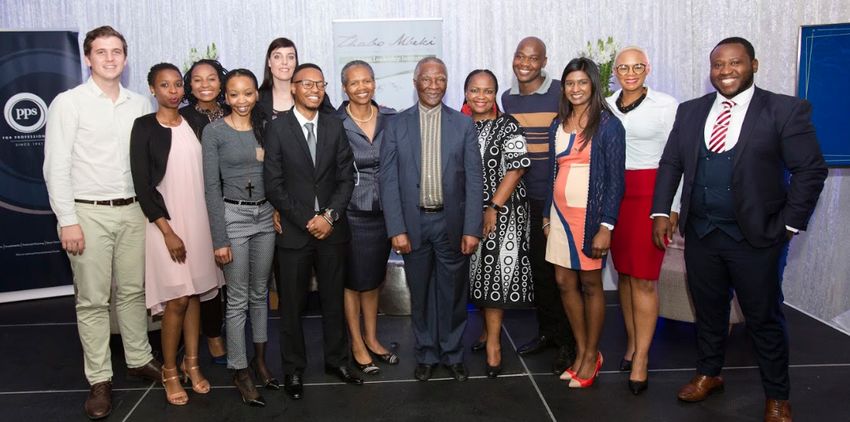
The recruitment of graduates falls as an independent process of PPS’ (South Africa)
                                     current recruitment process. They advertise all their graduate vacancies on their own
                                     digital platform called Professionals Connect, a career portal for students, young graduate
                                     professionals and entry-level employees which allows them to access relevant industry-
                                     specific information, and to search for job and mentorship opportunities. Professionals
                                     Connect is an asset of PPS Foundation, an initiative which collaborates with various
                                     stakeholders to identify and nurture the talent within South Africa’s youth.

                                     Professional Connect, a digital careers portal from PPS (South Africa).

                                     Most ICMIF members are utilising social media as a strategy for direct talent acquisition
                                     and brand awareness among the “digital-savvy” millennial generation. In recent years, a
                                     general shift has been observed from using social media solely as a communication tool,
                                     to a platform for running customised campaigns and strategies that leverage the power
                                     and value of social media connections.

                                     ICMIF members are using professional/employment-focused networks such as LinkedIn
                                     and Glassdoor to advertise and recruit millennials, and also more social platforms such as
                                     Facebook, Twitter and Instagram. Through these channels, cooperative/mutual insurers
                                     can highlight their unique company values and culture, meeting the expectations of young
                                     people who increasingly expect to learn about their potential future employers through
                                     social media.

                                     Unipol (Italy) recently updated its LinkedIn page with fresh content that focuses on topics
                                     such as innovation, sustainability and social welfare, all of which resonate strongly with
                                     the values of younger generations. This initiative has helped Unipol to position its brand
                                     more effectively.

6 | Strategic InSights: The next generation of mutual talent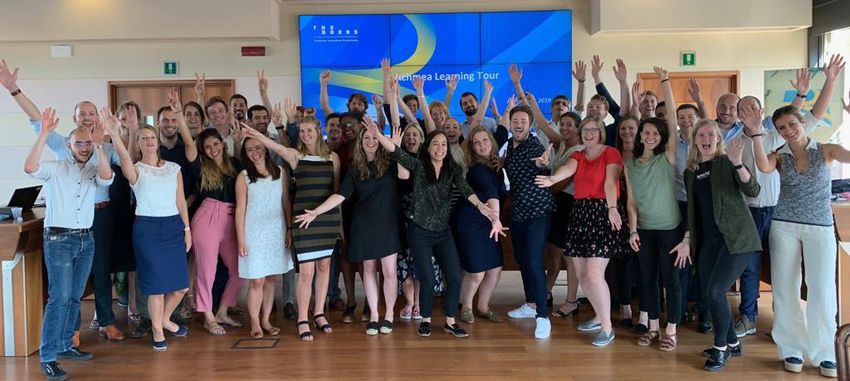
The Co-operators’ (Canada) dedicated careers account on Twitter; DEVK’s (Germany) careers Facebook page.

The Co-operators (Canada) also uses social media platforms such as Facebook,
Instagram, LinkedIn, and YouTube to publicise news about various awards that the
organisation has won for sustainability and corporate citizenship. Through its own
dedicated careers Twitter page, the company communicates with candidates about
its company values and promote career opportunities. In 2019, The Co-operators also
launched Virtual Career Fairs to allow candidates to conveniently chat with recruiters to
discuss future career opportunities and learn more about the company.

DEVK (Germany) relaunched its careers website, integrating it with its social media
platforms to create a uniform brand. Short video clips featuring current DEVK employees
speaking about their career and their everyday work are also posted on the company’s
website and Facebook page. NTUC Income (Singapore) uses Facebook and LinkedIn to
recruit new talent: it includes testimonials by current graduate trainees and employees
describing a typical day working at Income; it publicises its presence at networking events,
such as career fairs and NTU Xchange; and promotes its status as one of Singapore’s Top
100 Graduate Employers of Choice.

La Segunda (Argentina) has increased its social media presence in recent years and
advertises job positions on LinkedIn to attract millennial talent. Its internal and external
marketing strategy has also been developed to reflect the positive attributes of La
Segunda as an employer.

Do you have any educational or community-involvement
projects/partnerships that are seen as a direct (or indirect)
tool for brand awareness for millennials for the purpose of
recruitment?

Most companies cooperate with local universities to advertise job positions for millennial
talent. DEVK (Germany) has a strategic cooperation with a local university and the local
chamber of commerce. The Co-operators (Canada) has built strong relationships with
universities in Ontario where the company is based; with a focus especially on those
universities that provide cooperative education programmes, and the organisation
regularly hires alumni from such programmes into their business intelligence, actuarial,
claims, insurance sales and IT teams.

Cooperativa de Seguros Múltiples (Puerto Rico) publishes job opportunities on
the social media channels of local universities. Meanwhile, Zenkyoren (Japan) visits
universities to increase brand awareness and enable young people to network with
experienced professionals.

                                                                                                           Strategic InSights: The next generation of mutual talent | 7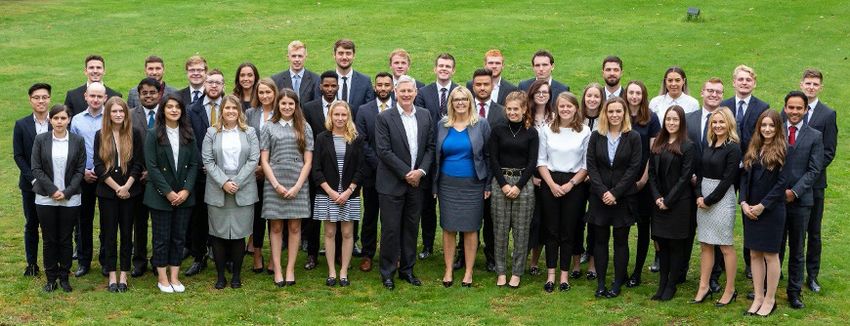
Collaboration with student interest groups enables some companies to share industry
                               knowledge and recruit millennial talent. Achmea (Netherlands) holds industry talks to develop
                               students’ knowledge about the insurance industry and make to personal contact with them.
                               NTUC Income (Singapore) also holds talks for student interest groups, looking at various
                               areas of expertise, e.g. investment management. It hosts university students who are part of
                               the Singapore National Co-operative Federation (SNCF) Co-op Scholarship at its head office
                               in order to attract employees who wish to work for a cooperative or social enterprise. Shelter
                               Insurance (USA) engages with student interest groups to foster diversity within its organisation.
                               It collaborates, for example, with the African American Student Union of its local university to
                               promote diversity, nurture leadership and develop social initiatives.

                               PPS (South Africa), through the PPS Foundation, has developed a work-readiness programme
                               that aims to equip young people with the skills, tools and mechanisms that are vital for
                               transitioning from tertiary education to the workplace. The LEAP (Learned, Engaged, Accelerated
                               Professionals) programme provides professional development workshops aimed at young
                               professionals (and sometimes facilitated through visits to local universities) on topics such as
                               personal branding, communication and presentation skills, interview preparation, as well as
                               financial wellness.

                                                                                                     P&V (Belgium) participated in a “CEO for a Day” initiative,
                                                                                                     which allows top university students to spend a full working
                                                                                                     day with leading Belgium CEOs. P&V’s CEO Hilde Vernaillen
                                                                                                     welcomed a student from the Solvay Brussels School of
                                                                                                     Economics and Management to follow her activities for a
                               Hilde Vernaillen, CEO of P&V (Belgium) with
                                                                                                     day. This is a unique chance for students to be exposed to
                               Alexandre Lefin, a student at the Solvay Brussels
                               School Economics & Management during the “CEO
                                                                                                     the work of a successful business leader and gives P&V the
                               for a Day” experience.                                                chance to connect with high potential students.

                               Some ICMIF members use early onboarding measures to position their brand among potential
                               employees. Swiss Mobiliar (Switzerland) and Aseguradora Tajy (Paraguay) offer the children
                               of employees the chance to visit their premises and learn about a predefined topic at one-day
                               interactive workshops. Tajy’s workshops, which target the 11 to 18-year-old children of its
                               employees, help spark their entrepreneurial spirit and promote teamwork and collaboration.
                               Swiss Mobiliar offers a one-week summer camp for children to learn various creativity techniques,
                               discover nature and learn the principles of sustainable management.

                                Guy Cormier, President and CEO of Desjardins Group (Canada) meeting with students during Co-op Week;
                                The Desjardins Youth Work Experience programme provides paid summer jobs for young people.

                               Desjardins Group (Canada) puts together a number of events to support young people during
                               a Co-op Week. In 2018, Desjardins volunteers shared their expertise and lent a helping hand
                               at 200 events benefiting 160 youth organisations in Quebec and Ontario. The Desjardins Youth
                               Work Experience programme goes even further and provides paid summer jobs for participants3
                               between the ages of 14 and 18 (developed in a partnership with local businesses). The goal of
                               the programme is to help young people become more employable in the future by giving them a
                               chance to acquire new skills through stimulating and rewarding work experience and awareness-
                               raising workshops on cooperation and financial management.

                               3
                                   To be eligible for this programme, participants must be a member or agree to become a member of a participating Desjardins caisse (credit union).

8 | Strategic InSights: The next generation of mutual talent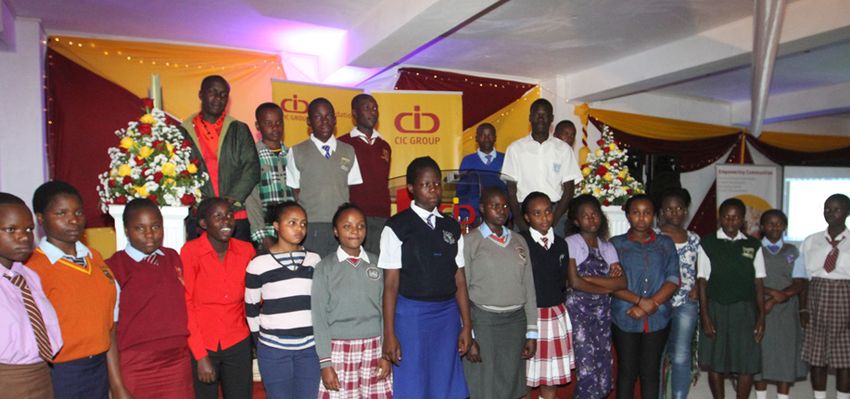
The Co-operators (Canada) has programmes for millennials which, although they are not
specifically used for recruitment purposes, help to raise awareness of their brand. The
Co-operators has partnered with Enactus Canada, a national charity that helps post-
secondary students use entrepreneurship to tackle social, environmental and economic
issues. The partnership is focused on improving youth mental health through funding to
support projects on the ground, offering in-person “Mental Wellness Zones” at Enactus
business competitions and making self-help resources accessible to students. In 2019,
204 Enactus students were engaged in delivering youth mental health projects through
this partnership, resulting in direct impacts to 457 young people. The Co-operators also
sponsors and supports the Co-operative Young Leaders Camp (CYL) programme for young
people aged between 14 and 18 across Canada. This one-week summer camp educates
students about the cooperative business model and allows them to learn about and
practise communication and leadership through cooperative activities.

Aseguradora Tajy (Paraguay) supports a contest for young people to design an advergame
(advertisement in a video game). This helps to develop young people’s creativity and
ingenuity. In conjunction with the CEL School (Centro Educativo “Los Laureles”) in Asunción,
Tajy also promotes the development of robotics, offering international competencies and
certifications to young people. The potential of this programme to develop talented young
people will help create new jobs in the Paraguayan technology sector that do not exist
currently but which will be required in the future.

Aseguradora Tajy (Paraguay) supporting a local contest for young people to design an “advergame”.

In 2011, CIC Insurance Group first launched its “I’m a Co-operator” campaign to attract
young employees to the Kenyan cooperative movement and develop much-needed
leadership skills, while promoting environmental conservation, cultural integration and the
critical role that cooperatives play in building the nation. The project covers three core areas:
leadership, ecology and social Integration in the context of cooperatives. Through the “I am
a Co-operator” campaign, CIC Insurance Group has directly impacted about 3,000 young
people and a million more indirectly.

Objectives of the “I am a Co-operator” initiative:

  ► To create awareness about cooperatives. Through the initiative, CIC trains young
    people about the cooperative business model and its values
  ► To consolidate and increase membership by encouraging young people to join
    cooperatives
  ► To develop passionate, youthful leaders who can promote cooperatives through
    good leadership ideals and commitment
  ► To build skills that are appropriate to the roles and responsibilities within the
    cooperative movement
  ► To influence young people to promote cooperatives as values-based business
    models

                                                                                                    Strategic InSights: The next generation of mutual talent | 9
Various ICMIF members agree that current employees are the best brand ambassadors
                                    to increase positive brand awareness among millennials. DEVK (Germany) uses video
                                    clips of selected millennial employees sharing their insights about a normal working day.

                                     #WhyPPS social media campaign from PPS (South Africa) involves current graduates sharing their experiences as a PPS employee.

                                    PPS (South Africa) uses its current graduates in its digital marketing campaigns to
                                    speak of their personal experience, growth and development. Achmea (Netherlands),
                                    La Segunda (Argentina) and Aseguradora Tajy (Paraguay) also base their recruitment
                                    strategies on feedback from current millennial employees.

                                    Some members sponsor selected future leaders as an effective way to enhance brand
                                    awareness. NFU Mutual (UK), an agricultural insurer, offers a scholarship to selected
                                    students who intend to study at an agriculture college. CIC Insurance Group (Kenya)
                                    sponsors selected students from vulnerable backgrounds, offering them high school
                                    scholarships to help them achieve their dreams. The recipients of this scholarship are
                                    likely to respond positively to the company’s developments and opportunities. Similarly,
                                    1CISP (Philippines) runs the “Coop Kicks Program”, encouraging young people to
                                    contribute their ideas whilst introducing them to cooperatives.

                                    Some of the students sponsored by CIC Insurance Group (Kenya) through high school scholarships.

                                    Annually, Desjardins Group (Canada) commits more than USD 35 million to initiatives
                                    supporting youth aged 6 to 30 and young entrepreneurs under 35 in Quebec and Ontario
                                    in the areas of education, healthy living, employment and social engagement.

10 | Strategic InSights: The next generation of mutual talent
How do you differentiate your organisation to appeal to
millennials? Does being a mutual/cooperative (or your
organisation’s purpose, values or principles) help this, and if
so, how?
Most ICMIF members agree that millennials react positively to cooperative/mutual core
values. The Co-operators (Canada) believes that the communication of values such as
open communication, democracy and transparency is especially effective when promoting
the organisation to prospective employees. Millennials feel comfortable interacting with a
potential future employer when they realise that the organisation is honest, transparent,
and ethical in its conduct of business.
The purpose and values of PPS (South Africa), as an affinity-based mutual insurer, play
a big role in attracting talent. Young professionals want to be part of the organisation’s
unique proposition and appreciate the company’s close affinity to its members, who are
all graduate professionals. NTUC Income (Singapore) believes the active communication
of its corporate values helps to attract young individuals who share the same fundamental
values that make up the organisation’s particular DNA.
DEVK (Germany), Cooperativa de Seguros Múltiples (Puerto Rico) and Swiss Mobiliar
(Switzerland) also stress in their communications that cooperative/mutual insurance
companies with a long historical background and economic strength offer higher job
security and a focus on long-term success. La Segunda (Argentina) adds that a strong
emphasis on employees’ well-being provides a competitive advantage and helps in its
acquisition of millennial talent.
Strategic InSights: The next generation of mutual talent | 11Developing and retaining
millennial employees
The second part of this report focuses on how ICMIF members engage, develop and retain
millennial talent.
Professional and personal development programmes or initiatives – especially those that
are designed specifically for graduates or those just starting their careers – also play an
important role in attracting millennials. Many ICMIF members promote their extensive
professional and personal development opportunities to future employees and have
used past or present graduates (via social media) to present an authentic voice about the
benefits of these programmes and/or working for the company.
What initiatives do you have to support the personal and
professional development of millennial talent?
Specialised training and development programmes aimed at recent graduates are seen
by many ICMIF members as an effective way of introducing new employees to a company
and set employees on a path of self-development. Step-in graduate programmes with a
job rotation aspect also allow new employees to gain wide experience and understanding
of the different functions of an insurer; provide motivation early on in their careers; and
help them identify which function or area of specialty they wish to pursue within the
organisation after they have completed the graduate programme. Graduate programmes
usually last between one and three years.
12 | Strategic InSights: The next generation of mutual talentNFU Mutual (UK) has an award-winning4 graduate programme – the Professional Trainee
Scheme5. The scheme allows graduates to complete different placements across the
business in which they get to work on a variety of projects; experience different teams;
and network with key members of the leadership team. Each employee has a placement
manager throughout the duration of the scheme, plus a mentor and support from the talent
development team within Learning & Organisation Development. The scheme has been
designed to give a rewarding balance of on-the-job learning, hands-on experience and
professional qualifications through a structured and insightful training programme. As well
as this central scheme, based at either NFU Mutual’s head office or regional centres, some
of NFU Mutual’s self-employed agent branches also welcome an intake of graduates in their
local offices.
The 2019 graduate intake at NFU Mutual (UK) with Group CEO Lindsay Sinclair.
CIC Insurance Group (Kenya) runs a graduate trainee programme that is designed to
provide a holistic experience for university graduates in all the subsidiaries and departments
of the company over a two-year period. CIC is keen to ensure that the trainees spend time
in every department: underwriting, claims, marketing and distribution, strategy, finance
and audit, actuarial and pricing, risk and compliance and human resources. A thorough
understanding of the functions and operations of the company is very important in helping
graduate trainees consider where their competences lie and the area of the organisation in
which they would eventually like to develop their career.
Several ICMIF members also offer internships or apprenticeship schemes. Unipol (Italy)
offers internships for university students, offering selected millennials the opportunity to
gain experience in the insurance sector during their studies.
NTUC Income (Singapore) offers a 12-week structured internship programme aimed
at tertiary students (ie high school leavers). The programme allows interns to put their
educational knowledge into practice whilst picking up new skills on the job and learning
about the fundamentals of insurance through training sessions conducted by in-house
experts. The interns are mentored by graduate trainees (with the added benefit of
developing the graduate trainees’ leadership skills) and participate in various outreach
projects.
4
The scheme appears in the Top 100 Job Crowd Companies For Early Careers and was runner up in the Accountancy & Insurance category 2020/2021 .
5
NFU Mutual’s Professional Trainee Scheme is not exclusively for millennials and is open to all graduates with desirable behaviours and skills.
Strategic InSights: The next generation of mutual talent | 13NFU Mutual (UK) also has award-winning6 apprenticeship schemes and is supporting
school and college leavers to take their first steps on the career ladder, with many
individuals now choosing the apprenticeship route rather than going to university. The paid
apprenticeships are assigned to full-time roles, are a minimum of 12 months in length,
and support the achievement of professional qualifications, as well as the development
of knowledge, skills and behaviours. Upon completion of the apprenticeship programme
individuals are supported to continue their development with NFU Mutual through further
qualifications and opportunities to progress within the business. Similarly, PPS (South
Africa) has a one-year Graduate Internship Development Programme (GIDP), however
this is aimed at young, ambitious graduates. The interns gain relevant work experience,
soft skills and comprehensive training under the supervision of a formal mentor, and
like apprentices at NFU Mutual, they then have the prospect of receiving permanent
employment within PPS at the end of their internship.
EMC Insurance Companies’ (USA) internship programme, Experience EMC, is designed
to create a pipeline of top talent and motivate college students to explore a career
in insurance. Interns get the opportunity to do meaningful, paid work across various
business functions at EMC, and at 20 locations across the USA. The internships also
include additional opportunities, such as team building, community volunteering, peer
socialising events and the chance to learn about the industry from senior EMC employees.
As well as providing valuable work experience, Experience EMC has helped millennials
with the transition from colleague students to full-time employees, and created EMC
enthusiasts before graduation - many interns have been hired full-time at EMC, and some
have been promoted to senior management positions.
Initiatives to support the personal and professional development of millennial talent
often start pre-university/college, especially in European countries. Swiss Mobiliar
(Switzerland) offers a diploma programme in which young people receive vocational
and technical training and change departments every six months. After completing the
diploma, which is externally accredited, the young participants often take a full-time job
with the organisation or continue their education.
DEVK (Germany) has a similar programme that allows millennials the opportunity to
achieve a commercial apprenticeship qualification and bachelor’s degree in insurance
management or IT over three years. The students gain theoretical and practical experience
and at the same time prepare for a career in the insurance industry, while being paid a
monthly salary. Seguros Unimed (Brazil) runs a programme specifically designed for low-
income young talent, allowing them to put their existing knowledge and experience into
practice.
EMC Insurance Companies (USA) has partnered with Bismarck State College to build
insurance coursework into the college’s curriculum. Students and professionals can
advance their careers by obtaining a Certificate for Insurance through the business
programme at the college.
6
NFU Mutual’s Apprenticeship scheme appears in the Top 100 Job Crowd Companies for Early Careers and won the award within the Accountancy & Insurance
category 2020/21
14 | Strategic InSights: The next generation of mutual talentMany ICMIF members also support further education through a wide range of
different financial and non-financial contributions. For young professionals at Achmea
(Netherlands), there is a specially designed leadership course consisting of different
interventions, such as personal development, mentoring and business projects. Unipol
(Italy) runs an initiative for 20 high-performing employees, selected as “future managers”
of the company. These individuals receive the opportunity to obtain a Master’s in Business
Administration (MBA) and a full week of intensive courses at an accredited foreign
university.
At 1CISP (Philippines), employees can request to attend external, even international,
training courses, programmes and events based on their needs, as part of their tailored
learning and growth development programme. La Segunda (Argentina) collaborates
on applied research projects to enhance the personal development and retention of
millennial employees.
PPS (South Africa) partners with the Thabo Mbeki Foundation and the University of South
Africa (UNISA) to provide an accredited leadership training programme for all their graduate
interns. The programme looks at leadership for Africa’s renewal, and helps millennial staff
to take accountability for their actions and to work towards re-growing Africa. In September
2019, former South African President Thabo Mbeki participated in an interactive session
with PPS’ young leaders and other senior executives.
Former South African President Thabo Mbeki with young leaders at PPS at the 2019 PPS Young Leadership Event
Many members develop their emerging talent through in-house training sessions.
Zenkyoren (Japan) has a dual-improvement development programme to teach employees
basic skills through workshops and group training, and professional expertise in various
departments such as sales, life and general insurance, systems planning, actuarial
science and asset management. Different departments also organise days to promote
understanding of the organisation’s broad range of activities.
Strategic InSights: The next generation of mutual talent | 15CIC Insurance Group (Kenya) offers an internal insurance diploma course and
encourages ambitious employees to register for membership in professional associations,
such as the Kenyan Marketing Society. At La Segunda (Argentina), in-house training
sessions have a strong focus on the expansion of skills for innovation and people
leadership in a changing environment. PPS (South Africa) also utilises its in-house PPS
Academy for internal training of its graduate interns and young professionals.
Aseguradora Tajy (Paraguay) offers a Leadership Day, which provides training on topics
that promote the holistic development of talent. 1CISP (Philippines) also takes a holistic
approach to the development of its employees through the specially designed Yes!
Program which focuses on health and well-being, cognitive, social, emotional and spiritual
development.
Health and wellness painting and laughter yoga: just two activities that are part of 1CISP’s (Philippines) YES! Program
Desjardins Group (Canada) is consistently recognised as one of the country’s most
desirable companies to work for, as well as one of Canada’s Top Employers for Young
People7. One of unique opportunities it offers its employees is a Young Intern Officer
programme for individuals between the ages of 18 and 30, which allows them to become
familiar with the role of an officer or administrator by completing an one-year internship
on the Board of Directors or the Board of Supervision at a Desjardins caisse (credit
union). Participants gain a macro level perspective and the chance to hone their strategic
planning skills and may also have opportunities to share ideas for new services for young
members with committees and commissions.
Mentoring programmes are also a popular way to develop and retain millennial talent.
DEVK (Germany) offers mentoring to young employees, and notes that this also benefits
the senior mentors in turn. The concept enables a healthy exchange between generations
and enhances understanding of the others’ perceptions and preferences. EMC Insurance
Companies’ (USA) MentorMatch offers the opportunity for team members to improve
skills and build their knowledge by partnering and learning from a mentor who possesses
related expertise. Shelter Insurance (USA) has a “reverse mentoring” programme in which
young employees teach senior management about new technologies and processes, while
senior managers pass along leadership and career advice to their mentees. Again, there
are benefits for both parties.
7
Desjardins Group was selected as one of Canada‘s Top 100 Employers (2020) and Canada‘s Top Employers for Young People (2020) by
Mediacorp Canada.
16 | Strategic InSights: The next generation of mutual talentUnipol (Italy) has created development plans that provide individuals with technical
knowledge and interpersonal skills. Young mentees attend quarterly mentoring
sessions with one of their senior leaders. Unipol supports the personal and professional
development of millennial talent through a specially designed mentoring programme.
To increase diversity, Achmea (Netherlands) and JCIF (Japan) have specially designed
mentoring programmes for under-represented groups in insurance, such as women.
How do you encourage millennial employees to pro-actively
learn and develop themselves?
Several ICMIF members encourage millennials to pro-actively learn and develop
themselves using computer-based software. Specifically, Swiss Mobiliar (Switzerland)
and La Segunda (Argentina) provide corporate e-learning platforms with a wide range of
online training courses. External providers provide most of the content, however, modules
can also be adapted for specific business issues.
Classroom training provides an opportunity to combine networking and personal
development initiatives. At JCIF (Japan), young professionals complete various learning
programmes to prepare themselves for upcoming promotions. Employees select their
thematic priorities based on the main competences they require for working in a specific
department.
Seguros Unimed (Brazil) offers its employees various training courses that combine
theoretical and practical learning approaches, on subjects ranging from personal
marketing, mathematics, Microsoft Excel and interpersonal relationships. La Segunda
(Argentina) actively teaches the methodology of design thinking and generates internal
competitions between employees that encourages the development of innovative
propositions and motivates younger employees.
A new initiative at EMC Insurance Companies (USA) has been the development of
EMC University (EMC U) for new underwriting and claims professionals. This has been
developed by a dedicated agile team exploring what new hires need to succeed and what
they should take away from their learning journey, and will include modules on EMC’s
structure and history, as well as the fundamentals of insurance. The first group of new
employees will attend EMC U in 2020.
In some organisations, independently organised initiatives are seen as a good
opportunity to engage millennials and help them learn and develop proactively. Thrivent
(USA) encourages young professionals to connect and realise short-term development
projects, such as participating in customer research for innovation efforts. This bottom-
up approach gives individuals the opportunity to take responsibility, gain experience and
have a positive impact on society or the environment.
Likewise, EMC Insurance Companies (USA) hosts a monthly Innovation for Breakfast
meeting, which is open to all team members (not just millennials), to hear EMC executives
and outside experts talk about innovation topics. Young professionals also have the
opportunity to work in cross-functional teams on innovation projects. By fostering this
culture of innovation at EMC, it helps their young employees to find new and better ways
to collaborate and be successful, generating unique ideas and solutions to help the future
growth of the business.
Strategic InSights: The next generation of mutual talent | 17Have you designed processes/programmes to get the
diverse voice of your younger workforce represented in your
organisation’s strategy?
Many ICMIF members have designed their own internal young professional networks or
millennial-focused employee/business resource groups (ERGs or BRGs). These groups
are more prevalent amongst North American members, as they form part of their wider
diversity and inclusion strategies.
Many millennials, in North America especially, join the workforce having spent three or
four years at university or college, surrounded by students with similar goals, interests
and passions, and with resumes that detail their participation in various university clubs,
teams and groups. Upon joining the world of work, many graduates then find themselves
stuck in the silos of their business area and struggle to find broader connection and
opportunities outside their day job. Generally, millennials crave a sense of connectedness,
purpose, impact, development and community, and so professional peer networks can
help recent graduates achieve these goals. They are often specifically designed and
managed by millennial employees, to ensure they meet the developmental needs and
career aspirations of millennials.
The activities of these professional networks vary, although usually involve a degree of
networking (at both a peer and senior level), professional development and community
involvement. The main benefits of these networks are:
1. They increase millennial employee engagement.
2. They aid personal and professional development.
3. They provide a new collective voice and perspective to help drive innovation and
transformation initiatives within the whole organisation, ensuring continuity,
sustainability and future success.
18 | Strategic InSights: The next generation of mutual talentMillennial employees at Thrivent (USA) formed the Thrivent Young Professionals Network
(YPN) in 2015 as one of its four Employee Business Resource Groups. Today it has 800
members, including both young professionals and ‘allies’ - more tenured professionals
committed to the growth and development of others. After questioning and listening to what
young professionals were looking for, three tenets - connection, development and impact –
were identified as the primary needs of young professionals which were not being actively
satisfied by the organisation at that time.
► “Connection” focuses on connecting to other young professionals, leaders and
business areas outside of their own divisions and to local non-profit and community
groups serving their communities, including “speed networking”, group visits and
tours, and volunteer activities.
► “Development” looks to provide individuals with the skills, knowledge and stretch
opportunities they need to grow.
► “Impact” looks at the desire to “be heard,” with a variety of avenues impacting the
business, and provides a fresh, diverse voice on business decisions, innovation and
strategies.
Members of the Thrivent Young Professionals Network
The mission of Shelter Insurance’s (USA) Emerging Professional Network (EPN) is
to engage, empower and connect a diverse group of emerging professionals through
personal and professional development, networking and community involvement. Formed
See page 28 for
in 2013 as an employee resource group under Shelter’s Diversity Committee, the network
more information of
this case study as an
gives emerging (rather than just “young”) employees the opportunity to connect and grow,
ICMIF webinar creating opportunities for development, leadership, education and community outreach.
A social event for Shelter Insurance’s (USA) Emerging Professional Network; EPN volunteers on a community outreach project
Also in the USA, the Securian Young Professionals Network is one of five employee
resource groups that form part of Securian Financial’s diversity and inclusion strategy.
The network aims to engage and embrace young employees through a range of activities,
such as community projects and networking events (Executive Q&A sessions, “happy
hours” and “lunch and learns”).
Strategic InSights: The next generation of mutual talent | 19Achmea (Netherlands) has had a young professional network since 2008: Jong Achmea
(Young Achmea). It was initiated to help its young professionals under 35 to achieve their
potential and broaden their horizons, whilst also giving a voice to young employees and
providing a platform for Achmea to reach young employees. As of today, the Jong Achmea
(JA) network has approximately 1,000 members.
The group has defined four focus areas: vitality, personal development, social responsibility
and actuality. They cooperate with the HR department on projects about young employees
and are actively engaged in the talent management process of the organisation.
JA’s activities are split between internal and external activities. Internal activities include
networking events, workshops and summer schools. External activities include community
projects, international events and conferences, and an annual “Young Achmea on Tour” exchange
visit to a European partner organisation for up to 30 JA members, for a week of presentations and
ideation workshops.
JA on Tour 2019: Members of the Young Achmea network on a week-long visit to a partner organisation in Turin (Italy).
In Canada, Desjardins Young Executives (Jeunes cadres Desjardins) is a network of
managers under the age of 35 from the Desjardins Group. They organise various
initiatives and activities, such as an annual symposium to strengthen their sense of
belonging to the organisation; peer networking events; web-based events to help them
understand the strategic issues impacting the organisation; themes and issues in the
cooperative world; and social activities that support the community.
Workshops involving Desjardins Young Executives
20 | Strategic InSights: The next generation of mutual talentBuilding your own millennial employee professional network
Suggestions Beware of challenge
Network should be Time - As an
led by committed, “extracurricular” network,
passionate young outside of employees’
leaders - as a volunteer everyday obligations and
opportunity, success is goals, ERGs encounter
resultant on the amount difficulty in helping
of effort and strategy of people see the value in
the leadership team. committing to personal
development through this
channel.
Engagement and
support from top
leadership is important, Schedules - Both
each network has an leaders and members
executive sponsor alike finding a diversity
who advocates for the of events, times, topics
group and provides to engage all sorts of
strategic partnership on employees
aligning the network’s
goals to corporate
strategic goals.
Formal processes
and rules – You may
encounter several
barriers in setting up the
network
Unipol (Italy) runs an innovation lab, and its first group of 80 millennials (employees
aged under 35, who have been at the company for at least four years) focused on the
development of innovative business proposals through workshops about broad issues
and team work. Ideas from the four laboratories have been included in the next three-year
strategic plan (2019-2021).
DEVK (Germany) offers a similar initiative called “Strategy-Scout”. Five interdisciplinary
teams, each with about nine colleagues from different departments, work together for
about half a year. Two mentors support each team during their independent work on a
specific strategic issue. The teams develop a concrete concept and presents the main
findings to the management team.
Strategic InSights: The next generation of mutual talent | 21La Segunda’s (Argentina) Young Leaders Team originated from an ICMIF workshop in
December 2017, when a group of millennial graduates joined senior executives to discuss
how La Segunda could become the leading client-focussed insurer in Argentina by 2020.
The 14 young professionals formed a group, which included representation from various
company divisions to combine industry knowledge and a range of different personal
perspectives. The group then began to work on initiatives that focus on La Segunda’s
customers and improving the service that the organisation gives them. After presenting the
initial proposals back to La Segunda’s senior management, they defined the identity of the
group as:
“We are an interdisciplinary team of young professionals dedicated to researching and
analysing trends worldwide to propose innovative solutions and improvements focused on
the customer, collaborating in the development and implementation of these solutions.
We are a team that was born from the decision of La Segunda to continue strengthening
its links with ICMIF through the active participation of the young leaders that are part of the
organisation”.
Whilst focusing on improving the customer experience at La Segunda, the group also looks at
innovative and disruptive processes to implement throughout their projects; and also looks
to integrate other professionals within the organisation, who in turn, transmit this way of
working collaboratively to their daily functions.
The group has also become a vehicle to build relationships with young people belonging to
other companies that are members of the La Segunda group. It has collaborated in initiatives
with the youth group of the Argentine Association of Cooperatives (ACA), such as the ACA+
Technical Agricultural Congress (organised by the ACA Youth); and with La Segunda’s Internal
Communication Network for “Hack2In”, Argentina’s first InsurTech Hackathon in Argentina,
which was held in July 2018 in Rosario.
The founding 14 members of La Segunda’s (Argentina) Young Leader Team; Collaboration workshop; On stage at Hack2In,
Argentina’s first InsurTech Hackathon, in 2018.
22 | Strategic InSights: The next generation of mutual talentYouth Advisory Boards offer valuable management support and ensure the voice of the
younger workforce is represented at the organisation’s board and/or strategy division.
At Desjardins (Canada), their Youth Advisory Board is made up of 12 young employees
(under the age of 35) that are consulted on their opinions about strategic issues. They
have the opportunity to share their concerns, vision and aspirations with the Board of
Directors and Executive Committee. To date, the advisory board has already contributed a
unique, generation-specific perspective to corporate discussions.
Every year at PPS (South Africa), their graduate interns have the opportunity to present
new and innovative ideas to the PPS Executive Committee (Exco) and management.
In 2018, the interns came up with a “Junior Exco” proposal. From this, the PPS Young
Leadership Forum was created as a platform to empower the leaders of the future and give
the views and vision of the future generation a voice within the organisation.
Members of this forum are candidates under the age of 35 and considered exceptionally
talented professionals who will be instrumental in generating and presenting ideas that
will transform the organisation. They work on projects that come from senior management
and present their projects to Exco every quarter.
The Co-op Group (UK) runs a programme in which 15 young people from across the
country are brought together to provide insights about the thoughts, views, issues and
aspirations of young people. The network provides valuable insights, with the participants
spending time on projects and research that help the organisation to engage with younger
customers.
Participants of 1CISP’s (Philippines) Young Leaders Program, held at its 45th Annual General Assembly in 2019.
At 1CISP (Philippines), employees aged 18-35 years are encouraged to be part of its
Young Leaders Program. The programme was launched during 1CISP’s 45th Annual
General Assembly during which, in addition to attending the official plenary sessions,
the young leaders attended additional sessions about leadership and professional
networking.
Strategic InSights: The next generation of mutual talent | 23Do you have other strategies or initiatives that help to
specifically engage with millennials, or that align with the
values of this generation?
To respond to millennials’ strong desire for flexibility, many ICMIF members offer flexible
working hours and job rotation. As described by an employee of NTUC Income
(Singapore), “Sometimes as fresh graduates, we may not already know what we want
to do or focus on when we start our first jobs, so having the chance to rotate around the
organisation allows us to test ourselves in different roles and find out exactly where our
interest or strength lies.”
At Desjardins Group (Canada), instead of cubicles, many offices are trending toward
having open-plan seating, allowing employees to collaborate easily and tailor their
working day to suit their needs. Hours are also flexible and people are allowed to work
from home. Swiss Mobiliar (Switzerland) and The Co-operators (Canada) both agree that
employees (including millennials) have high expectations about flexible working hours as
well as the companies’ involvement in the community. Work-life balance is a priority at
The Co-operators, and they feel that this resonates well with millennials. They promote
their work-life balance philosophy through different work options such as work from home
opportunities, flexible schedules, and volunteer and personal days.
At P&V (Belgium), as well as a flexible working conditions, a flexible remuneration plan
(the Reward Tool), which allows employees to take a personal ownership for part of their
remuneration, helps with employee engagement and increases the cooperative insurer’s
visibility and reputation as an employer of choice8 in the fight to attract and retain young
talent.
Most members confirm that millennial talents are often looking for new discoveries and
development opportunities. To develop talent sustainably, members such as Zenkyoren
(Japan), P&V (Belgium) and DEVK (Germany) cover full expenses for ambitious employees
to participate in seminars held by external organisations. NFU Mutual (UK) supports
a wide range of additional role-specific qualification opportunities. As mentioned,
there is a strong desire for flexibility amongst millennials, so ICMIF members should
consider offering internal development opportunities which are recognised by external
organisations. As a part of its offer to millennial employees, Swiss Mobiliar (Switzerland)
runs a cross-company programme for data scientists which offers the opportunity to work
for three different employers in 18 months.
Our findings show that millennials are looking for honesty, transparency and an
opportunity to be heard. JCIF (Japan) not only communicates what young professionals
can expect from a potential job role, but also what they should not expect. This approach
helps the company to remain reliable and earn the trust of potential future employees.
Cooperativa de Seguros Múltiples (Puerto Rico) takes a similar approach: it confirms
that keeping millennial employees informed about company decisions, programmes,
strategies and goals is essential. It therefore offers young professionals the opportunity to
express their ideas and suggestions through individual and group meetings, surveys and
focus groups.
8
In 2019, P&V were awarded the “Corporate HR Award for Employee Engagement” at the HR Excellence Awards
24 | Strategic InSights: The next generation of mutual talentOur research also showed that millennials want to do meaningful work and have a lasting
impact. P&V (Belgium) reported that young professionals launched a social initiative
to contribute to the community. In collaboration with the P&V Foundation, employees
continue to engage with selected non-governmental organisations. The Co-operators
(Canada) and Cooperativa de Seguros Múltiples (Puerto Rico) highlight that millennials
want to focus on impact, transparency and sustainability.
The Co-operators vision for community investment has helped it to specifically engage
with millennials as this aligns with their values— specifically their focus on social wellness,
environmental prosperity, and financial security. They contribute to the social well-
being of their communities by investing in mental health, supporting the inclusions and
advancement of young Canadians, marginalised populations, and promoting employee
volunteering. They also focus on building environmental prosperity by reducing their
carbon emissions and helping communities adapt to a changing climate
Thrivent and Shelter Insurance (both USA) confirm this perception and add that they
regularly plan volunteer events and activities to collaborate with charities and non-profits
that seek to address community needs in their city.
PPS (South Africa) adds that it is important for organisations to have the right people
and culture that can stimulate, challenge and grow millennial employees. Should an
organisation not have the right people that are passionate about their young employees,
they will surely lose their best and brightest young talent. If an organisation keeps their
millennials challenged and accountable, then it will have a better chance to retain its
young professionals – at PPS, graduate interns stay for an average of 4.5 of years after
their graduate programme is completed.
Lastly, individual ICMIF member organisations mention that being part of a community
is also a very important factor for millennials. To encourage a strong community, The
Co-operators (Canada), Aseguradora Tajy (Paraguay), JCIF (Japan), P&V (Belgium) and
Zenkyoren (Japan) intend to foster cohesion between their employees. Thrivent (USA)
emphasises that access to other young professionals throughout the organisation is an
essential part of happiness and networking for millennials in the workplace.
Strategic InSights: The next generation of mutual talent | 25You can also read


