Myanmar responsible business overview 2021 - Chevron
←
→
Page content transcription
If your browser does not render page correctly, please read the page content below
Myanmar responsible
business overview
2021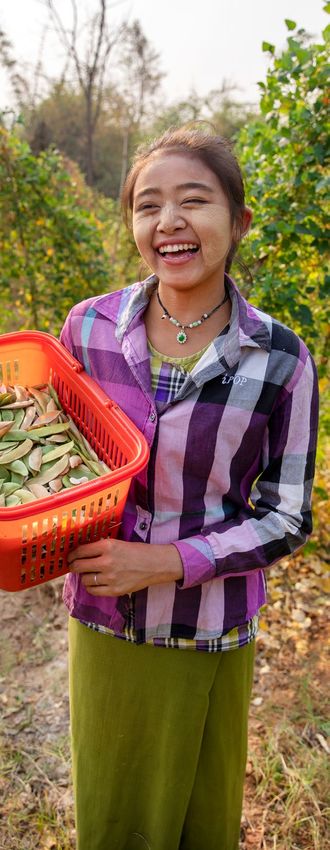
table of contents

1    introduction

2    update on operations in Myanmar
     • Yadana gas project
     • Role of MOGE
     • Relinquishment of offshore blocks

3    commitment to respect human rights

4    responsible investment in Myanmar:
     policies in practice update
     • Operating in conflict-affected and high-risk areas
     • Protecting human rights and supporting communities
       during COVID-19
     • Responsible business dialogue
     • Security and human rights
     • Community engagement
     • Transparency
     • Anti-corruption and compliance

7    responsible investment in Myanmar:
     supporting progress
     • Social investment overview
     • Rakhine social investment review
         – Health
         – Natural resource management and conservation
     • National social investment programs
         – Governance
         – Health
         – Economic development
         – Access to renewable energy
         – Yadana socioeconomic program

9    appendix: updates to commitment to
     operating with excellence

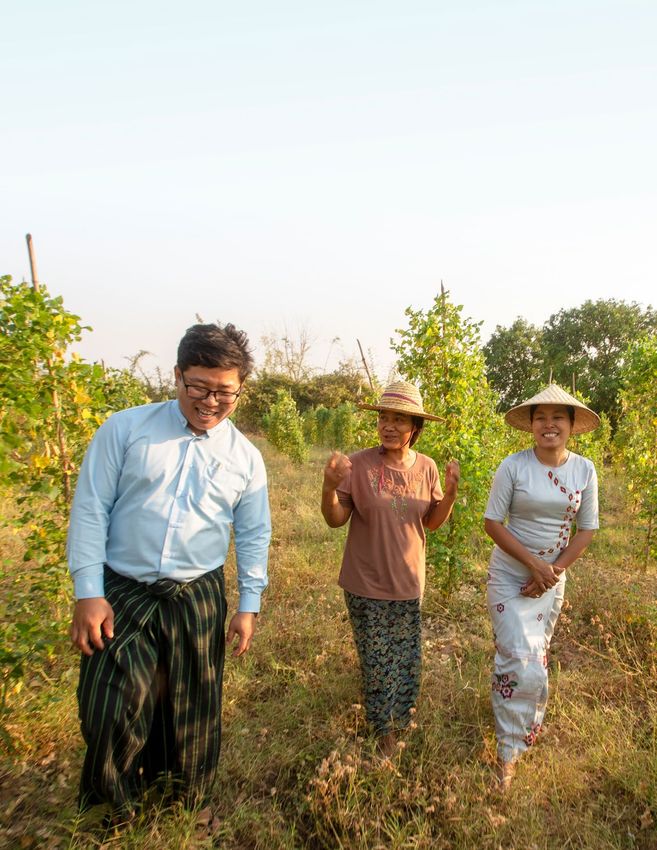
Cover photo: Long bean farmers in the Madaya Township who electrified
their irrigation method through the Ahlin Yaung project.
Inside front cover photo: The Ahlin Yaung project helped community
members start new businesses using solar electricity or to transition their
businesses to renewable energy.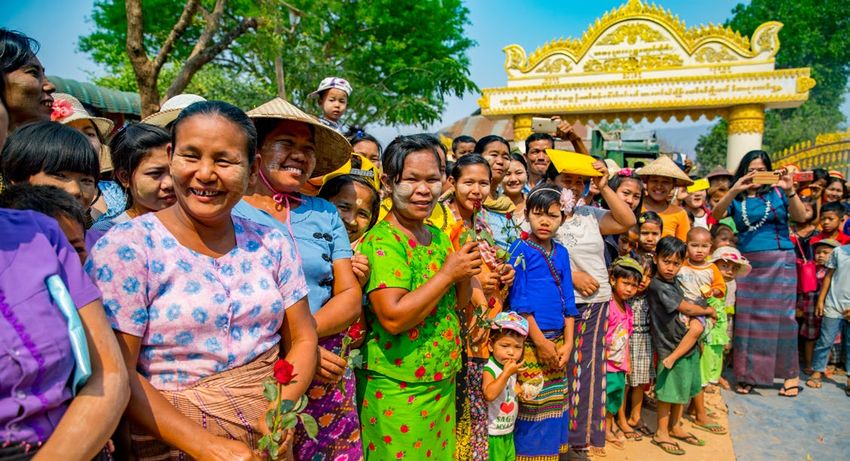
introduction

Villagers at the Kyauk Se Lay village of the Madaya Township.

Chevron’s1 affiliate, Unocal Myanmar Offshore Co., Ltd. (“UMOCL”),                           Chevron’s affiliates’ investments have enabled the creation of
is a long-term partner in Myanmar. UMOCL conducts its business                               new businesses, provided workforce development opportunities
in a responsible manner, respecting the law and universal                                    and supported the social investment priorities of the residents of
human rights to benefit the communities where we work. These                                 communities adjacent to operations and in other parts of Myanmar.
commitments are enshrined in our Chevron Way values which
provide the foundation for who we are and how we work.                                       This March 2021 update is published at a time of civil unrest and
                                                                                             insecurity for the people of Myanmar. Chevron supports the people
Since 1992, UMOCL has held a non-operated minority interest in                               of Myanmar on their journey to a modern, peaceful and prosperous
a production sharing contract (PSC) for the production of natural                            nation. We condemn human rights abuses. Chevron will continue to
gas from the Yadana Field (operated by Total), within Blocks M5                              work with its business partners, government and nongovernmental
and M6, in the Andaman Sea. UMOCL also holds a minority interest                             organizations (NGOs) to foster a business environment that
in an associated pipeline company, also operated by Total. In                                respects human rights.
2015, UMOCL signed a PSC acquiring the rights to explore acreage
in Block A5 located in the Rakhine Basin in the Bay of Bengal.                               This report outlines the activities that we have undertaken to act
However, UMOCL relinquished its interest in Rakhine State in March                           upon our values and commitment to bring benefits to the people
2019, prior to any operational activities being undertaken.                                  of Myanmar. More information on our sustainability efforts can be
                                                                                             found online at: www.chevron.com/sustainability
We believe that our presence, and that of other responsible
international investors, is beneficial to the people of Myanmar.

1 As used in this report, the term “Chevron” and such terms as “the company,” “their,” “our,” “its,” and “we” may refer to Chevron Corporation or one or more of Chevron
Corporation’s consolidated subsidiaries or affiliates or to all of them taken as a whole. Similarly, the terms “business unit” and “business units” may refer to one or more of
Chevron’s consolidated subsidiaries or affiliates. All these terms are used for convenience only and are not intended as a precise description of any of the separate entities, each
of which manages its own affairs.

                                                                Chevron Myanmar responsible business overview 2021
                                                                                       1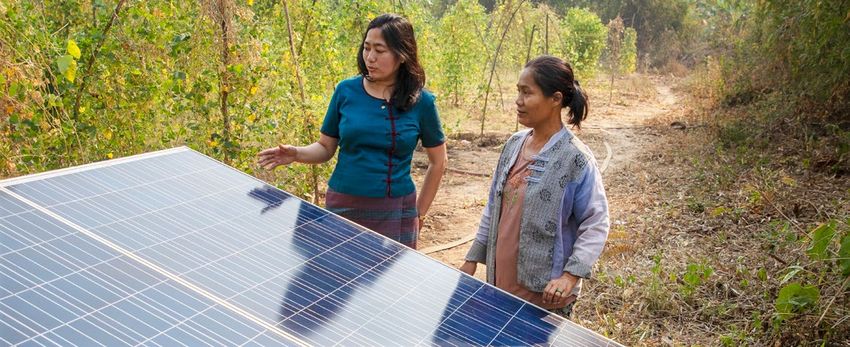
update on operations in Myanmar

yadana gas project                                                                            The majority of natural gas from the Yadana offshore facilities is
                                                                                              transported through the MGTC export pipeline, a critical piece of
Chevron’s affiliate, Unocal Myanmar Offshore Co. Ltd. (UMOCL),                                regional energy infrastructure that goes to the Myanmar-Thailand
has a 28.3 percent ownership interest in a PSC for the production                             border for delivery to power plants in the West of Thailand and
of natural gas from the Yadana, Badamyar and Sein fields, within                              helps to maintain energy security. The remaining volumes are
Blocks M5 and M6, in the Andaman Sea. Total Exploration and                                   allocated to Myanmar’s domestic market and meet electricity
Production Myanmar (TEPM), an affiliate of TOTAL S.A., is the                                 needs for the people of Yangon. The gas from the Yadana project
operator of the Yadana gas project with 31.2 percent ownership.                               supplies 50 percent of the electricity in Yangon, crucial for homes,
Other partners in the PSC and pipeline include PTT Exploration and                            schools, hospitals and access to telecoms. Further, Thailand relies
Production PLC (PTTEP) with 25.5 percent and Myanma Oil and Gas                               on gas from the Yadana Project to supply southern, western and
Enterprise (MOGE) with 15 percent.                                                            central provinces with power.

The Yadana gas project provides critical energy to communities in                             role of MOGE
Myanmar and neighboring Thailand. UMOCL also has a 28.3 percent
ownership interest in the export gas pipeline company, known as                               Myanma Oil and Gas Enterprise (MOGE) is a state-owned
Moattama Gas Transportation Company (MGTC).                                                   enterprise that participates in and regulates the oil and gas sector.
                                                                                              MOGE owns, and exclusively operates and maintains, the domestic
             Myanmar                                                                          gas pipeline network.

                                                                                              The M5/M6 joint venture makes in-kind distributions of domestic
           Yangon
                                                                                              gas to MOGE in accordance with the terms of a Domestic Gas
                                              Thailand                         Laos           Sales Agreement. UMOCL does not participate in MOGE’s onward
    M5
               M6                                                                             distribution of the gas it receives pursuant to the Domestic Gas
                                                                                              Sales Agreement and does not make distributions directly to the
                                          Bangkok
                                                                                              Myanmar military.
                                                                           Cambodia
                                             Gulf of                                          relinquishment of offshore rakhine blocks
                                            Thailand
                                                                                              In March 2014, UMOCL was selected by MOGE as the successful
         Andaman Sea
                                                                              Vietnam         bidder for offshore exploration and production rights in Block
                                                                                              A5 in the Rakhine Basin of the Bay of Bengal offshore Myanmar.
                                                                                              After the PSC was executed in March 2015, UMOCL commenced
                                                                                              a geophysical data acquisition program in Block A5 at the end of
                                                                                              the year.

                       Chevron interest             Natural gas pipeline                      In March 2019, UMOCL relinquished all of its interest in Block A5
                                                                                              and neighboring Block AD3, in which it acquired an interest as part
                                                                                              of a 2018 cross-assignment with Ophir Myanmar (Block AD-3).
                                                                                              UMOCL did not undertake any operational activities in either Block
                                                                                              prior to relinquishment. UMOCL’s non-operator role in the Yadana
                       powering SE Asia                                                       gas project partnership remained unchanged.

                                                                                              A summary of our policies and activities in support of human rights
              UMOCL’s ownership interest in                                                   and responsible investment follows.
          Myanmar’s Yadana natural gas project
         is helping to support energy security in
           Southeast Asia. The project supplies
            50 percent of Yangon’s electricity.

                                                                   Chevron Myanmar responsible business overview 2021
                                                                                          2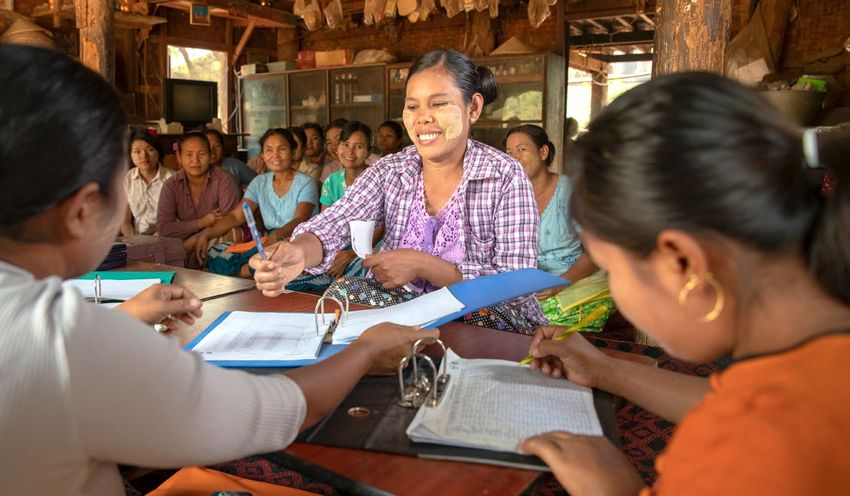
commitment to respect human rights

Chevron’s Human Rights Policy commits to respecting human                        greater awareness of human rights issues throughout the company
rights as set out in the United Nations Universal Declaration of                 and enhances our capabilities to identify and manage human rights
Human Rights and the International Labor Organization (ILO)                      risks. Chevron regularly identifies and manages potential impacts
Declaration on Fundamental Principles and Rights at Work and                     through processes and tools, across the life cycle of our assets and
adheres to the principles set out in the United Nations Guiding                  operations. Our policy covers key areas relevant to our business:
Principles on Business and Human Rights, the Voluntary Principles                employees, security, communities, suppliers and contractors, and
on Security and Human Rights and the International Finance                       other business partners. More information on our management
Corporation’s Performance Standards.                                             of human rights is available at www.chevron.com/sustainability/
                                                                                 social/human-rights
Our Corporate Human Rights Policy was adopted in 2009,
following a Human Rights Statement endorsed in 2005. Our policy                  Chevron has in place policies and processes to identify and
was updated in 2019 and focuses on treating our employees in a                   manage geopolitical and socioeconomic issues and risks.
manner consistent with The Chevron Way, conducting security                      Chevron’s decision whether to invest in a country or a project, or
operations in a responsible manner, evaluating how our operations                continue or cease operations, requires consideration of several
may impact communities and engaging with suppliers on issues                     criteria. For instance, as outlined in Chevron’s Global Operations,
related to human rights. The Public Policy and Sustainability                    One Approach, we assess whether operating conditions will allow
Committee of Chevron’s Board of Directors monitors social,                       us to provide a safe and secure environment for our personnel and
political, environmental, human rights and public policy matters                 assets and uphold our human rights and anti-corruption policies.
relevant to the company’s activities and performance.
                                                                                 The remainder of this report focuses on UMOCL’s and Chevron’s
The policy applies to all of our employees, projects and operations,             activities related to human rights, responsible investment and
guides our respect for human rights across the business, fosters                 enabling dialogue, and our social investments to support progress
                                                                                 in Myanmar.

                                         chevron human rights policy 520

                                                                                                                                  other business
      employees                        security                     communities                           suppliers                  partners
    We treat all of our              We protect                       We commit to                     We expect our                We encourage our
  employees with respect         personnel and assets               regularly engage             suppliers and contractors       customers and business
     and dignity, and            and provide a secure             communities near our            to respect human rights       partners to respect human
   promote diversity in            environment for               operational and project         and adhere to applicable          rights and adhere to
      the workplace.             business operations.              areas in meaningful            international principles.      applicable international
                                                                      conversations.                                                    principles.

                                                                   our focus areas
  Our company policies and      We conduct our operations        We engage stakeholders          We engage with key             We encourage all business
  procedures adhere to all      and execute projects             on key human rights issues      suppliers to reinforce         partners to respect the spirit
  applicable domestic laws,     in accordance with the           in our operating areas,         awareness of our policies      and intent of the following
  and we commit to core         Voluntary Principles on          including:                      and potential human rights     Chevron policies and
  international labor           Security and Human Rights,                                       issues such as:                statements:
                                                                • Indigenous peoples
  principles, including:        which guide engagement
                                                                                                 • Working and living           • Human Rights Policy
                                with security providers to      • Resettlement
 • Freedom of association                                                                          conditions
                                ensure human rights are                                                                         • Indigenous Peoples
   and collective bargaining                                    • Grievances
                                respected in the protection                                      • Forced labor                   Guidance
 • Elimination of forced or     of company facilities           • Livelihoods
                                                                                                 • Child labor                  • Statement on Human
   compulsory labor             and premises.
                                                                • Environmental matters                                           Rights Defenders
                                                                                                 • Human trafficking
 • Nondiscrimination in
                                                                • Human rights defenders                                        • Guidance related to land
   the workplace                                                                                 • Conflict minerals sourcing
                                                                                                                                  tenure and water rights
                                                                                                 • Protecting human rights
                                                                                                   defenders

                                                     Chevron Myanmar responsible business overview 2021
                                                                            3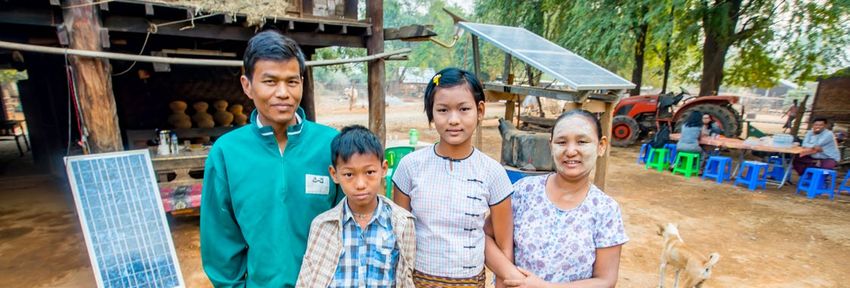
responsible investment in Myanmar:
                                      policies in practice update
operating in conflict-affected and high-risk areas                                    protecting human rights and supporting communities
                                                                                      during COVID-19 pandemic
We understand the complexity of working in sensitive operating
areas. We also understand that we can have a positive role in the                     Chevron’s commitment to respecting human rights does not
communities where we operate by promoting energy stability and                        waver during economic downturns, emergencies or crises, such as
economic opportunities. The implementation of our Human Rights                        COVID-19. Our human rights policy and governance structure remain
Policy through our core processes and day-to-day operational                          in place. Chevron has demonstrated its support for human rights
activities is how we establish the path to invest and operate                         throughout its COVID-19 response. The company has identified,
responsibly in sensitive environments.                                                addressed and mitigated potential impacts, most significantly by
                                                                                      taking swift action to protect the health and safety of our employees
                                                                                      and contractors around the world. In some of our global operations,
                                                                                      when the safest option was to demobilize the workforce, that was
                                                                                      what we did.

                                                                                      The management of human rights issues in Chevron is based on
                                                                                      the totality of our efforts and not on a single activity. As such, the
                                                                                      management of the COVID-19 crisis has been cross-functional
                                                                                      and collaborative in nature, as demonstrated by the structure and
                                                                                      operations of our corporate pandemic response team (CPRT). Our
                                                                                      health and safety protocols go hand in hand with data privacy and
                                                                                      protection protocols to respect our employees’ right to privacy
                                                                                      and nondiscrimination.

                                                                                      In Myanmar in 2020, Chevron supported COVID-19 response
                                                                                      activities at health facilities, community fever clinics and quarantine
                                                                                      centers. Through our network of local and international NGO
                                                                                      partners, we funded the training of health professionals and
                                                                                      community volunteers, and donated personal protective equipment,
                                                                                      medical equipment, health education materials, and water,
                                                                                      sanitation and hygiene (WASH) facilities.

A small business owner in Madaya Township who benefitted by adopting a solar power
                                                                                      responsible business dialogue
system for her tailoring service.
                                                                                      Through the Myanmar Centre for Responsible Business (MCRB),
                                                                                      UMOCL has been working with other international companies
We believe that our presence, and that of other responsible                           operating in Myanmar with the aim to promote responsible
international investors, is beneficial to the people of Myanmar.                      investment and locally support business practices that contribute
From the energy natural gas provides to communities, hospitals                        economically and socially to the development of the country.
and schools, to the social investment programs that we fund which                     Most recently, UMOCL was a signatory to the MCRB Statement by
support health, education and economic development, we strive to                      Concerned Businesses Operating in Myanmar released
have a positive impact on the quality of life in Myanmar.                             February 19, 2021.
Chevron regularly engages with key stakeholders in the U.S. and                       UMOCL joined meetings convened by MCRB to discuss responsible
Myanmar to promote responsible investment and opportunities                           business practices in Myanmar including human rights. In June
to stimulate economic development. These channels enable us to                        2018, a number of companies engaged in a dialogue with the
maintain an open dialogue and collaboratively work together to                        Myanmar Investment Commission (MIC) to explore how responsible
understand the role of business in addressing real-time challenges.                   investment can contribute to economic development.
For example, Chevron representatives have engaged with the U.S.
Ambassador to Burma and other U.S. embassy officials, as well as                      In 2018–2019, UMOCL provided support and participated in a series
peers through business associations such as the US ASEAN Business                     of workshops organized by MCRB to promote different aspects of
Council and the American Chamber of Commerce (AmCham)                                 responsible business including respect for human rights, diverse
Myanmar, to better understand local needs. Chevron also has a                         and respectful workplaces, governance of corporate philanthropy,
seat on the board of AmCham Myanmar.                                                  and anti-corruption. The Responsible Business Seminars were also

                                                           Chevron Myanmar responsible business overview 2021
                                                                                  4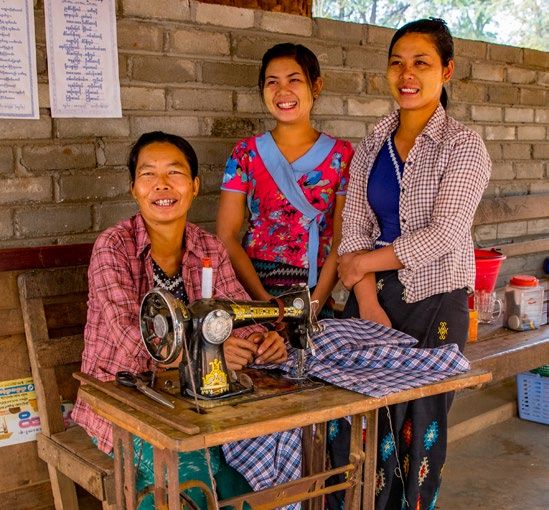
supported by international organizations such as the Organisation
for Economic Cooperation and Development (OECD) and the
ILO, and local organizations such as the Directorate of Investment
and Company Administration (DICA) and the Anti-Corruption
Commission. Attendees to the seminars included government, civil
society and NGOs, and international and local companies with the
collective aim of opening dialogue that strengthens and builds
responsible investment in Myanmar.

Under the MCRB Responsible Business Seminar series, UMOCL’s
country manager presented on company best practices related to
protecting workers rights and promoting diversity and inclusion
during the Inclusive Workplace seminar in May 2019. Chevron’s Asia
Pacific Social Performance Advisor presented on governance of
corporate philanthropy in November 2019.

In August 2019, UMOCL participated in the Myanmar-Japan-U.S.
Forum on Fostering Responsible Investment attended by H.E. Daw               Children outside health facilities run by village-based volunteers through the
Aung Suu Kyi, State Counselor.                                               Sustainable Health Improvement and Empowerment (SHINE) program.

One of the outcomes from the ongoing partnership with MCRB                   In May 2020, Chevron convened an event in conjunction with the
and the ILO was the initiation of quarterly meetings between                 Human Rights Initiative at the Center for Strategic and International
OECD-headquartered multinational companies (MNCs) currently                  Studies (CSIS), a workshop on “Corporate Practices in Contexts
operating in Myanmar. Through these quarterly meetings, the                  Where International Crimes are Occurring.”
interested companies including Chevron have been able to
continue exploring how to operationalize the OECD Guidelines for             Our expectations regarding respect for human rights extend to
Multinational Enterprises on Responsible Business Conduct.                   security service providers that we engage to support our operations.
                                                                             Chevron’s standard security services requirements include training
security and human rights                                                    on the Voluntary Principles, background screening of contract
                                                                             personnel and investigation of allegations of security and human
Chevron has a longstanding commitment to human rights and was                rights incidents. In Myanmar, UMOCL currently retains the services of
one of the founding members of the Voluntary Principles on Security          a private security provider to secure the small office in Yangon and
and Human Rights (VPSHR) which launched in 2000. We conduct                  includes expectations for training of employees on VPSHR.
our operations and execute our projects in accordance with the
framework set out by the VPSHR, which are enshrined in our Human             In 2016, Myanmar was selected as one of the three pilot countries –
Rights Policy. Where we conduct business in sensitive operating              with Nigeria and Ghana – to test implementation of the VPSHR at the
environments, we foster awareness and dialogue on potential                  local level through an In-Country Working Group (ICWG). Chevron is
human rights issues.                                                         a member of the ICWG, whose membership includes representative
                                                                             groups from business, government including embassies, civil society,
Chevron is active in promoting the implementation of good security           and several observers. The ICWG meets several times annually with
practices throughout the extractive industry and other industries.           the purpose to:
One workstream in which Chevron has been engaged is assessing
challenges and best practices for operating in conflict-affected             1. Share lessons learned and good practice
areas. Responsible security is an important and ongoing part of any
conversation on doing business in conflict-affected areas.                   2. Support Myanmar and regional (predominantly Asian) companies
                                                                                to use the VPSHR in their operations
In February 2020, Chevron participated in a consultation and
workshop entitled “Operating With Respect for Human Rights in                3. Help define shared responses by companies to local-level
Conflict and Post-Conflict Areas,” organized jointly by the Global              challenges on VPSHR-related issues
Business Initiative on Human Rights, the UN Working Group on
                                                                             In 2018, Chevron participated in workshops on the Voluntary
Business and Human Rights, and Chatham House.
                                                                             Principles held in Yangon and Naypyidaw. The workshops were
                                                                             coordinated by MCRB. Representatives from government agencies,
                                                                             NGOs and private security companies attended.

                                                  Chevron Myanmar responsible business overview 2021
                                                                         5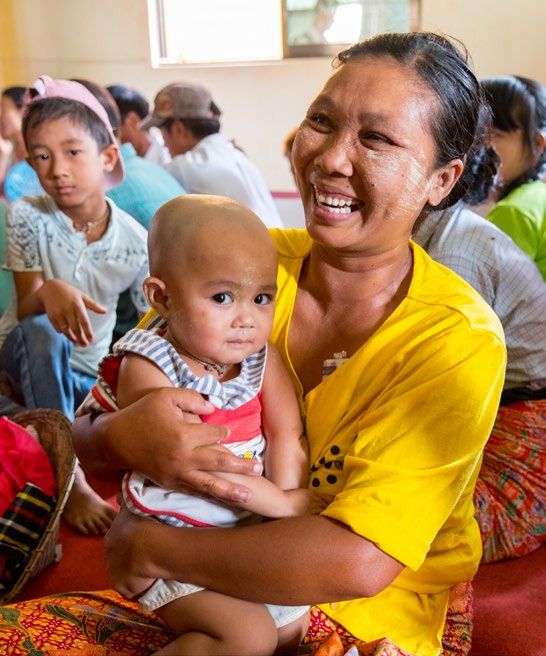
To improve livelihood opportunities, SHINE facilitated the savings-led empowerment initiative Women Organizing Resources Together (WORTH).

community engagement                                                                    transparency
During the Block A5 exploration activities in 2015–2016, UMOCL                          Chevron has supported the Extractive Industries Transparency
undertook a number of activities to share information about its                         Initiative (EITI) since its inception in 2003. The most recent Myanmar
operations and engage with community stakeholders. UMOCL                                EITI Report was released in 2019 and can be found at www.EITI.org.
established a grievance mechanism and assigned a grievance                              As of February 18, 2021, Myanmar has been suspended from EITI.
officer to engage and resolve any complaints. The grievance tool
provided a direct line of communication between key stakeholders                        anti-corruption compliance and risk management
and the company to receive feedback related to the offshore data
acquisition activities.                                                                 Chevron maintains processes to comply with all applicable laws,
                                                                                        including but not limited to the U.S. Foreign Corrupt Practices Act
The grievance mechanism was published widely at the union, state                        (FCPA), applicable antibribery laws and economic sanctions.
and community levels. Several individuals contacted the grievance
officer with information requests or grievances related to other                        Anti-corruption was a topic of discussion with the Myanmar
operators. One grievance related the potential impacts of seismic                       Investment Commission in 2018 and at the Myanmar-Japan-U.S.
vessel operations on fishing activities. This grievance was properly                    Forum in 2019, both of which UMOCL attended.
recorded, managed and closed in accordance with the Myanmar
                                                                                        Further information on Chevron’s enterprise approach
Grievance Mechanism.
                                                                                        to anti-corruption compliance can be found at: https://
Further community consultation took place after the conclusion of                       www.chevron.com/-/media/shared-media/documents/
seismic work in 2016. In 2018, UMOCL staff traveled to Rakhine State                    chevronbusinessconductethicscode.pdf
together with an environmental impact consulting firm to prepare
for potential exploration activities. However, these activities were
discontinued prior to relinquishment of the Blocks.

                                                           Chevron Myanmar responsible business overview 2021
                                                                                  6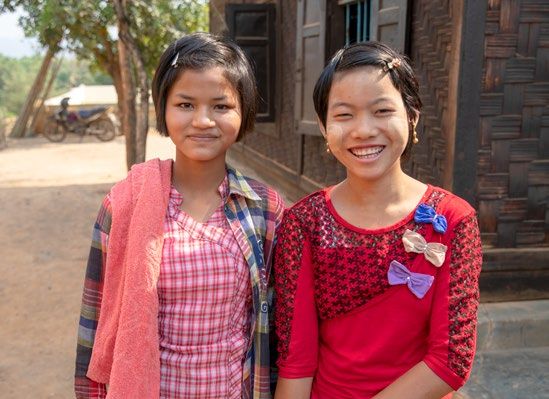
responsible investment in Myanmar:
                                    supporting progress
Aligning with a diverse set of stakeholders including community,
government and NGOs is essential to build lasting relationships,
understand their needs and priorities, manage the impacts of our
operations and make strategic social investments throughout the life
cycle of a project. Our collaboration in social investment programs is
core to our business and enables us to achieve more together, which
is why we work with local stakeholders, governments and NGOs who
can bring their expertise to our projects, augment our reach and
improve our results.

social investment overview
For 25 years, Chevron affiliates have supported community
development through improving access to healthcare,
strengthening local governance, promoting sustainable livelihoods,
enabling education and training opportunities, increasing access to
renewable energy in rural areas, and supporting biodiversity. Our
programs are implemented in the Dry Zone of Central Myanmar; the
Yadana Pipeline area with our joint venture partner, TEPM; Central
and Southern Rakhine state; Ayeyarwady Region; and Yangon.
We also support education, governance and biodiversity programs
with national reach.

Rakhine social investment review
In alignment with international best practice, we regularly
undertake studies with expert partners to inform our strategic social
investment projects. In late 2017, Chevron commissioned Pact to
                                                                             Health volunteers in the SHINE program helped to improve maternal and child health.
conduct a social investment opportunity review in Rakhine State.
Pact produced a report with an assessment of the development
needs of the communities in Thandwe and Gwa rural townships                  in Sittwe General Hospital. Jhpiego will also scale up support for
in southern Rakhine State. The report recommended a number of                implementation of the quality improvement approach to Thandwe
interventions that Chevron could support in the short- or long-term.         District Hospital in Rakhine State.
Based on stakeholder priorities, Chevron identified partnership
opportunities to support health systems strengthening and natural            In 2020, Chevron funded a program with Save the Children in
resource management and conservation. Two projects, currently                Rakhine State focused on maternal, newborn and early childhood
underway, are described below.                                               health. Chevron is also funding a three-year education program with
                                                                             Save the Children in Cox’s Bazaar, Bangladesh.
Health
Chevron is supporting a three-and-a-half-year program with                   Natural resource management and conservation
Jhpiego, an international NGO affiliated with Johns Hopkins                  Chevron is funding a program with Wildlife Conservation Society
University, to support the Ministry of Health and Sports’ efforts to         (WCS) to improve scientific knowledge of marine ecosystems,
strengthen its health workforce to be able to provide high-quality           mangroves, wetlands and forests across Myanmar. The program
health services in Rakhine State and Ayeyarwady Region. The first            will help create online tools that communities, governments,
aspect of the program will see the development of two Learning &             researchers and civil society can use to better understand
Performance Improvement Centers (L&PIC) at health facilities in              Myanmar’s biodiversity, including spatial planning tools to help
hard-to-reach areas of southern Rakhine to support skills practice           manage important natural resources. The WCS team will partner
by health workers based in those areas; and developing and testing           with local university researchers to build capacity for biodiversity
a model for a “mobile L&PIC” (a relocatable L&PIC that will provide          management and work with local communities on conservation
onsite skills practice and skills assessment to providers in remote          projects, natural resource management, education and ecotourism
areas). The second aspect of the program supports implementation             opportunities. This program complements our contribution with
of quality improvement interventions for infection prevention and            TEPM to help protect the rainforest through the Tanintharyi Nature
control in the surgical, medical, pediatric and orthopedic wards             Reserve Project.

                                                  Chevron Myanmar responsible business overview 2021
                                                                         7
The Ahlin Yaung program helped improve access to renewable energy in rural areas.
national social investment programs Access to renewable energy
From 2015–2019 Chevron supported Pact to deliver the Ahlin
Governance Yaung program in the Dry Zone, which helped supply solar-
During the last 16 years, Chevron has collaborated with Pact to powered lights to more than 12,000 households and connected
implement integrated rural development programming in Central more than 240,000 people to energy through solar home systems
Myanmar’s Dry Zone. The programming has provided essential and electrified communal locations. Building on the success of
services and strengthened communities’ access to funds. This Ahlin Yaung, in 2020, Pact launched a new three-year program
in turn has increased their ability to make decisions around their called Yaung Chi. Yaung Chi will provide financing solutions to
development priorities, including WASH, livelihoods and entrepreneurs that increase access to energy for their productive
renewable energy. uses and promote electrification solutions for health and education
facilities in rural communities.
A cornerstone of Pact’s integrated programming in the Dry Zone has
been to help communities establish and sustain local governance In 2020, Chevron funded a one-year pilot program with Santa
structures, including Village Development Committees (VDCs) Clara University’s Miller Center for Social Entrepreneurship and
and Village Electrification Committees (VECs). These governance Smart Power Myanmar to launch a Mini-Grid Accelerator program
structures allow communities to collectively make decisions about to help increase reliable, efficient and sustainable energy in rural
their own development needs. The committees manage Village Myanmar. The Mini-Grid Accelerator connected the enterprises with
Development Funds (VDFs), which provide financial capital for experienced Silicon Valley business executives and local mentors
community members to improve livelihoods, increase access to to learn about best business practices for running a successful
healthcare and energy, and build community infrastructure. mini-grid enterprise.
Health Yadana socioeconomic program
Since 2003, Chevron has supported Pact to deliver health and For 25 years, our comprehensive socioeconomic program with TEPM
economic development programs in the Dry Zone of Myanmar. has served approximately 45,000 people living in 33 villages along
Pact’s health programs have provided more than 850,000 people the Yadana pipeline area and provided more than 1.3 million medical
with expanded access to health care, nutrition and sanitation. consultations. The program includes economic development
activities such as providing funding for agriculture and veterinary
Economic development development, microfinance and access to solar energy. The
The Chevron-supported Pact programs in the Dry Zone have microfinance program has provided almost 25,000 loans.
improved livelihood opportunities through the establishment
of almost 1,500 Village Development Funds and a savings-led
empowerment program, called WORTH, in which almost 16,500 The information described here regarding 2021 social
women met weekly in savings groups. Pact’s Yaung Chi program will investment projects was accurate at the time of report
continue to promote women’s entrepreneurship through training, publication in March 2021. We continue to monitor the
skills development, networking and the establishment of new evolving situation in Myanmar.
WORTH women’s savings groups.
Chevron Myanmar responsible business overview 2021
8appendix:
updates to our commitment to operating with excellence
More than 240,000 people gained access to reliable energy through the Ahlin Yuang program’s solar home systems and electrified communal locations.
Underpinning all of our work globally is The Chevron Way and our The 2018 refresh to Chevron’s OE Management System also
Operational Excellence Management System (OEMS). Operational elevated Stakeholders as one of the six OE focus areas. This
Excellence (OE) puts into action our Chevron Way value of enables deeper integration of social, community, political and
protecting people and the environment and helps us achieve reputational risks into the risk management process. It brings
Chevron’s vision to be the global energy company most admired our core Chevron Way values – trust, partnership and protecting
for its people, partnership and performance. people – into regular discussions across the business about how
we manage community impacts, address risks to the business
Operational Excellence systematically manages six core practices and operate responsibly. Through the requirements set out in our
to meet our objectives: Stakeholder Engagement and Issue Management (SEIM) Process,
1. Workforce safety 3. Environment we design our systems around our core values.
and health 4. Efficiency In 2019, we made further updates to our SEIM process to focus on
2. Process safety, reliability 5. Security applying industry-leading practices and increase collaboration
and integrity and information sharing across our processes. We developed
6. Stakeholders
a new mechanism designed to anticipate potential community
impact throughout an asset’s life cycle. This will help us proactively
Chevron’s OE management system has been in place since 2004.
manage community concerns, grievances and expectations.
It was updated in 2018 to emphasize more visible linkages between
Another update was the inclusion of a grievance mechanism
risk, assurance and safeguards and a streamlined approach to
requirement in line with industry best practices. Finally, the
manage risk. These updates help improve our focus on preventing
updated process formalizes communications between the
high-consequence incidents and impacts.
operations staff and our community engagement practitioners to
enable our operational teams to have a better understanding of
potential community impacts and integrate these considerations
We engage stakeholders to foster trust, build into decision making.
relationships, and promote two-way dialogue Within the stakeholders focus area, we also have a process to work
to manage potential impacts and create with our partners to responsibly manage Chevron’s non-operated
business opportunities. We work with our joint venture partnerships.
stakeholders in a socially responsible and The SEIM process is complimented by – and works hand-in-hand
ethical manner, consistent with our respect for with – our Human Rights Policy.
human rights, to create a safer, more inclusive
business environment.
Chevron Myanmar responsible business overview 2021
9points of contact
Rachel Bonfante, Manager, Environment, Social, and Governance (ESG) Policy
Jyotsna Mahendra, Senior Advisor ESG & Sustainability (Human Rights Lead)
Chevron Corporation
Chevron Corporation
6001 Bollinger Canyon Road, San Ramon, CA 94583-2324
© 2021 Chevron Corporation. All rights reserved. Bluehouse 0321-1204312You can also read


