NAMBUCCA SHIRE COUNCIL STORMWATER - ASSET MANAGEMENT PLAN (Concise) - Scenario 1 Version
←
→
Page content transcription
If your browser does not render page correctly, please read the page content below
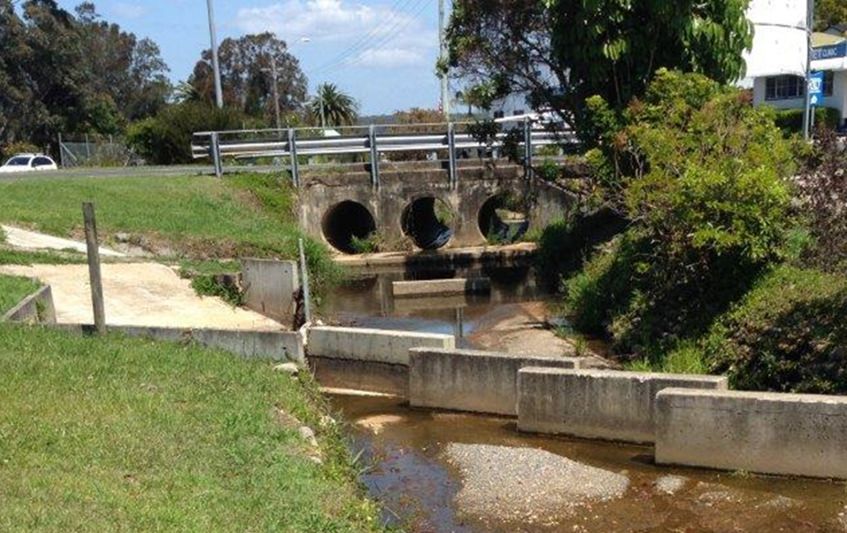
NAMBUCCA SHIRE COUNCIL

                       STORMWATER

        ASSET MANAGEMENT PLAN (Concise)

Scenario 1 Version 1                November 2015
Document Control

                                Document ID: 59 299 140531 nams plus3 amp template v3.1
Rev No           Date             Revision Details                Author                Reviewer           Approver
  1           Nov/2015               Draft Plan                Engineering            Manager Assets
                                                             Assistant-Assets
  2           Feb/2018                  Final                                         Manager Assets   Council –Resolution
                                                                                                             43/18

             © Copyright 2014 –all rights reserved.
             Institute of Public Works Engineering Australasia (IPWEA)
             http://ipwea.org.au

         Nambucca Shire Council -Stormwater Asset Management Plan – TRIM 44041/2017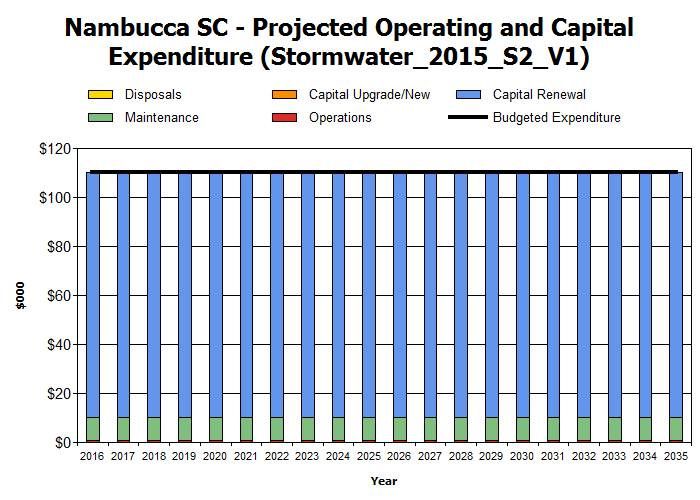
TABLE OF CONTENTS
1.     EXECUTIVE SUMMARY ......................................................................................................................... 1
       Context ................................................................................................................................................ 1
       What does it Cost? ............................................................................................................................... 1
       What we will do ................................................................................................................................... 1
       What we cannot do ............................................................................................................................. 1
       Managing the Risks .............................................................................................................................. 1
       Confidence Levels ................................................................................................................................ 1
       The Next Steps ..................................................................................................................................... 2
2.     INTRODUCTION.................................................................................................................................... 4
       2.1 Background.................................................................................................................................. 4
       2.2 Goals and Objectives of Asset Management ............................................................................... 5
       2.3 Plan Framework........................................................................................................................... 6
       2.4 Core and Advanced Asset Management ..................................................................................... 8
       2.5 Community Consultation............................................................................................................. 8
3.     LEVELS OF SERVICE .............................................................................................................................. 8
       3.1 Customer Research and Expectations ......................................................................................... 8
       3.2 Strategic and Corporate Goals .................................................................................................... 9
       3.3 Legislative Requirements ............................................................................................................ 9
       3.4 Community Levels of Service ..................................................................................................... 10
       3.5 Technical Levels of Service ........................................................................................................ 11
4.     FUTURE DEMAND .............................................................................................................................. 13
       4.1 Demand Drivers ......................................................................................................................... 13
       4.2 Demand Forecast ...................................................................................................................... 13
       4.3 Demand Impact on Assets ......................................................................................................... 13
       4.4 Demand Management Plan ....................................................................................................... 13
       4.5 Asset Programs to meet Demand.............................................................................................. 14
5.     LIFECYCLE MANAGEMENT PLAN ........................................................................................................ 15
       5.1 Background Data ....................................................................................................................... 15
       5.2 Infrastructure Risk Management Plan....................................................................................... 17
       5.3 Routine Operations and Maintenance Plan .............................................................................. 18
       5.4 Renewal/Replacement Plan ...................................................................................................... 20
       5.5 Creation/Acquisition/Upgrade Plan .......................................................................................... 23
       5.6 Disposal Plan ............................................................................................................................. 24
       5.7 Service Consequences and Risks ............................................................................................... 24
6.     FINANCIAL SUMMARY ....................................................................................................................... 25
       6.1 Financial Statements and Projections ....................................................................................... 25
       6.2 Funding Strategy........................................................................................................................ 30
       6.3 Valuation Forecasts ................................................................................................................... 30
       6.4 Key Assumptions made in Financial Forecasts .......................................................................... 32
       6.5 Forecast Reliability and Confidence .......................................................................................... 33
7.     PLAN IMPROVEMENT AND MONITORING ......................................................................................... 34
       7.1 Status of Asset Management Practices ..................................................................................... 34
       7.2 Improvement Program .............................................................................................................. 35
       7.3 Monitoring and Review Procedures .......................................................................................... 35
       7.4 Performance Measures ............................................................................................................. 36
8.     REFERENCES ....................................................................................................................................... 37
9.     APPENDICES ....................................................................................................................................... 38
       Appendix A Maintenance Response Levels of Service .................................................................. 39
       Appendix B Projected 10 year Capital Renewal and Replacement Works Program..................... 40
       Appendix C         Projected Upgrade/Exp/New 10 year Capital Works Program.................................. 41
       Appendix D Budgeted Expenditures Accommodated in LTFP....................................................... 42
       Appendix E         Abbreviations............................................................................................................. 43
       Appendix F         Glossary ..................................................................................................................... 44

Nambucca Shire Council -Stormwater Asset Management Plan – TRIM 44041/2017
-i-

Nambucca Shire Council -Stormwater Asset Management Plan – TRIM 44041/2017

-1-

1.       EXECUTIVE SUMMARY
Context
Council provides a network of stormwater
infrastructure assets to ensure the drainage of
rainwater from developed areas easily directed to
natural collection channels and waterways.

Stormwater assets include drainage Pits and
Interconnecting Pipes (Mains), Gross Pollutant Traps
(GPT) and Detention Basins.

The stormwater network comprises:
                                                                       What we will do
Asset                Dimension            Replacement
Subcategory                               Value(M)                     We plan to provide Stormwater Drainage services for
Pipes                89.66 km             24.89                        the following:
Pits                 3592 Nos              5.51                        • Operation, maintenance, renewal and upgrade of
GPT                  6 Nos                 0.620                            Stormwater Assets to meet service levels set by
                                                                            Council in annual budgets.
                                                                       • Carry out annual maintenance & operations over
These infrastructure assets have a replacement value                        the 10 year planning period.
of $ 31,078,298.05.
                                                                       What we cannot do
What does it Cost?                                                     We do not have enough funding to provide all services
The projected outlays necessary to provide the                         at the desired service levels or provide new services.
services covered by this Asset Management Plan (AM                     Works and services that cannot be provided under
Plan) includes operations, maintenance, renewal and                    present funding levels are:
upgrade of existing assets over the 10 year planning                   • Full upgrades to address capacity of the
period is $1,100,000 or $ 110,000 on average per year.                      stormwater system.

Estimated available funding for this period is $110,
000 on average per year which is 100% of the cost to                   Managing the Risks
provide the service. As stormwater network nearly                      There are risks associated with providing the service
new there is insignificant capital replacement/renewal                 and not being able to complete all identified activities
works in this planning period. Projected expenditure                   and projects. We have identified major risks as:
required to provide services in the AM Plan compared                   • Flooding of Private Properties
with planned expenditure currently included in the
                                                                       • Flooding of Roads
Long Term Financial Plan are shown in the graph
                                                                       • Flooding of Councils other Assets
below.
                                                                       We will endeavour to manage these risks within
                                                                       available funding by:
Executive Summary - What does it cost?                $ 000
                                                                       • Maintenance Management Planning
10 year total cost [10 yr Ops, Maint, Renewal         $1,100           • Conducting detailed CCTV inspection
& Upgrade Proj Exp]                                                    • Capital Works Planning
10 year average cost                                  $110
10 year total LTFP budget [10 yr Ops, Maint,          $1,100
Renewal & Upgrade LTFP Budget]
10 year average LTFP budget                           $110
                                                                       Confidence Levels
10 year AM financial indicator                        100%
10 year average funding shortfall                     $0               This AM Plan is based on low level of confidence
                                                                       information.

Nambucca Shire Council -Stormwater Asset Management Plan – TRIM 44041/2017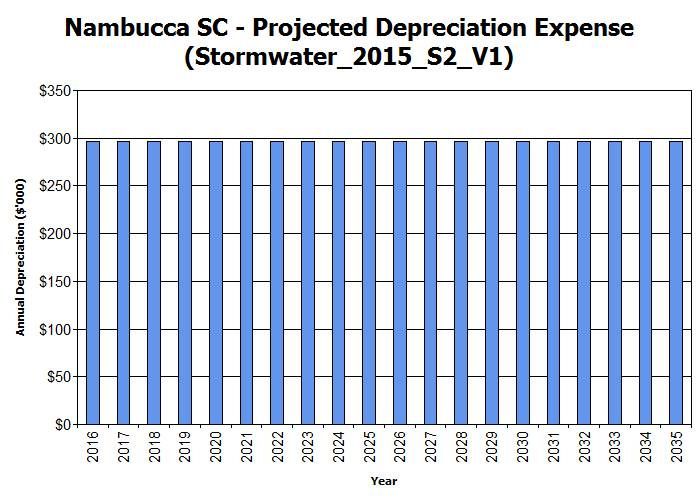
-2-

The Next Steps
The actions resulting from this asset management plan
are:
• Conducting a comprehensive condition
     assessment for aged section
• Validation of data
• Review Useful life based on condition
• Reviewing Works Programs based on condition to
     minimise massive future fund need for capital
     works at a time after this planning period.
• For better forecasting need to develop a long
     term life cycle costing to predict operation,
     maintenance and capital cost will be involved
     after this planning period.
• Need to develop desired level of service

Nambucca Shire Council -Stormwater Asset Management Plan – TRIM 44041/2017
-3-

Questions you may have                                                 6.    Consulting with the community to ensure that
                                                                             Stormwater Asset services and costs meet
What is this plan about?                                                     community needs and are affordable,
This asset management plan covers the infrastructure                   7.    Developing partnership with other bodies, where
assets that serve the Nambucca Shire Council                                 available to provide services,
community’s Stormwater needs. These assets include                     8.    Seeking additional funding from governments and
Stormwater Assets throughout the community area                              other bodies to better reflect a ‘whole of
that enable people to proper access without flooding.                        government’ funding approach to infrastructure
                                                                             services.
What is an Asset Management Plan?
                                                                       What happens if we don’t manage the shortfall?
Asset management planning is a comprehensive
process to ensure delivery of services from                            It is likely that we will have to reduce service levels in
infrastructure is provided in a financially sustainable                some areas, unless new sources of revenue are found.
manner.                                                                For Stormwater Asset, the service level reduction may
                                                                       include lower the service we are now providing.
Asset management plan details information about
infrastructure assets including actions required to                    What can we do?
provide an agreed level of service in the most cost                    We can develop options, costs and priorities for future
effective manner. The plan defines the services to be                  Stormwater Asset services, consult with the
provided, how the services are provided and what                       community to plan future services to match the
funds are required to provide the services.                            community service needs with ability to pay for
                                                                       services and maximise community benefits against
Why is there a funding shortfall?                                      costs.
Most of the Council’s Stormwater Asset network was
constructed by developers and from government                          What can you do?
grants, often provided and accepted without                            We will be pleased to consider your thoughts on the
consideration of ongoing operations, maintenance and                   issues raised in this asset management plan and
replacement needs.                                                     suggestions on how we may change or reduce its
                                                                       Stormwater Asset mix of services to ensure that the
Many of these assets are approaching the later years                   appropriate level of service can be provided to the
of their life and require replacement, services from the               community within available funding.
assets are decreasing and maintenance costs are
increasing.

Our present funding levels are insufficient to continue
to provide existing services at current levels in the
medium term.

What options do we have?
Resolving the funding shortfall involves several steps:
1. Improving asset knowledge so that data
    accurately records the asset inventory, how assets
    are performing and when assets are not able to
    provide the required service levels,
2. Improving our efficiency in operating,
    maintaining, renewing and replacing existing
    assets to optimise life cycle costs,
3. Identifying and managing risks associated with
    providing services from infrastructure,
4. Making trade-offs between service levels and
    costs to ensure that the community receives the
    best return from infrastructure,
5. Identifying assets surplus to needs for disposal to
    make saving in future operations and
    maintenance costs,

Nambucca Shire Council -Stormwater Asset Management Plan – TRIM 44041/2017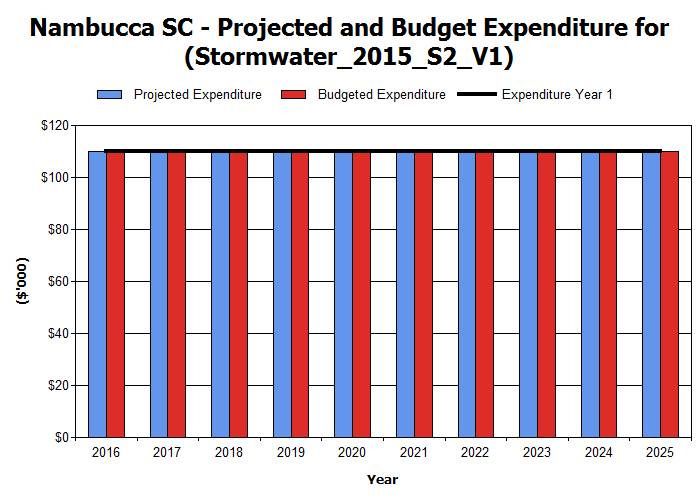
-4-

2.          INTRODUCTION
2.1         Background

This asset management plan is to demonstrate responsive management of assets (and services provided from assets),
compliance with regulatory requirements, and to communicate funding needed to provide the required levels of
service over a 10 year planning period.

The asset management plan follows the format for AM Plans recommended in Section 4.2.6 of the International
                                 1
Infrastructure Management Manual .

The asset management plan is to be read with the organisation’s Asset Management Policy, Asset Management
Strategy and the following associated planning documents:

            •    Nambucca Shire Council’s Geographical Information System(GIS)
            •    Council’s Operational Plan 2013-2023
            •    Nambucca Shire Council’s Asset Register (Stormwater Drainage)

This infrastructure assets covered by this asset management plan are shown in Table 2.1. These assets are used to
provide stormwater runoff for adequate protection of people and property from the effects of overland flow or
flooding .

                                    Table 2.1: Assets covered by this Plan

                Asset category                            Dimension                         Replacement Value($)
Pipes                                       Dia 100mm -600mm -80,962.57 m                               $24,902,080.26
                                            Dia 675mm-900mm -7,728.71 m
                                            Dia 1050mm-1500mm- 975.16 m

Pit                                         Grated Inlet Pit (600 -900) - 12 Nos                         $5,505,225.80
                                            Junction Pit (600-900)       -335 Nos
                                            Kerb Inlet Pit (1m-3m)          -2562
                                            Nos
                                            Head Wall (0375-0750)-           -683                          $670,991.99
                                            Nos
                                            GPT                               - 11
                                            Nos
TOTAL                                                                                                  $ 31,078,298.05

Key stakeholders in the preparation and implementation of this asset management plan are: Shown in Table 2.1.1.

                                         Table 2.1.1: Key Stakeholders in the AM Plan

                Key Stakeholder                                       Role in Asset Management Plan
    Councillors/Board Members                •   Represent needs of community/shareholders,
                                             •   Allocate resources to meet the organisation’s objectives in providing
                                                 services while managing risks,
                                             •   Ensure organisation is financial sustainable.
    CEO/General Manager                      Driver of council plans and direction
    Council Officers                         Council officers play a major role in managing stormwater drainage assets

1
    IPWEA, 2011, Sec 4.2.6, Example of an Asset Management Plan Structure, pp 4|24 – 27.

Nambucca Shire Council -Stormwater Asset Management Plan – TRIM 44041/2017
-5-

                                            to ensure that they provide a level of service that meets the needs of both
                                            residents and visitors to the area. Council officers implement the
                                            components identified in the Stormwater Asset Management Asset
                                            management plan.
 Resident/Community                         Residents have are core users of stormwater drainage assets. Their needs,
                                            wants and expectations are conveyed to Council.

 Visitors                                   Residents have are core users of stormwater drainage assets. Their needs,
                                            wants and expectations are conveyed to Council.

Our organisational structure for service delivery from infrastructure assets is detailed below,

                                        Engineering Services Organisational Structure

2.2         Goals and Objectives of Asset Management

The organisation exists to provide services to its community. Some of these services are provided by infrastructure
assets. We have acquired infrastructure assets by ‘purchase’, by contract, construction by our staff and by donation of
assets constructed by developers and others to meet increased levels of service.

Our goal in managing infrastructure assets is to meet the defined level of service (as amended from time to time) in
the most cost effective manner for present and future consumers. The key elements of infrastructure asset
management are:

      •     Providing a defined level of service and monitoring performance,
      •     Managing the impact of growth through demand management and infrastructure investment,

Nambucca Shire Council -Stormwater Asset Management Plan – TRIM 44041/2017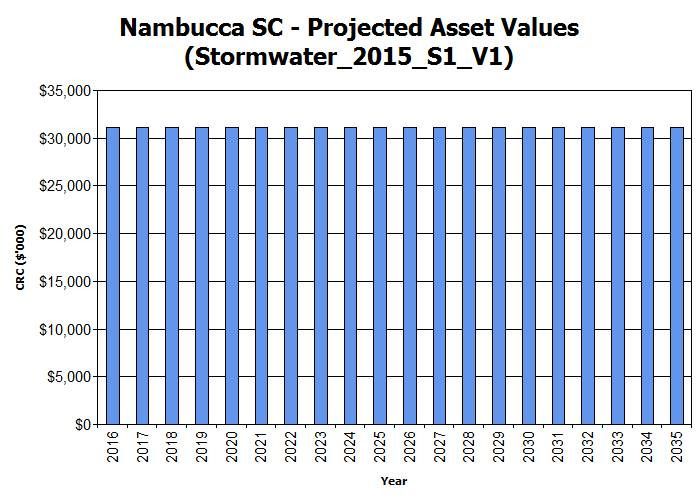
-6-

       •   Taking a lifecycle approach to developing cost-effective management strategies for the long-term that meet
           the defined level of service,
       •   Identifying, assessing and appropriately controlling risks, and
       •   Having a long-term financial plan which identifies required, affordable expenditure and how it will be
                     2
           financed.

2.3        Plan Framework

Key elements of the plan are

       •   Levels of service – specifies the services and levels of service to be provided by the organisation,
       •   Future demand – how this will impact on future service delivery and how this is to be met,
       •   Life cycle management – how Council will manage its existing and future assets to provide defined levels of
           service,
       •   Financial summary – what funds are required to provide the defined services,
       •   Asset management practices,
       •   Monitoring – how the plan will be monitored to ensure it is meeting organisation’s objectives,
       •   Asset management improvement plan.

A road map for preparing an asset management plan is shown below.

2
    Based on IPWEA, 2011, IIMM, Sec 1.2 p 1|7.

Nambucca Shire Council -Stormwater Asset Management Plan – TRIM 44041/2017
-7-
Road Map for preparing an Asset Management Plan
Source: IPWEA, 2006, IIMM, Fig 1.5.1, p 1.11.
CORPORATE PLANNING
Confirm strategic objectives and establish AM
policies, strategies & goals.
Define responsibilities & ownership.
Decide core or advanced AM Pan.
Gain organisation commitment.
REVIEW/COLLATE ASSET INFORMATION
Existing information sources
Identify & describe assets.
Data collection
Condition assessments
Performance monitoring
Valuation Data
DEFINE SCOPE &
STRUCTURE OF PLAN
ESTABLISH LEVELS OF SERVICE
Establish strategic linkages
Define & adopt statements
AM PLAN Establish measures & targets
REVIEW AND Consultation
AUDIT
LIFECYCLE MANAGEMENT STRATEGIES
Develop lifecycle strategies
Describe service delivery strategy
Risk management strategies
Demand forecasting and management
Optimised decision making (renewals, new works,
disposals)
Optimise maintenance strategies
IMPLEMENT
IMPROVEMENT FINANCIAL FORECASTS
STRATEGY Lifecycle analysis
Financial forecast summary
Valuation Depreciation
Funding
IMPROVEMENT PLAN
Assess current/desired practices
Develop improvement plan
ITERATION
Reconsider service statements
IS THE PLAN
Options for funding
AFFORDABLE?
Consult with Council
Consult with Community
ANNUAL PLAN /
BUSINESS PLAN
Nambucca Shire Council -Stormwater Asset Management Plan – TRIM 44041/2017-8-
2.4 Core and Advanced Asset Management
This asset management plan is prepared as a ‘core’ asset management plan over a 20 year planning period in
3
accordance with the International Infrastructure Management Manual . It is prepared to meet minimum legislative
and organisational requirements for sustainable service delivery and long term financial planning and reporting. Core
asset management is a ‘top down’ approach where analysis is applied at the ‘system’ or ‘network’ level.
Future revisions of this asset management plan will move towards ‘advanced’ asset management using a ‘bottom up’
approach for gathering asset information for individual assets to support the optimisation of activities and programs
to meet agreed service levels in a financially sustainable manner.
2.5 Community Consultation
This ‘core’ asset management plan is prepared to facilitate community consultation initially through feedback on
public display of draft asset management plans prior to adoption by the Council/Board. Future revisions of the asset
management plan will incorporate community consultation on service levels and costs of providing the service. This
will assist the Council/Board and the community in matching the level of service needed by the community, service
risks and consequences with the community’s ability and willingness to pay for the service.
3. LEVELS OF SERVICE
3.1 Customer Research and Expectations
Nambucca Shire conducted a random survey in 2013 by Jetty Research to measure satisfaction and priorities with
regards to Council-managed facilities and services and to compare with previous survey in 2010. This survey polls a
sample of residents on their level of satisfaction with the organisation’s services. The customer satisfaction survey
reported satisfaction levels for the following services.
Table 3.1: Community Satisfaction Survey Levels
Services /Performance Measure Community Satisfaction Level
Services from all infrastructure assets – Out of 27 services 16 services i.e. 59% had a
overall community satisfaction. mean satisfaction score 3 or above. The overall
community satisfaction for all services for 2013
was 38% where dissatisfaction rate was 23%.
Community Satisfaction with Stormwater drainage is high importance asset
Stormwater Drainage System which rating is 4.44 out of 5. The overall
satisfaction rating for stormwater drainage is
2.96 in a 1-5 rating scale (where 1 = very
dissatisfied, 3 = neutral and 5 = very satisfied)
and just below the neutral satisfaction rating of
3.Compare to 2010 overall satisfaction
increased by 0.3% in 2013.
Nambucca Shire Council -Stormwater Asset Management Plan – TRIM 44041/2017-9-
3.2 Strategic and Corporate Goals
This asset management plan is prepared under the direction of the organisation’s vision, mission, goals and objectives.
Our vision is: ‘Living at its Best’ in partnership with community and other Government Agencies.
Our mission is: “That the Nambucca Valley will value and protect its natural environment, maintain its assets and
infrastructure and develop opportunities for its people”.
To achieve the Vision Council has identified service delivery which are-
• Effective Leadership
• Strategic Direction
• Sustainability of Infrastructure and Assets
• Community Involvement and Enhancement through Partnership with Council
• Enhancement and Protection of the Environment
• Addressing Social and Cultural needs of the Community through Partnerships and Provision of Facilities and
Services
• Actively Pursuing Resource Sharing Opportunities
Relevant organisational goals and objectives and how these are addressed in this asset management plan are:
Table 3.2: Organisational Goals and how these are addressed in this Plan
Goal Objective How Goal and Objectives are addressed in AM
Plan
Stormwater Drainage 1.Continue Stormwater asset By developing a long term financial and asset
System are managed management planning management plans including the establishment
and maintained so of levels of service to manage and maintain
that it can provide the 2.Manage Council’s financial Stormwater Drainage in the most cost effective
levels of service needs assets to improve financial and efficient manner.
to the community sustainability
The organisation will exercise its duty of care to ensure public safety is accordance with the infrastructure risk
management plan prepared in conjunction with this AM Plan. Management of infrastructure risks is covered in
Section 5.2
3.3 Legislative Requirements
The organisation has to meet many legislative requirements including Australian and State legislation and State
regulations. These include:
Table 3.3: Legislative Requirements
Legislation Requirement
Local Government Act Sets out role, purpose, responsibilities and powers of local governments
including the preparation of a long term financial plan supported by asset
management plans for sustainable service delivery.
Environmental Protection Act Sets out role, purpose, responsibilities of local government in protecting
the
environment
Occupational Health ,Safety and Sets out role, purpose, responsibilities of local government in providing
Welfare Act &Regulations safe
work practices and worksites
Australian Road Rules and Road An Act to provide for the opening and closing of roads and other purposes.
Safety Act(Opening and Closing
Nambucca Shire Council -Stormwater Asset Management Plan – TRIM 44041/2017- 10 -
Act)
Native Vegetation Act (1991) The Act Provides incentives and assistance to land owners in relation to be
preservation and enhancement of native vegetation, to control the
clearance of native vegetation and other purposes.
Australian Accounting Standard Sets out responsibilities of local government for maintaining accounting
AAS27 standards
Australian Standards and AUS PEC Various Standards which give the necessary guidelines and specification for
stormwater Drainage.
Water Management Act 2000 The objects of this Act are to provide for the sustainable and integrated
management of the water sources of the State for the benefit of both
present and future generations and, in particular:
(a) To apply the principles of ecologically sustainable development, and
(b) To protect, enhance and restore water sources, their associated
ecosystems, ecological processes and biological diversity and their water
quality, and
(c) To recognise and foster the significant social and economic benefits to
the State that result from the sustainable and efficient use of water,
including:
(i) benefits to the environment, and
(ii) benefits to urban communities, agriculture, fisheries, industry and
recreation, and
(iii) benefits to culture and heritage, and
(iv) benefits to the Aboriginal people in relation to their spiritual, social,
customary and economic use of land and water,
(d) To recognise the role of the community, as a partner with government,
in resolving issues relating to the management of water sources,
(e) To provide for the orderly, efficient and equitable sharing of water from
water sources,
(f) To integrate the management of water sources with the management of
other aspects of the environment, including the land, its soil, its native
vegetation and its native fauna,
(g) To encourage the sharing of responsibility for the sustainable and
efficient use of water between the Government and water users,
(h) To encourage best practice in the management and use of water.
The organisation will exercise its duty of care to ensure public safety in accordance with the infrastructure risk
management plan linked to this AM Plan. Management of risks is discussed in Section 5.2.
3.4 Community Levels of Service
Service levels are defined in two terms, customer levels of service and technical levels of service.
Community Levels of Service measure how the community receives the service and whether the organisation is
providing community value.
Community levels of service measures used in the asset management plan are:
Quality How good is the service?
Function Does it meet users’ needs?
Capacity/Utilisation Is the service over or under used?
The organisation’s current and expected community service levels are detailed in Tables 3.4 and 3.5. Table 3.4 shows
the agreed expected community levels of service based on resource levels in the current long-term financial plan and
community consultation/engagement.
Nambucca Shire Council -Stormwater Asset Management Plan – TRIM 44041/2017- 11 -
Table 3.4: Community Level of Service
Service Service Objective Performance Current Expected position in 10
Attribute Measure Process Performance years based on current
LTFP
COMMUNITY OUTCOMES
COMMUNITY LEVELS OF SERVICE
Quality 1. Keep stormwater 1.Customer service Not measured yet Not desired yet
out of properties and request relating to
roads not to be quality of service
obstructed by
flooding.
Function Ensuring stormwater Customer Satisfaction Moderately low’ Increase in customer
network meets Survey results satisfaction for satisfaction survey
community and user Drainage in 2013 results
requirements survey
Capacity/ Stormwater Drainage Customer service Not measured yet Not desired yet
Utilisation meets programmed request relating to
delivery needs. capacity or utilization
3.5 Technical Levels of Service
Technical Levels of Service - Supporting the community service levels are operational or technical measures of
performance. These technical measures relate to the allocation of resources to service activities that the organisation
undertakes to best achieve the desired community outcomes and demonstrate effective organisational performance.
Technical service measures are linked to annual budgets covering:
• Operations – the regular activities to provide services such as opening hours, cleansing, mowing grass,
energy, inspections, etc.
• Maintenance – the activities necessary to retain an asset as near as practicable to an appropriate service
condition (eg road patching, unsealed road grading, building and structure repairs),
• Renewal – the activities that return the service capability of an asset up to that which it had originally (eg
frequency and cost of road resurfacing and pavement reconstruction, pipeline replacement and building
component replacement),
• Upgrade – the activities to provide a higher level of service (eg widening a road, sealing an unsealed road,
replacing a pipeline with a larger size) or a new service that did not exist previously (eg a new library).
Service and asset managers plan, implement and control technical service levels to influence the customer service
4
levels.
Table 3.5 shows the technical level of service expected to be provided under this AM Plan. The agreed sustainable
position in the table documents the position agreed by the Council/Board following community consultation and
trade-off of service levels performance, costs and risk within resources available in the long-term financial plan.
4
IPWEA, 2011, IIMM, p 2.22
Nambucca Shire Council -Stormwater Asset Management Plan – TRIM 44041/2017- 12 -
Table 3.5: Technical Levels of Service
Service Service Objective Activity Measure Current Performance * Desired for Optimum Lifecycle Agreed Sustainable Position ***
Attribute Process Cost **
TECHNICAL LEVELS OF SERVICE
Operations
Infrastructure meets Defects and general Stormwater Defect inspection Routine Inspection , Defects Not defined yet
user’s needs and condition inspection, reactive only ,GPT Cleaning identification, Cleaning at
smooth running GPT Cleaning after heavy rain events regular interval
frequency, Reactive CCTV Condition Inspection
Block Clearing
Budget $1,000 Not desired yet Not defined yet
Maintenance Maintaining Drainage Reactive service Re-active maintenance Repair or replacement of minor Not defined yet
infrastructure in a requests completed parts and components of
practicable service within adopted structures to prevent failure.
condition timeframes
Budget $10,000 Not desired yet
Renewal Return the service Reconstruction, Pit and pipes replacement
capability pipeline replacement
and component
replacement
Budget $ 100,000 Not desired yet
Upgrade/New
Budget
Note: * Current activities and costs (currently funded).
** Desired activities and costs to sustain current service levels and achieve minimum life cycle costs (not currently funded).
*** Activities and costs communicated and agreed with the community as being sustainable (funded position following trade-offs, managing risks and delivering agreed service
levels).
Nambucca Shire Council -Stormwater Asset Management Plan – TRIM 44041/2017- 13 -
4. FUTURE DEMAND
4.1 Demand Drivers
Drivers affecting demand include population change, changes in demographics, seasonal factors, vehicle ownership
rates, consumer preferences and expectations, technological changes, economic factors, agricultural practices,
environmental awareness, etc.
4.2 Demand Forecast
The present position and projections for demand drivers that may impact future service delivery and utilisation of
assets were identified and are documented in Table 4.3.
4.3 Demand Impact on Assets
The impact of demand drivers that may affect future service delivery and utilisation of assets are shown in Table 4.3.
Table 4.3: Demand Drivers, Projections and Impact on Services
Demand drivers Present position Projection Impact on services
Population Nearly 19,000 Forecasted An increase in population will require an
Growth population will be increase in Services from stormwater drainage
22,000 in 2025 system.
Climate Change Coastal Erosion Sea Level Rise – Existing coastal gravity drainage, stormwater
3mm/year infrastructure and sewerage systems may
become compromised over time as mean sea
level
rises(http://www.climatechange.environment.ns
w.gov.au )
Changing rainfall Cleaning GPT’s after Increasing number of Increasing resources to undertake stormwater
intensities and every major storm planned and capital works to meet the demand and protect private
frequencies event works involving properties
renewing and
upgrading
stormwater
infrastructure pipes,
GPT and pipe
culverts.
4.4 Demand Management Plan
Demand for new services will be managed through a combination of managing existing assets, upgrading of existing
assets and providing new assets to meet demand and demand management. Demand management practices include
non-asset solutions, insuring against risks and managing failures.
Non-asset solutions focus on providing the required service without the need for the organisation to own the assets
and management actions including reducing demand for the service, reducing the level of service (allowing some
5
assets to deteriorate beyond current service levels) or educating customers to accept appropriate asset failures .
Examples of non-asset solutions include providing services from existing infrastructure such as aquatic centres and
libraries that may be in another community area or public toilets provided in commercial premises.
5
IPWEA, 2011, IIMM, Table 3.4.1, p 3|58.
Nambucca Shire Council -Stormwater Asset Management Plan – TRIM 44041/2017- 14 -
Opportunities identified to date for demand management are shown in Table 4.4. Further opportunities will be
developed in future revisions of this asset management plan.
Table 4.4: Demand Management Plan Summary
Demand Driver Impact on Services Demand Management Plan
Development of new Can affect future capacity To meet requirements of township development plans
residential subdivisions and utilisation requirements
Community demand for Increased service level Utilisation and demand. Record all flooding areas due to
flooding mitigation lack of stormwater infrastructure and include on a
priority basis in the 10 year capital works program.
Upgrading existing Increased service level Record all flooding areas due to inadequate stormwater
stormwater infrastructure and include a priority planning for
mitigation.
4.5 Asset Programs to meet Demand
The new assets required to meet growth will be acquired free of cost from land developments and
constructed/acquired by the organisation. The cumulative value of new contributed and constructed asset values are
defined yet.
Acquiring these new assets will commit the organisation to fund ongoing operations, maintenance and renewal costs
for the period that the service provided from the assets is required. These future costs are identified and considered
in developing forecasts of future operations, maintenance and renewal costs in Section 5.
Nambucca Shire Council -Stormwater Asset Management Plan – TRIM 44041/2017- 15 -
5. LIFECYCLE MANAGEMENT PLAN
The lifecycle management plan details how the organisation plans to manage and operate the assets at the agreed
levels of service (defined in Section 3) while optimising life cycle costs.
5.1 Background Data
5.1.1 Physical parameters
The assets covered by this asset management plan are shown in Table 2.1.
Component Description
Underground Pipe work, Includes pipes of Reinforced concrete in the main, of sizes from
150 mm diameter to 1500 mm dia. Includes Upvc pipes from
100mm to 300mm dia.
Drainage Pits, KISGRT,JPT600,JPT900,JPT1200
Gross Pollutant Traps Open Concrete ,Box GPT and Basin
.
The age profile of the assets include in this AM Plan is shown in Figure 2.
Figure 2: Asset Age Profile
.
Plans showing the Stormwater assets are:
• Stormwater Drainage assets are primarily designed to convey stormwater from its source, such as roads and
building roofs, but also including upstream catchment areas in roadways and underground pipes, to the river,
creek or natural channel. Generally building roof stormwater is collected by property drains, which are then
discharged into Council roadways or stormwater systems. The water is then collected by pits and conveyed to
the underground pipe drainage system, which in turn is conveyed through pipes and pits, Gross Pollutant
Traps
5.1.2 Asset capacity and performance
The organisation’s services are generally provided to meet design standards where these are available.
Locations where deficiencies in service performance are known are detailed in Table 5.1.2.
Nambucca Shire Council -Stormwater Asset Management Plan – TRIM 44041/2017- 16 -
Table 5.1.2: Known Service Performance Deficiencies
Location Service Deficiency
Urban drainage network as it is a There are some deficiencies (need to identify) in the drainage network
high rainfall area. relating to pipe and pit capacity, flood protection, future requirements due
to growth and water quality.
The above service deficiencies were identified from events occurring reports .
5.1.3 Asset condition
Condition is not assessed yet.
The condition profile of our assets is shown in Figure 3.
Fig 3: Asset Condition Profile
Asset sub category Average Asset Life Cycle Average Condition Rating of Group
Underground Stormwater drains-RCP 80,85 and 106 years Not measured yet
Underground Stormwater drains-UPVC 85 years Not measured yet
Stormwater Pits 106 years Not measured yet
GPT 40-50 Years 1- 2
6
Condition is measured using a 1 – 5 grading system as detailed in Table 5.1.3.
Table 5.1.3: Simple Condition Grading Model
Condition Description of Condition
Grading
1 Very Good: only planned maintenance required
2 Good: minor maintenance required plus planned maintenance
3 Fair: significant maintenance required
4 Poor: significant renewal/rehabilitation required
5 Very Poor: physically unsound and/or beyond rehabilitation
5.1.4 Asset valuations
The value of assets recorded in the asset register as at November/2015 covered by this asset management plan is
shown below. Assets were last revalued at 2015. Assets are valued at Brownfield rates
Current Replacement Cost $ 31,078,298.05
Depreciable Amount $ 31,078,298.05
7
Depreciated Replacement Cost $ 22,502,996.24
Annual Depreciation Expense $ 296,960.01
Useful lives were reviewed in June 2015.
Key assumptions made in preparing the valuations were:
6
IPWEA, 2011, IIMM, Sec 2.5.4, p 2|79.
7
Also reported as Written Down Current Replacement Cost (WDCRC).
Nambucca Shire Council -Stormwater Asset Management Plan – TRIM 44041/2017- 17 -
• Local Data ( Metric unit rates)
• Local Projects
Major changes from previous valuations are due to better knowledge of the current network profile and history of
works completed as well as the impact of market forces of materials required for construction and renewal.
Various ratios of asset consumption and expenditure have been prepared to help guide and gauge asset management
performance and trends over time.
Rate of Annual Asset Consumption 1.31%
(Depreciation/Depreciable Amount)
Rate of Annual Asset Renewal 0.4%
(Capital renewal exp/Depreciable amount)
In 2015 the organisation plans to renew assets at 1.1 % of the rate they are being consumed and will not be increasing
its asset stock.
5.1.5 Historical Data
Historical data used to update asset register, in some instances, where missing construction year and/or financial
costs.
5.2 Infrastructure Risk Management Plan
8
An assessment of risks associated with service delivery from infrastructure assets has identified critical risks that will
result in loss or reduction in service from infrastructure assets or a ‘financial shock’ to the organisation. The risk
assessment process identifies credible risks, the likelihood of the risk event occurring, the consequences should the
event occur, develops a risk rating, evaluates the risk and develops a risk treatment plan for non-acceptable risks.
Critical risks, being those assessed as ‘Very High’ - requiring immediate corrective action and ‘High’ – requiring
prioritised corrective action identified in the Infrastructure Risk Management Plan, together with the estimated
residual risk after the selected treatment plan is operational are summarised in Table 5.2. These risks are reported to
management and Council/Board.
Table 5.2: Critical Risks and Treatment Plans
Service or Asset at What can Happen Risk Risk Treatment Plan Residual Treatment Costs
Risk Rating Risk *
(VH, H)
Side Entry Pits Overflow on roads, High "Routine Inspection for on L Not estimated
Blocked footpath and going yet
properties maintenance plan, monitor"
Stormwater Pipe failure ,Water High Condition assessment to L Not estimated
Pipes flow obstructed identify pipes requiring yet
due to over renewal
sedimentation on
pipe, Capacity
causing flooding
to roads and
private property
Pollution Control Environmental High Routine Inspection L Not estimated
Devices(GPT, Pollution depletes yet
Retention Basin) the oxygen in
Nambucca Shire Council -Stormwater Asset Management Plan – TRIM 44041/2017- 18 -
Service or Asset at What can Happen Risk Risk Treatment Plan Residual Treatment Costs
Risk Rating Risk *
(VH, H)
water, forming
algae,
5.3 Routine Operations and Maintenance Plan
Operations include regular activities to provide services such as public health, safety and amenity, eg cleansing, street
sweeping, grass mowing and street lighting.
Routine maintenance is the regular on-going work that is necessary to keep assets operating, including instances
where portions of the asset fail and need immediate repair to make the asset operational again.
5.3.1 Operations and Maintenance Plan
Operations activities affect service levels including quality and function through street sweeping and grass mowing
frequency, intensity and spacing of street lights and cleaning frequency and opening hours of building and other
facilities.
Maintenance includes all actions necessary for retaining an asset as near as practicable to an appropriate service
condition including regular ongoing day-to-day work necessary to keep assets operating, eg road patching but
excluding rehabilitation or renewal. Maintenance may be classified into reactive, planned and specific maintenance
work activities.
Reactive maintenance is unplanned repair work carried out in response to service requests and
management/supervisory directions.
Planned maintenance is repair work that is identified and managed through a maintenance management system
(MMS). MMS activities include inspection, assessing the condition against failure/breakdown experience, prioritising,
scheduling, actioning the work and reporting what was done to develop a maintenance history and improve
maintenance and service delivery performance.
Specific maintenance is replacement of higher value components/sub-components of assets that is undertaken on a
regular cycle including repainting, replacing air conditioning units, etc. This work falls below the capital/maintenance
threshold but may require a specific budget allocation.
Actual past maintenance expenditure is shown in Table 5.3.1.
Table 5.3.1: Maintenance Expenditure Trends
Year Maintenance Expenditure
Planned and Specific Unplanned
2015 Unknown 10000
Maintenance expenditure levels are considered to be adequate to meet projected service levels, which may be less
than or equal to current service levels. Where maintenance expenditure levels are such that will result in a lesser level
of service, the service consequences and service risks have been identified and service consequences highlighted in
this AM Plan and service risks considered in the Infrastructure Risk Management Plan.
Assessment and prioritisation of reactive maintenance is undertaken by Council staff using experience and judgement.
Reactive maintenance is carried out in accordance with response levels of service detailed in Appendix A.
Nambucca Shire Council -Stormwater Asset Management Plan – TRIM 44041/2017- 19 -
5.3.2 Operations and Maintenance Strategies
The organisation will operate and maintain assets to provide the defined level of service to approved budgets in the
most cost-efficient manner. The operation and maintenance activities include:
• Scheduling operations activities to deliver the defined level of service in the most efficient manner,
• Undertaking maintenance activities through a planned maintenance system to reduce maintenance costs and
improve maintenance outcomes. Undertake cost-benefit analysis to determine the most cost-effective split
between planned and unplanned maintenance activities (50 – 70% planned desirable as measured by cost),
• Maintain a current infrastructure risk register for assets and present service risks associated with providing
services from infrastructure assets and reporting Very High and High risks and residual risks after treatment
to management and Council/Board,
• Review current and required skills base and implement workforce training and development to meet
required operations and maintenance needs,
• Review asset utilisation to identify underutilised assets and appropriate remedies, and over utilised assets
and customer demand management options,
• Maintain a current hierarchy of critical assets and required operations and maintenance activities,
• Develop and regularly review appropriate emergency response capability,
• Review management of operations and maintenance activities to ensure Council is obtaining best value for
resources used.
• Operating Costs include Asset inspections, condition auditing and monitoring, data collection, cleaning e.g.
pit clearing, pipe jetting, GPT clearing.
• Maintenance costs include all repairs/maintenance which are not classified as renewals. Repair or
replacement of minor parts and components of structures to prevent failure.
Critical Assets
Critical assets are those assets which have a high consequence of failure but not necessarily a high likelihood of
failure. By identifying critical assets and critical failure modes, organisations can target and refine investigative
activities, maintenance plans and capital expenditure plans at the appropriate time.
Operations and maintenances activities may be targeted to mitigate critical assets failure and maintain service levels.
These activities may include increased inspection frequency, higher maintenance intervention levels, etc. Critical
assets failure modes and required operations and maintenance activities are detailed in Table 5.3.2.1.
Table 5.3.2.1: Critical Assets and Service Level Objectives
Critical Assets Critical Failure Mode Operations & Maintenance Activities
Pipes Fracture, cracking, joint Routine inspection and identifying defects for
displacement, Tree root maintenance
infiltration
Side Entry Pits Blocked Check & clean annually or as required after rain
events
Gross Pollutant Traps Sedimentation, debris on Check & clean regular interval by an approved
GPT contactor
Standards and specifications
Maintenance work is carried out in accordance with the following Standards and Specifications.
• Local Government Act
• Road Traffic Act
• Australian Road Rules
• Native Vegetation Act
Nambucca Shire Council -Stormwater Asset Management Plan – TRIM 44041/2017- 20 -
• Environment Protection Act
5.3.3 Summary of future operations and maintenance expenditures
Future operations and maintenance expenditure is forecast to trend in line with the value of the asset stock as shown
in Figure 4. Note that all costs are shown in current 2016 dollar values (i.e. real values).
Figure 4: Projected Operations and Maintenance Expenditure
Deferred maintenance, ie works that are identified for maintenance and unable to be funded are to be included in the
risk assessment and analysis in the infrastructure risk management plan.
Maintenance is funded from the operating budget where available. This is further discussed in Section 6.2.
5.4 Renewal/Replacement Plan
Renewal and replacement expenditure is major work which does not increase the asset’s design capacity but restores,
rehabilitates, replaces or renews an existing asset to its original or lesser required service potential. Work over and
above restoring an asset to original service potential is upgrade/expansion or new works expenditure.
5.4.1 Renewal plan
Assets requiring renewal/replacement are identified from one of three methods provided in the ‘Expenditure
Template’.
• Method 1 uses Asset Register data to project the renewal costs using acquisition year and useful life to
determine the renewal year, or
• Method 2 uses capital renewal expenditure projections from external condition modelling systems (such as
Pavement Management Systems), or
• Method 3 uses a combination of average network renewals plus defect repairs in the Renewal Plan and
Defect Repair Plan worksheets on the ‘Expenditure template’.
Method 1 was used for this asset management plan.
Nambucca Shire Council -Stormwater Asset Management Plan – TRIM 44041/2017- 21 -
The useful lives of assets used to develop projected asset renewal expenditures are shown in Table 5.4.1. Asset useful
9
lives were last reviewed on June 2015.
Table 5.4.1: Useful Lives of Assets
Asset (Sub)Category Useful life
Pipes 80, 85 and 106 years
Pit 106 years
GPT and Basin 40 and 60 years
5.4.2 Renewal and Replacement Strategies
The organisation will plan capital renewal and replacement projects to meet level of service objectives and minimise
infrastructure service risks by:
• Planning and scheduling renewal projects to deliver the defined level of service in the most efficient manner,
• Undertaking project scoping for all capital renewal and replacement projects to identify:
o the service delivery ‘deficiency’, present risk and optimum time for renewal/replacement,
o the project objectives to rectify the deficiency,
o the range of options, estimated capital and life cycle costs for each options that could address the
service deficiency,
o and evaluate the options against evaluation criteria adopted by the organisation, and
o select the best option to be included in capital renewal programs,
• Using ‘low cost’ renewal methods (cost of renewal is less than replacement) wherever possible,
• Maintain a current infrastructure risk register for assets and service risks associated with providing services
from infrastructure assets and reporting Very High and High risks and residual risks after treatment to
management and Council/Board,
• Review current and required skills base and implement workforce training and development to meet
required construction and renewal needs,
• Maintain a current hierarchy of critical assets and capital renewal treatments and timings required ,
• Review management of capital renewal and replacement activities to ensure Council is obtaining best value
for resources used.
Renewal ranking criteria
Asset renewal and replacement is typically undertaken to either:
• Ensure the reliability of the existing infrastructure to deliver the service it was constructed to facilitate (eg
replacing a bridge that has a 5 t load limit), or
• To ensure the infrastructure is of sufficient quality to meet the service requirements (eg roughness of a
10
road).
It is possible to get some indication of capital renewal and replacement priorities by identifying assets or asset groups
that:
• Have a high consequence of failure,
• Have a high utilisation and subsequent impact on users would be greatest,
• The total value represents the greatest net value to the organisation,
10
IPWEA, 2011, IIMM, Sec 3.4.4, p 3|60.
Nambucca Shire Council -Stormwater Asset Management Plan – TRIM 44041/2017- 22 -
• Have the highest average age relative to their expected lives,
• Are identified in the AM Plan as key cost factors,
• Have high operational or maintenance costs, and
11
• Where replacement with modern equivalent assets would yield material savings.
The ranking criteria used to determine priority of identified renewal and replacement proposals is detailed in Table
5.4.2.
Table 5.4.2: Renewal and Replacement Priority Ranking Criteria
Criteria Weighting
Condition Rating 40%
Risk 30%
Asset Criticality 30%
Total 100%
Renewal and replacement standards
Renewal work is carried out in accordance with the following Standards and Specifications.
• Local Government Act
• Roads Traffic Act
• Australian Road Rules
• Environment Protection Act
• Native Vegetation Act
• Workplace Health & Safety
5.4.3 Summary of future renewal and replacement expenditure
Projected future renewal and replacement expenditures are forecast to increase over time as the asset stock increases
from growth. The expenditure is summarised in Fig 5. Note that all amounts are shown in real values.
The projected capital renewal and replacement program is shown in Appendix B.
11
Based on IPWEA, 2011, IIMM, Sec 3.4.5, p 3|66.
Nambucca Shire Council -Stormwater Asset Management Plan – TRIM 44041/2017You can also read


