NAS researchers excel at 2016 NRF Awards - University of Pretoria
←
→
Page content transcription
If your browser does not render page correctly, please read the page content below
2016
December
Issue 2
Newsletter of the
Faculty of Natural and
Agricultural Sciences
www.up.ac.za
Dung Beetles (Photo: Caitlyn Nauschutz)
Story on page 22.
NAS researchers excel at
2016 NRF Awards
The annual National Research Foundation (NRF) Awards recognise and In terms of ratings-linked awards, UP is proud to announce that it
celebrate South African research excellence. Awards are presented now counts even more A-rated researchers among its staff. A-ratings
to researchers in two categories, namely special recognition awards are awarded only to researchers who are recognised by their peers
and ratings-linked awards. This year two researchers from the as leading international scholars in their respective fields, for the
University of Pretoria (UP) in the Faculty of Natural and Agricultural high quality and impact of recent research outputs. The new A-rated
Sciences (NAS), Prof Pedro Crous and Prof Nigel Bennett also did the researchers are Prof Erika de Wet (SARChI Professor of International
Faculty proud. Constitutional Law in the Faculty of Law) and Prof Pedro Crous (NAS).
The special recognition awards provide a platform for honouring Prof Pedro Crous is a professor in the Department of Microbiology
researchers for career achievements and contributions to knowledge and Plant Pathology and is involved with the Forestry and Agricultural
creation and dissemination, as well as capacity development and Biotechnology Institute (FABI) at UP. As a phytomycologist, his main
transformation. The ratings-linked awards are given to researchers interest lies in the evolution and phylogeny of plant-pathogenic
who have qualified for an A or P rating, as evaluated through the fungi. Prof Crous is also the Director of the Centraalbureau voor
peer review-based NRF rating system. Several of UP’s top researchers Schimmelcultures (CBS) (Fungal Biodiversity Centre), an Institute
received recognition during the recent NRF awards ceremony. of the Royal Dutch Academy of Arts and Sciences in Utrecht, the
Continued on page 3
3
1 2
Message from the Dean
Under the circumstances, the University of changing environmental conditions will
Pretoria did extremely well. Thank you for be fostered by means of the new Small
your team effort which directly contributed Animal Physiological Research Facility at the
to the successful completion of the academic University (page 36).
activities. Despite turbulent times, the past
Many more outstanding achievements by
two months were characterised by the
our staff, students and affiliates, of whom
good performance of our undergraduate
we are very proud, can be cited. With this
students during the examination without
newsletter we aim to showcase some of
compromising the standards, as well as the
these achievements and we hope that
finalisation or submission of more than 70
you will enjoy this update on the latest
dissertations and 45 theses. The recent NRF
developments in our Faculty
evaluation outcomes also included high
ratings achieved by emerging researchers
You have to energise yourself since we
(also read the article on page 1 about the
expect you to be more innovative in 2017.
achievements of the Faculty at the Annual
We wish everybody a well-earned festive
National Research Foundation Awards).
season!
As always, we are very proud of the
Prof Jean Lubuma
outstanding achievements of our staff
Dean: Faculty of Natural and Agricultural
members. Dr Michelle Greve from the
Message from the Dean
Sciences
Department of Plant and Soil Sciences was
selected as a Young Affiliate of The World
Academy of Sciences Regional Office for sub-
Saharan Africa (page 8). A record number
of five Plant Pathologist PhD students
under the supervision of Prof Lise Korsten
graduated at the recent Spring graduation
ceremony (page 4). Prof Hettie Schönfeldt
and Prof Este van Marle-Köster, both
from the Department of Animal and Wildlife
Sciences were respectively presented with
the SASAS President’s Award and a SASAS Editor
Silver Medal (page 15).
Martie Meyer (Editor)
martie.meyer@up.ac.za
Three new heads of departments, Prof
012 420 5498 (office)
Andrew McKechnie (Zoology and
012 420 5895 (fax)
This year has been extremely challenging. Entomology) (page 46), Prof Vinesh Room 8-9
Maharaj (Chemistry) (page 44) and Prof Agricultural Sciences Building
The Vice-Chancellor, Prof De la Rey, Faculty of Natural and Agricultural
confessed that her job description has Este van Marle Koster (Animal and Wildlife Sciences
changed during this exceptional year. Sciences) (page 43) were appointed in the
Layout and Design
This also happened in our Faculty – our past few months. Kim Zimmerman
job descriptions changed dramatically. ReDzign
Our students also did us proud. Ntombi 084 296 0884 or kim@redzign.co.za
I am impressed by the distinctive and
Gama, a PhD student in Biochemistry won a
innovative manner in which you coped with Language Editing
prestigious fellowship from the Department
this situation, particularly over the past Melodie Veldhuizen
of Science and Technology (DST) at the 2016
few months. Our academic staff walked
Women in Science Awards (WISA) ceremony Special mention to Louise de Bruin and
the extra mile in all aspects, especially
(page 14), while Amelia van Schalkwyk, a Ansa Heyl as academic writers
where alternative teaching, learning and
master’s student in Mathematical Statistics Please send your comments on the
assessment approaches were needed. Our
was selected as one of the fifteen 2017 SAS newsletter or suggestions/ideas for
academic and support staff and students articles to martie.meyer@up.ac.za
Student Ambassadors (page 11).
sacrificed a lot to accommodate the extreme
circumstances. We are extremely grateful Through multidisciplinary research, as
for your dedication and that all institutional well as teaching and learning endeavours
structures emphasised that postgraduate in the Faculty, we aim to make the world
education is the backbone of our vision to The Faculty of Natural and Agricultural
a better place. Innovative research on
Sciences also has a Facebook page.
be a research-intensive university. the ability of small animals to adapt to Please like us.
3
2 2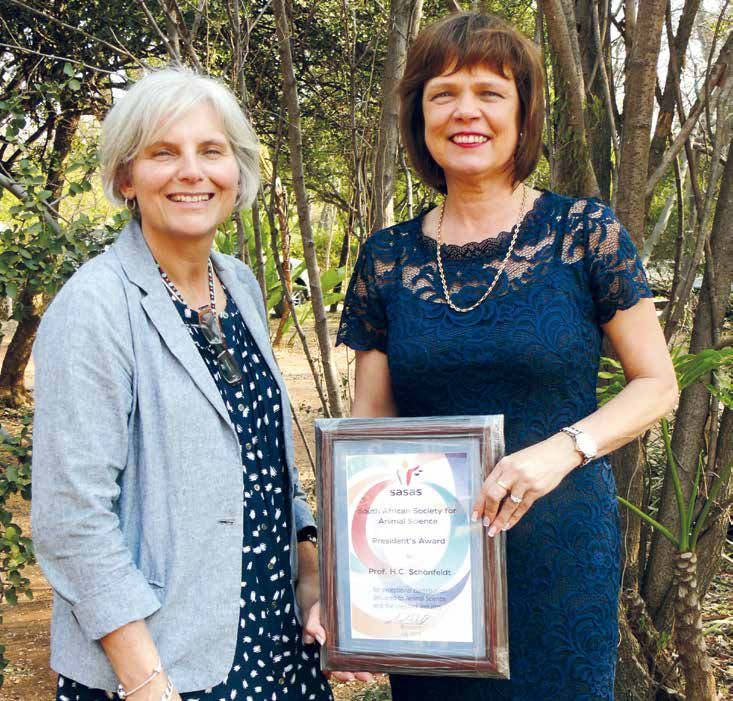
Netherlands. Additionally, he serves as
professor at the universities of Utrecht
and Wageningen, both in the Netherlands.
Prof Xiaohua Xia (Director of the Centre
of New Energy Systems in the Faculty
of Engineering, Built Environment and
Information Technology (EBIT) at UP and
Prof Nigel Bennett were re-awarded the
A-ratings they have held for a number of
years.
Prof Bennett occupies the joint
Department of Science and Technology
(DST) / National Research Foundation
(NRF) Research Chair in the field of
Mammalian Behavioural Ecology and
Physiology, as well as the UP Austin
Roberts Chair of African Mammalogy.
His research is focussed on ecology,
and animal physiology and behaviour.
His research has set the benchmark for
our understanding of the phylogenetic
and ecological constraints that regulate
reproductive success and social evolution
in mammalian species.
As a leading research intensive university,
UP is extremely proud of its academic
excellence and the contributions of its
researchers to finding solutions to local
and global challenges.
Prof Nigel Bennett
Prof Pedro Crous
3 2
Five PhD graduates for Prof Lise Korsten
A record number of five Plant Pathology PhD students under the supervision of Prof Lise Korsten graduated
at the recent Spring graduation ceremony. This was the highest number of PhD students graduating under
one researcher’s supervision in the Faculty of Natural and Agricultural Sciences, at a graduation ceremony.
Joseph Charles Arthur, a pioneer American plant pathologist and mycologist once said: “Plant pathology
has become a utilitarian science of vast possibilities”. This achievement emphasises his view.
The five graduates, with the title of each one’s PhD thesis in brackets, are:
• Mr Bill Malick (The role of postharvest thyme oil-based alternatives on simulated induction
of defense mechanisms in avocado (Persea Americana Mill.) for the control of anthracnose
(PhD Crop Protection))
• Mr Mbulaheni Mutengwe (Pesticide Residue levels and estrogenic activity of fresh produce
in South Africa (PhDCrop Protection))
• Mr Mosimanegape Jongman (Quality and safety of rainwater in food production systems
(PhD Plant Pathology))
• Ms Annancietar Gomba (Food safety and microbial biomes of the citrus carpoplane (PhD
Crop Protection))
Achievements & Awards
• Ms Willeke de Bruin (Effect of nonylphenol, an industrial endocrine disruptor chemical,
on the germination and development of Cos Lettuce (Lactuca sativa) (PhD Plant Pathology))
Prof Korsten was also the co-promoter of Ms M P Makgolane, a MSc Agric Plant Pathology student. The title
of her dissertation is Combined use of plant growth promoting rhizobacteria and pesticides for the control of
Fusarium crown rot of wheat.
Front: Annancietar Gomba, Prof Lise Korsten, Prof Jean Lubuma (Dean: Faculty of Natural and Agricultural Sciences), Mbulaheni Mutengwe and Willeke
de Bruin. Back: Bill Malick and Mosimanegape Jongman
3
4 2
PhD student in Genetics receives
International Norval-Young Award
An academic brilliant student, whose master’s degree was of such a This study was the first to describe the status of acaricide resistance
high standard that it was upgraded to a PhD, was recently awarded against synthetic pyrethroids and amitraz in the Mnisi area of
the 2016 Society of Tropical Veterinary Medicine (STVM) Norval- Mpumalanga, a resource poor area with government-funded
Young Award. Luïse Robbertse, a PhD student in the Department of communal dip-stations. Evidence of the presence of a high frequency
Genetics received this award at the Joint International Conference of
of alleles that contribute to resistance was provided and used for
the Association of Institutions for Tropical Veterinary Medicine (AITVM)
the development of new strategies for effective tick control in
and the STVM, organised by the Institute for Parasitology and Tropical
these heavily infested areas. Negotiations with the Department of
Veterinary Medicine at the Freie Universität Berlin, Germany.
Agriculture, Forestry and Fisheries and industry (Zoetis South Africa
The award was established to honour the memory of Dr Andy Pty Ltd) took place during September 2016 and are currently in
Norval and Dr Alan Young, two distinguished researchers who made progress to establish a strategic plan for improved tick control. This
enormous contributions to the present understanding of tick-borne
involves researchers from Prof Maritz-Olivier’s tick research group
diseases in the tropics. Both these scientists were dedicated to student
at UP, state veterinarians, farmers and industry. These findings will
participation, encouragement and support and it was to honour these
therefore soon be effectively converted into real-life actions impacting
ideals that this award was created. The award is presented every two
animal health, ensuring food security in livestock-dependant areas
years to one candidate, recognised to be a leading young mind in the
field of Tropical Veterinary Medicine. and uplifting resource poor communities via knowledge-based
Achievements & Awards
implementation of protective tick control strategies.
Ms Robbertse received the Norval-Young Award based on her work
completed during her BSc (Hons) degree, under the supervision Ms Robbertse obtained a BSc (Medical Sciences) and a BSc Hons
of Prof Christine Maritz-Olivier. The title of the study is: “Genetic (Genetics) degree from the University of Pretoria. Her current PhD
diversity, acaricide resistance status and evolutionary potential of a study, under the continued supervision of Prof Christine Maritz-
Rhipicephalus microplus population from a disease-controlled cattle Olivier, focuses on the comparative immunoprofiling of three
farming area in South Africa”. This work was published as an invited
economically important cattle breeds, following Rhipicephalus
research article in a special edition of the International journal, Ticks
microplus infestation. During her PhD studies she ultimately aims
and Tick-borne Diseases in 2016. In addition to producing high quality
to unravel the complexity of the immune responses underlying the
scientific outputs, Ms Robbertse is passionate about translational
science and believes that research should not be conducted for the interphases between ixodid ticks and their bovine hosts to improve
sake of research only, but to contribute to the improvement of quality adjuvant selection and antigen production strategies for vaccine
of life for both animals and humans. development against Rhipicephalus cattle ticks.
Ms Luïse Robbertse
33
5 2
CMEG students’ honours research
published in peer-reviewed journals
Three students from the Centre for Microbial Her work is reassuring in that it found the communities to be resistant and functionally stable,
Ecology and Genomics (CMEG) at the showing no significant shifts in response to changing temperatures. However, this is not the full
University of Pretoria (UP) recently had their story, as her study was only conducted over a short period of time and there are many other
honours research published in international factors that may influence how microbial communities react. Ms De Scally is currently working
peer-reviewed journals. Ms Storme de Scally, on her MSc in genetics, in which she again addresses the influence that climate change may
Mr Felix Oloo and Mr Andries van der Walt have on microbial communities, but this time looking at the effect of a decrease in ocean pH on
all completed their honours degree at the Southern Ocean micro-organisms. She plans to pursue a career in academia and has a bright
Department of Genetics in 2015. Their work future ahead of her, having already won the Best Oral Presentation prize at the South African
was respectively published in Soil Biology and Society for Microbiology Biennial Congress earlier this year.
Biochemistry, Scientific Reports and Applied
and Environmental Microbiology. Work Mr Oloo moved closer to the equator for his research, working on the peat bogs of Tierra del
submitted to these journals is extensively Fuego in Argentina. Peat bogs are wetlands which accumulate peat – decomposing carbon-
reviewed and it often takes more than six rich plants. However, the large amount of dead plant material and the cold temperatures
months from submission to final publication. prevent decomposition from occurring quickly enough to keep up with the addition of new
dead plant material. Because of this, micro-organisms play large roles in maintaining the carbon
At the CMEG, researchers study some of balance, and if the ‘wrong’ micro-organisms come to dominate, this can lead to a massive
the most abundant organisms found on the release of carbon into the atmosphere in the form of methane. The work published in Scientific
planet – microorganisms. Because these Reports evaluated how microbial communities differ among various ‹zones› in the peat bogs –
Achievements & Awards
organisms are not found in isolation in plant-free areas, vegetated areas and decomposing areas. Mr Oloo and his colleagues found
nature, researchers use a combination of that local environmental factors determine which micro-organisms dominate in each zone.
molecular techniques, dubbed ‘meta-omics’, Since completing his research, Mr Oloo has decided to broaden his horizons and is currently
to determine the entire microbial species employed by Barclay’s Africa as a data analyst. He is on his way to making a global impact, as
composition found within a given sample during his short time as an honours student, he not only published in an international peer-
from the natural environment. Microbial reviewed journal, but was also the vice-president of the student society Enactus, a community
communities are large contributors to involvement programme targeted at improving the world we live in.
processes involved in climate change,
and they are especially dominant within Mr Van der Walt conducted his research a bit closer to home, working on the fairy circles of
‘less complex’, extreme environments, the Namib Desert. Fairy circles are round, random, barren patches of soil in an area normally
including hot and cold deserts, such as the dominated by grasses. For decades, scientists have been wondering what causes this
Namib Desert and Antarctica, deep sea phenomenon. Some say that it is termites, some think that it is seepage from underground,
hydrothermal vents, sub-Antarctic regions, while others are of the opinion that plants are able to organise themselves in this way. The work
such as the Argentinian peat bogs, and done by Mr Van der Walt and his colleagues, published in Applied and Environmental Microbiology,
marine systems, such as the Southern argues that the fairy circles are caused by micro-organisms. The authors found some micro-
Ocean. Studying these climatically extreme organisms inside fairy circles that are not present elsewhere, some of which are known to cause
environments enables scientists to discover plant diseases. In his MSc in bioinformatics Mr Van der Walt is further expanding this research,
how micro-organisms interact with each this time not only looking at what is present, but also at what they are doing. He says that he
other and drive global processes such as wants to stay in academia and would eventually specialise in astrobiology, the study of life on
drawdown of carbon from the atmosphere other planets.
– the process that once filled our planet’s
atmosphere with life-giving oxygen.
Under this theme, Ms De Scally based her
research on the Antarctic Dry Valleys. This
region of Antarctica features average air
temperatures below -15°C and is one of
the driest regions on the planet, receiving
less than 100 mm of precipitation per
year. Because plants and animals cannot
withstand these extreme conditions, micro-
organisms dominate the Dry Valleys’ soil
environment. However, this environment is
changing, owing to climate change and global
warming. Ms De Scally’s research, published
in Soil Biology and Biochemistry assessed the
impact that future temperature increases
may have on these microbial communities. From left: Mr Andries van der Walt, Mr Felix Oloo and Ms Storme de Scally
3
6 2
Bianca Verlinden UP with Science
one of GradStar students win
Top 100 Future silver at Eskom
Leaders Expo
Dr Bianca Verlinden, a postdoctoral fellow in the Department of Learners from local high schools were recently invited to participate
Biochemistry, was recently selected as one of the Top 100 Future in mini-research projects hosted by the Department of Genetics at
Leaders of South Africa (~3 500 applicants), as part of the 2016 the University of Pretoria.
GradStar Awards Program.
The aim of the programme is to provide learners the opportunity to
In order to be awarded a place in the Top 100, Dr Verlinden went actively engage in real science, and experience the realities of the
through a stringent four phase judging process that assessed the field as microbial ecologists do. Researchers from the Centre for
applicant’s level of leadership, academic achievement, creativity, Microbial Ecology and Genomics under the direction of Dr Thulani
communication and collaboration. The GradStar Program strives Makhalanyane, supervised six learners as representatives of the
to recognise the best and brightest graduates and future leaders Genetics Department. They collected and analysed water from three
emerging from South African universities and provides an aspirational dams in Pretoria (Hartebeespoort, Roodeplaat, and Rietvlei) in order
platform to assist graduates in achieving their full potential. to investigate the pollution levels in South African dams.
Achievements & Awards
The 2016 Future Leaders represented 14 universities. From these Two learners from the group were selected to present their findings
universities the University of Pretoria had the largest representation at the provincial and national levels of the Eskom Expo for Young
of students in the Top 100, with just more than 30%. Students Scientists. Jacqueline Janse van Rensburg and Zamazimba Madi won
representing the Natural and Agricultural Sciences who also received a gold award at provincial level and a silver award nationally. Their
Top 100 status were Andine Erasmus, Betty Kwati, Clare Boswell, prizes included bursaries to to the value of R 30 000 study at a South
Dimpho Sekhaolelo, Liesl Visser, Tshiamo Makinta and Zaleekhah African university and an opportunity to win an all-expenses-paid
Dawood. trip to Amsterdam, London and the USA to attend various science
fairs pending the outcome of interviews.
Dr Bianca Verlinden Jacqueline Janse van Rensburg and Zamazimba Madi
3
7 2
Dr Michelle Greve selected as a
TWAS Young Affiliate
A dynamic young lecturer from the Department
of Plant and Soil Sciences, Dr Michelle Greve
was recently selected as a Young Affiliate of The
World Academy of Sciences Regional Office for
sub-Saharan Africa (TWAS ROSSA). This event was
hosted by the Academy of Science of South Africa
(Pretoria).
This affiliateship lasts for a period of five years, and
she will be invited to participate in TWAS general
meetings and conferences. She will assist TWAS
to respond to the needs of young scientists in
developing countries.
Dr Greve is a senior lecturer at UP. In 2011
she completed her PhD on the diversity and
distribution patterns of African vegetation at
Achievements & Awards
macro-ecological scales at Aarhus University in
Denmark. Her research reflects her interest in
biogeography, which is an understanding of how
patterns of diversity and distribution of organisms
have come about, what these patterns tell us about
the evolutionary drivers of these patterns, and
how we can use this information for conservation
prioritisation, with a particular focus on the
Southern Hemisphere. Her work significantly
contributed to the understanding of the
biogeography of the region, but has also advanced
the field of biogeography conceptually. Dr Greve is
currently running a research programme that aims
to better understand alien invasions to the Sub-
Antarctic islands, using a trait-based approach.
Another project investigates the interdependencies
of the ecology of birds and trees in Southern Africa.
Both projects endeavour to understand these
questions at different spatial scales.
Dr Greve has published in journals such as Nature
Communications, Global Ecology and Biogeography
and Journal of Biogeography, and her work featured
in scientific and in the popular media. She has
been awarded a Y1 (Promising Young Researcher)
rating from the National Research Foundation.
Additionally, she is an affiliate of the Tuks Young
Leadership Programme at UP.
Each year each of the five TWAS Regional Offices
select up to five scientists younger than 40 to be
TWAS Young Affiliates for a period of five years.
TWAS initiated its affiliateship category for young
scientists in 2007. At the end of the five-year
affiliateship, the status of ‘TWAS Young Affiliate’ is
changed to ‘TWAS Young Alumnus’. Dr Michelle Greve
3
8 2
Food Science receives state-of-the-
art hygiene facility
PHT-South Africa, a subsidiary of the global hygiene
and technology company with the same name
headquartered in Germany recently donated a high
end three-part hygiene facility worth R350 000 to the
Department of Food Science. This hygiene system (Mano
Complete Type 23765/23775) installed at the entrance
of the food processing pilot plant consists of three
parts. The first part provides optimal hand sanitation,
including synchronised hand hygiene, contact free
activation and paperless hand drying. This leads to a
log 5 (50 000 bacterial cells) microbial load reduction.
The second part consists of an automated non-contact
sensor-activated hand washing basin for washing and
drying hands inside the processing plant. The last part is
a sole cleaning system, equipped with rotating brushes
with detergent for removing soil on shoes or boots.
Achievements & Awards
The launch of this system took place at the Annual South
African Society for Dairy Technology (SASDT) Students’
Dairy Evening in August. As a sponsor of the event, PHT-
South Africa’s Director, Mrs Deléne Boshoff, mentioned
how proud she was as an alumna of the Department
of Food Science, to reciprocate, especially at a time
when it is crucial to expose students to the latest
food processing and hygiene technologies. This would
familiarise students to advances in the sector prior to
joining the food processing environment. “In Germany,
it is customary for food companies to partner with
education and training institutions through provision
of equipment and training. So on one of my visits to
that country I decided to donate the state-of-the-art
equipment to UP. I called the Head of Department to
enquire whether if it was feasible,” Mrs Boshoff said.
On her part, the Head of the Department, Prof Elna Buys,
mentioned how having such an advanced system – the
first of its kind in South Africa – will expose students
to the highest level of hygiene standards within food
processing. The system reinforces the commitment that
companies such as PHT-South Africa have in building
capacity within food science in South Africa. They
echo the ‘public-private’ partnerships as seen in many
national and international development goals.
The evening also saw oral presentations from four
honours, one master’s and two doctoral students
whose research topics had a direct link to food safety
within the dairy industry. Ms Rufaro Nduna (honours),
Mr Richard Beardsley (master’s) and Mr Thulani Sibanda
(doctoral) took home prizes for best presentations in
their respective groups. The evening culminated in a
networking and interaction evening over dinner with One of the students testing the high end three-part hygiene facility at the Department
dairy industry professionals and students. Prof Braam Van Wyk
of Food Science
3
9 2
Dr Jongman won GLOBALGAP Best
Poster Award
Dr Gape Jongman, a postdoctoral fellow in the Department of Plant and novel molecular techniques, such as pyrosequencing and
and Soil Sciences recently won an award for the best poster at the antibiotic and resistance gene detection. This study substantially
*GlobalGAP Summit 2016. He received a fully sponsored trip to contributed to food safety in South Africa as it provided an overview
Amsterdam as part of the GlobalGAP Young Academics Programme, of microbial profiles and linking the safety status of irrigation water
to attend the Summit. and leafy green vegetables in different production systems. Dr
Jongman identified potential sources of microbial contamination
According to Prof Lise Korsten from UP’s Department of Plant and on leafy green production systems and demonstrated that these
Soil Sciences, Dr Jongman was lauded by the CEO of GlobalGAP, environments act as reservoirs and carriers of clinically important
Kristian Moeller for the commendable presentation of his poster. human and opportunistic pathogens. Understanding the microbial
quality of irrigation water and leafy greens may assist with the
Dr Jongman holds a BSc and an MSc (Applied Microbiology) degree
development of extended food safety programmes.
from the University of Botswana. He was previously employed by the
University of Botswana as a lecturer. The GlobalGAP Summit fosters dialogue among community
members globally. The biannual conference is the perfect setting to
In his thesis titled, Quality of water in food production systems, Dr
discuss the latest developments in food safety and sustainability as
Jongman researched the impact of irrigation water and minimal
well as good agricultural and aquacultural practices and the future of
processing on the microbial quality and safety of leafy green
the agricultural industry.
vegetables at formal (commercial farms) and informal (small-scale
Achievements & Awards
and homestead gardens) production systems. The prevalence of *GAP stands for Good Agricultural Practice – and GlobalGAP is the
foodborne pathogens were also determined by using conventional worldwide standard that assures it.
Dr Gape Jongman
3
10 2Mathematical Statistics
student selected as SAS Student
Ambassador
An academic brilliant master’s
student in Mathematical Statistics,
Ms Amelia van Schalkwyk was
selected as one of the fifteen 2017
SAS Student Ambassadors.
This achievement earns her the
opportunity to present at the 2017
SAS® Global Forum Conference
in April 2017 in Orlando, FL at
the SAS® Global Forum, where
she will join over 5 000 SAS users
from more than 35 countries for
Achievements & Awards
3.5 days of intense learning and
networking. Her presentation at
the conference is titled Behavioural
spend modelling of cheque card
data using SAS Text Miner.
Amelia is currently studying
part-time towards an MSc in
the Department of Statistics
after completing her honours in
Mathematical Statistics cum laude
in 2013.
In 2014 she started working as
a Quantitative Analyst in the
division Premium and Business
Core Banking at FNB. Prior to this
she was employed as an assistant
lecturer in the Department of
Statistics. Amelia also tutored
calculus to first year students at
UP as well as to matric learners
from various schools.
The SAS Student Ambassador
programme is a competitive
programme designed to recognise
students using SAS software to
benefit their respective fields
of study. SAS is the leader in
analytics and innovative analytics,
business intelligence and data
management software and
Ms Amelia van Schalkwyk
services.
3
11 2Best first-year lecturer in NAS
awarded
A lecturer who inspires and motivates students ... This encompasses that have shaped the genetic diversity, its distribution and the
Mr Carel Oosthuizen, the first-year co-ordinator for Animal Diversity patterns that can be observed today,” Mr Oosthuizen concluded.
in the Department of Zoology and Entomology who received the Best
Mr Oosthuizen also received a floating trophy, branded by NATHouse,
First-year Lecturer Award in the Faculty of Natural and Agricultural
Sciences (NAS) on 2 December 2016. as well as a cash prize and a certificate from NATHouse.
“I am humbled by the Award and grateful to all the students who This Award was initiated by the Faculty’s student house, NATHouse,
participated in this new initiative. I have a strong passion for lecturing and specifically by the previous Chairperson, Alexis Schultz, to
and research. My motto regarding lecturing, especially to first-year recognise the extra effort that the first-year lecturers put into their
students, is that all students have the ability to pass, and most likely teaching and learning activities. According to Dr Quenton Kritzinger,
to do well in their courses. The second part of my motto is that first- guardian of NATHouse, “their efforts are really appreciated by
year students have a strong desire to learn and to be diligent, but the students and this Award serves as an encouragement for the
that most of them do not know that when they enter university. lecturers.”
This is exactly where my responsibility as a first-year lecturer
A great word of thanks to the 2016/2017 Chair, Ms Nosihle Msomi,
lies. I endeavour to instil a positive attitude towards studying by
as well as the Executive Committee members of NATHouse for their
teaching the students to be informed and to foster a culture of good
efforts with the arrangements (among others marketing, acquiring
Achievements & Awards
habits right from the start of their studies. The learning approach
the nominations, the voting process) related to the Award.
that I follow is strongly based on self-regulated learning, thereby
acknowledging that a learner’s behaviour, learning environment The other nominees for the Award were: Mrs Bettie Basson (Statistics),
and student self-motivation strongly affect learner achievement and Dr Kershney Naidoo (Genetics), Dr Harry Wiggins (Mathematics
success. The reason why I am using this approach is to, as from the and Applied Mathematics), Dr Ruaan Kellerman (Mathematics and
first year, create a culture of being an active learner who can manage Applied Mathematics), Mr Nick de Beer (Chemistry) and Prof Walter
his/her own learning by self-monitoring, self-motivation and strategy Meyer (Physics).
implementation.”
Voting by all NAS undergraduate students took place between 31
Mr Oosthuizen said: “The approach used in my lecturing led to the October and 12 November this year and more than 20% of the
exciting and successful implementation (as part of a team) of new registered first-years in the Faculty voted via ClickUP. This was really
teaching aids and technologies into the first-year classroom over
exceptional as the students had limited access to campus due to the
the past five years. The biggest of these implementations were the
protests.
successful use of clickers in the classroom. As part of the team, I
received a certificate of Excellence for Teaching Excellence and
Innovation at the University of Pretoria, for the lecturing approach
followed in teaching Molecular and Cell Biology. I also implemented
virtual classrooms, using Blackboard Collaborate, for immediate
direct help with the course content, thereby maximising student
communication and access to the lecturer. Part of implementing new
technologies and strategies also include student feedback through
surveys for informing and directing my current approaches and the
development of new approaches. As part of my teaching approach,
I believe that it is important to focus on the scientific method right
from the start of a student’s university career, with regular reference
to my own research that is being conducted, as well as interesting
relevant but extracurricular contemporary studies in the science
literature,” Mr Oosthuizen said.
He is currently enrolled for his PhD titled, Genetic diversity and
population structure of four marine fish species (Teleostei: Sparidae)
along the Southern African coast, focussing on molecular phylogenetics,
population genetics and conservation biology specifically in the aquatic
environment. “Fishes have for long been the main resource exploited
from the aquatic environment and extraction has caused a number
of undesirable results, such as overexploitation and the threat of Mr Carel Oosthuizen and Ms Nosihle Msomi (NATHouse Chairperson
extinction. I am interested in identifying the evolutionary processes 2016/2017).
3
12 2MSc student won Best Oral
Presentation Award at International
Seed Ecology Conference
Ms Samantha Jamison, a master’s student in the Department of Plant to a lack of understanding of how interactions between species
and Soil Sciences, recently won the prize for the Best Student Oral and dispersal processes can influence these processes. My project
Presentation at the 2016 Seed Ecology Conference, organised by the aims to elucidate how both climatic factors and species interactions,
Federal University of Minas Gerais in Brazil. She was one of only a specifically dispersal processes, between birds and trees drive
few MSc students attending the conference – most of the attendees ecological patterns at local to subcontinental scales,” she explained.
were PhD students, which makes her achievement all the more
The theme for this year’s conference was Seeds in the Web of Life.
outstanding.
There were six categories in which speakers could participate:
The title of her presentation was, Is seed dispersal by avian frugivores Evolutionary seed ecology; Frugivory and seed dispersal (Ms Jamison
a broad-scale determinant of bird-dispersed tree diversity? Ms Jamison presented her paper in this category); Seed banks; Seed germination
said: ”We were given 12 minutes to present. My presentation focused and dormancy; Seed ecology applied to agriculture; and Seed ecology
on the first chapter of my MSc work that deals with how the diversity applied to biodiversity conservation and restoration
of frugivorous birds affects the species richness of bird-dispersed
The Seed Ecology Conference deals with the science of seeds and
Achievements & Awards
trees across southern Africa.”
the environment. The conference is organised by the International
Ms Jamison’s MSc, which is funded by the NRF and supervised Society for Seed Science (ISSS). It is held biannually, and the next
by Dr Michelle Greve, focuses on how to elucidate the way in conference will be held in Germany in 2018.
which biotic interactions between trees and birds drive ecological
patterns at both local and broad spatial scales. “At present, most For more information on the conference, visit
studies assessing the effect of global change on biodiversity focus http://www.seedecologyv.com/
exclusively on the consequences of changes in climate, often due
Ms Samantha Jamison
33
13 2Ntombi wins prestigious DST
Fellowship
Ntombi Gama, a PhD student at the University of Pretoria (UP) was unbearable side-effects and there is still large scale non-compliance
recently awarded a prestigious fellowship from the Department of by the patients with using the drugs. In addition to that, there is still
Science and Technology (DST) at the 2016 Women in Science Awards the issue of the co-infection of patients with other diseases such as TB
(WISA) ceremony. Her PhD studies focuses on HIV and opportunistic and cancers which are largely prevalent in our communities. These
diseases such as Tuberculosis (TB) and cervical cancer. further complicate treatment strategies. Based on these, research
is now moving towards the development of drugs that are less
The DST annually hosts this ceremony in order to reward excellent
toxic and effective against HIV, as well as associated opportunistic
female scientists and researchers, and to encourage younger women
diseases.”
to follow in their footsteps.
Click on the link https://www.youtube.com/watch?v=2ajr0J-UP2k for
Ntombi completed a BSc, a BSc (Hons) and an MSc in Biochemistry
a glimpse of the event.
in the Faculty of Natural and Agricultural Sciences at UP and is
a member of the Golden Key International Honour Society. She Acknowledgement: SABC
furthermore holds membership of the Biochemical and the SA HIV
Clinicians Society.
According to Ntombi, “it feels amazing to be recognised. But it is also
a challenge because I still need to go out into the community to let
Achievements & Awards
young people know that there is science and that there are careers
besides teaching, being a lawyer or a policeman. If a kid like me, who
came from a township could go to varsity and be successful, then
what is stopping you? The school you come from does not change
anything. It is all about what you believe in.”
She also elaborated by saying that ”South Africa is still one of the
highest HIV infected and affected countries in the world, with an
estimated one in five South African women in their reproductive
ages being HIV positive (Statistics South Africa, Mid-year population
estimates, 2015). Although treatment is available, commonly called
anti-retroviral therapy (ARV), these drugs are associated with some
Ntombi Gama
33
14 2President’s Award for Exceptional
Achievement in Animal Sciences
Prof Hettie Schönfeldt from the Department of Animal and Wildlife At the same event, the Silver Medal for acknowledgement of an
Sciences was recently presented with the President’s Award of the exceptional contribution to the advancement of professionalism
and the knowledge in Animal Science and the Livestock industry was
South African Association of Animal Science (SASAS) at the Annual
awarded to Prof Este van Marle-Köster.
SASAS Congress in Stellenbosch. The award is conferred annually
upon a person who has made exceptional contributions to animal Prof Van Marle-Köster has been involved in teaching and research
science and the livestock industries, the animal industry profession for the past 21 years. Her research focuses on the application of
DNA markers and genomics in the genetic improvement of livestock.
and the association.
She is the co-ordinator of the sub-committee for research in the
Beef Genomic Programme, and acts as the co-ordinator for the
Prof Schönfeldt is an Extraordinary Professor and project leader
Dairy Genomic Programme, funded by the Technology Innovation
at the University of Pretoria and is also involved with the DST/NRF
Agency (TIA). She has published widely in peer-reviewed journals and
Centre of Excellence in Food Security. contributed to book chapters.
Achievements & Awards
Prof Este van Marle-Köster (Head of Department: Animal and Wildlife Sciences) and Prof Hettie Schönfeldt
3
15 2Prof Koos Bothma
honoured by SAWMA
A former Director of the Centre for
Wildlife Management and Emeritus
Professor in the Department of
Animal and Wildlife Sciences, Prof
Koos Bothma was recently awarded
the first Wildlife Excellence Award
from the Southern African Wildlife
Management Association (SAWMA).
He received this honour “for
significant contributions to the field of
wildlife management and research in
southern Africa”.
He started his career at the University
of Pretoria as the Eugene Marais
Chair of Wildlife Management in the
Department of Zoology in 1971. He
progressed through through the
ranks to become Full Professor in
1981. He was also the Director of
the Postgraduate Centre for Wildlife
Management at UP from 1989 and he
held that position until his retirement
in 2005. During his academic career
he supervised 52 MSc and 11 PhD
students in Wildlife Management.
Among others, he was a Founder
Member of the South African Wildlife
Management Association and
President in 1975. Furthermore, he
was the President of the South African
Biological Society in 1980 and a co-
founder of the Endangered Wildlife
Trust of South Africa and a member
of the Scientific Advisory Board of the
Trust.
Prof Bothma is also the editor and
co-author of the recently published
sixth edition of the book Game
ranch management which was first
published in1989 in Afrikaans, titled
Wildplaasbestuur.
He was also awarded a Laureate
Award in 2002. This the highest
award an alumnus of the University
of Pretoria or an outstanding achiever
can receive from fellow alumni.
This award has been presented to
Prof Koos Bothma
distinguished alumni since 1974.
3
16 2Food Science student won IUFoST
graduate competition
Mr Victor Ntuli, a PhD student in the Department of Food Science at the by regulation. A survey on the milk in SA (2013) by a registered non-
University of Pretoria (UP) was recently a prize winner of the IUFoST’s profit organisation, the Dairy Standard Agency (DSA), revealed high
Food Safety Beyond Borders Graduate Scientific Paper Competition. levels, above stipulated limit, of E. coli in the milk. Recent studies
The award was presented during the 18 th World Congress of Food have also highlighted microbiological inadequacy in the quality of
Science and Technology and Expo of the International Union of Food producer-distributor bulk milk (PDBM) sold in South Africa. However,
Science and Technology (IUFoST), held in Dublin, Ireland. these studies did not characterise possible pathogens in the milk.
This study was conducted in order to characterise E. coli from PDBM
Entries to the competition were from graduate students whose
for prevalence and the distribution of virulence genes encoding for
work involved issues relating to food safety, addressing a local/
shigatoxin and haemolysis genes, serogroups, antibiotic resistance
indigenous food type within their home country and also having
and extended-spectrum β-lactamases (ESBLs) producing capacity.
international implications. During the first phase of the competition,
We reported poor microbiological quality characterised by the
students were required to submit an abstract of their paper under
occurrence of high microbial counts which may reduce shelf life and
the guidance of their study supervisor. Short-listed candidates had
can be a reservoir of pathogenic bacteria that potentially pose public
to submit a full-length paper (2 600 words), together with possible
health risks in PDBM. The results obtained in the study revealed a
interventions on how to solve the problem at hand. Mr Ntuli’s paper,
diversity of E. coli seropathotypes (with different shigatoxin virulence
titled Potential public health risk associated with multidrug resistant
factors and ESBLs producing capacity) known to be associated with
shigatoxin producing E. coli (STEC) O157 and non-O157 from producer-
human diarrheal diseases in PDBM. Isolation of E. coli serotypes
Achievements & Awards
distributor bulk milk, with his supervisor, Prof Elna Buys, as co-author
carrying virulence genes that are known to cause human diseases
was selected as a winner of the competition.
and also had multiple resistance to antibiotics, can present a
significant public health risk, especially to the vulnerable members of
A summary of the paper follows:
the community. This study highlights a potential risk posed on human
Safety of milk sold directly from producer to consumer in informal
health by consuming PDBM, contaminated by pathogenic E. coli. In
markets, which in many cases is consumed by the poor and
an attempt to effectively manage the food safety risk associated with
vulnerable, has globally been identified as a public health priority.
pathogenic E. coli in PDBM in SA, collaboration between academia,
One key concern is the potential transfer of drug resistant pathogens
industries and local government has been initiated. This integration
to humans through the food chain. South Africa (SA) is one such
of science and policy promotes the translation of science into action,
country where the dairy industry is characterised by a growing
hence, encouraging food security in developing countries.
number of producer-distributors selling either raw or pasteurised
bulk milk to the consumer. This category of milk in SA is permitted The research was funded by MilkSA.
Mr Victor Ntuli
33
17 2Prof Mike Wingfield to receive the
John F.W. Herschel Medal
Prof Mike Wingfield, a renowned international researcher and leader When asked to comment on the news of this award, Prof Wingfield
in the field of forest health will receive the prestigious Royal Society of said “I am humbled and most honoured to be recognised in this way
South Africa (RSSAf)’s John F.W. Herschel medal for 2017. The award by one of the most important societies promoting Science in South
including a medal and certificate will be presented at the Society’s Africa”. He also said “to receive an award in the name of John Herschel
Annual Dinner and Awards Evening in 2017. is particularly gratifying. This from my perspective not related so
much to his remarkable accomplishments as an astrophysicist but
The Herschel medal is the highest honour that can be bestowed the fact that he knew one of my great heroes, Charles Darwin. He
on a Fellow of the RSSAf and the adjudicators recognised Prof also had a great passion for plants of the fynbos which I share.”
Wingfield’s outstanding contributions in the field of forestry,
Prof Wingfield has been elected as a fellow of several scientific
specifically but not exclusively related to the health of trees. This is
societies, including the Royal Society of South Africa, the Academy
not only in the context of what he has contributed in South Africa
of Science for South Africa (ASSAf), and the Southern African Society
while based at the Forestry and Agriculture Biotechnology Institute for Plant Pathology and the American Phytopathological Society. He
(FABI) at the University of Pretoria, but also internationally. The RSSAf is one of the few honorary members of the Mycological Society of
also referred to the fact that Prof Wingfield is the President of the America.
International Union of Forestry Research Organisations (IUFRO),
described as “one of the oldest and largest Scientific Unions in the The prestigious African Union (AU) Kwame Nkrumah Scientific
world, representing between 15 000 and 20 000 forestry researchers Award in the Life and Earth Sciences category was bestowed on
Prof Wingfield in Addis Ababa in 2013, and other accolades that he
Achievements & Awards
linked to approximately 650 member organisations in 120 countries”.
received include the Johanna Westerdijk Award, awarded by the
Prof Wingfield is Professor and Founding Director of FABI and also an Centraalbureau voor Schimmelcultures (CBS) (Fungal Biodiversity
A1-rated National Research Foundation (NRF) researcher. Centre, the Netherlands), and he holds honorary DSc degrees from
the University of British (2012), and from the North Carolina State
His work on the topic of tree health has been widely published in University( 2013). He was also recently awarded the Distinguished
more than 600 research papers and five books. As an invited speaker Leadership Award for International Scientists for 2016, by his alma
he has made numerous highly acclaimed presentations globally. mater, the University of Minnesota.
Prof Mike Wingfield
3
18 2”Shoki-Nwa” scoops up
Best Presentation Award at
International Competition
A ready-to-drink sorghum-cowpea beverage developed by four Food in 2015. The product is targeted at school age children in South
Science students, recently won them an international award. They Africa, especially those from low-income families. The dynamic
received this award for the Best Presentation at the 18th International duo, Olumide and Emmanuel represented the team at the IUFoST
Union of Food Science and Technology (IUFoST) Food Science Conference in Dublin where they presented it before a distinguished
“Students Fighting Hunger” product development competition, held panel of judges, competing against eight other teams from Costa
in Dublin, Ireland. Rica, Singapore, the Netherlands and Stellenbosch University (South
Africa).
The team called “Shoki-Nwa”, named after the ready-to-drink, on
the go beverage, consists of four Food Science students, Olumide Speaking about their achievement at the conference, Olumide
Adedara, Emmanuel Nekhudzhiga, Nanamhla Adonis and Tholoana said it was a wonderful learning experience, especially so, because
Mokhele. The name of the product was coined from two words, this module which he regarded as just another module that had
“Shoki”, a Nigerian Yoruba word for “quick” and “Nwa”, a South to be passed, was being used to change and impact lives in other
African Sesotho word for “drink”. parts of the world. Emmanuel added that sharing knowledge with
other researchers further developed his understanding of Food
The competition encouraged undergraduate students to use their
Achievements & Awards
Science and that he will use it in his postgraduate studies. Olumide,
knowledge and skills to develop innovative food products to fight
Emmanuel and Nanamhla are currently MSc Food Science students
hunger. Students were challenged to develop affordable high-protein
at UP, while Tholoana is working in the food industry. The team
(containing low to no meat), high-fibre, low-sodium products, based
hopes that with appropriate support and interest, they can further
on regional raw materials and technologies.
improve the product to make it commercially available in different
shops in South Africa.
The students developed the sorghum-cowpea beverage as part of
their product development module during their honours programme Read more at www.iufost2016.com.
From left: Olumide Adedare, Nanamhla Adonis and Emmanuel Nekhudziga. Absent: Tholoana Mokhele
3
19 2CGIS master’s Biochemistry
student stars at PhD student wins
Geomatics Indaba ASTMH Travel
Award
Shehu S Awandu, a PhD student in Biochemistry was recently
selected to receive the highly competitive American Society of
Tropical Medicine and Hygiene (ASTMH) 2016 Annual Meeting Travel
Award.
During November he attended the ASTMH 65th Annual Meeting at
the Atlanta Marriott Marquis, Atlanta, Georgia. The award which
is partially supported in by the Bill & Melinda Gates Foundation
provides a complimentary Annual Meeting registration, round-trip
coach and airfare to Atlanta, five nights’ hotel stay at the Atlanta
Marriott Marquis and a cash stipend.
This is one of the ASTMH’s premier awards which is both honorific
and substantive. It facilitates the participation of chosen tropical
Achievements & Awards
medicine researchers and trainees from around the world in the
Annual Meeting.
At the Annual Meeting Shehu will present his work, titled
Zinhle Mashaba
“Glucose 6 phosphate dehydrogenase (G6PD) deficiency phenotype
and genotype distribution in point-of-care settings in Vhembe
A master’s student, Zinhle Mashaba from the Centre for
district, Limpopo Province, South Africa”. He is supervised by Prof
Geoinformation Science (CGIS) shined brightly at the recent
Lyn-Marie Birkholtz, SARChI Chair in Sustainable Malaria Control
Geomatics Indaba 2016 at Emperors Palace, Kempton Park.
in the Department of Biochemistry. His PhD project, based in the
The Geomatics Indaba 2016 consisted of two paper categories, Vhembe District is important in contributing towards South Africa’s
namely general papers and peer-reviewed papers. The peer- aim of malaria elimination by 2018.
reviewed papers are published in a special issue of the South African
Journal of Geomatics. Zinhle Mashaba’s paper, titled Evaluating spectral
indices for winter wheat health status monitoring in Bloemfontein using
Landsat 8 data was voted the best academic paper at the Indaba. Her
research that she presented was funded by the Agricultural Research
Council (ARC).
The Spectral indices derived from remotely sensed satellite images,
indicates crop vigor early in the season. However, less research has
been conducted on investigating which indices are best related to
winter wheat health status in South Africa. The research, focused
on identifying spectral indices, can be used for crop monitoring so
that farmers can modify their irrigation programmes or applications
of fertilisers, pesticides or herbicides to improve wheat growth
at stressed areas. This particular application can help to ensure
food security as wheat is a staple food for most South Africans.
Additionally, farmers can save money on conducting manual field
surveys because satellite images cover a large area.
Geomatics Indaba is Africa’s leading, inclusive conference, exhibition
and training event for the geomatics sector. This conference was
attended by local and international experts, with strong support
from industry, local universities and the government. Postgraduate
students at CGIS constantly participate in this annual event to
showcase their projects. Shehu S. Awandu at the Malaria Parasite Molecular Laboratory (M2PL)
offices
3
20 2Statistician rewarded for excellent
publishing record
Prof Mohammed Arashi, an Extraordinary Professor in the Department of Statistics, has recently
been awarded the Behboodian Award for statisticians younger than 40 who have published
outstanding papers. This award is made biannually by the Iranian Statistical Society (ISS).
Prof Arashi is from the School of Mathematical Sciences at the Shahrood University of Technology,
Iran. The award was bestowed on him during the 13th Iranian Statistics Conference on 23 August
this year. He was selected as the winner for the effective role in the development and progress
of Statistics and publishing high quality papers. Prof Arashi also won this coveted award in 2012.
The Iranian Statistical Society, Inc. (ISS) was founded in 1991 with the objective to further the
study, application and good practice of statistical theory and methods in all branches of learning
and enterprise. Today, the ISS serves 1 500 members in Iran and overseas, including all academic
members of Iranian Universities and research centres in the field of Statistics.
Achievements & Awards
Prof Mohammed Arashi
3
21 2Young scientists won Einstein
Language Competition
Two students from the Faculty of Natural and Agricultural Sciences
recently walked away with prizes in the LitNet Akademies Einstein
Competition. Anneke Schoeman, an Entomology honours student
won the first prize of R10 000, while Theunis Smit, a doctoral student
in Plant Production won the third prize of R2 000.
With this competition – the first of its kind in South Africa – the
academic journal, LitNet Akademies challenged young researchers
at universities to summarise their own research (for example a
master’s thesis) in 130 characters or less. The competition was aimed
at postgraduate students (honours, master’s or doctoral students),
as well as emerging academics (postdoctoral fellows and lecturers)
in the age group 18 to 35 of age.
Anneke Schoeman’s entry made a clean sweep with a unanimous
vote by all seven adjudicators.
Achievements & Awards
The winning entry reads as follows: “Ek is die luistervink tydens
miskruiers se chemiese geflikflooi en ontrafel só hoe hulle sedert die
oerjare flankeer”.
Anneke says that she is an enthusiastic entomologist who is
interested in reconciling the fields of natural sciences and literature.
Presently she participates in the Dung beetle Research Group
Anneke Schoeman
Dung beetles
33
22
22 22You can also read


