CONFERENCE PROGRAM WYNDHAM GRAND PITTSBURGH DOWNTOWN PITTSBURGH, PENNSYLVANIA JULY 28-31, 2019 - Soil and Water Conservation Society
←
→
Page content transcription
If your browser does not render page correctly, please read the page content below
CONFERENCE PROGRAM
WYNDHAM GRAND PITTSBURGH DOWNTOWN
PITTSBURGH, PENNSYLVANIA
JULY 28-31, 2019
Accelerating innovation
in a changing world
To address farmers’ increasing challenges
To meet environmental needs
To respond to society’s changing views

Climate change, soil erosion and biodiversity loss —
We’re committed to making a difference.
We will invest and innovate for even more sustainable                           To learn more about our sustainability commitments,
agriculture. We stand by the safety of our products,                            please stop by the Syngenta booth at the 2019 Soil
and will continue to strive to reduce residues in                               and Water Conservation Society International Annual
crops and the environment while maintaining their                               Conference in Pittsburgh.
effectiveness. We’ll be transparent in our approach
and bring about positive lasting change in agriculture.

All photos are either the property of Syngenta or are used with permission.
©2019 Syngenta. The Syngenta logo is a trademark of a Syngenta Group Company.

2
TABLE OF CONTENTS

GENERAL INFORMATION
Conference Schedule in Brief                         4-5
Welcomes and Volunteer Recognition                   6-8
     Program Planning Committee Chair Message          6
     Keystone Chapter                                  7
     Conference Volunteers                             8
SWCS Board of Directors, Officers, and Staff           9
Conference Registration and Facility Information      10
Wyndham Grand Meeting Space Maps                      11

SPONSORS, EXHIBITS, AND POSTER PRESENTATIONS
Corporate Partners                                    12
Conference Sponsors                                   13
Exhibit Hall Layout and Information                14-15
Poster Presentations                               16-17
CONFERENCE PROGRAM
Sunday Schedule and Events                         19-20
Monday Schedule and Events                         21-22
     Symposia Sessions                             26-30
Tuesday Schedule and Events                        31-33
     Symposia Sessions                             37-42
Wednesday Schedule and Events                      43-44
     Symposia Sessions                             47-48
2019 SWCS Awards and Scholarships                  49-54
2020 Annual Conference Save the Date                  55
SWCS Conference Sites and Chairs                      56

                                                           3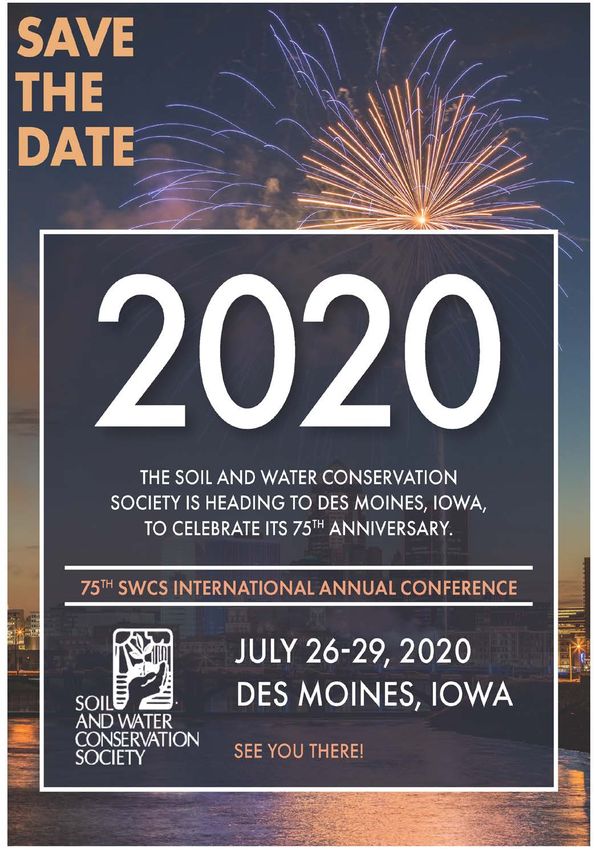
CONFERENCE SCHEDULE IN BRIEF

SUNDAY, JULY 28                                                     MONDAY, JULY 29

    11:00 am          Registration Desk Open                          6:30 am     Registration Desk Open
                      Registration Area on the Ballroom Level                     Registration Area on the Ballroom Level

     1:00 pm          *Workshop: Nutrient Tracking Tool               7:00 am     State of Society Address, Regional
                      (NTT): A Farm Decision-Making                               Roundtables, and House of Delegates
                      Tool for Water Quality/Quantity                             with Rolls and Coffee (For Chapter
                      Assessment and Trading Programs                             Leaders and Members)
                      and a New Interface for APEX Model                          Grand Ballroom 1 on the Ballroom Level
                      Sterlings 2 on the Lobby Level
                                                                      8:45 am     Conference Kickoff, Keynote Sponsor,
     4:00 pm          New Member and First Timer Orientation                      and Pritchard Keynote Lecture
                      Rivers on the Ballroom Level                                Grand Ballroom 1 on the Ballroom Level

     4:30 pm          Student and Early Career Professional          10:00 am     Morning Break: Exhibit Hall and Poster
                      Development Session                                         Presentations Open
                      Rivers on the Ballroom Level                                Grand Ballroom 2-4 on the Ballroom Level

                                                                     10:30 am     Concurrent Sessions
     5:00 pm          Regional Forum and Flavor Reception
                                                                                  See pages 23-25
                      Grand Ballroom 1 on the Ballroom Level

                                                                     11:00 am     ARCSE Lunch and Annual
     *Not included in standard registrations. Additional cost and
     ticket(s) required to attend.
                                                                                  Business Meeting
                                                                                  Brigade on the Ballroom Level

                                                                     12:00 pm     Lunch on your own

                                                                      1:30 pm     Concurrent Sessions
                                                                                  See pages 23-25

                                                                      3:00 pm     Afternoon Break: Exhibit Hall and
                                                                                  Poster Presentations Open
                                                                                  Grand Ballroom 2-4 on the Ballroom Level

                                                                      3:30 pm     Concurrent Sessions
                                                                                  See pages 23-25

                                                                      5:00 pm     Exhibitor and Poster Reception
                                                                                  Grand Ballroom 2-4 on the Ballroom Level

                                                                      7:00 pm     Silent Auction Ends
                                                                                  Ballroom Foyer on the Ballroom Level

4
TUESDAY, JULY 30                                         WEDNESDAY, JULY 31

  7:30 am     Registration Desk Open                       7:00 am          Registration Desk Open
              Registration Area on the Ballroom Level                       Registration Area on the Ballroom Level

  8:00 am     Plenary Sessions                             7:45 am          *Tour #1: Agriculture in an Ever-
              Grand Ballroom 1 on the Ballroom Level                        Changing World
                                                                            Meet at Liberty Avenue Entrance on the
                                                                            Lobby Level at 7:25 am
 10:00 am     Morning Break: Exhibit Hall and Poster
              Presentations Open
              Grand Ballroom 2-4 on the Ballroom Level
                                                           8:30 am          Concurrent Sessions
                                                                            See pages 45-46

 10:30 am     Concurrent Sessions
              See pages 34-36                             10:00 am          Morning Break
                                                                            Ballroom Foyer on the Ballroom Level
 12:00 pm     Awards Luncheon
              Grand Ballroom 1 on the Ballroom Level      10:30 am          Concurrent Sessions
                                                                            See pages 45-46
  1:30 pm     Soil Health in the West Videos (Film
              Screening, Plays Every 17 Minutes)          12:00 pm          Conference Adjourns
              Birmingham on the Lobby Level

  1:30 pm     Concurrent Sessions                          1:00 pm          *Tour #2: Growing Urban Ag in
              See pages 34-36                                               Postindustrial Communities
                                                                            Meet at Liberty Avenue Entrance on the
  3:00 pm     Afternoon Break: Exhibit Hall and                             Lobby Level at 12:40 pm
              Poster Presentations Open
              Grand Ballroom 2-4 on the Ballroom Level
                                                           1:00 pm          *Tour #3: Restoration of
                                                                            Impacted Landscapes
  3:30 pm     Concurrent Sessions                                           Meet at Liberty Avenue Entrance on the
              See pages 34-36                                               Lobby Level at 12:40 pm

  5:15 pm     PED Talks: A Soil Health Speaker Series      1:00 pm          CEAP Watershed Assessment Studies
              Grand Ballroom 1 on the Ballroom Level                        Annual Meeting
                                                                            Grand Ballroom 3-4 on the Ballroom Level

                                                           *Not included in standard registrations. Additional cost and
                                                           ticket(s) required to attend.

                                                                                                                          5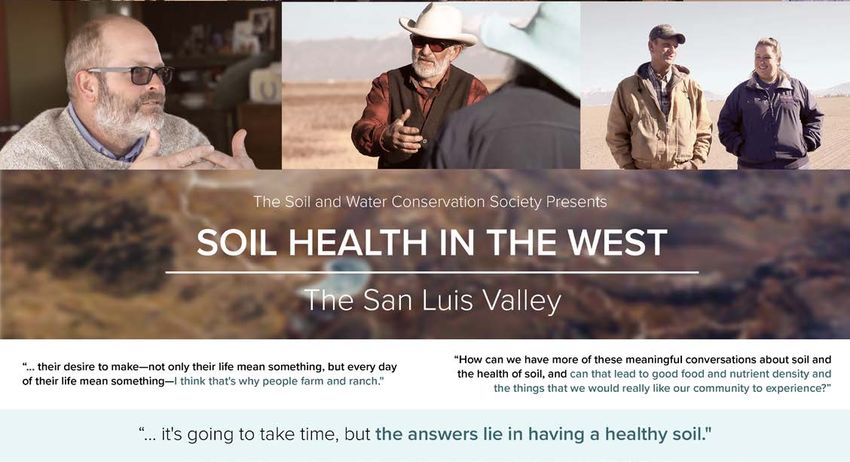
PROGRAM PLANNING COMMITTEE CHAIR MESSAGE

    W     elcome to the 74th International Annual Conference of the Soil and Water Conservation
          Society (SWCS). The focus of this year’s meeting, Bridging the Divide: Uniting Rural and
    Urban Landscapes for Conservation, melds urban, rural, and the spaces in between into a holistic
    conservation framework. Bridging the Divide is an appropriate metaphor as the conference location is
    Pittsburgh, Pennsylvania, “City of Bridges,” with its 446 bridges that span three great river systems—
    the Allegheny, Monongahela, and Ohio. The conference location is very close to the confluence of
    the Allegheny and Monongahela rivers, where they form the Ohio. These river systems influence
    agricultural production, flooding of bottomlands, wetlands, soil and water resources, and, of course,
    the urban areas that they flow through.

    The Bridging the Divide: Uniting Rural and Urban Landscapes for Conservation conference begins
    Sunday, July 28, with the Regional Forum and Flavor Reception, Harnessing Pennsylvania’s Culture
    of Stewardship for Clean Water, hosted by the SWCS Keystone Chapter. Throughout the conference,
    symposia, oral presentations, and poster presentations will explore the following special topics:
       • Adapting Landscapes to Climate Change
       • Engaging the Private Sector in Conservation
       • Watershed Conservation to Unify Urban and Rural Communities

    As always, sessions will also include ongoing areas of emphasis: Adaptive Management of
    Conservation Efforts; Conservation Economics and Policy; Conservation Models, Tools, and
    Technologies; Conservation in Organic, Specialty, Small-Scale, or Urban Agriculture; Outreach,
    Education, and Community Engagement; Social Sciences Informing Conservation; Soil Health
    Resources, Indicators, Assessment, and Management; and Water Resource Assessment and
    Management. Last, but not least, three action-packed tours are offered Wednesday: Agriculture in an
    Ever-Changing World, Growing Urban Agriculture in Postindustrial Communities, and Restoration of
    Impacted Landscapes. The Society strives to provide its diverse membership a range of technical and
    practical sessions.

    I have the honor of being program planning committee chair and have been impressed by the
    quality, breadth, and multidisciplinarity of the 2019 submissions. There are nearly 200 symposia,
    oral presentations, and posters to choose from this year; these presentations represent a range of
    important topics for conservationists from protecting water quality to maintaining and enhancing our
    soil resources. SWCS continues to represent the best in conservation practice and inquiry.
    This conference is only made possible by the many member volunteers, SWCS staff, and sponsors
    who have volunteered their time and talents. Special thanks to members of the Keystone Chapter, who
    host this meeting. I want to extend my personal thanks to all who have helped make this a successful
    conference and wish Peter Tomlinson all the best as he assumes the chair for the 75th anniversary
    meeting next year.

    We hope you enjoy your time at the conference and come away refreshed and with new concepts and
    understandings to help protect our water and soil resources!

                        Deanna Osmond, 2019 Program Planning Committee Chair
                        North Carolina State University

6
WELCOME TO PENNSYLVANIA

T  he Keystone Chapter of the Soil and Water Conservation Society is honored to welcome the
   2019 SWCS International Annual Conference to the Wyndham Grand in Pittsburgh, Pennsylvania.
Pennsylvania is known as the Keystone State because of its central role in the formation of the United
States. Like the central, wedge-shaped stone that anchors the other stones in an arch, Pennsylvania
anchored early America.

The Ohio River is born just a few hundred yards from the conference site where the Allegheny and
Monongahela Rivers merge, forming one of the first major gateways to western expansion of the
United States. Proximity to the rivers and also nearby sources of coal and timber supported the rise
of steel manufacturing and other heavy industries in Pittsburgh. Incredible levels of air and water
pollution in the area were well known through the middle of the 20th century, a far cry from the green
and healthy city you are visiting this week. The environmental restoration of the Pittsburgh area was
a long and difficult process that required state and federal regulation, lobbying by multiple local and
national organizations, and tireless grassroots efforts.

Land use is diverse across Pennsylvania. About 60% of the state is forested, but crops are produced
throughout the state with the most intense production in the southeast. Dairy is our largest
agricultural enterprise, but we also produce eggs, pork, beef, chickens, turkeys, grains, hay, and
vegetables. Plus, we are the country’s largest producer of mushrooms.

Much of central and eastern Pennsylvania lies within Susquehanna River basin and is the source of
nearly two-thirds of the water entering the Chesapeake Bay. Water quality issues in the Chesapeake
have been widely discussed in the national news for several decades, and Pennsylvania and other
states in Chesapeake watershed are aggressively working to increase the deployment of conservation
practices on farms and forests to reduce loading of nitrogen, phosphorus, and sediment. Adoption
of no-till and cover cropping, addition of riparian buffers, and implementation of a range of other
conservation practices continues to increase across the watershed. While ultimate water quality goals
have not yet been achieved, the US Environmental Protection Agency reports that deployment of
conservation practices is causing steady improvement in water quality and indicators of ecosystem
health in the bay and its tributaries.

The membership of the Keystone Chapter is excited to participate in the 2019 International
Conference to learn and share new knowledge and technology that will help solve our conservation
challenges. We hope you will all have time while you are here to enjoy our natural beauty and get to
know our friendly people.

Curtis Dell, President
Keystone Chapter

                                                                                                          7
CONFERENCE VOLUNTEERS

ANNUAL CONFERENCE PROGRAM                                  TECHNICAL TEAM LEADERS
PLANNING COMMITTEE                                         Hanna Bates, Iowa Water Center/Iowa State University
Deanna Osmond, North Carolina State University             Outreach, Education, and Community Engagement
Chair
                                                           Curtis Dell, USDA ARS
Courtney Allen, SWCS                                       Adaptive Management of Conservation Efforts
Event and Professional Development Director/Executive
                                                           Dan Dostie, USDA NRCS
Assistant to the CEO
                                                           Adapting Landscapes to Climate Change
Jorge Delgado, USDA ARS
                                                           Katie Flahive, US Environmental Protection Agency
JSWC Editorial Board Liaison
                                                           Water Resources Assessment and Management
Rebecca Fletcher, USDA NRCS
                                                           Deanna Osmond, North Carolina State University
Professional and Chapter Development Committee Liaison
                                                           Conservation in Organic, Specialty, Small-Scale, or
Andrew Sharpley, University of Arkansas                    Urban Agriculture
Science and Policy Committee Liaison
                                                           DeAnn Presley, Kansas State University and Peter
Cheryl Simmons, USDA NRCS                                  Tomlinson, Kansas State University
International Committee Liaison                            Soil Health Resources, Indicators, Assessment,
                                                           and Management
Jeff Strock, University of Minnesota
                                                           Linda Prokopy, Purdue University
Soil Science Society of America Liaison
                                                           Social Sciences Informing Conservation and Engaging the
                                                           Private Sector in Conservation
SWCS KEYSTONE CHAPTER LIAISONS
Curtis Dell, USDA ARS, Keystone Chapter President          Andrew Sharpley, University of Arkansas
                                                           Conservation Economics and Policy
Dan Dostie, USDA NRCS, Keystone Chapter Past President
                                                           Aleksey Sheshukov, Kansas State University and Skye
Lisa Blazure, Clinton County Conservation District,        Wills, USDA NRCS
Keystone Chapter Secretary
                                                           Conservation Models, Tools, and Technologies
Gary Smith, Retired USDA NRCS, Keystone
                                                           Cheryl Simmons, USDA NRCS
Chapter Treasurer
                                                           Watershed Conservation to Unify Urban and
Jonathan Burgess, Allegheny County Conservation District   Rural Communities
Sjoerd Duiker, Pennsylvania State University

Lamonte Garber, Stroud Water Research Center

Geri Montgomery, USDA NRCS

Frank Schneider, Pennsylvania State                              Thank you to all who assisted in
Conservation Commission                                          planning the 74th SWCS International
Mary Smith, USDA NRCS                                            Annual Conference!

8
SWCS BOARD OF DIRECTORS, OFFICERS, AND STAFF

OFFICERS                                 SWCS HEADQUARTERS STAFF
Chair: Rex Martin                        Clare Lindahl, CEO
Vice Chair: Wendi Goldsmith              Courtney Allen, Event and Professional Development
Secretary: Dale Threatt-Taylor           Director/Executive Assistant to the CEO
Treasurer: Don Wysocki                   Annie Binder, Director of Publications/Editor
                                         Erika Crady, Membership and Chapter Coordinator
NORTHEAST REGION
                                         Catherine DeLong, Special Projects Director
Wendi Goldsmith         2017–2020
                                         Autumn Mohler, Student Summer Intern

NORTH CENTRAL REGION                     Joe Otto, Historian

Rebecca Power		         2018–2021        Jody Thompson, Editorial Assistant

NORTHWEST REGION
Don Wysocki		           2017–2020
                                                   Join in the conversation using the
                                                   conference hashtag #SWCS19
SOUTHEAST REGION
Dale Threatt-Taylor 2016–2019
                                                   @swcsnews
			2019–2022

SOUTHWEST REGION                                   Follow SWCS on Facebook at
Steve Kadas		 2016–2019                            Facebook.com/soilandwaterconservation
			2019–2022

AT-LARGE
Rex Martin		            2018–2021
Bruce Knight		          2017–2020
Jason Weller		          2017–2020
Bill Kuckuck		          2016–2019      Visit www.slido.com and search “SWCS2019” to
Incoming: Jane Hardisty, 2019–2022     participate in polls during the conference

                                                                                              9
CONFERENCE REGISTRATION AND FACILITY INFORMATION
The Soil and Water Conservation Society registration desk is located on the Ballroom Level. SWCS staff will be on
site to assist you.

REGISTRATION HOURS                                             LOST AND FOUND
Sunday		         11:00 AM – 5:00 PM                            Check with the front desk of the Wyndham Grand or at
                                                               the registration desk.
Monday           6:30 AM – 5:00 PM

Tuesday          7:30 AM – 5:00 PM                             NAME BADGE RECYLING
Wednesday        7:00 AM – 12:00 PM                            If you wish to recycle your name badge, please return it to
                                                               the registration desk at the end of the conference.
CONFERENCE ADMISSION
The conference registration fee covers one participant.        PHOTO RELEASE
All registered attendees will receive a registration packet,   Registration and attendance at, or participation in,
which contains a formal name badge and tickets for             SWCS events constitutes an agreement by the attendee
purchased events.                                              for SWCS to use the attendee’s likeness (all photos,
                                                               videos, or digital media) in any format without payment
Your name badge acts as your admission ticket to
                                                               or other consideration. SWCS may use the images for
educational sessions (including the plenary sessions),
                                                               nonprofit educational, informational, or promotional
exhibits, posters, and special events. Please be sure your
                                                               purposes. SWCS will not sell the rights to the images or
name badge is worn at all times in the conference area.
                                                               likeness to any other entity.
For your safety, it is recommended that you do not wear
your name badge outside the conference area. Please
note that tickets may be collected for ticketed events.        CEUS
Formal name badges are not provided for guests.                SWCS has worked to secure continuing education credits
Additional tickets for guests to attend the Exhibit            (CEUs) from various certifying organizations. The room
and Poster Reception, the Awards Luncheon, and                 moderators in each session will have a sheet for you to
Conservation Tours may be purchased at the registration        sign in and out with your name and certification number.
desk and are subject to availability.

Please Note: No refunds will be given for conference
registrations, workshops, tours, meal functions, or
activities. Registration personnel will not exchange
tickets. SWCS reserves the right to cancel events/
activities without prior notice.

INTERNET
Select the “Wyndham_Meeting” network, enter
“SWCS2019” as the password when prompted, and
accept the terms and conditions by highlighting the
checkbox for free internet connection.

10
WYNDHAM GRAND MEETING SPACE MAPS
11CORPORATE PARTNERS
SWCS is pleased to have the following organizations as Corporate Partners in the effort to advance natural resource
conservation and environmental sustainability.
GOLD LEVEL
SILVER LEVEL
Are you interested in having your organization recognized for its dedication to natural resources protection and
sustainability? Contact Clare Lindahl at clare.lindahl@swcs.org or 515-289-2331 to discuss all the benefits of becoming
an SWCS Corporate Partner.
12CONFERENCE SPONSORS
PRESENTING SPONSOR
PLATINUM SPONSOR
SILVER SPONSOR
BRONZE SPONSOR
STUDENT MODERATOR PROGRAM SPONSOR
SOIL AND WATER CONSERVATION DISTRICT GOLD SPONSOR
SOIL AND WATER CONSERVATION DISTRICT SILVER SPONSORS
13EXHIBIT HALL LAYOUT
Booth # Exhibitor
1 Syngenta
2 The Nature Conservancy
3 Soil Health Partnership
4 Daily Erosion Project
5 River Network
6 Allegheny County
Conservation District
7 Truax Company
8 Meadville Land Service, Inc.
9 Ernst Conservation Seeds
10 American Water
Works Association
11 American Farmland Trust
12 National Association of
Conservation Districts
13 US Environmental
Protection Agency
14 Agri Drain Corporation
15 Natural Resources
Conservation Service
16 Soil and Water
Conservation Society
14EXHIBITORS
Booth # Exhibitor Representatives
1 Syngenta Ann Bryan and Karyn Ostrom
syngenta.com ann.bryan@syngenta.com;
kostrom@gscommunications.com
2 The Nature Conservancy Mark Bryer
nature.org mbryer@tnc.org
3 Soil Health Partnership Shefali Mehta and John Mesko
soilhealthpartnership.org mehta@ncga.com; mesko@ncga.com
4 Daily Erosion Project Brian Gelder and Rick Cruse
dailyerosion.org bkgelder@iastate.edu; rmc@iastate.edu
5 River Network April Ingle
rivernetwork.org aingle@rivernetwork.org
6 Allegheny County Conservation District Jonathan Burgess
conservationsolutioncenter.org jburgess@accdpa.org
7 Truax Company Steve Clubine
truaxcomp.com truax3@qwestoffice.net
8 Meadville Land Service, Inc. Robin Ernst
meadvillelandservice.com robin@meadvillelandservice.com
9 Ernst Conservation Seeds Greg Kedzierski
ernstseed.com greg@ernstseed.com
10 American Water Works Association Nancy Sullivan
awwa.org nsullivan@awwa.org
11 American Farmland Trust Jennifer Filipiak and Jennifer Moore-Kucera
farmland.org jfilipiak@farmland.org;
jmoorekucera@farmland.org
12 National Association of Meg Leader
Conservation Districts meg-leader@nacdnet.org
nacdnet.org
13 US Environmental Protection Agency Katie Flahive and Jennie Pugliese
epa.gov flahive.katie@epa.gov; pugliese.jennie@epa.gov
14 Agri Drain Corporation Charlie Schafer
agridrain.com charlie@agridrain.com
15 Natural Resources Conservation Service Dan Dostie
nrcs.usda.gov Daniel.Dostie@pa.usda.gov
16 Soil and Water Conservation Society Curtis Dell
swcs.org curtis.dell@ars.usda.gov
15POSTER PRESENTATIONS
ADAPTING LANDSCAPES TO CLIMATE CHANGE 15. Hydrologic Restoration in the Lower Apalachicola
River and Bay Contributing Area
1. Importance of the Hydrologic Model in Simulating
Future Water Quality under a Changing Climate 16. Multistate Financial Data for Use with the USDA
Agricultural Conservation Planning Framework
2. Nutrient Tracking Tool Application of Land Use
Alternatives for a Grazing Ranch in North East Texas 17. Remote Sensing of Crop Residue Using the SWIR
Bands of the Worldview-3 Satellite Platform
3. The USDA Nebraska Climate Hub: A Regional Source
for Adaption Information 18. Sediment Yield from Small Rangeland Plots under
Rainfall and Run-On Conditions
4. Tribal Soil Climate Analysis Network Outreach and
Support for Agriculture and Forestry 19. Sensitivity Analysis of Residual Soil Nitrogen at
Regional Scale in China’s Croplands from 1984
ADAPTIVE MANAGEMENT OF CONSERVATION EFFORTS to 2014
5. Integrated Systems’ Synergy and Regenerative 20. Soils2026 and Digital Soil Mapping: Foundation
Agriculture in the Semi-Arid Region of Western for the Future of Soils Information and
North Dakota Conservation Activities
6. Wetlands at Work: Nitrogen Reduction and 21. Using Portable X-Ray Fluorescence (PXRF) for Rapid
Phosphorus Sequestration of Constructed Wetlands Trace Metal Analysis
Receiving Tile-Drained Waters from Agricultural
Systems in the Midwestern United States ENGAGING THE PRIVATE SECTOR IN CONSERVATION
22. Erosion and Sediment Control Planning Approach
CONSERVATION ECONOMICS AND POLICY in Pennsylvania
7. Measuring Soil Health Benefits on Private 23. Impact of Ecosystem Services Management Incentives
Rangelands through Wyoming Ranchers’ Profitability on Farmer Adoption of Conservation Practices
from Improved Forage Production 24. Nutrient (Manure) Management Planning Approach
8. Profit-Maximizing Nitrogen Rates for Corn in Pennsylvania
Production and Tillage Systems Using Non-Linear
Mixed Effects Production Functions OUTREACH, EDUCATION, AND COMMUNITY ENGAGEMENT
25. Engaging Youth in Manure Management Education
CONSERVATION IN ORGANIC, SPECIALTY, SMALL- and Compliance
SCALE, OR URBAN AGRICULTURE 26. Fill the Pantry with Iowa SWCS
9. Demonstration Plots of Alternative Pollinator Habitat 27. Pollinator Habitat Establishment Methods
Seed Mixtures
28. The Black Urban Gardeners and Farmers of Pittsburgh
10. Investigating Urban Agriculture Practices in Co-Op (BUGFPC): Challenges and Progresses
Mwanza, Tanzania
11. Phosphorus Balances in Conventional and Organic SOIL HEALTH RESOURCES, INDICATORS,
Grain Cropping Systems from the Initial Nineteen
Years of the USDA ARS Farming Systems Project
ASSESSMENT, AND MANAGEMENT
29. A Comparison between Fatty Acid Methyl Ester
CONSERVATION MODELS, TOOLS, AND TECHNOLOGIES Profiling Methods (PLFA and EL-FAME) as Soil Health
Indicators for Microbial Community Composition
12. Exploring the Extent of Artificial Agricultural Drainage
Using GIS Tools 30. An Accuracy Assessment of Total Station Scanning
and Close-Range Photogrammetry Methods on
13. Glyphosate-Resistant Palmer Amaranth Measuring Water-Induced Channels
Management in Cotton Using Winter Cover Crops
31. How Do Crop Rotation and Poultry Litter Inputs
14. How Does Long-Term Crop Management Affect Soil Impact Soil Biogeochemistry and Biology?
Organic Matter in the Texas High Plains?
1632. Inherent Soil Property Characterization for Defining 50. Improve Outreach to Improve Soils: Combining Data,
Dynamic Soil Property Potential Ranges Economics, and Communication to Improve Soil
33. P-Nitrophenol Phosphate Enzyme Activity across Health across the South Central United States
Varying Management in Palouse Soils 51. Installation and Operation of Prototype Edge-of-
34. Spherical Magnetic Micro Particles as Indicators of Field Runoff Monitoring Systems to Support NRCS
Soil Erosion and Health Conservation Investments and On-Farm Decision
Making: Lessons Learned
WATER RESOURCE ASSESSMENT AND MANAGEMENT 52. Linking Chicago’s Urban Agricultural District:
Continued Conversion of the Englewood Rail Line into
35. Correlating Water Quality Data to Assess Risk to a Nature Trail
Human Health
53. National Indian Carbon Coalition Carbon
36. Modeling the Responses of Agricultural Productivity Sequestration Projects on Tribal Land
to Water Availability in Haitian Watershed and
Irrigation Systems 54. On-Farm Research Demonstrates Diverse Pathways
to Soil Health
37. P3-Building for Resiliency, Not Recovery
55. Paddocktrac Web-Based Mobile App to Measure,
38. Return of the Tide: Herring River Restoration Project Monitor, and Manage Grazing Systems
(Wellfleet and Truro, Massachusetts)
56. Practicing 4Rs (Right: Source, Rate, Time, and Place)
39. Modern Ag: Local Impact Project Nutrient Stewardship Management and Conservation
40. The Effect of Edge-of-Field Management Practices on for Container Grown Blueberry
Transporting E. Coli in Subsurface Drainage Systems 57. Retrofitting the Rural Roadside Ditch Network
to Treat Nitrogen from Agricultural Runoff Using
WATERSHED CONSERVATION TO UNIFY URBAN AND Woodchip Bioreactors
RURAL COMMUNITIES 58. The Benefits of Cover Crops on Soil Moisture
41. Common Ground Common Water: Film as a Tool for Retention in Coastal Plain Soils
Shared Understanding of Water Resource Protection
42. Patterns in Nutrient Transport and Load from PROFESSIONAL AND CHAPTER DEVELOPMENT
Agricultural and Urban Sources: Implications for 59. SWCS Professional and Chapter Development
Load Reduction Goals and Point to Nonpoint Source Committee: Working for You
Nutrient Trading
60. SWCS Chapter Achievers
43. Presentation of Topographical Features in Southern
and Northern Guam via a Small-Scale Model as a
Tool for Community Education toward Watershed
Conservation Efforts
44. Suitability of Phosphorus Adsorption Materials for
Agricultural Nutrient Management Practices
45. Teamwork in the Honey Hollow Watershed, a
National Historic Landmark
CONSERVATION INNOVATION GRANT SHOWCASE
46. A Forest Bank: Funding Mechanisms for
Landscape-Level Restoration for the Swinomish
Indian Tribal Community
47. An Assessment of Three Sustainability Tools
as Impact Verification in Small Grains Supply
Chain Programs
48. Conserving Water Resources in the US Pacific
Islands Region by Optimal Irrigation of Farmlands
49. Evaluating Mobile Drip Irrigation in Water
Technology Farms
17Supporting America’s working
lands to improve the health of
our soil, water, wildlife, and other
natural resources.
18SUNDAY, JULY 28
SCHEDULE AND EVENTS
SCHEDULE
to the Agricultural Policy Environmental eXtender (APEX).
It also accesses USDA Natural Resources Conservation
11:00 am Registration Desk Open Service’s Web Soil Survey (or user input) and PRISM
Registration Area on the Ballroom Level soil, and weather information. NTT provides producers,
government officials, and other users with a fast, efficient,
1:00 pm *Workshop: Nutrient Tracking Tool and common method of estimating the nitrogen and
(NTT): A Farm Decision-Making Tool for phosphorus credits generated from implemented Best
Water Quality/Quantity Assessment and Management Practices (BMPs) at the field and small
Trading Programs and a New Interface watershed levels. The generated credit can be used
for APEX Model for water quality/quantity trading, as well as other
Sterlings 2 on the Lobby Level water quality and quantity programs. In addition, a new
version of NTT (NTT-RE) is designed for researches
and educators and provides an easy-to-use interface
4:00 pm New Member and First Timer Orientation
to access the APEX files and program. The information
Rivers on the Ballroom Level
obtained from the tool can help producers to determine
the most cost-effective conservation practice alternatives
4:30 pm Student and Early Career Professional for their individual operations and provide them with
Development Session more advantageous options to reduce the water
Rivers on the Ballroom Level contaminant while optimizing their crop production.
During this workshop the two versions of NTT and its
5:00 pm Regional Forum and Flavor Reception latest capabilities will be described and demonstrated.
Grand Ballroom 1 on the Ballroom Level This workshop is recommended for everyone, including
producers, researchers, educators, government
*Not included in standard registrations. Additional cost
employees, and NGO staff.
and ticket(s) required to attend.
New Member and First Timer Orientation
4:00 pm – 4:30 pm, Rivers on the Ballroom Level
EVENTS New members and conference first timers will have the
opportunity to network with one another and discuss the
Workshop: Nutrient Tracking Tool (NTT): A Farm conference with SWCS leadership and Board of Director
Decision-Making Tool for Water Quality/Quantity members who will share tips for navigating the agenda,
connecting with fellow conservationists, and making
Assessment and Trading Programs and a New
the most out of time spent at the conference. Attendees
Interface for APEX Model are encouraged to use this time to ask questions about
1:00 pm – 5:00 pm, Sterlings 2 on the Lobby Level the conference and the Society. Attendance is also
encouraged for students and early career professionals.
Instructors: Ali Saleh, Texas Institute for Applied
Environmental Research, Tarleton State University; Mindy
Student and Early Career Professional
Selman, USDA Office of Environmental Markets
Development Session
The Nutrient Tracking Tool (NTT) is a user-friendly, web- 4:30 pm – 5:00 pm, Rivers on the Ballroom Level
based program developed by Texas Institute for Applied
Environmental Research (TIAER) staff in collaboration SWCS will hold a special session for student and
with USDA. early career professional attendees. The session will
highlight the professional development opportunities
NTT estimates nutrients (nitrogen and phosphorus), throughout the conference, discuss benefits of an SWCS
sediment losses, and crop yield from fields (or small membership, provide tips for engaging in professional
watersheds) managed under a variety of cropping networking, and more. Attendance is encouraged for
patterns and management practices through its linkage professionals wishing to connect with students.
19Regional Forum and Flavor Reception
5:00 pm – 6:30 pm, Grand Ballroom 1 on the Ballroom Level
Harnessing Pennsylvania’s Culture of Stewardship for
Clean Water
Presenters: Matt Royer, Director, Agriculture and
Environment Center, Penn State University; Jim Internationally recognized as the leader in
Hershey, President, Pennsylvania No-Till Alliance; the stormwater certification industry
Jonathan Burgess, Program and Policy Director and
Urban Agriculture Program Lead, Allegheny County Offering In-Person Reviews and Exams
Conservation District MAC IECA Frederick, MD | Reviews on Sept. 19th | Exams on Sept. 20th
Monterey, CA Reviews on Oct. 6th | Exams on Oct. 7th
This year’s conference reception, organized by the
Keystone Chapter of SWCS, will include a selection of
CPESC and CESSWI On-Demand Reviews
themed dishes/appetizers highlighting the local flavor of
Pittsburgh, along with a cash bar. Spend time networking Now Available
with colleagues from 5:00 pm to 5:30 pm, followed by Introductory Price of $300.00 Now - Sept. 30th 2019
presentations and an opportunity to ask questions. A Coming Soon On-Demand: CPSWQ, CPESC SI, CESSWI SI Reviews
local band will provide musical entertainment.
In this opening session, three speakers will introduce
the clean water challenges facing Pennsylvania and give
a taste of the stewardship culture motivating farmers
and other land managers in rural and urban areas to
protect and enhance water quality while making a living
on the land. Agricultural practices, nutrient input, mining,
stormwater, and dams have left their mark on water
quality in local and downstream communities across the
major watersheds draining into the Chesapeake Bay, Ohio
River, and Delaware Bay. While people across the nation
watch closely to what their fellow citizens are doing to
care for the Chesapeake Bay, western Pennsylvanians
are the stewards of the headwaters of the mighty Ohio
River, a critical transportation artery connecting the
East Coast and the Midwest. Additionally, at the eastern
end of the Commonwealth, Pennsylvanians care for
half of the highly urbanized Delaware Basin’s land area,
contributing to waters used by over 15 million people
(roughly 5% of the nation’s population). As an example
of one of the great challenges—meeting total maximum
daily load limits for nitrogen, phosphorus, and sediment
set for the Chesapeake Bay in 2010 by the Environmental
Protection Agency and Pennsylvania—multiple
Watershed Implementation Plans (WIPs) are being put
into action to achieve bay restoration goals. All across
the Commonwealth, major strides have already been
made by farmers and municipalities toward overcoming
“divides” and uniting to meet local and regional clean
water goals. As these efforts continue, new avenues for
sustainable and profitable agriculture are being explored.
A ticket for this event is included with full conference
registration. Additional tickets may be purchased online in
advance for guests or at the registration table if available.
20MONDAY, JULY 29
SCHEDULE AND EVENTS
SCHEDULE EVENTS
6:30 am Registration Desk Open State of Society Address, Regional Roundtables,
Registration Area on the Ballroom Level and House of Delegates with Rolls and Coffee (For
Chapter Leaders and Members)
7:00 am State of Society Address, Regional 7:00 am – 8:45 am, Grand Ballroom 1 on the Ballroom Level
Roundtables, and House of Delegates
Prior to the Conference Kickoff, the State of the Society
with Rolls and Coffee (For Chapter
Address will be delivered by Board Chair Rex Martin and
Leaders and Members)
CEO Clare Lindahl. The Regional Roundtables and House
Grand Ballroom 1 on the Ballroom Level
of Delegates will follow. Regional Roundtables provide
chapter members an opportunity to meet with SWCS
8:45 am Conference Kickoff, Keynote Sponsor, leadership and others from their region for a discussion on
and Pritchard Keynote Lecture local events and issues. The House of Delegates session
Grand Ballroom 1 on the Ballroom Level serves as platform for chapter leaders and members to
communicate regional natural resource and chapter needs
10:00 am Morning Break: Exhibit Hall and Poster to SWCS leadership. A light breakfast will be provided for
Presentations Open chapter leaders and members in attendance.
Grand Ballroom 2-4 on the Ballroom Level
Conference Kickoff, Keynote Sponsor, and
10:30 am Concurrent Sessions Pritchard Keynote Lecture
See pages 23-25 8:45 am – 10:00 am, Grand Ballroom 1 on the Ballroom Level
The Conference Kickoff will be opened by Board Chair Rex
11:00 am ARCSE Lunch and Annual Business Meeting
Martin and CEO Clare Lindahl. This year’s keynote sponsor,
Brigade on the Ballroom Level
Jill Wheeler from Syngenta, will address the audience,
followed by the Pritchard Keynote Lecture: Bridging the
12:00 pm Lunch on Your Own Urban Rural Divide for America’s Drinking Water.
Presenter: G. Tracy Mehan III, American Water
1:30 pm Concurrent Sessions Works Association
See pages 23-25
As Executive Director of
Government Affairs for the
3:00 pm Afternoon Break: Exhibit Hall and Poster American Water Works
Presentations Open Association, G. Tracy
Grand Ballroom 2-4 on the Ballroom Level Mehan III has been on the
forefront of advocating
3:30 pm Concurrent Sessions for national water policy
See pages 23-25 and projects through the
Farm Bill and Regional
Conservation Partnership
5:00 pm Exhibitor and Poster Reception
Program. Mehan will
Grand Ballroom 2-4 on the Ballroom Level
provide insight on what is being described as “an
unheard of opportunity” to scale up partnerships between
7:00 pm Silent Auction Ends urban stakeholders and agriculture for the protection
Ballroom Foyer on the Ballroom Level of our water supplies. A widely respected expert in
environmental policy and an insightful and thought-
provoking writer, Mehan will share his knowledge and
experiences as the nation seizes this watershed moment
to bridge the urban and rural divide.
21G. Tracy Mehan III is Executive Director, Government
Affairs, for the American Water Works Association. He
was an independent consultant and served as Interim
President of the US Water Alliance and national Source
Water Protection Coordinator for the US Endowment No Farms. No Food.
for Forestry and Communities. He is also an adjunct
professor at the Antonin Scalia Law School at George
No Future.
Mason University and Carnegie Mellon University’s Heinz Since our founding in 1980,
College. He was principal with The Cadmus Group, Inc., AFT has helped permanently
an environmental consulting firm, from 2004 to 2014. protect over 6.5 million
Mehan served as Assistant Administrator for Water at acres of agricultural lands,
the US Environmental Protection Agency (EPA) from advanced environmentally
2001 to 2003. He served as Environmental Stewardship sound farming practices on
Counselor to the 2004 G-8 Summit Planning Organization millions of additional acres,
(2004). Mehan also served as director of the Michigan and supported thousands of
Office of the Great Lakes (1993 to 2001) and as Associate farmers and ranchers.
Deputy Administrator of EPA in 1992. He was director of
the Missouri Department of Natural Resources from 1989
to 1992. Mehan is a graduate of Saint Louis University
and its School of Law.
Mehan served on the Water Science and Technology
Board and now the Committee on the Mississippi River
and the Clean Water Act for the National Research
Council of the National Academies. He was also an
independent expert judge for the City Water Conservation Join us in our mission to protect
Achievement Award program (2006 and 2011) sponsored America’s family farms. Become a
member today at www.farmland.org
by The US Conference of Mayors and its Urban Water
Council. Mehan is a member of the Environmental Law
Institute (ELI) and a regular book reviewer for ELI’s
flagship publication, The Environmental Forum. Mehan
served on EPA’s Environmental Financial Advisory Board
(2014 to 2018) as well as the boards of the US Water
Alliance and the Great Lakes Observing System. He is
also a member of the Advisory Board of the Center for
Environmental Policy, School of Public Affairs, American
University and a past member of the board of the
Potomac Conservancy (2006 to 2014).
Exhibitor and Poster Reception
5:00 pm – 7:00 pm, Grand Ballroom 2-4 on the Ballroom Level
This reception offers a prime opportunity to visit with
exhibitors showcasing their newest technology, programs,
products, and services. Attendees will have the opportunity
to view posters and hear from the authors. This is also a
great time to connect with potential business associates
and reconnect with colleagues. A selection of appetizers
will be served, along with a cash bar.
A ticket for this event is included with full conference
registration. Additional tickets may be purchased online in
advance for guests or at the registration table if available.
22Monday, July 29, 2019
Registration Area
6:30 AM - 5:00 PM Registration Desk Open
Ballroom Level
State of Society Address, Regional Roundtables, and House of Delegates with Rolls and Coffee (For Chapter Leaders Grand Ballroom 1
7:00 AM - 8:45 AM
and Members) Ballroom Level
Conference Kickoff - Clare Lindahl, Soil and Water Conservation Society; Rex Martin, Soil and Water Conservation Society Chair ;
Grand Ballroom 1
8:45 AM - 10:00 AM Keynote Sponsor - Jill Wheeler, Syngenta; Pritchard Keynote Lecture: Bridging the Urban Rural Divide for America’s
Ballroom Level
Drinking Water - G. Tracy Mehan III, American Water Works Association
Grand Ballroom 2-4
10:00 AM - 10:30 AM Morning Break: Exhibit Hall and Poster Presentations Open
Ballroom Level
10:30 AM - 12:00 PM Symposia Sessions
Rivers
Ballroom Level Conservation Innovation Grants Program Overview and Stakeholder Updates - Caroline Sherony, USDA NRCS ; Innovative Ways to Incentivize Conservation - Leah Hermens,
Conservation Innovation USDA NRCS
Grants Showcase
Birmingham
Lobby Level Impacts of the New Farm Bill on Soil and Water Conservation - Soil and Water Conservation Society Science and Policy Committee
Conservation Economics and Policy
Smithfield
Lobby Level
Advancing Soil Health for Productive Agriculture and Clean Water - Lisa Blazure, Clinton County Conservation District
Soil Health Resources, Indicators,
Assessment, and Management
Ft. Pitt
Lobby Level Advancing Water Quality through Market-Based Solutions, Research, Collaborative Engagement, and Financial Leadership Practices - Katie Flahive, US
Watershed Conservation to Unify Urban Environmental Protection Agency
and Rural Communities
Benedum 10:30 AM - 11:15 AM 11:15 AM - 12:00 PM
Lobby Level Reimagining your Chapter or Small Organization - Clare Lindahl, Soil and Water Putting Your Best Foot Forward: Business Etiquette in Today’s Work World - Rex
Professional and Chapter Development Conservation Society Martin, Soil and Water Conservation Society Chair
10:30 AM - 12:00 PM Oral Presentations
10:30 AM 10:50 AM 11:10 AM 11:30 AM
An Ecohydrological Assessment of Assessment of Long-Term Effects of
Sterlings 1 Balancing of Soil Nutrients to Aid
Potential Impacts of Climate Change on Different Nitrogen and Tillage
Lobby Level Soil Fertility Programs and Improve
Herpetofauna in the Connecticut River Management Practices on Irrigated Corn
Adapting Landscapes to Soil Resilience to Extreme Weather
Watershed - Timothy O. Randhir, Yields and Nitrogen Uptake - Jorge A.
Climate Change Conditions - Zouheir Massri, AgroLiquid
University of Massachusetts Delgado, USDA ARS
It Takes a Village: A Case Study on
Right Practice, Right Place: Increasing the
Sterlings 2 Collaboration and Implementation to
NRCS Soil Databases: Information for Remote Sensing of Crop Residue Nutrient Reduction Potential of
Lobby Level Reduce Sediment and Phosphorus from
Conservation Questions - Stephen M. Conditions for the Daily Erosion Project - Conservation Activities in the Upper
Conservation Models, Tools, Agricultural Landscapes in the Maumee
Roecker, USDA NRCS Brian Gelder, Iowa State University Macoupin Creek Watershed in Illinois -
and Technologies River Basin, Ohio - Jessica D'Ambrosio,
Kris Reynolds, American Farmland Trust
The Nature Conservancy
From Sewer Creek to Cardinal Creek: How
Changing the Watershed Relationship:
Sterlings 3 Bringing Diverse Perspectives Together to Students in a Struggling Iowa Town Using Creek Signs to Build Awareness of
Collaboration of Community Groups and
Lobby Level Support Watershed Management in Iowa - Renamed a Forgotten Creek and Creeks, Lake Tributaries, and Watersheds
Local Government for Mutual Benefits -
Outreach, Education, and Hanna Bates, Iowa Water Center/ Transformed It into a Source of in Iowa - Stephen K. Hopkins, Iowa
Amy Miller, Allegheny County
Community Engagement Iowa State University Community Pride - Courtney Wolken, Department of Natural Resources
Conservation District
Newton (Iowa) High School
2324
12:00 PM - 1:30 PM Lunch on Your Own
1:30 PM - 3:00 PM Symposia Sessions
Rivers
Ballroom Level
Addressing Water Quality and Water Quantity Issues - Jan Surface, USDA NRCS
Conservation Innovation
Grants Showcase
Birmingham
Lobby Level
State and Transition Models to Support Conservation Decision-Making - Joel Brown, USDA NRCS
Adapting Landscapes to
Climate Change
Smithfield
Lobby Level
Implementing Nutrient Management Combined with Conservation Planning: The Rest of the Story - Jeffrey Strock, University of Minnesota
Adaptive Management of
Conservation Efforts
Ft. Pitt
Lobby Level Building Agricultural Landscapes into State Climate Plans - James Daukas, American Farmland Trust
Social Sciences Informing Conservation
Benedum 1:30 PM - 2:15 PM 2:15 PM - 3:00 PM
Lobby Level Holding Successful Meetings and Professional Development - Heidi Ackerman and Bridging the Gap Between Employees and Employers - Autumn Mohler, Soil
Professional and Chapter Development Hanna Bates, Soil and Water Conservation Society Iowa Chapter and Water Conservation Society Intern
1:30 PM - 3:00 PM Oral Presentations
1:30 PM 1:50 PM 2:10 PM 2:30 PM
Development of the Agricultural Economic
Sterlings 1 Legume Cover Crops Boost Nitrogen to Scalability and Impact of Implementing
Performance Engine: Targeting Marginal Using a Land Use Change Analysis
Lobby Level Corn During a Three Year Transition to Saturated Buffers throughout the
Land at the Sub-Field Scale for Economic to Inform Wetland Protections in
Conservation Models, Tools, Organic Cropping - Xueming Yang, Midwest - Keegan J .Kult, Ag Drainage
and Environmental Benefit - Matthew New Jersey - Trish Long, USDA NRCS
and Technologies Agriculture and Agri-Food Canada Management Coalition
Nowatzke, Iowa State University
Research Partnerships for Soil Health: Understanding the Effects of Place,
Sterlings 2 Precision Conservation Management:
Experiences from Cover Crop Trials on Soil Health Indicators in Semi-Arid Perception, and Age on Nutrient
Lobby Level Targeting Soil Health for Agronomic
Corn and Soybean Fields in the United Regions of Texas - Paul De Laune, Management Decision-Making among
Soil Health Resources, Indicators, Profitability - Gretchen Sassenrath,
States - Shefali Mehta, Soil Texas A&M Agrilife US Farmers - Caela O'Connell,
Assessment, and Management Kansas State University
Health Partnership University of Tennessee
Source Water Collaborative: Protecting Source Water Collaborative: Protecting
Sterlings 3 25 Years of Kentucky Soil Test
Marketing Soil Health as a Component Drinking Water Sources for Generations to Drinking Water Sources for Generations to
Lobby Level Phosphorus: Lawn and Gardening
of Grass-Fed Local Products - Sjoerd Come - Joe Lee, Source Water Come (continued) - Joe Lee, Source Water
Watershed Conservation to Unify Urban Our Way to Hell in a Vegetable Basket -
W. Duiker, Penn State Collaborative and Ground Water Collaborative and Ground Water
and Rural Communities Brad Lee, University of Kentucky
Protection Council Protection CouncilGrand Ballroom 2-4
3:00 PM - 3:30 PM Afternoon Break: Exhibit Hall and Poster Presentations Open
Ballroom Level
3:30 PM - 5:00 PM Symposia Sessions
Rivers
Ballroom Level
Innovation in Cover Crops - Steve Woodruff, USDA NRCS
Conservation Innovation
Grants Showcase
Birmingham
Lobby Level
State and Transition Models to Support Conservation Decision-Making (Continued) - Joel Brown, USDA NRCS
Adapting Landscapes to
Climate Change
Smithfield
Lobby Level
Water Erosion Prediction Project Technology for Use by NRCS and Conservation Partners - Michael Kucera, USDA NRCS
Conservation Models, Tools,
and Technologies
Ft. Pitt
Lobby Level
Thinking BioRegional: Steps toward Implementing Agroforestry at the Watershed Level - Andrew S. Kilduff, TK.designlab
Watershed Conservation to Unify Urban
and Rural Communities
4:15 PM - 5:00 PM
Benedum 3:30 PM - 4:15 PM Women in Conservation Leadership - Wendi Goldsmith, Soil and Water Conservation
Lobby Level Let’s Party Like its 1946: SWCS Celebrates 75 Years of the Conservation Professional Society Board Member; Denise Coleman, USDA NRCS; Shefali Mehta, Soil Health
Professional and Chapter Development - Catherine DeLong, Soil and Water Conservation Society Partnership; Dale Threatt-Taylor, Wake County Soil and Water Conservation
Department and Soil and Water Conservation Society Board Member
3:30 PM - 5:00 PM Oral Presentations
3:30 PM 3:50 PM 4:10 PM 4:30 PM
Development of Management Zones
for Cropping Systems in the Lake Potato Yield and Farm Revenue as Risk-Return Framework in Conservation
Sterlings 1 Winnipeg Basin to Improve N and P Functions of Crop Rotation and Evaluation: An Application to Cover Crop Tracking US Agricultural Conservation
Lobby Level Application and Crop Productivity, and to Tillage Practice in New Brunswick, Use in Different Soil Types - Adoption: Trends from 2004 to Present -
Conservation Economics and Policy Reduce Environmental Impacts - Canada - Sheng Li, Agriculture and Naveen Adusumilli, Louisiana State Kate Zook, USDA
Mohammad Khakbazan, Agriculture and Agri-Food Canada University AgCenter
Agri-Food Canada
Ecosystem Services and Environmental Factors Influencing Use of Online Decision Western Lake Erie Basin Farmers’
Sterlings 2 Results of the USDA-NIFA Climate and
Justice in an Urban Environment - Support Tools for Farmers and Advisors in Perceptions of Nutrient Management
Lobby Level Water Portfolio Synthesis -
Joseph Pellegrino, City of the Midwestern United States - Adequacy - Elizabeth R. Schwab,
Social Sciences Informing Conservation Linda Prokopy, Purdue University
Springfield, Massachusetts Pranay Ranjan, Purdue University The Ohio State University
Sterlings 3 Advancing Green Infrastructure Practice Assessment of Soil Phosphorus Content
Farm Management Impacts to Tile Forest Cover and Water Quality in Tropical
Lobby Level through Life Cycle Cost and Co-Benefits from Three Fields in the Buffalo National
Drainage Water Quality - Kevan Klingberg, Agricultural Watersheds - Timothy O.
Water Resource Assessment Analysis - Jennifer Egan, University River Watershed - James M .Burke,
UW Discovery Farms Randhir, University of Massachusetts
and Management of Maryland University of Arkansas
Grand Ballroom 2-4
5:00 PM - 7:00 PM Exhibitor and Poster Reception
Ballroom Level
25MONDAY, JULY 29
SYMPOSIA SESSIONS
Conservation Innovation Grants (CIG) Showcase Presentation 1: Reimagining Your Chapter or Small
10:30 am – 5:00 pm, Rivers on the Ballroom Level Organization (10:30 am – 11:15 am)
Speaker and Moderator: Clare Lindahl, Soil and Water
The USDA Natural Resources Conservation Service Conservation Society CEO
(NRCS), in conjunction with SWCS, will host the CIG
Presentation 2: Putting Your Best Foot Forward: Business
Showcase at the SWCS Annual Conference. Since 2004,
Etiquette in Today’s Work World (11:15 am – 12:00 pm)
CIG has supported the development of innovative natural
Speaker and Moderator: Rex Martin, Soil and Water
resource conservation approaches and technologies on
Conservation Society Chair
working lands.
Presentation 3: Holding Successful Meetings and
This year’s showcase includes an overview of the CIG
Professional Development (1:30 pm – 2:15 pm)
program and three themed panels. The first panel
Speaker and Moderator: Heidi Ackerman and Hanna
highlights innovative ways to incentivize conservation.
Bates, Soil and Water Conservation Society Iowa Chapter
The second panel explores CIG projects that address
water quality and quantity issues. The final panel Presentation 4: Bridging the Gap between Employees and
includes presentations from CIG grantees demonstrating Employers (2:15 pm – 3:00 pm)
innovative technologies related to cover crops. Speaker and Moderator: Autumn Mohler, Soil and Water
Conservation Society Intern
This showcase runs from 10:30 am to 5:00 pm on
Monday, July 29. Following the showcase, CIG project Presentation 5: Let’s Party Like It’s 1946: SWCS
posters will be included in the poster presentation Celebrates 75 Years of The Conservation Professional
session held in the poster display area of the exhibit hall (3:30 pm – 4:15 pm)
from 5:00 pm to 7:00 pm. Speaker and Moderator: Catherine DeLong, Soil and
Water Conservation Society
Introduction: Conservation Innovation Grants Program
Overview and Stakeholder Updates (10:30 am) Presentation 6: Women in Conservation Leadership
Presenter: Caroline Sherony, USDA NRCS Panel (4:15 pm – 5:00 pm)
Speakers: Denise Coleman, USDA NRCS; Shefali Mehta,
Presentation 1: Innovative Ways to Incentivize
Soil Health Partnership; Dale Threatt-Taylor, Wake County
Conservation (11:00 am)
Soil and Water Conservation Department and Soil and
Moderator: Leah Hermens, USDA NRCS
Water Conservation Society Board Member
Presentation 2: Addressing Water Quality and Water Moderator: Wendi Goldsmith, Soil and Water
Quantity Issues (1:30 pm) Conservation Society Board Member
Moderator: Jan Surface, USDA NRCS
Impacts of the New Farm Bill on Soil and
Presentation 3: Innovation in Cover Crops (3:30 pm)
Moderator: Steve Woodruff, USDA NRCS Water Conservation
10:30 am – 12:00 pm, Birmingham on the Lobby Level
Professional and Chapter Development Session
Moderator: Bruce Knight, Strategic Conservation Solutions
10:30 am – 5:00 pm, Benedum on the Lobby Level
Presenters: Jonathan Burgess, Allegheny County
The Professional and Chapter Development Committee Conservation District; Jean Steiner, Retired USDA ARS;
has developed sessions for the growth of professionals John Peterson, KEMPS Consultants; Andy Manale, Retired
and chapter leaders. These sessions will help US Environmental Protection Agency; Raqueeb Bey,
professionals become more effective across the diverse Executive Director, Black Urban Gardeners and Farmers
set of fields that serve conservation. You will learn of Pittsburgh Co-op
from the experiences, challenges, and successes of
The Soil and Water Conservation Society’s Science
other conservation professionals. Sessions on chapter
and Policy Committee invites you to attend a dynamic
development are relevant not only to SWCS chapters
discussion on the 2018 Farm Bill impacts to soil and
but also to any small organization seeking to have a big
water conservation. The symposium will include flash
impact with minimal staff and budget.
presentations from five speakers whose expertise range
from federal policy to on-the-ground management, and
26from rural field crop production to urban agriculture. Advancing Water Quality through Market-Based
Speaker presentations will be followed by a facilitated Solutions, Research, Collaborative Engagement,
session where there will be ample time for questions and and Financial Leadership Practices
further discussion. Presentation topics will include Farm
Bill funding for research, outreach, and conservation 10:30 am – 12:00 pm, Ft. Pitt on the Lobby Level
programs; new opportunities; and the impact of Farm Bill Moderator: Jennie Pugliese, US Environmental
policies at the local level. Protection Agency
Advancing Soil Health for Productive Agriculture The US Environmental Protection Agency (EPA) supports
states, tribes, and stakeholders as they work to make
and Clean Water
progress improving water quality and reducing excess
10:30 am – 12:00 pm, Smithfield on the Lobby Level nutrients in watersheds across the country while
improving the efficiency of land use practices and
Moderator: Lisa Blazure, Clinton County Conservation District
optimizing treatment technologies. Nationally available
A fundamental shift is occurring in agriculture—in water quality data indicate that nutrient pollution
Pennsylvania and nationally—as producers adopt continues to be widespread, particularly in the Mississippi
management practices to improve soil health. Farmers River Basin, and that phosphorus levels in some surface
implement these practices for on-farm benefits, but waters have risen over time. EPA is working with USDA
an expected effect is improved water quality in local and other partners to ensure that all tools available to
streams and rivers. Pennsylvania producers exceed address excess nutrients in watersheds are accessible,
national adoption rates for no-till and cover crops. A including nonregulatory and market-based programs.
large portion of Pennsylvania is within the Chesapeake This symposium will comprise four presentations (15-20
Bay Watershed, an impaired estuary with challenging minutes) with facilitated discussion.
pollution reduction goals. Improving soil health on
Each of these presentations will provide:
agricultural lands is viewed as a low cost, long-term
opportunity for meeting bay water quality goals. The • Program or policy overview
farmer-based Pennsylvania No-Till Alliance has been • Current opportunities for engagement
at the forefront of soil health research and adoption of
• Expectations for results
management practices. Members have participated
with multiple university research projects and have Presentation 1: Water Quality Trading and Market-
conducted their own on-farm research trials. Some Based Approaches – Tom Wall, US Environmental
of these data have shown that soil health scores on Protection Agency
regenerative, conventional farms are comparable to the
Presentation 2: Goals and Initial Outcomes of EPA and
soil health on organic farms. Members have also shown
USDA Collaborative Stakeholder Engagement – Katie
the ability to maintain corn yields using only 30% of the
Flahive, US Environmental Protection Agency
recommended nitrogen fertilizer rates. This symposium
will share farmer-led research results and highlight the Presentation 3: EPA Office of Research and Development
unique partnerships the No-Till Alliance has formed Five-Year Strategic Plan for Nutrients – Scot Hagerthey,
with nonprofit organizations, such as the Stroud Water US Environmental Protection Agency
Research Center, to educate farmers about the benefits
Presentation 4: Community Financial Leadership Practices
of improved soil health and forested riparian buffers.
in Funding and Financing Water Infrastructure Projects –
Presentation 1: Rising to the Challenge of a Cleaner Ellen Tarquinio, US Environmental Protection Agency
Chesapeake Bay: How Improving Soil Health Is a Win-Win
for Farmers and the Environment – Lisa Blazure, Clinton State and Transition Models to Support
County Conservation District Conservation Decision-Making
Presentation 2: Beyond BMPs and Buffers: Are Healthy 1:30 pm – 3:00 pm, Birmingham on the Lobby Level
Soils the “Silent Giant” for Clean Water? – Lamonte
Garber, Stroud Water Research Center Moderator: Joel Brown, USDA NRCS
Presentation 3: Sustainable Row Crop Production Using Landscape models used as the basis for assessing
No-Till and Cover Crops – Jim Hershey, Hershey Farms, climate change impacts and developing adaptation
LLC, and Pennsylvania No-Till Alliance plans are collections of community-scale dynamics.
These dynamics frequently lack transparency in terms
of spatial and temporal scale, and, thus, are difficult to
27You can also read


