NASA Astrophysics Update - AAAC Meeting | January 26-27, 2021 Paul Hertz Director, Astrophysics Division Science Mission Directorate
←
→
Page content transcription
If your browser does not render page correctly, please read the page content below

NASA Astrophysics Update
AAAC Meeting | January 26-27, 2021

Paul Hertz
Director, Astrophysics Division
Science Mission Directorate
   @NASAUniverse @NASAExoplanets

Highlights of 2020

                     2
EARTH
                        SCIENCE

                        HELIOPHYSICS

                        PLANETARY
                        SCIENCE

                        ASTROPHYSICS

                        BIOLOGICAL &
NASA SCIENCE            PHYSICAL SCIENCE

AN INTEGRATED PROGRAM   JOINT AGENCY
                        SATELLITE

                                           3
NASA's Mars 2020 Perseverance rover launched on the Atlas V-541 rocket from Launch Complex 41 at
 Cape Canaveral Air Force Station, Florida on July 30, 2020, at 7:50 a.m. ET. Perseverance (and the
                                                                                                      :4
  Ingenuity Mars helicopter tech demo) will land on Mars on February 18, 2021, around 3:30 pm ET.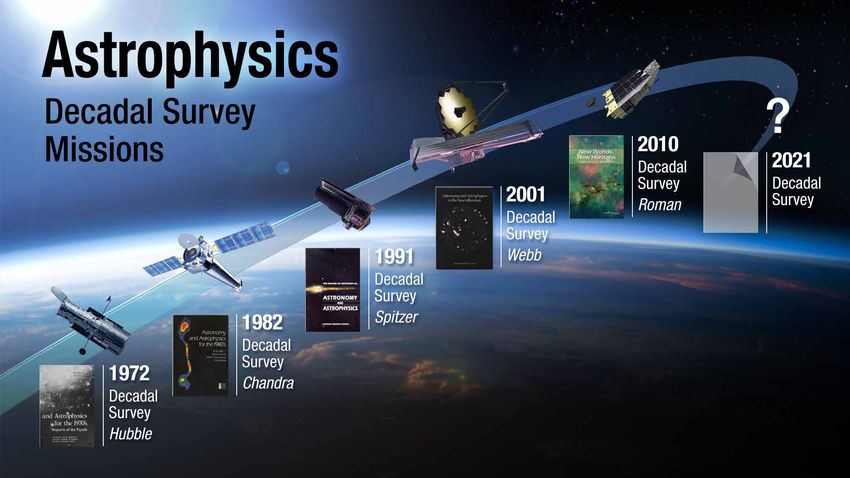
Touch-and-Go Sample
OSIRIS-REx          Acquisition Mechanism
                        (TAGSAM) Oct 22

             Touch-and-Go
             (‘TAG’) at
             Nightingale
             Crater Oct 20

                         Sample stowed in
                           Sample Return
                           Capsule Oct 28

                                            5
The fully assembled and folded James Webb Space Telescope on the vibration table at Northrop
Grumman Space Park (September 2020). This is the configuration that Webb will be in when it is
                                                                                                 6
                         mated to the Ariane 5 launch vehicle in 2021.
Nancy Grace Roman            SCIENCE
                             HIGHLIGHT
Space Telescope

                    February 28, 2020 – NASA confirmed
                    the Wide Field Infrared Survey
                    telescope (WFIRST) for development
                    May 20, 2020 – NASA named its Wide
                    Field Infrared Survey Telescope
                    (WFIRST), in honor of Nancy Grace
                    Roman, NASA’s first chief astronomer,
                    who paved the way for space telescopes
                    focused on the broader universe
                                                             7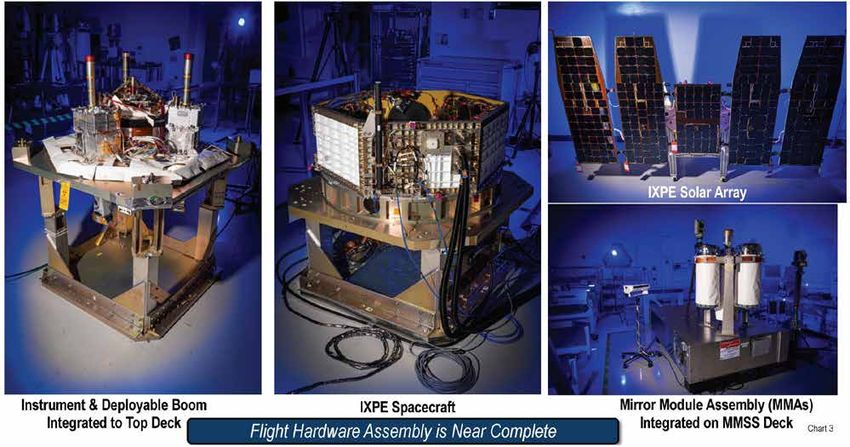
Building Excellent NASA Teams
       Requires Inclusion and Diversity
• At NASA, we recognize that excellence is only achieved with
  inclusive and diverse teams. We are creating a multi-pronged approach.
   o Directorate level: Hosting incubator workshops and implementing actions from those
     workshops focused on short-term changes to how we are operating and how we
     grow our leaders. Studying barriers to inclusion in mission leadership. Standing up
     a long-term activity focused on sustained engagement, systemic,
     and lasting changes.
   o Division level: Division task forces working to align division-level practices with the
     NASA core value and SMD science strategy. Examining the R&A process for better
     inclusion and diversity. Adopting a Code of Conduct to improve the inclusion and
     process of our panels and teams.
• Proposal Processes: Recognizing we have influence through our calls for
  proposals and what we reward in our selections. Piloting dual-anonymous peer
  review and seeking to expand that. Actively looking into how we can be a model
  for inclusivity.
                                                                                               9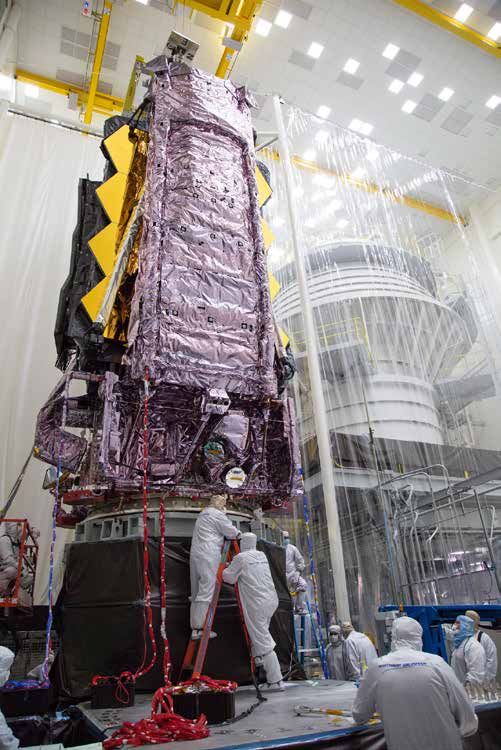
Research Program Update

                          10
R&A Research Funding
Notional planning
Notional planning
Notional planning
Notional planning
Appropriated
Sustained growth in R&A research funding, increase by 60% over 17 years.R&A Reviews since the Start of COVID-19
No solicitation was canceled due to COVID-19 and some due dates were postponed to give PIs more time.
Number of Selection New PI Review
R&A Review Comment
Proposals Rate PIs * Notification Format
FINESST (Graduate Student Awards) 158 13% N/A 108 days Virtual
TESS GI Cycle 3 155 32% 76% 137 days Virtual
Virtual + GO/GI dual anonymous
NuSTAR GO Cycle 6 172 34% 39% 88 days
dual anonymous pilot program
Fermi GI Cycle 13 109 38% 24% 126 days Virtual
Virtual +
Hubble GO Cycle 28 1,080 18% 33% 86 days
dual anonymous
Chandra GO Cycle 22 520 31% 31% 132 days Virtual
Astrophysics SmallSat Studies 32 25% 100% 148 days Virtual
TCAN (Theory) 22 18% 100% 97 days Virtual
XRP (Exoplanets Research) 153 17% 77% 185 days Virtual Cross-Division
Virtual + R&A dual anonymous
ADAP (Data Analysis) 313 13% 82% 141 days
dual anonymous pilot program
Confirmation gate in
Pioneers SmallSat Missions 24 17% 100% 89 days Virtual
2021
12
* New PI defined as one who has not been a PI in this program in the past five yearsFrom Open Data to Open Science All NASA mission science data are public Publications funded by NASA, including peer review journal articles, are open access and freely available to the public NASA has initiated an open science data initiative that is making targeted investments in cloud computing, open-source software, Artificial Intelligence/Machine Learning, and open data search and discovery services • Includes two new ROSES calls targeted at supporting open-source tool development and the opening of legacy software NASA is developing a policy to ensure that the results of its Federally funded scientific research and technology development are shared openly; this policy will cover: • Information produced by NASA Science Missions • Information produced by NASA research awards: includes, but not limited to, experiments, research on sub-orbital platforms, field campaigns, or citizen science projects • NASA-funded publications, data, and software created in the pursuit of scientific knowledge Draft will be released for public comment 13
COVID-19 Impacts
NASA is focused on continuing our research programs and providing stability
• Virtual review panels for ROSES solicitations and AO mission evaluations are going well
    o All peer reviews until June are conducted virtually with no adverse effect on the quality
       of the reviews
    o NASA is thinking about continuing virtual review panels, at least in part, even after in-
       person meetings cease to pose a health hazard

• R&A management and supporting work at NASA HQ continues as normal via telework
   o R&A Program Officers have reached out to currently funded PIs and are working with
     them to protect the most vulnerable team members (early career, students, postdocs,
     non-tenured faculty)
   o No ROSES-20 solicitations were canceled, two solicitations had delayed due dates
     (TCAN, ADAP)
   o PIs are notified and funding is released to PIs just as fast as during previous years

• Since the start of the pandemic, 13 R&A peer reviews have been conducted as virtual
  reviews
    o NuSTAR Cycle 6 and ADAP were our pilot programs for dual-anonymous peer reviews
    o Going forward, more R&A peer reviews will be dual-anonymous to help mitigate biases
                                                                                                  14
COVID-19 Mitigations
NASA does not want the pandemic to derail careers of future leaders; we are focused on
mitigating impacts
Within current funding constraints, NASA will prioritize augmentations and funded extension
requests for existing awards
NASA has issued a ROSES call for funded extensions (ROSES-20, Appendix E.10)
This initiative must be funded from the current R&A Program, size of commitment is approximately 15%
of funding available for new awards in FY21. There will be 15% fewer new awards in FY21
First round of Post-COVID Recovery funding requests are being looked over. Received over 100
requests for a total of ~$13M
Within current funding constraints, SMD will continue to support 124 NASA Postdoctoral Program
(NPP) fellowships
The March 2021 call is limited to applicants who already have permission to work in the US because of
the inaccessibility of J-1 visas
Since some slots will be used to extend current Fellows, SMD will supplement the funding for the NPP to
maintain the existing competitive level
Government-wide flexibility for paying salaries of researchers, even if they could not work because
of COVID, expired on September 30. NASA has established a process to consider extending this
flexibility to pay salaries on a case-by-case basis
https://science.nasa.gov/researchers/covid-and-awards 15Mission Program Update
16Astrophysics and Artemis
Every opportunity for lunar science is open to astrophysics – if you
have a great idea, propose it
Artemis enables astrophysics
• All science opportunities enabled by Project Artemis include astrophysics
• Most important criterion for proposals remains the astrophysics science merit
There are many opportunities to propose astrophysics that uses Artemis capabilities
• Lunar surface astrophysics experiments can be proposed to the PRISM program of small
landed payloads (in ROSES)
o PRISM Step 2 proposals are due February 3, 2021
o Two lunar surface astrophysics experiments have been selected and manifested for 2021:
Low-frequency Radio Observations from the Near Side Lunar Surface Instrument (PI: R. MacDowall, GSFC)
Next Generation Lunar Retroreflectors (PI: D. Currie, University of Maryland)
• Astrophysics Explorers Mission of Opportunity calls (including 2021 call for Explorers MO)
allow proposals for cislunar smallsat missions
• APRA and Pioneers calls (in ROSES) allow proposals for cislunar cubesats and smallsats
Astro2020 Decadal Survey will identify any compelling astrophysics that is both a high
priority and enabled by the capabilities being developed within the Artemis program 17Interagency MOUs In October 2020, NASA and DOE signed a Memorandum of Understanding (MOU) • The memorandum of understanding highlights potential areas for collaboration • NASA and DOE also established three working groups that focus on lunar surface infrastructure, space nuclear power and propulsion, and science and innovation • https://www.nasa.gov/press-release/nasa-department-of-energy-expand-on-more-than- 50-years-of-collaboration In January 2021, NASA and NSF signed a Memorandum of Understanding (MOU) • NASA and NSF will continue working together to advance NASA- and NSF-sponsored science programs in astrophysics, planetary science, astrobiology, quantum technology, heliophysics, and Earth science, with special emphasis on those activities that continue to make use of NSF-managed facilities, including those in the Antarctic • NASA and NSF are united in their efforts to broaden participation in science and engineering • https://www.nasa.gov/press-release/nasa-nsf-sign-agreement-to-advance-space-earth- biological-physical-sciences Joint activities still require separate Implementing Arrangements (IAs) 18
Joint NASA-DOE RFI
On January 21, DOE Office of Science jointly with NASA Science Mission Directorate released a
Request for Information (RFI) related to high energy physics and space-based astrophysics
•   The RFI is to gather information from the community in three specific, focused areas aligned with the
    science goals of both of the Agencies including the scientific and technology benefits and obstacles, how to
    will make use of each agency’s capabilities, infrastructure and resources, and other pertinent information.
•   The information received will inform DOE and NASA regarding the potential development of mutually
    beneficial partnerships and collaborative activities.
Three focused areas:
•   Sensitive radio telescopes or sensors in the radio quiet environment of the Moon’s far side to explore the
    early eras of the universe or to test the standard cosmological model
•   Space-based probes of fundamental physics in the microgravity environment of the International Space
    Station (ISS)
•   Enhance or extend the science reach of the Rubin Observatory, the Roman Space Telescope, and the
    Euclid mission when considered together, including development of a common library of simulations and/or
    capabilities to enable joint processing and analysis
https://www.federalregister.gov/documents/2021/01/21/2021-01236/request-for-information-
related-to-high-energy-physics-and-space-based-astrophysics
This RFI is part of a wider DOE/NASA effort to investigate collaborative activities as part of the
                                                                                                                   19
MOU signed in October 2020
Astrophysics Mission Classes
DECADAL SURVEY EXPLORER AO SALMON AO ROSES
>$1B $1B $450M $225M $80M $40M $20B $0
>$1B ~450M $80M $20M $20M
LARGE CLASS SMALL CLASS SMALL CLASS SMALL CLASS SUBORBITAL
Great Observatory Medium Explorer Standard Mission Pioneers Pioneers
or Flagship (MIDEX) of Opportunity SmallSat Balloon
PICC $290M* ** **
$5M $10M
SMALL CLASS SUBORBITAL
~$1B ~225M $40M APRA APRA
MEDIUM CLASS SMALL CLASS SMALL CLASS CubeSat Balloon
Probe Small Explorer SmallSat Mission
(SMEX) of Opportunity $5M
PICC $145M* ** SUBORBITAL
APRA
Sounding
Rocket
Updated January 28, 2021 *PI Cost Cap **Includes ISS-attached
ExperimentsAstrophysics CubeSats
Solicited annually in ROSES/APRA, ~1 new start per year, ~Astrophysics Pioneers-2020 Selections
StarBurst:
PUEO: A Long-duration Gamma-ray ASM,
Balloon-borne Simultaneous
Instrument for Particle detection of NS/NS
Astrophysics at the mergers with LIGO
Highest Energies (PI Daniel Kocevski,
(PI Abigail Vieregg, NASA MSFC)
U. Chicago)
Aspera: IGM
Pandora: Inflow/outflow from
Multiwavelength galaxies via OVI
Characterization of R&A, Technology, Operating Missions, 105K emission line
R&A, Technology, Operating
Explorers, Missions,
Infrastructure
Exoplanets and their imaging
Explorers, Infrastructure
Host Stars (PI Carlos Vargas,
(PI Elisa Quintana, U. Arizona)
NASA GSFC)
https://www.nasa.gov/feature/nasa-selects-4-concepts-for-
22
small-missions-to-study-universe-s-secretsAstrophysics Explorers Program MIDEX 2021
Comm Ann release Sep 29, 2020
Draft AO release Jan 6, 2021
Comments due Feb 25, 2021
NuSTAR Final AO release August 2021
SMEX 2019 Downselect NOIs due October 2021
Gehrels Phase A Studies due Mar 4, 2021 Proposals due December 2021
Swift Downselect decision Fall 2021 ALL FUTURE DATES TARGETS
4 AOs per decade 2019
MIDEX SMEX MIDEX SMEX MIDEX
2011 2014 2016 2019 2021
Small and
Mid-Size ESCAPE Directed
COSI 2013
Missions TESS IXPE SPHEREx Euclid
Missions of Dorado Directed
Opportunity LEAP 2017
NICER GUSTO ARIEL XRISM
23Imaging X-ray Polarimeter Explorer
KDP-D successfully
passed on November 2,
2020
All observatory elements
have been delivered to
Ball Aerospace, Boulder
CO
Observatory integration
began December 7, 2020
Revised launch date is
November 2021
https://ixpe.msfc.nasa.gov/
Image credits: Ball Aerospace
24Virtual PI Launchpad
Another PI Launchpad is (finally) happening
• Virtual sessions over 2 weeks: 1 week
asynchronous content, 1 week interactive, ~2-3
hours per day
Key Dates:
• Application posted on NSPIRES in the next
week- be on the lookout!
• Deadline for applications is March 22nd
• Notifications by May 3rd
• Launchpad will be From June 14th to Jun 25th
Content from 2019 workshop is online now!
• https://science.nasa.gov/researchers/pi-
launchpad
25James Webb Space Telescope
2020 Accomplishments
• Work continues at Northrop Grumman, but at
lower efficiency due to social distancing
practices required by COVID19 response
• Changed launch date from March 2021 to
October 2021
• Conducted several mission rehearsals at the
STScI mission operation center
• Completed Observatory-level environmental
tests
• Completed Observatory-level post
environmental test deployments
• Received ~1200 proposals in the Cycle 1 GO
call
2021 Plans
• Final stow after post environmental deployments
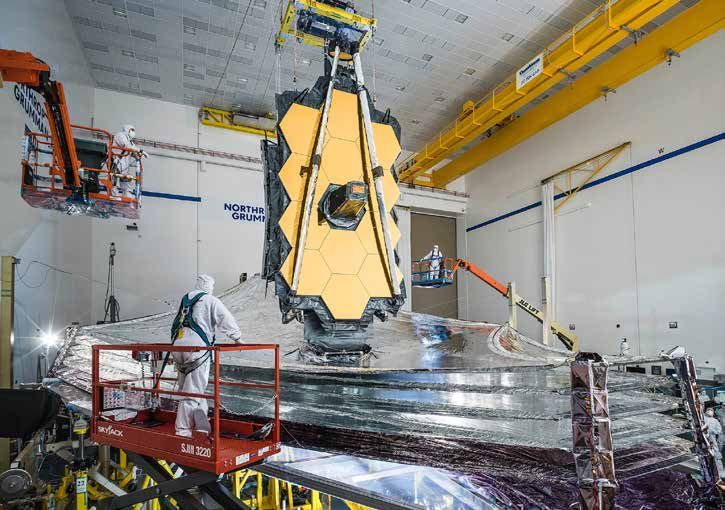
The final deployment of Webb’s sunshield on Earth (December • Ready Observatory for shipping to launch site
2020). Webb will undergo folding and stowing before shipment • Additional mission rehearsals at STScI
and mating to the Ariane 5 in 2021. • Launch Webb in October 2021 26Roman Space Telescope
Roman making excellent progress on its most urgent elements; Mission Critical Design
Review planned for end of this summer
Roman Wide Field Instrument critical technology: Roman Coronagraph Instrument critical
state-of-the-art infrared detectors technology: deformable mirrors
300 Mpixel Focal Plane Array Test Unit; Deformable Mirror TRL-6 Model; technology has
Production well underway: 15 of 18 flight been demonstrated; two flight candidate
candidate detectors already in hand actuators already in handRoman Space Telescope
Roman Science Interest Group (RSIG) formed to provide broad-based community
input to the Roman project and NASA Headquarters
• RSIG documents available at https://roman.gsfc.nasa.gov/science/rsig.html
Critical design reviews for telescope, wide field instrument, coronagraph, instrument
carrier, spacecraft, and ground system to be completed by July 2021
Mission critical design review (CDR) is September 2021
Complete telescope by the end of 2021
Cost and schedule commitments are unchanged since beginning of Phase B in
2018, but COVID impacts have liened cost and schedule reserves
• Review of COVID impacts to cost and schedule underway in early 2021
Opportunities for participation in Roman Space Telescope research and support will
be offered in ROSES-2021 (next chart)
https://roman.gsfc.nasa.gov/ 28Roman Space Telescope
Opportunities for participation in Roman offered in ROSES-2021
• Key Project Teams: Science teams to conduct scientific investigations using the data
from the major surveys identified by the Astro2010 Decadal Survey
• Coronagraph Community Participation Program: Investigators to work with the
coronagraph instrument team to plan and execute tech demo observations
• Wide Field Instrument Preparatory Science: Investigators to work on science
preparation activities related to mission performance verification and science
operations preparation
All Roman observing time is available through open processes
• Major Legacy Surveys will be defined using a community-driven open process
• Key Projects – funded science investigations using these surveys –openly competed
• Roman observing time will be available for General Observer (GO) projects
• All data will be available to the community with no period of limited access
https://roman.gsfc.nasa.gov/ 29Astrophysics Missions in Development
Launch dates are current project working dates; Agency Baseline Commitment launch date could be later; impacts of COVID-19 not yet known
30COVID-19 Impacts – Missions
Many missions are expected to stay within their cost commitments (known as the
ABC or Agency Baseline Commitment, which includes HQ held reserves above
project budget)
• ABC is set at Confirmation Review
• In astrophysics, this includes NASA contributions to Euclid and XRISM
Some missions have experienced challenges that affect cost and schedule
commitments
• In astrophysics, this includes Webb, Roman, and IXPE
• Missions that have been Confirmed since COVID began (e.g., SPHEREx), or will
be Confirmed in the future (e.g., future Explorers) have assumed impacts from
COVID included within their cost and schedule commitments
To date, challenges to Flagships (Webb, Roman) have been accommodated with
no impact to Explorers or R&A
• Challenges to Explorers have been accommodated within the Explorers Program
31Planning for the Future
32Astrophysics Budget – FY20 Actual
MANAGEMENT RESEARCH
INCL. SCIENCE ACTIVATION (ADAP, APRA, ATP, ETC.)
4% 6%
TECHNOLOGY
(SR&T, ATHENA, LISA, ETC.)
Quick Summary 5%
Community support: 20%
Operating missions: 12% INFRASTRUCTURE
(BALLOON PROGRAM, ARCHIVES, ETC.)
Building missions: 64% 4%
Science Activation: 3%
OP. MISSIONS
$1.73 BILLION (INCL. GO PROGRAMS)
FY20 17%
ROMAN
DEVELOPMENT
29%
EXPLORERS
DEVELOPMENT
WEBB 10%
DEVELOPMENT
25% 33FY21 Science Appropriations Highlights
• FY 2021 Consolidated Appropriations Act signed
into law December 27, 2020
• Continued strong support for Science with a $7.3 B
budget
• $994 M above the FY21 President’s Budget
request
• $162 M above the FY 2020 enacted level
• Continued funding for Roman, PACE, CLARREO
PF, SOFIA
• Funding to support decadal priorities such a Mars
Sample Return mission, Europa Clipper, and
development of new Earth observation missions
• Includes funding for new Biological and Physical
Science Division
34FY 14-21 Science Appropriations Summary
FY21
Omnibus
($M) FY 2014 FY 2015 FY 2016 FY 2017 FY 2018 FY 2019 FY 2020 Bill
ce
Science 5,140.2 5,243.0 5,584.1 5,762.2 6,211.5 6,816.6 7,143.1 7,301.0
Earth Science 1,822.1 1,784.1 1,926.6 1,907.7 1,921.0 1,931.0 1,971.8 2,000.0
Planetary Science 1,342.3 1,446.7 1,628.0 1,827.5 2,217.9 2,746.7 2,712.6 2,700.0
Astrophysics 677.1 730.7 762.4 782.9 850.4 1,121.6 1,306.2 1,356.2
JWST 658.2 645.4 620.0 569.4 533.7 304.6 423.0 414.7
Heliophysics 640.5 636.1 647.2 674.7 688.5 712.7 724.5 751.0
Biological & Physical Science 5.0 79.1
35FY21 Science Appropriations
Division Highlights
Planetary Science Astrophysics Heliophysics Earth Science
• $40M above the FY21 Request • $525M above the FY21 Request • $118M above the FY21 Request • $232M above the FY21
Request
• Additional funds for Planetary • Restores funding to continue • Additional funds for Research
Defense supporting DART and development of Nancy Grace • Strong support for Earth System
• Increased funding for Living with
Near Earth Object Surveillance Roman Telescope Science Pathfinder Missions
a Star, including space weather
Mission and Venture-class missions,
• Additional funding for SOFIA applications and GDC
including GLIMR and GeoCARB
• Additional funding for Mars
• Strong support for Science • Additional funds for Solar
Sample Return and New • Restores funding for PACE and
Activation, an SMD-wide Terrestrial Probes, including
Frontiers/Dragonfly CLARREO PF
education program MMS and DYNAMIC
• Strong support for Lunar • Additional funds for Research
• Additional funds for Heliophysics
Discovery and Exploration, as
Explorers • Strong support for Designated
well as Commercial Lunar
Observable missions, as
Payload Services
recommended by decadal
• Europa Clipper given permission survey
to use CLV in the event of SLS
incompatibility
36Astrophysics FY21 Appropriation
The FY 2021 NASA Budget Request included no funding ($0)
for the Roman Space Telescope and only close out funding
($12M) for SOFIA
The FY 2021 Omnibus Appropriation Bill
• Provides $1.77B for Astrophysics (including the James
Webb Space Telescope), $525.2M more than the request
• Directs $414.7M for Webb, same as the request
• Directs $505.2M for Roman, $505.2M more than the request
• Directs $93.3M for Hubble, $5M more than the request
• Directs $85.2M for SOFIA, $73.2M more than the request
• Directs $10M for “search for life technology development”
The total funding provided is an increase of $525.2M over the
request.
3738
Technology Development
  and Risk Reduction Activities                                                                                                    Large mirror
                            Completed                                                       Coronagraph Testbed                    development

                            Large Mission Concept Studies / Probe Mission Concept
                            Studies / In-Space Assembly of Telescopes (iSAT) Study /
                            Large Mission Management Study / STMD Technology
                            Collaborations
                            Ongoing
                            Segmented Mirror Technology Program / Binary Star               Starshade                              X-ray mirror
                                                                                                                                   development
                            Coronagraph Technology / Deformable Mirrors / Starshade
                            Technology / Extreme Precision Radial Velocity Research and
                            Technology / Detectors (at all wavelengths) / X-ray Mirrors /
                            Cryocoolers
                            Testbeds (Coronagraph, Ultrastable, X-ray & Cryogenic)
                            PI-led Strategic Astrophysics Technology (SAT) Advancements     Extreme precision radial velocity
                                                                                            spectrograph

Large Mission Concepts

                                                                                                                                           Detectors

                                                                                            Deformable
                                                                                            Mirror
 iSAT                                                                                                                 Cryocooler
 Concept
            Probe Concepts                                           For more information on technology development activities,
            (Showing 7 of 12)                         see the Astrophysics Technology Development Database (http://www.astrostrategictech.us/)         39
Astro2020 Decadal Survey Status • Large Mission Concept Studies presented to Astro2020 in November 2019 • Probe Mission Concept Studies submitted to Astro2020 in November 2019 • Last public meeting of the Steering Committee on August 25, 2020 o Agencies presented updated programmatic and budget guidance o Co-Chairs stated publicly that report will be delivered by Spring 2021 • NASA is planning ahead for implementing the Decadal Survey o Reducing risks of large missions via technology development o Planning underway for recommendations in R&A, archives, suborbital, etc. o Developing options for Probe and flagship pre-formulation management o Holding a wedge in out year planning budget for new initiatives 40
2021
Decadal
Survey

          41
42
You can also read


