National Assembly for Wales special - For Welsh text version, please flip this brochure over - ScoutsCymru
←
→
Page content transcription
If your browser does not render page correctly, please read the page content below
For Welsh text version, please flip this brochure over

Demo cra cy
   Co o kb ook        for Wales special
                 mbly
    National Asse
Blank page
Introduction
Welcome to the Democracy Cookbook
National Assembly for Wales Special

This special edition of the Democracy Cookbook has been produced
specifically for Wales in response to the demand from teachers and
youth workers for an accessible resource which can be used to
explain the National Assembly for Wales to young people.
Divided into two main sections, this resource aims to provide you
with both the ingredients (information, facts and explanations) and
the recipes (activities, games and discussion points) to explain to
young people how our democracy and voting systems work.
The ingredients are written as fact sheets that speak directly to
young people.
The recipes outline how an activity works, what utensils you will
need and how long it will take to prepare and serve.
Mix and match the ingredients and recipes to create an exciting
menu of delectable democracy dishes!
Further information about the National Assembly for Wales,
elections and voting can be found from the following websites:
www.wales.gov.uk
www.aboutmyvote.co.uk
You can find more of our resources and download or order a hard
copy of the complete Democracy Cookbook from
www.dopolitics.org.uk.
Ingredients
Do you do politics?
Introducing you to politics and democracy

What’s it all about?
All about the National Assembly for Wales and the people
that represent you.

Elections and voting
How to vote and why it matters

Recipes
To help you work out which recipes to use for your democracy
menu, out recipes have been rated by difficulty:

easy

medium

difficult

• Political problem page
• Voting timeline
• How politics affects...
• Democracy tree
• How Additional Member System works

What it boils down to
Simmer down to the basics with this jargon buster

© The Electoral Commission 2007
I don’t do politics

When you think of the word ‘politics’
what comes into your mind?
                                                       Fancy
Elections, voting, decisions, power, parties,        a day out
MPs, councils, Westminster, the Senedd,           at the National
Europe, Assembly Members, laws, rights,
                                                 Museum of Wales?
citizens, Lords, democracy, taxes, First
Minister, boring, arguing, ceremony...            The National Assembly
                                                 for Wales is responsible
Have you ever thought about how                 for promoting and funding
politics affects you?                                tourist attractions
                                                         in Wales.
                                                                            Want
             Visiting                                                    to recycle
           a relative in                                                   more?
            hospital?                                                  Your local council
                                                                      has a responsibility
       The National Assembly
                                                                    to provide facilities for
      for Wales is responsible
                                                                     recycling household
        for the health service
                                                                   items such as glass and
               in Wales.
                                                                       old newspapers.

                                                                             Want
        Learning                                                         to take up a
         Welsh?                                                           new sport?
  The National Assembly
                                           Thinking
                                                                     The National Assembly
 for Wales is responsible                 of going to
                                                                    for Wales is responsible
   for the promotion of              college or university?           for the administration
   the Welsh language                 The National Assembly             and promotion of
         in Wales.                   for Wales is responsible             sport in Wales.
                                        for providing further
                 Used                  and higher education
              your mobile                     in Wales.
                phone?
       The UK Government sells the
       licences that networks use to
      provide your service. They also           All of these things are affected by politics.
     regulate and investigate potential         Every day people involved in politics are
    health risks associated with phone          making decisions that affect you, your
     technology. The European Union             family and your friends.
        says what should happen to
          your mobile phone when                So even if you think you don’t do politics…
             you throw it away.                 you do!

                                                                                                1
                                                       Do you do politics?
Blank page
Who makes decisions for Wales?
The National Assembly for Wales
Who does it affect?                              • promoting agricultural schemes
                                                   and rural development;
All people living in Wales.
                                                 • developing schemes to promote
How old is it and how did it                       the culture and heritage of Wales,
                                                   including the Welsh language; and
come about?
                                                 • developing information and
The National Assembly for Wales was                communication technology in Wales.
established after people in Wales voted
yes in a referendum on 18 September 1997.
After this the UK Parliament went on to pass
a law called the Government of Wales Act
1998, which set up the National Assembly          Stir it up
for Wales. The first elections to the National    Under the Government of Wales
Assembly for Wales were held in 1999.             Act 2006 elected representatives
                                                  in Wales can choose to hold a
Where is it based?                                referendum on full law-making powers.
The Assembly buildings are based in               Do you think the Assembly should have
Cardiff Bay, but Assembly Members hold            full power to create new laws without
regular meetings across Wales and have            the approval of the UK Parliament?
offices in their local areas. A new Assembly
building, the Senedd, was opened by the
Queen on 1 March 2006 in Cardiff Bay.

What is it responsible for?
It covers a range of issues that affect Wales.
Under the Government of Wales Act 2006,
the Welsh Assembly can make laws in
certain areas. These laws are called
“Assembly Measures”. To make laws the
Assembly must get approval from the UK
Parliament first. The Assembly can make
laws on a variety of issues including health,
education and tourism. It can also make
decisions about:

• funding from the European Union;
• funding for local authorities in Wales;
• housing policy, including
  tackling homelessness;
• sponsoring bodies that protect the
  environment and conserve wildlife
  and natural habitats;
• developing transport in Wales;
                                                                                          3
                                                      Who represents me?
Who is in the National Assembly for Wales?
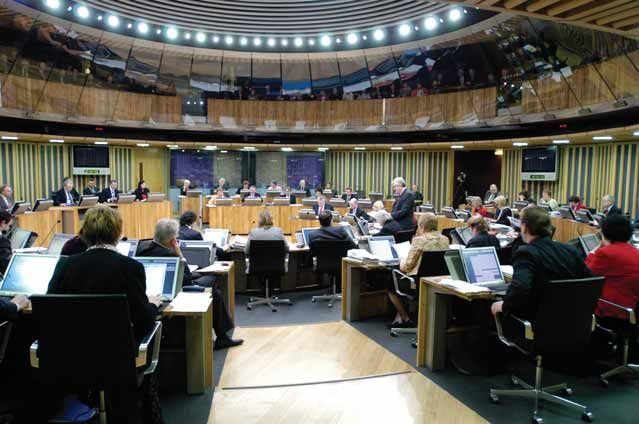
AMs elect a Presiding Officer This room is called the Siambr. This is where
who chairs the Assembly. The all Assembly Members (AMs) come together
Presiding Officer is impartial, to debate issues and make decisions.
which means that they have
to treat all political parties in
the Assembly fairly. AMs give executive power to the
First Minister who is elected by
the whole Assembly. They usually
come from the political party with
the most Assembly Members.
The First Minister chooses individual Assembly AMs sit in the debating
Ministers who form the Cabinet. chamber according to
their party grouping.
These Ministers form the Welsh Assembly Government
Unlike the UK Parliament
and make many of the Assembly s day-to-day decisions.
they have access to
They are responsible for developing all policies and
computers to view
programmes for areas that have been devolved to the
Assembly documents
National Assembly for Wales.
while they are debating
issues. There are 60
AMs in the Assembly.
How are decisions made? A plenary session is a meeting of all AMs.
These meetings give AMs a chance to
The Assembly makes decisions through question the First Minister and other Assembly
committee meetings and plenary sessions. Ministers on the work they have been doing.
A committee is made up of a small group AMs can also propose a motion for a
of AMs who look at a particular issue short debate at the very end of a session
in detail. They might get input from the or even propose that the Assembly should
community and experts working on the immediately consider a matter of urgent
issues they are looking at. public importance.
4
Who represents me?Other things discussed in a plenary
session include: Snack break
• what the Assembly spends its budget on The National Assembly for
Wales’ logo is based on the
• motions proposed by political groups
dragon – a traditional symbol of Wales.
who are not in the Assembly
• reports written by committees
• issues relating to the European Union
The Welsh Assembly Government
The National Assembly for Wales has given
many of its powers to its First Minister. The
First Minister leads a Cabinet which forms
the Welsh Assembly Government. The
Welsh Assembly Government is responsible All Ministers are accountable to the
for developing and putting into practice the Assembly and its committees for all that
policies and programmes for all issues that they do. The Ministers are answerable to the
have been devolved to Wales. The Ministers National Assembly for Wales as a whole and
have responsibility for different areas of the have to answer questions from Assembly
Assembly’s work, including: members about their policies and activities.
• Business and economy
Key events
• Children and young people
Plenary meetings happen on Tuesday
• Culture and sport
and Wednesday afternoons.
• Education and skills
• Environment and countryside How can I see it?
• Equality and diversity You can book a guided tour of the
• Health and social care Assembly building or book a seat to watch
• Housing and community any of the Assembly’s public meetings.
To make a booking call 0845 010 5500,
• International textphone 029 2089 8261 or email
• Local government assembly.bookings@wales.gsi.gov.uk.
• Older people
You can also watch the Assembly on your
• Planning TV. All public committee meetings and
• Social justice plenary sessions are broadcast live on
• Statistics S4C2 and BBC Parliament or through
www.webcasting.wales.gov.uk where
• Sustainable development
you can also catch up on some
• Tourism archived meetings.
• Transport
• Welsh language
5
Who represents me?Your Assembly Members for Wales
The National Assembly for Wales represents all of the people in
Wales. The people who represent you in the National Assembly
for Wales are called Assembly Members, or AMs for short.
You elect your Assembly Members every four years.
How big is their patch?
There are 60 elected AMs in the National
Assembly for Wales and if you live in Wales
you are represented by five of them. Each
AM looks after a particular geographic
area in Wales. These areas are called
constituencies. One of your AMs represents
your Assembly Constituency and the other
four represent your Regional Constituency.
As you can see on the map, a Regional
Constituency covers a much larger
area than an Assembly Constituency.
6
Who represents me?Voting
Imagine going into a restaurant You can only vote in an election if
you are registered to vote in that area.
and letting a stranger across the For example, someone registered in
other side of the room place your Birmingham cannot vote in the elections
order for you. You wouldn’t have to the National Assembly for Wales.
any say in what you are about If you are a student living away from home,
to eat! It’s the same if you don’t you can be registered where you live at
home and at university. However you can
vote – you are letting other people only vote once in any single election.
decide for you and you might not
To find out who can vote in an election visit
find the outcome very appetising. www.aboutmyvote.co.uk
Why is voting important?
The people who are voted in at elections
make decisions that affect you every day Snack break
– from what is happening in local schools You have to be on the
and what recreational facilities you have, electoral register to be able
to national issues like healthcare and to vote in elections or referendums
education, to global issues like in the UK. There are certain people
the environment. who are not allowed to vote. They are:
• anyone under 18 years old
In some countries such as Australia, voting • citizens of any country apart
is compulsory. This means that it is illegal from the European Union and
not to vote. In Wales, it is your choice Commonwealth countries
whether or not to vote. If you don’t vote
• convicted prisoners who are serving
however, you are letting other people, who a sentence (though remand prisoners,
you might not agree with, make decisions unconvicted prisoners and civil
about issues that affect you. prisoners who haven’t paid their fines
can vote)
Who can vote? • anyone found guilty within the previous
To vote in elections in Wales you have to be: five years of corrupt or illegal practices
in connection with an election
• aged 18 or over
European Union citizens and members
• a citizen of the UK, a Commonwealth of the House of Lords cannot vote in
country or the Republic of Ireland UK Parliamentary elections.
• a citizen of another EU country
(although they cannot vote in UK
Parliamentary elections)
• on the electoral register
• not in a category barred from voting
See Snack break.
7
Elections and votingRegistering to vote
What is the electoral register?
If you are homeless or living in
The electoral register is a list of everyone temporary accommodation
who is registered to vote. You need to be on
the register before you can vote in an election Homeless people or people living
or referendum. You are not automatically in temporary or long-term hostel
registered, even if you pay council tax. accommodation may be entitled to
register to vote. If you have lived and
Who can look at the will be living in relatively stable
electoral register? accommodation for three months or
longer it is possible to register in the
There are two versions of the register – normal way. If your situation is less stable,
the full version and the edited version. for example if you are sleeping rough or
Your details must always appear on the full in short-term accommodation then you
version, but you can choose whether or not should contact your local electoral
your details appear on the edited register. registration office for further information.
• The full register is used for elections,
preventing and detecting crime, and If you are on remand or are a patient in
checking applications for credit. a mental health secure hospital
• The edited register is for general sale Remand prisoners and patients in mental
and can be used for commercial health secure hospitals can also register
activities, such as marketing. to vote in this way, but can obviously only
vote by proxy or by postal vote. See How
• Anyone can look at the electoral register do you vote? on the next page for more
by going into their local electoral office. information on different ways of voting.
• The electoral register is not linked to
council tax.
Stir it up
How do I register to vote? Why do you think young people
You need to fill in an electoral registration are among the least likely to vote
form. You will receive an ‘annual canvass’ in an election? What do you think
form each autumn, when you are required should or could be done to encourage
to re-register your details. You can register more young people to vote?
at any time of the year by downloading
a registration form from
www.aboutmyvote.co.uk or contacting
the Electoral Registration Officer at your
local authority.
Find out where your local electoral
registration office is by visiting
www.aboutmyvote.co.uk.
8
Elections and votingHow do you vote?
There are a number of different Collect your ballot paper
ways you can vote in an election. The staff at the polling station will give you
a list of the people or parties you can vote
These are: for. This is called a ballot paper. It will be
stamped with an official mark.
• in person;
• by post; or You may be given more than one ballot
paper if there is more than one election
• by proxy. or referendum on the same day.
Your poll card Go into a polling booth
If you are on the electoral register you will Take your ballot papers into a polling booth
be sent a card just before an election. This so that no one can see how you vote.
is called a poll card and tells you what the
arrangements are for voting. For instance, Mark who or what you want to vote for.
it will detail what you need to do if you Different elections and referendums work
have applied to vote by post or, if you are in different ways so it is important that
voting in person, where your polling station you understand how to fill in your ballot
is and when you can vote. ‘Polling’ is paper correctly. Ask a polling clerk if you
another word for voting. are unsure.
Do not write anything else on the paper
Voting in person or your vote may not be counted.
The polling station
Cast your vote
On election day go to the polling station.
This is where you cast your vote in person. Place your ballot paper in the ballot box.
The polling station is often a school or local If you are not clear on what to do, ask
hall near to where you live. Polling stations the staff at the polling station to help you.
are open from 7am until 10pm.
Do not let anyone see your vote.
Tell the staff inside the polling station your
name and address so they can check that
you’re on the register. You can show them
your poll card but you do not need it
to vote.
If you are disabled and need assistance
getting to the polling station, your local
electoral office should be able to help
you. Contact your local authority for
more information.
9
Elections and votingElections
Elections are the way we decide How often do we have elections?
who we want or who we don’t Where you live will determine how often
want to represent us. you have elections in your area.
Sometimes elections to different institutions
In an election, people who are able to are held on the same day, but often they are
vote (the ‘electorate’), select one or more not. This means that you may have elections
options set out on a ballot paper. These in your area several years in a row.
are a person or a political party.
Some institutions, such as the National
In Wales we have elections for the National Assembly for Wales, have fixed terms.
Assembly for Wales, local councils, the UK This means that we all know when the next
Parliament and the European Parliament. election will be held. The UK Parliament does
not have fixed term elections. It is up to the
Voting in an election is one of the simplest Prime Minister to decide when an election
ways to participate in our democracy. It is will be called. However, a UK Parliamentary
the system we use to choose people to general election must be called within five
represent us. These representatives are then years of the last one.
allowed to make decisions on our behalf.
Snack break
Forty-four per cent of people
voted in the 2007 elections
to the National Assembly for Wales.
10
Elections and votingHow do we elect the
National Assembly for Wales?
There are 60 Members of the National Your second vote is to choose a political
Assembly for Wales: 40 constituency party or individual candidate to represent
members and 20 regional members. The your regional constituency.
Assembly is elected using the additional
member system. There are four regional members for each
of the five electoral regions in Wales.
When you vote in a National Assembly
for Wales election you have two votes. The additional member system is quite
tricky and uses a special formula. See the
With the first vote you choose between activity Electing the National Assembly for
candidates standing in your Assembly Wales in the Recipes section for a more
constituency. The candidate who receives detailed explanation of how this works.
more votes than any other candidate will
be elected to represent you.
11
Elections and votingBlank page
Recipes
Step by step activity guides
Blank page
Political problem page
Overview     This activity helps young people understand the different
             roles and responsibilities of our democratic institutions.
             Different levels of our democracy make decisions about
             how our society is run. This is because some issues
             need to be dealt with at a local level and other issues
             need a regional, UK-wide or European point of view.
             Each of the issues highlighted in this activity are linked
             to a particular democratic institution. If you have
             concerns about any of the issues raised you should
             contact your representative for the relevant institution.

Materials    •   One problem page per group

             •   pencils

Timing       Ten minutes.

Instructions Divide young people into groups and hand out
             dilemma pages.
             Ask them to discuss the issues that concern each of
             the characters. Do their concerns differ due to where
             they live? How? Which issues concern them the most?
             Now ask young people to identify the democratic
             institution they think has most responsibility for the
             issue and draw a line to the correct icon.
             Now you can get creative. Ask participants to produce
             a similar poster for themselves based on the issues
             that matter to them.

                                                                          Political problem page   15
UK National Assembly Local European
Parliament for Wales Council Parliament
There are loads of signs in my I've got to travel to the next town
area saying that it has received in the area to visit the dentist.
money from the European Union. Who can I talk to to find out why
What’s that all about? there isn’t a dentist near to
where I live?
My little brother gets the I feel that we need more police
bus to school every day but officers in my area at night.
not all buses have been installed Who can I talk to about this?
with seat belts. Who is
responsible for sorting this out?
16
KATIE IS
L IV E S
AND
WA LE S
IN
www.dopolitics.org.uk
16 Political problem page explanation sheetKatie is 16 and lives in Wales…
Problem Who is responsible? Why are they responsible?
My little brother getsthe bus Local Seat belts must be fitted in coaches and
in to school every day but not council minibuses on organised school trips. Home-to-
all have been installed with school buses are often buses which are used
seat belts. Who is responsible for regular services, which are not fitted with
for sorting this out? seatbelts. They are not required to be fitted with
seatbelts for home-to-school trips. Schools or
education authorities can choose to hire buses
that have seat belts, but it is not compulsory.
I feel that we need more UK Parliament The police service is responsible for ensuring
police officers in my area we all have a safe environment in which to
at night. Who can I talk to live and work. There are 43 police forces in
about this? England and Wales comprising more than
143,000 police officers, 13,000 volunteer
special constables and 7000 community
support officers. Katie can speak to her MP
about her concerns. For more information on
how the Home Office manages police forces
visit www.homeoffice.gov.uk
There are loads of signs in European The European Union has a programme which
my area saying that it has Parliament provides support to less prosperous regions
received money from the across the EU. Large parts of North and West
European Union. What’s that Wales, plus the Valley areas, qualify for funds.
all about? For more information on projects funded by the
EU in Wales visit the Welsh Assembly
Government’s website: www.wales.gov.uk
I've got to travel to the next National Since April 2006 NHS dentists in Wales have
town in the area to visit the Assembly been working to a new contract to include a
dentist. Who can I talk to to for Wales new style of working, new payment system,
find out why there isn’t a greater focus on prevention and extra money
dentist near to where I live? for dental services. Katie should contact her
Assembly Member (AM) to find out what
improvements are being made to the dentist
service in her area. For more information visit
the National Assembly for Wales online at
www.wales.gov.uk
Political problem page explanation sheet 17Blank page
Voting timeline
Overview     This activity is designed to highlight key events in the
             history of democracy in Wales.

Materials    Worksheets provided.

Timing       Fifteen minutes.

Instructions You can use this resource in two ways:
             1. Print each date on an A4 page and lay the pages
                out chronologically on the floor. Print out the events
                on separate pieces of paper and hand out. Ask
                young people to guess which date each event
                belongs to by placing it on the correct date.
             2. Break the group into pairs and hand out the timeline
                worksheet provided. Hand out one set of events per
                pair and ask young people to guess which date each
                event belongs to by placing it on the correct date.

                                                                        Voting timeline – Wales   19
Timeline
Hand out a copy to each group.
1404 1536 1964
1979 1997 1998
1999 2003 2007
20 Voting timeline – Wales+ Event sheet
Cut this sheet up and place the right event on the right year.
The Act of Union, a series
of laws, formally unites
England and Wales.
The Wales Office
Counties and boroughs
Wales’ first Parliament and the post of the
in Wales are given
is set up by Owain Secretary of State
representation in
Glyndwr in Machynlleth. for Wales is created
the English Parliament
by the Government.
and English,
not Welsh, becomes
the first language.
A second referendum
The Government of
In a referendum the on devolution is held
Wales Act is officially
people of Wales vote in Wales. The majority
passed setting up
against establishing an of voters support the
a National Assembly
Assembly for Wales. establishment of an
for Wales.
Assembly for Wales.
The first elections are
The Assembly The Assembly
held to choose the
holds its second set holds its third set
members of the
of elections. of elections.
Assembly for Wales.
Voting timeline – Wales 21Blank page
How politics affects…
Overview    This activity is designed to help young people identify how
            politics impacts on just about every aspect of their life.

Materials   •   Flip chart paper

            •   pens

Timing      Twenty minutes.

Instructions Option A
            Divide participants into small groups and ask them to think
            about how politics affects our everyday lives. You could
            download the Do Politics posters from www.dopolitics.org.uk
            for inspiration. These posters cover how politics affects sport,
            the food you eat, music, where you live, how you get about
            and your night out.
            Ask participants to pick one of these themes and draw how it
            is affected by politics on flip chart paper. Alternatively, you
            could get them to map a typical night out.

            Option B
            Divide participants into small groups and ask them to outline
            an average day in their life. They should be encouraged to use
            pictures to illustrate the various parts of their day.
            Participants should then decide what parts of their day are
            affected by politics and how.

            Example:

            •   7.30am – I woke up and had breakfast.
            The time that school starts and therefore the time I have to get
            up is affected by politics and the quality, cost and labelling of
            the food I eat is affected by politics.
            Once everyone has finished get them to feed back to the
            wider group.
            You can take this activity a step further by identifying which
            level of democracy is responsible for each issue.

                                                                       How politics affects…   23
Blank page
Democracy tree
Overview      The democracy tree is a visual representation of
              some of the democratic institutions which we elect
              to represent us. It provides an opportunity to discuss
              who is responsible for making decisions which
              impact on our lives.

Materials     •   Democracy tree poster

              •   post-it-notes

              •   pens

Timing        About 20 minutes.

Instructions Distribute post-it-notes to the group. Ask them to write
             down issues that they think are important, such as
             health care, local leisure facilities, defence, etc.
             Encourage participants to think of local, UK-wide
             and European issues.
              Get participants to stick their post-it-notes on the branch
              of the democracy tree that they think is responsible for
              that issue. There may be some cross over between the
              different institutions. Alternatively use the flash cards
              provided to spark the discussion.

Thanks to Shoreditch Youth Forum for coming up with the idea for this activity.

                                                                            Democracy tree   25
European
Parliament
UK
Parliament
Community
Councils
National Assembly Local
for Wales Councils
26 Democracy treeElecting the National Assembly for Wales
Overview To elect the National Assembly for Wales we use a voting system called the additional
member system. This activity aims to increase young people’s understanding of how
it all works.
Materials • Ballot papers (samples supplied)
• pens
• calculators
• ballot box
• worksheets
• a prize
Timing 60 minutes.
Instructions 1. Prepare participants by explaining what the National Assembly for Wales
does and the voting system they use – the additional member system
(see explanation overleaf).
2. Split participants into groups and ask them to imagine they are taking part
in an election for the National Assembly for Wales.
3. Ask for some volunteers to act as election official (returning officers).
They will get to count the votes and announce the results.
4. Hand out two ballot papers, one for a constituency election and one for a regional
election (samples provided). These should be on different coloured paper.
5. Explain how to mark the ballot paper – by putting an ‘X’ next to the candidate
of their choice on the constituency ballot paper; and party or independent
candidate on the regional ballot paper.
6. Ask participants to cast their votes.
7. Get the returning officer to count up the votes for the constituency and regional
votes. The winner of the constituency seat is simply the candidate with the most
votes. To work out who gets the regional seats is more complicated...
8. Now comes the tricky part – working out which party has won regional ‘additional
member’ seats. We’ve provided an explanation of how this works overleaf. In
a real election this would be the job of the returning officer, but to explain the
additional member system you can get everyone involved. Ask participants to
form small groups to work out the results. They will need calculators, pencils
and a blank results table. The first group to finish gets a prize!
Electing the National Assembly for Wales 27How the additional member system works When you vote in an election for the National Assembly for Wales you have two votes. The first vote is for a constituency member and the second vote is for regional members. The constituency member is elected using a simple majority system called first past the post, meaning the candidate with the most votes wins. This is the same system used to elect members to the UK Parliament. Working out who wins the regional seats is a bit more complicated and this is where the additional member system comes in. In Wales there are five regions. Each region is represented by four Assembly Members (AMs). On the ballot paper for the regional members you will see a list of political parties and some independent candidates. To work out how many regional seats each party wins you divide the number of votes each party gets in the regional ballot by the number of constituency seats the party has won, then add one. You add one so that parties which have not won any constituencies can be included in the calculation for the regional seats. After you have done this calculation the party that ends up with the highest result wins the first regional seat. To work out which parties win the remaining seats you have to redo this calculation, but each time add in any additional seats won. Remember that in Wales there are four seats per region, which means you have to do the calculation four times. The regional seats each political party wins are filled by the candidates in the order they appear on the regional ballot paper. This order is decided by the political party. We’ve provided a sample results sheet and ballot paper to show you how it works. 28 Electing the National Assembly for Wales
Sample results table
                                                         Franz     The          Scissor Girls
                                                         Ferdinand Zutons       Sisters Aloud
 Constituency seats won (first vote)*                        4         0            2       2
 Total regional votes received (second vote)                116        63           61      56
 1st regional seat                                       ÷5=23.2    ÷1=63       ÷3=20.3 ÷3=18.7
                                                                    elected
 2nd regional seat                                       ÷5=23.2 ÷2=31.5**      ÷3=20.3 ÷3=18.7
                                                                    elected
 3rd regional seat                                       ÷5=23.2    ÷3=21       ÷3=20.3 ÷3=18.7
                                                          elected
 4th regional seat                                       ÷6=19.3    ÷3=21       ÷3=20.3 ÷3=18.7
                                                                    elected

 Number of regional seats won                                1            3         0           0
 Total number of representatives (AMs)                       5            3         2           2
 If your mock election is for just one area or constituency you will need to make up the number of
 *

 constituency seats a party has won so you can complete this calculation. If you have enough young
 people (say 50-100) participating you might want to break them up into different constituencies (you
 will need a different ballot box for each constituency) to get a real result.
 **
      You add an extra ‘one’ for each regional seat won in previous rounds.

In our sample calculation The Zutons won the most regional seats. To work this out we divided
the number of regional votes each party received by the number of constituency seats won by
each party, plus one.
For example Franz Ferdinand won 116 regional votes in your area and had four constituency
members elected over the country as a whole. So to get the result for the first calculation we
divided 116 by 4 plus one giving a total of 23.2.
After doing this calculation for each party The Zutons got the highest result so they win the first
regional seat. To work out the rest of the seats we repeated this calculation adding any regional
seats won in previous rounds.

                                                           Electing the National Assembly for Wales     29
Sample constituency ballot paper
VOTE FOR ONE CANDIDATE ONLY
MARK YOUR X IN A BOX
Campbell, Niki
Scissor Sisters
Deeley, Cat
Girls Aloud
Finnegan, Judy
Franz Ferdinand
Nadia
The Zutons
Sample regional ballot paper
MARK YOUR X IN A BOX
Paul, Robert, Nicolas, Alexander
Franz Ferdinand
David, Abi, Boyan, Sean, Russell
The Zutons
Nadine, Cheryl, Kimberley, Sarah, Nicola
Girls Aloud
Jake, Baby Daddy, Ana Matronic, Del Marquis, Patrick
Scissor Sisters
30 Electing the National Assembly for WalesWhat it boils down to
• AMs are Assembly Members. They are • The Cabinet is made up of Assembly
elected by people in Wales to represent Ministers who are the most senior AMs.
them in the National Assembly for Wales. • Devolved means that power to make
• An Assembly Constituency is some decisions has been transferred.
a geographical area that your AM • Executive power means that the
represents directly. First Minister manages the work of the
• A Regional Constituency is a Assembly. It is a bit like the role of a
larger regional area represented chief executive of a company.
by a number of AMs rather than • The First Minister is the head of
the smaller Assembly Constituency. the Welsh Assembly Government.
• A surgery is where you can go • Motions are proposals for a debate
and discuss problems or issues
with your AM. • A policy is a plan of action.
• Elections are the process that is • The Presiding Officer is the
used to vote our representatives chairperson of the Assembly.
into power. • A referendum is a public vote on
• The electoral register is a list of a question about a particular issue
everyone who is registered to vote. You or policy.
need to be on the register before you • The campaign is the period before
can vote in an election or referendum. an election when there is a heightened
• An electoral registration form is degree of political activity, as political
what you fill in to get on the register. parties and candidates try to get you
to vote for them.
• A declaration of local connection
form allows people who are homeless • A manifesto outlines the policies
or in temporary accommodation to of a political party.
register to vote. You can pick up one • A Party Political Broadcast is a short
of these forms at your local electoral television slot that enables political
registration office. parties to broadcast their ideas.
• A polling booth is the private area that • Turnout describes the number of
you stand in when casting your vote. people that vote out of the number
• Ballot papers are forms that allow that are eligible to vote in the
you to cast your vote. particular election.
• A polling station is where you can
go to cast your vote.
31
What it boils down toProduced by the Electoral Commission, an independent body established by Parliament. To order other innovative resources for raising democratic awareness visit our Do Politics Centre www.dopolitics.org.uk
You can also read


