National Cybersecurity Awareness Campaign - Families Presentation - US Department of ...
←
→
Page content transcription
If your browser does not render page correctly, please read the page content below

National Cybersecurity Awareness Campaign
                       Families Presentation
About Stop.Think.Connect.
• In 2009, President Obama issued the
  Cyberspace Policy Review, which tasked the
  Department of Homeland Security with creating
  an ongoing cybersecurity awareness campaign–
  Stop.Think.Connect.– to help Americans
  understand the risks that come with being online
• The Stop.Think.Connect. Campaign launched on
  October 4, 2010, in conjunction with National
  Cyber Security Awareness Month
• Stop.Think.Connect. challenges the American
  public to be more vigilant about practicing safe
  online habits and persuades Americans to view
  Internet safety as a shared responsibility
  home, in the workplace, and in our communities
Campaign’s Goal and Objectives
      Raise awareness among Americans about
   cybersecurity, empower them to be safe online,
   and educate and raise the next generation of the
                   cyber workforce
                               OBJECTIVES
   1. Increase and reinforce awareness of cybersecurity
   2. Work with national organizations in educating the public about
      cybersecurity
   3. Engage the American public to acknowledge and commit to the shared
      responsibility of securing cyberspace
   4. Promote science, technology, engineering, and math (STEM) education
      to build the cyber workforce
Poll the Audience:
        Do your children know
        more about the Internet
         and technology than
               you do?
                           • What is cybersecurity?
     • Do your kids have their own computers? Do they have their own cell
                                     phones?
           • Do you set rules for Internet use? If so, what are they?
        • What are your main concerns about kids using the Internet?
Kids Lead Digital Lives                                          33%
                                                                 Online

                                                                 33%
                                                                 Offline
                                                                 (awake)
                                                                 33%
                                                                 Asleep

    • Kids ages 8-18 spend 7 hours and 38 minutes per day
      online
    • If a child sleeps 8 hours per night, that means ONE HALF
      the time he or she is awake is spent online

                     Source: National Cyber Security Alliance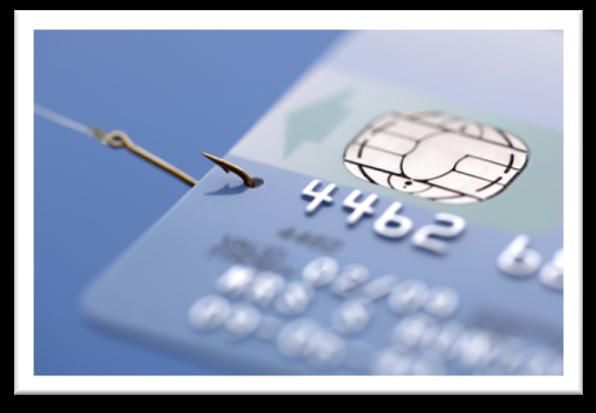
Chatting with Kids
   95% of parents think it is necessary to talk
    about online security risks and behaviors
  with their children, but only 65% have had the
                   “Internet talk” 1

 • Create an open and honest environment with kids
 • Start conversations regularly about practicing online safety
 • Emphasize the concept of credibility: not everything they see on the Internet
   is true and people on the Internet may not be who they appear to be
 • Watch for changes in behavior- if your child or student suddenly avoids the
   computer- it may be a sign they are being bullied online
 • Review security settings and privacy policies for the websites kids frequent
 • Review your children’s school acceptable use policy with them before they
   sign it

                                   1. Comcast
Cyber Ethics – Predators & Bullies
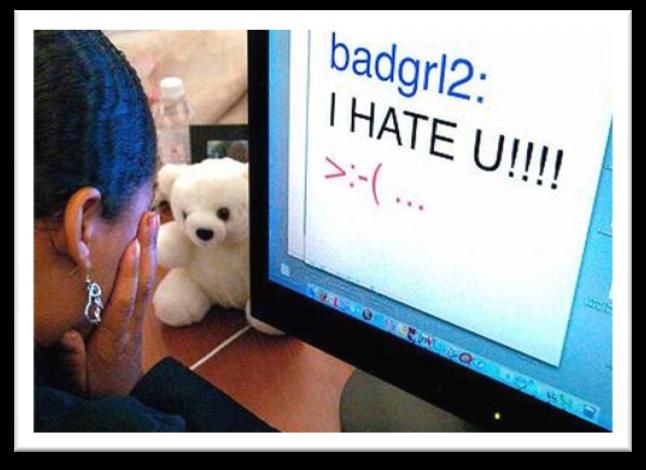
                                     Cyber ethics help Internet users understand what type
                                     of online behavior is right and wrong. Cyber predators
                                     are people who search online for other people in order to
                                     use, control, or harm them in some way. Cyberbullying
                                     is the electronic posting of mean-spirited messages
                                     about a person, often done anonymously
Did You Know?
• One in five U.S. teenagers who regularly log on to the Internet say they have received an
  unwanted sexual solicitation via the Web, and only about 25% tell a parent or adult about it1
• 20% of kids will have been a victim of cyberbullying by the time they graduate from high school2

Tips
• Keep personal information about yourself private, including your family members, your school,
  your telephone number, or your address
• Think twice before you post or say anything online; once it is in cyberspace, it is out there forever
• Stop any questionable online behavior; only do and say things online that you would do in real life
• Speak up. If you see something inappropriate, let the website know and tell an adult you trust.
  Don’t stand for bullying—online or off

                                1. Crimes Against Children Research Center
                                2. Cyberbullying Research Center
Identity theft is the illegal use of
Identity Theft                            someone else's personal information
                                          in order to obtain money or credit
  Did You Know?                                        Tips
  • Every year, 500,000 kids have their
                                                       • Don’t use the same password twice
    identity stolen1
                                                       • Choose a password that means
  • 75% of children are willing to share                 someone to you and you only
    personal information online about                  • Lock your computer and cell phone
    themselves and their family in exchange            • Don’t share personal information
    for goods and services2                              without knowing exactly who is on the
                                                         receiving end. Use strong passwords
                                                         that are hard to guess and don’t
                                                         share them with anyone other than
                                                         your parents
                                                       • Don’t open emails from strangers and
                                                         don’t click on links for unfamiliar sites;
                                                         if you think an offer is too good to be
                                                         true, then it probably is

                             1. Identity Theft Resource Center
                             2. 2. eMarketer
Fraud & Phishing
 Fraud is the intentional perversion of truth in order
 to induce another to part with something of value or
 to surrender a legal right. Phishing is a scam by
 which an email user is duped into revealing
 personal or confidential information that the
 scammer can use illicitly or fraudulently        Tips
                                                          • Most organizations – banks, universities,
                                                            companies, etc. - don’t ask for your
  Did You Know?                                             personal information over email. Beware of
                                                            requests to update or confirm your
  • 68% of teens surveyed say that they                     personal information
    have downloaded a program or                          • Don’t open emails from strangers and
    software without their parent's                         don’t click on unfamiliar sites; if you think
    permission1                                             an offer is too good to be true, then it
                                                            probably is
  • 79% of online teens agree that teens                  • Make sure you change your passwords
    aren’t careful enough when sharing                      often and avoid using the same password
    personal information online2                            on multiple sites
                                                          • Always enter a URL by hand instead of
                                                            following links
                             1. Ibid
                             2. Pew Internet and American Life Project
Resources Available to Your Family
OnguardOnline.gov
• This website, run by the Federal Trade Commission, is a one-stop shop for online
safety resources available to parents, educators, and kids
Cybertipline.com
• The Congressionally-mandated CyberTipline, which is part of the National Center for
Missing and Exploited Children (NCMEC), receives online child
solicitation reports 24-hours a day, seven days a week. Submit
an online report or call 1-800-843-5678
Staysafeonline.org
• The National Cyber Security Alliance offers instruction on
security updates, free antivirus software, malware software
removal, and other servicesCall to Action Cybersecurity is a shared responsibility that all Americans must adopt in their communities in order to keep the nation secure in the 21st Century. Become an advocate in your community to help us educate and empower the American public to take steps to protect themselves and their families online How to get involved: • Become a Friend of the Campaign by visiting www.dhs.gov/stopthinkconnect • Download and distribute Stop.Think.Connect. materials, such as the brochure, bookmark, and poster, in your neighborhoods and communities • Lead or host a cyber awareness activity in your places of work, school, recreation, or worship • Discuss the importance of cybersecurity with your friends and family • Inform your community about the Stop.Think.Connect. Campaign and the resources available • Blog or post about the issue of cybersecurity and the Stop.Think.Connect. Campaign • Get schools and community organizations involved and informed on cybersecurity
Securing cyberspace
 starts with YOU
You can also read


