A Guide to National Orchid Garden at Singapore Botanic Gardens - NParks
←
→
Page content transcription
If your browser does not render page correctly, please read the page content below
A Guide to
National Orchid Garden
at Singapore Botanic Gardens
Nestled in the heart of Singapore Botanic Gardens
is the National Orchid Garden, a paradise showcase
of tropical orchids amidst a fine profusion of lush
tropical greenery.

The moment you enter the National Orchid Garden,
you will see a cascading fountain with an iconic
pair of Crane sculptures at its peak. The fountain
is set against a majestic backdrop of spectacular
trees and palms, luxuriant shrubs and a myriad of
colourful orchids. Start your journey from the left
of the Crane Fountain, where the path is flanked by
thousands of golden blooms. These are the famous
Golden Shower or Dancing Lady Orchids (Oncidium
Goldiana).

As you walk on this trail, immerse yourself in this
3-hectare display garden of bedazzling blooms and
intricate landscape. At the same time, find out more
about this splendid group of plants, their unique
significance and their historical association with
Singapore Botanic Gardens.

                                                       Opening hours:
                                                       8.30am – 7pm (Last ticket sales at 6pm)

                                                       Estimated walking time:
                                                       30 - 45 min

                                                       Admission fees:
                                                       $5 for adults
                                                       $1 for students
                                                       $1 for senior citizens (60 years and above)
                                                       Free for children below 12 years

                                                                                                     1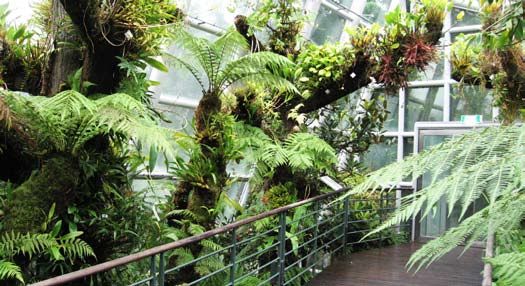
Highlights:
• Spectacular display of more than 600
VIP species and hybrid orchids
A Guide to Orchid
Garden
Orchidarium
• Prized collection of VIP orchids named
after celebrities and foreign dignitaries
National Orchid Garden • Simulated tropical highland forest
featuring orchids normally only found in
at Singapore Botanic Gardens Burkill
Hall
the tropical highland areas, carnivorous
plants and cool-growing plant species
Vanda Miss
Heritage Joaquim
Orchids
How to get to Singapore Botanic Gardens
Tan
Hoon Siang
By Foot: Mist House 9
Entrance to the Gardens is easy through its major Vanda Miss
Tiger Orchid Joaquim
entrances: Tanglin Gate, Nassim Gate and Cluny Fountain
Park Gate. Celebrity
Orchids
By Car: 8
Car parking facilities are available at the Botany
Centre, Visitor Centre, Bukit Timah Core,
Jacob Ballas Children's Garden and along Yuen-Peng
McNeice
Tyersall Avenue. Bromeliad 10
Crane Collection
By Bus: 11 Cool
Fountain Suggested House
Via Holland Road route
SBS Transit 7, 105, 123, 174 Wheelchair
SMRT 75, 77, 106 route
Via Bukit Timah Road Entrance Plaza
SBS Transit 48, 66, 151, 153, 154, 156, 170, 186 Main
SMRT 67, 171 Entrance
To Coach Park
and Ginger
Garden
How to get to National Orchid Garden 2 3 4
To Nassim Gate,
At the Gardens’ major entrances, look out for Visitor Centre
mapboards and directional signs to National Golden Shower Tiger Orchid Gingerbread Tree Burkill Hall
Orchid Garden. The walk takes about 10 minutes
from Nassim Gate and 15 minutes from Tanglin
Gate and Cluny Park Gate.
5 6 7 8 9 10 11
VIP Orchid Vanda Miss Tan Hoon Siang Yuen-Peng Elephant Creeper Cool House Nibung Palm
Garden Joaquim Mist House McNeice Bromeliad
Collection
2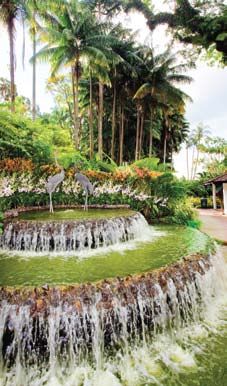
A Guide to
National Orchid Garden
at Singapore Botanic Gardens

What you can see on this trail
                                                                                                                                                                  1      3
     1                                                   specimen nestled in a massive root mass with
Golden Shower or Dancing Lady Orchid                     numerous pseudostems that can reach lengths of                                                            2     4
(Oncidium Goldiana)                                      2.5m. Flowering is largely seasonal and a mature
Striking displays of Oncidium Goldiana, more             specimen is capable of putting out more than
popularly known as the Golden Shower or Dancing          10 sprays of inflorescence at the same time. Each
Lady orchids, greet you at the National Orchid           inflorescence measures up to a height of 2m
Garden. Laid in masses and elaborately arranged          bearing more than 30 flowers, each about 10cm
on arches, these orchids on display are always a         wide. Its common name, Tiger Orchid, refers to its
delight and serve as popular photo opportunities         flowers that are vividly coloured and marked like
for visitors.                                            the coat of a tiger.

                                                              3
Oncidium Goldiana is the first Oncidium hybrid
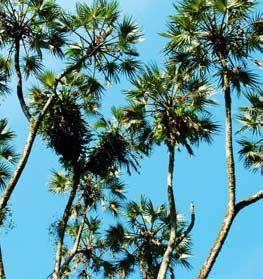
                                                         Gingerbread Tree (Hyphaene thebaica)
produced by Singapore Botanic Gardens’ orchid
breeding programme in 1939. Its popularity               This is an unusual palm species that has a
remains till today as it is free flowering, lasting      dichotomous or branching habit that rises from
and beautiful both as a cut-flower crop and as           its main stem. This is a very rare occurrence for
an ornamental plant. Its common name - Golden            members of the Palm family (Arecaceae), as most
Shower - refers to the numerous blooms in                would either have a single solitary stem or multiple
striking yellow, looking like a shower of gold when      stems that rise from the base.
presented in masses. Dancing Lady refers to the
                                                         The Hyphaene thebaica is a very rare palm in              while the shoots of germinated seeds are eaten as    also held the position of Director of Singapore
floral parts of the individual flowers that resemble a
                                                         Singapore. It is native to the Nile Valley and can also   a vegetable.                                         Botanic Gardens.
lady in a gorgeous ballroom dress dancing.
                                                         be found scattered in the regions of Middle East
                                                         to Egypt. Its common name, Gingerbread Tree, is               4                                                Burkill Hall has been carefully restored to preserve
     2
                                                         derived from the fruit’s taste and texture, which is      Burkill Hall                                         its original colonial ambience. It is now a main
Tiger Orchid
                                                         similar to the taste of gingerbread.                      Built in 1866, Burkill Hall is a fine example of     architectural feature residing at the highest point
(Grammatophyllum speciosum)
                                                                                                                   an early colonial house in Singapore. Sir Henry      and amongst the elaborate landscape in the
This plot showcases the Grammatophyllum                                                                                                                                 National Orchid Garden. It is also a popular venue
                                                         This interesting palm is of rich cultural and             Nicholas Ridley, renowned botanist,
speciosum or what is commonly known as the                                                                                                                              for weddings, functions and events.
                                                         economic use in Egypt. Ancient Egyptians regarded         orchidologist and the first Director of Singapore
Tiger Orchid, the world’s largest orchid plant. It
                                                         it as a sacred plant and its seeds were often used        Botanic Gardens from 1888 to 1911, resided in this
occurs as an epiphyte (plant that grows on other
                                                         as burial offerings for Pharaohs. Its fruits and          house. He was later succeeded by Isaac Henry
plants or trees for support but is self-sustaining)
                                                         unripe kernels are edible, and the thin dried brown       Burkill in 1912 when he became Director of the
and occasionally a lithophyte (plant that grows
                                                         fruit peel is used for making molasses, cakes, and        Gardens. Burkill Hall is named to commemorate
on rocks). When mature, it forms a spectacular
                                                         sweetmeats. Herbal tea can also be made from it,          him and his son, Humphrey Burkill, who later
                                                                                                                                                                                                                          3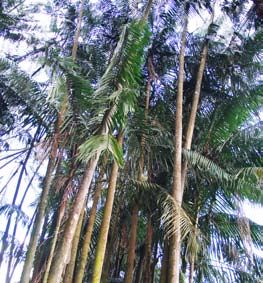
A Guide to
National Orchid Garden
at Singapore Botanic Gardens

                                                                                                                                                                    5      7
     5
VIP Orchid Garden                                                                                                                                                   6      8
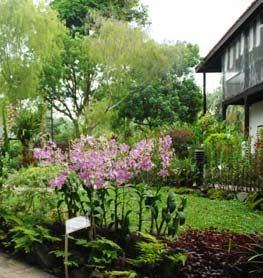
The VIP Orchid Garden was thoughtfully sited and          Botanic Gardens in 1893. Ridley named the plant
carefully styled as an English backyard garden of         after Agnes Joaquim in whose garden the hybrid
Burkill Hall. Displayed here are the outstanding orchid   originated. In 1981, it was selected to be the National
hybrids of the Gardens’ orchid programme that was         Flower of Singapore for its beauty, resilience and
initiated by Professor Eric Holttum (the Gardens' third   year-round blooming quality.
director) in 1928. As Singapore orchids gained fame, it
became obvious that they should be used as agents              7
to promote goodwill and foster closer ties between        Tan Hoon Siang Mist House
nations. From 1957 the Singapore Government began         The Tan Hoon Siang Mist House was named in
to honour State Visitors and other VIPs by naming         honour of Tan Hoon Siang, a successful pioneer
selected orchid hybrids after them. This prized           and descendant of Tan Tock Seng, who was a
collection of “VIP Orchids” has become an important       philanthropist and the founder of Tan Tock Seng
attraction of the National Orchid Garden.                 Hospital in Singapore. It showcases an extensive
                                                          collection of rare, unique and award-winning orchid
To date, the Gardens has named over 120 VIP               cultivars from the Gardens.
orchids. The first VIP orchid was Aranthera Anne
Black in 1956, after Lady Black, wife of a former                                                                                                                          2
                                                          A prominent display is the Fragrant Orchids corner.
Governor of Singapore, Sir Robert Black. Other            Vanda Mimi Palmer is a fine example of the few
examples of VIP orchids on display include                fragrant orchid hybrids in existence; it emits a
Dendrobium Margaret Thatcher, Renantanda                  very sweet and chocolate-like fragrance that is               8
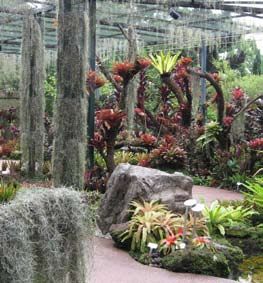
Akihito, Dendrobium Masako Kotaishi Hidenka,              particularly strong in the morning.                       Yuen-Peng McNeice Bromeliad Collection                Columbus in 1493 on the Caribbean island
Dendrobium Elizabeth, Paravanda Nelson Mandela,                                                                     Through the generous sponsorship of Lady Yuen-        of Guadeloupe.
Mokara Laura Bush and Renantanda Kofi Anan.               Another interesting orchid that is featured here is       Peng McNeice, this unique collection of bromeliads
                                                          the Vanilla planifolia, one of the most well-known        on display was acquired from Florida, United States   Except for one species (Pitcarnia feliciana) which
     6                                                                                                              in 1994. This collection consists of 23 genera, 320   is found in the Guinea region of West Africa, all
                                                          species amongst the vanilla orchids. Vanilla species
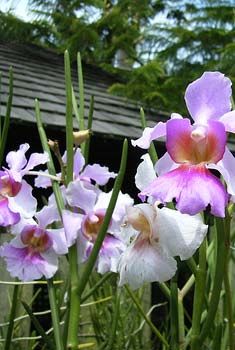
Vanda Miss Joaquim                                        occur mostly in the tropical and subtropical regions      species and about 520 taxa (cultivars, varieties      bromeliads are distributed in tropical and warm
(National Flower of Singapore)                            of the world, from tropical America to tropical Asia,     and hybrids).                                         regions of the Americas. Bromeliads grow at places
This orchid, a hybrid between Vanda hookeriana            New Guinea and West Africa. Are you aware that                                                                  of elevation ranging from sea level to over 4,000m.
and Vanda teres, is hardy and free flowering. It is       the Vanilla flavouring is actually derived from the       ‘Bromeliad’ is the common name for the family         Some species can withstand temperatures near
Singapore’s first orchid hybrid and was named by          seedpods of these orchids? They are commercially          Bromeliaceae. The pineapple, a well-known             freezing level while others can survive on hot
Mr H. N. Ridley, the first director of the Singapore      grown for their seedpods.                                 bromeliad, was discovered by Christopher              sands and blistering rocks in desert regions.

                                                                                                                                                                                                                           4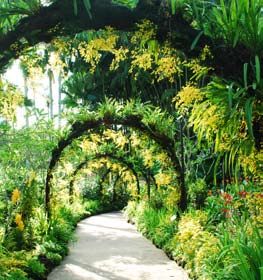
Updated as at August 2011. Information is correct at the time of printing.
A Guide to
National Orchid Garden
at Singapore Botanic Gardens

                                                                                                                                                                9    11
     9
Elephant Creeper (Argyreia nervos)                     sites in the tropics and will make for an                10
Argyreia nervosa is commonly known as the              unforgettable experience.
Elephant Creeper for its elephant ear-like leaf
shape. It is a vigorous grower and is often prized     An orchid to look out for here is the Bulbophyllum
for its aesthetic value. Native to the Indian          echinolabium, the largest-flowering in its genus.
subcontinent, it has been introduced to areas          Native to Sulawesi and Borneo, it has spectacular
worldwide as an ornamental plant.                      blooms that can measure up to 30cm long and
                                                       that last for about 10 days, only to be succeeded
You can easily spot the Elephant Creeper along         by yet another flower. This amazing orchid is able
the boardwalk railing leading to the Cool House.       to remain in bloom successively for up to two
Look out for its light-green velvety leaves and        months. Apart from this orchid, see if you can
slivery white creeping stems. The inflorescence        spot several other interesting orchid species in the
bears large solitary pink flowers that attract large   Cool House.
Carpenter Bees which pollinate it.
                                                       Besides orchids, another featured group of plants
    10                                                 are the different carnivorous plants. Carnivorous
Cool House                                             plants employ different methods of attracting
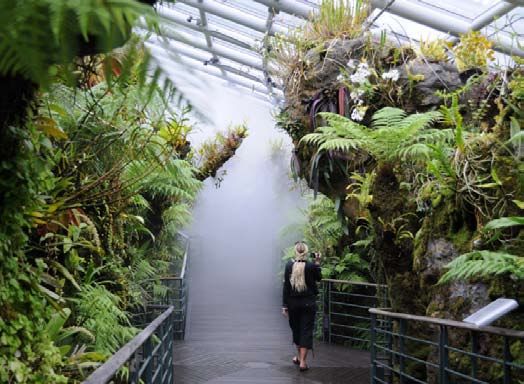
The Cool House simulates a montane tropical            and trapping insects. Having bold colours, nectar-
forest. Trees and rocks are draped with a              secreting glands, traps with trigger mechanisms
profusion of orchid species, carnivorous plants        and pitchers filled with dissolving enzymes are
                                                       all part of survival techniques for these plants as        11
and cool-growing plant species. Orchid species
growing on the tree trunks and rocks are of Asian      they often grow in places where the soil is thin       Nibung Palm (Oncosperma tigillarium)
origins, while those flourishing on the majestic       or poor in nutrients. Look out for the Nepenthes       The Oncosperma tigillarium, or Nibung Palm, forms      are used by tribal communities as blowpipe
Tasmanian Tree Ferns (Dicksonia antarctica) are of     (commonly known as Pitcher Plant). It lures its        majestic clumps with tall, slender stems that can      darts for hunting and the leaves as roof
American and African origins. Montane forests of       prey into its pitcher using its colours and nectar-    grow up to a height of 25m, which are covered with     thatching material.
the tropics have a cool climate and high rainfall      scent. The prey is unable to escape as the inner       thin, black spines. The Nibung Palm may appear
throughout the year. Here, the simulation of cool      walls of the pitcher are slippery. Enzymes secreted    menacing to some with its stems covered in spines,     We hope you have enjoyed your walk. To get up
air, drifting mist and rushing torrent provides a      by a special gland quickly digest the fallen insect    but it is in fact a very useful palm. The stems are    close and personal with more nature, embark on
realistic representation of high elevation             and the nutrients are absorbed by the walls.           hardy and rot-resistant, and are commonly used         the Heritage Trees of Singapore Botanic Gardens
                                                                                                              in the construction of houses, fishing stakes and      walking trail. To obtain another DIY trail-guide
                                                                                                              kelongs (wooden structures built above the sea and     on a walking trail in one of Singapore’s parks,
                                                                                                              used for commercial fishing). The thin, black spines   visit www.nparks.gov.sg/eguides.

                                                                                                                                                                                                                  5
You can also read


