NATIONAL QUALIFICATIONS FRAMEWORK - HANDBOOK FOR STUDENTS AND THEIR PARENTS/CAREGIVERS - FEILDING HIGH SCHOOL - Student 2021
←
→
Page content transcription
If your browser does not render page correctly, please read the page content below
FEILDING HIGH SCHOOL

NATIONAL QUALIFICATIONS
      FRAMEWORK

      HANDBOOK
FOR STUDENTS AND THEIR
 PARENTS/CAREGIVERS
             1
Contents
4     Qualifications
5     NCEA Level 1, 2, 3 Certificates
6     Endorsement
7     University Entrance
8     UE Approved Subjects
9     Scholarship
      Fees
      -------------------------------------------------------------------------
Procedures – There are a number of procedures or rules you must
follow for your assessments.
10       1 Assessment Opportunities
11       2 Special Assessment Conditions
12       3 Recording and Acknowledgement of Grades
13       4 Missed Assessments and Extensions
14       5 Appeals
15       6 Authenticity
16       7 Misconduct
17       8 Derived Grade
18       9 Attendance
19      10 Moderation
        11 Privacy
      ----------------------------------------------------------------------------------------
      -------------------------------
20    Financial Assistance
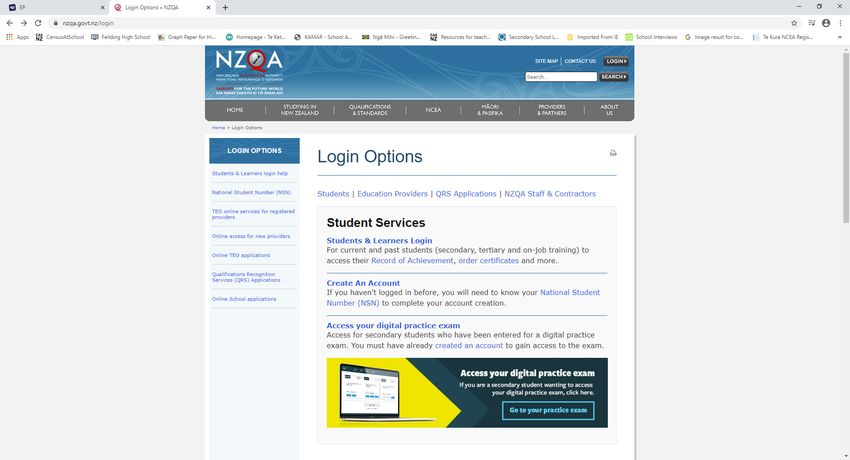
21    Student Login with NZQA
22    Subject Information
23    Support Staff
24    Teachers in Charge of Curriculum Areas

                                             2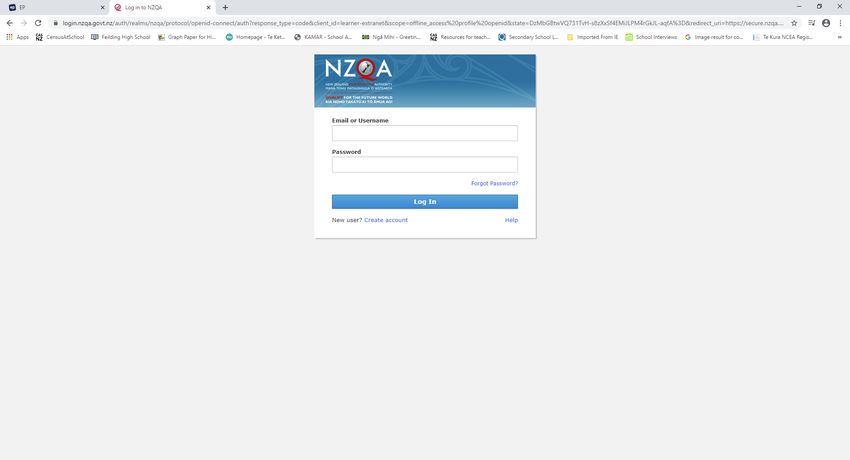
Purpose
 • The purpose of this document is to inform you of procedures you will
   need to follow for assessment against Achievement Standards and
   Unit Standards in your classes this year.

 • It is very important that you and your parents / caregivers read this
   document, understand what you are required to do, and then follow
   the procedures outlined.

 • If you do not understand something, it is important you find out – ask
   your subject teacher, your Group teacher, your Dean, Ms Russell or
   Mr Jury.

 • The school’s phone number is 323 4029.
   Ms Russell’s extension is 731; Mr Jury’s is 777.

NQF
 • NQF is the National Qualifications Framework and is a register of all
   the Unit Standards and Achievement Standards that can contribute
   to qualifications.

 • All of the Achievement Standards and Unit Standards you are
   assessed against this year are registered on the NQF.

 • We offer courses for NCEA Certificates at Levels 1, 2 and 3 and
   some subject specific National Certificates.

 • You may also be working towards University Entrance or Scholarship
   awards.

                                   3
Qualifications – General Information
• This year you will be working towards a National Certificate of
Educational Achievement (NCEA) at Level 1, 2 or 3 and / or a
University Entrance award.
• You may also be working towards a National Certificate in a
particular subject. Your subject teachers will give you more
information about this and explain how to apply for your certificate
should you achieve one.
• In each of your subjects you will be assessed against Achievement
Standards and / or Unit Standards that are registered on the NQF.
• You will gain credits for each successfully completed Unit Standard /
Achievement Standard.
• All credits count towards your NCEA Certificates, but subject
certificates will have specific requirements.
• External Assessment: Some Achievement Standards will be
assessed by NZQA examination, or by submitting a portfolio, at the
end of the year.
• Internal Assessment: All Unit Standards and some Achievement
Standards will be assessed by your teachers, in school, during the
year under exam conditions to ensure authenticity.
• Students working at Level 3 may enter Scholarship in most, but not
all, subjects offered at FAHS in addition to their NCEA examinations.
You will be notified by your Year 13 subject teacher if Scholarship is
available in that subject. Scholarship is assessed by examination or by
submission of an additional portfolio.
4Qualification Guidelines
Level 1 Certificate
To achieve a Level 1 Certificate you must gain at least 80 credits.
Of these, you must have both
• 10 numeracy credits
• 10 literacy credits
Literacy and Numeracy credits may be gained from
• specific Achievement Standards offered in a range of subjects.
• Level 1 Literacy and Level 1 Numeracy Unit Standards - your Level 1
Certificate will be annotated.
Your teachers should provide you with this information at the beginning of
the year.
Level 2 Certificate
To achieve a Level 2 Certificate you must gain at least 80 credits. Of
these you
• must have at least 60 credits at Level 2 or higher.
• may include up to 20 credits at Level 1 (you may include those you
have already used towards your Level 1 Certificate).
You must also have Level 1 Literacy and Level 1 Numeracy
Level 3 Certificate
To achieve a Level 3 Certificate you must gain at least 80 credits.
Of these you
• must have at least 60 credits at Level 3 or higher.
• may include up to 20 credits at Level 2 (you may include those you
have already used towards your Level 2 Certificate).
You must also have Level 1 Literacy and Level 1 Numeracy.
Subject Specific Certificates
Some courses, or combinations of standards, may qualify you for specific
NZQA approved National Certificates. If this applies in a subject, your
subject teacher will give you information at the beginning of the year and
explain how to apply for your certificate should you qualify.
5Endorsement
Certificate Endorsement
NCEA Certificates may be endorsed “With Merit” or “With Excellence”
• A certificate endorsed “With Merit” requires 50 or more credits at
Merit or Excellence at the level of that Certificate or higher.
• A certificate endorsed “With Excellence” requires 50 or more credits
at Excellence at the level of that Certificate or higher.
You may earn a Certificate endorsement over more than one year BUT
you will only receive the Certificate that NZQA deems to be of highest
achievement in any one year. This means that if in Year 12 you gain
enough Merit credits for your Level 1 Certificate from the previous year
to be endorsed with Merit, and you also gain your Level 2 Certificate
without endorsement, you will receive only the Level 2 Certificate as
NZQA recognises this as the higher achievement.
Subject Endorsement
The subjects you study may be endorsed “With Achieved”, “With Merit” or
“With Excellence”
• A subject endorsed “With Achieved” requires that, in one school year,
you achieve 14 credits at Achieved or higher; 3 credits must be from
internal assessment and 3 credits must be from external assessment.
• A subject endorsed “With Merit” requires that, in one school year, you
achieve 14 credits at Merit or higher; 3 credits must be from internal
assessment and 3 credits must be from external assessment.
• A subject endorsed “With Excellence” requires that, in one school
year, you achieve 14 credits at Excellence or higher; 3 credits must
be from internal assessment and 3 credits must be from external
assessment.
• Subjects assessed primarily by Unit Standards are not eligible for
endorsement.
6University Entrance
Those intending to go on to university/tertiary study must meet ALL
of the following criteria at Level 3 to gain their University Entrance:
• NCEA Level 3
• 14 credits in three approved subjects/domains
• 10 Numeracy credits at Level 1 or higher
• 5 Reading credits at Level 2 or higher from a range of
• 5 Writing credits at Level 2 or higher specified standards
NB:
1. Some classes offer standards in more than one domain. You will
be informed of this by your subject teacher and must take it into
account when working out if you qualify for University Entrance.
2. 13 Mathematics (Calculus / Statistics) and 13 Sciences (Biology /
Chemistry / Physics) may qualify students in a further approved
subject if they earn sufficient credits.
3. The above criteria for University Entrance are the minimum. Many
university / tertiary courses will have higher entry requirements - they
may require more credits and / or a specified number of Merit or
Excellence grades and / or specific subjects from Year 13. Check
with the Careers Advisors or the Liaison Officer of the university /
tertiary organisation concerned.
4. For entry, some universities may also require students to have a
specific rank score from their best 60 credits in university approved
subjects. This is also known as the points system.
Rank score (points) = number of credits at (A x 2)+(M x 3)+(E x 4).
Some universities require a minimum of 120 points for entry and
for some courses they require up to 200 points from a rank score.
See Careers Advisers / Deans for more information.
7Approved Subjects for University Entrance
At FAHS we offer the following approved subjects.
Approved Subjects
Accounting Home Economics (FNU)
Agriculture & Horticulture Japanese
Biology Media Studies
Calculus Music Studies
Chemistry Painting (Practical Art)
Design (Practical Art) Photography (Practical Art)
Design and Visual Communication Physical Education (SPS)
Digital Technologies Physics
Drama Psychology
Economics Social Studies
English Statistics
French Technology - Food
Geography Technology - Textiles
History Te Reo Māori
8Scholarship
• NZ Scholarship is offered in most Y13 subjects at FAHS.
• You may enter one or more NZ Scholarship(s) in addition to your
Level 3 Standards.
• The material assessed is generally the same as that for Level 3 – but
some include Level 2 material and some require material in addition
to Level 3. Check with your teacher.
• Assessment is by external examination, additional to external NCEA
Level 3 examinations, or by submission of an additional portfolio.
• There is no derived grade provision for Scholarship.
• There are several different scholarship awards, each with a different
monetary value – see the NZQA website.
• Before confirming your entry in Scholarship, you must check the
examination timetable to ensure the Scholarship examination does
not clash with your NCEA examinations.
NCEA / Scholarship Fees (2021)
For International students
For NCEA $383.30
For each scholarship subject $102.20
(These fees are subject to change for 2021)
NZQA no longer imposes fees for New Zealand citizens and permanent
residents
91. Assessment Opportunities
Internally Assessed Standards
• For most internally assessed standards, one further assessment
opportunity will be offered. For some standards, however, this is not
feasible; a further opportunity is not offered.
• Each of your subject teachers will tell you what further assessment
opportunity will be available for each internally assessed standard.
• A further assessment opportunity will be a whole new assessment.
• Internal assessment results are final results.
Externally Assessed Standards
• Externally assessed standards will either have an examination, usually
at the end of the year, or require a portfolio to be submitted.
• During the year, you will complete assessments that are similar to the
examinations and held under approved conditions. They are practice
assessments, not final results. The results from these assessments
will, however, be used to determine your derived grade, should you
apply for one and have your application approved.
Adequate Assessment Opportunity
• If you have been given an assessment task and the requisite time to
complete it, your teacher must enter a grade on KAMAR.
• If you do not submit work or do not complete the task, you will be given
a Not Achieved. Further consequences may apply.
102. Special Assessment Conditions
• Assistance will be provided for students who have approved special
assessment conditions. Reader-writer assistance and / or separate
accommodation will be available for student assessments (internal,
practice external and end of year external) where approval has been
granted.
• Students who want information about special assessment conditions or
wish to apply for support in completing assessments should, in the first
instance, make application to Mrs Ellery, Learning Support Faculty
Leader.
• Reader-writer assistance will not be provided when a student has been
injured just prior to an external examination – a derived grade must be
applied for.
113. Recording and Acknowledgment of Grades
• You will be required to sign to verify
1. that the grade you have been given for an assessment
is correct
2. that the grades on KAMAR have been correctly entered
by your teacher.
• If you think there is an error in the marking of an assessment or
in the recording of a grade on KAMAR, DO NOT SIGN, but
discuss it with your teacher within 5 days of the return of the marked
work to you.
• If you are not satisfied, appeal to the teacher in charge or the
curriculum leader as outlined in your beginning of year course
handouts.
• If you are still concerned and have still not signed, lodge an appeal
with Ms Russell.
• Final appeal may be made to the Curriculum and Assessment
Manager, Mr Jury, whose decision is final.
• Once you have signed your mark / grade, no appeal will be allowed.
124. Missed Assessments and Extensions
• If you are absent on the day of an assessment you must
- telephone the school and leave a message for your teacher.
- on your first day back, see your teacher to organise completing the
assessment if it is possible.
• If you are absent on the due date for an extended research assessment or
assignment you must arrange for the work to be delivered to the school office or
emailed to Ms Russell. drussell@feildinghigh.school.nz
If this is not possible, contact Ms Russell at school. - PH 323 4029 EXTN 731
• If you are absent during an extended assessment or assignment, you must
arrange with your teacher to have some extra catch up time before the due date
• If you know you will be away on the date of an assessment or when an
assignment is due to be handed in, you must see your teacher BEFOREHAND so
satisfactory arrangements can be made, or an extension may be applied for - see
Ms Russell. This includes such things as field trips in another subject, sports
exchanges, appointments etc.
• You should try to make appointments at times when you do not have an
assessment or a due date for work submission.
• Work may not be marked if it is handed in late without prior arrangements having
been made. You may be given an opportunity for further assessment if it is part
of the course plan.
• In special circumstances you may be able to get an extension, but only if you
apply to Ms Russell before the due date. You will need to have evidence proving
special circumstances.
• Only in very exceptional circumstances will an extension be given by Ms Russell
after the due date.
• A medical certificate may be required.
• Do not assume it will be OK – talk to Ms Russell or Mr Jury.
REMEMBER – Due date means just that.
135. Appeals
• You may appeal if
- you have not signed your grade and you think your grade for an
assessment is incorrect.
- you have not signed your grade on the KAMAR printout and you
think your grade has been recorded incorrectly.
- you have not signed your grade and you feel you have not been
treated fairly in any way relating to your assessment.
Appeal Process:
• Appeals may relate to disputed marks / grades or marking, or a
breach of rules, and may include things such as misconduct in an
assessment, cheating, plagiarism, missed / late assessment work,
a further assessment opportunity was offered but not given or if
you do not think your mark / grade or the marking is correct.
• Appeals should be lodged within 5 school days of the return of the
work to you.
1. Talk with your teacher to try to find a solution.
2. If there is a problem, see the appropriate Curriculum Area Leader –
you will be given this information at the start of the year.
3. If the problem still exists, see Ms Russell.
4. Final appeal may be made to Mr Jury.
146. Authenticity
• The work you hand in for assessment must be your own work.
• If you directly download / copy resource material, copy all or part of
someone’s work or allow someone else to copy your work, you will be
given no credit and you may not be given any further assessment
opportunity offered to other students.
• Each subject will explain its procedures to ensure authenticity.
• You must be prepared to sign an Authenticity Declaration stating the
work you have submitted is your own work and that you have not
shared your work with another student, or downloaded or copied
resource material. You should be prepared, if required, to submit
working drafts.
157. Misconduct in Assessments
• Copying someone else’s work, allowing someone else to copy
your work, cheating or misbehaving in an assessment are
considered misconduct and will result in no credit for your work
and you will not be allowed any further assessment opportunities
in that standard. Such matters will be referred to Ms Russell.
• Work containing any abusive or offensive material will not be marked.
• Any behaviour that unfairly affects another student’s performance
in an assessment will result in a Not Achieved grade and no further
assessment opportunity.
168. Derived grade
• A derived grade is only applicable to external examinations.
• You may apply for a derived grade if you are sick, have a family crisis
or some other similar set of circumstances that mean you are not
able to complete an external examination or your performance is
adversely affected.
• A derived grade for Externally Assessed Achievement Standards
is based on your results from school practice assessments. These
assessments provide the evidence that the standard has been
met under approved assessment conditions.
• Practice assessments should be retained to support a derived grade
application should it be required.
• If you did not sit the school assessments you are not able to apply for
a derived grade.
• A derived grade does not apply for internal assessment.
• An Internally Assessed Achievement Standard can be achieved only
when there is evidence that the criteria for the standard have been
met under approved assessment conditions.
• Derived grade applications will be processed by Ms Russell.
179. Attendance
• You must attend your classes and attempt all assessments.
• Unexplained or unreasonable absences could jeopardise your
place in the course.
• Absences must be explained by a note from home. Medical
certificates may be required, especially if assessments or due dates
are missed.
• Permission to be absent from school for any reason (sports
commitments, dance exams, family holidays etc) can be given
only by the Principal. To apply for permission, in the first instance
contact Mrs Cumming, the Principal’s secretary, extn 706.
• If you are absent from an assessment you must follow the procedures
set out in 4. Missed Assessments and Extensions.
1810. Moderation
• Each subject area has systems in place to make sure each class’s
work is marked to the same standard as the other classes.
• NZQA has moderation systems / processes in place to make sure
students at FAHS – Feilding High School are treated in the same way
as students throughout New Zealand.
11. Privacy
The school respects your privacy and you should not have results or work
published, displayed, used as an exemplar, or discussed with other
students without your consent.
19Student Login
You will be able to register online to check that your information and
results are correct. Results are updated on the first day of each month.
go to https://secure.nzqa.govt.nz/for-learners/records/login.do
20Subject Information
In each of your subjects, your teacher should provide you with
• an assessment plan showing
- which Unit Standards and / or Achievement Standards will be offered
- the level, the version and, the number of credits
- whether each assessment is internal or external
- if standards offered contribute towards Level 1 Literacy or Numeracy
and University Entrance Reading or Writing
- for Level 2 standards, whether they offer Vocational Pathways credits.
• a year plan of the course showing when topics are taught and when
assessments and further assessment opportunities will occur.
• a recording sheet on which you can record the grades you have
achieved for assessments – this will be pasted into your homework
diary.
• a reminder of the appeals process in the subject and the staff
responsibilities.
• the authenticity processes in that subject.
• the requirements for moving on to the next level of study
i.e. Year 11 into Year 12, Year 12 into Year 13.
21Staff to contact if you have problems
School phone number: 06 323 4029
Ms Russell – NZQA Principal’s Nominee, ext 731
for questions relating to recording and reporting of results
and to apply for extensions, appeals and derived grades
Mr Jury – Assistant Principal (Curriculum & Assessment Manager),ext 777
for questions relating to course and assessment
organization and for final appeals
Mr Frost - Year 11 Dean, ext 709
Mrs Lawton – Year 12 Dean, ext 711
Mrs Benson (Miss Liddy) – Year 13 Dean, ext 758
Ms MacKenzie/Miss Johanson – Careers, ext 727/756
Mr Underwood – Guidance Counsellor, ext 757
Mrs Bennett – Guidance Counsellor, ext 722
22Teachers in Charge of Curriculum Areas
Arts HOF – Mr F Findlay FFY
Drama - Mr Findlay FFY
Music - Mrs Grove DGE
Art - Ms Hirst SHI
Languages HOF – Mr Byrne BN
English - Mr Byrne BN
ELL - Mrs Ellis ME
French - Mme Lelecque NLE
Japanese - Mrs O’Brien HON
Maori - Ms Martin MA
Media Studies - Ms McCabe CME
Mathematics HOF – Mr Thomson GTN
Mathematics - Mr Thomson GTN
Physical Education and Health HOF – Mr Jones RJ
Physical Education - Mr Jones RJ
Health - Mr Jones RJ
Science HOF – Mrs Liengme LI
Science and Physics - Mrs Liengme LI
Biology - Mrs Udy JUY
Chemistry - Mrs Redfearn GRN
Agriculture - Mr Beech JB
Agribusiness - Miss Redpath KRH
Horticulture - Miss Black CBK
Social Science HOF – Mr Tocker CT
Social Studies and Geography - Mr Tocker CT
History - Mrs Dundass MD
Economics - Mrs Clarke MC
Gateway - Mrs Dunne JDE
Tourism - Mrs Atkins RAS
Technology HOF – Mrs Lemmen LLN
DVC, Building, Technology Wood and Metal - Mrs Lemmen LLN
Technology Textiles - Mrs Wilson MW
Food and Nutrition, Food Technology, Hospitality - Mrs Wilson MW
Digital Technology - Mr Hancox GHX
23You can also read


