Nature fix - JOURNAL - John Muir Trust
←
→
Page content transcription
If your browser does not render page correctly, please read the page content below
JOHN MUIR TRUST                        14   Inside one of the biggest

  JOURNAL
                                               community buyouts in Scotland
                                          26   Efforts to restore the UK’s
                                               disappearing montane scrub
                                          28   Why freshwater environments
   69 AUTUMN 2020                              are a key element of wild land

Nature fix
Health, wellbeing and economic recovery
Using DOWN CYCLE ® recycled
down and 10 0% recycled fabrics,
the   Ear thrise   Hooded   Jacket
helps you tread lightly.
CONTENTS 033
REGULARS
05 Chief Executive’s welcome
06 News
32 Books
A Journey in Landscape Restoration, Carrifran
Wildwood and Beyond, by Philip & Myrtle
Ashmole; Riders on the Storm: The Climate Crisis
and the Survival of Being by Alastair McIntosh
14
34 Interview
David Lintern speaks with illustrator turned
author Nick Hayes about his new book that
challenges traditional access restrictions in
the English countryside
23
F E AT U R E S
10 Nature fix
Helen Todd considers how nature and
conservation can help us recover from the
economic challenges posed by Covid-19
13 Helping hooves
Nicky McClure reveals how a team of horse
loggers has helped expand areas of native
woodland at Glenlude
14 10,000 acres of hope
Alan McCombes visits a Borders mill town
” 34
With this ruling, the absolute inviolability of property,
a notion that had been hardening for five hundred
that has ambitious plans for a former grouse
moor as part of one of the biggest community
years, Was finally consolidated into laW.
buyouts ever seen in Scotland
a property, Whether your back garden,
or 20,000 acres of grouse moor in the peak district,
had become a hypothetical space, a legal force field, 20 Natural kindness
a man-made spell. Toby Clark reflects on how the John Muir
Whether marked by a Wall, fence, sign or just an
imaginary line, crossing over it turns the inclination of Award has helped people to find positive
the laW against you.
paths during the pandemic
the concept of property really is a bubble, a
hallucination conjured by a history of privatisation,
Whose hard, impenetrable border is in fact a flimsy
23 Making a difference
28 meniscus – one foot over the line, you pierce its logic Ria Dunkley shares her thoughts on ecological
and the bubble bursts.
PHOTOGRAPHY (CLOCKWISE FROM TOP): DAVID LINTERN; AL MEEZAN; NICK HAYES; RAYMOND SIMPSON
” citizenship and research into the impacts of
participation in the John Muir Award
COVER: AUTUMN LEAVES BY ALEXANDER M WEIR AT FLICKR.COM/PHOTOS/WEIRVIEW/ALBUMS 24 Pressure points
Ross Brannigan examines the growing
challenge of visitor management in wild
J O U R NA L 69, AU T U M N 2020 places
Contributing Editor: 26 Missing link
Rich Rowe journal@johnmuirtrust.org Izzy Filor explores the plight of montane
scrub and the efforts being made to save this
Managing Editor: increasingly rare habitat
Alan McCombes alan.mccombes@johnmuirtrust.org
28 Rivers of life
Design and production: In this Year of Coasts & Waters, Raymond
Connect connectmedia.cc Simpson highlights the importance of
freshwater environments as a key, and
This journal is printed on Revive 100 uncoated If you would rather receive publications from vulnerable, component of wild places
stock, a recycled grade paper containing 100% the John Muir Trust electronically, please
post-consumer waste and manufactured at a email membership@johnmuirtrust.org
mill accredited with ISO 14001 environmental
management standard. The pulp used in this The John Muir Trust is a Scottish charitable
product is bleached using an Elemental company limited by guarantee. Registered
Chlorine Free (ECF) process. We use a Scottish office: Tower House, Station Road, Pitlochry
printer, J Thomson Colour, which has excellent PH16 5AN
environmental credentials, achieving
environmental standard ISO4001 plus FSC and Charity No. SC002061.
PEFC standards all in 2006. Company No. SCO81620
HEAD OFFICE
Sign up for our monthly enewsletter
John Muir Trust t. 01796 470 080 at johnmuirtrust.org/newsletter
Tower House w. johnmuirtrust.org
Station Road
Pitlochry Follow us on: Keep up to date with events and local activities at
Perthshire PH16 5AN @JohnMuirTrust johnmuirtrust.org
LOVE WILD PLACES?
Let your love of wild places live on

Leave a gift in your will
to the John Muir Trust
If you’d like to remember us in your will,
please contact Adam Pinder on
adam.pinder@johnmuirtrust.org

johnmuirtrust.org
Scottish Charity No: SC002061 Company Number: SC081620.
Limited by Guarantee Registered Office: Tower House,
Station Road, Pitlochry, PH16 5AN

Photographer: Chris Rutter
CHIEF EXECUTIVE                      05

Resilient and determined
                                  WELCOME to the latest issue of the Journal – one that
                                  illustrates how even during these most challenging of
                                  times the work of the John Muir Trust remains as
                                  relevant and vital as ever.
                                     We are a resilient organisation with talented staff and
                                  a dedicated membership, so have been able to adapt to
                                  continual change and overcome many of the physical
                                  obstacles imposed upon us by the pandemic. While
                                  many organisations are, sadly, being forced to make
                                  cuts, I am pleased to report that our finances remain in
                                  good shape and we are even expanding staff numbers.
                                      As we go to print, we are reminded yet again of the
                                  urgency of our work through yet another powerful film
                                  by David Attenborough. Extinction: The Facts lays bare
                                  the global destruction of nature and its potentially
                                  catastrophic consequences for the ecological support
                                  systems that the human race relies on for its survival.
                                     ‘Boiling a frog’ is a well-worn metaphor that warns of
                                  the danger of slow, incremental change. According to
                                  that analogy, if you plunge a frog into boiling water it will
                                  instantly leap out. But if you heat it up gradually, the frog
                                  will placidly adapt to the rising temperature – until it is
                                  too late. Scientists, however, assure us that is not the
                                  case. In real life, as the water heats up, the frog will
                                  become more and more agitated and attempt to escape.
                                     Hopefully, that is now starting to happen to our own
                                  species, and on a global scale. We are awakening to the
                                  urgent need to lock up carbon to cool the planet. And
                                  with Scotland and Wales going to the polls in 2021, just
                                  after we leave the EU and the Common Agricultural
                                  Policy, and the devolved parliaments take control of
                                  policy and direct funding, there is an opportunity to
                                  turn the old debates on their head.
                                     Land – and especially wild land – ‘wants’ to capture
                                  carbon. It is in society’s interest to incentivise and             With a nod to the same, this issue (see page 14) also
                                  regulate landowners to capture carbon. But in whose             carries an in-depth report from the small town of
                                  interests is it to have our hills overgrazed by red deer        Langholm near the Scotland-England border where
                                  and our moorlands burned? Both activities are driven            the Trust is working closely with the local community
                                  by a Victorian desire to kill wildlife for recreation. And      in an audacious, landscape-scale plan to transform a
                                  both benefit a few at the expense of the many.                  former grouse moor into a flourishing nature reserve.
                                     In Scotland and across the UK, the war of attrition             Rather than going it alone, the community
                                  against wild nature is no less dramatic than the scenes         approached the Trust at the start, and began to discuss
                                  depicted by David Attenborough in other parts of the            the potential for new models of community-
                                  world. The obliteration of the natural tree line, the           conservation ownership that would involve external
                                  degradation of peatlands, the overgrazing of uplands,           organisations and private individuals who all share the
                                  the industrialisation of moorlands and the concreting           same values and aspirations.
                                  over of urban green spaces are all part of the same                This is not an affluent area; it is a former mill town
                                  global cataclysm he describes with such eloquence.              that has suffered long-term economic decline. The
                                                                                                  market value of the land has been set at £6.4m for the
                                  A DIFFERENT WAY                                                 full area, or £4m for a scaled-down sale of just over
                                  In this issue, Izzy Filor explores the plight of montane        5,000 acres. So far, the community has raised almost
                                  scrub – a specialist habitat that is in desperate need of       £3m from various sources, including the Trust.
                                  help. The article (see page 26) is informed by detailed            If you are interested in becoming a stakeholder in an
                                  research conducted in Highland Perthshire, including            exciting new venture to create the Tarras Valley Nature
                                  on Schiehallion where Izzy works as our Montane                 Reserve, please get in touch with me as soon as
                                  Scrub Project Officer. Importantly, she points not just         possible and we will arrange further discussions and
                                  to the scale of the loss, but also to work being done by        options for you to consider.
    PHOTOGRAPH: JOHN MUIR TRUST

                                  the Trust and others to undo centuries of damage.                  Finally, after my first nine months in this post,
                                     David Attenborough too ends on an uplifting note.            I would like to thank everyone for their incredible
                                  I will try and avoid a spoiler, except to say that it           support. It is a privilege to work for this outstanding
                                  involves an inspirational example of a government               organisation.
                                  working with conservationists and, crucially, local
                                  communities to turn what appeared to be a lost cause            David Balharry
                                  into a remarkable success story.                                Chief Executive, John Muir Trust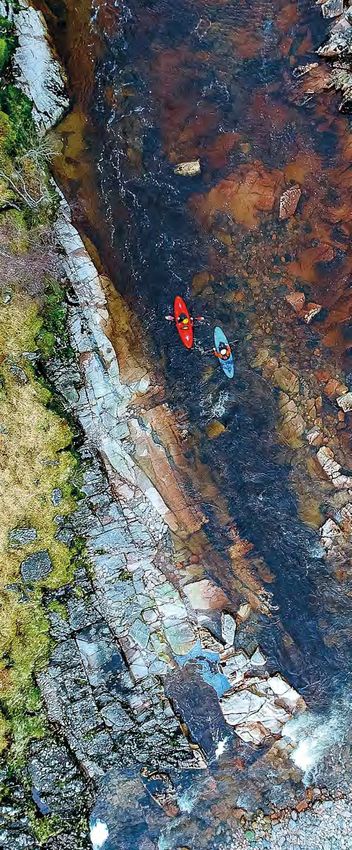
06 NEWS JOHN MUIR TRUST JOURNAL
AUTUMN 2020
Grouse and deer firmly
under the microscope
Two major reports that could potentially
shape the future of land management in
the uplands of Scotland will be
considered by the Scottish Government in
the coming months. The Werritty Review
into the management of driven grouse
moors proposes the introduction of a
licensing system in 2024 if there is no
marked improvement in ecological
sustainability and persecution of raptors.
The Scottish Government is expected to
announce its intentions sometime in the
autumn. Early indications from First
Minister Nicola Sturgeon and Cabinet
Secretary for the Environment Roseanna
PHOTOGRAPH: JOHN MUIR TRUST
Cunningham suggest that it may be
inclined to introduce a licensing system
earlier rather than later. A further
announcement on deer management is
The mixed area of expected possibly in December or January.
land around Earlier this year, the Trust welcomed
Thirlmere
the hard-hitting report published by the
independent Deer Working Group, which
Our new friends in the Lakes called for root and branch reform of deer
management laws and systems. A
coalition of environmental, forestry and
The Trust is delighted to begin work alongside Cumbria Wildlife community organisations has urged the
Trust and United Utilities at Thirlmere in the Lake District Scottish Government to deliver change on
the scale recommended in the report. We
In a move that complements existing efforts at Glenridding, the Trust has begun a new hope to carry a full analysis of the Scottish
working relationship with its neighbours at nearby Thirlmere in the Lake District. An Government’s decisions on both reports
agreement has been reached with United Utilities, which manages the land around in the spring 2021 issue of the Journal.
Thirlmere reservoir, and Cumbria Wildlife Trust to undertake survey work, with a view to
long-term peatland and woodland regeneration and the restoration of natural processes.
Circling west from its most southerly point at Dunmail Raise, the area under the new
agreement includes Steel Fell, High Raise and Ullscarf. Immediately to the east, it rises to
Helvellyn, currently in the care of the Trust as part of the Glenridding Common lease.
Overall, the area encompasses open fellside, mixed woodland, forestry, farmed and
industrial heritage, with the reservoir providing water to the towns and cities of North
West England.
The joint working offers an opportunity to create a healthier landscape mosaic over a
wide area, with the collective effort initially concentrated on a core area of about 15
square km. The ambition is to restore peatland and scrubland, establish new broadleaf
woodland, improve wildlife habitat and reduce erosion and the potential for flooding.
Initial work to gauge priorities will involve Trust land managers at Glenridding Call for stronger nature
working alongside Cumbria Wildlife Trust in a survey of peatland, and potential sites for
planting and regeneration. This builds on the Trust’s previous work replanting rare
protection post-EU
alpine species on the upper slopes of Helvellyn, with the help of local volunteers in The Fight for Scotland’s Nature
Glenridding, and Cumbria Wildlife Trust’s peatland expertise. campaign – a coalition of almost 40
Situated at the southern end of Thirlmere, the village of Wythburn was one of two environmental charities, including the
settlements lost in the creation of the reservoir. Its name derives from the 13th century John Muir Trust – has launched a new
Wythbottune, meaning ‘valley where willow trees grow’. There are formative plans to use petition that calls for an amendment
the climbing expertise of Alpine Club volunteers to return these native trees to the crags. to the Scottish EU Continuity Bill,
The collaborative effort also involves West Head Farm, which grazes a reduced but which is designed to provide stronger
high-quality stock of Herdwick sheep under the watchful eye of a new shepherd, with protection for nature.
whom the organisations are looking forward to working more closely. In this initial As it currently stands, the bill
phase of the project, the two Trusts will also report on access and visitor infrastructure proposes a new environment
such as gateways and stiles. watchdog. However, this new
Thirlmere is rich in both conservation and literary history, providing the inspiration petition calls for the watchdog to be
for writers such as Wordsworth, Coleridge and Sir Walter Scott, as well as the impetus for fully independent of government and
the formation of the National Trust. The Cairn at Dunmail Raise is believed to mark the to have real powers to take
burial place of the last ruler of the medieval Cumbrian kingdom, King Dunmail. enforcement action on specific
Within the original management plan for Glenridding Common, the Trust expressed environmental complaints.
an ambition to find opportunities to work with neighbours, extending and improving Please sign the petition at
opportunities for wildlife and nature on a landscape scale, and so we are delighted to be scotlink.eaction.online/naturelaws
entering this new phase of work in Cumbria.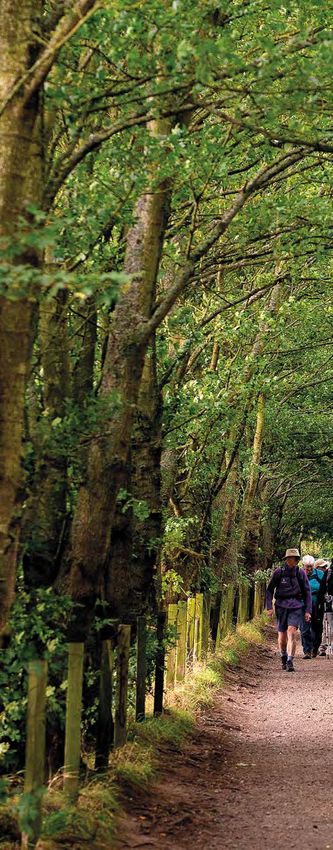
077
Rainforest alliance
The Trust continues to support the
Alliance for Scotland’s Rainforest – a
voluntary partnership of 20 organisations
working to reverse the long-term decline
of Scotland’s ancient Atlantic woodlands.
The partnership has published an
important report which reveals that the
remnant areas of rainforest along the west
coast have fallen to just 30,325 hectares –
less than a fifth of the area of rainforest
that we could have in Scotland.
As such, the group has now established
a set of targets and strategies which aim to
restore this globally rare temperate
rainforest to a better functioning
ecosystem by 2035.
As well as providing policy support, the
PHOTOGRAPH: NIALL BENVIE
Trust will contribute to a collaborative
monitoring programme by collecting Scotland’s Atlantic
baseline data from its properties within woodlands once
the Atlantic woodland zone, including stretched along
much of the west
Sutherland, Knoydart, Lochaber and Skye.
coast
Glenridding extension
The John Muir Trust has welcomed input
from the Glenridding community to
explore a variety of ownership and
management models for Glenridding
Common, following the recent stakeholder
consultation held by the Lake District
National Park Authority in July.
The Park’s consultation sought views on
PHOTOGRAPH: TERRY ABRAHAM/STRIDINGEDGE.COM
offering the Trust a new three-year lease,
with an option to purchase during that
period. It concluded that the Trust should
be offered an extension to its lease for a year
to allow further discussions to take place
PHOTOGRAPH: JOHN MUIR TRUST
with interested stakeholders, including the
local Parish Council that expressed an
interest in how the land is governed.
The photograph (left) of the Trust’s
Glenridding team by Terry Abraham is
taken from his latest Life of a Mountain
DVD – Helvellyn.
Clara begins ranger role
Scottish National Planning Framework response
The Scottish Government onshore wind came from Planning Framework until
in Western Isles
has published all 350 energy companies and an autumn 2021, an interim Our partners in the Western Isles have
written responses to the estate agent. statement is expected this been joined by a new Community Ranger,
Call for Ideas on the The Executive Summary autumn. Together with Clara Risi (pictured). Clara’s role is to build
fourth National Planning reflects this division: “It our LINK colleagues, the on the good work already underway with
Framework (NPF4) and was argued NPF4 should Trust has prepared a the community landowning trusts on the
its analysis of these retain or strengthen briefing for MSPs on the Western Isles, and further encourage the
responses. Within protection for Wild Land, policies needed if NPF4 is care and repair of the area’s rich natural
organisational responses, although concerns were to respond effectively to heritage through further joint working.
support for retaining also raised that existing the climate and ecological Clara is grateful to the ALA Green Trust
protection for wild land protections act as an emergencies. for funding the role and enabling her to
came from community effective bar to renewable Responses are join the Trust and move to the Western
councils and activists, energy development.” available to view at: Isles. She already has some exciting
while opposition for Following the Scottish https://www. projects lined up for the autumn,
retaining the Wild Land Government’s decision to transformingplanning. including working with the Scaladale
Areas map as part of a postpone publication of a scot/national-planning- Outdoor Activity Centre on Harris,
spatial framework for draft fourth National framework/call-for-ideas/ which has delivered the John Muir
Award since 2015.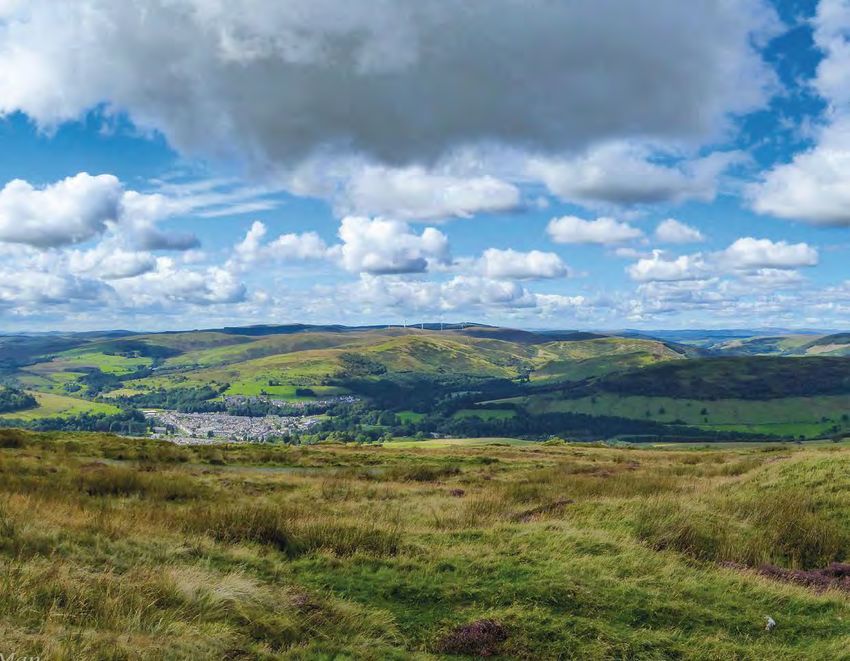
08 NEWS JOHN MUIR TRUST JOURNAL
AUTUMN 2020
Big changes on the Fairy Hill
The Trust has been busy repairing paths and
preparing for visitors at East Schiehallion
Our new easy access ‘Foss Loop’ route, completed in December last
year, is finally open. This 1.5km path with stone surface, a section of
boardwalk – plus five new interpretation boards installed in March
– connects the land owned by Forestry and Land Scotland and
Highland Perthshire Communities Land Trust with that owned by
the John Muir Trust. The path wasn’t fully safe for visitors until early
July due to damage caused by February’s storm Ciara and delays to
the repairs caused by lockdown restrictions.
Early summer also saw the Trust begin work on repairing the
mountain path – work made possible thanks to the support of our
Schiehallion path appeal. Contract manager Chris York and
Arran Footpaths Ltd prepared stone and aggregate from a borrow
pit lower down on the mountain for repairing the path surface.
In late July, a helicopter crew (pictured) worked alongside path
contractors to transport the 80 bags of stone and 160 bags of
aggregate next to the path ready for the repair work to begin. The
path was shut for safety reasons, with the general public
extremely understanding of the need for the work.
“Staff and volunteers have worked hard to keep the path in
good condition over the past few years by regularly clearing
drains and carrying out maintenance,” explained Chris. “Over
time, available materials like stone and aggregate close to the
path have been used up, so we were at the point where additional
material had to be brought in.
“The combination of mountain weather and more than 40,000
feet using the route every year means that maintenance will
PHOTOGRAPH: JOHN MUIR TRUST
always be needed, but this work should future-proof us for the
next few years.”
As lockdown eased, visitors to the Fairy Hill multiplied and the
car park overflowed. As a result, Perth and Kinross Council have
declared the road to Braes of Foss a clearway and no roadside
parking is permitted. If you find the car park full when visiting the
area, please have a Plan B in mind.
Glenshero Public Local Inquiry
The Glenshero Public Local Inquiry is scheduled to
take place in Aviemore between 10 and 18 November.
This will determine the outcome of an Electricity Act
application for 39 wind turbines proposed on a site
adjoining the Stronelairg wind farm, situated among
several Wild Land Areas in the Monadhliaths.
Planning expert Ian Kelly will coordinate evidence,
prepare an Inquiry Report and represent the Trust.
This report will include our own field assessments on
the impacts this proposed development would have
on surrounding Wild Land Areas 14 (Rannoch-Nevis-
Mamores-Alder), 19 (Braeroy, Glenshirra and Creag
Meagaidh) and 20 (Monadhliath).
Steve Carver, an expert on mapping and modelling
wild landscapes from the University of Leeds
Wildland Research Institute, will also prepare an
Inquiry Report and give oral evidence at the hearing
on the loss of Wild Land if remapped with this
development in place.
In addition to the Trust, Wildland Ltd,
PHOTOGRAPH: JOHN MUIR TRUST
Mountaineering Scotland, the Cairngorm National Park
Authority, NatureScot (previously SNH) and the
Highland Council are also opposed to this development
and will all participate in the Public Local Inquiry.
The picture (right) was taken from the Càrn Liath
above Creag Meagaidh NNR, one of the viewpoints
being considered by the Reporter to the Inquiry.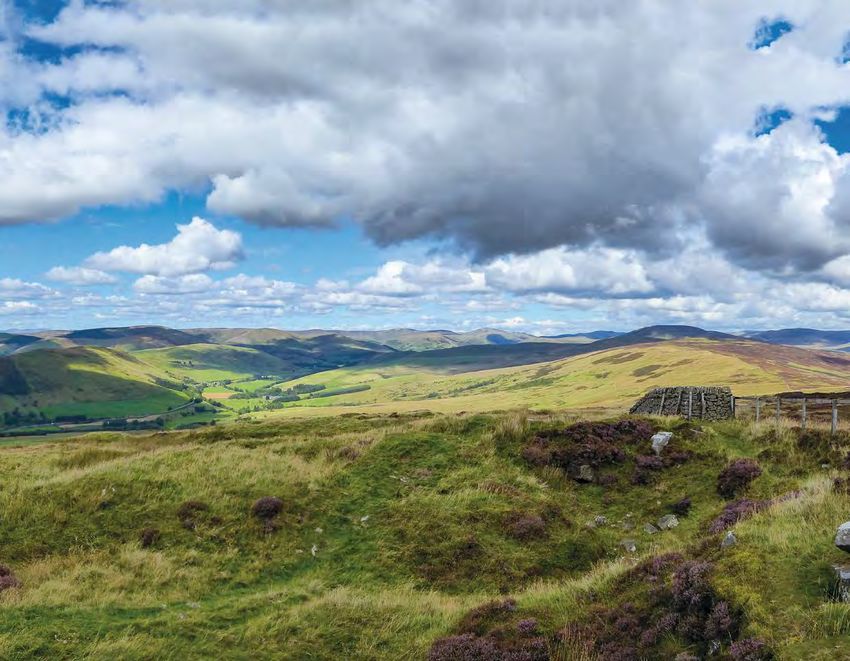
09

Our Wild Future online discussions
Look out for Our Wild Future this autumn – a series of four panel
discussions focusing on the issues that matter most to our
communities, our experience of wild places and our planet.
  Each panel will feature a range of conservationists, activists,
writers and experts discussing biodiversity and natural climate
solutions; responsible access and sustainable adventure;
diversity in the outdoors; and community and conservation.
  The talks will be held online via Zoom at 7pm on the following
dates:
• The future of wild places – 28 October 2020
• Sustainable wildness – 11 November 2020
• Wildness for all – 25 November 2020
• Community and conservation – 9 December 2020
  Tickets are priced at £5 and there will be an opportunity to win
fun prizes at each talk. To book and for more details, head to
johnmuirtrust.org/wildfuture

                                                                       PHOTOGRAPHY: DAVIE LOGAN

                                                                                                   Megan in action;
                                                                                                   before and after
                                                                                                   (below)

                                                                                                  Skye footpath
                                                                                                  repair project
                                                                                                  The Arran Footpath and
                                                                                                  Forestry path team spent three
Trust seeks views on governance                                                                   weeks on Skye this August,
The Board of Trustees is keen to hear Members’ views on proposed                                  inspecting and undertaking
changes to the Trust’s Articles of Association, with consultation                                 repair work to various sections
now open until 30 November 2020.                                                                  of the Trust’s path network. The
   The Articles are the Trust’s key governance document, detailing                                work focused on areas most in
a range of matters including its charitable purposes; what powers it                              need of repair, including parts
has to achieve these; Trustee appointments and their powers;                                      of the Bla Bheinn path and
Members and their rights; and how Trustee and Member meetings                                     sections of the Druim Hain path
are conducted. Trustees are proposing revised Articles to reflect                                 at the south west of Glen
changes in company and charity law and to incorporate current                                     Sligachan.
good practice.                                                                                       The damaged areas are the
   Members can respond via the survey, or by taking part in one                                   result of erosion and braiding
of several online consultation events. A report outlining                                         caused by a combination of
Members’ views will be shared in the new year. Trustees will then                                 heavy rainfall and the high
review the draft Articles in light of Members’ views before putting                               footfall in this hugely popular
them forward for formal consideration in 2021.                                                    area for walking.
   For full details, visit johnmuirtrust.org/                                                        The team, comprising Skye
governanceconsultation                                                                            residents and partners Megan
                                                                                                  and Davie, focused on specific
                                                                                                  areas where pre-emptive work
  Wild Waters Appeal update                                                                       will hopefully negate the need
                                                                                                  for more extensive and
  Many of you have donated to our Wild Waters Appeal to                                           expensive work in the future.
  help care for our coastal properties at Sandwood and Skye.                                         The work follows a number
  Thanks to your generosity, at the time of writing, we’ve now                                    of large-scale repair projects
  raised £38,000 of our £46,000 appeal target.                                                    undertaken by the Trust and
    We really can’t thank you enough for continuing to support                                    ensures that the considerable
  our work throughout this extremely challenging year.                                            investment made – through support of the Wild Ways Appeal –
  Donations will help our conservation staff at Sandwood and                                      is secure and that the paths are fit for use for many more years
  Skye carry out beach cleans, habitat monitoring, seabird                                        to come.
  surveys, path maintenance and other essential work to care                                         The team will head back to Skye later this year for further work,
  for these beautiful wild landscapes and their wildlife.                                         with a long-term plan to return every year to keep on top of a
    For more on the importance of our coasts and waters,                                          network of more than 60km of paths managed by the Trust. They
  see the feature on p28. And if you’d still like to donate to                                    have also identified sections of the Druim Hain path that require
  this appeal, visit johnmuirtrust.org/wildwaters                                                 a greater investment of time and effort, and we hope to focus on
                                                                                                  this in 2021.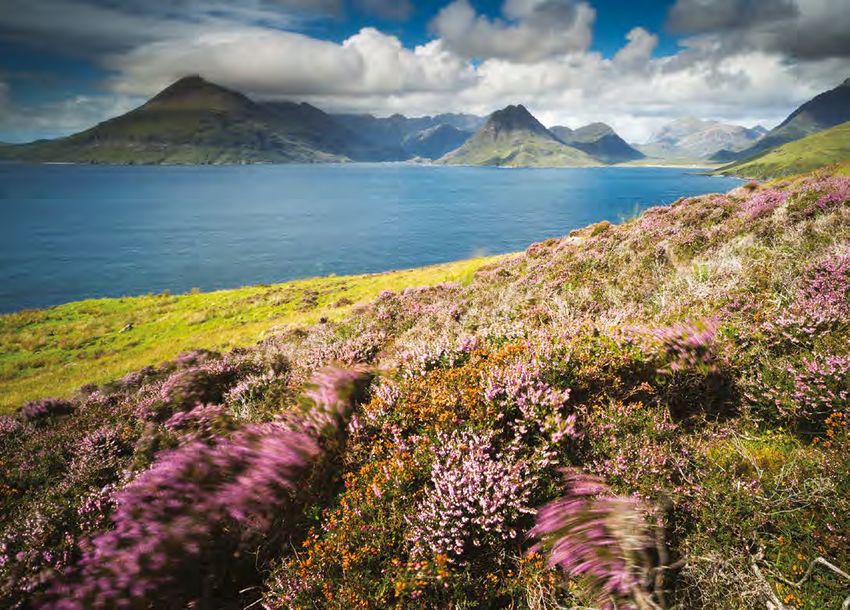
10 GREEN RECOVERY                                                                                       JOHN MUIR TRUST JOURNAL
                                                                                                                    AUTUMN 2020

Nature fix
Helen Todd considers the role of nature
and conservation in helping people to
rebound and recover from the economic
challenges posed by the Covid-19 pandemic

WHILE NOT EVERYONE will admit it, I suspect that many are
now familiar with that feeling of the mind, hours-deep into yet
another Zoom meeting, wandering to somewhere wild and
outside. What is it like right now on Bla Bheinn? Are the leaves on
the west coast changing colour? Did the eagles notice the lack of
walkers during lockdown? And when can I next escape to the hills?
   While being detached from the landscapes we love has been
hard for many during lockdown, it is perhaps disconcerting to
admit that nature is unlikely to have mourned our absence. It
may even have thrived without us.
   However, what has increasingly become clear during the
Covid-19 pandemic is that while nature might not need us, we
certainly need it. For my part, I found that being separated from my
beloved countryside during lockdown only served to emphasise
how much the natural environment provides context to our lives.
   Obviously, we need clean air, fresh water and healthy soils to
survive. Nature’s raw materials also provide our food, medicines
and goods, while its ecosystem ‘services’ protect and nurture us
                                                                       PHOTOGRAPHY: RAMBLERS SCOTLAND

– such as the bees and other insects that pollinate our crops.
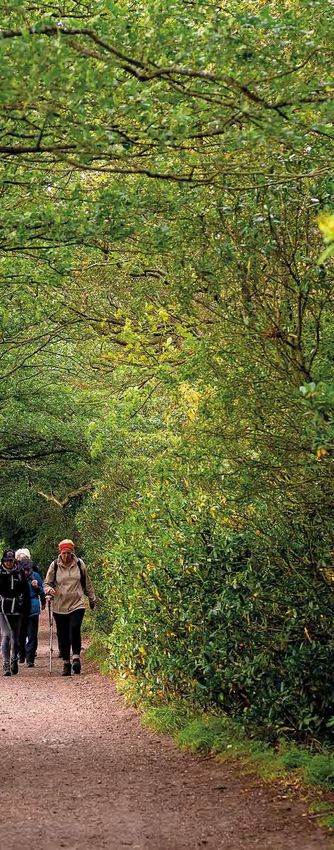
   But it’s important to remember that humans are also a part of
nature. Over and over again, we see evidence of the benefits of
time spent outdoors to our health and wellbeing, whether it is in
gardens, urban parks, woodlands or, perhaps best of all, visiting
wild landscapes.
   I live in Edinburgh and, during tough times while in lockdown,
I found great solace in knowing that at some point I would be
able to return to Scotland’s mountains, lochs, coast and forests,
11
Good for all: or perhaps venture south to the Lake District and beyond.
enjoying a walk in During the strict lockdown period, the Scottish Government
nature (main); the explicitly allowed local outdoor exercise, based on world-class
author on Quinag
access rights, to continue, recognising its importance for people’s
general health and wellbeing.
It was uplifting to see the volume of people flocking to the
outdoors during such a worrying and challenging time. In fact,
polling by Scottish Natural Heritage found that during lockdown
89 per cent of outdoor visitors took regular local walks (up from
77 per cent); 34 per cent of people got a daily dose of nature
(compared to 22 per cent prior); and 71 per cent enjoyed the
outdoors at least once a week (up from 59 per cent).
All these mini outdoor adventures will have helped to maintain
or even boost the nation’s health – something that is particularly
important in Scotland, where two in five of the country’s
residents do not take the recommended levels of exercise.
Prior to Covid, physical inactivity was found to contribute to
more than 2,500 premature deaths each year, costing NHS
Scotland around £94.1 million annually. Similarly, being active in
the natural environment brings huge benefits to mental health,
greatly reducing the risk of conditions such as depression.
You just have to compare the experience of a sun-dappled bike
ride in a local woodland to the same distance covered indoors on
an exercise bike. It’s like comparing an old commercial forest
plantation to an ancient woodland: while both soak up carbon,
native woodlands bring added value both for biodiversity and
sheer enjoyment.
In this Covid era, it has
“In this Covid era, become clearer than ever
it has become clearer that our desire to access
and experience nature is
than ever that our desire not so much a luxury as
to access and experience an intrinsic human need.
nature is not so much And while the
pandemic has
a luxury as an intrinsic emphasised the
human need” importance of nature, it
has also raised big, and
important, questions
about what we want our
‘new normal’ to look like once this is all over. And there is much
to consider. As well as the need to tackle an ongoing health crisis,
it is clear that we have also entered a period of unprecedented
financial challenge.
RIGHT RECOVERY
Communities, businesses, charities and politicians alike are all
searching for ways to kickstart and drive our economic recovery.
Encouragingly, many people – including the Environment,
Climate Change and Land Reform Committee of the Scottish
Parliament – talk optimistically about the potential for a ‘green
recovery’ to create a vibrant new economy that has economic and
environmental sustainability at its core.
To date, much of the conversation has centred on climate
change and renewable energy, but there’s a danger that wider
opportunities are missed. If we are to be bold and effective in our
response to the social, economic and health challenges of the
future, we should not forget the role that nature and landscape –
and our access to them – must also play.
That’s why I believe it is vital for us to present a coherent,
evidence-based case for putting nature conservation at the heart
of a green recovery – something that Scottish Environment LINK
is doing through cross-cutting work that demonstrates how
economic investment can benefit both people and nature.
After all, the case for a green recovery doesn’t just focus on
looking after our own health and that of the planet. Encouraging
people outdoors for recreation is vital for the economy too,
especially in rural areas. Scottish residents contribute some
£2.6 billion each year through recreation – activities that play
Ò continued12 GREEN RECOVERY JOHN MUIR TRUST JOURNAL
AUTUMN 2020
Mind the gap: “It’s vital that people from
funding is needed
both to help more all communities and ethnic
people access
nature, and to
backgrounds have opportunities
better support to reap the benefits of time spent
honeypot areas
outdoors”
a valuable role in supporting sustainable tourism, often in more many people of all abilities and backgrounds making use
physically remote parts of the country. of Edinburgh’s paths and parks in recent months, while walking
Meanwhile, VisitScotland estimates that walking tourism alone during lockdown in Scotland generally has increased by
is worth £1.26 billion to the economy annually (more than whisky 61 per cent. That’s a huge positive for peoples’ collective health,
and golf tourism combined). Those tourist pounds support jobs but the places that people visit require ongoing development
in cafés, B&Bs and shops, as well as ranger services, path and maintenance.
builders, outdoor instructors and many more besides. While it’s clear that public funding will be under pressure in
As we continue to construct a compelling case for a green the coming years, there must be government resources from
recovery, it is more vital than ever that we support efforts to across a range of policy areas, as well as other sources of
enable more people to access the natural world. There are funding such as tourism levies, to help support honeypot areas.
positive signs; a recent survey by Scottish Environment LINK If not, the impacts could become starker with each passing year,
found that 76 per cent of people in Scotland became more aware potentially leading to calls to reconsider Scotland’s much-prized
of nature in their everyday life during lockdown. access legislation.
Meanwhile, the Wildlife Trusts reported a 2,000 per cent
increase in visits to their webcams during lockdown, which UK-WIDE RESPONSE
suggests a strong appetite for engaging more in the natural world. Of course, it’s not just in Scotland that we’ve seen people step
It’s an interest we would do well to harness. After all, as closer to nature during lockdown. A YouGov poll suggests, across
conservationists repeatedly point out, if people do not learn to Britain, 74per cent of people took up some form of exercise, with
value nature, then they will not care when its richness is depleted. six in 10 women and half of men taking up walking (the most
There is also strong evidence to demonstrate that people who popular form of exercise).
enjoy the outdoors are far more likely to campaign on As my colleague Gemma Cantelo, Head of Policy and Advocacy
environmental matters. at the Ramblers, points out, we know that easy access to green
Of course, this is not just about engaging with the few. It is vital space not only makes us healthier and happier, but also improves
that people from all communities and ethnic backgrounds have our sense of community and encourages positive action to
opportunities to reap the benefits of time spent outdoors. For protect the environment.
now, the balance is badly skewed; to date, the wealthiest fifth of “That’s worth harnessing in the long term,” she says. “But we
adults in Scotland are three times more likely to go hill walking have not experienced lockdown equally. This isn’t new – we know
or rambling than the poorest fifth. poor access to green space exacerbates health inequalities. But
the current crisis has brought the personal cost of that into stark
VISITOR PRESSURES relief. That’s why we are urging our national governments to see
But, as ever, there is a flipside. As lockdown restrictions eased recovery from this crisis as an opportunity to boost walking and
over the summer months, popular outdoor destinations improve our access to the outdoors in the long term.”
throughout the UK saw a huge increase in visits, bringing By investing in nature and our enjoyment of the outdoors as we
challenges of a different kind. The examples of anti-social emerge from this crisis, we can make a bold commitment towards
behaviour at beauty spots have been numerous, and deeply ensuring that our nation – and our planet – can look forward to a
frustrating. They have led to lurid headlines and generated sustainable future for many decades to come.
national debate about how we can better promote responsible
access and care for our natural environment. About the author
Even individually responsible visitors have inadvertently led to Helen Todd is Campaigns & Policy
cumulative impacts and damage simply due to sheer numbers. Manager at Ramblers Scotland and
These issues have underlined how rural communities need help a former chair of Scottish
Environment LINK. For more,
(in other words investment) to support tourism with proper visit ramblers.org.uk/scotland
facilities such as trails, toilets, campsites, public transport hubs
and car parks, as well as staff to engage with visitors and longer- Further information
term education initiatives to promote responsible behaviour. For much more on the challenges,
and possible solutions around
Investment is also needed in urban areas for paths, woodland
visitor management, see the
management plus blue and green spaces in places where the responsible access feature on p24
majority of people live. It has been hugely encouraging to see so of this issue.PHOTOGRAPHY: JOHN MUIR TRUST
GLENLUDE 13
Helping hooves
Nicky McClure highlights how
a team of horse loggers has
helped expand areas of native
woodland at Glenlude
SEPTEMBER saw our regular volunteers
return to an altered landscape at Glenlude
in the Scottish Borders, the Trust’s smallest
property. Not only were they now working
in smaller groups, following government
coronavirus advice, but they were finally
able to start preparing the newly felled
conifer plantation for native woodland
planting – helped by a low-impact, but
highly impressive, pair of working horses. Horse power: Tyne
with Gabriella
Teamwork Horse Logging had travelled
(main); finishing
from Dumfries to help clear recently felled off on day one
timber from the large brash hedges at the
north east corner of the property. The
presence of Stig, Tyne and their handlers, As Stig’s handler Steffi points out, corridor leading down to the burn, with
Steffi Schaffler and Gabriella Seymour, “Working on sites like this, which are full of open areas around it for the ground
also gave the workers a much-needed holes and ridges, is tough, but they will be nesting birds and insect life that’s already
boost following a tricky year. filled in once the horses have been over it a here. It’s going to be amazing!”
“The project started late because we few times. It looks muddy now, but within
didn’t want to fell during the nesting three months it’ll start greening up.” About the author
season,” explains Karen Purvis, the Trust’s After just a week of horse logging, the land Nicky McClure is the Trust’s
Glenlude Manager. “In addition, looks much better – as are the spirits of the Communications Officer
mechanical problems and a very wet Glenlude team. Having the horses go over
Further information
winter meant that the timber had been left the ground inside the new brash hedges Huge thanks to our funders the
in the plantation. enables more tree seedlings to pop up. SUEZ Communities Trust and AEB
“There wasn’t any risk of Stig and Tyne Karen says the new area will eventually Charitable Trust for enabling us to
getting bogged down in the mud. Rather link two big sections of native woodland create this upland birch wood,
contributing towards the Trust’s
than trashing the ground, they do a really – rowan, aspen and birch that was planted
vision to rewild Glenlude. For more
good job of exposing the bare soil, which in 1995 and the eight-year-old Phoenix on horse logging, visit
is perfect for seed setting for tree species.” Forest. “It will create a lovely wildlife britishhorseloggers.org14 LANGHOLM MOOR JOHN MUIR TRUST JOURNAL
AUTUMN 2020
10,000 acres of hope
Alan McCombes visits a Borders mill town that has ambitions to turn a former grouse moor
into a nature reserve as part of one of the biggest community buyouts ever seen in Scotland
IN NORMAL TIMES, Langholm pulsates with excitement during most extensive ecological restoration project outside of
the last week in July as visitors from around the world arrive for the Cairngorms.
the annual festivities in the build-up to one of Europe’s most In these past 56 years, Margaret has seen profound changes
dramatic equestrian spectacles. This year, however, the streets are in Langholm. “When I came to live here, there were five mills
deserted just 48 hours before what should have been the employing over a thousand workers, some of them working
crescendo – the Common Riding from the centre of the town high around the clock. Country girls from farms away out in the sticks
into the nearby hills to symbolically mark out the boundaries of would come and work in the mill during the week, staying in
an area of Langholm Moor which, in 1759, was officially people’s homes for bed and breakfast and that would generate
designated by Scotland’s Court of Session as ‘common land’. extra income.
Margaret Pool, like everyone else in the town, is disappointed “The place was thriving – there were four or five baker shops,
by the cancellation. She recalls that as a young girl living in umpteen butchers, four cafes linked to the mills, it was a different
distant Falkirk, she would make an epic journey each July with place. It was a rounded economy – farming, forestry and the mills.
her mother to stay with a family friend in Langholm. “In those There wasn’t such a thing as tourism to any extent. But gradually,
days, folk didn’t have cars, so you needed three buses to get here,” with the development of man-made fibres, the demand for high
she recalls. “Whenever we reached the Ewes Valley, I would look quality tweed diminished. There was always a niche market, but
out for the monument at the top of the Whita Hill, because it felt one by one the mills closed down.”
like coming home. And the Common Riding was the highlight of The final hammer blow was delivered in 2018 when the
the year. I just fell in love with Langholm. I never imagined I Edinburgh Woollen Mill – originally the Langholm Woollen Mill
would eventually come and live here.” – moved its headquarters out of the town to Carlisle, just across
In 1964, she did come and live in what was then a bustling mill the border. It was within commuting distance, but the loss of 200
town, where she would go on to become a pivotal figure in the jobs from a small town of 2,300 people left a gaping hole at the
local community. As chair of the local development trust, the heart of the community.
PHOTOGRAPH: DAVE LIDDLE
Langholm Initiative, Margaret is now part of a small working “It is the death knell,” said the Chair of the local community
group that is spearheading an audacious campaign to bring more council on hearing the news. “I don’t know how we can come
than 10,000 acres of Langholm Moor into community ownership back from this.”
and turn around 80 per cent of that land into a nature reserve. If
the plan comes to fruition, it would be the biggest community WINDOW OF OPPORTUNITY
buyout ever seen in Scotland south of the Great Glen, and the Then, out of the blue, in May 2019, the Buccleuch Estates made15
View westwards
over Langholm
from the vast moor
that dwarfs
the town’
an announcement that sent a lightning flash of optimism surging 1997 (see sidebar, p18), this seriously endangered species has
through the town: Langholm Moor, a vast area of broad, rounded flourished to the point where there are now more hen harriers in
hills that rise steeply from the eastern outskirts of the town, was this location than in the whole of England. The moor is also home
up for sale. to peregrine falcon, merlin, kestrel, meadow pipit, lapwing,
When the news broke, Kevin Cumming was in a caravan with curlew, buzzard, golden plover, short-eared owl, raven and red
his wife. “It was the first day of a one-week holiday, and from then grouse, while black grouse are also a familiar sight here on the
on my phone never stopped ringing,” he remembers. At the time, rolling Southern Upland hills. Out on the moor with Kevin, we
Kevin was running Wild Eskdale – a community-run ecotourism witness within a few minutes a pair of hen harriers helping two
and nature education project, which among other things delivers fledglings perfect the art of flying and then watch a kestrel swoop
the John Muir Award. down on a vole and carry it off to devour on a nearby fence post.
Although just 34 years old, Kevin has a wealth of experience But for the community, the anticipated Tarras Valley Nature
which would now prove invaluable to the Langholm community. Reserve would be more than just about protecting existing
After starting his working life as a professional footballer with wildlife. “This is an amazing place,” says Alison Hutton, a retired
Dundee and Forfar Athletic teacher and a member of
he went on to university to the community buy-out
study for degrees in business
“The incredible traditional skills steering group. “In a
administration and nature that we have locally could be fortnight, when the heather
conservation, and has since turned towards improving and is in full bloom, it will look
worked as an animal keeper, breathtaking. But it’s not
a falconer and an estate enhancing the land and its wildlife” really how this land should
manager. On his return from Alison Hutton be. As a community, we
holiday, he wrote a document could do something much
setting out a powerful vision better with this land.
and a clear plan of action. “We could get young
At its core is the creation of an 8,000-acre nature people trained differently.
reserve based around the Tarras Water, the small, fast-flowing The incredible traditional skills that we have locally could be
river that splashes its way from the high slopes of Langholm Moor turned towards improving and enhancing the land and its
into the River Esk just south of the town. This vast area of upland wildlife. We could turn this moor into a mosaic of woodland, open
is already designated as a Site of Special Scientific Interest for its heathland, wetlands and restored peatlands.”
geological and ecological diversity, and as a Special Protection There are also ideas for conservation grazing, with a sustainable
Area because it is a nationally important haunt of the hen harrier. mix of cattle, sheep and wild goats to remove thick layers of dead
Since the end of driven grouse shooting on Langholm Moor in vegetation and revitalise the soils. The community buy-out team
Ò continued16 LANGHOLM MOOR JOHN MUIR TRUST JOURNAL
AUTUMN 2020
are confident that an ecological project on this scale could Langholm and there is a strong understanding that the natural
become the dynamo for the social and economic renaissance of habitats and beauty of the landscape are huge assets that have
Langholm. “People are interested in the natural world,” believes been underplayed,” adds Kevin. “The community wants to see
Alison. “A healthy natural environment would be a stronger outdoor tourism as a key part of its local economy. So that helped
economic foundation than grouse.” form a lot of our thinking and has become the underlying
The sheer accessibility of this area of land is a major advantage. foundation of this whole project. It’s both exciting and daunting
The moor comes right down almost to the doorstep of the town to figure out how we do that sustainably while carrying out
and is crossed by a few minor paved roads, popular with ecological restoration on a sensitive site.”
birdwatchers. By all accounts, the people of Langholm are While the Tarras Valley Nature Reserve would be the flagship
generous with their time and money, so there would be no attraction, the proposed community-run estate would also
shortage of volunteers to do whatever is required to make a include an additional 2,500 acres of less sensitive land with
success of this exciting venture. revenue-generating potential. The steering group is exploring the
“The idea for a nature reserve had been raised from time to feasibility of a small solar farm and wind turbine on former
time in the past by the local raptor study group and others,” grazing land nearer the town. Kevin explains these would be
explains Kevin. “But the difference now is the prospect of designed sympathetically to the surrounding landscape and
community ownership and management, which could turn would need the support of residents in the general vicinity.
it into a reality.” The group has also identified a site that may be suitable for
glamping and eco-camping and have further ideas for
SEEKING SUPPORT redeveloping disused and dilapidated steadings. “There is a lot of
When the sale was first announced, Kevin’s document was forestry in the area so we could possibly have some sawmills and
forwarded to a number of potential allies, maybe even a brewery or a
including the John Muir distillery,” says Kevin. “This
Trust, and was made “The idea for a nature reserve had bit of land near the town is
available for local people to been raised from time to time in not so important
read. It aroused a level of ecologically, but if the
enthusiasm which surpassed the past by the local raptor study community requires space
all expectations. group … community ownership for any sort of development
“When we met with the in the future – whether
Buccleuch Estates and
could turn it into a reality” that’s more forestry, native
declared an interest, they Kevin Cumming woodland, housebuilding,
gave us just two weeks to or whatever – it could
gauge local opinion,” says Kevin. “So, we went become an important focus
around the doors and within a fortnight had over 800 signatures, for economic regeneration.”
which is 28 per cent of the entire population of Langholm. He later takes us to a burnt-out farm building deep in the heart
The legal threshold required to initiate a community buy-out of the moor that has been derelict for three years and mentions
is 10 per cent.” the idea of it being transformed into a field centre with a
Buoyed by the scale of public support, the community applied bunkhouse for walkers. The community has already been in
to the Scottish Land Fund for a grant to employ consultants – a touch with higher education institutions to explore some of the
community development specialist, an accountant, a forester, a possibilities.
renewable energy team, and a land agent to value the property. “Once the community takes over this building, we could, for
Beyond the community, the John Muir Trust was the first example, carry out research to establish a baseline for
organisation to publicly support the initiative. Mike Daniels, the biodiversity against which we can monitor progress over the
Trust’s Head of Policy and Land Management, was widely quoted years,” explains Kevin. “We also see this as a base for education –
in the press explaining why: “We are extremely excited about this for getting schools both local and further afield involved and
project. Its ambition and vision are what has attracted us to it and offering higher education institutions a facility for postgraduate
today we are pledging £100,000 to support the community’s research. It might also become a base from which we could run
purchase of the land. The protection and restoration of wild wildlife tours.”
places and the regeneration of rural communities go hand in
hand, so we are delighted to support this inspiring initiative. We PRICE-TAG
call on other organisations to follow our lead and support the The £6.5 million price-tag for the 10,500 acres of land has,
Langholm Initiative.” naturally, provoked some controversy. If it goes ahead, this would
The campaign has since received the support of a broad range be the biggest community buy-out ever seen in Scotland in
of national organisations, including Community Land Scotland, financial terms. According to Margaret Pool, while the
RSPB Scotland, Scottish Natural Heritage, Border Forest Trust, community is strongly supportive of local ownership, there is
Trees for Life, Rewilding Britain, Revive Coalition, and Forestry some negativity towards the idea of handing such a huge sum of
PHOTOGRAPHS: TOM HUTTON, DAVID LINTERN, KEVIN CUMMING
and Land Scotland. It also has the backing of a host of local money to the Duke of Buccleuch, whose ancestors were given the
organisations plus MSPs from all three political parties land many centuries ago as a gift by Royal Charter.
represented in the South of Scotland region – SNP, Conservative But the community group is keen to focus on the present and the
and Labour. future rather than the past. “What is the alternative?” asks Margaret.
“We also conducted a major community consultation with “We have to look at it through today’s eyes. The Buccleuch Estates is
public events and encouraged people to submit ideas about what a business and if Langholm Moor is sold on the open market, we
they think we could do with the land,” explains Kevin. “Langholm don’t know who might come along and buy it.”
has had a lot of heartache in recent years with the demise of its The community commissioned its own valuation of the land
textile industry, so the project has four cornerstones to it: and accepts that the price reflects the potential revenue streams
ecological restoration, community regeneration, renewable that would come with the purchase. These include eight rented
energy and wildlife conservation. All are very important to the properties, an in-hand farm (which would be run directly by the
community.” community) and a large commercial forest plantation at the
Interestingly, the consultation revealed a key change. “Local southern edge of the moor with well-maintained timber almost
people recognise that the era of industrial textiles is over for ready for harvesting.
Ò continued17 Full of potential (clockwise from main): views over Langholm Moor; male hen harrier; regenerating woodland; Langholm Moor Demonstration Project signage; kestrel with meal; the old farm building earmarked as a future field centre
18 LANGHOLM MOOR                                                                                                JOHN MUIR TRUST JOURNAL
                                                                                                                            AUTUMN 2020

   Kevin’s drive and imagination together with the wealth of            loved coming home. There is something magical about this area.
existing knowledge and expertise in the town have helped                That valley over there – the Tarras Valley – is like a different world.
galvanise confidence across the generations. Fifteen-year-old           It feels remote and most people don’t know about it, yet it is so
Cerys Gough helped to organise a strike of school students at           accessible. There is a little bit of me wants to keep this secret to
Langholm Academy last November as part of an international              myself and not tell anybody, but that would be unfair.”
youth protest to sound the alarm bells over climate change and             Gavin is saddened by the demise of the textiles industry but is
the erosion of nature. She has been carrying out volunteer              convinced that under community ownership Langholm can
conservation work on the moor for five years, and instantly             prosper once again by making the most of its precious natural
became involved in supporting the buy-out.                              environment, its unique cultural heritage and colourful history.
   “Not just as a town and a                                                                                       The Clan Armstrong centre
country but as a species, we are                                                                                   just outside Langholm,
facing a serious ecological                                  “Buccleuch Estates is a business                      which tells the story of the
crisis that is essentially our                                and if Langholm Moor sold on the                     most powerful of all the
fault,” she argues. “There are                                                                                     Border Reiving families,
many different ways we need                                   open market, we don’t know who                       attracts visitors from
to tackle that crisis. One                                    might come along and buy it”                         around the world keen
important part of the solution                                                           Margaret Pool on exploring their
will be to protect wildlife and                                                                                    ancestral roots.
support biodiversity growth. By                                                                                       Others come to pay
buying this land and turning a                                                                                     homage to Thomas Telford,
major part of it into a nature reserve, we will be                                                                 the famous road, bridge
creating a huge area where wildlife will be allowed to thrive.”         and canal builder who grew up on a nearby farm and was
   A good 60 years older than Cerys, Gavin Graham left school at 16     reputedly inspired to learn his trade by studying the challenging
and worked in the mills for 20 years before going on to become a        topography of a landscape criss-crossed by rivers, burns and
successful international businessman. We caught up at the Hugh          streams. Langholm is even the ancestral home of the first man on
MacDiarmid Memorial Sculpture – an imposing bronze and steel            the moon, Neil Armstrong, who was awarded the Freedom of
structure high up in the moor decorated with images from the work       Langholm when he visited the town in 1972.
and life of Scotland’s second most acclaimed poet after Robert             “The mills are gone forever, and tourism is now the way
Burns. Born and raised in Langholm he was a famously                    forward,” believes Gavin. “We’ll never attract people who want
controversial figure. “He was a rebel. Half the town don’t like him,    to lie sunbathing, but this is a beautiful area that would appeal
and the other half think he’s great,” laughs Gavin. “He was thrown      to young professionals and families who are interested in
out of the Scottish National Party for being a communist and            walking, climbing, cycling, wildlife, canoeing on the rivers and
thrown out of the Communist Party for being nationalist!”               other outdoor activities. For that, we need to have wigwams,
   MacDiarmid may have been a provocative character who made            pods, log cabins with good, attractive facilities. It would be
some enemies in his hometown, but his love for the Langholm             wonderful if we could get this land because the potential
landscape stayed with him until his death in 1978 at the age of 83      is huge.”
and features strongly in his poetry and prose. “After journeying
over most of Scotland, England, Eastern Europe, America, Siberia                                               Further information
                                                                                                               For much more on participating in
and China, I am of the opinion that my native place is the
                                                                                                               this exciting community buyout, see
bonniest place I know,” he wrote. “Not by virtue of the little burgh                                           David Balharry’s welcome message
in itself … but by virtue of the wonderful variety and quality of the                                          on p5 and visit
scenery in which it is set.”                                                                                   langholminitiative.org.uk
   Gavin Graham shares that passion for the local landscape and
                                                                                                               About the author
its wildlife. He too has travelled extensively, especially in the                                              Alan McCombes is the Trust’s Public
United States, and is a big fan of John Muir. “But the pull of home                                            Affairs Advisor and Managing Editor
is strong,” he says. “I’ve loved travelling the world, but I’ve always                                         of the Journal

                                     Driven grouse and raptors
                                     In recent decades, Langholm Moor has been            grouse shooting uneconomic on a moor that
                                     the focus of two major scientific projects           had already lost much of its heather habitat
                                     involving stakeholders from government,              in the preceding decades due mainly to
                                     nature conservation and representatives of           overgrazing by sheep.
                                     the driven grouse industry to examine the               In 2008 the Langholm Moor
                                     relationship between protected birds of              Demonstration Project, involving many of
                                     prey and the production of red grouse.               the same partners, was launched to assess
                                       The Joint Raptor Study, launched in 1992,          whether the moor could be restored as a
                                     was a research experiment monitoring both            location for driven grouse shooting without
                                     raptor and red grouse populations. By 1996,          compromising the population of hen
                                     the number of hen harriers in particular             harriers and other moorland birds. While it
                                     had risen substantially, while the expected          met most of its objectives, the rise in red
                                     autumn densities of red grouse had                   grouse numbers failed to reach the targets
                                     declined by 50 per cent, rendering driven            required to resume driven shooting.
You can also read


