Neighbors Abhor a Vacuum Regional and Key Partner Engagement with Afghanistan After 2021 - Andrew Watkins, Timor Sharan - Bibliothek der ...
←
→
Page content transcription
If your browser does not render page correctly, please read the page content below
Neighbors Abhor a Vacuum
Regional and Key Partner Engagement
with Afghanistan After 2021

Andrew Watkins, Timor Sharan
Neighbors Abhor a Vacuum

Regional and Key Partner Engagement
     with Afghanistan After 2021

              April 2021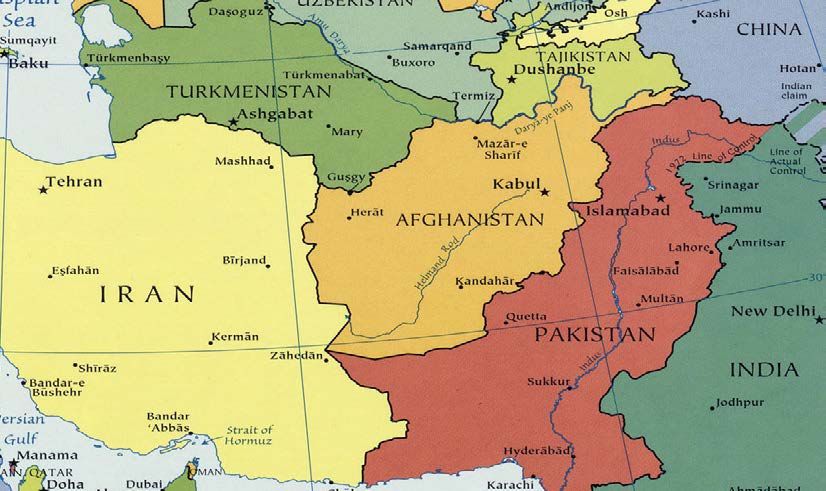
Contents

Foreword												I
Introduction												1
Trajectory of Disengagement										3
    Washington’s Gravitational Pull										3
    Disengagement Domino Effect 										4
    Hope or Doubt under Biden										5
Regional Responsibilities										6
    Northern Border Watch										6
    Zero-Sum Strategies in South Asia									6
    U.S. Out, Iran In?											7
    Refugee Flows and Ripple Effects									7
    Peace Process and Scoring Points?									8
Hedging Bets												9
    Diversifying Kabul’s Security Assistance Portfolio 								9
    Diplomatic Disengagement										10
    Conditionality as Hedging										10
New Frameworks? 											12
Outlook and Recommendations for European Policy Makers						   14
References												15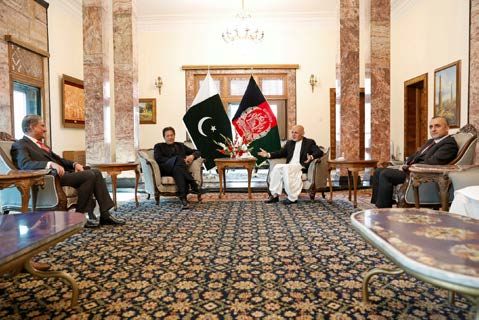
I

Foreword

The conclusion of the U.S.-Taliban agreement in February      and its neighborhood and to inform Afghan decision
2020 remains a watershed moment for Afghanistan’s             makers about positions and perceptions of key players
international relations, matched only by the April 2021       in the region and beyond. In ten virtual events convening
U.S. announcement of an unconditional withdrawal from         more than 150 active and former officials, experts
the country by September this year. While it hardly came      and civil society representatives, project participants
as a surprise to observers and U.S. attempts to disengage     were encouraged to compartmentalize and mitigate
from its longest war had been numerous, the agreement         conflicts with a negative spillover effect into the Afghan
did little to reduce uncertainty about the nature of          theatre and beyond, while at the same time addressing
the disengagement, its repercussions on the ground,           interdependencies and external factors. A particular focus
implications for the engagement of other allies as well as    of the project was aimed at increasing particularly Afghan
regional security.                                            agency in these discussions, establish and strengthen
                                                              durable networks and understanding between those
To maintain and expand the current momentum for               seeking sustainable peace and stability as a precondition
a peaceful settlement to the Afghan conflict, credible        for development and wellbeing for all Afghans.
buy-in is key but should not be taken for granted or
understood as a linear or uniform process. While it is        This report is a synthesis of nine policy briefs discussing
widely acknowledged that the U.S. withdrawal is a             the implications of the US withdrawal and the ongoing
crucial factor in a shifting security environment in Asia,    Afghan Peace Negotiations on existing policy tools,
the direction, outcome, and implications for regional         strategic interests, and challenges for key stakeholders in
security are not so clear yet. What are the scenarios that    and outside of Afghanistan. Moreover, it identifies and
Afghanistan’s neighbors are bracing themselves for or         explores themes like “hedging”, “responsibility” and
the opportunities they seek to benefit from? How will a       “conditionality” redefined and put into policy on all sides
U.S. withdrawal influence current dynamics of alignment       of Afghanistan’s borders in the past decade. Thereby, it
and conflict between Afghanistan’s neighbors? What            helps a policy-oriented audience particularly outside of
would various scenarios imply for European interests and      the region to understand and grasp the regional security
policymaking in the region?                                   complex surrounding Afghanistan and outlines future-
                                                              oriented policy recommendations on how to move
The project “From Uncertainty to Strategy: What are           European engagement forward in the next years. FES is
the odds for future win-win scenarios in Afghanistan’s        grateful to all the interlocutors who shared their valuable
Neighborhood?” is an independent effort of the                insights and everyone who contributed to this project.
Friedrich-Ebert Stiftung (FES) and partners inside and        We are enormously indebted to the authors of this report
outside Afghanistan, among them the Afghanistan               and previous project publications, Andrew Watkins and
Policy Group, to develop and discuss likely scenarios for     Dr. Timor Sharan, whose insights, analytical rigor, and
Afghanistan’s neighbors, policy adjustments, and the          companionship were essential from the very first step of
need for a comprehensive strategy among European              this project.
foreign policymakers. Throughout 2020 and early 2021,
the project identified concerns, expectations, aspirations,
and uncertainties among Afghanistan’s neighbors and key                                       Dr Magdalena Kirchner
regional and international players about the anticipated                                            Resident Director
outcome of the intra-Afghan talks and current as well as                                             FES Afghanistan
future conflict dynamics.                                                                                 April 2021

A trilateral approach to the abovementioned questions
helped to inform the European debate about Afghanistan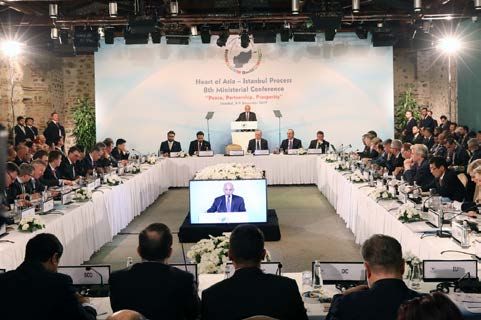
1 · Introduction

Introduction

In February 2020, the United States signed a political                           thematic report synthesizes the findings of a project
agreement with the Taliban that laid the foundation                              exploring the scenario-building and policy planning
for the withdrawal of Western military presence from                             on Afghanistan of several regional states, as well as
Afghanistan after nearly two decades of intervention,                            the European Union and the Transatlantic (or NATO)
state-building, and financial support. This agreement                            engagement, in anticipation of the U.S. military exit
(and subsequent U.S. diplomatic activity and military                            and reduced U.S. assistance in the future. This project
drawdowns that progressed until the end of the Trump                             facilitated discussions among a diverse set of active
administration’s term) drew a wide range of critiques                            and former officials, policy opinion leaders, scholars,
from Afghan leaders including President Ashraf Ghani,                            and subject-matter specialists of nine different powers
donor nations and NATO partners, and regional states.                            that neighbor or are engaged in Afghanistan’s regional
Events prompted all invested actors to seriously consider                        security complex. These discussions, additional expert
the impact of a potential sea-change in U.S. engagement.                         consultations, and a thorough literature review laid the
While the Biden administration announced in April                                groundwork for a series of nine policy briefs that outline
its intent to unconditionally withdraw military forces                           neighboring states’ approaches to the political, economic,
(prompting the same move from NATO), much remains                                and security challenges likely to grip Afghanistan and the
unknown about the future extent of US and Europrean                              region in the coming years.1
security assistance. Afghanistan’s future beyond 2021 is
highly uncertain. In light of the past year’s events, this

              Political map of Southwest Asia. Source: Mapsland

1 The countries and organisations studied were the European Union (which also included individual member states as well as several non-EU European

nations), Russia, Uzbekistan, India, Pakistan, Turkey, Iran, China and the United States. See these Policy Briefs on https://afghanistan.fes.de/e/from-
uncertainty-to-strategy.

Neighbors Abhor a Vacuum: Regional and Key Partner Engagement with Afghanistan After 2021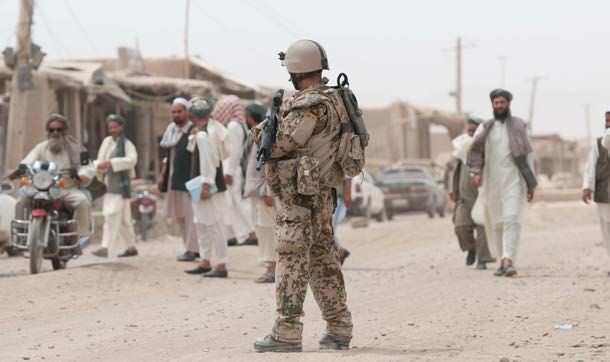
Introduction· 2

                                                                       “
Neighboring states’ perspectives and incentive structures
are distinct; there are stark differences on views of
Afghanistan’s future, how to engage with the country
and its fractious political landscape, and how to meet the
challenges that could extend across the region. Some of
these views stem back to longstanding threat perceptions
and detrimental zero-sum thinking. Other assessments                        For all of the uncertainty
seem to have evolved in the past few years, or even more                    surrounding the U.S. and other
recently, in response to the shift in U.S. policy. Yet, several             partners’ potential exit, the
common themes have emerged as well; many states                             current moment is perhaps
invested in Afghanistan’s future share similar concerns,                    the first in which regional
forecasting, and even domestic political limitations. For                   states have reached an implicit
all of the uncertainty surrounding the U.S. and other                       consensus on security, stability
partners’ exit, the current moment is perhaps the first in                  and economic connectivity since
                                                                            the Western intervention in

                                                                                                                       ”
which regional states have reached an implicit consensus
on security, stability and economic connectivity since the                  2001.
Western intervention in 2001.

Perhaps most universal is the unwillingness of regional
states to commit to – and in some cases even plan
for – policies on Afghanistan that extend too far into                states might begin to fill the vacuum of an American
the future. Over the last two decades, Afghanistan’s                  departure, to what degree, and what new regional
neighbors have adjusted their postures in reaction to U.S.-           dynamics might emerge as a result. The European Union
led NATO military engagement and its inconsistent, often              finds itself in a dilemma, with several member states
ambiguous Afghan policies. Neighbor, near-neighbor,                   genuinely concerned about regional stabilization (and
and donor states have spent much of the last year waiting             the impact of any lack thereof). However, these concerns
for the U.S. government to determine and implement its                are complicated by divergence from the United States’
status in the country. Put simply, every nation involved              interests and the unequal weight Washington has in the
in the region’s affairs will likely shape their Afghanistan           framework of the NATO-led mission in Afghanistan. But
policy differently depending on whether – and to what                 the uncertainty inherent in this transitional period need
extent – the United States executes a withdrawal of its               not deter European and regional powers from preparing
military and financial support. This posture is predictable,          for a range of potential challenges, recognizing the
considering how the region saw Afghanistan through                    possible convergence of regional interests in Afghanistan,
the prism of U.S.-led NATO military engagement in the                 and committing to meet them together.
last two decades. The potential American withdrawal
triggered concerns, and early-stage policy discussions,
of disengagement by other invested nations. Likewise, it
prompted several states to begin “hedging their bets” by
diplomatically engaging with the Taliban insurgency and
other Afghan stakeholders to mitigate their post-U.S.
military exit risks.

All of the above makes plain the need for regional powers
to establish new economic, diplomatic, and security
frameworks, for which formal discussion and dialogue
should begin as soon as possible. External actors’
reactivity to U.S. policy has raised questions of which               The Khyber Pass in northern Pakistan. © Jonathan Wilson

                                                    Neighbors Abhor a Vacuum: Regional and Key Partner Engagement with Afghanistan After 2021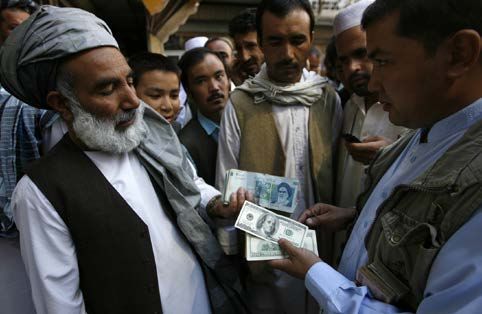
3 · Trajectory of Disengagement

Trajectory of Disengagement

Washington’s Gravitational Pull                                                                   All of these developments took place as the clock wound
                                                                                                  down on the U.S.-Taliban deal’s deadline for foreign troop
In the latter half of 2018, the United States initiated a                                         withdrawal, meant to be completed by 1 May 2021. On
policy shift with far-reaching ramifications for Afghanistan                                      14 April, U.S. President Biden finally confirmed what so
and the surrounding region. After close to a decade of                                            many had speculated and anticipated over the past year:
quixotic attempts to draw the Taliban into peace talks,                                           the U.S. would not only withdraw its remaining military
the U.S. made a critical concession: sitting down with                                            troops (in coordination with NATO mission partners), but
the insurgent group for bilateral talks without involving                                         would do so unconditionally by September.
Kabul, a previously insisted-upon condition. Other major
donors, including NATO partners, were likewise excluded                                           From the start, voices within Afghanistan, among NATO
and kept poorly informed. After more than a year of direct                                        partners, other major donor states and allies, and American
negotiations, the U.S. and Taliban reached a political                                            foreign policy circles have criticized the U.S. approach.
agreement in February 2020. This deal was anchored                                                They argue that it robbed the Afghan government of
around a timeline promising foreign military withdrawal                                           its leverage and forced it into negotiations at a distinct
– including the forces of all NATO mission contributing                                           disadvantage, all while raising the international profile
states. In exchange, the Taliban pledged not to host or                                           and legitimacy of the Taliban. Even advocates of the U.S.
support terrorist groups that threaten the U.S. and its                                           approach to shepherd a political settlement expressed
allies and to initiate talks with the Afghan government.                                          concern later in 2020, as Trump ordered the military to
                                                                                                  continue making a series of successive drawdowns (from
Since September 2020, the two Afghan parties to the                                               13,500 to 8,600 U.S. troops, then down to 4,500 and
conflict have begun negotiating. Still, they thus far only                                        finally to 2,500 by January 2021) despite evidence the
have achieved slow, minute progress on preliminary rules                                          Taliban had yet to act on some of its key commitments in
and procedures – all while violence continues across the                                          the agreement with the U.S.
country with deadly consequences for civilians, notably
including targeted attacks on journalists, civil society                                          Concurrently, the U.S. sent a succession of signals to
activists, judges, lawyers and religious scholars.                                                the Afghan government that it was growing more

                                                                                                       FigureUS  Troop
                                                                                                                    TroopLevels
                                                                                                                          Levels ininAfghanistan
                                                                                                                                      Afghanistan
  Figure 1. NATO Member State Troop Contributions 2015-21
                                                                                                              2. US                              (2014-21)
              (selection), Resolute Support Mission
             NATO Member State Troop Contributions 2015-21 (selection),                                                   (2014-21)
                            Resolute Support Mission
 16,000
                                                                                                       March 2014                                      34,000
 14,000

                                                                                 United States
                                                                                                       March 2015               9,800
 12,000
                                                                                 United Kingdom

 10,000                                                                          Turkey                  July 2016             8,400
                                                                                 Spain

  8,000                                                                          Romania
                                                                                                    November 2017                      14,000
                                                                                 Portugal
  6,000                                                                          Poland
                                                                                 Italy
                                                                                                    December 2019                  13,000
  4,000                                                                          Germany
                                                                                 Czech Republic         June 2020              8,600
  2,000

                                                                                                      January 2021     2,500
     0
          May-15   May-16   May-17   June-18   June-19   June-20   February-21

Source: NATO                                                                                          Source: AP, SIGAR, Reuters

Neighbors Abhor a Vacuum: Regional and Key Partner Engagement with Afghanistan After 2021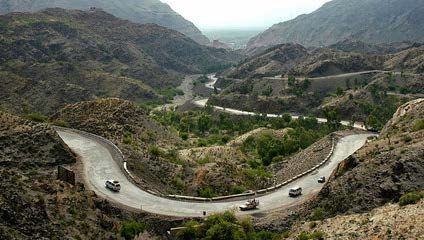
Trajectory of Disengagement · 4

willing than any time since 2001 to draw down its                               drop in pledges as many had feared, the customary four-
financial commitments – vital to the funding of the                             year term for pledges was drawn down to three, while
Afghan security forces. In March 2020, in response to an                        the U.S. and U.K. scaled them down to a single year (with
escalating political impasse over Afghanistan’s disputed                        renewals contingent upon re-evaluation).
presidential election results, the U.S. threatened political
leaders with a $1 billion cut in aid if the dispute was                         There is also uncertainty about NATO military presence
not swiftly resolved and preparations for peace talks                           and forms of large-scale military assistance that requires
commenced. At other points, the U.S. has harshly judged                         troops based in the country. The U.S.’ failure to closely
the Afghan government’s consolidation of power under                            consult with its NATO partners before entering its
presidential offices and issued other critiques in rare public                  political agreement with the Taliban has frustrated allies.
reproaches. This stance of reproach culminated in reports                       However, in spite of the frustrations this engendered
from January and March 2021 that the U.S. put forward                           in NATO’s more assertive member states, the alliance’s
bold proposals to establish an interim government with                          leaders and European politicians have adopted a mantra
leading Afghan politicians and the Taliban.2 And in spite                       and guiding principle of “in together, out together.”
of U.S. rhetoric about continued partnership, their post-                       Amid the variety of European and NATO member
withdrawal commitments remain an open question.                                 perspectives on the optimal future of security assistance
                                                                                in Afghanistan, the infeasibility of mounting complex
Disengagement Domino Effect                                                     NATO operations without U.S. participation (and the
                                                                                security umbrella U.S. forces inherently provide) seems to
All of the above has triggered a falling-domino effect                          be the decisive, limiting factor. Suppose the U.S. proceeds
of sorts, especially among other donors and supporters                          along its current trajectory of drawing down military
of the Afghan government. As it became increasingly                             presence until its withdrawal is complete. In that case,
apparent over the last year that the Trump administration                       NATO will have little choice but to follow suit, regardless
was determined to significantly downsize the many                               of its member states’ policy preferences.
forms of support it provides to Kabul, other donors
including the EU began to discuss – largely privately, but                      Increasing uncertainty about the U.S./ NATO military
with public debates taking place in several European                            timeline and Western disengagement has created policy
state parliaments – how this might limit their options                          confusion, concern, and quick adjustment among
for providing support in the future. Several states, some                       Afghanistan’s neighboring countries and regional
officials have hinted, may even view U.S. disengagement                         players, complicating the “regional security complex.”
(and the impossibility of maintaining the status quo                            For instance, Russia, Iran, and China have all stepped
without American support) as a firm political cover to                          up explicit, formal diplomatic engagement with the
finally draw down commitments of their own. This was                            Taliban (bringing their official interactions on par with
evident in the lead up to the November 2020 Geneva                              the quiet, backroom interactions that have been taking
Conference, wherein many donors debated postponing                              place for several years longer). Russia even sponsored an
or canceling the conference until 2021 (presumably                              “intra-Afghan” peace conference between the Taliban
when partners would have a better sense of the long-                            and dozens of Afghan opposition politicians in 2019,
term orientation of the U.S.’ Afghanistan policy, and as a                      which the Afghan government declared a “betrayal.”3
result, a sense of their own). Though the conference took                       Even India, historically apprehensive when not outright
place in the end and did not witness as dramatic of a                           hostile to the Taliban, has begun publicly debating the

2 In addition to Khalilzad’s detailed outlines for this proposed interim government, vehemently opposed by President Ashraf Ghani and his top

officials, Secretary of State Antony Blinken wrote a bluntly-worded letter to Ghani exerting intense pressure for him to follow a fast-tracked, U.S.-
preferred approach to peace. See Thomas Gibbons-Neff, David Zucchino and Laura Jakes, “U.S. Pushes U.N.-Led Peace Conference in Letter to Afghan
Leader,” The New York Times, 8 March 2021.
3 Hamid Shalizi, “Kabul sees Taliban-Afghan opposition talks in Moscow as betrayal,” Reuters, 4 February 2019.

                                                             Neighbors Abhor a Vacuum: Regional and Key Partner Engagement with Afghanistan After 2021
5 · Trajectory of Disengagement
merits of approaching the insurgent group. As equally paradigms, make it more likely than not that the general
a historical sanctuary and supporter of the Taliban, trajectory of U.S. disengagement from Afghanistan
Pakistan has stepped up its public engagement with continues in the medium and longer-term. And as the
Afghan opposition leaders. In October 2020, Islamabad U.S. goes, European states will be inclined or obliged to
hosted President Ghani’s chief rival and head of peace follow.
efforts Abdullah Abdullah, sometime-rival and Foreign
Minister Hanif Atmar, the Speaker of the Lower House Indeed, testimony of several senior European officials
of Parliament, and former anti-government insurgent suggests that impatience regarding Afghanistan
Gulbuddin Hekmatyar, all with the ceremony of state reflects two sides of a coin: not just fatigue of officials
visits. disappointed with the limited efficacy of the Afghan
state and its progress in anti-corruption, rights and
All of the above has had the effect of disheartening development, but also a broader sense of fatigue among
– even delegitimizing – the Afghan government at elected politicians and their constituencies. A number
precisely the time it seeks to shore up legitimacy on the of these officials have conceded privately that despite
international stage, in the opening rounds of talks with European governments’ humanitarian and human rights
the Taliban. The phrase encouraged by the United States concerns (and fears that the U.S.-ushered peace process
and adopted by many partner states to describe those has set the stage for deterioration of both), it would
talks for most of 2019 and the first half of 2020, “intra- prove difficult for those governments to publicly make
Afghan negotiations,” was the Taliban’s preferred term. the case for allocating continued high levels of financial
The term permitted the Taliban to deny it was essentially assistance. Beyond the logistical and security concerns
sitting across from an Afghan government the group has of perpetuating a NATO mission in a post-American
never recognized. Many governments have gone further Afghanistan, many current donors have political reasons
than this language: in late 2020, several European states to tend toward disengagement as well. In late March
signaled their interest in a more diversified peace process 2021, Germany’s parliament extended the legal mandate
among Afghan political leaders, pressing for President for participation in NATO’s Afghanistan mission by less
Ghani to share peacebuilding space with Abdullah and than a year, and while some senior officials declared
others. In February 2021, at a moment when the U.S.- conditions on the ground were not yet fit for withdrawal,
led process was stalled, Russia announced it planned to Angela Merkel hedged, framing Berlin’s willingness to
resume the Moscow track of intra-Afghan talks, decried remain as contingent upon whether allies (meaning the
as “betrayal” by President Ghani and his officials two U.S.) deemed it necessary.
years ago.
It is worth recalling that for many years prior to U.S.-
Hope or Doubt under Biden led peace efforts and withdrawal planning, a number
of troop contributing nations had already departed the
The new U.S. administration has somewhat altered the mission, downgraded significantly or had been on the
policy path initiated by Trump and his senior officials, receiving end of U.S. pressure to remain.
and there may still be a potential extension of Western
assistance to the beleaguered Afghan government
(military, financial, and otherwise). But as of this
report’s release, Washington’s announcement that it
will unconditionally withdraw military forces may only
heighten regional states’ preparations for worst-case
scenarios (as outlined in the section below). Moreover,
President Joe Biden has long favored minimalist policy
objectives in Afghanistan. Biden’s longstanding national
security inclinations, along with a difficult-to-measure
yet tangible shift in U.S. and European foreign policy
Neighbors Abhor a Vacuum: Regional and Key Partner Engagement with Afghanistan After 2021Regional Responsibilities · 6
Regional Responsibilities
As described above, the trend of disengagement has left Instead, Russia – which appears focused on several
observers of Afghan regional affairs (as well as Afghan “worst-case” or pessimistic scenarios for Afghanistan’s
officials) asking: how will regional states fill the security medium-term future – is likely to invest in individual
vacuum that U.S./ NATO forces will leave, and how will Afghan stakeholders in the country’s northern provinces.
pre-existing regional dynamics and tensions shape the In the event of further Western disengagement and any
country’s politics and violence? Scholars and specialists resulting political destabilization, rather than wait to
on several regional states describe widespread reluctance determine which player(s) will ultimately wrest power
to engage in intervention on a comparable scale of the in Kabul, Moscow will almost certainly seek to establish
last two decades, but eagerness to nonetheless manage a low-cost buffer zone along as much of the border as
concerns (such as border control, counterterrorism, possible. It will especially seek to garner influence in
regional balances of power) and reap any possible communities with less-prolific patterns of support for the
benefits of re-shuffled economic interconnectivity. These Taliban or other regional extremist groups. At the same
concerns and benefits could serve as collective organizing time, Russia has increasingly engaged with the Taliban
principles but would require new initiatives or sharp (both via direct contact and through increased outreach
breaks from conventional wisdom. to Iran and rapprochement with Pakistan), implementing
a strategy of hedging as early as NATO’s substantial troop
Northern Border Watch drawdown in 2014 (see more in section below).
Russia’s primary interests in Afghanistan center on It is unclear how the policies of the Central Asian states
preventing transnational terrorist groups from moving will shift and ultimately fall into line with a security-
”
into Central Asian states (and onward into Russia); this
perspective, along with its own bloody twentieth-century
history of intervention, forestalls any possibility that Russia
would extend its conventional security commitments
further south of its current Central Asian stations.
first, worst-case Moscow-backed approach, though the
region’s initial response to COVID-19 gives some hint.
As the outbreak spread globally (in particular from the
epicenter of Iran), Tashkent and other capitals rapidly
and wholly locked down their borders, refusing to allow
the transit of even essential emergency commodities
into Afghanistan for well over a month (only later
lifting restrictions due to the domestic pressures on
their own agricultural sectors). In the event of a rapidly
deteriorating political or security situation, areas of the
Scholars and specialists on northern border could very well experience a similar
several regional states describe temporary freeze. However, Uzbekistan’s outward-facing
widespread reluctance to optimism regarding the Afghan peace process, and its
engage in intervention on a efforts to facilitate peaceful reconciliation even within its
comparable scale of the last
two decades, but eagerness to
nonetheless manage concerns
and reap any possible benefits
of re-shuffled economic
interconnectivity
“ own borders, illustrate the range of responses northern
neighbors are likely to offer.
Zero-Sum Strategies in South Asia
Similarly to Russia, although policymakers and analysts
in India voice alarm over nearly every potential direction
the Afghan conflict and its politics may take in the
medium term, there appear to be hard limits to Indian
security assistance – which would fall far short of an in-
Neighbors Abhor a Vacuum: Regional and Key Partner Engagement with Afghanistan After 20217 · Regional Responsibilities
country troop presence. Instead, New Delhi has amplified U.S. Out, Iran In?
narratives meant to convince Western powers currently
reinforcing the Afghan government to remain for the Much speculation in the last year or two has focused on
sake of stability and security, especially when it comes Iran’s influence over potential proxy forces in Afghanistan,
to the continued need for a robust regimen of regional notably the fighters of the Fatemiyoun Brigade recruited
counterterrorism. to fight for Tehran’s ally regime in Syria (but also including
elements of the Taliban in the southwestern part of the
country, and some armed groups in the north). Yet the
most recent reports have suggested that Fatemiyoun
fighters are largely absent from militias springing up
within ethnic-Hazara communities, and the history of
Iran’s engagement in Afghanistan is one of restraint
and careful consideration of overreach.4 Analysts and
Western officials already describe Herat and its environs
as having fallen under the sphere of Iranian influence
some time ago, but this reach has limits. Iran is almost
certain to extend support, even protection and arms if
need be, to fellow Shiite and ethnic-Tajik communities –
yet there is little evidence to suggest Iran will attempt to
Afghan money changers gather to deal with foreign currency
expand its reach in Afghanistan to the extent its proxies
at a money change market. © REUTERS/Mohammad Shoib
have engaged across the Middle East. This is particularly
true in the event of a worsened security situation in
Broadly, India’s influence in Afghanistan appears likely to Afghanistan; Iran is unlikely to risk crisis there during a
wane regardless of whatever specific scenario unfolds. period it already finds itself taxed by events in Syria, Iraq,
As a result, its approach to Afghanistan will have less to Lebanon, and elsewhere.
do with contributing to future stability and is far more
likely to hinge on longstanding strategic thinking that However, Iran will be important to watch as regional
seeks to deny Pakistan as much influence and capacity states adjust to U.S. disengagement from Afghanistan,
to inflict harm as possible. Likewise, Pakistan appears set since the outsized American role in security arrangements
– whatever the final measure of Western disengagement and diplomatic initiatives anchored in Kabul almost
and the results of Afghan peace efforts – to continue always left its adversary Iran on the outside looking in.
pursuing policies toward Afghanistan that are difficult Iran managed to establish a working relationship with the
to separate from its perennial goal of stymying Indian Afghan government and is well-placed to extend support,
influence. The stance both South Asian nations often as long as political stability would serve Tehran’s interests.
take toward each other’s role in Afghan affairs is almost This dynamic is also reflected somewhat in Russia and
certain to remain a critical hindrance to a constructive, China’s stance toward Afghanistan, though less acutely.
efficient approach that might benefit regional stability The adversarial turns in their relations with the U.S. has
broadly. rarely escalated to the point of impacting affairs in South-
Central Asia.
4 See Sune Engel Rasmussen and Ehsanullah Amiri, “Afghanistan Braces for Worst as U.S. Troop Withdrawal Accelerates,” Wall Street Journal, 19
November 2020; for historical perspective see R.K. Ramazani, “Ideology and Pragmatism in Iran’s Foreign Policy,” Middle East Journal, Vol. 58, No. 4
(2004), and Barnett Rubin, “A new look at Iran’s complicated relationship with the Taliban,” War on the Rocks, 16 September 2020.
5 Otherwise, Turkey is likely to fall into a similar pattern as other regional states: while Ankara has contributed to the NATO mission in Afghanistan, its
political investments have almost exclusively been rooted in the country’s ethnic Uzbek community, a pattern likely to hold.
Neighbors Abhor a Vacuum: Regional and Key Partner Engagement with Afghanistan After 2021Regional Responsibilities · 8
Regional states seem unlikely to assume holistic Peace Process and Scoring Points?
responsibility for Afghanistan’s stability – and security
challenges appear likely to instead be addressed within While regional states seem unwilling to openly posture
the sub-national geographic zones of influence that as successors to the role the U.S. has played in propping
bordering states will strive to establish, isolated from their up the Afghan state, many have proven interested in
root causes. playing prominent roles in ushering the peace process
forward. Moscow slow-pedaled its alternative track of
Refugee Flows and Ripple Effects dialogue for nearly two years, in a somewhat surprising
show of deference to the U.S.-led process, but in early
There is a convergence of interests on some of the key 2021 began to reassert its desire to be seen leading
ramifications of instability and worse-case scenarios in international facilitation of a post-American future in
Afghanistan, including that of Afghan refugees, asylum Afghanistan. Tashkent has lobbied for a potential role as
seekers, and migrant labor flows. Any disruptions to the host of the Afghan peace talks. It is now counted among
political status quo or worsening of conflict conditions the “Facilitator Five” by the U.S. (which also includes
could set off a large-scale wave of displacement that Germany, Norway, Indonesia, and Qatar playing various
would ripple across the region and along the geographic supporting roles). The EU has attempted to distinguish
pipeline migrants travel to reach Europe. In this sense, itself from the U.S. and highlight differences in their
approaches to Afghanistan’s and the region’s security policy preferences toward peace. Despite the resulting
overlap with EU-Turkey relations and a host of pre-existing complications, this seems to have introduced longer-term
tensions over the burden-sharing of mass displacement European options to engage with Afghanistan (see the
(not only from Afghanistan).5 One of Pakistan’s strongest next section for further detail).
interests in Afghanistan’s stability is the potential impact
a worsening security environment might have on This focus on peace talks reflects the degree to which
displacement; the same goes for Iran. Therefore, despite uncertainty is dominating many states’ Afghanistan
both powers’ strong preference for the U.S. to exit the policy. With so little known or even possible to predict
region entirely, both have publicly advocated against a about the composition and orientation of a future
sudden or ill-considered military withdrawal. European Afghan state, external powers have leaned into short-
and other wealthy donor states are even less likely to term engagement. Almost as if in response to the
continue contributing to the Afghan government at region’s dependency on U.S. actions over the next year,
current levels if, under a hypothetical deterioration diplomatic efforts presently emphasize influence on near-
of security and the unfolding of large-scale regional term events.
displacement, available funds are redirected into refugee
aid and relief programs outside of Afghanistan.
German soldier © t. kœhler
Neighbors Abhor a Vacuum: Regional and Key Partner Engagement with Afghanistan After 20219 · Hedging Bets
Hedging Bets
The United States’ determinative role (and the extent states. Both nations are notorious for their realpolitik
of its disengagement) has curbed planning timelines of approach to foreign assistance, with none of the
regional and donor states. This has compelled nearly all conditionality or benchmarks for governance that the
engaged external actors to hedge their current positions, EU and other Western states claim will grow stricter in
to provide flexibility in a range of potential future the coming years. Yet Moscow and Beijing have both
scenarios and utilize their assets/options to improve demonstrated considerable reserve thus far, in largely
interests or reduce risks. The Afghan government has abstaining from engagement with Kabul that the U.S.
done so as well. might deem interference. This restraint is especially
notable for Moscow when contrasted with Russia’s
Diversifying Kabul’s Security Assistance Portfolio dalliances with other U.S. military partners in conflict
zones (such as the Kurdish-led Syrian Democratic Forces).
For the majority of 2019, as the U.S. conducted bilateral
talks with the Taliban, the consensus of Kabul officials Moreover, while Russia has extended military assistance
rejected the feasibility of any meaningful agreement already, gifting Kabul several shipments of basic small
between their chief patron and their existential adversary. arms, so much of the Afghan security forces are modeled
Once it became clear those talks would culminate in the – and logistically dependent – on U.S.-NATO military
February 2020 deal signed in Qatar, and as the terms foundations that it would be extremely difficult to
of that agreement were widely assessed as unfavorable completely trade out one patron’s pipeline of equipment,
to the Afghan government, the mood among many in arms, and maintenance for another.6 Kabul would likely
Kabul oscillated from denial to expressions of frustration only pursue such a definitive transformation after losing
and sentiments of betrayal. The obvious and immediate all hope of any residual U.S. or NATO presence. But
question became: if the U.S. can no longer be considered critically, Moscow and Beijing’s reserve has been paired
a reliable patron and ally, which power(s) might take its with hedging behavior of their own. As both capitals
place? Afghanistan’s leadership has struggled to answer have observed the U.S. attempt to extricate itself from
this question satisfactorily; it has shifted to the pursuit of a
“
“multi-polar” regional diplomacy, with overtures to every
neighboring state that could perhaps be characterized
as hedging as well. Yet Kabul’s shuttle diplomacy and
engagement have produced few stark shifts in the
stances of regional powers to date. The obvious and immediate
Speculation among some Afghan officials has centered
on Russia and/or China becoming future providers of
development financing and security assistance, given
the scale of their economies (in Russia’s case, at least its
question became: if the U.S. can
no longer be considered a reliable
patron and ally, which power(s)
might take its place?
“
defense sector) and a track record of subsidizing client
6 Notably, these complications become more significant when scrutinizing the most valuable strategic elements of Afghan security forces: its still-
nascent air force and its cadre of special operations forces, which are even more strictly modeled off of (and dependent on) U.S./NATO.
7 It is worth noting one of the more controversial instances of alleged Moscow engagement with the Taliban emerged in 2020 reports that Russian
agents had offered the Taliban and other insurgents cash bounties on U.S. troops; later reporting painted a lack of consensus in the Western
intelligence community as to the veracity of these accusations, and even if true, this activity does not appear to have taken place on a scale that would
strategically shift the dynamics of the conflict.
Neighbors Abhor a Vacuum: Regional and Key Partner Engagement with Afghanistan After 2021Hedging Bets · 10
Afghanistan, each have deepened their diplomatic now Marshal Rashid Dostum, for lavish state visits. This
interaction with the Taliban.7 charm offensive seeks to augment and diversify Delhi’s
already-strong ties to Kabul’s national security sector and
Both capitals appear to harbor doubts that the current senior officials, including First Vice President Amrullah
Afghan government might survive a further drawdown Saleh.
of Western support and have openly discussed a range
of “worst-case” or pessimistic scenarios for Afghanistan’s Islamabad continues to tout its instrumental role
long-term security environment for several years now. in bringing the Taliban to the table with the U.S. in
Russia and China’s hedging behavior is even found on early 2019. However, it has done little since to visibly
display in policy determinations dating back to 2014-15. pressure or persuade the insurgents to reduce violence
The U.S. drawdown from over 100,000 uniformed troops in Afghanistan, or to offer compromises on governance
to less than 20,000 revealed capacity gaps in the Afghan and power-sharing. Considering how great an impact
forces and strategic vulnerabilities in Kabul’s position.
Soon after, Moscow and Beijing reinforced neighboring
regions (or those of Central Asian states under Russia’s
security umbrella) with increased border security
measures, still standing as a testament to early pessimistic
predictions. Beijing, for its part, has been expected to
expand its economic reach into Afghanistan for most
of the past decade but has declined to do so proactively
or comprehensively. The security environment, already a
detriment to investment and interconnectivity in years
prior, is even more tenuous (and discouraging) today.
Diplomatic Disengagement
Afghan President Ashraf Ghani (R) meets with Pakistan’s Prime
Other neighboring states have begun hedging their Minister Imran Khan at the presidential palace in Kabul. ©
REUTERS/Mohammad Ismail/Pool
Afghanistan policies via “diplomatic disengagement,”
preparing for worse-case outcomes well before the
trajectory of peace and conflict are clear. Pakistan could have by changing its sanctuary relationship
with the Taliban, Afghan officials regard this inactivity
Afghan officials have made much of the legitimacy with suspicion and outright hostility. However, with the
bestowed to the Taliban by the high-level outreach of Taliban more diplomatically engaged than ever, Islamabad
nearly every regional state (save for India). The insurgent is less likely than ever to risk eroding its relationship
group’s messaging has confirmed its confident posturing with the group, especially given the multiple scenarios
as a “government-in-waiting” over the past year. Less in which the Taliban may improve its political or military
commented on has been the long-term negative impact standing. Though the context of Pakistan’s relationship to
of India, Pakistan, and Turkey’s charm offensives on Afghanistan’s conflict is unique, the essence of its hedging
Afghan opposition stakeholders. This outreach, based on approach is quite similar to most regional neighbors.
individual powerbrokers rather than Afghan institutions,
has the potential to destabilize the current political order, The European Union’s stance on critical aspects of peace
undermining confidence at a time the Islamic Republic’s efforts, as well as support for holding 2019’s presidential
team of negotiators is attempting to project unity in elections, seems to have given the impression, especially
peace talks and to shore up international legitimacy. to President Ghani and his administration, of greater
Matching Pakistan’s outreach to regional powerbrokers, EU foreign policy autonomy than may exist. The EU’s
Delhi extended late 2020 invitations to several figures, strong rhetorical solidarity with the Afghan government
including the notorious former First Vice President and has encouraged some in Kabul but with few tangible
Neighbors Abhor a Vacuum: Regional and Key Partner Engagement with Afghanistan After 202111 · Hedging Bets
results. Early Afghan overtures and inquiries with NATO’s Congress have signaled resistance to providing aid and
command and individual European states, seeking to assistance to a future Afghan government that includes
perhaps retain a NATO mission even in the event of a U.S. the Taliban – much less one dominated by the group.
withdrawal, were answered with vague expressions of
support. Yet over a year after the U.S.-Taliban agreement This new focus on conditionality highlights which regional
was signed, there have been no concrete offers to ramp states desire strict conditions and on what points, which
up assistance (for all of the reasons detailed above). have become evident since peace efforts began in
Even with the ambitious U.S. proposal in March to earnest. Though New Delhi has not announced anything
convene an international conference to build consensus explicitly, it seems quite unlikely to continue its current
on Afghanistan, last November’s Geneva conference level of cooperation and support to Kabul if the Taliban
demonstrated that merely maintaining the levels of were to become a dominant party in a new Afghan
support required to sustain the Afghan government will state. The EU did make its conditions explicit, outlining a
prove challenging. demanding series of principles and benchmarks that any
future Afghan government would be required to meet to
Conditionality as Hedging maintain current levels of aid – with specific measures for
the Taliban to abide by, were it a partner in that new state.
The EU’s position reflects another form of hedging. On the other hand, as noted above, Russia and China
For many in Brussels and capitals across Europe, less are renowned for a much less conditional approach to
conversation is devoted to scenarios of state collapse international aid and development. Iran appears to have
than to concerns that peace talks might reach an come to an understanding with the Taliban despite their
agreement that welcomes the Taliban back into political complex history. Central Asian states would cooperate
power to the detriment of human rights or humanitarian to the greatest extent possible, otherwise following the
conditions. Since the U.S.-Taliban agreement, the EU has lead of larger regional powers. Pakistan’s conditions of
released several statements outlining strong conditions providing future aid and cooperating economically are
for assistance to any future, post-peace Afghan state, not transparent or entirely perceptible, but they would
insistent on rights and freedoms of women and minorities lean in favor of any institutionalized role for the Taliban.
as well as a commitment to transparent representative
government. On an initial reading, these statements Before Biden’s announcement of a planned withdrawal
seem to project resounding support for President Ghani in April 2021, the reality is that the United States foreign
and the Islamic Republic – and they do, in near-term policy sphere was itself hedging during the transition of
developments of the peace process. However, in long- presidential power. As soon as Biden’s transition team
term strategic planning, this stance permits European began focusing on foreign policy issues, several Beltway
powers an easy off-ramp: in the rather likely event that insiders began to call for an enduring counterterrorism
the Taliban, the current Afghan government, or a future mission (and consequently, at least some level of
power-sharing coalition fail to meet all of their conditions, continued support to the current government in Kabul).
the EU or any of its members will have ample justification Nevertheless, Washington will not be able to hedge as
to downsize, or at least diversify and divest, support. long as other external players. The Taliban expected the
U.S. to finalize their military departure by May, and there
In one sense, stances on conditionality reflect the is almost no chance the group will sincerely participate in
general uncertainty of the present moment, but also a peace process in the near-term future. Even the Biden
the deep-seated concerns Western policymakers have administration’s decision to 1) attempt to jumpstart (or
about the legitimization and future role of the Taliban. jettison) the flagging Doha process, 2) continuing to insist
The EU is not alone; even in the United States, which the U.S. remains committed to its partner, the Afghan
has propelled the current process and raised the Taliban’s government, 3) and refusing to clearly state its position
international profile, the Trump administration garnered on a military withdrawal by May constituted a form of
a host of criticism for the way it developed relations with last-minute hedging.
the insurgent group. Influential members of the U.S.
Neighbors Abhor a Vacuum: Regional and Key Partner Engagement with Afghanistan After 2021New Frameworks? · 12
New Frameworks?
The incentive structures and patterns of behavior outlined event of a stall or collapse in the Doha-based peace talks
above, various shifts in political dynamic, and attempts to is one of the more obvious proposals, but not the only
stall decisions on new policy for Afghanistan point to the one. While much press attention in March was devoted
urgent need to establish and engage with new regional to the U.S. proposals to reinvigorate the peace process,
frameworks for dialogue and cooperation. including inviting the United Nations to mediate talks
between the two conflict parties, China began looking
With concrete limits to how NATO and the EU might to the UN as a player in Afghanistan’s future much
support Afghanistan in the event of U.S. disengagement, earlier. In 2020 Chinese representatives to the United
invested nations will need to explore creative new Nations Security Council raised the prospect of updating
pathways to provide assistance, perhaps most the UN Assistance Mission in Afghanistan’s mandate
productively by taking part in trilateral and multilateral and even its armed protection footprint, in light of the
dialogues with neighboring states and Kabul. Suppose potential changes to the country’s security situation.
NATO is unable to sustain a presence in the country While the suggestion failed to bear fruit at the time,
without the United States. Therefore, the EU will need to the notion is likely to re-emerge in future convenings at
consider the importance of supporting and encouraging the UN, especially in the event of deteriorating conflict
reform in the security sector. The EU has always been conditions. Given the hurdles to rallying regional states to
able to hold military assistance at arms’ length, allowing collective action on Afghanistan and the recent state of
NATO and its member states to address strategic security dysfunction among the UN Security Council’s permanent
considerations through separate institutional efforts. That five members, a more prominent role for the UN in
division of responsibility will lead to a substantial drop in Afghanistan is desirable in the abstract – but difficult
Western influence in Kabul, if not re-calibrated.
“
Suppose European states wish to continue influencing
the Afghan conflict and the peace process meant to
resolve it. In that case, they may need to do so by drawing
their Afghanistan policy into its relationships with states
in South and Central Asia in a new and innovative way.
Already recommended by some experienced observers, Suppose European states wish
Afghanistan could serve as a lightning rod in Western to continue influencing the
relations with India, Pakistan, Uzbekistan, Turkey, and Afghan conflict and the peace
even Russia, China or Iran.9 Collective concerns and a process meant to resolve it. In
common desire to maintain the stability the country’s that case, they may need to do
status quo has provided to the region, could be addressed so by drawing their Afghanistan
by the EU helping to facilitate fresh discussion long stalled policy into its relationships with
by traditional threat perceptions. states in South and Central Asia
”
in a new and innovative way.
If not, it is clear that other states are willing to step
forward and shape Afghanistan’s future according to
their fairly strict national interests. Russia’s invitation to
rejuvenate its own sponsored track of dialogue in the
9 Although the article’s recommendations revolve around a U.S.-centered diplomatic approach, for a nonetheless useful outline of a potential regional
framework see Barnett Rubin, “There Is Only One Way Out of Afghanistan,” Foreign Affairs, 9 December 2020.
Neighbors Abhor a Vacuum: Regional and Key Partner Engagement with Afghanistan After 202113 · New Frameworks?
to envision being implemented. More likely would be As yet, EU-Turkey engagement on Afghanistan is
an insistence by the Chinese that future UN assistance surprisingly underdeveloped. However, Afghan affairs
to Afghanistan explicitly acknowledge its Belt and Road will only grow more relevant to Turkey’s relationship with
Initiative, a running petition for several years. Europe in the event of continued Western disengagement;
diplomatic architecture established to address the Syrian
Specifically, the EU might be able to initiate dialogue with refugee crisis’s impact on European states would likely
those regional powers whose relations with the U.S. have be utilized to similar effect in the event of mass external
grown too adversarial in the last few years to realistically displacement from Afghanistan.
expect fruitful exchange on Afghanistan. To take the
most challenging example, European states could prove EU engagement with China on Afghanistan, considering
essential to any meaningful Western dialogue with Iran on the gap between their general approach to foreign policy
the country’s future and the region’s evolving dynamics. and, in particular, given European concerns about the
There is no pre-existing platform at this stage. However, future of Afghan human rights, might be even more
Europe’s role in keeping the Joint Comprehensive Plan of far-fetched than productive exchange with Russia.
Action (JCPOA) alive, and its ability to facilitate diplomatic Nevertheless, the EU has proven willing and able to shape
engagement with the U.S. on this front, might offer its relations with China in bold new ways, even over the
building blocks for early-stage dialogue on Afghanistan. past several months.
In later stages of an Afghan peace process, or in the event
the process falters upon U.S. disengagement, the EU will
be well-placed to engage with Russia – which has already
noted its eagerness to step into any “peace vacuum.”
There are few feasible points of concrete cooperation,
and substantive bilateral talks on an issue such as
Afghanistan have little precedent in EU-Russia relations.
However, officials and observers do not view the notion
of European-Russian engagement on Afghanistan as
impossible (and this would, if nothing else, be unique
compared to Moscow’s discussions with regional states).
As a relatively neutral power in historical tensions between Regional stakeholders convene at the 8th Ministerial
Conference of the Heart of Asia-Istanbul Process, December
India and Pakistan, and with the capacity to contribute
2019. Source: Hoa.gov.af
to large-scale infrastructure, resource management,
and connectivity projects, the EU could encourage non-
zero-sum relations in South Asia. The EU’s pre-existing The most difficult challenge may be in discouraging
bilateral relations already invoke Afghanistan, and its regional states from pursuing a prisoner’s dilemma
advocacy could be increased. This would indirectly approach to Afghanistan’s impact on regional security.
yet fundamentally stabilize any possible scenario for Neighbor and near-neighbors are likely to prioritize the
Afghanistan’s future. stability of geographic zones near their borders, even at
the expense of preserving a centralized Afghan state. It
Central Asian states are likewise already engaged by is unclear if the U.S., the EU, or any bloc of concerned
the EU on a bilateral basis, in dialogue that includes states would be able to persuade neighbors to defer their
Afghanistan’s fate. EU support and cooperation could first-order security concerns in the interest of preserving
serve as a useful lever to bring Central Asia into a regional a stable, sustainable dynamic – both within Afghanistan
framework that addresses neighbors’ various interests. and among regional states.
Neighbors Abhor a Vacuum: Regional and Key Partner Engagement with Afghanistan After 2021Outlook and Recommendations for European Policy Makers · 14
Outlook and Recommendations for
European Policy Makers
Wakhan River. © Makalu
The EU has less political leverage than the U.S. with either the Afghan government or Taliban, but is also free of the
growing political baggage Washington has accumulated since its attempts to initiate peace efforts. The EU’s member
states should reach internal consensus and dedicate sufficient diplomatic capital to building substantial leverage on
Afghanistan policy among regional states in its pre-existing bi-, tri-, and multilateral engagement.
The EU’s relationship with the U.S. on Afghanistan will be most functional and effective, regardless of the differences
between their preferred approaches, if the U.S. engages in open, collaborative communication with European allies.
Washington must pay more than lip service to its message of transatlantic solidarity.
Russia’s public statements on Afghanistan in early 2021, and the prospect of reviving the divisive Moscow dialogue,
is a reminder that regional states, through “wait and see” attitudes, have largely refrained from active obstructionism
of U.S.-led peace efforts. The EU should lobby Afghanistan’s neighbors to continue exercising restraint as long as
there are international efforts to support a unified, peaceful Afghanistan.
This call for neighbors to “do no harm” should specifically include discouragement of diplomatic engagement
with individual Afghan stakeholders. States that seek broad and inclusive political outreach with Afghan
actors should instead engage with organs of the Afghan government such as the High Council for National
Reconciliation, which many diverse political figures participate in.
One notable exception to exercising restraint is the near-universal call, from Afghans and international supporters
alike, for Pakistan to act decisively in pressuring the Taliban to seriously embrace the compromises and end of
violence that any lasting peace requires. The EU should translate its leading trading partner status with Islamabad into
Neighbors Abhor a Vacuum: Regional and Key Partner Engagement with Afghanistan After 2021You can also read


