NEWINGTON Affordable Housing Plan - Town of Newington, CT
←
→
Page content transcription
If your browser does not render page correctly, please read the page content below

NEWINGTON
Affordable Housing Plan

       Town of Newington, CT
DRAFT For Community Review – September 23, 2020
TABLE OF CONTENTS

Cover Picture

The picture on the front of         1.   INTRODUCTION......................................................................... 1
this Affordable Housing Plan
represents the concept of a              1.1.      Overview ...................................................................................... 1
“housing ladder.”                        1.2.      Reasons For Studying Housing ..................................................... 2

The phrase “housing ladder”         2.   INVENTORY & ASSESSMENT ...................................................... 3
refers to a concept used in
housing policy discussions
                                         2.1.      Physical Characteristics................................................................ 3
where people may first rent              2.2.      Occupancy Characteristics ........................................................... 5
an apartment or buy a small              2.3.      Cost Characteristics ..................................................................... 7
house and then move up the               2.4.      Affordability Characteristics ........................................................ 8
ladder to a bigger or more
                                         2.5.      State-Defined Affordable Housing ............................................. 13
expensive home when they
need or want a different                 2.6.      Existing Zoning Regulations ....................................................... 16
housing choice and have                  2.7.      Summary Of Findings ................................................................. 18
enough money to do so.
                                    3.   STRATEGIES ............................................................................ 19
The housing ladder also
works the other way in that
                                         3.1.      Encourage Housing Meeting Community Goals ........................ 19
people may move from a                   3.2.      Adopt Inclusionary Zoning Provisions........................................ 25
larger home to a smaller                 3.3.      Address Housing Needs Of An Aging Population....................... 26
and/or less expensive home               3.4.      Address Needs Of Lower Income Households........................... 31
as their lifestage / lifestyle or
                                         3.5.      Consider Other Housing Configurations .................................... 35
economic circumstance
changes.                                 3.6.      Help Address Special Housing Needs......................................... 36
                                         3.7.      Retain Existing Housing That Addresses Needs ......................... 37
Overall, everyone can have a             3.8.      Address Other Housing Issues ................................................... 38
different path on the housing            3.9.      Implement The Affordable Housing Plan .................................. 40
ladder provided housing
choices are available.
TOWN OF NEWINGTON
Greetings! Housing Needs Study
Committee (alphabetical)
For many years, Newington has had an interest in understanding whether its
Carol Anest
housing stock aligns with the needs of residents of the community and the re- Town Council
gion. This includes a number of plans and studies:
1958 Plan of Development Michael Camillo
Town Council
1973 Plan of Development
1977 Housing Study William Hall
1995 Plan of Conservation And Development Interfaith Housing Corp.
2008 Housing Needs Committee Report
Maureen Lynch
2010-20 Plan of Conservation And Development Comm. on Aging / Disabled
2015 Housing Needs Study Committee Report
2020-30 Plan of Conservation And Development Craig Minor
Town Planner
Recently, the legislature established a requirement for each of the 169 munici- Stephen Woods
palities in Connecticut to adopt an “affordable housing plan” by July 2022 (CGS Town Plan & Zoning Comm.
Section 8-30j). The plan is required to:
Specify how the municipality intends to increase the number of afforda-
ble housing developments in the municipality, and
Be updated at least once every five years.
In 2020, the Town asked the Housing Needs Study Committee to address this re-
quirement. This Affordable Housing Plan is the result of their efforts.
Following a public hearing help on , this Affordable Housing Plan was
adopted by the Town Council on .
Sincerely,
Town Council
Town of Newington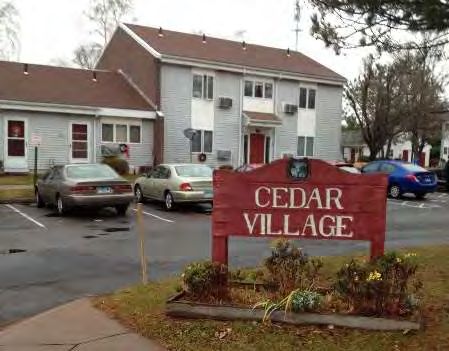
What Is “Affordable Housing”?
In public policy, the term “affordable housing” is generally used to refer to:
Housing which is priced so that persons and families earning
eighty per cent or less of the area median income pay thirty
per cent or less of their annual income on housing.
This can include:
Market-rate housing which sells or rents at an affordable price -
called “naturally occurring affordable housing (NOAH), and
Housing which is encumbered in some way to sell or rent at afforda-
ble price levels.
Certain State statutes (such as CGS 8-30g) only consider housing which is en-
cumbered in some way to sell or rent at affordable price levels:
Governmentally assisted housing developments,
Rental units occupied by households receiving tenant rental assis-
tance,
Ownership units financed by Connecticut Housing Finance Authority
(CHFA) mortgages or United States Department of Agriculture (USDA)
mortgages for low/moderate income persons and families,
Housing units subject to deed restrictions limiting the price to where
persons or families earning eighty percent or less of the area median
income pay thirty per cent or less of their income for housing.
For this Plan, both types of affordable housing will be considered:
Naturally occurring affordable housing, and
Housing that is restricted to affordable price levels.
What Is “Market Rate Housing”?
The term “market rate housing” is housing that sells at fair market value
which is generally:
A price at which buyers and sellers with a reasonable
knowledge of pertinent facts and not acting under any com-
pulsion are willing to complete a transaction.
INTRODUCTION
1. Introduction
1.1. Overview “Decent, afford-
able housing
Addressing changing housing needs and promoting diverse housing opportuni-
ties are priorities for the Town of Newington. While Newington already has a should be a
diverse housing stock, the Town has come to realize that the existing housing basic right for
stock, which has served us so well over the years, does not meet the housing
needs of everyone – even for some people who live here already. everybody in
this country.
For example, existing housing units may not be well configured to meet the
housing needs of older persons and people, young and old, earning less than the
average income have a harder time finding housing to meet their needs at a The reason is
price they can afford. This can include:
simple: without
young adults (including people who grew up in Newington),
young families just venturing out on their own, stable shelter,
people working at businesses and industry in Newington, everything else
workers providing essential services to residents and businesses, and
people who may have lived here their whole lives and now need or
falls apart.”
want smaller and less expensive housing so they can stay in Newington. Matthew Desmond
American Sociologist
This Affordable Housing Plan is intended to help address this situation. The Plan
looks at whether there will be affordable housing in the community that will be
available for people who may need it at the time it is needed. Planning for
housing needs is important since:
Housing cannot be easily produced at the moment it is needed, and
The lead times (planning, design, construction) are so long.
As a result, Newington needs to plan today for the affordable housing needs of
the future.
OVERALL GOAL
Seek to provide for housing opportunities in
Newington for all people.
1
1.2. Reasons For Studying Housing
Everyone needs housing and for a variety of reasons. In fact, housing plays a
part in almost every level of Maslow’s “hierarchy of human needs”:

                                                        Housing provides shelter to
                                                        meet people’s physiologic needs

                                                        Housing helps meet people’s
                                                        need for safety and security

                                                        Housing creates a sense of con-
                                                        nection to a community

                                                        Housing builds confidence and
                                                        enhances self-esteem

                                                        Housing creates the opportunity
                                                        for people to contribute to their
                                                        community and achieve their
                                                        full potential

In addition, there are other relevant considerations:
1. State statues require the adoption of an Affordable Housing Plan by June
   2022 and an update every five years thereafter (CGS 8-30j).
2. The statutory authority to enact and maintain Zoning Regulations includes
   the requirements that such regulations “encourage the development of
   housing opportunities” and “promote housing choice and economic diver-
   sity in housing, including housing for both low- and moderate-income
   households … (CGS 8-2)
3. The statutory requirement for a Plan Of Conservation And Development
   (POCD) requires that the commission … shall consider the … the need for af-
   fordable housing, … [and] the needs of the municipality including, but not
   limited to … housing (CGS 8-23(d)) and make provision for the development
   of housing opportunities … for all residents of the municipality and the plan-
   ning region … [and] promote housing choice and economic diversity in hous-
   ing, including housing for both low and moderate income households …
   (CGS 8-023(e)).

                                        2
INVENTORY & ASSESSMENT
2. Inventory & Assessment
2.1. Physical Characteristics
According to the American Community Survey (ACS), Newington had about
12,786 housing units in 2018 (the most recent year that data is available for).
Housing Type – The ACS estimates that about two-thirds of all housing units in About 2/3rds of
Newington are detached one-family structures. This is slightly higher than Hart-
ford County and the state but lower than some nearby communities. In terms all housing
of the state-wide housing mix, Newington has: units in
More 1-unit attached units (townhouses) and 10-19-unit buildings.
Fewer 2-9-unit buildings and 20+ unit buildings. Newington are
single-family
Newington Compared To State-Wide Mix
Newington County detached
2.50
1-unit, detached
2.00
homes …
1-unit, attached
2 units 1.50 Percent 1-Unit Detached
3 or 4 units Berlin 79%
1.00
5 to 9 units Wethersfield 76%
10 to 19 units
0.50
West Hartford 66%
20 or more units 0.00
Newington 65%
2 units
3-4 units
5-9 units
detached
attached
Other
10-19 units
20+ units
1-unit,
Other
1-unit,
Connecticut 59%
Hartford County 56%
American Community Survey, 5-Year Estimate (2018)
Rocky Hill 47%
Newington Share County State New Britain 31%
1-unit, detached 8,184 64% 56% 59% Hartford 15%
1-unit, attached 1,443 11% 6% 5% CERC Town Profiles, 2019
2 units 393 3% 8% 8%
3 or 4 units 587 5% 10% 9%
5 to 9 units 691 5% 6% 6%
10 to 19 units 973 8% 5% 4%
20 or more units 505 4% 9% 9%
Other 10 0% 0% 0%
American Community Survey 5-Year Estimates (2018) / Table B25024
3
More than half    Age of Structure – Housing construction in Newington has slowed considerably
                  since the 1960s and 1970s (from over 250 units per year to less than 30 units
of all housing    per year) due to less available land and other factors. With more than half of
units in          Newington’s housing units built before 1970, the “typical” housing unit may re-
                  flect the desires of a different era rather than the age composition of today.
Newington
were built be-     YEAR STRUCTURE BUILT             Newington               Share                County                 State
                   Built 2010 or later                 172                    1%                    1%                    2%
fore 1970 and      Built 2000 to 2009                  729                    6%                    6%                    7%
may not reflect    Built 1990 to 1999                  779                    6%                    7%                    8%
housing needs      Built 1980 to 1989                 1,432                  11%                   12%                   13%
                   Built 1970 to 1979                 2,919                  23%                   13%                   13%
of today or the
                   Built 1960 to 1969                 2,208                  17%                   15%                   14%
future …           Built 1950 to 1959                 2,584                  20%                   17%                   15%
                   Built 1940 to 1949                  807                    6%                    8%                    7%
                   Built 1939 or earlier              1,156                   9%                   20%                   22%
                                                                       American Community Survey 5-Year Estimates (2018) / Table B25034

                  Physical Deficiencies – Overall, the estimated number of units in Newington
                  lacking complete plumbing facilities (without hot and cold running water, a flush
                  toilet, or a bathtub or shower) is low. The estimated number of units lacking
                  complete kitchen facilities (without a sink with a faucet, a stove or range, or a
                  refrigerator) is somewhat higher and this may reflect the use of some motels on
                  the Berlin Turnpike for housing.

                   PHYSICAL DEFICIENCIES            Newington               Share                County                 State
                   Incomplete plumbing facilities        7                  0.1%                  0.3%                   0.3%
                   Incomplete kitchen facilities       112                  0.9%                  0.7%                   0.6%
                                                     American Community Survey 5-Year Estimates (2018) / Table B25047 / Table B25051

                       1-Unit, Detached               1-Unit, Attached                              Multi-Unit Structure

                                                                 4
2.2. Occupancy Characteristics
Population Growth – Population pro-                        1880 – 2010 Population
jections prepared by the State of Con-
                                              35,000
                                                          (with projections to 2040)
                                                                                                             Newington’s
necticut suggest that the number of
Newington residents will increase in
                                                                                                             population is
                                              30,000
the future if recent trends continue.                                                                        growing and
This population growth could be ac-
commodated through more people in
                                              25,000
                                                                                                             more housing
existing units, and/or creating more
                                              20,000
                                                                                                             units may be
housing units.                                15,000
                                                                                                             needed …
Overall, more units and/or different          10,000

units for a variety of household types,        5,000
sizes, ages, tenures, and income
groups may be needed in the future.               0
                                                       1880     1920      1960         2000          2040

                                                                          US Census / CT State Data Center

Age Composition – At the same time, Newington’s                    Newington’s Median Age
age composition is changing. Due to improve-                    1960                          32.6
                                                                                                             Newington’s
ments in lifestyles and healthcare, the number of               1970                          30.2           age composi-
residents in the older age groups is increasing. The
median age in Newington (half the residents are
                                                                1980                          34.5           tion is changing
                                                                1990                          39.0
older, and half are younger) is older than it has
                                                                2000                          41.9
                                                                                                             with more older
ever been.
                                                                2010                          43.6           residents (with
Older persons and households have different hous-                                                            different hous-
                                                                2020 (projected)              42.6
ing needs and desires than younger persons and
families.                                                       2030 (projected)              41.1           ing needs) than
                                                                2040 (projected)              41.0           ever before …
                                                                                   US Census, Planimetrics

                                          5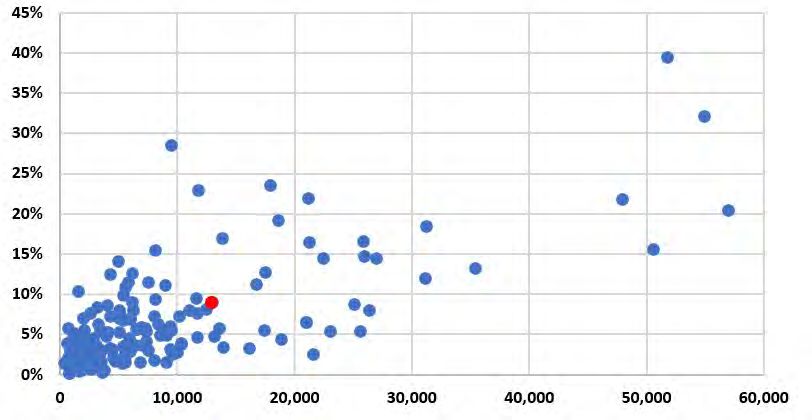
Household Size - Over time, the number of people                             Average Household Size
With smaller        per occupied housing unit in Newington has been
                                                                                                  Year             People/HH
                    decreasing. In 2010, about 62 percent of all housing
household sizes,    units in Newington were occupied by one or two                                1960                  3.55
                                                                                                  1970                  3.40
people may          people. Only about 3 in 8 households contained                                1980                  2.77
                    more than two residents. With smaller household
want smaller        sizes, people may want or need smaller (and less ex-
                                                                                                  1990
                                                                                                  2000
                                                                                                                        2.56
                                                                                                                        2.44
(or less expen-     pensive) units than were built in the past.                                   2010                  2.43

sive) units than                                                                                        Historic - 1900 - 2010 Census.

were built in      Tenure – Newington has a higher percentage of owner-occupied housing units
                   compared to Hartford County and the state. In terms of length of residency,
the past …         Newington has a higher share of longer-term residents compared to Hartford
                   County and the State.

                    TENURE                          Newington            Share                County                 State
                    Owner-occupied units              9,586               77%                   65%                   66%
                    Renter-occupied units             2,808               23%                   35%                   34%
                                                                    American Community Survey 5-Year Estimates (2018) / Table B25003

                    YEAR MOVED INTO UNIT                Newington                    County                       State
                    Moved in 2010 or later                    31%                      41%                         40%
                    Moved in 2000 to 2009                     30%                      27%                         27%
                    Moved in 1990 to 1999                     16%                      14%                         15%
                    Moved in 1989 or earlier                  23%                      17%                         18%
                                                                    American Community Survey 5-Year Estimates (2018) / Table B25038

                   Crowded Units– Newington has some “crowding” (where Census data indicates
                   more than one person per room) compared to Hartford County although it is
                   less than the state. Again, this may reflect the use of some motels on the Berlin
                   Turnpike for housing.

                    OCCUPANTS PER ROOM (O/R)        Newington            Share                County                 State
                    Units with 1.01 to 1.50 O/R       164                1.3%                  1.2%                   1.3%
                    Units with more than 1.51 O/R      38                0.3%                  0.5%                   0.5%
                                                                                  American Community Survey 5-Year Estimates (2018)

                                                              6
2.3. Cost Characteristics
Housing values
Housing Values / Sale Prices – The American Community Survey reported that and sale prices
the median house value in Newington (what property owners feel their housing
unit would sell for) was lower (more affordable) than the county and the state
in Newington
and a number of surrounding communities. The data on housing value reflects are lower (and
what all homeowners feel their housing is worth (all units) whereas the data on
sales price reflects the median price of housing units that sold (a subset).
more afforda-
ble) than some
HOUSE VALUE Newington Share County State
nearby commu-
Median House Value $232,700 $237,700 $272,700
Less than $50,000 2%
nities …
175 2% 2%
$50,000 to $99,999 251 3% 3% 3% Median Sales Price
$100,000 to $149,999 800 8% 12% 9% West Hartford $326,000
$150,000 to $199,999 2,027 21% 20% 15% Berlin $281,100
$200,000 to $299,999 4,479 47% 32% 27% Connecticut $270,100
$300,000 to $499,999 1,717 18% 24% 27% Rocky Hill $264,100
$500,000 to $999,999 92 1% 7% 12% Wethersfield $250,700
$1,000,000 or more 45 1% 1% 5% County $235,300
American Community Survey 5-Year Estimates (2018)
Newington $229,900
Gross Rent – The American Community Survey reported that the median gross Hartford $162,300
rent being paid in Newington (utility payments are factored in) was higher (less New Britain $156,800
affordable) than the county and the state and a number of surrounding commu- CERC Town Profiles, 2019
nities.
GROSS RENT Newington Share County State Rental rates in
Median monthly rent $1,235 - $1,076 $1,156 Newington are
No rent paid 147 - - - higher than
Less than $500 192 7% 12% 10%
some nearby
$500 to $999 435 16% 31% 26%
$1,000 to $1,499 1,496 56% 42% 38% communities …
$1,500 to $1,999 455 17% 12% 16%
Median Rent
$2,000 to $2,499 42 2% 2% 5% Rocky Hill $1,337
$2,500 to $2,999 0 0% 1% 2% West Hartford $1,258
$3,000 or more 41 2% 1% 2% Newington $1,172
Renter-occupied units w/rent 2,661 100% 100% 100% Connecticut $1,123
American Community Survey 5-Year Estimates (2018)
Berlin $1,118
Wethersfield $1,069
County $1,044
New Britain $956
Hartford $935
CERC Town Profiles, 2019
7Affordability Explained 2.4. Affordability Characteristics
Housing is generally consid- Housing affordability is an issue throughout Connecticut and communities are
ered to be “affordable” if a recognizing that community vitality, community diversity, and economic devel-
household spends less than
30 percent of its income on opment can all be enhanced by having a housing portfolio which includes
housing (rent, mortgage, choices of housing units which are more affordable.
taxes, utilities, etc.).
Using the methodology on page 9, the overall affordability of the existing hous-
While upper income house-
ing stock can be evaluated.
holds and typical income
households may be able to
afford to spend more than Affordability of Existing Units Based On Census Data
this on housing, lower in-
come households generally Rental Units - When what people can afford to pay for gross rent (page 9) is
cannot since doing so would
take money away from food, compared to what people report paying (page 7), it becomes apparent that
transportation, healthcare, there are thousands of rental units in Newington which would be considered
and other important expense naturally affordable (even if the unit includes more bedrooms than the house-
categories. hold might need):
Maximum Estimated Number Of Rented Percent Of
Gross Rent Units Below That Value 2010 Housing Count
$1,370 1,734 units 13.3%
$1,570 2,187 units 16.8%
$1,760 2,360 units 18.1%
Newington has $1,960 2,542 units 19.5%
thousands of $2,110+ 2,661 units 20.5%
rental and own-
Planimetrics Based On HUD Income Data / American Community Survey, 5-Year Estimate (2018)
ership units nat- Owner Units– Similarly, comparing what housing price people can afford to pay
at current financing terms after considering mortgage, taxes, insurance, etc.
urally afforda- (page 9) compared to what people believe their house is worth (page 7), it be-
ble to persons comes apparent that there are thousands of ownership units in Newington
which would be considered naturally affordable (even if the unit includes more
earning 80% or bedrooms than the household might need):
less of the area
median income Maximum
Sale Price
Estimated Number Of Owned
Units Below That Value
Percent Of 2010
Housing Count
… $150,000 1,226 units 9.4%
$169,000 1,996 units 15.38%
$184,000 2,604 units 20.0%
$197,000 3,131 units 24.1%
$2,110+ 2,661 units 20.5%
Planimetrics Based On HUD Income Data / American Community Survey, 5-Year Estimate (2018)
In addition, if a low-income household had enough funds for a 20% down pay-
ment, they could then afford housing priced about 20 percent higher than the
purchase prices indicated above.
8Estimating Affordability Of Existing Housing
A key measure of housing affordability is whether housing is available which is affordable
to a household earning 80 percent or less of the area median income (generally consid-
ered to be lower income households). The calculation for Newington looks like this
(2019 HUD data for Hartford metro region):
Area Median 80% of 30% Share For Monthly
Income Median Income Housing Allotment
A A x 0.8 B x 0.3 C / 12
1 -person HH $68,530 $54,824 $16,450 $1,370
2 -person HH $78,320 $62,656 $18,800 $1,570
3-person HH $88,110 $70,488 $21,150 $1,760
4-person HH $97,900 $78,320 $23,500 $1,960
5+ -person HH $105,732 $84,586 $25,380 $2,110+
Planimetrics Based On HUD Income Data (2020)
The monthly housing allotment calcu- Maximum Gross Rent
lated above is the amount that could be Studio $1,370
spent on the maximum monthly gross
1 Bedroom $1,570
rent (utilities included) where the num-
ber of bedrooms is one less than the 2 Bedrooms $1,760
size of the household. 3 Bedrooms $1,960
4+ -Bedrooms $2,110+
Planimetrics Based On HUD Income Data (2020)
The monthly housing allotment calculated above can also be roughly translated to a max-
imum purchase price at prevailing financing terms (3.5 percent, fixed rate, 30-year mort-
gage, and assuming 100% financing and private mortgage insurance) where the number
of bedrooms is one less than the size of the household. The purchase price was calcu-
lated using Zillow mortgage calculator after deducting utilities, property insurance, and
taxes (at an equalized mill rate of 2.5% for Newington) from the monthly allotment.
Allowances Net For
Monthly Insurances, Principal / Maximum
Allotment Utilities Taxes, Etc. Interest Sale Price
Studio $1,370 $210 $486 $674 $150,000
1 Bedroom $1,570 $270 $541 $759 $169,000
2 Bedrooms $1,760 $350 $584 $826 $184,000
3 Bedrooms $1,960 $450 $925 $885 $197,000
4+ -Bedrooms $2,110+ $600+ $625+ $885 $197,000
Planimetrics Based On HUD Income Data (2020), DOH Allowance Estimates (2020), CERC Equalized Mill Rate (2020), and Zillow.
9Affordability of Owner Units Based On Assessor Data
The Assessor’s
This finding of a considerable amount of naturally occurring affordable housing
database also (ownership, not rental) is also supported by 2020 information from the Asses-
shows that sor’s database of estimated market values.
Newington has Estimated Market Value (Assessor’s Database)
many naturally
affordable
home owner-
At an estimated market
ship units … value of $184,000 or less …
… over 3,000 units exist in
the Assessor database.
Naturally Occurring Af-
fordable Housing
In Newington
Planimetrics Based On Newington Assessor Data (2020)
Overall, almost Affordability Based On Cost Burden
3,500 Newing-
Housing affordability can also be assessed by comparing actual housing costs to
ton households actual incomes. A household is considered to be cost burdened if more than
are spending 30% of their income goes towards housing costs.
more than 30 Overall, almost 3,500 Newington households are spending more than 30 per-
percent of their cent of their income on housing.
income on RENTER OWNER w/ Mort. OWNER No Mort.
housing … COST BURDEN Newington Share Newington Share Newington Share
Less than 25.0 % 1,095 42% 3,647 60% 2,670 77%
25.0 to 29.9 % 425 16% 674 11% 161 5%
30.0 to 34.9 % 212 8% 428 7% 169 5%
35.0 % or more 898 34% 1,274 21% 502 14%
American Community Survey 5-Year Estimates (2018)
10Older Households - Census data indicates that many elderly households have
limited income and/or may be cost-burdened. Even though information from Older persons
the American Association of Retired Persons (AARP) suggests that many house-
holds would prefer to age in place in their current homes, this could change and house-
quickly depending on health or financial circumstances, especially for those with holds, espe-
lower incomes and/or higher cost burdens.
cially those that
Household Income By Householder Age Group are income con-
OWNERS $0-20K $20-40K $40-60K $60-80K $80-100K > $100K Total
strained or cost-
20-29 3% 3% 14% 8% 13% 58% 100%
30-54 1% 4% 8% 9% 12% 66% 100%
burdened, may
55-64 2% 7% 7% 9% 17% 58% 100% want the oppor-
65-79 7% 16% 16% 15% 11% 35% 100% tunity or choice
80 + 18% 32% 21% 9% 6% 14% 100%
RENTERS
to transition to
20-29 3% 18% 30% 24% 14% 11% 100% less expensive
30-54 13% 14% 19% 14% 17% 23% 100% housing ...
55-64 19% 13% 12% 12% 24% 20% 100%
65-79 40% 29% 17% 7% 3% 5% 100%
80 + 39% 40% 11% 7% 2% 1% 100%
US Census / PUMS Micro-Sample Data
Cost Burden by Householder Age Group
OWNERS Less than 30% 30% To 34% More Than 35% Total
20-29 81% 6% 13% 100%
30-54 82% 5% 12% 100%
55-64 82% 4% 13% 100%
65-79 72% 5% 23% 100%
80 and older 56% 7% 36% 100%
RENTERS
20-29 57% 7% 36% 100%
30-54 65% - 8% 27% 100%
55-64 66% 5% 29% 100%
65-79 42% 14% 44% 100%
80 and older 34% 13% 53% 100%
US Census / PUMS Micro-Sample Data
11ALICE Report Lower Income Households - Housing costs can also pose a significant burden for
low- and moderate-income households earning less than 80 percent of area me-
In 2020, the United Way is-
dian income (see income levels on page 9).
sued an “ALICE” report on fi-
nancial hardships faced by
people in Connecticut. The As might be expected, lower income households are the most cost-burdened
term “ALICE” is an acronym owners and renters. It is not until incomes get above $60,000 per year that peo-
for Asset Limited, Income ple are in a position to be able to afford rents or mortgages without paying
Constrained, Employed.
more than 30 percent of their income for housing.
The report looks at the num-
ber of households struggling Cost Burden By Household Income Group
to afford life’s basic necessi-
ties due to income limita- OWNER Less than 30% 30% To 34% More Than 35% Total
tions and/or expenses .
$0 – $19,999 4% 3% 93% 100%
The 2020 ALICE Report esti- $20 – $39,999 32% 10% 59% 100%
mated that 28 percent of the
$40 – $59,999 52% 12% 36% 100%
households in Newington fell
below the ALICE threshold. $60 – $79,999 72% 10% 19% 100%
https://alice.ctunited- $80 – $99,999 85% 7% 8% 100%
way.org/meet-alice-2/
$100,000 + 96% 2% 2% 100%
RENTER
$0 – $19,999 15% 11% 74% 100%
$20 – $39,999 22% 6% 72% 100%
$40 – $59,999 42% 26% 32% 100%
$60 – $79,999 92% 5% 3% 100%
$80 – $99,999 100% 0% 0% 100%
$100,000 + 99% 1% 0% 100%
US Census / PUMS Micro-Sample Data
122.5. State-Defined Affordable Housing
Overall, Newing-
Overall, there are about 1,155 housing units in Newington which are assisted or ton has 1,155
restricted ins some way to remain affordable for some time (see sidebar), housing units that
meet State crite-
Newington Share County State
ria for “affordable
Government-Assisted 531 4.1% 7.4% 6.1%
housing” …
Tenant Rental Assistance 116 0.9% 4.0% 3.0%
CHFA / USDA Mortgages 472 3.6% 2.8% 1.9% State statutes only consider
housing which is encum-
Deed-Restricted Units 36 0.3% 0.2% 0.4%
bered in some way to sell or
Total 1,155 8.9% 14.4% 11.3% rent at affordable price lev-
DOH Affordable Housing Appeals List (2019) els:
Governmentally assisted
Government-Assisted Units - Newington has 531 government-assisted units. housing developments,
Since government assisted units have been funded by government programs re- Rental units occupied by
lated to housing, Newington can be fairly comfortable that these units will con- households receiving
tenant rental assistance,
tinue to be affordable for the foreseeable future.
Ownership units fi-
nanced by government
Elderly + Disabled (214 units) # Year Built mortgages for low/mod-
erate income persons
Cedar Village (Housing Authority (NHA)) 40 312-316 Cedar Street 1981
and families,
Edmund J. Kelleher Park (NHA) 40 241 West Hill Road 1976 Housing units subject to
deed restrictions limit-
New Meadow Village (NHA) 26 1 Mill Street Ext. 1987
ing the price to where
Market Square 76 65 Constance Leigh Drive 1978 persons or families
earning eighty percent
Meadowview 32 50 Mill St. Ext.
or less of the area me-
Family + Elderly (316 units) dian income pay thirty
per cent or less of their
Griswold Hills 128 10 Griswold Hills Drive
income for housing.
Victory Gardens 74 555 Willard Avenue
Southfield Apartments 114 85 Faith Road
Other (1 unit)
Group Home 1 98 Cedar Street
DOH Affordable Housing Database (2019)
Tenant Rental Assistance Units – The locations of the tenants receiving tenant
rental assistance are not disclosed. The number and location of tenant rental
assistance units can change over time since the assistance is provided to eligible
people. Over the past decade, Newington has had between 84 and 148 units.
13CHFA/USDA Mortgages – The locations of the units financed by CHFA/USDA
mortgages are not disclosed. The number and location of CHFA/USDA mortgage
units can change over time since the assistance is provided to eligible people.
Over the past decade or so, Newington has had between 366 and 472 units.
Deed-Restricted Units –Newington has 36 deed-restricted units on Hopkins
Drive and these units are restricted in perpetuity.
Elderly / Disable Housing
Cedar Village Kellher Park Meadow View
Family Housing
Southfield Apartments Griswold Hills Victory Gardens
Deed-Restricted Housing
Hoskins Ridge
14The following chart compares the number of State-defined affordable housing
units in Newington to some other Connecticut communities.
Percent Affordable Compared To Number of Housing Units
Newington
Number of Housing Units
Planimetrics Based On DOH Affordable Housing Appeals List (2019)
Similar # of Housing Units % AH Similar Affordable % # Units
Branford 13,972 3.36% Winchester 5,613 10.81%
Vernon 13,896 16.86% North Canaan 1,587 10.27%
Glastonbury 13,656 5.72% Windsor 5,429 9.82%
Trumbull 13,157 4.68% Wethersfield 11,677 9.45%
Naugatuck 13,061 8.87% Berlin 8,140 9.31%
Newington 13,011 8.88% Newington 13,011 8.88%
East Haven 12,533 8.03% Colchester 6,182 8.88%
New London 11,840 22.83% Naugatuck 13,061 8.87%
Windsor 11,767 7.52% Hamden 25,114 8.67%
New Milford 11,731 4.59% Portland 4,077 8.49%
Wethersfield 11,677 9.45% Brooklyn 3,235 8.28%
Planimetrics Based On DOH Affordable Housing Appeals List (2019)
152.6. Existing Zoning Regulations
Newington has a regulatory framework embodied in the Zoning Regulations
with a variety of provisions which can help meet housing needs:
Section Description
3.2.4 … rest homes, assisted living, senior independent living facilities, conva-
lescent or nursing homes, long term care facilities and continuing care
retirement communities … [allowed in all zones by Special Permit]
3.4.6 Group homes and community residences … [allowed in all residential
zones by Special Permit]
3.4.7 Conversion of large older residential homes to smaller residential units
… [allowed in all residential zones by Special Permit]
3.6.1 Two-family attached dwellings … [allowed in R-7 residential zone by Spe-
cial Permit]
3.7.1 Patio houses, duplex houses, townhouses, or multi-family structures (up
to 5.5 units / acre when at least 10 acres and on arterial road) … [al-
lowed in R-7 and R-12 residential zones by Special Permit]
3.7.2 Affordable age-restricted housing for seniors sponsored by either the
Newington Housing Authority, a non-profit developer, or a limited-profit
developer for the health … up to 20 units / acre … [allowed in R-7 and R-
12 residential zones by Special Permit]
3.7.3 Single-family entry-level housing … up to 5.8 units / acre … subject to a
contract requiring the developer to abide by the income criteria as from
time to time may be established … [allowed in R-7 and R-12 residential
zones by Special Permit]
(Clarification of income criteria should be considered))
3.9 Residential Designed (RD) zone … up to 3.5 units per acre … [allowed in
R-D zone by Special Permit]
3.13.1 Unrestricted multi-family residential buildings (and mixed-use buildings)
in the Town Center zone … up to 60 units/acre for elderly or affordable
and 17.4 units/acre otherwise … [allowed in B-TC zone by Special Per-
mit]
(Proposed for modification elsewhere in this report)
(continued on next page)
16Section Description (continued)
(continued from previous page)
3.19.2 Residential building (and mixed-use buildings) … up to 9.7 units/acre [al-
lowed in PD zone on Berlin Turnpike by Special Permit]
(Proposed for modification elsewhere in this report)
3.19.A Mixed use development (including housing) in the area near the West
Cedar Street Fastrak Station
(Proposed for modification elsewhere in this report)
3.26 Workforce Assisted Housing District for a site-specific affordable hous-
ing development on Cedar Street
6.12 Allows multi-family use within existing structures in the Willard Avenue
Development District [allowed by Special Permit]
6.13 Allows accessory apartments [allowed in R-12 and R-20 zone by Special
Permit]
(Proposed for modification elsewhere in this report)
6.14 The use of a “residual lot” for a single-family house [allowed by Special
Permit]
172.7. Summary Of Findings
1. About 2/3rds of all housing units in Newington are single-family detached
homes and while such homes meet the housing needs of many people, they
do meet the housing needs of all present or future Newington residents.
2. More than half of all housing units in Newington were built before 1970 and
may not reflect housing needs of today or the future.
3. Newington’s population is growing, and more housing units may be needed.
4. Newington’s age composition is changing with more older residents (with
different housing needs) than ever before.
5. With smaller household sizes, people may want smaller (or less expensive)
units than were built in the past.
6. Newington has thousands of rental and ownership units naturally affordable
to persons earning 80% or less of the area median income.
7. Even so, almost 3,500 Newington households are considered cost burdened
because they are spending more than 30 percent of their income on hous-
ing – this includes a number of elderly households and low- and moderate-
income households.
8. Overall, Newington has 1,155 housing units that meet State criteria for “af-
fordable housing.”
9. Older households, especially those who are income constrained or cost-bur-
dened, may want the ability to transition to less expensive housing.
10. There is a two-year waiting period for elderly households who may need an
affordable unit now.
11. Since there are not enough units for elderly households who seek subsidized
housing, providing services for residents who want to “age-in-place” will be
important.
12. Newington Interfaith Housing offers housing for low- and moderate-income
families but the Housing Authority only offers rental vouchers and the de-
mand far outstrips the supply.
13. Since most land in Newington is already developed, the community will
need to be creative to find ways to address housing needs.
18STRATEGIES
3. Strategies
Affordable Housing Plan strategies are presented in the chapter. Additional in-
formation (such as potential regulation changes or other relevant material) is
contained in a separate technical document. For the implementation tables, a
“legend” for the designated “leaders” and “partners” is located on the inside
back cover.
3.1. Encourage Housing Meeting Community Goals
Newington prefers that future housing in Newington be built in places and ways
which are consistent with the community’s overall vision for future growth as
expressed in the 2020-30 Plan of Conservation and Development (POCD). Natu-
rally, this includes housing development and, in particular, housing that is set
aside to meet identified local housing needs:
Housing for an aging population,
Housing For low- and moderate-income households.
3.1.1. Support Development Of Mixed-Use Nodes With A “Sense Of Place”
The 2020 POCD identified four key opportunity areas in Newington and recom-
mended mixed use, pedestrian-friendly, and transit-oriented development and
redevelopment at these locations:
Town Center,
Future Train Station,
Cedar Street Fastrak Station, and
Newington Junction Fastrak Station.
For all of these locations it is recommended that regulations requiring at least
10% of the residential units be set aside for persons and families earning 80% or
less of the area median income be adopted or retained.
19ENCOURAGE HOUSING MEETING COMMUNITY GOALS Leader
Support Development Of Mixed-Use Nodes With A “Sense Of Place” Partners
1. Overall - Encourage development (and redevelopment) which Town
will help accomplish Newington’s overall community develop- TC
ment goals (including housing) as recommended in the 2020- TPZ
30 POCD.
2. Newington Center - Following a community-driven design TPZ
process, adopt regulations for Newington Center that: TC
a. Implement the overall vision for Newington Center, Public
b. Rename the zone from “Business – Town Center” to just Owners
“Town Center” or something similar,
c. Allow for more flexibility (height, setbacks, coverage, etc.
to help create a mixed use, pedestrian-friendly, and
transit-oriented node), and
d. Require the set aside of at least 10% of new housing
units for low- and moderate-income households.
3. Train Station / Transit Village - Following a community-driven TPZ
design process, revise the Transit Village Design District regu- TC
lations to: Public
a. Implement the overall vision for the train station area, Owners
and
b. Maintain the requirement that at least 10% of new hous-
ing units be set aside for low- and moderate-income
households.
4. West Cedar Street Fastrak – Revise the TOD Overlay District TPZ
for possible changes to Section 3.19.A) to:
a. Allow for consideration of a residential development (in
addition to a mixed-use development) within the overlay
zone area, and
b. Require the set aside of at least 10% of new housing
units for low- and moderate-income households.
5. Newington Junction Fastrak - Following a community-driven TPZ
design process, establish an “overlay zone” for the Newington TC
Junction Fastrak area which: Public
a. Implements the overall vision for the area, and Owners
b. Requires that at least 10% of new housing units be set
aside for low- and moderate-income households.
Legend on inside
back cover
20Opportunity Sites
West Hartford Hartford Newington, CT
"
)1
"
)
D
"
)2
Codes:
B = Business
I = Industrial
Stoddard Ave
M = Mixed Use
O = Office
"
)3 P = Public / Private Institution
Rd
R = Residential
nn
"
)4
Fe
T = Transitions
¬
«
176 Key Opportunity Area
¬
« "
)
C 9
"
)6
(Generally mixed use, pedestrian-
friendly, and transit oriented)
¬
«
175
"
) Z
E
Ce
da
"
)
A
r St Core Area / Walk Radius
"
)5 Fringe Area / Walk Radius
Main St
"
)
B
¬
«
173 £
¤
5 A = Town Center (M)
New Britain
B = Future Train Station (M)
Maple Hill Ave
C = Cedar Street Fastrak Station (M)
Robbins
Ave
¬
«287 D = Newington Junction (M)
Special Opportunity Area
Y = Berlin Turnpike (B/I/O/P)
Z = Town Center East (B/M/O/P/R)
¬
«
174 "
)
Y
Opportunity Site
1 = Day Street (B/I/M/R)
Wethersfield 2 = North Mountain Road (I/O)
3 = Alumni Road (B/I/O/P)
Griswoldville Ave 4 = Cedarcrest Hospital (O/P/R)
5 = East Cedar Street (B/O/R)
6 = Willard Avenue (O/P/R)
7 = Kelsey Street (B/O/I)
Kelsey St
Ch
urc
h
"
)7
St
Rocky Hill
Berlin
$ 53
3,000 Feet3.1.2. Encourage Redevelopment With Housing Where Appropriate
The 2020 POCD identified additional opportunity areas and sites in Newington
for appropriate development and redevelopment to be encouraged:
Berlin Turnpike,
Town Center East, and
Specific opportunity sites (shown in blue on the POCD map).
Existing regulations allowing housing in the PD zone should be extended to the
B-BT zone. New regulations should be crafted for Town Center East based on a
community-driven planning process.
Any development or redevelopment in these areas which includes housing
should set aside at least 10% of the residential units for low- to moderate-in-
come households.
ENCOURAGE HOUSING MEETING COMMUNITY GOALS Leader
Encourage Redevelopment With Housing Where Appropriate Partners
1. Berlin Turnpike – Planned Development District - Modify TPZ
Section 3.19.2 of the Zoning Regulations for the Planned De-
velopment (PD) district to require the set aside of at least
10% of new housing units for low- and moderate-income
households.
2. Berlin Turnpike – B-BT District - Modify Section 3.15 of the TPZ
Zoning Regulations for the Business – Berlin Turnpike (B-BT)
district to allow residential uses by Special Permit (same as
the PD District) and to require the set aside of at least 10% of
new housing units for low- and moderate-income house-
holds.
3. Town Center East - Following a community-driven design pro- TPZ
cess involving major property owners, consider modifying the TC
Zoning Regulations for the Town Center East area to: Owners
a. Implement the overall vision for the area to integrate it Public
into (and help strengthen) the Town Center area, and
b. Require that at least 10% of new housing units be set
aside for low- and moderate-income households.
Legend on inside
back cover
223.1.3. Promote Other Development Goals
Adopt Design Guidelines - Since the design of higher density residential devel-
opment is critical to its assimilation into the community, this Affordable Housing
Plan recommends that Newington prepare design guidelines for such develop- NEWINGTON
ments (these may arise out of the community-driven planning processes recom- Design Guidelines
mended in the POCD). Design guidelines adopted by other communities can
provide some guidance for Newington.
Preserve Stable Areas - Although this Affordable Housing Plan promotes devel-
opment and redevelopment in the areas identified in the POCD, it is also im-
portant to note that the Town will continue to strive to:
Preserve industrial zones for technology / employment in order to pro-
vide jobs, provide for goods and services, and enhance the tax base, and
Preserve the character and integrity of single-family residential neigh-
borhoods
Support Bus Transit – Newington is fortunate to have a reasonable bus transit
system which supports local residents and employers. The Affordable Housing
Plan recommends that Newington continue to support the bus transit system.
ENCOURAGE HOUSING MEETING COMMUNITY GOALS Leader
Promote Other Development Goals Partners
1. Prepare Design Guidelines - Prepare design guidelines for TPZ
higher density residential developments in order to help
them fit into the overall character of Newington.
2. Enable Village Districts - Consider designating the following TPZ
areas as “village districts” (per CGS Section 8-2j) or modifying
the existing provisions in the Zoning Regulations in order to
have design control over development in these areas:
a. Town Center / Town Center East.
b. Train station,
c. Fastrak stations (Cedar Street / Newington Junction), and
3. Preserve industrial zones for technology uses in order to pro- TPZ
vide jobs, provide for goods and services, and enhance the ED
tax base.
4. Preserve the character and integrity of single-family residen- TPZ
tial neighborhoods.
5. Support the bus transit system. Town
Legend on inside
back cover
233.1.4. Earn An Exemption From CGS 8-30g
Section 8-30g of the Connecticut General Statutes (CGS) provides that certain
developments where more than 30 percent of the units are restricted as afford-
able housing may not have to comply with local Zoning Regulations. This provi-
sion applies to Newington and other communities where less than 10% of the
housing stock meets the State criteria (government assisted, tenant rental assis-
tance, CHFA/USDA mortgages, or deed-restricted to affordable prices).
It is Newington’s strong desire to encourage and enable development that
meets the overall development goals of the community in compliance with lo-
cal Zoning Regulations. Newington’s Zoning Regulations already allow for hous-
ing choice and opportunity and will continue to do so in the future.
Newington prefers that development in the community occur with input, feed-
back, and guidance from the community. Development proposed in accordance
with CGS Section 8-30g may not be consistent with that preference or may even
be in conflict with local development goals.
As a result, Newington may seek to earn a moratorium or exemption from CGS
8-30g in the future. The purpose for doing so would be to guide development
to places where the community wants it and where it will meet overall develop-
ment goals rather than have higher density development not consistent with
overall development goals.
ENCOURAGE HOUSING MEETING COMMUNITY GOALS Leader
Consider Seeking Exemption From CGS 8-30G Partners
1. Consider seeking a moratorium or exemption from CGS 8-30g TC
so that housing development will support Newington’s over- TPZ
all development goals, be in accordance with local Zoning
Regulations, and will be responsive to community input, feed-
back, and guidance.
Legend on inside
back cover
243.2. Adopt Inclusionary Zoning Provisions
CGS Section 8-2i allows a zoning commission to establish almost any regulation,
requirement or condition which promotes the development of housing afforda-
ble to persons and families of low and moderate income including but not lim-
ited to:
the setting aside of a reasonable number of housing units for long-term
retention as affordable housing through deed restrictions or other
means,
the use of density bonuses, or
in lieu of or in addition to such other requirements or conditions, the
making of payments into a housing trust fund to be used for construct-
ing, rehabilitating, or repairing housing affordable to persons and fami-
lies of low and moderate income.
Some communities have adopted provisions related to:
Mandatory set-aside of units as part of any residential development,
A fee-in-lieu-of affordable-housing, and/or
An inclusionary zoning fee.
Newington may consider adopting similar provisions. Newington could also
consider other approaches including allowing a developer to purchase a reason-
ably similar existing unit (including a “naturally occurring affordable unit) and
deed-restricting it to sell or rent at an affordable price in accordance with CGS
Section 8-30g.
ADOPT INCLUSIONARY ZONING PROVISIONS Leader
Adopt Inclusionary Zoning Provisions Partners
1. Consider adopting inclusionary zoning requirements which TPZ
will promote the development of housing affordable to per- TC
sons and families of low and moderate income
Legend on inside
back cover
253.3. Address Housing Needs Of An Aging Population
Elderly house-
holds have spe- As Newington’s population grows, the age composition is also changing and the
number of residents in the older age groups is increasing. With increasing life
cial housing expectancy, the number of elderly residents (and the share of the population
needs and the which is over age 65) in Newington is expected to continue well into the future.
number of el- The housing needs of older households are different than younger households
derly persons is in a number of ways:
Older households tend to be smaller,
increasing … Older households may have lower income levels,
Older households may find themselves housing cost burdened,
Older households may to have more disabilities or impairments which
affect their quality of life and capabilities, and
Older households are less able to maintain the interior (and exterior) of
their homes.
“Transitional” Housing
For people with adequate income and/or assets, housing that incorporates
age-friendly characteristics (such as one floor living, no step entry, wide door-
ways, lever door handles, bathroom grab bars, loop drawer handles, higher
electric outlets, lower electric switches, etc.) will help them make the transi-
tion to housing which will meet their needs over a lifetime.
263.3.1. Expand The Number Of Low-Income Elderly Units
There is a two-
Although there are 214 elderly housing units in Newington at the present time
(106 managed by the Newington Housing Authority and 108 managed by other year waiting
entities), it is not enough to meet the growing need. Most units were built in period for el-
the 1970s and 1980s.
derly house-
According to the Newington Housing Authority, there are currently about 150 holds who may
people on the waiting list for an elderly housing unit in Newington and the esti-
mate is that it might be two years before a unit becomes available. The waiting need an afford-
period at local elderly housing developments not managed by the Housing Au- able unit now ...
thority may be even longer.
This is an issue because people and families often find themselves in situations
where they need alternative housing at that time. When an elderly person or
couple gets to the point that they realize they need lower cost housing they can
afford, it can be heart-breaking to learn that there is a two-year waiting period
(or more) before a unit may be available. Simply, there are not enough units to
meet the current demand for elderly housing.
It is anticipated that the lack of elderly housing units will get worse over time
since the number of elderly residents is expected to increase in the future. Im-
provements in healthcare and lifestyles have increased life expectancies and
people may outlive their financial resources.
If no units are added, the wait times will get even longer and elderly people who
need housing assistance will struggle to make ends meet.
Need For Elderly Housing Units
In terms of housing for low income elderly persons, Newington has several
developments to help address this need. However, more units are needed
since:
The elderly population is expected to continue to increase,
Over the years, some of the units built for elderly have been repur-
posed for disabled persons so there are actually fewer elderly units
than there were when the developments were built, and
There is a long waiting period for people who want or need a unit.
27The only way to address the housing need for the lowest income elderly is to
Possible Sites build subsidized elderly housing using State of Federal funding programs.
Newington should start the process of working with State and/or Federal agen-
Cedarcrest Hospital Site
cies to get funding to add more elderly housing units.
Russell Road
I-291 ROW Of course, land is typically the biggest challenge for initiating a project such as
Maple Hill Avenue this. In Newington, the following sites may have some potential for supporting
New Britain Avenue the development of additional elderly housing units in Newington:
Willard Avenue
Excess Town Land ADDRESS HOUSING NEEDS OF AN AGING POPULATION Leader
Expand The Number Of Low-Income Elderly Units Partners
Underused School Building
1. Obtain Land –
(Public or Parochial)
a. Obtain and dedicate land in Newington for development Town
Day Street area of additional elderly housing units. NHA
b. Seek to acquire surplus State-owned parcels (or facilities)
Other Site(s) for affordable elderly housing
2. Start The Process - Start the process of working with State Town
and/or Federal agencies to get funding to add more elderly NHA
housing units.
Legend on inside
back cover
Elderly Couples Seniors Long-Time Residents
283.3.2. Support Older People Choosing To Age In Place
Data from AARP suggests that about 80% of older residents would prefer to age
in place in their current residence. While there can be challenges to accom-
plishing this, the Town may be in a position to help people do this for as long as
possible since some housing options may not be ready for some time.
Housing Issues Facing Older Homeowners Choosing To Age In Place - Older
homeowners choosing to age in place may present some unique challenges and
opportunities since they may be income-constrained but have some equity in
their home.
1. Cost of homeownership may place stress on a fixed income -
a. Town can maintain property tax relief.
b. Town can enhance property tax relief.
c. Town could offer enhanced tax relief for deed restriction or equity
share.
2. House is not configured well for independent older occupants - Zoning Reg-
ulations could be modified to allow for one-story addition closer to property
line provided it included an accessible full bath and another room that could
be configured as a bedroom.
3. Homeowner desires assistance / companionship / income supplement -
a. Zoning Regulations Section 6.13 could be modified to allow for an acces-
sory apartment (within or attached) by Zoning Permit (rather than TPZ
approval) in some or all residential zones provided it was owner-occu-
pied and included an operable door on a common wall and common
water, sewer, gas, and electric service.
b. Under conditions spelled out in CGS Section 8-30g(k), accessory apart-
ments can count as deed-restricted units when:
legally approved
restricted for 10 or more years to a rent affordable at 80% or less of
area median income.
c. Although Newington opted out of allowing them, the Zoning Regula-
tions could allow for a temporary detached accessory structure (per CGS
8-1bb) sometimes favored by people caring for their parents provided
the property was owner-occupied.
Housing Issues Facing Older Renters Choosing To Age In Place - Older renters
tend to be income-constrained and asset-limited. If they are struggling to afford
their current rental, they may need to investigate a less expensive option. For
eligible low-income renters (including the elderly) earning less than $45,000 per
year, the State offers a rent rebate program of up to $900 per year,
29Services For Older Residents Generally Choosing To Age In Place -For older
people who have or can find an affordable and appropriate place to live, the
support programs below will help them support their overall quality of life as
they age-in-place until such time as they need to investigate other housing op-
tions:
Maintaining senior center / recreation programs (social, recreational,
health screening, life coaching, etc.),
Maintaining hot lunch / meals-on-wheels,
Maintaining dial-a-ride / transportation for seniors,
Maintaining visiting nurse services for seniors,
Helping seniors with handyman and other useful services.
ADDRESS HOUSING NEEDS OF AN AGING POPULATION Leader
Support Older People Choosing To Age In Place Partners
1. Continue Tax Relief – Maintain / improve /enhance existing Town
elderly tax relief programs that support elderly residents de-
sire to age in place.
2. Allow Flexibility For Aging-Appropriate Renovations – Con- TPZ
sider modifying the Zoning Regulations to allow for one-story
addition closer to property line provided it included an acces-
sible full bath and another room that could be configured as a
bedroom.
3. Facilitate Accessory Apartment – TPZ
a. Simplify the Zoning Regulations for an accessory apart-
ment and consider allowing by Zoning Permit (when
within or attached) in some or all residential zones pro-
vided it was owner-occupied and included an operable
door on a common wall and common water, sewer, gas,
and electric service.
b. Consider modifying the Zoning Regulations to allow for
an accessory apartment deed-restricted to sell at an af-
fordable price level for at least 10 years.
4. Allow For Temporary “Granny Pods” – Consider “opting in” TC
to the State statute (CGS Section 8-1bb) enabling a temporary TPZ
detached accessory structure sometimes favored by people
caring for their parents provided the property was owner-oc-
cupied.
5. Maintain Local Programs - Maintain / improve /enhance pro- Town
grams that support elderly residents desire to age in place.
Legend on inside
back cover
30You can also read


