NGOS AS A TOOL FOR RUSSIA'S PROJECTION OF INFLUENCE - Olga Shorina - Washington, DC - Bonn, 2018 - Free Russia ...
←
→
Page content transcription
If your browser does not render page correctly, please read the page content below
Olga Shorina
NGOS AS A TOOL FOR RUSSIA’S
PROJECTION OF INFLUENCE

          Washington, DC - Bonn, 2018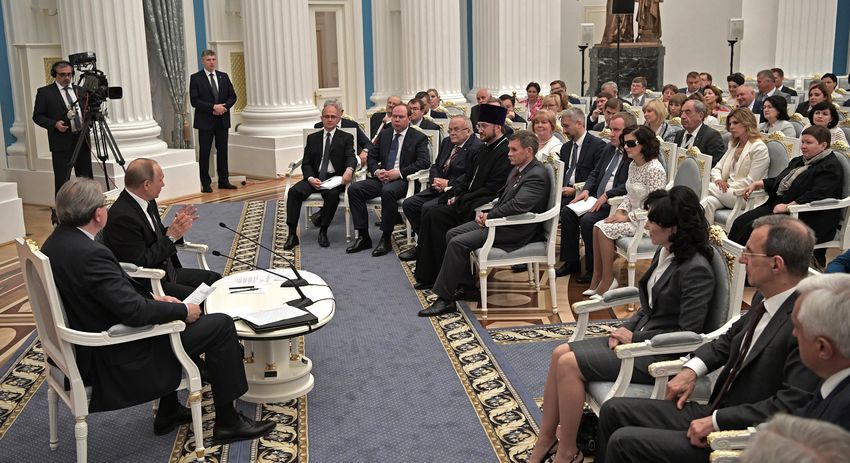
Editor - Olga Khvostunova,
Adjunct Fellow of Institute of Modern Russia
       and Free Russia Foundation

       Olga.Tikhomirova@nemtsovfund.org
             info@nemtsovfund.org
               info@4freerussia.org
CONTENTS

Author’s Note                                   4

Acknowledgments                                 5

Introduction                                    6

Terminology and Timeline                        7

Controlling Civil Society through Funding       11

Design and Activities                           18
     Propaganda                                 21
     Kleptocracy                                21
     Intelligence Activities                    22

Case Study: Russian NGOs at the OSCE Meetings   22

Dealing with the Kremlin’s NGOs                 27
     Recommendations                            27
     Concluding Notes                           27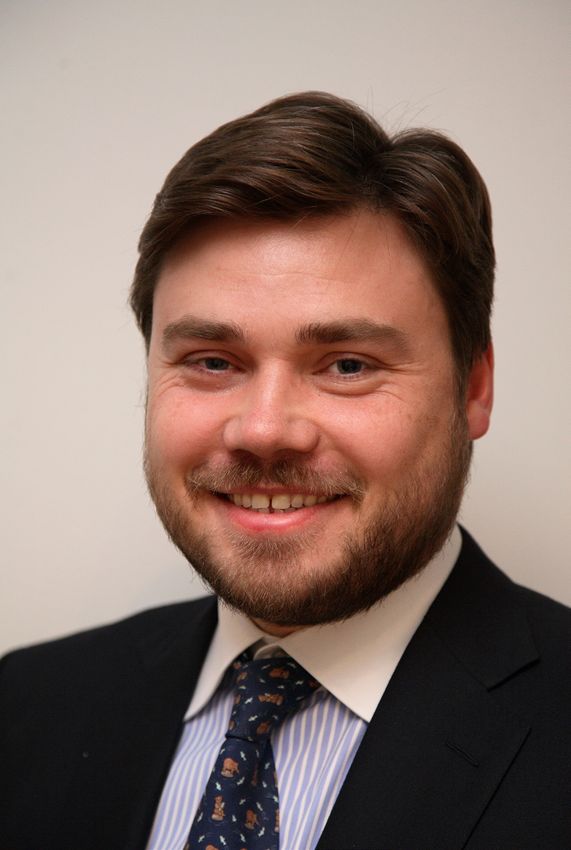
Olga Shorina

         AUTHOR’S NOTE
         This report started off as a study about the government-organized
         NGOs (GONGOs) operated by Kremlin to promote its views and pursue
         its interests. But in the course of the research, it became clear that the
         network of these Kremlin-run organizations is much more complex and
         diverse, stretching far beyond Russia’s borders. It also became clear the
         term “GONGO” does not fully describe the variety of these organizations.
         While it is true that the Kremlin is using GONGOs to manipulate civil
         society in Russia and abroad, there are many other organizations that it
         is relying on to achieve its goals. To address this issue, the author initially
         suggested a broader term—“GONGO & Co.”—but eventually rejected it
         as it failed to fully reflect the complexity of the phenomenon examined in
         this report. The author’s discussions of the term with various experts in the
         field provoked lengthy debates about the formal status of the pro-Kremlin
         NGOs, all the while distracting from a much more crucial problem—their
         impact on the third sector and the civil society as a whole. This report, thus,
         attempts to give an outline of a complex and sophisticated system of NGOs,
         unregistered and informal groups, created and supported by the Kremlin to
         “manage” the third sector.
                                                                          Olga Shorina

4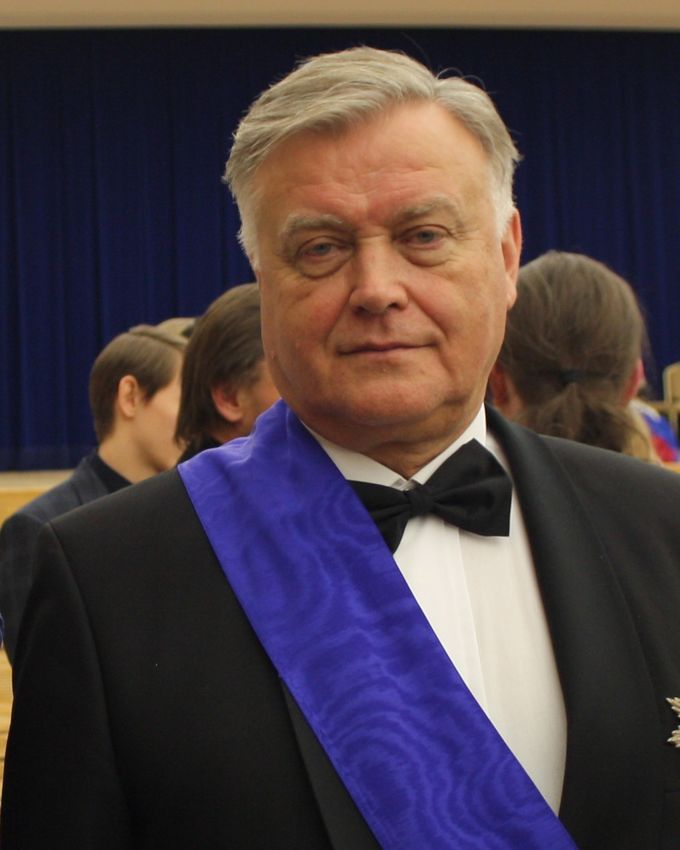
NGOs as a Tool for Russia’s Projection of Influence

                  Abstract: The Kremlin uses NGOs to achieve its goals both inside and
                  outside Russia. Domestically, pro-Kremlin NGOs help shore up support for
                  the government and suggest the presence of an active third sector. In the
                  international realm, they are a key part of the Kremlin’s kleptocracy network,
                  as they lure in foreign actors and fund local partners. Furthermore, pro-
                  Kremlin NGOs manipulate open societies in order to promote the Kremlin’s
                  views, stir divisions and distract international communities from more
                  pressing issues.
                  Regardless of their primary goals, pro-Kremlin NGOs take resources away
                  from independent NGOs, marginalize discussions of human rights, and
                  erode democratic norms, serving as a key tool for disseminating the Kremlin
                  propaganda and disinformation.

                  ACKNOWLEDGEMENTS
                  The author would like to thank the following individuals for their helpful
                  suggestions, ideas, and comments expressed in interviews and discussions:
                  Turgut Gambar, Jacek Kucharczyk, Grigorij Mesezniko, Stefan Melle, Anton
                  Shekhovtsov, Henry Hale, Alexander Solontai, Ilya Zaslavskiy, and Vladimir
                  Milov.
                  Though the views and accounts presented here are those of the author
                  alone, she would also like to thank Free Russia Foundation and personally
                  Natalia Arno for the support of the project.
                  And a special thanks to Jennie Barker for her kind assistance.

                                                                                                   5
Olga Shorina
INTRODUCTION
In January 2016, a controversy surrounding an ■■ The actual activities of the pro-Kremlin NGOs.
alleged kidnapping of a young Russian-German Such activities have gained experts’ attention in
girl by a refugee erupted in Germany. Although the recent years, and this report seeks to add to this
story—now known as the “Lisa case”—was later growing body of work. In order to present the
proven to be false, it sparked a media storm rife overall picture of how the Putin regime uses such
with disinformation and mobilized the Russian- organizations, the report examines their activities,
speaking community to protest against the German goals, and the roles they are supposed to play.
government. All these developments caught
German authorities by surprise. In order to evaluate the impact of the pro-Kremlin
NGOs on international organizations, this report
It turned out that the story was concocted by the analyzes activities of the Russian and pro-Russian
Russian state media, whose audience in Germany NGOs at the Organization for Security and
amounts to about 4 million Russian-speakers. The Cooperation in Europe’s (OSCE) Human Dimension
aggressive coverage of the story resulted in street Implementation Meetings (HDIM). It also attempts to
protests in a Berlin district where many Russian- and determine the correlation between Russia’s declared
Soviet-born residents live. Protests were organized foreign policy objectives and the activities of its
by local communities and NGOs that had previously pseudo-NGOs.
been supported by the Russian Embassy as
promoters of the Russian language and culture; they
accused the German authorities of failing to control HIGHLIGHTS:
immigration and provide security. This “Russian”
grievance originating in the Marzahn neighborhood
The Kremlin’s NGOs form a complex system of
of Berlin was then exploited by a new political
groups coordinated and funded by the Russian
force, the far-right Alternative for Germany (AfD). In
government or loyal businesses. Some of them
2017, the party achieved surprisingly good results
are openly GONGOs (government-organized non-
in several regional elections by running on an anti-
governmental organization), while others claim to
immigration platform. Shortly after the Lisa case, it
be independent. Some have been created upon
came to light that the AfD had also received financial
the initiative of the Kremlin or pro-Kremlin actors for
support from Moscow. Its quick response time also
specific purposes, others have mutated from the
suggests that the party’s activities had been directed
independent organizations, which had been hijacked
or coordinated by the Kremlin. Representatives of
by the government in ways similar to the Kremlin’s
this party were the first ones to come to the Marzahn
takeovers of the traditional media.1 Regardless of
district during protests and interact with the Russian
how they emerge, these organizations are used by
community. Similarly, AfD was also the first to print
the Kremlin to carry out specific tasks, which typically
and distribute election leaflets in Russian.
fall into three categories: propaganda, kleptocracy,
NGOs have become an integral part of Vladimir and intelligence and security services.
Putin’s authoritarian regime. They are used to
While classical GONGOs were initially created
achieve the Kremlin’s goals in both domestic and
to promote the Russian state, they now seek to
international politics.
influence and exert control, both domestically and
This paper examines the Russian government’s abroad.
practices involving NGOs and provides analysis of
the following issues: 1 The first high-profile and well-documented takeover of an
■■ The Russian government’s usage of funding independent TV station by the Russian state took place in 2001,
only one year into Vladimir Putin’s presidency. See, for example:
to control civil society inside and outside the
Susan Glasser, Peter Baker, “Russian Network Seized In Raid,”
country. The Russian state budget provides some Washington Post, April 15, 2001 https://www.washingtonpost.
data regarding official spending in the third sector, com/archive/politics/2001/04/15/russian-network-seized-in-raid/
such as the range of activities that these funds e9679fb0-31cb-4b9c-b07f-204b488f40ad/ (Retrieved on January
may support. 10, 2019).
6NGOs as a Tool for Russia’s Projection of Influence
TERMINOLOGY AND TIMELINE
“GONGO” is a special term that describes state or necessarily a matter of concern when operating
government-organized NGOs. Essentially, GONGOs in a democratic, competitive environment and
contradict the very concept of NGOs, which are when they are transparent about their relationship
supposed to be independent from the government with the government. An increasingly worrisome
and not-for-profit, all the while acting in the service development, however, is the emergence of
of the common good.2 GONGOs also refute the GONGOs that act as a government’s agents,
idea of the third sector or civil society as situated purporting to be independent while aiming to
between the public and private sector or between sideline or supplant genuine non-governmental
the state, market, and family. They showcase a entities. Simply put, GONGOs become dangerous the
more complex relationship between governments moment they are used as a tool or a weapon by an
and civil society [that has emerged in recent authoritarian government.
years].3
The acronym of GONGO is one of an expanding
Governments may have legitimate reasons for assortment of terms that also includes MONGO (my
own NGO), PONGO (parliamentary-organized NGO or,
creating such structures within the third sector where sometimes, personal NGO), FINGO (financially-interested
grassroots’ organizations do not emerge naturally NGO), GANGO (gap-filling NGO), BRINGO (brief-case
due to several factors. For example, GONGOs can NGO), (DONGO (donor-organized NGO), DINGO (donor
be created as part of the state policy toward the international NGO), BONGO (business-organized NGO),
civil society; or in cases when the civic activities BINGO (business-interest NGO), BENGO (bent, in the sense
of crooked, NGO), CHONGO (city hall NGO), GRINGO
are new for the local civil society; or when boosting (government-run or inspired-run NGO), PANGO (party-
these activities requires special resources. This affiliated NGO), RONGO (retired-officials NGO), COMENGO
holds true for democratic and non-democratic (come-and-go, or here-today-and-gone-tomorrow NGO)
governments alike. Within democratic states, typical as well as MANGO or MONGO (Mafia-affiliated or Mafia-
examples of GONGOs are Germany’s political party organized NGO).5
foundations, which receive federal money based
However, this report takes a broader look at
on vote percentages and work domestically and
Russia’s practices and identifies other third sector
internationally in development, political party work,
organizations that are manipulated by the Putin
and democracy-building. Another example is the
regime, such as unregistered civil organizations
U.S.-based National Endowment for Democracy
and informal groups. Such organizations are not
(NED), which was created by the U.S. Congress
only government-organized, but also government-
in 1983. GONGOs also emerge in countries with
operated, government-captured, or simply
limited or no experience in having an independent
government-funded. This description also includes
civil society; or, in particular, in sectors where no
organizations that work to carry out a government
grassroots activities could emerge without state
task. A more apt term for all of these organizations
initiatives. The main case illustrating the point is
could be, in fact, the British term “QUANGO”—quasi-
China, where, as in other illiberal states, GONGOs are
NGO—as it highlights their “quasi-ness,” namely,
often the only entities that can embody the functions
their lack of autonomy and the mere fact that they
of a civil society.4
represent not the interests of independent civil
GONGOs are, therefore, neither new nor society but those of the government.
extraordinary phenomena, and they are not
The use of NGOs to pursue the state’s interests
is not new, nor is it specific to Russia. Other non-
democratic states and authoritarian regimes
2 Sabine Lang, NGOs, Civil Society, and the Public Sphere,
Cambridge: Cambridge University Press, 2013, p.12
have been using these organizations to control
civil society domestically and to support regime
3 Annette Zimmer et al, “The Third Sector and the Policy Process
in Germany,” TSEP Working Paper #9, London: The Centre for Civil
Society at the London School of Economics and Political Science,
5 Lawrence S. Cumming, “GONGOs,” International Encyclopedia
2005.
of Civil Society, eds. Helmut K. Anheier and Stefan Toepler, New
4 Lang, NGOs York: Springer, 2010.
7Olga Shorina
apologists internationally. Azerbaijan’s use of Russian media space. According to Harley Balzer, this
GONGOs to influence the Council of Europe is a key early period of the Putin regime can be described as
example, thoroughly analyzed by the Parliamentary “managed pluralism”:
Assembly of the Council of Europe and currently
Managed pluralism entails both encouraging and
under investigation by the Italian and Spanish law constraining civil society… the managed pluralist regime
enforcement agencies for the possible corruption seeks both to orchestrate and to arbitrarily limit that
schemes involving local politicians.6 GONGOs are activity. The emphasis on “seeks” is important. The
an essential part of China’s strategy to influence leadership in a managed pluralist regime is sophisticated
Australia and New Zealand.7 enough to realize that stifling all independent expression
and political diversity is neither possible nor desirable.10
Historical examples hail from the early 20th-century
Russia with its Zubatovschina — a system of “Managing” eventually gave way to control, as it
government-organized labor trade unions set up to has in many other authoritarian regimes. The Putin
prevent any real labor mobilization. Contemporary regime’s attempts to control civil society did not
Russian GONGOs emerge from the authoritarian stop at the Russian border; today, “authoritarians go
nature of the Putin regime, which has become global”.11
increasingly repressive over the past 18 years8 and The early period of Putin’s presidency was fairly free
will most likely survive for the next five years or for the nonprofit sector. Human rights organizations
longer.9 were able to criticize his regime and participate in
Targeted attacks on Russia’s third sector began in public discussions in the parliament. During this
the early 2000s and have since grown incrementally. short period of time, the media also enjoyed relative
At first, the government sought to influence the freedom in its ability to criticize Putin, as most of the
third sector inside Russia, expanding its practice media outlets were independent from the state. But
of imposing control and eventual takeover of the the coverage of the Kursk disaster,12 in which Putin
came across as a weak or ruthless leader who cared
only about his ratings, triggered the rollback of media
6 For details, see: “Report of the Independent Investigation freedom, beginning with the launch of the state-
Body on the allegations of corruption within the Parliamentary controlled organizations, such as Radio RSN, as a
Assembly,” Council of Europe, April 15, 2018 http://assembly.coe. counterweight to the Echo of Moscow radio station,
int/Communication/IBAC/IBAC-GIAC-Report-EN.pdf (Retrieved on an influential asset of what used to be Vladimir
January 11, 2019). Gusinsky’s media empire. It was only a matter of
7 “New Zealand agonises about Chinese meddling,” Economist, time before the state-controlled Gazprom Media, a
November 8, 2018 https://www.economist.com/asia/2018/11/08/ subsidiary of the Gazprom gas monopoly, acquired
new-zealand-agonises-about-chinese-meddling; Joshua all of Gusinsky’s media assets.13
Kurlantzick, “Australia, New Zealand Face China’s Influence,”
Council on Foreign Relations, December 13, 2017 https://www.cfr. Consequently, other influential outlets and
org/expert-brief/australia-new-zealand-face-chinas-influence; Jason publications were forced to accept the new “red
Scott, “Australia Weighs the Cost of Resisting China’s Meddling,”
Bloomberg, May 9, 2018 https://www.bloomberg.com/news/
articles/2018-05-09/australia-weighs-the-cost-of-resisting-china-s-
10 Balzer, Harley, “Managed Pluralism: Vladimir Putin’s Emerging
meddling (All retrieved on January 11, 2019).
Regime,” Post-Soviet Affairs, Vol. 19, no. 3, 2003, p. 191
8 Examining developments within the third sector in Russia helps
11 Diamond, L., Plattner, M., Walker, C., eds. Authoritarianism Goes
to understand the evolution of this authoritarian regime. Some
Global: The Challenge to Democracy, Baltimore, MD: Johns
accounts of the increasingly authoritarian nature of the Putin regime
Hopkins University Press, 2016.
in Russia could be found in: Yulia Gorbunova, Laws of Attrition:
Crackdown on Russia’s Civil Society after Putin’s Return to the 12 K-141 Kursk was a nuclear-powered cruise-missile submarine
Presidency, New York: Human Rights Watch, 2013; and “Table of the Russian Navy. On August 2000, it was lost and later sank
Illustrating Legislative Crackdown on Rights and Freedoms of the in the Barents Sea, killing 118 people on board. During the rescue
Civil Society in Russia since 2012,” Paris: International Federation operation that lasted several days, Vladimir Putin stayed in in Sochi
for Human Rights, 2012. and remained silent. He was consequently harshly criticized by the
media.
9 Human Rights Watch, “Destructing Law-making. Attack on the
Civil Society After May 2020” (in Russian: «Разрушительное 13 Vladimir Gusinsky was one of the most influential Russian
законотворчество. Наступление на гражданское общество oligarchs who accumulated his fortune in the 1990s. He was the
после мая 2012 года»), April 2013. https://monitoring.mhg.ru/sites/ founder and owner of the Media-Most holding, which included
default/files/files/hrwdoklad.pdf; International Federation for Human the NTV television channel, the Echo of Moscow radio station, the
Rights, “Table Illustrating Legislative Crackdown on Rights and Segodnya (Today) newspaper, and some other outlets. In 2000, the
Freedoms of the Civil Society in Russia since 2012” https://www. Kremlin-authorized attack was launched against him and his assets
fidh.org/IMG/pdf/tableau_russie_web_paysage_v2-2.pdf (Retrieved by the law enforcement agencies resulting in the government’s
on December 18, 2018). takeover of Media-Most and Gusinsky’s fleeing Russia..
8NGOs as a Tool for Russia’s Projection of Influence
lines,” which have only become more rigid since in fact, the starting point of his anti-Americanism.
then. The Kremlin gradually took control over most The NATO expansion to include several post-Soviet
of the high-profile outlets with a large reach—TV6 countries and the events of the 2004 Orange
(closed under government pressure), Kommersant Revolution in Ukraine were also perceived by Putin
Publishing House (acquired by Alisher Usmanov, an as an escalation by the West.
oligarch with close ties to Putin), REN-TV, Gazeta.
ru, Lenta.ru, RBC (forced to change ownership and The timeline below highlights how external and
editorial policy). Eventually, Russia’s leading internet internal events correlated with more repressive
companies, such as Mail.ru and Yandex.ru, have also actions from the Kremlin, particularly in the non-profit
been pressured into censorship (or self-censorship). sector.
Just as the Kursk disaster catalyzed the government
takeover of independent media, a series of other TIMELINE
crucial developments in early- to mid-2000s led to
increasingly repressive actions by the Putin regime
In his 2004 book Cold Peace: Russia’s New
in the nonprofit sector. The 2002 Nord-Ost siege
Imperialism, Janusz Bugajski analyzed the Kremlin’s
in Moscow provoked the Russian president (or was
increasingly assertive foreign policy and argued that
used by him as an excuse) to take control over the
the Kremlin sought to dominate four major subzones
country’s parliamentary system. The 2004 Beslan
in the eastern part of Europe: the European member
school siege resulted in the abolition of the direct
states of the Commonwealth of Independent
gubernatorial elections justified by the need to
States (CIS), the Baltic region, Central Europe, and
consolidate state control to fight against terrorism.
Southeastern Europe. Bugajski argued that the
In 2005, at the beginning of his second presidential Kremlin followed six principal objectives in terms
term, Putin created the Civic Chamber. Officially of its foreign policy toward Europe and European
chartered as a consultative civil society institution interests:
with 168 members, its mission was to analyze draft
—— To achieve primary influence over the foreign
legislations and monitor government activities.14
policy orientations and security postures of
Only a handful of genuine Russian activists were
nearby states;
admitted as members of the Chamber, while the
majority came from the pro-Kremlin pseudo-NGOs. —— To gain increasing economic benefits and
The Chamber’s activities focused on providing monopolistic positions;
support for the government’s policies and actions. —— To convert Eastern Europe’s overwhelming
For example, it publicly voiced approval of the United dependence on Russian energy supplies
Russia primaries during the parliamentary campaign and economic investments into long-term
in 2016.15 Essentially, the Chamber’s creation in 2005 intergovernmental influence;
signaled that from that point forward, civic activists —— To limit the scope and pace of Western
and human rights defenders in Russia would be institutional enlargement and integration;
grouped into “good activists” and “bad activists.” —— To use this region for rebuilding the global
status of international player;
A number of international developments also
changed Putin’s approach to foreign policy. In his —— And to undercut or damage transatlantic
2018 interview with NBC News anchor Megyn relations.16
Kelly, Putin cited the U.S. withdrawal from the Anti- Over the past 14 years, the Kremlin has expanded its
Ballistic Missile Treaty as a pivotal moment for his zones of influence abroad and modified the goals
understanding of the world, admitting that it was, of its activities. These priorities have been detailed
in the official documents, such as “Foreign Policy
Concepts of the Russian Federation” (2000, 2008,
14 “The official website of the Civic Chamber of the Russian 2013, 2016) and the “National Security Strategy”
Federation” https://www.oprf.ru/en/about/ (Retrieved on December (2000, 2009, 2015), which claim that Russia has
18, 2019). interests not only in the CIS countries, the Baltics, the
15 In 2017, Committee for Civil Initiatives (KGI), a Moscow-based Balkans, and Central Europe, but also in the Middle
think tank led by Russia’s former finance minister Alexei Kudrin, East and Latin America. Russian activities in these
published the report that criticized the activities of the Civic areas were launched under the banner of providing
Chamber. See: “Approaches to Improvements of the Russian “support for compatriots abroad”—the main slogan of
Federation’s Civic Chamber institution” (in Russian: «Подходы
к совершенствованию института Общественной палаты
Российской Федерации») https://goo.gl/m2hc2M (Retrieved on 16 Bugajski, Janusz. Cold Peace: Russia’s New Imperialism, New
December 18, 2019). York: Praeger, 2004.
9Olga Shorina
the Russian foreign policy during Dmitry Medvedev’s these reports, the number of pro-Kremlin NGOs
presidency (2008-2012)—with a number of events operating abroad amounts to hundreds. In response
aimed at promoting the Russian language and to Russia’s meddling in Europe, the European
culture. Among these activities were the creation of Values Think-Tank launched a strategic program
Rossotrudnichestvo (2008), the mobilization of the called “Kremlin Watch,” whose goal is to “expose
Russian cultural centers affiliated with the Russian and confront instruments of Russian influence and
embassies (e.g. the Pushkin State Russian Language disinformation operations focused against Western
Institute became the key vehicle for promoting the democracies.” It monitors the Kremlin’s activities in
Russian language), and the launch of the Russian Europe almost 24/7.19
media centers. Today, there are 14 media centers
located mostly in post-Soviet countries but also In the meantime, Russia’s own civil society operates
in China, India, United Kingdom, and France.17 under harsh conditions created by the tough
Numerous cultural events, exhibitions, exchange government regulation. Following the 2012 Foreign
visits, educational programs were held over the Agent Status Law, the number of NGOs in Russia
years, however, many of these activities have since was slashed by one third in just three years.20 While
evolved into covert and overt operations aimed at in 2017, it has bounced back to the 2012 levels,
positioning Russia as a decision-maker inside the according to the Russian Ministry of Justice’s data,
target countries. with many new NGOs being registered, the current
number of 223,000 is still dramatically lower than
It is noteworthy that supporting compatriots in the 359,000 that existed in 2007.
former Soviet republics was a policy pursued by
various political forces in the 1990s, especially during The “foreign agent” law forces the NGOs that receive
electoral campaigns. Nationalists and proponents foreign donations and engage in what is vaguely
of a strong Russian state, such as Dmitry Rogozin, described as “political activity” to accept the status
the current head of Roscosmos, who emerged on of a “foreign agent” and publicly label themselves as
the political arena in the 1990s as one of nationalist such in all official communications. “Political activity”
politicians backed by Kremlin, and Yuriy Luzhkov, can be understood very broadly and may include
the former mayor of Moscow (1992-2010), have been organizing anticorruption campaigns, environmental
long-time supporters of these policies. Luzhkov protection actions, or even defending human rights.
had even appropriated funds from the Moscow
city budget for projects in Crimea, Abkhazia, and
South Ossetia by introducing in the budget special
expenditure categories—international cooperation
and support for compatriots. Putin has expanded
the idea. Originally, the Kremlin sought to influence
only the Russian community in target countries, often
through the Russian media propaganda. Since then,
however, entire networks of NGOs, media outlets,
and Kremlin sympathizers, including local politicians,
experts and academics, have been created and
coopted by the Putin regime.
Today, these networks operate with relative (Retrieved on January 19, 2019); Oren Dorell, “Alleged Russian
efficiency inside target countries, influencing their political meddling documented in 27 countries since 2004,” USA
domestic policies and political processes. The Today, September 7, 2017. https://eu.usatoday.com/story/news/
variety of the Kremlin’s methods, its choice of target world/2017/09/07/alleged-russian-political-meddling-documented-
27-countries-since-2004/619056001/ (Retrieved on January 19,
countries and organizations have recently drawn
2019); Kerin Hope, “Russia meddles in Greek town to push back
much scrutiny in the West resulting in an array of the West,” Financial Times, July 13, 2018 https://www.ft.com/content/
media reports and investigations.18 According to b5728090-86b0-11e8-96dd-fa565ec55929 (Retrieved on January
19, 2019).
17 “The list of the foreign bureaus of the Russian state news 19 “Kremlin Watch: Everything you need to know about Russian
agency Russia Today,” Official website of the International influence operations in Europe” https://www.kremlinwatch.
Information Agency “Rossiya Segodnya” http://pressmia.ru/docs/ eu/#welcome (Retrieved on January 19, 2019).
about/filials.html (Retrieved on December 18, 2018).
20 For details, see, for example: Alexei Kozlov, “Russia’s
18 See, for example: Yaroslav Shimov, Aleksy Dzikawicki “E-Mail “foreign agents” law is bankrupting campaigners and activists,”
Hack Gives Glimpse Into Russia’s Influence Drive In Eastern openDemocracy, November 10, 2017 https://www.opendemocracy.
Europe,” RFE/RL, March 11, 2017. https://www.rferl.org/a/russia-e- net/od-russia/alexei-kozlov/russias-foreign-agents-law (Retrieved
mail-hack-belarusian-usorsky-piskorski-dugin/28363888.html on January 19, 2019).
10NGOs as a Tool for Russia’s Projection of Influence
CONTROLLING CIVIL SOCIETY THROUGH FUNDING
Analysis of the funding of GONGOs and NGOs The federal budget also appropriates funding for
offers an insight into the Kremlin’s practices of the so-called “patriotic organizations,” such as the
controlling civil society. The Russian state budget is Russian Military-Historical Society chaired by the
the most transparent source for such information, Minister of Culture Vladimir Medinsky, whose father
even if it reveals an incomplete picture. However, serves as an advisor at the same organization.
some concrete data can be extracted: for example,
“The Russian Military Historical Society (RMHS) recreated
the 2018 Federal Budget allocated more than $1.2 by the Edict No. 1710 of the Russian Federation President
billion in grants to NGOs and civic initiatives. Vladimir Putin of December 29, 2012 as a successor of
the Imperial Russian Military Historical Society, which was
Much of this funding goes to classic GONGOs, created by the Decree of Emperor Nicholas II in 1907 and
such as Rosnano (a government-owned joint- ceased its activity in 1917. The objectives of RMHS are:
stock company created for venture funding), the to consolidate the forces of the state and society in the
United Transport Directorate (originally created as study of Russia’s military historical past, to promote the
study of Russian military history and counteract attempts
the Olympic Games Transport Directorate, it was to distort it, to popularize the achievements of military-
consequently re-organized to accommodate the historical science, raise the prestige of military service, and
2018 FIFA World Cup in Russia), Skolkovo Innovation patriotism education.”21
Center, the Monocities Development Fund, and the
WTO Expertise Centre.
Another group that receives government funding is
the media—the federal television networks, such as 21 “Reference about the activities of the Russian Military Historical
the First Channel and VGTRK, as well as the Public Society.” https://rvio.histrf.ru/activities/news-en/item-4711 (Retrieved
Television of Russia. on December 24, 2018).
June 20, 2017: Vladimir Putin meets members of the Russian Civic Chamber in the Kremlin. Photo: kremlin.ru
11Olga Shorina
A surprising item in the budget is the funding RBC reported that the Media Center of the 2014
earmarked for the Talent and Success Foundation Winter Olympics in Sochi was transferred under the
launched by Sergey Roldugin, a Russian cello player, management of the Talent and Success Foundation
businessman, and, most importantly, a rumored along with a few other Olympic sites.24 Consequently,
godfather of Vladimir Putin’s daughter, Maria. After the Sirius Education Centre for Gifted Children
analyzing the Panama Papers, the Organized Crime was launched on the basis of the former Media
and Corruption Reporting Project (OCCRP) described Center—reportedly, upon Vladimir Putin’s orders.
Roldugin as the “secret caretaker” of Putin’s hidden The remodeling work that will cost the Russian state
wealth.22 budget around 2 billion rubles ($30.5 million) is to be
finished by 2021.
According to official sources, the Russian president
participated in and spoke at the meeting of the Overall, the Talent and Success Foundation receives
Foundation’s Board of Trustees and donors.23 funding from at least four sources in the Russian
The declared goal of the foundation is to provide state budget: one in the Ministry of Culture’s budget,
support and supplementary education for talented two in the Ministry of Education, and one in the
children in arts, sports, and science. In October 2018, Ministry of Sports. Total funding of this organization
amounts to almost $30 million—the number that is
projected to grow in 2019 and 2020.
22 Roman Anin, Olesya Shmagun, Dmitry Velikovsky, “The Secret
Caretaker,” OCCRP, April 3. 2016. https://www.occrp.org/en/
panamapapers/the-secret-caretaker/ (Retrieved on December 24,
24 Polina Zvezdina, Natalia Galimova, “Arena for Prodigies:
2018)
Why Sirius Needs the Status of a ‘Scientific Alley’” (in Russian:
23 “Meeting of Talent and Success Foundation Board of Trustees.” “Арена для вундеркиндов: зачем «Сириусу» статус
Official website of the President of Russia, September 5, 2018. «научной долины»”), RBC, October 23, 2018 https://www.rbc.ru/
http://en.kremlin.ru/events/president/news/58439 (Retrieved on society/23/10/2018/5bc9d8879a79476b420153ef (Retrieved on
December 24, 2018) December 24, 2018).
September 1, 2018: Vladimir Putin holds a meeting of the Talent and Success Foundation Board of Trustees. Second to the Russian president’s
left hand is chairman of the Foundation Sergei Roldugin who has been exposed in the Panama papers as “Putin’s caretaker.” Photo: kremlin.ru
12NGOs as a Tool for Russia’s Projection of Influence
There are several other line items that allow the and Science’s budget, which amounts to almost $100
government and its agencies to discretely support million per year (the Ministry was reformed and split
the NGOs that they deem useful through state in 2018, but the allocated budget remained intact).
contracts. Beyond that, it is noteworthy that while This number—$100 million—is twice as much as the
state funding is directed primarily to loyal NGOs, budget of Rossotrudnichestvo. All these funds are
several high-profile independent organizations, directed to support patriotic individuals, groups,
such as Civil Rights Defense Center “MEMORIAL,” events (e.g. The Immortal Regiment26), and exchange
a Russian historical and civil rights society founded programs throughout the world.
in 1989 and operating in a number of post-Soviet
states, also receive it. The goal is, presumably, for Half of the international part of the budget of the
the Russian government to maintain the façade of Ministry of the North Caucasus Affairs is used to
democratic procedures and practices. support Abkhazia and South Ossetia—former regions
of Georgia that declared independence in 2008
Regardless of the amount, state funding is an following the events of the Russian-Georgia war.27
instrument of reigning over stubborn NGOs and The Federal Custom Service is spending half of its
activists, as it comes with additional requirements 2018 budget to promote the Eurasian Economic
that result in audits, pressure, and even persecution. Union, the Kremlin’s attempt at an alternative to the
A key example of the latter is the case of Kirill European Union.28
Serebrennikov, an independent, free-minded theatre
director, and his colleagues, who are currently being In terms of foreign influence spending, the leader
persecuted for the alleged misuse of state funds is, by far, the Federal Agency on Press and Mass
allocated for one of their theatre projects.25 Communication. Expenditure items in its budget
include not only “International Cooperation” in
The Russian budget offers clues about the state general, but also details about specific programs
expenditures for foreign propaganda, including abroad called the “Participation in the International
GONGOs’ activities. The Ministry of Foreign Affairs Information Exchange and Prevention of Information
and a grant-making organization Rossotrudnichestvo Technological Threats.” These programs envisage
(the official title is the Federal Agency for the spending of over $300 million on propaganda.
Commonwealth of Independent States, Compatriots
Living Abroad and International Humanitarian
Cooperation) promote Russia and the Putin regime,
which they perceive as one entity. According to the
2018 budget, these structures received almost $1.5
billion to implement their activities.
This is hardly the total amount appropriated for
the Russian foreign influence campaigns. Almost
every ministry or agency within the Russian
government has an expenditure item for international
cooperation. Some of these items are straightforward
and are not intended for advancing Russian influence
abroad. For example, they may include fees for
memberships in international organizations. But other
items are clearly used for propaganda purposes
because no one who does not support the regime
will have access to these funds. Such practices are
inherent to autocratic systems. 26 Svetlana Prokopeva, “Russia’s Immortal Regiment: From
Grassroots To ‘Quasi-Religious Cult’,” RFE/RL, May 12, 2017 https://
Examples of such practices include: the international www.rferl.org/a/russia-immortal-regiment-grassroots-to-quasi-
part of the Ministry of Culture’s budget, which religious-cult/28482905.html (Retrieved on January 10, 2019).
currently stands at around $3 million per year; or the 27 Russia supported separatist ideas in these regions well ahead
international item line of the Ministry of Education the military conflict (e.g. offering to issue Russian passports for the
local residents).
25 Oliver Carroll, “Russian theatre director’s trial opens—then 28 For details, see, for example: Rilka Dragneva, Kataryna
adjourns—amid claims of political persecution,” Independent, Wolczuk, “The Eurasian Economic Union Deals, Rules and the
October 25, 2018 https://www.independent.co.uk/news/world/ Exercise of Power,” Chatham House, May 2017 https://www.
europe/theatre-director-trial-kirill-serebrennikov-moscow-russia- chathamhouse.org/sites/default/files/publications/research/2017-05-
political-persecution-a8599926.html (Retrieved on January 10, 02-eurasian-economic-union-dragneva-wolczuk.pdf (Retrieved on
2019). January 10, 2019).
13Olga Shorina
LINE ITEMS IN THE RUSSIAN FEDERAL BUDGET
ALLOCATED FOR THE THIRD SECTOR
2018 2019
Agencies and 2020
Item line (in thousands, (in thousands,
ministries (in thousands USD)
USD) USD)
Ministry of Industry International
574.14 639.09 649.60
and Trade cooperation
Internationxal
Ministry of Energy 1,590.67 1,644.76 1,671.80
cooperation
Ministry of Natural
International
Resources and 8,775.53 5,613.35 5,705.64
cooperation
Environment
International
Ministry of Culture 2,825.72 2,921.81 2,969.85
cooperation
International
Ministry of Health 16,808.98 17,394.66 13,233.95
cooperation
Ministry of
International
Construction, 403.12 416.82 423.68
cooperation
Housing and Utilities
Ministry of Digital
Development, International
6,445.90 6,649.25 6,754.53
Communications and cooperation
Mass Media
International
99,508.95 118,943.40 120,740.59
cooperation
Subprogram
Ministry of Education “International
5,153.84 5,329.09 5,416.71
and Science Cooperation in
Science”
Grants for education
projects of NGOs in 12,280.39 12,422.19 12,760.77
CIS
Federal Agency for International
1,228.90 1,270.68 1,291.57
Fishery cooperation
International
Ministry of Agriculture 1,194.76 587.68 597.50
cooperation
International
Ministry of Finance 1,790,942.45 1,864,247.46 1,485,677.24
cooperation
14NGOs as a Tool for Russia’s Projection of Influence
Federal Agency for
the Commonwealth
of Independent
States, Compatriots
Living Abroad Total 53,678.16 54,814.20 55,577.07
and International
Humanitarian
Cooperation
(Rossotrudnichestvo)
International
Ministry of Transport
cooperation
4,380.29 4,075.99 4,143.01
International
Federal Road Agency 0.00 99.47 99.47
cooperation
International
867.71 897.21 911.96
cooperation
Subprogram
“Participation in
the International 702.76 709.07 727.48
Information
Exchange” (1)
Subprogram
“Participation in
the International 299,069.46 275,812.92 276,048.88
Information
Federal Agency Exchange” (2)
on Press and Mass
Communications Subprogram
“Security in the
Information Society”
(“Prevention of 2,708.97 2,704.15 2,704.15
the Information
Technological
Threats”)
Russia Today 105,919.00 105,832.43 105,832.43
ITAR TASS 34,374.88 30,141.36 30,141.36
Ministry of Economic International
92,560.09 87,441.57 88,711.02
Development cooperation
Ministry of Labor and
International
Social Protection 12,261.53 12,678.46 10,059.45
cooperation
(Mintrud)
Federal Service
International
for Labor and 22.00 22.75 23.13
cooperation
Employment (Rostrud)
Federal Customs International
16,988.52 6,633.83 6,643.19
Service cooperation
Federal Archival International
21.16 21.88 22.24
Agency cooperation
15Olga Shorina
Federal Service for International
2.02 2.08 2.12
State Statistics cooperation
Federal International
4.71 4.99 5.07
Antimonopoly Service cooperation
Federal Accreditation International
43.93 45.43 46.17
Service cooperation
Federal Service for International
476.89 493.10 501.21
Intellectual Property cooperation
Federal Service for International
3,162.44 3,253.10 2,345.21
Hydrometeorology cooperation
and Environmental International
Monitoring 36,962.73 26,761.58 0.00
liabilities
Federal Agency for
International
Technical Regulation 1,443.82 2,059.83 2,093.70
cooperation
and Metrology
Federal Agency for International
317.64 353.07 385.79
Tourism cooperation
Ministry of
Civil Defense, International
1,404.62 1,450.95 1,448.80
Emergencies and cooperation
Disaster Relief
International
Federal Tax Service 56.90 58.84 59.81
cooperation
International
Ministry of Defense 136.15 140.78 143.10
cooperation
Ministry of Interior International
1,185.08 1,246.50 1,267.00
Affairs cooperation
Office of the High
International
Commissioner for 8.92 9.22 9.37
cooperation
Human Rights
International
Accounts Chamber 61.58 61.97 62.99
cooperation
Ministry of Foreign
Total 1,417,049.62 1,470,838.63 1,462,088.81
Affairs
International
Ministry of Justice 116.56 120.53 122.51
cooperation
Russian Academy of International
2,015.35 2,085.00 2,119.28
Science cooperation
Federal Service for
State Registration, International
63.76 66.12 67.19
Cadastre and cooperation
Cartography
16NGOs as a Tool for Russia’s Projection of Influence
International
Federal Bailiff Service 81.43 84.20 85.58
cooperation
International
State Duma 1,196.28 1,236.96 1,257.30
cooperation
Council of International
242.71 242.71 242.71
Federations cooperation
Ministry of North International
169,536.29 173,886.76 116,034.27
Caucasus Affairs cooperation
Prosecutor General’s International
10.08 10.42 10.59
Office cooperation
Federal Service
for the Supervision
International
of Environment, 3.35 3.46 3.51
cooperation
Technology and
Nuclear Management
Cinema Foundation International
2.31 2.31 2.31
of Russia cooperation
National Research
International
Center “Kurchatov 6,207.98 6,533.69 6,641.12
cooperation
Institute”
Federal Service for International
271.14 255.31 255.95
Financial Monitoring cooperation
Rosatom State
International
Atomiс Energy 45,544.97 52,119.70 57,853.74
cooperation
Corporation
Federal Space International
115,895.64 119,836.45 121,806.85
Agency cooperation
International
Ministry of Sports 1,517.32 1,568.92 1,594.71
cooperation
Total 170,495 168,202 152,348
Source: Russian Federal Budget
There are also expenditures that are placed within The total official funds allocated for influence
the category of “International Cooperation” with a activities in the federal budget are estimated at
purpose to promote Russia’s influence abroad. For over $2.2 billion. However, there are other funding
example, there is a special line in the Ministry of sources as well, including regional budgets that
Culture’s budget for grants allocated for humanitarian provide money and services to NGOs, and personal
cooperation with Poland (40 million rubles, or assets of the Russian oligarchs and members of
$600,000, annually, for 2018-2020). Putin’s inner circle,29 whose capabilities are vast but
hidden from public scrutiny.
Additionally, it is noteworthy that Russian pensioners
living abroad receive their pensions through the
system of the Russian embassies and consulates. 29 “2018 Ranking of countermeasures by the EU28 to the
These pensions have been turned into an instrument Kremlin’s subversion operations,” the European Values Think-Tank,
of tracking Russian citizens internationally and June 13, 2018. http://www.kremlinwatch.eu/userfiles/2018-ranking-
influencing them in election campaigns. of-countermeasures-by-the-eu28-to-the-kremlin-s-subversion-
operations.pdf (Retrieved on December 18, 2018).
17Olga Shorina
DESIGN AND ACTIVITIES
It is clear that, on the one hand, the Kremlin is self-described as “patriotic,” their missions are different.
narrowing down the legal space for independent Nashi primarily tried to appeal to the young ambitious
nonprofit organizations, while, on the other hand, Russians who wanted to pursue a career in public
is replacing them with state-controlled NGOs— administration. Members would be invited to participate
organizations that imitate independent NGOs and in various networking events; the movement’s annual
thus degrade and discredit Russia’s nonprofit sector. summer camps were often attended by high-profile
These pseudo-NGOs are launched and shut down at Russian officials, including Vladimir Putin and Dmitry
the government’s convenience. Medvedev. The Youth Army targets an even younger
audience, catering to school children.
For example, the once popular youth movement
Nashi, championed by former Deputy Chief of Institutional structure of the pro-Kremlin NGOs varies.
Presidential Administration Vladislav Surkov, is almost They can be set up as a traditional NGO, a foundation,
forgotten today, while a new youth organization is a think tank, an association, or a social movement, with
being groomed by the Minister of Defense Sergey a caveat that it is controlled by the state. Alternatively,
Shoigu (it is also, reportedly, linked to the sanctioned they can exist as unregistered, paramilitary, or hate
Russian businessman Yevgeny Prigozhin, who is groups.
often described by the media as “Putin’s chef” for
his close ties with the Russian president). The new These organizations focus on an array of issues ranging
organization, the Youth Army, counts 230,000 people from foreign affairs, international cooperation, and
among his members. While both organizations are Russian diaspora to education, culture, religion, human
rights to politics, history et al.
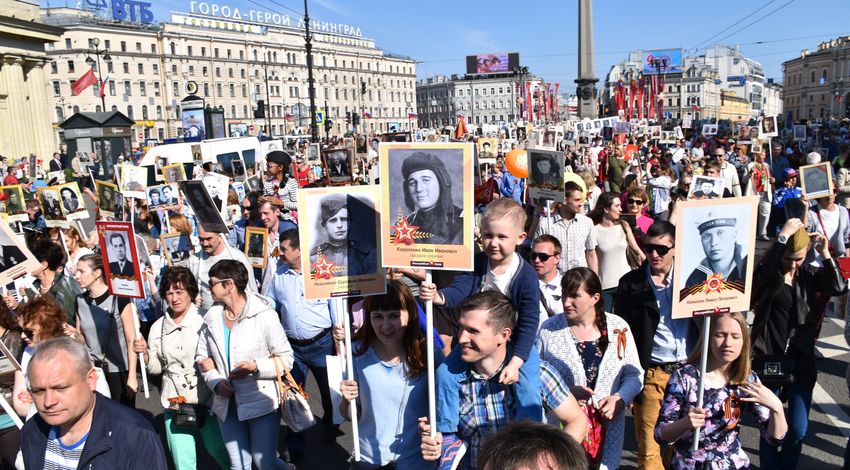
Launched as a local grassroots movement several years ago, today, Immortal Regiment marches bring together about over 8 million of
Russian people across the country. Russian embassies and Kremlin-friendly NGOs also help organize Immortal Regiment processions in more
than 60 countries around the world. Photo: open sources.
18NGOs as a Tool for Russia’s Projection of Influence
Regardless of their structure and focus, pro-Kremlin rubles, however, the sources of this miraculous
NGOs fall into four broad categories: enrichment were never properly investigated.
Today, his think tank promotes the idea of
1. Pro-Kremlin entities that are transparent Russia’s “special way” in politics and the notion
about their status as GONGOs. Russkiy that Russia and the Putin regime are entitled
Mir, the Gorchakov Foundation, and the to special treatment on the international arena.
Russian Peace Foundation, among others, The organization maintains offices in Berlin
were officially established by the Russian and Vienna, holds large conferences on the
government and list state officials on their Greek island of Rhodes, and seeks to integrate
boards of trustees. academics and public intellectuals from all
2. Co-opted independent NGOs. A well-known over the world into its network by funding their
example of an independent NGO taken articles and reports that promote the Kremlin’s
over by the state is the Immortal Regiment agenda.33 Yakunin reportedly has invested $28
(«Бессмертный полк»), which had started out million of his personal wealth in the think tank
as a grassroots movement of those Russians over five years, but the organization has no
who wanted to commemorate their family official record of its income and expenses.34
members perished in World War II by marching 4. Foreign organizations that preserve an
with their photographs on May 9 (Russia’s independent façade but are being either
Victory Day). The initiative was launched in operated or funded, often covertly, by
2011 in the Russian city of Tomsk by a group Moscow. This category includes hate groups,
of local activists. Once it became popular paramilitary groups, traditionalists, and radical
and gained wide support throughout the right activists. The Kremlin’s support for them
country, the initiative was hijacked by a pro- is usually not official. Some examples include
government group, which turned the Immortal groups of Cossacks who work to spread
Regiment into one of the Kremlin’s main conservative orthodox values throughout the
patriotic activities. Today, as part of the May CIS, “anti-fascist” communities and Russian-
9 celebrations in Moscow, Putin personally minority groups in the Baltic states, pro-
leads the march. Additionally, the government Russian paramilitary and youth groups acting,
now doles out grants to loyal NGOs to as recently reported, in Serbia and Bosnia.35 In
help organize these marches. In 2018, the many cases, funding and strategic guidance
Immortal Regiment march in New York30 was for such groups are channeled through the
organized by the group called “Russian Youth outposts of the Russian Orthodox Church.
of America,”31 operating in the United States
since 2016. It is affiliated with the Coordinating
Council of the Russian Compatriots of the
United States and Russkiy Mir.
3. NGOs that claim to be independent but 33 Casey Michel, “Oligarch Gets an Assist from U.S. Academics in
can be linked to the Kremlin. A particularly Whitewashing Russia’s Reputation,” ThinkProgress, May 30, 2018
https://thinkprogress.org/why-are-these-american-academics-
interesting example is The Dialogue of helping-a-sanctioned-russian-oligarch-1d1fa57c98e1/ (Retrieved on
Civilizations, a think-tank established by the January 10, 2019).
former head of the Russian Railways Vladimir
Yakunin, who is also Putin’s former neighbor 34 Roman Goncharenko, “’Dialogue of Civilizations’: Why Yakunin
from the Ozero cooperative.32 During his Launches an Institute in Berlin,”(in Russian: “Диалог цивилизаций”:
для чего Якунин открывает институт в Берлине?) Deutsche
tenure at the Russian Railways in 2005-2015,
Welle, June 30, 2016 https://www.dw.com/ru/диалог-цивилизаций-
Yakunin managed to accumulate billions of для-чего-якунин-открывает-институт-в-берлине/a-19370129
(Retrieved on January 10, 2019).
30 “The Immortal Regiment march in New York,” YouTube, May 35 Paul Goble, “Moscow Using Serbs Against Bosnia as It Did
9, 2018 https://youtu.be/VHoOetcm0Vo (Retrieved on January 10, Ethnic Russians Against Ukraine,” Jamestown Foundation, April 19,
2019). 2018, https://jamestown.org/program/moscow-using-serbs-against-
bosnia-as-it-did-ethnic-russians-against-ukraine/; Vera Mironova,
31 Official website of the Russian Youth of America (in Russian:
Bogdan Zawadewicz, “Putin Is Building a Bosnian Paramilitary
«Российская молодежь Америки») http://russianyouthofamerica.
Force,” Foreign Policy, August 8, 2018, https://foreignpolicy.
org/ (Retrieved on January 10, 2019).
com/2018/08/08/putin-is-building-a-bosnian-paramilitary-force/;
32 Ozero (Lake) is the dacha cooperative in the countryside near “Keeping the Balkans Out of Putin’s Grasp,” Bloomberg, December
Saint-Petersburg. It was founded in 1996 by Vladimir Putin’s inner 20, 2018, https://www.bloomberg.com/opinion/articles/2018-12-20/
circle; all of these people have become extremely wealthy and the-balkans-progress-and-russian-interference (Retrieved on
powerful. January 11, 2019).
19Olga Shorina
Balkans and Poland),37—Ivan Savvidi, a former
member of the Russian State Duma now residing
in Greece. Savvidi donated over 300,000 euros to
organizations opposed to renaming of the country
that would qualify it for NATO membership.
The cases of Yakunin, Malofeev and others
raise the question of how these activities are
coordinated, especially since many of them appear
to be organized locally. These individuals are
integral to Putin’s regime and owe their fortunes
to the personal relationship with Putin. They still
enjoy the support of the regime and cooperate
with the regime authorities. Their ability to
establish these organizations underscores the
Kremlin’s confidence in them and their key position
within the regime.
The official strategy of the Russian third sector
is described by the Civic Chamber as “action-
oriented patriotism.” But in today’s Russia, the term
“patriotism” has come to denote full support of the
regime, which is why nonprofit organizations do
not necessarily pursue independent policies but
instead promote those of the regime.
Despite the many different forms that NGOs take
in Russia, most of them pursue activities in three
areas. They are:
■■ Advancing propaganda in cooperation with
media outlets and troll-networks;
■■ Facilitating the kleptocracy network;
Founder of the international investment fund Marshall Capital
■■ Supporting Russian intelligence operations.
Partners, Konstantin Malofeev chairs the board of directors of the
Tsargrad media group; he is also Chairman of the St. Basil the Great
Charitable Foundation. Photo: open sources.
Konstantin Malofeev, a Russian oligarch who has
been exposed in the Western media as a supporter
of the Europe’s ultranationalist movements, and
Vladimir Yakunin are the key pro-Kremlin Orthodox
philanthropists who fund several initiatives
connected to the Russian Orthodox Church. They
also lead special foundations seeking to spread
Russian Orthodox values, such as the Center of the
National Glory of Russia and the St. Basil the Great
Foundation.
An OCCRP report36 published in July 2018 named 37 For details, see: Christo Grozev, “The Kremlin’s Balkan Gambit:
another Russian oligarch who sponsored riots in Part 1,” Bellingcat, March 4, 2017, https://www.bellingcat.com/news/
Macedonia (echoing similar developments in the uk-and-europe/2017/03/04/kremlins-balkan-gambit-part/; Christo
Grozev, “Balkan Gambit, Part 2: The Montenegro Zugzwang,”
Bellingcat, March 25, 2017, https://www.bellingcat.com/news/
uk-and-europe/2017/03/25/balkan-gambit-part-2-montenegro-
36 Saska Cvetkovska, “Russian Businessman Behind Unrest zugzwang/; “Kremlin Octopus: Part III: How GRU Used the Serbians
in Macedonia,” OCCRP, July 16, 2018, https://www.occrp.org/ for a Coup in Montenegro and the War in Ukraine,” The Insider, July
en/investigations/8329-russian-businessman-behind-unrest-in- 26, 2018, https://theins.ru/uncategorized/111402?lang=en (Retrieved
macedonia (Retrieved on January 11, 2019). on January 11, 2019).
20You can also read


