Not an empty word for VikingGenetics - Sustainability - SAVED - Viking Genetics
←
→
Page content transcription
If your browser does not render page correctly, please read the page content below
NO 01 | MAY 2019

              Sustainability -
            Not an empty word
            for VikingGenetics

GENETIC           VJ LEADERS                      SAVED
DIVERSITY         IN THE WORLD                    FEED INDEX
   Page 4             Page 6                        Page 13
Editorial

                                        Innovation and sustainability,
    Web: vikinggenetics.com

    VikingGenetics, Head office

                                        not empty words at VikingGenetics
    Ebeltoftvej 16
    DK-8960 Randers SØ
    T: +45 8795 9400
    info@vikinggenetics.com

                                        H
    VikingGenetics, Sweden                        ow can we find the right balance between productive and healthy, cli-
    Box 64
    SE-532 21 Skara                               mate friendly cows? How can we contribute to reducing greenhouse gases
    T: +46 511-267 00                             to alleviate climate change? Those questions are taking up more and more
    export@vikinggenetics.com
                                        media space today, we listen to discussions about them around the world and the
    VikingGenetics, Finland             answers proposed are often linked to two words: innovation and sustainability.
    Korpikyläntie 77
    PL 95                                   Innovation and sustainability have been a part of the VikingGenetics philoso-
    FI-15871 Hollola
    T: +358 40 311 5000                 phy for over 120 years thanks to visionary dairy farmers. They understood that
                                        pooling their experiences would provide plenty of answers and therefore began
    Publishing and Editorial Director
    Camilla Rosman                      to register performance of individual cows as early as in 1900 when they joined
    T: +46-(0)511-267 22                forces to create a unique registration system.
    M: +46-(0)70-201 22 39
    caros@vikinggenetics.com                In this issue, you will find articles that demonstrate our commitment to sus-
    Editor of VikingNews                tainable dairy farming. Cows that need less feed to produce milk, meaning lower
    Verónica Löfgren                    methane emissions. The Natural Resources Institute Finland (LUKE), the Nordic
    T: +46-(0)511-267 24
    M: +46-(0)70-7620779                Cattle Genetic Evaluation (NAV) and the University of Aarhus in Denmark to-
    velof@vikinggenetics.com            gether with VikingGenetics have been doing research for a Saved Feed Index,
    Follow us on:                       that will be ready this autumn.
                                            We are very proud of our performance outside our home. VR Tokyo NTM +27
                                        is the number one bull in Australia, leading the Balanced Performance Index
                                        (BPI). What’s more, our VikingJersey daughter proven bulls top the ranking list
                                        in the United States (USA). VikingJersey bulls take up top 10/10 positions on the
                                        Expected Future Inbreeding list so they offer great outcross pedigrees. The best
                                        high-performance bull is VJ Huzar NTM +17 with high rankings in many of the
                                        categories, including fertility and pregnancy rate, udder health and solids.
    Layout and production
    vahle+ nikolaisen.                      We also have leading positions in the United Kingdom where VikingJerseys
                                        dominate the Top Proven Jersey Bull lists where VikingJerseys comprise nine out
    Photos
    Alex Arkink, Elly Geverink,         of 10 top bulls on the Spring Calving Index, £SCI, eight out of 10 top bulls on the
    Elisabeth Theodorsson,              Autumn Calving Index, £ACI and five out of 10 top bulls on Profitable Lifetime In-
    Tiina Tahvonen and
    employees by VG.                    dex, £PLI. While in Germany, VikingHolstein bulls are dominating the new health
    Cover photo                         index, RZ health with VH Bradoc as number one and 12 other bulls on top 15 list.
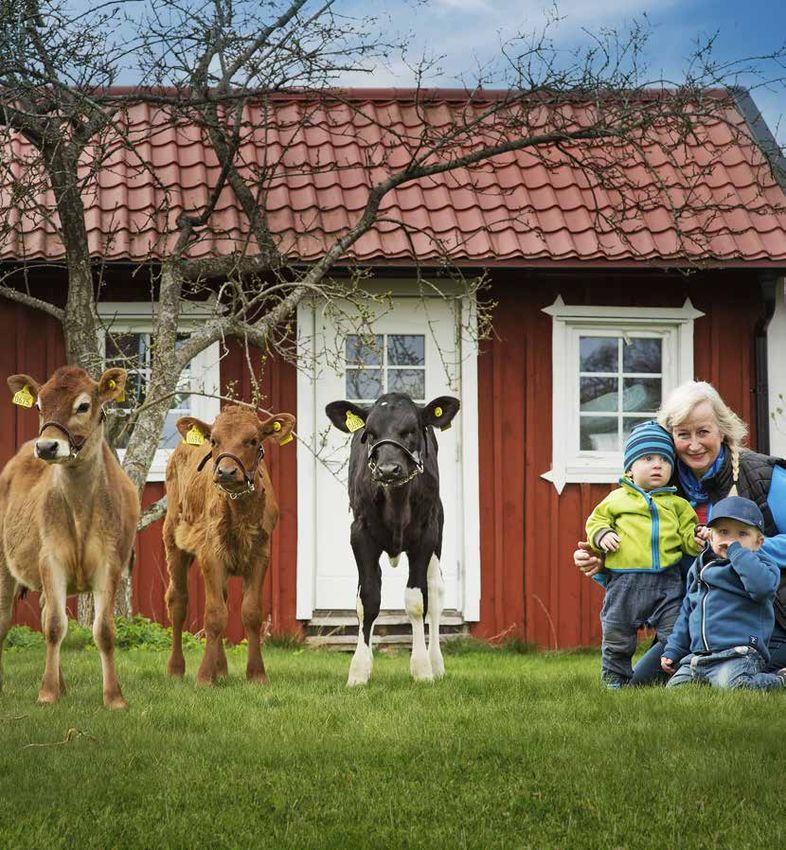
    Marianne Jansson with her               Innovation and sustainability are more than ever making sense at VikingGenetics!
    grandchildren Alex and
    Alexander. The heifers are
    sired by VJ Hitman, VR              Enjoy your reading!
    Toffee and VH Baylor.

                                                                           David Stenkær Ravnkilde,
                                                                           Chief Business Development
                                                                           Officer, VikingGenetics

2         vikingnews | MAY 2019
MAGAZINE NO. 01   |   MAY 2019   |   VOLUME 12

                                 13                                                   6
Saved feed index, a new tool                     VikingJersey leader
in autumn 2019                                   in Udder health

                                                  Dairy strategy plan                      4
                                                  VJ at the top of the world               6
                                                  VJ farm with milking robots              8
                                                  Dairy farming easier with X-Vik         10
                                                  The most climate friendly cattle        12
                                                  VikingFuture                            14
                                                  News from Breeding                      16
                                                  VikingHolstein farm in Finland          18
                                                  ProCROSS herd in Denmark                20

                                 15
                                                  News from VikingRed                     22
                                                  News from VikingHolstein                24
                                                  Around the VikingWorld                  28

The advantages of the use of beef
as a dairy breeding strategy

                                                                                     MAY 2019 | vikingnews   3
Dairy strategy plan

            PUT GENETIC DIVERSITY AT THE CORE
            TO AVOID ECONOMIC LOSS
            Genetic diversity is something a successful dairy cattle breeder really should consider when planning the next
            generation of dairy cows. It is no secret that inbreeding - the mating of related animals - is an invisible, costly
            and growing hazard for dairy farmers all around the world.

            By Verónica Löfgren, Marketing Department, VikingGenetics

            I
                 n a well-coordinated and planned                  mates that the level of inbreeding in      dams. “There are several American
                 breeding programme, a large num-                  the United States dairy population is      based companies running a Jersey
                 ber of sires of sons with different               increasing and many factors have con-      programme and all of them use the
            pedigrees used in the breeding pro-                    tributed to this rise. “The main factor    top bulls as sires of sons, to breed the
            gramme play an essential role in                       is that the AI (Artificial Insemination)   next generation of bulls and cows,” he
            avoiding inbreeding. So, asking which                  industry has significantly reduced the     says. “The use of sires of sons is not
            is your top bull? is by no means a sil-                effective number of males in the pop-      coordinated and the risk of inbreeding
            ly question. At VikingGenetics we                      ulation, and relationships between         is increasing. Money and test capacity
            have set a clear goal of the number of                 males have increased over time.            could be spent more wisely by focus-
            sire of sons with different pedigrees to               ” According to this research, by focus-    ing on breeding outcross lines, instead
            use every year to guarantee genetic di-                ing on the very best top bulls, the dif-   of main stream bulls,” Larson adds.
            versity and, at the same time, enable                  ferent AI companies have compro-               To ensure a healthy breeding pro-
            genetic gains and a sustainable breed-                 mised genetic diversity and increased      gramme, the only solution would be
            ing programme.                                         the level of inbreeding.                   for AI companies in the US to agree
                In countries with a high produc-                       Peter Larson, Breeding Manager for     on a voluntary basis to compromise
            tion of milk and a vigorous dairy in-                  VikingJersey, explains that a high mer-    on the use of bulls. The Nordic coun-
            dustry such as the United States, the                  it bull can be sold by many different      tries, Denmark, Sweden and Finland,
            very best bull would be the hero of                    AI companies where there is “tough”        have a National breeding programme
            the market. The study “Effects of In-                  competition and all of them tend to        for Holstein, Jersey and RDC (Red
            breeding on Production and Survival                    use the same genetics by using the         Dairy Cattle), managed by VikingGe-
            in Jerseys” by J. R. Thompson, esti-                   same bulls or the same high merit          netics. In the case of VikingJersey, ap-

                 Minimising inbreeding
                 in a herd gives less loss
                 of production and
                 greater survivability.

4        vikingnews | MAY 2019
proximately 40 bulls are selected to         US$ 24.60 per cow by the year 2017.         TABLE 1: EFFECT OF INBREEDING
be part of the yearly breeding pro-              In US Jerseys, the average inbreed-     DEPRESSION PER 1% INCREASE
gramme; and no more than three sons          ing percentage in heifers born in 2018      IN INBREEDING
will come from the same sire (family).       is 8.09%, which will cause a consid-
    “At VikingGenetics we use new            erable drop in production as well as                                               %
bulls from 20 different sires of sons or     in lifetime profitability.
family lines every year,” Larson says.           A better measurement of calculat-        Milk Kg                             -63.9
What is more, sires only stay on the         ing the effects of inbreeding is actually
active marketing list until such time        to look at future inbreeding instead of      Fat Kg                              -2.37
the managers of the breeding pro-            observed inbreeding per se. According
gramme decides the sire has contrib-         to CDBC, in December 2018, the ex-           Protein Kg                          -1.89
uted enough to the gene pool in the          pected future inbreeding among heif-
population (normally for only 6-9            ers born in US in 2019 is 8.1%, while        Productive Life                     -0.26
months).                                     the future inbreeding percentage for
    Keeping a close eye on the number        heifers from VikingJersey bulls would        Somatic Cell Score                   0.00
of sires of sons is not the only strict      instead be 4.7% on average. That ef-
                                                                                          Daughter Pregnancy Rate              -0.13
control VikingGenetics uses to design        fect is possible because of the different
the breeding programme. Saija Tenhu-         lineages in the Danish Jersey popula-
                                                                                          Heifer Conception Rate              -0.08
nen, breeding specialist at VikingGe-        tion compared to the US Jersey popu-
netics explains that there is a              lation.                                      Cow Conception Rate                 -0.16
high-quality support programme that
focuses on population management to          Importance of genetic diversity              Liveability                         -0.08
avoid inbreeding.                            With closer relationships between an-
    “We also offer our own breeding          imals in a population, the risk of ge-      Source: The Council on Dairy Cattle Breeding
tool VikMate, which enables us to            netic defects increases.                    (CDCB). August 2017.

control inbreeding and genetic gain at           “When undesirable recessive
herd level. If mating plans are created      genes appear in the homozygous              bulls of high merit to the global mar-
in VikMate, we can limit the increase        state, the condition is often fatal.        kets comes with the added bonus that
of inbreeding in a herd and find the         Such fatality may occur very early in       they are easier for any dairyman to se-
most suitable sires based on the traits      embryonic development and look              lect and use. This is an advantage that
of interest. As such, we focus on con-       like a failed conception to a dairy         VikingJersey’s breeding manager em-
trolling the problems caused by in-          producer. If the genes are semilethal,      phasises when talking about the Nor-
breeding at both population level and        and the individual does survive, it         dic offer. “We have a better chance of
herd level,” she says.                       may be totally unprofitable,” Bennet        finding an outcross bull among all the
                                             G. Cassell, Extension Dairy Scientist,      family lines we have in our VikingJer-
What does inbreeding cost you?               of the Virginia Tech states in studies      sey breeding programme,” Larson
Inbreeding can cause many undesira-          about Inbreeding.                           says. “All females are registered and
ble effects that reduce profitability. In-       Accordingly, genetic diversity is an    95% are pure Jersey while all bulls
bred animals have lower fertility, re-       important consideration when dairy-         are minimum 99.5% pure. VikingJer-
duced milk production and a higher           men select genetics to improve their        sey bulls are measured for any in-
risk of contracting diseases resulting       cattle, especially when the level of in-    crease in inbreeding per generation
in a shorter productive life as well as      breeding is rather high. Complete ped-      and we are under 1% per generation -
more stillborn calves or born with ab-       igree information dating four or five       the limit recommended by the Food
normalities. The Council on Dairy            generations back is needed to manage        and Agriculture Organization of the
Cattle Breeding (CDCB) based in the          inbreeding well, Cassell argues.            United Nations (FAO).
United States, calculated the financial                                                      “Inbreeding levels would most
cost of one percent of inbreeding de-        Choose outcross bulls                       likely drop quite a lot when using
pression to better understand why it         Where to find outcross bulls with a         Danish bulls in the US,” Tenhunen
is important to prevent inbreeding.          good ranking has become an open             adds.
    Table 1 shows the size of the in-        question for more and more dairy-               “We can lower inbreeding at herd
breeding depression for different traits     men, especially among Jersey breed-         levels when combining DK and US
per 1% increase in inbreeding. A con-        ers in the US.                              lines together. When we minimise in-
servative estimate of how much 1%               In each breeding population, the         breeding in a herd, there is less loss
increased inbreeding would influence         most successful pedigrees will be-          of production and greater survivabili-
the Lifetime Net Income is minus             come influential. Offering outcross         ty,” she says.

                                                                                                                MAY 2019 | vikingnews   5
VJ at the top of the world

                                     VikingJersey leader
                                       in udder health
                                   The VikingJersey cow has had a major impact on the Jersey breed globally
                                        and is the leader regarding their performance for udder health.
                                  Viking cows are well known around the world for their extraordinary health,
                                           excellent fertility, high solids and functional conformation.

           By Joakim Hansen, Marketing Department, VikingGenetics

           M
                       astitis is one of the costliest diseases that can   ducing cost, choosing the best genetics for udder health
                       happen to a cow. It reduces their yield due to      results in an improved bottom line.
                       illness and might even cause permanent dam-            VikingJerseys are by far outperforming the competition
           age to udder tissue.                                            when it comes to udder health on a global basis. The
               For the dairyman, it brings veterinary bills for treat-     Council of Dairy Cattle Breeding (CDCB) has compared
           ment and medicine. Milk must be thrown away due to              the top 100 Jersey bulls for udder health in the different
           medicine use. And at last, the cow takes up more of your        national scales, by country of most daughters and the re-
           time, increasing the labour load.                               sults are great news for VikingJersey.
               For so many reasons, when creating the breeding strat-         It is clear that the VikingJersey (represented in the DFS
           egy, selecting for an optimal performance for udder health      category for Denmark, Finland & Sweden) is ranking
           is crucial. Since a healthy udder increases yield, while re-    among the top in every evaluation scale. 76 on NLD, 50

6       vikingnews | MAY 2019
TABLE 1. JERSEY BULLS IN TOP 100 FOR UDDER
HEALTH (SCS) BY COUNTRY OF MOST DAUGHTERS,
DECEMBER 2018
Evaluation Number of bulls in top 100
Scale
CAN DFS NZL USA
AUS 1 32 34 33
CAN 0 51 14 35
CHE 0 57 13 30
DFS 0 66 12 22
GBR 0 63 14 23
NLD 0 76 8 16
NZL 1 20 51 28
USA 0 50 11 39
ZAF 0 44 6 50
on USA, 63 GBR – 459 in total compared to
USA’s 276. All Scale 2 459 163 276
And while these results on so many eval-
uation scales are very impressive, it might Source: The Council of Dairy Cattle Breeding (CDCB) - Dec. 2018
not even be the most impressive part.
Throughout all evaluation scales Viking-
TABLE 2. JERSEY BULLS IN BOTTOM 100 FOR
Jersey bulls (DFS) do not have a single bull UDDER HEALTH (SCS) BY COUNTRY OF MOST
in the bottom 100 for udder health. The Nor- DAUGHTERS, D ECEMBER 2018
dic dairy breeders were the pioneers in
breeding for health traits 40 years ago while Evaluation Number of bulls in bottom 100
eliminating bad health traits in the breed. Scale
Other countries are performing well and AUS CAN NZL USA ZAF DFS
have a strong position in the top 100 bulls
AUS 6 7 28 57 2 0
like the Nordic countries do, although, all
of those countries are also very well repre- CAN 4 7 26 62 1 0
sented in the bottom 100 bulls for udder
health. Table #2 shows no consistency for CHE 4 5 30 60 1 0
other Jerseys populations.
The key factor for the VikingGenetics DFS 4 6 30 59 1 0
breeding programme is that farmers get
GBR 4 6 22 67 1 0
what they select for, and in the case of the
VikingJersey, there is a positive genetic
NLD 4 6 25 64 1 0
trend for all health indices, fertility and
longevity included. This high-performance NZL 6 9 27 56 2 0
profile has been able to be developed
thanks to all the data registered by Nordic USA 2 4 19 74 1 0
Jersey breeders.
The reliability of the breeding values ZAF 3 4 42 50 1 0
rests on a large reference population with
All Scale 37 54 249 549 11 0
accurate data. There are 70,000 Danish Jer-
sey cows registered on the three domestic As seen in the table, not a single VikingJersey (DFS) bull is represented
markets. Almost all of them are part of a in the bottom 100 for udder health, meanwhile you see that USA bulls
milk recording system, and their health sta- are very heavily represented in this table.
tus is monitored and recorded. Source: The Council of Dairy Cattle Breeding (CDCB) - Dec. 2018
MAY 2019 | vikingnews 7
VikingJersey farm with milking
“When health is in
the genes, you can
focus on other things”
The Mortensen family, owners of the Nørskovgaard farm in Danmark
with 160 Jersey cows, are making steady generational progress to
guarantee their high-performance standard with the introduction of
milking robots.
By Joakim Hansen, Marketing Department, VikingGenetics
J
ørn Mortensen started working at have known for some time that we
Nørskovgaard when he was 18 were going to switch to robot milking.
years old, back when his father Accordingly, our breeding focus over
owned the farm. He ended up buy- the last five years has been to breed
ing the farm two years later, and now strong cows, with great udders suited
owns and runs it together with his to robot milking,” he says.
wife and son. They manage the 170 ha This strategy has worked and all
farm and a 160 Jersey cow herd. 160 cows are now milked on average
Mortensen and his wife are gradu- 2.5 times a day by the milking robots.
ally paving the way for the transition “We are aiming to get them milked
to their son to take over and buy the three times a day and getting there
farm. As part of this process, they slowly, but it is a process that takes a
have invested in new barns and have bit of time.”
also bought three Lely milking robots.
“This way we believe we are getting
the farm ready for the future,”
Jørn Mortensen uses almost 100%
Mortensen says. X-Vik as it is today and plans to
His herd is high performing, and continue with this in the future.
the generation change requires prepa-
ration in all areas. Currently, the herd
produces an average of 10,402 kg ECM
milk which is well above the Danish
average for Jerseys: 9,519 kg ECM.
With a fat percentage of 5.88 and a
protein percentage of 4.28, the farm is
also one of the most highly productive
in Denmark, in terms of solids.
We don’t need to focus on health
When asked about his successful
breeding strategy, Mortensen explains
that the family has been keen to pre-
pare the herd for milking robots. “We
8 vikingnews | MAY 2019
It is great
                                                                                 not having to
                                                                                 worry about sick
                                                                                 animals, we are
                                                                                 very busy as it is
                                                                                 just me and my
                                                                                 family running
                                                                                 the farm. If we
                                                                                 had to spend
                                                                                 time looking out
                                                                                 for sick animals
                                                                                 it would be a
                                                                                 nightmare
                                                                                 Jørn Mortensen,
                                                                                 owner of Nørskovgaard farm.

                                             Jørn Mortensen started working at
                                       Nørskovgaard when he was 18 years old,
                                         back when his father owned the farm.

    Mortensen is delighted that            “It is great not having to worry
they have been able to breed for       about sick animals; we are very           Facts of the farm
animals with great udders suited       busy as it is, as it is just me and
to robot milking in such a short pe-   my family running the farm. If we         • 10,402 kg ECM
riod of time, without compromis-       had to spend time looking out for
                                                                                 • 5.88% fat
ing on health or production traits.    sick animals it would be a night-
    “I haven’t focused on health as    mare,” he says.                           • 4.28% protein
this hasn’t been necessary; we’ve           “We want to keep breeding
had only three mastitis treatments                                               • 160 cows
                                       strong cows, with good udders,
in the last year,” he says.            and we want to try and increase           • Employees are just himself,
Mortensen adds that he relies on       the milk production,” he adds.              his wife and his son
the NTM because “what you want             He uses almost 100% X-Vik as
is what you get” when selecting        it is today and plans to continue
the traits of the sires.               with this in the future.

                                                                                               MAY 2019 | vikingnews   9
Dairy farming easier with X-Vik
Facts of the farm
• Number of cows 99
• ECM 9,509 kg
• Fat % 5.82
• Protein % 4.16
• Employees: Jørn and
Jørn Mikkelsen uses X-Vik sexed Mette Mikkelsen
semen on 100% of his heifers.
SUCCESSFUL BREEDING
strategy with X-Vik
Havdal Jersey farm is located in Søften a few kilometres outside Denmark’s second largest
city, Aarhus. Jørn Mikkelsen and his daughter, Mette, own and run this prosperous dairy
farm where the speciality is fresh Jersey milk and home-made ice cream.
By Joakim Hansen, Marketing Department, VikingGenetics
M
ikkelsen took over the Havdal Jersey Farm from of all of the available tools to breed the best dairy animals.
his parents in 1985. At that time, the farm had He uses X-Vik sexed semen on 100% of his heifers. He
40 Jersey cows on an area of 35 hectares. Now, wants to make sure that he is breeding his future herd
more than three decades later, the farm has a herd of 100 based on the best genes of his herd. As such, Mikkelsen
Jersey cows and an area of 115 ha. Mikkelsen has the tests all his animals genomically. This knowledge enables
main responsibility for the farm and cows, while Mette him to determine his breeding strategy.
takes care of the business which includes sales of fresh He crosses 50% of his cows outside the top group with
milk and home made ice cream. beef semen, while using conventional Jersey semen on
“Breeding has always been important to me,” Mikkels- other cows, in order to try and breed some good bulls,
en says. His enthusiasm about the kind of cow he wants that he can sell to VikingGenetics for the genetic progress
to have on his dairy farm is firmly established as he is of the Jersey breeding programme. Mikkelsen also does
also a board member of the Danish Jersey Association. embryo flushing on some of his best heifers to further in-
“My main focus regarding breeding strategy, right now, crease the genetic improvement gains.
is to increase production as well as achieving better ud- Mikkelsen is also keen to share how genetics from Vi-
der health and udder quality for my cows,” he says. king has helped him in other ways besides producing
He is also keen on selecting long-lived cows. “Longevi- healthy, high performing cows. In 2015, he won “Den-
ty is also very important,” he says. And the fact that he has mark’s most beautiful dairy cow” with his - at the time –
a low replacement rate of 25% backs up this statement. four-year old Jersey cow Gaia.
Mikkelsen lets his cows go out to pasture in the summer
Full use of tools and solutions despite not running an organic farm. He says that people
As a breeding enthusiast, Mikkelsen has kept track of the who visit the farm to buy ice cream, seem to really enjoy
new solutions VikingGenetics has offered and is a full user watching the cows happily wandering around outdoors.
10 vikingnews | MAY 2019-
Find the best
VikingJerseys
for you with VikRank!
gNTM gNTM gNTM
+26 +22 +22
VJ GUTZ VJ QUINTANA VJ JAMES
• Superior Hoof • International • Perfect for grazing
Health Superstar herds
• High Production • Great Udders • Improves Fertility
• VikingDefence™ • Great functional • Balanced health
sire conformation profileThe most climate friendly cattle
Breeding for a sustainable future
with climate friendly cow
By Joakim Hanssen, Marketing Department, VikingGenetics
W
e hear it on the news,
more and more often – the
world is under pressure,
the climate is changing, and we have
to act now before it is too late.
The beef and dairy industry get its
fair share of the blame for the envi-
ronmental challenges we face, even
though you could argue that other
things weigh more heavily – such as
the use of fossil fuels. However, we
still believe we need to do our part
and we are doing this in the best way
we can - through breeding.
That is another area where Viking-
Genetics is the pioneer. We started
breeding for healthy and productive
animals 40 years ago. This has had
the bonus that we now have the low-
Our aim is to produce more climate friendly cows that need less feed to produce the milk,
est use of antibiotics in cattle in the because lower feed intake means lower methane emissions.
European Union (EU) and the world,
because we don’t need it. Our cows
have a natural defence against dis- And while this is great, we don’t duce methane, although this can
eases in their genes. The widespread want to settle for just breeding a high vary from 2-12%. By breeding cows
use of antibiotics in cattle and other producing cow. Because as human that eat less, we can reduce methane
food producing livestock in different population numbers grow, so too will emissions.
parts of the world has resulted in a the demand for dairy products and By monitoring 5,000 cows, our re-
severe global health issue with multi meat, and we therefore also need to searchers have found that around
resistant bacteria. make cows more climate friendly on 20% of this total variance is due to
Now we are beginning to broaden an individual level. genetics, making methane emission
our scope and to breed the most cli- How then, can we make cows something that you can actually
mate friendly cows possible. more climate friendly on an individ- breed for. The best part is that this
At VikingGenetics we are proud ual basis? Namely be producing trait has no negative correlation with
that we are already breeding some of cows that need less feed to produce any other breeding trait, which
the world’s most climate friendly the milk, because lower feed intake makes it possible to breed for more
cows, due to the very high productiv- means lower methane emissions. climate friendly cows, without any
ity of the Nordic cow population. This autumn, VikingGenetics is negative side effects on the rest of
With higher production per cow, in- launching a new index, the Saved your breeding goals. In the near fu-
dividual farmers need fewer cows to Feed Index, which will enable us to ture, we will not only be able to
meet the demand of end consumers, select bulls who breed daughters breed for the healthiest and highest
thereby reducing the total number of that use less feed. On average, 6% of producing cows, but also for the
cows in the world. the energy a cow eats, goes to pro- most climate friendly cows.
12 vikingnews | MAY 2019Saved Feed Index
to be released in autumn 2019
For the past two years, The Natural Resources Institute Finland (LUKE), the Nordic Cattle
Genetic Evaluation (NAV) and the University of Aarhus in Denmark together with VikingGenetics
have been working on developing a Feed Efficiency Index that can stand out from other ones
available on the market – an index that dairy farmers around the world can trust.
By Camilla Rosman, Marketing Department, VikingGenetics
D
airy farmers around the world know that the big- production. This is called the residual feed intake”. This
gest cost on farms is feed for the herd. Breeding part will be reinforced when we introduce data from
for a cow that is more efficient in converting feed Cattle feed intake (CFIT), obtained via 3D cameras installed
into milk kg will soon be possible with the new index Vi- above the cows in feeding areas. The cameras recognize each
kingGenetics is about to launch. cow by their back conformation and measure the pile of silage
After collecting a great deal of data in the most modern in front of each cow before the cow begins to eat, and when the
way, the cooperation between LUKE, NAV, the University cow has left the feeding trough. This technology gives us the
of Aarhus and VikingGenetics has resulted in the index exact feed intake of each individual cow. CFIT is currently at
called “Saved Feed Index” that will be published by Vi- the research stage and as soon as we have enough data, it will
kingGenetics in autumn 2019. Dairy farmers will be able be included in the metabolic part of the Saved Feed Index.
to use the Saved Feed Index to select bulls that breed
daughters that consume less feed. More climate friendly cows into the bargain
The Saved Feed Index will actually consist of two indices; By breeding cows that eat less, farmers will also lower the
Maintenance and metabolic. Maintenance is how much ener- methane emissions because less feed intake means lower
gy is needed for purely subsistence feeding, not for any pro- methane emissions. Research regarding greenhouse gases
duction. Data registered from Denmark include body weight, indicates that, on average, 6% of the energy that a cow
and from Finland girth width. Correlated conformation traits eats, are spent on producing methane. However, this var-
are also input; stature, body depth and body width. ies from 2-12% depending on how efficient the cow is in
The Metabolic index is the element of feed needed for converting feed into milk.
MAY 2019 | vikingnews 13VikingFuture
The advantages
of the use of Beef semen
as a breeding strategy
Genetic data will soon be published in the Nordic national cattle databases in Finland,
Denmark and Sweden, and will be available on all bull profiles on the web.
By Morten Kargo, Aarhus University and SEGES, Denmark
I
t is no secret that dairy farmers Sexed semen increases Better decisions make
can improve profits by adjusting the genetic level for increased profit
their breeding strategy. If you You could think that it is For genomic testing to be profitable,
can reduce your replacement rate, contradictory to use sexed semen it should be used to improve your
then the use of beef semen for the when the goal is to reduce the decision making via the information
genetically lowest ranking cows is number of heifers. Nevertheless, by you receive from the tests. If you use
something for you. You will have using sexed semen, you will be able the information to select the 50%
economic benefits with a few excep- to raise replacement heifers from best heifers for insemination with
tions as if, for example, you rear genetically higher-ranking females. sexed semen and select the 60%
heifers for sale with an income This results in an improved genetic lowest ranking cows to be
which is not so common. herd level, which compensates for inseminated with beef semen,
the increased semen price. genomic testing is very valuable. If
Use of beef and sexed you don’t use the information from
semen increases profit Genomic testing aids selection genomic testing to actively improve
When using beef semen, it is impor- When using both beef and sexed se- selection in combination with beef
tant to use the semen on the geneti- men, it is of great importance to se- and sexed semen, then there will be
cally lowest ranking cows. These lect the correct animals. Sexed se- no profit.
may in many cases be high yielding men should be used to inseminate
old cows, and many farmers hesitate the genetically highest-ranking ani- SimHerd, a Danish tool, helps
to inseminate these with beef semen. mals and beef semen for the lowest make management decisions
If you look at it from a financial per- level. Genomic testing is the tool to The financial effects of using these
spective however, it is the best breed- rank animals correctly. It offers far tools depend on your local circum-
ing strategy. If you also have good higher reliability than selection stances, therefore the above-men-
herd management, the use of sexed based on parent average. Therefore, tioned recommendations are general
semen and genomic testing will fur- testing your heifer calves is financial- statements. More herd specific ad-
ther increase your profit. Key varia- ly beneficial in combination with the vice can be obtained by the use of
bles for defining good herd manage- use of beef semen and sexed semen. SimHerd – a tool for calculating the
ment are reproduction efficiency financial effects of different manage-
(>0.2), cow mortality (< 5 %), disease ment decisions at herd level. In table
level and replacement rate. 1, the consequences of using geno
14 vikingnews | MAY 2019Herd assumptions:
• Replacement rate: 33%
• Reproduction efficiency:
mic testing at herd level, given differ- 25%
ent use of beef semen for the cows, • Percentage of heifers
can be seen. The assumptions used inseminated with sexed
reflect a Nordic dairy herd with good semen: 75%
management. • Accuracy of genomic
tests: 60%
Improved breeding
strategy increases profit
In a simulation farm with 200 cows
and earning from 5,500 Euro to
TABLE 1 ADDITIONAL PROFIT FROM USING DIFFERENT LEVELS OF
12,400 Euro extra per year using be- BEEF SEMEN IN COWS, IN A 200-COW HERD, WITHOUT (BLUE BARS)
tween 30 and 60% beef semen, the AND WITH (GREY BARS) GENOMIC TESTING OF ALL HEIFERS. ALL
highest profit is obtained when using VALUES ARE IN EURO
60% beef semen. The reason why the
extra profit is reduced when 70%
Percentage of cows inseminated with beef semen
beef semen is used and becomes neg-
ative with 80% beef semen, is due to
150
the lack of replacement heifers. Fur-
Extra profit per year (X 100 Euro)
thermore, the results show that by 120
using genomic testing you can earn 90
900 to 1000 Euro extra when using
60
60% beef semen.
30
Conclusion 0
Use of beef semen and sexed semen
-30
in combination with genomic testing
will increase profit levels for a great -60
30% 40% 50% 60% 70% 80%
majority of dairy producers with
above average management level.
Results Without Genomic Seleccion With Genomic Seleccion
MAY 2019 | vikingnews 15News from Breeding
Genomic selection and embryo transfer,
cutting edge technology
By Ann Tidström, Product Manager Embryo, VikingGenetics
T
oday, when genomic breeding values are equally corresponding figure for bought bulls was 92%. 20% of
accurate for both young bulls and young heifers, the tested bull calves were embryo calves and among the
this offers dairy farmers, a great opportunity to se- bought calves 55% were from embryo. This shows that
lect the best heifers in your herd to become the mothers of using genomic selection on females gives you higher reli-
the next generation. If you decide to use the top one for ET able breeding values and a better chance of selling a calf.
(Embryo Transfer), you will be at the cutting edge when it
comes to utilising the best genetics that can really help VikingEmbryo
you make progress in your herd that will pay for itself. VikingGenetics has two facilities where we flush the heif-
As females normally only have one offspring a year, ers we buy from Danish, Swedish and Finnish dairy farm-
scope to contribute to the next generation is limited. By ers. One is in Denmark, where we keep our heifers at a
using ET on heifers, you can have more of the best off- private farm with extensive experience of embryo flush-
spring and increase the genetic level of the herd. Flushing ing. The other one is in Hollola, Finland, where the Vi-
the best females in the herd and putting their embryos in kingGenetics Embryo Centre is located and where we
heifers with lower breeding values, means you increase have our specialist ET team. The team works with both
genetic gain faster in your herd than by inseminating OPU (Ovum Pick Up) and normal flushing. They also en-
most of your cows and heifers. gage in various research projects and right now we are
With genomic testing on heifers, we at VikingGenetics working with genotyping at embryo level.
can make better decisions on which females to use more VikingGenetics also enters into agreements for flushing
densely in the breeding programme. In 2018, 52% of the on farms, if the farmer does not wish to sell their best heif-
dams for the tested bull calves were genotyped and the er. VikingGenetics plan to flush 720 females in 2019.
M Olvi (Wilder) and VG
Online (VR Folmer), are
two of the heifers in our
VikingEmbryo programme
in Hollola, Finland.
16 vikingnews | MAY 2019-
VikRank
makes bull
selection
fast and
easy
VikRank is a tool to select the best bulls for your
herd. The categories help to guide you in your
selection for the right bulls you need to improve
your herd performance. Using the categories
makes the bull selection easy, fast and reliable!
Safe and easy calvings are Get strong natural defence against VikingFertility™ bulls will improve
important for all dairy businesses. diseases. VikingDefence™ combines the pregnancy rates in your herd.
Increase the possibility to get a calf all the health traits that we have All dairy farmers knows the
born without any problems. been breeding for decades. No importance of this!
tricks, just results.
Cows that have healthy and strong VikingGrazing will give you perfect By choosing VikingMilk™ bulls you
hooves have higher productivity cows suitable for grazing systems. can be sure your herd is both high
and longer production lifetime. These are medium sized cows with producing and healthy. The pro-
Hoof health is not just a management good fertility and hoof health, duction level of your herd is a direct
issue - you can breed for better hooves! together with high solids measurement of profitability.
production.
If you are paid for solids, use sires By selecting a VikingRobot™ sire In dairy farming, there's no farm exactly
that improve the solids production. you can be sure that your herd is like one another and not one breeding
Genetics play a vital role in increasing developing to the right direction plan that will suit all herds. Customize
the solids production. VikingSolids™ with excellent udders and fast your bull selection based on the traits
will give you the best results. milking speed. that matter the most to you.VikingHolstein farm in Finland
Clear breeding strategy,
the key to managing
market fluctuations
Nina and Hannu Hokkanen have adapted to the lower milk prices.
They don’t use external labour anymore and have minimised machinery
and other investments. Their efforts in the breeding plan have been the
secret behind their high-yielding herd’s daily life.
By Mikko Säynäjärvi, FABA
T
he Hokkanens are the sole car-
ers of the farm. Four years ago,
Nina, 45, worked as a paedia-
trician, but the fall in milk prices led
to a career change. “Our employees
were leaving at that time, so the tim-
ing for Nina’s full-time employment at
the farm was just right,” Hannu says.
Hannu, 50, has been a member
of dairy company advisory boards for
20 years and became a member in the
Valio Supervisory Board in April
2018.
Breeding specialist Helena Korkee
has worked with the Hokkanen family
for many years. Previously, Hannu
was more involved in breeding plan-
ning, but now Nina has taken over the
responsibility. “Helena does the plan-
ning, but with some input from me.
All in all, improving the milk solids,
health, and udder conformation are
clear goals for us,” says Nina.
The herd has been involved in the
GenVik project for a long time.
“Genomic testing of females is a great
tool. We’ve been able to achieve rapid
genomic progress with it,” says Nina.
Nina and Hannu As evidence of this achievement,
Hokkanen Nina shows print outs of genetic pro-
gress in the herd.
18 vikingnews | MAY 2019Hannu with the heifer called Pööna gNTM +26 (VH Nordman x VH Bolus).
Embryos and inseminations can’t be too sure how it will work
The Hokkanen farm uses professionals out, but at least for us it has worked Facts of the farm
for AI services. AI Technicians take really well,” Nina says. They have
care of all inseminations. The share of had some really good replacements • Location: Ala-Rantala,
Kangasniemi, Finland
beef semen has gradually increased to born out of embryo transfers such as
25%, and they mainly use conven- a heifer called Pööna gNTM +26 (VH • Family: Hannu and Nina
tional and sexed Blonde semen. Nordman x VH Bolus). Hokkanen and sons Tuomas
They have had good experience 15 and Juho 14
with embryo flushing and embryo Communal machinery
transfers. Nina and Hannu sold a heif- The situation is currently quite sta- • Built in 2001 and free stall
barn renovated and heifer
er called Nelli gNTM +35 (VH Liftoff ble. Production levels have risen af-
barn built in 2012
x Lastyear) to VikingGenetics’ Vi- ter a difficult summer and autumn,
kingEmbryo programme. Nelli was due to extreme weather conditions • Herd: 60 milking (40
the best Holstein female in 2017 in in the Nordic countries. Thanks to VikingHolstein and 20
Finland. Unfortunately, her embryo the farm’s large fields, they have VikingRed)
transfers didn’t result in any calves been able to produce feed for sale
for the Hokkanen home herd. purposes too. Investments in ma- • Production: 12,000 kg ECM
Luckily, other farms who acquired chinery are not urgent at the mo- • Are a part of the GenVik
embryos from Nelli had a better luck. ment. “We have a lot of communal project (VikingGenetics
Nelli has daughters in other herds and machinery with our neighbours,” supported genomic test of
there was a bull calf born too, VH Pik- Nina says. females)
achu, gNTM +31. In addition to common custody of
Even though there was no luck farming equipment, the farming • Acreage: 136 ha, (half grass
and half grain)
with Nelli’s embryos, the Hokkanen neighbours do a lot activities togeth-
farm continues with VikingEmbryo er. “We have a really nice group and • Forest: 45 ha
embryo flushing on their own farm. In we travel together in Finland and
December, they flushed two Viking- abroad,” says Nina. Advisory board
Holstein heifers and got 15 viable em- duties take up a lot of Hannu’s time,
bryos from those. but he always makes time to go hunt-
Hannu and Nina have also bought ing with their two sons and their dog
a lot of embryos. “With embryos you Sulo.
MAY 2019 | vikingnews 19ProCROSS herd in Denmark
Feed efficient cows power
Ellinglund Organic Farm in Denmark
By Joakim Hansen, Marketing Department
G
ert Glob Lassen took over (organic) farm in Silke- fertility. Lack of longevity was another of the difficulties
borg, Denmark, from his father in 2006. Gert and facing the farm.
his wife Anne are passionate organic milk pro- Now, 17 years after the change in breeding strategy, the
ducers and have become a reference farm in Europe for Lassens are keen to identify those areas where they can
efficiency and success with the three-way crossbreeding save costs and improve the performance of the dairy farm.
system, ProCROSS. Feed for the cows is one of the most important areas they
Lassen’s father switched from pure Holstein to Pro- focus on.
CROSS cows in 2002. At that time, they were facing many “Feed is the biggest cost you have on a farm. We are al-
challenges with health issues in their animals. Veterinary ways looking for savings. If you can save just one percent-
costs increased due to many cases of mastitis and reduced age every day; that is a lot of money,” Lassen says. “We
20 vikingnews | MAY 2019Facts of the farm
• Animals: 340 cows. Crossed between:
VikingHolstein, VikingRed and Montbeliarde.
Performance goal is 11,000 kg of milk ProCROSS
cow
• Land and feed: Approx. 600 ha with grass, rye and
oats, which are primarily used for feed
• Stable facilities: The cows are housed on sand
beds. All animals are out to pasture in summer.
Milked twice a day in a carousel
• Staff: Three full time Danish employees and seven
Gert Glob Lassen
part-time employees who work three full-time in his herd.
equivalent hours
• Family: Wife Anne, four children
know our cows do their job, they stay healthy and pro-
ductive, they eat and produce at their best,” he adds.
Having a healthy, organic ProCROSS herd of 340
cows with average production of 10,389 kg ECM (Energy
Corrected Milk), “efficiency” is not just a word. “The
less your costs to get milk, the more competitive you can
be,” he says.
Last summer, the University of Minnesota, that has
headed several research projects regarding the crossbreed-
ing system ProCROSS, presented the results of a study
into feed efficiency that showed that ProCROSS cows are
inherently able to convert feed more efficiently into milk
solids compared to pure Holstein cows. Dairy farmers like
Lassen already know this from everyday practice: Pro-
CROSS cows are high performers when it comes to feed
efficiency.
The trial also demonstrated that ProCROSS cows are in
a significantly better physical condition than pure Hol-
steins of the same body weight. “The smaller frame sizes of
ProCROSS cows combined with superior physical condi-
tion improves fertility and health which are other advan-
tages of ProCROSS cows over Holstein,” says Professor Les
Hansen, who headed the research studies in Minnesota.
Lassen explains that the physical condition is also a
“plus” in his organic herd: “Physical body condition
means more muscle - not skinny cows - that also keeps
them healthy, and they will achieve a better price when
we send them for slaughter,” he says.
With an annual average of 4.06% fat and 3.42% pro-
tein, Ellinglund is one of the best organic crossbreeding
herds with high performance and one of the most pres-
tigious herds in Denmark.
MAY 2019 | vikingnews 21VikingRed offers free genomic
test for international females
The VikingRed breeding committee, that is in charge of the VR breeding programme,
is coordinating an ambitious plan to increase reliability and make the largest red breed
more competitive by offering free genomic testing of females around the world.
By Auli Himanen, Breeding Manager VikingRed
A
t the beginning of 2019, the for free genomic testing of interna- The aim is to bring red popula-
VikingRed breeding commit- tional females. The offer was sent to tions around the world together and
tee took an important step to all member organisations of the Inter- enable them to profit from the large
assure profitability for farmers using national Red Dairy Breed Federation, reference population NAV (Nordic
red dairy cattle, especially Viking European Red Dairy Breeds and Evaluation Centre) has for red breeds
Red. They decided to make an offer World Ayrshire Federation. containing more than 9,000 progeny
22 vikingnews | MAY 2019News from VikingRed
proven sires and over 40,000 females. publishes for Nordic animals mean- calves for a breeding scheme to give
“Our vision is to make red breeds ing index values for yield, health, Angler good opportunities for selec-
more competitive in the future,” says fertility, type, functional traits and tion and semen production of
Auli Himanen, Breeding Manager for NTM (Nordic Total Merit),” Hima- high-quality sires.
VikingRed. nen says. More recently, DataGene in
She adds that the plan is ad- Australia made a contract about a
dressed in particular to those red Free genomic test also available for project for the exchange of data to
breeds that do not have genomic test- Viking Export Markets define if the correlation between
ing as yet, to have an opportunity to Himanen explains that the free trial is Nordic and Australian red popula-
rank their females. “At home, breed- also available for Viking export mar- tions is high enough to create a joint
ers are using genomic testing more kets through Export managers at Vi- reference group.
and more as a valuable selection tool kingGenetics. “They can also invite More information about GenVik
within the herd, and that has created other associations who are not mem- testing is available at the VikingGenet-
more value in their farms,” she says. bers in these organisations to partici- ics website www.vikinggenetics.com.
Last year more than 22,000 red fe- pate in the project. As testing is coor- Participants in the project are in-
males were genomically tested in dinated by the organisations, they vited to send an email to GenVik@
Denmark, Finland, and Sweden. will choose which animals to in- vikinggenetics.com to request further
She adds that the genomic value clude,” she says. information about what to do next.
of the tested females will have high One example of cooperation was The offer is available to the end of
reliability since they have a genetic with German Anglers and RSH a few 2019. If you have any further ques-
linkage to the NAV reference popula- years ago with superior tested fe- tions, please contact Auli Himanen,
tion. “Breeding values will be pub- males in our reference. This now also VikingRed Breeding Manager,
lished in all the same traits that NAV includes genomic testing of bull auhim@vikinggenetics.com.
MAY 2019 | vikingnews 23VikingHolstein,
master of udder health
VikingGenetics has more focus on improving udder health than any other company
in the world and is the leader when it comes to genetic level for udder health.
By Claus Langdahl, Senior Breeding and Product Manager, VikingGenetics
M
astitis causes direct financial losses to dairy mastitis. In other countries where Holsteins are more
farmers no matter where in the world you farm. dominant, mastitis cases are usually, and if they are only
It reduces milk yield, the milk can be contami- by farmers, not veterinarians.
nated with antibiotics and unable to be sold, plus associ- Choosing the right bull has a significant effect. In table
ated veterinary and antibiotic labour costs, a higher cull- 1, you can see the number of daughters with mastitis in
ing rate and occasional fatalities. To avoid extra charges relation to the bulls index for mastitis resistance.
on dairy farms, prevention of mastitis infection is the best
approach. By breeding for higher Nordic Total Merit Sustainable genetic improvement
(NTM), you automatically get fewer mastitis cases in your From 2002 to 2012, the Nordic countries have improved
herd. The Udder health index has the third highest eco- udder health by 13.5 index units. These results mean 3,5
nomic weighting in NTM; only production and fertility cases of mastitis in a 100 cow herd.
have a higher weighting. The graph below shows the genetic level of major Hol-
In the Nordic countries, we use both the direct meas- stein populations. VikingGenetics is on average four units
ure, Mastitis, and the indirect measure, SCC, where the higher in udder health than the second best and almost
latter is only an indicator of mastitis. Mastitis registra- ten units better on average than many of the major Euro-
tions come from veterinary and farmer records on clinical pean countries.
TABLE 1: EFFECT OF BULLS WITH DIFFERENT BREEDING VALUES ON AN AVERAGE DAUGHTER
Breeding value 80 90 100 110 120
Mastitis % 17.4 14.7 12 9.3 6.6
FIGURE 1: GENETIC TREND MASTITIS IN MOST SIGNIFICANT HOLSTEIN POPULATIONS
105
100
95
90
85
1995 1996 1997 1998 1999 2000 2001 2002 2003 2004 2005 2006 2007 2008 2009 2010 2011 2012
USA Viking Canada Holland France Germany Source: Interbull data 2018 on proven bulls
24 vikingnews | MAY 2019News from VikingHolstein
Great genetic level among
polled VikingHolstein bulls
T
he number of polled VikingHolstein bulls is con-
stantly growing and so is their genetic level. 10%
of purchased bulls the last year have been polled
and the homozygotic polled (PP: 100% polled off-
spring) are starting to show up also at high level. The av-
erage NTM of the purchased polled bulls is gNTM +33.
TABEL 1. AVAILABLE POLLED VIKINGHOLSTEIN BULLS
VH Bradoc.
Navn Far Morfar gNTM
Germany goes “healthy” VH Laval P Louxor Powerball +32
T
VH MixPPRC Mission RCP Powerball +22
he April index run of Germany announced an in-
teresting change in their focus. Germany intro- VH MeP Red Mission RCP Brekem +24
duced a new overall health index and are next in
line to see the value of cost reduction also from a breed- VH Monty P Milford P Balisto +31
ing perspective – a focus that the Nordic countries and VH Arrow P Adagio P Ocean PP +26
VikingGenetics have had for over 40 years.
RZhealth, as the new index is called, is a combina- VH Perth P Pledge Powerball +26
tion of udder health, hoof health, reproduction and met-
VH Comxa P Commander Xacobeo +19
abolic diseases.
VH SnoozP Style P Saleen +26
Ranking
When looking at the ranking of bulls on this index it is VH Bill P VH Bosman Parker P +22
quite clear that VikingHolstein occupies a unique top po-
VH Mandy P Milford P Anton +20
sition. The top list is dominated by VikingHolstein bulls
with VH Bradoc (VH Blush x VH Bynke) the leader. As VH Sebeo P Superhero Style P +21
shown in table 1, 12 of the top 15 are from VikingGenetics.
One sub index looks like this; VH Phil P VH Pogba P Rodgers +24
• Udder health: 7 of the top 15 bulls are from
VH Liege P Lemon P Go Now RC +19
VikingGenetics, with VH Oonsun (VH Optimal x
Rodgers) no. 1 and VH Bradoc close behind (RC = red carrier, P = 50% of the offspring become hornless,
• Hoof health: VH Oxel (VH Op x D Orange) is the no. 1 PP = 100% of the offspring become hornless)
• Reproduction: 7 of the top 15 bulls are from
VikingGenetics with a shared no. 1 position between
VH Best (VH Bliss x VH Salomon), VH Bradoc and
VH Gaucho (VH Griffin x VH Peder).
Components
Besides this new focus on health, they have also added
extra weighting to components. Here too, the Viking
Holstein bulls are impressively placed.
• Fat% index: 5 of the top 10 bulls are from
VikingGenetics with VH Faur (Fageno x VH Grafit)
and VH Gambler (VH Grate x VH Lyrik)
as no. 2 and 3
• Protein % index: 7 of the top 15 bulls are from
VikingGenetics with VH RulerRC (Red Power x
VH Goblin), VH Gambler and VH Faur as no. 1, 2 VH MixPPRC with gNTM +22, gives 100 % hornless offspring (PP),
and 3. and is red carrier.
MAY 2019 | vikingnews 25Around the VikingWorld
IRDBF Conference
in Australia 2019
”
Bringing Red Breeds Together” was the title of the International Red
Dairy Breed Federation conference in March 2019 in Australia. Viking
had the honor of presenting how Genomic Selection in VikingRed started
in 2009 in one of the conference sessions.
VR Viktor (and VR
Fonseca) calf. The
breeder of VR Viktor
Lars Iversen from
Denmark was parti-
cipating and very
proud seeing the re-
sult at Brett and
Bronwyn Davies
herd.
Estonians might be
the next joining the
VR breeding scheme.
Ron Graham’s and
Auli Himanen’s
joint effort, ARB
Abbot, an AI bull
whose dam comes
from Ron’s farm
Beaulands and
the bull’s paternal
grandsire is Voltti
coming from
Auli’s farm in
Finland.
ARB Abbot in
his box.
26 vikingnews | MAY 2019VR Tokyo – The #1 bull
for BPI in Australia
The best production sire with outstanding levels of fat and protein
V
R Tokyo (VR Toumi x V Foske x A Sale ET) is VR Tokyo’s breeder is Göran Carlsson from Linköping,
leading the Balanced Performance Index (BPI) in Sweden. VR Tokyo has 1,496 daughters around the whole
Australia with a BPI of $298, according to April world, in ongoing production.
proofs. There is no doubt: this sire is one of a kind and a VR Tokyo is a top performer with a complete profile
“must have” in a herd to increase the production of milk where production, type and health combine to make
and milk solids. daughters with no weaknesses.
“We always look to create value for farmers. And what
we say regarding the performance of a bull is actually
what the farmer gets. If a dairyman is paid by solids then
we have the best bulls to suit that need,” says Rex A.
Clausager, Chief Executive Officer of VikingGenetics.
With a Total Nordic Merit of NTM +27, VR Tokyo com-
bines a high level of production (122) with strong compo-
nents 122 for fat kg and 121 for protein kg.
Speaking of Top Type, Tokyo is the #1 for Type
Weighted Index (TWI) with an index of 105 Overall Type
and 106 for Mammary. Also #1 in Longevity in Australia.
What’s more, VikingRed Tokyo also has a remarkable
health profile. He is #2 among the best bulls in Australia
with a Health Weighted Index (HWI) of 198, peaking on
Survival with 108 and a Daughter Fertility of 101. And
number 1 when it comes to maternal calving with an ex-
cellent index of 124 on NTM scale. VR Tokyo daughter no 12254474 Niitty from Peltola Juha ja Les Sysmä
We are
making
more friends
in Chile!
V
ikingHolstein is very popular in Chile thanks to its
high milk solids, easy calvings and moderate size.
In the picture you can see our Export Manager for
Latin America, Suvi Johansson making acquaintance and
saying farewell to one of the first VH Solvind daughters.
The photo was taken in the farm Fundo Los Esteros,
owned by the family Stolzenbach in Los Muermos, South-
Suvi Johansson making acquaintance and saying farewell to one of ern Chile. Our Export Manager is now promoted to another
the first VH Solvind daughters. position as a Product Manager for the VikingHolstein.
MAY 2019 | vikingnews 27By choosing VikingMilk™
bulls you can be sure
your herd is both high
producing and healthy.
The production level of
your herd is a direct
measurement of
profitability.
VR Tokyo
- Excellent performance -
Production with functional conformationYou can also read


