NURSING WHERE IT IS NEEDED - Australian College of Nursing
←
→
Page content transcription
If your browser does not render page correctly, please read the page content below

#34 WINTER 2021

KEEPING NURSES INFORMED, CONNECTED AND INSPIRED

                                   FREE EDITION

NURSING
WHERE IT
IS NEEDED
 THE TRUE POWER OF
 COMMUNITY NURSING
 Kitty Hutchison MACN

 WORKFORCE
 SHORTAGE OR
 A SUPPLY ISSUE?
 Adjunct Professor Alanna Geary
 FACN & Dr Craig Phillips MACN

 THE BEAUTY OF
 BUSH NURSING
 Anna Flynn MACN

 +MORE
 INSIDE
CONTENTS

          #34 WINTER 2021
  NURSING WHERE IT IS NEEDED

                                                                              08   14

                                                                              26   24

            ISSN 2202-8765
          Distributed quarterly

                Editor
              Neha Malude

             Editorial Team
             Rory O'Sullivan
              Karen Watts

         Editorial Committee
        Dr Ruth De Souza FACN
        Elizabeth Matters FACN
                                           WELCOME                                  SPECIAL FEATURE
                 Design
               Emma Butz
                                           02	Welcome from the President           08 A year we will never forget
               Nina Vesala
                                           02	Welcome from the CEO                 21 Championing digital health
               Publisher
     Australian College of Nursing         ACN NEWS & VIEWS                         REGULAR FEATURE
   1 Napier Close, Deakin ACT 2600
             02 6283 3400                  04 Nursing Now Australia Finale          07 New on neo
           acn@acn.edu.au
        ABN: 48 154 924 642                04	Mentor Match                        18	Engagement in focus: What
                                           04	Transition to Practice program          makes nursing in rural, remote
                Printing
              Elect Printing                                                           or regional setting special
                                           06 International Nurses Day
             Advertising
                                                                                    29 N
                                                                                        ursing and Climate change:
             02 6283 3470                  COLUMNISTS                                  Climate change is a health
       partnerships@acn.edu.au
                                           05 The complexity of palliative care        emergency
  © Australian College of Nursing 2021
                                           05	Looking after our community’s        30 Policy: ACN Policy Summit 2021
 The opinions expressed within are the        youngest                              32	DLF: The best of both worlds
 authors’ and not necessarily those of
  the Australian College of Nursing or
   the editors. Information is correct     NURSING WHERE IT IS NEEDED               34 O
                                                                                        pinion: A vision for equitable
            at time of print.
                                           10 The true power of community            mental health
  Images marked as stock photos                 nursing                             35	Policy: What is clinical supervision
 are representative only and do not
depict the actual subjects and events      12 W
                                               orkforce shortage or a supply           really about?
      described in the articles.
                                              issue?                                36 L
                                                                                        eadership: How ethical
                 Cover
                                           14 N
                                               urse contribution to the rural         leadership translates into positive
         Kitty Hutchison MACN
                                              health research agenda                   health outcomes

                                           16 N
                                               ursing beyond borders               38	Nursing history: A tribute to
  We love to see member submissions
   in The Hive. If you’re interested in                                                 Jeannie Ross Fraser
 having your submission considered for     22	Practitioners key to quality
 publication, please see our guidelines
                                               care in rural communities            40	Ethics matters: Ethical decision
             and themes at
   www.acn.edu.au/publications.                                                         making in nursing
                                           24  Sunny side up
                                                                                    42	Representation:
  For enquiries or to submit an article,   26  The beauty of bush nursing
please email publications@acn.edu.au.                                                  A role beyond caring
                                           28 T
                                               hat connection means
     ACN publishes The Hive, NurseClick,                                            43	Novel thoughts: Reviews of
       ACN eNewsletter and Collegian.         everything
                                                                                        a good read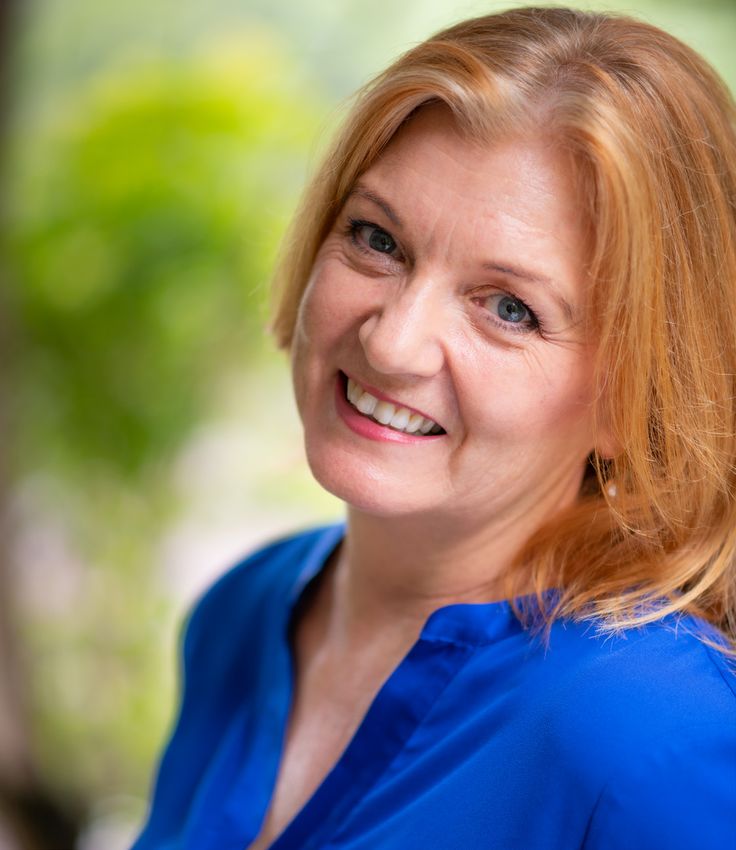
ACN NEWS AND VIEWS

Every year on 12 May, the world
honours nurses everywhere for
their selfless work, dedication to
the profession and compassion
for everyone they care for.
In a world that continues to be affected deeply by the COVID-19
pandemic since March 2020, nurses continue to provide care
in the face of unimaginable difficulty with grace and resilience.
To recognise their hard work and contribution, we encouraged
them to observe a day of self-care by hosting or participating in
the Australian College of Nursing (ACN) National Nurses Breakfast
on International Nurses Day (IND).

We loved seeing you getting together with your peers to take this
day for yourselves and celebrate each other.

Festivities began early at a special ACN Breakfast event at Lake
Burley Griffin, where our staff and members were joined by ACT
Minister for Health Rachel Stephen-Smith and our valued Corporate
Partner HESTA.

To add to these celebrations, we were extremely proud to have
the ACN flags once again flying over the Commonwealth Avenue
Bridge. In a special first, the National Carillon was lit up for the
week to acknowledge the pivotal contribution of nurses to the
health and wellbeing of our communities.

6 | THE HIVE #34
NEW ON
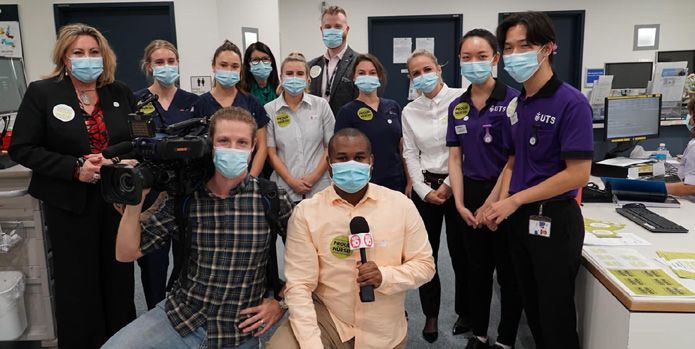
Adjunct Professor Kylie Ward FACN with nurses at Royal Prince
Alfred Hospital in Sydney Local Health District and students
from UTS Health for an interview with Studio 10 on IND

  Nurses all over Australia participate in the ACN National Nurses Breakfast 2021 on
  International Nurses Day. Thank you for sharing your photos with us!
                                                                                       Welcome to NEW ON neo. In every
                                                                                       edition, we will bring you the most
                                                                                       engaging and popular discussions
                                                                                       and debates from neo, an exclusive
                                                                                       platform through which our members
                                                                                       can showcase their expertise, seek
                                                                                       advice from experienced nurse leaders
                                                                                       and contribute to discussions shaping
                                                                                       the Australian health care landscape.

                                                                                       Here are the top three discussions on
                                                                                       neo this month.

                                                                                       Registered, persecuted,
                                                                                       annihilated. The Sick and the
                                                                                       Disabled under National Socialism.
                                                                                       Free Brisbane exhibition, lecture
                                                                                       and film program
                                                                                       –By Dr Darren O’Brien MACN
                                                                                       Topic: Discussion on the exhibition
                                                                                       that took place at the Royal Brisbane
                                                                                       and Women’s Hospital Education and
                                                                                       Conference Centre.

                                                                                       Confusing question on registration
                                                                                       renewal
                                                                                       –By Darren Jacob MACN
                                                                                       Topic: Seeking opinions on the
                                                                                       nursing registration renewal
                                                                                       questionnaire.

                                                                                       Some great info on imposter
                                                                                       syndrome and what to do about it
                                                                                       –By Debra Pittam MACN
                                                                                       Topic: An article and video resourced
                                                                                       shared by Debra regarding the
                                                                                       conversation about imposter
                                                                                       syndrome and how to overcome it.

                                                                PROUDLY SUPPORTED BY    Join the conversation via
                                                                                        neo.acn.edu.au or download the
                                                                                        neo app!

                                                                                                             WINTER 2021 | 7
NURSING WHERE IT IS NEEDED

                    NURSE CONTRIBUTION
                    TO THE RURAL HEALTH
                     RESEARCH AGENDA
                       Nurses in rural areas are well positioned to
                       contribute to rural health research aimed at
                    redressing health inequities in these communities

                                 N
                                             urses in rural areas are often         disease and accessing health services
                                             characterised by their advanced        (particularly metropolitan-based specialty
                                             practice skills, generalist clinical   health services) were apparent.
                                             experience, expanded scope of
                                                                                    During this time, I commenced a Master
                                 practice and leadership in advocating for
                                                                                    of Public Health through distance
                                 the needs of rural communities (Bish, Kenny
                                                                                    education, which provided me with a
                                 & Nay 2012; Muirhead 2020). Consequently,
                                                                                    toolkit for undertaking both qualitative
                                 they are well positioned to contribute to
                                                                                    and quantitative research, and furthered
                                 research seeking to improve the health and
                                                                                    my understanding of health policy and
                                 welfare of rural communities. This includes
                                                                                    population health. After working across
                                 the need for rigorous research studies of
                                                                                    diverse clinical settings, I grew more
                                 nurse-led chronic disease prevention and
                                                                                    comfortable in my clinical skillset as
                                 management programs in rural areas, as
                                                                                    a rural generalist nurse and sought
                                 supported by the Australian College of
                                                                                    opportunities to undertake research in
                                 Nursing’s (ACN) Position Statement, The
                                                                                    my community. In 2016, I commenced
                                 role of nurses in chronic disease prevention
                                                                                    in the position of Associate Research
                                 and management in rural and remote areas
                                                                                    Fellow with Deakin Rural Health
                                 (Australian College of Nursing 2020).
                                                                                    (Warrnambool, Victoria), a University
                                 It is well established that rural communities      Department of Rural Health (UDRH).
                                 experience a higher burden of chronic
                                                                                    UDRHs have been pivotal in leading the
                                 disease and risk factors for chronic disease,
                                                                                    rural health research agenda, and are
                                 and poorer health service accessibility,
                                                                                    well placed — both geographically and
                                 when compared to metropolitan populations
                                                                                    strategically — to grow the capacity of
                                 (Australian Institute of Health and Welfare
                                                                                    rural nurses and other health professionals
                                 2017). However, there is little discussion
                                                                                    to undertake research (Gausia et al.
                                 around what pathways exist for nurses
                                                                                    2015; Humphreys, Lyle & Barlow 2018).
                                 interested in contributing to rural health
                                                                                    Funded by the Rural Health Multi-
                                 research redressing these inequities.
                                                                                    Disciplinary Training (RHMT) program,
                                 As a Registered Nurse, I developed                 there are now 16 UDRHs across Australia
                                 an interest in rural health research               working towards the distribution of the
                                 during my nursing transition to practice           health workforce in rural areas and
                                 year undertaken in rural New South                 undertaking locally responsive research
                                 Wales. Working in a rural community,               to meet the needs of rural communities
                                 the challenges of managing chronic                 (Department of Health 2020).

14 | THE HIVE #34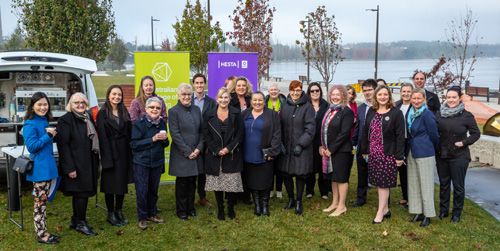
Although the pace of research can be slower
                           compared to working clinically as a rural
                          generalist nurse, there are many rewards.

The valuable contribution of the UDRH         encouraged to connect with a UDRH,                             in-chronic-disease-prevention-management-rural-remote-
                                                                                                             areas.pdf
network to rural research was recently        university or health service research
                                                                                                             Bish M, Kenny A and Nay R. A Scoping Review Identifying
supported by a national evaluation of         office to scope for opportunities to be                        Contemporary Issues in Rural Nursing Leadership. Journal
the RHMT program (Department of               involved in health research. They can                          of Nursing Scholarship 2012; 44: 411-417. Review. DOI:
                                                                                                             10.1111/j.1547-5069.2012.01471.x.
Health 2021). Recommendations for             also seek post-graduate scholarships.
                                                                                                             Department of Health. Evaluation of the Rural Health
strengthening research in rural area                                                                         Multidisciplinary Training (RHMT) Program 2019-2020,
                                              Although the pace of research can be                           2021, accessed 4 March 2021, https://www1.health.gov.
through the UDRH network includes
                                              slower compared to working clinically as                       au/internet/main/publishing.nsf/Content/rural-health-rhmt-
continuing to build the research capacity                                                                    evaluation
                                              a rural generalist nurse, there are many
of local health professionals, including                                                                     Department of Health. Rural Health Multidisciplinary Training
                                              rewards, such as contributing to changing                      (RHMT) Program, 2020, accessed 4 March 2021, https://
nurses (Department of Health 2021).
                                              clinical practice, influencing policy and                      www1.health.gov.au/internet/main/publishing.nsf/Content/
                                                                                                             rural-health-multidisciplinary-training
Through a UDRH, I have gained                 supporting health services in meeting the
                                                                                                             Gausia K, Thompson SC, Lindeman MA, et al. Contribution
opportunities to further my skills in mixed   needs of the communities they serve.                           of university departments of rural health to rural health
methods research and systematic reviews,                                                                     research: An analysis of outputs. Australian Journal of Rural
                                              As the demand for health care and need                         Health 2015; 23: 101-106. DOI: 10.1111/ajr.12142.
and collaborate with health services across
                                              for innovative models of care increases,                       Humphreys J, Lyle D and Barlow V. University Departments
a range of research projects. This led                                                                       of Rural Health: Is a national network of multidisciplinary
                                              the role of rural nurses in research
me to commence a Doctor of Philosophy                                                                        academic departments in Australia making a difference?
                                              will be imperative to improving health                         Rural & Remote Health 2018; 18: 1-11.
(PhD) in 2019 evaluating an innovative
                                              outcomes for rural communities.                                Muirhead S BM. Roles of rural and remote registered nurses
Aboriginal community-developed and                                                                           in Australia: an integrative review. Australian Journal of
governed model of primary health care.                                                                       Advanced Nursing 2020; 27.
                                              REFERENCES

A PhD is just one research training program   Australian Institute of Health & Welfare, Rural and Remote
                                              Health, 2017, accessed 4 March 2021, https://www.aihw.
for nurses to gain research experience.
                                              gov.au/reports/rural-remote-australians/rural-remote-health/
Other pathways include undertaking an         contents/health-status-and-outcomes                                                   AUTHOR
Honours program following completion          Australian College of Nursing, The role of nurses in chronic
                                              disease prevention and management in rural and remote
of the Bachelor of Nursing or a Masters                                                                                            HANNAH BEKS MACN
                                              areas, 2020, accessed 4 March 2021, https://www.acn.
by research program. Rural nurses are         edu.au/wp-content/uploads/position-statement-role-nurse-

                                                                                                                                                  WINTER 2021 | 15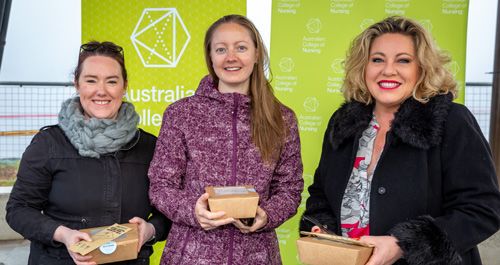
NURSING WHERE IT IS NEEDED

                                                                   THE BEAUTY OF
                                                                   BUSH NURSING
                                                                   The bush was always an undeniable
                                                                   addiction. But working as a nurse
                                                                   in the bush is what opened up
                                                                   an amazing adventure for me

I
     look at the magnet on the fridge.           The bush is an undeniable addiction,            Darwin; 6 Charlie Xray November was my call
     It says, ‘Year of the Nurse and Midwife     probably due to my upbringing. I am a dairy     sign. The red button was for emergencies
     2020’. I graduated in 1984. I think back    farmer’s daughter. My mother was a nurse,       and if pushed, everyone cleared the airway.
     on my career: What have I achieved          who had to leave the profession when she
                                                                                                 I ran a clinic for a community of
in my 36 years of nursing? What have I           married. One of four kids, we got cows in and
                                                                                                 approximately 300 people. I had no clue
contributed to the profession? The strong        helped milk them if Dad was late. We drove
                                                                                                 what I was in for. I adopted a joey, I dealt
women who brought me up, instilled               cattle and dipped sheep. We chopped
                                                                                                 with chronic disease and domestic violence.
in me that we are all equally deserving          wood and the heads off chickens. My father
                                                                                                 Tribal fighting was common and petrol
of care, irrespective of background,             suggested nursing to me. Perhaps I
                                                                                                 sniffing was out of control. I had never
geography and social circumstance.               was to finish what my mother started.
                                                                                                 heard of rheumatic heart disease. But I
                                                 Dad knew that nursing at a university was a
Shared experiences encourage other nurses                                                        coped. And that is what nurses do.
                                                 happening thing, he was a forward thinker.
to see the value of diversity and flexibility,
                                                                                                 Friends asked me to go to Gapuwiyak in
and to be where we need them — in our            In 1986, I tasted remoteness for the first
                                                                                                 North East Arnhemland — an unknown entity
indigenous communities and supporting            time. Alice Springs Airport was a tin shed
                                                                                                 for most — in the early 90s. Nurses came and
remote farming families. After all, they are     that appeared more like a bus stop than an
                                                                                                 went. They missed their lattes and felt lost
the ones hardest hit by nursing shortages.       airstrip. I was sent to Mantamaru (Jameson)
                                                                                                 without the on-ground support of a doctor,
According to Australian Government               in Western Australia. A single sister station
                                                                                                 and with limited phone access and regular
Department of Health (2020) workforce data,      in one of the most remote communities in
                                                                                                 power outages. There was a lot to learn.
there are nearly 345,000 nurses registered       the country. I had limited midwifery skills.
in Australia. Less than 1.0% are in very         The clinic was a small, shipping container.     One moonless night after getting bogged
remote areas, where the working week is          There were no telephones, only a radio          (I was not the driver), my nursey mate Deb
long and the average age of a nurse is 47.       connected to Victor Juliet Yankee (VJY)         and I walked 42 kilometres. We walked

26 | THE HIVE #34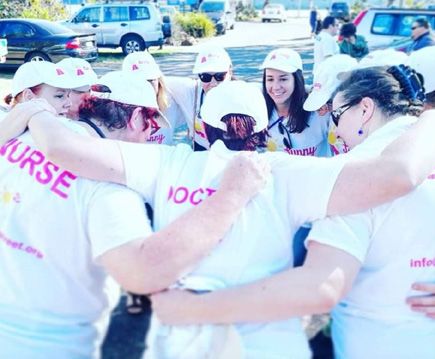
I had no idea what I was in for.
                          But I coped – and that’s what nurses do.

all night, ran hand-in-hand through a river     I left and completed the outstation pilot        pair of hands. Often, as an agency staff, I
with a known crocodile, shared a cordial        program at Oenpelli. I spent countless nights    was treated differently and as though I had
bottle as a pillow and found help with the      on the roof of the troop carrier, tucked in my   little knowledge. I knew how untrue that
road crew manager at five in the morning.       swag, at the mercy of the mosquitos but away     was and the challenges that I bestowed
We learnt to tell people where you are going.   from the crocodiles. Driving was thwarted by     upon myself would one day reward me.
                                                the wet season: getting bogged, winching         I needed to go back to where I was needed.
In 1992, I attended the launch of the Central
                                                myself out and looking like a half-drowned
Australian Rural Practitioners Association                                                       Now, 25 years later, after two farms, three
                                                sewer rat. I fished Saratoga with the locals.
(CARPA) manual, a little handheld bible                                                          kids, one divorce, over 25 workplaces,
of potential medical mayhem. We began           Unlike the boar that had gone to the water’s     I am a nomad. I work in midwifery with
the first e-health, documenting clans           edge and had its last drink not five metres      kind, strong women, a friendly emergency
and skin names. I trained my first health       from where I was sitting, I avoided becoming     department, and an incredibly supportive
worker and she is still there today.            lunch. A 15-foot crocodile called black Eric     agency. I am gaining confidence again
                                                lived (and probably still does) in an adjacent   and returning to where nurses are
Local challenges were tough. I delivered
                                                lagoon. Tourists about to swim did not want      most in need — the beloved bush.
babies in the clinic and over the radio.
                                                to heed my warning, until we saw the tail
We endured death in the community and                                                            REFERENCES
                                                of the monster on the opposite bank. I was
learnt about payback. We buried the                                                              Australian Government Department of Health, Health
                                                privileged to regularly sit under rocky ledges   workforce data, October 12 2020, Retrieved 17 March 2021,
elderly and too many young people. I still                                                       https://hwd.health.gov.au/summary.html#part-2
                                                and admire the artwork and the sun setting
remember the day my heart sank, the day
                                                over the wetlands. I remember thinking
I buried my first paediatric trauma case.                                                                             AUTHOR
                                                then: ‘What an earth am I doing here?’
That was the tipping point. There was
little support for nurses then and I was        Returning to the city left me lost.
                                                                                                                      ANNA FLYNN FACN
burning out. I had spent eight months on        The truth was, I yearned for the bush.
call for 24 hours a day, with no relief.        I found workplaces stifling and I was just a

                                                                                                                                    WINTER 2021 | 27
REGULAR FEATURE: LEADERSHIP

            How ethical leadership
            translates into positive
               health outcomes
            Exploring the correlation between respectful culture
             and quality of patient care in health organisations

H
           ealth care organisations           To effectively navigate this labyrinth,         professionals) or specialty sub-cultures
           are increasingly embracing         a leadership team needs to adopt                (for e.g. emergency department or
           values-based health                multi-modal methods with flexibility            paediatrics). These sub-cultures
           care and incorporating             based on timely, continual and open             need to approach interactions with
values-based recruitment, and core            feedback to ensure service provision is         other groupings by focusing on the
values are perceived to be central to the     respectful and value based. The services        provision of person-centred care, by
operationalisation of visions and missions.   must be carefully designed through              putting the patient at the centre of
A scanning exercise across health care        integrative models of care to meet the          discussions and decision-making.
organisations shows a recurrent value         needs and expectations of all involved.
                                                                                              Therefore, the core values must be
of respect, and one must ask what this
                                              Leadership within health care                   upheld across each sub-culture; it needs
means in terms of nursing leadership.
                                              organisations has a direct effect on            to become the daily expectation and
How does ethical leadership with a            staff performance, which influences             interaction. Practically, however, there
focus on respect influence performance        quality care and the safety of the              exist operational restraints such as
and create a positive performance             patients (McFadden, Stock & Gowen               clinical ‘ownership’ for each stage of the
culture? What does respect mean in            III, 2015). It is timely to explore the links   journey or the who-funds each-aspect.
terms of leadership; what would this          between values-based leadership and
                                                                                              Defining culture is difficult, however, it
look like, and what is the impact on staff    performance ranging from safety, quality,
                                                                                              relates to the organisation’s attributes
and patients alike? Answering these           satisfaction and engagement, as well as
                                                                                              or its character, and there are definitive
questions requires an exploration of          the growing pressure on financial integrity.
                                                                                              links with culture and performance (Scott,
the correlation between a respectful
                                              The senior leadership team must role            Mannion, Davies, & Marshall, 2003).
culture and health care outcomes.
                                              model without fault, and set the standard       Clinical governance through a shared
Health care leadership is complex and         and expectations for values-based               value integrates these different cultural
compounded by an ever-changing                interactions, providing a person-centred        and individual factors to provide an
environment including population              approach, hence instilling a culture            underpinning person-centred approach
growth and demand for service,                whereby staff are engaged and able to           to the structures, accountability and
increasing technological advances,            be key players in the change agenda             effective leadership at all levels.
societal expectations, environmental          (McGrath, Bennett, Ben-Tovim,
                                                                                              Therefore, a multi-disciplinary
impacts and the culture of health care        Boyages, Lyons & O’Connell, 2008).
                                                                                              multi-departmental team can:
organisations (Park, 1997). Leadership
                                              It is essential that organisational
should approach respect in an                                                                 •   Provide clinical leadership
                                              leadership embraces a collaborative
all-encompassing way that includes                                                            •   Approach problems as a team
                                              multi-disciplinary team approach.
staff, patients, families, consumers
                                              The complexity is in identifying                •   Focus on the patient in decision-making
and health care providers. Therefore,
                                              and working with the sub-cultures                   processes
through the essence of leadership,
                                              within the organisation, such as                •   Embrace processes to monitor for safety
one must embrace the core value of
                                              professional groupings (for e.g.                    concerns, quality concerns and overall
respect in engagement with everyone
                                              doctors, nurses or allied health                    performance (McGrath et al., 2008).
interacting with the health service.

36 | THE HIVE #34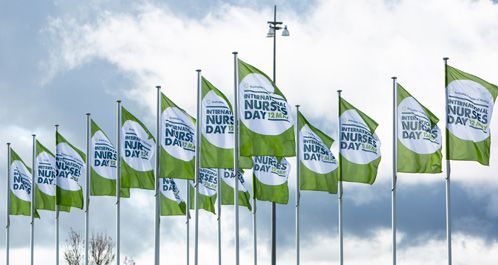
Ethical leadership
    can guide health care
    professionals to make
  value-based decisions for
  patients, thus enhancing
   the quality of care and
  patient safety, which are
   essential performance
    measures for a health
     care organisation.

McGrath et al (2008) purport that           performance. Research explains             excellence, attraction, recruitment
one of the most complex challenges          organisations with employees who           and retaining staff, and creating a
associated with this leadership             identify with the value offer a strong     productive and positive culture.
approach is in sustainability and           commitment and will continue to
maintenance. Through transformational       be employed long term and aid
                                                                                       REFERENCES
leadership approaches, sustainability       through role modelling (Shi-Chi,
is possible through the constant            Jen-Chia & Ya-Ling, 2012).                 Jencks, S. F., & Wilensky, G. R. (2010). The health care
                                                                                       quality improvement initiative: a new approach to quality
enthusiasm of each leader, and                                                         assurance in Medicare. Jama, 268(7), 900-903.
                                            This study reports strong interactional
recruitment of new staff based on                                                      McFadden, K. L., Stock, G. N., & Gowen III, C. R. (2015).
                                            requirements between the culture
a value-based recruitment process                                                      Leadership, safety climate, and continuous quality
                                            and the organisational commitment,         improvement: impact on process quality and patient safety.
and this will assist in the long-term                                                  Health care management review, 40(1), 24-34.
                                            and this can influence staff’s attitudes
sustainability of values into the future.
                                            and instill in them a strong obligation    McGrath, K. M., Bennett, D. M., Ben-Tovim, D. I., Boyages,
                                                                                       S. C., Lyons, N. J., & O'Connell, T. J. (2008). Implementing
Hence, organisational culture requires      to uphold the commitment to the            and sustaining transformational change in health care:
a two-way relationship with timely,         patients and the organisation.             lessons learnt about clinical process redesign. Medical
                                                                                       Journal of Australia, 188(6), S32.
open and transparent communication
                                            Effective, accessible and transparent      Park, H.T. (1997). Transformational and Transactional
between the leaders and staff
                                            leadership is critical to the success of   Leadership Styles of The Nurse Administrators and Job
to ensure long-term impacts on                                                         Satisfaction, Organisational Commitment in Nursing Service.
                                            the health sector through its impact       Journal of Nurses Academic Society, 27(1):228-241. https://
quality, safety and performance.
                                            on staff, and subsequently patients.       doi.org/10.4040/jnas.1997.27.1.228

An ethical leadership style will provide    A transformational leader, who inspires    Scott, T., Mannion, R., Davies, H., & Marshall, M. (2003).
a significant organisational foundation     and empowers staff, can impact the         Implementing culture change in health care: theory and
                                                                                       practice. International Journal for Quality in Health Care,
in creating an ethical culture that         daily performance of the team by           15(2), 111-118. Doi:10.1093/intqhc/mzg021
reflects the mission and values of a        creating a sense of belonging and focus    Shi-Chi, H., Jen-Chia, C. & Ya-Ling, T. (2012). The
health care facility, guide the behaviour   on respecting the person at the centre.    influence of hospital organisational culture on organisational
                                                                                       commitment among nursing executives. African Journal of
of health care professionals and help                                                  Business Management, 6(44): 10888-10895. Doi: 10.5897/
                                            In doing so, the actions and
them make value-based decisions                                                        AJBM11.1510
                                            conversations have an amended focus
for the best interest of the patients.                                                 Wong, C. A., & Cummings, G. G. (2011). The influence of
                                            which will have a positive impact on       authentic leadership behaviors on trust and work outcomes
This helps enhance the quality of care
                                            the organisational performance.            of health care staff. Journal of Leadership Studies, 3(2),
and patient safety, which are essential                                                6-23.
performance measures for a health care      The underpinning strategy is to develop
organisation (Wong & Cummings, 2011).       a leadership culture that promotes and
                                            supports everyday safety measures                                  AUTHOR
The question central to this discussion
                                            (Jencks & Wilensky, 2010). Leaders in
is why having organisational leadership
                                            health care facilities must commit to
that respects individuals and a                                                                               MARLI MILLAS MACN
                                            creating and maintaining a culture of
leadership structure designed to
                                            safety which will ensure that suitable
role model this underpinning value,
                                            standards are developed for operational
can inherently result in improved

                                                                                                                            WINTER 2021 | 37
You can also read


