Streets for people Life and Health Re-imagined - VicHealth
←
→
Page content transcription
If your browser does not render page correctly, please read the page content below
Life and Health Re-imagined
Paper 3 - 2020

Streets for people
Lessons from a return to local living

Authors
Anna Timperio - Institute for Physical Activity & Nutrition
(IPAN), Deakin University
Billie Giles-Corti - Urban Futures Enabling Capability
Platform & Healthy Liveable Cities Group, RMIT University

                                          vichealth.vic.gov.au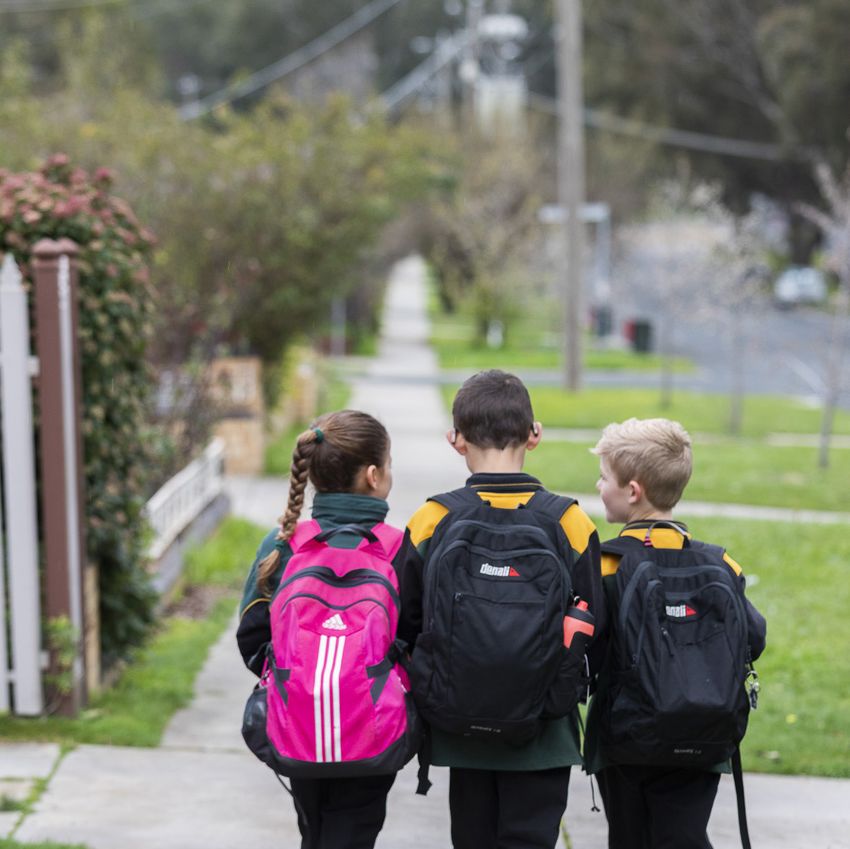
Summary - How is ‘local living’ reshaping communities?
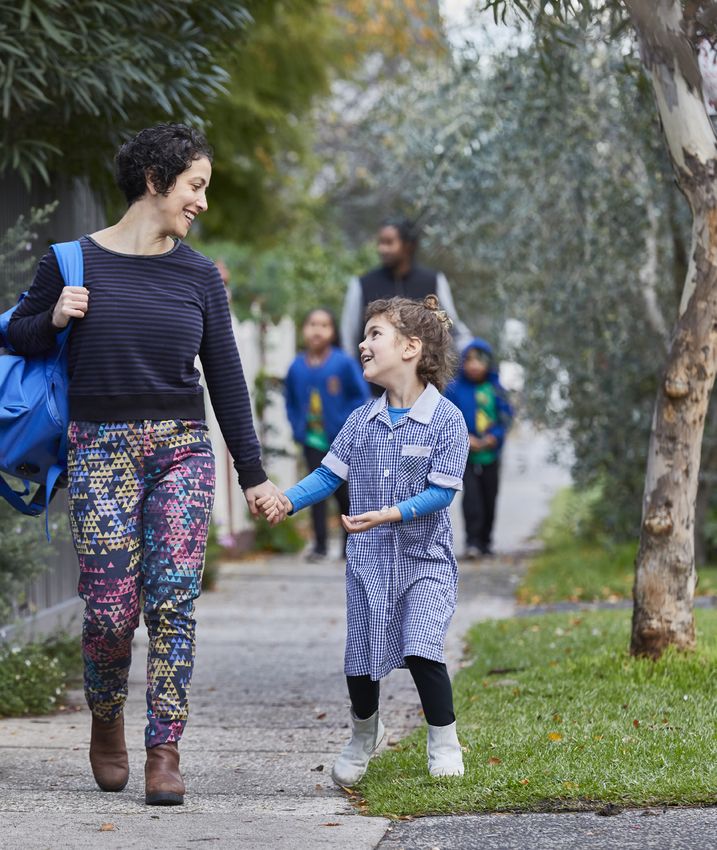
        More people are working from home                                      Children have gained more confidence and skills
        • New work routines can free time previously dedicated to              • Walking and cycling as a family has hopefully enhanced
          commuting to work. This greater flexibility means that there           parental confidence in their child’s ability to cycle and to
          is more potential for parents to accompany children to and             negotiate the streets in their neighbourhood, including en
          from school by foot or bike, especially for younger children,          route to school, and at the same time taught children critical
          with the added bonus of parents getting some physical                  skills and enhanced their own confidence to use active
          activity into their day as well.                                       modes.

        People are getting to know their communities                           Less traffic
        • The increase in ‘local living’ during the lockdown and more          • The amount of traffic en route to school is one of the top
          people out and about using local streets and parks puts ‘eyes          reasons parents give for not allowing their child to cycle to
          on the street’ and may help alleviate concerns about not               school. This is a significant opportunity to improve the health
          knowing many people in the neighbourhood.                              of our children as well as the planet, the latter being a major
                                                                                 concern troubling young people in the face of climate change.

        Introduction                                                           A chance to make it stick
        The coronavirus lockdown dramatically changed                          As children have returned to school and people begin
        daily life. Unprecedented numbers of people working                    to move around more with the easing of restrictions,
        and learning from home, an obligation to stay local,                   maintaining the positive aspects of the coronavirus
        and exercise one of the few reasons people were                        lockdown is critical.
        permitted to leave their homes resulted in more
        people using local streets and parks for walking,                      By way of example, in Australia, just three in 10 children aged
        cycling and exercise.                                                  5-11 years do sufficient physical activity to benefit their health
                                                                               (Australian Bureau of Statistics 2013). Continuing to walk and
        While there is limited data available, media and Twitter reports       cycle rather than use cars for local travel is one of the most
        suggested bustling local paths, streets and parks and high             obvious ways to incorporate physical activity into a child’s day.
        levels of cycling, with soaring bicycle sales said to be the ‘new
        toilet paper’ (Mark 2020).                                             Walking and cycling to school has declined substantially since the
                                                                               70s (Salmon et al. 2005; van der Ploeg et al. 2008), and is so low
        A report using data from the Victorian Bicycle Network showed          Australia received a grade of D+ for active transport in the latest
        138- 778% increases in bike riders using just eight Melbourne trails   Report Card for Physical Activity for Children and Young People
        on a single Saturday in March 2020 compared with November 2019         (Active Healthy Kids Australia 2018).
        (Jacks 2020). As sticking close to home became the ‘new normal’,
        levels of traffic plummeted over March (Intelematics 2020).            As children and families have embraced the joys of walking and
                                                                               cycling in their neighbourhoods, the question is how can we keep
        Indeed, imagery from NASA and the European Space Agency                this going? How can we use the shake-up from coronavirus as
        showed that across the world there were dramatic decreases             an opportunity to revert back to historic school travel norms
        in harmful air pollution due to decreases in road and air traffic      that favoured active modes of travel? This could make a huge
        and industry emissions (da Silva 2020; Yosufzai 2020). A return        difference to both the health and wellbeing of our children, as
        to local living has highlighted just how important it is to create     well as decreasing traffic congestion, improving air quality and
        20-minute neighbourhoods where residents have access to                protecting the environment (VicHealth 2019).
        everything they need for daily living: shops, services, amenities
        and high quality parks (Department of Environment, Land,               Data from a travel survey in Melbourne and Geelong (2012-16)
        Water and Planning 2017).                                              shows that only 39% of children living within 2km of school walk
                                                                               or cycle there. Alarmingly, just 35% of children who live within
        The lockdown and restrictions provided people with the chance          750m of school walk or cycle to school (Carver et al. 2019).
        to become connected to their local neighbourhoods; and having          Increasing catchments, amalgamation of schools and low density
        parks nearby and less traffic on roads enabled parents to safely       urban sprawl have contributed to increasing the distances that
        entertain, and recreate with, their children on family walks and       some children need to travel to go to school (Duggan et al. 2018),
        bike rides.                                                            which is a major barrier to children using active modes.

        In a national survey conducted in May 2020 by Deakin                   Among other things, convenience of driving, parental confidence
        University’s Institute for Physical Activity and Nutrition (IPAN),     in their child’s abilities, neighbourhood social interactions and
        we asked respondents whether they walked for leisure or                safety-related concerns are also barriers (Ding et al. 2011; Ikeda
        exercise as a family in a usual week in February 2020 and in a         et al. 2018; Trapp et al. 2012; Trapp et al. 2011). Now is an ideal
        usual week over the previous month. Preliminary results show           time to reconsider how children travel to school – before traffic
        increases in the proportion of adult respondents reporting             returns to previous levels. Never has it been more possible to
        walking as a family compared to February, and in the amount of         create the conditions that would support a return to children
        time spent walking as a family, especially among those with a          enjoying walking and cycling for transport, and for older children,
        child aged 5-17 years.                                                 independent mobility.

2   Life and Health Re-imagined Streets for people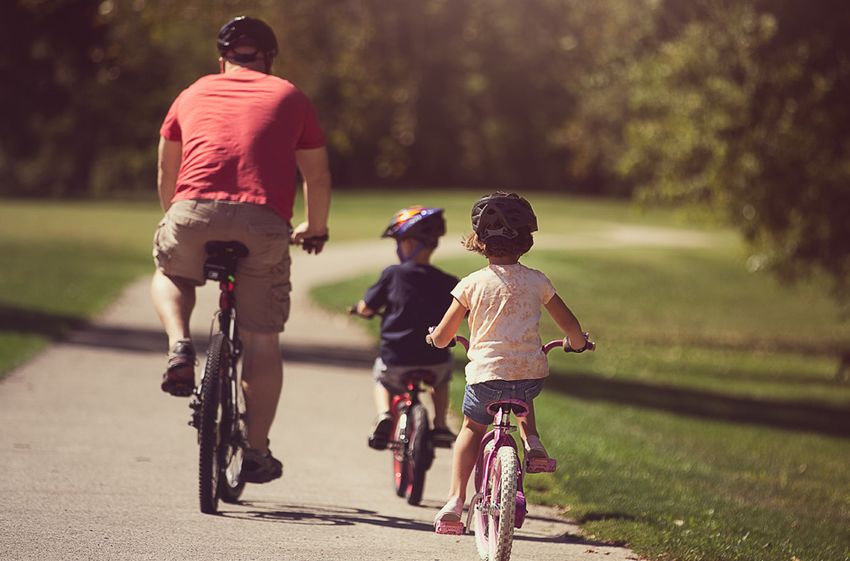
The coronavirus lockdown                                            • Traffic has not yet returned to pre-coronavirus levels. The
                                                                              amount of traffic en route to school is one of the top reasons
        presents a unique opportunity to                                      parents give for not allowing their child to cycle to school
        overcome barriers to walking and                                      (Cycling Promotion Fund & National Heart Foundation of

        cycling for local travel, including                                   Australia 2012). This is a significant opportunity to improve
                                                                              the health of our children as well as the planet, the latter
        to and from school                                                    being a major concern troubling young people in the face of
                                                                              climate change.
        Coronavirus has unexpectedly created unique
        conditions that may facilitate walking and cycling
        for transport, providing a critical opportunity to                  Challenges
        capitalise and overcome other real and perceived
        barriers to active school travel:                                   In 2018, approximately three-quarters of journeys for
                                                                            education purposes made by primary school students
        • Many parents are working from home – a practice that may          in Melbourne were by private vehicle, representing
          continue into the future based on predictions of how the          approximately 1.180 million km on an average
          coronavirus will change the way we work. Children whose           weekday (Department of Transport 2019). This is a lot
          parents report there is not enough time in the morning            of traffic for children to contend with around schools.
          are half as likely to walk or cycle to school (Salmon et al.      The more people drive their children to school, the
          2007). However, new work routines can free time previously        more unsafe it can be for children who use active
          dedicated to commuting to work. This greater flexibility          modes.
          means that there is more potential for parents to accompany
                                                                            Real or perceived parental concerns about traffic safety remains
          children to and from school by foot or bike, especially for
                                                                            a major barrier to active travel to school. In particular, living
          younger children, with the added bonus of parents getting
                                                                            in areas with connected street networks but a lot of traffic,
          some physical activity into their day as well. This should be
                                                                            needing to cross busy roads and a lack of lights or crossings are
          feasible for many: around 80% of children living within 2km
                                                                            all barriers to active travel (Timperio et al. 2006; Trapp et al.
          of school are already accompanied to school by an adult –
                                                                            2012). These barriers are likely to be compounded by the need
          but less than 30% of these trips are by walking or cycling
                                                                            for social distancing, both on footpaths and at school gates,
          and the workplace is the next stop for 24% of accompanying
                                                                            and the need to limit parents entering school grounds and
          adults (Carver et al. 2019). Converting those car trips to an
                                                                            congregating at the school gates.
          active mode would not only benefit children, but also benefit
          parents and the environment. Importantly, children who are        With gradual easing of restrictions, there are also concerns
          capable may also be allowed to travel independently knowing       that roads will become congested as many try to avoid public
          an adult will be home after school.                               transport. Respondents in a national survey reported feeling
                                                                            most comfortable travelling by car and least comfortable
        • People have been getting to know their community and
                                                                            travelling by public tranpsort if required to travel, with 58%
          seeing lots of people using the streets and local amenities.
                                                                            extremely concerned about hygiene on public transport (Beck &
          The increase in ‘local living’ during the lockdown and more
                                                                            Hensher 2020).
          people out and about using local streets and parks puts ‘eyes
          on the street’ and may help alleviate concerns about not          Traffic congestion will be further compounded across the
          knowing many people in the neighbourhood. The resulting           network if returning workers switch from public transport to
          familiarisation with locals, enhanced local surveillance          commuting by private motor vehicle. Walking and cycling to
          and the notion of safety in numbers may help parents feel         school and employment is therefore even more important in
          comfortable that their child will be safe walking or cycling      the post coronavirus recovery period. Recent investments in
          independently or that someone would come to their aid             pop-up cycling infrastructure are critical and will help ease
          if required. Fear of strangers is common among parents            pressures in the central business district and inner suburbs.
          (Timperio et al. 2004; Zubrick et al. 2010) and is a strong       What more can be done to make active travel the new normal?
          predictor of the extent to which children are allowed to travel
          independently (Foster et al. 2014).

        • Judging from media reports, many children will have gained
          important skills as pedestrians and cyclists during the
          lockdown. Walking and cycling as a family has hopefully
          enhanced parental confidence in their child’s ability to cycle
          and to negotiate the streets in their neighbourhood, including
          en route to school, and at the same time taught children
          critical skills and enhanced their own confidence to use
          active modes. Our past research showed that parental and
          children’s confidence in the child’s ability to cycle to school
          without an adult predicted whether children rode to school
          (Trapp et al. 2011), while girls’ confidence that they could
          walk to school without an adult predicted whether they
          walked to school (Trapp et al. 2012).

3   Life and Health Re-imagined Streets for people
How can we capitalise on the The Pedestrian Safe Neighbourhood pilot (plan currently
under development) is an example of an initiative to create a
unique opportunities presented safer neighbourhood street environment for pedestrians and
by coronavirus? cyclists, particularly for children and for school travel (City
of Glen Eira 2019). A comprehensive range of safety measures
What can we do to address barriers to active are proposed across the neighbourhood and surrounding the
transport and capitalise on the opportunity to school.
maintain momentum and keep people of all ages
walking and riding? Creating active environments These include bike boulevard treatments for cyclists, safety
that support walking and cycling for transport is barriers, painted and raised crossings, mid-block crossings,
advocated globally (World Health Organization 2018). raised intersection platforms with crossings, curb extensions
and road decals to prompt cars to slow down, reduced speed
Reclaim the streets limits, and one-way streets, and limited entry points to
discourage use of the neighbourhood as a short-cut for cars.
Cities around the world are implementing a wide range of
temporary and ‘pop-up’ measures to encourage walking and
Improve connections
cycling in response to coronavirus (Jacks 2020; Laker 2020).
This includes widening paths and using the road space to create Commutes often involve more than the immediate environment
temporary bike lanes, with movable barriers to traffic. An around the schools or workplaces – the whole journey is
additional 40km of quick-to-install adaptable bike lanes that important. A better connected and integrated bike network is a
provide physical separation from cars are planned in the inner key component of the Victorian Cycling Strategy (Transport for
city of Melbourne (Bicycle Network 2020). Victoria 2017). Many suburban off-road paths lack connections
– identifying opportunities to connect these broken links for
Similar measures could be implemented for school travel. local cycling is important for cyclists, particularly if these can
Widening footpaths and reclaiming part of the street to assist lead to schools, activity centres and public transport hubs. Four
children to travel to school will help maintain social distancing in five parents believe that there are not enough bike paths for
among adults accompanying children and encourage more children to cycle safely to school (Cycling Promotion Fund &
active transport. National Heart Foundation 2012).
Cycling boulevards for key routes leading to schools could
be trialled. What if we limited the boulevards to local traffic
Create drop-off zones
travelling at low speeds only? Limiting speeds on residential Not all children live within a walkable or cycleable distance
streets, areas around schools and other peak pedestrian areas to school. In 2018, for example, journeys to primary school in
to 30km/hr is strongly advocated to increase pedestrian and Melbourne averaged 4km (Department of Transport 2019).
cyclist safety and encourage getting around by foot or bike Drop-off zones could be identified 500-800m from schools.
(National Heart Foundation of Australia 2019). These could link to woonerfs, walking and cycling boulevards
or other safe routes, allowing children to enjoy the freedom
Design streets for people of travelling independently to school in a safe environment.
A small pilot trialling this approach in two schools in Belgium
‘Complete streets’ could be designed around schools and
showed increases in walking trips to/from school, as well as
activity centres. In this approach, space is allocated to all road
higher step counts before and after school (Vanwolleghem et
users, including pedestrians and cyclists, with the safety and
al. 2014)
needs of all road users prioritised (Bray Sharpen et al. 2017).
Ease and safety of movement for all users is key.
Build it - they will come
What if we could go further and create shared streets, by
In the post-coronavirus recovery period, stimulus packages
repurposing and prioritising streets around schools for
will likely provide funding for infrastructure projects. What
pedestrians rather than cars, borrowing from established
if some of that funding was spent on creating safe pedestrian
traffic calming measures adopted in Europe. We could trial
and cycling infrastructure leading to all schools, activity
temporary ‘woonerfs’ close to schools.
centres and train stations? With increased cycling and
Woonerfs or living streets, originally developed in the appreciation of local neighbourhoods, never has there been a
Netherlands and introduced elsewhere, are streets seen as bigger opportunity for change. The 1.180 million km of trips
‘shared’ space, where cars, pedestrians and cyclists share the associated with dropping off and picking up primary school
space and traffic is calmed and slowed to a walking pace (Ben- children by private vehicle is detrimental to the environment
Joseph 1995). and for the health and wellbeing of our children: children are
looking to adults to act on climate change.
Improving safety from cars is critical for children to be able to
safely travel by foot or bike and for parents to feel comfortable Coronavirus provides a unique opportunity for adults to show
with them doing so. Internationally, infrastructure changes we are listening to our children and their concerns about
around schools or on key routes, such as installing crossings, climate change: as many Australian workers continue to work
footpath improvements, bike lanes and traffic calming, in from home and look to new ways of commuting when they
conjunction with other measures have been shown in some return to work, this is the time to enact a healthy and more
cases to increase active transport to school (Audrey & Batista- sustainable ‘new normal.’
Ferrer 2015).
4 Life and Health Re-imagined Streets for peopleReferences
ABS 2013, Australian Health Survey: da Silva G 2020, ‘COVID-19 drop in pollution Laker L 2020, ‘World cities turn their
Physical Activity, 2011-12 (4364.0.55.004), to be short-lived’, Pursuit, The University streets over to walkers and cyclists’, The
Australian Bureau of Statistics, Canberra. of Melbourne, Melbourne. https://pursuit. Guardian, accessed 21 May 2020, .
Start. The 2018 Active Healthy Kids Department of Environment, Land, Water
Australia Report Card on Physical Activity and Planning 2017, Plan Melbourne 2017- Mark D 2020, ‘Australia is facing a ‘once-in-
for Children and Young People, Adelaide, 2050 : Metropolitan planning strategy / a-lifetime opportunity’ as cycling booms,
South Australia. State Government of Victoria, Department advocates say’, ABC News, accessed 18
of Environment, Land, Water and Planning, May, 2020, .
studies’, Health and Place, vol. 36, pp. 97- Integrated Survey of Travel & Activity
117. (VISTA): Journey to education (method National Heart Foundation of Australia
of travel), Tableau Public, accessed 20 2019, Blueprint for an active Australia,
Beck MJ & Hensher DA 2020, Insights into May 2020, . C & Timperio A 2007, ‘Associations among
restrictions, Institute of Transport and individual, social, and environmental
Logistic Studies (ITLS), The University of Ding D, Sallis JF, Kerr J, Lee S & Rosenberg barriers and children’s walking or cycling
Sydney Business School, Sydney. DE 2011, ‘Neighborhood environment and to school’, American Journal of Health
physical activity among youth a review’, Promotion, vol. 22, no. 2, pp. 107-13.
Ben-Joseph E 1995, ‘Changing the American Journal of Preventive Medicine, vol.
residential street scene: Adapting the 41, no. 4, pp. 442-55. Salmon J, Timperio A, Cleland V & Venn A
shared street (Woonerf) concept to the 2005, ‘Trends in children’s physical activity
suburban environment’, Journal of the Duggan M, Fetherston H, Harris B, Lindberg and weight status in high and low socio-
American Planning Association, vol. 61, pp. R, Parisella A, Shilton T, Greenland R & economic status areas of Melbourne,
504-15. Hickman D 2018, Active School Travel: Victoria, 1985-2001’, Australian and New
Pathways to a Healthy Future, Australian Zealand Journal of Public Health, vol. 29, no.
Bicycle Network 2020. ‘Melbourne Health and Policy Collaboration, Victoria 4, pp. 337-42.
fast tracks 40km of bike lanes’, University, Melbourne.
accessed 17 June, 2020, parents’ fear of strangers and perceptions physical environment correlates of active
of informal social control on children’s commuting to school’, American Journal of
Bray Sharpen A, Welle B, Luke N 2017. ‘What independent mobility’, Health and Place, vol. Preventive Medicine, vol. 30, no. 1, pp. 45-51.
makes a complete street? A Brief Guide’, The 26, pp. 60-8.
City Fix, accessed 19 June, 2020, . school travel with perceptions of the among children’, Preventive Medicine, vol.
physical environment and characteristics 38, pp. 39-47.
Carver A Barr A, Singh A, Badland H, of the social environment: A systematic
Mavoa S & Bentley R 2019, ‘How are the review’, Health and Place, vol. 54, Transport for Victoria 2017, Victorian
built environment and household travel pp. 118-31. Cycling Strategy 2018-28. Increasing
characteristics associated with children’s cycling for transport, Transport for Victoria
active transport in Melbourne, Australia?’, Intelematics 2020, ‘Melbourians heeding Department of Economic Development,
Journal of Transport and Health, vol. 12, pp. advice and not travelling’, accessed 19 Jobs, Transport and Resources, Melbourne.
115-29. May, 2020, . Bulsara M, Timperio A, McCormack GR &
Safe Neighbourhood Pilot, accessed Villanueva K 2012, ‘Increasing children’s
21 May 2020, . post-COVID commuters’, The Age, accessed walking to school’, Health Education and
15 May 2020, . International Journal of Behavioral Nutrition
and Physical Activity, vol. 8, p. 123.
5 Life and Health Re-imagined Streets for peoplevan der Ploeg HP, Merom D, Corpuz G & VicHealth 2019, The benefits of walking: Yosufzai R 2020, ‘How the coronavirus
Bauman AE 2008, ‘Trends in Australian A research summary, Victorian Health crisis is helping improve the environment
children traveling to school 1971-2003: Promotion Foundation (VicHealth), across the world’, SBS News, accessed 20
Burning petrol or carbohydrates?’, Melbourne. May 2020, .
D, De Bourdeaudhuij I & Cardon G 2014, for a healthier world. World Health
‘Feasibility and effectiveness of drop- Organization, Geneva. Zubrick SR, Wood L, Villanueva K, Wood
off spots to promote walking to school’, G, Giles-Corti B & Christian H 2010,
International Journal of Behavioral Nutrition Nothing but fear itself: parental fear as
and Physical Activity, vol. 11, p. 136. a determinant of child physical activity
and independent mobility, Victorian
Health Promotion Foundation (VicHealth),
Melbourne.
Victorian Health Promotion Foundation
PO Box 154 Carlton South
Victoria 3053 Australia
T +61 3 9667 1333 F +61 3 9667 1375
vichealth@vichealth.vic.gov.au
vichealth.vic.gov.au
twitter.com/vichealth
facebook.com/vichealth
VicHealth acknowledges the support
of the Victorian Government.
© VicHealth 2020
https://doi.org/10.37309/2020.PY903
VicHealth acknowledges the Traditional
Custodians of the land. We pay our respects
to all Elders past, present and future.
6 Life and Health Re-imagined Streets for peopleLife and Health Re-imagined
Paper 1 - 2020
Hitting the streets
University logos to go
here
Can we make active transport the
University logos to go
here norm as children return to school?
Authors
Anna Timperio - Institute for Physical Activity & Nutrition
(IPAN), Deakin University
Billie Giles-Corti - Urban Futures Enabling Capability Platform
& Healthy Liveable Cities Group, RMIT University
vichealth.vic.gov.auOpportunities
To be inserted
Introduction A chance to make it stick
The COVID-19 lock-down has dramatically changed As children start returning to school, maintaining the
daily life. Unprecedented numbers of people working positive aspects of the COVID-19 lockdown is critical.
and learning from home, an obligation to stay local In Australia, just three in ten children aged 5-11 years
and exercise as one of the few reasons people are do sufficient physical activity to benefit their health
permitted to leave their homes has resulted in more (Australian Bureau of Statistics 2013). Walking and
people using local streets and parks for walking, cycling to school is one of the most obvious ways to
cycling and exercise. incorporate physical activity into a child’s day.
While there is limited data yet available, media and twitter Yet active travel to school has declined substantially since the
reports suggest bustling local paths, streets and parks and high 70s (Salmon et al. 2005; van der Ploeg et al. 2008), and is so low
levels of cycling, with soaring bicycle sales said to be the ‘new Australia received a grade of D+ for active transport in the latest
toilet paper’ (Mark 2020). Report Card for Physical Activity for Children and Young People
(Active Healthy Kids Australia 2018).
A report using data from the Victorian Bicycle Network shows
138-778% increases in bike riders using just eight Melbourne As children and families have embraced the joys of walking and
trails on a single Saturday in March compared with November cycling in their neighbourhoods, the question is how can we keep
2019 (Jacks 2020). As sticking close to home has become children walking and cycling? How can we seize the moment and
the ‘new normal’, levels of traffic plummeted over March use the shake-up from COVID19 as an opportunity to revert back to
(Intelematics 2020). historic school travel norms that favoured active modes of travel?
This would make a huge difference to both the health and wellbeing
Indeed, imagery from NASA and the European Space Agency of our children, as well as decreasing traffic congestion, improving
shows that across the world, there have been dramatic air quality and protecting the environment (VicHealth 2019).
decreases in harmful air pollution due to decreases in road and
air traffic and industry emissions (da Silva 2020; Yosufzai 2020). Data from a travel survey in Melbourne and Geelong (2012-16)
A return to local living has highlighted just how important it is show that only 39% of children living within 2km of school walk
to create the 20 minute neighbourhood where residents have or cycle. Alarmingly, just 35% of children who live within 750m
access to everything they need for daily living: shops, services, of school walk or cycle to school (Carver et al. 2019). Increasing
amenities and high quality parks (Department of Environment, catchments, amalgamation of schools and low density urban
Land, Water and Planning 2017). sprawl have contributed to increasing the distances that some
children need to travel to go to school (Duggan et al. 2018), which
The lockdown and restrictions have provided people the chance is a major barrier to children using active modes.
to become connected to their local neighbourhoods, and having
parks nearby and less traffic on roads has enabled parents to Among other things, convenience of driving, parental confidence
safely entertain, and recreate with, their children on family in their child’s abilities, neighbourhood social interactions and
walks and bike rides. safety-related concerns are also barriers (Ding et al. 2011; Ikeda
et al. 2018; Trapp et al. 2012; Trapp et al. 2011). With traffic
levels so low, this is an ideal time to reconsider how children
travel to school. Never has it been more possible to create the
conditions that would support a return to children enjoying
active travel, and for older children, independent mobility.
vichealth.vic.gov.auThe burden of mental ill health
In any given year around 1 in 5 Australians are living with a mental health condition and, at some point in their life, around
1 in 2 Australians will experience a diagnosable mental health condition. (Productivity Commission 2019) These conditions have
significant negative impacts on people’s lives, and the lives of carers, families and friends. These impacts occur across multiple
life domains, including on education and employment outcomes and in turn contribute to socioeconomic disadvantage. At a
societal level, mental health conditions create significant costs relating to healthcare, welfare and business, and thus the broader
community. The Productivity Commission has conservatively estimated the cost of mental ill health to the Australian economy
to be around $50 billion per year, with an additional $130 billion per year associated with diminished health and reduced life
expectancy for those living with mental ill health. (Productivity Commission 2019)
Cost of mental
ill health to
the Australian
economy:
$180
15 BILLION
12
living with a will experience a
in mental health
PER YEAR
in diagnosable condition
condition in their lifetime
Productivity Commission 2019 © VicHealth
Mental wellbeing and mental ill health
Mental wellbeing is a dynamic state of complete physical, Both mental wellbeing and mental illness result from complex
mental, social and spiritual wellbeing that draws attention interactions between the mind, body and environment
to the quality of people’s lives, their opportunities, and their (VicHealth 2015b).
capacity to cope with the stresses of life and contribute to the
community (Foresight Mental Capital and Wellbeing Project Focusing on addressing mental wellbeing rather than the
2008; VicHealth 2015a). Conversely, mental ill health occurs conventional focus on mental ill health challenges the
when a person’s thoughts, feelings or behaviour cause ongoing assumption that the absence of mental illness is a sufficient
suffering or an inability to cope with everyday life. Being social, health or policy goal. Addressing mental wellbeing
diagnosed with a serious mental illness does not mean that moves away from individually focused interventions targeted
a person cannot experience mental wellbeing; similarly, having at the extreme outcome and relatively small numbers of people,
no symptoms of a mental illness does not mean that a person towards investing in the evidence and policy that improve the
will necessarily have high levels of mental wellbeing. social contexts in which people live (Welsh et al. 2015).
Figure 1: Definitions of mental wellbeing (VicHealth 2015a) and mental ill health (Foresight Mental Capital and Wellbeing
Project 2008; The Global Consortium for the Advancement of Promotion and Prevention in Mental Health 2008)
Mental wellbeing Mental ill health
is a dynamic state of complete physical, mental, social includes diagnosable mental illnesses that occur
and spiritual wellbeing in which a person can develop when a person’s thoughts, feelings or behaviour cause
to their potential, cope with the normal stresses of ongoing suffering or an inability to cope with everyday life.
life, work productively and creatively, build strong and It also includes mental health problems that do not meet
positive relationships with others and contribute to the the threshold for diagnosis but that cause psychological
community. Mental wellbeing contributes to healthier distress and interfere with people’s cognitive, emotional
lifestyles, better physical health, improved quality of life, or social abilities.
greater social connection and productivity.
© VicHealth
9 Life and Health Re-imagined Streets for peopleFigure 2: Spectrum of preventive health action
Rehabilitation/
Health promotion Early identification Treatment recovery
1 2 3
PRIMARY PREVENTION SECONDARY PREVENTION TERTIARY PREVENTION
Primary prevention aims to Secondary prevention seeks to stop Tertiary prevention aims to stop or
prevent the initial occurrence of a or mitigate existing illness and its mitigate existing illness through
disorder. It reduces risk factors and effects through early detection. appropriate treatment or to reduce
strengthens protective factors. This can include suicide prevention. the occurrence of relapses and the
This includes action to promote establishment of chronic conditions
mental wellbeing in people with through, for example, effective
and without rehabilitation. This can include suicide
mental illness. prevention.
© VicHealth
Risk and protective factors
Mental wellbeing and mental ill health result from a complex VicHealth recently commissioned an evidence review of the
combination of events and conditions that take place in recent, high-level evidence on risk and protective factors
biological, individual-psychological, social-psychological for mental ill health and mental wellbeing (Rickwood &
and structural domains (Commonwealth Department of Health Thomas 2019). A total of 92 published systematic reviews
and Aged Care 2000). The interplay between the individual and were identified, with majority indicating that there was
the environment is critical. The social determinants approach large heterogeneity between studies in relation to both
therefore encompasses the full range of risk and protective measurement of relevant factors and the outcomes reported
factors that determine health at the individual; family, (Rickwood & Thomas 2019). Despite inconsistencies, there
friend, peer; organisation, community; sector/system was evidence supporting risk and protective relationships
and society levels. between mental wellbeing and a range of individual, family,
social, environmental, cultural, and community factors
(Rickwood & Thomas 2019). Risk and protective factors
for mental wellbeing vary by life stage as shown in Figure 3
(Rickwood & Thomas 2019).
VicHealth 10Lifestages Risk and protective factors for mental health
Children
Positive family Physical activity
functioning and access to Teenagers
and support green space Positive Positive parenting
teacher and peer style and family
Protective factors
relationships functioning
Individual Foster care
Protective factors
resilience and kinship Community
factors care support & sense
of belonging
• Factors related to refugee status
Risk Factors
• Homelessness and out-of-home care
• Screen time and sedentary behaviour • High screen time, social media time/Cyberbullying
Risk Factors
• Chronic illness and obesity • Poor family functioning
• Maternal prenatal influenza • Chronic illness and obesity
• Food insecurity • Factors related to refugee status
• High-demand academic environments
• Adverse events
• Substance abuse
Young adults
Perinatal period
Protective factors
Protective factors
High quality social Supportive integrated
relationships online networks
• Social isolation and loneliness
Risk Factors
• Homelessness
• Being a sexual minority
• Migration • Childhood and lifetime abuse
Risk Factors
• Cyberbullying • Chronic medical conditions
• Substance abuse • Stress and unsupportive relationships
• Disturbed sleep
• Multiple births
• Antenatal anxiety
Adults & the general population • Substance abuse
Employment
Protective factors
Own ethnic Older adults
density
Alcohol
Protective factors
reduction
• Social isolation and loneliness
Risk Factors
• I nsecure or unsupportive employment/Unemployment
• Economic inequality/Homelessness or poor housing
• Factors associated to migration and refugee status
• Caregiving
• Death of a partner
Risk Factors
• Physical health conditions/Smoking/Food insecurity
• Being a sexual minority • Social isolation and loneliness
• Substance abuse • Being a caregiver for someone with dementia
© VicHealth
Source: Rickwood D & Thomas K, 2019, Mental wellbeing risk & protective factors:
11 Life and Health Re-imagined Streets for people An evidence check rapid review brokered by the Sax Institute for VicHealth, Sax Institute, SydneyRecommendations
1. Prioritising prevention in childhood There is a wealth of evidence showing that mental health
conditions coexist with other non-communicable diseases,
Mental ill health affects people of all ages but tends to
they share numerous risk factors, and are independent risk
emerge in young people — 75% of Australians who develop
factors for each other (Stein et al. 2019). Many interventions
mental ill health first experience it before the age of 25 years
designed to improve physical health, particularly multi-
(Productivity Commission 2019). Young Australians with
component interventions targeting the social determinants
mental ill health miss opportunities to develop the skills
of health, also lead to multiple mental wellbeing outcomes.
they need for long-term academic outcomes and
Integrated approaches to prevention should be pursued as
post-school opportunities.
much as possible.
3. A unified, intersectoral approach is needed
Responsibility for promoting mental wellbeing and preventing
mental ill health cannot lie solely with the health sector but
should extend across sectors and government departments.
Given the strong influence of the social determinants of health,
improving mental wellbeing will require policies and programs
that address education, standard of living, physical health,
justice, family cohesion, transport, environment, income and
employment, as well as those that address the prevention
and treatment of ill health (World Health Organization 2013).
of Australians who develop mental ill health
first experience it before the age of
25 YEARS Improving MENTAL WELLBEING will
require POLICIES & PROGRAMS that
Productivity Commission 2019 © VicHealth address EDUCATION, STANDARD OF
Exposure to adversity at a young age is an established
LIVING, PHYSICAL HEALTH, JUSTICE,
preventable risk factor for mental and physical ill health FAMILY COHESION, TRANSPORT,
(Danese et al. 2009; Copeland et al. 2018). Adverse childhood ENVIRONMENT, INCOME AND
experiences are common, but often preventable.
EMPLOYMENT, PREVENTION OF
Given the above, families and children will offer the greatest
ILL HEALTH.
potential for improving health, social and economic outcomes.
2. Harnessing the benefits of prevention for World Health Organization 2013 © VicHealth
mental and physical health
Mental wellbeing is essential to overall health; a concept Multi-sector action to promote mental wellbeing will require
implicit in the WHO definition of health: “a state of complete strong coordination, integration and strategic oversight.
physical, mental and social wellbeing and not merely the It will require a strategy combining universal and targeted
absence of disease or infirmity”(World Health Organization interventions, robust collaboration and funding mechanisms
n.d., p. para 1). Yet, prevention of mental ill health is not that allow resources from one department (e.g. education) to
prioritised in the same way as prevention of other non- be used to achieve outcomes in another (e.g. mental wellbeing)
communicable diseases. (World Health Organization 2013). VicHealth has a strong
history of engaging non-health sectors (i.e. workplaces,
education, sports, the arts) to achieve health outcomes.
World Health Organization definition of health that says We look forward to continuing to work in this way as we
expand and summarise the available evidence base for action
“Health is a state of complete and develop a state-wide framework to guide a unified,
physical, mental and social intersectoral approach to primary prevention and health
promotion activity which recognises the social determinants of
wellbeing and not merely mental health and addresses key protective and risk factors for
the absence of disease or mental wellbeing.
infirmity.”
World Health Organization n.d., p. para 1 © VicHealth
VicHealth 12You can also read


