Objective improvement with coronary anastomosis simulation training: meta-analysis - Oxford Academic
←
→
Page content transcription
If your browser does not render page correctly, please read the page content below
BJS Open, 2022, zrab147
                                                                                                                   https://doi.org/10.1093/bjsopen/zrab147
                                                                                                                                        Systematic Review

Objective improvement with coronary anastomosis
simulation training: meta-analysis
                  1,
Marliza O’Dwyer     *, Cristina A. Fleming2, Shane Ahern1, Sean Barrett1, Nicola B. Raftery3, Tara Ní Dhonnchú1
and Kishore Doddakula1
1
  Department of Cardiothoracic Surgery, Cork University Hospital, Cork, Ireland

                                                                                                                                                               Downloaded from https://academic.oup.com/bjsopen/article/6/1/zrab147/6526458 by guest on 14 June 2022
2
  Department of Academic Surgery, Cork University Hospital, Cork, Ireland
3
  Department of Breast Surgery, Mater Misericordiae University Hospital, Dublin, Ireland

*Correspondence to: Marliza O’Dwyer, Department of Cardiothoracic Surgery, Cork University Hospital, Wilton, Cork, Ireland (e-mail: marlizaodwyer@gmail.com)
Concept and systematic review presented at Society of Cardiothoracic Surgery Virtual Annual Meeting May 2021

Abstract
Background: Coronary artery anastomosis training and assessment are vital for patient safety and for conferring a prognostic benefit.
A systematic review and meta-analysis were performed to analyse the impact of simulation on coronary anastomosis proficiency in
terms of time taken and skill score.
Methods: This review was conducted in accordance with PRISMA guidelines, searching PubMed, Embase and Cochrane databases on
10 October 2020, using the terms ‘Coronary anastomosis simulation’ or ‘vascular anastomosis simulation’ and ‘anastomosis
simulation’. Studies included had objective measurement of scores of before and after simulation. Meta-analysis was performed
using RevMan, version 5.4 (Cochrane Library).
Results: From a pool of 1687 articles, 12 articles evaluating the use of simulation in teaching coronary anastomosis were identified, with
objective scores at baseline and after simulation. The 12 papers included 274 subjects. Data on 223 subjects could be extracted for
analysis in performing coronary anastomosis in a simulated environment. Eight trials evaluated improvement in time and 12 trials
evaluated performance using an objective evaluation score. In comparison with no formal simulation training, simulation was
associated with improved skill in a five-point scale (standardized mean difference 1.68 (95 per cent c.i. 1.23 to 2.13; P , 0.001)) and
time (mean difference 205.9 s (95 per cent c.i. 133.62 to 278.18; P , 0.001)) in trials included in the meta-analysis. Furthermore, novice
cardiothoracic surgeons benefited more from simulation as regards time improvement compared with senior cardiothoracic
surgeons (293 versus 120 s improvement; P = 0.003). Fidelity of simulator did not have a significant effect on rates of improvement.
Conclusion: Simulation-based training in coronary anastomosis is associated with improved time efficiency and overall performance
in comparison with no intervention. Further studies are necessary to determine the optimum timing of trainees progressing from
simulation training to live operating.

Introduction                                                                       membrane oxygenation12. Training for coronary artery bypass
                                                                                   grafting differs amongst consultant trainers and training pro-
Coronary artery bypass grafting surgery has been the cornerstone
                                                                                   grammes. Reviewing the evidence with respect to the effective-
of cardiac surgery since its development in 1960 by Goetz and col-
                                                                                   ness and key steps of coronary anastomosis simulation would
leagues1. Results of the ROOBY (Randomized On/Off Bypass) trial                    permit training bodies to target problem areas and identify re-
highlight the significance of excellent surgical technique,                         maining research needs.
whether on-pump or off-pump, in improving graft patency, with                         No previous meta-analysis or review has been published re-
a 16.4 per cent rate of adverse events at 1 year in patients with in-              garding how objective scores and times improve with simulation
effective revascularization compared with a 5.9 per cent rate in                   in coronary artery bypass grafting. The aim of this study was to
the effective revascularization group2. Therefore, it is an axiom                  identify, analyse and summarize comparative studies objectively
that patient safety be at the forefront of educating trainees in per-              assessing coronary anastomosis simulation by conducting a sys-
forming coronary anastomosis. This paradigm has shifted                            tematic review of the literature.
medical-education models from apprenticeship towards simula-
tion training3.
   Approaches to simulation in educating trainees in cardiothor-
                                                                                   Methods
acic procedures appears to offer appropriate training without risk                 A systematic review and meta-analysis of coronary artery anasto-
to patients or trainees3–19. It has been employed widely and has                   mosis performance comparing simulation to no prior simulation
shown efficacy in the education for adult cardiac surgery, thor-                    was performed in adherence to PRISMA standards of quality for
acic surgery, transcatheter aortic valve implantation, robotics,                   reporting meta-analysis20. The specific aim was to analyse if si-
perfusion, cardiac advanced life support and extracorporeal                        mulation could improve either objective competency scores or

Received: October 7, 2021. Accepted: December 16, 2021
© The Author(s) 2022. Published by Oxford University Press on behalf of BJS Society Ltd.
This is an Open Access article distributed under the terms of the Creative Commons Attribution License (https://creativecommons.org/licenses/by/4.0/), which
permits unrestricted reuse, distribution, and reproduction in any medium, provided the original work is properly cited.
2 | BJS Open, 2022, Vol. 6, No. 1
time to task completion. No ethical approval was required for this Risk of bias
study. The Cochrane Risk of Bias tool and the Newcastle–Ottawa quality
assessment scale (NOS) for non-randomized cohort studies were
Eligibility
applied to determine objectively the quality of each eligible
Studies involving healthcare trainees at any stage in training study21,22. The Cochrane tool considered bias under the following
that were evaluated while using simulation to teach coronary headings: selection bias, performance bias, detection bias, attri-
anastomosis in comparison with no intervention (that is, a tion bias, reporting bias or other bias22. For the NOS, points
control arm or preintervention assessment) were included. were awarded for patient selection (maximum four points), out-
Single-group pre-test/post-test and two-group randomized and come assessment (maximum three points) and comparability of
non-randomized trials were included. Exclusion criteria were cohort (maximum two points): each added to a maximum of
articles not available in English and those which did not refer to nine points21.
coronary anastomosis simulation training. Studies reporting on
health professionals using biological tissue and synthetic materi-
al to perform coronary anastomosis in simulation in comparison Statistical analysis
Downloaded from https://academic.oup.com/bjsopen/article/6/1/zrab147/6526458 by guest on 14 June 2022
to no simulation were included. Competency scores and time to complete tasks were reported on
continuous scales. Mean and standard deviation were extracted
Study identification and calculated for continuous outcomes. The mean difference
PubMed, Embase and Cochrane databases were searched on 10 was the difference in competency score or time to complete a
October 2020, using the terms ‘Coronary anastomosis simulation’ task before and after simulation. Objective scores were inverted
or ‘vascular anastomosis simulation’ and ‘anastomosis simula- or multiplied as required to match other five-point Likert scales.
tion’. Two independent investigators participated in study selec- Owing to inherent differences in study populations and clinical
tion and data abstraction was performed independently and in sites, random effects meta-analyses were conducted for all out-
duplicate. comes. The weighted mean differences or standard mean differ-
ences with 95 per cent confidence intervals were calculated for
Study selection continuous variables using the inverse variance method. The
Study selection involved two stages. In stage 1, all studies evalu- Cochrane chi-squared and I2 statistic were used to examine the
ating coronary artery simulation were identified. Full-text ver- heterogeneity among effect estimates in included studies.
sions of all publications that could not be excluded with Statistical heterogeneity among studies was defined as I2 . 50
confidence were obtained and reviewed for definite inclusion, in- per cent. Review Manager version 5.4 (The Nordic Cochrane
dependently and in duplicate using the Covidence platform. In Centre, The Cochrane Collaboration, Copenhagen, Denmark)
stage 2, studies in which an end-to-side vascular anastomosis was used to perform the meta-analysis and to generate forest
were performed with the goal of simulating coronary anasto- plots23. P , 0.050 was considered statistically significant.
mosis, and those in which time and/or objective score improve-
ment were assessed objectively were identified. End-to-end
anastomosis simulation or large vessel anastomosis or studies Results
in which coronary anastomosis was not addressed were excluded. Literature search
When conflict arose, the paper was discussed between two re-
The search strategy identified 1650 articles, demonstrated in
viewers to clarify inclusion and exclusion criteria. No paper re-
Fig. 1. After eliminating duplicates and selecting out studies
quired a third reviewer.
evaluating simulation in coronary artery anastomosis, 12 articles
were identified. These studies evaluated simulation-based coron-
Data extraction
ary anastomosis training in comparison with no intervention and
Information was abstracted separately for time improvement and
these were included in the meta-analysis and are summarized
Objective Structured Assessment of Technical skill (OSAT) score
in Table 1. Out of eleven studies which evaluated an objective
improvement. OSAT score improvement was further subclassi-
score improvement, seven could be used in quantitative
fied into individual segments of arteriotomy, graft orientation,
meta-analysis. Furthermore, the OSAT scores of each of the steps
bite/depth of bite, spacing, use of needle holder, use of forceps,
in coronary anastomosis, if available, were subanalysed in
needle angles, needle transfer, suture management, knot tying,
these score-improvement studies. Out of eight studies which
hand mechanics, use of both hands and economy of time if pro-
evaluated time improvement, six could be used in quantitative
vided in the text. If surgical skill score or time score was not re-
meta-analysis. All articles were published in English. None were
ported, it was not included in the meta-analysis.
identified in any other language. Study design is described in
Table 1. Risk of bias assessment is summarized in Tables 2 and 3.
Data synthesis
The majority of outcome data was fully available, ensuring a
Studies were grouped according to the comparison arm, that is
lack of attrition bias between studies. Heterogeneity between
scores before simulation and those after simulation. To analyse
study designs introduced selection and selective reporting bias.
scores homogeneously, scores and standard deviations were con-
verted to a five-point scale, where 1 corresponded with a poor
score and 5 corresponded with an excellent score. For quantita- Study characteristics
tive synthesis, results were pooled using meta-analysis, compar- In total, 223 out of 274 potential participants (178 residents or
ing time to completion (in seconds) and five-point score before trainees in surgery and 45 medical students) were assessed in
simulation with time to completion (in seconds) and five-point meta-analysis. Further demographics of participants based on
score after simulation. Qualitative synthesis of trials was also in- age and gender in relation to level of improvement were not re-
cluded, identifying curriculum design features, to assess salient ported consistently. No study assessed performance in the con-
themes. text of coronary anastomosis in real patients. The only studyO’Dwyer et al. | 3
Records identified through
database search terms ‘coronary
anastomosis simulation’ or
Identification
vascular anastomosis simulation
and ‘anastomosis simulation’
EMBASE & PUMBED n = 1650
Duplicates excluded n = 295
Abstracts screened
n = 1355
Screening
Studies irrelevant n = 1257
Downloaded from https://academic.oup.com/bjsopen/article/6/1/zrab147/6526458 by guest on 14 June 2022
Full study texts assessed
for eligibility
n = 98
Records excluded n = 83
Eligibility
Full-text articles assessed
for eligibility
n = 15
Full-text articles excluded n = 3
Did not address coronary artery anastomosis
Studies included in
qualitative synthesis
Included
n = 12
Studies included in
quantitative synthesis
n=9
Fig. 1 PRISMA flow diagram
which had a control group defined as normal operative interven- authors noted that participants may not have committed to this
tion was that by Spratt and colleagues14. timetable14. Maluf and colleagues’ training programme spanned
Simulation modalities varied amongst trials. These included over 6 months using four different models15. The Top Gun group
both low- and high-fidelity simulation models. Low-fidelity mod- undertook 6 weeks of simulation16, while Enter and co-workers’
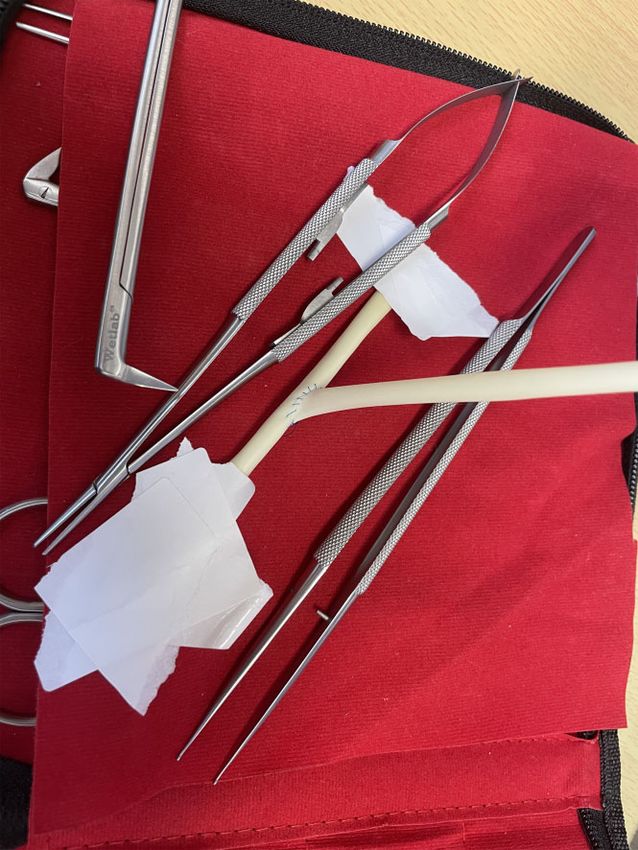
els were described as three-dimensional multistation cardiovas- medical students had 1 month of training17. Nesbitt’s team eval-
cular simulators14, the Arroyo box Simulator, vessel uated simulation over 4 months18. Fann and colleagues gave resi-
anastomosis simulators with silicone vein grafts (Chamberlain dents the task station to practice and evaluated improvement
Group, Great Barrington, Massachusetts, USA; Limbs & Things, after 1 week5. There was an over-riding theme of self-directed
Savannah, Georgia, USA) and the ‘BEAT, YOU-CAN’ mod- learning. Only Enter and colleagues, evaluated the impact of
el7,9,11,14–17. Such models are made of a range of synthetic materi- supervision on improving simulation scores in medical students.
als with 3-mm silicone ‘vein grafts’ which are suitable for There was no statistically significant difference in supervised si-
multiple end-to-side anastomoses (Fig. 2). The beating heart mod- mulation and non-supervised simulation.
els are also silicone based and are connected to an external com-
pressor which simulates the movement of the beating heart.
High-fidelity models included bovine hearts and pulsatile pig Effectiveness in improving time and score in
hearts5,8,10,15,18. Five studies used biological tissue, while the comparison with no formal simulation
rest used low-fidelity or a combination of low- and high-fidelity Eight studies evaluated time improvement comparing
models. The heterogeneity of these models introduced a risk of simulation-based training with presimulation
bias in analysing the data. score5,7,9,10,15,16,18,19. Data from six of these studies could be in-
An instructional video was provided in three trials5,14,17. In per- cluded in meta-analysis. Four of these studies5,7,9,10. had more
son education sessions were provided in four trials14,15,17,18. than one group, which are listed in Fig. 3. For time analysis, there
Baseline and follow-up video characteristics were undertaken in were eleven groups who were assessed prior to and after simula-
four trials14,16–18. tion. A mean difference of 205.9 s was observed (95 per cent c.i.
Curriculum design was not uniform across the trials, and 133.52 to 278.18; P , 0.001) in trainees who used simulation
length of study period or curriculum ranged from 2.5 days to (Fig. 3). Individual effect sizes ranged from 64 to 443 s. There
6 months. One trial mandated a minimum of 20–30 min of dedi- was also presence of heterogeneity: I2= 77 per cent. The forest
cated technical practice each week for 8 weeks, however the plot favoured simulation training with respect to time.4 | BJS Open, 2022, Vol. 6, No. 1
Table 1 Characteristics of included studies
Study and Design Population Endpoints evaluated Comparison Fidelity of simulator Time spent in Inter-rater
year sample study reliability of
examiners
Anand Prospective, 17 (6 senior and 11 Thoracic Surgery Baseline and Low-fidelity cardiac 1 year Unclear
et al., observational junior) Directors Association quarterly simulator
20207 Vessel Anastomosis scores over Chamberlain group
Assessment Score 1 year coronary anastomosis
improvement (13 Improvement in pocket simulator
technical categories junior versus
using a five-point senior
Likert Scale)* residents
Time improvement
use of simulator and
attitudes survey
Wu et al., Blinded, prospective 60 Performance of Performance of High fidelity. 3 months .0.65,
20208 trial anastomosis anastomosis Porcine hearts and demonstrating
Downloaded from https://academic.oup.com/bjsopen/article/6/1/zrab147/6526458 by guest on 14 June 2022
evaluated according was evaluated remnants of human moderate reliability
to a five-point global at the saphenous veins were
rating scale† beginning used as grafts for
(after 1 month), anastomoses.
the midpoint To simulate the coronary
(after 2 artery bypass under the
months), and condition of a beating
the end of the heart, an intra-aortic
assessment balloon in the left
(after 3 ventricle was used
months).
Compared beating
and non-
beating heart
simulator
scores
Spratt et al., Prospective 12 (senior) Blinded skill 16-week Low-fidelity cardiac 16 weeks Single blinded
201814 randomized study assessments were curriculum simulator (Synaptic grader
captured by video at 0, versus control Design, Minneapolis, MN)
8 and 16 weeks using operative
the Joint Council on experience
Thoracic Surgery Tests before
Education and after
Assessment tool (out simulation in
of a score of 50).* control and
Survey of simulation use treatment
trainees
Malas et al., Single-blinded 32 (junior) Objective Structured Control group: Low fidelity 1 week 2 blinded expert
20189 randomized Assessment of performed (Limbs & Things, observers
prospective trial Technical Skill simulation at Savannah, Georgia, USA)
(OSATS) scale (max home and non-ringed, 4-mm
score 25)† Treatment group: polytetrafluoroethylene
Anastomosis-specific received grafts (W. L. Gore &
end-product rating additional Associates, Inc, Flagstaff,
score instructional Arizona, USA)
Time to completion multimedia to
use
independently
Tavlasoglu Single-blinded 15 (junior and Time-improvement First, second and High fidelity 3 months 3 blinded cardiac
et al., randomized senior) assessment of the third month of Bovine simulator surgeons
201510 prospective trial anastomoses were study
evaluated with binary sequential
existence of assessments
anastomotic leak,
additional suture
requirements,
matching between
graft diameter and
arteriotomy length,
patency rates and
inadvertent posterior
wall injuries
Maluf et al., Prospective trial 10 mixed Sequential tests after Compared serial Low-fidelity and high- 6 months Not available
201515 simulation * improvements fidelity simulators:
Time improvement* using different Arroyo box simulator
simulators Sim model with dummy
Sim model with bovine
heart
Sim model with pulsatile
porcine heart
Enter et al., Prospective trial 17 junior Modified OSATS, Video assessment Low-fidelity simulator 6-week Robust
2015 Top included 12 of anastomosis (Chamberlain Group, simulation
Gun16 component skills of 17 residents Great Barrington, practice
scored on a five-point at baseline Massachusetts, USA)
Likert scale versus
Time improvement anastomosis of
Questionnaire on 15 residents
demographics, prior after
surgical experience simulation
and simulation
(continued)O’Dwyer et al. | 5
Table 1 (continued)
Study and Design Population Endpoints evaluated Comparison Fidelity of simulator Time spent in Inter-rater
year sample study reliability of
examiners
Enter et al., Prospective single- 45 junior Tests before and after Control (n = 15) no Low-fidelity simulator 4 weeks Blinded expert raters
Med blinded, simulation using a practice versus (Limbs & Things,
Students randomized five-point Likert scale unsupervised Savannah, Georgia, USA)
17
2015 controlled trial (JCTSE Assessment (n = 15) versus
Tool) supervised (n =
Self-evaluation 15)
performance scores
Interest in Surgery
survey
Nesbitt Blinded, prospective, 21 participants (10 Modified OSATS using a Medical students Porcine simulator 4 months Fair to moderate
et al., randomized junior and 11 senior) five-point scale but who
201318 intervention trial reported using underwent
interquartile range* simulation
Downloaded from https://academic.oup.com/bjsopen/article/6/1/zrab147/6526458 by guest on 14 June 2022
Time to completion* training versus
senior
residents with
no simulation
training
No baseline scores
reported in the
text
Ito et al., Blinded, prospective, 4 senior Each resident performed Baseline first 10 Low-fidelity BEAT, YOU- 2 months Fair to moderate
201219 intervention trial 40 anastomoses anastomoses CAN simulator
In total, 160 compared with
anastomoses were final 10
done with comparison anastomoses
of baseline and final
anastomosis
performed using time
to completion and
five-point scale of five
components up to a
maximum of 25
points†
Fann et al., Blinded, prospective, 33 first-year Global rating scale for At beginning, Low-fidelity portable 2.5-day boot .0.5
201011 intervention trial cardiothoracic assessment of midpoint, and High-fidelity explanted pig camp
surgical residents coronary anastomosis session end, hearts, expired
based on a one-to- anastomosis cryopreserved saphenous
three-point model† components veins (Cryolife, Inc,
Mean performance were compared Kennesaw, Georgia, USA)
rating scores were on a three-
also used to evaluate point rating
aspects of scale (1 good, 2
anastomosis average, 3
Exit survey to assess below average)
perception of
coronary artery
simulator
Fann et al., Blinded, prospective, 8 senior Tests on each model Compared High-fidelity beating-heart 1 week Good reliability
20085 intervention trial before and after outcomes on model with silicone
simulation beating heart beating-heart model
Time improvement model and non- (Chamberlain Group,
Five-point objective beating with Great Barrington,
performance rating tests before Massachusetts, USA)
scores† and after using 3-mm silicone vein
simulation grafts
*Unable to use data for analysis. †This was reversed or adjusted for the purposes of analysis.
Twelve studies evaluated score improvement, comparing holder, use of forceps, needle angles, needle transfer, suture man-
simulation-based training with no intervention. Data from seven agement, knot tying, hand mechanics, use of both hands, econ-
studies could be included in meta-analysis. Four studies5,8,9,17. omy of time and configuration of anastomosis. Heterogeneity
evaluating score improvement had more than one group which was present in many of these specific tasks.
underwent simulation, and these are listed in Fig. 4. There were
14 groups assessed prior to and after simulation as regards score Simulation effect on level of training
improvement. Trainees who used simulation had an associated Nesbitt and colleagues demonstrated that simulation training
improvement of 1.68 points (95 per cent c.i. 1.23 to 2.13; P , improved medical students’ time to completion and skill score
0.001) (Fig. 4). Heterogeneity was present between studies, with with coronary anastomosis to a level comparable to that of resi-
I2 = 77 per cent and individual effect sizes ranging from 0.51 to dents, while the senior residents had only a non-significant trend
3.14 points. The forest plot favoured simulation training with re- towards improvement18. Subgroup analysis demonstrated that
spect to score improvement. simulation in junior and non-cardiothoracic residents was asso-
Furthermore, the use of simulation in improving OSAT score ciated with more of a positive impact when compared with senior
on specific tasks was analysed (Fig. S1). Simulation was associated residents, as regards time improvement (293 versus 120 s, P =
with significant improvement in all trainee scores in arteriotomy, 0.003), in a test for subgroup differences (Fig. 3). However, the het-
graft orientation, bite/depth of bite, spacing, use of castro/needle erogeneity between groups was high and thus limits6 | BJS Open, 2022, Vol. 6, No. 1
Table 2 Result of the critical appraisal using the Newcastle–Ottawa Scale
Study and year Selection Comparability Outcome
Design Score out of 9
Representative Selection of Ascertainment Demonstration Based on design Assessment Curriculum Adequacy
sample non-exposed of exposure of training score of analysis of outcome length of
cohort (no before Comparability/ reported follow-up
simulation) simulation reproducibility of
cases and
curriculum
Anand et al., 20207 + − + + ++ + + +
Prospective
observational
Score = 8
Wu et al., 20208 + − + − ++ + + +
Single-blinded
Downloaded from https://academic.oup.com/bjsopen/article/6/1/zrab147/6526458 by guest on 14 June 2022
prospective
randomized trial
Score = 7
Spratt et al., 201814 + + + + – + + –
Multicentre
prospective
randomized trial
Score = 6
Malas et al., 20189 + − + + ++ + + +
Single-centre,
single-blinded
randomized
prospective trial
Score = 7
Tavlasoglu et al., + − + − +− + + +
201510
Single-blinded
randomized
prospective trial
Score = 6
Maluf et al., 201515 + − + − – − + −
Single-centre
prospective trial
Score = 3
Enter et al., 2015 + − + + ++ + + +
Top Gun16
Multicentre
prospective trial
Score = 7
Enter et al., 2015 + − + + ++ + + +
Med Students17
Prospective
single-blinded,
randomized
controlled trial
Score = 8
Nesbitt et al., 201318 + + + − + − + +
Single-centre,
single-blinded,
prospective,
randomized
intervention trial
Score = 6
Ito et al., 201219 − − + + ++ + + +
Single-centre,
single-blinded,
prospective,
intervention trial
Score = 8
Fann et al., 201011 + − + + ++ + + +
Single-centre,
single-blinded,
prospective,
intervention trial
Score = 8
Fann et al., 20085 + − + + ++ + + +
Single-centre,
single-blinded,
prospective,
intervention trial
Score = 8O’Dwyer et al. | 7
Table 3 Cochrane Collaboration’s Risk of Bias assessment
Study and year Selection bias Performance bias Detection bias Attrition bias Reporting Other bias
bias
Random Allocation Blinding Blinding Incomplete Selective Other
sequence concealment (participants and (outcome outcome data reporting sources of
generation personnel) assessment) bias bias
Anand et al., 20207 High High High Unclear Low Low Low
Wu et al., 20208 Unclear Unclear Low Low Low Low Low
Spratt et al., 201814 Low Low Low Low High High High
Malas et al., 20189 Low Low Low Low Low Low Low
Tavlasoglu et al., Unclear Unclear Low Low Low Low Low
201510
Maluf et al., 201515 High High High Unclear High High Low
Enter et al., 2015 High High Low Low Low Low Low
Top Gun16
Downloaded from https://academic.oup.com/bjsopen/article/6/1/zrab147/6526458 by guest on 14 June 2022
Enter et al., Med Unclear Unclear Low Low Low Low Low
Students201517
Nesbitt et al., Unclear Unclear Low Low Low Unclear Low
201318
Ito et al., 201219 High High Low Low Low Low Low
Fann et al., 201011 Unclear Unclear Low Low Low Low Low
Fann et al., 20085 Unclear Unclear Low Low Low Low Low
Discussion
In comparison with no intervention, simulation was consistently
associated with better learning outcomes in two broad categories:
time and OSAT score improvement. Simulation permits surgical
trainees to acquire complex and meticulous skills without jeopar-
dizing patient safety. The results can also be explained anecdotal-
ly. The phrase ‘practice makes perfect’ can be demonstrated
graphically, plotting performance against experience, which
usually produces a sigmoid curve. Repeated application of
learned principles through simulation is key to achieving success
in transferring skills from the working and sensory memory to the
long-term memory.
Issenberg and co-workers described the necessary features for
simulation to transform a principle into a lesson learned24. This
includes provision of feedback, repetitive practice, curriculum in-
tegration, appropriate range of difficulty level, multiple learning
strategies, simulation that captures clinical variation, a con-
trolled environment, individualized learning, defined outcomes
and simulator validity20. Simulation, and meta-analysis of simu-
lation, has been carried out in other aspects of cardiothoracic sur-
gery, for example, bronchoscopy3,12. Simulation has also shown
to be useful in real-life scenarios, with a study by Ledermann
and co-workers evaluating junior orthopaedic residents, demon-
strating that when trainees use a low-fidelity simulator to per-
form an arthroscopic partial meniscectomy, their score in the
Arthroscopic Surgical Skill Evaluation Tool improved in real-life
patients25.
When senior trainees utilized coronary artery simulators, it did
not appear to have a significant effect in improving scores and
performance14. A suggested reason for this is that senior trainees
Fig. 2 Coronary anastomosis low-fidelity simulator have lack of flexibility and time in utilizing simulators due to clin-
End-to-side anastomosis of Limbs & Things (Savannah, Georgia, USA) 6-mm ical practice and there may be diminishing marginal benefits
vein, performed with 6-0 prolene, using Castroviejo needle holder and atrau- from additional practice7,24. Anecdotally, the flimsy design of low-
matic forcep, available from wetlab.co.uk.
fidelity simulators has been a barrier for their use. Novice or ju-
nior trainees appeared to benefit from simulation across the
interpretation of this result. There was no significant difference in trials17. The non-significant trend towards improvement noted
time improvement when comparing high- and low-fidelity simula- in Nesbitt and colleagues’ study in senior residents may also be
tor trials. In subgroup analysis of score improvement between explained by achieving a proficiency, which only needs to be prac-
high- and low-fidelity simulators, there was no significant differ- tised occasionally18. It should be noted that junior and senior trai-
ence between groups in subgroup differences (P = 0.67) (Fig. 4). nees may not be distinguishable after multiple simulations given
Again, heterogeneity scores made this difficult to interpret. there may be a plateau or a ceiling effect5,26.8 | BJS Open, 2022, Vol. 6, No. 1
a
Before simulation After simulation Mean difference Mean difference
Study or subgroup Mean (seconds) SD (seconds) Total Mean (seconds) SD (seconds) Total Weight (%) (95% c.i.)
Senior residents
7
Anand et al. Senior residents 564 96 6 402 108 6 9.8 162.00 (46.38, 277.62)
Fann et al.5 Beating heart 426 115 8 362 94 8 10.3 64.00 (–38.92, 166.92)
Fann et al.5 Non-beating 351 111 8 281 53 8 11.0 70.00 (–15.24, 155.24)
Ito et al. 19 679 120 4 611 164 4 6.6 68.00 (–131.15, 267.15)
Tavlasoglu et al.10 Senior CTS residents 819 40 5 630 66 5 11.7 189.00 (121.35, 256.65)
Subtotal (95% c.i.) 31 31 49.4 120.45 (59.89, 181.01)
Heterogeneity: τ = 1986.90; χ = 7.07, 4 d.f., P = 0.13; I = 43%
2 2 2
Test for overall effect: Z = 3.90, P < 0.001
Junior CTS/non CTS resisdents
Anand et al.7 Senior residents 846 528 11 450 162 11 3.6 396.00 (69.62, 722.38)
Enter et al.16 Top gun 670 227 17 227 356 15 6.2 443.00 (233.00, 653.00)
Malas et al.9 Instruction video 1147 63 17 945 180 17 10.8 202.00 (111.35, 292.65)
9
Malas et al. No video 1021 192 15 856 201 15 8.7 165.00 (24.33, 305.67)
Tavlasoglu et al.10 Junior CTS residents 1335 121 5 900 1 5 10.2 435.00 (328.94, 541.06)
Tavlasoglu et al.10 Non-CTS residents 1023 83 5 780 47 5 11.1 243.00 (159.39, 326.61)
Subtotal (95% c.i.) 70 68 50.6 293.99 (195.44, 392.54)
Heterogeneity: τ2 = 9568.56; χ2 = 17.13, 5 d.f., P = 0.004; I 2 = 71%
Test for overall effect: Z = 5.85, P < 0.001
Downloaded from https://academic.oup.com/bjsopen/article/6/1/zrab147/6526458 by guest on 14 June 2022
Total (95% c.i.) 101 99 100.0 205.90 (133.62, 278.18)
Heterogeneity: τ2 = 10 428.27; χ2 = 44.33, 10 d.f., P < 0.001; I 2 = 77% –1000 –500 0 500 1000
Test for overall effect: Z = 5.58, P < 0.001 Favours no simulation Favours simulation
Test for subgroup differences: χ2 = 8.65, 1 d.f., P < 0.003; I 2 = 88.4%
b
Before simulation After simulation Mean difference Mean difference
Study or subgroup Mean (seconds) SD (seconds) Total Mean (seconds) SD (seconds) Total Weight (%) (95% c.i.)
High-fidelity simulator
Anand et al.7 Junior residents 846 528 11 450 162 11 3.6 396.00 (69.62, 722.38)
Anand et al.7 Senior residents 564 96 6 402 108 6 9.8 162.00 (46.38, 277.62)
Fann et al.5 Beating heart 426 115 8 362 94 8 10.3 64.00 (–38.92, 166.92)
Fann et al.5 Non beating 351 111 8 281 53 8 11.0 70.00 (–15.24, 155.24)
Tavlasoglu et al.10 Junior CTS residents 1335 121 5 900 1 5 10.2 435.00 (328.94, 541.06)
Tavlasoglu et al.10 Non CTS residents 1023 83 5 780 47 5 11.1 243.00 (159.39, 326.61)
Tavlasoglu et al.10 Senior CTS residents 819 40 5 630 66 5 11.7 189.00 (121.35, 256.65)
Subtotal (95% c.i.) 48 48 67.7 204.87 (108.81, 300.92)
Heterogeneity: τ2 = 13 008.64; χ2 = 37.17, 6 d.f., P < 0.001; I 2 = 84%
Test for overall effect: Z = 4.18, P < 0.001
Low-fidelity simulator
Enter et al.16 Top gun 670 227 17 227 356 15 6.2 443.00 (233.00, 653.00)
Ito et al.19 679 120 4 611 164 4 6.6 68.00 (–135.15, 267.15)
Malas et al.9 Instruction video 1147 63 17 945 180 17 10.8 202.00 (111.35, 292.65)
Malas et al.9 No video 1021 192 15 856 201 15 8.7 165.00 (24.33, 305.67)
Subtotal (95% c.i.) 53 51 32.3 209.88 (93.86, 325.91)
Heterogeneity: τ2 = 7777.14; χ2 = 7.06, 3 d.f., P = 0.07; I 2 = 58%
Test for overall effect: Z = 3.55, P < 0.001
Total (95% c.i.) 101 99 100.0 205.90 (133.62, 278.18)
Heterogeneity: τ2 = 10 428.27; χ2 = 44.33, 10 d.f., P < 0.00001; I 2 = 77% –1000 –500 0 500 1000
Test for overall effect: Z = 5.58, P < 0.001 Favours no simulation Favours simulation
Test for subgroup differences: χ2 = 0.00, 1 d.f., P = 0.95; I 2 = 0%
Fig. 3 Forest plots comparing before versus after simulation in evaluating time improvement (in seconds)
Subgroup analysis: a comparing senior residents with junior cardiothoracic surgery(CTS)/non-CTS residents; b comparing high-fidelity simulator with low-fidelity
simulator.
Regarding curriculum design, the use of instructional videos including end-to-side anastomosis simulation utilized in vascular
and homework plans was explored in these studies5,14,17. surgery, for example, femoral bypass. There were significant dif-
Furthermore, it was shown that using high-fidelity porcine simula- ferences in approaches between studies. In particular, the quality
tors increased trainee interest in that specialty11. Only one study and amount of instruction given to anastomosis performers in
evaluated the effect of additive supervision in anastomosis train- each of the trials were difficult to compare. Verification of simula-
ing and this did not appear to have a significant effect in training17. tion practice at home could not be documented accurately. The
However, this study only included 45 medical students and may reality of having a first assistant is not explored in these studies.
well have been insufficiently powered17. The present study high- The length of time and quality of dedicated practice to simulation
lights aspects of current teaching methods and the need to create was not taken into account in the meta-analysis. OSAT scores were
dynamic curricula that create proficient surgeons27–29. similar and inter-observer reliability was maintained in individual
The transition from simulation to real-life patients has not studies, but heterogeneity exists between studies. Outcomes of
been explored in the literature in coronary artery anastomosis. time and score were determined objectively in individual studies,
However, it has been identified that after 30 anastomoses on but a significant limitation was a lack of a control group for simu-
the simulator, the learning curve stabilized5,15,19. Furthermore, lation groups with test scores before and after simulation.
in a study of 15 cardiothoracic surgeons by Bridgewater and col- Progression with operative experience could account for improved
leagues, it was identified that newly appointed consultant cardio- scores, particularly in the lengthier studies. While heterogeneity
thoracic surgeons had an improvement in the mortality rate of between studies exists, a positive impact with the use of simula-
their low-risk patients undergoing coronary artery bypass graft tion is demonstrated throughout.
after 4 years compared with established surgeons30. Studies This is the first meta-analysis of the use of simulators in coron-
need to evaluate when it is best for a trainee to progress from low- ary artery anastomosis and it provides a basis for reforming train-
fidelity to high-fidelity simulators and to patients. ing in cardiac surgery. These data suggest simulation improves
Quantity and quality of studies limit the results of this study, steps and time to completion in coronary anastomosis, therefore
along with clinical and methodological diversity. The search cri- it is suggested that these steps be focused on during training days
teria and analysis were limited to studies which focused on coron- and trainees should be encouraged to practise at home.
ary anastomosis simulation, however there may be merit in Heterogeneity of studies limited the interpretation of whetherO’Dwyer et al. | 9
Before simulation After simulation Std. mean difference Std. mean difference
Study or subgroup Mean SD Total Mean SD Total Weight (%) (95% c.i.)
High-fidelity simulator
Wu et al.8 Non-beating group on non-beating heart –1.09 0.65 30 –3.22 0.85 30 7.7 2.78 (2.06, 3.50)
Wu et al.8 Non-beating group on beating heart –0.93 0.72 30 –2.59 0.85 30 8.1 2.08 (1.44, 2.74)
Wu et al.8 Beating group on non-beating heart –1.06 0.96 30 –3.36 0.88 30 7.9 2.47 (1.78, 3.15)
8
Wu et al. Beating group on beating heart –0.93 1 30 –3.35 0.88 30 7.9 2.54 (1.85, 3.23)
Fann et al.5 Non-beating –3.4 0.6 8 –3.7 0.5 8 6.5 0.51 (–0.49, 1.51)
Fann et al.5 Beating heart –3.4 0.5 8 –3.8 0.6 8 6.4 0.68 (–0.33, 1.70)
Fann et al. 5 –1.46 0.84 33 –2.38 0.93 33 8.6 1.03 (0.51, 1.54)
Subtotal (95% c.i.) 169 169 53.1 1.77 (1.11, 2.43)
Heterogeneity: τ2 = 0.64; χ2 = 35.45, 6 d.f., P < 0.001; I 2 = 83%
Test for overall effect: Z = 5.27, P < 0.001
Low-fidelity simulator
Malas et al.9 No video –1.56 0.4 15 –2.84 0.64 15 6.7 2.33 (1.38, 3.29)
Malas et al.9 Instruction video –1.74 0.5 17 –3.48 0.58 17 6.4 3.14 (2.10, 4.18)
Ito et al.9 –2.5 0.82 4 –3.22 1.06 4 4.8 0.66 (–0.80, 2.12)
Enter et al.16 Top Gun –3.24 0.61 17 –4.01 0.33 15 7.4 1.50 (0.71, 2.30)
Enter et al.17 Supervision trial unsupervised –2.04 0.57 12 -3.09 0.88 12 6.9 1.37 (0.46, 2.27)
Enter et al.17 Supervision trial supervised –2.05 0.63 14 –3.15 0.95 14 7.3 1.32 (0.49, 2.15)
Downloaded from https://academic.oup.com/bjsopen/article/6/1/zrab147/6526458 by guest on 14 June 2022
Enter et al.17 Supervision trial control arm –1.93 0.62 14 –2.45 0.93 14 7.5 0.64 (–0.12, 1.40)
Subtotal (95% c.i.) 93 91 46.9 1.57 (0.95, 2.19)
Heterogeneity: τ2 = 0.47; χ2 = 18.87, 6 d.f., P = 0.004; I 2 = 68%
Test for overall effect: Z = 4.94, P < 0.001
Total (95% c.i.) 262 260 100.0 1.68 (1.23, 2.13)
Heterogeneity: τ2 = 0.54; χ2 = 56.18, 13 d.f., P < 0.001; I 2 = 77% –4 –2 0 2 4
Test for overall effect: Z = 7.35, P < 0.001 Favours no simulation Favours simulation
Test for subgroup differences: χ2 = 0.19, 1 d.f., P = 0.67; I 2 = 0%
Fig. 4 Forest plot comparing no simulation versus simulation in evaluating improvement in skill score
Skills evaluated using a five-point scale where 0 = poor score and 5 = excellent score. Subgroup analysis comparing high-fidelity simulator with low-fidelity
simulator.
simulation is more beneficial for junior trainees than for estab- References
lished surgeons, thus more controlled studies should evaluate
when when it is best for trainees to transition from simulation 1. Dee R. Who assisted whom? Tex Heart Inst J 2003;30:90
to live operating. 2. Hattler B, Messenger JC, Shroyer AL, Collins JF, Haugen SJ, Garcia JA
Future research should look at cost analysis of low- and high- et al. Off-pump coronary artery bypass surgery is associated with
fidelity models and consider the provision of these models to sur- worse arterial and saphenous vein graft patency and less effective
gical trainees. Training bodies could then focus simulation days, revascularization: results from the Veterans Affairs Randomized
taking into account cost and time. Use of faculty time is an im- On/Off Bypass (ROOBY) trial. Circulation 2012;125:2827–2835
portant consideration in employing their use. Training bodies 3. Kennedy CC, Maldonado F, Cook DA. Simulation-based bron-
should balance the cost of simulation with the inherent benefit choscopy training: systematic review and meta-analysis. Chest
of improving interest in the specialty. 2013;144:183–192
Simulation is an accepted form of teaching surgical techniques. 4. Moureau N, Lamperti M, Kelly LJ, Dawson R, Elbarbary M, Van
Trainers may establish a baseline competence before awarding Boxtel AJH et al. Evidence-based consensus on the insertion of
trainees responsibility in the operating theatre. Demonstrating central venous access devices: definition of minimal require-
proficiency in simulation may progress trainees faster rather ments for training. Br J Anaesth 2013;110:347–356
than the traditional apprenticeship model. Identifying appropriate 5. Fann JI, Caffarelli AD, Georgette G, Howard SK, Gaba DM,
proficiency levels in which trainees may progress from low- to Youngblood P et al. Improvement in coronary anastomosis
high-fidelity models and subsequently to patients should be iden- with cardiac surgery simulation. J Thorac Cardiovasc Surg 2008;
tified with further research. Advanced skills, such as managing un- 136:1486–1491
expected bleeding and utilizing assistance, which has not been 6. Izzat MB, El-Zufari MH, Yim APC. Training model for
evaluated by these simulation studies, may be taught in the ap- ‘beating-heart’ coronary artery anastomoses. Ann Thorac Surg
prenticeship model in the operating theatre. 1998;66:580–581
7. Anand J, Doberne J, Wojnarski CM, Smith PK, Zwischenberger
Acknowledgements BA. Coronary anastomosis simulation: directed interventions
to optimize success. Ann Thorac Surg 2021;111:2072–2077
M.O.’D. and C.A.F. searched and reviewed articles independently 8. Wu S, Ling YP, Zhao H. Experience with porcine beating heart
and in duplicate. They take responsibility for the integrity of the simulator for coronary artery bypass surgery residency train-
data and the accuracy of the data analysis. They contributed to ing. J Thorac Cardiovasc Surg 2021;161:1878–1885
acquiring data, drafting the manuscript and critically revising 9. Malas T, Al-Atassi T, Brandys T, Naik V, Lapierre H, Lam B-K.
the manuscript for important intellectual content. C.A.F. and Impact of visualization on simulation training for vascular
M.O.’D. performed statistical analysis. SA., S.B. and N.R. provided anastomosis. J Thorac Cardiovasc Surg 2018;155:1686–1693
editorial feedback. K.D. and T.N.D. supervised the study, critically 10. Tavlasoglu M, Durukan AB, Gurbuz HA, Jahollari A, Guler A.
revised the manuscript for important intellectual content. Skill acquisition process in vascular anastomosis
Permission to reproduce published material is granted. procedures: a simulation-based study. Eur J Cardiothorac Surg
2015;47:812–818
Disclosure. The authors have no conflicts of interest to declare.
11. Fann JI, Calhoon JH, Carpenter AJ, Merrill WH, Brown JW, Poston
RS et al. Simulation in coronary artery anastomosis early in car-
Supplementary material diothoracic surgical residency training: the Boot Camp experi-
Supplementary material is available at BJS Open online. ence. J Thorac Cardiovasc Surg 2010;139:1275–128110 | BJS Open, 2022, Vol. 6, No. 1
12. Villanueva C, Xiong J, Rajput S. Simulation-based surgical edu- 21. Stang A. Critical evaluation of the Newcastle-Ottawa scale for
cation in cardiothoracic training. ANZ J Surg 2020;90:978–983 the assessment of the quality of nonrandomized studies in
13. Sardari Nia P, Heuts S, Daemen JHT, Olsthoorn JR, Chitwood WR meta-analyses. Eur J Epidemiol 2010;25:603–605
Jr, Maessen JG. The EACTS simulation-based training course for 22. Higgins JPT, Altman DG, Gøtzsche PC, Jüni P, Moher D, Oxman
endoscopic mitral valve repair: an air-pilot training concept in AD et al. The Cochrane Collaboration’s tool for assessing risk
action. Interact Cardiovasc Thorac Surg 2020;30:691–698 of bias in randomised trials. BMJ 2011;343:d5928
14. Spratt JR, Brunsvold M, Joyce D, Nguyen T, Antonoff M, Loor G. 23. Wan X, Wang W, Liu J, Tong T. Estimating the sample mean and
Prospective trial of low-fidelity deliberate practice of aortic standard deviation from the sample size, median, range and/or
and coronary anastomoses (TECoG 002). J Surg Educ 2019;76: interquartile range. BMC Med Res Methodol 2014;14:135
844–855 24. Issenberg SB, McGaghie WC, Petrusa ER, Lee Gordon D, Scalese
15. Maluf MA, Gomes WJ, Bras AM, Araújo TC, Mota AL, Cardoso CC RJ. Features and uses of high-fidelity medical simulations that
et al. Cardiovascular surgery residency program: training coron- lead to effective learning: a BEME systematic review. Med
ary anastomosis using the Arroyo simulator and UNIFESP Teach 2005;27:10–28
Models. Braz J Cardiovasc Surg 2015;30:562–570 25. Ledermann G, Rodrigo A, Besa P, Irarrázaval S. Orthopaedic
Downloaded from https://academic.oup.com/bjsopen/article/6/1/zrab147/6526458 by guest on 14 June 2022
16. Enter DH, Lee R, Fann JI, Hicks GL Jr, Verrier ED, Mark R et al. residents’ transfer of knee arthroscopic abilities from the simula-
‘Top Gun’ competition: motivation and practice narrows the tor to the operating room. J Am Acad Orthop Surg 2020;28:194–199
technical skill gap among new cardiothoracic surgery residents. 26. McKimm J, Swanwick T. Educational Leadership. Understanding
Ann Thorac Surg 2015;99:870–876 Medical Education. Evidence, Theory and Practice. Oxford:
17. Enter DH, Lou X, Hui DS, Andrei A-C, Barner HB, Sheen L et al. Wiley-Blackwell, 2010:419–437
Practice improves performance on a coronary anastomosis si- 27. Hance J, Aggarwal R, Stanbridge R, Blauth C, Munz Y, Darzi A
mulator, attending surgeon supervision does not. J Thorac et al. Objective assessment of technical skills in cardiac surgery.
Cardiovasc Surg 2015;149:12–17 Eur J Cardiothorac Surg 2005;28:157–162
18. Nesbitt JC, St Julien J, Absi TS, Ahmad RM, Grogan EL, Balaguer 28. Moorthy K, Munz Y, Adams S, Pandey V, Darzi A. A human fac-
JM et al. Tissue-based coronary surgery simulation: tors analysis of technical and team skills among surgical trai-
medical student deliberate practice can achieve equivalency nees during procedural simulations in a simulated operating
to senior surgery residents. J Thorac Cardiovasc Surg 2013;145: theatre. Ann Surg 2005;242:631–639
1453–1459 29. Brydges R, Kurahashi A, Brümmer V, Satterthwaite L, Classen R,
19. Ito J, Shimamoto T, Sakaguchi G, Komiya T. Impact of novel off- Dubrowski A. Developing criteria for proficiency-based training of
pump coronary artery bypass simulator on the surgical train- surgical technical skills using simulation: changes in performances
ing. Gen Thorac Cardiovasc Surg 2013;61:270–273 as a function of training year. J Am Coll Surg 2008;206:205–211
20. Schwenn B. Evaluation of ASTM Standard Test Method E2177: 30. Bridgewater B, Grayson AD, Au J, Hassan R, Dihmis WC, Munsch C
Retroreflectivity of pavement markings in a condition of wet- et al. Improving mortality of coronary surgery over first four years
ness. Compendium of Student Papers: 2010 Undergraduate of independent practice: retrospective examination of prospec-
Transportation Scholars Program 2011:147 tively collected data from 15 surgeons. BMJ 2004;329:421You can also read


