Of a sustainable ocean - OECD work in support
←
→
Page content transcription
If your browser does not render page correctly, please read the page content below
OECD work in support
of a sustainable ocean
OECD work in support of a
                                           sustainable ocean
                                           The ocean is vital for human well-being. Covering two-thirds
                                           of the planet, it contains rich biodiverse habitats, provides
                                           invaluable ecosystem services, is central to global food
                                           security, and absorbs significant amounts of heat and carbon
                                           dioxide. The ocean also presents immense opportunities for
Contents                                   economic growth, employment and development. The ocean
                                           economy spans multiple sectors – including oil and gas, fishing,
The ocean economy                      2
                                           aquaculture, shipping, tourism, offshore wind energy, mining,
Science, technology and innovation         and marine biotechnology – and is growing rapidly. OECD
for a sustainable ocean economy    5
                                           projections show that it could double in size from 2010 to 2030,
Developing countries                       to reach USD 3 trillion and employ 40 million people.
and the ocean economy                  8

Ocean conservation                         We must manage the ocean well, use its resources sustainably
and sustainable use                   12
                                           and reduce environmental pressures to realise the full potential
Ocean pollution                       16   of the ocean economy. The ocean is under immense pressure

The ocean and climate change          21
                                           from a wide range of human activities and this will increase
                                           unless governments take bold action to ensure the protection
Sustainable and resilient fisheries
                                           of its natural resources. Pollution from plastics, offshore oil and
and aquaculture                       24
                                           gas, shipping, sewage, and fertiliser and agricultural runoff are
Ocean shipping and shipbuilding       27   significant challenges. Rapid urbanisation of coastal zones further
For further information:                   aggravates pollution, habitat loss and resource pressure. Because
www.oecd.org/ocean                         of ineffective fisheries management and illegal, unreported and
                                           unregulated (IUU) fishing, many fish stocks are overfished or
                                           have collapsed. Climate change (sea-level rise, ocean warming
                                           and ocean acidification) further increases the strain on many
                                           species and habitats. All of this severely compromises the health
                                           and resilience of marine ecosystems and the ability of the ocean
                                           economy to sustainably develop and prosper.

                                           The OECD is helping governments reconcile the ever-growing
                                           use of marine resources with the need to safeguard and
                                           improve the health of ocean ecosystems. The policy analysis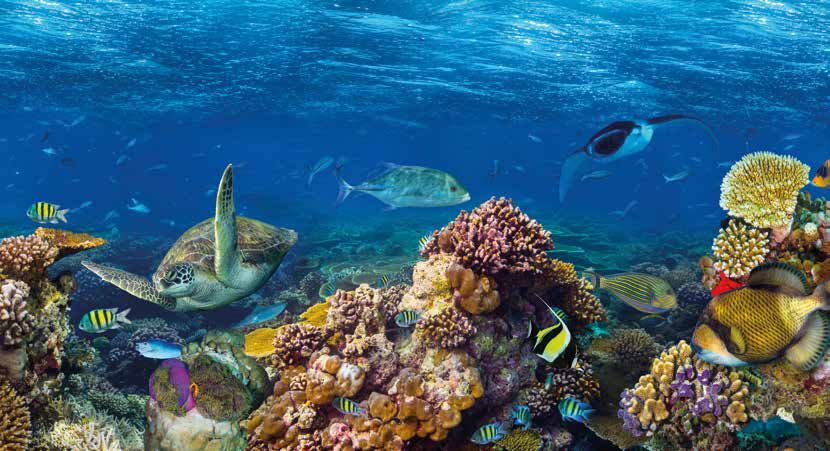
and guidance developed by the OECD helps countries to work
towards fulfilling their international commitments on the ocean
including Sustainable Development Goal 14 on Life below
Water, the Convention for Biological Diversity’s Aichi Targets,
the United Nations Convention on the Law of the Sea and the
Paris Agreement on climate change. The OECD advocates an
integrated, “whole-of-government” approach that responds
to the complex challenges facing the ocean by mobilising
expertise across many policy fronts, covering environmental,
economic, financial and social dimensions.

Examples of our work, which are detailed further in this
brochure, include:

l   Valuing and providing projections on the development of
    the ocean economy

l   Promoting the creation of ocean-economy innovation
    networks

l   Helping developing nations harness the benefits of the
    ocean economy

l   Developing and tracking policy and financing approaches
    for marine conservation and sustainable use

l   Supporting governments in increasing recycling rates,
    curtailing plastics pollution and managing other types of
    ocean pollution

l   Providing guidance on adaptation strategies to respond to
    rising seas and develop resilient coastal infrastructure

l   Identifying and evaluating fisheries support measures

l   Tracking policies and practices to deter IUU fishing

l   Proposing solutions to decarbonise maritime transport
    and decrease pollution from shipping

                                                                  INTRODUCTION . 1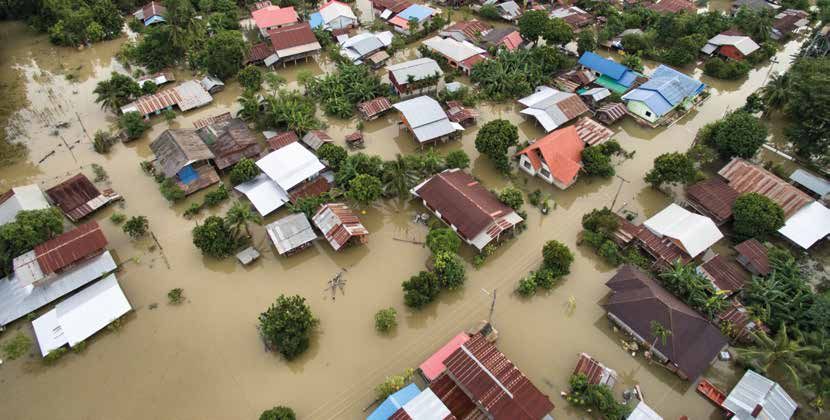
OECD work in support of a sustainable ocean

The ocean economy                                                                     The interdependency of ocean-based industries and
                                                                                      marine ecosystems, combined with increasingly severe
                                                                                      threats to the health of the ocean, have led to a growing
Protecting the ocean and its resources is one of the                                  recognition of the need for an integrated approach to
major challenges of the coming decades. By mid-                                       ocean management (OECD, 2016). Several management
century, the world’s population is projected to be at                                 strategies have been suggested to achieve this, including
least 9 billion, with corresponding demands for food,                                 Integrated Coastal Zone Management (ICZM), Marine
jobs, energy, raw materials and economic growth. The                                  Spatial Planning (MSP) and Marine Protected Areas
potential of the ocean to help meet these requirements                                (MPA). An accurate and extensive information base on
is huge, but the ocean is already under stress from                                   ocean economic activity, the marine environment and
overexploitation, pollution, declining biodiversity and                               the interactions between the two is crucial to each of
climate change. Care needs to be taken to increase the                                these strategies. Greater understanding of the economic
sustainability of the ocean economy while harnessing its                              value of marine ecosystems could help spur integrated
benefits.                                                                             ocean management in support of sustainability goals.
                                                                                      The need for this is gaining more attention at national
What is the ocean economy?                                                            and international levels (OECD, 2019).

The ocean economy is defined by the OECD as the sum                                   Robust data will be fundamental to ensuring ocean-
of the economic activities of ocean-based industries,                                 based industries and marine ecosystems are managed in
together with the assets, goods and services provided by                              an integrated manner. The OECD, in close co-operation
marine ecosystems (OECD, 2016). These two pillars are                                 with national and international stakeholders, is
interdependent: much activity associated with ocean-                                  currently assessing how to improve the socio-economic
based industry is derived from marine ecosystems; and                                 evidence on the ocean, building on lessons learned
industrial activity often impacts marine ecosystems.                                  from its initial ocean economy database, developed in
This concept of the ocean economy as an interaction                                   the context of an original OECD foresight project on the
between two pillars is depicted in Figure 1.                                          ocean economy to 2030 (OECD, 2016).

Figure 1. Today’s ocean economy: An interactive, interdependent system

                                                                            OCEAN
                                                                           ECONOMY

                                                                         Intermediate
                                                                            inputs
                         Ocean-based                                                                                  Marine
                          industries                                                                                ecosystems
                                                                             Impacts

                                               Physical
                                                                                                       Non-market
       Market flows                          capital stock                                                                          Natural
                                                                                                        flows and
       and services                          ocean-based                                                                         capital assets
                                                                                                         services
                                              industries

Source: OECD (2016), The Ocean Economy to 2030, OECD Publishing, Paris, https://doi.org/10.1787/9789264251724-en.

2 . OECD WORK IN SUPPORT OF A SUSTAINABLE OCEAN
The ocean economy

How much could the ocean economy grow by 2030?                                        crowded as maritime trade, marine aquaculture,
                                                                                      ocean renewable energy, marine and coastal tourism,
The OECD projects a marked acceleration in economic                                   and other activities gather momentum and, by virtue
activity in the ocean by 2030, based on the rapidly                                   of their growth, generate further demand in related,
expanding ocean industries combined with expectations                                 interconnected ocean-based industries.
of moderate growth in already large industries like
maritime and coastal tourism, offshore oil and gas,                                   A territorial approach to the role of regions and cities
shipbuilding, and maritime equipment.                                                 can be of particular relevance to assess and analyse
                                                                                      specific economic, social and environmental benefits
By conservative estimates, ocean-based industries’                                    deriving from coastal and ocean development. The
gross value added could double in size by 2030, reaching                              development dynamics in regions and cities contibutes
around USD three trillion – roughly equivalent to the size                            to the deterioration of coastal and ocean ecosystems.
of the German economy in 2010 (Figure 2). Some ocean                                  There are several examples of coastal sand mining, coral
industries’ value added is set to grow even faster than the                           reef degradation and land and river water based pollution
world economy. These include marine aquaculture, capture                              ending up in the ocean, leading to tension between
fisheries, fish processing, offshore wind and port activities.                        different user groups.
Employment in ocean industries as a whole may increase
from 31 million in 2010 to 40 million in 2030, roughly the                            How can we track ocean economic activity better?
size of Germany’s current labour force, thereby outpacing
markedly the overall growth rate of the global workforce.                             The ocean is already under stress from overexploitation,
                                                                                      pollution, declining biodiversity and climate change.
Consequently, pressures on the ocean’s natural assets                                 Business-as-usual expansion of economic activities in
will increase in the coming years, as demand continue                                 the ocean is not an option for the future, as it would
to grow for marine sources of food, energy, minerals,                                 further jeopardise the ocean’s health and resources,
leisure pursuits and so on. Similarly, ocean space in                                 thereby undermining the very basis on which the
many regions of the world risks becoming ever more                                    ocean industries themselves depend. Realising

Figure 2. Ocean-based industries’ value-added to double (from USD 1.5 to 3 trillion) by 2030

USD billion
900
                                                                                                                                           2010      2030
800

700

600

500

400

300

200

100

   0
        Maritime Offshore oil             Port          Maritime          Fish          Offshore        Transport   Shipbuilding   Industrial    Industrial
       and coastal and gas              activities     equipment       processing         wind                       and repair     capture       marine
         tourism                                                                                                                    fisheries   aquaculture

Source: OECD (2016), The Ocean Economy to 2030, OECD Publishing, Paris, https://doi.org/10.1787/9789264251724-en.

                                                                                                                                        THE OCEAN ECONOMY . 3
OECD work in support of a sustainable ocean

the full potential of the ocean demands ever more             The Sustainable Ocean Economy database will answer
responsible and sustainable approaches to its economic        the following questions on the measurement of a
development.                                                  sustainable use of the ocean:

                                                              l   Are we becoming more efficient in using marine
In addition to OECD continuing undertakings in
                                                                  ecosystem services?
measuring ocean industries and their impacts, the OECD
recommends two advances in economic measurement               l   Is the natural asset base of the ocean being maintained?
at the national level to provide public authorities further
                                                              l   How does a sustainable ocean economy benefit people?
evidential support (OECD 2019):
                                                              l   What are the opportunities arising from promoting a
1. Standardising approaches to measuring and valuing
                                                                  sustainable ocean economy?
  ocean industries, and integrating them into national
  accounting via satellite accounts. Satellite accounts       l   What policy responses are needed to speed up the
  for the ocean economy would provide a highly                    transition?
  organised method for collecting consistent ocean
                                                              Work on the database is in progress, an initial version
  economy data. Building upon existing national- and
                                                              will be available in Q2-2020.
  industry-level data collection efforts, the development
  of satellite accounts can offer a framework for
  monitoring aspects of a country’s ocean economy
  not shown in detail in the core national accounts,
  wh ile allowing for greater flexibility for ocean-based
  industries not covered by industrial classifications,
  and enabling, in time, international comparability.

2. Measuring and valuing natural marine resources
  and ecosystem services, while also exploring ways to
  integrate them into national accounting frameworks
  Given the strong interdependency between ocean
  economic activities and marine ecosystems, a national
  accounts framework is the best way to integrate
  the measurement of these two pillars of the ocean
  economy in a meaningful and policy-relevant way.
  As the knowledge base on marine ecosystems’
  accounting builds, more efforts from countries to
  share experiences will greatly benefit the process
                                                                  KEY PUBLICATIONS
  of refining both the international environmental
                                                                  OECD (2019), Rethinking Innovation for a Sustainable Ocean Economy,
  accounting guidelines and marine ecosystem services’
                                                                  OECD Publishing, Paris, https://doi.org/10.1787/9789264311053-en.
  classifications.
                                                                  OECD (2016), The Ocean Economy to 2030, OECD Publishing, Paris,
The Sustainable Ocean Economy database                            https://doi.org/10.1787/9789264251724-en.

                                                                  KEY WEBSITES
The OECD is building a comprehensive database on the              www.oecd.org/sti/inno/ocean-economy
Sustainable Ocean Economy. Reliable and timely data               http://oe.cd/ggi; http://oe.cd/env-data; http://oe.cd/pine
on the sustainability of the ocean economy, the well-
                                                                  CONTACT
being and resilience of coastal communities and the               The Ocean Economy
health of marine ecosystems are scarce. This work will            Claire Jolly – Claire.Jolly@oecd.org
help meet the demands of the international community              Sustainable Ocean Economy Database
for a better evidence base to support decision making,            Nathalie Girouard – nathalie.girouard@oecd.org
including SDG 14.                                                 Ivan Haščič – ivan.hascic@oecd.org

4 . OECD WORK IN SUPPORT OF A SUSTAINABLE OCEAN
The ocean economy

                                                                                              Science, technology and
                                                                                              innovation will play a
                                                                                              growing role in managing
                                                                                              the development of the
                                                                                              ocean economy in a
                                                                                              responsible way.

Science, technology                                              of disruptive technologies (e.g. artificial intelligence, big
                                                                 data, blockchain) is affecting academic research areas

and innovation for                                               and business innovation cycles alike. The promotion of
                                                                 collaborative and open innovation is also changing the

a sustainable ocean                                              way researchers are training and working together. At
                                                                 the policy level, a number of national research agendas

economy                                                          are increasingly emphasising the need to tackle “grand
                                                                 challenges”, in economic, societal and environmental
                                                                 areas. In some countries, this new focus takes the shape
Exploitation of the ocean and its resources is more              of mission-oriented STI policies, steering the direction of
intensive than ever before, raising concerns about its           science and technology towards ambitious and socially
physical capacity to cope. At the same time, scientific          relevant goals, with Sustainable Development Goals
understanding of the ocean and its ecosystems – their            (SDGs) re-shaping in some cases STI policy agendas.
properties and behaviour, their health and role in
weather and climate change – is gradually improving,             The potential for STI to contribute to the
although many questions remain. To respond effectively           sustainable use of the ocean is vast
to the growing challenges associated with ongoing
development of very diverse activities in the ocean,             Science is crucial to achieving global sustainability and
science, technology and innovation (STI) will play a             adequate stewardship of the ocean, since it provides
growing role in managing the development of the ocean            the ability to deepen our understanding of the ocean’s
economy in a responsible way.                                    resources and health, and better monitor and predict
                                                                 changes in its status (OECD, 2016).
A new STI context for the ocean
                                                                 Working with the ocean science community, the OECD is
The increasing attention to the ocean is occurring at a          demonstrating how sustained ocean observations are an
time when STI activities themselves are undergoing major         essential part of worldwide efforts to better understand
changes. Galvanised by digitalisation, the transformation        the ocean and its functioning. These observing systems
of scientific research and innovation processes is speeding      – fixed platforms, autonomous and drifting systems,
up in many parts of the world, in almost all disciplines         submersible platforms, ships at sea, and remote observing
and sectors of the economy (OECD, 2018). The adoption            systems such as satellites and aircraft – use increasingly

                                                              SCIENCE, TECHNOLOGY AND INNOVATION FOR A SUSTAINABLE OCEAN ECONOMY . 5
OECD work in support of a sustainable ocean
efficient technologies and instruments to gather, store, In parallel, a string of enabling technologies promises to
transfer and process large volumes of ocean observation stimulate improvements in efficiency, productivity and
data. The data derived from such instruments are crucial cost structures in many ocean activities, from scientific
for many different scientific communities and public research and ecosystem analysis to shipping, energy,
and commercial users active in the ocean economy. They fisheries and tourism. These technologies include
underpin a range of scientific research and critically imaging and physical sensors, satellite technologies,
support the safe, effective and sustainable use of the advanced materials, information and communication
ocean environment and its resources. Developing and technology (ICT), big data analytics, autonomous
sustaining them requires significant public investment, systems, biotechnology, nanotechnology and subsea
the justification for which calls for rigorous assessment of engineering.
the associated costs and benefits and value to society.
New enabling technologies appear set to contribute
The significance of ocean observations is growing, in important ways to the sustainable development of
building on traditional scientific missions to provide the ocean economy, not least by vastly improving data
evidence and increase our understanding of the ocean. quality, data volumes, connectivity and communication
But now these observations also contribute to monitoring from the depths of the sea, through the water column,
the development of ocean economic activities and to and up to the surface for further transmission. Many
improving marine spatial planning. The general public economies, for example, are using blockchain and big
also benefits, becoming both a user of these observations data analytics applications in their port facilities and
(e.g. tracking algal blooms on beaches) and a provider of maritime supply chains. Shipping companies, logistics
data via original citizen science projects. businesses, port operators and other maritime transport
stakeholders are looking to more integrated services
Many innovations are taking place in small- to large- across the entire supply chain as a means of generating
scale ocean observing systems, and fresh approaches cost savings, greater efficiencies and improvements in
are needed to close gaps in knowledge surrounding the quality of service. The prospects for achieving those
societal impacts of publicly funded ocean observation benefits by getting the various relevant operations
systems. Possible solutions highlighted by recent OECD (administration, logistics, shipping, terminal and port)
work in this area include improved tracking of users to work together more smoothly have been boosted by
(both scientific and operational), the mapping of value the advent of digital platform technologies. This has
chains, and improvements to methodologies through the the potential for greening further some commercial
development of international standards or guidelines to operations, saving energy, fuel in transport and limiting
conduct socio-economic assessments (OECD, 2019). pollution.
6 . OECD WORK IN SUPPORT OF A SUSTAINABLE OCEAN
Science, technology and innovation for a sustainable ocean economy

THE QUICK READ: Rethinking Innovation for a Sustainable Ocean Economy

New thinking and fresh approaches are required to meet the                       sector, the academic world and a diverse range of private-
challenges of developing a truly sustainable ocean economy. This                 sector stakeholders, using the example of innovation networks
publication, building on the conclusions of the OECD report The                  that have sprung up in recent years around the world;
Ocean Economy in 2030, advances on four objectives:
                                                                             l   Highlighting new approaches to measuring the ocean
l   Offering a forward-looking perspective on scientific and                     economy, notably by exploring the use of satellite accounts for
    technological innovation across a range of marine and                        its twin pillars – ocean-based economic activities and marine
    maritime applications, with a particular focus on some of the                ecosystem services – and by examining ways to better measure
    innovations already in the pipeline;                                         the benefits that sustained ocean observations provide not only
                                                                                 to science, but also to the economy and society more generally.
l   Contributing to the growing body of evidence suggesting that,
    with the help of innovation, the development of economic activity
                                                                             The original analyses conducted in this work recommend
    in the ocean and sustainability of marine ecosystems can often go
                                                                             three priority areas for action: 1) encourage innovation that
    hand-in-hand with one another, and providing four in-depth case
                                                                             produces win-win outcomes for ocean business and the ocean
    studies that illustrate the potential for generating such outcomes;
                                                                             environment; 2) seek ways to nourish the vitality of ocean
l   Investigating the emergence of new forms of collaboration in             economy innovation networks; and 3) support new initiatives to
    the ocean economy among research communities in the public               improve measurement of the ocean economy.

Scientific discovery and innovation fostered by new                          on bringing evidence on the different types of impacts
ways of collaborating                                                        from sustained investments in ocean science and
                                                                             innovation. In view of the many new challenges to come
Scientific discovery and successful innovation often require                 in developing sound and sustainable ocean management
fresh thinking in the organisation and structure of the                      strategies, it will also be beneficial for decision-makers,
research process itself. The OECD is exploring ocean                         in both public and private spheres, to identify and map
economy knowledge and innovation networks that bring                         further the innovations and co-operation mechanisms
together a diversity of players (public research institutes,                 that have the potential to foster ocean economic activity,
large enterprises, small- and medium-sized enterprises,                      and have positive impacts on and beyond the marine
universities etc.). These flexibly-organised groups work                     environment. The OECD stands ready to continue
on a range of scientific and technological innovations                       supporting the ocean community and beyond in these
in many different sectors of the ocean economy (e.g.                         endeavours.
marine robotics and autonomous vehicles, aquaculture,
marine renewable energy, biotechnologies, and offshore                           KEY PUBLICATIONS
oil and gas). Such research and industry networks are                            OECD (2019), Rethinking Innovation for a Sustainable Ocean Economy,
springing up in many parts of the world in response to                           OECD Publishing, Paris, https://doi.org/10.1787/9789264311053-en.
changes in the national and international ocean research
                                                                                 OECD (2018), OECD Science, Technology and Innovation Outlook 2018:
environment, and leveraging their organisational and                             Adapting to Technological and Societal Disruption, OECD Publishing,
skill diversity to benefit their partners and research in                        Paris, https://doi.org/10.1787/sti_in_outlook-2018-en.
the ocean economy more generally.
                                                                                 OECD (2016), The Ocean Economy to 2030, OECD Publishing, Paris,
                                                                                 https://doi.org/10.1787/9789264251724-en.
Exploring further how STI will contribute to
sustainable ocean activities                                                     KEY WEBSITE
                                                                                 www.oecd.org/sti/inno/ocean-economy
As the launch of the United Nations’ Decade of Ocean                             CONTACT
Science for Sustainable Development (2021-2030)                                  Claire Jolly – Claire.Jolly@oecd.org
approaches, there will be opportunities to work collectively

                                                                          SCIENCE, TECHNOLOGY AND INNOVATION FOR A SUSTAINABLE OCEAN ECONOMY . 7
OECD work in support of a sustainable ocean

                                                                                            For many developing
                                                                                            countries, ocean-based
                                                                                            industries represent
                                                                                            critical sources of
                                                                                            employment and
                                                                                            income. Fish and fish
                                                                                            products account for
                                                                                            up 80% of GDP in Small
                                                                                            Island Developing
                                                                                            States in the Pacific, and
                                                                                            tourism for about 20%.

Ocean economy and                                            socio-economic benefits that they can deliver. Many
                                                             developing countries are also at the forefront of the

developing countries                                         impacts of climate change and ocean pollution. These
                                                             are rapidly deteriorating the marine ecosystems these
                                                             countries depend upon. The poorest segments of their
More than three billion people rely on the ocean for their   populations suffer the most. Therefore, developing a
livelihoods, the vast majority in developing countries.      sustainable ocean economy is critical to preserve the
For many of these countries, ocean-based industries          health of the ocean and ensure future prosperity. It
are important drivers of economic development,               entails achieving sustainability across existing and new
representing critical sources of employment and income.      economic, social and environmental sectors.
Fish and fish products account for up to 80% of GDP in
Small Island Developing States (SIDS) in the Pacific, and    Developing a sustainable ocean economy requires
tourism for about 20%. With the global ocean economy         access to adequate knowledge, innovations, capacity and
projected to double in size by 2030 (OECD, 2016), great      financial resources, which developing countries often
untapped opportunities to increase economic benefits         lack. The international community can play a pivotal
exist for countries around the world, especially for         role by helping developing countries adopt adequate
developing countries. Expanding existing ocean-based         regulations and policies, generate expertise and
sectors and investing in new sectors, such as offshore       technical capacities, and access the resources required
renewable energies and marine biotechnologies, could         for a strategic approach to a sustainable ocean economy.
significantly help developing countries boost energy,
food, and infrastructure and tackle critical challenges      The potential of the ocean economy is particularly
such as poverty, high unemployment, and food                 important for SIDS
insecurity.
                                                             SIDS face unique development challenges due to their
Pressures on the ocean and the ecosystem services            small populations, remoteness, and exposure to natural
it provides, however, are mounting rapidly, and              disasters and climate change, which result in small
undermine its ability to support long-term sustainable       production bases, high perceived investment risks, and
development. In many developing countries, ocean-            limited economic growth prospects. Although SIDS have
related sectors have expanded with no sufficient             limited land areas, they possess some of the world’s
consideration for environmental and social                   largest economic exclusion zones, which often exceed
sustainability. This puts at risk the natural resources      their land area by multiple times (with a high of 28,838
on which these sectors depend and the future                 times for Tuvalu). For SIDS, the greatest scope for

8 . OECD WORK IN SUPPORT OF A SUSTAINABLE OCEAN
The ocean economy and developing countries
economic diversification and expansion lies within the How can we help developing countries benefit
vast oceans surrounding them. from the sustainable ocean economy?
SIDS are taking significant steps to embark on sustainable The new OECD project “Sustainable Ocean Economy
ocean economies. They are developing national strategies for All: Harnessing the benefits of the sustainable
and setting-up institutional arrangements. They are ocean economy for developing countries” draws on
experimenting with pioneering financial innovations, OECD expertise in science technology and innovation,
such as the first blue bond issued by the Government of environmental protection and biodiversity, development
Seychelles, which has the backing of official guarantees finance and international co-operation. It offers new
and grant finance. While these are positive innovations, evidence and a policy space for the urgent global
overall financing will need to be scaled up and be part challenge of developing sustainable ocean economies
of an integrated and strategic approach. For SIDS, who worldwide.
disproportionally suffer from the impacts of climate
change and intensified natural disasters, building This work is an initial step designed to help developing
resilience to climate and natural disasters will be a countries address pressures on oceans and marine
critical component of the sustainable ocean economy. ecosystem services (e.g. pollution, over-fishing, climate
Development co-operation and Official Development change, habitat degradation) and chart a new course
Assistance (ODA) can play a critical role in this regard, but for tackling poverty, unemployment and food insecurity
at present current ODA spending does not appropriately through sustainable development. It expands developing
reflect the importance of the sustainable ocean economy. countries’ access to the knowledge, innovations, and
Of the USD 18.8 billion in concessional finance channelled financial resources needed for promoting a sustainable
to SIDS in 2012-15, only approximately USD 1.15 billion ocean economy through original research and policy
(6.11%) went to sectors relating to the ocean economy. dialogue.
Figure 3. Tourism represents about 20% of GDP for almost two-thirds of Small Island Developing States
Contribution of tourism to GDP(%)
70
60
50
40
30
20
10
0
Maldives
Seychelles
Antigua and Barbuda
Vanuatu
SaintLucia
Fiji
Cabo Verde
Belize
Samoa
Dominica
Mauritius
Saint Vincent and
the Grenadines
Jamaica
Dominican Republic
Comoros
Tonga
Guyana
Solomon Islands
Haiti
Suriname
Guinea-Bissau
Timor-Leste
Papua New Guinea
Grenada
Source: Making Development Co-operation Work for Small Island Developing States (OECD, 2017). Adapted from UN World Tourism Organization (2016),
Statistics database www2.unwto.org/content/data.
THE OCEAN ECONOMY AND DEVELOPING COUNTRIES . 9OECD work in support of a sustainable ocean
Deliverables for the “Sustainable Ocean Economy for Figure 4. Developing countries with the largest
All: Harnessing the benefits of the sustainable ocean marine area under national jurisdictions
economy for developing countries” project throughout Indonesia
2019-20 include:
Brazil
l A new OECD report with original analytical work on Kiribati
the global trends of the sustainable ocean economy Mexico
across developing countries and dedicated policy
Micronesia
recommendations;
Papua New Guinea
l The first set of OECD multi-disciplinary country India
diagnostics on the ocean economy for selected Marshall Islands
developing countries;
Philippines
Solomon Islands
l A new set of quantitative and qualitative indicators
and policy recommendations to guide decision-makers Mauritius
in developing countries and donor countries alike Fiji
in support of the development of sustainable ocean
Madagascar
economies;
Argentina
l A series of international workshops to promote Ecuador
mutual learning within ocean-related communities Maldives
and across stakeholder groups – ministries, agencies,
Peru
academia, foundations, NGOs and the private sector.
China
Somalia
Colombia
Cabo Verde
Tuvalu
Vanuatu
Tonga
Mozambique
Morocco
Costa Rica
Namibia
Yemen
Myanmar
Sri Lanka
Angola
Venezuela
Viet Nam
0 2 000 000 4 000 000 6 000 000 8 000 000
Exclusive Economic Zone (EEZ) Km2
Source: based on statistical data from www.seaaroundus.org/data/#/eez
10 . OECD WORK IN SUPPORT OF A SUSTAINABLE OCEANThe ocean economy and developing countries
Figure 5. Countries where national waters exceed land area
NAURU
Its Exclusive Economic
Zone (EEZ) is 14 689 times
larger than its land area
TUVALU
Its Exclusive Economic
KIRIBATI Zone (EEZ) is 28 838 times
4 740 times larger than its land area
MARSHALL MALDIVES
ISLANDS 3 078
14 689 times MICRONESIA
4 268 times
SEYCHELLES
MAURITIUS 2 938
630
TONGA PALAU ANTIGUA & BARBUDA
883 1 315 249
Source: based on statistical data from www.seaaroundus.org/data/#/eez
KEY PUBLICATIONS
OECD (2018), Mainstreaming Biodiversity for Sustainable Development, OECD (2016), Climate and Disaster Resilience Financing for Small Island
OECD Publishing, France. [including in the fisheries sector] Developing States, OECD Publishing, Paris.
OECD (2018), Making Development Co-operation Work for Small Island OECD/The World Bank (2016), Climate and Disaster Resilience Financing
Developing States, OECD Publishing, Paris. in Small Island Developing States, OECD Publishing, Paris,
http://dx.doi.org/10.1787/9789264287648-en https://doi.org/10.1787/9789264266919-en.
OECD (2017), Marine Protected Areas: Economics, Management, Effective
KEY WEBSITES
Policy Mixes, OECD Publishing, France.
www.oecd.org/dac/financing-sustainable-development/
http://dx.doi.org/10.1787/9789264276208-en
development-finance-topics/small-island-developing-states.htm
OECD (2017), “Greening the Ocean Economy”, Summary report
www.oecd.org/futures/oceaneconomy.htm
of the Green Growth and Sustainable Development Forum,
Paris 21-22 November. www.oecd.org/environment/resources/biodiversity/
OECD (2017), The Political Economy of Biodiversity Policy Reform,
CONTACT
OECD Publishing Paris.
Piera Tortora – Piera.tortora@oecd.org
OECD (2016), The Ocean Economy in 2030, OECD Publishing, Paris.
http://dx.doi.org/10.1787/9789264251724-en
THE OCEAN ECONOMY AND DEVELOPING COUNTRIES . 11OECD work in support of a sustainable ocean
Ocean conservation 2017a). Governments have a key role to play in putting in
place an effective and coherent policy mix to ensure the
and sustainable use achievement of SDG 14, to conserve and sustainably use
our oceans, seas, and marine resources, and the relevant
2011-2020 Aichi Biodiversity Targets under the Convention
Healthy oceans and marine ecosystem services on Biological Diversity. Relevant policy instruments include
underpin the ocean economy, and provide critical regulatory, economic, and information and voluntary
support functions upon which human health and approaches (Table 1). The pace of policy action is not
well-being depend. The multiple benefits that can be keeping up with the pressures on oceans, however.
derived from healthy and resilient marine ecosystems
are local, regional and global in scale, and range from Marine protected areas (MPAs), one of the more
coastal and habitat protection to climate mitigation and traditional policy instruments for marine conservation
food provisioning. Coral ecosystems alone have been and sustainable use, have been expanded in recent
estimated to provide the world economy with an average years and are one of the few Aichi and SDG 14 targets
annual value of USD 172 billion. This value is based on that are on track to be met by 2020. The extent to which
ecosystem services including food and raw materials, they cover the full spectrum of marine life is still weak,
moderation of extreme ocean events, water purification, however, and management effectiveness often poor
recreation, tourism, and maintenance of biodiversity. (OECD, 2017a). MPAs must also be better integrated
into emerging marine spatial planning instruments to
The pace of policy action is not keeping up with the increase effectiveness (OECD, 2017b), and complemented
pressures on our ocean with a robust mix of other policy instruments to address
the multiple pressures on the ocean. Marine Protected
Enhanced action is needed to conserve and sustainably use Areas: Economics, Management and Effective Policy Mixes
our oceans and marine resources, which are under severe (OECD 2017a) examines the evidence on the costs and
pressure from human activities, notably over-exploitation benefits of MPAs and presents good practice insights on
of fish and other marine resources, habitat destruction, how to enhance the environmental and cost effectiveness
invasive alien species, pollution and climate change (OECD, of MPAs, and to scale up finance.
Enhanced action is needed to
conserve and sustainably use our
oceans and marine resources,
which are under severe pressure
from human activities
12 . OECD WORK IN SUPPORT OF A SUSTAINABLE OCEANOcean conservation and sustainable use
Figure 6. The untapped potential of economic policy instruments for biodiversity
Number of countries
Taxes
100
Fees and charges
90
Tradeable permits
80
Positive subsidies
70
60
50
40
30
20
10
0
1980 1982 1984 1986 1988 1990 1992 1994 1996 1998 2000 2002 2004 2006 2008 2010 2012 2014 2016 2018
Source: OECD PINE database – see OECD (2018), Tracking Economic Instruments and Finance for Biodiversity.
Mainstreaming biodiversity through effective Overcoming and avoiding political obstacles to
sectoral policies policy reform
Mainstreaming marine conservation and sustainable Political economy issues such as competitiveness
use across all sectors of the ocean economy is concerns, distributional implications and vested
vital to ensuring the sustainability of the ocean interests can act as a brake on policy reform. This
economy. This is best brought about through better makes the study of barriers to effective marine policy
understanding of the benefits provided by ocean and reform and how they might be overcome vital. The
marine ecosystems, including their values. Marine Political Economy of Biodiversity Policy Reform (OECD,
ecosystems considerations must then be mainstreamed 2017c) provides insights on the types of obstacles that
in national development strategies, marine spatial have been encountered in designing and implementing
planning policies and fisheries plans, among others. effective marine and terrestrial biodiversity policy
Effective policies must be put in place to ensure reform. Drawing on recent examples of relevant policy
externalities are addressed, and that robust monitoring reforms in a number of countries, the publication
and evaluation of mainstreaming occurs over time. provides key messages on how these obstacles can
Mainstreaming Biodiversity for Sustainable Development be overcome, including building alliances between
(OECD, 2018a) draws on experiences and insights economic and environmental interests, devising
from 16 predominantly megadiverse countries to targeted measures to address potential impacts on
examine how biodiversity is being mainstreamed at competitiveness and income distribution, and building
the national level in agriculture, forestry and fisheries a robust evidence base to support reform and provide
sectors and in development co-operation. It also resistance to pressure from vested interests.
considers the monitoring and evaluation of biodiversity
mainstreaming and how this could be improved. Key Recent OECD work has also examined biodiversity-
messages from the report include the need to establish relevant economic instruments that governments
a strong social and business case for biodiversity; have put in place, covering terrestrial and marine
to develop monitoring and evaluation systems for biodiversity-relevant taxes, fees and charges, subsidies,
mainstreaming; and to align policies across biodiversity and tradable permit schemes. The information is
and the different sectors. derived from the OECD Policy Instruments for the
OCEAN CONSERVATION AND SUSTAINABLE USE . 13OECD work in support of a sustainable ocean
Environment (PINE) database, to which more than 100 KEY PUBLICATIONS
countries currently contribute (Figure 6). New work Karousakis, K. (2018), “Evaluating the effectiveness of policy
is now underway to tag policy instruments that are instruments for biodiversity: Impact evaluation, cost-effectiveness
specifically relevant to marine biodiversity as compared analysis and other approaches”, OECD Environment Working Papers,
No. 141, OECD Publishing, Paris, https://doi.org/10.1787/ff87fd8d-en.
to terrestrial biodiversity. This should make it easier
to distinguish clearly which of the policy instruments OECD (2018a), Mainstreaming Biodiversity for Sustainable Development,
are relevant to SDG 14 (Conserve and sustainably use OECD Publishing, Paris, https://doi.org/10.1787/9789264303201-en.
the oceans, seas and marine resources) as compared to
OECD (2018b), “Tracking Economic Instruments and Finance for
SDG 15 (Protect, restore and promote sustainable use Biodiversity 2018”, http://oe.cd/econ-instruments4biodiversity-2018
of terrestrial ecosystems, sustainably manage forests,
OECD (2017a), Marine Protected Areas: Economics, Management
combat desertification, and halt and reverse land
and Effective Policy Mixes, OECD Publishing, Paris, https://doi.
degradation and halt biodiversity loss).
org/10.1787/9789264276208-en.
Evaluating and improving marine biodiversity OECD (2017b), “Marine Spatial Planning: Assessing net benefits and
policies improving effectiveness”, Green Growth and Sustainable Development
Issue Paper, OECD Publishing, Paris.
While scaling up policy instruments for ocean OECD (2017c), The Political Economy of Biodiversity Policy Reform,
conservation and sustainable use is crucial in order to OECD Publishing Paris, https://doi.org/10.1787/9789264269545-en.
achieve SDG 14 and related goals, further effort is also
KEY WEBSITES
needed to evaluate the effectiveness of existing policy
http://oe.cd/biodiversity
instruments, and how they can be improved. A recent
http://oe.cd/post-2020-biodiversity-workshop
inventory of rigorous impact evaluation studies identifies
80 studies that examine how biodiversity policies have CONTACT
Katia Karousakis – katia.karousakis@oecd.org
fared. However, less than a handful of these focussed on
marine biodiversity as opposed to terrestrial biodiversity
issues (Karousakis, 2018). A key message from the report
is that governments could endeavour to develop a
strategic approach to scale up impact evaluation (and
cost-effectiveness analysis) studies so as to build a
stronger evidence base for more environmentally- and
cost-effective biodiversity policy instruments. This could
include considerations of geographic representability,
ensuring a good balance between different policy
instruments and terrestrial and ocean/marine
ecosystems, and ideally prioritising larger initiatives.
To support development of the Post-2020 Global
Biodiversity Framework, the OECD is undertaking work on
biodiversity targets and indicators and their measurability
implications at the global and national levels, relevant
to both SDG 14 and SDG 15. The analysis is examining
how the post-2020 biodiversity framework could be
designed to be more specific and measurable, along the
pressure-state-response target and indicator framework,
and includes how to better monitor progress towards
biodiversity mainstreaming. Other OECD work currently
underway is on developing guidance to identify and assess
subsidies harmful to biodiversity at the national level.
14 . OECD WORK IN SUPPORT OF A SUSTAINABLE OCEANOcean conservation and sustainable use
Table 1. Examples of policy instruments for marine conservation and sustainable use
Regulatory instruments Economic Information and voluntary
(i.e. command-and-control) instruments approaches
Marine protected areas Taxes, charges, user fees Certification, eco-labelling
(e.g. entrance fees to marine parks)
Marine spatial planning and multi- Rights based management systems Voluntary agreements, including
annual management plans (e.g. individually transferable quotas public-private partnerships (which
for fisheries) can include, for example, voluntary
biodiversity offset schemes)
Spatial and temporal fishing closures; Subsidies to promote biodiversity –
bans and standards on fishing gear; and the reform of environmentally
limits on number and size of vessels; harmful subsidies
other restrictions or prohibitions on
use (e.g. CITES)
Catch limits or quotas (output controls) Payments for ecosystem services (PES)
Standards (e.g. MARPOL for ships); Biodiversity offsets
bans on dynamite fishing
Licenses (e.g. aquaculture) Non-compliance penalties
Planning requirements (e.g. environ Fines on damages
mental impact assessments and
strategic environmental assessments)
Note: CITES: Convention on International Trade in Endangered Species; MARPOL: International Convention for the Prevention of Pollution from Ships (“marine pollution”).
Source: Adapted from OECD (2017a), Marine Protected Areas: Economics, Management and Effective Policy Mixes.
Mainstreaming
marine conservation
and sustainable use
across all sectors of
the ocean economy is
vital to ensuring the
sustainability of the
ocean economy.
OCEAN CONSERVATION AND SUSTAINABLE USE . 15OECD work in support of a sustainable ocean
Ocean pollution phosphorous). Eutrophication can trigger toxic algal
blooms and cause “dead zones” (oxygen depletion) in
the ocean and coastal waters leading to significant
The oceans are under increasing stress from multiple loss of marine biodiversity. Excessive nitrogen in the
urban and rural sources of pollution, notably solid and environment also contributes to climate change,
liquid wastes from cities, fertiliser and manure run-off depletion of the ozone layer, air pollution, nitrate toxicity
from farming, air emissions from shipping, and incorrect in groundwater and drinking water, loss of biodiversity
disposal of plastic from land-based and sea-based and deterioration of soil quality.
sources.
Figure 7 shows coastal and ocean sites where
Eutrophication and ocean dead zones – anthropogenic nutrients, such as nitrogen from fertilisers
a growing global challenge and livestock manure, have exacerbated or caused
low oxygen levels (shaded blue areas), leading to the
Globally, one of the most prevalent water quality formation of dead zones (red dots). The number and size
challenges is eutrophication; a form of water pollution of ocean dead zones has doubled each decade since the
caused by excess use of nutrients (nitrogen and 1960s, mostly due to nutrient pollution from agriculture.
The number and
size of ocean dead
zones has doubled
each decade since the
1960s, mostly due to
nutrient pollution from
agriculture.
16 . OECD WORK IN SUPPORT OF A SUSTAINABLE OCEANOcean pollution
Keep it clean – managing and preventing water pays and beneficiary pays principles, equity, and policy
pollution risk coherence. While water quality goals are obviously
at the core of a policy response, many other sectoral
Improving water quality from source-to-sea requires policy frameworks need to be aligned if efforts to
managing both point and diffuse sources of pollution. reduce the costs of diffuse pollution are to be fruitful.
The distinction between the two sources is an important Diffuse Pollution, Degraded Waters: Emerging Policy Solutions
function of water quality policy and pollution regulation. (OECD, 2017) and Human Acceleration of the Nitrogen
One of the main policy challenges facing OECD Cycle: Managing Risks and Uncertainty, (OECD, 2018)
countries is the effective management of diffuse sources examine the risks and provide a combination of policy
of nutrient pollution, which are caused by activities recommendations and measures to tackle this growing
that have no specific point of discharge, and are often global challenge.
linked to agricultural and urban pollution via overland
flow to surface waters. For example, eutrophication A three-pronged approach is called for to tackle nitrogen
is largely attributed to diffuse pollution of nutrients pollution: 1) in the context of air, water and biodiversity
from agricultural activities; in Ireland, Denmark and policies, manage the risks of local pollution by better
New Zealand, around 80% of nutrient pollution is from understanding the nitrogen pathways between sources
diffuse agricultural sources. Unless attention is turned and impact (the “spatially targeted risk approach”); 2)
to these diffuse sources, further deterioration of water in the context of climate change mitigation and ozone
quality and the ocean can be expected as human layer protection policies, take into account global
populations grow, industrial and agricultural production atmospheric concentrations of nitrous oxide (the “global
intensifies, and climate change causes significant risk approach”); and 3) monitor remaining nitrogen
alteration to the hydrological cycle. surplus (through a national nitrogen balance) and assess
the most cost effective ways of maintaining it at a level
Limiting diffuse water pollution within acceptable acceptable to society (the “precautionary approach”).
boundaries is essential. An optimal strategy will likely Economic instruments, such as pollution charges or
entail a mix of policy interventions reflecting the tradable entitlements, are an underutilised means of
basic OECD principles of water quality management – increasing the cost effectiveness of pollution control
pollution prevention, treatment at source, the polluter strategies while simultaneously promoting innovation.
Figure 7. Global eutrophication and ocean dead zones
Hypoxic areas
0.07 1.9mg I-1O2
Source: BREITBURG ET AL, SCIENCE 2018
Source: Breitburg, D. et al (2018), “Declining oxygen in the global ocean and coastal waters”, Science, 5 January, https://science.sciencemag.org/content/359/6371/eaam7240.
OCEAN POLLUTION . 17OECD work in support of a sustainable ocean
Substantial environmental impacts from shipping the oceans each year (Jambeck et al., 2015). And plastic
that accumulates in the natural environment will only
Global shipping is responsible for approximately 30% decompose over hundreds, or even thousands of years.
of total global nitrogen oxide (NOx) emissions. These
emissions have been linked to thousands of premature Approximately 80% of marine plastic debris originates
deaths in coastal areas. Ships account for approximately from land-based sources and is transported to the
2.5% of total global greenhouse gas (GHG) emissions. ocean through rivers, with the remaining share of
Other environmental impacts from shipping include debris coming from fishing activities, natural disasters
biodiversity impacts related to ballast water and the and other sources (Jambeck et al., 2015). Marine
effect of noise pollution on ocean wildlife. Global policy debris encompasses large objects, microplastics
efforts have recently focused on sulphur and GHG and nanoplastics. It affects the environment and
emissions from ships and ballast water management, marine ecosystems through, for example, ingestion or
but efforts could be intensified with respect to NOx and entanglement by species who live in them. Microplastics
particulate matter (PM) emissions. – which are estimated to represent 15% of the weight of
mismanaged plastics waste (IUCN, 2017) – may travel
The International Transport Forum (ITF) at the OECD has up the food chain and pose potential risks to human
conducted various studies that aim to provide policy- health once ingested. Marine litter also leads to a
makers with tools to reduce air emissions from shipping. range of socioeconomic impacts to tourism, fishing and
A list of these studies are in the Ocean shipping and aquaculture, and shipping (UN Environment, 2017).
shipbuilding section of this brochure.
Policy efforts should focus on curbing the plastics
Pervasive plastic debris negatively affects ocean inflow into the ocean
ecosystems
The removal of plastic debris from open ocean
Plastic is present in all the world’s ocean basins, including environments is at best, difficult and costly for floating
around remote islands, the poles and in the deep seas. debris, and at worst, infeasible or impossible for
Up to 13 million tonnes are estimated to be introduced to microplastics, and plastic within the water column
Only 14-18
of global plastics waste is collected
%
for recycling
18 . OECD WORK IN SUPPORT OF A SUSTAINABLE OCEANOcean pollution
and seabed sediment. The most effective mitigation generated globally are collected for recycling and
strategies must focus on reducing the inflow of plastics 24% is incinerated. The remainder is disposed of in
into the marine environment. This requires a two- landfills, via open burning or uncontrolled dumping,
pronged approach to tackle plastics litter originating or released to the wider environment. Strengthening
from both land-based and sea-based sources: waste collection, recycling and disposal systems, such
as through the introduction of extended producer
l Plastics waste prevention can be achieved through responsibility, can increase recycling rates of plastics,
leveraging incentives along the value chain, and stopping the discharge of plastic debris into the
by addressing negative externalities associated ocean. In developing countries, official development
with plastics production upstream, and plastics assistance can be used to support the creation and
waste generation and littering downstream. Policy operation of effective collection systems and waste-
interventions to foster plastic waste prevention treatment infrastructure.
include the introduction of price signals (e.g. through
taxes on disposable plastic goods or deposit-refund The OECD focuses on both approaches. The report
schemes for reusable packaging), product bans for Improving Markets for Recycled Plastics: Trends, Prospects
particularly harmful products which are prone to and Policy Responses (OECD, 2018) discusses the reasons
leakage but unlikely to be collected and recycled behind low recycling rates of plastics and policy
(e.g. microbeads), product durability standards and approaches to improve them, including measures to
consumer education campaigns. Particular attention create a separate market for recycled plastics where
should be paid to short-lived products such as single- its price is decoupled from virgin plastics, and ways to
use plastic goods. increase the quantity and quality of recovered plastics.
l Improvement of waste management systems to The 2018 OECD Global Forum on Environment, addressed
ensure adequate end-of-life treatment of plastic the sustainable design of plastics, with a focus on
waste: an estimated 14 to 18% of waste plastics the criteria that define sustainable plastics, the tools
Figure 8. Global primary plastics production by sector, 1950–2015 (million tonnes)
Primary plastic production (in Mt)
400
Other Textiles Industrial machinery Consumer & institutional products
350
Electrical/electronic Building & construction Transportation Packaging
300
250
200
150
100
50
0
1950 1955 1960 1965 1970 1975 1980 1985 1990 1995 2000 2005 2010 2015
Source: Geyer, R., Jambeck, J. R., & Law, K. L. (2017). Production, use, and fate of all plastics ever made, https://doi.org/10.1126/sciadv.1700782
OCEAN POLLUTION . 19OECD work in support of a sustainable ocean
available to designers, and the policies that can help to to develop a set of criteria for the design of sustainable
incentivise their design. OECD reports Water Governance plastics from a chemicals perspective. Additional work
in Cities (OECD, 2016) and Water and Cities: Ensuring will investigate how specific policy approaches such as
Sustainable Futures (OECD, 2015) explore policy responses extended producer responsibility can support a shift to
at the central and local government levels. They focus sustainable plastics design.
on mutually dependent dimensions of governance,
finance, innovation and urban-rural linkages. By moving from a linear to a circular economy,
governments, cities and regions can greatly contribute to
Current OECD work to tackle the marine plastic reducing plastic in the world’s oceans.
problem focusses on the design of policies to reduce
specific types of products or waste streams, for example
single-use plastics and microplastics. The OECD
examines policies already in place and analyses their
environmental, behavioural and economic impact. In
the field of sustainable plastics design, work is ongoing
REFERENCES
IUCN (2017), Primary Microplastics in the Oceans: A Global Evaluation OECD (2018), “Policy Approaches to Incentivise Sustainable Plastic Design”,
of Sources, https://portals.iucn.org/library/sites/library/files/ Background paper for the 2018 OECD Global Forum on Environment.
documents/2017-002.pdf.
OECD (2017), Diffuse Pollution, Degraded Waters: Emerging Policy Solutions,
Jambeck, J. R. et al., (2015), “Plastic waste inputs from land into the OECD Publishing, Paris. http://dx.doi.org/10.1787/9789264269064-en.
ocean”, Science, 347(6223), 768–771.
ITF (2018), “Decarbonising Maritime Transport: Pathways to zero-carbon
https://doi.org/https://doi.org/10.1126/science.1260352
shipping by 2035”, International Transport Forum at the OECD, Paris.
UN Environment (2017), “Marine Litter Socio-Economic Study”, United
ITF (2018), “Decarbonising Maritime Transport: The case of Sweden”,
Nations Environment Programme, Nairobi, Kenya.
International Transport Forum at the OECD, Paris.
WEF (2016), “The New Plastics Economy: Rethinking the future of
ITF (2018), “Reducing Shipping GHG Emissions: Lessons from port-
plastics”, World Economic Forum.
based incentives”, International Transport Forum at the OECD, Paris.
KEY PUBLICATIONS
ITF (2016), “Reducing Sulphur Emissions from Ships: The impact of
OECD (2018), Human Acceleration of the Nitrogen Cycle: Managing Risks
international regulation”, International Transport Forum at the OECD, Paris.
and Uncertainty, OECD Publishing, Paris.
https://doi.org/10.1787/9789264307438-en. ITF (2014), “Shipping Emissions in Ports”, International Transport Forum
at the OECD, Paris.
OECD (2018), Improving Markets for Recycled Plastics: Trends, Prospects
and Policy Responses, OECD Publishing, Paris,
KEY WEBSITES
https://doi.org/10.1787/9789264301016-en.
http://www.oecd.org/water/water-quantity-and-quality.htm
OECD (2018), Meeting report of the Global Forum on Environment: Plastics http://www.oecd.org/environment/waste/
in a circular economy – Design of Sustainable Plastics from a Chemicals https://www.itf-oecd.org/maritime
Perspective, ENV/EPOC/WPRPW/JM(2018)1/FINAL, Environment
CONTACTS
Directorate.
Resource productivity and waste
OECD (2018), “Considerations and Criteria for Sustainable Plastics from Peter Börkey – Peter.Borkey@oecd.org
a Chemicals Perspective”, Background paper for the 2018 OECD Global
Water quality
Forum on Environment.
Hannah Leckie – Hannah.Leckie@oecd.org
OECD (2018), “Technical Tools and Approaches in the Design of
Maritime transport
Sustainable Plastics”, Background paper for the 2018 OECD Global
Olaf Merk – olaf.merk@itf-oecd.org
Forum on Environment.
20 . OECD WORK IN SUPPORT OF A SUSTAINABLE OCEANYou can also read


