DEPARTMENT OF November 2018 - College of Health ...
←
→
Page content transcription
If your browser does not render page correctly, please read the page content below

November 2018

DEPARTMENT
OF
P S Y C H I AT R Y
EXPRESSIONS

Contribute to the Magazine:
 Please email your ideas and contributions
          for the next edition to
     naseemacassimjee@gmail.com
CONTENTS

03   Message From The HOD

04   UKZN Registrar Training Sites

09   Meet The Staff: 2018 Appointments

12   Academic Affairs

15   Research Matters

18   How Dope is Dope?!
     Cannabis: A Concourt Conundrum

19   Drill

23   Inclusion into the World Of Work - Vocational Rehabilitation of
     Forensic Mental Health Care Users

25   Research Projects

32   UKZN Publications

34   What Do We Really Know and Think About Maternal and
     Infant Mental Health?

                                DEPARTMENT OF PSYCHIATRY EXPRESSIONS      1
39         Awards, Appointments and Achievements

                      43         Congresses and Symposia

                      50         Mental Health Advocacy Walk

                      52         Risk Assessment in Psychiatry: Process and Implications

                      56         Can I Ask a Question?! Registrar Interview with Ginette Potgieter

                      58         Repatriating Patients from an Unlicensed NGO: Frontline Adventures in
                                 Reinstitutionalisation

                      61         2018 Departmental Photo Day

                      62         The Unmasked Human

                      65         The Last Word: Q & A with with Naseema Cassimjee and
                                 Dr Lennart Eriksson

                      ACKNOWLEDGEMENTS
                      Editorial Team
                      Chief Editor: Naseema Cassimjee
                      Forensic Psychiatrist, Fort Napier Hospital
                      Assistant Editor: Professor Bonginkosi Chiliza
                      Head: Department of Psychiatry, UKZN

                      Design & Layout
                      Neville Moodaliar
                      Graphic Designer, Corporate Relations, UKZN

                      Printing
                      Sponsored by

2   U N I V E R S I T Y O F K WA Z U LU - N ATA L
MESSAGE FROM THE
                                                           on studies that address our biggest challenges on the
HEAD OF DEPARTMENT                                         continent – HIV and trauma. A young psychologist from
                                                           Nairobi will be embarking on a qualitative study to better
                                                           understand why some people who experience childhood
                                                           adversity never become mentally ill, whilst others end
                                                           up with psychosis. A young psychiatrist from Gaborone
                                                           will pioneer a brief psychological intervention for the
                                                           treatment of PTSD in people with serious mental illness.
                                                           A young but highly accomplished psychiatrist working in
                                                           Botswana will pioneer a psychosocial intervention that
                                                           addresses adherence to ARVs in adolescents with HIV.
                                                           Dr Usha Chhagan will examine the clinical features of
                                                           people that present with HIV induced psychosis. Mrs. M.
                                                           Jarvis, a lecturer in the department of nursing, will focus
                                                           her study on social isolation and mental wellbeing in the
                                                           South African elderly. A candidate from Zimbabwe will
                                                           be exploring pathways to autism care and treatment in
                                                           Harare.

                                                           We are indeed very proud of our excellent achievement
                                                           in research this year. We have been awarded a multi-
                                                           million rand grant to study the incidence of psychosis
                                                           in the Msunduzi Municipality. Dr Saeeda Paruk received
                                                           the Biological Psychiatry Research Fellowship Award to
                                                           study the course of HIV-induced psychosis in Durban.
PROFESSOR B. CHILIZA                                       Our registrar, Dr Vidette Juby, was selected to present her
                                                           research at the World Psychiatry Association meeting in
                                                           Addis Ababa.
Welcome to the first edition of DOPE magazine.
                                                           Our magazine will also illustrate our efforts towards
It gives me great pleasure to welcome you to the           improving the clinical service platform. We have
magazine that celebrates the great achievements            significantly strengthened our platform by bringing in
by members of our department during 2018. Our              the best people in the country to work in rural mental
                                                           health care and forensic psychiatry. We have also
vision is to become the Premier Department of
                                                           continued to expand our teaching platform by adding
Psychiatry of African Scholarship.                         Prince Mshiyeni and R. K. Khan Hospitals as teaching
                                                           sites for the returning Cuban Collaboration students. Our
The DOPE magazine showcases our contribution to our
                                                           collaboration with psychiatrists in the private sector in
University’s Mission: A truly South African university
                                                           teaching our registrars and medical students have been
that is academically excellent, innovative in research,
                                                           a real highlight of the year.
critically engaged with society and demographically
representative, redressing the disadvantages, inequities
                                                           Lastly, Dr Naseema Cassimjee and I were pleasantly
and imbalances of the past.
                                                           surprised at the amazing talent and skills that some of
                                                           our members have practiced and perfected when they
We are really pleased that we have managed to enroll the
                                                           are not involved in the business of psychiatry.
best young African minds to study towards their PhDs
in our department this year. They will be embarking

                                                              DEPARTMENT OF PSYCHIATRY EXPRESSIONS               3
UKZN REGISTRAR TRAINING SITES                               Our focus at THH is to provide comprehensive care
                                                            through multidisciplinary, specialist teams comprising
                                                            of psychiatrists, experienced medical officers, psychiatric
                                                            nurses, clinical psychologists, occupational therapists,
                                                            pharmacists and social workers. Care is based on
TOWN HILL HOSPITAL                                          psychosocial rehabilitation and the recovery model.

                                                            Additional to our clinical services, THH aims to be a
                                                            centre of excellence in supporting and developing
                                                            mental health within the province. Outreach activities
                                                            and skills development programs are core to us
                                                            achieving this vision. Clinical and health promotion
                                                            outreach, expert advice and clinical governance liaison
                                                            is provided by all components to healthcare institutions
                                                            and community groups and other stakeholders.
                                                            Academic activities include: vocational development
                                                            activities; formal teaching of medical students (all 5th yr.
                                                            medical students rotate through THH as part of UKZN’s
                                                            decentralised training platforms), psychiatric registrars,
                                                            nursing students and allied health professional students;
                                                            development of a formal DMH training program; and
                                                            hosting of CPD workshops and events.

Town Hill Hospital (THH), built in 1880, is a
                                                            There are currently 5 psychiatrists based at THH:
specialised, psychiatric hospital with the vision to
                                                            Dr Kay Jhazbhay (Head Clinical Unit: Child and Adolescent
provide an excellent, holistic, transformed mental
                                                            services), Dr Janine Brooker (Head Clinical Unit: Adult
health care service to the KZN community.
                                                            Psychiatric services), Dr Jayshree Naidoo, Dr Gavin Job,
                                                            Dr Ahlem Houidi.
As with much over the last century, there have been great
advances in the treatment of mental illness. Paralleling
                                                            2 recently qualified MOs are awaiting registration:
our country’s development, Mental Health Care has
undergone a mind-set shift from its original focus on       Dr Kusturi Pillay and Dr Sihle Shabalala
custodial care and institutionalization to a recognition
of human rights and an emphasis on prevention, care,        Dr Cavashu Ankiah – is a medical officer with additional
treatment and rehabilitation; and service provision as      qualifications in HIV, who currently runs our HIV services
close to home as possible.                                  at THH, ensuring that all our users receive dedicated HIV
                                                            care.
In keeping with the Department of Health’s goal to
decentralize mental health services, and strengthen
primary mental health care provided at a community
level, Town Hill Hospital has had to re-evaluate its
role in providing quality mental health services to its
community. As a specialist Mental Health facility, THH
provides person-centred care for acutely, severely
ill, mental health care users requiring involuntary
care; and tertiary level psychiatric services including
neuropsychiatry, HIV psychiatry, an inpatient intensive
psychotherapy program, child and adolescent psychiatry
and psychogeriatric services.

  4     U N I V E R S I T Y O F K WA Z U LU - N ATA L
FORT NAPIER HOSPITAL                                        2.    Assessment of ‘dangerousness’
                                                            3.    Pre-sentencing assessments referred by courts
                                                            4.    Assessments of children in terms of section 11 of
                                                                  the Child Justice Act of 2008 as referred by court
                                                            5.    Rape survivor competency examinations in terms
                                                                  of the Criminal Law Amendment Act no. 105 of
                                                                  1997 and the Criminal Law Amendment Act no.
                                                                  32 of 2007 (Sexual offences and related matters
                                                                  amendment)
                                                            6.    Other witness competency examinations referred
                                                                  by court.

                                                            2. MANAGEMENT AND TREATMENT OF STATE
                                                            PATIENTS

                                                            1.    Admission of State Patients in terms of the MHCA

Fort Napier Hospital is the only institution in KZN         2.    Care, treatment and rehabilitation of these patients.
providing inpatient mental health assessments               3.    Discharge applications for these patients.
under the Criminal Procedure Act (CPA). In
addition, the hospital provides care, treatment and         3. SPECIALISED ACADEMIC AND CLINICAL
rehabilitation to state patients as well as involuntary     TRAINING IN FORENSIC MENTAL HEALTH
Mental Health Care Users in line with the Mental
Health Care Act.                                            1.    Fort Napier Hospital is the only specialised forensic
                                                                  mental health facility for the KZN province (over 11
There are 2 forensic psychiatrists: Dr Raymond (Head of           million people).
Clinical Unit) and Dr Cassimjee. Dr Sibiya has completed    2.    Forensic mental health teaching to registrars and
his FCPsych (SA) examinations, and is awaiting                    intern clinical psychologists .
registration as a specialist psychiatrist. He functions
as an ‘acting consultant’. We are assisted by 6 medical     3.    Academic teaching/lecturing is provided to
officers, namely Drs Beharie, Dube, Malinga, Matshoba,            undergraduate and post graduate students at
Mngadi, and Tshabalala. One psychiatric registrar rotates         Nelson R Mandela School of Medicine.
through the unit every 3 months. Clinical psychologists     4.    In addition, in-service training in forensic mental
are involved in the assessments of rape survivors and             health is provided to all other mental health
children referred by the court.                                   disciplines
                                                            5.    Expert consultative services are provided to
The following forensic mental health mental services are
                                                                  other government departments both locally and
provided:
                                                                  nationally.

1. FORENSIC ASSESSMENTS                                     6.    Continuing Professional Development is offered to
                                                                  the clinicians.
1.   Assessment of awaiting trial individuals referred
     from courts, in terms of:
     •   Section 77 of the Criminal Procedures Act of
         1977 and related amendments (CPA)
     •   Section 78 of the CPA

                                                                 DEPARTMENT OF PSYCHIATRY EXPRESSIONS              5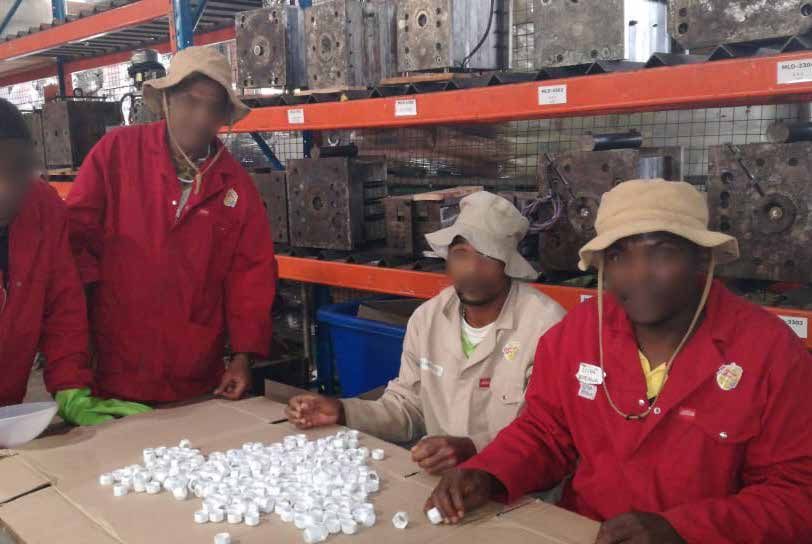
KING EDWARD VIII HOSPITAL                                     R.K. KHAN HOSPITAL

King Edward VIII Hospital was officially opened               When the MHCA of 2002 came into effect, R.K. Khan
on the 3rd of December 1936. The buildings, by                Hospital was designated as a 72 hour observation
“non-European” standards were “extravagant“ and               unit.
“lavish”, and the total cost of construction was
R 265 000 (Stevenson R.E., King Edward VIII                   R. K. Khan Hospital is a regional hospital and offers
Hospital : South African Medical Journal, December            inpatient, outpatient and community psychiatric
                                                              services. Our drainage areas include Chatsworth,
1961)
                                                              Hammarsdale, Inchanga, Kloof, Hillcrest, Marianhill,
                                                              Pinetown, Queensburgh, Malvern and Sarnia. The
There were no psychiatric wards, and patients with
                                                              community psychiatric clinic forms part of psychiatric
mental illnesses were admitted to the medical wards. The
                                                              unit at R. K. Khan Hospital.
psychiatric unit was the first general hospital psychiatric
unit for black patients in the Durban area. Today, the
                                                              Dr Yusuf Asmal is the head of clinical unit, and is currently
unit consists of two separate 10 bedded wards for adult
                                                              the only specialist psychiatrist at R.K. Khan Hospital.
males and females, and provides a 24 hour psychiatric
                                                              The unit has 4 full time medical officers and 1 sessional
service. There are daily adult outpatient clinics and a
                                                              medical officer. The sessional medical officer is based
weekly child psychiatric clinic. The busy unit utilises
                                                              at the community psychiatric clinic. Other members
a multidisciplinary approach to psychiatric treatment,
                                                              of our MDT include psychologists, social workers, and
and our team strive to provide compassionate care that
                                                              occupational therapists.
preserves the dignity of all our patients.

                                                              Initially all inpatient MHCU’s were admitted and managed
The psychiatric consultation-liaison service at the
                                                              in the medical wards. In 2008, ward AB1 was designated
hospital is run by registrars, under the supervision of a
                                                              as a ward to house male MHCU’s. We have 24 male beds
psychiatrist. The unit is also responsible for the training
                                                              in ward AB1. The female MHCU’s are still being managed
of medical undergraduate and post graduate students,
                                                              in the medical wards.
as well as nursing students. Dr Saloojee is the current
head of clinical unit. Dr Alishia Sukool and Dr Vanishree
                                                              We run daily clinics at our out-patient department,
Naicker are full time consultants based at King Edward
                                                              where we attend to new referrals and review ‘follow-up’
VIII Hospital.
                                                              patients. The bulk of our referrals are from community
                                                              clinics and R. K. Khan Hospital casualty department.

  6     U N I V E R S I T Y O F K WA Z U LU - N ATA L
We also have a weekly child and adolescent clinic, and              Clinic are now being seen at ADH. Therefore,
offer a consultation-liaison psychiatry service to other            the unit also functions as a Primary Health Care/
departments. We assist St Mary’s Hospital as part of our            Community Health Care/ District hospital
outreach program.
                                                              5.    Management of users from old age homes in the
                                                                    area e.g. TAFTA and Natal Settlers

                                                              6.    Management of users from NGOs in the area
ADDINGTON HOSPITAL:
DEPARTMENT OF PSYCHIATRY
                                                              NGWELEZANE HOSPITAL

We have two full time consultants - Dr Zeenat Kader
(Head of Clinical Unit) and Dr Mahendra Ramdeyal.
Dr Usha Chhagan is employed as a sessional                    We have a 30 bed capacity inpatient acute unit at
psychiatrist at the unit. We have one full time               Ngwelezana Hospital. We provide general adult and
medical officer; Dr Asif Gangat . Three registrars            consultation-liaison psychiatry services to the local
rotate through the unit every 6 months.                       area, including Ngwelezana and the surrounding
                                                              district hospitals.
Services offered:
                                                              In addition, we run a child and adolescent clinic and
1.   The unit is currently under renovation. In an ideal      provide a forensic psychiatry service for the local courts.
     situation it functions as a 10 bed male and 10           An interesting aspect of our work are the outreach
     bed female psychiatric unit attached to a general        visits to the district hospitals in the region, some of
     hospital (20 bed inpatient facility)                     which are facilitated by the Red Cross Air Mercy Service
                                                              with flights from Richard’s Bay to outlying areas.
2.   Consultation liaison-psychiatric services to the
     general hospital                                         Our team consists of Dr Pete Milligan (HOD), Dr
3.   Emergency after hours psychiatric service at             Sibongile Hadebe (HCU) and Dr Steve Molefe (part-time
     casualty and MOPD                                        consultant). We have 5 medical officers, a rotating UKZN
                                                              registrar and two interns. We also provide a teaching
4.   Outpatient clinic services offered daily. In addition,   platform for medical students.
     the mental health care users from Beatrice Street

                                                                   DEPARTMENT OF PSYCHIATRY EXPRESSIONS             7
KING DINUZULU HOSPITAL COMPLEX                                 Dr Paruk, a child psychiatrist, has an interest in First
                                                               Episode Psychosis, and also conducts monthly clinics at
                                                               KZN Children’s Hospital and the neurodevelopmental
                                                               clinic at IALCH.

                                                               Dr Cocolas, psychiatrist, has expertise in      addiction
                                                               services.

                                                               The department is a hub of academic activity: final year
                                                               medical students, as well as nursing, occupational
                                                               therapy, psychology and pharmacy students rotate
                                                               through the unit throughout the year. Psychology interns
                                                               also train here and are involved in both inpatient and
                                                               outpatient group therapy as well as individual therapy.

                                                               Psychiatry registrars spend a year of their training at
                                                               this site where they complete their training in Child and
                                                               Adolescent psychiatry. The strong academic platform
This tertiary level acute psychiatric unit offers              offered at this site has been instrumental in supporting
inpatient and outpatient multidisciplinary                     our many successful registrars.

psychiatric services to eThekwini and Ilembe
                                                               The psychiatry, psychology and nursing staff established
districts.                                                     the KZN Mental Health Advocacy Group in 2015 which
                                                               serves as an umbrella body for many local NGOs
The bed capacity is 130 and has been reduced to 66
                                                               involved in mental health care services and annually
since 2003 pending completion of the revitalization
                                                               conducts a highly successful multidisciplinary Mental
programme.
                                                               Health Seminar in July (commemorating Mental Health
                                                               Awareness Month) and Mental Health Advocacy Walk in
It has a 30 bedded closed unit which receives involuntary
                                                               October (commemorating World Mental Health Day).
post-72-hour patients from regional and            district
hospitals and, until a few months ago, was the only
                                                               The hospital is also a hive of research activity with
licensed public hospital offering ECT in the province.
                                                               psychiatrists and psychologists involved in ongoing
It has a telemedicine facility currently utilised for tele-
                                                               research and who publish consistently every year.
education.
                                                               It is envisioned that once the revitalisation is completed,
Outpatient services include services in child psychiatry,
                                                               the services can be expanded to offer other much
neuropsychiatry, addiction and geriatric psychiatry.
                                                               needed tertiary inpatient services.
Outreach is provided to the District hospital in the
complex and consultation liaison services are rendered to
the MDR-TB patients, as well as the patients in the district
and tertiary service wards of the hospital complex.

Dr Ramlall heads the unit and specialises in dementia
care. She provides outreach support to TAFTA and the
Bessie Makhatini Foundation. She also consults at the
monthly Memory Clinic at IALCH.

Dr Karim heads the Child & Adolescent services and also
conducts clinics at KEH.

   8    U N I V E R S I T Y O F K WA Z U LU - N ATA L
M E E T T H E S TA F F
DR PETER MILLIGAN
Dr Peter Milligan, a specialist psychiatrist with more Natal healthcare sites. In particular, he will develop cost-
than 30 years of experience in the public health sector effective counseling and brief psychotherapy services
has recently joined Ngwelezana Hospital, Empangeni, for people in Uthungulu, UMkhanyakude and Zululand
as the Head of the Psychiatry Department. Dr Milligan districts.
reports that his main strategic mission is to work towards
integrating mental health care into the primary care ‘I am very excited about returning to rural medicine
system. and my aim is to work towards improving public mental
health and access to mental health care. It’s very exciting
Before deciding to specialise, Dr Milligan spent 15 to join a team of committed professionals working in the
years in the Eastern Cape working in primary health area. The main focus areas will be Primary Health Care
care facilities and health service management. He then services; Hospital Services; Child and Adolescent services
returned to Cape Town to specialise in psychiatry at and Substance Abuse,’ said Dr Milligan
the University of Cape Town. After completing his
training, he remained in Cape Town for 18 years on a ‘I have been looking for an opportunity to return
joint specialist appointment with the Western Cape to rural medicine. When the opportunity to join
Department of Health and the University of Cape Town. Ngwelezana Hospital presented itself, I couldn’t say no.
For the past eight years, Dr Milligan has been the Clinical As psychiatrists, our aim is to take on the challenge of
Head at Valkenberg Hospital and has been leading the moving from an illness model of mental health to a more
UCT registrar postgraduate training programme. integrated and patient-centred recovery model’.
Dr Milligan was drawn to the field of psychiatry since ‘Dr Milligan is joining a Department of Psychiatry that
his early days as a medical student. After his youngest is concerned with providing optimal mental health care
brother was diagnosed with an Autistic spectrum and improving the quality of life for all the people of
disorder, he became fascinated by the brain and how it KwaZulu-Natal, particularly those that are based in the
works. He believes that the field of psychiatry provides underserved rural areas. This will only be accomplished
fascinating opportunities to explore related disciplines by strengthening primary health care with supervision
such as the Neurosciences and Psychology. from mental health care specialists’, expressed Professor
Bonga Chiiza, Head of the Psychiatry Department at the
His appointment comes at a time where there is a University of KwaZulu-Natal.
strong need for skills transfer for the growing number
of medical students decentralised in northern KwaZulu- Words by: Lihle Sosibo
DEPARTMENT OF PSYCHIATRY EXPRESSIONS 9DR NASEEMA CASSIMJEE
Naseema began her career as a specialist psychiatrist at Fort Napier Hospital, Pietermaritzburg. Her portfolio
at King Dinuzulu Hospital; before transferring to with the UKZN Department of Psychiatry is to assist with
Sterkfontein Hospital (Johannesburg) to pursue further building forensic services in KwaZulu-Natal. Applications
training in the subspecialty of forensic psychiatry. After for the accreditation of Fort Napier Hospital as a forensic
successfully obtaining a certificate in forensic psychiatry psychiatry subspecialty training unit have been made.
in October 2017, Naseema returned home to KwaZulu- So, anyone keen in the art of forensic psychiatry - watch
Natal; and in March 2018 assumed a consultant position this space.
DR VANISHREE NAICKER
Dr Naicker obtained her FC Psych (SA) qualification on medical conditions in psychiatry. Dr Naicker joined
in October 2017; and her MMed (Psych) degree was King Edward VIII Hospital in April 2018 as a specialist
awarded in March 2018. The focus of her research was psychiatrist.
10 U N I V E R S I T Y O F K WA Z U LU - N ATA LDR NOKUKHANYA NGCOBO
Nokukhanya Ngcobo is a senior registrar in the academic matters. She participated in the planning
Department of Psychiatry, University of KwaZulu-Natal. of the 2018 academic seminar program, and was also
Nokukhanya obtained her MBChB degree from UKZN involved in the development of a ‘registrar wellness
in the year 2010. After completing community service, support’ program. As the UKZN registrar representative
she joined GJ Crookes Hospital as a medical officer. It she frequently engages with registrar representatives
was during this period that her interest in psychiatry from other institutions. Dr Ngcobo enjoys outreach and
developed. Dr. Ngcobo has been serving as the registrar has been involved in numerous community outreach
representative for the Department of Psychiatry since programs. Her research interests include ‘cognition’, and
March 2018. Her responsibility involves liaising with cross-cultural psychiatry.
the department with regards to registrar training and
PHUMLA JILI
Ms. Phumla Jili is the Administrative Officer for the Prior to her current position, she was a Program
Department of Psychiatry, UKZN. She joined in October Administrator at UKZN Westville, AES, Science &
2016, and serves as the primary contact person for the Engineering Access Program. She also worked at Varsity
department. Phumla is responsible for all departmental College as an Academic Operation Administrator from
administrative services. She also serves as the PA to the 2013 – 2016.
HOD.
DEPARTMENT OF PSYCHIATRY EXPRESSIONS 11ACADEMIC AFFAIRS
In November 2017, the UKZN Department of Psychiatry
hosted Professor Allgulander at an academic seminar
held at Medical School. Professor Allgulander’s talk was
titled “Anxiety as a Risk factor for Cardiovascular Disease”
Highlights of the 2017/2018 academic year.
UKZN Department of Psychiatry had the privilege Professor Allgulander suggested screening patients
of hosting acclaimed international speakers: from a variety of medical disciplines, especially
cardiology, endocrinology, dermatology, neurology
and primary health care for symptoms of anxiety and
depression. He mentioned ‘depression’ as one of the
PROFESSOR CHRISTER psychiatric conditions increasing the risk of myocardial
ALLGULANDER infarction, stroke and type 2 diabetes. A more recent
finding is that anxiety is also a risk factor, and that it
appears to drive other well known risk factors such as
“Anxiety as a Risk Factor for Cardiovascular Disease” obesity, smoking, a sedentary lifestyle and substance
use. ‘Anxiety may increase the wear and tear of the
Professor Christer Allgulander is an adjunct associate cardiovascular system via stress hormones and by
professor and senior lecturer of psychiatry in the impairing adherence to medications. Poor adherence
Department of Clinical Neuroscience at the Karolinska must be addressed regarding maintenance therapies for
Institutet in Stockholm, Sweden. Professor Allgulander both psychiatric and somatic conditions,’ he cautioned.
specialises in the pharmacotherapy, epidemiology,
genetics and prognosis of generalised anxiety, panic, and He recommended the use of PHQ2 - a patient
social anxiety disorders. He is also an honorary professor health questionnaire and a self-administered
in the Department of Psychiatry at the University of tool for screening and diagnosing depression
Cape Town, and an adjunct associate professor at the in patients, by psychiatric specialists.
Washington University School of Medicine, Department
of Psychiatry in St Louis, Missouri. Professor Allgulander encouraged researchers from
within the field of psychiatry to widen their scope
of research and include focus on two interesting
phenomena, which he says, have not been sufficiently
explained – Takotsubo Cardiomyopathy (broken heart
syndrome), and White Coat Hypertension.
Words by: Lihle Sosibo
Pictured left to right - Professor B. Chiliza, Professor
Christer Allgulander and Dr Lennart Eriksson
12 U N I V E R S I T Y O F K WA Z U LU - N ATA LDR DICKENS AKENA PROFESSOR MICHELLE DURHAM
Dr Dickens Akena is a psychiatrist and lecturer at the Professor Durham is an assistant professor of psychiatry
Department of Psychiatry, Makerere University College at Boston University School of Medicine; and the
of Health Sciences, Kampala, Uganda. Dr Akena was Residency Training Director for the Boston Medical
invited by the UKZN Department of Psychiatry to deliver Center, Department of Psychiatry. She is the Associate
a guest lecture on the 25th July 2018. His talk touched Director for the Global and Local Center for Mental
on his current and previous research conducted, and was Health Disparities at BUSM/BMC
titled: The use of instruments/scales in mental health –
common mistakes and how to avoid them. Her talk was titled: Team up – A paediatric integrated
care model for children and adolescents
Dr Akena’s PhD focused on developing and validating a
comprehensive visual screening instrument for persons
of low literacy. This visual instrument is the first of its
kind to be used in Africa. He completed a Post-Doctoral
Fellowship, refining and validating the visual scale he
had earlier developed across sites in Uganda and South
Africa. Furthermore, during his post-doctoral training, Dr
Akena developed a multimedia prototype that can detect
depression and psycho-educate depressed persons. His
passion for mental health research has seen him design
research courses, and being awarded numerous grants
and awards from prestigious organizations including the
MRC, NIH, and NIMH/PEPFAR. Dr. Akena has published
over 20 papers in peer reviewed journals.
Currently, Dr Akena is the Ugandan based Principal
Investigator of the Neuro-Genetics of African Psychosis
(Neuro-GAP) project, a multi-site research project.
DEPARTMENT OF PSYCHIATRY EXPRESSIONS 13PROFESSOR CHRISTINA BORBA Professor Borba is the director of research for the Department of Psychiatry at Boston Medical Center. She has extensive experience in mixed methods research, teaching and training; and development and management of randomised clinical trials. Her current research focuses on psychotic disorders and cultural psychiatry in low-resourced settings in the US and abroad, women’s mental health, and gender differences in care. Professor Borba is currently examining socio- cultural aspects of schizophrenia in Ethiopia, with a goal of understanding why the disease prevalence ratio has been found to be 5:1 male to female (a statistic unlike any other in the world). Her talk was titled: Clinical insights from Schizophrenia Research collaboration in Africa. Distinguished local speakers that delivered guest lectures/ instructed registrar teaching symposiums include: Dr Indhrin Chetty: Temporary Non-Pathological Criminal Incapacity in the Forensic Assessment Dr Tando Melapi: Forensic matters Dr Shaquir Salduker: Pain and the brain – a paradigm shift Dr Alicia Porter: Chronic Pain and Depression Dr Kim Domingo: “In these small hours...” A psychotherapy guest talk’ Dr Anusha Lachman: Infant mental health through maternal mental health Dr Suntheren Pillay: Transcranial magnetic stimulation 14 U N I V E R S I T Y O F K WA Z U LU - N ATA L
RESEARCH MATTERS                                             Highlights of our 2018
                                                             Research Program
                                                             Highlights of our research program for 2018 included
Discipline of Psychiatry: Annual Research Report             several inspiring workshops and seminars. The February
2018                                                         Research Development Week: Demystifying the
In keeping with the University of KwaZulu-Natal’s            Research Process which was jointly hosted by the
research vision, the Discipline of Psychiatry has a very     psychiatry faculty (coordinated by Prof Chiliza and
active research program that strives to conduct high         Dr Paruk), the EARS program (Emerging Academic
quality research that will improve mental health care        Researchers Support) and by guest speakers from
meaningfully and enhance research training and               Boston University, Professor C. Borba and Professor M.
capacity for our emerging researchers. The Discipline        Durham. The program titled “Demystifying the Research
of Psychiatry has a rapidly expanding research program       Process” included several workshops and seminars on
and we currently have projects involving undergraduate       various aspects of research including statistics training
students, MMed, MMedSci and PhD students with                for beginners and tips on scientific writing by Prof Borba,
collaborations within our institution and externally, both   introduction to proposal writing by Prof Aldous, and an
nationally and internationally.                              introduction to qualitative research in health care by Dr
                                                             D. Blackbeard. We also hosted small mentoring group
We have a strong research team and our lead researchers/     sessions for our PhD students to present their proposals.
supervisors are:                                             We were honoured to have PhD students, Drs Molebatsi
                                                             and Olashore from Botswana join us for the week.
•   Professor B. Chiliza (Head of Department, MBChB,
    FCPsych, PhD). Professor Chiliza’s main research
    interests are first episode psychosis, culture and
    mental health.

•   Dr S. Mashaphu (MBChB, FCPsych, MMed). Dr
    Mashaphu is passionate about HIV and mental
    health, and neuropsychiatry research.

•   Dr S. Paruk (MBChB, FCPsych, Cert Child Psych,
    MMed, PhD). Her interests include child psychiatry,
    early onset psychosis, HIV, and first episode
    psychosis research.

•   Dr S. Ramlall (Principal Specialist, King DinuZulu
    Hospital, MBChB, FCPsych, PhD). Her focus is
    cognition and medical education.                         Pictured from left to right - Dr Molebatsi, Professor C.
                                                             Borba, Professor M. Durham, Professor B. Chiliza and Dr
•   Dr S. Saloojee (Principal Specialist, King Edward        S. Paruk
    VIII Hospital, MBChB, FCPsych, MMed, PhD). Dr
    Saloojee’s main research focus is the physical health    In March 2018, we hosted the Establishing emerging
    of patients with mental illness, and consultation –      researchers training needs, with visiting speakers
    liaison psychiatry.                                      Professor Lori Chibnik, a biostatistician at the Harvard
                                                             T.H. Chan School of Public Health and the Department of
                                                             Medicine; and Professor Bizu Gelaye, an epidemiologist
                                                             at the Harvard T. H. Chan School of Public Health. The
                                                             Harvard guests presented on their research projects
                                                             and opportunities for training and collaboration were
                                                             explored.

                                                                DEPARTMENT OF PSYCHIATRY EXPRESSIONS              15
The Discipline of Psychiatry coordinated a research The October scientific writing workshop held over 2 days
ethics training workshop with the Biomedical Research was another highlight and we were honoured to have
Ethics Committee Chair, Professor V. Rambiritch, who Prof Leslie Swartz from the University of Stellenbosch
gave us insight on how to navigate research ethics guide us on writing tips and getting published.
particularly in the mental health field.
The Discipline of Psychiatry hosts Research days
every June and November to showcase the ongoing
research. Students presented their research at protocol
development phase or completed project findings to
peers. At the June meeting, several completed MMed
research projects were presented. The topics were varied
and included neuro-imaging, child psychiatry, HIV,
psychosis, consultation liaison psychiatry and depression
in the African male population.
In October Prof Chiliza attended the TROPICA meeting in
London. This is an international collaboration with other
African, English and Caribbean researchers to explore
the association of childhood trauma and mental illness.
Our PhD Projects
The Discipline of Psychiatry has attracted several PhD
students in the past two years and we are proud to have
In October we hosted Professor Noeline Nakasujja, South African and international students registered to
an associate professor of psychiatry and Head of the do their PhDs in psychiatry. Our current students and
Psychiatry Department at the College of Health Sciences, topics include:
Makerere University. She presented findings from her
research and gave us her expert opinion on our first 1. Miss L Chitwe: Caregiver perspectives on Autism
episode research projects. Spectrum Disorders in Zimbabwe: Implications
for context specific diagnostic practice and health
policy. (Supervisor: Dr S Ramlall)
2. Dr U Chhagan: Clinical and Substance use variables
in First Episode Psychosis in HIV infected patients
and non- infected patients in Kwazulu-Natal
(Supervisors: Dr S Paruk & Prof B Chiliza). This is a
very exciting project that will be one of few studies
that have systematically assessed HIV infection in
first episode psychosis in an African setting.
16 U N I V E R S I T Y O F K WA Z U LU - N ATA L3. Mrs. M Jarvis: Social isolation, loneliness and mental
wellbeing in South African older persons living in
a residential care setting: an e-health intervention
(Supervisor: Dr S Ramlall)
4. Dr SB Mashaphu: a recipient of the NIH research
grant award: Phodiso/ UCLA collaboration 2015-
2017 is doing very innovative work on Behavioural
Interventions to Reduce HIV transmission Amongst
Serodiscordant Couples and assessing interpersonal
trauma in these individuals
5. Dr K Molebatsi: Post-traumatic stress disorder
intervention for people with severe mental illness.
(Supervisors: Prof B Chiliza)
6. Miss Pema: Cognition in First Episode Psychosis
in HIV infected and non-infected patients
(Supervisors: Dr T Naidu and Dr S Paruk)
7. Dr A Olaware: Association of psycho-social
morbidity and ARV adherence in HIV infected
youth in Botswana (Supervisors: Prof Chiliza and
Dr S Paruk) This is an innovative study that assesses
prevalence of common mental illness, substance
use and adherence patterns in behaviorally
acquired and congenitally acquired HIV infected
adolescents.
8. Ms L Shabalala: Experiences of black medical
specialists in training at two universities in the
Western Cape (Supervisors: Prof L Swartz and
Prof B Chiliza)
9. Miss GH Wambua: Childhood adversities: The
construct of resilience in First Episode Psychosis
(FEP) (Supervisors: Prof Chiliza & Dr Killian)
Words by: Dr S Paruk
17People who use cannabis are at higher risk for
developing depression and anxiety. Cannabis may
also cause psychosis and lower the age of onset for
Schizophrenia. Impaired cognitive function as a result
of the use of cannabis leads to poor school performance
and diminished achievement.
Adolescents are particularly at risk if exposed to cannabis.
During this period of rapid neuro-development cannabis
HOW DOPE IS DOPE?! use may impair neural connectivity in specific brain
regions especially those concerned with learning and
memory.
CANNABIS: The decriminalisation of the use of recreational cannabis
A CON COURT CONUNDRUM in private spaces may well lead to the greater abuse of
cannabis, increased rates of addiction and aggravate
the myriad of medical, psychosocial and psychiatric
The recent decision by the Constitutional Court to problems caused by cannabis.
ratify the decision of the Western Cape High Court
decriminalising the recreational use of cannabis has The vulnerable will be more affected by these problems.
compounded the confusion surrounding cannabis. South African society is marked by inequality and
The debate continues unabated in the popular economic disparity. The poor do not have ready access
press and psychiatrists have been inundated with to resources, medical aids and rehabilitation facilities.
questions about the new legislation.
In a country with limited resources the provision of an
adequate health service is a constant struggle. Mental
It is unfortunate that the uninformed read into the new
health services and treatment for addiction has never
law that cannabis is safe to use. There is no documented
been a priority. The Constitutional Court decision means
evidence for the safety / benefit of recreational cannabis.
that this system will suffer further strain and present
All evidence indicates the contrary. The use of cannabis
additional challenges to those involved in the treatment
for medicinal purposes is a different debate and not
of addiction.
under discussion here. Many people have confused the
issues.
Addiction is a complex medical condition and people
should be offered treatment rather than punished for
using substances. However, to merely decriminalise
without having appropriate structures in place to
educate and to treat is short-sighted and spells disaster.
The decision brings numerous challenges for those
who treat patients in clinical settings. The risks of Hemant Nowbath
the unfettered use of cannabis are many. Cannabis
25 October 2018
is addictive and its’ use may lead to dependence and
withdrawal. Cannabis intoxication causes disturbances
in levels of consciousness, perception and behaviour.
Motor co-ordination may be impaired leading to an
effect on driving ability and the increased risk of injury.
18 U N I V E R S I T Y O F K WA Z U LU - N ATA LDRILL (KZN DOH) in the fields of HIV/AIDS, Mental Health,
Health Professions Education and Health Systems
Strengthening
UKZN Developing Research Innovation, 2. To build the eligibility and increase the likelihood of
retention of the 20 trained scientists at UKZN and KZN
Localisation and Leadership in South Africa
DOH resulting in a pool of highly skilled researchers
(DRILL) who will be on an accelerated development track for
academic leadership
3. To develop skills of mentorship and supervision in
the 20 DRILL Fellows to inspire, train and support
other academics in research development and
building communities of practice.
The principles underpinning the DRILL training programme:
1. Mentorship and support using a triad of DRILL
Fellows, supervisors and mentors
Dr Nisha Nadesan Reddy
Project Manager: DRILL 2. Development of research knowledge, skills and
values
DRILL was awarded to the University of KwaZulu- 3. Research leadership development, attainment
Natal (UKZN) in 2015 to support a research training of a National Research Foundation (NRF) rating
and induction programme for early career academics and inclusion in the accelerated research career
and health professional staff members, under the development track
scientific areas of Human Immunodeficiency Virus/ 4. Building communities of practice to cultivate DRILL
Acquired Immunodeficiency Syndrome (HIV/AIDS), Fellow-led knowledge hubs
Mental Health, Health Professions’ Education, Health 5. Responsiveness to health priorities underpinned
Research Ethics and Health Systems Research. by the philosophy of social accountability, research
integrity and excellence
Early career academics and health professional staff
members at UKZN and the KZN Department of Health Owing to the multidisciplinary nature of this training
include but are not limited to lecturers, senior lecturers program, the need for expert leadership across
and associate professors, and health professionals diverse scientific fields, and a strong desire to ensure
working within the KwaZulu-Natal Department of Health. continuity from UKZN-MEPI ENTRÉE Program into the
current program, DRILL has a Multi-PI Leadership Plan,
The goal of DRILL is to produce 20 high quality scientists comprising the Communicating PI (Petra Brysiewicz) and
skilled to lead socially valuable, locally relevant and four additional PIs.
culturally sensitive research programmes designed
around the health challenges facing South Africa and 1. Mental Health: Professor Jonathan Burns, Professor
KwaZulu-Natal in particular. of Psychiatry at the University of Exeter, U.K. and
honorary lecturer at UKZN Department of Psychiatry
The objectives of DRILL are: relocated to the UK at the end of 2016, and Dr
Suvira Ramlall, Clinical head of Psychiatry at King
1. To capacitate, train and produce by the end of Dinuzulu Hospital, Durban, initially co-led the track
5 years, twenty world-class scientists in health with Professor Burns but later assumed the lead and
including early career academics of the University of has been appointed as a Multi-PI on the grant since
KwaZulu-Natal (UKZN) and health professional staff March 2018.
members of KwaZulu-Natal Department of Health
DEPARTMENT OF PSYCHIATRY EXPRESSIONS 192. HIV/AIDS: Professor Mosa Moshabela, Dean and
School of Nursing and Public Health and Wellcome
Trust Fellow.
3. Health Professions’ Education: Professor Petra
Brysiewicz, Professor in the Discipline of Nursing,
School of Nursing and Public Health. Prof Brysiewicz
is the Communicating PI of the DRILL grant
4. Health Systems Strengthening: Professor Fatima
Suleman, Professor in Discipline of Pharmaceutical
Sciences and Prince Claus Chair of Development and
Equity for the theme Affordable (Bio)Therapeutics
for Public Health (September 2016 to September
2018), Utrecht University, The Netherlands.
5. Research Ethics: Professor Douglas Wassenaar,
Professor of Psychology, College of Humanities,
director of SARETI, UKZN.
The intention of the DRILL training programme is to
contribute to staff development and succession planning
programmes in academia and other governmental and
non-governmental organizations that are involved in
knowledge production.
Dr Suvira Ramlall, has been facilitating a Personal
Development series of workshops for the DRILL fellows.
The goal of the workshop is to equip the fellows with a
toolkit for success encouraging them to embrace change
and be comfortable with a critical self-reflection in how
they journey not only in their academic and professional
lives but in their personal space too.
The Mental Health Scientific Track has 3 fellows: Lihle
Qulu and Thabisile Mpofana from Cohort 1 and Desiree
Govender from Cohort 2.
20 U N I V E R S I T Y O F K WA Z U LU - N ATA LA highlight of her career in the past year was being
invited to the Society for Neuroscience (SfN) meeting
in Washington by the Women in World Neuroscience
(WWN). She is a board member of South African
Neuroscience (SANS) 2017. She has written one
publication in the past year which is unrelated to her
DRILL research: The Effect of Quercetin on Pro- and
Anti-Inflammatory Cytokines in a Prenatally Stressed
Rat Model of Febrile Seizures Nombuso Valencia Pearl
Mkhize, Lihle Qulu, and Musa Vuyisile Mabandla. 2017.
Dr Lihle Qulu is a qualified Neuroscientist and a lecturer
DOI:10.1177/1179069517704668.
in the Discipline of Human Physiology, School of
Laboratory Medicine and Medical Sciences, University of
She is currently at the proposal stage of her research
KwaZulu-Natal (UKZN), Durban, South Africa. She is in
project and has yet to receive approval from the UKZN
the process of applying for rating with the NRF.
IRB and Animal Research Ethics Committee (AREC). She
is awaiting the outcome of a grant application to NRF
Her DRILL Mentor is Professor Moses Chimbari, Professor
Thuthuka.
in the School of Nursing and Public Health. Professor
Chimbari takes the lead in coaching young academics on
how to supervise postgraduate students effectively and
how to become responsible students. Dr Qulu’s post-
doctoral research title in DRILL is: “REcidivism Prevention
Approaches for Incarcerated Rapists: REPAIR” which she is
conducting under the supervision of Dr Suvira Ramlall.
The vision is to become the ‘Rape Busters’, and the go-to
team with regards to rape and rehabilitation of rapists.
South Africa has gone through a harsh history that has
left the remnants being of ill social behaviour such as
violence, aggression and rape. The long-term goal of this
Dr Thabisile Mpofana is a Neuroscientist and in
study is to understand multifactorial attributes resulting
December 2017 was promoted from Developmental to
in this behaviour. To create a rehabilitative method
Full Lecturer in the Discipline of Human Physiology at
that will be holistic and applicable to the South African
the School of Laboratory Medicine and Medical Sciences
context. This intervention will be a bio-psychosocial
at the University of KwaZulu-Natal. Her DRILL Mentor is
spiritual approach and will also include treating with
Professor Ahmed Bhigjee who is the head of Neurology
intranasal oxytocin to replace the potential deficit due to
at the Nelson R Mandela School of Medicine, UKZN.
predisposition to trauma.
His special interests are neurological infections and
demyelinating disorders.
She is supervising 18 students in total which includes 5
Masters and 4 PhDs. She has presented at 2 conferences
Her post-doctoral research in DRILL is titled:
on research unrelated to DRILL: Lihle Qulu Yasmin Wa-
“Understanding the role of alpha-synuclein misfolding
Matamba and MV Mabandla. The anxiolytic effect of
in Parkinson’s disease”. She is conducting her research
oxytocin in a prenatally stressed rat model of febrile
under the supervision of Dr Anand Moodley, Head
seizures. 13th International Conference SONA, Imperial
of the Neurology Clinical Unit at Greys Hospital,
Resort Beach Hotel Entebbe, Uganda JUNE 11 - 14, 2017
Pietermaritzburg. He is an honorary lecturer in the
(Poster) and Lihle Qulu and MV Mabandla. The effects of
Department of Psychiatry in the School of Clinical
Early life stress on Febrile seizure Development. Biological
Medicine at University of KwaZulu-Natal. The aim of
psychiatry congress Lord Charles Hotel, Somerset-West,
the study is to understand the role of alpha-synuclein
Western Cape, 14 – 17 September 2017 (Oral). She is
accumulation and aggregation on the progression
actively involved in the Mental Health Advocacy group
of neurodegeneration. The study will further seek to
and organised a walk this year.
DEPARTMENT OF PSYCHIATRY EXPRESSIONS 21understand the causes of alpha-synuclein by investigating Taylor, a Professor and Research Manager at the Discipline
clearing pathways involved in the regulation of alpha- of Public Health Medicine at University of KwaZulu-Natal.
synuclein and to further understand α-synuclein
involvement in dopaminergic neuron degeneration. The primary aim of this study is to address the problems
and needs of parenting adolescent mothers by
Dr Mpofana presented her PhD research at the Society establishing a healthcare Community of Practice model
of Neuroscientists of Africa in Uganda in June 2017: that will offer a multidisciplinary and comprehensive
Identifying Possible Novel Therapeutic Agents in the approach towards their care.
Management of Parkinson’s Disease Related Symptoms.
Oral presentation. She is presenting at the Federation She is at the data collection and analysis phase of her
of European Neuroscientists in July 2018 - Poster research and has received the University of KwaZulu-
presentation on her PhD work and which will also include Natal’s IRB approval (BFC553/16).
her DRILL study on Parkinson Disease.
She has drafted 2 manuscripts from her DRILL Research
She is currently supervising 9 Masters students (5 as Project.
main supervisor and 4 as co-supervisor) and 3 PhD
students (1 main supervisor and 2 co-supervisor).She 1. Under Review: African Journal Health Care and
is at the proposal stage of her research project and has Family Medicine: The risk factors and intervention
yet to receive approval from the UKZN IRB and Animal for adolescent repeat pregnancy: A scoping review.
Research Ethics Committee (AREC). She is awaiting the
outcome of a grant application to NRF Thuthuka. 2. The prevalence and predictors of adolescent repeat
pregnancy in SA. The first draft has been completed
and is awaiting comment from her supervisors.
This will be submitted to the South African Medical
Journal.
Words by: Dr Nisha Nadesan Reddy
Ms. Desiree Govender is a qualified physiotherapist and
is employed as the Chief Physiotherapist at GJ Crookes
Hospital in Scottburgh, KwaZulu-Natal Department
of Health (DoH). She is also appointed as an honorary
lecturer in the Discipline of Public Health Medicine as
part of the UKZN Memorandum of Agreement with the
KZN DoH. Her DRILL mentor is Professor Steven Collings,
a DRILL Advisory Committee member and a Professor in
Psychology at UKZN.
Her Doctoral Degree research title in DRILL is: “A
community of practice model for a multidisciplinary
and comprehensive approach towards caring for the
parenting adolescent mother”. She will be conducting
this study under the supervision of Dr Saloshni Naidoo,
Chief Specialist/ Head of the Discipline of Public Health
Medicine at University of KwaZulu-Natal and Prof Myra
22 U N I V E R S I T Y O F K WA Z U LU - N ATA LINCLUSION INTO THE
To achieve vocational goals, forensic occupational
therapy programs have historically implemented facility
based pre-vocational skills development projects as a
WORLD OF WORK - means of developing work habits and skills required
for re-entry into the world of work. This is however
Vocational Rehabilitation of inadequate as programs can be overly structured with
limited progression opportunities, with limited client
Forensic Mental Health Care centredness, limited challenge, and practice of skills in
an inauthentic simulated work environment. For change,
Users authenticity and client centredness is required.
The transitional employment model allows clients to
achieve vocational goals in an authentic competitive
work environment. This is facilitated through inter-
sectoral partnerships with corporate companies in the
city to provide an environment for learning. A “place and
train” approach can be used where placed MHCUs receive
the necessary support and coaching needed for change.
MHCUs are taken out of segregated, sheltered, and
simulated environments for meaningful growth in work
habits and skills. This follows a “clubhouse” model which
is a partnership between the “clubhouse” (established
Ms. Margaux d’Hangest d’Yvoy group such as an OT department) and the corporate (for
Assistant Director: Occupational Therapy example, factory) allowing for selection and rotation of
Fort Napier Hospital relevant persons.
The golden standard of psycho-social rehabilitation
(PSR) in specialist forensic psychiatric services requires
unique rationalisation for recovery and reintegration of
forensic mental health care users (MHCUs) into society
for meaningful community living. Through interventions
such as vocational rehabilitation, our clients are included
into a sphere of society (labour sector) which empowers
and offers long-term opportunity for recovery, health,
sobriety, and meaningful living.
Forensic psychiatric occupational therapy services
need to consider the following barriers faced in the
reintegration process into the world of work: skills
deficits, poor MHCU motivation levels and vocational
goal setting, community attitudes (stigma and
incomplete reunification), institutionalisation, and
necessary limitations imposed in restriction of
movements as a responsibility towards MHCU and
community safety while hospitalised.
Work is an important occupation in the life of an
adult, and provides meaningful identity and roles,
promoting occupational balance and even health. ‘Injection moulded manufactured items - used in
electrical fittings’
DEPARTMENT OF PSYCHIATRY EXPRESSIONS 23Risk management however requires serious Great benefit can be derived from transitional
consideration within forensic psychiatry. The selection employment projects for vocational rehabilitation.
of suitable MHCUs and a risk assessment of the work Systemic benefits include changing of culture through
environment is essential for successful transitional de-stigmatisation within corporate/ vocational
employment. Preparatory skills development (including, environments, facilitating meaningful “corporate social
social presentation, productivity and quality standards, investment” to a marginalised community, establishing
norm compliance, and other meaningful work habits meaningful inter-sectoral relationships, and improving
and skills) are of the greatest import. the quality of forensic psychiatric intervention.
Expectations of MHCUs by the multi-disciplinary team
Forensic psychiatric facilities such as Fort Napier are raised, and forensic MHCUs are empowered in their
Hospital are able to implement such projects. Currently, vocational roles.
a transitional employment “clubhouse’ project is run in
collaboration with a local company where MHCUs are Reintegration of forensic state patients into the open
exposed to authentic job tasks in this authentic factory labour market is a possibility through rationalised
environment. Work related activities include simple tasks projects, client “voice”, and strategic inter-sectoral
such as trimming, sorting, and quality checks of injection relationships.
moulded plastic parts. Completed products are counted,
boxed, and then paid for by the company. Preparatory
as well as closure groups allow for maximal personal
development (including community survival skills).
‘MHCU’s assembling the injection moulds for boxing and distribution to a local company’
24 U N I V E R S I T Y O F K WA Z U LU - N ATA LRESEARCH PROJECTS
MMed RESEARCH PROJECTS
The following candidates have successfully completed the FCPsych (SA) part 2 examinations in the past 12 months.
PRINCIPAL
SUPERVISOR TITLE
INVESTIGATOR
The utilization of a mental health service for major depressive
Dr M. N. Sibiya Dr S. Saloojee
disorder at a general hospital in KwaZulu-Natal, South Africa
Screening for depression in help-seeking individuals with
Dr S. Shabalala Professor J. K. Burns
psychotic-like experiences in rural South Africa
Dr V. Naicker Dr S. Saloojee Physical illness in patients with mental illness
Parental report of emotional and behavioural problems in HIV-
Dr K. Pillay Dr S. Paruk infected children receiving ART from an urban clinic in South
Africa
The prevalence and correlates of cigarette smoking and tobacco
Dr S. Kamroodien Dr S. Saloojee use in patients with severe mental illnesses attending the
psychiatric clinic at King Edward VIII Hospital
Aim: To investigate the utility of Community Assessment
Psychic Experience (CAPE)-42 in screening for major
depressive disorder (MDD) among help-seeking
individuals with possible psychosis referred by traditional
health practitioners (THPs) in rural South Africa.
Method: We assessed 149 clients of THPs in Vulindlela,
KwaZulu-Natal Province, referred with suspected
psychosis. CAPE depressive subscale (CAPE-DS) and
Schedules for Clinical Assessment in Neuropsychiatry
(SCAN) were administered to assess for depressive
Dr Sinethemba Shabalala symptoms and a diagnosis of MDD respectively.
Dr Shabalala’s research was judged to be the best MMed
project for 2018.
Results: Twenty-one participants (14.3%) were
diagnosed with MDD. The CAPE-DS optimal MDD cut-off
Screening for depression in help-seeking individuals score of 42 (sensitivity=81%; specificity=64%; area under
with psychotic-like experiences in rural South Africa curve=0.78).
Sinethemba Shabalala,1 Andrew Tomita,2 Sisanda Conclusion: In a study designed to detect psychosis
Mtshemla,1 Ndukuzakhe Mbatha,1 Hans Wijbrand among THP’s clients, we found that: MDD frequency
Hoek,2,4,5 Ezra Susser,3,6 Jonathan K. Burns1 was higher than expected, and the CAPE-DS performed
DEPARTMENT OF PSYCHIATRY EXPRESSIONS 25You can also read


