2YEARS 5 of FREEDOM THE PRESIDENCY
←
→
Page content transcription
If your browser does not render page correctly, please read the page content below

25
                                            YEARS

                                    of FREEDOM

THE PRESIDENCY    ANNUAL PERFORMANCE PLAN

                                                2019 / 2020

                     THE PRESIDENCY
                 REPUBLIC OF SOUTH AFRICA
THE PRESIDENCY
                                                                                                    Annual Performance Plan 2019/2020

                           INTRODUCTI ON BY THE M I NI STER

                                                      Mr Jackson Mthembu, MP
                                                      Minister in The Presidency

Since 1994, as a country we have been graced with strong             environment - in the context of opportunities made possible by
institutions that have underpinned democracy. These include          a new political environment, it was patently clear to any thinking
the constitution-sanctioned chapter 9 institutions, a strong         citizen, that there was a need to restore the credibility of public
governmental financial and fiscal capability, an independent and     institutions, to root out corruption and end state capture, to re-
fearless judiciary, autonomous and fiercely independent civil        hone government and state-owned entities into more efficient
society organisations, as well as mechanisms to manage the           machines of delivery, but also to restore economic growth, to
engagement between government, business and labour, such             attract far greater levels of local and international investment and
as NEDLAC. As a country we have made important progress              thereby create jobs on a massive scale. To this end important
in its aim of building a people-oriented society since then. Our     steps have been taken over the last few weeks and months.
country has been lauded for its achievements in the housing
of the poor. Our approach to universal access to HIV/AIDS            The NDP remains the touchstone of The Presidency’s work
medication and treatment is unprecedented. National social           and plans – as it does with other government departments.
welfare programmes have reduced the impact of poverty                The Presidency, in its role as the apex of government and
and unemployment significantly. We are well on our way to            the centre of strategic coordination, provides the overall
achieving universal education. These are just to mention a           leadership and supervision to the whole of government.
few achievements. But admittedly, much remains to be done.           It seeks to ensure a focused and aligned response to
                                                                     the implementation of the programme of government.
The National Development Plan (NDP) adopted by
government in 2012, is very emphatic on the importance               This being the final year of the first five-year planning
of the developmental state in tackling the root causes               period (2015 – 2020) of the NDP’s Vision 2030, and the
of poverty and inequality. The NDP sets out that the                 transitional period to the next strategic planning cycle for
requirements to tackles these, are a capable developmental           2020 – 2025, the priorities and milestones outlined in this
state and a vibrant and thriving private sector. It also posits      2019/20 Annual Performance Plan (APP) seek to ensure
the need to develop multipronged growth strategies. In               that The Presidency continues to fulfil its mandate to:
other words, while we address the pressing issues of poverty,
unemployment and inequalities, we simultaneously need to             1) Ensure the President is able to execute his
build a developmental state by establishing strong institutions         Constitutional responsibilities in leading and galvanising
that reinforce and promote inclusive economic growth.                   the whole of government and society to implement
                                                                        the electoral mandate;
As a country, we have embarked on a new path of growth,              2) Serve as the centre for strategic coordination, leadership
renewal and rebuilding since February 2018, and - coming after          and supervision of government in implementing the
the decades-long hiatus of an unforgiving global and dismal local       government programme, so as to ensure that all energies
                                                                        and efforts are properly aligned; and

                                                                                                                                            1
25
       YEARS

    of FREEDOM

                                INTRODUCTI ON BY THE M I NI STER

    3) Provide oversight to the implementation of the programme            and World. Our work is to support the President and Deputy
       of government and to ensure it is achieving its intended            President in ensuring implementation of these priorities.
       outcomes.                                                           I also wish to thank the Director-General Dr. Cassius
                                                                           Lubisi, top and senior management and the entire staff
    The Presidency cannot on its own achieve its goals or address          of The Presidency for their commitment and for always
    all the challenges the country faces. In the spirit of Thuma Mina,     remaining focused on the tasks at hand. It is through your
    all of society is called upon to be proactive and lend a hand          tireless commitment and support that we will no doubt
    to assist and find solutions. It is our belief that better solutions   achieve the commitments outlined in this annual plan.
    will materialise from broad collaboration and partnerships
    between government, role-players, social partners and the              I endorse this Annual Performance Plan of The Presidency
    private sector. Accordingly, we invite all our stakeholders to         for the financial year 2019/20 as the roadmap for what The
    actively participate in supporting us with the implementation          Presidency hopes to achieve in the coming year.
    of our Strategic Plan and this Annual Performance Plan.

    The leadership role of The Presidency requires that it listens
    attentively to emerging concerns of all sectors of the population,
    has the capacity to innovate and respond effectively, and
    works in a proactive manner with relevant government
    departments and stakeholders to ensure a timeous response
    to emerging challenges.

    African Heads of State formally elected South Africa during
    a closed session ahead of the opening ceremony of the
    32nd African Union Heads of State Summit to take over
    the rotational chair of the African Union (AU) in 2020.

    Following the national and provincial elections in May
    and announcement of the President of new Cabinet.
    Government Communication and Information System
    (GCIS), Media Development and Diversity Agency
    (MDDA) and Brand SA have been moved to be under
    the Minister in The Presidency. However, the National
    Micro-Organisation of Government (NMOG) process is
    in progress to realize the President’s decision in this regard.

    I wish to thank the outgoing Minister Dr Dlamini Zuma for
    her political leadership and guidance to The Presidency during
    her tenure. Although we are closing the previous MTSF, we
    have a new mandate in terms of the electoral mandate and
    the commitments from SONA which will be our focus for
    implementation in the current year and over the MTEF period.

    The following seven priorities will inform the whole of government:
    Economic transformation and job creation; Education, skills
    and health; Consolidating the social wage through reliable and
    quality basic services; Spatial integration, human settlements
    and local government; Social cohesion and safe communities;
    A capable, ethical and developmental state; and A better Africa

2
THE PRESIDENCY
                                                                                                   Annual Performance Plan 2019/2020

                   FOREWORD BY THE DI RECTOR- GENERAL

                                                      R Cassius Lubisi, PhD
                                           Director-General and Secretary of the Cabinet

As Director-General and Secretary of the Cabinet, I am happy        3) identify any other strategic outcomes, with indicators and
to table the Annual Performance Plan (APP) of The Presidency           time bound targets, taking into consideration the electoral
for 2019/20. AsI do so, I warmly welcome the new Minister,             mandate and international obligations of the country.
Mr Jackson Mthembu, and the new Deputy Minister, Ms Thembi
Siwega. We look forward to working with them as well as the         Notwithstanding the above, after the political transition of
Minister in The Presidency for Women, Youth and Persons with        February 2018, His Excellency, President Cyril Ramaphosa
Disabilities, Ms Maite Nkoana-Mashabene, and Prof Hlengiwe          directed The Presidency to immediately implement a theme of
Mkhize, respectfully.                                               “renewal and transition towards an ‘outcome focused’ and ‘fit
                                                                    for purpose’ Presidency”.
The previous financial year marks the last year of the 2014–
2019 electoral cycle. However, we are also entering the final       With this background, in preparing this 2019/20 Annual
year of the five-year Strategic Plan of Government (the MTSF)       Performance Plan (APP), The Presidency has reconceptualised
and that of The Presidency for the period 2015/16–2019/20.          its strategic framework and has gone some distance in
While the five-year Strategic Plan of The Presidency remains        overhauling its planning framework.This work is reflected in this
relevant to inform Presidency planning in its 2019/20 APP,          Annual Performance Plan, but not the previously approved five-
it will necessarily have to be seen as transitional both in the     year Strategic Plan. It is felt that the processes unfolding after
sense of closing out the prior planning period and – especially     the elections, the cost of publishing a new five-year Strategic
in the context of the national and provincial elections held on 8   Plan at this point is not warranted. However, we have reflected
May 2019 - the publication of the new national five-year MTSF       adjustments to the planning framework in Annexure A of this
for 2020–2025 in the near future.                                   APP.

Post the elections, and in line with the Integrated Planning        As indicated by Minister Mthemba in his introduction to this
Framework Bill and the DPME Framework for Short and                 APP, His Excellency, President Cyril Ramaphosa has, in his
Medium-term Planning (2018), The Presidency will lead and           second State of the Nation Address (SONA) on 20 June 2019,
develop the new five-year Strategic Plan of The Presidency for      set out seven (7) priorities for our country during the Sixth
2020–2025, and will in all likelihood, publish, in October 2019,    Administration.
a revised 2019/20 APP to align with the new electoral mandate.
                                                                    Informing this APP, The Presidency has revised its mission
In terms of the Framework for Short and Medium-term                 statement to give effect to the new focus areas and priorities of
Planning, a new strategic plan must:                                the President, as follows:
                                                                    As the apex of government in South Africa,The Presidency strives to
1) be published within nine months after a national election;       fully realise the strategic agenda of government and to lead:
                                                                    • Efforts to support investment, economic growth and job
2) set targets for the term of government for the indicators             creation;
   of the desired outcomes identified in the National               • Efforts to mobilise society and accelerate social transformation;
   Development Plan; and
                                                                                                                                          3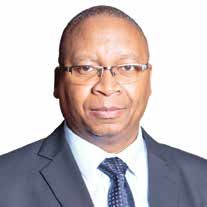
25
       YEARS

    of FREEDOM

                       FOREWORD BY THE DI RECTOR- GENERAL

    • Efforts to enhance governance, state capacity and service              to drive greater coherence and consistency in the
      delivery;                                                              implementation of economic policy and to support
    • Efforts to fight crime and corruption; and                             economic growth and job creation, including the
    • Efforts to advance South Africa’s national interest and foreign        Presidential Economic Advisory Council (PEAC), the
      policy in order to build a better Africa and a better world.           Presidential Infrastructure Coordinating Commission
                                                                             (PICC), the Black Economic Empowerment Advisory
    The revised mission statement informs 6 new strategic goals,             Council (BEEAC), the National Economic Development
    which in turn inform the revised strategic objectives and                and Labour Council (NEDLAC), the Land Reform Panel
    programme focus areas reflected in this APP.                             and various other forums; and
                                                                           • To monitor the work of the various Departments and
    In summary, the focus of The Presidency for 2019/20 is on the            entities involved in supporting the President’s investment
    following priorities:                                                    drive.

    1) Leadership and coordination of efforts to build social           4) Leadership and coordination of efforts to fight crime and
       cohesion, national unity and to accelerate social                   corruption:
       transformation:                                                     • The implementation of an annual programme of action
       • The implementation of an annual programme of action                  to inform the priorities of the inter-governmental
           for the organised formations and structures to mobilise            mechanisms to fight corruption in the public and private
           society, promote social cohesion and accelerate social             sectors, enhance public and institutional ethics and
           transformation, including the Presidential Working                 ensure that South Africans are and feel safe.
           Groups, the HRDC, SANAC, and social partner
           formations; and                                              5) Leadership and coordination of efforts to advance South
       • The facilitation of targeted efforts to consciously               Africa’s national interest and foreign policy in order to build
           communicate on issues of social cohesion and nation             a better Africa and a better world:
           building, through mechanisms such as Thuma Mina, the            • The development and effective implementation of the
           Moral Regeneration Movement, national days and the                  respective international programmes of the President
           National Orders.                                                    and the Deputy President, reflecting a continued focus
                                                                               on supporting their respective activities to advance
    2) Leadership and coordination of efforts to enhance                       South Africa’s political and economic interests in the
       governance, state capacity and service delivery:                        international arena. The ascent of our President to the
       • The implementation of an annual programme of action                   position of chairperson of the African Union in 2020
          for the organised structures to strengthen governance
          and service delivery, such as the Presidential SOE            6) Effective and efficient leadership, strategic management and
          Council, the President’s Coordinating Council, the anti-         administrative support within The Presidency:
          Poverty IMC and the National House of Traditional                • Sound governance and compliance evidenced through
          Leaders.                                                             an unqualified external audit outcome on financial and
       • To facilitate visits by the Principals to government                  non-financial performance information.
          departments, and engagements with leaders of
          provinces and local government.                               I would like to acknowledge the support from the former
       • To establish an enhanced and integrated public sector          Minister in The Presidency for Planning, Monitoring and
          research and policy capability in The Presidency, to          Evaluation, Dr Nkosazana Dlamini Zuma, in leading The
          support the work of the Principals and Cabinet.               Presidency towards its goal of excellence in governance and
       • Continuing to support the Deputy President as the              in providing leadership to the state and society. For this I am
          Leader of Government Business, and the monitoring             deeply thankful. I also thank the Acting Chief Operations Officer,
          and implementation of the legislative programme; and,         Top Management, and all staff of The Presidency for their hard
       • Further enhancing the provision of essential support to        work and commitment.
          Cabinet and FOSAD in a more efficient and economical
          way.                                                          I thank His Excellency President Cyril Ramaphosa for affording
                                                                        us the opportunity to serve and his and the Deputy President’s
    3) Leadership and coordination of efforts to support                guidance.
       investment, economic growth and job creation:
       • The implementation of an annual programme of
           action for the organised formations and structures

4
THE PRESIDENCY
Annual Performance Plan 2019/2020
O VERVIEW BY TH E ACCOUNTI NG OFFI CER
Ms Lusanda Mxenge
Acting Chief Operations Officer
The year 2019 represents a significant milestone for our a comprehensive review of the strategic direction of the
country, as we enter into the final year of the fifth administration, organisation to ensure that the organisation positions itself
and celebrate 25 years of freedom under a democratically to provide for the new expectations, new priorities and the
elected government. The political transition of 2018 and the new strategic agenda of government. From our deliberations,
forthcoming national and provincial elections have underscored it is evident that The Presidency needs to be re-structured,
a key aspect of our business, which is to ensure smooth strengthened and capacitated to be the high performing
political transition, so that the engine of government is always organisation expected to advise the President and be a centre
maintained, no matter what the environment. The Presidency of strategic leadership and coordination in government capable
stands at the centre of national life, as a reassuring bastion of of driving the implementation of the electoral mandate.
stability and constancy. The citizenry would expect nothing less.
The most significant development in The Presidency is the
In the context of the political transition of 2018, it was to plan to re-establish the Policy and Research Unit (PRU).
be expected that a new political leadership would review To this end, The Presidency has been allocated R45.3 million
government priorities and agenda. Government as a whole over the medium term to set up the PRU. The PRU will add
has conducted a frank assessment of its success and failures, substantial capacity to The Presidency and will be mandated
and has acknowledged the immense challenges to improving to ensure policy coherence, and facilitate policy coordination
service delivery and accelerating meaningful changes in the lives in government. It will also be tasked to operate as an early
of citizens. For The Presidency – and from the perspective of the warning on potential contradictions or shortcomings related to
challenges being faced by government - this has meant taking policy implementation.
seriously the requirement of The Presidency to be effectively
positioned to serve as a strong centre of strategic leadership and Other areas where capacity will need to be built within the
coordination of government. So as The Presidency has had to put organisation, include the following:
in place the plans for the Presidential inauguration pursuant to
the forthcoming 6th national and provincial elections, it also has • Capacity to oversee the work of the to-be-established
had to make preparations in earnest for the possible outcomes Infrastructure Fund, which will pool government’s
of the elections, and in doing so, it has had to pose the difficult infrastructure budget and leverage it to raise additional
question of whether it is capacitated as an organisation capable funds from other public and private sources to build roads,
of advising the President and assisting him in overseeing, rail lines, broadband networks, hospitals, schools, dams and
developing and implementing government policy. Indeed, we other infrastructure vital for a growing economy.
have asked, are we fit-for-purpose? • Capacity to oversee the work of the Presidential Fourth
Industrial Revolution Council, which will deliberate and
Accordingly, in the course of developing the 2019/2020 coordinate key policies pertaining to the development and
Annual Performance Plan, The Presidency has undertaken acquisition of new technologies, as well as new industries
525
YEARS
of FREEDOM
O VERVIEW BY TH E ACCOUNTI NG OFFI CER
and services, and concomitant future work skills necessary
for the country’s adaptation to the Fourth Industrial
Revolution.
• Capacity to verse the work of the SOE Council.
• An execution (i.e. delivery) capability, which will be an
internal Presidency rapid-response capability to unblock
service delivery challenges.
In the coming year, more work will need to be done to give
effect to The Presidency’s new role and areas of responsibility.
It is envisaged that the operating model of the organisation will
need to be reviewed to restructure the organisation so as to
align resources and the effective delivery on the new mandate
and key government priorities. This will need to be done with
full appreciation of the current constrained fiscal environment,
through innovative approaches and mechanisms.
I take the opportunity to thank our Political Principals, the DG
of The Presidency and all Presidency staff for the wonderful
contributions made during the past year.
6THE PRESIDENCY
Annual Performance Plan 2019/2020
OFF ICI AL SI GN- OFF
It is hereby certified that this Annual Performance Plan for The Presidency for 2019/20:
• Was developed by the management of The Presidency, under the guidance of the delegated Executive Authority,
Dr. Cassius Lubisi;
• Was prepared in line with the Strategic Plan of The Presidency for 2015/16 - 2019/20; which is rolled over as a transitional
measure to the next electoral cycle, through an annexure to this APP; and
• Accurately reflects the performance targets which The Presidency will endeavour to achieve given the resources made available
in the 2019/20 financial year.
Recommended by:
Glen Zulu Mikateko Mubva
Chief Financial Officer Head Official responsible for Planning
Approved by:
Lusanda Mxenge R Cassius Lubisi, (PhD)
Acting Chief Operations Officer Director-General
(Accounting Officer) and Secretary to Cabinet
(Executive Authority)
725
YEARS
of FREEDOM
TABLE OF CONTENTS
INTRODUCTION BY THE MINISTER 1
FOREWORD BY THE DIRECTOR-GENERAL 3
OVERVIEW BY THE ACCOUNTING OFFICER 5
OFFICIAL SIGN-OFF 7
PART A: STRATEGIC OVERVIEW 9
1. UPDATED SITUATIONAL ANALYSIS 9
2. PERFORMANCE ENVIRONMENT 13
2.1. PERFORMANCE DELIVERY ENVIRONMENT 13
2.2. ORGANISATIONAL ENVIRONMENT 15
3. REVISIONS TO LEGISLATIVE AND OTHER MANDATES 17
3.1. RELEVANT COURT RULINGS 17
3.2. PLANNED AND EMERGING POLICY INITIATIVES 17
4. OVERVIEW OF 2019/20 BUDGET AND MTEF ESTIMATES 17
4.1. EXPENDITURE ESTIMATES 17
PART B: PROGRAMME AND SUB-PROGRAMME PLANS 19
5. BUDGET PROGRAMMES AND STRATEGIC OBJECTIVES 19
6. PROGRAMME 1: ADMINISTRATION 20
6.1. PROGRAMME 1: ADMINISTRATION - PURPOSE AND FOCUS 20
6.2. PROGRAMME 1: ADMINISTRATION - STRATEGIC OBJECTIVE ANNUAL TARGETS 21
6.3. PROGRAMME 1: ADMINISTRATION - PROGRAMME PERFORMANCE INDICATORS AND ANNUAL TARGETS FOR 2019/20 22
6.4. PROGRAMME 1: ADMINISTRATION - QUARTERLY TARGETS FOR 2019/20 25
6.5. PROGRAMME 1: ADMINISTRATION - RECONCILING PERFORMANCE TARGETS WITH THE BUDGET AND MTEF 27
6.6. PROGRAMME 1: ADMINISTRATION - RELATING EXPENDITURE TRENDS TO STRATEGIC OUTCOME-ORIENTED GOALS AND
PERFORMANCE INDICATORS 28
7. PROGRAMME 2: EXECUTIVE SUPPORT 30
7.1. PROGRAMME 2: EXECUTIVE SUPPORT - PURPOSE AND FOCUS 30
7.2. PROGRAMME 2: EXECUTIVE SUPPORT - STRATEGIC OBJECTIVE ANNUAL TARGETS 31
7.3. PROGRAMME 2: EXECUTIVE SUPPORT - PROGRAMME PERFORMANCE INDICATORS AND ANNUAL TARGETS FOR 2019/20 32
7.4. PROGRAMME 2: EXECUTIVE SUPPORT - QUARTERLY TARGETS FOR 2019/20 33
7.5. PROGRAMME 2: EXECUTIVE SUPPORT - RECONCILING PERFORMANCE TARGETS WITH THE BUDGET AND MTEF 35
7.6. PROGRAMME 2: EXECUTIVE SUPPORT - RELATING EXPENDITURE TRENDS TO STRATEGIC OUTCOME-ORIENTED GOALS
AND PERFORMANCE INDICATORS 36
PART C: LINKS TO OTHER PLANS 37
8. LINKS TO THE LONG-TERM INFRASTRUCTURE AND OTHER CAPITAL PLANS 37
9. CONDITIONAL GRANTS 37
10. PUBLIC-PRIVATE PARTNERSHIPS 37
11. MEASURES TO IMPROVE COST EFFICIENCIES IN The Presidency 37
ANNEXURE A: CHANGES TO THE STRATEGIC PLAN 39
ANNEXURE B: TECHNICAL INDICATOR DESCRIPTIONS 43
PROGRAMME 1: ADMINISTRATION - TECHNICAL INDICATOR DESCRIPTIONS 43
PROGRAMME 2: EXECUTIVE SUPPORT - TECHNICAL INDICATOR DESCRIPTIONS 57
ABBREVIATIONS 55
8THE PRESIDENCY
Annual Performance Plan 2019/2020
PART A:
S TRATE GI C OVE RVI E W
In 2016/17, The Presidency tabled a revised five-year Strategic VALUES
Plan for the period to 2015/20, aligned to government’s MTSF Discipline Living this value means that The Presidency will seek to:
for 2014–2019. Short of re-drafting its Strategic Plan and • Exercise self-control and work with decorum;
publishing it yet again - which is not sensible in the context • Display punctuality, reliability, dependability and a
commitment to meet deadlines;
of the forthcoming national and provincial elections - The • Work with courtesy and respect; and
Presidency did review its strategic framework after the political • Seek to make all stakeholders feel valued.
transition of 2018. So while the Strategic Plan for the period to Integrity Living this value means that The Presidency will seek to:
2015/20, continues to inform the strategic posture and intent • Value openness, honesty, consistency and fairness;
of The Presidency in supporting the President and the Deputy • Act in good faith in all day to day activities and display
humility;
President, the changes to the strategic framework are reflected
• Have a commitment to ethics, and focus on justice and
in Annexure A to this Annual Performance Plan (APP). fairness; and
• Exercise care not to disclose confidential information.
Reflected in this APP are the 2019/20 and MTEF performance Accountability Living this value means that The Presidency will seek to:
indicators, annual and quarterly targets and budget allocations, • Take responsibility and act in a transparent manner; and
for performance against the strategic goals, strategic objectives • Create communication channels for stakeholder
engagement.
and strategic objective targets in the revised Strategic Service Living this value means that The Presidency will seek to:
Framework, which defines the strategic intent of The Presidency Excellence • Be results-oriented and cost effective in its work;
as follows: • Understand customer needs, respond timeously,
efficiently and effectively to customer queries and
requests; and
AIM • Strive for quality and high performance.
• To ensure the President is able to execute his Constitutional responsibilities
in leading and galvanising the whole of government and society to
implement the electoral mandate; STRATEGIC GOALS
• To serve as the centre for strategic coordination, leadership and supervision 1. Leadership and 2. Leadership and 3. Leadership and
of government in implementing the government programme, so as to coordination of coordination of coordination of
ensure that all energies and efforts are properly aligned; and efforts to build efforts to enhance efforts to support
• To provide oversight to the implementation of the programme of social cohesion, governance, state investment, economic
government and to ensure it is achieving its intended outcomes. national unity and capacity and service growth and job
to accelerate social delivery creation
transformation
VISION 4. Leadership and 5. Leadership and 6. Effective and efficient
Excellence in governance and in providing leadership to the state and society. coordination of coordination of leadership, strategic
efforts to fight crime efforts to advance management and
and corruption South Africa’s administrative
MISSION national interest support within The
As the apex of government in South Africa, The Presidency strives to fully and foreign policy Presidency
realise the strategic agenda of government and to lead: in order to build a
better Africa and
• Efforts to mobilise society and accelerate social transformation; better world.
• Efforts to enhance governance, state capacity and service delivery;
• Efforts to support investment, economic growth and job creation;
In turn, the six strategic goals then inform the alignment to
• Efforts to fight crime and corruption; and
• Efforts to advance South Africa’s national interest and foreign policy in
the delivery programme structure of The Presidency, and
order to build a better Africa and better world. the development of strategic objectives and targets, and the
performance indicators and performance metrics outlined in
VALUES this APP.
Dedication Living this value means that The Presidency will seek to:
• Demonstrate commitment; 1. UPDATED SITUATIONAL ANALYSIS
• Do what is needed to get the work done; and
• Be selfless, resolute, purposeful and steadfast.
The broad macro and policy context informing the work of
The Presidency is outlined in the Strategic Plan, specifically
orientated towards the achievement of key NDP targets. This
requires the key co-ordinating structures of government (The
Presidency, DPME, DPSA, NT and DCoG) are cohesive and
proactive regarding policy formulation, macro-planning and
925
YEARS
of FREEDOM
PART A:
S TRAT E GI C OVE RVI E W
related frameworks, and monitoring and evaluation to inform
evidence-based steering decisions.
As an update to the detailed situational analysis reflected in
the Strategic Plan, discussed below are the salient external
and internal environment shifts influencing The Presidency’s While South Africa’s population has increased by 4.1%, from 55
2019/20 performance plan and targets. million people in 2014 to 57.4 million2 in 2018, the economy
has not grown at a sufficient rate to absorb the increasing
The Macro Environment number of economically active population. The increase in the
unemployment rate from 25.5% at the beginning of the term
South Africa’s economy has mostly been under pressure for in Q2 2014 to 27.5% in Q3 2018 attests to the challenge of
the period of The Presidency’s strategic plan, characterised low economic growth. A total of 6.2 million South Africans of
by a lower than expected growth rate, high structural working age, out of a labour force of 22.5 million people were
unemployment, among the highest inequality levels in the world unemployed by Q3 2018. Particularly concerning is that 39%
and unsustainable poverty levels. of young people aged between 15 and 34 years were not in
employment, education or training by the end of Q3 20183,
In July 2018, the South African Reserve Bank (SARB) revised reflecting a worsening trend as compared to a year earlier.
its forecast for Gross Domestic Product (GDP) growth down
to 1.2% in 2018 from the previous estimate of 1.7%, while 1) The recently developed Job Summit Framework recognises
forecasts for 2019 and 2020 have been adjusted to 1.9% and 2% that South Africa’s economy has not created sufficient
respectively (World Bank, 2018b). Elevated political uncertainty jobs to sustainably reduce unemployment. This is mainly
and weak consumer and business confidence continue to attributed to factors, such as slow growth within the
restrain South Africa’s growth prospects, and it is, therefore, more labour intensive sectors of agriculture, mining and
improbable that South Africa will achieve the Medium-Term manufacturing.
Strategic Framework (MTSF) 2014-2019 target of 6% growth
by 2019 (National Treasury, 2018). 2) The high levels of youth unemployment has direct
implications, requiring radical intervention to contribute to
The figure below reflects that 6 of the 19 quarters since the the NDP target of 14% unemployment by 2020 and 6%
beginning of 2014 reflected negative economic growth, with by 2030, as well as to ensure that 90% of the NDP target of
quarter-on-quarter growth peaking at 4.4% in Q4 of 2014. 11 million jobs created by 2030 are from SMME’s.
The South African economy grew by 2.2% quarter-on-quarter
(seasonally
5%
adjusted and annualised) in Q3 of 2018, bringing to 3) The Department of Planning, Monitoring and Evaluation
an end the country’s second recession since 1994 .
Quarter-on-quarter growth 1in expenditure on GDP
Seasonally adjusted and annualised
(DPME) recently released an NDP progress report that
identified below-par performance of Direct Foreign
4%
South
3%
African quarter-on-quarter growth in gross Investments (DFI’s) and applicable government departments
domestic
2% product as among the key reasons for slow job growth by SMME’s.
1% South Africa’s unemployment rate decreased by 0,4 of
0%
a percentage point to 27,1% in the 4th quarter of 2018
compared to the 3rd quarter of 2018 according to the
latest Quarterly Labour Force Survey released by Statistics
-1%
-2%
South Africa.
-3%
14/1 14/2 14/3 14/4 15/1 15/2 15/3 15/4 16/1 16/2 16/3 16/4 17/1 17/2 17/3 17/4 18/1 18/2 18/3
GDPe Q/Q -2.2 1.1 2.3 4.6 2.0 -2.6 0.4 1.3 -1.5 3.6 1.0 0.2 -0.8 2.8 2.4 3.5 -2.6 -0.7 2.3
Household consumption and a build up of inventories contributed to the 2.3% increase in Q3:2018
4) It is thus vital for the roll-out interventions that will stimulate
the development of SMME’s and co-operatives across
the priority sectors of the economy, and to promote the
creation of a conducive environment for entrepreneurial
development.
2
Statistics South Africa, Mid-Year Population Estimates, 23 July 2018
1 3
Statistics South Africa, GDP 3rd Quarter 2018, 4 December 2018 Statistics South Africa, Quarterly Labour Force Survey, Quarter 3, 2018
10THE PRESIDENCY
Annual Performance Plan 2019/2020
Indications are, therefore, that the private sector is willing to
The high unemployment is compounded by South Africa being step up to create jobs and stimulate economic growth. This is
rated as one of the most unequal societies in the world and, supported by the rise in business confidence levels to its highest
while extreme poverty rates are reducing (the number of level in six months in November 2018. The South African
people living on less than $1.90 per day), the level of overall Chamber of Commerce and Industry’s (SACCI) monthly
poverty (those living on less than $5.50 per day) remains business confidence index (BCI) rose to 96.1 in November, from
unsustainably high4. Further challenges include the depreciating the low of 90.5 in August 20185. SACCI said the appointment of
Rand/Dollar exchange rate, from under R12.00 to the Dollar in the new Finance Minister was one of the significant events that
2014 to over R14.00 to the Dollar in 2018. Record level fuel may have impacted positively on the domestic business climate.
price increases, from R13.00 per litre at the beginning of 2014 Should these lead indicators of economic recovery continue
to over R17.00 per litre in October 2018, although it has eased to strengthen moving forward, South Africa and Gauteng are
back to within the R14.00 per litre range in January 2019, is a likely to realise the long-anticipated recovery and improved
lead indicator of the inflationary pressures of the economy. economic performance.
Low economic growth has also meant a strain on the fiscus. However, the economic recovery will take time and despite the
Over the period since 2014, government has had to follow improving sentiment the International Monetary Fund (IMF) has
a path of measured fiscal consolidation by reducing spending. forecast that South Africa’s GDP expansion forecast for 2018
By 2017 and continuing into 2018, a sharp deterioration was 0.8%, down from the April 2018 estimate of 1.5%6. This is
in revenue collection and further downward revisions to in line with the estimates of the South African Reserve Bank
economic growth projections severely eroded government’s and Statistics South Africa. Economic expansion is projected at
fiscal position. With few options, the VAT rate was increased 1.4% and 1.7% in 2019 and 2020 respectively, noting that while
from 14% to 15% as from April 2018. measures to tackle corruption, to strengthen procurement
and eliminate wasteful expenditure were welcomed, further
As emphasised in the past three State of the Nation Addresses’, reforms are needed to increase policy certainty, improve the
budget cuts are a reality, providing an opportunity to streamline efficiency of state-owned enterprises, enhance flexibility in
government operations to be lean and more efficient, and to the labour market, improve basic education, and align training
partner and collaborate across government and with external with business needs. The IMF further adds that uncertainty in
stakeholders. the run-up to the 2019 general election was also negatively
impacting growth.
Following the election of Mr Cyril Ramaphosa as President
of South Africa, unopposed in the National Assembly on The implication of this challenging macro environment is that
15 February 2018, and his subsequent first State of the Nation The Presidency needs to deploy its limited resources optimally
Address (SONA), the overall sentiment in South Africa has in pursuit of its mandate, requiring efficiency, effectiveness and
improved. This has been supported by the economic stimulus economy in its operations and management.
package announced by the President in September 2018,
which includes a strong focus on investment in infrastructure The Planning Priorities for 2019/20
through the establishment of a multi-billion-rand public/private
infrastructure fund and the President’s drive to generate $100 Drawn from the situational and macro-environment analysis
billion in private sector investment within the next five years. presented in the Strategic Plan and updated above, and with a
As at the Investment Conference held in October 2018, theme of “following up on our commitments — making your
approximately R290 million in private sector investment had future work better”, this 2019/20 Annual Performance Plan
already been pledged. Government has been particularly seeks to respond and ensure that:
cautious in managing its land reform programme lest it be
seen to be tampering with property rights. To this end an IMC 1) The Presidency’s programmes and priorities for 2019/20
oversees modalities of land reform, informed by a panel of will actively support the national priorities and focus areas
experts that has been established.
5
Gauteng Department of Economic Development, Weekly Economic Insights
5-9 November 2018
6
International Monetary Fund, World Economic Outlook Update Report,
4
World Bank, 2018 January 2019
1125
YEARS
of FREEDOM
PART A:
S TRAT E GI C OVE RVI E W
defined by the President, as outlined in the State of the SONA 2019
COMMITMENTS/FOCUS
Nation Address of 7 February 2019, specifically: FIVE KEY TASKS
SONA 2019 Improve the • Release of state owned land for human settlement
COMMITMENTS/FOCUS conditions developments – strategically located and integrated.
FIVE KEY TASKS
of life for all • A new bank for housing – Human Settlements
Accelerate • Eskom to be split into 3 – Generation, Transmission
South Africans, Development Bank.
inclusive and Distribution, under Eskom Holdings.
especially the
economic • Investment books will be compiled for each province poor • Expand the People’s Housing Programme, to allocate
growth and – following success of 2018 investment conference serviced stands to build their own houses, either
create jobs which attracted >R300b. A second conference will be individually or through community-led housing
held in 2019. Projects to be spread out throughout cooperatives.
the country. Provinces are to identify investable to • Incorporate the national consensus agreement on the
present to potential investors – KZN has already National Social Security Fund into a policy framework
presented one such project. to guide implementation.
• Continue the Public-Private Growth Initiative Step up the • A requirement for the repositioning, revitalisation
to facilitate focused investment plans of leading fight against and restoration of the capacity of State Owned
companies across 19 sectors of the economy, from corruption and Enterprises to be more self-sufficient;
mining to renewable energy, from manufacturing to state capture • Establish, in the office of the National Director
agriculture.
for Public Prosecutions (NDPP), an investigating
• Improve SA’s ease of doing business ranking from 82 directorate dealing with serious corruption and
to under 50 out of 190 nations. associated offences, in accordance with section 7 of
• Improve the competitiveness and sophistication of the NPA Act.
South Africa’s exports. • Establish an Ethics, Integrity and Disciplinary Technical
• Pursue measures to increase local demand through, Assistance Unit to strengthen management of
among other things, increasing the proportion of local ethics and anti-corruption and ensure consequence
goods and services procured both by government management for breaches of government processes.
and the private sector. Strengthen the • Apply the principle of social solidarity and cross-
• Focusing on significantly expanding the small business capacity of the subsidisation to reduce inequality in access to health
incubation programme. state to address care.
• Requirement for entry-level work experience will be the needs of the • Establish a war room for public health in The
dropped in the public sector. people Presidency.
• Accelerate the programme of land reform to expand • Strengthen the functioning of various specialised units
agricultural output and promote economic inclusion. such as the Family Violence, Child Protection and
• Introduction of e-Visa regime, towards 21 million Sexual Offences Units.
tourists in 2030, from 10 million in 2018. • Finalise the preparing of the National Strategic Plan
• Proper regulation through new gas and oil legislation on Gender- Based Violence.
after Brulpadda discovery – for interests and benefit • All taverns, shebeens and liquor outlets near school
of all. premises must be shut down.
• New infrastructure implementation model,
underpinned by new R400bn infrastructure fund with
Note: While the above commitments are not the responsibility
government contribution of R10 billion over 10 years,
to leverage private sector and DFI investment. of The Presidency to implement directly, The Presidency’s
• Strengthen the technical capacity in government to mandate to support the President and Deputy President
ensure that projects move faster - building a pool in the delivery of their responsibilities and their defined
of engineers, project managers, spatial planners and
quantity surveyors. annual programmes will see these priorities incorporated
Improve the • Eradicate unsafe school toilets within 3 years.
and mainstreamed into the respective annual programmes
education • Compulsory early child development for all children, for 2019/20.
system and 2 years before Grade 1.
develop the
skills that we • Access to a Tablet for every pupil by 2025. 2) The Presidency takes into account the environment in
need now and • Expand the training of both educators and learners which it operates and the constraints arising from the
to respond to emerging technologies including the
into the future macro environment, and responds effectively in terms of
internet of things, robotics and artificial intelligence.
• New technology subjects and technical high schools
the prioritisation of its programmes and interventions; and
that are more likely to develop the capacity needed
to adapt into the fourth industrial revolution and 3) The Presidency plays its role in supporting efficiency
foster employment creation, especially for the youth.
in government spending and that government debt is
• Stabilise the business processes of the National
Student Financial Aid Scheme. capped at a sustainable level, both through its leadership
of government at large and through its own internal
efficiencies.
12THE PRESIDENCY
Annual Performance Plan 2019/2020
This 2019/20 APP for the MTEF is particularly important as • Establishing the Presidential Economic Advisory Council
the final push of the approved 2015-2020 Strategic Plan and – comprising local and international experts to advise
thus the need to maximise outputs to achieve the envisaged the President and government on economic policy and
outcomes of the strategic plan. its implementation;
• Presidential Fourth Industrial Revolution Council;
2. PERFORMANCE ENVIRONMENT • Job Summit – to forge a new social compact with labour,
business and civil society with regards to job creation,
2.1. PERFORMANCE DELIVERY ENVIRONMENT which will be a basis for growth, development and
transformation;
Moving into 2019/20, the focus is to ensure a Presidency that • Work of the appointed special envoys on investment,
is well-able and capable to support the focus of the President, to restore investor confidence in the country - using
which is specifically orientated towards “a strategic focus on the platforms such as WEF – and to mobilise $100 billion
economy” and the priorities of the President, namely: investment over the next five years.
1) Building social cohesion and national unity, and accelerating d) Coordination and leadership of coordinating and advisory
social transformation; structures:
• Leading the Statutory Bodies, including National
2) Enhancing governance, state capacity and service delivery; House of Traditional Leaders (NHTL), Presidential
Infrastructure Coordinating Commission (PICC),
3) Investment, economic growth and job creation; President’s Coordinating Council (PCC), Broad-based
Black Economic Empowerment Advisory Council
4) Measures to improve public safety and protection; and (B-BBEEAC), and Presidential Economic Advisory
Council (PEAC).
5) Advancing South Africa’s interests through economic • Infrastructure Fund, which will pool government’s
diplomacy and building a better Africa and better world. infrastructure budget and leverage it to raise additional
funds from other public and private sources to build
In consideration of previous performance and based on the roads, rail lines, broadband networks, hospitals, schools,
revised priorities emanating from the engagements with dams and other infrastructure vital for a growing
The Presidency Branches, the focus for the Branches of The economy;
Presidency for 2019/20 is as follows: • SOE Council – to ensure effective management of state
owned companies and address governance challenges
1) The Private Office of the President: in SOE’s, and that SOE’s effectively contribute to the
developmental agenda of the country.
For the remainder of the 5th Administration, the focus will be
on supporting the priorities and focus of the President, namely: e) Improving governance and service delivery at provincial and
local government levels:
a) Ensuring that the President is prepared as best possible • With his oversight role over service delivery, through
for accurate and considered responses to Parliamentary visits to national departments to review decision-making
questions; structures that impact on frontline service delivery;
• Dealing with corruption – signed a number of
b) Leadership of Cabinet responsibilities, and to strengthen proclamations to investigate wrong-doing in SOE’s and
oversight and coordination by Cabinet of the legislative State Capture;
process; • Review Governance - reviewing the effective functioning
of government, and reviewing the size of government
c) Efforts to support investment, growth and job creation: and its efficiency.
• Operation Phakisa, especially Oceans Economy and
environmental;
• Infrastructure Fund;
1325
YEARS
of FREEDOM
PART A:
S TRAT E GI C OVE RVI E W
f) Promoting stakeholder engagements and public participation f) Strengthening the role of coordination and leadership to
through initiatives like: the Independent Commission for the Remuneration of
• Leading Presidential Working Groups, e.g. Labour and Public Office Bearers;
Youth Working Groups;
• Oversight role over service delivery through the g) Leading the South African National AIDS Council; and
Izimbizo Programme, which also takes the form of
Thuma Mina Walks and visit to departments and/ or h) Strengthening the capacity for the Deputy President’s role
frontline services; and in bilateral and multilateral International Relations, and in
• Sector-based summits, e.g. Social Sector Youth Summit serving as Special Envoy to South Sudan.
and GBV Summit. Work closely with all stakeholders
to implement the range of interventions adopted at i) Oversee SOE Council operationalisation.
last year’s Gender-Based Violence Summit, including
finalising the National Plan on Gender-Based Violence. 3) A key priority in 2019/20 is to strengthen The Presidency to
become a strategic centre of leadership within government,
g) Building better Africa and better world by advancing north- through the establishment of a “Policy and Research
south and south-south relations, through multilateral and Services” unit/Branch in The Presidency. Broadly the scope
bilateral relations: of the Policy and Research Services Unit will be to:
• International Relations activities – South Africa will be
participating in several key multilateral Forums, including a) Provide policy support to the Political Principals in The
United Nations General Assembly (UNGA), G20, Presidency, i.e. writing briefing notes on selected Cab
Southern African Development Community (SADC), Memos and other matters of national importance, etc.;
World Economic Forum (WEF), European Union (EU),
African Union (AU), etc. b) Ensure policy coherence and facilitating policy coordination
in government through the cluster system, and to report to
2) The Office of the Deputy President: the DG Clusters;
The Deputy President assists the President in executing c) Liaise with senior officials responsible for research and
functions of government (Section 91 of the Constitution). policy development in government as well as Think Tanks
For the remainder of the 5th Administration, the focus will be and Research Institutions to identify research gaps and
on supporting the delegated responsibilities to the Deputy outcomes that impact on public policy and use such to
President by the President, namely: make recommendations on interventions required; and
a) Strengthening the role of the Deputy President as the d) Provide content support to the structures chaired by the
leader of government business in the National Assembly; President and the Deputy President such as the Working
Groups and Advisory Councils.
b) Leading government efforts to fast-track Land Reform;
4) The Cabinet Office:
c) Leading the National Human Resources Development
Council; a) Strengthening and streamlining the Cabinet and Cabinet
Committee processes;
d) Promoting Social Cohesion Initiatives, including being patron
of the Moral Regeneration Movement; b) Using briefing notes to better inform the Principals and the
Cabinet Agenda;
e) Leading the Anti-Poverty Programme, including public • Strengthening the feedback loop between Cabinet, the
employment programmes, such as the Expanded Public Clusters and FOSAD; and between the Clusters and
Works Programme and the Community Works Programme; the political Principals;
• Strengthening the understanding of the decision making
framework and the role and focus of the various
structures;
14THE PRESIDENCY
Annual Performance Plan 2019/2020
• Conducting a review of the induction model and approach 2) Progress towards the development of the plans for the
to the induction of Ministers, Chiefs of Staff and Heads of reconfiguration of government, and the work of the strategic
Legal in departments; and and operational committees to oversee the Presidential
inauguration pursuant to the 2019 General Elections;
c) Finalisation of Ministerial Handbook, with a specific focus on
ensuring that institutional memory of Cabinet issues remains 3) Continued efforts to enhance financial management, with
in Ministries (the Handbook must state that ministerial a specific focus on strengthening supply chain management
secretaries should be permanent posts in ministries). efficiencies and on the payment of qualifying supplier
invoices in 30 days or less; and
2.2. ORGANISATIONAL ENVIRONMENT
4) To continue to strengthen compliance with Minimum
In support of the above focus and priorities, and with an Information Security Standards and document classification
organisational theme of “renewal and transition towards standards, and to continue towards a serialised system for
an ‘outcome focused’ and ‘fit for purpose’ Presidency”, in managing documents and files.
planning for 2019/20, The Presidency reflected on its internal
organisational environment, with a specific focus on the findings
arising from the 2017/18 AG Audit Outcome and the 2017/18
MPAT 1.7 results. In this regard, key organisational considerations
for 2019/20 and this APP are as follows:
1) Corporate Management must be orientated to support
The Presidency’s drive for “transition” and “renewal”
towards an outward and outcomes focus. This requires:
a) Support to the rest of the organisation transformation
processes (e.g. a fast-tracked, but comprehensive,
“Organisational Review” process/change management
process);
b) A reorientation/reengineering in the way The Presidency
programmes and functions operate (e.g. a shift in the
approach to events management to support the “Thuma
Mina Walk” approach);
c) As the Apex of government, consistently demonstrating
a commitment to sound governance and compliance
across The Presidency by, among other things, managing
the vacancy rate and removing unfunded posts from the
organisational structure;
d) Maximising the effort to drive the achievement of targets
on transformation and diversity; and
e) Providing tangible support to the economic drivers of the
country through, for example,The Presidency’s procurement
and supply chain management approaches.
1525
YEARS
of FREEDOM
ORGANIS AT I ONAL STRUCTURE
PRESIDENT
DEPUTY
PRESIDENT
Director-General
and Secretary
of the Cabinet
Chief
Operations
Officer
DDG:
DDG: DDG: DDG:
Office of
Corporate Cabinet Private Office
the Deputy
Management Office of the President
President
16THE PRESIDENCY
Annual Performance Plan 2019/2020
3. REVISIONS TO LEGISLATIVE AND OTHER MANDATES
The approved Strategic Plan of The Presidency describes in detail the constitutional and other legislative and policy mandates, of
The Presidency.
3.1. RELEVANT COURT RULINGS
The Presidency monitors all court rulings that have a bearing on the work of the Executive.
There are no specific court rulings that have a significant or ongoing impact on the mandate, operations or service delivery
obligations of The Presidency relevant to this APP.
3.2. PLANNED AND EMERGING POLICY INITIATIVES
The 2019 Electoral Manifesto and 2019-2024 MTSF/5-Year NDP Implementation Plan:
• This year of 2018/19 being the concluding year of government’s Medium-Term Strategic Framework (MTSF) for the period
2014/15-2018/19, the final year of The Presidency’s 5-Year Strategic Plan (2015-2020) approved by Parliament, the year of
national and provincial elections and also this 2019/20 Annual Performance Plan is unavoidably transitional in nature.
• It is realised that this APP may need to be revised, and/or completely overhauled, in the light of the strategic direction and
priorities of the governing party post the 2019 elections.
Similarly,The Presidency would need to draft a new 5-Year Strategic Plan for the next cycle (2020-2025) based on the 6th government’s
new MTSF for the years 2019/20- 2024/25.
4. OVERVIEW OF 2019/20 BUDGET AND MTEF ESTIMATES
4.1. EXPENDITURE ESTIMATES
2015/16 2016/17 2017/18 2018/19 2019/20 2020/21 2021/22
The Presidency Audited Audited Audited Adjusted Revised Revised Revised
outcome outcome outcome Appropriation Baseline Baseline Baseline
PROGRAMME
Administration 446 212 447 709 440 124 457 144 623 968 533 117 574 663
Executive Support 20 525 27 624 41 401 48 436 67 386 77 181 72 631
TOTAL FOR PROGRAMMES 466 737 475 333 481 525 505 580 691 354 610 298 647 294
Direct charge against the National Revenue Fund 5 620 5 713 5 712 6 742 7 254 7 798 8 304
Salary of the President 2 885 2 996 3 106 3 637 3 913 4 206 4 479
Salary of the Deputy President 2 735 2 717 2 606 3 105 3 341 3 592 3 825
TOTAL 472 357 481 046 487 237 512 322 698 608 618 096 655 598
Change to 2017 Budget Estimate - - - 514 -151 376 -33 686 -35 241
ECONOMIC CLASSIFICATION
Current payments 431 372 464 765 462 755 498 547 685 655 604 559 641 317
Compensation of employees 295 098 308 728 309 162 327 385 364 092 389 323 417 113
Salaries and wages 263 006 275 461 275 814 289 906 322 335 344 525 369 344
Social contributions 32 092 33 267 33 348 37 479 41 757 44 798 47 769
Goods and Services 136 274 155 991 153 593 171 162 321 563 215 236 224 204
Administrative fees 2 767 3 052 3 275 2 172 7 150 2 237 2 513
Advertising 1 063 447 422 646 3 970 1 023 1 085
Minor assets 934 776 561 1 854 2 135 1 690 2 383
Audit costs: External 4 432 4 618 5 606 5 368 5 653 5 997 6 327
1725
YEARS
of FREEDOM
2015/16 2016/17 2017/18 2018/19 2019/20 2020/21 2021/22
The Presidency Audited Audited Audited Adjusted Revised Revised Revised
outcome outcome outcome Appropriation Baseline Baseline Baseline
Bursaries: Employees 1 094 1 421 1 302 1 203 1 267 1 337 1 411
Catering: Departmental activities 2 399 2 724 3 043 3 242 24 032 4 170 4 030
Communication (G&S) 17 220 11 170 7 435 13 677 24 392 14 780 14 749
Computer services 5 946 23 833 33 033 40 130 41 950 47 753 45 178
Consultants: Business and advisory services 3 779 3 397 2 648 4 113 9 098 9 109 9 171
Legal services (G&S) 9 110 12 259 18 914 7 055 7 429 7 836 8 267
Contractors 1 207 4 012 3 171 5 718 17 390 5 697 6 220
Agency and support/outsourced services 2 517 3 489 5 618 5 179 6 401 6 739 7 045
Entertainment 7 1 - 115 5 108 113 110
Fleet services (including government motor transport) 2 558 2 926 2 721 1 822 4 924 1 856 2 036
Consumable supplies 3 538 3 928 2 961 4 883 4 878 5 281 5 648
Consumables: Stationery, printing and office supplies 4 355 5 079 3 925 5 027 6 838 5 896 6 130
Operating leases 4 966 5 529 5 111 2 511 2 664 3 128 3 336
Rental and hiring 1 425 314 143 276 279 314 601
Property payments 434 823 389 214 214 226 226
Travel and subsistence 60 838 59 232 49 796 59 050 116 480 82 522 89 665
Training and development 2 507 3 501 1 036 3 371 3 422 3 761 3 970
Operating payments 2 319 2 224 2 147 2 442 24 935 3 107 3 365
Venues and facilities 859 1 236 336 1 094 954 664 738
Interest and rent on land - 46 - - - - -
Interest (Incl. interest on unitary payments (PPP)) - 46 - - - - -
Transfers and Subsidies 1 056 3 243 6 157 1 588 40 42 44
Provinces and municipalities 4 3 10 - - - -
Municipalities 4 3 10 - - - -
Municipal bank accounts 4 3 10 - - - -
Departmental agencies and accounts 3 - - 38 40 42 44
Departmental agencies (non-business entities) 3 - - 38 40 42 44
Public corporations and private enterprises - 42 - - - - -
Private enterprises - 42 - - - - -
Other transfers to private enterprises - 42 - - - - -
Households 1 049 3 198 6 147 1 550 - - -
Social benefits 799 2 994 6 107 1 519 - - -
Other transfers to households 250 204 40 31 - - -
Payments for capital assets 38 793 12 052 17 153 12 187 12 913 13 495 14 237
Machinery and equipment 38 793 12 052 17 009 12 187 12 913 13 495 14 237
Transport equipment 696 821 - 1 254 1 228 1 255 1 367
Other machinery and equipment 38 097 11 231 17 009 10 933 11 685 12 240 12 870
Software and other intangible assets - - 144 - - - -
Payments for financial assets 1 136 986 1 172 - - - -
TOTAL 472 357 481 092 487 237 512 322 698 608 618 096 655 598
18You can also read


