OFFICE OF THE STATE INSPECTOR GENERAL - Natural Resources Law Enforcement Diversity Recruitment and Hiring August 2020
←
→
Page content transcription
If your browser does not render page correctly, please read the page content below

OFFICE OF THE STATE INSPECTOR GENERAL

    Natural Resources Law Enforcement
     Diversity Recruitment and Hiring

            Performance Audit
              August 2020

                       Michael C. Westfall, CPA
                        State Inspector General
                       Report No. 2021-PA-002

August 2020

NRLE: Diversity in                                                               HIGHLIGHTS
Hiring and Recruitment                                                   Why OSIG Did This Audit
                                                                         OSIG conducted this audit to evaluate the
What OSIG Found:                                                         quality of diversity recruitment and hiring
A Significant Lack of Diversity among Natural                            practices of law enforcement officers
Resources Law Enforcement                                                within the Natural Resources Secretariat,
Natural Resources Law Enforcement (NRLE) within the Department of        as law enforcement should reflect the
Wildlife Resources (DWR), Department of Conservation and Recreation      Commonwealth of Virginia’s population.
(DCR) and the Virginia Marine Resources Commission (VMRC) lack
diversity reflective of the citizens of the Commonwealth of Virginia.    What OSIG Recommends
The current workforce is 95 percent, 96 percent and 97 percent white
                                                                         • NRLE agencies, under the guidance of the
and 94 percent, 90 percent and 98 percent male, respectively.
                                                                           Secretary of Natural Resources and the
                                                                           Commonwealth’s Chief Diversity, Equity
Lack of Targeted               and     Strategic      Community            and Inclusion Officer, should create a
Engagement                                                                 shared recruiter position that is focused
All three NRLE agencies do not strategically plan community                on diversity.
engagement to generate new interest in natural resources services or     • Each NRLE agency needs to create
outdoor activities. Outreach events facilitated by the agencies are        community engagement director
limited to existing customers and are not inclusive of community           positions.
partners.                                                                • Community engagement needs to be
                                                                           improved through better use of existing
Diversity and Inclusion Strategic Plans Need to be                         resources and the cultivation of new
Developed or Improved                                                      resources.
The DCR Diversity and Inclusion Strategic Plan does not include          • Diversity and inclusion strategic plans
measures to evaluate performance, provide a methodology for                need to be developed or improved.
reporting results or designate leadership to ensure the implementation   • Recruiting efforts for a diverse and
of the plan. DWR and VMRC do not have diversity and inclusion              inclusive workforce need expanding.
strategic plans.                                                         • The Secretary of Natural Resources and
                                                                           the Chief Diversity, Equity and Inclusion
Need for Diversity Focused Recruitment                                     Officer should guide the implementation
NRLE agencies are not using available resources to implement targeted      of the agencies’ action plans.
recruitment activities to attract and hire a diverse workforce.

Lack of Effective Diversity Recruitment Analysis
NRLE agencies are not evaluating the effectiveness of recruitment
activities to attract and hire a diverse workforce.

Management concurred or partially concurred with all
recommendations. In some instances, corrective action plans were
incomplete.
                                                                          For more information, please contact OSIG
                                                                          at 804-625-3255 or www.osig.virginia.gov.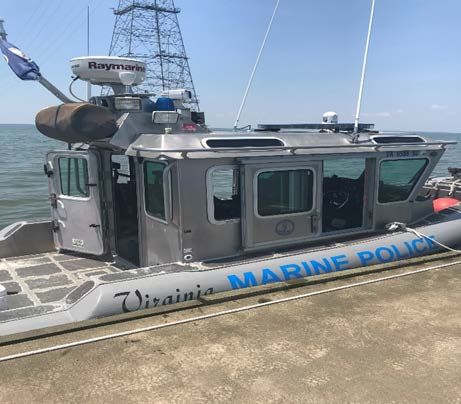
TABLE OF CONTENTS
Report Acronyms ............................................................................................................................................... 1
Background ......................................................................................................................................................... 2
Scope.................................................................................................................................................................... 4
Objectives............................................................................................................................................................ 4
Methodology ....................................................................................................................................................... 4
Findings ............................................................................................................................................................... 6
    Section 1 – A Significant Lack of Diversity Among Natural Resources Law Enforcement ............. 6
             Observation 1A – Need for a Collaborative Diversity Strategy .................................................... 6
             Observation 1B – Need for Legislative Change in Hiring Practices That Disallow Outside
             Hires .....................................................................................................................................................13
    Section 2 – Lack of Targeted and Strategic Community Engagement................................................15
             Observation 2A – Prioritize Investments in Community Engagement .....................................15
             Observation 2B –Involve NRLE Officers More to Enhance Community Engagement .......17
             Observation 2C – Better Involvement of External Partners to Enhance Community
             Engagement ........................................................................................................................................19
             Observation 2D – Better Coordinate Community Engagement Events ...................................20
    Section 3 – Need for Diversity and Inclusion Strategic Plan Improvements ....................................23
             Observation 3A – Establish and Improve Diversity and Inclusion Strategic Plans.................23
             Observation 3B – Collect Evidence on Outreach Events to Enhance Future Programming25
             Observation 3C – Focus on Future Interest in NRLE Careers ..................................................27
    Section 4 – Need for Diversity-Focused Recruitment...........................................................................29
             Observation 4A – Expand Recruitment to Reach Diverse Populations ...................................29
             Observation 4B – Evaluate and Modify Hiring Practices ............................................................30
    Section 5 – Lack of Effective Diversity Recruitment Analysis.............................................................33
             Observation 5A – Collect and Analyze NRLE Employment Data ............................................33
Audit Results.....................................................................................................................................................35
Appendix I – Diversity in Hiring and Recruitment of NRLE – Survey Results ...................................... 1
Appendix II – DWR Corrective Action Plan ................................................................................................ 1
Appendix III – VMRC Corrective Action Plan ............................................................................................ 1
Appendix IV – DCR Corrective Action Plan ................................................................................................ 1
2021-PA-002
                                                           OFFICE OF THE STATE INSPECTOR GENERAL

REPORT ACRONYMS
The following is an alphabetical list of acronyms used in the report. This page should be helpful
in identifying what each acronym represents.

CPO – Conservation Police Officer
CO – Conservation Officer/Park Ranger
DCJS – Department of Criminal Justice Services
DCR – Department of Conservation and Recreation
DWR – Department of Wildlife Resources
DVS – Department of Veterans Services
EEO – Equal Employment Opportunity
MPO – Marine Police Officer
NRLE – Natural Resources Law Enforcement
VMRC – Virginia Marine Resources Commission

                                                                                               1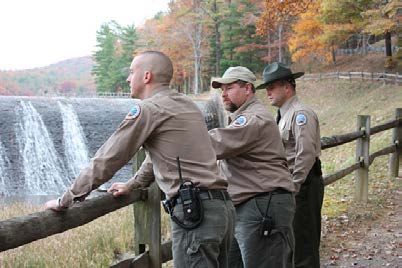
2021-PA-002
                                                           OFFICE OF THE STATE INSPECTOR GENERAL

BACKGROUND
The Secretary of Natural Resources advises the Governor on natural resources issues and works
to advance the Governor's top environmental priorities. The Secretary oversees five agencies,
including the Virginia Department of Conservation and Recreation (DCR), the Virginia
Department of Wildlife Resources (DWR, formerly known as the Virginia Department of Game
and Inland Fisheries) and the Virginia Marine Resources Commission (VMRC) that protect and
restore the Commonwealth’s natural and historic resources. 1 Natural Resources Law
Enforcement (NRLE) officers are trained in conventional policing techniques and specialized
skills according to the services provided by their agency. OSIG discusses the observable
differences in each agency’s law enforcement duties below.

Virginia Department of Wildlife Resources
DWR CPOs, formerly known as Game Wardens,
enforce the laws related to hunting, fishing and
boating; educate the public and offer assistance in a
wide variety of enforcement activities. DCJS fully
certifies CPOs with the authority to enforce all of the
laws of the Commonwealth.
                                                            Source: dgif.virginia.gov

Virginia Marine Resources Commission
MPOs enforce state and federal commercial and
recreational fishery laws and regulations with full
arrest powers throughout the Commonwealth. They
also conduct search and rescue operations; enforce
boating safety laws; respond to emergency calls;
investigate boating accidents and criminal activity;
and provide counter-terrorism patrols to military
installations, shipyards, nuclear power plants and
other high-value maritime assets. DCJS also certifies
MPOs.
                                                          Source: Taken by OSIG on 6.17.19, Leeward
                                                          Marina, Newport News, VA

1
    https://www.naturalresources.virginia.gov/

                                                                                                      2
2021-PA-002
                                                                        OFFICE OF THE STATE INSPECTOR GENERAL

Virginia Department of Conservation and Recreation
DCR COs serve in park maintenance and
management capacities with law enforcement powers
and duties for Virginia’s 37 state parks, 63 natural
area preserves and more than 700 miles of trails. 2 CO
park management duties include training and
supervising seasonal/wage staff, volunteers and other
work program participants; assisting with the
maintenance of facilities and grounds and the delivery
of educational programs. Non-policing
responsibilities account for a large part of CO                       Source: dcr.virginia.gov

responsibilities when compared to other natural
resources and conventional law enforcement agencies.

Diverse Law Enforcement Recruitment Challenges
NRLE agencies are at various stages of developing strategies to improve diversity recruitment
and hiring. For example, DCR began a diversity and inclusion initiative in 2017 to ensure the
entire agency optimized, supported and celebrated a workforce that is diverse and a work
environment that is inclusive. 3 In December 2019, DWR hired a Chief Diversity and Inclusion
Officer whose responsibility includes developing the agency’s diversity and inclusion strategic
plan. VMRC has not actively begun the process of developing a diversity and inclusion plan.

NRLE agencies’ management identified challenges with the recruitment of women and people of
color such as limited resources for recruitment activities and a lack of diverse public interest in
outdoor recreation services provided by their agencies. Each agency has its own Human
Resources Department with different internal recruitment and hiring processes.

OSIG Audit Planning Activities
OSIG spent a full day each in the field with COs, CPOs and MPOs. These ride-alongs provided
OSIG with additional understanding of each agency’s organization, responsibility, public
interaction and authority, which affect recruitments. OSIG found that most officers’ interest in
hunting, fishing and outdoor recreation at a young age was an important factor in their decision
to pursue a career in natural resources law enforcement.

Additionally, to gain a better understanding of each NRLE agency’s administration of diversity
and inclusion recruitment and hiring practices, as well as their support of an inclusive work
environment, OSIG conducted a survey of COs, CPOs and MPOs. OSIG sent the survey to 325

2 http://publicreports.dpb.virginia.gov/rdPage.aspx?rdReport=vp_StratPlan102&run=Run&selAgency=199&selVersion=2018-20
3 DCR Conservation and Recreation Employment Opportunities Plan, October 2017

                                                                                                                        3
2021-PA-002
OFFICE OF THE STATE INSPECTOR GENERAL
officers and received 301 responses (17 of the 301 responses were incomplete). A summary of
the survey results are in Appendix I.
OSIG retained the services of Dr. Kendra L. Smith, Director of Community Engagement at the
University of Houston College of Medicine, to assist with developing the audit scope and
objectives, interpreting the results of audit testing, developing audit findings and
recommendations, and reviewing the draft report to ensure it accurately reflects results of the
audit.
SCOPE
The audit scope covered diversity recruitment and hiring within the three law enforcement
agencies under the Secretary of Natural Resources (DCR, DWR and VMRC) from fiscal year
(FY) 2014 through FY 2019.
OBJECTIVES
The objectives of this audit were to determine if:
• Current diversity recruitment strategies are consistent with similar size and type of law
enforcement agencies and if the strategies are effective in increasing the number of
female and minority candidates who apply for law enforcement positions.
• Agencies hold pre-employment testing at a time of year and with sufficient advance
notice to attract female and minority candidates.
• The application screening, testing and interview processes are current and/or align with
true requirements of the job that would not exclude females and minorities from being
offered law enforcement positions.
• NRLE management and administration support an inclusive work environment and
provide employee training to promote a culture free from discrimination towards women
and minorities.
• Current NRLE outreach and educational programs are designed to offer opportunities to
all Virginians and promote interest in hunting, fishing and outdoor recreation.
METHODOLOGY
OSIG conducted this performance audit in accordance with generally accepted government
auditing standards. Those standards require that OSIG plan and perform the audit to obtain
sufficient, appropriate evidence to provide a reasonable basis for the findings and conclusions
based on the audit objectives. OSIG believes that the evidence obtained provides reasonable
basis for the findings and conclusion based on the audit objectives.
42021-PA-002
OFFICE OF THE STATE INSPECTOR GENERAL
OSIG applied various methodologies during the audit process to gather and analyze information
pertinent to the audit scope and to assist with developing and testing the audit objectives. The
methodologies included the following:
• Surveying CO’s, CPO’s and MPO’s.
• Analyzing individual NRLE agency recruitment activities, hiring policies and procedures.
• Interviewing key NRLE officers and the agencies’ management.
• Researching state and national natural resources law enforcement exemplars.
• Interviewing representatives of Virginia state law enforcement and out-of-state and
federal natural resources law enforcement.
• Benchmarking recruitment and hiring trends of NRLE agencies to Virginia state law
enforcement and out-of-state and federal natural resources law enforcement.
• Examining a sample of recruitment files from each NRLE agency. To select OSIG’s
sample of recruitment files for each agency, auditors identified each agency’s law
enforcement recruitment announcements within the scope where the number of
applications was above the average number of applicants for the recruitments in the
population. Random selection from that subset was used to establish the final sample.
The sample was not used to extrapolate conclusions to the entire population.
• Interviewing representatives of civil, educational and/or social natural resources
organizations.
• Observing NRLE educational, recruitment and community engagement events.
52021-PA-002
OFFICE OF THE STATE INSPECTOR GENERAL
FINDINGS
SECTION 1 – A SIGNIFICANT LACK OF DIVERSITY AMONG NATURAL RESOURCES LAW
ENFORCEMENT
Data analysis showed that at DWR, DCR and VMRC, 95 percent, 96 percent and 97 percent of
law enforcement were of white (non-Hispanic or Latino) ethnicity when compared to 70 percent
of the Commonwealth’s general population.
NRLE Workforce Composition by Ethnicity for
Fiscal Year 2018
Compared to Commonwealth of Virginia
General Population
95.21% 96.30% 96.88%
100.00%
90.00%
80.00% 69.50%
70.00%
60.00%
50.00%
40.00%
30.00% 0.00% 19.90%
0.00% 1.80% 0.00% 0.00% 0.00%
20.00% 6.90% 9.60%
10.00% 0.60% 2.40% 0.00% 3.70% 1.56% 1.56% 0.00%
0.00%
DWR DCR MRC Virginia Population
American Indian or Alaska Native (non-Hispanic or Latino)
Asian
Black or African American (non-Hispanic or Latino)
Hispanic or Latino
White (non-Hispanic or Latino)
Data for workforce composition from University of Virginia – Weldon Cooper Center for Public Service (2018 U.S. Census Age & Sex, Race and Hispanic
Estimates for Virginia’s Counties & Cities), FY18 EEO Category - Protective Service Worker for DCR, DGIF, and VMRC. American Indian or Alaska Native
statistics and races designated as “Other” or “2 or More Races” not included in Virginia Population data shown above; however, Hispanic and Latino population
data was included for context.
OBSERVATION 1A – NEED FOR A COLLABORATIVE DIVERSITY STRATEGY
Applies to:
• DWR
• VMRC
• DCR
Analysis of Equal Employment Opportunity (EEO) – Protective Service Worker data for DWR,
DCR and VMRC shows that 95 percent, 96 percent and 97 percent of law enforcement were of
white (non-Hispanic or Latino) ethnicity when compared to 70 percent of the Commonwealth’s
general population. The disproportion in the percentage of male officers at each agency was
62021-PA-002
OFFICE OF THE STATE INSPECTOR GENERAL
similar as DWR, DCR and VMRC were 94 percent, 90 percent and 98 percent male when only
49 percent of Virginia’s general population was male in 2018.
DHRM EEO applicant data between FY 2014 and FY 2018 indicated white persons (non-
Hispanic or Latino) also made up the majority of applicants for NRLE positions. For those
applicants who chose to identify race, the percentage of minority applicants at DWR ranged from
a high of 16 percent in FY 2014 and FY 2015 to a low of nine percent in FY 2018, while white
applicants ranged from a high of 82 percent in FY 2018 to a low of 61 percent in FY 2017. Of
127 applicants interviewed between FY 2014 and FY 2018, six were people of color, or
approximated five percent. One minority was hired each year for three out of the five years
reviewed while in the remaining two years no minorities were hired.
DWR - DHRM EEO Protective Service Worker Applicant Data
800
700
# OF APPLICANTS
600
500
400
300
200
100
0
2014 2015 2016 2017 2018
# of Applicants
Sum of Non-Minorities 181 593 748 45 73
Sum of Minorities 37 115 127 9 8
Sum of Unknown 10 27 163 20 8
Non-minority % 79% 81% 72% 61% 82%
Minority % 16% 16% 12% 12% 9%
Unknown % 4% 4% 16% 27% 9%
DWR - DHRM EEO Protective Service Worker Interviewee Data
60
50
# OF INTERVIEWEES
40
30
20
10
0
2014 2015 2016 2017 2018
# of Interviewees
Sum of Non-Minorities 11 6 32 12 52
Sum of Minorities 0 0 1 1 4
Sum of Unknown 0 0 2 2 4
Non-minority % 100% 100% 91% 80% 87%
Minority % 0% 0% 3% 7% 7%
Unknown % 0% 0% 6% 13% 7%
72021-PA-002
OFFICE OF THE STATE INSPECTOR GENERAL
DWR - DHRM EEO Protective Service Worker Offers/Hires
35
30
# OFFERS/HIRES
25
20
15
10
5
0
2014 2015 2016 2017 2018
# of Offers/Hires
Sum of Non-Minorities 11 26 32 4 12
Sum of Minorities 0 1 1 1 0
Sum of Unknown 1 0 2 1 1
Non-minorities % 92% 96% 91% 67% 92%
Minorities % 0% 4% 3% 17% 0%
Unknown % 8% 0% 6% 17% 8%
Of all MPO applicants between FY 2014 through FY 2018, 60-72 percent were white (non-
Hispanic or Latino). VMRC had the greatest percentage of minority applicants of the three
NRLE agencies, with a high of 40 percent in FY 2017. Of the 53 applicants interviewed between
FY 2014 and FY 2018, seven were people of color, or 13 percent. In only two of the five years
reviewed were minority applicants hired, and in two years reviewed all applicants interviewed
and hired were white (non-Hispanic or Latino). There was no evidence of hiring activity in FY
2015.
VMRC - DHRM Protective Service Worker Applicant Data
300
# OF APPLICANTS
250
200
150
100
50
0
2014 2015 2016 2017 2018
# of Applicants
Sum of Non-minorities 248 0 65 3 45
Sum of Minorities 121 0 17 2 20
Sum of Unknown 20 0 8 0 7
Non-minorities % 64% 0% 72% 60% 63%
Minorities % 31% 0% 19% 40% 28%
Unknown % 5% 0% 9% 0% 10%
82021-PA-002
OFFICE OF THE STATE INSPECTOR GENERAL
VMRC - DHRM Protective Service Worker Interviewee Data
30
# OF INTERVIEWEES
25
20
15
10
5
0
2014 2015 2016 2017 2018
# of Interviewees
Sum of Non-Minorities 25 0 7 2 8
Sum of Minorities 6 0 0 0 1
Sum of Unknown 4 0 0 0 0
Non-minorities % 71% 0% 100% 100% 89%
Minorities % 17% 0% 0% 0% 11%
Unknown % 11% 0% 0% 0% 0%
VMRC - DHRM Protective Service Worker Offers/Hires
10
9
# OF OFFIERS/HIRES
8
7
6
5
4
3
2
1
0
2014 2015 2016 2017 2018
# of Hires/Offers
Sum of Non-Minorities 6 0 3 2 1
Sum of Minorities 3 0 0 0 1
Sum of Unknown 1 0 0 0 0
Non-minorities % 60% 0% 100% 100% 50%
Minorities % 30% 0% 0% 0% 50%
Unknown % 10% 0% 0% 0% 0%
During the years reviewed with DCR CO positions, white persons (non-Hispanic or Latino)
accounted for approximately 63-83 percent of all applicants. The number of minority applicants
during the same period ranged from a low of nine percent in 2016 to a high of 15 percent in
2015. Auditors found that the only year people of color were hired for CO positions was in 2015
when people of color made up eight percent of new hires, or one of the twelve new hires, while
whites made up 75-100% all new hires during the years reviewed. The remaining percentage
accounted for those hires whose demographics were unknown.
92021-PA-002
OFFICE OF THE STATE INSPECTOR GENERAL
DCR - DHRM EEO Protective Service Worker Applicant Data
500
450
# OF APPLICANTS
400
350
300
250
200
150
100
50
0
2014 2015 2016 2017 2018
# of Applicants
Sum of Non-Minorities 354 460 252 306 190
Sum of Minorities 63 87 34 42 24
Sum of Unknown 35 33 112 69 16
Non-minority % 78% 79% 63% 73% 83%
Minority % 14% 15% 9% 10% 10%
Unknown % 8% 6% 28% 17% 7%
DCR - DHRM EEO Protective Service Worker Interviewee Data
50
45
# OF INTERVIEWEES
40
35
30
25
20
15
10
5
0
2014 2015 2016 2017 2018
# of Interviewees
Sum of Non-Minorities 5 48 13 31 25
Sum of Minorities 1 6 0 1 1
Sum of Unknown 0 0 3 7 3
Non-Minority % 83% 89% 81% 79% 86%
Minority % 17% 11% 0% 3% 3%
Unknown % 0% 0% 19% 18% 10%
102021-PA-002
OFFICE OF THE STATE INSPECTOR GENERAL
DCR - DHRM EEO Protective Service Worker Offers/Hires
20
# OFFERS/HIRES
15
10
5
0
2014 2015 2016 2017 2018
# of Offers/Hires
Sum of Non-Minorities 8 12 9 9 8
Sum of Minorities 0 1 0 0 0
Sum of Unknown 0 0 1 3 1
Non-Minority % 100% 92% 90% 75% 89%
Minority % 0% 8% 0% 0% 0%
Unknown % 0% 0% 10% 25% 11%
Each agency is responsible for recruitment and hiring actions consistent with Policy 2.05 – Equal
Employment Opportunity, to ensure procedures are conducted with regard to Executive Order
Number One (2018) Equal Opportunity. The policy directs state appointing authorities, or
agency heads as specified in the Virginia Personnel Act, Code of Virginia § 2.2-2900, to take
affirmative measures, as determined by the Director of the Department of Human Resource
Management, to emphasize the recruitment of qualified minority, women, disabled persons and
older Virginians to serve at all levels of state government without lowering job requirements,
performance standards or qualifications.
Although there is similarity across NRLE agencies, each agency addressed diversity in its own
way. There was no collaborative effort to improve diversity and inclusion. NRLE lacks diversity
reflective of the citizens of the Commonwealth of Virginia and that has also affected these
agencies’ abilities to attract, recruit and hire women and people of color. Sixty percent of NRLE
survey respondents (171 of 284) indicated that no people of color and 48 percent of the
respondents (137 of 284) indicated that no female NRLE officers were assigned to their field
office.
Recommendation 1A
DCR, DWR and VMRC, in collaboration with and under the guidance of the Secretary of
Natural Resources and the Commonwealth’s Chief Diversity, Equity and Inclusion
Officer, must work to improve diversity and inclusion. This must be accomplished
through the establishment of a shared recruiter, a diversity and inclusion officer for each
agency and a community engagement director for each agency (who might be selected
from current staff).
112021-PA-002
OFFICE OF THE STATE INSPECTOR GENERAL
The shared recruiter’s responsibilities should include:
• Development of individual agency recruitment plans as part of annual diversity and
inclusion strategic planning to include annual reviews of applicant and hiring data to
determine and implement best practices.
• Implementation of targeted recruitment strategies and activities as described in the
plan in collaboration with each agency’s diversity and inclusion officer and
community engagement directors.
• Documentation of activities to evaluate how working with established partners
contributes to a more diverse and robust applicant pool.
• Review of results of all recruitment activities and identification of recruitment
sources that lead to achieving a diverse pool of applicants. The results should be
reported to agency management, the Secretary of Natural Resources and the
Commonwealth’s Chief Diversity, Equity and Inclusion Officer.
The community engagement director may be reallocated from officers or staff who might
be performing marketing or outreach efforts. With this reallocation, it is expected that the
community engagement director will specialize in efforts to increase agency recognition,
regularly engage with relevant stakeholders to gain feedback and input, and seek
opportunities for collaboration.
The agency community engagement director should:
• Create an internal community engagement task force or work group.
• Develop a community engagement plan.
• Establish benchmarks to evaluate the effectiveness of diversity recruitment and
retention efforts.
DWR Management Response(s):
DWR concurs with all the conditions observed and recommendations as presented
with the following response:
• Shared Recruiter: While we believe the best recruitment for law enforcement
officers are those who serve in that capacity however, there are benefits DWR can
derive from centralized coordination in a share recruiter.
• Diversity and Inclusion Officer: DWR hired a chief diversity and inclusion officer
in November 2019.
• Community engagement director will work in conjunction with both the Outreach
and Law divisions and the chief diversity and inclusion officer to develop and
execute a community engagement plan.
122021-PA-002
OFFICE OF THE STATE INSPECTOR GENERAL
DWR Corrective Action Plan:
Appendix II contains DWR’s corrective action plan to address the above
recommendations.
VMRC Management Response:
VMRC concurs with all conditions observed and recommendations as presented.
VMRC Corrective Action Plan:
Appendix III contains VMRC’s corrective action plan received to address the above
recommendations.
OSIG Response:
VMRC management response does not include establishing a community
engagement director. Leadership for the transition to a community engagement
approach is necessary to guide and implement actions that secure a strong
community presence.
DCR Management Response:
DCR concurs with all except the shared recruiter as our requirements for LE are
different from other NRLE agencies.
DCR Corrective Action Plan:
Appendix IV contains DCR’s corrective action plan received to address the above
recommendations.
OSIG Response:
DCR management’s action plan does not include hiring a diversity, equity and
inclusion officer. As such, there is a risk that adding to the duties of the Deputy
Director of Government and Community Relations position will make it difficult
to devote the time and effort needed to ensure the findings throughout this report
are resolved.
OBSERVATION 1B – NEED FOR LEGISLATIVE CHANGE IN HIRING PRACTICES THAT DISALLOW OUTSIDE HIRES
Applies to:
• DWR
Internal promotion requirements contained in the Code of Virginia, § 29.1-200 disallow the
outside hiring of an individual to a non-entry level DWR law enforcement position. These
requirements are not conducive to achieving diversity at DWR. This policy has the unintended
132021-PA-002
OFFICE OF THE STATE INSPECTOR GENERAL
consequence of perpetuating a lack of diversity throughout the organization because it limits the
introduction of women and employees of color to entry-level jobs, which slows the effort to
increase diversity. The introduction of diverse law enforcement officers should take place at all
levels and not just entry-level positions.
Recommendation 1B
The limitation for internal promotions was rescinded in 2020 with the passage of SB882.
As such, no further recommendation is made.
142021-PA-002
OFFICE OF THE STATE INSPECTOR GENERAL
SECTION 2 – LACK OF TARGETED AND STRATEGIC COMMUNITY ENGAGEMENT
Although agencies hold community events, opportunities exist to better plan events that result in
improved community engagement.
OBSERVATION 2A – PRIORITIZE INVESTMENTS IN COMMUNITY ENGAGEMENT
Applies to:
• DWR
• VMRC
• DCR
NRLE agencies have not strategically planned outreach events to attract target populations,
including underserved communities that have low participation in outdoor recreation. For
example, DCR held a Black History Month event designed for youth at a state park that had
significant Black history, but it was located in a less populated area. OSIG found that the event
had no attendees. Other outreach events attended by OSIG were targeted to populations already
interested in and engaged in outdoor recreation.
Consistent and intentional community engagement signals bidirectional involvement between
NRLE agencies and target populations. If implemented correctly, recruitment and program
participation from individuals in the target populations will be an outcome of the engagement.
NRLE agencies are using unidirectional engagement techniques, where events and information
are shared with the public, but there lacks involvement from individuals from the targeted
population who could provide input and feedback on events and identify new opportunities to
reach underrepresented populations. Moreover, evidence of target populations’ access, interest
and sources of information about natural resources is lacking. Regular community engagement
will improve access to information and increase interest.
The lack of targeted community engagement contributes to less than desirable diverse population
participation in natural resources activities and events, which contributes to a lack of diversity
within NRLE.
Recommendation 2A
NRLE agencies must strategically prioritize investments and allocate resources to:
• Create a community engagement director position that will develop and execute
engagement strategies.
• Transition from marketing and outreach to a community engagement approach (as
illustrated below).
• Seek bidirectional engagement with agencies and individuals from target populations
to increase feedback on engagement approach.
152021-PA-002
OFFICE OF THE STATE INSPECTOR GENERAL
• Seek opportunities to collaborate with special interest groups that align with target
populations.
• Increase participation by individuals from the target populations.
DWR Management Response:
DWR concurs with the condition observed and recommendations as presented with
the following statement:
DWR has begun a campaign of outreach to outdoor affinity organizations which
represent underserved populations. DWR will support and sponsor their existing
programs which are aligned with agency missions. The next step is targeting
school districts in Hampton Roads, Central Virginia and Northern Virginia with
pilot programs designed to introduce students to the enjoyment of the outdoors.
Challenges will include economic, cultural and political disconnects with the
activities typically promoted by DWR.
DWR Corrective Action Plan:
Appendix II contains DWR’s corrective action plan to address the above
recommendations.
VMRC Management Response:
VMRC partially concurs with the condition observed and recommendation(s) as
presented.
162021-PA-002
OFFICE OF THE STATE INSPECTOR GENERAL
VMRC Corrective Action Plan:
Appendix III contains VMRC’s corrective action plan received to address the above
recommendations.
OSIG Response
See OSIG comment to VMRC corrective action for recommendation 1A.
DCR Management Response:
DCR concurs with the condition observed and some recommendations as presented.
DCR Corrective Action Plan:
Appendix IV contains DCR’s corrective action plan received to address the above
recommendations.
OSIG Response
DCR management response does not address all of the recommended actions and
as such, there is a risk of the findings remaining unresolved.
OBSERVATION 2B –INVOLVE NRLE OFFICERS MORE TO ENHANCE COMMUNITY ENGAGEMENT
Applies to:
• DWR
• VMRC
• DCR
Although NRLE agencies have educational and outreach representatives, there is a lack of
strategic engagement from law enforcement. Law enforcement officer involvement is based on
officer availability and not strategic planning. As a result, there are fewer strategic interactions
between interested youth or recruits and NRLE officers. In order to reach underrepresented
populations and increase interest in natural resources activities, NRLE must use available
resources to engage those populations.
When NRLE agencies host outreach events where officers are present, the events are not
attended by youth from populations underrepresented in NRLE. Moreover, no formal evaluation
of event outcomes takes place to assess the success or failures of agency outreach and marketing
programs. NRLE agencies need to hold on a regular basis events designed specifically for
attracting diverse populations to outdoor recreation and natural resources law enforcement.
172021-PA-002
OFFICE OF THE STATE INSPECTOR GENERAL
The lack of targeted community engagement contributes to less than desirable diverse population
participation in natural resources activities and events, which contributes to a lack of diversity
within NRLE.
Recommendation 2B
NRLE agencies must strategically use law enforcement officers to plan and execute
community engagement activities to improve public perception and increase awareness
among underserved and youth populations about natural resources law enforcement.
DWR Management Response:
DWR concurs with the condition observed and recommendation as presented with
the following statement:
Sergeant Michael Hill has represented DWR’s Conservation Police Officers for
several years in this capacity. Future efforts will be coordinated with the NRLE
recruiting coordinator, the community engagement director and the DWR chief
diversity officer.
DWR Corrective Action Plan:
Appendix II contains DWR’s corrective action plan to address the above
recommendation.
VMRC Management Response:
VMRC concurs with the condition and recommendation as presented.
VMRC Corrective Action Plan:
Appendix III contains VMRC’s corrective action plan received to address the above
recommendation.
OSIG Response
VMRC management response does not address law enforcement involvement in
the development or implementation of the strategic community engagement plan as
recommended.
DCR Management Response(s):
DCR does not concur with the condition observed but concurs with the
recommendation as presented.
182021-PA-002
OFFICE OF THE STATE INSPECTOR GENERAL
DCR Corrective Action Plan:
Appendix IV contains DCR’s corrective action plan received to address the above
recommendation.
OBSERVATION 2C – BETTER INVOLVEMENT OF EXTERNAL PARTNERS TO ENHANCE COMMUNITY ENGAGEMENT
Applies to:
• DWR
• VMRC
• DCR
Agency marketing is limited to social media and information posted on agency internet sites.
DWR and DCR outreach events observed by OSIG were targeted to populations already
interested in outdoor recreation (VMRC did not hold any outreach events during OSIG
observations). Similar to previous notes about community engagement, this type of unfocused
and unintentional marketing is not sufficient. Conventional and historical methods of marketing
to populations underrepresented in natural resources law enforcement affects the ability to attract
candidates that lead to a more diverse law enforcement workforce.
NRLE agencies must talk with community partners to gain input on their engagement approach
and develop opportunities for collaboration. Ongoing involvement with partners will support
more effective marketing that will attract populations who have not had an opportunity to
experience the outdoors and, in turn, to interest diverse youth who may be future NRLE officers.
Recommendation 2C
The agencies must establish:
• Partnerships with organizations who serve underrepresented communities.
• Advisory relationships with partners to identify new opportunities for engagement and
recruitment.
• An internal system to track and evaluate engagement activities with partner groups
underrepresented in outdoor recreation.
• Joint programming with relevant stakeholders.
DWR Management Response(s):
DWR concurs with the condition observed and recommendations as presented with
the following statement:
In the last several months, DWR has established relationships with outdoor
affinity organizations such as Outdoor Afro, Latino Outdoors, National African
American Gun Association, and ARTEMIS in anticipation of sponsoring and
192021-PA-002
OFFICE OF THE STATE INSPECTOR GENERAL
promoting events in that target their members and constituencies. DWR is also in
discussions with Green Top Sporting Goods to develop programs for
underrepresented populations.
DWR Corrective Action Plan:
Appendix II contains DWR’s corrective action plan to address the above
recommendations.
VMRC Management Response(s):
VMRC concurs with the condition and recommendations as presented.
VMRC Corrective Action Plan:
Appendix III contains VMRC’s corrective action plan received to address the above
recommendations.
OSIG Response
VMRC does not provide a system of tracking and evaluation the effectiveness of
engagement activities.
DCR Management Response(s):
DCR concurs with the condition and recommendations as presented.
DCR Corrective Action Plan:
Appendix IV contains DCR’s corrective action plan received to address the above
recommendations.
OSIG Response
The DCR plans to review current program partnerships but does not account for the
establishment of new partnerships with diverse organizations that could help them
reach their goal.
OBSERVATION 2D – BETTER COORDINATE COMMUNITY ENGAGEMENT EVENTS
Applies to:
• DWR
• VMRC
• DCR
NRLE agencies do not collaborate in developing community engagement events and as such
OSIG found few joint events among the agencies. The three agencies have interrelated purposes
in natural resources and people attracted to one agency’s event may likely find something of
202021-PA-002
OFFICE OF THE STATE INSPECTOR GENERAL
interest at another agency’s event. There has not been a strategic effort to attract populations
underrepresented in natural resources law enforcement through coordinated events. This lack of
coordination appears to be a lost opportunity to save on resources and expand the reach of each
agency. A lack of marketing to populations underrepresented in natural resources law
enforcement have impacted the ability to attract candidates that lead to a more diverse law
enforcement.
Recommendation 2D
NRLE agencies must leverage each other’s abilities to increase public interest and
introduce populations with low participation to natural resources services. The Secretary
of Natural Resources and the Commonwealth’s Chief Diversity, Equity and Inclusion
Officer should organize the collaboration, with fiscal responsibility shared among all
NRLE agencies. Each agency must:
• Develop a joint community engagement plan that identifies methods and metrics for
engaging populations traditionally underrepresented in NRLE, integrated recruitment
strategies and pipeline/activity planning as part of an NRLE diversity and inclusion
strategic plan (as discussed in Section 3).
• Implement community engagement activities to include, but not be limited to,
coordination among natural resources agencies to reach individuals from targeted
groups in support of robust outreach efforts.
• Evaluate and report community engagement outcomes to agency management, the
Secretary of Natural Resources and the Commonwealth’s Chief Diversity, Equity and
Inclusion Officer.
DWR Management Response:
DWR concurs with the condition observed and recommendations as presented.
DWR Corrective Action Plan:
Appendix II contains DWR’s corrective action plan to address the above
recommendations.
OSIG Response
The DWR plan lacks a methodology to evaluate and report to agency management,
the Secretary of Natural Resources and the Commonwealth’s Diversity, Equity and
Inclusion Officer.
VMRC Management Response:
VMRC concurs with the condition and recommendations as presented
212021-PA-002
OFFICE OF THE STATE INSPECTOR GENERAL
VMRC Corrective Action Plan:
Appendix III contains VMRC’s corrective action plan received to address the above
recommendations.
OSIG Response
As with DWR, VMRC‘s plan does not include the evaluation of outcomes and
reporting to agency management, the Secretary of Natural Resources and the
Commonwealth’s Diversity, Equity and Inclusion Officer.
DCR Management Response:
DCR concurs with the condition and recommendations as presented.
DCR Corrective Action Plan:
Appendix IV contains DCR’s corrective action plan received to address the above
recommendations.
OSIG Response
The DCR plan does not reference the evaluation of outcomes and reporting
mechanisms for agency management as well as to the Secretary of Natural
Resources and the Commonwealth’s Diversity, Equity and Inclusion Officer.
222021-PA-002
OFFICE OF THE STATE INSPECTOR GENERAL
SECTION 3 – NEED FOR DIVERSITY AND INCLUSION STRATEGIC PLAN IMPROVEMENTS
Strategic plans for diversity and inclusion are lacking when compared to states leading with
NRLE diversity. During the last 20 years, exemplars such as the Mississippi Department of
Wildlife, Fisheries and Parks have transformed their agencies to reflect the diversity of their
states’ populations. Since the adoption of the Diversity Action Plan, Mississippi NRLE has
become almost equally proportionate with regard to white officers and officers of color. The
Diversity Action Plan contains immediate and long term actions required of the agency, such as
establishing an agency Chief of Diversity and Equal Opportunity Officer, a cross-disciplinary
recruitment team made up of interviewers from various demographic and gender backgrounds,
and partnerships with diverse organizations.
OBSERVATION 3A – ESTABLISH AND IMPROVE DIVERSITY AND INCLUSION STRATEGIC PLANS
Applies to:
• DWR
• VMRC
• DCR
Diversity strategic plans are at different developmental stages among Virginia NRLE agencies.
In FY 2018, DCR developed a strategic plan to improve diversity and inclusion in all areas
including law enforcement; however, the plan does not include defined performance measures
and a system for reporting results. DWR and VMRC have not developed diversity strategic
plans.
Just as plans are important to overall agency operations, diversity and inclusion efforts are
similarly vital and need to be strategically planned. The steps for addressing a lack of diversity at
an organization include outlining a specific mission for diversity, establishing goals and
strategies, and taking actions toward the recruitment and hiring of people of varying genders,
ethnicities and/or religious affiliations.
Strategic planning in diversity and inclusion has not been a focus of Virginia NRLE until DWR
hired a Chief Diversity and Inclusion Officer in December 2019 and DCR established a diversity
and inclusion strategic plan in October 2017. The absence of a focus on diversity and inclusion
strategic planning has potentially resulted in fewer women and persons of color in the role of law
enforcement.
Recommendation 3A
Strategic plans to improve diversity and inclusion in NRLE agencies must progress or
begin. Agency management must refer to exemplars such as Mississippi NRLE agencies
232021-PA-002
OFFICE OF THE STATE INSPECTOR GENERAL
and other Virginia agencies that have diversity and inclusion strategic plans that may be
used as models:
• NRLE agencies must establish workgroups or task forces with selected leadership and
a system of reporting implementation results to executive management.
• NRLE agencies must seek and use guidance provided by the Secretary of Natural
Resources, the Commonwealth’s Chief Diversity, Equity and Inclusion Officer and
the Department of Human Resources Management (DHRM) to support the
development and implementation of diversity and inclusion strategic plans and related
workforce development training.
• NRLE agencies must provide regular status reports on the implementation and
progression of NRLE diversity and inclusion strategic plans to the Secretary of
Natural Resources and the Commonwealth’s Chief Diversity, Equity and Inclusion
Officer.
DWR Management Response:
DWR concurs with the condition observed and recommendations as presented with
the following statement:
Pursuant to guidance from the Commonwealth’s Chief Diversity, Equity,
Inclusion Officer, DWR has empaneled an Inclusive Excellence Task Force
comprised of members of the workforce charged with the development of the
DWR Inclusive Excellence Strategic Plan.
DWR does refer to exemplar agencies which have made strides in diversity,
equity, and inclusion efforts. In fact, it was DWR who suggested the Mississippi
example to OSIG following a visit by agency leadership to that agency in order to
learn more about their efforts.
DWR Corrective Action Plan:
Appendix II contains DWR’s corrective action plan to address the above
recommendation(s).
VMRC Management Response(s):
VMRC concurs with the condition and recommendation(s) as presented.
VMRC Corrective Action Plan:
Appendix III contains VMRC’s corrective action plan received to address the above
recommendations.
242021-PA-002
OFFICE OF THE STATE INSPECTOR GENERAL
DCR Management Responses:
DCR concurs with the condition and recommendations as presented.
DCR Corrective Action Plan:
Appendix IV contains DCR’s corrective action plan received to address the above
recommendations.
OSIG Response
The DCR plan does not include guidance from the recommended external resources
to invigorate diversity and inclusion efforts, and is more of a continuation of
existing tactics that have not led to attracting a more diverse workforce.
OBSERVATION 3B – COLLECT EVIDENCE ON OUTREACH EVENTS TO ENHANCE FUTURE PROGRAMMING
Applies to:
• DWR
• DCR
• VMRC
No formal assessment of past outreach events exists so there is no evidence about program value,
participant demographics and the perceived benefits by participants (discussed in Section 2).
However, based on a survey of attendees at the Western Virginia Sports Show with DWR, OSIG
noted the following:
• Family was identified by 65
of 85 respondents as a reason
they became interested in
hunting and fishing.
• Five of 85 respondents
identified natural resources
programs as a reason they
became interested in hunting
and fishing. Of those five,
two were youth (under age
16).
Note: Respondents could choose more than one option.
Effective diversity and inclusion strategic plans identify opportunities to expand services to
underserved populations. As previously discussed, diversity and inclusion strategic plans need
improvement. Without evaluating opportunities from the past, strategic plans will not be as
effective.
252021-PA-002
OFFICE OF THE STATE INSPECTOR GENERAL
Recommendation 3B
NRLE agencies must include in their diversity and inclusion strategic plans:
• A methodology to evaluate how well outreach events touch populations with low
participation in outdoor recreation, including those underserved by the agencies and
youth who may develop a lifelong interest in outdoor recreation if they are introduced
at an early age.
• The development of programming directed toward schools and youth recreation
organizations.
• The development of community engagement relationships and partnerships with a
diverse set of outdoor recreational organizations to market outreach events.
DWR Management Response(s):
DWR partially concurs with the condition observed and recommendations as
presented with the following statement:
DWR fully supports any strategic plan which includes valuation tools. However,
we believe that youth programming and community partnership development
should be elements of the Community Engagement Strategic Plan (see
Recommendation 1A).
DWR Corrective Action Plan:
Appendix II contains DWR’s corrective action plan to address the above
recommendations.
VMRC Management Response(s):
VMRC concurs with the condition and recommendation(s) as presented
VMRC Corrective Action Plan:
Appendix III contains VMRC’s corrective action plan received to address the above
recommendations.
DCR Management Response(s):
DCR concurs with the condition and recommendation(s) as presented.
DCR Corrective Action Plan:
Appendix IV contains DCR’s corrective action plan received to address the above
recommendation(s).
262021-PA-002
OFFICE OF THE STATE INSPECTOR GENERAL
OSIG Response
DCR management response does not address the recommended actions and as such,
there is a risk of the findings remaining unresolved.
OBSERVATION 3C – FOCUS ON FUTURE INTEREST IN NRLE CAREERS
Applies to:
• DWR
• VMRC
• DCR
NRLE agencies’ outreach events have not been strategically planned to attract underserved
communities with low involvement in outdoor recreation. OSIG observed that events of cultural
significance had no attendees and events were not promoted to boost the interest of women and
people of color.
Just as strategic plans are important to overall diversity and inclusion efforts, as previously
discussed, community engagement needs to be strategically planned. The future makeup of
Virginia NRLE resides in the Commonwealth’s youth population. Providing opportunities to
youth underrepresented in NRLE are crucial to increasing future diversity and inclusion.
Recommendation 3C
NRLE agencies’ diversity and inclusion strategic plans must develop and expand
community engagement to attract populations not participating in outdoor recreation and
generate future interest in natural resources career opportunities, including law
enforcement by:
• Increasing the number and frequency of community engagement events in more
diverse communities potentially serving larger audiences that include underserved
populations.
• Expanding community engagement events and programming in schools and with
other youth focused organizations, especially in diverse communities.
• Building relationships with minority and gender-based organizations to reach
underserved communities.
• Seeking advice from relevant stakeholders on the development of targeted
programming and recruitment endeavors.
DWR Management Response(s):
DWR partially concurs with the condition observed and recommendation as presented
with the following statement:
272021-PA-002
OFFICE OF THE STATE INSPECTOR GENERAL
DWR constituencies include hunters, anglers, wildlife viewers, boaters and
recreational shooters. Creating programs that will both appeal to urban youth and not
alienate those adults who have a cultural or political objection could prove daunting.
We will seek to replicate best practices for such programs.
DWR Corrective Action Plan:
Appendix II contains DWR’s corrective action plan submitted through the
Commonwealth’s Chief Diversity, Equity and Inclusion Officer to address the above
recommendation.
VMRC Management Response:
VMRC concurs with the condition and recommendations as presented.
VMRC Corrective Action Plan:
Appendix III contains VMRC’s corrective action plan received to address the above
recommendations.
OSIG Response
The VMRC corrective action of developing and implementing a diversity and
inclusion strategic plan has not addressed the recommendations, especially the one
for a focus on youth programming, to improve interest in NRLE careers.
DCR Management Response(s):
DCR concurs with the condition and recommendation(s) as presented.
DCR Corrective Action Plan:
Appendix IV contains DCR’s corrective action plan received to address the above
recommendations.
OSIG Response
DCR management response has excluded the building of relationships with
minority and gender based organizations, and only focuses on the youth portion of
the recommended items.
282021-PA-002
OFFICE OF THE STATE INSPECTOR GENERAL
SECTION 4 – NEED FOR DIVERSITY-FOCUSED RECRUITMENT
As discussed in Section 1, a collaborative effort is needed to increase NRLE diversity.
Observation 1A includes recommendations for a shared recruitment officer. Section 2 included
recommendations for partnering with other organizations to achieve a diverse workforce. Other
opportunities exist to improve recruitment for a diverse NRLE.
OBSERVATION 4A – EXPAND RECRUITMENT TO REACH DIVERSE POPULATIONS
Applies to:
• DWR
• VMRC
• DCR
Female and minority NRLE officers told OSIG that opportunities existed for recruiting outside
of higher education natural resources or criminal justice majors. NRLE agencies should not
overlook these officers’ perspective.
Recruiting for a diverse and inclusive workforce that mirrors the population needs to be extended
to areas of interest and organizations where the focus is underserved populations. Although the
agencies have tried a number of outreach events, opportunities exist according to NRLE women
and persons of color. Without expanding recruitment activities to wider populations, NRLE
agencies risk losing potential diverse candidates for employment.
Recommendation 4A
NRLE agencies must expand opportunities for recruitment to include:
• Diverse civic organizations.
• Constituent service organizations.
• Sports clubs.
• Community events.
• Historically minority and gender-based colleges and universities.
NRLE agencies must use these resources and others identified by the Commonwealth's
Chief Diversity, Equity and Inclusion Officer and other public or private stakeholders.
DWR Management Response:
DWR concurs with the condition observed and recommendations as presented with
the following statement:
DWR requests that the shared NRLE recruitment coordinator establishes a strategy
to incentivize law enforcement officers from other state and local organizations to
292021-PA-002
OFFICE OF THE STATE INSPECTOR GENERAL
consider careers in NRLE. We also suggest utilizing DHRM Policy 3.05, Section
E - Referral Program to incentivize current staff to actively recruit candidates that
will help to meet agency applicant, candidate, and new hire goals.
DWR Corrective Action Plan:
Appendix II contains DWR’s corrective action plan to address the above
recommendation(s).
VMRC Management Response:
VMRC concurs with the condition and recommendation(s) as presented.
VMRC Corrective Action Plan:
Appendix III contains VMRC’s corrective action plan received to address the above
recommendations.
DCR Management Response(s):
DCR concurs with the condition and recommendations as presented.
DCR Corrective Action Plan:
Appendix IV contains DCR’s corrective action plan received to address the above
recommendation(s).
OSIG Response
As noted in OSIG response to 3A, the DCR plan does not include guidance from
the recommendation, and is more of a continuation of existing tactics that have not
led to attracting a more diverse workforce.
OBSERVATION 4B – EVALUATE AND MODIFY HIRING PRACTICES
Applies to:
• DWR
• VMRC
• DCR
The changes that have occurred in recruitment and hiring processes at NRLE agencies have been
in response to external drivers such as changes to DCJS or DHRM requirements. National best
practices suggest routine evaluation and modification of hiring processes contribute to attracting
larger, more diverse applicant pools. According to one NRLE Human Resource Director, very
little change has taken place over a number of years in NRLE application screening, testing and
30You can also read


