We Need to Talk Sharing opinions in a polarized world - On Wisconsin Magazine
←
→
Page content transcription
If your browser does not render page correctly, please read the page content below
F O R U N I V E R S I T Y O F W I S C O N S I N – M A D I S O N A L U M N I A N D F R I E N D S S P R I N G 2 0 1 9

                                                                                   We Need to Talk
                                                                                  Sharing opinions in a
                                                                                    polarized world
                                                                                        Page 22
Vision
Just a light workout? The Natatorium was lit
during UW Recreational Sports’ glow-in-the-
dark fitness last fall. Classes included spin, yoga,
and Zumba, which, evidently, is what this is.
Photo by Bryce Richter
On Wisconsin 3
Guest Rooms • Events • Dining • Catering
    Conference Packages • Weddings

SMITTY’S STUDY PUB               | ON THE 8 TH FLOOR
         OPEN TO THE PUBLIC: 4:30 pm – 11:00 pm

                                      CONTACT US TODAY!
                                      601 University Avenue, Madison, WI 53715
                                      (608) 441-7117 • (877) 77-FLUNO/35866
                                      Fluno.com

                                      Follow us:

                                      *Subject to restrictions. Please call for more information.
Contents Volume 120, Number 1

                                                                                                                      An astonishing
                                                                                                                      array of stuff
                                                                                                                      orbits above us.
                                                                                                                      See page 38.

                                                                                                                                             SPENCER WALTS
DEPARTMENTS

2 Vision
7 Communications
9	First Person Warrington
   Colescott

OnCampus
11 News
13 Bygone What’s On?
14	Calculation Terrace Chairs
17	Conversation Keeping Score
18 Exhibition Wisconsin Vinyl
20	Contender Gabbie Taschwer

OnAlumni                                            FEATURES

49	News                                            22 Room for Debate
50 Tradition Union Weddings                         Sharing what’s on your mind — and welcoming the view-
51 Class Notes                                      points of others on contentious issues — is a campus hall-
60 Diversions                                       mark that could inform the wider world. By Louisa Kamps

                                                                                                                                                             COURTESY OF ALLEE WILLIS
61 Honor Roll John Curtis
66	Destination UW Arboretum                        28 The Golden Age of TV Is Now
                                                    No matter how viewers are binge-watching television these
                                                    days, they might as well call it Badger-watching, given the
                                                    multifaceted ways that UW alumni are contributing to our
                                                    favorite shows. By Kate Kail Dixon ’01, MA’07, Addie Morfoot
                                                    ’02, and Jenny Price ’96

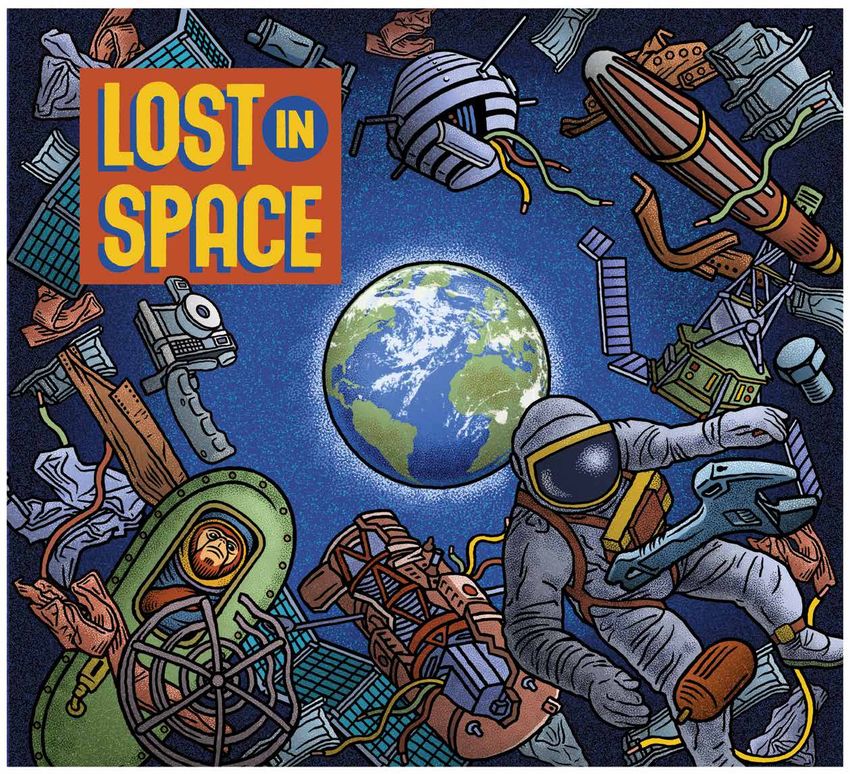
                                                    38 Lost in Space
                                                    It’s getting mighty crowded in space as debris from satellites,
                                                    labs, and other things shot into Earth’s orbit degrade over       See page 44.
                                                    time and threaten to fall back to where they came from.
                                                    By Terry Devitt ’78, MA’85

                                                    42 A Good Sport
                                                    Wall Street Journal columnist Jason Gay ’92 makes no
                                                    apologies for being a rabid Badger fan — even in a newsroom
                                                    populated with Michigan alumni. By Taylor Laabs ’14

                                                    44 Free to Be Allee
                                 WISCO INDUSTRIES

                                                                                                                      Cover
                                                    Allee Willis ’69 is more than just the composer of hit songs      Can we talk?
                                                    such as “September” and the Friends theme: she also collects      Illustration by Tim
All about that chair.                               kitsch, throws legendary parties, and supports her home-          Bradford/Illustra-
See page 14.                                        town of Detroit. By Wendy Hathaway ’04                            tionweb.

                                                                                                                   On Wisconsin          5
MORE:
  STATE STREETS THAT ARE
  ALSO GREAT STREETS

Although not every street in our state may evoke the same feelings one may have for
our capital’s most famed thoroughfare, quite a number of Wisconsin’s byways are just
as exciting places to be. Thanks to a booming economy, abundant career opportunities
and low cost of living, no matter what the name of the street you choose, there’s never
been a better time to make your address in Wisconsin. Wisconsin. It’s more you.

THINK        MAKE        HAPPEN IN WISCONSIN®                                             InWisconsin.com/Alumni
    6    On Wisconsin                                                                                 SP R IN G 2 0 1 9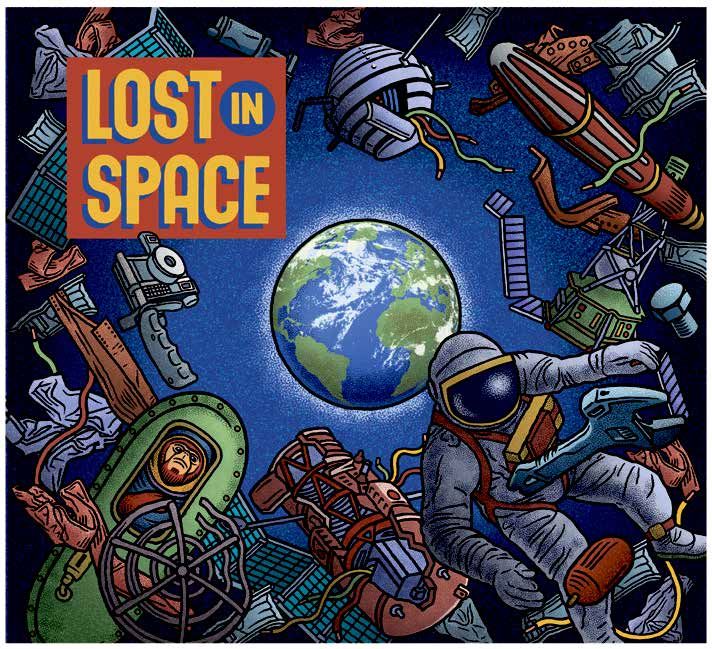
Communications
                                                                          STRIKE

                                                                                                                JOHN WOLF
The Dark Side of                     a wonderful teacher. I never
Football                             played an instrument and never
Chris Borland single-handedly        marched a step, but my first
gave us beleaguered 49ers fans       elective as a freshman was Intro-
hope, and then he left, ending       duction to Big Bands. In the first
our party [“Walking Away from        class, Mike introduced us to his
Football,” Winter 2018 On Wis-       favorite drummer, Gene Krupa,
consin]. While many were upset,      and I was hooked on college!
others (myself included) silently    Thanks, Mike.
applauded his decision, recog-       John Koenigs ’78                     Fifty years ago, black students at
nizing him as one of the smartest    McKinney, Texas                      UW–Madison, propelled by long-
and bravest men in football.                                              standing grievances and fresh
Paul Darbo ’72                       In Praise of Pet Food                flash points, called for a cam-
Fair Oaks, California                Thank you for the piece on Marie     puswide student strike until ad-
                                     Moody [“Raw Talent,” Winter          ministrators agreed to a series of
I’m writing in response to Pres-     2018]. I have fed my pups a lot      demands. Thousands boycotted
ton Schmitt’s article on Chris       of Stella & Chewy’s and often        classes, took over lecture halls,
Borland’s departure from the         wondered who started it, how it      and blocked building entrances.
NFL. I am sincerely interested in    ended up in Oak Creek, how one       In an unprecedented response,
the university’s response to the     starts a pet food company, etc.      the governor sent the Wisconsin
question of the ethics of continu-   This answered all that and was
                                                                          National Guard to campus. A new
ing a Big Ten football program in    very interesting to read — it was
                                                                          website captures the tumultu-
the face of the emerging scien-      sort of serendipitous.
tific evidence regarding CTE.        Mary Jo Koranda                      ous weeks on campus in Febru-
An institution that heralds itself   Sun Prairie, Wisconsin               ary 1969 through a timeline of
as a champion of progressivism                                            events and an oral history with
must answer the question: are        Alternatives to Hunting              activists of that time. See news.
we going to continue to value        “The Hunt for Answers” [Winter       wisc.edu/black-student-strike.
revenue and tradition over the       2018], which proposes hunting
long-term well-being of our stu-     as a solution to expanding deer      10 YEARS ON
dents? As an alumna, I would be      populations, neglects to mention

                                                                                                               DISTRICT PUBLIC AFFAIRS
                                                                                                               CHRIS GARDNER, USACE NEW YORK
ashamed to support a university      that many wildlife management
that continues to do so.             agencies are currently advancing
Mallory Willkom DVM’09               humane and nonlethal meth-
Milwaukee                            ods of control as an alternative
                                     to hunting, which is obviously
Master Motivator Mike                ineffective. These alternatives
Thanks for the wonderful article     should have been explored in the
on Mike Leckrone [“Stop at the       article.
Top,” Winter 2018]. Mike was a           Indeed, the article’s roman-
master motivator, marketer, and      tic promotion of bowhunting as       The UW is connected to its fair
mentor — a leader whose per-         a solution is not only silly, but    share of miracles. For one, the
sonality was assimilated by the      morally offensive; bowhunt-          “Miracle on Ice” (see page 15).
people he led. He set high stan-     ing is a notoriously cruel and       And we have Jeff Skiles ’84 to
dards and never compromised.         inhumane practice. Moreover,         thank for his role in the “Miracle
His dedication and love for his      reference to Marti Kheel ’74’s       on the Hudson.” On January 15,
work inspired everyone who           incisive critique of Aldo Leo-       2009, disaster struck US Airways
marched for him. I am privileged     pold’s romanticization of hunting    Flight 1549 in the form of geese,
to have been among the first he      should be included in any bal-
                                                                          which flew into the plane’s en-
taught to “stop at the top” in his   anced view of the issue.
                                                                          gines. Skiles, the copilot, helped
backyard in August 1969. I am            Finally, it must be said that
humbled and grateful to call Mike    the main cause of environmental      guide the failing plane onto the
my friend.                           degradation and loss of biodi-       Hudson River. Everyone survived.
Richard James ’72                    versity is corporate develop-        “It’s not like I had any oh-my-
Waukesha, Wisconsin                  ment — an outgrowth of human         God-this-is-the-end moment.
                                     overpopulation — not deer.           I just thought: river. Okay, we
Good article … great man. [Mike      Josephine Donovan MA’67,             can do the river,” Skiles told On
Leckrone’s] influence went way       PhD’71                               Wisconsin in 2009. Read more:
beyond the field; he was also        Urbana, Illinois                     go.wisc.edu/hudson.

                                                                                           On Wisconsin    7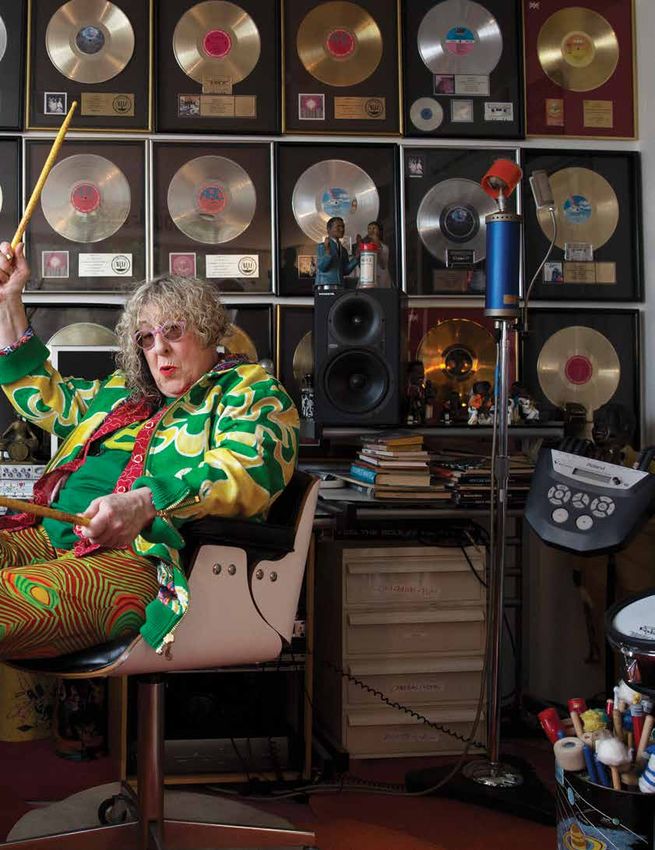
Discover Madison’s
                                                                                premier retirement
                                                                                      living today.

          University perks.                                                                 608-283-2046
                                                                                  retirement.org/Madison
          At your feet.

                                                         At Capitol Lakes,
                                                         vibrant, university
                                                         town living is right
                                                          outside your door.
                                                                                                    Capitol Lakes is a Pacific
                                                                                                       Retirement Services
                                                                                                   community and an equal
             URP-Exact-On-WI-Sept2018-PRESS.pdf   1   9/13/18   4:13 PM                               housing opportunity.

                                                                                        New Headquarters
                                                                                        for Exact Sciences
 C

 M

 Y

CM

MY

CY

CMY

 K

          alwaysINNOVATING                                                                           GET EVOLVED:
                                                                                  universityresearchpark.org/evolution

      8   On Wisconsin                                                                                        SP R IN G 2 0 1 9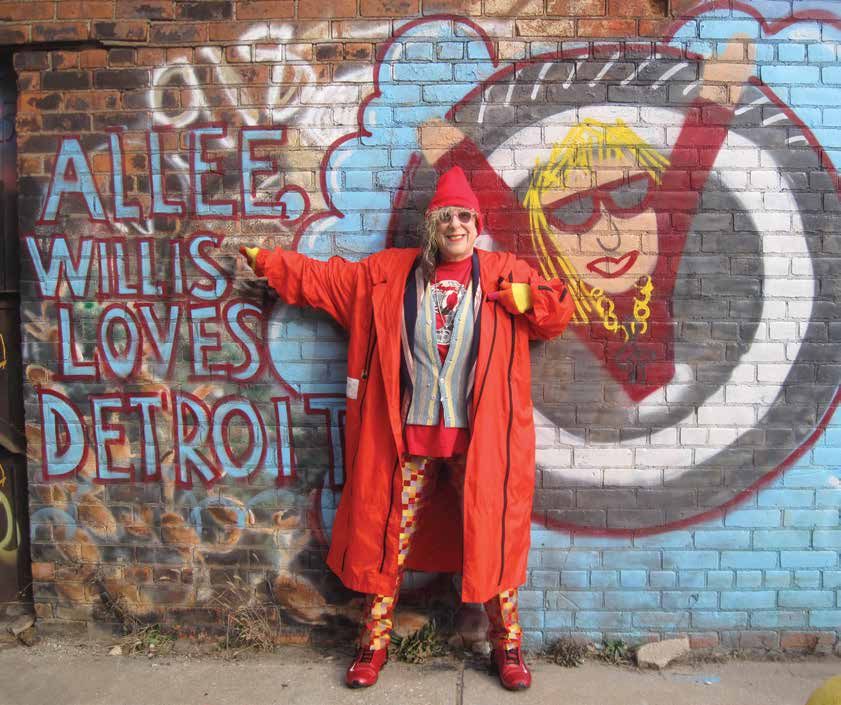
First Person

Spring 2019
CO-EDITORS

                                                                                                                               CHAZEN MUSEUM OF ART
Niki Denison, Wisconsin Foundation and
Alumni Association (WFAA)
Jenny Price ’96, University Communications
CONSULTING EDITOR
Cindy Foss, University Communications
PUBLISHER
Wisconsin Foundation and
Alumni Association
1848 University Avenue
Madison, WI 53726-4090
608-263-4545
Email: onwisconsin@uwalumni.com
Web: onwisconsin.uwalumni.com
ASSOCIATE PUBLISHER
John Allen, WFAA
WRITER
Preston Schmitt ’14, University Marketing
CLASS NOTES/DIVERSIONS EDITOR
Stephanie Awe ’15, WFAA
ART DIRECTOR
Nancy Rinehart, University Marketing                         “If death and eternal judgment can be comedy,” Warrington
                                                                                                             Colescott’s
DESIGNER                                                     Warrington Colescott once said, “then noth- Sunday Service
Danielle Lawry, University Marketing
                                                             ing is beyond the comic imagination.” The (2001) was
PRODUCTION EDITOR                                                                                            included in the
Eileen Fitzgerald ’79, University Marketing                  pioneering printmaker and longtime UW Wisconsin
PHOTOGRAPHERS                                                art professor, who died in September 2018 Sesquicentenni-
                                                                                                             al Portfolio.
Jeff Miller and Bryce Richter, University
Communications                                               at age 97, proved that statement true many
DESIGN, LAYOUT, AND PRODUCTION                               times over. His satirical etchings earned national acclaim
Toni Good ’76, MA’89; Kent Hamele ’78;
Kate Price ’09, University Marketing;
                                                             for their biting wit — ranging from critiques of society and
Chelsea Schlecht ’13, WFAA                                   politics to the purely playful and absurd. Themes of warfare
EDITORIAL INTERN
Nina Bertelsen x’19
                                                             permeated his works, a reflection of his upbringing as a son
ADVERTISING REPRESENTATIVES
                                                             of a World War I soldier and his own army service in World
Madison Magazine: 608-270-3600                               War II. While his irreverence often reigned — “If you attack,
ADDRESS CHANGES AND                                          do it with skill,” he advised — his narrative works could be
DEATH NOTICES
888-947-2586                                                 deeply human and hopeful. “The terrain that really grips
Email: alumnichanges@uwalumni.com
                                                             me,” he said, “is that black zone between tragedy and high
Quarterly production of On Wisconsin is
supported by financial gifts from alumni                     comedy, where, with a little push one way or the other, you
and friends. To make a gift to UW–Madison,
please visit supportuw.org.
                                                             can transmute screams into laughter and where the rules
The Wisconsin Foundation and Alumni Association              are no rules.”
(WFAA) is open to all alumni, students, and friends of the
university. WFAA encourages diversity, inclusivity, and      P R E STO N S C H M I T T ’ 1 4
participation by all of these groups in its activities and
does not discriminate on any basis.

Printed on recycled paper.
Please recycle this magazine. Please read it first.

                                                                                                           On Wisconsin   9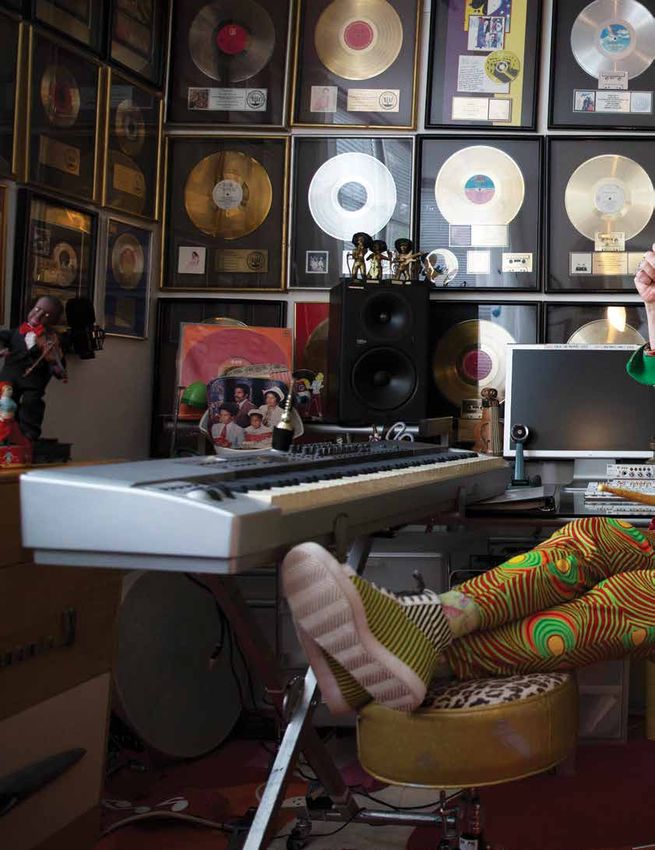
WHEN CIVIL ENGINEERING AND CIVIL SERVICE
                    WORK TOGETHER, WE ARE BOUNDLESS.

                    WISC.EDU   |   #ONWISCONSIN
10   On Wisconsin                                              SP R IN G 2 0 1 9
OnCampus News from UW–Madison
Long-Term SPEAK GENTLY,
MOUSE SPOUSE
Investments California mice are relatively
solitary animals, but put two
in a room, and they’ll talk each
UW, state budget proposals are in play. other’s ears off. The species
will coo, chirp, and bark — and
their chatter may speak volumes
about relationships. The qual-
FLAD ARCHITECTS
ity of their conversations after
infidelity can help predict which
couples are most successful.
“These mice are not gre-
garious. They’re loners,” says
Expansion of the
UW researcher Josh Pultorak
School of Veter-
PhD’17. “They’re highly territorial
inary Medicine,
the only veterinary and aggressive — both sexes.”
school in Wis- While notorious for their
consin, will allow ferocity, California mice are
The only certainty is uncertainty with a divided government, and so it it to serve more also known for their monog-
goes for UW–Madison’s 2019–21 biennial budget request. farmers and pet amy. Once they’ve bonded with
Last August, the UW Board of Regents approved an operating budget owners across the a partner, they don’t normally
state. The current
request of $107.5 million in new state funding for the UW System to mate with another. Pultorak
hospital was built
support high-demand academic programs, with much of the funding and his collaborators paired up
to accommodate
tied to performance metrics. 12,000 patients
55 male and 55 female mice,
The regents also approved a $1.9 billion capital budget recommenda- a year; in 2016, it recording their vocalizations. As
tion (spanning the next two budgets) for the maintenance, renovation, served 26,500. the pairs bonded, their commu-
or replacement of campus buildings, including a $90 million addition nication became more affiliative.
to the current UW–Madison School of Veterinary Medicine, which Then the researchers moved
opened in 1983. some of the males to live with
“With continued investment from the state, UW–Madison will new females, and some of the
remain a world-class university in education, health, and research that females to live with new males.
changes lives and powers Wisconsin’s economy,” Chancellor Rebecca After a week, the unfaithful
Blank said at the time. mice were reunited. The ones
Newly sworn-in Wisconsin Governor Tony Evers ’73, MS’76, that communicated more kindly
PhD’86, formerly the state schools superintendent, is expected to tended to successfully produce
release his budget proposal in February or March. (It was not available offspring.
at press time.) The negotiation process between Evers, a Democrat, “That’s a big deal,” says Pul-
and the Republican-led legislature could continue through the summer. torak. “Arguably, it’s the whole
The budget bill must be passed by the state assembly and senate before point of forming pair bonds in the
returning to the governor to be signed into law. first place.”
During his campaign, Evers signaled stronger financial support for CHRIS BARNCARD
the UW System, including funding to fully offset the ongoing in-state
tuition freeze that was enacted under former Governor Scott Walker in
2013. The system received a $36 million increase in the current budget,
following a substantial $250 million cut in 2015. To help generate rev-
enue, UW–Madison has increased tuition for out-of-state students and
professional degree programs over the past four years.
“We talked about how what’s best for our kids is what’s best for our
state,” Evers said in his inauguration address. “And that means we need
TENRA /ISTOCK
to fully fund our public schools at every level … from all-day pre-K to
our university and technical college systems.”
P R E S T O N S C H M I T T ’14
On Wisconsin 11OnCampus
On “Queue”
UW ATHLETICS/DAVID STLUKA
BADGER
GENIUSES
MACARTHUR FOUNDATION (2)
JOHN D. AND CATHERINE T.
Sandefur
Former Badger women’s basketball point guard Shawna Nicols regularly plays this
Nicols ’05 — known today as DJ Shawna — is now the selection of songs at games:
official disc jockey for the Wisconsin Badgers. She dee- “Jump Around,” House of Pain
Parks
jays at sporting events, including football and men’s and “ I Want It That Way,”
Two Badger alumnae — women’s basketball games, and tunes into her skills from Backstreet Boys
Rebecca Sandefur ’91 the court to read both the players and the crowd. Nicols “ I Wanna Dance with Some-
and Lisa Parks MA’93, aims to add to Game Day traditions and create a positive body (Who Loves Me),”
PhD’98 — are among experience for everyone — no matter the final score. Play- Whitney Houston
the most recent recipi- ing to a stadium full of people is, she says, “very surreal. I “WIN,” Jay Rock
ents of “genius grants” remember the first day we did sound check at Camp Ran- “ thank u, next,” Ariana
from the John D. and dall. … I can’t imagine what it feels like to be Beyoncé, but Grande
Catherine T. MacAr- that was maybe a small sliver of it.”
thur Foundation. The
grants recognize people
who show “exceptional Beer Gone Wild
creativity in their work When it comes to beer, UW geneticist Chris Todd Hittinger
and the prospect for still PhD’07 goes a little wild — at least with his yeast.
more in the future.” San- Hittinger studies microbes, and in 2011, he and an interna-
defur, a University of Illi- tional team discovered a yeast species called Saccharomyces
nois sociologist and legal eubayanus, which is the wild ancestor of what brewers use to
scholar, is promoting a make lagers. Ales — an older form of beer — ferment at relatively
new, evidence-based high temperatures using a yeast called Saccharomyces cerevi-
approach to increasing siae. In the 15th century, brewers in central Europe began looking
access to civil justice for ways to work in colder temperatures, and they inadvertently
for low-income com- crossbred S. cerevisiae with S. eubayanus to invent lagers.
munities. Parks, an MIT After isolating wild S. eubayanus with his students in 2014, Hit-
professor, is an expert tinger worked with brewers such as Heineken and the Wisconsin
on the cultural effects of Brewing Company to create beers using the yeast’s original form.
space-age technologies, They take longer to ferment, he says, and have a distinctive flavor.
EVILWATA/ISTOCK
especially satellites. “They aren’t able to convert sugars as fully as industrial yeasts,
so the wild version is sweeter, more cloying,” he says. “It has a spic-
ier flavor, like smoke or cloves. And it has a lower alcohol content.”
JOHN ALLEN
12 On Wisconsin SP R IN G 2 0 1 9Bygone What’s On?
UW ARCHIVES S11742
Ah, the warm glare of a television were then transmitted over In February 1955, But between 1994 and 1996,
set — more than matched by the closed circuit. televisions were residence halls installed cable in
glares on the faces of students as In 1955, University Housing new amenities in individual rooms, and the allure
they impatiently wait to be enter- installed the first residence- the UW’s dor- of the TV lounge began to fade.
mitories. Here,
tained. hall TVs (pictured here), though Today, many students simply
students await a
TV-watching has evolved on clearly, the initial TV lounges chance to watch a
stream programming onto their
campus, much as it has for people were not the comfortable dens show in one of the own digital devices.
around the country. The first that more recent students remem- men’s halls. According to Brendon Dybdahl
communal sets arrived at the ber. For much of the second half ’98, MBA’04 at University Hous-
UW in fall 1953, when they were of the 20th century, TV lounges ing, staff members are surprised
installed in lounges at Memorial were gathering spots where stu- to find that today’s TV lounges
Union. dents forged common experience — which still exist, all equipped
The same year, the UW around watching shows together: with flat-screen, high-definition
launched the University Televi- M*A*S*H or Dallas or Days of Our televisions — have become rather
sion Laboratory, where students Lives. Even as TV sets became sedate. “The spaces we thought
had the opportunity to learn more available, individual rooms would be louder and more social
about the medium by produc- lacked cable hookups, so the with TV viewing have turned out
ing and appearing on programs lounges retained popularity as the to be mostly used for quiet study,”
called Campus Newsreel and place to escape the limitations of he says.
Education on Parade, which rabbit ears. JOHN ALLEN
On Wisconsin 13Calculation Terrace Chairs
PHOTOS BY JEFF MILLER; ILLUSTRATION BY DANIELLE LAWRY
Have a Seat
When gray snow and frigid winter members to join the fun of open- The colors of the members of the always-entertain-
days begin to fade, spring reintro- ing the Terrace and populating it sunburst chairs ing Badger Band and a very happy
duces some of our favorite things with the green, yellow, and orange were chosen to Bucky Badger.
celebrate the
to campus: sunshine, picnics chairs. The sunburst season has offi-
seasons and
on Bascom Hill, and the iconic Sometime in early April evoke Wisconsin
cially begun.
Memorial Union Terrace chairs. (depending on the weather, but farming tradi- “Terrace season means it’s
The sunburst design — per- it’s often a little chilly), Union tions: John Deere time to start building connec-
haps Madison’s most recognizable staff puts out a call for Terrace green, and Allis- tions, having a good time, running
symbol — sparks fond memories lovers to prepare for the chairs’ Chalmers orange into past friends, and enjoying
of times spent hanging out with return. Volunteers line up an hour and yellow. some sun,” says Iffat Bhuiyan
friends and gazing at Lake Men- in advance, waiting for facilities ’18, last year’s Wisconsin Union
dota’s many moods. staff to unload trucks and line student president.
Following the Union’s years of the chairs up along the side of the The final touch to the day?
renovation, staff and student lead- building. Free Babcock Dairy ice cream and
ers decided to start a new tradi- With a signal given via mega- the first of many relaxing times on
tion. Since 2016, they’ve invited phone, volunteers carry the chairs the Terrace.
eager students and community down to the Terrace, passing by N I N A B E R T E L S E N X ’19
14 On Wisconsin SP R IN G 2 0 1 9OnCampus
ROBERTMANDEL/ISTOCK
10
NUMBER
HIGH HONORS
The No. 10 jersey of Mark John-
son ’94 is finally where it belongs:
hanging from the Kohl Center
rafters. The UW women’s hockey
coach and leading goal scorer in
the history of the men’s program
had his jersey retired in a Febru-
ASK AN EXPERT ary ceremony, becoming the first
hockey player to earn such hon-
What’s the Tiff about Tariffs? ors. Johnson gained international
fame in 1980 for his starring role
“I am a Tariff Man,” President Donald Trump famously tweeted in December. on the “Miracle on Ice” U.S. Olym-
That persona is a sharp break from presidents of the past, says Menzie Chinn, pics team and recently became
a UW professor of public affairs and economics. Trump and other protectionists the all-time winningest coach in
aim to shield domestic industries from foreign competition by putting taxes — NCAA Division I women’s hockey.
known as tariffs — on imports. His jersey now hangs above the
Last spring, the administration imposed steep tariffs on imported aluminum rink that bears the name of his
and steel, hoping to bolster U.S. industries and employment. An unintended con- late father, Hockey Hall of Fame
sequence, Chinn notes, is that American companies relying on these materials coach Bob Johnson. “As I’ve told
— notably within the construction industry — now face higher costs. The tariffs people for many years, hockey
also spurred retaliation on American exports. “I think it’s a misunderstanding in has been good to my family,”
Trump’s mind of what trade protection does,” he says. Overall, Chinn and many
trade experts predict a net negative effect on U.S. employment. Johnson says.
What worries Chinn most is how the tariffs were implemented. The admin-
JEFF MILLER
istration invoked rarely used trade laws administered by the executive branch,
leading to short- and long-term uncertainty. In uncertain times, companies delay
expansion and lenders give fewer loans, potentially slowing the economy.
In an increasingly global and technological marketplace, products often are
made up of many different parts that are shipped from all over the world. Adding
even a small tariff on pieces that cross borders multiple times can create a much
larger disruption than in the past.
Ultimately, Chinn believes we will come to find that restricting trade is costly.
N I N A B E R T E L S E N X ’19
news feed
AMBER ARNOLD/STATE JOURNAL; BRYCE RICHTER
UW history professor John A team of UW engineer- A new campus initiative, the
Sharpless, known for his ing students is taking Culture Keepers/Elders-in-Res-
conservative faculty voice a shot at the Base 11 idence Program, is seeking to
and sense of humor, retired Space Challenge, a improve the experience of Amer-
in December after 43 years national contest with a ican Indian and Alaskan Native
of teaching. Sharpless, who $1 million prize for the students by hosting Native elders
twice ran for political office, first student-led team to on campus for extended visits.
left lasting words with his design, build, and launch Activist Ada Deer ’57 visited cam-
students: “Get off your a liquid-propelled rocket pus in November as the inaugural
butts and make it better.” into outer space by 2021. participant.
On Wisconsin 15OnCampus
HOLD THE
MICHAEL P. KING
ANTIBIOTICS
A team of re-
searchers reports
that mice recov-
ering from heart
attacks are more
likely to die if
treated with anti-
biotics, a common
intervention in
hospitals. Hospital
patients are often
dosed with broad-
spectrum antibi-
otics, which can
COOL COWS On hot days, the cows at Rosy-Lane Holsteins in Watertown, Wisconsin, be indiscriminate
are given cool showers while they’re being milked. It’s a strategy for promoting cow comfort and eliminate not
that Jennifer Van Os (above) has learned by visiting milk producers around the state since
joining the Department of Dairy Science as an assistant professor last spring. “It’s very nice only bad microbes,
to work with a farm where the things we’re looking at were their idea,” she says. “It’s not but also the ones
some zany idea that we came up with in the university and now we’re trying to get people to
adopt it.”
we depend on
to stay healthy.
COURTSIDE
In a rare lawsuit between universities, a federal district court ordered the
Scientists in Tai-
wan and at UW–
Wisconsin Alumni Research Foundation (WARF) to pay $31.6 million Madison treated
to Washington University in St. Louis for violating a royalties contract.
The dispute dates back to the 1990s, when both institutions contributed
mice with antibi-
to research that produced a drug to treat kidney disease. The judge ruled otics and found
that WARF’s long-standing patent and licensing agreements did that they had a
not properly compensate Washington University for its research
contributions and that WARF concealed important information about reduced immune
the agreements. The decision came on the heels of another big loss for response after a
the research foundation: Apple Inc. convinced a federal appeals court to
dismiss $506 million in damages previously awarded to WARF for a patent
heart attack.
infringement on a computing technology used in iPhones and other products. TERRY DEVITT
news feed
Former UW Chancellor UW–Madison has announced The President’s Oak lives on.
Donna Shalala was sworn an enhanced recruitment Thanks to the foresight of
JEFF MILLER; BRYCE RICHTER
in as a member of the U.S. program to help diversify Michael Yanny ’79, who took a
House of Representatives faculty. The Target of Opportu- small branch from it in 2013, a
in January after winning nity Program (TOP) will provide graft from the tree was planted
Florida’s 27th congressio- increased financial support near Washburn Observatory in
nal district seat. Shalala, and resources to departments a ceremony last October. The
78, became the sec- looking to recruit people from ailing 300-year-old tree, by
ond-oldest freshman U.S. backgrounds underrepre- far the oldest on campus, was
representative in history. sented in their academic areas. felled in 2015.
16 On Wisconsin SP R IN G 2 0 1 9Conversation Keeping Score
At a Badger men’s basketball What does scorekeeping You’re also the team’s
game, you’ll find Otto Puls ’55 entail? equipment manager and
on the court — but not shooting I keep track of fouls, players referee at practices. What
hoops. Instead, he’ll be wearing playing, [and] how many points is it like for you to work with
stripes on the sidelines, tally- they score, and I don’t have any- the players?
ing points as the team’s official thing to do with how often they I treat [the players] the same
scorekeeper — a post he’s held shoot, or whether they have an way I do [my own kids]. They
for 55 years. Puls, a retired error, or anything else. That’s all appreciate me more after they
pharmacist and lieutenant col- the stat people. At halftime, and leave. They see me every day
onel in the United States Army, then at the end of the game, all of here at practice. Sometimes
played baseball for the UW and the people in the stats crew bring they get mad at me, but when
had a brief minor-league stint a sheet over to me, and I have they leave they really appreci-
with the Baltimore Orioles. to okay that sheet. … It becomes ate what I’ve done and what I’m
He has officiated basketball more complicated than it used trying to do. When I call a foul,
and Big Ten football, includ- to be — all you did was the it isn’t because I [want] to — it’s
ing two Rose Bowls, and he’s scoreboard, you wrote it down, because of the fact that you did
a member of several Halls of and you were God. That was it. something wrong. That’s what
Fame, including the Wisconsin Nobody else was going to argue they think is nice about it — they
Football Coaches Association with you. really thought that I was honest
and the Wisconsin Basketball with them.
Coaches Association.
How did officiating at the
How did you get started Rose Bowl compare to
with scorekeeping? scorekeeping at a Final
John Erickson, the ex-coach, Four tournament?
came to me one day and said, The Final Four was more fun.
“You know, I need [an] offi- There was less pressure on me.
cial scorer, I need a timer, My family had said the same,
and I need somebody too, that you don’t go to the Final
to put the score up on Four very often, and boy, when
the board.” That was you go, you better enjoy it, and
when we were at the boy, those two years (2014 and
[UW] Field House, 2015) were just heaven.
and that’s all there
was. ... It was just What’s kept you going
three [of us] to through it all?
begin with. The love of sports. I’m a sports nut.
You must be!
I do not remember the last time
I missed a [Badger men’s basket-
ball] home game. … And I’ll bet
you, if they look in the archives,
I don’t even know who I replaced
back in ’64. I don’t think there’s
anybody in the administration
that has been here that long, so
they can’t help me. And I’m not
here for stats, you know. In fact,
I think [that’s] pretty neat, if
you’re going to write that down.
Interview conducted, edited, and
condensed by Stephanie Awe ’15
Photo by Jeff Miller
On Wisconsin 17Exhibition Wisconsin Vinyl
TOM CAW
For 12 consecutive years, retail sales of vinyl records New York Record- active physical experience is something you can’t
have increased in the United States. ing Laboratories replicate online.”
This growth, as documented in Nielsen Music’s (NYRL) — a The library’s record collection is robust: it
2017 U.S. year-end report, is especially apparent subsidiary of the includes about 50,000 individual titles (plus another
Wisconsin Chair
during Record Store Day (RSD), an event celebrated 30,000-some duplicates) that are 33 1/3 and 45 rpm
Company of
by independent record stores each April to promote Port Washing-
(revolutions per minute), as well as some 100,000 78
vinyl sales. ton, Wisconsin rpm records.
“[Our] attendance for RSD has grown every — was created A subset of these items, part of the library’s
year,” says Dave Zero, owner of MadCity Music on to promote the Wisconsin Music Archives, represents the state’s
Madison’s east side, which has participated in the chair company’s music. Among this collection are 78s from Para-
event since it started in 2008. He keeps tabs by phonographs. mount Records, one of four record labels produced
tracking the store’s increasing RSD sales numbers. Pictured above between 1917 and 1933 by the New York Recording
are two of NYRL’s
On campus, staff members at Mills Music Laboratories.
Paramount Re-
Library have noticed students’ growing interest in cords, which were
Well known for its blues and jazz series, Para-
vinyl in recent years. Tom Caw, the music public made of shellac mount Records’ discography contains music with
services librarian, says staff and librarians across instead of vinyl. connections to UW–Madison. Recordings include
the country have reported an increase in people those dating back to the 1920s from the Wisconsin U
requesting, listening to, or checking out long-play- Skyrockets — directed by Jesse Cohen ’24 — and
ing vinyl. from the Haresfoot Recording Orchestra, part of the
“I think part of the allure for the vinyl listening UW’s Haresfoot Club that existed from the late 1800s
experience is that it’s a physical interaction with a to the mid-1960s. The archives’ collection preserves
device, and I think people are used to having access a unique compilation of Wisconsin-centric music.
online to streaming media,” Caw says. “The inter- S T E P H A N I E AW E ’15
18 On Wisconsin SP R IN G 2 0 1 9OnCampus
JEFF MILLER
@ODIETHEFLUFFYCORGI
Legal Advocates
A restraining order is often a first line of defense for domestic-violence victims
seeking protection from an abusive partner. But the process for obtaining one under
traumatic conditions can be overwhelming — especially for victims who can’t afford
the costs of a lawyer.
The UW Law School (at right, above) has stepped in to address this gap in legal
services, with plans to open the VOCA Restraining Order Clinic with federal funds ON, WOOFSCONSIN!
secured by the state justice department from the 1984 Victims of Crime Act. The Who let the dogs out? It must’ve
clinic partners with domestic-abuse agencies in the Madison area and southern been Bucky. This past fall,
Wisconsin that will refer women who need help. pooches were spotted on social
Law students must make a semester-long commitment, during which they will media sporting their Badger
complete two or three cases with supervision and mentoring from licensed attorneys. red and were featured on the
And the experience will broaden their understanding of the physical, psychological, UW–Madison News web page,
and economic challenges victims face, says Marsha Mansfield ’77, JD’84, a family coupled with the hashtag
law clinical professor and the director of the school’s Economic Justice Institute. #OnWoofsconsin. These pups,
That insight is a critical part of doing domestic-violence work. “Working with such as Odie (above), epitomize
victims of sexual assault and domestic violence requires a deep empathy and under- the Wisconsin spirit (and look
standing of trauma,” Mansfield says. mighty cute doing so). U-Ruff-
TA M M Y K E M P F E R T Ruff!
news feed
UW ATHLETICS/DAVID STLUKA; MICHIGAN
NFL star and former Badger The Kohl Center unveiled its new The Wisconsin School of Business
J. J. Watt x’12 will return to Legends Walk in October with has hired Vallabh Sambamurthy to
Camp Randall to deliver the honorary floor plaques in the serve as its next dean. Sambamur-
charge to UW graduates at concourse. The inaugural class: thy is a professor and associate
the 2019 spring commence- former U.S. Senator Herb Kohl ’56, dean at Michigan State Univer-
STATE UNIVERSITY
ment ceremony. Watt rose to the arena’s lead benefactor; former sity, where he oversees the MBA
prominence off the field for men’s basketball coach Dick Ben- program. Former dean Anne Massey
his efforts to raise more than nett; former women’s basketball resigned in December 2017 following
$40 million for Hurricane coach Jane Albright; and former a controversial proposal to drop the
Harvey victims last year. men’s hockey coach Jeff Sauer. UW’s full-time MBA program.
On Wisconsin 19Contender Gabbie Taschwer
Gabbie Taschwer ’18 doesn’t “It’s just a lot of crashing until Lakes are a Madison. Her mother, Lori, works
quite walk on water, but she’s you figure it out. It’s a high-risk familiar backdrop on campus for a surplus equip-
almost that good. sport, but high reward, too.” in Taschwer’s life. ment program, SWAP.
She first learned
At the Show Ski World Luiting praises Taschwer as Gabbie started skiing as a
to water ski as a
Championships in Septem- among the best water-skiers paid performer with the Tommy
three-year-old,
ber 2018, she and her U.S. in the country. She does it all: going on to make
Bartlett Show in the Wisconsin
teammates became the first swivel skiing, barefoot skiing, history in world Dells when she was a high school
female water-skiing trio ever to pyramid formations, jumps, and competition. freshman. She continued to ski
perform a triple helicopter spin tricks. “I’ve watched her since there through college and also
in competition. she was a little girl,” he says. competed nationally with the
The trick involves sailing “She doesn’t see being a woman volunteer Mad-City Ski Team.
off a ski jump, spinning 360 [as] a barrier, and that’s awe- As a member of the UW’s Water
degrees in the air, and sticking some. She essentially does all Ski and Wakeboard team, she
the landing in unison. It had of the traditional girl acts in the placed third overall for women
never been attempted — let show and many of what tradi- skiers at the 2018 collegiate
alone accomplished — by three tionally have been guy acts.” conference tournament.
women during any tournament “She is truly fearless,” adds Although competing in world-
in the world, according to Gerry Julie Patterson PhD’18, one of class competitions as a student
Luiting, a U.S. team coach and Taschwer’s teaching assistants was often tricky, Taschwer
a chair for the International at the UW who later became a graduated in December with a
Waterski and Wakeboard friend. “She has motivated girls degree in kinesiology after three
Federation. “The crowd gave across the world to break down and a half years. She wanted
them a huge standing ovation, all boundaries in the sport of to finish school as quickly as
and that doesn’t happen at the water skiing.” possible to maximize her years
world championships unless it’s Taschwer’s connections to of professional skiing in peak
pretty amazing,” he says. “It’s the UW and the sport run deep. condition. To stay on track, she
analogous to a standing ovation She grew up in nearby McFar- took summer courses and stud-
at the Olympics.” land, learning to ski on Lake ied between performances on
There is no shortcut to Waubesa at age three with her the docks of the Tommy Bartlett
learning the helicopter spin or parents, both former profes- Show.
any other trick, Taschwer says. sional water skiers. Her father,
Jeff Taschwer ’84, is now a
pharmacist at the Middleton
Memorial Veterans Hospital in
20 On Wisconsin SP R IN G 2 0 1 9For her final kinesiology
practicum, Taschwer combined
her schoolwork with her passion
and volunteered with Colsac
Skiers, Inc., a water ski school on
Lake Wisconsin for children and
adults with disabilities, including
veterans injured during military
service. “It was so wonderful to
give others an experience that
means so much to me,” she says.
In March, she will start as
a full-time water skier for the
highly acclaimed Holiday Park
Ski Team in Germany, following
in the wake of her parents, who
skied with the team decades
ago.
Taschwer rarely gets nervous
as a performer these days —
with the slight exception of that
triple helicopter spin. “I tried to
tell myself it was just another
ski show, but I had a few butter-
flies,” she says. “It was pretty
cool to make history.”
DOUG ERICKSON
P H O T O B Y B R YC E R I C H T E R
On Wisconsin 21In a polarized world, UW–Madison fosters
On a warm autumn afternoon when I needed it badly,
I got a shot of hope for the future of conversation.
Pulling up a chair at the Memorial Union Terrace and
eavesdropping there under the old oak trees, I heard
brilliant debate by research scientists about the best
way to get a stubborn gene to express. At another
table, there was virtuosic smack talk accompanying
a game of cribbage. These lovely (loud!) sounds are
ear candy after the deafening silence of being among
too many people staring at their phones. They con-
firmed for me that the great collegiate tradition of
chewing the fat with friends lives on.
But I still worried about our collective capacity
to have deep conversations about tough topics
with people who aren’t already our friends or
colleagues and who we suspect see the world
from a different perspective. Research shows
that, for the first time in more than two decades,
members of both political parties have strongly
unfavorable opinions of their opponents. And our
society is highly subdivided in other ways, so that
22 On Wisconsin SP R IN G 2 0 1 9BY LOUISA KAMPS
tough conversations.
people often end up congre-
gating almost exclusively — in
real life and through online com-
munities — with others who share
the same racial, religious, and demographic
profiles.
Luckily, though, many at UW–Madison are
actively seeking, encouraging, and developing the
ability to discuss difficult topics fruitfully. Students
are seeking out opportunities to talk through some
of the biggest matters on their minds, and they
(like many faculty members) are eager to argue
respectfully and learn more about what they don’t
understand. And those of us eager to reclaim con-
versation — the face-to-face kind — as a means for
sifting through the complexity of contemporary life
and building bridges can learn a lot from listening to
what people on campus are doing.
TIM BRADFORD/ILLUSTRATIONWEB
On Wisconsin 23FIRESIDE CHATS THE ART OF ARGUMENT
Later last fall, I joined the student-run Afternoon UW mathematics professor Jordan Ellenberg is a
Conversation Series, a regular all-comers-welcome fellow at the Wisconsin Institute for Discovery and
meetup held beside the flickering hearth of the professional-grade curator of talk — one of those
Prairie Fire coffee shop inside Union South. I found classic social network figures who’s as comfort-
about a dozen undergrads and graduate students lis- able discussing baseball and James Baldwin as he
tening intently as the day’s invited guest, Sumudu is breaking down the intricacies of multivariable
Atapattu, director of the UW Law School’s Research equations. Over tea at a café near campus last
Centers and a specialist in international environ- spring, Ellenberg says that, for him, a key benefit of
mental law, spoke in soft, serious tones about the working at “this gigantic, multifarious institution”
impacts climate change is already having on daily is having many opportunities to chat and mind-meld
life in places vulnerable to rising sea levels, including with researchers working in far-flung disciplines,
parts of Alaska. who often shed surprising new light on his work,
Though the legal and human rights implications and he on theirs. But he also enjoys the “intellectual
of climate change Atapattu detailed were sobering, exfoliation” he receives as a result of speaking with
the students present seemed undaunted, going on to other faculty members who aren’t afraid to challenge
pepper her with thoughtful questions about how they conventional wisdom and “push you to expand and
might help push for change. One young woman won- enlarge” how you view an issue.
dered if she could combine her interests in law, sci- One such stimulating loofah figure Ellenberg
ence, and economics in a career. Absolutely, Atapattu always likes being “a little conversationally scraped
says. If we’re going to meet the challenges of climate by” is Harry Brighouse. The UW philosophy profes-
change, “all of those disciplines need to learn how to sor has argued on his popular blog and at various
communicate with each other.” campus gatherings on teaching methodologies that
Last year the group also discussed the status of the standard, top-down instructional model many
the young immigrants known as DREAMers and American college classrooms follow does students
international women’s health. After the conversa- a disservice. Research shows that college students
tion, one of the group’s organizers told me that the (and adults generally) can pay attention to a single
aim of these intimate talks on serious topics is to give speaker for only about 20 minutes. So Brighouse
students a chance to interact with professors with- makes a deliberate point of beginning classes with
out “the usual intimidating student–teacher power a short lecture, but then largely ceding the floor to
dynamics.” his students.
24 On Wisconsin SP R IN G 2 0 1 9To keep the conversation on track — or to redi-
rect when one or more students begin to dominate
a group discussion — Brighouse continues to dole
out questions carefully. And he has his students
— most of whom are accustomed to socializing
mainly with their dorm and apartment mates —
introduce themselves to each other over and over.
It’s a strategy inspired by his own experience as
an undergraduate at King’s College London, where
he not only took all of his classes with the same
group of people, but lived and ate meals with them,
too, sparring over philosophy and history all the
while.
And his chief aim, he explains, is to help stu-
dents burn through shyness to become friends and
strong intellectual debate partners for each other.
“Some of my students come to college reeee-
ally reluctant to argue. But even they will eventu-
ally say, ‘What are we going to argue about next?’
They’re really hungry for this,” Brighouse says.
DESCRIBE YOUR PATH
In his cozy office decorated with vintage school
maps and a stellar collection of LEGO Star Wars
ships, Greg Downey, associate dean for the social
sciences in the College of Letters & Science, keeps
a small conference table. Students know they can
sit down and discuss their aspirations and future
plans, bouncing ideas around until they land on
ones that feel, if not perfect, then good enough for
now. And it’s here — as well as in the college’s
popular Taking Initiative professional plan-
ning course, which Downey leads, and its new
SuccessWorks career center — where Downey
and his colleagues are invested in helping students
get hands-on experience and find the right words
to describe their evolving skills and interests to
prospective employers.
Companies consistently report that they con-
sider strong verbal and written communication
skills essential for hiring, and there’s evidence
from social psychology showing that creating an
overarching narrative (aka storyline) for your life
helps people gain healthy perspective and move
ahead fruitfully. Downey has each of his students
develop a “two-minute career story” and practice students are accomplished and goal-oriented,”
delivering it with classmates. Some struggle with Downey says. “If you set them a task, they will
the assignment. Maybe they’ve heard that speak- work through it.” But he and other campus advisers
ing about your accomplishments amounts to brag- have also realized — partly in light of the fact that
ging, or they’re still not entirely sure what they the number of college students seeking treatment
want to do with their lives, Downey explains. But for anxiety and depression has shot up in recent
once they hear other students sharing similar sto- years — “that we need to be continually active in
ries and realize that it’s okay to be still exploring encouraging our students to talk with us, and talk
options and just say this plainly, they usually get with each other,” he says.
more comfortable. Beyond managing coursework, many students
But there are other reasons why he thinks it’s today face “family pressures, peer pressures, [and]
important for him, and faculty and staff at colleges pressures from jobs. Technology pervades their
everywhere, to be available to speak with students lives, and while sometimes it helps them cope,
about whatever’s weighing on their minds. “UW sometimes it ratchets those pressures up.”
On Wisconsin 25GROUP DYNAMICS may act a certain way or hold a certain view.
More and more, students and faculty are seeking out To help students who typically have never met
and welcoming conversations where they can feel before they start talking, Quintana and other dia-
not only free, but encouraged to unfurl — working logue facilitators give participants different cues,
through difficult thoughts together with others in such as asking them to describe pivotal childhood
an unhurried way, saying things they’ve never said experiences or their own negative or positive expe-
(or thought) before, opening up new doors of under- riences of diversity. A running rule is that no one
standing to combat distrust. can interrupt whoever is speaking for at least 90
Last fall, the UW released its Campus Climate seconds. Facilitators also work to sustain a respect-
Survey, which found that, while most students find ful balance by reminding participants that every per-
the campus to be a safe, welcoming, and respectful son’s perspective and personal experience are valid.
place, students of color and from other historically They also point out that mixed-company con-
disadvantaged groups consistently rated the climate versations on race, in particular, have a tendency
less favorably overall than students from majority to become “one-sided white confessionals,” wherein
groups did. And since then, the work of various UW white students wax on describing their guilt over
discussion programs created to foster greater equal- certain societal privileges they’ve enjoyed, at the
ity, inclusion, and understanding across differences expense (in terms of comfort) of black students in
has taken on new urgency. the group. But just naming the potential dynamic up
One such program, run by the UW School of front and noting that it can place additional burdens
Education’s Department of Counseling Psychology, is on black students is a surprisingly effective way of
Diversity Dialogues. When it started almost 15 years keeping it at bay, Quintana says.
ago, the big, burning divide that students wanted to After they’ve participated in the program,
discuss was the difference between students from many students tell him that learning how to trade
the Midwest and the coasts. But now that issues of notes on class, race, sexuality, and other topics in
racial discrimination, gender nonconformity, and a calm, non-adversarial setting (unlike so many of
economic disparity have shot to the forefront of the combative finger-pointing sessions we see on
national news, students from different racial, ethnic, TV today) made them feel more flexible and open
gender, and class backgrounds are eager to meet and — and eager to keep speaking with people who
talk about how these dimensions have shaped their aren’t obviously like them. Getting new “windows
experiences and perceptions. into the depths of people’s experience is reward-
UW professor of counseling psychology Steve ing,” Quintana says. Once they’ve realized that
Quintana, who directs Diversity Dialogues, says everyone has an interesting story to tell, students
that one of its primary objectives is to help stu- often say they’re more likely to break the ice with
dents recognize that all people (not just those who strangers in everyday settings.
are obviously similar to them) are “living rich,
interesting, and complex lives.” The theory behind COMFORTABLE
deepening social understanding is that it makes WITH UNCOMFORTABLE
it easier for people to understand and appreciate UW professor Christy Clark-Pujara often spends
(if not always love) the first few sessions of her classes on African
why others American history and the history of
26 On Wisconsin SP R IN G 2 0 1 9slavery speaking with students about why it’s FIRST, LISTEN
important for them to be able to discuss race UW political science professor Kathy
together, even though it’s a subject many of them Cramer ’94 spent several months between
have been told to avoid. And she explains that “it’s
2007 and 2012 zigzagging around rural
okay to feel uncomfortable in this class, and even
a good thing, because that’s where you learn and Wisconsin, visiting more than two dozen
grow.” Clark-Pujara knows most of her students small communities. On her driving tour,
have so far been taught only the scantest rendi- she stopped at gas stations, restaurants,
tion of black American history: “First there was houses of worship, and other places locals
slavery. That was bad, but some people were nice.
Then there was Martin Luther King and the Civil gathered to natter and “invited myself into
Rights movement, and now everything’s fine.” But their conversations,” as she told a group of
then she begins fleshing out that time line with sto- alumni last spring. A Grafton native, Cramer
ries that fly in the face of certain well-oiled myths, also noted with a laugh that her strong
including the myth that slaves did little to resist Wisconsin accent — “which I’ve been told
their circumstances.
“When you look at the primary documents, the I have”— might have helped her make
history of slavery becomes a history of great resis- inroads. In the small-town coffee klatches,
tance — not only physical, but moral, emotional, Cramer heard men and women voicing
and cultural resistance,” Clark-Pujara says. She also hurt and “generally this sense of feeling
disproves the folkloric belief that Wisconsin was as though they’re not [being heard]” by
always free of slavery. French-Canadian trappers
brought slaves with them when they settled here politicians or receiving their “fair share of
in the early 1700s. When Southerners — including respect from people in cities like Madison,
Henry Dodge, two-time governor of the Territory of who they perceive as looking at them as —
Wisconsin — arrived in the early 1800s to mine for and I put this in their quotation marks —
lead in the southwestern part of what later became
‘country bumpkins.’ ”
the state, they had slaves with them, too.
At some point during the semester, students of Cramer’s research on public opinion
different races overflow with “indignation” over and the breakdown of social bonds and
never having been given an inkling of this richer, trust across the state became the basis of
more complicated history. Clark-Pujara is there for her 2016 book, The Politics of Resentment.
all of it, ready to help them talk through and process
It has been heralded as both presaging
“the terribly uncomfortable” fact that the “economic
ascent of the United States rests on the backs of and retrospectively explaining the right-
enslaved black people.” Empathy is a major theme ward-tipping political dynamics seen in
in the class, she adds. Wisconsin in recent years and across the
As we neared the end of our own conversation, U.S. since the 2016 election.
Clark-Pujara pulled out two thank-you notes she
But “one of the great experiences of
had just received from students who’d taken her
Introduction to African American History course. this project” for her personally, she says,
Each described a different way in which the class “was understanding the value of allowing
and Clark-Pujara’s teaching had changed not only myself to listen without the intent of trying
their minds but their lives. The notes were beau- to come back with some great response. In
tiful. And they reminded me why talk, at the UW
and everywhere, is so vital to staying alive and this moment politically, that act of listen-
engaged: our world is never going to be perfect, ing to others is really unpalatable for many
and individuals and systems will inevitably let us people, but it’s probably more necessary
down. But we should by no means withdraw and than ever.” And, Cramer adds, while the
give up. UW has always had “a strong tradition of
By debating and grappling with new ideas
together with others, in real time — riding tides of communicating knowledge outward toward
confrontation without getting too rattled, watch- the public,” she’s proud of doing her part to
ing one another’s faces light up and fall and light uphold the school’s equally important role
up again — we get to take another look at what we of “putting an ear to the ground to learn
think, and make it better. from the people of this state and else-
But we can’t get there through silence. • where, so we can be better scholars and a
Louisa Kamps is a freelance writer based in Madison.
more fully public institution.”
On Wisconsin 27You can also read


