Open for Scienti c Users - A single entry point to complementary techniques for multidisciplinary research in all fields of materials and ...
←
→
Page content transcription
If your browser does not render page correctly, please read the page content below
Central European
                                     Research Infrastructure
                                     Consortium

Open for
Scientific Users

         A single entry point to
       complementary techniques
          for multidisciplinary
         research in all fields of
       materials and biomaterials
     sciences, and nanotechnology.

ceric-eric.eu                        www.ceric-eric.eu1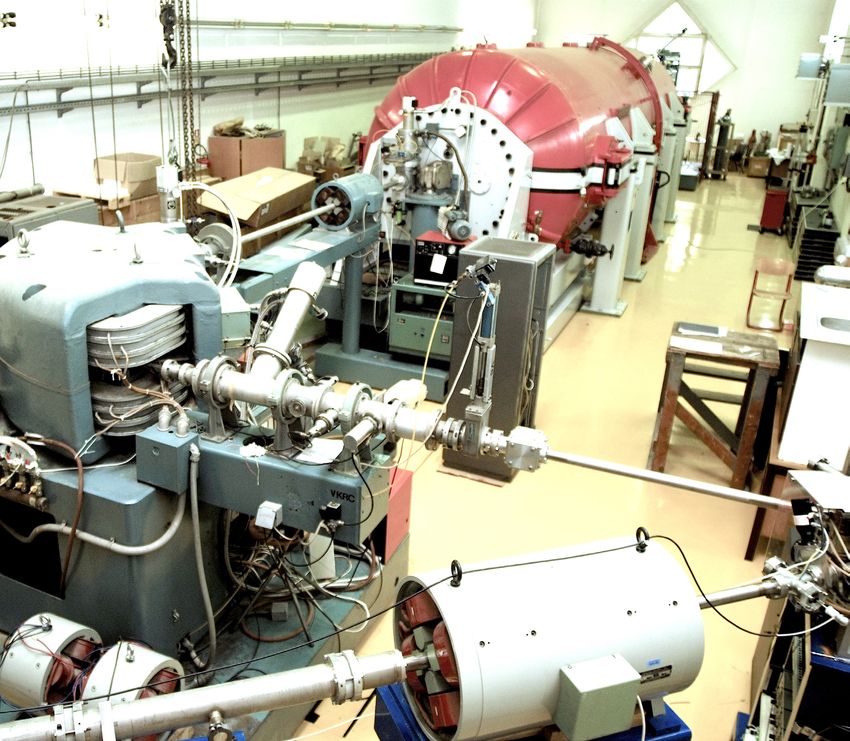
Table of contents

CERIC-ERIC, the Central European Research Infrastructure Consortium.           4
A European-wide facility for multi-technique research

AUSTRIA                                                                        9
Institute of Inorganic Chemistry at the Technical University Graz

CROATIA                                                                        13
Accelerator Laboratory at the Ruđer Bošković Institute - Zagreb

CZECH REPUBLIC                                                                 17
Surface Physics Laboratory at the Charles University Prague - Prague

HUNGARY                                                                        21
Budapest Neutron Centre - Budapest

ITALY                                                                      25
Synchrotron facility at Elettra Sincrotrone Trieste - Trieste (IT)

POLAND                                                                     29
National Synchrotron Radiation Centre SOLARIS at the Jagiellonian
University - Krakow

ROMANIA                                                                    33
Laboratory of Atomic Structures and Defects in Advanced Materials
(LASDAM) at the National Institute of Material Physics (NIMP) - Magurele

SLOVENIA                                                                   37
Slovenian NMR Centre at the National Institute of Chemistry - Lubiana

CONTACTS                                                                       41

ceric-eric.eu                                                              3
Open for Science
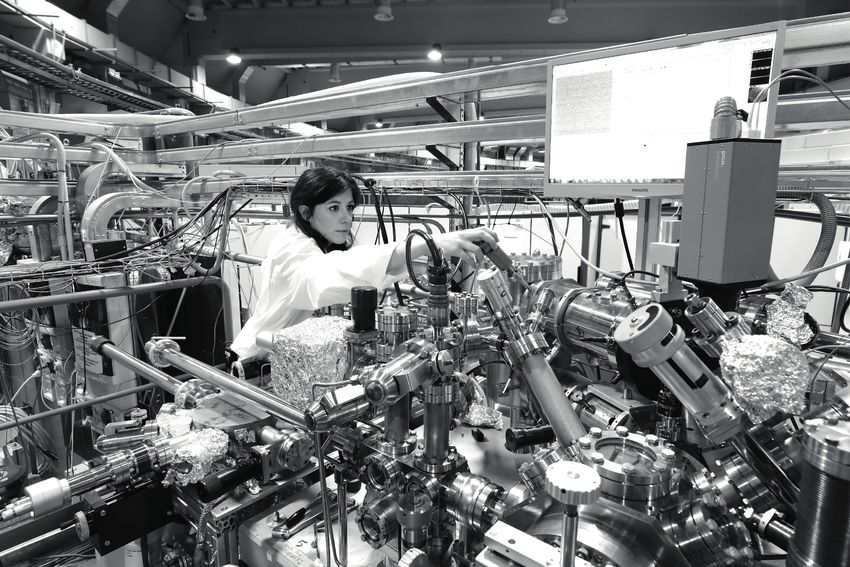
                                                                                        CERIC offers a combination of methods spanning NMR,
                                                                                        X-ray electron spectroscopy and light scattering, ion
                                                                                        beam analysis, high resolution electron microscopy,
                                                                                        X-ray electron spectroscopy, materials analysis using
                                                                                        synchrotron radiation and neutron beams. Researchers
                                                                                        can access the integrated facilities by applying to the
                                                                                        open calls, with single- or multi-technique proposals
                                                                                        in a wide variety of fields such as health, micro and
                                                                                        nano-technologies, energy, food, cultural heritage,
                                                                                        informatics and many more.

                                                                                                                    Light and X-rays
                                                                                             AUSTRIA                scattering at the TU
                                                                                                                    Graz and in Trieste

CERIC-ERIC* is a distributed multidisciplinary research                                                                        Ion beams at the
                                                                                                          CROATIA              Ruđer Bošković
infrastructure for basic and applied research in all                                                                           Institute in Zagreb              POLAND             Synchrotron light at
fields of materials and biomaterials sciences, and                                                                                                                                 Solaris in Krakow

nanotechnology.
                                                                                                                    Surface analysis at
Located in 9 countries of Central and South-Eastern Europe (Austria,                         CZECH                                                                       Electron microscopy
                                                                                            REPUBLIC
                                                                                                                    the Charles University
                                                                                                                                                                         and EPR at the National
Croatia, Czech Republic, Hungary, Italy, Poland, Romania, Serbia and                                                Prague and Elettra               ROMANIA
                                                                                                                                                                         Institute of Material
Slovenia), it is open to researchers from all over the world through one                                                                                                 Physics in Magurele
single open access point. A peer review evaluation system guarantees a
competitive free access to nearly 50 multi-probe techniques based on the
                                                                                                                               Neutrons at the                                        Ion and proton beams
use of electrons, ions, neutrons, photons and protons.                                                    HUNGARY              Budapest Neutron
                                                                                                        POLAND                                                                        at theVinča Insitute
                                                                                                                               Centre                           SERBIA
                                                                                                                                                                                      of Nuclear Sciences
                                                                                                                                                                                      in Belgrade

                                                                                                                    Synchrotron and
                                                                                              ITALY                 laser light at Elettra                               NMR at the National
                                                                                                                    in Trieste                       SLOVENIA            Institute of Chemistry
                                                                                                                                                                         in Lubiana

4                                                                          CERIC-ERIC   ceric-eric.eu                                                                                              5
Open Access                                                                         How to apply?

                                                                                    CERIC facilitates the application process by offering a two-steps deadline option. The
                                                                                    first deadline is meant for having a pre- evaluation of the proposal and to submit an
                                                                                    improved version within the second deadline. Expert users may decide to submit their
                                                                                    proposals directly on the second deadline. The evaluation takes into account both the
                                                                                    technical feasibility and the scientific quality of the proposals.

                                                                                    Two-step dedline                                             New proposals
     ONE SINGLE OR
                                                                                    option
    MULTI-TECHNIQUE
       PROPOSAL

                                                                                                                                                    FIRST
                               Access to CERIC is open to                                                                                         DEADLINE
    Two calls per year for
        coordinated            researchers from all over the world
    access to all facilities   through two Calls for Proposals
                               per year. It is free of charge for
                                                                                                                                                Pre-evaluation
                               academic and non-proprietary
                               research requiring access to one or
      Two-step access          more techniques.                                                                                                      Editing
        procedure
                               The condition for free access is the publica-
                               tion of the results of the experiments, with
                               the appropriate references to the facilities
                                                                                                                                   New        Improved proposals       New
                               and to the local contacts involved. Proposals
      One review panel
                               shall be submitted online through the specific
                               online platform (VUO - Virtual Unified Office).
                               The best ones will be selected by peer review
                               through an independent and international
                               panel of experts whose choice is based solely on
        ONE REPORT
                               excellence.
                                                                                                                                                   SECOND
                                                                                    Submit your proposal online at:                               DEADLINE
                                                                                    https://vuo.elettra.trieste.it

6                                                                      CERIC-ERIC   ceric-eric.eu                                                                            7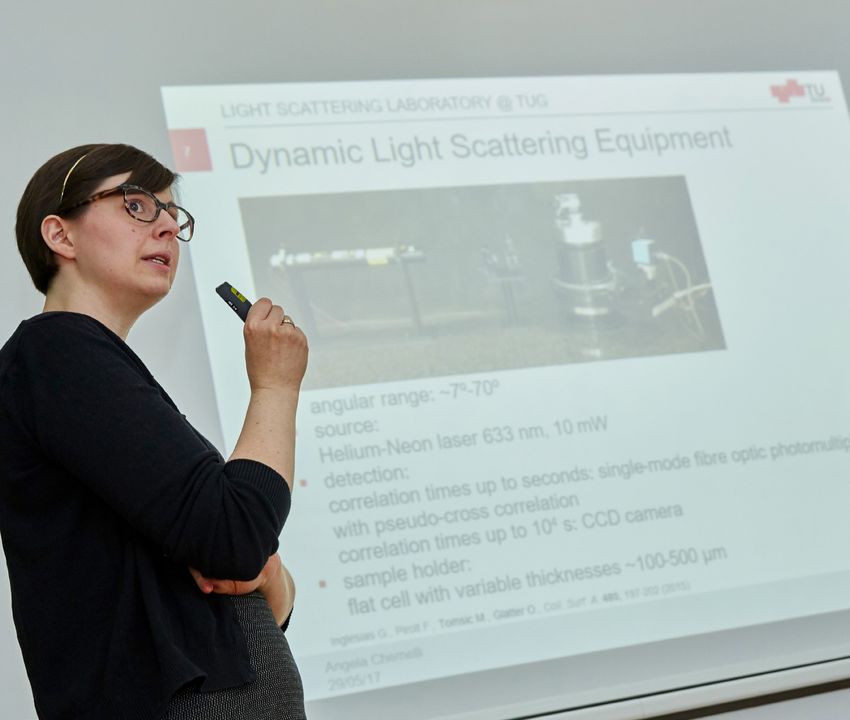
Light Scattering at the TU Graz   Austria

                                      Technical University Graz

                                      Institute of Inorganic
                                      Chemistry

                                                                                      AUSTRIA

                                      The Institute of Inorganic Chemistry of the Technical
                                      University Graz is dedicated to the structural
                                      characterization of nanosystems with scattering
                                      techniques.

                                      It is covering topics such as advanced materials, (bio-)polymers,
                                      nanoparticles and proteins in solids, surfaces, liquids, and in
                                      the gas phase. It provides access to its light and X-ray scattering
                                      laboratories, as well as to the Austrian SAXS beamline and the Deep
                                      X-ray Lithography beamline at Elettra. The facility has an excellent
                                      record in terms of scientific output and international recognition
                                      from biology to materials sciences.

8                     CERIC-ERIC      ceric-eric.eu                                                          9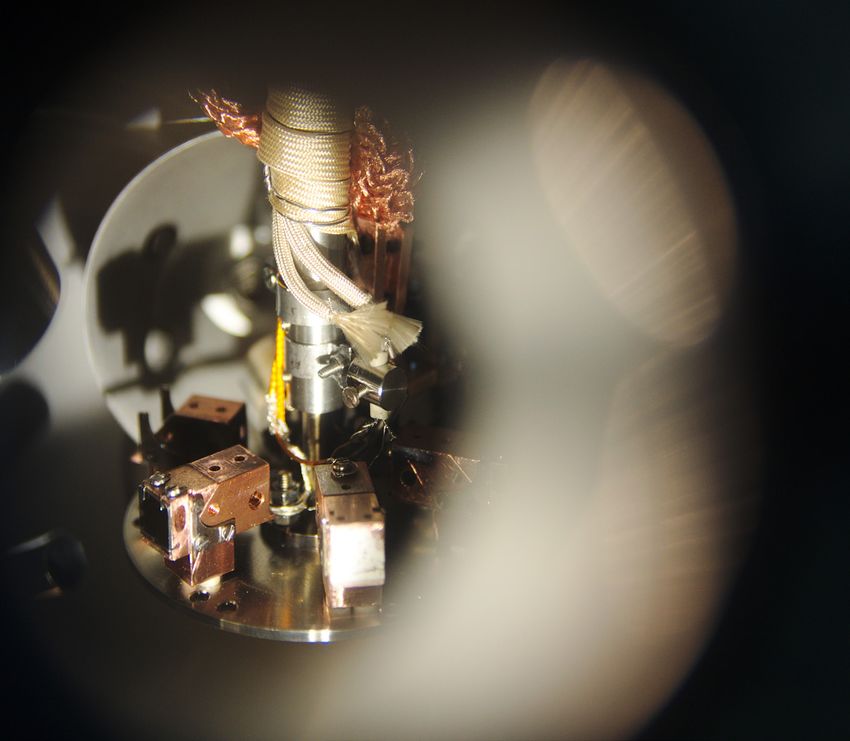
Light Scattering at the TU Graz   Austria

Research fields and applications                                            AUSTRIA                            Research techniques and
                                                                                                               methods
                                                                                                                  • Structural characterization and study of the kinetics and
                                                                                                                     dynamics of self-assembly processes and chemical reactions.
                                                                                                                  • Development of photonics, energy and sensors applications.
                                                                                                                  • Preparation and synthesis of biomembranes and mesoporous
                                                                                                                     materials, drug delivery systems based on biomembranes.
                                                                                                                  • Mapping of the local structure of complex materials.
                                                                                                                  • Time resolved studies of fast structural transitions in the
                                                                                                                     sub-millisecond time region of liquids, surface and gas phase.
The research at the Institute of Inorganic Chemistry is mainly focused
                                                                                                                  • Test and implementation of microfluidics systems.
on fundamental and applied aspects of organometallic chemistry
                                                                                                                  • Production of high aspect ratio three dimensional structures in
towards functional materials. The scientists and technicians of the
                                                                                                                     materials with quasi perfect side-wall verticality, optical quality
available scattering laboratories which compose the Austrian facility,
                                                                                                                     roughness and a resolution of about 0.5 μm.
have profound experience in the structural investigation of (bio-)
                                                                                                                  • Hard X-ray radiation assisted material synthesis and processing.
nano-materials, therefore bridging the gap between nanoscale materials
and biology. Besides basic research, an intense activity of design and
development of instrumentation and sample environment is also                                                                                                                               SAXS beamline in
                                                                                                                                                                                            Trieste
carried out.

                                                                                                               Instruments and techniques
Experiments can be conducted in fields as diverse as physics,
chemistry, material sciences, pharmaceutics and biology.
                                                                                                               available in CERIC
Consequently, applications cover the respective technological fields,                                          The Austrian facility offers access to the SAXS - Small Angle X-ray
from energy, nano-technology and electronics, to nanomaterials,                                                Scattering and to the DXRL - Deep X-ray Lithography synchrotron
health and nutrition. The production of 3D micro-structures made                                               radiation beamlines at Elettra (Italy), as well as to the Static (SLS) and
out of a large variety of metals, alloys or ceramics, opens a wide variety                                     the Dynamic (DLS) light scattering and to the various SAXS instruments
of potential applications in the fields ceramics, opens a wide variety of                                      and related laboratories in Graz.
potential applications in the fields.

10                                                                                             CERIC-ERIC      ceric-eric.eu                                                                                   11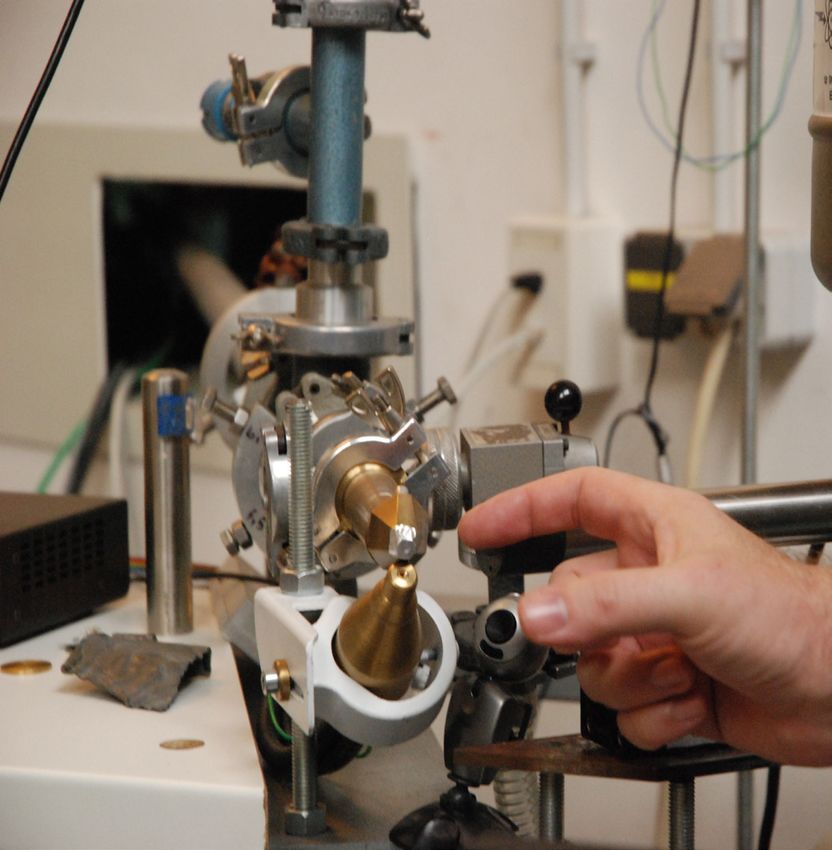
Ion beams at the Ruđer Bošković Institute   Croatia

                                                 Ruđer Bošković Institute

                                                 RBI Accelerator
                                                 Laboratory

                                                                                                CROATIA

                                                 The accelerator laboratory of the Ruđer Bošković
                                                 Institute (RBI) offers two electrostatic tandem
                                                 accelerators and 8 beam lines equipped with a variety
                                                 of ion beam techniques.

                                                 The RBI is regarded as the Croatian leading research institute in natural
                                                 and biomedical sciences, as well as in marine and environmental
                                                 research. It acts as the Croatian entry point to CERIC, through its
                                                 Division of Experimental Physics that is in charge of the operation of the
                                                 tandem accelerator facility.

12                               CERIC-ERIC      ceric-eric.eu                                                                13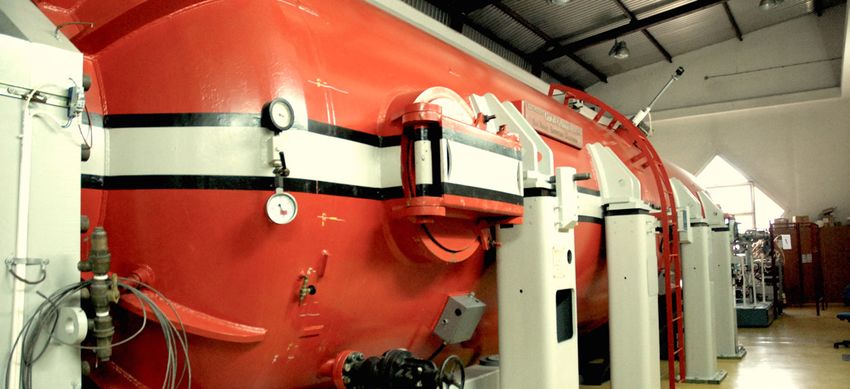
Ion beams at the Ruđer Bošković Institute   Croatia

Research fields and applications                                          CROATIA                            Research techniques and
                                                                                                             methods
                                                                                                                • IBIC (Ion Beam Induced Charge) tests of novel detector structures
                                                                                                                   (e.g. wideband gap semiconductors, novel diamond radiation
                                                                                                                   detector configurations) and charge transport properties in
                                                                                                                   photovoltaics.
                                                                                                                • Investigations of complex radiation detector systems (e.g. pixel
                                                                                                                   detectors from CERN, strip detectors for nuclear physics).
                                                                                                                • Microprobe ion beam irradiation (e.g production of graphitic lines
                                                                                                                   in diamond, direct writing lithography, single ion implantation).
The tandem accelerator facility at the RBI offers a wide range of state-of-
                                                                                                                • Near surface elemental depth profiling and development of SIMS
the-art techniques for the synthesis and analysis of materials, based on
                                                                                                                   (Secondary Ion Mass Spectrometry) using MeV energy ions.
the processes that occur during ion beam passage through matter. The
                                                                                                                • In situ studies of radiation resistance of crystalline materials
scientific efforts of the RBI group have a strong focus on material science,
                                                                                                                   (including those of interest for fusion related research).
with MeV energy ion beam irradiation having a twofold role: either as a
                                                                                                                • Analysis of large number of samples, especially for environmental
sample preparation
                                                                                                                   studies (e.g. air particulate matter filters).
step, where ion beam irradiation modifies the exposed material, or as
sample analysis technique using various ion beam analysis (IBA)
                                                                                                                                                                                        1.0 MV Tandetron.
techniques.

                                                                                 6.0 MV EN Tandem Van
                                                                                 de Graaff.

                                                                                                             Instruments and techniques
                                                                                                             available in CERIC
Applications in other fields have also been recently intensified. These
                                                                                                             The RBI is dedicated to the development and applications of ion beam
include cultural heritage (non-destructive analysis of
                                                                                                             techniques for materials’ modification and characterization, such
unique objects), biomedicine (microanalysis of tissues and
                                                                                                             as PIXE and RBS (Particle Induced X-ray Emission and Rutherford
biomaterials, irradiation of living cells, induction of mutations in seeds,
                                                                                                             Backscattering), heavy ion microprobe (microanalysis, imaging,
etc.) and environment monitoring (air particulate matter
                                                                                                             irradiation and detector testing), dual beam irradiation chamber
analysis, bio-monitors of pollution, etc.).
                                                                                                             with RBS channelling (radiation damage studies), and TOF ERDA
                                                                                                             spectrometer (Time-of-Flight Elastic Recoil Detection Analysis) for high
                                                                                                             resolution depth profiling.

14                                                                                           CERIC-ERIC      ceric-eric.eu                                                                                  15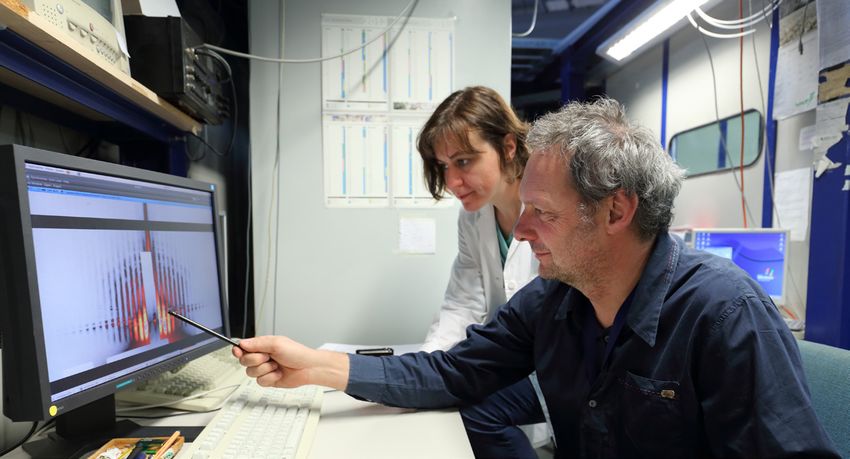
Surface analysis at the Charles University   Czech Republic

                                                  Charles University Prague

                                                  Surface Physics
                                                  Laboratory

                                                                                                 CZECH
                                                                                                REPUBLIC

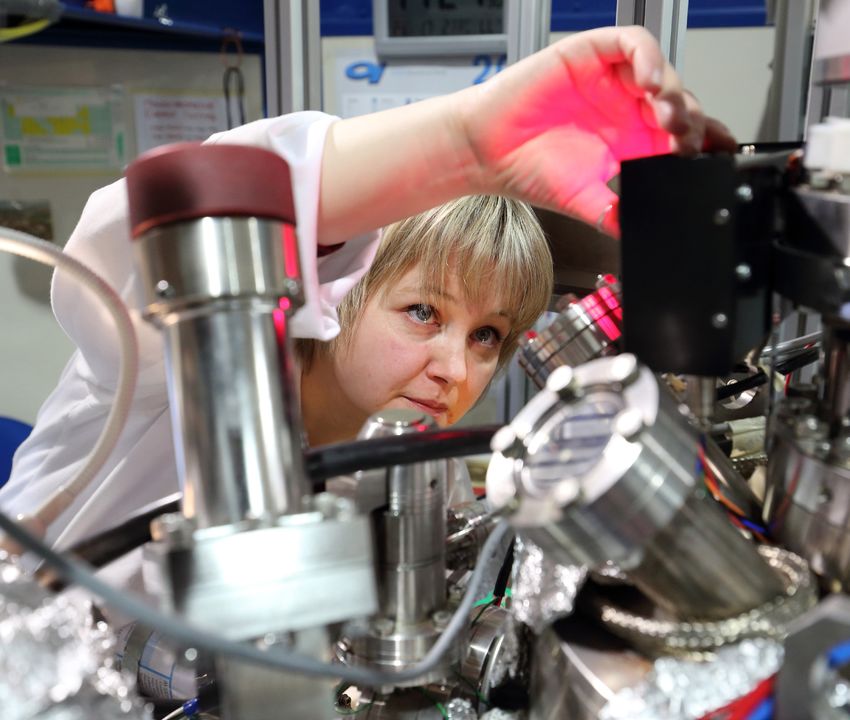
                                                  The Czech facility encompasses the Surface Physics
                                                  Laboratory (SPL) in Prague (CUP) and the Materials
                                                  Science Beamline (MSB) in Trieste.

                                                  The SPL and MSB team has a veritable track record in the fields of
                                                  physics and chemistry of surfaces of solids and addresses the daily
                                                  challenges in materials research.

                                                                                                                        Surface Physics

16                                CERIC-ERIC      ceric-eric.eu                                                                           17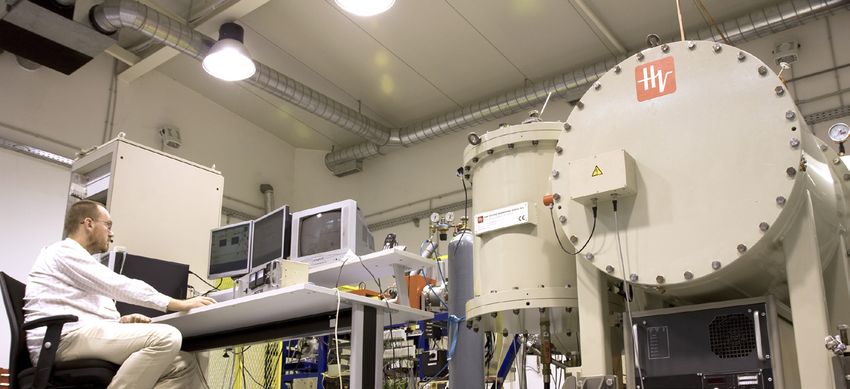
Surface analysis at the Charles University   Czech Republic

                                                                          CZECH
Research fields and applications                                         REPUBLIC                            Research techniques and
                                                                                                             methods
                                                                                                                • Photoemission spectroscopies (XPS, XPD, UPS and ARKUPS), ion
                                                                                                                   scattering spectroscopy (ISS, LEIS) and electron diffraction (LEED).
                                                                                                                • Surface chemical analysis.
                                                                                                                • Preliminary specimen characterization and surface control recipe
                                                                                                                   refinement for synchrotron experiments.
                                                                                                                • Sample heating and cooling (100-1500 K), Ar+ beam cleaning and
                                                                                                                   MBE thin film deposition for in situ surface preparation.
                                                                                                                • Calculation of the surface electronic structure.
The SPL research group has expertise in structural and physico-chemical
                                                                                                                • Mapping of the sensory and catalytic properties of materials with
surface analysis, thin film and nanostructure growth and studies of
                                                                                                                   structural changes that may occur in the surfaces during their
reaction mechanism on catalyst surfaces and biosensors. The SPL is
                                                                                                                   chemical function.
equipped with five complete systems for preparation, characterization
and imaging of materials surfaces. It also operates the MSB facility,
which is a versatile photoemission beamline suitable for experiments in
materials science, surface physics, catalysis and organic molecules on                                                                                                                    Material Science
                                                                                                                                                                                          Beamline in Trieste.
various surfaces.

                                                                                 20 m viewfield SEM
                                                                                 images and EDS
                                                                                 mapping of Pd, Ce and
                                                                                 O signals of fresh Pd@
                                                                                 CeO2/graphite (top
                                                                                 row) and Pd@CeO2/P-
                                                                                 graphite samples
                                                                                 (bottom row).

Fundamental knowledge drives applied research in catalysts, gas                                              Instruments and techniques
sensing and biosensing. Advances in the catalyst research made                                               available in CERIC
leaps and bounds towards affordable and durable hydrogen fuel cells,
one of the next-gen elements of energy production, energy storage                                            The Czech facility offers X-ray Photoelectron Spectroscopy and
and carbon-free mobility. In the field of sensing, sensors of gasses for                                     Diffraction (XPS-XPD), FESEM - Field Emission Gun Scanning Electron
chemical and vacuum monitoring applications have been designed and                                           Microscope, NAP XPS - Near Ambient Pressure X-ray Photoelectron
prototyped. Foundations of knowledge-based development of hybrid                                             Spectroscopy, and access to the Materials Science Beamline at Elettra,
(organic-inorganic) devices for biomolecular and medical sensing have                                        dedicated to soft X-ray photoelectron spectroscopy.
also been laid for future possible applications in biomolecular and
                                                                                                                                                                                          Surface Physics
biomedical analytical tools and point-of-care diagnostics.
18                                                                                           CERIC-ERIC      ceric-eric.eu                                                                                       19
Neutrons at the Budapest Neutron Centre Hungary
Hungarian Academy of Sciences - Centre for Energy Research
Budapest Neutron
Centre
HUNGARY
The Budapest Neutron Centre (BNC) is a consortium
of two research centres (Centre for Energy Research
and Wigner Research Centre for Physics) located at the
KFKI Campus of the Hungarian Academy of Sciences in
Budapest.
The Budapest Research Reactor (BRR) and a number of neutron research
facilities and beamlines are operated by the BNC to perform R&D in
nuclear science and technology, and material sciences.
20 CERIC-ERIC ceric-eric.eu 21Neutrons at the Budapest Neutron Centre Hungary
Research fields and applications HUNGARY
Research techniques and
methods
• Non-destructive multi-elemental/ isotopic analysis of various
samples, including archaeological objects, rock samples, catalysts,
samples of inactive tracing, fissionable materials.
• Study of cold neutron captures, determination of the nuclear
structure of the target nuclei and measurement of the decay-
properties of fissionable materials.
• Measurement of density, composition and magnetization
fluctuations of materials.
The research at BNC mainly focuses on the study of the interaction of
• Atomic structural investigations of amorphous solids and molecular
radiation with matter, as well as on isotope and nuclear chemistry,
liquids.
radiography and radiation chemistry, surface chemistry and
• Specular and off-specular scattering to study depth profiles and
catalysis. The neutron scattering instruments allow the investigation
in-plane structures. High-resolution diffractometry, strain analysis,
of the microscopic properties of solids, liquids, soft materials, biological
quasielastic and inelastic scattering, thermal beam irradiation and
objects and condensed matter, allowing to perform the macro- and
transmission tests.
microstructural characterization of materials and in operando studies of
• Structural and magnetic properties of thin films, multilayers,
devices by imaging and element analysis. Radiation damage studies and
interfaces and membranes.
medical isotope production can also be carried out.
Neutron images of
SANS diffractometer
the three iron beads
Yellow Submarine.
made from hammered
meteoritic iron, in side
view and perpendicular.
Instruments and techniques
available in CERIC
The BNC provides the experimental basis for materials testing,
irradiation damage biological irradiation, dosimetric and nuclear BNC experimental stations cover a wide variety of measuring techniques:
safety investigations, with a main focus on nuclear and renewable BIO - Biological Irradiation facility, TOF - Time-of-Flight diffractometer,
energy research, with activities performed in fuel analysis and thermal MTEST - Material Test diffractometer, PGAA - Prompt Gamma
hydraulics. Thanks to its non-destructive techniques, it also allows Activation Analysis, PSD - neutron diffractometer with a Position
exploring the composition and the manufacturing techniques of Sensitive Detector system, SANS - Small Angle Neutron Scattering
archaeological artefacts, as well as conducting investigations of diffractometer, RNAA k0- Neutron Activation Analysis, GINA - neutron
biological objects. Furthermore, neutron radiography helps to solve reflectometer with polarisation option, TAST - thermal neutron three-
industrial problems and radioisotope production is mainly used for axis spectrometer and neutron holographic instrument, RAD - thermal
medical purposes. radiography station, also equipped with dynamic radiography capability.
22 CERIC-ERIC ceric-eric.eu 23Synchrotron Light at Elettra in Trieste Italy
Elettra Sincrotrone Trieste
Synchrotron Light
ITALY
Elettra Sincrotrone Trieste offers a third-generation
synchrotron light source specialized in the fine analysis
of matter.
The synchrotron light, generated by the acceleration of the electrons in
the storage ring, is collected and conveyed to the experimental stations,
where the advanced materials’ samples are placed to be characterized
and analyzed in their structure. Laboratories specialized in chemistry,
microscopy, materials science, electronics and information technology
support all the research activities.
24 CERIC-ERIC ceric-eric.eu 25Synchrotron Light at Elettra in Trieste Italy
Research fields and applications ITALY
Research techniques and
methods
• Study of the electronic structure and many-body effects in solid
materials. Study of inelastic scattering with ultraviolet radiation.
• Spectroscopy, micro- and nanospectroscopy and imaging.
• Medical diagnostic radiology.
• Investigation on the chemical, magnetic, electronic and structural
• properties of samples spanning single crystals, thin films and new
nanostructures.
• Grazing angle diffraction and reflectivity, residual stress and texture
The beamlines at Elettra cover a wide variety of experimental techniques
analysis, phase identification, structural and kinetic studies.
and scientific fields, including photoemission and spectromicroscopy,
• Protein crystallography, powder diffraction, high pressure and
crystallography, small-angle scattering, dichroic absorption
solid-state physics.
spectroscopy, x-ray imaging, etc. The investigated research fields span
• Spectroscopy and study of the dynamics of atomic and molecular
materials science, surface science, solid-state chemistry, atomic and
processes like inner-shell and
molecular physics, as well as biology and medicine. The possibility to
• multiple excitations and ionization.
observe the materials at the nanometer scale is fundamental to shed light
on several open problems in the physics of liquids, solids and glasses, Nanospectroscopy
beamline.
phononic and photonic crystals, and hydrogen- bond based systems
ranging from simple water to proteins.
Effect of guest-
matrix interactions
on the solvation of
cyclodextrin-based
polymeric hydrogels is
studied by UV Raman
experiments
Instruments and techniques
available in CERIC
Elettra Sincrotrone Trieste contributes to CERIC a wide variety of
instruments and techniques. Among others, the following beamlines
Synchrotron light makes it possible to see the details of the structure and are accessible by the users: BaDElPh - Band Dispersion and Electron-
behaviour of atoms and molecules, helping to solve the most disparate Phonon coupling, IUVS - Inelastic scattering with Ultraviolet
problems in fields encompassing electronics, environmental science, radiation, MCX - Materials Characterisation by X-ray diffraction,
pharmacology, diagnostics, engineering, nanotechnology and Nanospectroscopy, Esca Microscopy, SISSI - Synchrotron Infrared
cultural heritage. Source for Spectroscopy and Imaging, SYRMEP - SYnchrotron Radiation
Elettra Sincrotrone Trieste also develops products and prototypes for the for MEdical Physics, XRD1 - X-ray Diffraction Spectromicroscopy, XAFS
international market: instruments for environmental quality control, - X-ray absorption spectroscopy, SuperESCA - High resolution core-level
fine-particle analyzers, anti-counterfeit sensors and devices, light photoemission spectroscopy, TwinMic - Soft X-ray Transmission and
source and accelerator components, amplifiers and sensors. Emission Microscope.
26 CERIC-ERIC ceric-eric.eu 27Synchrotron Light at Solaris in Krakow Poland
Jagiellonian University
National Synchrotron
Radiation Centre SOLARIS
POLAND
The National Synchrotron Radiation Centre SOLARIS,
founded in 2009, operates as an independent
unit of the Jagiellonian University in Krakow.
It is the first large scale research infrastructure in Poland for
multidisciplinary research in physics, chemistry, medicine and
geology, bio- and nanotechnology, archaeology and art history. The
Centre was built between 2010 and 2015. The investment was co-financed
by the European Union with funds from the European Regional
Development Fund, as part of the Innovative Economy Operational
Programme.
28 CERIC-ERIC ceric-eric.eu 29Synchrotron Light at Solaris in Krakow Poland
Research fields and applications POLAND
Research techniques and
methods
• Absorption experiments providing information about the internal
energetic structure of materials.
• Measurement of three fundamental electron properties such as
energy,
• momentum, and spin to describe the electronic structure of
materials.
• Creation and interpretation of light spectrums arising from the
action of radiation on the material studied.
Synchrotron light covers a wide spectrum of electromagnetic waves,
• Diffraction, used for the dispersion of electromagnetic radiation.
from infrared to X-rays. Thanks to its unique properties, it allows
Spectroscopy based on the polarization of electromagnetic
scientists to obtain a 3D, exceptionally precise image of objects by using
radiation. Microscopy and imaging (representation and recreation)
synchrotron tomography. Additionally, radiations of this type can be
using X-rays.
used for the electron and magnetic analysis of the structure of materials
and for the study of particle interactions.
Solaris synchrotron.
The Polish facility helps unravelling the mysteries of very complicated
systems, such as proteins or viruses.
Experimental hall at
Solaris.
Instruments and techniques
At SOLARIS, scientists can study and create micro- and nano-electronic
available in CERIC
elements. This opens up new doors for progress when it comes to
processors, memory and integrated circuits. New technologies are At SOLARIS, two beamlines are offered at the moment. The PEEM/
also arising which can be used for the production of new photovoltaic XAS bending magnet beamline (200-2000 eV photon energy range)
materials. Much of the research conducted in the Polish facility may be is equipped with two end stations: PEEM (Photoemission Electron
applied to industry. This is the case of the research on pharmaceuticals, Microscopy) and XAS, devoted to spectroscopic studies by absorption of
crystals, powders, fibres, metals and their alloys, semiconductors soft X-rays. The UARPES variable polarization undulator beamline
and ceramic materials, analysis of wear patterns, corrosion or (8-100 eV photon energy range) is equipped with the ARPES end station,
adhesion, and studies of the stability of solutions, emulsions, and allowing precise studies on the structure of the energy bands of solids
colloidal solutions. and their surfaces.
30 CERIC-ERIC ceric-eric.eu 31Electron microscopy and EPR in Magurele Romania
National Institute of Materials Physics
Laboratory of Atomic
Structures and Defects in
Advanced Materials
ROMANIA
The Laboratory of Atomic Structures and Defects
in Advanced Materials (LASDAM), at the National
Institute of Materials Physics (INFM) in Magurele -
Romania, offers instruments and expertise for research
in solid state physics and materials science, including
the synthesis and characterization of advanced
materials for applications in microelectronics, catalysis,
energy and ICT.
32 CERIC-ERIC ceric-eric.eu 33Electron microscopy and EPR in Magurele Romania
Research fields and applications ROMANIA
Research techniques and
methods
• Investigations down to the atomic scale by microstructural
(HRTEM), spectroscopic (EPR) and optical methods of native
and induced defects in bulk and nanostructured solid materials.
Investigations of materials’ properties by using paramagnetic point
defects as atomic probes. Investigations of the changes induced by
defects in ordered and partially disordered solids. Synthesis of oxide
The overall research activity is mainly focused on advanced semiconducting or magnetic nanostructures for applications in gas
multifunctional materials and nanostructures, with potential sensing, catalysis and photocatalysis.
applications in high-tech industries. The research at LASDAM concerns • Hyperfine interactions in solids.
the investigation of the physical properties - mainly of the structure - of • Modelling of order-disorder transformations in crystalline media
advanced materials, resulting either in size effects (nanostructures, thin and transient phenomena in condensed matter.
films) or defect engineering. The research activity is mainly directed
towards the discovery, investigation and manipulation of physical
properties at nanometric and atomic scale for the characterisation and Electron Paramagnetic
development of new materials (dielectrics, semiconductors, alloys, Resonance (EPR).
ceramics) to be used in various applications, such as semiconductor
technology, gas sensing, radiation detectors, telecommunications.
STEM EELS Spectrum
Imaging from SiO2
- CeO2 core-shell
structures.
Instruments and techniques
HAADF STEM image at
available in CERIC
the STO-SRO interface
along the STO [010] Investigation techniques and state-of-the-art equipments for materials
zone axis (STO unit cell synthesis, processing and characterization are made available to
inserted).
CERIC. They include structural methods: Analytical High-Resolution
Transmission Electron Microscopy (HRTEM), and Spectroscopic
Methods: Electron Paramagnetic Resonance (EPR).
34 CERIC-ERIC ceric-eric.eu 35NMR in Ljubljana Slovenia
National Institute of Chemistry
Slovenian NMR
SLOVENIA
The Slovenian NMR Centre at the National Institute of
Chemistry was established by the Slovenian Ministry of
Science and Technology in 1992 as a national research
infrastructure.
Its participation in CERIC has fulfilled the ambition to become a facility
of international standards that offers access to users from Central Europe
and elsewhere. The research results are published in around 40 papers
annually in well respected international scientific journals.
36 CERIC-ERIC ceric-eric.eu 37NMR in Ljubljana Slovenia
Research fields and applications SLOVENIA
Research techniques and
methods
• Structural studies of biological macromolecules and their dynamics
in solution state. Studies for the understanding of the molecular
basis of diseases.
• Structure characterization and interaction of novel biologically
active compounds with protein targets and design of active
compounds.
• Structure and interactions in the solid state, polycrystallinity and
polymorphism.
The Slovenian NMR Centre offers expertise and access to users
• Characterization of recombinant proteins in solution.
studying the relationships between the structure of materials, the
• Structure and analysis of synthesised lower molecular weight
sequence and recognition of biomolecules and their dynamics, to
compounds in solution and solid state.
gain deeper insights into the biological functions, chemical structures
• Study of complex mixtures of compounds in solution profile of
and interactions in solution or solid phase, as well as into the nature
impurities in drugs, degradation products, quality and quantitative
of the fundamental biological processes and properties of chemicals
analysis of organic compounds with the use of hyphenated
and materials. The Slovenian NMR centre also offers support to the
techniques.
development and production processes in the pharmaceutical,
chemical, petrochemical, agrochemical and food industry.
Structure of a stable G.
Instruments and techniques
NMR spectroscopy is indispensable in chemical analysis and
available in CERIC
identification, determination of 3D structures and study of dynamics
of small and larger biomacromolecules. It allows the study of chemical current instrumentation offered by the Slovenian NMR Centre through
reactions and polycrystallinity, analytical and bioanalytical procedures, CERIC in a peer-reviewed open access mode includes an 800 MHz
as well as the identification of metabolites and various amorphous forms. (David), two 600 MHz (Magic and Lara) and two 300 MHz (Odie and
The expertise of the NMR Centre is widely used in the production of Ajax) NMR spectrometers with a broad selection of probes including
coatings, paints and plastics, as well as for the analysis of inorganic cryo -probes.
and organic materials. It is also used for environmental protection
purposes and in establishing the provenance and quality of food
products.
38 CERIC-ERIC ceric-eric.eu 39Contacts
CERIC User Office Ornela De Giacomo useroffice@ceric-eric.eu
Matthias Girod
Institute of Inorganic Chemistry at the Technical University Graz - Graz (A)
Heinz Amenitsch - amenitsch@tugraz.at
Accelerator Laboratory at the Ruđer Bošković Institute - Zagreb (HR)
Milko Jakšić - jaksic@irb.hr
Surface Physics Laboratory at the Charles University Prague - Prague (CZ)
Vladimir Matolin - matolin@mbox.troja.mff.cuni.cz
Budapest Neutron Centre - Budapest (HU)
Tamás Belgya - belgya.tamas@energia.mta.hu
Synchrotron facility at Elettra Sincrotrone Trieste - Trieste (IT)
Giovanni Comelli - giovanni.comelli@elettra.eu
National Synchrotron Radiation Centre SOLARIS at the Jagiellonian University
- Krakow (PL)
Marek J. Stankiewicz - m.j.stankiewicz@uj.edu.pl
Laboratory of Atomic Structures and Defects in Advanced Materials
(LASDAM) at the National Institute of Material Physics (NIMP) - Magurele
(RO)
Ionut Enculescu - encu@infim.ro
Slovenian NMR Centre at the National Institute of Chemistry - Lubiana (SLO)
Janez Plavec - janez.plavec@ki.si
40 CERIC-ERIC ceric-eric.eu 4142 CERIC-ERIC
CERIC-ERIC
S.S. 14 - km 163,5 in AREA Science Park
34149 - Basovizza, Trieste - Italy
info@ceric-eric.eu
www.ceric-eric.eu

  @CERICnews
You can also read


