Optimizing Quality Colonoscopy Screening for Colorectal Cancer: Endoscopist Version - CDC
←
→
Page content transcription
If your browser does not render page correctly, please read the page content below
Colonoscopy Screening for Colorectal Cancer:
          Optimizing Quality
                        Endoscopist Version
                              Part 1

          National Center for Chronic Disease Prevention and Health Promotion
          Division of Cancer Prevention and Control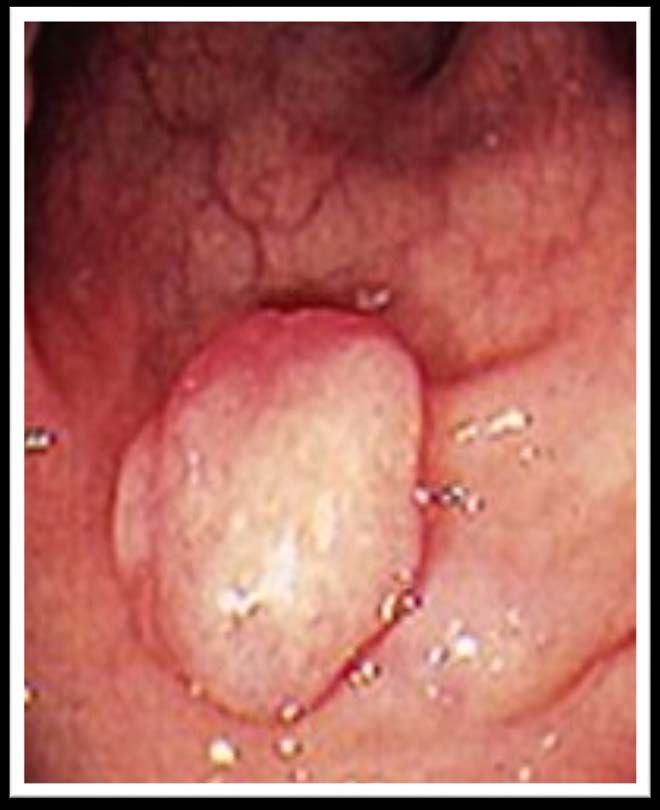
Colonoscopy Screening for Colorectal
Cancer: Optimizing Quality
Two-part course presented by Dr. David Lieberman:
1. Colorectal cancer and the value of screening / Screening and
surveillance guidelines
2. Colonoscopy
Each part includes:
Narrated presentation with slides
PDF file of slides for reference
2
Links
The slides in this presentation include links to:
External Web sites that contain the abstract or full text, when
available, of pertinent articles.
External documents that provide supplemental information.
Other slides within this presentation.
To return to the previous slide after viewing the linked slide(s),
click GO BACK in the lower right corner.
3
Acknowledgments
This presentation was developed by the following group of experts in
colorectal cancer screening:
Lynn Butterly, MD (gastroenterology)
Diane Dwyer, MD (public health, primary care)
David Lieberman, MD (gastroenterology)
Marion Nadel, PhD (public health, epidemiology)
Michael B. Potter, MD (primary care)
Paul C. Schroy III, MD, MPH (gastroenterology)
Jean Shapiro, PhD (public health, epidemiology)
Richard Wender, MD (primary care)
This presentation was developed with support from the Centers for Disease Control and Prevention.
Dr. Lieberman served on the Scientific Advisory Board of Exact Sciences Corporation.
The findings and conclusions in this presentation are those of the authors and do not necessarily
represent the official position of the Centers for Disease Control and Prevention or the American Cancer
Society.
4
Introduction
Screening for colorectal cancer (CRC)
saves lives.
CRC screening is a complex process
that achieves the maximum benefit for
the patient when all steps are
implemented appropriately.
Problems with screening
implementation have been well
documented for all screening options.
5
What Are Some
            Implementation Problems?
With Colonoscopy:
    × Polyps are missed.
    × The cecum is not reached.
    × Bowel preparation is sub-optimal.
    × The colonoscopy report is missing important elements.
    × Recommendations for screening and surveillance intervals are
      not consistent with guidelines.
    × Endoscopists do not monitor their performance, so they are not
      aware when they are not meeting quality standards.

6
What Are Some
             Implementation Problems?
With Fecal Occult Blood Testing (FOBT):
    × FOBT not offered as a good option for screening
      average-risk patients.
    × Patient preferences for FOBT not taken into account.
    × Use of tests that are no longer recommended.
    × Use of in-office tests.
    × Abnormal tests not followed up with colonoscopy.
    × FOBT tests not repeated annually.

7
Goal of This Presentation

To improve screening quality by providing up-to-date
guidance on ways to optimize the screening process, with
particular emphasis on the areas where current practice
often falls short.

8

Learning Objectives
Upon completion of this course, learners will be able
to:
1. Recommend appropriate testing for each patient, consistent with
   screening and surveillance guidelines for different population
   subgroups.

2. Recognize ways to achieve good preparation quality.

3. Identify the elements required for a complete colonoscopy report.

4. Explain which quality indicators should be monitored to improve
   colonoscopy performance.

9

“80% by 2018”
Many eligible patients are not being screened.
Efforts to raise screening rates should be enhanced.
The National Colorectal Cancer Roundtable proposed the goal of
increasing screening rates to at least “80% by 2018”.
• More than 150 organizations have signed a pledge to achieve this
goal.
• Attention to quality must be maintained.
This presentation will focus on providing high-quality
testing for those who are screened.
10Part 1: Topics to Be Covered
CRC and the value of screening
Screening and surveillance guidelines –
who / how / when
Stratifying by risk
• Average risk
• Increased risk
o Family history
o Personal history
• High / highest risk
11Part 2: Topics to Be Covered
Colonoscopy
Ensuring that colonoscopy is appropriate.
The importance of good bowel preparation.
The importance of complete documentation.
• Recommending appropriate follow-up.
The need to improve the quality of colonoscopy.
12PART 1: COLORECTAL CANCER AND THE VALUE OF SCREENING
Facts About Colorectal Cancer
135,260 new cases and 51,783 deaths in 2011 in the
United States.*
Second leading cause of cancer death overall, after lung
cancer.
Can be prevented or detected early through screening.
Incidence and mortality have been declining in the
United States.
30% decrease in incidence during past decade among adults
aged 50 and older.**
Screening has been an important contributor to U.S.
declines in incidence and mortality.
*US Cancer Statistics Working Group. 2014, see Colorectal Cancer Statistics.
**Colorectal cancer statistics, 2014.
14Where Does Colorectal Cancer Come
From?
Most cancers of the colon and
rectum develop over years
from adenomatous or
serrated polyps.
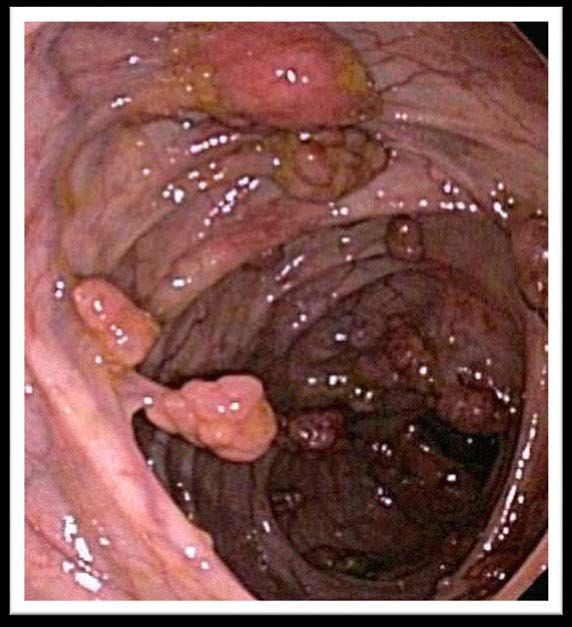
Polyps are very common and
increase with age, but very
few progress to cancer.
Polyps that are larger or have
dysplasia or villous histology
have a higher risk of
progression to cancer than
other polyps.
Estimate of polyp dwell time
from aPrevention and Early Detection
Through Screening
Detection and Removal of Decreased Incidence,
Clinically Significant Polyps Decreased Mortality
Detection and Treatment of Early- Decreased Mortality
Stage Colorectal Cancer
16Screening for Colorectal
Cancer Gets an “A”
The U.S. Preventive Services Task Force (USPSTF)
recommends screening for adults beginning at age 50
until (at least) age 75.
“A” Grade
• There is high certainty that the net benefit
is substantial.
• Suggestion for practice:
offer or provide this service.
USPSTF Screening for Colorectal Cancer
17SCREENING AND SURVEILLANCE GUIDELINES: WHO / HOW / WHEN
Is Screening Appropriate for Your Patient? Need to know patient’s: Risk level Screening and surveillance history Age Comorbidities Preferences 19
Risk Stratification to Ensure Appropriate
Screening and Surveillance*
Average Risk
No signs or symptoms of CRC.
None of the risk factors below.
Increased Risk
Family history of CRC or adenomas in a first-degree relative or CRC in
two second-degree relatives.
Personal history of adenomas, certain serrated polyps, or CRC.
High Risk
Inflammatory bowel disease: chronic ulcerative colitis or Crohn’s colitis.
Highest Risk
Confirmed or suspected genetic syndromes (FAP, HNPCC).
*The term “surveillance” is used for testing patients with a personal history of colorectal adenomas,
certain serrated polyps, or cancer. “Diagnostic testing” is appropriate for patients with signs or
symptoms.
20Screening for Colorectal Cancer AVERAGE RISK
22
Patients at Average Risk:
2016 Screening Guidelines
Multiple screening strategies are available.
Different strategies have varying levels of evidence to support their
effectiveness.
Each strategy has different advantages and limitations.
No empirical data to demonstrate that any of the strategies provide a
greater net benefit than others.
Goal is to maximize the number of
people who are screened.
Screening for Colorectal Cancer: US Preventive Services Task Force Recommendation Statement.
23Patients at Average Risk:
Colorectal Cancer Screening Strategies
Stool-Based Tests
Highly sensitive gFOBT every year
FIT every year
FIT-DNA every 1 or 3 years
Visualization Tests
Colonoscopy every 10 years
CT colonography every 5 years
Flex Sig every 5 years
Flex Sig with FIT Flex sig every 10 years plus FIT every year
Abbreviations: gFOBT, guaiac-based fecal occult blood test; FIT, fecal immunochemical test; FIT-DNA, multi-targeted stool DNA
test; Flex Sig, flexible sigmoidoscopy.
Screening for Colorectal Cancer: US Preventive Services Task Force Recommendation Statement.
24Multi-Targeted Stool DNA Testing
(FIT-DNA)
Combines a FIT with a stool DNA test (Cologuard ®*).
Higher single-test cancer and polyp detection than FIT alone
(Multitarget Stool DNA Testing for Colorectal-Cancer Screening).
Lower specificity than FIT alone, resulting in more false-positive
results and more diagnostic colonoscopy.
Insufficient evidence on the appropriate follow-up of positive findings
after a negative colonoscopy.
May lead to overly intense surveillance due to concerns over the DNA
component.
Medicare reimburses every 3 years.
*Use of trade names is for identification only and does not imply endorsement by the US Department of
Health and Human Services.
25CT Colonography
(Virtual Colonoscopy)
Requires bowel preparation.
Sensitive for polyps ≥6mm and cancer.
Incidental extracolonic findings (ECFs) are common, but most do not
require additional evaluation.
ECFs have potential for both benefit and harm.
Limited evidence about potential benefits (e.g., discovery of abdominal aortic
aneurysms and extracolonic cancers) and harms (overdiagnosis and
overtreatment).
Facility should have capacity to provide same-day colonoscopy
when needed to remove polyps.
As of July 2016, not covered for screening by Medicare, but
coverage is being reconsidered. (check website* for updates)
Covered for screening by some private insurers.
*American College of Radiology: Quality and Safety: CT Colonography Resources
26Average Risk: Ages to Screen
Most adults aged 50–75 (Grade A: offer or provide
this service).
In the elderly, screening is associated with decreased
benefits and increased harms.
Screen ages 76–85 on a case-by-case basis (Grade C: offer or
provide this service for selected patients depending on individual
circumstances).
• Do not routinely screen adults in this age group who have a history
of adequate screening.
• Consider screening if not up-to-date with screening and life
expectancy at least 5–10 years.
Do not screen adults aged >85 (Grade D: discourage the use of
this service).
27Should African Americans Start
Screening Before Age 50?
Rationale for earlier screening:
Higher age-specific rates of CRC among Recommendation:
African Americans. begin screening
Rationale against earlier screening: at age 50
Most CRC cases in African Americans occur after age 60.
Prevalence of polyps >9mm similar for whites and African Americans.
No evidence supporting effectiveness of earlier screening.
Increasing screening rates by >10% among African Americans over age 50 is
more effective than earlier screening.
Guidelines vary:
USPSTF, ACS-MSTF-ACR*: age 50
ACG,** ASGE***: age 45
ACP: age 40
Coverage varies:
Medicare and states with mandatory screening requirement: age 50
*ACS-MSTF-ACR: American Cancer Society –Multi-Society Task Force on Colorectal Cancer – American College of Radiology
**ACG: American College of Gastroenterology
***ASGE: American Society for Gastrointestinal Endoscopy
28Do Not Screen Patients with Severe
Comorbidities
Estimated life expectancyScreening and Surveillance for Colorectal Cancer INCREASED RISK
Screening Patients with a Family History
If patient has either: Begin screening at
CRC or adenomas* in a first-degree age 40 with any test
relative diagnosed at age ≥60 OR recommended for
Two second-degree relatives with average risk; repeat at
CRC usual intervals based
on type of test and
If patient has either: findings.**
CRC or adenomas* in a first-degree
relative diagnosed before age 60 OR Colonoscopy every 5
Two or more first-degree relatives years starting at age
diagnosed at any age (with family 40, or 10 years before
history not suggestive of genetic the youngest case in
syndrome) the family was
*Our expert opinion is that this applies to relatives with advanced adenomas
diagnosed, whichever
(adenomas that are ≥1cm, villous, or with high-grade dysplasia) only, recognizing comes first.**
that this information is often unavailable.
**The evidence base for these guidelines was not strong and some aspects are controversial.
Screening and Surveillance for the Early Detection of Colorectal Cancer and Adenomatous Polyps, 2008: A Joint Guideline from the
American Cancer Society, the US Multi-Society Task Force on Colorectal Cancer, and the American College of Radiology
3132
Surveillance of Patients with Adenomas
at Prior Colonoscopy
Low-risk adenomas* Colonoscopy in 5–10 years
1–2 tubular adenomasRecommendations for Adenoma
Surveillance After First Surveillance
Colonoscopy
Interval for
Baseline First Surveillance
Second
Colonoscopy Colonoscopy
Surveillance
Finding Finding
(years)
• HRA • 3
Low-risk adenoma
• LRA • 5
(LRA)
• No adenoma • 10
• HRA • 3
High-risk adenoma
• LRA • 5
(HRA)
• No adenoma • 5
Guidelines for Colonoscopy Surveillance After Screening and Polypectomy: A Consensus Update by the US Multi-
Society Task Force on Colorectal Cancer
3435
Serrated Polyps: New Guidance
Serrated lesions are characterized histologically by a
serrated (saw-toothed) appearance of the crypt
epithelium.*
In the past, most serrated lesions were called
hyperplastic polyps and were thought to have no
malignant potential.
More recently, a subset of serrated lesions has been
identified as the precursor of 20%–30% of CRCs,
primarily in the proximal colon.
*Serrated Lesions of the Colorectum: Review and Recommendations From an Expert Panel
36Natural History of Colorectal Cancer
Adenoma-Carcinoma Pathway
Small Large High-Grade Invasive
Normal Metastases
Adenoma Adenoma Dysplasia Cancer
Serrated Polyp Pathway
Sessile
Micro-vesicular Sessile Invasive
Serrated
Serrated
Normal Hyperplastic Polyp*
Polyp (with Serrated Metastases
Polyp (without Cancer
dysplasia)
dysplasia)
*Formerly referred to as Sessile Serrated Adenoma/Polyp
37Serrated Polyps
Serrated polyps, especially sessile serrated polyps, may be
difficult to detect at endoscopy.
May be the same color as surrounding mucosa and have indistinct
edges.
Nearly always flat or sessile.
May have a layer of adherent mucus that obscures the vascular
pattern.
There is substantial variability in distinguishing hyperplastic
from other serrated polyps with malignant potential (such as
sessile serrated polyps), even among expert pathologists.
The understanding of serrated polyps is evolving and current
management guidelines are based on weak evidence.
38Surveillance of Patients with Serrated
Polyps at Prior Colonoscopy
Hyperplastic polyps 5mm Colonoscopy in 5 years
and proximal to sigmoid (weak evidence)
Serrated polyp(s)Surveillance of Patients
Post-Cancer Resection
Category Next Examination
Colon or rectal cancer Within 6 months if not completed
preoperatively*; otherwise 1 year after
curative resection; if the 1 year exam is
negative, the interval to next colonoscopy is 3
years, and then at 5-year intervals.
Rectal cancer (optional) For purpose of identifying local recurrence,
flexible sigmoidoscopy, rigid proctoscopy, or
rectal ultrasound every 3–6 months for first
2–3 years may also be considered in addition
to colonoscopic surveillance noted above.
*Every effort should be made to clear the colon of synchronous lesions preoperatively using
colonoscopy for non-obstructing tumors and, for obstructing tumors, CT colonography, or if
not available, CT or gastrograffin enema.
Colonoscopy Surveillance After Colorectal Cancer Resection: Recommendations of the US Multi-Society Task
Force on Colorectal Cancer
40Screening and Surveillance for Colorectal Cancer PATIENTS AT HIGH / HIGHEST RISK
Patients at High Risk
Patients with inflammatory bowel disease (IBD): chronic
ulcerative colitis or Crohn’s colitis
Refer to a center with experience in IBD surveillance and management.

For detailed recommendations for testing, see Screening and Surveillance for the Early Detection of
Colorectal Cancer and Adenomatous Polyps, 2008: A Joint Guideline From the American Cancer
Society, the US Multi-Society Task Force on Colorectal Cancer, and the American College of
Radiology

42
Patients at Highest Risk
Patients with family history of or suspected Hereditary Non-
Polyposis Colon Cancer (HNPCC), Familial Adenomatous
Polyposis (FAP), or other syndrome:
Refer for genetic counseling and testing.
Obtaining a complete family history is critical.
Testing may begin in late teens and 20s, so family history must
be known early.
For detailed recommendations for testing, see Screening and Surveillance for the Early Detection of Colorectal
Cancer and Adenomatous Polyps, 2008: A Joint Guideline From the American Cancer Society, the US Multi-
Society Task Force on Colorectal Cancer, and the American College of Radiology.
43Thanks for viewing Part 1 44
The following slides are not part of this presentation,
              but rather serve as links for users.

45
Lynn Butterly, MD Director Colorectal Cancer Screening Dartmouth-Hitchcock Medical Center 46 GO BACK
Diane Dwyer, MD

Former Medical Director, Center for Cancer Prevention and
Control
Prevention and Health Promotion Administration
Maryland Department of Health and Mental Hygiene

47                                                  GO BACK
David Lieberman, MD

     Professor of Medicine
     Chief, Division of Gastroenterology and Hepatology
     Oregon Health and Science University

48                                                        GO BACK
Marion Nadel, PhD
Senior Epidemiologist
Division of Cancer Prevention and Control
Centers for Disease Control and Prevention
49 GO BACKMichael B. Potter, MD Professor of Family and Community Medicine University of California, San Francisco 50 GO BACK
Paul C. Schroy III, MD, MPH

Professor of Medicine
Department of Medicine
Boston University School of Medicine

51                                     GO BACK
Jean Shapiro, PhD

Epidemiologist
Division of Cancer Prevention and Control
Centers for Disease Control and Prevention

52                                           GO BACK
Richard Wender, MD

Chief Cancer Control Officer
American Cancer Society

Professor, Family and Community Medicine
Thomas Jefferson University

53                                         GO BACK
WHO Criteria for Serrated Polyposis
         (formerly Hyperplastic Polyposis)
1.     At least 5 histologically diagnosed hyperplastic and/or
       serrated polyps proximal to the sigmoid colon, at least 2
       of which are >1 cm in size; OR

2.     Any number of serrated polyps occurring proximal to the
       sigmoid colon in a patient who has a first-degree
       relative with serrated polyposis; OR

3.     >20 serrated polyps of any size but distributed
       throughout the colon.

Snover D Ahnen D, Burt RW, et al. Serrated polyps of the colon and rectum in serrated polyposis. In: Bozman FT,
Carneiro F, Hruban RH, Theise ND (eds). WHO Classification of Tumors of the Digestive System. Lyon: IARC,
2010, 160-5.

54                                                                                                                GO BACK
HNPCC
3-2-1 rule to identify patients with Lynch Syndrome
(HNPCC) – meeting Amsterdam Criteria
3 closely related relatives with CRC or Lynch-related cancers.1
2 generations involved (at least).
1 person < age 50 at time of developing the cancer.
For more information, see New clinical criteria for hereditary nonpolyposis
colorectal cancer (HNPCC, Lynch syndrome) proposed by the International
Collaborative group on HNPCC.
1. Cancers of the endometrium stomach, ovary, small bowel, ureter, renal-pelvis, hepatobiliary tract and brain
55 GO BACKFamilial Adenomatous Polyposis (FAP)
Multiple adenomas
Polyps not present at birth but
appear during 2nd and 3rd
decades
Risk of colorectal cancer
~100% by age 40
Autosomal dominant
56 GO BACKSurveillance of Patients with Serrated
Polyps at Prior Colonoscopy
Hyperplastic polyps 5mm Colonoscopy in 5 years
and proximal to sigmoid (weak evidence)
Serrated polyp(s)You can also read


