Options Booklet 2019-2021 - Holmfirth High School
←
→
Page content transcription
If your browser does not render page correctly, please read the page content below
Options Booklet
        2019-2021

  1
Contents

                                               Page
Introduction                                    3-5
The Compulsory Component                         6
Art and Design – Fine Art                        7
Automotive Maintenance                           8
Business                                         9
Computing and ICT                              10-11
Dance                                           12
Design and Technology – Graphic Design         13-14
Design and Technology – Product Design         15-16
Design and Technology – Textile Design         17-18
Drama                                          19-20
English Language and English Literature         21
Engineering Maintenance                         22
Food Preparation and Nutrition                  23
Foreign Languages Study                        24-25
Geography                                      26-27
Hairdressing and Beauty Therapy                 28
History                                        29-30
Mathematics                                     31
Music                                          32-33
Photography                                    34-35
Physical Education                              36
Religious, Philosophical and Ethical Studies    37
Sciences                                       38-41
Option blocks                                   42

                                   2
Introduction

Dear Member of Year 9,

You are about to begin the next stage of educational journey.

Up to this point all the decisions about what subjects you study have been made for you by the
school. Now you have the opportunity to choose some of the subjects that you will study in Year
10 and 11.

It’s important that you make informed choices so that the next two years at Holmfirth High will be
happy and successful for you. There are lots of different people that you can talk to and get advice
from. I would recommend that you begin by carefully reading this booklet. You may want to read it
several times over the coming weeks, so it might be worth keeping it with you.

Other useful people to talk to will include your teachers, tutor, older pupils who have been in the
same position as you are now and your parents. All these different groups of people will be keen to
help and support you in any way that they can.

This is an exciting and important time in your lives so make sure you give your choices some
serious thought.

Good luck.

Yours sincerely,

Mr B Stitchman
Headteacher

                                                 3
Dear Member of Year 9,

Welcome to our Year 9 Options’ booklet. The aim of this booklet is to provide our pupils with all the
information needed to make the right choices. Further support and guidance will be provided via
assemblies and one-to-one meetings with form tutors. There is also an information evening and
options fair on Monday 4 February.

As a school we have to meet the challenge of preparing pupils for jobs that may not yet exist,
using technologies that may not yet have been invented, solving problems that we do not even
recognise! We need to give our pupils the right education to meet that challenge.

Year 9 pupils are about to enter a very important phase in their education. The time is fast
approaching when options have to be made which will shape the programmes of study to be
followed in Years 10 and 11. Our Key Stage 4 structure has been devised in order to enable our
pupils to follow a broad and balanced curriculum. All pupils must follow a GCSE course in English,
Maths and Science. Pupils also follow courses in PE, Religious Education and receive information
about careers, citizenship, sex education, economic education and work-related learning.

To achieve the English Baccalaureate (EBacc) pupils need to achieve 9-5 grades in English,
Maths, Science, a Modern Foreign Language and either History or Geography. Computer Science
counts as a ‘science’ qualification. We continue to recommend that pupils give serious
consideration to the study of a Modern Foreign Language at GCSE as qualifications obtained in
these subjects can be regarded as high tariff qualifications which support strong applications for
top college and university courses and are also valued by employers. Ideally, pupils need a
breadth and balance of subjects in order to ensure as many doors as possible remain open
to them in the future. Therefore, pupils are required to choose at least one of the EBacc
subjects as part of their option choices.

There remains within our programme opportunity for choices to be made which reflect the interests
and aspirations of the individual pupil. These choices are made clear on the pages that follow and
there will also be opportunity for pupils to find out more through a series of presentations and talks
that will take place in the assembly hall and through careers sessions. For parents, there will be a
Parents’ Evening on Thursday 7 March where parents will receive feedback from subject
teachers on the progress of their child. This will assist parents in helping their son/daughter make
informed choices regarding options.

Whilst the school will endeavour to ensure that all pupils get their choices, this may not always be
possible. Some courses may not run if too few pupils choose an option. Pupils may not get their
first choice if a particular course is full. Some pupils may, therefore, be required to follow a first
reserve and/or a second reserve subject.

As part of the wide choice we offer, we are keen to support those children who wish to
complement their core and academic programme with a vocational choice. Vocational courses
may be chosen by those who have already decided upon a particular vocational interest for a
future career or by those who want to sample a different style of learning for part of their school
week.

As pupils begin their Key Stage 4 courses, they will notice a considerable change in the pace and
nature of their work. The increased demands of courses will become evident from early days in
Year 10 and it is important for pupils to adopt effective work practices from the beginning of
September.

                                                   4
Early in the autumn term there will be another opportunity for parents to find out more about the
demands of work in Key Stage 4. For the moment though, our priority is to ensure that all our
pupils are effectively guided and supported through the process of shaping their curriculum for
Years 10 and 11.

Mr C Taylor
Deputy Headteacher

                                                 5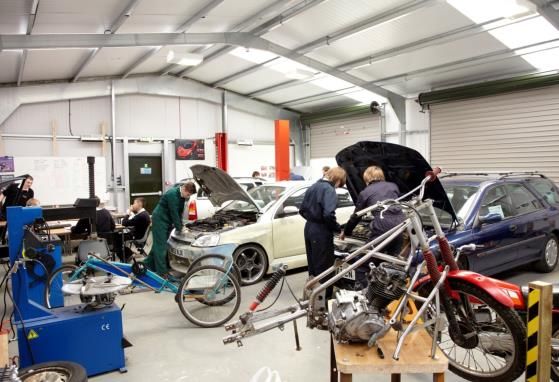
THE COMPULSORY COMPONENT

  English Language and              This leads to two separate GCSE qualifications.
  Literature
  Maths                             All pupils study one GCSE qualification in maths.

  Science                           All pupils who have not opted for Separate Sciences will take
                                    the Combined Science Course. This is worth 2 GCSEs and
                                    will be examined at the end of Year 11. Pupils with a clear
                                    commitment and wish to study further science may use an
                                    option to do so, and enter for the 3 separate GCSE subjects,
                                    Biology, Chemistry and Physics.
  Core PE                           All pupils take part in core PE lessons. The school also offers
                                    GCSE PE as part of the options choice.
  CORE RPSE                         All pupils study a course covering the statutory content in
                                    Religious Studies and PSHCE. This covers Relationships and
                                    Sex Education, Drugs Education and topics on The Wider
                                    World. There is also a GCSE course in Philosophical and
                                    Ethical Studies on offer as part of the options choice.

THE OPTIONAL COMPONENT
The optional component contains individual subject choices. For pupils who wish to embark on
courses of further or higher education, especially where no certain career decisions have been
made, it is advisable for these choices to be as broad as possible. Pupils and their families will be
invited to discuss their option choices with staff.

As previously mentioned, all pupils must choose at least one of the EBacc subjects:
Geography, History, a Modern Foreign Language or Separate Sciences. In order to ensure a
broad and balanced options spread, pupils should also only choose one course from each of the
following subject groups: computing, design technology, motor vehicle/ engineering.

When choosing their options, pupils must choose one subject from each of the option ‘blocks’ and
one reserve subject from each block. They should then order their choices and reserves in order of
preference. Please note that whilst we will do everything we can to accommodate pupil choices,
timetable restraints and non-viable course numbers mean certain combinations may not be
successful.

                                                  6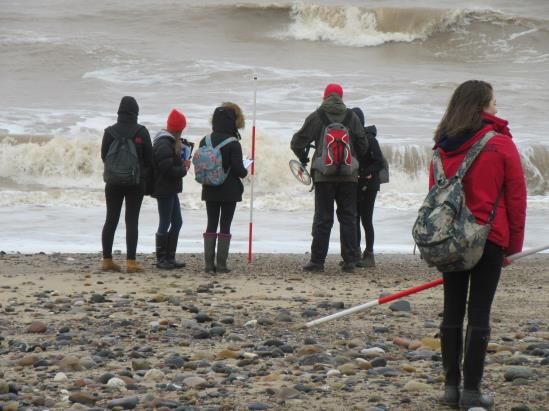
Art and Design – Fine Art
Level GCSE
Board AQA
Brief Summary of Course Content
‘Art is the most intense mode of individualism that the world has known’ Oscar Wilde
If you are creative, imaginative, and hardworking, like a challenge and want to develop your Art and
Design skills at Key Stage 4 and beyond, you should consider GCSE Art and Design.
The structure of the course involves the development of COMPONENT 1 - A PORTFOLIO OF WORK.
This entails the production of 2 (or more) extended collections of work (projects) to demonstrate skills
using a variety of subject matter, materials, approaches, processes and techniques.
This may include work from the following areas:
Drawing
Painting
Mixed Media
Sculpture
Land Art
Printmaking
Installation
Photography and Lens-based Media
The portfolio of work must show research of Art, Craft and Design and a range of artists and artistic
styles. Pupils are expected to demonstrate the connections they have made in their own work.
Assessment Methods
Assessment is an on-going process throughout the course. Pupils’ should use sketchbooks / flip files,
building up a portfolio of evidence. Sketchbooks are an important part of the planning and preparation
process to show the ‘journey’ of the artistic development and forms part of assessment. Sketchbook
work and homework are an integral and important part of the portfolio and final assessment. Fine Art
is an extremely time consuming course and organisation, dedication and enthusiasm is imperative.
Pupils’ must consistently present work professionally and creatively using a range of mediums and
complete work in their own time. Assessments will be carried out through observation of practical
activities and there is a final exam in year 2 (component 2).
COMPONENT 1: The Portfolio counts for 60% of the final grade.
COMPONENT 2: The Externally set assignment - consists of an 8-week planning and preparatory
period, where pupils’ respond to their chosen starting point and is followed by 10 hours of supervised
examination time.
COMPONENT 2 - Externally set assignment counts for 40% of the final grade.
Contact Name:
Mr C Dean – Second in Department
7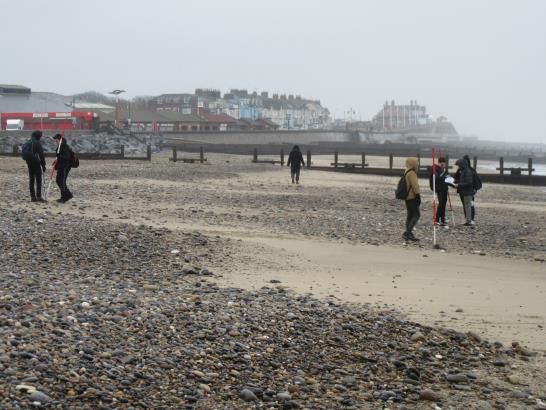
Automotive Maintenance
Level IMI Level 2 Certificate in Automotive Maintenance
Board Institute of the Motor Industry
This qualification is for pupils who have a keen interest in motor vehicle service and repair.
It includes the knowledge and skills which can be applied to maintenance and repair, general
engineering practices and hand skills for employment within engineering. It will provide pupils with
the opportunity to develop their knowledge and practical ability of vehicle maintenance.
This qualification has been developed for schools to deliver to pupils in Key stage 4, those looking
to study a Technical Award alongside their GCSE subjects. This qualification is suitable for those
pupils looking for an entry route into the Motor Vehicle / Engineering occupation and
apprenticeship route.
Assessment Methods
This qualification will be assessed through externally set and marked on-line tests. Pupils will
complete the online assessment and practical support material as evidence of their skills and will
complete a written report of a practical task undertaken as part of the combined assessment.
This report will be graded by their assessor as Pass, Merit or Distinction.
As a result of pupils successfully completing this qualification they will be well prepared for the next
level of study and/or employment, including a level 2 Diploma and Apprenticeships.
Mandatory Units
Knowledge relating to automotive engines and chassis components maintenance.
Skills in maintaining automotive engines and chassis components maintenance
Inspection and reporting of engine and chassis systems.
For practical work pupils will be required to provide their own safety equipment, to include overalls
and boots.
Progression
This qualification enables progression to a wide range of vocational options, which includes level 2
diploma and apprenticeships.
NB - Pupils can only choose one ‘Motor Vehicle’
subject: Automotive maintenance or Engineering
maintenance
Contact Name:
Mr M Whitehouse
8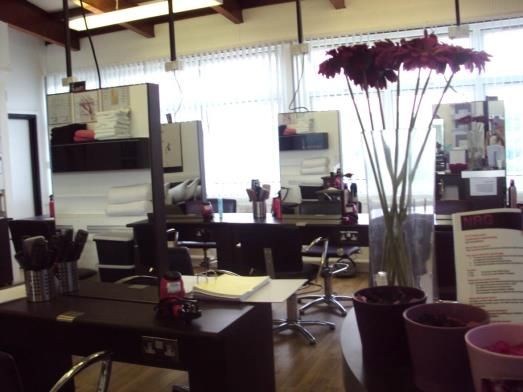
Business
Level                 GCSE Full Course
Board                 Edexcel

Brief Summary of Course Content
What do I need to know, or be able to do, before taking this course?

Do you have an interest in business? Have you ever thought about starting your own business one day?
You may be interested in learning about the world around you, how businesses are set up, and what it is
that makes some people very successful in business and why others fail. If you want to find out more
about the skills you might learn or should develop when studying this course, watch BBC programmes like
The Apprentice or Dragons’ Den. You could also look at the following website to discover the types of
things you might learn: www.bbc.co.uk/schools/gcsebitesize/business.

Is this the right subject for me?

This course is both active and enjoyable. You need to be good at communicating, explaining your ideas and
not afraid of learning new things and working with numbers to solve business problems. You will learn how
to be a creative thinker and how to make decisions. What’s more, you will also learn about the world of
business through research, investigation and some practical tasks.

What will I learn?

You will be introduced to the world of businesses and will look at what makes someone a successful
business person. You will find out how to develop an idea and spot an opportunity, and turn that into a
successful business. You will understand how to make a business effective, and manage money well.
You will also see how the world around us affects businesses and all the people involved. In Year 11 we
will study how a business grows and develops beyond the start-up phase.

How will I be assessed?
During the course, you will take two written examinations:

Paper 1: Investigating Small Business is worth 50% of the final grade and will last 90 minutes.
The paper will consist of multiple choice, calculations, short answer and extended writing questions.

Paper 2: Building a Business is also worth 50% of the final grade and will last 90 minutes.
The paper will consist of multiple choice, calculations, short answer and extended writing questions.
Many of the questions will be based on real business contexts given in the paper and may involve simple
calculations or interpretation of data.

What can I do after I’ve completed the course?

GCSE Business Studies can help you prepare for further and higher education. It will prepare you for ‘A’
Levels in both Business and/or Economics. It is also possible to move on to study BTEC and NVQ courses
in many different subjects. You will become skilled in making decisions, being creative, solving problems,
understanding finance, dealing with data, communicating and working as part of a team. Even if you do not
want to go on to study business further you will have benefited from studying a GCSE Business course
because many jobs you do will involve working for a business. However, a GCSE Business course could
lead to work in a business-related profession such as accountancy, law, marketing, leisure and tourism,
banking or the financial sector. Who knows, it could even lead to you setting up your own business.

Contact Name:
Mrs E Lees
                                                      9
Computing and ICT – Computer Science
Level GCSE
Board OCR
Brief Summary of Course Content
Do you see yourself as a Computer Programmer, a Network Manager or a Cyber Security
Analyst? GCSE Computer Science offers an exciting insight into Computing in the real world.
You will learn about how a Computer System works and the different Components that make up
a computer. The way Networks pass data to different parts of the world. You will learn ways to
secure computer systems in order to stop hacking and viruses.
Programming is a valuable skill that employers in every industry sector value. It helps with logical
thinking, creativity and structure of writing. Computer Science allows pupils to explore
Programming Techniques and write Robust Programs for different scenarios. Could you write
a program that will provide secure access to a website? Could you program a quiz game with
multiple choice questions? The programming skills that you learn in Computer Science can lead
on to careers in Computer Game Design and Programming.
Computer Science is an academic course. This option is for pupils who are interested in learning
more about programming and the internal logics of a computer. Computer Science GCSE is part
of the Science element of the English Baccalaureate.
Computer Science will be assessed by:
A Programming Project worth 20% involving solving a problem using coding (TBC)
Computer systems – written exam worth 40%
Computational thinking, algorithms and programming – written exam worth 40%
NB - Pupils can only choose one ‘Computing’ subject: Computer Science or Creative iMedia
Contact Name:
Mr M Pettifer – Head of Department
10Computing and ICT – Creative iMedia
Level Vocational
Board OCR
Brief Summary of Course Content
Are you more of a creative pupil that likes to design and create things using software? Are you
good with creative software like Adobe Photoshop, Adobe Illustrator and Adobe DreamWeaver?
The course is split into a theory module and three pieces of coursework.
In the theory module you will learn about the Pre-Production Methods that need to be taken into
account before anything can get started. The theory element looks at how to plan out your time
effectively for your projects, how to use mind maps, mood boards and visualisation diagrams to
plan and design your products successfully. Client briefs will be explored to find out how to
properly analyse what a client wants from you and how to present your ideas to them.
Creative iMedia offers a wide range of coursework scenarios to bring out the creativity of our
pupils in a client setting. You will be set assignments using a client brief and get to grips with what
they actually want from the product you will make. Showing an understanding of their needs with
ultimately help you plan, design and produce a set of unique products that will appeal to the
audience and meet the purpose. Demonstrating your skills on specialist software can show how
you have created the new product from start to finish.
The course also explores elements of the law that must be adhered to when producing new
material. Pupils must keep in mind Copyright Law and be sure to be original with their work and
explore the impact if this law is not followed correctly.
Creative iMedia is assessed by:
Pre-Production Methods – Mandatory written exam worth 25%.
Creating Digital Graphics – Mandatory coursework based element to design, develop and
evaluate digital graphics for a client worth 25%.
Creating a multipage website – Coursework based element to review, design and develop a
website for a client worth 25%.
Creating an interactive multimedia product – Coursework based element to review, design
and develop an interactive multimedia product for a client worth 25%.
Would you be able to design and create a new website for a client? What about a new Logo or
DVD cover for a new film? By taking Creative iMedia you are starting your portfolio for your future
career in Media, Marketing, Web Design, Graphical Design and many more.
NB - Pupils can only choose one ‘Computing’ subject: Computer Science or Creative iMedia
Contact Name:
Mr M Pettifer – Head of Department
11Dance
Level GCSE
Board AQA
Brief Summary of Course Content
Why choose GCSE Dance?
In addition to helping pupils acquire subject knowledge, this specification
Promotes fitness, a healthy lifestyle, team working and creativity
Actively engages pupils in the process of dance in order to develop as effective and
independent learners and as critical and reflective thinkers with enquiring minds.
Develops pupils’ skills, knowledge and understanding of a range of dance styles through the
interrelated processes of performing, creating and appreciating dances.
Develops physical, technical and expressive skills through which pupils are able to
communicate choreographic intention and develop their individual qualities as performers.
Develops pupils’ skills, knowledge and understanding of choreography through which they
are able to communicate ideas, thoughts and meaning drawn from a range of dance styles.
Develops a critical appreciation of dance in its physical, artistic and cultural contexts
Provides progression from Key Stage 3 and a solid foundation for further studies in dance
or performing arts, including A-level Dance and the Creative and Media Diploma, and/or a
career in performing arts.
Specification
Performance (30% = 40 marks)
Choreography (30% = 40 marks)
Dance appreciation (40% = 80 marks)
Performance – 30% 40 marks
Set phrases through a solo performance (1 minute) 15 marks.
Duet/trio performance (3-3½ minutes) 40 marks.
Choreography – 30% 40 marks
Solo or group choreography – a solo (2-2½ minutes) or a group dance for two to five
dancers (3-3½ minutes) 40 marks.
Dance Appreciation – 40% - 80 marks
Written exam (1 hour 30-minutes)
Knowledge and understanding of choreographic processes and performing skills
Critical appreciation of own work
Critical appreciation of professional works
Contact Name:
Miss F Lunn
12Design and Technology – Graphic Design
Level GCSE
Board AQA
Brief Summary of Course Content
“There are three responses to a piece of graphic design – yes, no, and WOW! Wow is the one to
aim for.”
Milton Glaser
This demanding GCSE has been designed to study Design Technology principles holistically but
with an emphasis on Graphic Design processes to create outcomes which respond to design
problems and design briefs. Pupils will be focusing on developing skills, techniques and processes
using CAD (Computer Aided Design) such as Adobe Illustrator, Adobe Photoshop, Techsoft 2D
Design and Adobe InDesign. In addition to the emphasis on Graphic Design, pupils’ will gain
awareness and learn from wider influences on Design Technology including historical, social,
cultural, environmental and economic factors. Pupils’ will get the opportunity to work creatively
when designing and making and applying technical and practical expertise. Pupils’ will research,
design, develop, plan and manufacture outcomes using an iterative approach. This course allows
pupils to modify, manipulate, enhance, develop and re design work to improve their outcome and
overall purpose.
“An iterative process is when a designer and / or manufacturer arrives at a decision or a desired
result by repeating rounds of analysis or a cycle of operations. The objective is to bring the desired
decision or result closer to discovery with each repetition (iteration).”
This qualification focuses on developing practical skills, working with an array of mixed media,
techniques and processes – digital and traditional - to allow pupils to manufacture and create high
quality outcomes. Pupils’ will learn about commercial processes and careers in related industries,
as well as developing core transferable skills, such as collaboration and communication.
Course Structure
Component 1: Extended design and make task 50%
Pupils’ should use sketchbooks / flip files, building up a portfolio of evidence. Sketchbook / flip file
work and homework are an integral and important part of the portfolio and final assessment. DT:
Graphics is an extremely time consuming course and organisation, dedication and enthusiasm is
imperative. Pupils’ must consistently present work professionally and creatively demonstrating a
range of skills and incorporating mixed media, alongside digitally developed and manipulated CAD
work.
Pupils’ will undertake a design and make project based on a contextual challenge set by the exam
board. The design portfolio and final outcome / prototype will evolve around Graphic Design and
the final outcome should include a range of techniques and skills which have been developed and
experimented with over the course. Pupils’ will be expected to investigate, analyse and evaluate
throughout their portfolio and evidence all of the decisions made. All of the stages of making the
final prototype must be evidenced and annotated. Pupils’ will be required to work with a range of
Graphic Design techniques and processes to produce a detailed, highly annotated Graphic Design
portfolio and a final outcome which is of exemplary quality.
13Component 2: Written Examination 50%
The 2-hour paper will focus on core technical principles (new and emerging technologies, modern
and smart materials, working properties of materials), specialist technical principles (forces and
stresses, scales of production, ecological and social footprint) and design and making principles
(investigation, primary & secondary data, communication of design ideas, materials management).
At least 15% of the exam will assess maths and at least 10% of the exam will assess science.
NB - Pupils can only choose one ‘DT’ subject: Graphics or Product Design or Textiles.
Contact Name:
Miss K Greaves – Head of Department
14Design and Technology – Product Design
Level GCSE
Board AQA
Brief Summary of Course Content
“Manufacturing is more than just putting parts together. It's coming up with ideas, testing principles
and perfecting the engineering, as well as final assembly.”
James Dyson
This demanding GCSE has been designed to prepare pupils to participate confidently and
successfully in an increasingly technological world. Pupils’ will gain awareness and learn from
wider influences on Design Technology including historical, social, cultural, environmental and
economic factors. Pupils’ will get the opportunity to work creatively when designing and making
and applying technical and practical expertise. Pupils’ will research, design, develop, plan and
manufacture outcomes using traditional methods as well as CAD (Computer Aided Design)
processes. The iterative approach to the course allows pupils to modify, manipulate, enhance,
develop and re design work to improve their outcome and overall purpose.
“An iterative process is when a designer and / or manufacturer arrives at a decision or a desired
result by repeating rounds of analysis or a cycle of operations. The objective is to bring the desired
decision or result closer to discovery with each repetition (iteration).”
Design and technology is part of everyday life and is constantly evolving. This qualification
focuses on developing practical skills, working with an array of materials, techniques and
processes, allowing pupils to manufacture high quality outcomes. Pupils’ will learn about
commercial processes and careers in related industries, as well as developing core transferable
skills, such as collaboration and communication.
Course Structure
Component 1: Extended design and make task 50%
Pupils’ should use sketchbooks / flip files, building up a portfolio of evidence. Sketchbook / flip file
work and homework are an integral and important part of the portfolio and final assessment. DT:
Product Design is an extremely time consuming course and organisation, dedication and
enthusiasm is imperative. Pupils’ must consistently present work professionally and creatively
demonstrating a range of skills and incorporating mixed media. Assessments will be carried out
throughout the course.
Pupils’ will undertake a design and make project based on a contextual challenge set by the exam
board. This will take the form of a portfolio of evidence and a final prototype. Pupils’ will be
encouraged to investigate, analyse and evaluate throughout their portfolio and evidence all of the
decisions made. All of the stages of making the final prototype must be evidenced and annotated.
Pupils’ will be required to work with a range of materials and processes to produce a detailed,
highly annotated Product Design portfolio and a final outcome(s) which is of exemplary quality.
15Component 2: Written Examination 50%
The 2-hour paper will focus on core technical principles (new and emerging technologies, modern
and smart materials, working properties of materials), specialist technical principles (forces and
stresses, scales of production, ecological and social footprint) and design and making principles
(investigation, primary & secondary data, communication of design ideas, materials management).
At least 15% of the exam will assess maths and at least 10% of the exam will assess science.
NB - Pupils can only choose one ‘DT’ subject: Graphics or Product Design or Textiles.
Contact Name:
Mr B Brough
16Design and Technology – Textile Design
Level GCSE
Board AQA
Brief Summary of Course Content
“Fashion is very important. It is life-enhancing and, like everything that gives pleasure, it is worth
doing well… You have a more interesting life if you wear impressive clothes.”
Vivienne Westwood
This demanding GCSE has been designed to prepare pupils to participate confidently and
successfully in an increasingly high-tech world, focusing on the role, purpose, function and
technological development of Textiles. Alongside Textiles, pupils’ will gain awareness and learn
from wider influences on Design Technology including historical, social, cultural, environmental
and economic factors. Pupils’ will get the opportunity to work creatively when designing and
making and applying technical and practical expertise. Pupils’ will research, design, develop, plan
and manufacture outcomes using traditional methods as well as CAD (Computer Aided Design)
processes, as appropriate. The iterative approach to the course allows pupils to modify,
manipulate, enhance, develop and re design work to improve their outcome and overall purpose.
“An iterative process is when a designer and / or manufacturer arrives at a decision or a desired
result by repeating rounds of analysis or a cycle of operations. The objective is to bring the desired
decision or result closer to discovery with each repetition (iteration).”
This qualification focuses on developing practical skills, working with an array of materials,
techniques and processes, allowing pupils to manufacture high quality outcomes. Pupils’ will learn
about commercial processes and careers in related industries, as well as developing core
transferable skills, such as collaboration and communication.
Course Structure
Component 1: Extended design and make task 50%
Pupils’ should use sketchbooks / flip files, building up a portfolio of evidence. Sketchbook / flip file
work and homework are an integral and important part of the portfolio and final assessment. DT:
Textiles is an extremely time consuming course and organisation, dedication and enthusiasm is
imperative. Pupils’ must consistently present work professionally and creatively demonstrating a
range of skills and incorporating mixed media. Assessments will be carried out throughout the
course.
Pupils’ will undertake a design and make project based on a contextual challenge set by the exam
board. The design portfolio and final outcome / prototype(s) will evolve around Textiles and the
final outcome should include a range of techniques and skills which have been developed and
experimented with over the course. Pupils’ will be expected to investigate, analyse and evaluate
throughout their portfolio and evidence all of the decisions made. All of the stages of making the
final prototype must be evidenced and annotated. Pupils’ will be required to work with a range of
textiles and processes to produce a detailed, highly annotated Textile Design portfolio and a final
outcome which is of exemplary quality.
17Component 2: Written Examination 50%
The 2-hour paper will focus on core technical principles (new and emerging technologies, modern
and smart materials, working properties of materials), specialist technical principles (forces and
stresses, scales of production, ecological and social footprint) and design and making principles
(investigation, primary & secondary data, communication of design ideas, materials management).
At least 15% of the exam will assess maths and at least 10% of the exam will assess science.
NB - Pupils can only choose one ‘DT’ subject: Graphics or Product Design or Textiles.
Contact Name:
Mrs C Nixon
18Drama
Level GCSE (No Tiers)
Board AQA
Brief Summary of Course Content
The AQA GCSE in Drama is a general qualification in Drama as a single arts discipline subject.
It is a natural progression from the Drama studied within Key Stage 3 and builds on knowledge,
understanding and skills previously acquired. To have a Drama qualification shows an ability to
communicate with others and practically present work to a high standard. Drama is not just acting;
it is confidence building through the development of communication skills. The skills acquired in
this course are not just GCSE specific but life skills that will benefit pupils in any future line of work.
The GCSE Drama course is designed for anyone with a keen interest in the theatre. Many
aspects of the theatre are explored and you will have the opportunity to work on a variety of
different dramatic styles and topics. As the course progresses you will have the opportunity to
work on improvisations and scripted work in a variety of different forms. The course is highly
demanding, and it is expected that you are able to rehearse for practical module assessments in
your own time.
Assessment Methods
The Course is split into three components:
Component 1 – Written Component 2 – Practical/Written Component 3 – Practical
80 marks = 40% 80 marks = 40% 40 marks = 20%
Component 1: Understanding Drama
Written Paper – 1 hour 45 minutes
What is assessed:
• Knowledge and understanding of drama and theatre
• Study of one set play from a choice of six
• Analysis and evaluation of the work of live theatre makers
The written paper comprises three sections:
Section A: multiple choice (4 marks)
Section B: four questions on a given extract from the set play chosen (44 marks)
Section C: one questions (from a choice) on the work of theatre makers in a single live theatre
production (32 marks)
Externally set and marked.
Component 2: Devising Drama
What is assessed:
• Process of creating devised drama
• Performance of devised drama (pupils may contribute as performer or designer)
• Analysis and evaluation of own work
19How it is assessed:
• Devising log (60 marks)
• Devised performance (20 marks)
Internally assessed and externally moderated.
Component 3: Texts in Practice
What is assessed:
Performance of two extracts from one play (pupils may contribute as performer or designer).
Free choice of play.
How it is assessed:
Performance of Extract 1 (20 marks) and Extract 2 (20 marks)
Internally assessed and externally moderated.
Contact Name:
Mrs J Brear
20English Language and English Literature
Level GCSE
Board AQA
Brief Summary of Course Content
English is central to everything that your child does. The English Department at Holmfirth High is dedicated
to making this vital subject one that your child will enjoy as they begin to understand the ways in which
English plays a crucial role in all our lives.
Whether through reading texts from the Literary Heritage, accessing more modern ‘multi-modal texts’ or
looking at non-fiction texts, your child will have the chance to analyse and interpret an array of literature as
they seek to develop reading and writing skills.
Enabling pupils to express ideas and opinions with clarity, force and enthusiasm is a key facet of the
English Language GCSE and pupils will be given the opportunity to write for different audiences and
purposes. Central to this are the technical and grammatical skills that underpin good writing. It is our hope
that pupils leave us with an appreciation of how language works as well as how it can best be used.
All pupils study English Literature, which broadens their horizons and enriches their experiences.
By accessing texts from different times, countries and contexts, pupils are able to see the ways in which
language has evolved and the way in which language is a powerful tool for bringing about change.
Assessment Methods: 100% Final Exam
English Language
Paper 1: 1hr 45-minutes Paper 2: 1hr 45-minutes Spoken Language
Creative Reading and Writing Viewpoints and Perspectives Non-Exam Assessment
Section A: Reading Section A: Reading One formal presentation or speech
Questions on an unseen extract from Questions on two unseen linked texts: Standard English should be used
one 20th century literary fiction text one non-fiction and one literary non-fiction
Achievement reported but will not
Section B: Prose Writing Section B: Writing contribute to final mark and grade.
One task on creative prose writing One compulsory extended writing task
80 marks 80 marks
50% 50% 0% weighting of GCSE
English Literature
Paper 1: 1hr 45-minutes Paper 2: 2 hrs 15-minutes
Shakespeare and the 19th Century Novel Modern Texts and Poetry
Section A: Shakespeare: ‘Macbeth’ Section A: ‘An Inspector Calls’
One question on ‘Macbeth’ One essay question from a choice of two
write in detail about an extract
write about the play as a whole. Section B: Poetry Anthology
One question: compare a named poem and one other poem
Section B: 19th century novel: ‘A Christmas Section C: Unseen Poetry
Carol’ One question on one unseen poem
One question on ‘A Christmas Carol’ One question COMPARING this poem with a second unseen
write in detail about an extract poem
write about the play as a whole 96 marks
64 marks
40% 60%
Contact Name:
Mrs E Hollingdrake – Head of Department
21Engineering Maintenance
Level Level 2 Certificate in Engineering Maintenance
Board Institute of the Motor Industry
Brief Summary of Course Content
The qualification is designed to give pupils a broad understanding of employment opportunities
within the engineering sector. The mandatory, core and personal development units help build a
broad understanding of engineering related topics, whilst the specialist units will build a wider
understanding of engineering skills.
Assessment Methods
This qualification will be assessed by using externally set and marked on line tests, internally
marked practical tasks and written assessments and graded Pass, Merit or Distinction. There is
also a written project which encompasses a combined assessment element to this qualification.
A level 2 pass is the equivalent of a GCSE grade 4.
Mandatory units
Health and Safety
Engineering tools equipment and materials
Engineering maths and science
Engineering project
Preparing for working in an engineering environment
Optional units
Mechanical systems maintenance
Internal combustion engines
MIG welding
Applying foundation materials
For practical work pupils will be required to provide their own safety equipment to include overalls
and boots.
Progression
This qualification enables progression onto a wide range of further vocational qualifications in the
engineering and associated sectors. This would be in the form of a level 2 diploma and the
apprenticeship route.
NB - Pupils can only choose one ‘Motor Vehicle’
subject: Automotive maintenance or Engineering
maintenance
Contact Name:
Mr M Whitehouse
22Food Preparation and Nutrition
Level GCSE
Board AQA
Brief Summary of Course Content
“Put your head down and work hard. Never wait for things to happen, make them happen for
yourself through hard graft and not giving up.” Gordon Ramsey
Our fresh and exciting GCSE Food Preparation and Nutrition specification equips pupils’ with an
array of culinary techniques, as well as knowledge of nutrition, food traditions, food science,
kitchen safety and food provenance. Food Preparation and Nutrition is a demanding yet enjoyable
GCSE course which showcases the talents of our potential future chefs, dieticians, nutritionists,
personal trainers and private caterers to name a few! Pupils’ will learn and apply a vast range of
techniques and processes which will significantly develop their skills and knowledge of various
food groups, ingredients and dietary needs and requirements of different groups of people.
This course helps pupils develop their knowledge and understanding of food and nutrition issues in
a diverse society and enables them to work in a variety of contexts.
This two-unit specification gives pupils’ relevant skills and knowledge which are transferable to
other settings, enhancing career opportunities and providing a satisfying course of study for
candidates of various ages and from diverse backgrounds. The course provides a basis for pupils’
who wish to study the subject further.
Assessment Methods
This course has 50% Controlled Assessment.
Task 1 will be a food investigation which will be
scientific based.
Task 2 will be a food preparation assessment which will
include presenting three dishes.
Other Information
This GCSE is ideally suited to pupils’ who wish to combine the practical skills of food preparation
with an understanding of human needs in relation to nutrition. It is home based cooking and not
industry based technology. They will consider social, cultural and economic factors, as well as
looking at scientific aspects of the structure and preparation of ingredients.
Developing time management and organisational skills along with the ability to investigate and
solve problems are an integral part of the course. It would be a suitable pathway for pupils’
wishing to follow an advanced course in Home Economics, Hospitality, Catering or any Nutrition
based career.
There will be a need for pupils to provide ingredients on a regular basis in order to
complete the practical element of this GCSE.
Contact Name:
Miss L Geisel
23Foreign Languages Study at KS4
Level GCSE
Board AQA
Brief Summary of Course Content
“Languages are one of the skills sets nowadays that every pupil or young adult that goes out to face the
working world should have” - Paul Duffen, former Chairman, Hull City Football Club. This statement is
truer than ever today!
Are you a keen sportsman or woman?
Do you see yourself working for the police, fire or ambulance service?
Do you want a career in business?
Are you a budding engineer or do you want to work in the hotel or tourism industry?
Don’t just associate languages with teaching or translation careers. Learning a language can give
you the opportunity for so much more. The ability to communicate in a foreign language is a life
skill. Please read on.
Holmfirth High School believes that the majority of pupils benefit from the continued study of a foreign
language. In most recent years, the majority of Year 11 pupils who studied a foreign language have
achieved an A* - C (9-4) grade. Through the study of a foreign language pupils develop linguistic skills and
increase their international awareness. This year we are offering GCSEs in French, German and Spanish.
Some facts to consider:
Everything is done on an international scale these days – it’s called the Global Economy and it
touches all our lives
People can have a better chance of earning a living through learning languages even at just a basic
level
Over 74% of employers are dissatisfied with school-leavers’ language skills (CBI)
A good GCSE grade in a language subject is seen by Sixth Form Colleges as a high tariff
achievement and an indication of potential
It is not just high fliers in international business who need language skills
Universities prefer entrants to have a foreign language qualification and several top universities are
insisting on a 9-4 grade pass in a foreign language before offering a study place
There is increasing demand for language skills in jobs involving all kinds of customer service -
health, hospitality, ICT, engineering and construction, creative and media industries, police, banking
and finance
The UK has a shortage of people who can combine language skills with their chosen career
The UK is over-reliant, compared to the rest of the world, on business with countries which speak
the same language
We live in a multilingual, multicultural world. Employers value language skills. Languages bring
business success. Language skills are needed at all levels. English is not enough.
For more careers advice go to: www.multilingualjobsuk.com
GCSE FRENCH, GCSE GERMAN, GCSE SPANISH (Exam Board AQA)
The topics covered are designed to be interesting and valuable for pupils when they leave school as they
aim to develop language skills in broadly social contexts covering the themes of:
i) Identity and culture
ii) Local, national, international, and global areas of interest
iii) Current and future study and employment
24Work covered in Years 7 to 9 is revised and extended.
Assessment is across the four skills of Speaking, Writing, Listening and Reading.
QUALIFICATION AQA GCSE
French
German
Spanish
Skills: This course of study Speaking, Writing, Listening and Reading
Speaking Assessment Speaking: Non-exam assessment 25% of GCSE
Writing Assessment Writing: Unseen written exam incorporating translation from English
to the target language weighted 25% of the GCSE.
Listening Assessment Listening: Unseen examination weighted 25% of GCSE
Reading Assessment Reading: Written exam incorporating translation from language into
English. Unseen examination weighted 25% of GCSE
Tiers of entry Pupils must take all four question papers at the same tier. These are
taken at the end of Year 11.
Pupils can be entered at Foundation or Higher Level only for the examination. The foundation exam is
graded 5-1 and the higher 9-4
There will usually be 2 homeworks per 5 lessons. One is likely to be learning and it is essential that this is
done thoroughly as dictionaries are not allowed in the examination. The other will be reading, writing or
speaking.
Pupils will need the use of a bilingual dictionary at home and the purchase of a number of supplementary
resources such as Grammar and Revision guides will also be recommended.
FAQs
Q: Is it possible to study 2 foreign language GCSEs?
A: Yes, in certain circumstances, please discuss with Mrs Kerr.
Q: What if I do not want to study a language at all?
A: You should think very seriously about the longer-term future in terms of your ability to
communicate in more than just English, your intercultural awareness and your future employability.
A university you might choose to study at may insist that you have a GCSE foreign language
qualification before allowing you on the course.
Remember “if you have studied a language it at least means that you have some experience
of international communication and as most businesses are international nowadays it is a
very crucial aspect to progress one’s career and to differentiate yourself from other pupils”
- Jim Hart, Business Language Champion, Managing Director, The European Marketing
Agency, Saltaire.
Contact Names:
Mrs S Kerr – Head of Department
Mrs H Ingham – Second in Department
25Geography
Level GCSE
Board AQA Geography (8035)
Brief Summary of Course Content
Why should you choose GCSE Geography?
Geography helps you to make sense of the world around you. It is hands on, it is relevant and it is
fun. The AQA Geography specification covers some exciting topics such as urban issues, world
development, the coastal zone and hazards, to name but a few. It is extremely relevant to the
changing world that we live in and combines the physical and human processes and factors that
will inevitably change the future of the planet and how we live. The course will give you the chance
to get to grips with some of the big questions affecting our world and to understand the social,
economic and physical forces and processes which will impact upon you. A key focus of the
course will look at the future and how we can manage both the physical and human landscape in a
more sustainable way.
What will I study?
Unit 1: Living with the physical environment - 35% of the full GCSE – 1 hour 30-minute exam
Pupils will study the following units:
The challenge of natural hazards
Physical landscapes in the UK
The living world and Geographical skills
Unit 2: Challenges in the human environment - 35% of the full GCSE – 1 hour 30-minute exam
Pupils will study the following units:
Urban issues and challenges
The changing economic world
The challenge of resources management
Geographical skills.
Unit 3: Geographical applications/fieldwork investigation – 30% of the full GCSE – 1-hour exam
This will include two fieldtrips: the first to study coastal erosion on the East Yorkshire coast and the
second involving a visit to Castleton in Derbyshire.
How is the GCSE Geography assessed?
Geography is assessed by three public examinations: units 1 and 2 each lasting one hour and
thirty minutes which together are worth 70% of your GCSE, and an exam based on field work
worth 30% lasting one hour. Examination questions focus mainly on the geographical skills that
have been acquired as well as key geographical processes and concepts studied in the human
and physical units.
26How does this help me at College and beyond?
Both Greenhead and New College also use the AQA exam board so pupils would experience a
similar structure to both examinations and fieldwork investigations. There are a broad number of
employers who actively look to recruit Geographers as they can combine and further develop the
skills they have acquired during study into the world of work.
Why choose Geography?
Geography can literally take you places! Any aspect of Geography could launch you into a career.
Interested in the environment or ecosystems? You could become a Conservation Manager or work
for the Environment Agency. On a wider front, your career options could range from town planning
to marketing or law to leisure, travel, tourism or teaching. Geography will keep your future options
open.
Contact Name:
Mr J Cannon – Head of Department
27Hairdressing and Beauty Therapy
Level Level 2 Certificate in Hairdressing and Beauty Therapy (VRQ)
(GCSE equivalent)
Board VTCT (Specialist awarding body for Hairdressing, Beauty Therapy
and Complementary Therapy)
Hairdressing and Beauty Therapy remains an extremely popular vocational area nationwide which
enthuses young people to study. This qualification was introduced by the exam board (VTCT) in
September 2014 for key stage 4 pupils.
The aim of the qualification is to use the creative and fascinating hair and beauty sector as a
vehicle to develop learners broadly, with a range of skills and knowledge to facilitate progression to
a wide range of further learning and careers.
Examples include exploring hair and beauty sectors, carrying out research projects, science of hair
and beauty, business enterprise and marketing.
The units that make up this qualification include 2 mandatory units and 2 optional units.
Understanding the hair and beauty sector
Hair and beauty research project
Marketing and promotions in hair and beauty
Hair and beauty science
There will be opportunities for pupils to experience a wide variety of practical tasks and activities
whilst studying this level 2 qualification.
All units are assessed both internally and externally by the exam board. Each individual unit is
graded either Pass, Merit or Distinction.
There is also an externally set and externally marked written exam taken under exam conditions
(1 hour 30-minutes).
Pupils will be expected to wear a salon uniform which can be purchased through school.
Progression
This qualification enables progression in the Vocational Sector in the form of further studies at
level 2 and then level 3.
Contact Name:
Mrs W Burrell – Head of Department
28History
Level GCSE
Board AQA (History 8145)
Brief Summary of Course Content
History matters! We believe in the importance of learning from history. That is why we have
designed a course that enables pupils to study different aspects of the past, so they can engage
with key issues such as conflict, understand what drives change and how the past influences the
present. Our aim is to enable outstanding achievement for everyone through the delivery of
outstanding learning by outstanding teachers.
PAPER 1
Germany, 1890 – 1945
This period study focuses on the development of Germany during a turbulent half century of
change. It was a period of democracy and dictatorship – the development and collapse of
democracy and the rise and fall of Nazism. Pupils will study the political, economic, social and
cultural aspects of these two developments and the role ideas played in influencing change.
They will also look at the role of key individuals and groups in shaping change and the impact the
developments had on them.
The Cold War in Asia 1950 – 1975
This wider world depth study enables pupils to understand the complex and diverse interests of
different states and individuals and the ideologies they represented. It focuses on the causes and
events of the Cold War in Asia (namely Korea and Vietnam) and seeks to show how and why
conflict occurred and why it proved difficult to resolve the tensions which arose. This study also
considers the role of key individuals and groups in shaping change, as well as how they were
affected by and influenced international relations.
PAPER 2
Britain: Health and the People (c1000 to the present day)
This thematic study will enable pupils to gain an understanding of how medicine and public health
developed in Britain over a long period of time. It considers the causes, scale, nature and
consequences of short and long term developments, their impact on British society and how they
were related to the key features and characteristics of the periods during which they took place.
Although the focus of this study is the development of medicine and public health in Britain, it will
draw on wider world developments that impacted on the core themes. Pupils will have the
opportunity to see how some ideas and events in the wider world affected Britain and will promote
the idea that key themes did not develop in isolation, but these ideas and events should be
referenced in terms of their effects on the core theme for Britain and British people. Pupils will
study the importance of the following factors; war, superstition and religion, chance, government,
communication, science and technology, the role of the individual in encouraging or inhibiting
change.
29Elizabethan England (c1568 to 1603)
Elizabeth I is one of the most famous British monarchs. This option allows pupils to study in depth
a specified period, the last 35 years of Elizabeth I's reign. This was an exciting period of great
change in British History. In this unit we will consider the political climate including the background
and character of Elizabeth I and, amongst other things, the problems that faced Britain’s second
and perhaps well-known female ruler.
Why choose History?
History allows pupils to make sense of the modern world by understanding the past. It gives pupils
an understanding of their identity and helps attach value to local and national contexts. There are
a number of transferrable skills which you learn through historical study, many of which are highly
valued by employers such as critical thinking, forming judgements based on evidence and
identifying ‘fake news’. The breadth of the course means we cover many potential interests;
whether you are fascinated in Medieval surgery, Guerrilla warfare, How Hitler took power or Why
Elizabeth I never married, there is something for everyone!
Assessment Methods
Two examinations (both 1 hour and 45-minutes), each contributing 50% towards the overall mark.
Contact Name:
Mr M Doggett – Head of Department
30Mathematics
Level GCSE
Board Pearson Edexcel
Brief Summary of Course Content
The Maths syllabus is grouped into 5 areas:
Number
Algebra
Ratio, proportion and rates of change
Geometry and measures
Probability and statistics
The key aims of the curriculum are to develop:
Mathematical fluency
Mathematical reasoning
Problem solving
Assessment Methods
The mathematics GCSE is 100% examination, there is no controlled assessment element.
Three papers, all worth 80 marks, are sat at the end of year 11. One examination is non-calculator
and two examinations are calculator papers. All three papers are 1hour 30-minutes.
There are two tiers of entry – Higher and Foundation. Pupils will achieve a Grade 9-1 (Foundation
grades 5-1, Higher grades 9-4).
Other Information
GCSE Mathematics will help prepare you for an increasingly technological age; many
occupations require you to have a good qualification in this subject. Study of GCSE Mathematics
will help improve your problem-solving abilities as well as equipping you with skills that are
essential for life. The opportunity to complete rich, challenging tasks will encourage you to think
more widely about each topic studied and appreciate mathematics as a means of understanding
the world around us.
There have been significant changes to the Mathematics GCSE in terms of content and the way
the subject is graded. You may find a summary of these changes on the website given below:
https://www.gov.uk/government/publications/gcse-changes-a-summary/summary-of-changes-to-
gcses-from-2015
Some pupils may be given the option of studying Further Maths as a twilight course throughout
Year 10 and 11 and will be examined in June in Year 11. Should your child be suitable for this
qualification as well, they will receive an invitation to apply for a place during the autumn term of
Year 10.
Contact Name:
Miss V Smith – Head of Department
31You can also read


