YEAR 9 SUBJECT SELECTION INFORMATION 2021
←
→
Page content transcription
If your browser does not render page correctly, please read the page content below
YEAR 9
SUBJECT SELECTION INFORMATION
             2021

  www.thomascarr.vic.edu.au
Contents
.................................................................................................................................................................................................... 3
Introduction ................................................................................................................................................................................ 4
Overview and Timetable ............................................................................................................................................................. 4
Good Samaritan Campus (Country Experience) ......................................................................................................................... 5
City Experience ........................................................................................................................................................................... 6
Important Contacts ..................................................................................................................................................................... 6
Curriculum Pathways .................................................................................................................................................................. 7
   English ..................................................................................................................................................................................... 7
   Mathematics ........................................................................................................................................................................... 8
   Science .................................................................................................................................................................................... 9
Compulsory Subjects ................................................................................................................................................................ 10
   Communications (Humanities/English) ................................................................................................................................ 10
   Investigation ......................................................................................................................................................................... 11
   Mathematics ......................................................................................................................................................................... 12
   Magis Mathematics .............................................................................................................................................................. 13
   Personal Development Health and Physical Education ........................................................................................................ 14
   Religious Education............................................................................................................................................................... 15
   Barbarians, Invaders and Warriors ....................................................................................................................................... 16
   Cracking the Code – Digital Media Programming ................................................................................................................. 17
   Food Lab ............................................................................................................................................................................... 18
   Health and the Human Body ................................................................................................................................................ 18
   It’s Lit .................................................................................................................................................................................... 19
   Language: Italian ................................................................................................................................................................... 20
   Mary Goes Global ................................................................................................................................................................. 21
ADDITIONAL ELECTIVES ............................................................................................................................................................ 22
   All in the Mind ...................................................................................................................................................................... 22
   At the Movies........................................................................................................................................................................ 22
   Art Forms .............................................................................................................................................................................. 23
   Changing World .................................................................................................................................................................... 23
   Creative Textiles.................................................................................................................................................................... 24
   Creative Writing .................................................................................................................................................................... 24
   Design Technology: Wood, Metal and Plastic ...................................................................................................................... 25
   2D Logo Design ..................................................................................................................................................................... 25
   3D Model Design................................................................................................................................................................... 26
   Drama ................................................................................................................................................................................... 26

                                                                                                                                                                                                2
Electronics and Plastics in Design ......................................................................................................................................... 27
Elite Sports Performance ...................................................................................................................................................... 27
Game On ............................................................................................................................................................................... 28
Languages: Indonesian ......................................................................................................................................................... 29
Languages: Italian ................................................................................................................................................................. 30
Music..................................................................................................................................................................................... 31
Photography ......................................................................................................................................................................... 31
Shark Tank............................................................................................................................................................................. 32
Textiles Project Runway ........................................................................................................................................................ 33
Wonderful World of Foods ................................................................................................................................................... 33

                                                                                                                                                                                       3
Introduction
Year 9 students experience enormous emotional, physical, social and intellectual changes as they transition from childhood
to adulthood. This period of transition is often characterised by students’ growing sense of independence from both
parents and teachers while at the same time developing more supportive relationships among their peers. The adolescent
needs to find expression in the diversity of experience and will occasionally need to learn from their mistakes as they progress
towards adulthood.

The uniqueness of the Year 9 student also translates to his or her learning needs. Recent studies have highlighted that
traditional curriculum delivery does not meet the needs of these students, nor does it engage them sufficiently to be able to
re-engage them in the senior school years. In well-documented brain research, the period of adolescence is vital for
developing that part of the brain that controls impulsive behaviour, calms emotions, reasoning (i.e. consequences to actions)
and decision-making.

As a school, we have a responsibility to sustain student motivation and improving skills in students and teachers. It is with this
aim in mind, that the College has designed a program that will engage students and equip them with new skills that will help
shape their adult selves.

The program aims to develop students who:

•   Are independent, self-aware learners who set goals, reflect and evaluate their own progress
•   Are confident to take risks and responsibility for their own learning
•   Pose critical questions about their world and can use traditional online and community resources to develop responses
•   Work co-operatively to complete a variety of tasks with teams of peers
•   Are socially aware, ethical and caring global citizens
•   Are connected to fellow students, staff and The College and see themselves as members of a learning community.

Overview and Timetable
Where possible all periods will be doubles. Homerooms will be gender based. The rationale for this includes:

•   Gender based groups provide a safe environment for young people to explore challenging issues
•   It will better facilitate arrangements at the Good Samaritan Campus and the City Experience
•   Minimise disruption at Thomas Carr College – Tarneit Campus when groups are at the Good Samaritan Campus.

Forming single gender groups supports a means of further improving of educational growth of boys and girls. At the
classroom level, single gender instruction offers specific gender friendly opportunities for enhancing learning by directly
addressing many of the challenges and stressors in boys’ and girls’ educational and personal lives.

The program will consist of the subjects and period allocations listed below. Each of the subject areas will have a different
focus to the current curriculum being offered and will link in with the themes that have already been established.

                           Subject                                          2021 period allocation (per fortnight)
Communications                                                                               13
Investigations                                                                                9
Physical Education and Personal Development                                                   8
Religious Education                                                                           6
Mathematics Elective                                                                          8
Additional Electives                                                                         16
Total                                                                                        60

                                                                                                                              4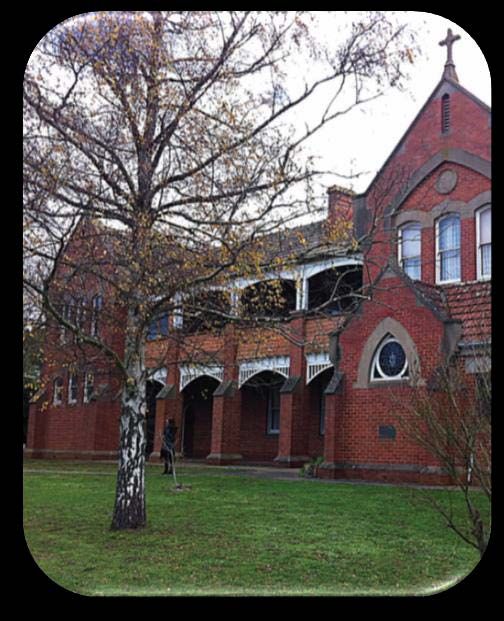
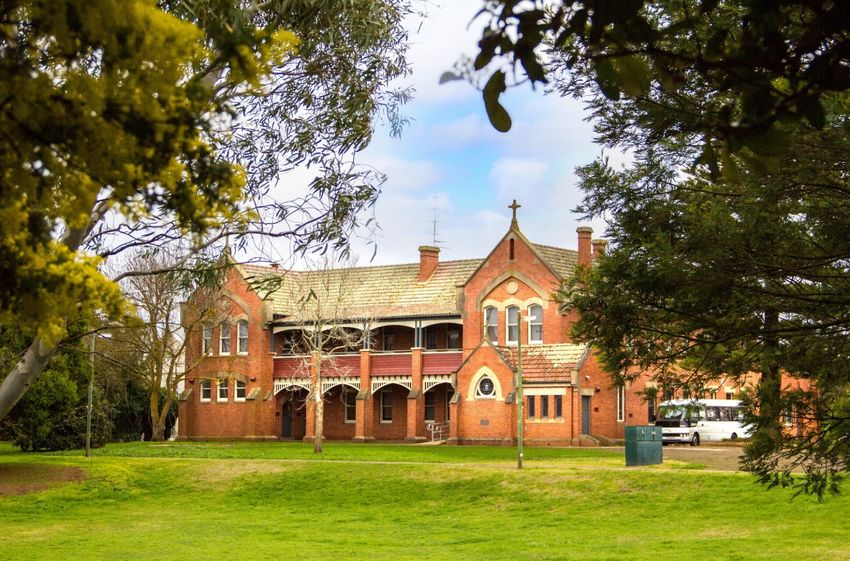
Good Samaritan Campus (Country Experience)
The Good Samaritan Campus, originally known as the Good Samaritan Convent, was initially operated by the Good
Samaritan Sisters as a boarding school for girls in the Colac/Otway area. After the closure of the boarding school in the 1970’s,
it continued to be residence for members of the congregation. During the 1980’s the Good Samaritan Centre was redeveloped
as a venue for community groups and adult professional learning. In recent years, the site has been used by St Brendan’s
Parish and St Brendan’s Primary School both located next to the Convent.

In 2013 the site was acquired by Thomas Carr College for use in the Year 7 Orientation Program and the iD9 ‘Your Future’
Country Experience. The newly renovated campus has accommodation for 28 students in rooms of two, four or six beds,
well-appointed dining rooms and commercial kitchen, bathrooms, a comfortable student lounge, a learning space, staffroom,
storage shed, staff and manager’s residences. There is also a large open sports oval immediately adjacent to the main
building.

Location
The Good Samaritan Campus is in Coragulac, 11km northeas t of Colac, approximately 141km from Thomas Carr College.
The name Coragulac is derived from the local aboriginal word, 'corakyallock', meaning a sandy creek.

Program Overview
The student’s growing sense of independence will be key to the Country Experience. This independence is balanced with a
better understanding of what it is to be a responsible adult living in community and taking steps to find their own place into the
world. The Good Samaritan Campus experience aims to provide all students with an exciting and challenging program in an
environment that is safe, caring, structured and engaging. The emphasis throughout the three-week experience will be on
learning through doing. Activities and project work will be based around the local Coragulac and Otway’s environments of
lake, coast and forest. Complementing experiential learning in each of these environments will be a further focus on
community living centered on day to day life on the Campus.

The activities, such as kayaking/canoeing, mountain bike riding and bushwalking are not intended to be an end in themselves
but rather a means by which the students can explore the environment that surrounds them at the Good Samaritan Campus.
A strong emphasis will also be placed on student involvement in planning and decision making surrounding each activity,
including a two-day expedition through the Otway Ranges during their final week.

                                                                                                                              5
City Experience
Students will participate in a City Experience. This experience will allow students to study the cultural, historical and sporting
aspects of the city of Melbourne. The program recognises students’ increasing independence and requires students to
develop their own transport plans in order to complete each of the set activities for each day. A city experience ‘passport’
has questions, facts, maps and information on key locations that they will visit individually, with their small group and as a
class.

Many aspects of City Experience interrelate with the iD9 curriculum. The Parliament House tour links to the My Society
Unit. The students have a tour through the two houses of Parliament and get to witness Parliament in session. The Youth
Homelessness Tour is linked in with the College’s social justice program. Students are educated on the struggles that our
youth may face today and then taken on a tour of where the young adults may reside for the night around the city.

Assessment
Students will be assessed on their experience and will have to complete a portfolio about their City Experience. Throughout
their City Experience, they will need to obtain photos and information to complete their set tasks. There are pages provided
for all their note taking.

Web Preferences Online
You will be using the online subject selection tool to develop a course that suits your interests and skills. You will be asked
to select your subjects based on the directions found in this document and your subject selection form.

Important Contacts
To learn more about the Year 9 curriculum and learning pathways offered at Thomas Carr College, please refer to the below
contacts.

For all subject-specific questions please contact your subject teacher or the relevant Head of Learning.

For all the other questions related to the subject selection process and to learn more about the subjects offered at Years 9
please contact Mr. Nick Ambrozy (Director of Learning and Teaching – Middle School).

            Role                                           Name                           Email
 Deputy Principal - Learning and Teaching       Mr Andrew Bryson                   andrew.Bryson@thomascarr.vic.edu.au

 Director of Faith and Mission                  Mrs Geralyn McCarthy               geralyn.mccarthy@thomascarr.vic.edu.au

 Director of Learning & Teaching:               Ms Geraldine McIntyre              geraldine.mcintyre@thomascarr.vic.edu.au
 Senior School
 Director of Learning & Teaching:               Mr Nick Ambrozy                    nick.ambrozy@thomascarr.vic.edu.au
 Middle School
 Careers/Pathways                               Mrs Naomi Nolan                    naomi.nolan@thomascarr.vic.edu.au

 Head of Learning: Religious Education          Mrs Elizabeth Holligan             elizabeth.holligan@thomascarr.vic.edu.au

 Head of Learning: English/Languages            Ms Jessica Atwood                  jessica.atwood@thomascarr.vic.edu.au

 Head of Learning: Humanities                   Ms Renata Machado                  renata.machado@thomascarr.vic.edu.au

 Head of Learning: Mathematics                  Mr George Toth                     george.toth@thomascarr.vic.edu.au

 Head of Learning: Science/HPE                  Mr Stephen Manitta                 stephen.manitta@thomascarr.vic.edu.au

 Head of Learning: Arts/Technology              Mrs Joanna Grujovski               joanna.grujovski@thomascarr.vic.edu.au

 VCAL/VET Co-ordinator                          Ms Natasha Le Noel                 natasha.lenoel@thomascarr.vic.edu.au

                                                                                                                              6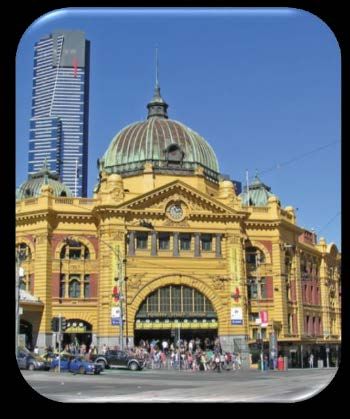
Curriculum Pathways

                                                           English

                                                 Curriculum Map: English

    YEAR 7              YEAR 8             YEAR 9                     YEAR 10        YEAR 11     YEAR 12

                                       Creative Writing              From Page to   Literature   Literature
                                                                        Screen

                                        It's Lit - Magis

    English            English
 (Magis Elective)   (Magis Elective)
                                       Communication                   English       English      English

     English            English

                                                                 The Evolution of    English      English
                                                                     English        Language     Language

                                                                                                              7
Mathematics

                                      Curriculum Map: Mathematics

   YEAR 7             YEAR 8             YEAR 9                YEAR 10          YEAR 11           YEAR 12

                                           Math                General
     Math               Math                                                  General Math       Further Math
                                          (Core)                Math

     Math               Math               Math                Pre Math
                                                                              Math Methods      Math Methods
(Magis Elective)   (Magis Elective)   (Magis Elective)         Methods

                                                                              Specialist Math   Specialist Math

                                                                               Accounting,
                                                           The Game of Life    Economics
                                                                                Pathway

                                                                                                                8
Science
Curriculum Map: Science
YEAR 7 YEAR 8 YEAR 9 YEAR 10 YEAR 11 YEAR 12
Science
Food Lab (Semester) Biology Biology
(Magis Elective)
Psychology Psychology
Science Science Investigation
Environmental
Sustainability and Environmental
Science
our Future Science
(2021)
Learning in Depth All In the Mind
Science
Chemistry Chemistry
(Full Year)
Science
(Magis Elective)
Science
Changing World Physics Physics
(Magis Elective)
9Compulsory Subjects
Communications (Humanities/English)
Rationale: This is an integrated English and Humanities curriculum that is progressive, experiential and explicit in
its teaching of concepts and skills using an integrative and inquiry approach. The aim of Communication
is to appreciate, enjoy and use the English language in all its variations and develop a sense of its
richness and power to evoke feelings, convey information, form ideas, facilitate interaction with others,
and develop an understanding of human societies and environments, people and their cultures in the
past and the present.
Learning Focus: My Society
Students will build their own understanding of how they see themselves, and what type of society they
would like to live and participate in. They will explore their sense of self in various ways such as the how
we behave, how we treat other people and through the values, we hold as important to our society.
Students will compare their democratic society to a fictional novel based on historical events. The
learning will focus on students’ responsibility as global citizens who live in a democratic world. Students
are given the opportunity to propose how they would rule the country if elected.
Our History
The learning direction for this focus will lead students to a greater appreciation of our country. Embedded
in this focus are ideas that require further exploration dealing with the diversity of cultures and people
who make up our Australian population. Students will build their knowledge and understanding of the
development of Australia from the period of the Industrial Revolution to World War I. Students will come
to understand how those who came before us shape our present society.
Your Future
The aim of the ‘Your Future’ focus is to support students in developing a set of knowledge, skills and
behaviours that will prepare them to create a future, which is sustainable, by developing an
understanding of the interaction between social, economic and environmental systems and how to
manage them. Students will attend the Good Samaritan Campus during this focus to gain a deeper
understanding of this interaction in a rural environment.
Students are given the opportunity to look at sustainability issues, such as food security and the impact
humans have had on resources.
Whose Country?
Students are taught critical thinking skills within a unit that explores the various interpretations of history.
Within this unit, students study Australia’s colonization history. They analyse the impact colonization
had on Aboriginal and Torres Strait Islander culture and early interactions between settlers and
Indigenous Australians. Through inter-connections of young adult fiction, students study culture clash,
discrimination and conflict.
Outcomes/ Students are assessed in a variety of ways, including:
Assessment: • Comparative essay
• Political debates
• Argument Analysis
• Historical source analysis
• Analytical essay
Pathways Students can choose various English and Humanities pathways at a Senior level.
10Investigation
Rationale: Science is an ever growing and changing entity. As we grow as a community so does our knowledge and
understanding of the natural world around us. In ‘Investigations’ at year 9 students get the opportunity to
explore the exciting world of science through investigation. They will explore major concepts through
conducting experiments and using digital technologies.
Students will engage with STEAM (Science, Technology, Engineering, Arts and Math) through carefully
designed lessons which allow students to think critically and creativity. Students will draw learning links
between the concepts they learn during class with real world applications at the Good Samaritan
Campus. Samaritan Campus.
Learning Focus: Through undertaking this subject, students will investigate the following topics:
• Ecology, including organic and inorganic cycles
• The interactions of the nervous and endocrine systems and how they maintain homeostasis.
• The exciting world of electricity and magnetism.
• Global weather systems and the factors that influence these systems
• An introduction to atomic theory and radioactivity
• How substances react and how these rates of reaction can be influenced
STEAM thinking will be integrated thought this teaching and learning sequence. Students will identify real
world problems and will be required to devise answers to these questions. This will be achieved through
following the design thinking process, including the production prototypes and testing their ideas.
Outcomes/ The subject will be assessed in a variety of ways:
Assessment:
• Topic test(s)
• Group presentation task
• Practical reports
• Design thinking portfolios
• End of year exam
Pathways There are no prerequisites for this subject.
This subject will link to Year 10 Science (Year or Semester based).
11Mathematics
Rationale: Understanding Math is crucial to our understanding of the world around us. This strand of Mathematics
will enable students to gather and represent data. Through this they will gain understandings of what
makes a good data set and the various conclusions that can be drawn.
Through completing this subject, students will develop their numeracy skills and gain deeper insights into
the more complex and exciting concepts of shapes and angles in nature. Students will draw links with the
world around them and the concepts they cover in class through taking part in exciting programs at the
Good Samaritan Campus and City Experience.
Learning The proficiency strands of Understanding, Fluency, Problem Solving and Reasoning are an integral part of
Focus: how mathematics is taught and learned.
Understanding refers to students building a robust knowledge of mathematical concepts and structures.
Fluency refers to students developing skills in choosing appropriate procedures and carrying them out
flexibly, accurately and efficiently.
Problem Solving refers to students developing the ability to make choices, interpret, formulate, model and
investigate problem situations.
Reasoning refers to students developing skills such as conjecturing, hypothesising, analysing, proving,
evaluating, explaining, inferring, justifying, refuting, abstracting and generalising.
Areas of Study
Number and Algebra
• Algebraic techniques
• Linear equations
• Indices
• Simultaneous equations
• Surds and Indices
Measurement and Geometry
• Pythagoras’ Theorem
• Trigonometry
• Perimeter, area, surface area and volume
Statistics and Probability
• Box plots and stem-and-leaf plots
Outcomes/ This subject will be assessed in a variety of ways:
Assessment: • Topic test(s)
• Bookwork
• Quizzes
• Problem solving
• End of year examinations
Pathways This subject will link directly to Year 10 Mathematics.
In order to transition into Pre-Mathematical Methods in Year 10 from this subject additional entry
requirements will need to be met.
12Magis Mathematics
Rationale: For those who are naturally gifted at understanding the intricacies and complex interactions of the
mathematical world this subject is for you. Magis Math allows students to engage in a more challenging
and rigorous mathematical experience. These students will not only cover the topics essential at Year
9, they will begin to dive into the world of senior math. Students will gain understating’s that will prepare
them for higher level Mathematics at Year 10 and throughout VCE. Students will explore the how and
why behind mathematical thought, rather than the basic what. Students will grow their knowledge and
be able to apply this to many new and exciting areas of math that can directly relate the natural world
around them.
Learning Focus: The proficiency strands of Understanding, Fluency, Problem Solving and Reasoning are an integral part
of how mathematics is taught and learned.
Understanding refers to students building a robust knowledge of mathematical concepts and structures.
Fluency refers to students developing skills in choosing appropriate procedures and carrying them out
flexibly, accurately and efficiently.
Problem Solving refers to students developing the ability to make choices, interpret, formulate, model
and investigate problem situations.
Reasoning refers to students developing skills such as conjecturing, hypothesising, analysing, proving,
evaluating, explaining, inferring, justifying, refuting, abstracting and generalising.
Areas of Study
Number and Algebra
• Indices and Surds
• Linear Algebra
• Quadratic graphs
Measurement and Geometry
• Pythagoras’ Theorem
• Trigonometry
• Congruence and similarity
Statistics and Probability
• Conditional probability
• Two step experiments using tables
• Box plots and standard deviation
Outcomes/ The subject will be assessed in a variety of ways:
Assessment: • Topic test(s)
• Bookwork
• Quizzes
• Problem solving
• End of year examinations
Pathways It is highly recommended, though not compulsory that students choosing to study Year 9 Magis
Mathematics have completed Year 8 Magis Mathematics. Entry into this subject has additional entry
requirements.
On successful completion of this subject, students can choose Mathematical Methods Unit 1&2 or Pre-
Methods Mathematics.
13Personal Development Health and Physical Education
Rationale: Physical Education and Personal Development is focused on not solely the practical skills, but also the
health and pastoral care aspects of being a year 9 student. Students are taught a range of physical
skills, games and activities that aim to engage each student in learning about ‘lifelong health and
fitness.’ Students are exposed to the major concepts and sports through the high level of participation
that is expected, and the course work and assignments that are taught within the Personal
Development classes.
The year 9 course is about being active, participating and enjoying being part of a team environment,
and collaborating on group work within the classroom. Students are assessed via their skill
progression, participation and effort, and their major assignments as part of the Personal Development
course.
Learning This subject focuses on a combination if theory and Practical sessions focusing on the following topics:
Focus:
• (Theory) Sex and Health Ed
• (Practical) Lacrosse
• American Football (Tag)
• Ultimate Frisbee
• Oz Tag (Rugby)
• Fitness – Fitness Tests, Circuit Classes, Weights, Cardio.
Outcomes/ The subject will be assessed in a variety of ways:
Assessment: • Topic test(s)
• Group presentation task
• Skills Test(s)
• General Participation.
Pathways There are no prerequisites for this subject.
This study will link to studies in Year 10 such as First Aid, VCE Health and Human Development and
Physical Education.
14Religious Education
Rationale: The world is the primary context and place of God’s self -disclosure to all of humanity. It is in the
lived reality of our daily lives that we are called to experience God as Creator, Jesus as Savior and
the Holy Spirit as Guide.
The Catholic school is part of the world and part of the community of the Church, inviting all the
members of the school community to search for God in the world and to live a life framed by the
words and actions of Jesus.
Learning Focus: In Year 9, students will be exploring social justice whilst focusing on Jesus’ preferential treatment for
those in need. Consequently, students will learn to appreciate the message of Christ so that students
can “carry each other’s burdens, and in this way fulfill the law of Christ” (Gal 6:2).
Students will undertake an enquiry-based approach to discovering the way in which the Australian
Catholic church has developed throughout history and our response to Jesus & Mary, whilst
describing situations from the Gospels which portray Jesus as the model for living the Australian Christian
life.
Furthermore, students will become aware of the commitment and vision of the men and women
who formed t h e early Australian Christian communities by describing important events and
personalities of the early communities. Students will also delve into Mary as a model of discipleship
and how she is a model for being open to God. This will be done by using historical sources to interpret
early Church history.
Students will also focus on the value of social media as a medium to express faith and cohesion as a
community which can help guide and enrich their lives as well as the lives of others.
Outcomes / The primary purpose of assessment is to assist in improved teaching and learning. Assessment of
Assessment: student achievement across all the content strands (Scripture and Jesus, Church and Community,
God, Religion and Life, Prayer, Liturgy and Sacraments, Morality and Justice) is an essential
component of the educational nature of Secondary Religious Education.
Students will have one formative Assessment Task at the end of each term.
Pathways: Students continue to study Religious Education in Year 10. This supports each student to develop
an understanding and appreciation for the five content strands, through studying the following
components :( Year 10): The Eucharist, Church History, Healthy Relationships as well as The Gospel
According to Mark.
15MAGIS ELECTIVES
Barbarians, Invaders and Warriors
Rationale: The history of the world tells a common story, one of invaders looking to conquer lands and peoples.
This subject investigates the creation of Empires and nations by looking at the raids of the Vikings,
Genghis Khan’s invasion of China, treatment of Maoris and the Maori Wars. This subject is for students
who are passionate about History and learning about the cruel methods invaders used to conquer and
rule over other groups.
Learning Focus: Students will investigate famous barbarian groups and invaders. They will learn to question the
common myths about Viking raiders by analysing the achievements of the Vikings in conquering lands
and setting up trading communities. We focus on Viking long ships and the raids on British
monasteries.
Genghis Khan was able to unify the nomadic Mongol tribes and earnt the respect of many, students
will analyse his achievements in disciplining his army and breaking through the Great Wall of China.
We study the Mongol way of life, the nomadic nature of the so-called ‘barbarian’ group and the
importance of horses for the Mongol army.
Students learn about the Maori and Polynesian culture by covering aspects of cannibalism, shrunken
heads and taboo. We focus on the period known as the ‘turning point’ as students study the impact
European civilisation had on the Maori people by looking at the signing of the Waitangi Treaty in 1840
and the Maori wars ending in 1872.
Through studying the above topics, students will build upon their historical analysis skills by
investigating primary and secondary sources and question the reliability and bias of history. This
subject provides students with an opportunity to explore fascinating aspects of history whilst evaluating
the historical significance of invaders and conquerors and the legacy they have left behind.
Outcomes/ A variety of assessments will be used, such as Group presentations, historical source analysis and a
Assessment: Research Portfolio.
Pathways There are no pre-requisites to this subject.
As a Magis elective, this subject will be challenging and have high literacy demands.
Magis History will continue into Year 10 with Horrible Histories, students can then choose VCE History
Units in future years.
16Cracking the Code – Digital Media Programming
Rationale: Students completing Cracking the Code- Digital Media Programming in Year 9 will focus on skills to
use the innovative approach of thinking from a hacker’s point-of-view. Using cryptography concepts in
relation to data representation, securing online communication, and exploring how these are
implemented through code.
Learning Focus: Students will learn about personal information security using the innovative approach of thinking from
a hacker’s point-of-view. Students will learn to value the importance of password strength and
protection, as well as discover just how vulnerable private information can be online.
Students will learn basic cryptography concepts in relation to data representation and securing online
communication, and how these are implemented through code.
Students learn the basics of encryption through simple activities that convert plain text into simple
cipher texts.
Key topics in this course include:
• Data Encryption
• Cryptography
• Lego Algorithmic
• Info privacy and Safety
• Programming
Outcomes/ Students will be assessed using the following methods:
Assessment: • Digital portfolio
• Crypto investigation
• Group Project
Pathways Websites for Gaming and Design
IT for business
17Food Lab
Rationale: Ever wondered what those fancy food words people use in MasterChef mean? On the other hand, why
celebrity chefs are spending months (sometimes years) perfecting one dish they serve at a restaurant.
In Food Lab, these questions will be answered. Hands-on learning will be a focus of this subject through
exploring both the science laboratory and food technology kitchen.
Learning Focus: In this subject, students will learn about the technical and practical components of food. The elective
will begin with learning the biological and chemical qualities of carbohydrates, proteins and fats. Ways
in which the human body can break down whole meals down into simple molecules will be examined.
Students will be introduced to experimental procedures in which the number of kilojoules in various
foods will be investigated.
Following on from this unit, students will learn how to be molecular gastronomists. Akin to Heston
Blumenthal and Wylie Dufresne, students will become scientists in the kitchen. In utilising molecular
techniques, students will learn how to temper chocolate to temperatures that create the perfect ‘snap.’
Culinary techniques such as specification, emulsification, jellification and sous vide will quickly become
part of every students’ culinary repertoire.
Outcomes/ This subject will be assessed in the following way:
Assessment:
• Biological and chemical components of food will be assessed with a written test
• The investigation of the number of kilojoules in foods will be assessed with a scientific practical
and report
• Gastronomical techniques will be assessed with a design portfolio which students will create a
dish that ‘doesn’t appear as it seems’
Pathways There are no prerequisites for the study of this subject. Students who choose to study Food Lab will
have an opportunity to continue their learning in more senior years. For those who develop a strong
interest in the science component of this subject, VCE Biology and/or VCE Chemistry study similar
topics. Students, who enjoy the practical component of this subject, can study VCE Food Studies in
senior years.
Health and the Human Body
Rationale: Students will have an opportunity to investigate and link into the study of the human body and mind.
Student will look and how this relates to improvements in physical performance and outcomes.
Learning Focus: Students will engage with new and exciting curriculum, where they will explore how energy systems.
Fitness components and Nutrition and how it interrelates to effect and enhance performance.
Students will look at body systems and how each system works in relation to each other and it can affect
sporting performance. Students will also examine how sports psychology can enhance performance in
an ever-changing world affected by mental health issues. They will look at recovery methods and how
these different techniques can enhance performance.
Finally, students will have the opportunity to evaluate how illegally performance-enhancing drugs have
affected performance and sporting abilities in today’s world.
Outcomes/ The subject will be assessed in a variety of ways:
Assessment: • Topic test
• Project posters
• Group presentation task
Pathways There are no prerequisites for this subject.
This study will link to studies in year 10 such as Human Body Electives, Physical Education Electives,
Year 11 Physical Education 1 & 2, Health and Human Development 1 & 2.
18It’s Lit
Rationale: “A reader lives a thousand lives before he dies… the person who never reads lives only one.” Nothing
beats the feeling of reading a good book. Whilst humanities and science can teach us facts about the
world, a good book can teach us truths about ourselves and what it means to be human.
This subject is for students with a love of reading, discussing, and thinking deeply about the characters,
themes, issues and ideas. Students will be expected to challenge themselves with their reading choices
and push themselves to think critically about why authors tell the stories they do, and what we can learn
from them.
Learning Focus: In this subject, students select texts to read, discuss and analysis literature from a range of different
genres and forms. Students are given choice regarding what literature they would like to read, practicing
their autonomy in choosing texts that challenge their thinking, and broaden their understanding of the
world of literature.
Students will have the option to read a variety of genres and forms including Young Adult Fiction, Poetry,
Classic Literature, Manga/Graphic Novels, Plays and Biographical Literature. Working in literature
circles, students will analyse, discuss and debate their chosen texts, investigating the core themes,
issues and ideas presented by the author.
Throughout the process, students will discuss the following recurring questions:
• How does time and place influence both how literature is written, and how it is read?
• How do writers manipulate the conventions of language, form and style to create meaning in their
texts?
• What is the purpose of literature; why is it written and why is it read?
• Why texts are interpreted in different ways, and are all interpretations equally valid?
• Why some texts are considered ‘classics’?
• Why do we study literature?
Students who study this subject will develop strong analytical skills transferable to other subjects. They
will also develop strong interpersonal skills, as they will be involved in small group work, expressing
opinions, listening, and responding to the opinions of others.
Outcomes/ Students will be assessed using a range of assessments including:
Assessment:
• Book review
• Group discussions
• Class presentations
• Written analysis of a text
Pathways There are no prerequisites for the study of this subject, but it is designed to provide an opportunity for
highly able learners.
Students who develop a strong interest in this subject might choose to study From Page to Screen in
Year 10, or VCE Unit 1 and 2 Literature in Year 10 or Year 11.
19Language: Italian
Rationale: Learning a second language opens pathways to travel and job opportunities that would otherwise be
closed doors. With a large Italian community here in Melbourne, learning the language has practical
applications both locally and abroad. With such a rich culture and history, Italy is a world influencer on
many frontiers, including art, food, and fashion.
Studies have shown that the knowledge of another language improves one’s English, and that once
students know a second language, it is easier to learn a third or fourth. Thus, learning Italian also serves
as a pathway for learning more languages in the future and becoming a truly global human being.
Learning Focus: In Year 9, students continue developing their writing, reading, speaking and listening skills in Italian.
Units of study focus on Italian real estate, travelling around Italian cities, Italian passions and past-times
and going to the doctor.
Students studying Italian also experience two immersion experiences throughout the year: Italian
Culture Day (only available to students studying Italian in Year 9) and the iD9 Language Ball (a
combined experience for both Year 9 Italian and Indonesian students). Through these experiences,
students further explore the culture of Italy whilst putting their language skills into practice.
Students who select Italian at Year 9 must study it for two semesters to ensure a consistent acquisition
of the language skills.
Outcomes/ There is no exam in Year 9 Italian. Students will be assessed for the above topics by adequately
Assessments: demonstrating the following key skills: listening, reading, speaking and writing.
Pathways It is strongly recommended that students have completed Year 8 Italian to adequately prepare
themselves for this subject. However, students may request a meeting with the Head of Learning:
Languages to discuss the opportunity to study Year 9 Italian without having completed Year 8 Italian.
This could include students who want to learn both Indonesian and Italian in Year 9.
Students who take Year 9 Italian have the option to progress with Italian in Year 10, 11 and 12.
20Mary Goes Global
Rationale: Many students come from cultures, which have a strong traditional devotion to Mary. This devotion is
often a defining element in cultural identity among migrant groups.
Students who are not religious believers can also be concerned with spiritual matters. One way in which
spirituality is expressed or experienced is through religious art. Art can help youth explore and
understand religious messages and teachings.
Learning Focus: In this subject student will start with responding to the questions:
• What is religious art?
• How and why religions use art?
Throughout the centuries, artistic images of Mary provided us with a variety of images reflecting society
and the Church understanding of her throughout time and within different cultures. Students will reflect
and learn about the messages and symbols in artistic images of Mary.
The class will learn about ‘The Nine Aspects of Religions’ and how all or some of these aspects have
influenced artistic images of Mary:
• myths and other stories
• sacred texts and literature
• rituals
• symbols
• social structures
• religious/spiritual experience
• oral or written codes of behaviour
• spaces, places & artefacts
• beliefs
Throughout the course, students will also explore the impact of artistic images of Mary on believers and
non-believers because of the different understanding(s) they will have about the message conveyed.
Although non-believers may not accept the teachings, they can still experience a spiritual response to
the beauty of art or the message it conveys.
Finally, students will use their research skills to learn about appropriation in art. They will use this
understanding to create their own artistic image of Mary using appropriation.
Outcomes/ This subject will be assessed in the following way:
Assessment:
1. ‘The Nine Aspects of Religions’ will be assessed with a short, group class presentation
2. Creative and practical skills will be assessed with a practical artwork
3. The impact of ‘The Nine Aspects of Religions’ on their own artwork will be assessed with an
individual written reflection
Pathways: There are no prerequisites for the study of this subject. Students who choose to study, Mary goes
Global will have an opportunity to continue their learning in more senior years.
For those who develop a strong interest in the theory component of this subject, it is possible they
can study VCE Religion and Society in the future.
For students who develop a strong interest in the practical aspect of this subject, it is possible they
can study VCE Studio Arts and/or Art.
21ADDITIONAL ELECTIVES
All in the Mind
Rationale: This introductory unit focuses on the scientific study of psychology. Students will develop an
understanding of how their brains work to learn and remember. The aim is to develop skills to enhance
their success in learning new life skills and improving performance in any task they complete. Students
will also develop an understanding of how stress and sleep impacts their ability to perform and learn
new skills.
Learning Focus Students will develop Scientific skills through exploring the following topics:
• The Brain: Students will learn a basic overview of how the brain develops from child’s brain to an
adult’s brain. Lobes of the brain and nervous system.
• Learning and memory: Students will learn about how they learn a new skill and what affects their
ability or inability to learn and remember information. They will cover different learning theories and
examine the impact of intrinsic and extrinsic motivational factors that influence their ability to learn
new skills.
• Stress and the impact of stress on learning and memory. Students will learn about how stress can
positively or negatively affect their performance. They will learn strategies to cope with stress and
anxiety and the impact it has on the Nervous system
• Sleep: Students will learn basic concepts about the sleep cycle and how it enhances their ability to
learn and remember as well as how sleep deprivation negatively affects their ability to complete tasks
and learn well.
Outcomes/ Students studying All in the Mind will complete the following assessments:
Assessment: • Topic tests
• Assessment tasks
• Semester examinations
Pathways After completing Year 9 “All In the Mind” students will continue to build on this knowledge in Unit 1
Psychology.
At the Movies
Rationale: Students will learn the art of writing, directing and editing their own short film.
Learning Focus: Students will participate in a ‘hands on’ film making elective. They will learn the following skills and
techniques as they relate to film making iMovie & Windows Movie Maker software will be taught. A brief
history of film making in Australia. What is the different film genre’s, how do they differ, how do we
recreate them? Samples of the different film genre’s will be shown, and an analysis undertaken.
The role of the director, producer, screenwriter, actor(s), editor and cinematographer. How to use a
digital camera and storyboard, and how to set up different camera angles when shooting a scene. Film
making editing skills will be taught. Sound, lighting, music, sound effects, filters, scene editing, timing
and pacing of sequences.
Film marketing; teach skills in creating a movie trailer and poster. Analyse how film companies use
trailers and posters to draw attention to their product. Students will learn about the pre-production,
production and post-production phases of filmmaking.
Outcomes/ • Genre Piece and Poster
Assessment: • Anti-Bullying Poster & Short Film
Pathways Year 10 - VCE Media Studies Unit 1 & 2
Year 10 – English/ From Page to Screen
22Art Forms
Rationale: Students develop a range of skills and techniques in 2D and 3D art forms, styles, media, materials and
technologies. Make art works, which reflect personal ideas, interests and an understanding of
themselves. Understand how artworks reflect the values, beliefs and traditions of their own and other
cultures. Analyse, interpret and respond to artworks, ideas and concepts.
Learning Focus: Students develop skills in diverse number of 3D and 2D Arts practices. Folio tasks will cover a range of
activities in the areas of drawing, painting, printmaking, ceramics and sculpture. Through an exploration
of a range of media and materials, students will develop their ideas, skills and techniques as art
practitioners.
Students will also investigate and analyse contemporary and historical art works in relation to arts
practices and meaning. This subject is ideal for those wanting to complete further studies in VCE Art
and Studio Arts.
Outcomes/ • Watercolour Resist
Assessment: • Lino Printing
• Character bust clay
Pathways Year 10 – Sculpture
Year 10 - Drawing & Painting
Year 10 – Photography
Year 10 – Product Design
Year 10 - Space and Architecture
Changing World
Rationale: As we are experience an ever-changing environment, students will have an opportunity to further
investigate the impact of climate change on our ecosystems and environment. They will investigate how
this impact can affect the flora and fauna and how the instability can lead to endangering habitats and
species. Through the exploration of real-world issues, such as whaling, students can gain deep insights
into the delicate interactions of organisms and their environments and the impact humans have on these
interactions.
Learning Focus: Students will engage with new and exciting curriculum, where they will explore the past, present and
future movement of the tectonic plates over time. They will investigate how this movement effects global
systems such as the carbon and water cycles and the impact this has on the environment. Students will
further examine the interactions of the atmosphere biosphere, hydrosphere and lithosphere.
Students will examine the changing environment looking at the causes and the resulting consequences
this may have, they will examine the impact within Australia and compare this example to one other
country within the Asia-Pacific region. They will look at the effects on changing ecosystems, built up
environments and animal under threat.
Finally, students will have the opportunity to evaluate and predict how science and geography may
affect people’s lives and how we can help solve some of the world global warming threats of today.
Outcomes/ The subject will be assessed in a variety of ways:
Assessment:
• Topic test
• Project posters
• Group presentation task
Pathways There are no prerequisites for this subject.
This study will link to studies in Year 10 such as Geography, Science, and Biology Unit 1 and
Environmental science Unit 1.
23Creative Textiles
Rationale: Creative Textiles aims to create high quality designed solutions across a range of technologies
contexts. Students research fashion, fibers, and the designers that have embraced and influenced
fashion. Students plan and manage projects from conception to realisation.
Students apply design thinking and processes to investigate ideas, generate and refine ideas, plan and
manage, produce and evaluate solutions. They develop a sense of pride, satisfaction and enjoyment
from their ability to create innovative designed solutions.
Learning Focus: Students produce designed solutions using production processes involving natural and fabricated
materials, components and digital technologies. Students work on projects as they investigate needs
and opportunities, generate design ideas, plan, manage, produce and evaluate designed solutions.
Outcomes/ • Folio 1: Investigate & Generate
Assessment: • Folio 2: Planning, managing, Evaluation
• Production: Hoodies, PJ’s, or Retro Apron
Pathways: Year 10 – Textiles Couture (Evening Wear)
Year 10 – Textiles Street Wear
Year 10 - VCE VET Applied Fashion Design & Technology (Run at Thomas Carr College)
Creative Writing
Rationale: This subject is designed for students who have a passion for writing creatively and reading. Through
the subject, students will further develop and refine their creative writing skills, regularly practicing
and workshopping their writing in class, with construction of several writing pieces throughout the
subject.
Learning Focus: Students will be exposed to several different styles and forms of creative writing, including novels, short
stories, plays, screenplays, poetry, radical fiction, and creative non-fiction. Through this exposure,
students will practice their creative writing, experimenting with different forms and styles to further
develop their knowledge and writing skills.
Students will have their writing workshopped by their peers, receiving valuable feedback that will help
hone them into powerful modern writers. Individually students will work on an extended writing project
of their choosing to submit into writing competitions or self-publish on writing websites like Watt pad.
Outcomes/ Students will be assessed using a range of assessments including:
Assessment:
• Small writing tasks
• Workshopping/peer-feedback tasks
• An extended writing projects
Pathways: There are no prerequisites for the study of this subject, but it is designed to provide an opportunity
to further develop English writing skills.
Students who develop a strong interest in this subject might choose to study From Page to Screen
in Year 10, or VCE Unit 1 and 2 Literature in Year 10 or Year 11.
24Design Technology: Wood, Metal and Plastic
Rationale: The aim of the course is to introduce students to the study of wood, metal and plastic and develop their
knowledge and skills levels.
Learning Focus: This unit is designed for students to work with wood, metal and plastic and develop their knowledge and
skill level. During the design process, they will clarify their understanding of design brief requirements
and use a variety of drawing and modelling techniques to visualise design ideas and concepts using
CAD (Computer Aided Design/Drafting).
Students will develop their understanding of design elements and principles and use appropriate
technical language. They will work safely with a range of tools and equipment, including some, which
are complex, to produce a range of products. Students will be able to suggest modifications to improve
their products considering evaluation of their function and appearance.
Outcomes/ • Produce a Product according to a design brief
Assessment: • OHS Task
• Investigate emerging Technologies
Pathways Year 10 – Design Technology Wood, Metal & Plastic
2D Logo Design
Rationale: We live in a world that is driven by brands. Without even thinking about it, we see hundreds of brands
every day and whether we like it or not, these companies and their products influence our lives and our
spending. Creating an effective and memorable brand it a job that all graphic designers must do. By
taking this subject, the students will get their first taste of what it means to be a designer.
Learning Focus: Student will learn about the design process. They will take themselves on an individual journey to create
a brand that is effective and reflects their clients’ needs and constraints. They will start by researching
and gaining inspirations from existing brands and then move through the design process from creating
their own visualisations to finalising their ideas.
Throughout the design process, students will use several different design thinking strategies to help
their thinking. Students will learn how to effectively draw and render using different media, methods and
materials. A basic knowledge of Adobe creative suite (Illustrator/Photoshop/InDesign) will also be
gained and students will be able to successfully produce several final presentations such as placing
their branding upon merchandise and mounting final work.
Outcomes/ Folio pages that are produced are:
Assessment: • Research pages
• Creative thinking – Brainstorm
• Visualisation pages
• Development pages – SCAMPER
• Critical thinking page
• Final designs
Products that will be produced for final designs are:
• Logo for the band (hand drawn and rendered)
• Promotional poster for the bands concert (Illustrator)
• Vinyl/CD cover for the album (Illustrator & InDesign)
• Merchandise (Screen printed)
Pathways Year 10 – Space and Architecture
Year 10 – Product Design
25You can also read


