QUEEN ELIZABETH'S GIRLS' SCHOOL - Sixth Form Subject and Admissions Information 2021 Entry
←
→
Page content transcription
If your browser does not render page correctly, please read the page content below
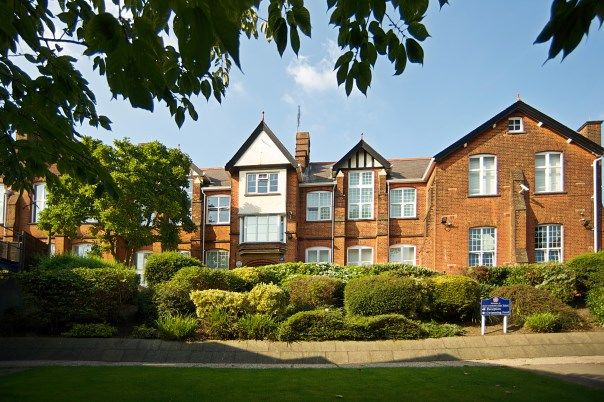
Founded in 1888

  QUEEN ELIZABETH’S
    GIRLS’ SCHOOL

Sixth Form Subject and
Admissions Information
      2021 Entry

            Educating Women of the Future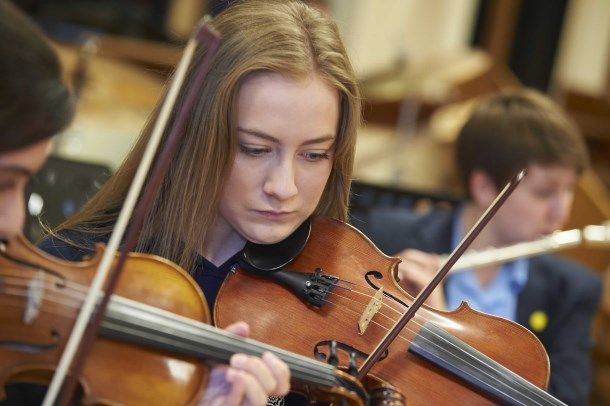

Contents
Welcome                                  4
Admission Process                        5
Choosing your Subjects                   6
Proposed Year 12 Option Blocks 2021      7
2020 Leavers’ University Destinations    8
Art                                      9
Biology                                 10
Business Studies                        11
Chemistry                               12
Design and Technology                   13
Drama and Theatre Studies               14
Economics                               15
English Language/Literature             16
English Literature                      17
Extended Project Qualification          18
Film Studies                            19
French                                  20
Further Mathematics                     21
Geography                               22
History                                 23
Mathematics                             24
Media Studies                           25
Physical Education                      26
Physics                                 27
Politics                                28
Psychology                              29
Religious Studies                       30
Sociology                               31
Spanish                                 32

                              3
Welcome
Welcome to Queen Elizabeth’s Girls’ School Sixth Form where we are very proud of
our tradition and heritage of educating women of the future. The choices you make
in terms of your Post 16 education is paramount. At QEGS Sixth Form we offer Year
11 students the perfect transition, which is supportive and effective for both our
current students and those joining us from outside the school. The ethos of our
Sixth Form is one of high achievement and high expectations. This applies to both
the academic life of our students as well as to their own personal growth. The
environment we provide enables girls to flourish as confident, intelligent, resilient
and ambitious young women who are focused and prepared for life beyond Sixth
Form.
We offer a wide range of A level subjects and have an excellent record of results,
achieved through high quality teaching and learning. Students go on to study at
Russell Group, Oxbridge and other institutions as well as entering into high level
apprenticeship schemes with top employers. The Sixth Form has its own dedicated
areas in the school; a Common Room with a Sixth Form café and study areas.
Within the Library there is a silent Sixth Form Study Centre.
All students have an experienced Pastoral Mentor, a specialist in one of their chosen
subjects, who provides personalised, individual support, through information, advice
and guidance. The school ensures girls follow a coherent pastoral programme of
study that will enrich their life and also best support their chosen progression route
after Sixth Form. Students are also encouraged to take advantage of the rich
educational and social opportunities offered. All students take part in an
Enrichment programme and work experience takes place in Year 12.
Sixth Form students are heavily involved in the Lower School and are given
leadership roles and responsibilities in the form of mentoring younger girls, running
clubs, supporting in lessons and as reading mentors. This ensures the connection
between the Sixth Form and main school year groups, providing aspiration and
insight to Sixth Form life for younger girls. At the same time there is opportunity to
provide service to the school and the wider community, a valuable learning
experience for later life.
We believe it is absolutely vital to prepare the girls for the world of work and we are
privileged to be involved with the Women of the Future Ambassadors
Programme. Throughout the year a variety of students are invited to talks and
networking events with inspirational, high achieving women in their chosen field.
Miss Southwell
Head of Sixth Form
4Admission Process
Current QE Students
We welcome all of our current students who meet the entry criteria on
GCSE results day to the Sixth Form at Queen Elizabeth’s Girls’ School.
You will need to:
Select at least THREE courses you wish to follow
Complete the online A level choices form
Closing date for applications is Friday 15 January 2021.
External Students
Each year we are pleased to welcome external students to join us in the
Sixth Form.
You will need to:
Select at least THREE courses you wish to follow
Complete the online application form
Closing date for applications is Friday 15 January 2021.
Study Programmes & Two Entry Criteria Levels, General and
Specific (both should be met)
Our students will typically follow a study programme consisting of three
main courses at Level 3.
E.g. 3 x A levels (All external exams are taken at the end of Year 13)
3 x A levels + EPQ
It may be appropriate for some students to take four courses, for
example:
Those undertaking Mathematics and Further Mathematics, needing
to broaden their programme
Those with grades 8/9 across the board at GCSE
General Entry Criteria
At least three GCSEs at Grade 6 or above in relevant subjects and GCSE
English Language and Mathematics at Grade 4 or above.
PLUS Subject Specific Entry Criteria
There are A level subject specific entry requirements which are included
in this booklet and specified in the Sixth Form section of the school
website.
When you receive a conditional offer of a place for September 2021,
you will be invited to an Induction Day which is held just after the final
GCSE exams in July 2021.
5Choosing Your Subjects
Prior to choosing A level subjects it is important to complete some
research. For example you could visit UCAS.com (University and
Colleges Admissions Service) to research further education courses and
their entry requirements. It may also be helpful to consider careers
that might interest you and to investigate if there is a particular
requirement to have studied a certain combination of A level subjects.
It is important to choose courses that you enjoy and it is a good idea to
consider:
your interests
what you can succeed in
specific subjects that are required for specific degree courses or
careers
subjects that compliment each other
6Proposed Year 12 Option Blocks
September 2021
Block A Block B Block C Block D Block E
Biology Chemistry Biology Art Business Studies
Design & Technology Design & Technology Drama & Theatre
Film Studies Physical Education
(Textiles) (Resistant Materials) Studies
English Lang/Lit Further Mathematics History Physics Economics
7
French Mathematics Mathematics Politics English Literature
Geography Religious Studies Media Studies Psychology Psychology
Sociology Spanish SociologyA Selection of 2020 Leavers’ University Destinations
Course Institution
3D Computer Animation and Modelling University of Hertfordshire
Animation University for the Creative Arts
Architecture Nottingham Trent University
Art Foundation Barnet College
Art Foundation Central St Martin
Biomedical Sciences University of Westminster, London
Biomedical Sciences UCL (University College London)
Business and Management Bournemouth University
Business and Management University of Reading
Business Management Queen Mary University of London
Chemistry (4 years) University of Nottingham
Civil Engineering with a Foundation Year Swansea University
Computer Science University of Hull
Computer Science University of York
Criminal Justice and Criminology University of Leeds
Criminology Bournemouth University
Criminology and Social Policy University of Kent
Criminology and Sociology University of Nottingham
Design for Stage and Screen
(Design for Theatre and Live Performance) Nottingham Trent University
Early Childhood Education University of Hertfordshire
Education University of Leeds
Engineering University of East Anglia UEA
English Queen Mary University of London
English University of Exeter
English and History University of Sheffield
English Literature Durham University
Film, Photography and Media University of Leeds
Geography University of Leeds
Geography University of Nottingham
Geography University of Nottingham
Geography University of St Andrews
Geography University of Nottingham
Hispanic Studies with Business Management Queen Mary University of London
History University of Birmingham
History King's College London
History Bristol University
History University of Northampton
Law University of Westminster, London
Law SOAS University of London
Law with Criminal Justice with Placement Brunel University London
Law with Criminology Lancaster University
Law with Politics University of Sussex
Management with Marketing University of Bath
Mathematics Newcastle University
Mechanical Engineering University of Hertfordshire
Medicine Kent and Medway Medical School
Medicine Imperial College London
Midwifery University of Hertfordshire
Nursing with Registration as an Adult Nurse King's College London
Pharmaceutical Sciences University of Nottingham
Pharmacy King's College London
Philosophy University of Nottingham
Politics and International Relations University of Sussex
Politics and International Relations University of Nottingham
Politics and International Relations University of Nottingham
Politics and International Relations SOAS University of London
Politics and International Relations University of Nottingham
Psychology University of Manchester
Psychology University of Roehampton
Psychology University of Sussex
Psychology and Cognitive Neuroscience University of Nottingham
Sport and Exercise Medical Sciences King's College London
Youth Work & Community Development University of Derby
8Art
What will I need before taking this course? What can I do at the end of the course?
A Grade 6 or higher in GCSE Art. A one-year Foundation course in Art and Design
would be the next stage to studying any visual
art-based subject at a higher level. This will give
you the opportunity to discover a broad range of
disciplines across the arts. From there you will
be able to choose your specialism and study Art
at degree level. Most degrees are three years.
Assessment and Grading
Unit 1: Personal Portfolio (60% of total A
level). You will produce one major project with
relevant preparatory work evidencing: research,
development, contextual work, experimentation,
refinement and a final piece. You will also What will I learn?
complete a personal study on a related theme.
The personal study is a minimum of 1000 words
and holds 24 marks. The skills you learn will be varied. These
include:
Unit 2: Externally set task (40% of total A
level). You will have a minimum 8 weeks to Research using a range of sources.
explore, experiment and develop ideas for a 15
hour exam. The them e w ill be set by the Developing a knowledge of different
examination board. materials and techniques.
Refining your practical skills.
How to develop your imaginative, analytical
and documenting skills.
How to interpret and convey your ideas and
feelings.
Learning and using a specialist vocabulary.
An understanding of Art in history and in
contemporary society.
How will I learn?
You will need to become an independent
learner. Most of your learning will be classroom
based in the Art Studios which are solely used
by Sixth Formers. You will be given regular
weekly assignments to help you develop your
ideas and skills further, and you will be expected
to use the studio in some of your free periods.
You will also be expected to visit galleries and
museums to develop your knowledge and
understanding of Art history. Students are free
to pursue artists and genres of personal
interest. This research is then used to inform
and inspire practical coursework and outcomes.
AWARDING BODY OCR
CONTACT FOR FURTHER DETAILS Ms Beavis—Head of Art
9Biology
What will I need before taking this course? What will I learn?
A Level Course Outline :
Two Grades 6 or above in Combined Science.
The content is split into six teaching modules:
Grade 6 or above in Biology and one other
Science if you studied separate Sciences at Module 1 – Development of practical skills
in Biology
GCSE. A Grade 6 or above in GCSE English and 1.1 Practical skills assessed in a written examination
a Grade 6 or above in Mathematics. 1.2 Practical skills assessed in the practical
endorsement
Module 2 – Foundations in Biology
2.1.1 Cell structure
2.1.2 Biological molecules
Assessment and Grading 2.1.3 Nucleotides and nucleic acids
2.1.4 Enzymes
For A level, there are three examined modules; 2.1.5 Biological membranes
Biological processes 2.1.6 Cell division, cell diversity and cellular
(Worth 37%) 100 marks (2 hour 15 mins organisation
Module 3 – Exchange and transport
exam) 3.1.1 Exchange surfaces
Biological diversity 3.1.2 Transport in animals
(Worth 37%) 100 marks (2 hour 15 mins 3.1.3 Transport in plants
exam) Module 4 – Biodiversity, evolution and disease
Unified Biology 4.1.1 Communicable diseases, disease prevention
and the immune system
(Worth 26%) 70 marks (1 hour 30 mins exam) 4.2.1 Biodiversity
Practical endorsement in Biology 4.2.2 Classification and evolution
(non exam assessment, reported separately) Module 5 – Communication, homeostasis
and energy
All papers are sat in June of Year 13, which 5.1.1 Communication and homeostasis
count for 100% of the overall grade. 5.1.2 Excretion as an example of homeostatic control
Currently an overall mark of 80% at A level 5.1.3 Neuronal communication
represents a Grade A, a Grade E is 40%, with 5.1.4 Hormonal communication
intervening grades at 10% intervals. (The A* 5.1.5 Plant and animal responses
5.2.1 Photosynthesis
Grade is available with a 90% score). 5.2.2 Respiration
Module 6 – Genetics, evolution and ecosystems
6.1.1 Cellular control
6.1.2 Patterns of inheritance
6.1.3 Manipulating genomes
6.2.1 Cloning and biotechnology
6.3.1 Ecosystems
What can I do at the end of the course? 6.3.2 Populations and sustainability
With a qualification in Biology you could go on
to Further or Higher Education, studying Biology
or one of the other sciences or related subjects.
You could work in science-based industry such
as pharmaceuticals, biotechnology or
organisations which are obliged to have a
concern for the environment. It is helpful for a
career in the medical field, pharmacy and
environmental science. Biology is also a well- How will I learn?
respected subject in its own right and suitable
for entry into a wide range of professions, as Lessons involve both theoretical and practical
success within this field requires good analytical activities. A commitment to discussion and study
and data processing skills and the ability to time outside lessons is essential for success in
express ideas clearly in written English. this course. You will be expected to attend the
Biology Field Trip over a weekend.
AWARDING BODY OCR
CONTACT FOR FURTHER DETAILS Ms Myrtle—Head of Science
10Business Studies
What will I need before taking this course? What will I learn?
Year 1
A Grade 6 or above in GCSE Mathematics. A Types of businesses, what businesses do, what
Grade 6 in GCSE English Language is desirable, businesses need to operate, why they operate
but not compulsory, as this will assist in and how they make a profit.
achieving a high grade. GCSE Business Studies
is not a requirement, however, a keen interest Students study in detail the four functional
areas:
in the subject is.
Marketing - the marketing mix including the
Assessment and Grading 4 P’s – price, place, promotion and product.
Market research, understanding markets and
competitive markets.
The reading and analytical writing involved
requires a degree of literacy and fluent writing. Accounting & Finance - calculating costs,
The mathematical elements and calculations (eg revenues and profit, cash-flow forecasts,
calculating the percentage increase in sales) profit and loss statements, budgets and
require solid numeracy skills. There are three break-even.
exams at A level, all 100 marks and worth 33% Human Resources - staff, motivation,
each of the overall grade. leadership styles and methods of dealing
with disputes.
Paper 1: Business 1 – 10 multiple choice Operations - capacity maximisation, capacity
questions, short/medium answer questions utilisation, quality focus and improving
worth 40 marks and 2 essay questions at 25 efficiency.
marks each.
Paper 2: Business 2 – 3 data response questions Students will learn in detail how businesses
worth a total of 100 marks. make decisions and the external factors that
Paper 3: Business 3 – 1 compulsory case study influence these at the functional level.
followed by 6 questions, worth a total of 100
marks. Year 2
The study of strategic decision making should
build on decision making in the functional
areas. Content will include:
The impact of technology on strategic
How will I learn? decision making.
The influences of Corporate Social
Business Studies will enable candidates to focus Responsibility, ethical and environmental
on the dynamic nature of the contemporary issues on strategic decisions.
business world. The course will provide The difficulties in forecasting future trends.
opportunities for research into topical business
issues and offer students the opportunities for The importance of assessing feasibility and
the development and application of a full range risk when making strategic decisions.
of academic skills.
What can I do at the end of the course?
A level Business can lead to a variety of
opportunities. There is a wide choice of Business
degrees available at most universities with
topics ranging from general Business studies to
specific business areas such as Accountancy,
Marketing, Purchasing and Business
administration. Some students can focus on
Business with a Joint Honours, for example
Business and Law.
AWARDING BODY AQA
Ms Warrington—Teacher in charge of Business
CONTACT FOR FURTHER DETAILS
Studies
11Chemistry
What will I need before taking this course? What will I learn?
A Level Course Outline :
Two Grades 6 or above in Combined Science.
The content is split into six teaching modules:
Grade 6 or above in Chemistry and one other
Science if you studied separate Sciences at Module 1 – Development of practical skills
in Chemistry
GCSE. A Grade 6 or above in GCSE English and • Practical skills assessed in a written examination
a Grade 6 or above in Mathematics. Practical skills assessed in the practical
endorsement
Assessment and Grading
Module 2 – Foundations in Chemistry
• Atoms, compounds, molecules and equations
For A level, there are three examined modules; • Amount of substance • Acid–base and redox
reactions
Periodic table, elements and physical
Chemistry Electrons, bonding and structure
(Worth 37%) 100 marks (2 hour 15 minutes Module 3 – Periodic table and energy
exam) • The periodic table and periodicity
Synthesis and analytical techniques • Group 2 and the halogens • Qualitative analysis
• Enthalpy changes
(Worth 37%) 100 marks (2 hour 15 minutes
exam) Reaction rates and equilibrium (qualitative)
Unified Chemistry Module 4 – Core organic Chemistry
(Worth 26%) 70 marks (1 hour 30 minutes • Basic concepts • Hydrocarbons
exam) • Alcohols and haloalkanes • Organic synthesis
Practical endorsement in Chemistry Analytical techniques (IR and MS)
(non exam assessment, reported separately) Module 5 – Physical Chemistry and transition
elements
All three papers are sat in June of Year 13, • Reaction rates and equilibrium (quantitative)
which count for 100% of the grade. Currently • pH and buffers • Transition elements
an overall mark of 80% at A level represents a • Redox and electrode potentials
Grade A, a Grade E is 40%, with intervening Enthalpy, entropy and free energy
grades at 10% intervals. (The A* Grade is
available with a 90% score). Module 6 – Organic Chemistry and analysis
Aromatic compounds
Carbonyl compounds
Carboxylic acids and esters
Nitrogen compounds
What can I do at the end of the course?
Polymers
With a qualification in Chemistry you could go Organic synthesis
on to Further or Higher Education, studying Chromatography and spectroscopy (NMR)
Chemistry or one of the other sciences or
related subjects. You could work in science-
based industry such as pharmaceuticals,
biotechnology or organisations which are
obliged to have a concern for the environment.
It is helpful for a career in the medical field,
pharmacy and environmental science. Chemistry
is also a well-respected subject in its own right
and suitable for entry into a wide range of How will I learn?
professions, as success within this field requires
good analytical and data processing skills and Lessons involve both theoretical and practical
the ability to express ideas clearly in written activities. A commitment to discussion and study
English. time outside lessons is essential for success in
this course.
Before beginning the course in September, you would be well-advised to read up on atomic
structure and the mole concept, which you will find in any library A level text. These are concepts
which students find challenging in the first term!
AWARDING BODY OCR
CONTACT FOR FURTHER DETAILS Ms Myrtle—Head of Science
12Design and Technology
(Product Design or Fashion & Textiles)
What will I need before taking this course? How will I learn?
A Grade 6 or above in GCSE D&T. Students You will learn through a mixture of theory and
who have not studied D&T at GCSE level will be practical lessons focusing on creativity and
considered on an individual basis. innovation. You will work in teams and
Design & Technology is the um brella term individually to explore and debate your design
used to describe the subject whatever the challenges.
material specialism that you choose to design
and manufacture with. This course allows you to
explore design in the way that simulates design
in the real world. You will have access to
specialist teachers so that you can develop a
product that explores any number of materials.
Because the course is set up in this way you are
able to decide during the course which area you What can I do at the end of the course?
would like to specialise in. You can choose to
follow the Product Design or Fashion and
Textiles endorsed specifications. This course is for you if you are looking toward
a career in the creative industry including
product design and development, fashion and
textiles, Graphic Design, Web Design,
Architecture or Engineering.
Assessment and Grading What will I learn?
Component 1: Design and Technology in You will be taught how to develop a design
the 21st Century project from beginning of the design problem
through to realisation of your product and
Written examination: 3 hours (A level) advertising it to your target market. You will
50% of qualification work much more independently than you did at
The examination includes a mix of short GCSE but will have full use of the workshops
answer, structured and extended writing and the Sixth Form D&T room for independent
questions assessing learners' knowledge and working and study.
understanding.
Component 2: Design and make task
Non-exam assessment: 80 hours (A level)
50% of qualification
A level students have freedom to investigate
and use the process of iteration before
deciding upon a final design brief.
AWARDING BODY WJEC Eduqas
CONTACT FOR FURTHER DETAILS Mr Petrie—Head of Design & Technology
13Drama and Theatre Studies
What will I need before taking this course? What will I learn?
A Grade 6 or above in GCSE Drama and a Grade Content Overview
6 or above in GCSE English Literature. Component 1 — 40% NEA
Devise an original performance piece.
Use one key extract from a performance text
and a theatre practitioner as stimuli.
Assessment and Grading
Centre choice of text and practitioner.
Performer or designer routes available.
60% - Non Examined Assessment
40% - Examination Component 2 — 20% NEA
This is a two year course with the written A group performance/design realisation of
examinations at the end of the two years. one key extract from a performance text.
A monologue or duologue performance/
The practical elements of this course will be design realisation from one key extract from
completed at various points over the two years. a different performance text.
Centre choice of performance texts.
Component 3 — 40% Exam
Live theatre evaluation – choice of
How will I learn? performance.
Practical exploration and study of a
You will work as a director, a devisor, a designer complete text – focusing on how this can be
and a performer to develop drama from script realised for performance.
and other stimuli. You will take part in practical Practical exploration and interpretation of
workshops and rehearsals as well as engaging in another complete performance text, in light
regular ‘seminar’ style lessons where you will of a chosen practitioner – focusing on how
contribute to discussions and take notes. this text could be reimagined for a
Through this style of learning you will get to contemporary audience.
grips with Theatre as an art form and
understand the development and history of
different theatrical movements and styles as
well as developing your own skills as a
performer.
What can I do at the end of the course?
Many pupils go on to study Drama, Theatre
Studies or Performing Arts at university or
drama school. Many university courses value
this subject as it imparts critical and analytical
skills as well as contributing to communication
skills. Pupils have gone on to study courses as
diverse as Law and Medicine after studying this
course.
AWARDING BODY Edexcel
CONTACT FOR FURTHER DETAILS Mr Contor—Head of Drama and Performing Arts
14Economics
What will I need before taking this course? What will I learn?
A Grade 6 or above in both GCSE English Edexcel Level 3 Advanced GCE in
Language and GCSE Mathematics. You must be Economics A
confident about numerical concepts and graphs. The course is structured into four themes:
You do not have to have studied Business Theme 1: Introduction to Markets and Market
Studies or Economics at GCSE in order to study Failure
A level Economics. Theme 2: The UK Economy—Performance and
policies
Theme 3: Business Behaviour and the Labour
Market
Assessment and Grading Theme 4: A Global Perspective
There are then 3 exam papers:
Paper 1: Markets and Business Behaviour
Duration 2 hours, 35% of the total qualification Paper 1: Markets and Business Behaviour
This will assess Microeconomics and questions
Paper 2: The National and Global Economy will be drawn from Themes 1 and 3.
Duration 2 hours, 35% of the total qualification
The paper includes Multiple choice, short answer
Paper 3: Microeconomics and questions, data response and open response
Macroeconomics questions from a choice of two.
Duration 2 hours, 30% of the total qualification
Paper 2: The National and Global Economy
This paper will assess macroeconomics and
questions will be drawn from Themes 2 and 4.
How will I learn? The paper includes Multiple choice, short answer
questions, data response and open response
Students will develop their analytical and logical questions from a choice of 2.
thinking. You will be required to apply economic Paper 3: Microeconomics and
theories to real life examples. Economics is a Macroeconomics
demanding but very rewarding subject which This will assess content across all 4 Themes.
should appeal to academic students. You will The paper has two sections and each section
need to be interested in topical stories about the comprises one data response question broken
economy and be prepared to follow articles in up into a number of parts and a open response
the press and media. question from a choice of two.
What can I do at the end of the course?
Most students taking A level Economics intend
to go to university and a significant number
continue to study Economics at degree level. It
is worth noting that some top universities e.g.
the London School of Economics, require
students to have A level Mathematics to study
Economics at degree level. Other students
combine Economics with another subject like
Politics or choose from a range of related
subjects such as Management, Accounts, PPE
(Philosophy, Politics, Economics). Economics
graduates are successful in obtaining jobs, for
example, in the Government Economic Service,
Banking, Insurance and Accountancy and are
amongst the highest paid graduates in the
country.
Most students taking A level Economics intend
to go to university, and many take subjects
unrelated to Economics. However, a significant
AWARDING BODY Edexcel
CONTACT FOR FURTHER DETAILS Ms Burgess—Teacher in charge of Economics
15English Language/Literature
What will I need before taking this course? What will I learn?
A Grade 6 or above in both English Language The new A level English Language / Literature
and English Literature GCSEs. course will be a two year linear course with
terminal exams worth 80% and written
coursework assignments worth 20%.
Students will study a range of texts throughout
Assessment and Grading the course which demonstrate language use in a
variety of contexts. Texts will include ‘The
Handmaid’s Tale’ and Robert Browning poetry.
20% Coursework: The coursework will be
completed during the two years. Students learn how language choices help to
shape the representations of different worlds
80% Examination: This is a two year course and perspectives in literary fiction. They apply
with all examinations at the end of the two their knowledge to the following:
years.
prose fiction that constructs imaginary worlds
poetry that constructs a strong sense of
personal perspective
How will I learn? Students will learn about methods of language
analysis.
Class and group discussion Phonetics, phonology and prosodics – for
Collaborative and independent learning example, the sounds and the patterns of real
The acquisition of technical tools with which speech.
to analyse language Sound symbolism (rhyme, alliteration,
Linguistic analysis of non-fiction and literary onomatopoeia) that some writers employ.
texts, including spoken texts Lexis and semantics – for example, the
Writing for a variety of purposes and connotations of words and phrases, metaphor
audiences and idiomatic language.
Opportunities to explore the relationship of Grammar – for example, how the use of
language and literature pronouns can shape narrative viewpoints.
Appreciation of spoken discourse Pragmatics – for example, the assumptions
made about listeners/readers by the
speaker’s/writer’s language choices.
The course will allow students to develop as
confident, independent and reflective readers Discourse – for example, the way different
and writers. text types use particular features or routines,
including aspects of visual design and layout.
What can I do at the end of the course?
The course can lead to the study of English or
any Arts related subject at university.
AWARDING BODY AQA
Mrs Madigan or Ms Kenney-Dwyer—Joint Head
CONTACT FOR FURTHER DETAILS
of English
16English Literature
What will I need before taking this course? What will I learn?
A Grade 6 or above in both English Language The A level English Literature course is a two
and English Literature GCSEs. year linear course with terminal exams worth
80% and written coursework assignments worth
20%.
Students will study a range of literature texts
Assessment and Grading including:
20% Coursework: The coursework will be A range of poetry, prose and drama including
completed during the two years. ‘A Doll’s House’, Rossetti poetry, ‘Tess of the
D’Urbervilles’ and ‘Sense and Sensibility’.
80% Examination: This is a two year course At least three texts published before 1900,
with all examinations at the end of the two including at least one text by Shakespeare
years. (Hamlet).
At least one work first published or performed
after 2000.
At least one unseen text.
How will I learn? The course will require students to show
knowledge and understanding of:
Independent learning
Ways in which texts are interpreted by
Collaborative learning different readers, including over time.
Individual / paired / group presentations
Theatre trips and extra curricular activities, Ways in which texts relate to one another and
lectures, workshops, study day at the Globe to literary traditions, movements and genres.
Theatre
Formal essays
The significance of cultural and contextual
An opportunity to produce creative responses influences on readers and writers.
to texts
What can I do at the end of the course?
The course can lead to the study of English or
any Arts related subject at university.
AWARDING BODY OCR
Mrs Madigan or Ms Kenney-Dwyer—Joint Head
CONTACT FOR FURTHER DETAILS
of English
17EPQ
Extended Project Qualification
What will I need before taking this course? What can I do at the end of the course?
The EPQ is a supplementary course taken in The EPQ has proved to be popular with
conjunction with A levels. As long as a student students, teachers and especially universities.
It provides an opportunity for you to extend
matches the required grades of those A level your abilities beyond the A level syllabus and
courses they wish to study, then they can take prepare for university or your future career. It
the EPQ. can also be used to earn extra UCAS points.
(The decision to take the EPQ is made during
Year 12, you do not need to include this in your
options on the application form).
What will I learn?
Students must keep a production log and
assessment record. The Product can be
either:
Assessment and Grading
Artefact, model or construction
CD, DVD or video or performance/
The Extended Project Qualification is a Level 3 activities
qualification.
Journal of activities or events
It is a stand-alone qualification aimed to develop PowerPoint presentation
and extend an area of personal interest or Photographic record
activity outside your main programme of study. Written project
It is based on a topic chosen by you and agreed
as appropriate by us. All projects must have a written report at least
5000 words (or 1000 words and an artefact)
containing: references, sources, information
accessed, background research, methods,
conclusion and evaluation.
How will I learn? The project is equivalent to half an A level and
is graded A*-E.
The EPQ allows you to embark on a largely self-
directed project. By taking responsibility for the The taught element
choice and design of an individual project you
will: 30 hours directed time
Research skills
Become more critical, reflective and Project management skills
independent in your learning Format and structure of accepted
Develop and apply decision-making and Academic forms of research reports
problem-solving skills
Increase your planning, research, analysis, The project
synthesis, evaluation and presentation skills 90 hours self directed time
Learn to apply new technologies confidently Meeting with a supervisor fortnightly
Demonstrate creativity, initiative and Keep a log and evidence of the whole
enterprise
process as well as writing the report
Present findings to an audience
AWARDING BODY AQA
CONTACT FOR FURTHER DETAILS Miss Southwell—EPQ Coordinator
18Film Studies
What will I need before taking this course? What will I learn?
A Grade 5 or above in GCSE English Language. 1. British and American Film
Section A: A comparative study of one Classical
Hollywood Film ie Vertigo (1958 dir Alfred
Assessment and Grading Hitchcock), and Hollywood since 1960 studying
Blade Runner (1982 dir Ridley Scott)
Section B: A two film study of American Film
Component 1: American and British Film since 2005 with one mainstream film ie either
3 hour exam, 35% of A level, 6 films studied Inception (2010 dir Chris Nolan) or La La Land
(2016 dir Chazelle) and one independent film ie
Component 2: Global Filmmaking Perspectives Winter’s Bone (2010 dir Debra Granik)
3 hour exam, 35% of A level, 5 films and a Section C: A two film study of British Film since
compilation of short films studied 1995 featuring Fish Tank (2009 dir Andrea
Arnold) and We need to talk about Kevin (2001
Component 3: Production dir Lynne Ramsey)
The non exam assessment 30% of A level Section D: British Film Comparative study of
A short film 4-5 mins plus evaluative analysis Brief Encounter (1945 dir David Lean) and
Atonement (2007 dir Joe Wright).
2. Global Filmmaking Perspectives
Section A: Global Film
How will I learn? A two film study featuring one European film ie
Pan’s Labyrinth (2006 dir Delo Toro)and one
‘outside Europe’ film ie Wild Tales (2014 dir
Students will need to have an enquiring and Szifron)
critical approach to film through:
Independent learning Section B: Documentary Films studying 20,000
Days on Earth (2014) or Amy (2015 dir Asif
Macro analysis of film genre Kapedia)
Comparative analysis of films
Section C: Film Movements - Silent Cinema
Film genre and film styles Heaturing Buster Keaton shorts (1920-22)and
Studying experimental and silent film texts Strike (1924 dir Eisenstein)
Group work— analysis in class
Presenting powerpoints with peer feedback Section D: Film Movements - Experimental Film
Formal essays Including Timecode (2000 dir Mike Figgis)
Case studies informing students about
institutions/producers and audiences of film
Creative projects
What can I do at the end of the course?
Past students have gone on to study Film,
Media, English, Politics, Arts Foundation,
Sociology, Design and other Arts related
subjects. Some students may want to pursue
more practical film courses and careers in film
production and post production.
AWARDING BODY WJEC
CONTACT FOR FURTHER DETAILS Mr Royden or Mr Alam—Joint Head of Film Studies
19French
What will I need before taking this course? How will I learn?
A Grade 7 or above in GCSE French. Candidates
who obtain a Grade 6 may be considered Students are expected to follow an independent
depending on their performance in the listening listening and reading programme that
and speaking components of the GCSE exam. complements the work covered in lessons. All
areas of French grammar are covered from
scratch and students regularly watch and
analyse the French news. In Year 12, students
are encouraged to take part in the one week
Assessment and Grading work experience programme in France.
Students have found this element of the course
very beneficial.
Paper 1: Listening, Reading and Writing
What's assessed:
Aspects of French-speaking society:current
trends
Aspects of French-speaking society: current What can I do at the end of the course?
issues
Artistic culture in the French-speaking world Students studying a language at A level are
Aspects of political life in the French-speaking among the most employable. (Unemployment
world rate is 5.4%). Future jobs include teaching,
Grammar translation, interpreting, engineering, travel and
tourism, business and marketing but with a
How it's assessed: language all career paths are open.
2 hours 30 minutes
100 marks There will be a range of opportunities open to
50% of A Level you, where you can continue to use and further
develop your language skills and knowledge of
Paper 2: Writing contemporary society. However, you may just
What's assessed: use all the invaluable skills learnt through
learning another language such as widening
One text and one film your general knowledge, the ability to discuss
Grammar topical issues, memory and communication skills
amongst others.
How it's assessed: 2 hours
80 marks in total
20% of A Level
Paper 3: Speaking
What's assessed: What will I learn?
Individual research project
One of four themes (ie Aspects of French- Topics studied include:
speaking society: current trends, Aspects of
French-speaking society: current issues,
Artistic culture in the French-speaking Social Issues and Trends
world, Aspects of political life in the French- Political and Artistic Culture
speaking world).
Students will study one literary text and one
How it's assessed: 21-23 minutes (including 5 film.
minutes preparation time)
60 marks in total
30% of A Level
AWARDING BODY AQA
CONTACT FOR FURTHER DETAILS Ms Barral—Head of Languages
20Further Mathematics
What will I need before taking this course? What will I learn?
A Grade 8 or above in GCSE Mathematics to Paper 1: Core Pure Mathematics 1
take Further Mathematics. All pupils are required Proof, complex numbers, matrices, algebra and
to attend the “Introduction to A Level functions, calculus, vectors.
Mathematics” lesson, which will take place Paper 2: Core Pure Mathematics 2
during the Sixth Form Induction Day at the end Complex numbers, algebra and functions,
of June 2020. All pupils are required to complete calculus, polar coordinates, hyperbolic functions,
the “Head Start to A Level Further Maths” work differential equations.
book as preparation for the course. This
strengthens the Grade 8/9 material in the GCSE Paper 3: Further Mathematics Option 1
syllabus which is an essential prerequisite of the Students take one of the following four options:
course.
Further Pure Mathematics 1 - Differential
This course is taught along side the A-Level equations, coordinate systems, vectors,
course, completing 4 modules over the 2 years inequalities.
Further Statistics 1 - Linear regression,
statistical distributions, correlation, hypothesis
testing, chi squared tests.
Assessment and Grading Further Mechanics 1 - Collisions, centres of
mass, work and energy, elastic strings and
springs.
This is a two year course with all examinations Decision Mathematics 1 - Algorithms and
at the end of the two years.
graph theory, critical path analysis, linear
Paper 1 - 90 mins (25%) programming.
Paper 2 - 90 mins (25%) Paper 4: Further Mathematics Option 2
Paper 3 - 90 mins (25%) Students take one of the following four options:
Paper 4 - 90 mins (25%)
Further Pure Mathematics 2 - Groups,
further calculus, further matrix algebra,
further complex numbers, number theory,
further sequences and series.
Further Statistics 2 - Probability
How will I learn? distributions, combinations of random
variables, estimation, confidence intervals
and tests using a normal distribution, Other
Lessons include theory and practice, problem hypothesis tests and confidence intervals,
solving and group work. Being able to talk Other hypothesis tests and confidence
through set questions and solutions with intervals, probability generating functions,
classmates is highly desirable and students quality of tests and estimators.
should aim to be independent learners and
committed to working through practice Further Mechanics 2 - Further kinematics,
questions. A formal assessment will be further dynamics, motion in a circle, statics of
completed after each chapter of work to ensure rigid bodies, elastic collisions in two
there is thorough understanding and help dimensions.
identify any misconceptions. You need an ability Decision Mathematics 2 - Transportation
to think clearly and produce systematic problems, allocation (assignment) problems,
solutions. The work needs to be covered at a flows in networks, dynamic programming,
regular and steady pace, since the topics are game theory, recurrence relations, decision
inter-dependent. There is some written work analysis.
with Statistics but on the whole, the subject
provides a good contrast to heavily essay-based
subjects.
AWARDING BODY Edexcel
CONTACT FOR FURTHER DETAILS Mr Williams—KS5 Coordinator
21Geography
What will I need before taking this course? What will I learn?
There are four areas of study:
A Grade 6 or above in at least one of the
following GCSE subjects – Geography, History Dynamic Landscapes
or Religious Studies. Within this you investigate tectonic process and
hazards and landscape systems, processes and
change with a focus on coastal landscapes.
Assessment and Grading Dynamic Places
Within this you will investigate the process of
globalisation and shaping places with a focus on
Students will be assessed through three written how different places can be regenerated.
exams and an independent investigation (worth
20%); Paper 1 and Paper 2 are worth 30% each Physical Systems and Sustainability
and will be examined through a written 2 hour Within this you will investigate the water cycle
and 15 minute exam; Paper 3 is worth 20% and and water insecurity, the carbon cycle and
will be examined through a 2 hour and 15 energy security and climate change futures.
minute exam.
Human Systems and Geopolitics
Within this you will investigate superpowers and
global development and connections.
How will I learn? You will also undertake an independent
investigation that involves fieldwork used to
produce a written report. The investigation will
Students will need to have an open, inquiring be related to an aspect of one of the four areas
and critical approach to the subject. The course of study detailed above, incorporating fieldwork
is demanding and a consistently disciplined and your own research and/or secondary data.
approach to study is necessary. Fieldwork is an The written report will evidence independent
integral part of the course. analysis and evaluation of data, presentation of
data findings and extended writing.
What can I do at the end of the course?
Statistics show that compared with other
subjects, Geographers are among the most
employable; recent data published by the Higher
Education Careers Service Unit show that only
5.8% of geography graduates were still job
hunting 6 months after graduating, against an
average of 7.3%. Geography unifies the divide
between the sciences and the arts and therefore
a wide range of career opportunities are
available. Examples include law, finance, town
planning, teaching and media.
AWARDING BODY Edexcel
CONTACT FOR FURTHER DETAILS Mrs Beavis—Head of Geography
22History
What will I need before taking this course? What can I do at the end of the course?
A Grade 6 or above in GCSE History and a Grade
6 or above in GCSE English Language. It helps us understand the world in which we
live.
It develops skills of understanding, analysis,
comprehension, synthesis and presentation
and it is a well respected academic subject.
It is a good launching point for reading
Humanities, Arts and Law degrees at
Assessment and Grading university.
It is useful for a career in Law, Journalism,
Leisure & Tourism, Administration, Research,
The new A level course is linear and exams are Teaching, Media, the Civil Service, Local
taken only at the end of Year 13. There will be Government and elsewhere.
no AS component but there will be mock exams
and practice questions in Year 12.
The A level consists of three examined units
taken at the end of Year 13.
Unit 1 consists of a 2hr 15 m inutes ex am What will I learn?
and is worth 30% of the qualification.
Unit 2 consists of a 1hr 30 m inutes ex am
and is worth 20% of the qualification. Across your A level studies you will study a 200
Unit 3 is once again a 2hr 15 m inutes year period of British, European and World
exam which is worth 30% of the A level. History.
There is additionally a coursework unit Unit 4 Year 12 & 13 (A level) - Paper 1 – 1H: Britain
worth 20% of the overall A level grade. transformed 1918-97 (30%) Unit 1 is a
breadth study assessed by two extended
All four units will be taught across Years 12 and writing essays which test breadth of
13. understanding, as well as a compulsory source
question.
Year 12 & 13 (A level) - Paper 2 – 2H.1: The
USA c1920-55: Boom, Bust and Recovery
(20%) Unit 2 is a depth study and comprises
of a two part source based question and an
essay question.
Year 13 (A level) - Paper 3 – 36.2: Ireland
and the Union c1774-1923 (Depth & Breadth
How will I learn? study). (30%) Unit 3 is an examined unit
which comprises of a source based question,
Typical lessons may involve: an essay assessing understanding of the
period in breadth and an essay assessing
understanding of the period in depth.
Discussion
Year 13 (A level) - Paper 4 coursework task.
Debate/Argument
Investigating controversy
Group-work
Making notes
Looking at sources
Empathy / Role-Play
Presentations
AWARDING BODY Edexcel
Mr Clarkson—Head of History or any other
CONTACT FOR FURTHER DETAILS
member of the History department.
23Mathematics
What will I need before taking this course? What can I do at the end of the course?
A Grade 7 or above in GCSE Mathematics. All Students studying A level Maths are widely
pupils are required to attend the “Introduction recognised as going on to earn a higher than
to A Level Mathematics” lesson, which will take average salary. Career opportunities include
place during the Sixth Form Induction Day at engineering, teaching, accountancy, insurance,
the end of June 2020. All pupils are required to actuarial work and business. However, the skills
complete the “Head Start to A Level Maths” developed in Maths lend themselves very well to
work book in preparation for the course. many and varied jobs; analytical skills, problem
solving skills, communication skills, etc.
Assessment and Grading
What will I learn?
This is a two year course with all examinations Paper 1
at the end of the two years. Pure Mathematics - proof, algebra and
functions, coordinate geometry, sequences and
Paper 1 - 2 hours (33%) series, trigonometry, exponentials and
Paper 2 - 2 hours (33%) logarithms, differentiation, integration, vectors.
Paper 3 - 2 hours (33%)
Paper 2
Pure Mathematics - proof, algebra and
functions, coordinate geometry, sequences and
series, trigonometry, exponentials and
logarithms, differentiation, integration,
numerical methods.
How will I learn?
Paper 1 and Paper 2 may contain questions on
any topics from the Pure Mathematics content
Lessons include theory and practice, problem
solving and group work. Being able to talk Paper 3
through set questions and solutions with Statistics - sampling, data presentation and
classmates is highly desirable and students interpretation, probability, statistical
should aim to be independent learners and distributions, statistical hypothesis testing.
committed to working through practice
questions. A formal assessment will be Calculator requirements—FX991EX Classwiz
completed after each chapter of work to ensure
there is thorough understanding and help Mechanics - quantities and units, kinematics,
identify any misconceptions. You need an forces and Newton’s laws, moments.
ability to think clearly and produce systematic
solutions. The work needs to be covered at a
regular and steady pace, since the topics are
inter-dependent. There is some written work
with Statistics but on the whole, the subject
provides a good contrast to heavily essay-based
subjects.
AWARDING BODY Edexcel
CONTACT FOR FURTHER DETAILS Mr Williams—KS5 Coordinator
24Media Studies
What will I need before taking this course? What can I do at the end of the course?
A Grade 5 or above in GCSE English Language. Past students have gone on to study, Media,
Film, English, Politics, Arts Foundation,
Sociology, Design and other Arts related
subjects. Some students may want to pursue
more practical film courses and careers in media
Assessment and Grading production and post production.
There are 2 examinable units and a non
examinable assessment.
1. Media Messages - 35% of the A level
A two hour exam
The exam consist of two units:
Section A: News (Print and on-line media) What will I learn?
45 marks
Section B: Media Language and Students will develop a knowledge and
Representation (the three units of study understanding of the theoretical framework of
involve advertising, magazines and music media.
videos) They will study the contexts of media (ie Social,
2. Evolving Media – 35% of the A level Political, Cultural) and their influence on media
A two hour exam products and processes.
The exam consists of two sections: Students will apply their knowledge and
Section A: Media Industries and Audiences understanding to analyse media products.
(30 marks) There will also be specific Media Theories to
Section B: Long Form Television Drama (40 apply.
marks) Students will also be required to evaluate
3. Making Media - Non–exam assessment - academic ideas and arguments, make
30% of the A level. This will be released in judgements and draw conclusions.
the March of Year 12. The format will be a Students will also develop their practical skills
music video and web page design for the for the “Making Media” coursework assessment.
artist
. Withja particular music genre and atarget Examples of the Texts to be studied:
auduence
Mainstream and alternative/Independent
Music Videos (comparative studies including
music videos for Emile Sande, Radiohead and
David Guetta)
How will I learn? Broadsheet and Tabloid Newspapers (print
and on-line)
Typical lessons may involve: Long Form TV dramas—texts to be studied–
Stranger Things and Deutschland 83”
Independent learning Magazines such as “ The Big Issue”
Collaborative learning - there is the Advertising Campaigns including those for
opportunity for this with the foundation and Lucozade , Old Spice and the Charity Shelter
advanced portfolio Computer Games eg Minecraft
Individual / paired presentations
BFI study days
An opportunity to deconstruct media texts
Practical skills – filming and editing involving
final cut express and garageband. Plus still
image work using photoshop for image
manipulation and illustrator for text
manipulation
AWARDING BODY OCR
CONTACT FOR FURTHER DETAILS Mr Royden or Mr Alam—Joint Head of Media Studies
25Physical Education
What will I need before taking this course? What will I learn?
Students must have taken GCSE PE achieving a Component 1
Grade 5 or above in the theory exams and as an Physiological factors affecting
overall grade and a Grade 5 or above in performance
Science. Practically, they must participate in
one sport at school or club level. (30%) 90 marks (2 hour written paper)
Applied anatomy and physiology
Exercise physiology
Biomechanics
Component 2
Assessment and Grading Psychological factors affecting
performance
4 components (20%) 60 marks (1 hour written paper)
Skill acquisition
Sports psychology
3 theory components (70%)
Component 3
1 practical component (30%) Socio-cultural issues in physical activity
and sport
(20%) 60 marks (1 hour written paper)
Sport and society - Contemporary issues in
physical activity and sport
Sport and society
How will I learn? Contemporary issues in physical activity and
sport
The course is based on the interaction between Component 4
the theory and practice of Physical Education. Performance in physical education
The focus of A level Physical Education is on
participation and performance in physical (30%) 60 marks—non examination aspect
activity as part of a balanced, active and healthy Performance or Coaching
lifestyle. Evaluation and Analysis of Performance for
Improvement (EAPI)
What can I do at the end of the course?
Provides an excellent foundation for students
who wish to pursue careers in teaching and
coaching, sports development, the leisure
industry, recreational management, the health
and fitness industry and professional sport.
AWARDING BODY OCR
CONTACT FOR FURTHER DETAILS Mrs Matty—Head of PE
26Physics
What will I need before taking this course? What will I learn?
A Level Course Outline :
Two Grades 6 or above in Combined Science.
The content is split into six teaching modules:
Grade 6 or above in Physics one other Science if
Module 1 – Development of practical skills in
you studied separate Sciences at GCSE. Physics
A Grade 6 or above in GCSE English and a 1.1 Practical skills assessed in a written examination
Grade 7 or above in Mathematics. 1.2 Practical skills assessed in the practical
endorsement
The expectation is that you would also be
studying A level Mathematics. Module 2 – Foundations of Physics
Assessment and Grading 2.1 Physical quantities and units
2.2 Making measurements and analysing data
For A level, there are three examined modules; 2.3 Nature of quantities
Modelling Physics
(Worth 37%) 100 marks (2 hour 15 minutes Module 3 – Forces and motion
exam) 3.1 Motion
Exploring Physics 3.2 Forces in action
(Worth 37%) 100 marks (2 hour 15 minutes 3.3 Work, energy and power
exam) 3.4 Materials
Unified Physics 3.5 Newton’s laws of motion and momentum
(Worth 26%) 70 marks (1 hour 30 minutes
exam) Module 4 – Electrons, waves and photons
Practical endorsement in Physics 4.1 Charge and current
(non exam assessment, reported separately) 4.2 Energy, power and resistance
All papers are sat in June of Year 13, which 4.3 Electrical circuits
count for 100% of the grade. Currently an 4.4 Waves
overall mark of 80% at A level represents a 4.5 Quantum physics
Grade A, a Grade E is 40%, with intervening
grades at 10% intervals. (The A* Grade is Module 5 – Newtonian world and astrophysics
available with a 90% score). 5.1 Thermal physics
5.2 Circular motion
5.3 Oscillations
5.4 Gravitational fields
How will I learn? 5.5 Astrophysics and cosmology
Lessons involve theoretical and practical Module 6 – Particles and medical Physics
activities. A commitment to discussion and study 6.1 Capacitors
time outside lessons is essential for success in 6.2 Electric fields
this course.
6.3 Electromagnetism
6.4 Nuclear and particle physics
What can I do at the end of the course? 6.5 Medical imaging
Physics lends itself to a wide range of career
opportunities including engineering, power
generation, medicine, research and
development. However, the analytical and
problem-solving skills that you will develop will
greatly enhance your employment prospects
with any organisation.
Before beginning the course in September, you would be well-advised to read: Head Start to A Level
Physics by CGP.
AWARDING BODY OCR
CONTACT FOR FURTHER DETAILS Ms Myrtle—Head of Science
27You can also read


