Our vision To create a better everyday life for the many people
←
→
Page content transcription
If your browser does not render page correctly, please read the page content below
© Inter IKEA Systems B.V. 2017
Our
vision
To create a better everyday life
for the many people
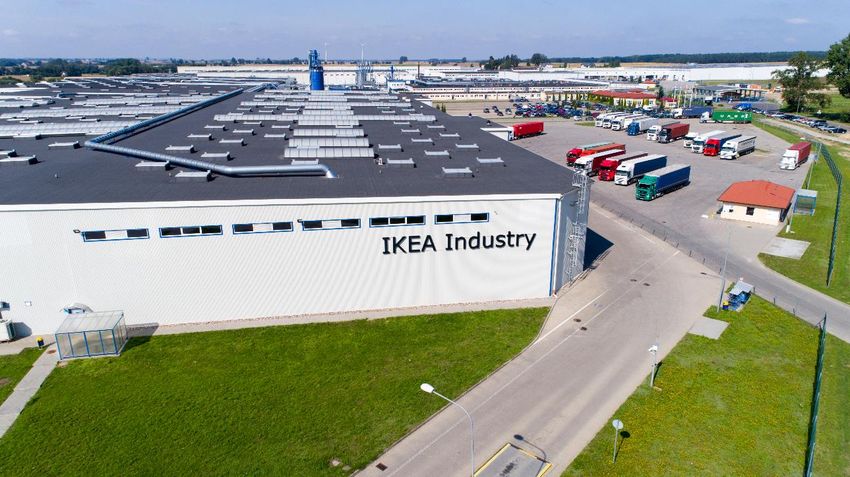
IKEA
   Industry
   World’s largest
manufacturer of wooden
                           20,000
      furniture.
                         co-workers at
                         43 production
                            units in
                          9 countries

PRODUCT RANGE

                 HEMNES

       BUSUNGE

                          PAX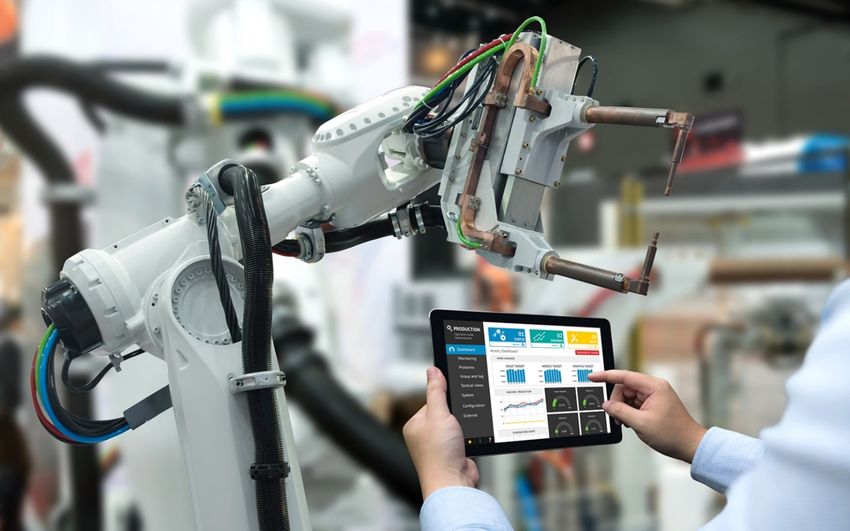
IKEA Industry –   27     years of manufacturing

                                                            Unique

   1.0              2.0             3.0           4.0
                                               Industry
                                                 4.0
                                                           Integrated

Establish      Expand           Consolidate    Transform
1992-2000      2000-2010        2010-2017      2017-
Protect        Develop          Integrate      Network     Innovation &
Capacity       Capacity         Capacity       Capacity    concepts

Develop        Protect          Leverage       Extend
Concept        Concept          Concept        Concept

                                                            Direction &
                                                             Strategy
                                                               focus
Things are changing. The rise of the ecosystems.

                        The many people

                        A convenient and
                            inspiring
                        customer meeting

                             Range is
                               our
                             identity

                          An optimal
                          IKEA value
                            chain

                       The many partners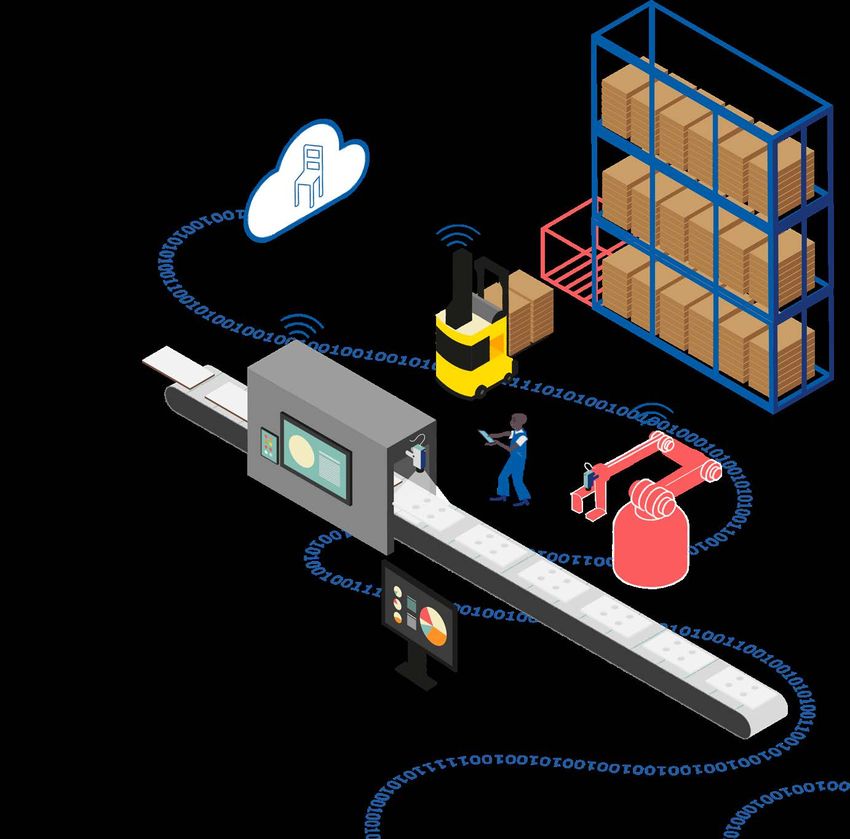
Example of elements in action - IoT

    Infinite computing
    capacity @ very low cost

    Everything becomes
    connected

    Data turn into a
    currency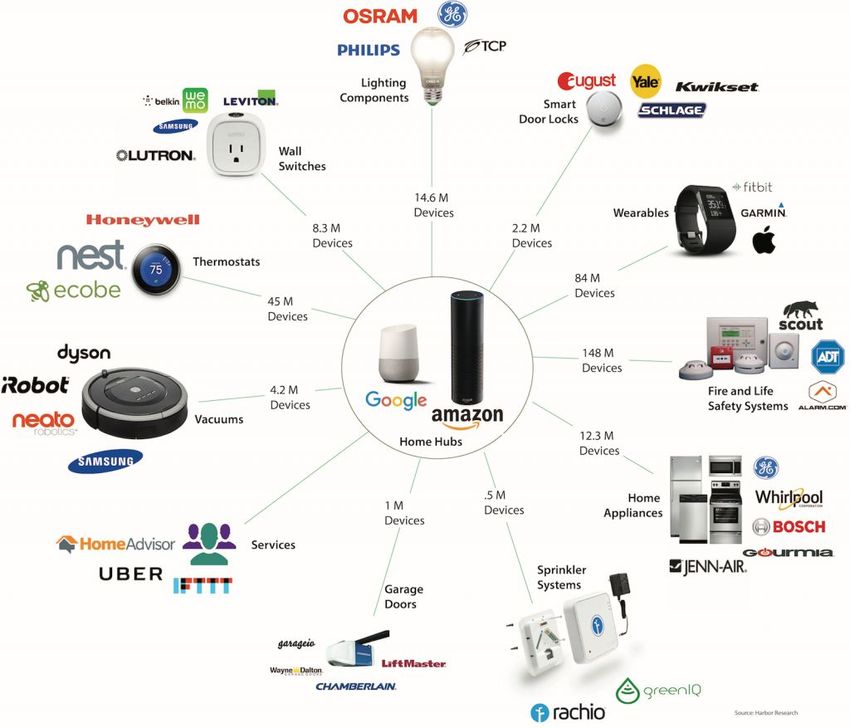
IIoT (Industrial Internet of Things)

AGV

                                                          Visualize &
                                                          Control

                       Data driven processes

Scan

                                                    Co-bots

  Machines

                                               Augmentation
Technology driven
                       retail revolution

Smart and connected
  manufacturing
FOUR STRATEGIC AREAS

   UNIQUE        THE INTEGRATED     INNOVATION,   SUSTAINABILITY
 CAPABILITIES    MANUFACTURING    MANUFACTURING    AND CIRCULAR
AND CAPACITIES      SYSTEM         CONCEPTS AND      ECONOMY
                                     KNOWLEDGE
                                      TRANSFER
Future-proof our Manufacturing Capabilities
Smart and connected Manufacturing System of Technology driven retail
manufacturing the Future… revolution
Shorter product lifecycles New ways to sell, serve and
interact
Smaller batches, reduced
lead times New competitors and
business models
Rapid technology
development and absorption New expectations, new
to stay competitive …Digitalised, integrated requirements
and automatedProduct Lifecycle
Management (PLM)
Planning
Data capturing and
visualisation
Manufacturing operations
management and execution
(MOM/MES)
Flexible
automationAnimation
The MSF Concept – what it consists of

           Product Lifecycle
           Mgmt (PLM)
           Production and material
           planning (ERP)

           Manufacturing execution
           and monitoring (MOM/MES)

           Data capturing and
           visualisation

           Automation
The MSF Concept – what it consists of
Product Lifecycle
Mgmt (PLM)
Production and material
planning (ERP)
Manufacturing execution
and monitoring (MOM/MES)
Data capturing and
visualisation
Automation
Automatically collected data from
an integrated shop floor to optimise
quality, efficiency and cost.Key challenges today
Data structure
• Unstructured shop-floor data
• Missing common data naming
• Data ownership not defined
Machine connectivity
• Often too little shop-floor data available
• Low level of connectivity prevents automation development
• Connecting machines requires much resources (time and cost)
• Infrastructure not prepared for leveraging new smart machines
• Every supplier has different standards
IT/OT* architecture and security operations
• Architecture not prepared for future technology and security
requirements
• OT architecture separated from IT architecture
* OT (Operational Technology) = IT for automation and shopfloorThe digital factory
PLM ERP Other
Global
Level 4
BI
Business integration platform
Local
CAM MES Platform Historian
Level 3
IoT
Shop-floor integration Plug-and-Produce
platform
Shop floor Line Adapter Adapter Line Control Adapter
Level 0-2
Characteristics:
• Information always available
New machines New lines • High level integration
• Full data collection
• Easy and advanced analytics
• Easy to extend and reconfigureMSF Journey
Exploration Phase Development Phase Pilot Phase Roll-out
2017 2018 2019 2020
onwards
End-to-end pilot transformation on a full unit
PURPOSE:
• Prove feasibility of MSF concept
• Refine the concept
• Verify the Business CaseMSF Pilot Lubawa Pigment
Pull principle:
strong local team
Outcome-oriented:
focus on Business Case
Tailored to needs:
MSF Core + automation
Decoupled approach:
- MSF Core 2019
- Additional automation
solutions 2020MSF Pilot Lubawa Pigment: Impressions & Findings People… …and Technology
What were the challenges and learnings?

 It’s about our people – not
 technology. Change
 Management and training are
 key

 Always start with clear Business
 Objectives

 Never underestimate the effort to
 implement new ways of
 working

 Data is becoming a true asset

 Machine suppliers are maturing
 and opening up for Industry 4.0 –
 this helps us on the journey

 A strong local team is key for
 success
Implementation plan

Exploration Phase   Development Phase          Pilot Phase            Roll-out

     2017                 2018                   2019                 2020
                                                                      onwards

                                        Ambition: deploy MSF to all furniture
                                        factories in 4–5 years

                                        Roll-out ambitions (units) for FY20 and
                                        FY21 already aligned with Divisions

                                        Roll-out organization being designed
Roll-out Principles
Pull Principle – Local MSF Core (Mandatory): Optional Components:
Responsibility
Automated Material
Automated Storage
Flex. Automation Solutions
PLM
Handling,
Individual Business Cases
and scoping for each factory
MOM / MES Planning
Thorough Preparation
Automated Packing
Focus on Change
Advanced
Analytics
Management and
Knowledge Transfer Data Capturing & Information
Visibility
Value Realization
Enablers: Project & Change Management, Data
Management Management & ArchitectureThe future of digital is analogue! It’s People, not machines, that will make this transition happen!
You can also read


