Overview - Kaipara District Environmental Scan 2019 - October 2020
←
→
Page content transcription
If your browser does not render page correctly, please read the page content below
Council Briefing                                                     05 February 2020

                   Kaipara District
                   Environmental Scan
                   2019

                   Overview
                   Provides information on the environment Kaipara
                   District Council operates in.

                   Includes looking at the way things are & trends
                   driving change.

                   Helps Council’s decision making and supports
                   planning for the future.

                   Does not make recommendations.

                                                                                   1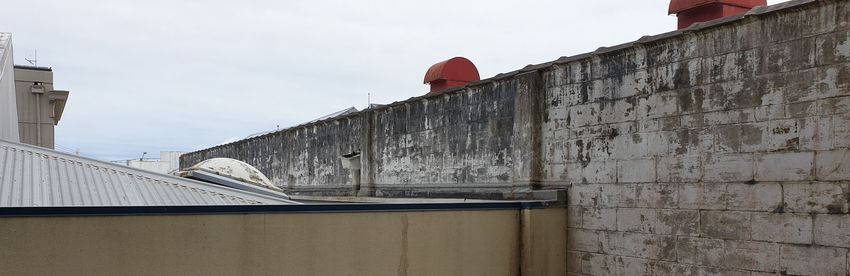
Council Briefing                                                                            05 February 2020

                    Overview
                   Covers:
                     • The physical environment
                       – Geology and soils, climate and climate change
                       • Population demographics
                       – Population growth, ethnicity, population aging
                       • The economy
                       – Structure of the economy, economic performance, job
                         creation
                       • Infrastructure
                       – Transport, electricity, telecommunications, four waters

                    Overview
                   The information available is being updated all the time

                   You can find the latest at:
                   https://www.kaipara.govt.nz/council/council-publications/economic-data

                                                                                                          2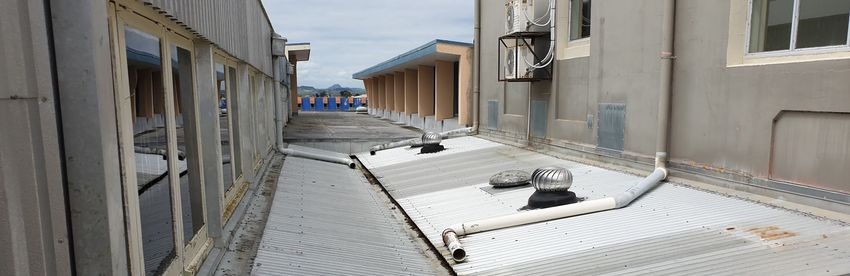
Council Briefing                                                          05 February 2020

                    Geology and Soil

                   Geology and Soil
                    Geology
                    • Kaipara is an expansive district with challenging
                      geology
                    • Main geological hazards are land instability
                      (slumping and sliding) and consolidation
                      settlement
                    Soils
                    • Extensive areas of highly versatile soils &
                      marginal hill country

                                                                                        3
Council Briefing                                                                    05 February 2020

                   Versatile Soils

                       Climate
                   • Mild, humid, subtropical climate
                   • Rainfall is typically plentiful all year round with sporadic
                     very heavy falls
                   • Droughts and floods are not uncommon
                   • Climate change is anticipated to make Kaipara dryer with
                     droughts more common
                   • Plan for sea level rise of 1.5m above the 1986-2005
                     baseline over the next 100+ years
                   • Sea level rise of this magnitude will have significant
                     ramifications for the district due to proximity to the
                     ocean, extensive tidal river network, and large expanses
                     of low-lying land

                                                                                                  4
Council Briefing                                                                05 February 2020

                   Demography – Our people, our
                   communities

                    Population                        Nationally
                   • New Zealand’s population is unevenly distributed, with
                     about 76% of New Zealanders living in the North Island
                     and half of them living in three regions; Auckland,
                     Waikato and Bay of Plenty

                   • Around 46% of New Zealanders live within the triangle of
                     Auckland, Hamilton and Tauranga (the so called ‘Golden
                     Triangle’)

                   • 33% of New Zealanders currently live in Auckland alone

                   • Auckland is increasingly spilling over into neighbouring
                     districts

                                                                                              5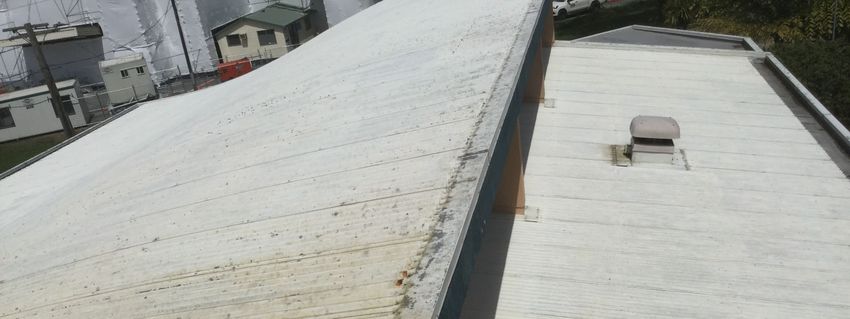
Council Briefing                                                              05 February 2020

                    Population                        Nationally

                    Population                          Kaipara
                   • Kaipara in 2018 resident population of 22,869 persons

                   • Kaipara is experiencing strong growth (20.6% from 2013
                     to 2018), driven by migrants leaving Auckland

                   • Migrants to Kaipara typically those nearing retirement
                     age and, increasingly, young families

                   • All areas of Kaipara are now growing strongly though
                     most growth is centred on Mangawhai (60% increase
                     from 2013 to 2018) and the Kaiwaka-Oneriri area (34%
                     increase between 2013 and 2018).

                   • Employment growth is evident across the district;
                     however has been limited in Mangawhai

                                                                                            6
Council Briefing                                                                                                                                                               05 February 2020

                                                         Population                                                             Kaipara
                                                                                         Population Growth Across Kaipara
                                                                                 Dargaville   Mangawhai     Northwest Kaipara   Southeast Kaipara

                                                 8,000

                                                 7,000
                   Usually Resident Population

                                                 6,000

                                                 5,000

                                                 4,000

                                                 3,000

                                                 2,000

                                                 1,000

                                                    0
                                                         1996 1997 1998 1999 2000 2001 2002 2003 2004 2005 2006 2007 2008 2009 2010 2011 2012 2013 2014 2015 2016 2017 2018
                                                                                                                  Year

                                                         Population                                                             Kaipara
                                                                                     Dargaville Population & Employment
                                                 6,000
                                                                                              Filled Jobs                            Population
                                                 5,000
                                                                                                                                                                       5,170
                                                                                                                                                           4,930 5,080
                                                           4,670 4,670 4,660 4,650 4,610 4,590 4,570 4,570 4,560 4,560 4,580 4,590 4,600 4,610 4,780 4,830
                                                 4,000
                   Number

                                                 3,000                                                                                                               3,546
                                                                                                                                                 3,168 3,287 3,276
                                                                                                             2,945 2,984 3,108 3,007 2,970 2,997
                                                                   2,593       2,576       2,653 2,747 2,764
                                                 2,000 2,374 2,475       2,505       2,554

                                                 1,000

                                                     0
                                                          2000 2001 2002 2003 2004 2005 2006 2007 2008 2009 2010 2011 2012 2013 2014 2015 2016 2017 2018
                                                                                                                  Year

                                                                                                                                                                                             7
Council Briefing                                                                                                                                                                             05 February 2020

                                            Population                                                                         Kaipara
                                                                                Mangawhai Population & Employment
                            5000
                            4500                                                           Filled Jobs                                 Population
                            4000                                                                                                                                                     4,480
                                                                                                                                                                             4,220
                            3500                                                                                                                                     4,000
                                                                                                                                                             3,800
                            3000                                                                                                               3,380 3,510
                                                                                                                                   3,160 3,280
                   Number

                            2500                                                                                           2,950
                                                                                                                   2,790
                            2000                                                                     2,500 2,630
                                                                                      2,240 2,340
                                                                          1,990 2,110
                            1500                        1,770 1,810 1,890
                            1000
                             500                                                                                                                          907   967 1,052 1,121
                                                       311   339   375   396   477   522    514    501   553   591    664     597     639   752     785
                                        0
                                                       2000 2001 2002 2003 2004 2005 2006 2007 2008 2009 2010 2011 2012 2013 2014 2015 2016 2017 2018
                                                                                                               Year

                                            Population                                                                         Kaipara
                                                                                      Community Age Profile
                                                       9%
                                                                                             New Zealand                                      Kaipara
                                                       8%
                             Percentage of residents

                                                       7%
                                                       6%
                                                       5%
                                                       4%
                                                       3%
                                                       2%
                                                       1%
                                                       0%

                                                                                                    Five year age bracket

                                                                                                                                                                                                           8
Council Briefing                                                                          05 February 2020

                    Population                                Kaipara
                                      Community Age Profile
                                                                   23.3% of Kaipara’s
                                                                  population identified
                                                                       as Maori

                    Population                    Kaipara Wellbeing
                   • Most areas of Kaipara have medium to low wellbeing
                     scores according to NZ Index of Multiple Deprivation
                     (based on employment, income, crime, housing, health,
                     education and access to services)

                   • Deprivation was generally worse in urban centres than in
                     the rural areas between them

                   • Indicators for education and access to services scored
                     particularly poorly across all areas

                   • Despite this, people in Kaipara had low levels of housing
                     deprivation & are much healthier than elsewhere in
                     Northland

                                                                                                        9
Council Briefing                                      05 February 2020

                    Population    Kaipara Wellbeing

                   Economy – Our Livelihoods

                                                                   10
Council Briefing 05 February 2020
Economy Economic Structure
• Kaipara’s economy is founded on primary industries,
particularly dairy sector, supported by a strong
manufacturing sector
• Kaipara’s economy exposed to shocks affecting these
sectors, such as droughts and low returns for
commodities on international markets
• Kaipara’s economic performance therefore shows far
greater year on year fluctuations than other areas of
Northland & NZ generally
• Dairy cattle farming’s contribution to the local economy
alone was 6.4 times the national average (13.6%
compared to 2.1% nationally)
Economy Economic Structure
Structure of Kaipara’s Economy Structure of Kaipara’s Employment
Agriculture, Forestry and Agriculture, Forestry and
Fishing Fishing
17.2% 17.9%
Manufacturing Manufacturing
27.9% 26.7%
Rental, Hiring and Real Education and Training
Estate Services
3.7% Owner‐Occupied Property Owner‐Occupied Property
4.7%
Operation Operation
4.4% Unallocated Accommodation and Food
Services
7.7%
4.5% Construction Construction
Wholesale Trade Wholesale Trade
11.1%
6.6% 10.7% 5.3%
Retail Trade Retail Trade
7.7% Professional, Scientific and 6.2% Professional, Scientific and
11.5%
9.0% Technical Services Technical Services
8.3% 3.8% 5.1%
All others All others
11Council Briefing 05 February 2020
Economy Economic Performance
GDP growth, 2001‐2018
10.0%
Kaipara Far North Whangarei Northland New Zealand
8.0%
GDP growth, annual % changes
6.0%
4.0%
2.0%
0.0%
‐2.0%
‐4.0%
‐6.0%
‐8.0%
2001 2002 2003 2004 2005 2006 2007 2008 2009 2010 2011 2012 2013 2014 2015 2016 2017 2018
Year
Economy Economic Performance
• Kaipara’s economy is currently performing well
with GDP growth averaging 3.6% per annum
from 2015 to 2018, though this has since slowed
to 1.9% over the 12 months to June 2019
• Kaipara’s economy is anticipated to slow further
over the near term, in line with a slowdown in
the national economy
• Kaipara’s unemployment rate is currently at its
lowest rate in the last decade at just 4.3% in
June 2019
12Council Briefing 05 February 2020
Infrastructure
Infrastructure Road
• Northland (including Kaipara) has poor connectivity
(both internally and to the rest of NZ) via land transport
(road and rail)
• Despite planned improvements to the state highway
network north of Auckland City, Northland’s road
connections will continue to have significant areas of low
resilience.
• 71% or 1,119 km of Kaipara’s local roads (roads other than
state highways) are unsealed and 450 km are sealed
• Land transport challenges have a negative impact on
access for Kaipara’s goods to international markets
13Council Briefing 05 February 2020
Infrastructure Rail
• Northland’s rail system has been maintained in a state of
‘managed decline’ for some years
• Services on the Dargaville Branch and to the Far North
district remain suspended though the lines remain in
place
• The remainder of the North Auckland Line continues to
operate between Auckland and Fonterra’s dairy factory at
Kauri (just north of Whāngārei)
• There is a proposal to build a rail link to NorthPort at
Marsden Point
Infrastructure Port
• Northland’s port at Marsden Point (Northport)
is a natural deep-water port with flexible
facilities capable of handling large multipurpose
vessels
• Port has ample vacant industrial zoned land
• Consideration is being given to developing
capacity at Northport to replace Auckland as
one of two strategic North Island ports,
together with associated rail line upgrades and
development
14Council Briefing 05 February 2020
Infrastructure Telecommunications
Kaipara’s telecommunications infrastructure is
undergoing considerable improvement with
increasing mobile phone and broadband coverage
and expansion of the ultra-fast broadband fibre
network
Infrastructure Water
• Potable water supplies and reticulated
wastewater systems are provided to only a
limited number of Kaipara communities and
there is pressure to connect more households
and communities
• Mangawhai, which is fast emerging as the
District’s largest centre, is currently almost
entirely dependent on private roof water tanks
for its water supply.
15Council Briefing 05 February 2020
Infrastructure Wastewater
• Mangawhai’s wastewater scheme is relatively
new and can have its capacity progressively
increased to cope with some future growth
• However, an additional disposal site for treated
wastewater will be required as wastewater
volumes grow
• Across the remainder of the district’s water,
wastewater and stormwater networks, aging
infrastructure will create the need for increased
renewals over the next five to ten years
Infrastructure Land Drainage
• Kaipara District has the second largest area in NZ protected by
land drainage schemes after the Hauraki Plains
• This includes the Dargaville central business district and Ruawai
township as well as vast areas of productive farmland with
highly versatile soils in the Ruawai, Aratapu, Hoanga and Parore
areas
• Much of this area is presently just above or just below mean sea
level & concerns are growing that projected sea level rise could
make defence of this area unviable
16Council Briefing 05 February 2020
Any Questions?
We welcome your feedback!
0800 727 059 | www.kaipara.govt.nz
17Council Briefing 05 February 2020
Kaipara District
Draft Hearing Commissioners Policy
2020
Overview
Draft Policy informed by:
• Research into other local government policies
• Input from the Planning and Regulatory
Working Group (Working Group) that existed
during the term of the previous Council
• Input from consent planners & GM-RPP
• Legal advice: precautionary approach needed
to avert bias; delegation must be stated,
must consult Mana Whenua/Tangata Whenua
1Council Briefing 05 February 2020
Overview
Distinguishes between:
• Independent Hearings Commissioners Panel
• Internal Hearing Commissioners (Elected
Members) Panel
• Mix of above
• Other Hearings Panels ie for LTP, Bylaws etc
All Commissioners need to be accredited &
completed “Making Good Decisions” course
Overview
RMA Hearings include:
• Resource Consents
• Other RMA applications (Objections, NOR etc)
• District Plan Review
• Council Plan Changes
• Private Plan Changes
See Table in the report
Note: Applicant right to ask for an Independent
Hearings Commissioner
2Council Briefing 05 February 2020
Policy
Main Aim:
• Recruitment
• Process of selection
• Role of Elected Members vs Independent
Commissioners
• Dispute Resolution
• Remuneration
• Natural Justice Principles
Policy
Natural Justice Principles
• Council can not hear it own applications
• Elected members should not hear controversial
applications because of perceived or actual bias
• Elected members can officiate non-RMA
hearings
3Council Briefing 05 February 2020
Policy
Legal Requirements of the Delegation
In terms of Sec 32A(1) of the RMA
• Council can delegate to a Hearings
Commissioner any function with 2 exceptions
• Council must consult with Iwi Authority and one
Commissioner must have knowledge of tikanga
Maori
• Delegation must state if the power is to Decide
or Recommend
• Decisions have the effect of a Council decision
Policy
Policy requires:
• List potential Commissioners
• Review list every 3 years each triennial election
• Advertise for expression of interest
• Rating system for Independent Commissioners
Pass or Fail
Relevant Skills 40%
Relevant experience 40%
Local Knowledge 20%
• Chair suitability assessed against criteria
4Council Briefing 05 February 2020
Policy
Appointment of Independent Hearing
Commissioners requires:
• Assessment of skills and experience
• Knowledge of tikanga Māori
• Alphabetical list system
• Availability confirmed
• Informing the public and the applicant of
appointment
• Keeping record of who and why appointed
Can consider appointment outside of the list
Policy
Appointment of Internal Hearing Commissioners
requires:
• Accreditation– council to provide assistance
• Consider conflict of interest or perceived bias
• Can’t hear matter in representative ward
• Workload & availability for the duration of the
hearing
Appointment is by decision of Council
5Council Briefing 05 February 2020
Policy
General Provisions:
• If more than one Commissioner is appointed to
RMA hearings, only one can be an Internal
Commissioner
• The Chair of the Hearing shall be an
Independent Commissioner
• The Chair has a casting vote
• Dispute resolution is via the Chief Executive
Policy
Remuneration:
• Independent Commissioners must accept the
level of remuneration when entering into a
contract
• Level of remuneration reviewed every three
years
• Internal Hearings Commissioners remuneration
is determined by the Local Government
Members Determination
6Council Briefing 05 February 2020
Any Questions?
We welcome your feedback!
0800 727 059 | www.kaipara.govt.nz
7Council Briefing 05 February 2020
Elected Member
Code of Conduct
Review
Context
• Under the Local Government Act 2002, councils are required to have a Code of
Conduct (the“Code”).
• The Code remains in force until the Council amends it. The Code can be amended at
any time,but cannot be repealed, unless the Council replaces it with another Code.
• Amendments to the Code require a resolution supported by 75% or more of the
elected members of the Council present at that meeting. It is best practise that the
Code be reviewed in the new triennium
• Local Government New Zealand develop a Code template in consultation with the
local and central government sectors, sector best practice, and legislative or
regulatory introductions or amendments.
1Council Briefing 05 February 2020
Introduced and revised sections
Introduced and revised sections included in the updated LGNZ Code are:
• refinement of the principles including a new principle that highlights the importance of
elected members “pulling their weight” (Sec 11)
• simplification of the roles and responsibilities section (Sec 4)
• encouragement for members to participate in activities to build and maintain
collaborative and cooperative cultures within the council (Sec 11)
• new process for investigating and assessing complaints, including a ‘materiality’ test
(Sec 12)
• additional guidance on penalties or sanctions (Sec 13)
• clarification that complaints can only be made by members and chief executives (Sec
12)
• new guidance on elected members and social media (Sec 6)
• a more empowering and less prescriptive approach.
Next steps
• Feedback and any suggested amendments provided by elected members will be
included in a draft Code tailored for the Council.
• The proposed Code for adoption will be included in the agenda for a decision at
the 26 February Council meeting.
2Council Briefing 05 February 2020
Any Questions?
We welcome your feedback!
0800 727 059 | www.kaipara.govt.nz
3Council Briefing 05 February 2020
Update and Options
Standing Orders
New Provisions
• Emergency meetings (SO 8.5-8.7)
• Chairperson may recommend amendment
(SO 23.6)
• Keeping a record (SO 29)
• Internet site and public notice (SO
definitions)
1Council Briefing 05 February 2020
Optional Provisions
• Leave of absence (SO 13.3)
• Audio visual link (SO 13.7-13.16)
• The Mayor’s casting vote (SO 19.3)
• Options for moving and speaking (SO 22)
Other Considerations
• Briefings and workshops
• Agenda timeframes
– Distributions to members (SO 9.10)
– Public availability (SO 9.8)
2Council Briefing 05 February 2020
Timeframes
Model SO Recommended
change
Petition 5
Request for deputation 5
Notice of Motion 5
Notice to members – extraordinary 3
meeting
Distribution of agenda to members 2 3
Public inspection of agenda 2 3
Request for audio visual link 2
Request to speak in public forum 2
Notice to members – emergency As soon as
meetings practicable
Next Steps
• Decision report will be brought to the next
Council meeting (26 Feb 2020)
• Each optional provisions to be
recommended and decided individually
3Council Briefing 05 February 2020
Any Questions?
We welcome your feedback!
0800 727 059 | www.kaipara.govt.nz
4Council Briefing 05 February 2020
Kaipara District Council
Civic Building update
John Burt
Commercial and
Property Advisor
5 February 2020
Key issues- Civic Buildings
Dargaville
• The portfolio is in poor condition
and Council faces significant
remediation costs in near future.
• Library is space constrained and
has health & safety issues that
need to be addressed.
1Council Briefing 05 February 2020
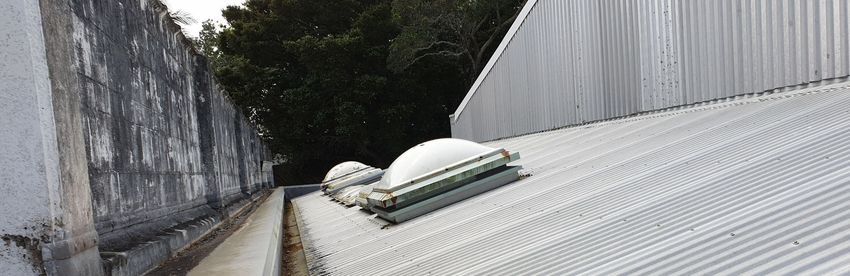
Roof over foyer
outside conference
and town hall, with
no clearance to
window sill area
Roof over corridor,
with no clearance to
window sill area
Roof over entry 2,
flat roof in between
is pooling water
The ceiling tiles underneath the corridor and
Pono Lodge
intertenancy wall with
rainwater head
draining onto Flashing
2Council Briefing 05 February 2020
Rainwater head draining onto flashing on
KDC intertenancy wall flashing
All junctions
brought up to NZBC
3Council Briefing 05 February 2020
Roof drainage
improvement with
Monopitch
Ceiling leakage
avoided with a well
draining roof
4Council Briefing 05 February 2020
REMEDIAL DESIGN OPTIONS
Option 1 – like for like roof
► Replacement of the existing roof existing roof cladding with a
new roof system to match existing.
Option 2 – mono pitch roof option
► new simplified mono-pitch roof cladding and structure in lieu of
curved and membrane roofs and replacement of town hall roof
cladding.
REMEDIAL DESIGN OPTIONS
Option 1 – like for like roof
► Replacement of the existing roof cladding with a new roof
system to match existing.
Option 2 – mono pitch roof option
► new simplified mono-pitch roof cladding and structure in lieu of
curved roof and replacement of entry.
5Council Briefing 05 February 2020
Key issues- Civic Buildings
Mangawhai
• Council buildings Leased until
October 2024, by which time
they will be insufficient.
• Library is space constrained
and provides limited service
to the Community
Opportunities-Dargaville
In the medium term, Council needs to:
i. Provide a larger Library facility
ii. Remediate weather tightness issues at
Town Hall complex at 37 Hokianga Road
iii.Decide on the future use or otherwise of
existing offices at 42 Hokianga Rd.
iv.If 42 Hokianga is to be retained and
repurposed it will need to be remediated
and refurbished.
6Council Briefing 05 February 2020
Possible options _ Dargaville
Acquisition of another building for library
Retention- Retain all/some existing
buildings and endeavour to address issues
with each one.
Consolidation/Disposal – Consolidation of
all functions on one or more of the existing
building/locations and dispose of any
building becoming surplus as a result e.g.
Library at Normanby or 42 Hokianga
Te Ahu Centre - FNDC
• Te Ahu in Kaitaia is the civic and
community centre for the northern region
of the Far North District of New Zealand.
The Te Ahu Charitable Trust was formed
to fund construct the centre and
subsequent administration of a multi
functional community facility.
• https://youtu.be/JJxbbcP0Apk
7Council Briefing 05 February 2020
Opportunities-Mangawhai
In the medium term, Council needs to:
• Establish a Council run library in
Mangawhai
• Acquire larger office and library buildings
Possible options _ Mangawhai
Acquisition- of one building on one site to
replace existing facilities.
Acquisition of more than one building on
multiple sites to replace existing facilities.
8Council Briefing 05 February 2020
Officers would like direction from Council :
Which of the potential propositions for
Civic buildings in Dargaville should be
prioritised.
Which of the potential site(s) in
Mangawhai should be prioritised for further
investigation.
9Council Briefing 05 February 2020
Annual Plan briefing
Resource Consents & subdivisions
Resource Consents & S224's Received over the Past 6 Years
600
508
500
454
423
400
331
Volume
300
263
200
137
104 115
100 101
100 85
37
0
14/15 15/16 16/17 17/18 18/19 19/20
Financial Year
Resource Consents Received S224's Issued
1Council Briefing 05 February 2020
Building consents
Building Consent Received
900
800 764 770
749
730
700 656
Building Consents Received
600
500
400 361
420
364 375 364 361
300
295
200
100
0
14/15 15/16 16/17 17/18 18/19 19/20
Financial Year
Total Annual Volumes Total Half Year (Dec) Results
Call abandonment stats 2018 - 2019
Call Abandonment %
40
35
30
25
20
15
10
5
0
January February March April May June July August
2018 2019
2Council Briefing 05 February 2020
Growth in Capital Expenditure Budget ($millions)
45
40
35
30
25
20
15
10
5
0
2011/12 2012/13 2013/14 2014/15 2015/16 2016/17 2017/18 2018/19 2019/20
Capital Projects
Growth where are we? Comparison of resource consents
processed
1600 140
1400 120
1200
100
2017 Resource Consents
2017 Population $000s
1000
80
800
60
600
40
400
200 20
0 0
2017 Resource Consents 2017 Population
3Council Briefing 05 February 2020
Debt per capita across selected high-growth councils
4Council Briefing 05 February 2020
Revenue & Financing
Policy
Analysis of Activities
To provide predictability about sources and levels of
funding
Part 1 only looking at analysis of activities
• Identify Activity
• Are costs private /public
• Look at fairness
• Best funding method
1Council Briefing 05 February 2020
Changes proposed by staff
• Reducing paperwork from approx. 90 pages to 13 pages
• Change from categorisation which was very broad
– High 67% to 100%
– Medium 34% to 66%
– Low 0 to 33%
• Propose exact % to aim for but with a disclaimer that could
be 10% difference as difficult to obtain exact % in revenue
• Mangawhai Wastewater not differentiated from other
systems as General rate portion now under $3000 so
wastewater shown as one catagory
Issue/complaintsthat might influence decision
today
• Resource Consents and early discussion not free
• Capable of Connection disgruntled -75% fee quite high
comparatively
2Council Briefing 05 February 2020
Part 2 Potential for further
discussion
• Equalisation of Water, Wastewater and Stormwater both
operating and capital (don’t have anomalies lots of current
cross subsidisation in operating)
• Funding of MCP , and other reserves work Dargaville (issue
of current differential for Mangawhai and insufficient funds
for Harding park and Taharoa Domain in the future)
• Definition of a SUIP
And Not thinking of discussion on changing
• Land Value to capital value system
• Forestry Differential provided for
Any Questions?
We welcome your feedback!
0800 727 059 | www.kaipara.govt.nz
3You can also read


