Pandemic Influenza Response Plan
2014
←
→
Page content transcription
If your browser does not render page correctly, please read the page content below
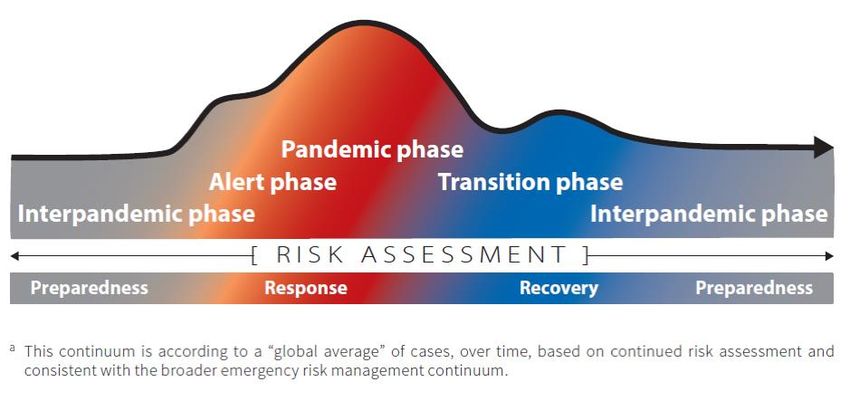
Pandemic Influenza Response Plan 2014

Pandemic Influenza Response Plan: 2014

About Public Health England
Public Health England exists to protect and improve the nation's health and wellbeing,
and reduce health inequalities. It does this through advocacy, partnerships, world-class
science, knowledge and intelligence, and the delivery of specialist public health services.
PHE is an operationally autonomous executive agency of the Department of Health.

Public Health England
Wellington House
133-155 Waterloo Road
London SE1 8UG
Tel: 020 7654 8000
www.gov.uk/phe
Twitter: @PHE_uk
Facebook: www.facebook.com/PublicHealthEngland

Prepared by: Nick Phin, John Simpson and Gaynor Marshall, with contributions from
Hilary Moulsdale and Mike Laing
For queries relating to this document, please contact: gaynor.marshall@phe.gov.uk

© Crown copyright 2014
You may re-use this information (excluding logos) free of charge in any format or
medium, under the terms of the Open Government Licence v2.0. To view this licence,
visit OGL or email psi@nationalarchives.gsi.gov.uk. Where we have identified any third
party copyright information you will need to obtain permission from the copyright holders
concerned.

Published August 2014
PHE publications gateway number: 2014256

                                                2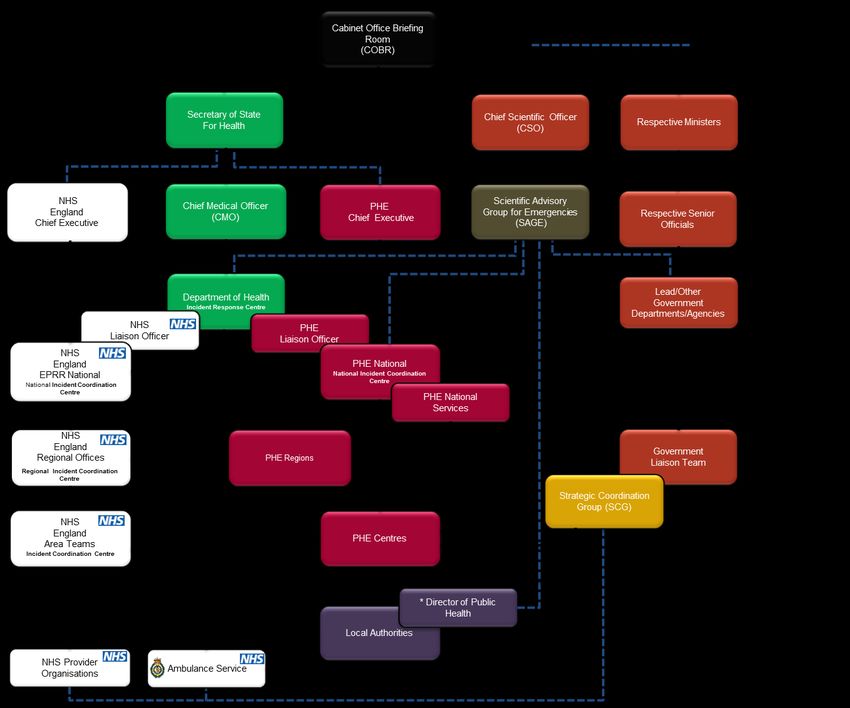
Pandemic Influenza Response Plan: 2014

Contents
About Public Health England                                                    2
Foreword                                                                       5
1. Executive summary                                                           6
2. Introduction                                                                8
  2.1 Aim                                                                      10
  2.2 Objectives                                                               10
  2.3 Scope                                                                    10
3. Planning assumptions                                                        12
  3.1 UK response phases (DATER)                                               12
4.1 Business continuity during an influenza pandemic                           16
  4.1 business continuity impact                                               16
  4.2 Human aspects                                                            16
  4.3 Risk management and mitigation                                           17
5. National incident response in an influenza pandemic                         18
  5.1 PHE national response                                                    20
6. PHE national and local response arrangements during an influenza pandemic   22
  6.1 Chief executive                                                          22
  6.2 Health Protection directorate                                            22
  6.3 Operations directorate                                                   43
  6.4 Communications directorate                                               51
  6.5 Human Resources                                                          54
  6.6 Finance and Commercial directorate                                       58
  6.7 Health and Wellbeing directorate                                         62
  6.8 Chief Knowledge Officer’s directorate                                    63
  6.9 Strategy directorate                                                     63
  6.10 Programmes directorate                                                  63
7. Governance arrangements                                                     64
  7.1 Assurance                                                                64
  7.2 Training and exercising                                                  64

                                              3
Pandemic Influenza Response Plan: 2014

Appendix 1: Planning assumptions                                              65
Appendix 2: Roles and responsibilities of the Department of Health, the NHS
and the Cabinet Office                                                        66
Appendix 3: Roles of key partner organisations                                68
Appendix 4: Summary of the epidemiology of pandemic influenza                 70
Appendix 5: Summary of modelling work                                         72
Appendix 6: Summary of pandemic infection control assumptions                 74
Appendix 7: World Health Organization global phases                           76
Appendix 8: Mobilisation of the national stockpile of antivirals for
pandemic influenza preparedness                                               78
Appendix 9: The First Few Hundred – FF100                                     85
Appendix 10: Glossary                                                         87
Appendix 11: Reference documents                                              88

                                                  4
Pandemic Influenza Response Plan: 2014
Foreword
Duncan Selbie
Chief Executive
The prospect of a flu pandemic is one of the highest risks faced by the UK. Ensuring the
country is fully prepared and able to respond quickly and effectively is a top priority for
PHE and, of course, for the government.
The 2009 H1N1 pandemic certainly tested our plans for dealing with a new pandemic
strain. Fortunately it was a mild one, but we need to be confident that our planning and
responses are sufficiently flexible to deal with every eventuality.
While the PHE Pandemic Influenza Strategic Framework (2014) describes the approach
and overall responsibilities of PHE in a pandemic, this response plan further clarifies
PHE’s role, responsibilities and response arrangements in each phase of a pandemic
and links to the PHE National Incident and Emergency Response Plan (2013).
5Pandemic Influenza Response Plan: 2014
1. Executive summary
Public Health England (PHE) is the expert national public health agency and a Category
1 responder. PHE’s first function is to fulfill the Secretary of State’s duty to protect the
public’s health from infectious diseases and other public health hazards. The threat from
pandemic influenza remains the top national risk and PHE has a core and critical role
working with its local and national partners, in preparing for and responding to influenza
pandemic.
This plan details PHE roles and responsibilities during the preparation for and response
to a pandemic, and describes the response in the context of the overarching national
arrangements set out in the Department of Health’s (DH) UK Influenza Pandemic
Preparedness Strategy (2011) and Health and Social Care Influenza Pandemic
Preparedness and Response (2012).
This PHE plan reflects the roles and responsibilities of all staff within all PHE
directorates within the five pandemic phases: detection, assessment, treatment,
escalation and recovery (DATER).
PHE recognises that generating and sustaining its pandemic response will only be
possible with the support of all staff, such is the extensive nature of tasks. These
include surveillance and epidemiological advice, specialist diagnostics, microbiology,
statistics and modelling, the provision of expert clinical and infection control advice,
communications, managing the national stockpiles of countermeasures, developing and
validating new diagnostic tests, undertaking research, and procuring pandemic specific
vaccine. This plan also takes into account lessons identified during the response to the
2009 pandemic.
This plan and the learning from the national multiagency pandemic influenza Exercise
Cygnus in late 2014, will inform the further development of comprehensive and
integrated plans in delivering an effective and sustainable response across the
organisation. This system of cross-organisational working will deliver the resources,
science and leadership required during the pandemic in order to support the staff and
organisational response from local and national centres, and laboratories.
The plan involves:
PHE local and specialist centres working closely with partners at local, regional and
national levels. This will be to gather intelligence, organise testing, and undertake
enhanced surveillance (as national response is critically dependent upon these
actions)
6Pandemic Influenza Response Plan: 2014
the development of integrated and detailed planning arrangements to address
response organisation and capacity, mutual aid and surge capacity, training, the
establishment of help lines for professionals, co-ordination of media messages, and
support and advice to local and national partners and the public
the role of PHE working alongside and supporting the work of key partners within
local health systems with their local authorities and directors of public health, NHS
England, the DH, devolved administrations and across other government
departments. It also details the international interactions PHE has in an influenza
pandemic.
Preparing successfully and responding effectively to pandemic influenza will require
PHE to prepare and respond together with its partners. The Pandemic Influenza
Strategic Framework 2014 and the Pandemic Influenza Response Plan 2014 provide
comprehensive reference documents for PHE staff and partner agencies.
7Pandemic Influenza Response Plan: 2014
2. Introduction
With unpredictable frequency, novel influenza viruses emerge or re-emerge to cause an
influenza pandemic. When this happens, it is likely that global spread will ensue rapidly,
affecting large numbers of the population because there will be little or no immunity to
this strain. However, until such an event occurs, the impact, expressed as the severity
of the illness and proportion of the population that will be most severely affected, will be
unknown. As a guide, the impact could range from a 1918-type pandemic, where severe
disease was mainly in young adults, to a 2009 pandemic, where the illness was mild in
most groups of the population.
Preparations for an influenza pandemic have been developed over a number of years
but it was in 2009 that these plans were put to the test. Although a less severe
pandemic by 20th century standards, key lessons were learnt and included in the
revised DH UK Influenza Pandemic Preparedness Strategy (2011).
Given the unpredictable nature and the potential severity of pandemic influenza, the
response must be flexible and proportionate and builds on current business continuity
arrangements, while addressing the issues specific to a pandemic. This will require
activation and co-ordination of PHE’s national emergency response arrangements.
As an executive agency of DH, PHE strategy integrates and uses the expertise and
resources from across public health and incorporates new responsibilities inherited as a
result of reorganisation. PHE consists of 10 directorates that will need to work together
in a co-ordinated way to mobilise an effective response to an influenza pandemic:
Chief executive's office
Chief knowledge officer
Communications
Finance and Commercial
Health and Wellbeing
Health Protection
Human Resources
Operations
Programmes
Strategy
The Operations and Health Protection directorates provide local and national leadership
for PHEs health protection response. The remaining PHE directorates have support
roles in response to an influenza pandemic.
8Pandemic Influenza Response Plan: 2014
PHE's employees are scientists, researchers, public health professionals and essential
support staff. It has 15 local centres and four regions, and provides specialist health
protection, epidemiology and microbiology services across England.
PHE supports local authorities and NHS England area teams (to support their NHS co-
ordination role), and provides direct advice to clinical commisioing groups in the
planning phase (as partners around the local health resilience partnership (LHRP)
table). As part of the multiagency response, PHE operates by providing evidence and
knowledge on local health needs, providing evidence-based and expert advice on what
to do to improve health, and, where it makes sense to do so, by taking action nationally.
PHE in turn is the public health adviser to NHS England.
The Health Protection directorate
Health Protection directorate comprises teams of health protection specialists co-
ordinating services at a local level, a nationally organised integrated epidemiology
service based at PHE Colindale, and an emergency response department that works to
improve the UK's health emergency response capability, developing the infrastructure
for surveillance and early recognition of events.
The Emergency Response Department (ERD) of the Health Protection directorate has a
number of functions across all elements of emergency preparedness, resilience and
response (EPRR):
the corporate resilience team works with internal and external partners in the
development and assurance of PHE national preparedness, resilience, response
and recovery planning requirements
specialist training and exercise teams organise internal and external training
processes and events, to support and test this
specialist health protection: modeling, epidemiology and microbiology services have
involvement in EPRR at local, regional, national and international levels
The corporate resilience team also co-ordinates and manage sthe PHE response to
major (level 3 and above) incidents, with support from the rest of ERD, which maintains
a pool of staff trained and ready to activate the PHE National Incident Co-ordination
Centre (NICC) and/or for deployment to support other parts of PHE where necessary.
The Operations directorate
PHE regions have partnership arrangements with NHS England Regions and
Department of Communities and Local Government (DCLG) teams and oversee the
system preparedness and implementation of actions after exercises and incidents. In
9Pandemic Influenza Response Plan: 2014
response to incidents affecting more than one centre, PHE regions have a co-ordination
role across the region and in ensuring mutual aid arrangements.
PHE centres are the first line of response to incidents and they work closely with
partners, including local authority directors of public health, within LHRPs and local
resilience forums (LRFs), in ensuring pandemic response plans are in place and tested
in accordance with current legislation and guidance.
Local health protection teams within PHE centres work with NHS England area teams,
health care providers and other agencies in delivering the local pandemic influenza
response.
2.1 Aim
To describe PHE’s role and actions in the preparation and response to an influenza
pandemic.
2.2 Objectives
The objectives of this plan are to:
define the key PHE national and local roles and responsibilities during each of the
pandemic influenza phases – detection, assessment, treatment, escalation and
recovery
support PHE directorates/divisions/centres in local operational planning, working to a
common framework and purpose
2.3 Scope
Given the uncertainty and the potential impact of influenza pandemic, pandemic
influenza has been classified by the Cabinet Office as the number one threat to the UK
population.
DH is the lead government department in England during the health response to an
influenza pandemic. It will also perform a number of lead functions for the devolved
administrations of Scotland, Wales and Northern Ireland, and take overarching
responsibility for the UK response.
PHE has specific responsibilities within England and Wales (the latter, in conjunction
with Public Health Wales) and co-operates closely with its counterparts in Scotland and
Northern Ireland. PHE collaborates with all UK devolved administrations and their health
protection services to optimise the UK’s preparedness and response to pandemic
10Pandemic Influenza Response Plan: 2014
influenza. In the event of a pandemic PHE will collate UK surveillance data for the
purpose of providing regular updates to DH and NHS England.
This document is based on flexible planning assumptions consistent with the DH UK
Influenza Pandemic Preparedness Strategy (2011) and the DH Health and Social Care
Influenza Pandemic Preparedness and Response (2012).
The document does not cover planning for, or the response to, seasonal influenza
outbreaks or any incidents involving the prevention or control of avian influenza in birds
or other influenza virus infections in animals, or these viruses causing limited numbers
of human cases.
However, it does cover the recognition and management of cases of influenza-like
illness in humans that either raise suspicions about the emergence or re-emergence of
a novel influenza virus with pandemic potential, or which are attributable to a novel
influenza virus, which, in turn, may emanate from an animal or avian source.
The appendices include brief summaries of the role and responsibilities of other health
organisations and partners. Also included are outlines of the epidemiology and
modelling of an influenza pandemic and infection control assumptions (April 2012) and
the mobilisation of vaccines and countermeasures (2014).
11Pandemic Influenza Response Plan: 2014
3. Planning assumptions
The uncertainties in any pandemic mean that the reality of a pandemic may differ from
the planning assumptions, and plans will need to be adapted to account for changing
circumstances.
The local response may also differ at points throughout the pandemic to take account of
local ‘hot spots’. PHE advice and response will at all times be:
evidence-based or based on best practice in the absence of evidence
based on ethical principles
based on established practice and systems as far as possible
co-ordinated at local and national levels.
PHE will provide independent, expert microbiological, epidemiological and modelling
advice as well as operational support to DH, the NHS and other organisations whose
formal responsibilities include responding to an influenza pandemic.
The planning assumptions used in this plan are consistent with those outlined in the UK
Influenza Pandemic Preparedness Strategy 2011 for responding to an influenza
pandemic (Appendix 1 and 6).
3.1 UK response phases (DATER)
Although the World Health Organization (WHO) is responsible for identifying and
declaring influenza pandemics, the UK was well into the first wave of infection when
WHO declared a pandemic in 2009.
The use of WHO phases to trigger different stages of the local response were
considered confusing and inflexible and it was decided to develop a more flexible
approach, not driven by the WHO phases and determined nationally was needed for the
UK. The UK approach uses a series of phases: detection, assessment, treatment,
escalation and recovery (DATER). It also incorporates indicators for moving from one
phase to another. The rationale for this is described in detail in the UK Influenza
Pandemic Preparedness Strategy 2011.
The phases are not numbered as they are not linear, may not follow in strict order, and
it is possible to move back and forth or jump phases. There will also be variation in the
status of different parts of the country reflecting local attack rates, circumstances and
resources.
12Pandemic Influenza Response Plan: 2014
Each phase sets out the actions and priorities for the response, reflecting the situation
as it affects the UK.
The initial overall health response consists of two distinct phases – detection and
assessment (these may be relatively short depending on the speed of spread or the
impact on individuals and communities).
It is within these phases that PHE will take the lead. In the subsequent treatment,
escalation and recovery phases PHE will have more of a supportive role.
Public health activities in each phase
Detection – Triggered on the basis of reliable intelligence or if an influenza related
“Public Health Emergency of International Concern” (PHEIC) is declared by the WHO or
by the WHO declaring a Pandemic Alert Phase1, the focus in this stage would be:
intelligence gathering from countries already affected
enhanced surveillance within the UK
the development of diagnostics specific to the new virus
information, specific advice, and communications to the public and professional
the indicator for moving to the next stage would be the identification of the novel
influenza virus in patients in the UK
Assessment – The focus in this stage would be:
the collection and analysis of detailed clinical and epidemiological information on
early cases on which to base early estimates of impact and severity in the UK (First
Few Hundred (FF100), Appendix 9)
reducing the risk of transmission and infection with the virus within the local
community by:
o actively finding cases
o advising community voluntary self-isolation of cases and suspected cases
o advising on the treatment of cases/suspected cases and use of antiviral
prophylaxis for close/vulnerable contacts, based on a risk assessment of the
possible impact of the disease
The indicator for moving from this stage would be evidence of sustained community
transmission of the virus, ie cases not linked to any known or previously identified
cases.
1
Appendix 7: World Health Organization global phases
13Pandemic Influenza Response Plan: 2014
Treatment – The focus in this phase would be:
advising on the treatment of individual cases and population treatment, if necessary,
using the National Pandemic Flu Service (NPFS)
to consider enhancing public health measures to disrupt local transmission of the
virus as appropriate, such as localised school closures based on public health risk
assessment
Depending upon the development of the pandemic, to prepare for targeted vaccinations
with NHS as the vaccine becomes available (NB the vaccine will not be available for 5-6
months after the decision to order vaccine is given).
Arrangements will be activated to ensure that necessary detailed surveillance activity
continues in relation to samples of community cases, hospitalised cases and deaths.
When demands for services start to exceed the available capacity, additional measures
will need to be taken. This decision may be made at a regional or local level as not all
parts of the UK will be affected at the same time or to the same degree of intensity.
Escalation – The focus in this phase would be:
escalation of surge management arrangements PHE to advise NHS
prioritisation and triage of service delivery with aim to maintain essential services
resilience measures, encompassing robust contingency plans
consideration of de-escalation of PHE response if the situation is judged to have
improved sufficiently
These two phases – treatment and escalation – form the treatment component of the
pandemic. While escalation measures may not be needed in mild pandemics, it would
be prudent to prepare for the implementation of the escalation phase at an early stage,
if not before.
Recovery – The focus in this phase would be:
normalisation of services, perhaps to a new definition of what constitutes normal
service
restoration of business as usual services, including an element of catching-up with
activity that may have been scaled-down as part of the pandemic response eg
reschedule routine operations
post-incident review of response, and sharing information on what went well, what
could be improved, and lessons learnt
taking steps to address staff exhaustion
planning and preparation for resurgence of influenza, including activities carried out
in the detection phase
14Pandemic Influenza Response Plan: 2014
continuing to consider targeted vaccination with the NHS, when available
preparing for post-pandemic seasonal influenza
The indicator for this phase would be when influenza activity is either significantly
reduced compared to the peak or when the activity is considered to be within
acceptable parameters. An overview of how service capacities are able to meet demand
will also inform this decision.
It needs to be stressed again that the uncertainties in any pandemic mean that the
actual characteristics of the pandemic may be different from the planning assumptions,
and that planned actions may need to be modified to take account of changing
circumstances.
15Pandemic Influenza Response Plan: 2014
4.1 Business continuity during an influenza
pandemic
Business continuity management is a holistic process that identifies potential threats to
an organisation and the impacts to the business operations that those threats, if
realised, might cause.
It provides a framework for building organisational resilience with the capability for an
effective response that safeguards the interests of key stakeholders, reputation, brand
and value-creating activities.
PHE, during a pandemic, must be able to maintain its critical functions and activities.
The business impact analysis is the process of analysing functions/activities that PHE
performs and the effect that a business disruption might have upon them. The results of
the business impact analysis is universal for all incidents.
4.1 business continuity impact
This plan focuses on pandemic influenza related activities and provides a strategic
overview. Section 6 lists the essential influenza functions for each centre and
directorate within PHE. How these are prioritised in the context of an emergency,
together with non-pandemic activities, is the responsibility of each centre and
directorate, which must maintain their business continuity.
The impact on PHE’s income earning activities should be addressed in local and
organisation-wide business continuity management plans. Appropriate records should
be kept and used to support financial management during and after the incident.
4.2 Human aspects
Pandemic influenza can impact staff either directly or indirectly, therefore human
aspects are an important component of the broader business continuity planning
considerations. The direct impact to PHE staff is such that they may be absent from
work due to themselves becoming ill or to care for a family member. The impact to the
wider community may result in reduced service or loss of services throughout the
pandemic which may necessitate staff absence. Examples of indirect impact may be
closure of schools and children’s nurseries, resulting in staff unavailability for child care
reasons. There may be transport disruptions due to industrial action, and staff
sickness/fear.
16Pandemic Influenza Response Plan: 2014
4.3 Risk management and mitigation
Alternate working arrangements can reduce the impact on critical activities, such as
staff redeployment or reassignment of activities to alternate locations. However, these
actions may themselves cause disruption, especially if staff are requested to work away
from their usual place of work.
To enhance the planning of actions involving the availability and redeployment of staff,
HR will monitor and record absenteeism as a result of pandemic infection. This will
facilitate trend analysis within PHE, to identify ‘hot spots’ where staffing numbers have
the potential to fall below the level at which ‘mission critical activities’ can continue to be
maintained.
Individual plans for PHE centres and directorates must address the availability of
technology, system access rights and remote access capability/capacity. These need to
remain flexible to respond to a changing situation. High staff attrition rates may require
staff to multi-task where relevant, in order to support any required back-filling of roles.
Plans will identify alternatives for key senior staff. Cross-training and succession
planning, as part of good management practice as a ‘business as usual’ activity
addresses multi-skilling and mitigates the risks from high attrition rates. Job sharing or
sharing of responsibilities where mixed skills are required is a further risk mitigation
technique.
While PHE can implement its own plans to manage continuity of business, it is also
dependent on its end-to-end supply chain management for both outsourced services
and internal processes. In preparation for a pandemic event, the robustness of
suppliers’ (internal and external) business continuity plans should be verified to provide
the necessary assurance that PHE has the ability to deliver on behalf of its
stakeholders. The avoidance of single suppliers for any key product or service
contributes to risk mitigation.
17Pandemic Influenza Response Plan: 2014
5. National incident response in an
influenza pandemic
The New and Emerging Respiratory Virus Threats Advisory Group (NERVTAG) will act
as an advisory group to provide the Chief Medical Officer (CMO) and, through the CMO,
ministers, DH and other government departments, with scientific risk assessment and
mitigation advice for the planning of threats posed by new and emerging respiratory
viruses and on options for their management.
The group will draw on the expertise of scientists and healthcare professionals,
including clinicians, microbiologists and public health practitioners, and colleagues in
related disciplines. The group is supported by a scientific secretariat from PHE, and is
scientifically independent. England’s CMO acts as the UK government’s principal
source of public health advice and information. At the beginning of a pandemic this
group will be re-constituted as Health Services Advisory Group (HSAG) chaired by the
CMO.
There will be uncertainty about the effects of the disease and course of the pandemic.
As part of the central government response ‘Responding to Emergencies, the UK
central government approach, response and concept of operations’ (CONOPS) (2010),
Cabinet Office Briefing Room (COBR) will request the activation of the Scientific
Advisory Group for Emergencies (SAGE), (‘Enhanced SAGE Guidance: A strategic
framework for the Scientific Advisory Group for Emergencies’ (2012)). SAGE will co-
ordinate strategic scientific and technical advice to support and direct UK cross-
government decision making.
PHE has a key supporting role to support the CMO and the SAGE process, providing
expert clinical and scientific advice, in partnership with other key health protection
partners. Each of the devolved administrations also has a CMO and, working
collaboratively, they ensure a comprehensive and co-ordinated UK-wide public health
response.
The role of SAGE in pandemic influenza is to:
ensure a common understanding of the scientific aspects of the pandemic
provide advice on prognosis and scientific evidence supporting decision making
highlight the nature and extent of any uncertainties or differences in expert opinion
During an influenza pandemic, science and technical advice cells (STACs) are not
expected to be activated at local level, however public health interpretation of SAGE
advice and guidance to partners will be provided by PHE centres who will provide
18Pandemic Influenza Response Plan: 2014
liaison with strategic co-ordination groups (if established) and NHS area team/Local
authority response structures. This should be defined in local plans.
Figure 1: Formal lines of communication in a pandemic influenza response
19Pandemic Influenza Response Plan: 2014
5.1 PHE national response
This plan (Pandemic Influenza Response Plan (2014)) sets out in detail PHE’s
operational response to an influenza pandemic in the context of the PHE Pandemic
Influenza Strategic Framework (2014) in alignment with the UK Influenza Pandemic
Preparedness Strategy (2011).
PHE will provide specialist expert advice and operational support to DH, NHS England,
NHS, and other organisations whose formal responsibilities include responding to an
influenza pandemic. Operational support at local (LHRP) and national (EPRR
Partnership Board) levels will be provided to assist the development and
implementation of inter-agency planning for pandemic influenza.
The PHE chief executive has overall responsibility for ensuring that PHE has the
capability and capacity across its services to respond to an influenza pandemic. It is the
PHE National Executive group’s responsibility to ensure that the actions within each
directorate are implemented effectively during each response phase.
The director of health protection takes responsibility on behalf of the chief executive and
National Executive to ensure relevant plans are in place for an effective response to
pandemic influenza.
PHE’s national response during a pandemic will be delivered through the NICC, as
detailed in the PHE National Incident Response Plan (2013) and PHE Concept of
Operations (2013) (to be superseded by PHE Integrated Emergency Response Plan
(2014). This describes the mechanisms and structures by which an emergency,
including an influenza pandemic is managed, taking into account experience in swine flu
2009 and the Hine Review (2010)
The PHE pandemic response requires a national incident director supported by an
incident response cell comprising the nominated leads from PHE directorates closely
involved in delivering the response. These will include Operations, Health Protection
staff at Colindale, Microbiology Services and Communications. The NICC will also be
supported by the Forward Look Group. This group comprises of senior PHE personnel
with expertise in key areas.
The PHE national internal response is organisational wide and fully dependent on
collaborate working arrangements between directorates. The following tables of actions
required by directorates in each stage of a pandemic, highlights the need for co-
ordination at local and national levels to ensure an effective integrated PHE response is
achieved.
20Pandemic Influenza Response Plan: 2014
Figure 2 shows how the NICC is generically structured in the PHE response in an
influenza pandemic.
Figure 2: PHE generic structures for local and national engagement
21Pandemic Influenza Response Plan: 2014
6. PHE national and local response
arrangements during an influenza
pandemic
6.1 Chief executive
The PHE chief executive has overall responsibility and command of PHE’s response to
a national incident. In pandemic influenza he/she will:
ensure PHE continues to deliver its core functions during the response and recovery
phases
provide liaison between DH, NHS England and central government on public health
matters
decide or review the appropriate level and scale of the response according to the
PHE National Incident Response Plan (2013) and PHE Concept of Operations
(2013) (to be superseded by PHE Integrated Emergency Response Plan (2014))
delegate authority to the director of health protection to oversee the delivery of
PHE’s response to the incident
6.2 Health Protection directorate
The director of health protection has delegated authority to:
provide leadership and strategic co-ordination to the PHE response to a pandemic
move PHE through UK response phases during a pandemic
ensure strategic co-ordination of the PHE-wide response in conjunction with the
incident response cell
designate deputies to undertake below functions as appropriate
advise the chief executive on matters of public health and clinical governance
* not all leads in trhe following table are part of the Health Protection directorate
22Pandemic Influenza Response Plan: 2014
Phase Action Responsible
Detection Monitor and co-ordinate PHE Director of health protection/director of
responses to international CIDSC
requests for briefings and expertise Programme director/director of public
on pandemic influenza in conjunction health strategy
with relevant centres and divisions
Review and update briefing Director of health protection
requirements of DH and other
government departments
Review experience to date in Director of health protection/NICC
dealing with the resource demands
within PHE and the profile of
experience from countries that have
suffered/are suffering the pandemic
and refine strategy
Work with government to ensure that Director of health protection/NICC
appropriate data and advice is
supplied and to act as the conduit for
downward tasking
Work with PHE centres to establish Director of health protection/NICC
the local and nationwide
epidemiological picture and wider
situation as it evolves, and ensure
this informs national briefing and
advice to government
Assessment Activate NIRP and NICC (if not Chief executive/designated deputy
already activated)
Establish a daily ‘battle rhythm’ for Incident director
meetings and information
flows to meet PHE and government
needs
23Pandemic Influenza Response Plan: 2014
Review experience to date in Director of public health strategy
dealing with the resource demands
within PHE and the profile of
experience from countries that have
suffered/are suffering the pandemic
and refine strategy (Forward Look
Cell)
Work with government to ensure NICC
that appropriate data and advice is
supplied and to act as the conduit
for downward tasking
Treatment Participate in discussions and Director global health/designated
activities led by WHO, the European deputy
Centre for Disease Prevention and
Control (ECDC) and the Community
Network of Reference Laboratories
for Human Influenza (CNRL)
Review and update briefing Director of health protection and
requirements of COBR and other director for emergency response
government departments
Activate NIRP and NICC (if not Chief executive/deputy
already activated)
Establish a daily ‘battle rhythm’ for Incident director
meetings and information
flows to meet PHE, DH and
Work with PHE
government centres to establish
requirements Director of health protection/NICC
the local and nationwide
epidemiological picture and wider
situation as it evolves, and ensure
this informs national briefing and
advice to government
Work with PHE centres to establish Work with PHE centres to establish the
the local and nationwide local and nationwide epidemiological
epidemiological picture and wider picture and wider situation as it
situation as it evolves, and ensure evolves, and ensure this informs
this informs national briefing and national briefing and advice to
advice to government government
24Pandemic Influenza Response Plan: 2014
Consider the need to establish Director of health protection/HR
incident response cell to assess director
potential impact of heightened alert
state on PHE business continuity
and resource options to deliver plan
Prepare to divert IT resources to Head of information
ensure that all systems are systems
prioritised to support pandemic
influenza esponse
Escalation Review and update briefing Director of health protection/executive
requirements of COBR and other director for emergency response
government departments
Establish a daily ‘battle rhythm’ for Incident response cell lead
meetings and information flows to
meet PHE and government needs
Review experience to date in Director of health protection/NICC
dealing with the resource demands
within PHE and the profile of
experience from countries that have
suffered/are suffering the pandemic
and refine strategy
Work with government to ensure Incident director/NICC
that appropriate data and advice is
supplied and to act as the conduit
for downward tasking
Establish daily ‘battle rhythm’ Director of health protection/incident
response cell lead response
Establish routine for briefing DH, Incident director
Cabinet Office Briefing Room
(COBR) and other government
departments
25Pandemic Influenza Response Plan: 2014
Plan PHE input into DH and SAGE Director of health protection/director
and allocate these roles EPRR
Set up a liaison cell at DH major NICC
incident co-ordination centre (MICC)
discussions and activities
Implement mechanisms for HR director/divisional
redeployment of staff from ‘non- directors
influenza’ areas
Consider implications of possible HR director
cancellations of all annual leave
Participate in discussions and Director global health
activities led by WHO, ECDC and
CNRL
Recovery Review and update briefing Director of health protection
requirements of DH, COBR and
other government departments
Review experience to date in Director of health protection/NICC
dealing with the resource demands
within PHE and the profile of
experience from countries that have
suffered/are suffering the pandemic
and refine strategy
Review actions taken and adapt Director of health protection
existing plans in the light of
lessons learned
Review international liaison and Director global health
identify lessons learned
26Pandemic Influenza Response Plan: 2014
Take stock of the pandemic’s impact Director of health protection
on PHE and implement actions to
return PHE to business as usual
Assessment of overall health impact Director of health protection
of pandemic
Support re-activation of PHE Director of health protection
national and international activities
that had been affected by the
pandemic
6.2.1 Centre for Infectious Disease Surveillance and Control (CIDSC)
CIDSC Colindale, working in close collaboration with the reference laboratory, is
responsible for/to:
co-ordinating the gathering and assessment of intelligence (nationally and
internationally) on any new pandemic strain
co-ordinating the collection and analysis of epidemiological and clinical data on the
early cases and throughout the pandemic
developing and co-ordinating guidance in relation to the investigation and
management of cases, clusters and outbreaks (including infection control measures)
monitoring the spread of the pandemic and using this data, in conjunction with
modelers
undertaking risk assessments on the size of the likely impact on the UK
undertaking surveillance within the community to inform public health and
pharmaceutical countermeasures
monitoring hospitalised cases and deaths in order to derive estimates of severity
providing information and guidance to healthcare professionals and the general
public
undertaking vaccine efficacy studies; in conjunction with colleagues in Microbiology
Services
undertaking sero-epidemiological studies and provide data, expert advice and
support to DH, the CMO, COBR and SAGE
27Pandemic Influenza Response Plan: 2014
Phase Action Responsible
Detection Activate the Colindale incident co-ordination centre Director CIDSC
(ICC) Colindale
Gather, assess and verify intelligence from countries Head of
already affected respiratory
diseases
department
Using international data attempt to provide an initial Head of
assessment of the likely severity and impact on the UK respiratory
diseases
department/virus
reference
laboratory
Identify and undertake rapid public health Director CIDSC
investigations necessary to address important gaps in Colindale/head of
evidence required to inform public health and clinical respiratory
countermeasures diseases
department/virus
reference
laboratory
Work with data management team in the NECC to Head of
ensure investigation protocols and databases respiratory
(including FF100, community, hospital and sero- diseases
epidemiology systems) are current, ready to go and department/
reflect intelligence gathered from countries already modeling and
affected statistics unit/data
management
team/virus
reference
laboratory
28Pandemic Influenza Response Plan: 2014
Lead and co-ordinate the development of early expert Head of
guidance around the management of patients and respiratory
outbreaks including advice on infection control and use diseases
of antivirals department/virus
reference
laboratory
Liaise with occupational health team to develop Head of
information/guidance for staff and ensure there is a respiratory
direct communication link to ensure there is diseases
consistency of advice to staff and that is appropriate for department/head
their particular needs of occupational
health
Provide expert input to the development of information Head of
to health professionals and the public respiratory
diseases
department/
Communications
Provide intelligence and expert advice to the CMO and Head of
SAGE as required respiratory
diseases
department/virus
reference
laboratory
Refine vaccine efficacy and safety protocols Head of
immunisation
department
In conjunction with health protection services (local) Head of
agree advice and information on port health and travel respiratory
issues diseases
department
29Pandemic Influenza Response Plan: 2014
Contribute to international collaborations and Director CIDSC
assessments Colindale/head of
respiratory
diseases
department/virus
reference
laboratory
Refine surge capacity plan Director CIDSC
Colindale
Assessment Continue to gather and evaluate intelligence from Head of
countries already affected respiratory
diseases
department/virus
reference
laboratory
Identify key clinical and epidemiological features of the Head of
new pandemic virus in collaboration with Microbiology Respiratory
Services and health protection services (local) using Diseases
the FF100, community and hospital based systems Dept./virus
reference
laboratory
Provide early estimates of the likely severity and Head of
impact on the UK using data from the FF100 and data respiratory
from other countries diseases
department/
modelling and
statistics unit
Using enhanced surveillance data attempt to model the Modelling and
likely course of the pandemic statistics unit
Provide data from the enhanced surveillance schemes Head of
respiratory
diseases
department
30Pandemic Influenza Response Plan: 2014
Activate the daily mortality data streams with the Director CIDSC
General Registry Office Colindale/Head of
respiratory
diseases
department
Look for evidence of sustained community Head of
transmission in conjunction with health protection respiratory
services (local) diseases
department
Assess the need for public health interventions such as Head of
school closures respiratory
diseases
department/
Modelling and
statistics unit
Develop public health guidance on the potential use of Head of
antivirals for treatment and prophylaxis respiratory
diseases
department/virus
reference
laboratory
Carry out vaccine safety trails and efficacy studies Head of
immunisation
department/Head
of respiratory
diseases
department/virus
reference
laboratory
Lead and co-ordinate the review of expert guidance, Head of
including guidance covering hospital infection control respiratory
and communicate the national infection control diseases
guidelines and case management algorithms to local department
partners
31Pandemic Influenza Response Plan: 2014
Provide expert input to the development of information Head of
to health professionals and the public respiratory
diseases
department
Provide intelligence and expert advice to the CMO and Head of
SAGE as required. respiratory
diseases
department/virus
reference
laboratory
Treatment As for detection and assessment phases
Reassess antiviral strategies and public health Head of
interventions respiratory
diseases
department/virus
reference
laboratory
Collect aggregate data and produce information on Head of
trends respiratory
diseases
department
Monitor deaths and excess mortality Head of
respiratory
diseases
department
Depending on the development of the pandemic, Head of
prepare for evaluation of targeted vaccination immunisation
programmes as vaccine becomes available. department/Head
of respiratory
diseases
department
32Pandemic Influenza Response Plan: 2014
Escalation Implement surge capacity plan driven by specific Director CIDSC
characteristics of the pandemic. Colindale
Reassess antiviral strategies and public health Head of
interventions respiratory
diseases
department/virus
reference
laboratory
Assess the need for ongoing surveillance and identity Head of
minimum requirements respiratory
diseases
department
Continue to monitor deaths and excess mortality Head of
respiratory
diseases
department
Lead and co-ordinate the review of expert guidance, Head of
including guidance covering hospital infection control respiratory
diseases
department/virus
reference
laboratory
Provide expert input to the development of information Head of
to health professionals and the public respiratory
diseases
department
33Pandemic Influenza Response Plan: 2014
Provide intelligence and expert advice to the CMO and Head of
SAGE as required. respiratory
diseases
department/virus
reference
laboratory
Recovery Re-introduction of normal surveillance and response Head
ry of
operations and rescheduling of work delayed by the respiratory
impact of the pandemic diseases
department
Write up findings from the pandemic All
Generate and contribute towards the review of lessons All
learned
Review guidance on the investigation, management of Head of
cases outbreaks etc respiratory
diseases
department
Review epidemiology and surveillance capability in Head of
preparation for the next influenza season respiratory
diseases
department
6.2.2 Vaccines and countermeasures
CIDSC has responsibility to support an effective response to an influenza pandemic by:
securing the cost-effective procurement and supply of antivirals, antibiotics, vaccines
and consumables
maintaining robust pandemic infrastructure and distribution logistics
ensuring accurate accounting and reporting for expenditure in relation to the
countermeasures and infrastructure required for an influenza pandemic
For more information see Appendix 8: Mobilisation of the National Stockpile of Antivirals
for Pandemic Flu Preparedness.
34Pandemic Influenza Response Plan: 2014
Phase Action Responsible
Detection Review current preparedness capability and Head of vaccines and
current work programme in relation to maintaining countermeasures
the stockpiles of countermeasures and response, CIDSC
infrastructure to identify if any procurement work
needs to be accelerated.
Assessment Confirm whether the pre-pandemic vaccine Head of vaccines and
stockpile will be required as part of the response, countermeasures
which will be dependent on the virus strain. response, CIDSC
Confirm arrangements for accessing needles and
syringes with NHS Business Services Authority if
pre-pandemic vaccine is to be part of the
response.
Treatment Following confirmation of the appropriate use of Head of vaccines and
antivirals for the response, provide instruction to countermeasures
the NHS Business Services Authority for the response, CIDSC
mobilisation of the national stockpile of antivirals
to be distributed to the antiviral collection points
being established by NHS England.
Provide instruction to the designated hospital
manufacturing units to start the production of
Oseltamivir solution for use by children aged
under one year old. Confirm that consumables
required for the solution are available to the
hospital manufacturing units.
Provide instruction for the printing and
mobilisation of antiviral vouchers to be used when
antivirals are being authorised during the
pandemic.
Following confirmation of the amount of vaccine
required using the advanced purchase agreement
for pandemic-specific vaccine; provide instruction
to the DH Commercial Medicines Unit for the
contract to be triggered based on the agreed
35Pandemic Influenza Response Plan: 2014
volumes.
Monitor the receipt of the pandemic-specific
vaccine supply with deliveries expected to start
around six months after the Advanced Purchase
Agreement was triggered. Provide instruction to
the NHS Business Services Authority and
Immform for the support required in relation to the
storage and distribution of the vaccine and the
related consumables.
Following confirmation of the delivery locations
and volumes, provide instruction to the NHS
Business Services Authority for the mobilisation of
the national stockpile of personal protective
equipment for use by health and social care
workers who are required to come into close
contact with symptomatic individuals.
Following confirmation of available funding,
provide instruction to the NHS Business Services
Authority to undertake the “just in time”
procurement agreements for consumables that
are in place to supplement the stockpiles that are
held for pandemic flu preparedness.
Provide instruction to the Commercial Medicines
Unit if it is decided that any additional antiviral or
antibiotic stockpiles are required, having obtained
the necessary approvals,
Following agreement of the available funding,
provide instruction to the suppliers and call centre
providers for the mobilisation of the National
Pandemic Flu Service and the related systems in
order to be able to enable symptomatic individuals
to be able to access antivirals, if appropriate, so
that it can be triggered if primary care
arrangements need to be supplemented.
Escalation Provide instruction to the NHS Business Services Head of vaccines and
Authority for the mobilisation of the national countermeasures
stockpile of antibiotics if there are concerns about response, CIDSC
36Pandemic Influenza Response Plan: 2014
the level of complications resulting in shortages in
the business as usual antibiotic supply
arrangements for primary and/or acute care.
Provide instruction to the NHS Business Services
Authority for the mobilisation of the related
stockpile of antibiotic consumables.
Following confirmation of delivery locations and
volumes, provide instruction to the NHS Business
Services Authority for the mobilisation of the liquid
hygiene and oxygen consumables held in the
national stockpile to be available in the event of
shortages occurring in the normal business supply
arrangements because of the pandemic.
Monitor the demands being placed on the National
Pandemic Flu Service with the Health and Social
Care Information Centre and the suppliers to
inform the ongoing requirement for call centre
handlers and any system issues arising.
Recovery Confirm arrangements for closing down the Head of vaccines and
National Pandemic Flu Service as pressures on countermeasures
GPs decrease. response, CIDSC
Confirm the arrangements for the return of the
antivirals to the national stockpile from the antiviral
collection points where stocks have not been used
for symptomatic individuals including receiving the
storage records maintained by the NHS and
confirming that the Medicine and Healthcare
products Regulatory Agency (MHRA) is content
for the antivirals to be returned to the national
stockpile.
Provide instructions to the DH Commercial
Medicines Unit for the advanced purchase
agreement for pandemic-specific vaccine to be
brought to a conclusion, based on the contract
terms.
Review the stockpile levels following the
pandemic to inform future procurement
37Pandemic Influenza Response Plan: 2014
requirement priorities, budget requirements and
likely timescales.
Provide input for the independent review including
information on the expenditure required for both
the preparedness and response costs in relation
to the pandemic flu countermeasures and
infrastructure.
Work with the Commercial Medicines Unit and the
NHS Business Services Authority to integrate
lessons identified into future procurements.
6.2.3 Field Epidemiology Services
The role of the PHE Field Epidemiology Services in pandemic influenza is:
collection of epidemiological and clinical data on the early cases and throughout the
pandemic including co-ordination and assistance with tracing cases and contacts for
gathering information on exposure and clinical details
provision of epidemiological support to local PHE centres including support with
outbreak investigation
lead or support the design and conduct of epidemiological studies to inform public
health action and evaluate public health action
contribute to the development of guidance in relation to the investigation and
management of cases, clusters and outbreaks (including infection control measures)
support surveillance activity including data collection, analysis and interpretation and
contribution to sit-rep production
support the provision of information and guidance to healthcare professionals and
the general public
support vaccine efficacy studies; in conjunction with colleagues in CIDSC and
Microbiology Services
undertake sero-epidemiological studies working with CIDSC and Microbiology
Services
38Pandemic Influenza Response Plan: 2014
Phase Action Responsible
Detection Identify and undertake rapid epidemiological Director of the Field
investigations necessary to address important gaps Epidemiology
in evidence required to inform public health and Service
clinical countermeasures working with colleagues
across PHE and other organisations
Support the local response to pandemic influenza Field epidemiology
across PHE teams
Support local PHE centres with outbreak Field epidemiology
detection and investigation in schools, care homes teams
and other community settings
Provide scientific and technical advice to staff in PHE Field epidemiology
centres and the local health economy teams
Co-ordination or assistance with the development
and implementation of surveillance systems
including FF100
Assessment Work with CIDSC and local centres to Identify key Field epidemiology
clinical and epidemiological features of the new teams
pandemic virus using the FF100, community, and
hospital based systems
Provide data for enhanced surveillance schemes Field epidemiology
teams
Look for evidence of sustained community Field epidemiology
transmission in conjunction with CIDSC and PHE teams
local centres
Apply epidemiological methods to assess the need Field epidemiology
for public health interventions teams
Contribute to the development of guidance materials Field epidemiology
for professionals and the public teams
39Pandemic Influenza Response Plan: 2014
Provision of surge capacity to other parts of PHE Director Field
Epidemiology
Service
Contribution to data analysis and sitrep production Field epidemiology
teams
Treatment As for detection and assessment phases
Contribution to data analysis and sitrep production Field epidemiology
teams
Support work to monitor deaths and excess mortality Field epidemiology
teams
Undertake or support the evaluation of targeted Field epidemiology
vaccination programmes as vaccine becomes teams
available, working with CIDSC
Provision of surge capacity to other parts of PHE Director Field
Epidemiology
Service
Provide support to PHE centres with the Field epidemiology
investigation and management of cases and clusters teams
or outbreaks, particularly in settings such as schools,
care homes and prisons, and apply epidemiological
methods to assess the efficacy of control measures
Maintain surveillance systems of influenze-like Field epidemiology
illness cases and outbreak teams
investigation
Support and collate local reports of aggregate Field epidemiology
influenza activity in primary care teams
Provision of surge capacity to other parts of PHE Director Field
Epidemiology
service
Escalation
Continue to support surveillance activity including the Field epidemiology
monitoring of deaths and excess mortality teams
40You can also read


