Paradise Island - Luxury living in the tropics - KPMG International
←
→
Page content transcription
If your browser does not render page correctly, please read the page content below
Paradise Island –
Luxury living in
the tropics

KPMG in Sri Lanka
   © 2018 KPMG, a Sri Lankan Partnership and a member firm of the KPMG network of independent member firms affiliated with KPMG International
   Cooperative (“KPMG International”), a Swiss entity. All rights reserved.
                                                                                                                                                1
© 2018 KPMG, a Sri Lankan Partnership and a member firm of the KPMG network of independent member firms affiliated with KPMG International
Cooperative (“KPMG International”), a Swiss entity. All rights reserved.
                                                                                                                                             2
Table of contents
        Foreword                                                                                                                   4
        Snapshot                                                                                                                    5
        Why invest in Sri Lankan real estate                                                                                       6
        Real estate demand drivers in Sri Lanka                                                                                  24
        Investing in Sri Lanka                                                                                                   30
        High end condominium market in Sri Lanka                                                                                 32
        Appetite for beach front properties                                                                                      35
        Demographics of Colombo district                                                                                         36
        Appetite for prime land in and around Colombo                                                                            37
        How KPMG Real Estate can help you                                                                                        38
        KPMG leadership                                                                                                          39

     © 2018 KPMG, a Sri Lankan Partnership and a member firm of the KPMG network of independent member firms affiliated with KPMG International
     Cooperative (“KPMG International”), a Swiss entity. All rights reserved.
                                                                                                                                                  3
Foreword
Interest in globally renowned brands in the real estate market
in Sri Lanka is expected to drive transformative growth in the
sector.

                                                              Real estate in Sri Lanka has                        KPMG Sri Lanka has
                                                              rewarded investors with                             undertaken research into the
                                                              strong returns post 2009,                           real estate industry to
                                                              when Sri Lanka saw the end                          identify opportunities and
                                                              to the civil conflict. The new                      trends for investment and
                                                              Port City Development                               evaluated the implications of
                                                              Project is a key focal point in                     the new Inland Revenue Act
                                                              the real estate landscape of                        and how it would benefit
                                                              the region. Regionally, Sri                         investors.
                                                              Lanka remains attractive as
                                                              an emerging market, when                            This is the first Real Estate
                                                              considering the ROI on Real                         research report we have
                                                              Estate. The positive outlook                        done on the topic of the
                                                              for the global economy is an                        luxury real estate. It
Shiluka Goonewardene                                          encouraging sign that the                           complements our historic
Principal | Deal Advisory                                     rewards will continue for                           expertise in this sector, and
KPMG in Sri Lanka                                             some time to come.                                  highlights some of the key
T: +94 11 5426403                                                                                                 financial trends, challenges
E: sgoonewardene@kpmg.com                                     Amidst all this euphoria,                           and opportunities for the
                                                              there needs to be a certain                         Real Estate industry in the
Shiluka is the Principal of the Deal                          degree of caution, as there                         country.
Advisory division of KPMG in Sri                              is a disconnect between the
Lanka. He counts over 20 years of                             sheer volume of capital                             As a team, we look forward
experience in the spheres of                                  raised and the opportunities                        to discuss these themes
Corporate Finance, Transaction                                in the market to deploy it                          with you in the coming
Services, Mergers & Acquisitions                              effectively in assets that can                      weeks, and continue to
and Real Estate Advisory Services                             withstand a downturn.                               update you as these evolve.
and leads a team of                                           Therefore, professional
50 professionals and associates.                              property valuation and risk
He has served as the Engagement                               management have become
Partner / Director in numerous                                increasingly important.
                                                                                                                  Shiluka Goonewardene
advisory engagements ranging                                                                                      Principal | Deal Advisory
from business valuations, financial                           Against this backdrop,
                                                              investors are assessing how                         KPMG in Sri Lanka
due diligences, private
placements, restructuring and                                 they can verify the
mergers for companies in varied                               sustainability of their
industries.                                                   investments, whilst
                                                              complying with ever more
                                                              stringent and complex
                                                              regulations and tax regimes.

           © 2018 KPMG, a Sri Lankan Partnership and a member firm of the KPMG network of independent member firms affiliated with KPMG International
           Cooperative (“KPMG International”), a Swiss entity. All rights reserved.                                                                     44
Snapshot
Sri Lanka 2018 – The right time & the right place to invest

  GDP growth estimate                                                Housing requirement                                                                       Over          6,000
                     4.5%                                            100,000 units                                                                                    luxury
      Driven by private                                              per annum to fill                                                                         condominium
      consumption and                                                up housing gap                                                                              units to be
     investment growth                                                                                                                                         added by 2020

    Government infrastructure                                                                       Colombo Port City to change
    drive                                                                                           landscape in real estate
    Expressway                                                                                      world class real estate supply

                                                                                                    5.65 Million SQ. M. GFA
    LRT
                                                                                              Estimated population of                                                          Strong
                                                                                                     Port City                                                                 appetite
                                                                                                                                                                              for beach
    Port
                                                                                                           200,000                                                               front
                                                                                                          Job creation                                                        properties

                                                                                                           83,000
    Airport
    Improvement in infrastructure                                                                Growth of land                                         Foreign leasehold
                                                                                                prices in Colombo                                       ownership allowed
    connectivity                                                                                    9% - 17% p.a.                                       up to 99               years

                                                                                                       Investments on
       1.1%                                 Location
                                                                                                     condominiums have                                              +113%
                                            advantage
                                                                                                     generated historical                                             Growth
                                            OBOR
                                                                                                   returns of 17% ROI                                                 in FDI’s
                                            proximity to                                                                                                                 in
 Expected annual                            sea, strong air                                              and 5% - 9%                                                    2017
   growth rate                              connectivity                                                   rental yield
Source: World Bank, Ministry of Housing and Construction, Road Development Authority, Ministry of Megapolis and Western Development, CHEC Port City Colombo, Annual Report 2017 – Central Bank of Sri Lanka
                     © 2018 KPMG, a Sri Lankan Partnership and a member firm of the KPMG network of independent member firms affiliated with KPMG International
                     Cooperative (“KPMG International”), a Swiss entity. All rights reserved.                                                                                                         55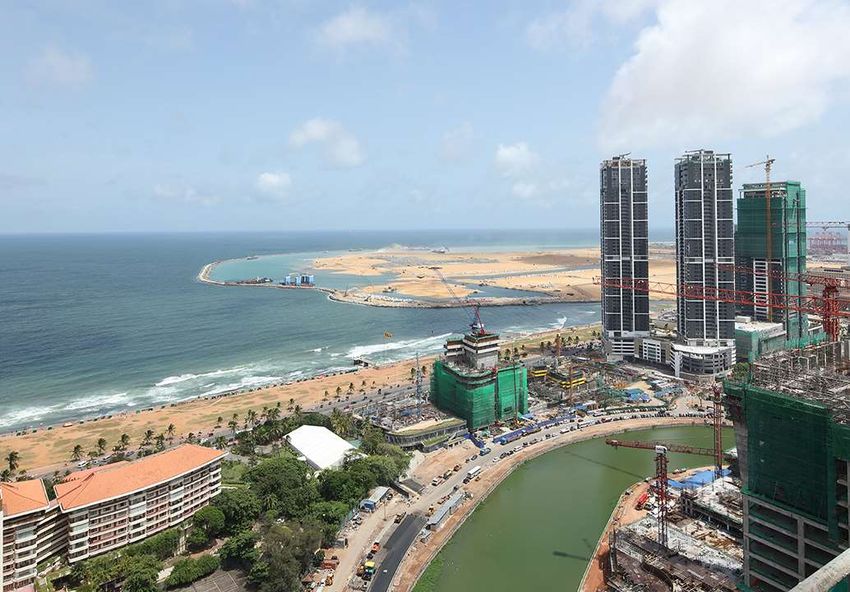
Why invest in Sri Lankan real estate

      © 2018 KPMG, a Sri Lankan Partnership and a member firm of the KPMG network of independent member firms affiliated with KPMG International
      Cooperative (“KPMG International”), a Swiss entity. All rights reserved.
                                                                                                                                                   6
Sotheby’s

© 2018 KPMG, a Sri Lankan Partnership and a member firm of the KPMG network of independent member firms affiliated with KPMG International
Cooperative (“KPMG International”), a Swiss entity. All rights reserved.                                                                       77
Why invest in Sri Lankan real estate
1. Stable economic growth

    Sri Lanka reported a nominal Gross Domestic Product (“GDP”) of LKR 13.3 Trillion in 2017,
    compared to LKR 11.9 Trillion in 2016. Real GDP growth was recorded at 3.1% in 2017, slower
    than the 4.5% growth experienced in 2016.
                     Nominal GDP and Real GDP Growth Rate
                          100.0                                                                                                    6.0%
                                                         5.0%            5.0%
                                                                                            4.5%
                                                                                                                        87.2

                                                                                                                                            Growth rate (%)
                                        3.4%                                                                                       4.0%
                     USD Bn

                                                                         80.6                 81.8
                                                         79.4
                              80.0
                                         74.3                                                                           3.1%
                                                                                                                                   2.0%

                              60.0                                                                                                 0.0%
                                         2013           2014             2015                2016                   2017

                                                                                  Nominal GDP                     Source: Department of Census and Statistics

    During the first half of 2017, GDP grew at 3.9%, compared to 3.7% recorded in the same period
    of 2016. Adverse weather conditions that continued from 2016 contributed to hampering the
    agriculture sector, whereas it has resulted in a slowdown in both the industrial and services
    sectors as well. The World Bank projects the Sri Lankan economy to rebound in 2018 from a
    low base and continue to be around 4.5% driven by private consumption and investment
    growth

        GDP per Capita
        5,000                                                                                        12.0%

                      7.7%                                                                           8.0%                       The Government of Sri Lanka
                                                                                                          Growth rate
  USD

                                                                                     4,065                                      (GOSL) expects the GDP per
                                        5.9%
                                                                                                             (%)

        4,000                                       3,842           3,857                                                       capita CAGR of 4.6% for the
                                     3,821                                                                                      period from 2018 to 2022.
                    3,609                                                               5.4%
                                                                                                     4.0%

                                                     0.5%
                                                                    0.4%

        3,000                                                                                        0.0%
                    2013        2014                2015        2016         2017
                       GDP per Capita                 GDP per Capita Growth Rate
                                                                                Source: Department of Census and Statistics

        A GDP per capita of USD 4,065 was recorded in 2017. The Government targets GDP per capita
        to increase to USD 5,075 by 2020, in a bid to drive Sri Lanka’s status towards being an upper-
        middle income country. The GDP per capita grew at a compound annual growth rate (“CAGR”)
        of 3% for the period from 2013 to 2017.

            © 2018 KPMG, a Sri Lankan Partnership and a member firm of the KPMG network of independent member firms affiliated with KPMG International
            Cooperative (“KPMG International”), a Swiss entity. All rights reserved.
                                                                                                                                                                8
Growth of sectors contributing to the GDP

The service sector recorded the highest contribution to the GDP at 56.8%, while the industry
and agricultural sectors recorded 26.8% and 6.9% respectively during 2017. Services activities
grew by 3.2% in 2017 on a YoY basis. This was mainly due to the expansion in financial service
activities, wholesale and retail trade, and other personal service activities. The industry sector is
the second largest contributor to the economy which had a lesser growth rate of 3.9% in 2017.
The Agriculture sector recorded a contraction of 0.8% growth in 2017.
 Growth of sectorwise contribution to GDP (%)

                        8.0%                                   3.5% 5.2%
                                         4.1%                                                 5.7%               5.8%
                        6.0%                             4.9%                                                                4.7%           3.9%
                                                3.8%                            4.8%
 Growth Rate (%)

                        4.0%      3.2%                                                                                                                  3.2%
                                                                                       2.1%
                        2.0%

                        0.0%

                       -2.0%                                                                                                           -0.8%

                       -4.0%
                                                                                                           -3.8%
                       -6.0%
                                         2013                   2014                   2015                      2016                         2017
                                                            Agriculture        Industry        Services
                                                                                                                    Source: Central Bank of Sri Lanka

 The least contribution to GDP came from the agriculture sector. The prolonged drought, floods
 and erratic rainfall which continued from 2016 caused the production levels to decline across
 the agricultural sector in 2017. The drought crisis extended to the power sector as well, where
 during the latter part of 2017, hydro power reservoirs ran dry which increased the country’s
 demand for alternative sources of power. This fueled the increase of imports in crude oil
 during the latter part of 2017.

                                            The highest contributor to the GDP, the service sector expanded by 3.2% in
                                            2017 in comparison to 4.7% in 2016.

 The service sector continued to be the highest contributor to GDP, the growth recorded at
 4.7% in 2016 decelerated to 3.2% in 2017, particularly due to the contraction in public
 administration and defense activities which slowed in transportation activities.

                                                                                                Source: Department of Census and Statistics, Annual Report 2017 - Central Bank of Sri Lanka

                   © 2018 KPMG, a Sri Lankan Partnership and a member firm of the KPMG network of independent member firms affiliated with KPMG International
                   Cooperative (“KPMG International”), a Swiss entity. All rights reserved.
                                                                                                                                                                                     9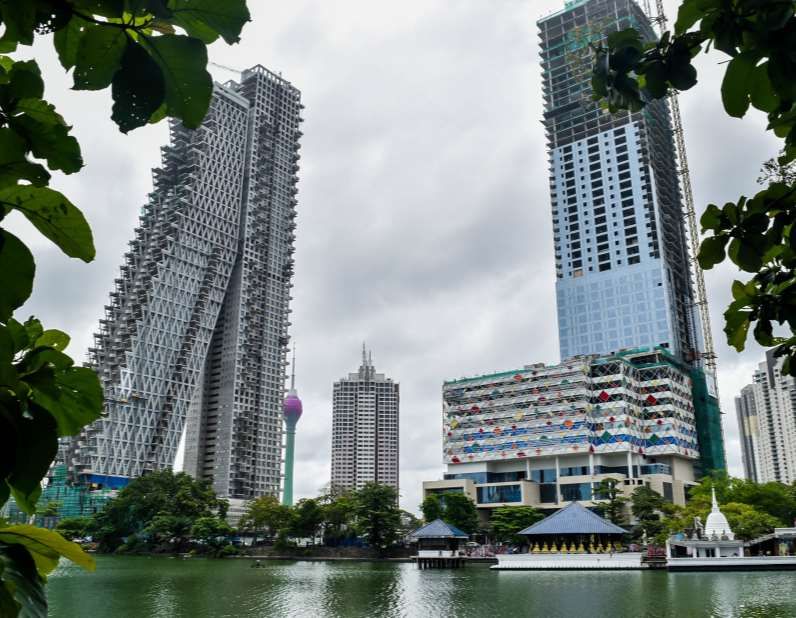
Why invest in Sri Lankan real estate
 Gross Domestic Product from agriculture, forestry and
 fishing- 2017

                                                                    Marine fishing and Marine
                                                                    Aquaculture
                                                                    Oleaginous Fruits
                                        16%

               31%                                                  spices, aromatic, drug and
                                                                    pharmaceutical crops
                                                    8%              Tea (Green leaves)
                            639,273
                              Mn                                    Vegetables
                                                  10%
                                                                    Animal Production
                8%
                                          10%                       Rice
                       9%
                                 8%
                                                                    Other

                                                                  Source: Department of Census and Statistics

                                                                                                                Industry and Services activities
                                                                                                                contributed positively to economic
                                                                                                                growth even in the backdrop of
  Gross Domestic Product from industries- 2017                                                                  spillover effects from subdued
                                                                                                                agriculture performance.

                                                                            Construction
                                              27%
                30%                                                         F&B and tobacco

                                                                            Textiles and leather
                            2,492,286                                       products
                               Mn                                           Mining and quarrying

                 9%                                                         Other activities
                                            22%

                          12%

                                                                  Source: Department of Census and Statistics

 The industries sector grew only by 3.9% in 2017, when compared to 5.8% in 2016. Construction
 activities grew at a slow pace of 3.1% in 2017, when compared to 2016 which indicated a growth of
 8.3%, This slowdown in construction activities was reflected in cement production and imports.
 Mining and quarrying activities also grew at a slower rate of 5.9% in 2017, in value added terms,
 compared to 14.4% growth in 2016. Manufacturing activities grew by 3.9%, in value added terms, in
 2017, compared to 3.2% growth in 2016 and electricity, water and waste treatment activities had only
 growth of 3.9% in 2017, although in 2016 it had a growth of 10.1%.

          © 2018 KPMG, a Sri Lankan Partnership and a member firm of the KPMG network of independent member firms affiliated with KPMG International
          Cooperative (“KPMG International”), a Swiss entity. All rights reserved.
                                                                                                                                                       10
Gross Domestic Product from services- 2017
The value added by financial, insurance and
Transportation and real estate activities including ownership of
Warehousing dwellings expanded by 7.0% in 2017,
19%
Wholesale and retail trade compared to 9.2% growth recorded in the
31% previous year. Further, wholesale and retail
Financial Services trade activities continued its growth
5,289,227 momentum, recording a 3.8% growth in
Mn 19%
Real estate activities (Incl. 2017, compared to 2.5% growth in 2016. This
Ownership of dwelling) was due to the expansion in external trade
3%
3%
Education amidst the decline in domestic agricultural
3% related trade, particularly due to the severe
12%
10% Healthcare drought conditions that prevailed during the
year.
Professional services
Source: Department of Census and Statistics
Agriculture activities declined by 0.8% in 2017, as opposed to a 3.8%
growth recorded in 2016.
Inflation
The annual average of the National Consumer Price Index (“NCPI”, 2013=100) rose to 7.7% by the end of
2017, compared to 4.0% recorded at 2016. while annual average inflation as measured according to CCPI
(Colombo Consumer price Index – Base 2013) accelerated to 6.6% by the end of 2017, compared to 4.0% at
the end of 2016. However, since January 2018 inflation recorded at 5.8% is on a downward trend, falling to
3.8% in April 2018.
Meanwhile, core inflation remained subdued in the second half of 2017, reflecting the constraint of demand
pressures through the tight monetary policy stance of the Central Bank. Despite the tightening of the
monetary policy, the sharp acceleration in food inflation caused by weather related supply disruptions
resulted in unanticipated upward movements in headline inflation. Also, the revisions of Value Added Tax
(“VAT”) and Nation Building Tax (“NBT”), and the higher commodity prices in the global market contributed
to high levels of inflation.
The moderation in inflation in the first quarter of 2018 and the favorable inflation outlook as well as the
continued negative output gap, compelled the Central Bank to end its policy tightening bias and reduce the
SLFR by 25 basis points on 4 April 2018.
The world bank projects the Inflation to stabilize at mid-single digit levels this year.
NCPI based core inflation declined to 2.7% YoY, by the end of 2017 from
6.7% at the end of 2016. CCPI YoY declined to 4.3% by the end of 2017
compared to 5.8% in 2016.
Source: Department of Census and Statistics, World Bank
© 2018 KPMG, a Sri Lankan Partnership and a member firm of the KPMG network of independent member firms affiliated with KPMG International
Cooperative (“KPMG International”), a Swiss entity. All rights reserved.
11Why invest in Sri Lankan real estate
Foreign Direct Investment of BOI Enterprises (US$ million)
1.9
Agriculture
1.4
247.7
Manufacturing
347.6
211.9
Services
317.8
339.5
Infrastructure
1043.5
0 200 400 600 800 1000 1200
USD Mn
*Including Loans
2016 2017 Source: Central Bank of Sri Lanka
Capital flows
Foreign Direct Investment (“FDI”) inflows including loans to companies registered under the Board of
Investment (“BOI”), amounted to USD 1,710 Million in 2017 as compared to USD 801 Million in 2016,
reflecting a significant YoY growth of 113.5%. The main reason for this increase is due to the infrastructure
projects of USD 1,043 Million, which recorded a growth of 207.4%. FDI inflows in the manufacturing
sector reported a growth of 40.3%, which increased from USD 248 Million in 2016 to USD 348 Million in
2017, whereas FDI inflows in the service sector grew by 50%, recording a USD 319 Million compared to
the previous year.
Sri Lanka’s gross official reserve position improved to USD 8.0 Billion in 2017 from USD 6.0 Billion in the
previous year, while short-term liabilities in the form of swaps with banks were reduced to USD 1.5 Billion
by the end of 2017 from USD 2.5 Billion in 2016. The overall balance of payments (“BOP”) recorded a
surplus of USD 2.1 Billion in 2017 after recording a two year deficit. This was due to the significant inflows
to the financial account over the year.
The gross external reserves are currently at a healthy state of USD 9.1 Bn. The inflows of USD 250 Million
Extended Fund Facility programme with the International Monetary Fund in early June and also a USD 585
Million as the final payment on the long lease of the Hambantota port which is expected during June 2018,
and the 8 year USD 1.0 Billion syndicated loan from China Development Bank in mid June 2018, are
expected to boost the current robust level of reserves.
Colombo Port City which is a USD 15 Billion project will attract a significant amount of FDI in 2018 and
beyond. This would attract further foreign investments for core and peripheral services.
As per the Vision 2025 of the GoSL, the Government wishes to build a conducive environment for FDI with
its fiscal and policy reforms in order to capitalize on Sri Lanka’s strategic trade location, skilled workforce,
growing disposable income and a positive macroeconomic outlook.
© 2018 KPMG, a Sri Lankan Partnership and a member firm of the KPMG network of independent member firms affiliated with KPMG International
Cooperative (“KPMG International”), a Swiss entity. All rights reserved.
122. Strategic importance
Major shipping routes connecting South Asia, Far East and the Pacific with Europe and America
Close proximity to emerging Southeast Asian economies and Middle Eastern countries
Strategically located next to the fast growing India
Strong air connectivity and a tourism hotspot
Part of the One Belt, One Road initiative
Strategic location of Sri Lanka -
Works as an advantage when being considered as a strong logistical hub. Through PPP’s, the government
will expand port infrastructure and related services, including the East and the West Terminals at the
Colombo port. The changes to the Customs Act and other enhancements, will allow Sri Lanka to develop
as a logistical hub more efficiently through digitalization.
Source: Annual Report 2017 - Central Bank of Sri Lanka, Board of Investment of Sri Lanka
© 2018 KPMG, a Sri Lankan Partnership and a member firm of the KPMG network of independent member firms affiliated with KPMG International
Cooperative (“KPMG International”), a Swiss entity. All rights reserved.
13
13Why invest in Sri Lankan real estate
3. Conducive business environment
The Ease of Doing Business Index and the
Index of Economic Freedom for 2018
indicate that Sri Lanka is more conducive
to business operations compared to many
of its regional peers. The Ease of Doing
Business Index indicate better, usually
simpler, regulations for businesses and Sri Lanka
stronger protections of property rights. The 111
Economic Freedom Index shows the level
of freedom of a country without
intervention from the government or
economic authorities affiliated to the
Thailand 26 Cambodia 135
government. The combination of these is
Myanmar 171 Bangladesh 177
the cornerstone of an economy moving
forward in the correct direction. A positive
Ease of doing Business Index 2018 World Rank by World Bank
business environment injects confidence
into the investors and the business Sri Lanka has been ranked 111 of 180
community and works in a beneficial way
to an economy
countries in the Index of Economic Freedom
for 2018 by the Heritage Foundation
*Index of Economic Freedom measures the pro-business
policy environment of a country
4. Favorable government policies
Double Condominium
Repatriation Transparent Secured Bilateral taxation ownership on
of capital legal and Foreign investment avoidance freehold basis
and profits regulatory investment agreements agreements for foreign
permitted framework policies 28 countries (38 nationals
countries) permitted
© 2018 KPMG, a Sri Lankan Partnership and a member firm of the KPMG network of independent member firms affiliated with KPMG International
Cooperative (“KPMG International”), a Swiss entity. All rights reserved.
14
145. Infrastructure development
Megapolis development plan
The Megapolis is the development direction for the Western Region, providing the framework for planning
regulations that will guide urban development in the region in the medium to long run. According to this
Master plan, the area proposed to be developed spans across the three administrative districts of Colombo,
Gampaha and Kalutara, and covers a total land area of 3,684 Sq.Km. The Western Province is the main
contributor to the economy. It is also home to the commercial capital, Colombo, which has a rich history of
being a maritime and trading hub.
The megapolis intends to minimize the negative effects of high urbanization within these areas, as the
population is expected to grow to 9 Million by 2030 driven by the projected economic growth in the
province. The megapolis aims to further improve the social and economic cohesion and support a more
sustainable development, by emphasizing collaboration on important policy issues with infrastructure
investment and facilitating economic growth through job creation
There are over 150 development projects identified under the Western Region Megapolis plan. The number
will likely grow as projects are bound to evolve, given the mega nature of the development initiatives. These
projects are identified within the planning areas as depicted on the right.
relating to traffic congestion, lack of housing, solid waste disposal etc.
Colombo core Science and
technology city
Airport city Plantation city
Logistic city Colombo
intermediate zone
Mihirigama industrial Southern coastal
city belt
Horana industrial city Forest city
Gampaha residential Northern coastal
township belt
Muturajavela conservation
and tourism
Source: Ease of doing Business Index 2018 – World Bank, Index of Economic Freedom for 2018 - Heritage
Foundation, Board of Investment of Sri Lanka, Ministry of Megapolis and Western Development
© 2018 KPMG, a Sri Lankan Partnership and a member firm of the KPMG network of independent member firms affiliated with KPMG International
Cooperative (“KPMG International”), a Swiss entity. All rights reserved.
15
15Why invest in Sri Lankan real estate
Improvement in external and internal connectivity
RTS 1 – Fort > Kollupitiya > Bambalapitiya > Borella > Union place > Maradana (15km)
RTS 2 – Fort > Maradana > Mattakuliya / Peliyagoda (11.5km)
RTS 3 – Dematagoda > Borella > Kirulapona > Havelock City > Bambalapitiya (10km)
RTS 4 – Borella > Battaramulla (10km)
RTS 5 – Battaramulla > Kottawa via Malabe (9.6km)
RTS 6 – Malabe > Kaduwela (6km)
RTS 7 – Peliyagoda > Kelaniya > Kiribathgoda > Mahara > Kadawatha (10km)
© 2018 KPMG, a Sri Lankan Partnership and a member firm of the KPMG network of independent member firms affiliated with KPMG International
Cooperative (“KPMG International”), a Swiss entity. All rights reserved.
16
16International airports
Domestic airports
Jaffna
International seaports
Domestic seaports
Existing expressways
Proposed expressways
Expressways under construction
Thalaimannar
Existing highway
Proposed Light Rail Transit
Existing railway
Proposed electrification railways
Proposed railways
Trincomalee
Anuradhapura
Puttalam
Batticaloa
A 3
Ampara
Kandy
Avissawela
Badulla
Wellawaya
Ratmalana Horana
Kataragama
Galle
Matara Hambantota
Source: Ministry of Megapolis and Western Development, Ministry of Transport and Civil Aviation, Road Development Authority
© 2018 KPMG, a Sri Lankan Partnership and a member firm of the KPMG network of independent member firms affiliated with KPMG International
Cooperative (“KPMG International”), a Swiss entity. All rights reserved.
17
17Why invest in Sri Lankan real estate
5. Infrastructure development
Following 2009, the Sri Lankan Government focused on providing Colombo with an infrastructure facelift.
Many existing buildings were renovated, whilst new developments also came up to facilitate recreational
needs and commercial and retail spaces needs.
TRACE Expert City
The one time Tripoli Market in Pettah, Colombo is
to be converted to an Information Technology (“IT”)
park, attracting a range of IT related companies
under an Urban Development Authority (“UDA”)
project. A 10 acre block of land, with three separate
buildings, each costing LKR 450 million, has been
rented out to IT related firms.
Dutch Hospital shopping precinct
The Dutch hospital has been converted into a
modern shopping arcade, housing outlets dealing
in international as well as local brands. It also
contains restaurants that provide dine-in facilities.
© 2018 KPMG, a Sri Lankan Partnership and a member firm of the KPMG network of independent member firms affiliated with KPMG International
Cooperative (“KPMG International”), a Swiss entity. All rights reserved.
18Arcade – Independence Square
The Arcade – Independence Square offers
entertainment, shopping, leisure and dining to please
the requirements of an entire family. A portfolio of
brands are present at the Arcade and many different
restaurants, theatres and entertainment opportunities
have been laid.
Race Course development
The Old Race Course has been converted into a
shopping arcade, which has the capacity to
accommodate 6 shops of approximately 1,720 sq.
ft. each. The Development cost LKR 126 Million.
© 2018 KPMG, a Sri Lankan Partnership and a member firm of the KPMG network of independent member firms affiliated with KPMG International
Cooperative (“KPMG International”), a Swiss entity. All rights reserved.
19Why invest in Sri Lankan real estate
Renovation of the former Auditor General’s Office
The former Auditor General’s office located at
Torrington Square in Colombo 7 facing Bauddhaloka
Mawatha, has been renovated and converted for
suitable commercial purposes, by the UDA.
Renovation beatification of Colombo
Rehabilitation of roads, parks, commercial centers and
recreational facilities to provide a high standard of
living and working environment for urban societies.
Constructing pedestrian-friendly high quality
pavements along city streets, while ensuring
cleanliness of the city.
© 2018 KPMG, a Sri Lankan Partnership and a member firm of the KPMG network of independent member firms affiliated with KPMG International
Cooperative (“KPMG International”), a Swiss entity. All rights reserved.
20
20© 2018 KPMG, a Sri Lankan Partnership and a member firm of the KPMG network of independent member firms affiliated with KPMG International
Cooperative (“KPMG International”), a Swiss entity. All rights reserved.
21Why invest in Sri Lankan real estate
On-going development initiatives
The Beira Lake development
The Beira Lake was once in a neglected state and awaited attention for several decades. According to a
study completed in 1996, the authorities came up with the Beira Lake Restoration Master Plan to make
this water body a big attraction in the city of Colombo. 27 hectares of the Beira belong to the Sri Lanka
Railway Department and 26 hectares belong to the warehouses.
A new development plan hopes to clear away all nearby slum dwellings and control the chaos, which
prevails around the area and create a picturesque place for both locals and tourists. Under the five
categories, the improvement of all land around the lake will control pollution around the lake, incorporate
the safety of nature during the process of development, safeguard the lake and bring in suitable events
for both local and foreign tourists to enjoy and focus on their livelihood.
© 2018 KPMG, a Sri Lankan Partnership and a member firm of the KPMG network of independent member firms affiliated with KPMG International
Cooperative (“KPMG International”), a Swiss entity. All rights reserved.
22
22The Lotus Tower
The Lotus Tower will offer facilities to enhance the digital infrastructure of Sri Lanka. An investment of
USD 104.3 Million, funded by Chinese EXIM bank, the tower is 350 meters tall. It will be the tallest
structure in the entire SAARC region and would also serve as a major tourist attraction.
The first and second floors of the tower, located at 215 meters and 219.8 meters, are to be used for TV
and radio broadcasting. The tower will be able to accommodate, 50 radio broadcasters, 20
telecommunication service providers and 50 television broadcasters. The major draw would be the
revolving restaurant on the top floor which would do one round in 90 minutes.
Source: Ministry of Megapolis and Western Development, Media Releases
© 2018 KPMG, a Sri Lankan Partnership and a member firm of the KPMG network of independent member firms affiliated with KPMG International
Cooperative (“KPMG International”), a Swiss entity. All rights reserved.
23
23Real estate demand drivers in Sri Lanka
1. Population growth
24 Mn
1.1%
2030
21.4 Mn
Expected annual growth rate
2017
Population in Sri Lanka stood at 21.4 Million in 2017 and is anticipated to rise to 24 Million by 2030
indicating a population growth rate of 1.1%. At present the highest population is seen in the Western
Province, which is approximately 29% of the total population. The Colombo District alone accounts for
11% of the entire population. The present population density of the Colombo District of 3,495 people
per Sq. Km., is expected to grow up to 5,722 people per Sq. Km. by 2030.
2. Fast urbanization
31.6%
2030
18.5%
0.3% 3 - 4%
2014 Present 2030
16.3%
2001
Urbanization rate Urbanization growth rate
Sri Lanka has the lowest urbanization rate and is on par with Nepal in the South Asian Region as per the
2014 World Bank Data Base. However, Sri Lanka may be among the 5 peers which may have hidden
urbanization trends. The Government of Sri Lanka expects the urbanization growth rate to increase from
0.3% to 3 - 4% in the next 15 years, to reach an urbanization rate of 31.6% by year 2030.
© 2018 KPMG, a Sri Lankan Partnership and a member firm of the KPMG network of independent member firms affiliated with KPMG International
Cooperative (“KPMG International”), a Swiss entity. All rights reserved.
24
243. Housing requirement
New requirement 1,000,000
Replacement 500,000
Total 1,500,000
5 Mn 6 Mn
2015 2030
100,000 units per annum to
fill the housing gap
4. Growth in tourism
2.2Mn 4.5Mn
Expected Number of Arrivals by 2016 Expected number of arrivals by
(Achieved 2.0 Mn Arrivals) 2020
2014 2015 2016
160.8 164.1 168.2
Average spending per tourist per day (inclusive of accommodation)
Tourism as an industry in Sri Lanka has grown at a fast pace, and has been a key contributor to the
country’s economy in the post conflict era. Tourist arrivals have been on the rise and the average
spending per tourist per day has also risen on an year – on – year basis. With ambitious targets for the
overall sector in the future, with business travelers, high spending tourists and budget travelers, more
accommodation facilities and demand for retail space will be on the rise.
Source : Department of Census & Statistics, Annual Report 2017 - Central Bank of Sri Lanka, World Urbanization, Prospects 2014, UN
© 2018 KPMG, a Sri Lankan Partnership and a member firm of the KPMG network of independent member firms affiliated with KPMG International
Cooperative (“KPMG International”), a Swiss entity. All rights reserved.
25
25Real estate demand drivers in Sri Lanka
5. Growth in household income and per Capita Income
Rise in average household income per month
Annual growth
Annual growth 8.5%
Annual growth 11.5%
14.6%
LKR LKR LKR LKR
35,496 45,878 56,430 66,023
2009/10 2012/13 2015/16 2018/19 (P)
Increase in 40.2% 26.9% 15.2%
estimated average
household
income increase
(2013 – 2016)
Rural sector Urban sector Estate sector
Rise in per Capita Income (US$)
Increasing Per Capita Income
and Household Income will
likely lead to change in
lifestyle, demanding more
quality products and services 2,057 4,065 5,075
and hence the market place
will change to cater to this
demand.
2009 2017 2020 (P)
(P) - Projected
Source : Department of Census & Statistics, Annual Report 2017 - Central Bank of Sri Lanka, Household Income and Expenditure Survey 2016
© 2018 KPMG, a Sri Lankan Partnership and a member firm of the KPMG network of independent member firms affiliated with KPMG International
Cooperative (“KPMG International”), a Swiss entity. All rights reserved.
26
2627
© 2018 KPMG, a Sri Lankan Partnership and a member firm of the KPMG network of independent member firms affiliated with KPMG International
Cooperative (“KPMG International”), a Swiss entity. All rights reserved.
27
Sotheby’sReal estate demand drivers in Sri Lanka
6. Growth in the market, driven through Port City development
Targeted completion
2041
2026 Completion of Medical Centre & Convention & Exhibition
Centre
Completion of 1st Hospitality Plot
2025
Implications
• Positive impact on 2024 Completion of international schools
economic growth with
the increase in FDIs,
tourist arrivals and
spending
• The supply to be added to
the market in a phased
out manner, avoiding a 2023 Completion of International Financial
Centre
risk of oversupply in the
market
• Positive impact on land
prices in the CBD area 2021
Completion of the beach, central park, Marina
2020 Completion of initial infrastructure work
Completion of The Channel
2018 Completion of reclamation work and Marina structures
Commencement of reclamation work
2016
© 2018 KPMG, a Sri Lankan Partnership and a member firm of the KPMG network of independent member firms affiliated with KPMG International
Cooperative (“KPMG International”), a Swiss entity. All rights reserved.
28
28World class facilities and amenities will be provided
International
Financial
Centre
International Top
Medical International
Centre Schools
Convention &
Retail
Exhibition
Destination
Centers
Integrated
Resorts & Marina
Theme Park
World Class
Hospitality
Total investment: USD 15 billion Phase 1
Expected city population 250,000 Total saleable land: 58 Ha.
Creating over 83,000 new job opportunities Total gross floor area: 2.57 million sq. mile
Total reclaimed land: 269 Ha.
Total saleable land: 178 Ha.
Total gross floor area: 5.6 million sq. mile
Phase 2
Total saleable land:117 Ha.
Total gross floor area: 2.93 million sq. mile
Source: CHEC Port City Colombo
© 2018 KPMG, a Sri Lankan Partnership and a member firm of the KPMG network of independent member firms affiliated with KPMG International
Cooperative (“KPMG International”), a Swiss entity. All rights reserved.
29
29Investing in Sri Lanka
Most countries have restrictions in place for ownership of property by
foreigners.
What is the situation in Sri Lanka?
Foreign ownership - Leasehold
• Leasehold ownership of property could be taken for a maximum tenure of 99
years
• Notarial execution and registration of lease agreement is a requirement
Foreign freehold ownership of property is prohibited under The Land (Restriction
on Alienation) Act. However freehold ownership is allowed;
• Above the fourth floor of a condominium property
• Companies incorporated in Sri Lanka with less than 49% (direct or indirect) foreign
shareholding
Sotheby’s
© 2018 KPMG, a Sri Lankan Partnership and a member firm of the KPMG network of independent member firms affiliated with KPMG International
Cooperative (“KPMG International”), a Swiss entity. All rights reserved.
30Sotheby’s
Open an authorized Inward Investment Account (IIA) through a bank. This allows to
repatriate money from Sri Lanka. This must be done with one of the licensed banks in Sri
Lanka
Other tax on Professional fees Stamp Duty on
transactions on transactions transactions
•Capital Gains Tax (“CGT”) •Legal Fees would range •For transfer of immovable
will be charged on the from 0.5% to 3% of the property, the stamp duty
gain arising from transaction value. rate is LKR 3 for every
realization of an •Valuer’s fee varies with LKR 100 or part thereof
investment asset at the the transaction value and where the value of
rate of 10%. CGT will only is calculated according to property is LKR 100,000 or
arise, if the net cost of the the approved fee scale by less and LKR 4 for every
asset accrues a gain to the Institute of Valuers LKR 100 or part thereof on
the owner of the asset. Sri Lanka (“IVSL”) the balance when the
The gain is calculated on •Brokers Fee would be value exceeds LKR
the consideration received generally 3% to 5% of 100,000
for the asset or liability the transaction value •For lease instruments, it is
exceeding the cost of the LKR 10 for every LKR
asset. The cost of the 1,000 or part thereof of
asset would be the the aggregate lease rental
market value of such an
asset at 30th September
2017.
© 2018 KPMG, a Sri Lankan Partnership and a member firm of the KPMG network of independent member firms affiliated with KPMG International
Cooperative (“KPMG International”), a Swiss entity. All rights reserved. 31High end condominium market in Colombo
Why Colombo?
• Fast growing commercial hub in the region
• Density of population in Colombo City is
expected to double over the next 15 years
• Service industries such as Hospitality, Financial
and IT have seen tremendous growth through
the entry of prominent global players
• 11% of the country's population live in the city
of Colombo
• Home to a number of private companies and
Government Institutions and busiest port in
Asia
• 40% of GDP is from the Western province
• Growing pool of expatriates
• Quality of Life
• Multi ethnic identities
• Increasing demand for residential and
commercial space
Presence of
International hotel chains – Hilton, Movenpick, Shangri La, Sheraton, Marriot, RIU, Taj
World renowned banks - HSBC, Citi, Standard Chartered, Deutsche
IT companies– Virtusa, WSO 2
© 2018 KPMG, a Sri Lankan Partnership and a member firm of the KPMG network of independent member firms affiliated with KPMG International
Cooperative (“KPMG International”), a Swiss entity. All rights reserved.
32Price points
Super luxury Luxury Luxury - Suburban
Extreme luxury Comfort and elegance Highly expensive
1 unit per floor 2 – 4 units per floor 8 – 12 units per floor
(USD 400 to USD 550) (USD 200 to USD 399) (USD 120 to USD 199)
6,827
Apartment units to be added
in to the market by 2020
Local investors Local end users Sri Lankan expatriates Institutional investors
61% 17% 18% 4%
Source: KPMG Research, Sotheby’s
© 2018 KPMG, a Sri Lankan Partnership and a member firm of the KPMG network of independent member firms affiliated with KPMG International
Cooperative (“KPMG International”), a Swiss entity. All rights reserved.
33High end condominium market in Colombo - Secondary
Investing in condominiums
Primary Secondary
Drawing board Year 1 - 3 3rd Year onwards
to
completion From the 1st year up to the The historical projects have
3rd year after completion of seen an average price
Average a project, there is a 40% - 45%
increase of 10% after the
3rd year.
20% increase in price
price increase historically.
For an investor entering the For an investor entering the
primary market it is 10% secondary market it is 15% ROI
ROI per annum. per annum.
Rental yields
ROI
17% For an investor entering the primary market, the rental
yields on historical average figures have shown 9% per
per annum.
annum For an investor entering the secondary market, the rental
yields on historical average figures have shown 5% to 7%
per annum.
Entering at the drawing
board stage and holding
the investment for a
couple of years and exiting
Tenant Profiles
Local end users Local tenants Foreign professionals Foreign tourists
19% 13% 67% 1%
Source – Department of Census & Statistics, Annual Report 2017 - Central Bank of Sri Lanka, Sotheby’s
© 2018 KPMG, a Sri Lankan Partnership and a member firm of the KPMG network of independent member firms affiliated with KPMG International
Cooperative (“KPMG International”), a Swiss entity. All rights reserved.
34
34Appetite for beach front properties
Approximate average land prices of the beach front properties
(South & East coasts)
10
9
8
7
1 6
2345
Demand for beach 1. Galle – LKR 1,500,000
front properties are 2. Weligama – LKR 1,300,000
mainly from leisure
related businesses and 3. Matara – LKR 1,300,000
property developers 4. Dickwella – LKR 650,000
5. Tangalle – LKR 450,000
6. Hambantota – LKR 250,000
7. Arugam Bay – LKR 300,000
8. Komari – LKR 100,000
9. Kalkudah – LKR 180,000
10. Trincomalee – LKR 150,000
Source: KPMG Research
© 2018 KPMG, a Sri Lankan Partnership and a member firm of the KPMG network of independent member firms affiliated with KPMG International
Cooperative (“KPMG International”), a Swiss entity. All rights reserved.
35
35Demographics of Colombo district
699 3,417
Sq. Km per Sq. Km
2.4 Mn
Total land Population
mass density in 2015
Total population in
2015
Colombo district profile
Zoning of Colombo district
Land values are comparatively
Major financial institutions &
high, due to the commercialized
commercial establishments
nature of the area
Approximately 1 Million people
Five star hotels, global retailers & commute daily to the city mainly for
luxury condominiums work, business or other purposes
Colombo 01, 02, 03 & 04 are
considered to be the Business Hubs
Tier 1 Suburban Tier II Suburban
• Kolonnawa, Rajagiriya, Kotte, Battaramulla,
Colombo 05 – 15 generally consists of Thalawathugoda, Malabe, Kaduwela
a mix of commercial and residential • Nugegoda, Maharagama, Pannipitiya, Kottawa
properties • Dehiwala, Mount Lavinia, Rathmalana, Moratuwa
© 2018 KPMG, a Sri Lankan Partnership and a member firm of the KPMG network of independent member firms affiliated with KPMG International
Cooperative (“KPMG International”), a Swiss entity. All rights reserved.
36Appetite for prime land in and around Colombo
Growth in Colombo’s land prices (2016 – 2018)
20%
Colombo 15
10%
Colombo 14
16% 9%
Colombo 13 Colombo 12
8%
8%
Colombo 11 Colombo 9
Colombo 1
8%
Colombo 10
17%
6%
Land price per perch (LKR Mn) Colombo 2
2012 2016 2018 Colombo 8
Colombo 7
Colombo 1 10.0 15.5 18.0 Colombo 3 17%
7%
13%
Colombo 2 7.0 10.5 14.0
Colombo 3 5.0 12.0 15.0
Colombo 5
Colombo 4 4.0 11.0 13.0
Colombo 4 8%
Colombo 5 3.5 7.7 9.0 9%
Colombo 6 3.0 6.5 8.0
Colombo 7 6.0 12.2 14.0
12%
Colombo 8 4.4 6.0 8.0 Colombo 6
Colombo 9 2.0 6.0 7.0
Colombo 10 4.0 7.1 8.0
Colombo 11 6.0 16.1 20.0
Colombo 12 4.0 9.3 11.0
Colombo 13 2.5 5.3 7.0
Colombo 14 1.5 4.2 5.0
Colombo 15 0.8 2.5 3.5
Source: KPMG Research
© 2018 KPMG, a Sri Lankan Partnership and a member firm of the KPMG network of independent member firms affiliated with KPMG International
Cooperative (“KPMG International”), a Swiss entity. All rights reserved.
37How KPMG Real Estate Advisory can help you
KPMG’s Real Estate Advisory is committed to advising corporate institutions and individuals in identifying,
evaluating real estate opportunities and enhancing returns on real estate investments. With a broad network
built, working with over 1100 businesses and keeping abreast of changing market dynamics, the firm
advises clients on a range of options and assists in executing a client’s real estate strategies with appropriate
structures.
The Real Estate Advisory Practice provides advise on;
• Advise on structuring, financing and sale-leaseback services pertaining to real estate transactions
• Analysis and valuation of real estate investments and portfolios
• Market studies and project feasibility studies
• Project management advise to better manage risk and enhance returns from real estate investments
Contact Us
Shiluka Goonewardene Jiffry Mohamed Gihani Hewavitarana
Principal Manager Manager
Deal Advisory Real Estate Advisory Real Estate Advisory
KPMG in Sri Lanka KPMG in Sri Lanka KPMG in Sri Lanka
E: sgoonewardene@kpmg.com E: mohamedjiffry@kpmg.com E: ghewavitarana@kpmg.com
© 2018 KPMG, a Sri Lankan Partnership and a member firm of the KPMG network of independent member firms affiliated with KPMG International
Cooperative (“KPMG International”), a Swiss entity. All rights reserved.
38KPMG Leadership
Reyaz Mihular
Managing Partner
T: +94 11 5426500
E: reyazmihular@kpmg.com
Jagath Perera
Yohan Perera Priyanka Jayatilake Suren Rajakarier Partner, Risk Consultancy
Partner, Audit Partner, Head of Advisory Partner, Head of Audit T: +94 11 5426100
T: +94 11 5426400 T: +94 11 5426401 T: +94 11 5426301 E: jperera@kpmg.com
E: yohanperera@kpmg.com E: priyankajayatilake@kpmg.com E: srajakarier@kpmg.com
Ranjani Joseph Shamila Jayasekara Dulitha Perera Chamara Abeyrathne
Partner, Audit Partner, Head of Tax & Regulatory Partner, Management Partner, Audit
T: +94 11 5426302 T: +94 11 5426503 Consulting & Risk Consulting T: +94 11 5426300
E: ranjanijoseph@kpmg.com E: sjayasekara@kpmg.com T: +94 11 5426101 E: cabeyrathne@kpmg.com
E: dperera@kpmg.com
Thamali Rodrigo Rajesh Rajan
Dhammika Rajapakse Upul Karunaratne
Partner, Audit & Family Partner, Audit
Partner, Audit Partner, Audit
Business Services T: +94 11 5426102
T: +94 11 5426304 T: +94 11 5426303
T: +94 11 5426305 E: rajeshrajan@kpmg.com
E: drajapakse@kpmg.com E: ukarunaratne@kpmg.com
E: trodrigo@kpmg.com
Shameel Nayeem Shiluka Goonewardene Suresh Perera Kamaya Perera
Partner, Accounting Advisory Principal, Deal Advisory Principal, Tax & Regulatory Principal, Advisory
T: +94 72 7313535 T: +94 11 5426403 T: +94 11 5426502 T: +94 11 5426402
E: mshameel@kpmg.com E: sgoonewardene@kpmg.com E: sperera@kpmg.com E: kperera@kpmg.com
© 2018 KPMG, a Sri Lankan Partnership and a member firm of the KPMG network of independent member firms affiliated with KPMG International
Cooperative (“KPMG International”), a Swiss entity. All rights reserved.
39kpmg.com/socialmedia
The information contained herein is of a general nature and is not intended to address the
circumstances of any particular individual or entity. Although we endeavour to provide accurate and
timely information, there can be no guarantee that such information is accurate as of the date it is
received or that it will continue to be accurate in the future. No one should act on such information
without appropriate professional advice after a thorough examination of the particular situation.
© 2018 KPMG a Sri Lankan partnership and a member firm of the KPMG network of independent
member firms affiliated with KPMG International Cooperative (“KPMG International”), a Swiss entity.
All rights reserved.
The KPMG name and logo are registered trademarks or trademarks of KPMG International.
© 2018 KPMG, a Sri Lankan Partnership and a member firm of the KPMG network of independent member firms affiliated with KPMG International
Cooperative (“KPMG International”), a Swiss entity. All rights reserved.You can also read


