Parents' Guide to the - BRYANT School of Arts and Innovation Riverside, CA
←
→
Page content transcription
If your browser does not render page correctly, please read the page content below
Parents’ Guide to the

            BRYANT
    School of Arts and Innovation
            Riverside, CA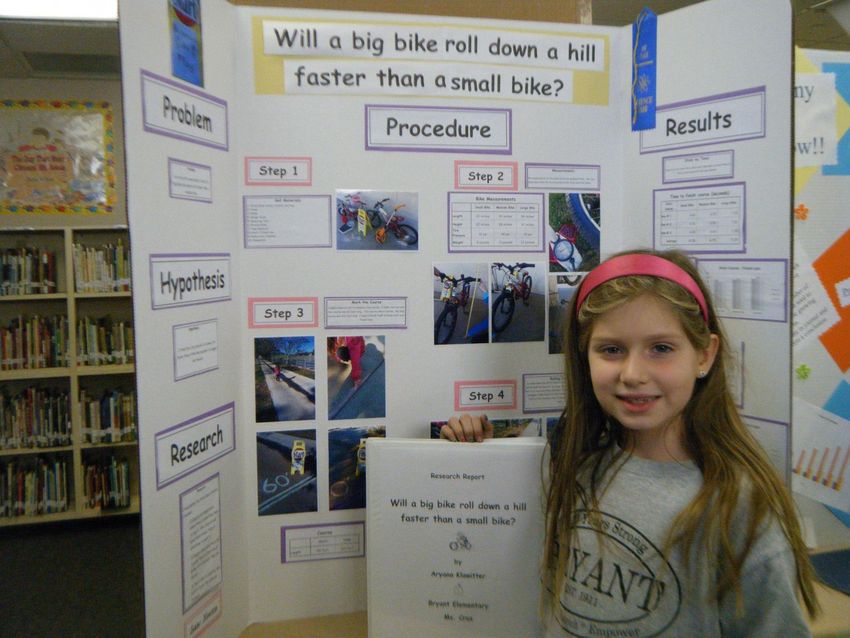
What Is A Science Fair?
A science fair is an opportunity for
students to gain an
understanding, through first hand
experience, of the steps of
scientific investigation.
But mostly it is a time to have
 fun with science discovery!
What are the steps of
       investigation?
Do Research. (Write a paper.)
Name the Problem. (Ask a question)
Develop a Hypothesis.(Make a guess.)
Do the Project Experimentation.
Keep Documentation. (Journal)
Write up Conclusion. (Results)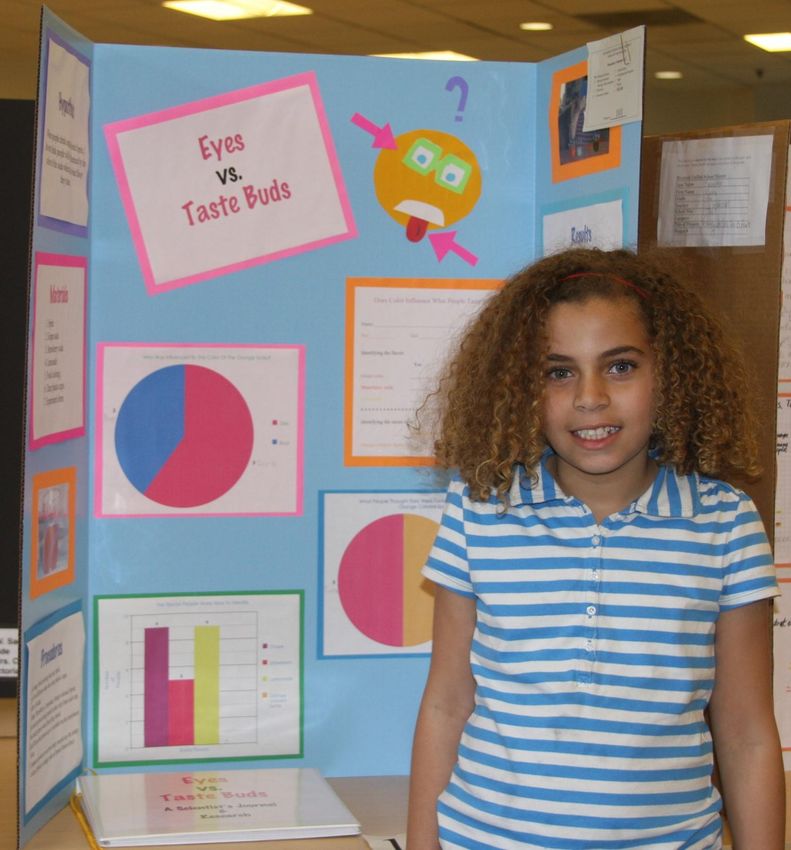
It all starts with research.
Through research you will find a topic
 you find interesting and develop an
        interesting question.
Problem/Question
  State the problem
  simply and clearly.
Examples:
-Which battery will last the
longest?
-What type of music makes
your heart beat faster?
Hypothesis
Write a statement
telling what you
believe will happen
in your experiment.

               Example: I think that the Duracell
               batteries will last longer than the
               Energizer batteries.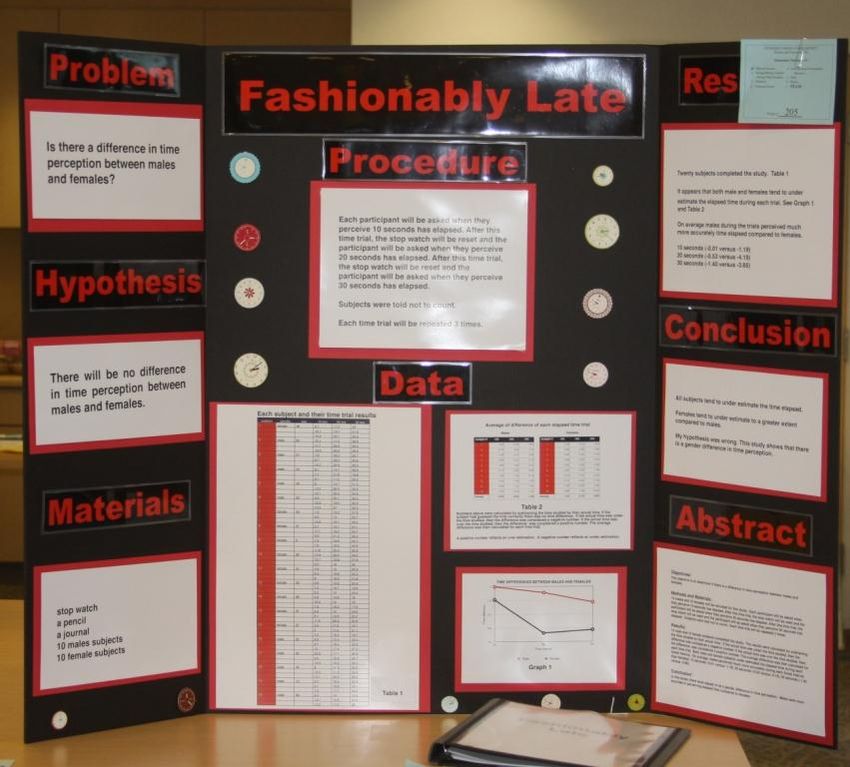
Materials
Neatly list all
supplies used in the
experiment.
Procedure:
Explains what you did
             This should be placed
             in a prominent place
             on your board and
             should be stated
             clearly.
             You may also want to
             include step by step
             photographs of the
             experiment.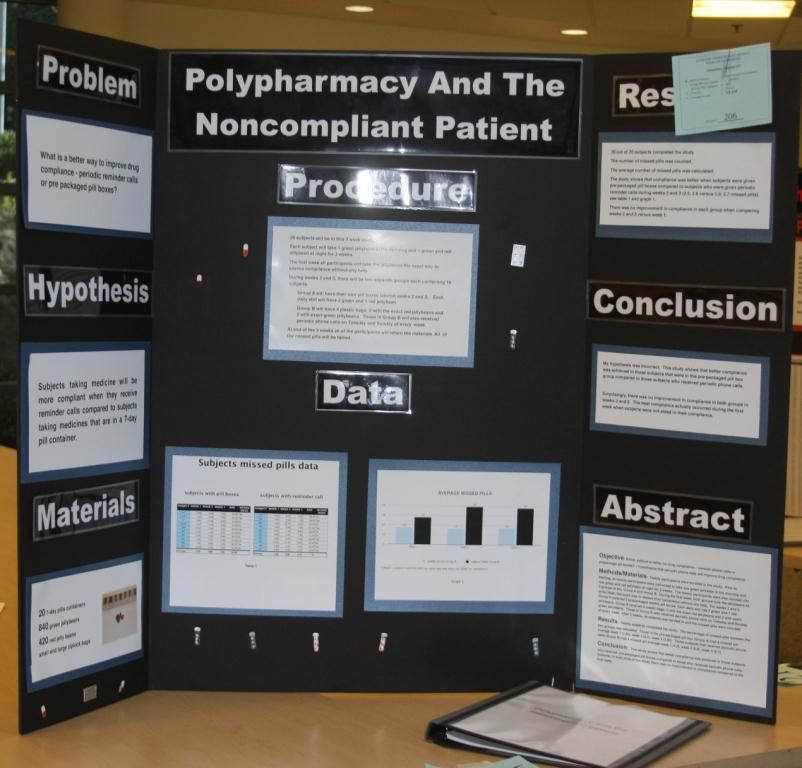
Experimentation
Perform the experiment.

Include in your display items,
photos, or drawing of items used
in your experiment
Documentation
       Keep a journal.
       The journal is a record
       where you explain what
       happens with the
       experiment each day/step.
       The journal is one of the
       most important parts of a
       science project.
       Include an in-depth
       bibliography (that includes
       texts, encyclopedia, primary
       sources, professional
       journals, etc.)
Data
12
10
8
Duracell
6
Energizer
4
Rayzon
2
0
12/4/2004 12/5/2004 12/6/2004
Show your results in graphs, charts,
and in a statement.Conclusion
Your conclusion must be logical, based
on data or observations collected, and
relevant to the problem/hypothesis.
For example:
My hypothesis was incorrect.
Energizer batteries lasted 6 hours
longer than Duracell batteries.Abstract An abstract is a brief overview of all the parts of your project.
Sample Abstract
          What Makes Good Electrical Conductors?

Objectives/Goal: The objective of my project is to determine
  which materials make the best electrical conductors.

Methods and Materials: I used wood, plastic, copper, steel, tin,
  and grass as materials to be tested. I also used a volt/ohms
  meter and the test probes to make my measurements.

Results: The meter I used showed the metals to all be excellent
  conductors and that the plastic and wood did not conduct an
  electrical current.

Conclusions: My conclusion is that the metals I tested are
  excellent conductors of electrical current and that neither wood
  or plastic conducts electricity.
Creating a Display Board
The board tells the whole story of
your experimentation. Be sure to
include each of the following parts,
clearly stated:
Hypothesis
Materials List
Procedure
Journal
Research Report
Graphs, data
Models, visual aids
Results
Conclusion
Abstract
Caution Parents: Allow the
students to complete the board on
their own. Give suggestions to help
guide them. Do not do the project
for them.Project Mistakes •Don't leave large empty spaces on the backboard. •Don't leave the table in front of the backboard empty. Display models (if any), report, copies research, and your journal here.
More Mistakes
•Don't hang electrical equipment on
the backboard so the cord runs
down the front of the backboard.
•Don't make titles hard to read by
using uneven lettering, letters of
different colors, or disorganized
placement of materials.
•Don't hand-print the letters on
the backboard or make mistakes in
spelling words.
Planning Is Important !

Is the project the result of
  careful planning?
  Great projects aren’t
  created overnight.
  Trial and error may take
  time.
Safety First
Does the project meet all safety requirements?
Liquids/chemicals are not to be displayed
 in bottles that might break or spill.
No knives, sharp instruments on displays
Articles of value should not be
left out on your display.
No crystals or molds
No laser devices
No poison
Keys To A Successful Project
 Does the project represent the
 student’s own work?
 Does the project demonstrate the
 student’s creativity and
 resourcefulness?
 Does the project show a solid
 understanding of the topic?
 Does the project include a notebook,
 written record, or final report?
 (Include a bibliography when you use
 someone else’s work.)
 Does the project include a number of
 visual aids?
 Is the project sturdy, neat, and well-
 constructed?
Inland Fair Requirements
Please note additional safety
requirements for Inland competition:
  No animal displays; no stress to animals.
  No tobacco, alcohol, drug related projects
  No living plants or animals allowed.
  No human tissue/blood samples allowed
Judging Criteria:     Entries will be
                       judged on the
                         following:
                    Originality
                    Comprehension of
                    scientific thought and
                    practices
                    Organization and
                    completeness
                    Effort and motivation
                    Clarity
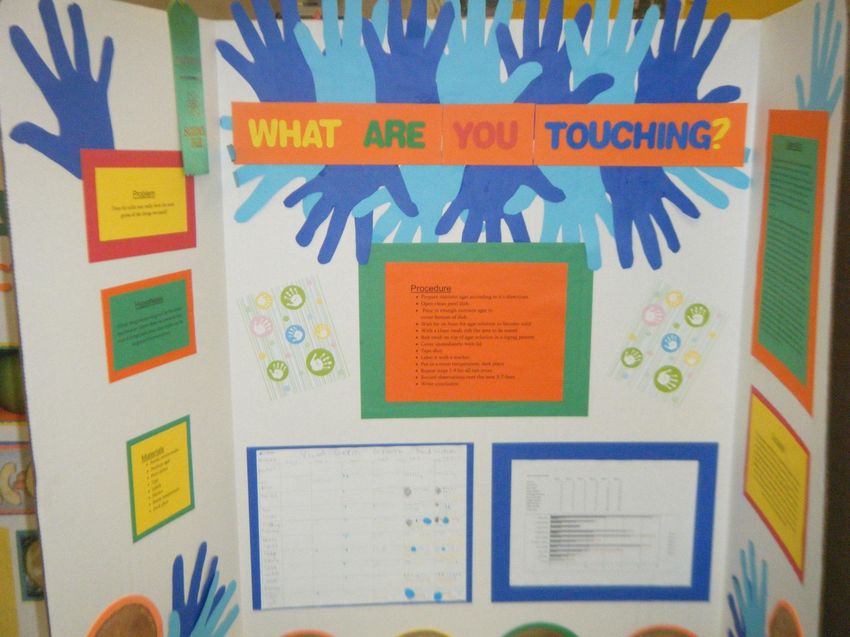
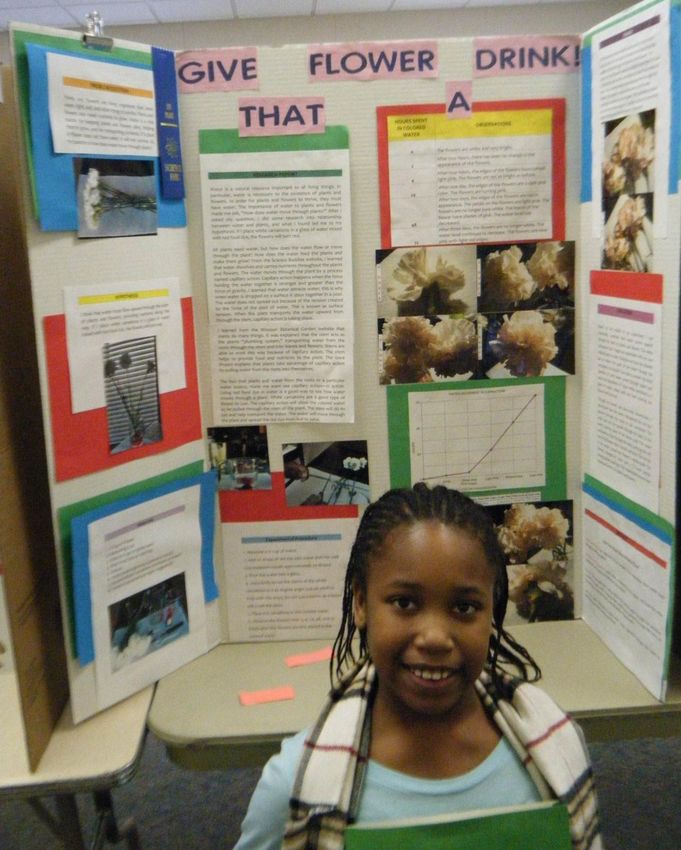
Award Winning Examples!
Emma
(3rd grade)
  Eyes Vs. Taste
       Buds
Katherine
(4th grade)
Fashionably
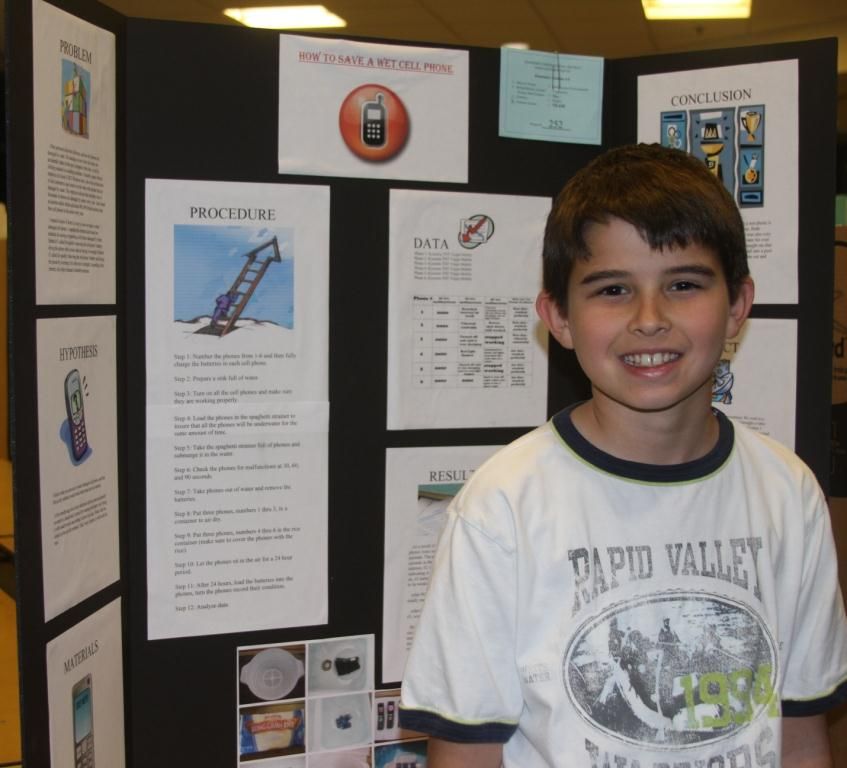
LateJacob (5th grade) How To Save a Wet Cell Phone
Matthew
(5th grade)
Polypharmacy
     and
Noncompliant
   Patients
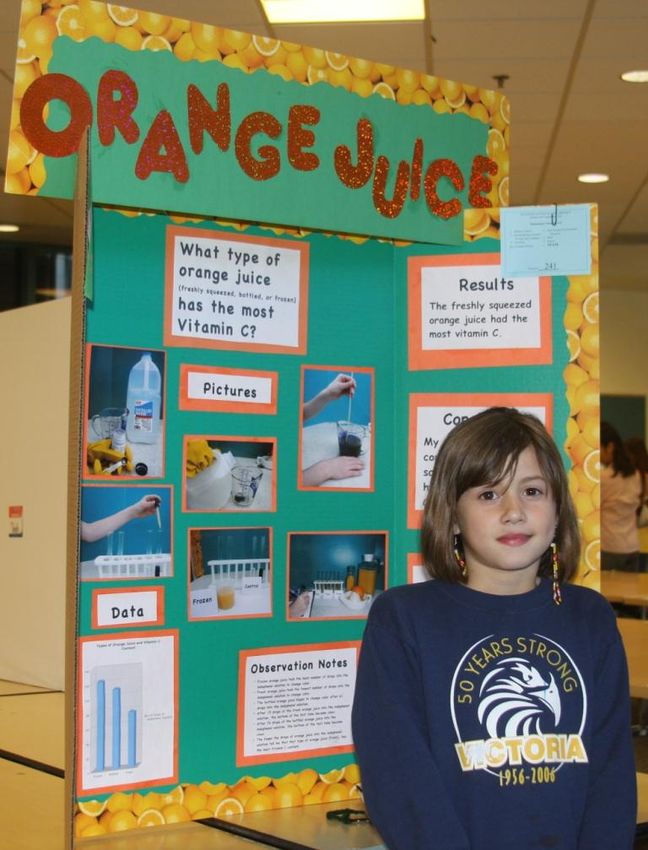
Gabriella
(4th grade)
Orange Juice &
Vitamin CRemember. . .
Do the research. . .
on a project that
interests you.Allow plenty of time for unexpected mistakes.
And most importantly. . .

   HAVE FUN !
You can also read


