PARIS CLIMATE ACTION PLAN - TOWARDS A CARBON NEUTRAL CITY AND 100% RENEWABLE ENERGIES
←
→
Page content transcription
If your browser does not render page correctly, please read the page content below
PARIS CLIMATE
 ACTION PLAN
            TOWARDS A CARBON NEUTRAL CITY
              AND 100% RENEWABLE ENERGIES

An action plan
                  For a fairer
for 2030                           Together
                  and more
and an ambition                    for climate
                  inclusive city
for 2050
Conceptualized by:
City of Paris, Green Parks
 and Environment Urban
          Ecology Agency
            Designed by:
                 EcoAct
            Published:
             May 2018,
    2000 copies printed
on 100% recycled paper
02 EDITOS
54 A RESILIENT CITY
THAT ENSURES A HIGH-QUALITY
LIVING ENVIRONMENT
05 PREAMBLE
6 Paris, 10 years of climate action
56 Air
Improving air quality for better health
61 Fire
9 Towards carbon neutrality
Strengthen solidarity and resilience
11 Creating a shared vision in response to heat waves
12 Zero local emissions 64 Earth
13 Relocation of production and innovation Biodiversity to benefit all parisians
13 Adaptation, resilience and social inclusion 67 Water
14 Three milestones, one urgent need A resource that needs protection
for diversified uses
18 A CARBON-NEUTRAL AND
100% RENEWABLE-ENERGY CITY
70 A CITY THAT IS VIEWED
AS AN ECOSYSTEM
19 Energy
Paris: a solar, 100% renewable-energy city 71 A successful energy transition
and a key player in French renewables is a fair transition
25 Mobility 76 Mobilisation
Paris, the city of shared, active Paris mobilises its citizens and stakeholders
and clean transport 81 Governance of the low-carbon transition
34 Buildings
A 100% eco-renovated Paris with
low-carbon and positive-energy buildings
40 Urban planning
84 A CITY THAT MATCHES
ITS MEANS TO ITS AMBITIONS
85 Finance
A carbon-neutral, resilient
A city that is preparing finance for the energy
and pleasant city to inhabit
transition
44 Waste
88 Carbon offsetting
Towards zero non-recovered waste
Paris fosters metropolitan cooperation
and a circular economy in paris
for climate action
49 Food
91 Advocacy
Paris, a sustainable food city
A city that speaks on behalf of cities
95 GLOSSARY
© Jean-Baptiste Gurliat

                                                                                                              Making Paris
                                                                                                      a carbon-neutral city
                                                                                                           powered entirely
                                                                                                       by renewable energy
                                                                                                                   by 2050.

                          ANNE HIDALGO
                          MAYOR OF PARIS

                          C       limate Change is one of the greatest challenges
                                  mankind has ever faced. In this ongoing race against
                                  time, the cities of the world have a key role to play –
                          both as pioneers and prescriber.
                                                                                                  from rich biodiversity to waste recycling. Paris engages in and
                                                                                                  embraces all of them in order to pave the way for a resilient city
                                                                                                  respectful of its environment.

                                                                                                  This is the commitment that I undertake as Mayor of Paris
                          As such in 2015 we, major world-cities united, pledged to tackle        and C40 Chair, vis-à-vis occasional and lifelong Parisians. And
                          climate change during the climate summit for local leaders              bearing in mind that Paris belongs to a basin where diversity is
                          at Paris City Hall, the new climate air and energy Plan of the          enrichment, I am committed to creating local partnerships with
                          city of Paris heralds a strong ambition making Paris a carbon-          rural areas to promote the production of renewable energy
                          neutral city powered entirely by renewable energy by 2050 at            production and short food circuits. For energy transition is a
                          the latest. To achieve this, it is crucial to involve all territorial   tremendous opportunity to reinforce solidarity and reciprocity
                          stakeholders - public and private entities, associations and            among urban and rural dwellers.
                          citizens. Such is the challenge if we want to meet the targets
                          set in the Paris Agreement at COP21.                                    Paris new climate plan will thus create the means of improving
                                                                                                  people’s lives, by better securing their health and well-being,
                          Multiple tools are available to cities to accelerate ecological         and providing them with new perspectives and particularly
                          transition and reduce toxic emissions. There is a large array           jobs. In doing so, it will fulfill Paris’ promise as a city that both
                          of solutions from thermal rehabilitation of buildings to green          breathes and inspires.
                          financing, from soft mobility to sustainable food supply,

                                                                                   2
EDITOS //

CÉLIA BLAUEL
DEPUTY MAYOR IN CHARGE OF ENVIRONMENT, SUSTAINABLE DEVELOPMENT, WATER,
CANALS POLICY AND CLIMATE PLAN

C        limate Change is already at work, taking a heavy
         toll on world population, especially on the most
         vulnerable ones. While the COP 21 – the international
conference on climate change held in Paris in 2015 – contributed
to raising collective awareness, the time has come now for us
                                                                     To meet this objective we will have to be hard on ourselves
                                                                     as we will need to divide our energy consumption by two, to
                                                                     drastically develop renewable energies, to renovate buildings,
                                                                     and to change the way we consume, eat and commute. We
                                                                     must show creativity and innovation at a technical and social
to undertake actions, for this is the greatest challenge mankind     level, and invent new jobs and new forms of solidarity. These
has to face.                                                         ongoing changes provide us with an opportunity to build a
                                                                     more open and fairer city, bridging towards both urban and
As an elected official, I am committed to improving people’s         rural territories and the major cities of the world.
daily lives; I feel it is my duty to present a new climate air and
energy Plan to take up current and upcoming challenges.              Developed with the Parisians and for them, involving the
Embracing a vision of Paris as a carbon-neutral city powered         driving forces of the territory and our neighbours, the Climate
entirely by renewable energy by 2050 requires ambition,              Action Plan invites everyone to commit fully to address climate
inventiveness and boldness. With more than 500 actions               change. We are all affected by this! Let’s act here, tomorrow,
starting as early as today, the climate Plan paves the way           together in favour of Climate.
to achieving zero greenhouse gas emissions by 2050, which
implements the Paris Agreement.

           An opportunity
      to build a more open
            and fairer city.
                                                                                                                                                   © Patrick Sordoillet

                                                                              3
Preamble
THE CLIMATE IS CHANGING,
   THIS IS THE REALITY
    It is influencing our ecosystems,
our cities and our lifestyles here in Paris
    and throughout the entire world.

O
          n 12 December 2015, during the 21st Conference
          of the Parties to the United Nations Framework
          Convention on Climate Change (COP21), 195 States
          adopted the Paris Agreement, which sets out to
limit the average rise in global temperatures to well below
+2°C, and strives to limit the increase to +1.5°C. Thanks
to an unprecedented mobilisation of civil society and
States, this Agreement was reached and entered into force
exceptionally quickly on 4 November 2016.

The international community has sent out a strong signal
to citizens, economic operators and members of civil
society by setting the goal of achieving carbon neutrality
by 2050 and by defining the transition towards a more
environmentally and climate-friendly way of life as a
universally shared vision.

Cities are dynamic ecosystems of our planet. They are
already home to nearly 60% of the world’s population,
generate the most dynamic economic activity and emit
70% of global greenhouse gas emissions.

For the past ten years or so, thanks to their Climate Plans,
cities have become the local leaders of the fight against
climate disruption. At Paris City Hall on 4 December 2015,
over 1,000 representatives of local governments signed
the Paris Pledge for Action which encouraged States to
                                                               © Jean-Baptiste Gurliat / Mairie de Paris

adopt the Paris Agreement but, above all, committed them
to cutting greenhouse gas emissions in their territories
drastically (by 80%), to acquiring 100% renewable energy
resources between now and 2050, and to improving the
resilience of their cities to climate risks, now and in the
future.
// PREAMBLE

                                                                                                                                                                                    © Henri Garat / Mairie de Paris
PARIS,
10 YEARS OF CLIMATE ACTION

                                                                      I
Back in 2007, Paris                                                       n the last 10 years, the carbon footprint2 of the   renovated or are in the process of being reno-
adopted a proactive                                                       city has decreased by nearly 10%. This means        vated, which reduces their energy consumption
                                                                          that the first key step has been made: the          by over 30%.
and ambitious                                                             increasingly steep curves of greenhouse gases
Climate Action Plan                                                                                                           Launched in 2011, the public lighting renovation
                                                                      and atmospheric pollutants have been reversed
                                                                                                                              programme aims to reduce energy consumption
(Plan Climat) with                                                    by the action taken by the City in the framework
                                                                                                                              in this sector by 30% with no decline in the
                                                                      of the first Climate Plans and Air Quality Plans.
a view to reducing                                                                                                            quality of the service provided. Since 2004, a 23%
                                                                                                                              drop in energy consumption has been observed,
greenhouse gas                                                                                                                corresponding to 33 GWh or the equivalent of
emissions in the long                                                 // AN EXEMPLARY LOCAL                                   the energy consumption of the Greater Toulouse
                                                                      GOVERNMENT                                              conurbation. This programme has already
term. In this way, the                                                                                                        enabled a 33% reduction in the greenhouse gas
                                                                      In 2004, the City of Paris began assessing the
City set a reduction                                                  impact of its activities in terms of greenhouse
                                                                                                                              emissions from public lighting.
target of 75% between                                                 gases. In 2006, the Paris local government              At the same time, the City of Paris has facilitated
2004 and 20501 and                                                    published its first greenhouse gas assessment,          the installation of local renewable energy and
                                                                      which revealed the most highly emitting sectors:        energy recovery facilities. Over a 10-year period,
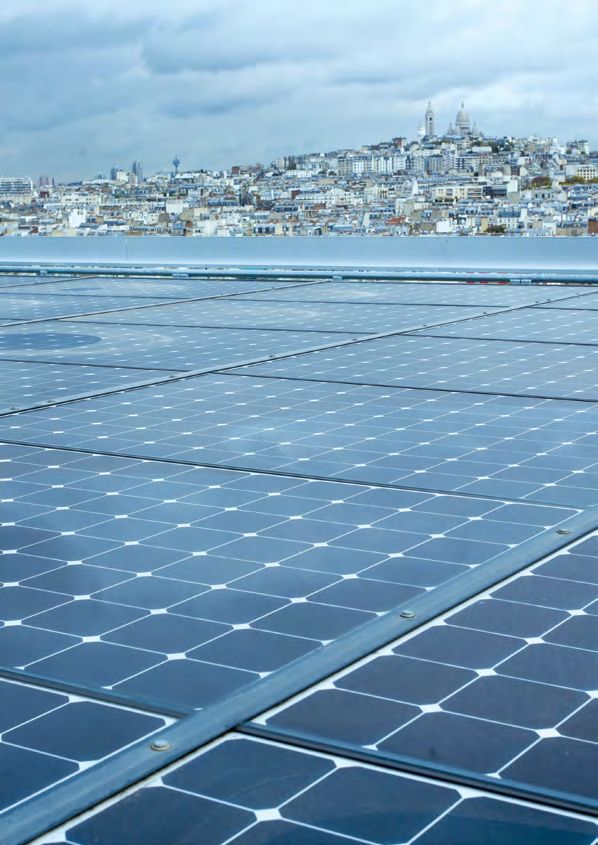
a short-term target                                                   public facilities (56%), public transport (20%)         over 50,000m² of solar panels have been
of 25% by 2020.                                                       and consumer goods (24%). All in all, in 2014, the      installed in the Paris area, including flagship
                                                                      Paris local government’s emissions amounted             projects such as the Halle Pajol (3,500m²), which
                                                                      to less than 2% of the carbon footprint of the          is energy self-sufficient. Since 2015, municipal
                                                                      territory, at 262,000 tCO2/year.                        services have been powered by electricity
                                                                                                                              generated from renewable sources.
                                                                      In 2007, an ambitious programme to renovate
                                                                      public property was implemented, starting with          What we eat matters: French agriculture
                                                                      the renovation of Paris schools and heating             accounts for over 20% of national greenhouse
1- Based on 2004 levels
                                                                      systems. To date, 240 schools have been                 gas emissions. In Paris, the food consumed by
2- Carbon Assessment (Bilan Carbone®) methodology taking
   account of all emissions (direct and indirect) in the Paris area

                                                                                               6
PREAMBLE //
                                                                                                                                                        KEY
                                                                                                                                                      FIGURES
Parisians and visitors generates annual emissions   by electric, hybrid or petrol-powered cars. A
exceeding 4.7 million tCO2, corresponding to        programme to remove diesel-powered vehicles
18% of the area’s carbon footprint. That is why     from the commercial vehicle fleet – including
an ambitious food sustainability programme for      refuse collection lorries – is currently in progress.
catering services in Paris was implemented in
                                                    Sometimes, reducing the territory’s carbon
the 2007 Climate Plan, with a view to reducing
                                                    footprint also means an increase in the local
the carbon footprint of the 30 million meals              government’s footprint due to additional
served annually. By 2016, significant                         investments. Since 2004, new
progress had been made: 17,000 tCO2
avoided and 37.7% of sustainable
                                                Paris
                                          has become
                                                                 separated waste collections have
                                                                  been carried out to improve the
                                                                                                                                                     + 700 km
foods (products derived from the biggest public selective sorting system. This                                                                         CYCLE PATHS
organic farming, local seasonal             purchaser              required the use of additional
products and products with Labels
and certifications) Paris has become
                                       of  organic    foods       vehicles which have increased                                                   CREATION OF THE VÉLIB’
                                            in France (+7,000    the local government’s emissions
the biggest public purchaser of organic
foods in France.
                                                                        tCO2/year) but, in return, have
                                                          contributed to reducing the territory’s
                                                                                                                                                      23,600
                                                                                                                                                SELF-SERVICE BICYCLE-HIRE
To reduce the emissions from its transport          carbon footprint (-50,000 tCO2/year) over the
systems, the Paris local government has adopted     same period, thanks to selective waste sorting
two consecutive Mobility Plans (Plans de            (cardboard, paper, glass, bio-waste, etc.).
Déplacements) that aim to cut greenhouse gas           All of these actions have enabled the local
emissions by over 30% and reduce the associated        government to reduce its emissions by nearly                                                    CREATION OF
atmospheric pollutants. In the last 10 years, the      19% over a 10-year period. However, a proportion
municipal fleet has been reduced by over 15%
and government official cars can no longer be
                                                       of these savings have been offset by the                                                         1,100
                                                       strengthening of the public service in Paris and                                             STATIONS AUTOLIB’
used. In 2015, all of the diesel-powered saloon        an increase in the number of municipal facilities,
                                                                                                                                              SELF-SERVICE ELECTRIC CAR-HIRE
cars and compact cars in the fleet were replaced       accounting for net savings of 2% in 10 years.

// KEY PROJECTS FORMING THE BACKBONE
OF THE LOW-CARBON TRANSITION IN PARIS
Since 2001, a policy of promoting sustainable
mobility and reclaiming public land for active
                                                       the energy consumption of 55,000 dwellings by
                                                       at least 30% by 2020. 36,200 dwellings have
                                                                                                                                                   24 km TRAM LINES
and shared mobility schemes has been                   been renovated to date or are in the process
implemented.                                           of being renovated. In addition to the energy
This has led to a reduction of over 50% for the        savings and reductions in greenhouse gases,
majority of atmospheric pollutants and 39%             the benefits include better thermal comfort for
for greenhouse gases. This policy has resulted
in the development of cycle paths (+700 km),
                                                       the residents in summer and winter, average
                                                       savings of €360/year per household, and the
                                                                                                                                                    50,000 m         2

                                                                                                                                                     SOLAR PANELS
the creation of the Vélib’ self-service bicycle-hire   creation of over 7,500 jobs.
                                                                                                                                                   HAVE BEEN INSTALLED
(23,600 bicycles) and the Autolib’ self-service        To speed up the energy transition in Paris, the
electric car-hire (1,100 stations) schemes in          city and its partners (Météo-France, RATP, the
central and greater Paris, the extension of the        Compagnie Parisienne de Chauffage Urbain and
Métro underground rail lines around Paris, and         EDF) have created the Paris Climate Agency
the creation of 24 km of tram lines.                   (Agence Parisienne du Climat – APC). Since
Buildings are, by far, the biggest consumers           2011, the APC has been an indispensable local
of energy in Paris. Reducing building energy           stakeholder in terms of the support it provides
consumption has become a priority. Since               through renovation projects for residents of                                                    CREATION OF
2008, social housing providers in Paris have
been committed to a programme of reducing
                                                       jointly owned properties, as well as for a large
                                                       number of economic operators.
                                                                                                                                                      + 7,500
                                                                                                                                                           JOBS
                                                                                                     © Guillaume Bontemps / Mairie de Paris

                                                                                                                                                  240 SCHOOLS
                                                                                                                                              & 36,200 DWELLINGS
                                                                                                                                                   HAVE BEEN RENOVATED
                                                                                                                                                   OR ARE IN THE PROCESS
                                                                                                                                                    OF BEING RENOVATED
                                                                               7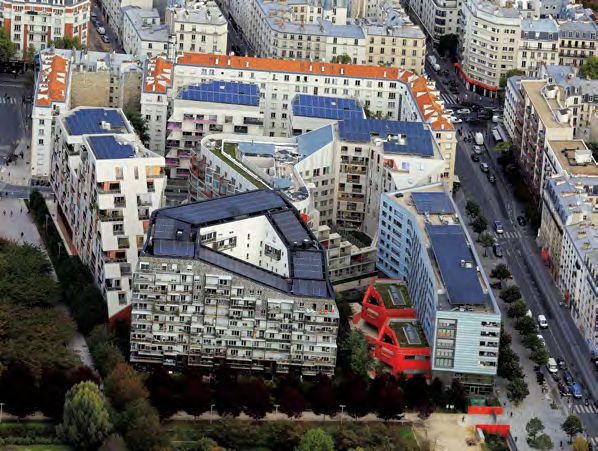
// PREAMBLE

Mobilising economic operators was one of               islands, a programme to promote the greening            comprehensive vision by adopting the first Paris
the priorities of the 2012 Climate Plan which          of Paris has added 70 hectares of gardens open          Resilience Strategy in order to adapt the city
established the Paris Climate Action Charter           to the public. In 2012, an assessment of Paris’s        to climate change, strengthen solidarity and
(Charte Paris Action Climat), enabling large           vulnerability to the impacts of climate change          facilitate inclusion.
and small enterprises to voluntarily join the          was carried out. Its findings confirmed that            Lastly, Paris’s climate actions form part of a global
fight against climate change. To date, over            Paris is relatively robust city in relation to future   approach, which is now enshrined in the Paris
40 entities have signed the Charter and                hazards (storms and flooding, etc.). Nevertheless,      Climate Agreement and shared with many other
committed to reducing emissions by at least            preparations must be made to adapt Paris                stakeholders and territories within the Greater
750,000 tCO2/year by 2020.                             to long periods of extreme heat (health risks,          Paris Metropolitan Area, but also in France,
In total, the territory’s carbon footprint decreased   downgrading of the city’s operations), periods          Europe and worldwide. As climate challenges
by nearly 10% between 2004 and 2014.                   of drought (water resources, river traffic) and         are, by their very nature, cross-border issues,
These encouraging results demonstrate that             flooding (interruptions to urban services). The         they require collective and socially responsible
ambitious and determined public action pays            adaptation strategy, adopted by the City Council        actions at all levels, from local to global. The City
off. To maintain this momentum, the policies           of Paris in September 2015, defines 65 measures         of Paris has developed specific actions intended
undertaken now need to be stepped up and all           to strengthen the territory, reduce the impacts of      to benefit the most vulnerable populations, such
stakeholders in the Paris community (residents,        these hazards, protect Parisians and plan for the       as the City’s contribution to the United Nations’
users, visitors, companies and institutions) need      future to make the city more resilient in response      Green Fund, and is actively involved in numerous
to be involved in the low-carbon transition.           to climate change.                                      local authority networks (Energy Cities, C40, etc.)
The city of Paris is highly sensitive to periods of    In September 2017, the City Council of Paris            in order to give cities a stronger voice in climate
extreme heat. To reduce the impact of urban heat       incorporated this strategy into a more a                diplomacy.

                                                                                                                                                                       © Lorie Eliès / Mairie de Paris

                                                                                8
PREAMBLE //
© Mairie de Paris
TOWARDS CARBON NEUTRALITY
This new Paris Climate Action Plan outlines a common future for a carbon-neutral
city by 2050, which is adapted to extreme climate events and resilient in response
to crises and shocks. It conveys a positive message for a sustainable and equitable
city for everyone.
C
arbon neutrality is one of the fundamental targets of the Paris our ecosystem’s natural capacity to absorb greenhouse gas emissions and
Agreement. It consists of attaining zero net greenhouse gas (or zero the irreducible emissions generated by human activities between now and
net carbon) emissions, which means striking a balance between 2050.
Carbon footprint of Paris in 2014 (million tonnes of CO2)
Greater Paris
(outer ring road)
FOOD CONSUMPTION
Within Paris itself
4,8
(inner ring road)
OUTER PARIS ON ROAD
TRANSPORT
3,4
UPSTREAM
1,5
ENERGY
AIR TRANSPORT MATERIALS
CONSTRUCTION
1,3
PASSENGERS + GOODS
8,7
RESIDENTIAL TERTIARY TRANSPORT WASTE
WITHIN PARIS 0,4
2,1 2,0 1,3 INDUSTRY
0,1
9// PREAMBLE
Carbon reduction pathways of the New Paris Climate Plan
Paris’s greenhouse gas emissions In line with the goals of the Paris Agreement, by the horizon of
(25.6 million tonnes of CO2 in 2014) can be divided 2050, the City of Paris undertakes to:
into two major categories:
R
EDUCE LOCAL EMISSIONS BY 100%,
LOCAL EMISSIONS achieving the goal of zero emissions in Paris.
(6,0 MtCO2 in 2014)
Direct emissions from Paris area related to the energy P
ROMOTE AN 80% REDUCTION IN THE CARBON
consumption of the residential, tertiary/service and FOOTPRINT of Paris compared to 2004 levels and involve all
industrial sectors, city centre transport and the emissions local stakeholders in compensating for residual emissions in
associated with the waste produced in Paris. order to attain the zero net carbon target for the Paris area.
THE CARBON FOOTPRINT OF THE TERRITORY
(6,0+19,6 MtCO2 in 2014)
Local emissions plus the upstream emissions3 produced
prior to energy consumption, emissions associated with the
food and construction sectors, and from transport outside
Paris (including air transport).
MtCO2/year
Halve energy consumption
30 +
100% renewable energy
25
-20%
-40%
20
OUTER PARIS EMISSIONS
15
10
-30%
5 -50% -80%
LOCAL EMISSIONS
0 -100%
COMPENSATION
-5
-10
2004 2009 2014 2020 2030 2050
3- Upstream: transmission and distribution losses, amortization of energy facilities (creation, destruction)
10PREAMBLE //
© Sophie Robichon / Mairie de Paris
CREATING
A SHARED VISION 700
PROPOSALS
This new Paris Climate Action Plan is the result RECEIVED
of a significant, iterative and collaborative process
that began in July 2016 with the publication of the review • P romoting renewables,
of the first 10 years of the Climate Plan. • Dmobility
eveloping active forms of
(walking and cycling),
• Iambassadors
dentifying climate
and student
T
he need for a very broad involvement he forward-looking study entitled “A new era
T climate representatives,
of local stakeholders stems from
the fact that private consumers are
for Paris”6 which outlines one of the possible
trajectories required for Paris to become carbon- • F acilitating the emergence
of new professions such as
responsible for 75% of Paris’s carbon neutral by 2050. neighbourhood eco-managers,
footprint, generated by the activities of economic
operators, Parisians and anyone who travels to
From November 2016 to the end of March 2017,
700 people (citizens, professionals, associations,
• P romoting property sharing
and pooling,
Paris. Mobilising everyone has therefore become experts and City of Paris employees) were • C
reating citizens’ observatories,
•
a major priority in the drafting of this new Plan. mobilised, over 100 hours of debates were E ncouraging fun challenge
Consequently, the consultation undertaken for organised, and 280 proposals were received events (carbon challenges,
the new Paris Climate Plan has been based on from citizens and added to the 300 contributions vegetarian challenges, etc.) and
three cornerstones: from the economic, academic and non-profit conviviality (annual dinners),
The review of the first 10 years of actions4,
sectors. A summary of the consultation7 was
published on 5 April 2017.
• Ensuring the existence
of third-party workplaces
he recommendation from the citizens’
T This has been a crucial period for the development
and teleworking centres,
conference entitled “What individual and
establishing an annual personal
of a shared vision that is receptive to the desires carbon declaration,
•
collective contributions can change our and questions raised by the challenge of attaining
lifestyles?”, a carbon-neutral city by 2050. I mproving the referencing of
eco-friendly tourism structures.
4- https://api-site-cdn.paris.fr/images/83843
5- “Quelles contributions individuelles et collectives pour changer nos modes de vie ?”
http://www.paris.fr/actualites/conference-citoyenne-les-voeux-des-parisiens-pour-le-climat-4504
6- “Paris change d’ère” - http://www.paris2050.elioth.com/
7- https://api-site-cdn.paris.fr/images/91103
11// PREAMBLE
© Julien Paumelle
ZERO LOCAL EMISSIONS =
50% REDUCTION IN ENERGY CONSUMPTION
+ 100% RENEWABLE ENERGY
To attain zero emissions at the local level, Paris’s energy consumption will need to be
halved and 100% of the energy consumed will need to be of renewable origin by 2050.
// HALVING PARIS’S ENERGY CONSUMPTION BY 2050 // 100% ENEWABLE ENERGY
To halve the amount of energy consumed in its measures must be implemented to create the Carbon neutrality can only be attained if
territory, the City of Paris will prioritise housing conditions required to attain this target. These Paris obtains its energy from 100% renewable
renovations and reducing the use of transport renovations will enable significant reductions in sources.
modes that generate the highest levels of the energy bills for buildings (hot water, heating
carbon emissions. and electricity) while also adapting them to Paris’s energy consumption was renewably
more extreme summer weather conditions. sourced, and 5% of this was produced locally.
In 2014, Paris consumed more than 36 TWh of
Protecting the health of Parisians and workers Between now and 2050, Paris wishes to promote
energy, with Paris’s 110,000 tertiary/service and
by improving thermal comfort in summer and the “right to clean energy for all”. Just as they have
residential buildings accounting for 85% of this
focusing on indoor air quality (natural cooling, the right to safe drinking water, all French people
total. 95% of the buildings that will exist in 2050
ventilation, air conditioning provided by the must have access to clean energy by 2050.
have already been built or will be built in the near
urban cooling system, passive protection of
future. The first stage will consist of reducing The City of Paris, which is the organising authority
building shells, etc.) is one of the priorities of the
the energy consumption by more than one third for energy distribution throughout its territory, will
new Climate Plan.
between now and 2030. ensure the development of a 100% renewable
As far as the mobility of people and goods is and recovered energy distribution system.
By 2050, more than one million dwellings
concerned, reducing energy consumption will
and over 50 million m² of businesses, offices, By 2050, the proportion of renewable energy
require more rapid changes in behaviours and
hotels and public facilities will need to have consumed in Paris must increase from 17% in 2014
lifestyles (better vehicle sharing, more active
been thermally renovated. National, regional to 25% in 2020, 45% in 2030 and 100% in 2050.
mobility and fewer commuter journeys), the
and metropolitan strategies and facilitation
development of public transport and the phasing To this end, the City of Paris has undertaken
out of diesel and petrol-powered engines. This to speed up the greening of its urban heating
By 2050, will make significant improvements to air quality network energy mix by setting a 75% renewable
more than one million and Parisians’ health. energy consumption target for the system in 2030
dwellings and over And finally, the best type of energy is the energy
and 100% in 2050.
50 million m² of businesses, we do not consume. Substantial reductions Fossil fuels emit substantial amounts of
offices, hotels and public in Paris’s energy needs – by 35% in 2030 and greenhouse gases and atmospheric pollutants.
facilities will need to have by 50% in 2050 – will be essential to enable a That is why the new Climate Plan has established
been thermally renovated. progressive shift towards 100% renewable and the aim of progressively phasing out fossil fuels by
recovered energy supplied to Paris. 2030.
12PREAMBLE //
RELOCATION OF PRODUCTION
AND INNOVATION
TO DRIVE THE ENERGY TRANSITION TOWARD
A CIRCULAR ECONOMY APPROACH
The City of Paris intends to adopt a single approach to tackle two challenges:
employment and climate.
I
ndustry and ecology should be combined rather than opposed. In The City of Paris is mobilising its innovation ecosystem to find new responses
this way, environmental issues are forcing us to rethink the urban to climate issues. Numerous programmes are being launched each month
metabolism and the location of manufacturing sites in the city. Herein in Paris to speed up the development of innovative solutions that can
lies the challenge raised by the circular economy: we need to employ contribute to the energy and ecological transition. In this way, the City
a different approach to developing the processes through which the city is supporting several initiatives such as the Paris&Co sustainable cities
imports, consumes, converts and exports energy, materials and waste. incubator platform, the urban experiments being conducted by Urban Lab,
By creating short supply chain, we can encourage the emergence of a and the DataCity programme on data-related solutions.
low-carbon economy based on the creation of non-relocatable jobs.
The Paris Climate Plan is an opportunity to examine possible future
The White Paper on the Circular Economy of Greater Paris and the report innovations, to prepare for them and to ensure that they will help to attain
entitled “Manufacturing in Paris (“Fabriquer à Paris”) propose numerous the City’s climate-related goals. The digital revolution in particular offers
promising possibilities that Paris and its partners have started to implement. the potential to speed up the dissemination of solutions to facilitate the
These include the need to set aside areas for production and urban services at energy transition. Through DataCity, and other projects such as CoRDEES8,
the heart of the city to enable this new economy to develop according to the the City is already involving its partners in the development of new ways
principles of the circular economy, proximity, and by encouraging the pooling to use data in response to climate change-related challenges.
of production tools and resources in response to environmental issues.
ADAPTATION, RESILIENCE
AND SOCIAL INCLUSION
It is essential that the energy transition
I
n Paris, we are already familiar with the first effects of climate disruption is solidarity-based and excludes no one.
(more frequent heat waves and flooding). Studies carried out on the
Paris climate show that over the next 100 years, periods of extreme
heat will occur more regularly and be more intense; heavy rainfall will
be more frequent as will drought phenomena, which will exacerbate the
pressures on water resources. In this context, we must adapt the city and
increase its resilience9. Consequently, the City’s actions must be devised
on two levels: supporting all Parisians in the energy transition, while also
preparing them and protecting them.
It is essential that the energy transition is solidarity-based and excludes no
© Jean-Baptiste Gurliat / Mairie de Paris
one, and that the new services, future forms of mobility and energy-efficient
dwellings of tomorrow are within everyone’s reach. One of the challenges
for the new Climate Plan is to reduce fuel poverty significantly by 2030.
This blueprint for society will also generate jobs, innovations and career
changes, and Paris will participate fully in this transition.
The new Paris Climate Plan is consistent with the main priorities of the
resilience, biodiversity conservation and adaptation strategies10 adopted
by the Council of Paris.
8- CoRDEES : CoResponsability in District Energy Efficiency and Sustainability
9- “Urban resilience is the ability of the people, communities, institutions, enterprises and systems in a city to survive, adapt and develop irrespective of the type of chronic events and severe crises they suffer”.
10- Adopted by the Councils of Paris of September 2017, November 2011 and September 2015, respectively.
13// PREAMBLE
© Jean-Baptiste Gurliat / Mairie de Paris
THREE MILESTONES,
ONE URGENT NEED
BY 2020 2020 - 2030 2030 - 2050
ACCELERATION ACTIONS VISION
Responding Developing an ambitious Make Paris a resilient,
to the urgent need operational action plan inclusive, carbon-neutral
for energy transition and 100% renewable
energy city
14PREAMBLE //
ACCELERATION BETWEEN NOW AND 2020
RESPONDING TO THE URGENT NEED FOR ENERGY
TRANSITION
To attain the targets set in the current Climate Action Plan, and in view mobilisation of the available data in order to develop new solutions to
of the reminders we have been given of the urgent need for energy address the key issues in the Climate Plan. In addition to the public initiatives
transition, especially in the Deadline 2020 report published by the C40 and in order to accelerate them, the City will be endowed with an Investment
in 2016, Paris will be required to undertake additional actions between Fund for Energy Transition.
now and 2020, which will reduce the emission reduction curve.
These acceleration actions concern measures such as the thermal renovation These actions will reduce emissions and consumption in Paris by 25% and
of buildings, renewable energy supplies, the development of tools for ensure that 25% of the energy consumed is of renewable origin by 2020,
financing the energy and ecological transition of the Paris area, and the compared to the situation in 2004.
© Jacques Leroy
15// PREAMBLE
ACTIONS FOR THE 2020-2030 PERIOD
DEVELOPING AN AMBITIOUS OPERATIONAL ACTION PLAN
The Climate Plan defines an operational action plan for 2020-2030, in climate change and the implementation of carbon offsetting and
line with the general targets for the territory, in terms of the reduction of sequestration tools to accelerate the local transition. It will enable the
emissions and energy consumption, the development of renewable energy, attainment of carbon neutrality in 2050.
the definition of new regulations for digital innovation, adaptation to
By 2030 Paris has set the following targets:
- 50% *
- 40% *
- 35% *
of local greenhouse of the Paris of energy
gas emissions carbon footprint consumption
45% Become a
Conform to the WHO
of renewable energies ZERO recommendations
in the overall consumption, fossil fuel ON AIR QUALITY
including 10% locally produced and domestic heating oil area
Guarantee a pleasant living environment that is
adapted to the climate for all Parisians.
* Compared to 2004
These major targets are applied to the different sectors and backed by a series of concrete measures developed on the basis of contributions obtained during
consultations at workshops involving territorial stakeholders and addressing all of the City’s considerations on these issues.
16PREAMBLE //
VISION FOR 2050
MAKE PARIS A RESILIENT, INCLUSIVE, CARBON-NEUTRAL
AND 100% RENEWABLE ENERGY CITY
30 years is a very short time for such a major transformation of society. This transformation is not just beneficial for the climate; it is also a source of
Certain initiatives need to be implemented over a long period. jobs, innovations, improvements to the living environment and to the health
of inhabitants at the local level. Certain actions, such as reducing levels of
The transformation of energy and food systems in Europe, France, Île-de-
atmospheric pollutants, will have rapid and permanent effects. In this way,
France and Paris will be a long-term process. The strategic choices must be
compliance with the WHO recommendations by 2030 will guarantee the
made right now to ensure a successful outcome in 2050. It is also important
air quality for 2050. Other actions will occur in the longer term, such as the
to send out a strong and consistent signal to economic operators so that they
modification of behaviours and lifestyles.
can immediately include this transformation in their long-term development.
We must also plan for an overall transformation that is based on the digital
revolution and on innovations which are still in the pipeline in order to
anticipate regulations that will ensure the proper use of these technologies
This transformation is not just beneficial
and enable their mobilisation for the benefit of a shared project. for the climate; it is also a source of jobs,
innovations, improvements to the living
environment and to the health of inhabitants
at the local level.
By 2050 Paris has set the following targets:
Make Paris a
ZERO
local greenhouse
- 80%
of the Paris
*
gas emissions area carbon footprint
Commit the actors
of the Parisian territory
to offset the residual
emissions in order to reach
CARBON
NEUTRALITY
100% - 50%
energy consumption
*
renewable energies12 throughout the territory
including 20%
locally produced
Ensure the climate resilience of Paris
and carry out a socially fair transition.
* Compared to 2004
12- Without any fossil or fissile energy
17A carbon-
neutral
and 100%
renewable-
energy city
© Marc Verhille / Mairie de ParisA CARBON-NEUTRAL AND 100% RENEWABLE-ENERGY CITY //
© Julien Paumelle
ENERGY
PARIS: A SOLAR, 100% RENEWABLE-ENERGY CITY
AND A KEY PLAYER IN FRENCH RENEWABLES
A very significant proportion of greenhouse gas emissions is generated
by the consumption of fossil energy: fuels for cars, lorries and aircraft, fuel oil
and gas for heating buildings and a proportion of electricity production, etc.
C
hanging to an energy system powered by 100% renewable and fuels (oil, gas, etc.), and electricity, which is the main form of energy
recovered energy sources13 will therefore lead to a dramatic consumed in Paris, is primarily produced outside the capital in a centralised
reduction in greenhouse gas emissions, enabling the reduction manner.
of many risks associated with energy production and supply
To attain this 100% renewable energy target, it is essential to reduce energy
while promoting locally exploitable resources. The Paris energy transition in
needs by making thermal improvements to buildings, adopting more frugal
order to attain the 100% renewable energy target requires a radical behaviours and using more energy-efficient technologies and equipment.
transformation of the current energy system at both local and national The target will consist of halving energy consumption between now and
levels. Indeed, the Paris energy system is still largely dependent on fossil 2050.
The target will consist of halving energy
consumption between now and 2050.
13-The following references to “100% renewable energy” include recovered energy.
19// A CARBON-NEUTRAL AND 100% RENEWABLE-ENERGY CITY
Paris will progressively emerge from the fossil will optimise the adjustment of 100% renewable of Paris is seeking to forge new, win-win territo-
fuel era, with renewable energy sources taking energy production according to the consumption, rial partnerships with local authorities and also
their place. The Paris area benefits from to balance supply and demand. invest in developing the production of renewable
substantial renewable energy resources – energy outside the city.
particularly geothermal and solar – that Due to their density, urban areas cannot
achieve energy self-sufficiency. This is By developing this new 100% renewable energy
will need to be exploited. Paris aims
to attain the target of producing Changing because renewable resources (bio- model within its territory, the City of Paris is
championing the cause of the right to clean
20% of its renewable energy to an energy mass, wind, sun, etc.) are situated
energy for all Parisians, which aims to ensure
requirement locally by 2050, system powered in all regions. An energy system universal access to effective and sustainable
which will guarantee its energy by 100% renewable powered by 100% renewables
is therefore decentralised and energy services, improve energy efficiency and
security, and to develop a more
resilient, low-carbon model. The
and recovered will inevitably require new colla- increase the use of renewable and recovered
transformation of the Paris energy energy sources borations between territories and energy.
system is also based on the energy their stakeholders, in order to share
systems and grids (heating, cooling, gas common goals and interests, take joint
and electricity) that supply its territory. That control of their energy-related futures, exploit
is why the City of Paris will be working with these resources optimally and strengthen the The right to clean energy
operators to guarantee the development of an principles of solidarity. By promoting the target for all Parisians.
energy supply based on smart networks, which of 100% renewable energy supplies, the City
Evolution of Paris’ energy supply
TWh
45
40
35
30 E
nergy demand reduction
25
C onventional electricity
20 F ossil district heating
15 F ossil gas
D iesel, gasoline, oil fuel
10
Imported renewable energy
5 Local renewable energy
2004 2014 2020 2030 2040 2050
// A CITY THAT DEVELOPS ITS COMPETENCIES AND ITS OPERATIONAL RESOURCES FOR THE PUBLIC
ENERGY SERVICE
To ensure the implementation of its policies, amounts of data. Data management is therefore exploitation. This public data service will also
the City of Paris intends to establish a local a strategic challenge to ensure the reliability contribute to the personalised advice given to
energy governance system and consolidate its of analyses, share the key issues among the users who request it via the Paris Climate Agency,
operational resources. stakeholders and provide guidance for decisions. and will also produce in-depth analyses intended
Consequently, the City of Paris will be establishing to facilitate the efficient management of public
Paris will be advocating a decentralised energy a public Energy Data Service to enable the policies and provide guidance for different
model, including at the national and European general public and the energy transition process stakeholders (e.g. monitoring of fuel poverty,
levels, which will allow cities to regain direct to benefit from the new opportunities arising observation of data relating to the consumption
control of networks and grids and favours the from the digital revolution: free access to their of buildings, or the mapping of energy resources
inclusion of renewable energy in the local energy data for users, assistance with controlling on the smallest possible scale). This public service
mix with a policy of solidarity between territories energy consumption and managing energy grids will be developed in association with the existing
via energy grids and networks. Key issues also and networks, in addition to support for public stakeholders and schemes, such as the project to
apply at the metropolitan area level, e.g. to policies. It will be run by the Paris Climate Agency. supervise local government energy consumption
ensure the optimal management of the different
The organisation of this public service will also which is currently being rolled out - whose data
networks and grids, promote exchanges of
address data management issues, including will be hosted on the City of Paris’s Data Centre
energy and information between different areas,
maintaining the confidentiality of personal data, and shared with the partners concerned -, the
develop innovative solutions and pool costs.
on the one hand, and accessing reliable and provision of metering data by energy distributors,
Managing the energy transition requires the anonymous data in open data format, on the the Paris Urbanism Agency (Atelier Parisien
production and management of substantial other, to prevent the de facto privatisation of their d’Urbanisme), etc.
20A CARBON-NEUTRAL AND 100% RENEWABLE-ENERGY CITY //
in the definition of a more consistent and effec- stored underground. There are several geological
// A CITY THAT PRODUCES tive framework for collective self-consumption formations in the Paris basin which can be
RENEWABLE ENERGY ON ITS – a mechanism that brings together different exploited to supply heating and cooling systems
OWN SOIL consumers (private individuals, enterprises, etc.) for buildings. From surface plants just a few
who share the energy they produce. To this end, metres deep to boreholes drilled through aquifers
Obtaining 100% renewable energy supplies changes to the legislative framework will need to at depths of over 800 metres, geothermal energy
firstly requires the mobilisation of all available be made in order to take account of the specifi- is developing thanks to a range of highly diverse
resources within the Paris area itself. cities of the Paris area and to ensure the support technologies that Paris has learned how to exploit
Paris benefits from a reasonably high level of of the operators of energy networks and grids via to its advantage. In the future, the City of Paris
average sunshine (over 1,600 hours in 2017), the inclusion of collective self-consumption in is planning to continue exploiting geothermal
a figure that is set to rise due to climate concession contracts. energy and supporting these types of projects with
change. In this context, Paris is seeking a view to generating nearly 330 additional GWh
to exploit the opportunity asso- Paris will Tothehelpcarbon-neutrality
Parisians take ownership of
of power on an annual basis between now and
ciated with its high-density built be supporting participate fully in thestrategy and
attainment
2050. There are plans to drill a new geothermal
environment to rethink the use of the creation of this target, Paris will be
borehole in the Albian formation in the future
its roofs, which will be used as solar Bercy-Charenton Designated Development Zone
of citizens’ encouraging citizens to participate
(ZAC), which could be added to the existing
energy production sites, possibly in
association with other uses such as
cooperatives in the production of renewable plants in northeast Paris and Clichy-Batignolles.
energy. In this way, the City of Paris
the planting of green roofs and urban To maximise the resources and ensure territorially
will be supporting the creation of citizens’
agriculture. Today, Paris has over 50,000m² balanced production, the City will examine the
cooperatives that sponsor solar power unit
of solar panels in operation. Conforming to the expediency of installing another geothermal
projects, by identifying suitable roofs.
100% renewable energy trajectory will require plant between now and 2025.
nearly 20% of roofs in Paris to be equipped with
solar power units by 2050. Associated with inno-
vative storage systems, a rise in self-consumption LOCAL GOVERNMENT
and the continuously diminishing cost of installa- LOCAL GOVERNMENT
tions, solar power is a priority factor for the deve- A NEW SOLAR POWER PLANT
lopment of renewable energy in Paris. IN THE BOIS DE VINCENNES THE PARIS HORTICULTURAL
To support the sector and set an example, PRODUCTION CENTRE
Paris has very rich architectural heritage which
needs to be enhanced and promoted, while the City of Paris will continue to invest in ur- The City of Paris’s Horticultural Production
facilitating energy production. The Paris Local ban solar power plants, as at the Halle Pajol. (Centre de Production Horticole), situated in
Land Use Plan (Plan Local d’Urbanisme – PLU) Between now and 2020 a large-scale solar the municipality of Rungis, consumes more
already includes mechanisms for developing power plant of between 5,000 and 10,000m² energy than any other municipal site (for
renewable energy production in harmoniously will be installed in the Bois de Vincennes flower heating greenhouses in which seedlings and
integrated schemes. To speed up the develop- park. The City will look into the possibility of flowers are produced). Major improvements
ment of the solar industry in Paris, the City will incorporating solar shade structures in public are being made to increase its energy efficiency
be strongly advocating the removal of regulatory spaces, which combine the benefits of energy and reduce its consumption by 40%. In addi-
obstacles that are still excessively restricting the production with protection against extreme tion, the heating system will be completely
rollout of solar projects on a larger scale. heat. renovated between now and 2020, with the
use of geothermal energy being examined,
The citizens’ interest in solar energy production as this renewable energy source could cover
is also being stimulated by new models, such In addition to solar energy, there are substantial 20 to 25% of the Horticultural Production
as self-consumption, which the City of Paris is geothermal resources in the Paris area. This energy demand.
hoping to support, in particular by participating involves the recovery of energy generated and
Conforming to the 100% renewable
energy trajectory will require
nearly 20% of roofs in Paris
to be equipped with solar
power units by 2050.
© Émilie Chaix / Mairie de Paris
21// A CARBON-NEUTRAL AND 100% RENEWABLE-ENERGY CITY
When renewable energy is mentioned, wind Between now and 2030, the City of Paris will be
turbines, solar power and biomass immediately striving to intensify the recovery and exploitation
come to mind, but to attain the renewable of energy within its territory. It will issue calls for
energy production targets for its territory (8% of projects to test and develop underground heat This involves the recovery
consumption by 2020, 10% by 2030 and 20% recovery systems. At the same time, Paris will be
by 2050), Paris must show ingenuity and also advocating heat recovery for operators producing
of energy generated
exploit “recovered” energy sources. substantial energy resources (laundries, data and stored underground.
centres, bakeries, etc.).
Many processes generate heat which can be
recovered and exploited to supply heating
networks or buildings directly. There are numerous
opportunities for energy recovery in the Paris area
which will be developed in the future.
LOCAL GOVERNMENT
RECOVERY OF CALORIES
The City of Paris has already conducted
experiments on the recovery of heat from
wastewater and data centres and its use
for heating municipal swimming pools (at
Aspirant Dunand and Butte-aux-cailles). It will
continue to invest in this sector and is planning
to establish a project to recover heat from the
© Gérard Sanz / Mairie de Paris
sewers around the Town Hall in the 11th district
by 2020, for example.
// A CITY THAT IS SUPPLIED WITH RENEWABLE ENERGY VIA SMART GRIDS AND NETWORKS
In addition to the energy produced within by these different grids and networks in order heating oil-fuelled power plants in Paris, which
its territory, Paris’s energy supplies are to attain the 100% renewable energy target provide auxiliary production during winter
mainly based on the energy distribution by 2050. These targets will be enshrined in the peak consumption periods, will be converted
grids and networks. These highly extensive Master Plan, which will be adopted by the City to renewable energy sources by 2030 (biogas
infrastructures (over 12,000 km of electricity, Council of Paris and in the future energy supply and biofuel). The City of Paris will also
gas, heating and cooling grids and networks) contracts that will be entered into between support the creation of new renewable heat
are therefore a major driving force for the 2018 and 2025 (expiry dates of the current production units, powered by waste (including
energy transition. biowaste), biomass and recovered heat.
concession contracts).
As the organising authority for energy
The urban district heating system, In addition to the main production
distribution, the City of Paris will ensure that
its grids and networks develop in a balanced which is currently the main vector All of Paris’s tools (biomass, biogas production,
manner to improve the distribution of production for renewable energy in Paris, energy networks hydrothermal and geothermal),
and promote the pooling of resources through with a mix based on over 50% and grids will be Paris intends to develop and
support local projects to ensure
interconnections. From 2018, Paris will publish of renewable and recovered transformed into a 100% renewable energy-based
a heating and cooling Master Plan – a decision- energy since 2016, will be smart systems power supply, diversify the energy
making support tool designed to identify grid developed, by increasing the
and network development possibilities and
between now mix and increase the resilience of
density of connections in proximity
organise planning in favour of the greening to the existing network and by
and 2030 the energy system by developing
decentralised production. Solar energy
of energy mixes. The Energy Master Plan will developing hot water loops to recover the and heat recovery offer significant potential
subsequently include gas and electricity in order
local resources when new neighbourhoods are for renewable energy production given the
to continue the greening of networks and grids at
developed, for example. high density of Paris’s built environment.
the City of Paris and Greater Paris Metropolitan
Area levels. The conversion to renewable energy will also As periods of extreme heat are expected to
The City of Paris will define binding targets for the be stepped up with the complete phasing become more frequent and intense due to
share of renewables in the energy mix supplied out of coal between now and 2024. Gas and climate disruption, essential cooling needs will
22A CARBON-NEUTRAL AND 100% RENEWABLE-ENERGY CITY //
increase in the years to come and will account for From a more general perspective, all of Paris’s
nearly 10% of energy consumption by 2050. energy networks and grids will be transformed LOCAL GOVERNMENT
into smart systems between now and 2030.
To improve the performance of the networks
while incorporating renewable energy, the By adopting responsible consumption practices, SMART NETWORKS
network operators (distributors and suppliers) citizens will participate in the regulation AND MUNICIPAL ASSETS
must turn towards innovative solutions such as of the Paris energy system. In this way, the Between now and 2020, the City of Paris will be
optimised and smart systems. These cutting- management of power demands will be defining smart network management tools for
edge technologies offer new opportunities for the improved with sufficient anticipation of the its own property assets, enabling the real-time
efficient management of energy networks and energy needs to direct the supply towards low- management of uses and the maintenance
grids, and enable the development of predictive, carbon or carbon-free sources. From 2018, with of a balance between the energy available in
preventive and corrective solutions for faster the aim of optimising consumption, the City of grids and networks and energy consumption.
fault detection, fewer losses, better coordination Paris will join forces with network operators to
of network maintenance and improved launch pilot load-shedding projects that consist
management of critical situations. The City of of not consuming electricity for a certain period,
Paris will be working with network operators to or of postponing its consumption. The aim is to LOCAL GOVERNMENT
carry out information and energy management avoid consumption peaks which entail the use of
campaigns directed at Parisians. It will rely on auxiliary production means that often use fossil
feedback from the CORDEES14 operation in fuels. PARIS, THE CITY OF LIGHT
Clichy-Batignolles, which aims to develop an With over 200,000 light sources, the “City of
energy system management platform at the Light” has initiated Paris’s first innovative and
neighbourhood level that will allow for the real- energy-efficient smart network. The energy
time monitoring and optimisation of energy performance contract for public lighting will
production and consumption. This operation will enable a 30% reduction in the system’s energy
be used to test a new form of energy governance consumption between now and 2020. The
for all of the stakeholders in a neighbourhood. City of Paris intends to continue investing in
order to achieve energy savings of at least 50%
To achieve energy savings by 2030 and to use public lighting facilities
of at least 50% by 2030. (street furniture and electrical connections),
to develop new services (environmental and
traffic sensors, shade structures, etc.). To
save energy, the City of Paris will focus on the
maintenance of the grid and the substations
as this generates energy savings.
// A CITY THAT ESTABLISHES TERRITORIAL
PARTNERSHIPS TO ATTAIN ITS 100% RENEWABLE
ENERGY TARGET
To attain its 100% renewable energy target and become carbon-neutral, Paris
must support and contribute to the funding of renewable energy production
outside its territory. Indeed, even if it halves its needs, the French capital will
need to continue “importing” over three-quarters of its required energy supplies.
Consequently, the city is committed to supporting the transition towards a 100%
renewable energy system at the national and European levels and, in particular,
to participating in the development of the following supplementary production
capacities, which will be required to cover 100% of the Paris area’s needs by 2050:
5 0 km² of solar panels by 2050
3,000 wind turbines by 2050
9 TWh of biogas by the horizon of 2030
Participating in the “greening” of energy that will be distributed via local, national
and European networks (e.g. the electricity grid) is a marvellous opportunity to
assert solidarity between all territories (producers, consumers, neighbours, etc.) by
developing new forms of partnership and more direct cooperation.
© Johny Goerend
14- CoRDEES : CoResponsability in District Energy Efficiency and Sustainability
23// A CARBON-NEUTRAL AND 100% RENEWABLE-ENERGY CITY
Development of renewable energy LOCAL GOVERNMENT subscribed to a green electricity supply service.
production via Énergies Posit’If Therefore, the challenge for Paris is to generate
momentum in the campaign to attain the 100%
Énergies Posit’If is a mixed-ownership company INVESTMENT IN RENEWABLES renewable energy target. Between now and
(Société d’Économie Mixte – SEM). It is the fruit OUTSIDE THE CITY OF PARIS 2030, the City of Paris must encourage Parisians
of a partnership between local authorities and
The City of Paris and its operators possess and local economic operators to subscribe to
groups of authorities in the Île-de-France region
land reserves outside the French capital that renewable energy supplies by informing them on
and leading financial operators, with a view to
provide an opportunity to develop renewable a regular basis and by issuing reminders of the
generating new models for performing energy
energy production and carbon sequestration attractions and benefits of a 100% renewable
renovations in the collective housing sector and
capacities. In addition to its strategy of energy territory.
projects for renewable energies production. To
investing in renewable energies on its own
date, the City of Paris has contributed nearly
territory, the City – in association with the
10% of the capital. The main role of the mixed-
local authorities concerned – will investigate
ownership company is to provide support for
the potential for renewable energy production LOCAL GOVERNMENT
residents in jointly owned properties and for
and the creation of carbon sinks offered by its
social housing bodies in the different stages
properties outside the city centre, which will GREEN ENERGY PURCHASING
of ambitious energy renovation projects. This
play a crucial role in the attainment of the zero
operator also aims to invest in the development The City of Paris will continue the process of
net emissions target.
of renewable energy projects, such as the biogas making greener energy purchases by supporting
plant at Dammarie-les-Lys (Seine-et-Marne). renewable energy production through the
To supplement its own investments in renewable purchase of “green” certificates. From 2018, it
To promote Paris’s aim to become a national
energy production facilities and generate will be seeking to extend membership of its
player in renewable energy production,
momentum in the Greater Paris Metropolitan purchasing group to its public partners and
investment in production tools will be required.
Area and in the regions, from 2020, the City of will be reporting on its experiment in order to
The recapitalisation of Énergies Posit’If in 2018
will enable the financing of renewable energy Paris will be engaging in cooperation projects initiate the creation of new purchasing groups
production capacities outside Paris in order to with rural territories. It will provide financial and for other public and parapublic institutions.
decarbonise the Paris energy mix. In this way, it technical support to promote the development This requirement will also concern the supply
will also contribute to the mitigation targets of of renewable energy projects. These partnerships of gas for Paris’s district municipal councils
the Metropolitan Climate Plan. will be formalised in the form of signed and the urban heating network, and it will be
agreements and will strengthen the solidarity gradually extended to all forms of municipal
between territories through the implementation consumption in order to support and boost the
of win-win projects. development of the renewable gas sector.
The assertion of the desire to procure 100%
renewable energy supplies on the energy supply
market is also a powerful lever that will offer Paris, in association with other local authorities
Paris will be engaging including the Greater Paris Metropolitan Area,
these sectors an outlet for their energy and will
in cooperation projects contribute to transforming the business model will also examine the expediency of creating
with rural territories. for energy. Since 2016, electricity-purchasing a cooperative operator for renewable energy
contracts for municipal buildings and the Paris supplies between territories for local authorities,
public lighting system have required the electricity which would promote a new form of partnership
supplied to be of 100% renewable origin. At with rural areas, taking account of energy vectors
the same time, only 0.10% of Parisians have and the issues affecting them.
// A CITY THAT SUPPORTS INNOVATION FOR RENEWABLE
ENERGY PRODUCTION LOCAL GOVERNMENT
To position itself favourably on the path With regard to renewable and recovered energy, ENERGY MODERATION
towards carbon neutrality, the City of Paris the public water operator Eau de Paris will launch IN THE DIGITAL SECTOR
is intending to kick-start and prepare for the a study to experiment with the use of micro-
introduction of new technologies by issuing and pico-turbines in the drinking water supply After cutting down on the use of paper, we
calls for projects and research & development network, together with studies on the installation shall now turn our attention towards the
challenges and providing funding for the of sensors in the network, which will make its responsible use of digital technologies. In 2018,
concrete implementation of highly promising actions consistent with a shared, “smart water” the City of Paris will develop a “digital diet”
projects. strategy. Eau de Paris will also launch the “Non- training programme adapted to each employee
drinking water, heat transfer fluid” solution and and each department. This is because we
For example, the City is interested in the prospects store thousands of emails, attachments and
will continue with the projects currently under
for the exploitation of hydrogen of renewable documents on our servers, which increases
consideration in this field, particularly in the
origin, the capture of CO2 emitted by industrial Paris’s energy burden and saturates the
Saint-Vincent-de-Paul Designated Development
sites such as biomass and waste energy recovery networks. Therefore, it is essential for each of
Zone (ZAC).
plants, and the development of “green” digital us to learn how to archive our documents and
services that use energy sparingly and efficiently, to inform employees about the legal storage
recover the heat generated and use renewable periods that apply to certain files.
energy supplies.
24You can also read


