Participant Manual LONE STAR GOVERNANCE - Locally Supported Growth - Texas ...
←
→
Page content transcription
If your browser does not render page correctly, please read the page content below

LONE STAR GOVERNANCE
               Locally Supported Growth
             Continuous Improvement for Governing Teams

                 Participant Manual

              Participant Name:_______________________________

              Workshop Date:________________________________

2021.01.13              Copyright 2016-2021 Texas Education Agency (TEA). All Rights Reserved.
Acknowledgements
      The work of locally supporting the growth of governance teams across the State of Texas could
      not happen without the dedication and willingness of the LSG Coaches. Thank you for your work!

                      Rick Alvarado                              Stephanie Kucera
                     Patricia Arvanitis                             Dale Latham
                        Kara Belew                                   Larry Lee
                      Wayne Blount                                 Larry D Lewis
                       John Conley                                  Delic Loyde
                        Jeff Cottrill                             Linda McAnelly
                         AJ Crabill                              Robby McGowen
                Dee Ann Drummond-Estlack                         Marcia McMahon
                       Laurie Elliott                            Charlene Simpson
                      Drew Howard                                   Nicole Smith
                      Monica Jaloma                                   Ed Vara

2021.01.13                                                       Copyright 2016-2021 Texas Education Agency (TEA). All Rights Reserved.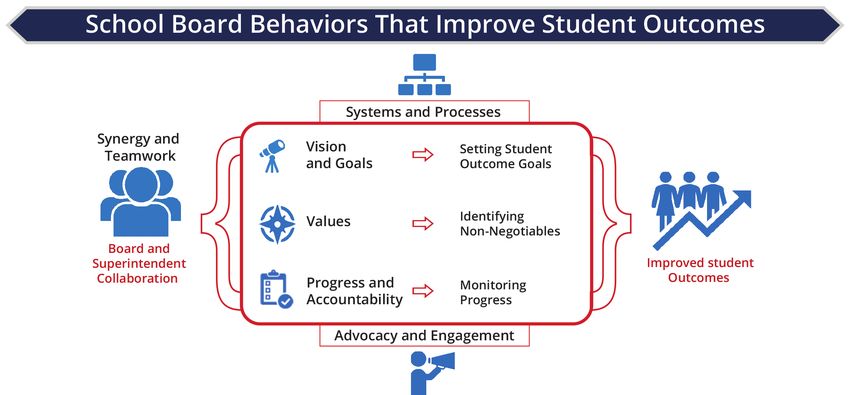
3         Lone Star Governance

        Table of Contents

                         LSG Purpose                  4    Time Use Tracker                                                30

                         Research & References        5    Staff Use Tracker Example                                       31

                         Legal Notice                 7    Board Agenda Examples                                           32

                         LSG Details                  8    Monitoring Calendar Example                                     34

                         Participant Notes            9    Monitoring Report Example                                       35

                         LSG Integrity Instrument     15   Superintendent Eval Example                                      36

                         Quarterly Progress Tracker   25   Glossary                                                         37

                         Goal & Constraint Examples   26   Integrity Commitment Letters                                     41

                         Theories of Action Example   28   Workshop Evaluation                                              43

2021.01.13                                                             Copyright 2016-2021 Texas Education Agency (TEA). All Rights Reserved.
4 Lone Star Governance
Lone Star Governance Purpose
The purpose of Lone Star Governance is to provide coaching and support, through a continuous improvement framework, for
school governing teams (Boards in collaboration with their Superintendents) that choose and commit to intensively focus on
the objective to improve student outcomes. Lone Star Governance accomplishes this intense focus through tailored coaching
aligned to the five pillars of the Texas Framework for School Board Development: Vision & Goals, Progress & Accountability,
Systems & Processes, Advocacy & Engagement and Synergy & Teamwork. In addition to the primary focus on improving student
outcomes, Lone Star Governance provides systems for governing legal and fiscal responsibilities.
2021.01.13 Copyright 2016-2021 Texas Education Agency (TEA). All Rights Reserved.5 Lone Star Governance
Research & Reference Materials
Lone Star Governance Materials
LSG Participant Manual, http://tea.texas.gov/lsg/
LSG Templates, https://drive.google.com/open?id=1tbWPPUary7lzyTEJJyTCCq6mdN1xonQ_.
Research Studies & Articles
The Relationship Between School Board Governance Behaviors and Student Achievement, Ivan J. Lorentzen
https://scholarworks.umt.edu/cgi/viewcontent.cgi?article=2406&context=etd
School District Leadership That Works, J. Timothy Waters & Robert J. Marzano
https://www.ctc.ca.gov/docs/default-source/educator-prep/asc/4005rr_superintendent_leadership.pdf
The Impact of School Board Governance on Academic Achievement in Diverse States, Michael Ford
https://dc.uwm.edu/cgi/viewcontent.cgi?article=1334&context=etd
The Role of School Boards in Improving Student Achievement, Washington State School Directors' Association
https://files.eric.ed.gov/fulltext/ED521566.pdf
Eight Characteristics of Effective School Boards, Center for Public Education
https://www.nyssba.org/clientuploads/nyssba_pdf/Events/nsbma-buffalo-07152016/Eight-characteristics-of-effective-school-boards_-full-report.pdf
Does School Board Leadership Matter?, Arnold F. Shober & Michael T. Hartney
https://fordhaminstitute.org/national/research/does-school-board-leadership-matter
The Governance Factor: A Predictive Study of School Board Influence on Student Achievement in Texas Public Schools, Marc Puig
http://umhblibrary.contentdm.oclc.org/cdm/ref/collection/p16668coll9/id/1197
The Lighthouse Inquiry: School Board/Superintendent Team Behaviors in School Districts with Extreme Differences in Student
Achievement, The Iowa Association of School Boards
https://pdfs.semanticscholar.org/1a17/5f1a9c65712a0de98ef80480668036b06be9.pdf?_ga=2.40299559.401498268.1574903128-2028656576.1574903128
School Board Governance and Student Achievement: School Board Members' Perceptions of Their Behaviors and Beliefs, Bobbie
Plough https://files.eric.ed.gov/fulltext/EJ1028871.pdf
School Boards and Student Achievement: The Relationship between Previously Identified School Board Characteristics and Improved
Student Learning, Jonathon Holmen https://digitalcommons.spu.edu/cgi/viewcontent.cgi?&article=1013&context=soe_etd
Pennsylvania Public School Board Effectiveness: Does It Influence Student Performance?, Aiko Maurer
https://pdfs.semanticscholar.org/26c1/4ec04b28874ad2676e8056f4d22721adf3b9.pdf?_ga=2.179077734.334774726.1581705918-1784715400.1581705918
Roles and Responsibilities of Local School Board Members in Relation to Student Achievement, Mary Delagardelle
https://lib.dr.iastate.edu/cgi/viewcontent.cgi?article=2504&context=rtd
2021.01.13 Copyright 2016-2021 Texas Education Agency (TEA). All Rights Reserved.6 Lone Star Governance
Research & Reference Materials
Recommended Books
Improving School Board Effectiveness- Thomas L. Alsbury & Phil Gore
What School Boards Can Do- Donald R. McAdams
The 4 Disciplines of Execution- Chris McChesney, Sean Covey, & Jim Huling
The Future of School Board Governance- Thomas L. Alsbury
Boards That Make A Difference- John Carver
Good To Great & Great by Choice- Jim Collins
Start with Why & The Infinite Game- Simon Sinek
The Fifth Discipline- Peter M. Senge
Influencer- Joseph Grenny, Kerry Patterson, David Maxfield, Ron McMillan, & Al Switzler
The Power of Habit & Smarter, Better, Faster- Charles Duhigg
Switch: How to Change Things When Change is Hard- Dan & Chip Heath
School Board Training
Framework for School Board Development, http://tea.texas.gov/Texas_Schools/School_Boards/School_Board_Member_Training/Framework_for_School_Board_Development/
State Board Of Education Rules, http://ritter.tea.state.tx.us/rules/tac/chapter061/ch61a.html
HB 3 Board Adopted Plans & Goals, http://www.tea.texas.gov/hb3
Board Training Requirements & Training Providers, https://tea.texas.gov/Texas_Schools/School_Boards/School_Board_Member_Training
State Accountability (TEKS, STAAR, A–F)
Texas Essential Knowledge & Skills, http://tea.texas.gov/curriculum/teks/
TEKS Resource System, http://www.tcmpc.org/uploads/TCMPC_TEKS_Resource_System_Component_Chart_(revised_06.2016).pdf
Student Assessment Overview, https://tea.texas.gov/Student_Testing_and_Accountability/Testing/Student_Assessment_Overview
STAAR Report Card Overview, https://www.youtube.com/watch?v=IlDGrnLW3ok
STAAR Technical Report, https://tea.texas.gov/WorkArea/linkit.aspx?LinkIdentifier=id&ItemID=25769804117&libID=25769804117
STAAR Vertical Scale Technical Report, https://tea.texas.gov/WorkArea/linkit.aspx?LinkIdentifier=id&ItemID=25769806053&libID=25769806056
STAAR Performance Standards, https://tea.texas.gov/student.assessment/staar/performance-standards/
Student Portal, http://www.texasassessment.com
A-F Resources, Overview, and Information, http://www.tea.texas.gov/a-f/
2021.01.13 Copyright 2016-2021 Texas Education Agency (TEA). All Rights Reserved.7 Lone Star Governance
Legal Notice
Regional LSG Workshops
Section 551.001(4)(B) of the Texas Government Code permits School Boards to participate in regional
workshops held outside the governmental body's jurisdiction if the members do not take final action or
deliberate regarding public business. Therefore, although board members are encouraged to ask questions
during this workshop, the questions must be limited to clarification of the content of the workshop, not an
attempt to obtain guidance or legal advice regarding circumstances specific to pending or future board
matters.
Board Members are cautioned not to discuss anything that could be construed as deliberation of a current or
future board action item on the ride to and from the workshop or over meals. Attendance at this workshop
does not relieve board members of their responsibility to ensure compliance with the Open Meetings Act.
Regional LSG Workshops are posted on the TEA website: https://www.TEA.Texas.gov/LSG.
Local LSG Workshops
Workshops conducted for a single School Board involving a quorum of the Members must be posted as a
board meeting under the Opens Meeting Act according to Texas Government Code § 551.041, be posted
expressly for the delivery of board member continuing education according to 19 Texas Administrative Code
§61.1(e), be open to the public according to Texas Government Code § 551.002, and take place within the
boundaries of the district according to the Texas Education Code § 26.007.
For additional guidance regarding the Open Meetings Act, please consult the Open Meetings Handbook from
the Office of the Attorney General at https://www.texasattorneygeneral.gov/sites/default/files/2018-
06/OMA_handbook_2018.pdf and/or contact your Board’s legal counsel.
2021.01.13 Copyright 2016-2021 Texas Education Agency (TEA). All Rights Reserved.8 Lone Star Governance
LSG Details
LSG Workshop Details
The Intention of the Lone Star Governance 2-Day Workshop is to create a supportive space in which governing teams can
learn about and can prepare for the commitment to intensely focus on improving student outcomes as described by the
Lone Star Governance Integrity Instrument. The workshop is a conversation about researched school board behaviors
that improve student outcomes. The Workshop draws from the participants’ respective experiences and their school’s
performance. The underlying belief is that leadership matters and that leaders’ choices have the power to be
transformative in the lives of our students.
LSG Continual Coaching and Support
Lone Star Governance Coaches are committed to provide continual coaching and support to school boards as they work
to implement the behaviors that have been shown to increase student outcomes. The continual engagement between a
school board and coach has been shown to make the difference in successful implementation to improve student
outcomes.
LSG Training Hours & Certificates
The Lone Star Governance workshop earns School Boards and individual board members continuing education training
credit. School Boards, in which, all members attend the LSG Workshop earn credit to satisfy the required annual Team
Building, bi-annual Evaluating and Improving Student Performance, all additional annual Framework Hours, the Opens
Meeting Act, and earn a School Board LSG Certificate. School Boards, through continual engagement with an LSG Coach,
will be supported with all required trainings and the implementation of best practices to improve student outcomes.
LSG Tools & Templates LSG Leaderboard
In order to support School Boards, LSG tools The LSG Leaderboard celebrates those that have
and templates, as well as actual examples from made the choice to continually improve their
various schools across Texas are available by behaviors in order to improve student outcomes
clicking HERE. The templates are downloadable using the LSG Integrity Instrument to self-
and designed to be customized to meet your evaluate progress. A LSG Coach verified Quarterly
local vision and values. Texas State Tracker score of 60 or above earns a spot on the
accountability scores for each school system LSG Leaderboard that can be viewed at
can be viewed at https://txschools.gov/. http://www.tea.Texas.gov/lsg.
2021.01.13 Copyright 2016-2021 Texas Education Agency (TEA). All Rights Reserved.9 Lone Star Governance
Participant Notes
2021.01.13 Copyright 2016-2021 Texas Education Agency (TEA). All Rights Reserved.10 Lone Star Governance
Participant Notes
2021.01.13 Copyright 2016-2021 Texas Education Agency (TEA). All Rights Reserved.11 Lone Star Governance
Participant Notes
2021.01.13 Copyright 2016-2021 Texas Education Agency (TEA). All Rights Reserved.12 Lone Star Governance
Participant Notes
2021.01.13 Copyright 2016-2021 Texas Education Agency (TEA). All Rights Reserved.13 Lone Star Governance
Participant Notes
2021.01.13 Copyright 2016-2021 Texas Education Agency (TEA). All Rights Reserved.14 Lone Star Governance
Participant Notes
2021.01.13 Copyright 2016-2021 Texas Education Agency (TEA). All Rights Reserved.15 Lone Star Governance
INTEGRITY INSTRUMENT
STUDENT OUTCOMES DO NOT CHANGE UNTIL ADULT BEHAVIORS CHANGE
STARTING WITH ME
A continuous improvement framework for School Boards self-evaluate their performance
school governing teams that commit to focus every three months on research-based
on improve student outcomes. governance behaviors.
Frequently self-evaluating provides a rational The definitions used throughout the LSG
means of continually improving and monitoring Instrument (shown in bold) are provided in the
adult behaviors. glossary.
2021.01.13 Copyright 2016-2021 Texas Education Agency (TEA). All Rights Reserved.16 Lone Star Governance
TEXAS FRAMEWORK: VISION & GOALS
Vision & Goals 1: The Board has adopted student outcome goals
Does Not Preparing To Approaches Meets Masters
0 1 4 12 15
Meet Focus Focus Focus Focus Focus
The board does not meet focus if The board is preparing to focus if The board approaches focus if all The board meets focus if all prior The board masters focus if all
any of the following statements all the following conditions are prior conditions and the following conditions and the following prior conditions and the following
are true: true: conditions are true: conditions are true: conditions are true:
The Board does not have a The Board has: All goals are specific, All Board Members and the All Board Members and the
vision. adopted a vision quantifiable, student Superintendent agree that Superintendent:
statement; outcome goals that include: the student outcome goals: have committed the
owned the vision a population; will challenge the vision and student
The Board does not have development process a 5-year deadline of a organization; outcome goals to
goals. while working month and year; require adult behavior memory;
collaboratively with the a baseline; and change; know the current status
The Board does not Superintendent; annual student group are influenceable by the of each student outcome
consistently distinguish adopted 3 to 5 goals; targets. Superintendent; and goal; and
between inputs, outputs, and are the Superintendents agree there is broad
and outcomes. owned the goal first priority for resource community ownership of
development process allocation. the Board’s vision and
while working student outcome goals
collaboratively with the through involvement and
Superintendent. The Board relied on a communication with
root cause analysis, students, staff, and
comprehensive student community members.
needs assessment,
and/or similar research-
based tool to inform the
identification of and
prioritization of all
student outcome goals.
2021.01.13 Copyright 2016-2021 Texas Education Agency (TEA). All Rights Reserved.17 Lone Star Governance
Vision & Goals 2: The Board has adopted goal progress measures (GPMs) aligned to each student outcome goal
Does Not Preparing To Approaches Meets Masters
0 1 4 12 15
Meet Focus Focus Focus Focus Focus
The board does not meet focus if The board is preparing to focus if The board approaches focus if all The board meets focus if all prior The board masters focus if all
any of the following statements all the following conditions are prior conditions and the following conditions and the following prior conditions and the following
are true: true: conditions are true: conditions are true: conditions are true:
The Board does not have The Board has adopted The Board has adopted All Board Members and the All Board Members and
goal progress measures GPMs for each student no more than 3 GPMs for Superintendent agree that the Superintendent agree
(GPMs). outcome goal. each student outcome the GPMs: there is broad community
goal. will challenge the ownership of the GPMs
organization; through involvement and
The Board is treating the The Superintendent require adult behavior communication with
annual targets for student owned the GPM All GPMs are student change; students, staff, and
outcome goals as if they are development process outputs, not adult inputs or are influenceable by the community members.
GPMs. while working outputs, that include: Superintendent; and
collaboratively with the a population; are all predictive of their
Board. a 5-year deadline of a respective student
month and year; outcome goals.
a baseline; and
The status of each annual student group
adopted GPM is able to targets.
be updated multiple
times during each school
year.
2021.01.13 Copyright 2016-2021 Texas Education Agency (TEA). All Rights Reserved.18 Lone Star Governance
Vision & Goals 3: The Board has adopted constraints
Does Not Preparing To Approaches Meets Masters
0 1 3 9 10
Meet Focus Focus Focus Focus Focus
The board does not meet focus if The board is preparing to focus if The board approaches focus if all The board meets focus if all prior The board masters focus if all
any of the following statements all the following conditions are prior conditions and the following conditions and the following prior conditions and the following
are true: true: conditions are true: conditions are true: conditions are true:
The Board does not have The Board has: Each Superintendent The Board has adopted 1 The Board, in
constraints. adopted 1 to 5 constraint describes a to 5 Board self- collaboration with the
Superintendent single operational action constraints. Superintendent, has
constraints; and or class of actions the adopted one or more
owned the constraint Superintendent may not theories of action to
development process use or allow. The Board, where drive overall strategic
while working appropriate, relied on a direction.
collaboratively with the root cause analysis,
Superintendent. comprehensive student
needs assessment, All Board Members and
and/or similar research- the Superintendent agree
based tool to inform the there is broad community
identification of and ownership of the
prioritization of constraints through
Superintendent involvement and
constraints. communication with
students, staff, and
community members.
All Board Members and
the Superintendent agree
that the constraints will
challenge the
organization to focus on
the vision and uphold
community values.
2021.01.13 Copyright 2016-2021 Texas Education Agency (TEA). All Rights Reserved.19 Lone Star Governance
Vision & Goals 4: The Board has adopted Superintendent constraint progress measures (CPMs)
Does Not Preparing To Approaches Meets Masters
0 1 2 4 5
Meet Focus Focus Focus Focus Focus
The board does not meet focus if The board is preparing to focus if The board approaches focus if all The board meets focus if all prior The board masters focus if all
any of the following statements all the following conditions are prior conditions and the following conditions and the following prior conditions and the following
are true: true: conditions are true: conditions are true: conditions are true:
The Board does not have The Board has adopted The Board has adopted All Board Members and the All Board Members and
constraint progress CPMs for each no more than 3 CPMs for Superintendent agree that the Superintendent agree
measures (CPMs). Superintendent each Superintendent the CPMs: there is broad community
constraint. constraint. will challenge the ownership of the CPMs
organization to focus on through involvement and
The Board is treating the the vision; communication with
annual targets for The Superintendent All CPMs include: will challenge the the students, staff, and
constraints as if they are owned the CPM a 1 to 5 year deadline organization to uphold community members.
CPMs. development process of a month and year; community values;
while working a baseline; and are all predictive of their
collaboratively with the annual targets. respective constraint; and
Board. are influenceable by the
Superintendent.
The status of each
adopted CPM is able to
be updated multiple
times during each school
year.
2021.01.13 Copyright 2016-2021 Texas Education Agency (TEA). All Rights Reserved.20 Lone Star Governance
TEXAS FRAMEWORK: PROGRESS & ACCOUNTABILITY
Progress & Accountability 1: The Board invests at least half of its time on improving student outcomes
Does Not Preparing To Approaches Meets Masters
0 1 4 12 15
Meet Focus Focus Focus Focus Focus
The board does not meet focus if The board is preparing to focus if The board approaches focus if all The board meets focus if all prior The board masters focus if all
any of the following statements all the following conditions are prior conditions and the following conditions and the following prior conditions and the following
are true: true: conditions are true: conditions are true: conditions are true:
The Board does not have The Superintendent owned 10% or more of the total 25% or more of the total 50% or more of the total
student outcome goals, the Monitoring Calendar quarterly minutes in quarterly minutes in Board quarterly minutes in
GPMs, Constraints, CPMs, development process while Board authorized public authorized public Board authorized public
or annual targets. working collaboratively with meetings were invested in meetings were invested in meetings were invested
the board to adopt a improving student improving student in improving student
monitoring calendar that: outcomes according to outcomes according to the outcomes according to
The Board does not track monitors each student the Time Use Tracker. Time Use Tracker. the Time Use Tracker.
its use of time in Board outcome goal at least 4
authorized public times per year;
meetings. monitors no more than 2
student outcome goals
The Board does not have a per month;
Monitoring Calendar. monitors each constraint
at least once per year;
and
spans the length of the
student outcome goals.
The Board tracks its
monthly use of time in
Board authorized public
meetings, categorizing
every minute according to
the Time Use Tracker.
2021.01.13 Copyright 2016-2021 Texas Education Agency (TEA). All Rights Reserved.21 Lone Star Governance
Progress & Accountability 2: The Board evaluates, but does not interfere with, progress toward improving
student outcomes
Does Not Preparing To Approaches Meets Masters
0 1 2 4 5
Meet Focus Focus Focus Focus Focus
The board does not meet focus if The board is preparing to focus if The board approaches focus if all The board meets focus if all prior The board masters focus if all
any of the following statements all the following conditions are prior conditions and the following conditions and the following prior conditions and the following
are true: true: conditions are true: conditions are true: conditions are true:
Any individual board The Board has: The Board: The Board receives, at The Board:
member does not know if performed a self- performs self-evaluations least annually, a report on voted unanimously to
the school system is in low evaluation within the using the LSG Integrity the average cost of staff approve the most current
performing status and for previous 12 months using Instrument; time spent on Quarterly Progress
how long. a research aligned performed a self- governance using the Tracker;
instrument; evaluation no more than Staff Use Tracker. has not modified the
performed a 45 days prior to the most adopted student
Any individual board superintendent annual recent Superintendent’s outcome goals, GPMs,
member does not know if evaluation no more than evaluation; and One quarter ago the Board: constraints, CPMs, or
any campus is in low 15 months ago; evaluates the Performed a self- targets during the school
performing status and for been provided copies of Superintendent in part on evaluation using the LSG year or cycle applicable
how long. the Superintendent’s the results and progress Integrity Instrument; and to the annual
implementation plan(s) toward the student voted to approve the Superintendent
to make progress towards outcome goals and Quarterly Progress evaluation; and
Any individual board Tracker.
member agrees that their the student outcome constraints using considers Superintendent
first loyalty is owed to staff goals; and information within performance as
or vendors, rather than the not voted to approve the monitoring reports indistinguishable from
vision, community values, Superintendent’s according to the school system
and improving student implementation plan Monitoring Calendar. performance by
outcomes. unless required by law. evaluating the
Superintendent
exclusively on the results
The Board has not voted to and progress toward the
approve a self-evaluation student outcome goals
within the past 12 months. and constraints using
information within
monitoring reports
according to the
Monitoring Calendar.
2021.01.13 Copyright 2016-2021 Texas Education Agency (TEA). All Rights Reserved.22 Lone Star Governance
TEXAS FRAMEWORK: SYSTEMS & PROCESSES
Systems & Processes: The Board operates in a way to allow the Superintendent to accomplish the vision
Does Not Preparing To Approaches Meets Masters
0 1 4 12 15
Meet Focus Focus Focus Focus Focus
The board does not meet focus if The board is preparing to focus if The board approaches focus if all The board meets focus if all prior The board masters focus if all
any of the following statements all the following conditions are prior conditions and the following conditions and the following prior conditions and the following
are true: true: conditions are true: conditions are true: conditions are true:
The Board has not received The Board receives and All consent-eligible items Board authorized public Board authorized public
a monitoring report. votes on monitoring reports were placed on the meetings in the last quarter meetings in the last quarter
that include: consent agenda and did not exceed: did not exceed:
the student outcome goal more than ¾ of the items an average of 4 meetings an average of 3 meetings
There were 6 or more Board and GPM or constraint were voted on using a per month; per month;
authorized public meetings and CPM being consent agenda. an average time of 3 an average time of 2
in a month (unless a state of monitored; hours per meeting; and hours per meeting; and
emergency was declared). the current status of the an average of 5 other an average of 3 other
student outcome goal The adopted monitoring topics per meeting. topics per meeting.
and GPM or constraint calendar has not been
Any meeting of the board modified during the past
lasted longer than 8 hours. and CPM compared to
previous, annual, and quarter. The Board has: Board Members received
deadline targets; reviewed its existing local the final version of
Board Members did not the Superintendent’s policies; and materials to be voted on
receive the final version of interpretation of only adopted local at least 7 calendar days in
materials to be voted on at performance; and policies pertaining to advance of the board
least 3 calendar days in supporting information Board work. authorized public
advance of the board that describes any meeting.
authorized public meeting. needed next steps.
No edits were made to
the Board’s regularly
scheduled meeting
agenda the 3 days prior
to the meeting or during
the meeting (unless a
state of emergency was
declared).
2021.01.13 Copyright 2016-2021 Texas Education Agency (TEA). All Rights Reserved.23 Lone Star Governance
TEXAS FRAMEWORK: ADVOCACY & ENGAGEMENT
Advocacy & Engagement: The Board promotes the vision
Does Not Preparing To Approaches Meets Masters
0 1 3 9 10
Meet Focus Focus Focus Focus Focus
The board does not meet focus if The board is preparing to focus if The board approaches focus if all The board meets focus if all prior The board masters focus if all
any of the following statements all the following conditions are prior conditions and the following conditions and the following prior conditions and the following
are true: true: conditions are true: conditions are true: conditions are true:
The Board has not publicly The Board has a two-way The Board has: The Board: Students have been
communicated the Board communication system in provided time during displays and keeps included in at least one
adopted student outcome place where the Board regular scheduled Board updated the status and Lone Star Governance
goals. Members at least once per authorized public targets of all student training or two-way
year: meetings to recognize the outcome goals and GPMs communication meeting
listen for and discuss the accomplishments of its permanently and publicly in the previous 12-month
The Board has not arranged vision and values of their students and staff in the room in which the period.
for any community students; and regarding progress on Board most frequently
engagement activities listen for and discuss the student outcome goals; holds regularly scheduled
during the previous 12- vision and values of their and meetings; and Newly selected Board
month period beyond public staff and community hosted a community has led or co-led at least Members have received
comments during Board members. meeting to discuss one training on Lone Star an orientation on Lone
authorized public meetings progress toward student Governance for its Star Governance by
and/or required hearings. outcome goals within community during the fellow Board Members or
each feeder pattern with previous 6-month period. an LSG Coach prior to
low performing campuses being seated.
during the previous 12-
month period.
2021.01.13 Copyright 2016-2021 Texas Education Agency (TEA). All Rights Reserved.24 Lone Star Governance
TEXAS FRAMEWORK: SYNERGY & TEAMWORK
Synergy & Teamwork: The Board works collaboratively and with the Superintendent to lead toward the vision
Does Not Preparing To Approaches Meets Masters
0 1 3 9 10
Meet Focus Focus Focus Focus Focus
The board does not meet focus if The board is preparing to focus if The board approaches focus if all The board meets focus if all prior The board masters focus if all
any of the following statements all the following conditions are prior conditions and the following conditions and the following prior conditions and the following
are true: true: conditions are true: conditions are true: conditions are true:
The Board has not adopted The Board: The Board: The Board: All Board Members and the
board operating procedures. affirms that at least once agrees that every maintained an average Superintendent:
every other year, it has member is responsible attendance of 80% or have completed the Lone
reviewed all policies for the outcomes of all higher throughout all Star Governance
The Board does not have a governing board students, not just regularly scheduled board Workshop;
policy that contains a operating procedures; students in their region of meetings over the agree that all Board
template of Ethics & affirms that all Members the school system; previous 3 months; Members have adhered
Conflicts of Interest have signed the Ethics & maintained an average agrees that all Members to all adopted board
Statement; Conflict of Interest attendance of 70% or have adhered to all constraints during the
Statement in the past 12 higher throughout all policies governing board previous 3 months; and
The board has not been able months; regularly scheduled board operating procedures; agree that no Board
to achieve a quorum in 2 or agrees that if the board meetings over the agrees that every Member has given
more Board authorized has committees, their previous 3 months; and member has completed operational advice or
public meetings during the role is to advise the board has set the expectation all statutorily required instructions to staff
previous 3 months. not to advise the staff; that information provided trainings; and members during the
agrees that a Board to one Board Member is rather than the previous 3 months.
officers’ role is to advise provided to all Board Superintendent, led the
Board Members serve on the board not to advise Members. completion of Lone Star
committees formed by the the staff; and Governance tasks.
superintendent or staff. maintained a quorum
throughout all regularly
scheduled board
A Board Member voted on meetings over the
an item for which they had a previous 3 months.
conflict of interest, as
defined by law, during the
previous 3 months.
2021.01.13 Copyright 2016-2021 Texas Education Agency (TEA). All Rights Reserved.25 Lone Star Governance
QUARTERLY PROGRESS TRACKER
School Board: Date: Quarter:
Three Two One Current Next Total
Framework
Quarters Ago Quarters Ago Quarter Ago Quarter Quarter Possible Points
Vision & Goals 1 15
Vision & Goals 2 15
Vision & Goals 3 10
Vision & Goals 4 5
Progress &
15
Accountability 1
Progress &
5
Accountability 2
Systems & Processes 15
Advocacy &
10
Engagement
Synergy & Teamwork 10
TOTAL SCORE 100
By signing below, I affirm that the Lone Star Governance Integrity Instrument was completed and is accurate
Board Member Signatures: % Student Vote Vote
Outcome Count Count
Minutes For Against
EVALUATION NOTES
The Standard of evidence for items where board action is required will be the minutes of the meeting during which the Board voted to take the described action.
Where an opinion of the Board is required, a resolution or vote passed by the Board will meet the standard of evidence. Any Board completing a self-evaluation using
the LSG Integrity Instrument that is supported or reviewed by an LSG Coach may submit the review for the LSG Leaderboard. If the Board would like their self-
evaluation reviewed by an LSG Coach, please email the completed LSG Integrity Instrument to LSG@tea.texas.gov.
2021.01.13 Copyright 2016-2021 Texas Education Agency (TEA). All Rights Reserved.26 Lone Star Governance
GOAL & CONSTRAINT (EXAMPLES)
Student Outcome Goal
TARGETS ALL AA AI A H PI TR W ED SE FSE EL CE NCE
Baseline
GPM 1.1:
GPM 1.2:
GPM 1.3:
2021.01.13 Copyright 2016-2021 Texas Education Agency (TEA). All Rights Reserved.27 Lone Star Governance
GOAL & CONSTRAINT (EXAMPLES)
Board Self-Constraint
Superintendent Constraint
CPM 4.1:
Baseline
CPM 4.2:
Baseline
CPM 4.3:
Baseline
2021.01.13 Copyright 2016-2021 Texas Education Agency (TEA). All Rights Reserved.28 Lone Star Governance
THEORY OF ACTION (EXAMPLES)
If the district empowers individual educators to determine instructional materials and methods for their classes; and if the central
One Best
administration directs all operational and budgetary functions; then teachers will be able to accomplish the Board's student
School System outcome goals while central administration ensures that all operations remain within the Board's constraints.
If the district's central administration directs all instructional materials and methods; and if the central administration ensures that
Managed
students experience consistency and quality of instructional delivery across all campuses; then the district, through the central
Instruction administration, will be able to accomplish the Board's student outcome goals while operating within the Board's constraints.
If the district's central administration directly administers some campuses and grants varying levels of autonomy to other
campuses; and if the central administration clearly defines operational thresholds that deserve higher levels of autonomy; and if
Earned the central administration clearly defines the specific autonomies earned; and if campuses having earned autonomies agree to
Autonomy operate in pursuit of the Board's student outcomes goals while operating within the Board's constraints; then the district, directly
and through autonomous campuses, will be able to accomplish the Board's student outcome goals while operating within the
Board's constraints.
If the district focuses central administration on the most critical functions of campus accountability and HR support; and if the
district provides differentiated paths of continuous improvement for all educators -- whether in administrative roles or classroom
Performance roles; and if the differentiated HR system methodically identifies paths for performance improvement, aligns educator incentives
Management with student outcomes, and ensures that educator placement is a function of student needs rather than adult preferences; then
the district, through its campuses, will be able to accomplish the Board's student outcome goals while operating within the Board's
other constraints.
If the district devolves autonomy from the central administration to campuses; and if the district empowers parents to make
choices; and if the district creates performance contracts with campuses; and if the district annually evaluates performance of and
System of
demand for high performing campuses; and if the district makes strategic decisions regarding growing access to high performing
Great Schools schools and addressing low performers; then campuses will be able to accomplish the Board's student outcome goals while
operating within the Board's other constraints.
2021.01.13 Copyright 2016-2021 Texas Education Agency (TEA). All Rights Reserved.29 Lone Star Governance
THEORY OF ACTION (EXAMPLES)
Number of Number of Number of Number of
Total Campuses Low Performing Moderate Performing High Performing
Possible Theory: Possible Theory: Possible Theory: Possible Theory:
Possible Theories of Action….What could work for you?
2021.01.13 Copyright 2016-2021 Texas Education Agency (TEA). All Rights Reserved.30 Lone Star Governance
TIME USE TRACKER Date:
Student Other
Framework Outcome The Board tracks its time invested during public authorized meetings Topic
Minutes Minutes
← Minutes setting student outcome goals
← Minutes receiving, discussing, and voting on Student Outcome Goal Monitoring Reports according to the Monitoring Calendar
Vision & Goals
← Minutes setting constraints or theories of action
← Minutes receiving, discussing, and voting on Constraint Monitoring Reports according to the Monitoring Calendar
Minutes setting timelines, deadlines, goals, or plans on other items or outcomes →
Minutes receiving reports, discussing, debating, and/or voting on other items or outcomes →
← Minutes performing Board self-evaluations using the LSG Integrity Instrument
Progress & ← Minutes evaluating the Superintendent on student outcome goals, GPMs, constraints, and CPMs
Accountability
Minutes performing Board self-evaluations using instruments other than the LSG Integrity Instrument →
Minutes evaluating the Superintendent on items other than student outcome goals, GPMs, constraints, and CPMs →
Systems & Minutes discussing, debating, and voting on items removed from or on the consent agenda →
Processes Time used for public comments on items not on the Board meeting agenda →
← Minutes hosting two-way communication meetings on student outcome goals, constraints, or theories of action
Advocacy & ← Minutes recognizing the accomplishments of students and staff regarding progress on student outcome goals
Engagement Minutes hosting all other Board led, co-led, or called community or committee meetings →
Minutes for all other recognitions →
Minutes fulfilling statutorily required public hearings, forums, and comments
Synergy &
Minutes fulfilling statutorily required or Lone Star Governance workshops
Teamwork
Minutes in closed session as permitted by law
Other Any time spent on an activity that does not meet the conditions listed above →
TOTALS
Use For Student Outcome Minutes % Student
Percentage Calculation: ÷ × 100 = Outcome Minutes
2021.01.13 Copyright 2016-2021 Texas Education Agency (TEA). All Rights Reserved.31 Lone Star Governance
STAFF USE TRACKER (EXAMPLES) Date:
Total Average
Average Average Average
Total Average Hourly Rate Monthly Hours
STAFF Monthly Hours Monthly Hours Monthly Hours
Monthly Hours (compensation/2080) X
Preparing Attending Debriefing
Hourly Rate
SUPERINTENDENT
Superintendent 10 6 6 22 72 1650
SENIOR STAFF
Asst. Superintendent 8 6 6 20 58 1160
CFO 8 6 6 20 55 1100
OTHER STAFF
Executive Assistant 4 6 6 16 40 640
Principal 3 6 6 15 50 750
Principal 3 6 6 15 50 750
Principal 3 6 6 15 45 675
TOTALS 39 42 42 123 54.67 6725
2021.01.13 Copyright 2016-2021 Texas Education Agency (TEA). All Rights Reserved.32 Lone Star Governance
BOARD AGENDA (EXAMPLE)
Agenda Item Time Use Tracker Estimated Time
I. Call to Order Other < 1 Minute
II. Pledge Other 1 - 3 Minutes
III. Public Comments on Agenda Items Synergy & Teamwork Required by Law
IV. Closed Session Synergy & Teamwork Not Public
V. Reconvene to Public Session
A. Actions on Discussions in Closed Session Systems & Processes 1 - 5 Minutes
VI. Progress Monitoring Reports
A. Goal/Constraint Report Vision & Goals: Student Outcomes
B. Goal Progress Recognitions Advocacy & Engagement: Student Outcome Recognition 45 - 60 Minutes
C. Board Self-Evaluation Progress & Accountability: Using LSG Integrity Instrument
VII. Consent Agenda Systems & Processes < 1 Minute
VIII. Discussion & Action Items Systems & Processes 20 - 30 Minutes
IX. Other Business
A. Required Hearing Synergy & Teamwork Required by Law
B. Financial Reports Vision& Goals: Other Outcomes
C. Committee Reports Vision & Goals: Other Outcomes 15 - 20 Minutes
D. Public Recognition Advocacy & Engagement: Other Recognition
X. Adjourn Other < 1 Minute
NOTES
The ideal board agenda should strive to invest 50% of the Board’s time during meetings on student outcomes, keep the length of meetings to an average of 2 hours,
and limit the average number of topics discussed per meeting to 3.
2021.01.13 Copyright 2016-2021 Texas Education Agency (TEA). All Rights Reserved.33 Lone Star Governance
BOARD AGENDA (EXAMPLE) – Your ideal agenda
Agenda Item Time Use Tracker Estimated Time
2021.01.13 Copyright 2016-2021 Texas Education Agency (TEA). All Rights Reserved.34 Lone Star Governance
MONITORING CALENDAR (EXAMPLE)
School Board: Lone Star ISD Years: 2019/20 - 2023/24
Student Outcome Goals Constraints
Month Leadership Evaluations Trainings Other
GPMs CPMs
August G5: GPM 5.1 Board Self-Evaluation Team Building Budget Hearing
September Goals : Yearly Target Report Constraint: Yearly Target Report Superintendent Annual Evaluation TASB Conference TAPR Hearing
G1: GPM 1.1, 1.2, 1.3
October FIRST Hearing
G2: GPM 2.1, 2.2, 2.3
November G4: 4.3 Board Self-Evaluation
December G5: GPM 5.1
G3: GPM 3.1, 3.2
January C1: CPM 1.1, 1.2
G4: GPM 4.1, 4.2
G1: GPM 1.1, 1.2, 1.3
February Board Self-Evaluation
G2: GPM 2.1, 2.2, 2.3
March G3: GPM 3.3 C2: CPM 2.1
April G4: GPM 4.1, 4.2 Local Orientation
May G5: GPM 5.1 Board Self-Evaluation Into/Update to the code
G1: GPM 1.1, 1.2. 1.3
June C1: CPM 1.1, 1.2 EISO Training
G2: GPM 2.1, 2.2, 2.3
Cyber Security
July G3: GPM 3.1, 3.2 Budget Workshop
Human Trafficking
2021.01.13 Copyright 2016-2021 Texas Education Agency (TEA). All Rights Reserved.35 Lone Star Governance
MONITORING REPORT (EXAMPLE) Date:
Goal 1: The score of 3rd grade students that score meets grade level or above on STAAR Reading will increase from 45% to OVERALL
64% by June 2024. (Current 2019: 45% 2020: 48% 2021: 52% 2022: 56% 2023: 60% 2024: 64%) PROGRESS
Goal Progress Measure 1.2: The percent of Kindergarten students that are reading on grade level will increase from 60% to 73% by June 2024.
(2019: 60% 2020: 62% 2021: 64% 2022: 67% 2023: 70% 2024: 73%)
Annual Targets Student Group Targets
Current Target
African American xx% xx%
American Indian xx% xx%
Asian xx% xx%
Dyslexia xx% xx%
Economic Disadv. xx% xx%
EL xx% xx%
Hispanic xx% xx%
Special Ed xx% xx%
White xx% xx%
Evidence & Future Plans
Campus 1: 38% Economically Disadvantaged Students Campus 2: 74% Economically Disadvantaged Students
The plan moving forward is……….
2021.01.13 Copyright 2016-2021 Texas Education Agency (TEA). All Rights Reserved.36 Lone Star Governance
SUPERINTENDENT EVALUATION (EXAMPLE)
STUDENT OUTCOME GOAL MET CONSTRAINT MET
and TARGET ACTUAL or and TARGET ACTUAL or
GPMs 2/3 MET CPMs 2/3 MET
Student Outcome Goal 1 65% 68% Constraint 1 < 742 748
Y Y
GPM 1.1 70% 71% CPM 1.137 Lone Star Governance
Glossary
Annual Targets: A measure’s yearly outcomes. The aggregate of all student groups identified by the population. These are never Goal
Progress Measures.
Annual Student Group Targets: A measures yearly outcomes for each applicable student group identified by the closing the gaps
domain with 25 or more students.
Baseline: The measure’s agreed starting point, current state. Used for comparing and monitoring growth.
Board Authorized Public Meetings: Any non-closed meeting authorized by the Board or Board president including, but not limited to,
Board workshops, Board hearings, and Board committees.
Board Self-Constraints: Specific operational actions or class of actions the Board places on itself and/or members that support
behaviors that keep the boards’ focus on board work, align with the vision, and grounded in community values.
Board Self-Evaluation: Boards use the LSG Integrity Instrument to self-evaluate quarterly as a means of monitoring whether or not
their adult behaviors are increasingly focused on improving student outcomes.
Board Work: Operations designated by state or federal law/rule or items designated by the Board's adopted student outcome goals,
constraints, vision, and/or values. Items that are not legally required and that the Board has not designated as Board work are, by
default, Superintendent work.
Consent-eligible Items: All items for Board consideration that may be placed by default on the Board's consent agenda. Examples:
personnel actions, contract renewals, previous meeting minutes, policy updates, construction amendments, non-monitoring
administrative reports, committee reports, enrollment updates, regular financial reports where financial activities remained within
budgetary parameters, and any other item up for Board consideration.
Constraint: Specific operational actions or class of actions that are not used or allowed and are aligned with the vision and grounded
in community values.
Constraint Progress Measures (CPMs): Specific graph-plottable indicators used to determine if the superintendent constraint is likely
to be honored or not. CPMs include a baseline, target, population, and deadline, are predictive of the constraint, and influenceable by
the Superintendent.
2021.01.13 Copyright 2016-2021 Texas Education Agency (TEA). All Rights Reserved.38 Lone Star Governance Deadline: Month and year by when the measure’s current state will equal the future state by reaching the target. Goals: Specific, measurable, attainable, results-based, and timebound statements that describe a desired state. Goal Progress Measures (GPMs): Specific graph-plottable indicators used to determine if the goal is likely to be met or not. GPMs include a baseline, target, population, and deadline, are predictive of the goal, and influenceable by the Superintendent. It is recommended that the Superintendent select one to three GPMs per Student Outcome Goal. Inputs: Resources and activities invested in a particular program, process, or strategy; usually knowable at the beginning of a cycle; a measure of effort applied. In school systems, operational and instructional inputs are selected by the Superintendent. Influenceable: The Superintendent has authority over roughly 80% of whatever the progress measure is measuring. Leadership Evaluations: Routine monitoring of Board and Superintendent performance conducted by the Board. Superintendent evaluation is indistinguishable from district evaluation. As such, the Superintendent’s evaluation is based only on accomplishment of the student outcome goals, avoidance of the constraints, and progress as determined by their respective progress measures. Lone Star Governance (LSG): The State of Texas’ continuous improvement framework for governing teams -- Boards and their Superintendents -- that choose to be intensely focused on improving student outcomes. Governing teams that implement the LSG framework with integrity understand that student outcomes don’t change until adult behaviors change. Starting with me. LSG Integrity Instrument: A continuous improvement framework, used for quarterly self-evaluations on researched based behaviors, for school governance teams that commit to focus on improving student outcomes. Monitoring Calendar: A Board-adopted multi-year schedule that describes the months during which student outcome goals, constraints, and progress measures are reported to the Board and when leadership evaluations are conducted. Monitoring Report: A report that provides evidence of progress to the Board regarding their adopted Student Outcomes Goals, Goal Progress Measures, Constraints, and Constraint Progress Measures according to the Monitoring Calendar. A monitoring report must contain: the student outcome goal and GPM or constraint and CPM being monitored; the current status of the student outcome goal and GPM or constraint and CPM compared to previous, annual, and deadline targets; the Superintendent’s interpretation of performance; and supporting information that describes any needed next steps. 2021.01.13 Copyright 2016-2021 Texas Education Agency (TEA). All Rights Reserved.
39         Lone Star Governance

   Other Outcomes: A measure of school system results that are not student results; outcomes that are not student outcomes.
   Examples: parent engagement, financial performance, staff retention.

   Other Topics: Items that require board debate, discussion, and/or discernment during a board authorized public meeting that are
   categorized as Other Topic Minutes according to the Time Use Tracker.

   Outcomes: The impact of the program or strategy; usually knowable at the end of a cycle; a measure of the effect on the intended
   beneficiary.

   Outputs: The result of a particular set of inputs; usually knowable in the midst of a cycle; a measure of the implementation of the
   program, process, or strategy. In school systems, operational and instructional outputs are selected by the Superintendent. Example:
   interim assessment.

   Population: The group of students who will be impacted, evaluated, and/or who are being measured.

   Predictive: There is some evidence of a correlation between the progress measure and the student outcome goal or constraint.

   Quarterly Progress Tracker: A tool used to monitor the progress of Board self-evaluation scores using the LSG Integrity Instrument.

   Staff Use Tracker: A tool used to report the average cost of staff time spent on governance.

   Standard of Evidence: Physical evidence that can be provided to support the score in the LSG Integrity Instrument. Items where
   board action is required will be the minutes of the meeting during which the Board voted to take the described action. Where an
   opinion of the Board is required, a resolution or vote passed by the Board will meet the standard of evidence.

   Standard of Integrity: Doing what I have allowed people to expect of me --- to the degree I have allowed them to expect it --- by
   when I have allowed them to expect it.

   State of Texas Assessments of Academic Readiness (STAAR): A criterion-referenced group of TEKS-based, standardized summative
   assessments that measure the extent to which Texas students have learned and are able to apply the knowledge and skills defined in
   the TEKS. Every STAAR question is directly aligned to the TEKS for the grade/subject or course being assessed.

   Student Outcomes: A measure of school system results that are student results rather than adult results; outcomes that are a
   measure of what students know or are able to do. Example: summative assessment.

2021.01.13                                                                                          Copyright 2016-2021 Texas Education Agency (TEA). All Rights Reserved.
40         Lone Star Governance

   Student Outcome Goals: Student outcomes that describe what students know or be able to do -- as distinct from adult inputs, adult
   outputs, student inputs, and student outputs. Student Outcome Goals include a baseline, target, population, and deadline. They
   challenge the organization and require adult behavior change. A Board's student outcome goals are the Superintendent's first priority
   for resource allocation.

   Superintendent Evaluation: A tool used to report performance towards achieving student outcome goals and constraints. As
   Superintendent performance is indistinguishable form school performance, evaluation targets are considered met if the annual
   targets of the student outcome goals or Constraints are met OR 2/3 of the respective GPMs or CPMs are met. Superintendent
   performance is considered met if 75% or more evaluation targets are met. If 75% or more of the evaluation targets are not met, the
   Board will use their own judgement for performance based upon the Monitoring Reports received and voted upon according to the
   Monitoring Calendar.

   Superintendent Constraints: Specific operational actions or class of actions the Superintendent may not use or allow that are aligned
   with the vision and grounded in community values.

   Superintendent Work: The operational inputs and outputs of the school system, except the operations legally required by state or
   federal law/rule or items directly pertaining to the Board's adopted student outcome goals, constraints, progress measures, or
   theories of action.

   Target: The measure’s desired future state.

   Texas Essential Knowledge & Skills (TEKS): Specific knowledge or skills that every child, K-12, in Texas is expected to know and be
   able to do.

   Theories of Action: A research-based high-level strategic constraint with which inputs and outputs must be aligned and which drives
   overall strategic direction. Unlike other constraints, the theory of action does not have CPMs.

   Time Use Tracker: A tool used to track the Board’s use of time during board authorized public meetings.

   Two-way Communication: Communication that is intentional, meaningful, and purposeful that allows for input from stakeholders
   and responses from Board Members and Administrative Staff. Stakeholders include, but are not limited to, students, parents,
   residents, staff members, and business owners.

2021.01.13                                                                                           Copyright 2016-2021 Texas Education Agency (TEA). All Rights Reserved.
41         Lone Star Governance

                   "Student outcomes do not change until adult behaviors change”

                          This is a commitment to constantly be willing to change our own behavior for the benefit of our students. To
                          show this commitment, you are invited to write three letters that reflect on this commitment.

                                    You are invited to self-address an envelope. In 30 days, your letters will be mailed to
                                     remind you of the commitment you have made to change your adult behaviors to
                                                                 improve student outcomes.

    Dear Colleague,
    A behavior of mine that may have made it harder for the board to be focused on student outcomes was…

    The benefit to me was...

    The cost to you and/or to students was…

    In that moment, I was pretending that…

2021.01.13                                                                                                 Copyright 2016-2021 Texas Education Agency (TEA). All Rights Reserved.
42 Lone Star Governance
Dear Students,
As an education leader, my behavior lacked integrity when…
The benefit to me was…
The cost to you was …
What you can expect from me going forward is…
Dear Self,
I'm giving up…
When I behaved that way, the benefit to me was…
But the cost was…
Because of my commitment to improving student outcomes, I'm giving it up.
2021.01.13 Copyright 2016-2021 Texas Education Agency (TEA). All Rights Reserved.43 Lone Star Governance
Workshop Pre-Evaluation
1) How proficient are you at distinguishing between educational inputs, outputs, and outcomes?
1 2 4 5
3
Not at all proficient Somewhat proficient Proficient Very Proficient
2) How often do you want your board to review and discuss the measurable progress toward the board’s student outcome goals?
1 2 4 5
3
Not At All Often Somewhat Often Often Very Often
(quarterly)
(once per year) (twice per year) (every other month) (monthly)
3) How useful do you expect this workshop to be?
1 2 4 5
3
Not At All Useful Somewhat Useful Useful Very Useful
4) How proficient are you with setting goal progress measure targets for student outcome goals?
1 2 4 5
3
Not at all proficient Somewhat proficient Proficient Very Proficient
5) How likely are you to recommend this workshop to other board members and superintendents?
1 2 4 5
3
Not At All likely Somewhat Likely Likely Very Likely
6) Comments?
2021.01.13 Copyright 2016-2021 Texas Education Agency (TEA). All Rights Reserved.You can also read


