Paycheck Protection Program - Round 2: Key Considerations for Businesses Under the Consolidated Appropriations Act - Morgan Lewis
←
→
Page content transcription
If your browser does not render page correctly, please read the page content below

Paycheck Protection Program - Round 2:
                                             Sheila A. Armstrong
Key Considerations for Businesses Under      Andrew T. Budreika
the Consolidated Appropriations Act           Stephen E. Ruscus
                                          Matthew E. Schernecke
                                            Benjamin W. Stango
                                                Scott R. Berman

© 2021 Morgan, Lewis & Bockius LLP             January 14, 2021
Presenters

 Sheila Armstrong Andrew Budreika   Stephen Ruscus   Matthew      Benjamin Stango   Scott Berman
 Partner          Partner           Partner          Schernecke   Associate         Law Clerk
                                                     Partner
AGENDA

• Background & Overview
• Extension of the Paycheck Protection Program
    – First-Draw Loans
    – Tax Implications
• Expansion of the Paycheck Protection Program
    – Second-Draw Loans
• Risks and Governmental Oversight
• Q&A

                                                 3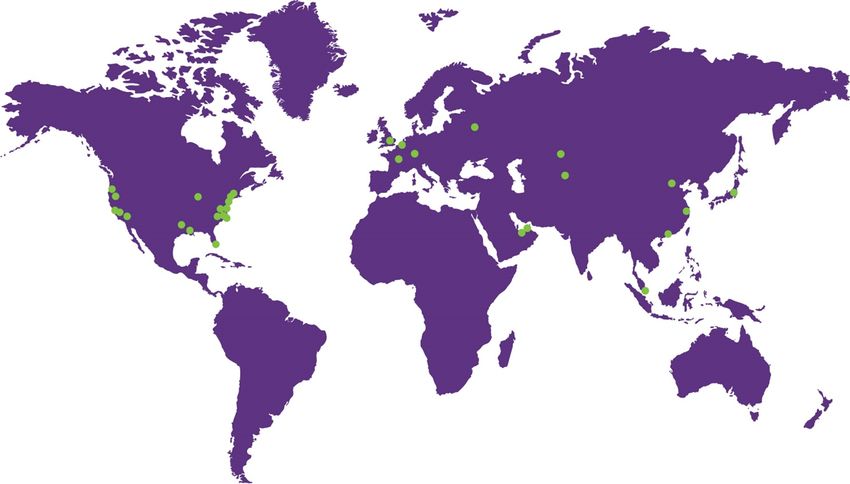
BACKGROUND & OVERVIEW

MORGAN LEWIS RESOURCES

                         5
CARES ACT & CONSOLIDATED APPROPRIATIONS ACT

• The CARES Act, which was passed in March 2020, included the Keeping Workers Paid and
  Employed Act, which provided paycheck protections and loan forgiveness, and small
  business contracting relief.
• The Consolidated Appropriations Act, 2021 (CAA), passed in late December 2020, is a $2.3
  trillion spending bill that includes $900 billion for coronavirus (COVID-19) pandemic relief,
  ~$285 billion of which is dedicated to the extension and expansion of the
  Paycheck Protection Program (PPP).
• The Economic Aid to Hard-Hit Small Businesses, Nonprofits, and Venues Act (EAA) revives
  the PPP with ~$285 billion, reopening and strengthening the program for First-
  Draw and second-time borrowers, and extending the lifetime of the program to
  March 31, 2021.

                                                                                                  6
LANDSCAPE OF PPP ROUND 2

                Prioritizing Smaller and Minority Owned Businesses

• New PPP targets support to smaller and minority owned businesses that may have
  struggled to gain access to PPP funds during the first iteration of the program:
  – Allocates $15 billion each to (1) community lenders and (2) small depository lenders for initial
    PPP loans and PPP Second-Draw.
  – Earmarks $35 billion for First-Draw borrowers, $15 billion for loans to smaller, First-Draw
    borrowers with 10 or fewer employees or loans of less than $250,000 in low-income areas.
  – Apportions $25 billion for second-draw PPP loans for smaller borrowers with 10 or fewer
    employees or loans of less than $250,000 in low-income areas.
• The Small Business Administration (SBA) announced that new, First-Draw PPP loans
  will be available starting on Monday, January 11 only for community financial
  institutions. PPP will open to all participating lenders shortly thereafter. (Note:
  Second-draw PPP loans will be available from community financial institutions on
  Wednesday, January 13.)

                                                                                                       7
OVERVIEW
EXTENSION & EXPANSION OF PPP

                               8
EXTENSION OF PPP

EXTENSION OF PPP:
                             ELIGIBILITY
             Who can apply – the following entities affected by
                       COVID-19 may be eligible:
• Any small business concern that meets SBA’s size standards (either the industry
  based sized standard or the alternative size standard).
• Sole proprietors, independent contractors, and self-employed persons.
• Any business with a NAICS Code that begins with 72 (Accommodations and Food
  Services) that has more than one physical location and employs less than 500
  per location.
• Any business, 501(c)(3) non-profit organization, 501(c)(19) veterans
  organization, or Tribal business concern (sec. 31(b)(2)(C) of the Small Business
  Act) with the greater of 500 employees, or that meets the SBA industry size
  standard if more than 500, and certain 501(c)(6) organizations.

                                                                                     10
EXTENSION OF PPP:
LIFETIME AND GATING ELIGIBILITY
• The PPP will be extended through March 31,
2021.
• First-Draw borrowers under the new PPP extension
will be subject to the program’s original eligibility
rules (except for publicly traded companies).
– Please visit our LawFlash on the first iteration of the
PPP for more information.
• A business organization not in operation on
February 15, 2020 is not eligible for a PPP loan.
Source: https://www.arffinancial.com/congress-approved-5-week-extension-for-ppp/ 11SUMMARY OF FIRST-DRAW PPP LOANS
TERMS AND CONDITIONS
• Loans up to $10 million with a 1.00% interest rate.
• Loan amount: generally, the lesser of the $10 million
maximum and 2.5x the borrower’s average monthly payroll
for the past 12 months.
• Excludes compensation over $100,000, as annualized.
• SBA guarantees 100% of the issued loans during the
period of 2/15/2020 through 3/31/2021.
• Loan proceeds can cover: payroll costs; group healthcare
benefits; mortgage interest payments; rent; utilities; other
debt interest; operations expenditures (e.g.
software); property damage costs; supplier costs
and worker protection (e.g. PPE).
Source: https://images.app.goo.gl/xTGuFk8HF3zBXjoB8 12SUMMARY OF FIRST-DRAW PPP LOANS
LOAN FORGIVENESS
• Up to 100% loan forgiveness:
– Borrowers receive full loan forgiveness if they spend at least 60% of their PPP loan on
payroll costs over a time period of their choosing (a “covered period”) between 8 weeks
and 24 weeks.
– The remaining 40% or less of the PPP loan still must be allocated towards allowable
expenses (as noted on upcoming slides).
• Reductions in Loan Forgiveness for:
– Greater than 40% used toward non-payroll costs
– Reductions in head count
– Reduction in salaries greater than 25%
13EXTENSION OF PPP:
PPP TAX DEDUCTIONS
The relief package includes technical correction clarifying that the
Internal Revenue Service (IRS) cannot deny the deduction of expenses
paid with proceeds of a PPP loan that is later forgiven.
• In the case of a partnership or S corporation,
excluded loan forgiveness income will be
treated as tax-exempt income allocated to the
partners or shareholders.
• This treatment applies to original PPP loans
and PPP Second-Draws.
Source: https://images.app.goo.gl/rKLwQL3FTBQx7X1P8 14EXTENSION OF PPP:
PUBLICLY-TRADED COMPANIES
The new legislation generally prohibits new PPP loans for publicly
traded companies, even if they otherwise could establish
eligibility and the need for this kind of relief.
• Exception for news organizations.
• Questions regarding subsidiaries.
• This is a change to the statutory eligibility for PPP loans, as publicly traded
companies were not ineligible for the program when it was first enacted as part
of the CARES Act.
15EXTENSION OF PPP:
PRIVATE EQUITY FUNDS
Private Equity (PE) borrowers must apply affiliation rules when
considering applying for a PPP loan.
• The affiliation rules apply to PE-owned businesses in the same manner as any
other business subject to outside ownership or control.
• PE-owned businesses must also consider necessity.
Source: https://images.app.goo.gl/X3mdtRw8FPrKFsz68 16EXTENSION OF PPP:
ALLOWABLE & FORGIVABLE EXPENSES
Effective retroactively, the legislation clarifies and adds several expenses
that will be allowable and forgivable uses of PPP loan proceeds.
• Employer-provided group insurance benefits
• Covered operations expenditures
• Covered property damage costs Source: https://images.app.goo.gl/E4haHXdEdvTXYMdQ7
Source: https://images.app.goo.gl/YbCYBagre16cDE6F9
• Covered supplier costs
• Covered worker protection expenditures
Source: https://images.app.goo.gl/b3R1FBpbx98JTbhe9
Source: https://images.app.goo.gl/qCjeyzVWKrhTzkpd9
17EXTENSION OF PPP:
SIMPLIFIED FORGIVENESS APPLICATIONS
Forgiveness of loans up to $150,000 will only require a one-page
online or paper form in which the borrower certifies
that it complied with the program’s requirements.
Source: https://images.app.goo.gl/NfTbkQrMLZGLP4Rh8
18EXTENSION OF PPP:
BORROWERS IN BANKRUPTCY
According to the newest interim final rules (IFR) explaining the extension of PPP,
the SBA did not certify small business debtors as eligible for PPP loans; instead,
debtors in a bankruptcy proceeding are ineligible for a PPP loan.
• The new legislation made it possible for certain borrowers in bankruptcy to be eligible for
PPP loans, subject to the SBA submitting a written determination that small business
debtors can be eligible for PPP loans.
• Debtors who enter into a bankruptcy proceeding after submitting a PPP application but
before the loan is disbursed have the obligation to notify the lender and request
cancellation of the application.
• The bankruptcy exclusion is consistent with the existing rules. Section 320 of the EAA
would have allowed PPP loans to bankrupt borrowers if the SBA administrator certified that
they were eligible. The SBA appears to be exercising interpretive authority to decline the
invitation to make such an eligibility certification.
19EXPANSION OF PPP
EXPANSION OF PPP:
                      PPP SECOND-DRAW ELIGIBILITY
                 Generally, applicants for Second-Draw PPP loans must:
  (1) have been in operation on February 15, 2020, (2) have fewer than 300 employees,
         (3) have used, or plan to use, all of their First-Draw PPP loan funds, and
                     (4) demonstrate a 25% reduction in revenues.
• Eligible entities: business concern, independent contractor, eligible self-employed individual, sole
  proprietor, nonprofit organization eligible for a First-Draw PPP loan, veterans organization, Tribal business
  concern, housing cooperative, small agricultural cooperative, eligible 501(c)(6) organization or destination
  marketing organization, or an eligible nonprofit news organization
• Size standard: 300 employees or fewer
  – Businesses with multiple locations that are eligible entities under the initial PPP requirements may employ no more than
    300 employees per physical location in order to be eligible for a PPP Second-Draw.

• 25% reduction in revenue: in the first, second, third, or fourth quarter of 2020 relative to the
  corresponding 2019 quarter
  – Annualized
  – Quarterly, year-over-year
                                                                                                                        21
EXPANSION OF PPP:
PPP SECOND-DRAW LOAN AMOUNTS
Second-Draws will have a maximum loan amount of
$2 million for each applicant entity.
• To calculate the amount of the PPP Second-Draw, borrowers will receive the lesser
of (1) an amount of up to 2.5x the average monthly payroll costs in one year prior
to the loan or the calendar year, or (2) $2 million.
– Notable exception: Applicants in the accommodation and food service industries, as
designated by the SBA, are eligible to receive a loan for the lesser of (1) 3.5x their
average monthly payroll or (2) $2 million.
22EXPANSION OF PPP:
PPP SECOND-DRAW LOAN FORGIVENESS
Borrowers of Second-Draw loans will face similar forgiveness
conditions and tax treatment as First-Draw loans.
• Borrowers must allocate at least 60% of the PPP funds toward payroll costs (i.e.,
a 60%/40% cost allocation between payroll and non-payroll costs).
• Similar to the tax treatment for initial PPP loans, loan forgiveness on PPP Second-
Draws will be nontaxable, and business expenses paid with PPP second-draw
funds will be tax deductible, all effective for tax years ending after the date of
enactment of the associated provision of the bill.
23EXPANSION OF PPP:
PPP SECOND-DRAW LOAN AFFILIATION RULES
Eligibility for Second-Draw PPP loans is generally governed by
the same affiliation rules (and waivers) as First-Draw PPP loans,
except in the following cases:
• Affiliation rules are waived for food services and hospitality businesses (NAICS Code 72
businesses) with multiple locations so long as there are fewer than 300 employees per
location;
• Any business concern (including any station which broadcasts pursuant to a license granted
by the Federal Communications Commission under title III of the Communications Act of
1934 that employs not more than 300 employees per physical location of such business
concern and is majority owned or controlled by a business concern that is assigned a NAICS
code beginning with 511110 or 5151 (i.e. newspapers, TV and radio broadcasters); or
• Any nonprofit organization that is assigned a NAICS code beginning with 5151.
24RISKS & GOVERNMENTAL OVERSIGHT
RISKS ASSOCIATED WITH ANY PPP LOAN

      Applicants must be compliant with all PPP rules and guidelines.

• The government will be watching how these funds are spent. The acts creating the PPP
  authorize funds for extensive oversight mechanisms to prevent and uncover fraud and
  waste.
• Even if you win, government investigations can be time-consuming, expensive, and
  intrusive.
• If you are investigated and lose, there are serious risks associated with any fraud in
  connection with these funds.

                                                                           Source: https://images.app.goo.gl/Lngo5jtcXd361HDt8   26
RISKS ASSOCIATED WITH ANY PPP LOAN
Applicants must certify “necessity”
• Both new PPP applications include a certification that “current economic uncertainty makes
this loan request necessary to support the ongoing operations of the Applicant.”
• SBA guidance makes clear that to determine necessity, PPP borrowers must evaluate
cuurrent business activity and access to other sources of liquidity sufficient to support
ongoing operations in a manner that is not significantly detrimental to the business.
• Consequences for false certification can be severe:
Source: https://images.app.goo.gl/Lngo5jtcXd361HDt8 27QUESTIONS & ANSWERS
Please submit your questions to the host via the WebEx question portal. All
questions will be forward to the presenters. Any questions that are not answered
during the program can be emailed directly to the presenters.
ISTOCK / GETTY IMAGES
28Biography
Sheila Armstrong is a Partner in the Litigation practice. She represents companies in all aspects of
government contracting including investigations, compliance, and counseling matters. Sheila routinely
counsels both prime and subcontractors in a variety of contractual and civil settings. She frequently
advises clients with respect to General Services Administration (GSA) and Veterans Affairs (VA) Federal
Supply Schedule contracts. Sheila’s experience includes proposal preparation, contract negotiation,
subcontracting, teaming arrangements, intellectual property rights in government contracts, contract
compliance, audits, investigations, mandatory disclosures, and procurement fraud. She also routinely
provides support to clients on novation and due diligence issues.
Clients turn to Sheila for her knowledge of developing and maintaining corporate compliance programs. In
this area, she conducts compliance reviews, training, and internal investigations, and advises clients on
required disclosures under the Federal Acquisition Regulation (FAR) and 2 CFR Part 200. She has
represented clients before defense and civilization agencies, including the US Department of Justice
Sheila A. Armstrong (DOJ), the General Accountability Office (GAO), the US Department of Defense (DoD), the GSA, and
various Suspension and Debarment Officials.
Dallas, TX
T +1.214.466.4175 Complementing her contracting work, Sheila provides counsel on foreign sourcing issues and regularly
F +1.212.466.4001 advises on compliance with the Buy American Act, Trade Agreements Act, and other foreign sourcing
restrictions applicable to federal contracts.
sheila.armstrong@morganlewis.com
Sheila is an active member of the American Bar Association’s Public Contracts Law Section, serving in a
leadership role as council member, vice chair of Finance, and vice chair of the Commercial Products and
Services Committee. She frequently assists with comment letters submitted on behalf of the American Bar
Association relating to new and updated regulatory changes.
29Biography
Andrew Budreika is a Partner in the Finance practice. He advises clients on private equity transactions,
domestic and cross-border public and private mergers and acquisitions, debt financings, strategic
investments, and other corporate transactions. Andrew also regularly counsels clients on securities law,
corporate governance, and other general corporate and finance matters.
Consistent with Morgan Lewis’s core principles, Andrew is committed to providing exceptional client service
and building long-term strategic relationships with clients focused on communication and collaboration.
Andrew seeks first to listen and understand a client’s goals and the business context and then to provide
insightful, creative, and tailored solutions that enable the client to achieve those goals within the client’s
defined parameters for success. Andrew endeavors to bring together Morgan Lewis’s intellectual and global
talent and resources to construct elite legal teams that deliver the best overall results and experience to
Andrew T. Budreika clients.
Philadelphia, PA
Andrew is also passionate about using technology, knowledge management, legal project management,
T +1.215.963.5493
and other innovations in legal practice to provide fast, reliable, and consistent service in a cost-effective
F +1.215.963.5001 and efficient manner.
andrew.budreika@morganlewis.com
Andrew has practical experience handling a full spectrum of transactions including buyouts; platform
acquisitions; exit transactions; mergers; add-ons and roll-ups; carve-outs and spin-offs; leveraged
recapitalizations; and management rollovers and equity incentive structures. He also regularly works on
matters involving growth equity, minority, and strategic investments; co-investments; corporate
restructurings and reorganizations; and founder liquidity transactions. Additionally, Andrew advises on
acquisition financings; syndicated bank loans; investment grade and high-yield bond offerings; asset-based
loans; mortgage loan warehousing and repurchase facilities; and capital call lending transactions.
30Biography
Stephen E. Ruscus is a Partner in the FDA practice. Stephen represents clients in government contracts procurement, US
federal drug pricing programs, and in litigation before the Boards of Contract Appeals, the US Court of Federal Claims, and
the US Government Accountability Office (GAO). He also advises in protest practice before the US Small Business
Administration and in matters relating to federal procurement of commercial items and services, including those under
Federal Supply Schedule contracts.
With more than 25 years of experience, Stephen counsels clients in the defense, technology, life sciences, manufacturing,
services and food industries on supplies and service indefinite delivery, indefinite quantity (IDIQ) task order contracts, fixed-
price, and cost reimbursement contracts and related Federal Acquisition Regulation provisions, subcontract negotiations and
compliance, government contracts disputes, and federal debarment and suspension.
Stephen conducts investigations and prepares reports under the US Department of Veterans Affairs (VA), the US
Stephen E. Ruscus Department of Defense (DOD), and the US Department of State voluntary disclosure programs. He appears before the US
Court of Federal Claims, US Courts of Appeals, the Armed Services Board of Contract Appeals, and the Civilian Board of
Washington, D.C. Contract Appeals. He also represents clients in bid protests before the GAO and the US Court of Federal Claims.
T +1.202.739.5870
F +1.202.739.3001 With respect to federal healthcare supplies and services, Stephen counsels clients on VA, DOD, and US Department of
Health and Human Services (HHS) procurements. He also advises on government pricing laws and regulations governing
stephen.ruscus@morganlewis.com manufacturer participation in the Medicaid Drug Rebate, Medicare, 340B, TRICARE, and Veterans Healthcare Act programs;
VA FSS contracts; and public policy affecting these programs.
Additionally, Stephen counsels clients on the implementation and review of complex government pricing systems, providing
strategic advice on the government pricing, fraud, and abuse implications of commercial pricing and patient benefit
programs.
31Biography
Matthew Edward Schernecke is a Partner in the Finance practice, currently serving as
the New York office local practice group leader. He advises direct lenders, mezzanine
investment funds, and venture capital investors on loans and other investment
transactions with a wide range of borrowers across industry classes and of all sizes,
types, and structures. Matthew also advises private equity clients and corporate
borrowers on domestic and cross-border acquisition financings, out-of-court
restructurings and workouts, bankruptcy matters, and real estate financings. Matthew
leads transactions spanning diverse industries, including film and music entertainment,
media and telecommunications, internet and technology, food and beverage, financial
Mathew Edward Schernecke services, real estate, retail, life sciences, and healthcare.
New York, NY
T +1.212.309.6135
F +1.212.309.6237
matthew.schernecke@morganlewis.com
32Biography
Benjamin W. Stango is an Associate in the Corporate Business Transactions practice. He
works with a team to counsel clients in business law matters, including mergers and
acquisitions, joint ventures, financings, restructurings, and compliance with securities
laws. He advises clients ranging from emerging and high-growth businesses to Fortune
500 companies. Ben also has experience in government, nonprofits, and political
campaigns. With an M.B.A. from The Wharton School, Ben brings a unique perspective
on business, law, and government to serve his clients’ needs.
Benjamin W. Stango
Philadelphia, PA
T +1.215.963.4831
F +1.215.309.5001
benjamin.stango@morganlewis.com
33Biography
Scott Berman is part of a team of lawyers that advises clients on a broad range of
corporate and transactional matters, including US and cross-border mergers and
acquisitions involving both public and private companies, capital markets, real estate
transactions, and other general corporate matters. Before attending law school, Scott
worked in the financial services industry.
Scott Berman
Philadelphia, PA
T +1.215.963.5567
F +1.215.963.5001
scott.berman@morganlewis.com
34To help keep you on top of
developments as they
Coronavirus unfold, we also have
launched a resource page
COVID-19 Resources on our website at
www.morganlewis.com/
topics/coronavirus-
We have formed a multidisciplinary
covid-19
Coronavirus/COVID-19 Task Force to
help guide clients through the broad scope
If you would like to receive
of legal issues brought on by this public
a daily digest of all new
health challenge.
updates to the page, please
visit the resource page to
subscribe using the purple
“Stay Up to Date” button.
35Our Global Reach
Africa Latin America
Asia Pacific Middle East
Europe North America
Our Locations
Abu Dhabi Moscow
Almaty New York
Beijing* Nur-Sultan
Boston Orange County
Brussels Paris
Century City Philadelphia
Chicago Pittsburgh
Dallas Princeton
Dubai San Francisco
Frankfurt Shanghai*
Hartford Silicon Valley
Hong Kong* Singapore*
Houston Tokyo
London Washington, DC
Los Angeles Wilmington
Miami
*Our Beijing and Shanghai offices operate as representative offices of Morgan, Lewis & Bockius LLP. In Hong Kong, Morgan, Lewis & Bockius is a separate
Hong Kong general partnership registered with The Law Society of Hong Kong. Morgan Lewis Stamford LLC is a Singapore law corporation affiliated with
Morgan, Lewis & Bockius LLP.© 2021 Morgan, Lewis & Bockius LLP
© 2021 Morgan Lewis Stamford LLC
© 2021 Morgan, Lewis & Bockius UK LLP
Morgan, Lewis & Bockius UK LLP is a limited liability partnership registered in England and Wales under number OC378797 and is
a law firm authorised and regulated by the Solicitors Regulation Authority. The SRA authorisation number is 615176.
Our Beijing and Shanghai offices operate as representative offices of Morgan, Lewis & Bockius LLP. In Hong Kong, Morgan, Lewis & Bockius is a separate Hong Kong general partnership registered
with The Law Society of Hong Kong. Morgan Lewis Stamford LLC is a Singapore law corporation affiliated with Morgan, Lewis & Bockius LLP.
This material is provided for your convenience and does not constitute legal advice or create an attorney-client relationship. Prior results do not guarantee similar outcomes. Attorney Advertising.
37You can also read


