Philippines Coronavirus Disease 2019 (COVID-19) Situation Report #76 - ReliefWeb
←
→
Page content transcription
If your browser does not render page correctly, please read the page content below
Philippines
                Coronavirus Disease 2019 (COVID-19) Situation Report #76
                 10 May 2021
                Data reported by the Department of Health on 10 May 2021

Situation summary
(Highlights of the current report) Please see the Philippines Department of
Health (DOH) daily Situation Update for further information.
• Out of a total 1,108,8261 confirmed cases reported in the Philippines as          1,108,826
    of 10 May 2021, 52.4 % are male, with the most affected age group 25-
    34 years (27.8%).
• 43.2% of the total number of cases are from the National Capital Region
                                                                                       Cases
    (NCR), followed by CALABARZON (17.6%), Central Luzon (8.4%), Central
    Visayas (5.4%), Western Visayas (3.7%).                                         1,030,367
• Out of the total 18,562 confirmed deaths, 59.1% are male, with the most
    affected age group 65-74 (28.1%) followed by the age group 60-64 years
    (13.5%) and the age group 80+ (12.7%).
                                                                                   Recoveries
• 36.1% of the total number of deaths reported are from the NCR, followed
    by CALABARZON (13.2%), Central Luzon (11.8%), Central Visayas (10.6%),            18,562
    Western Visayas (4.8%).
• Currently, there are 219 laboratories performing tests for COVID-19 using           Deaths
    RT-PCR or GenXpert.
• Bed occupancy nationwide is at 47.6%, NCR (50.6%), CALABARZON
    (62.1%), Central Luzon (54.3%), Central Visayas (28.4%), CAR (66.5%).
• 2,025,038 individuals have received their 1st dose of vaccine from 3,388 vaccination sites nationwide.
    1,195,381 (76.9 % of Priority Group A1) frontline HCW have received their first dose of vaccine and
    355,242 (22.9% of Priority Group A1) HCW have received the 2nd dose.
• Vaccine deliveries;
         o On 1 May, 15,000 doses of the Gamaleya vaccine.
         o On 7 May, 1.5 million doses of the Sinovac vaccine.
         o On 8 May, 2.03 million doses of the AstraZeneca COVID-19 vaccine donated by the COVAX
             Facility.
         o On 10 May, 193,050 doses of the Pfizer vaccine donated by the COVAX Facility.
• Variant of concern (VOC) B.1.617 has been detected in two overseas workers returning to the
    Philippines. Control measures have been put in place and an epidemiologic investigation is on-going.

Transmission assessment
    At national level, the Philippines remains in Stage 2, localized community transmission with some
    geographic areas showing higher transmission intensity and indications of widespread community
    transmission. There is ongoing evidence of an increasing trend in the number of cases and higher
    transmission in Region 3, Region 4A, and in the NCR which are at Stage 3, large scale community
    transmission.

Epidemiological updates
As of 10 May 2021, a total of 1,108,826 confirmed COVID-19 cases and 18,562 deaths have been
reported in the Philippines. The case fatality rate is 1.7%.

1
    Data as of 10 May 2021 can be found in the following DOH’s COVID-19 report: COVID-19 Situationer #379.pdf
                                                                                                                1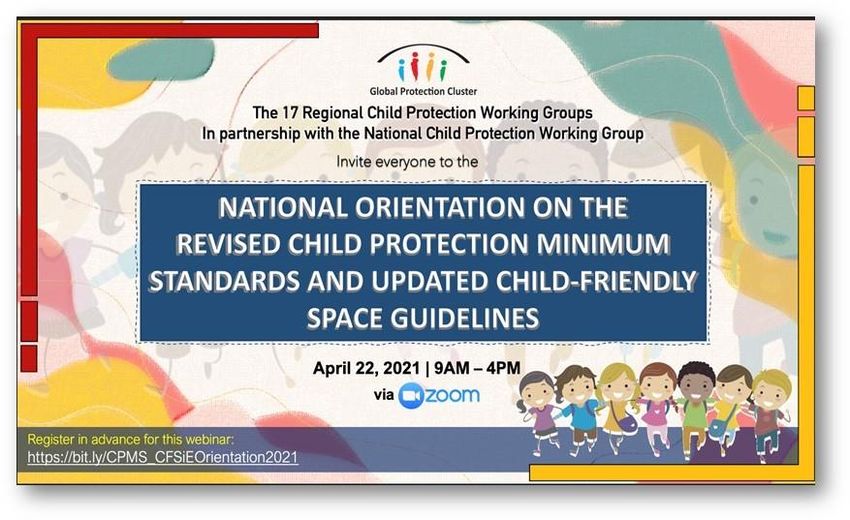
Philippines
              Coronavirus Disease 2019 (COVID-19) Situation Report #76
              10 May 2021
              Data reported by the Department of Health on 10 May 2021
 Epi Update                      Tests                   Cases                Deaths           ICU Occupancy
 COVID-19                      734,356                 102,398                 1709                60,42%
                           Tests past 14 days      Cases past 14 days    Deaths past 14 days
                             11,619,829               1,108,826               18,562                3,004
                           Cumulative unique       Cumulative cases      Cumulative deaths        ICU beds for
                           individuals tested                                                  COVID-19 cases
                                10,2%
                          Cumul. Positivity rate
 Health service                 17,886                   1,271                30,652               132,673
 provision              Healthcare worker cases    Hospitals admitting   Non-ICU beds for      TTMF beds for
 COVID-19               (cumulative)               COVID-19 patients     COVID-19 cases        COVID-19 cases

Strategic approach to COVID-19 Prevention, Detection and Control
Health Service Delivery
WHO Philippines (WHO) continues to support the One Hospital Command Center (OHCC) and its
institutionalization as the National Patient Navigation and Referral System in the country. The OHCC
continues to expand its operations in order to optimize and ensure the adequacy of healthcare services
in both hospitals and intermediate care facilities to address COVID-19 and emergency non-COVID-19
concerns. With the establishment of local pre-hospital triage systems in the local government units, the
OHCC continues to provide a strong communication line and proper coordination between health facilities
in the referral and patient navigation. WHO continues to provide its technical assistance in monitoring the
COVID-19 bed allocation and hospital and Temporary Treatment and Monitoring Facility occupancy of the
National Capital Region (NCR) and other priority regions. Adherence to the healthcare pathways resulting
to the appropriate referral and back referral systems and efficient and rational utilization of these facilities
remains to be critical in the response.
Expansion of the healthcare capacity continues in the NCR Plus (NCR, Bulacan, Cavite, Laguna, Rizal) and
other priority areas. In addition to the expansion, the Department of Health is currently developing the
home care program, which will help decongest the hospital facilities in areas where capacity could not
meet the demand of healthcare services. As for the healthcare workforce augmentation, emergency hiring
is still ongoing and DOH continues to deploy several healthcare workers from different regions of the
country to NCR hospitals. Risk communications and community engagement activities are continuously
being conducted through outreach to the different regions to provide an opportunity to increase
awareness of the community on the appropriate healthcare pathway.

Laboratory and Testing
As of May 10, 2021, there are over 11.6M samples tested by the 222 licensed and functional laboratories
with a cumulative positivity rate of 10.2%. While the number of molecular laboratories expand, the
national laboratory quality assurance (QA) must also be implemented. Recognizing significant
consequences if there is of poor quality in the laboratory on test results and patient outcomes, WHO has
worked closely with the RITM, the national implementor of the laboratory QA program, in preparing key
performance indicators and laboratory quality indicators. The indicators have been translated into the
assessment tool that will be integrated in an existing DOH laboratory reporting platform to ensure
reporting compliance of all laboratories in the COVID-19 laboratory network.

                                                                                                                 2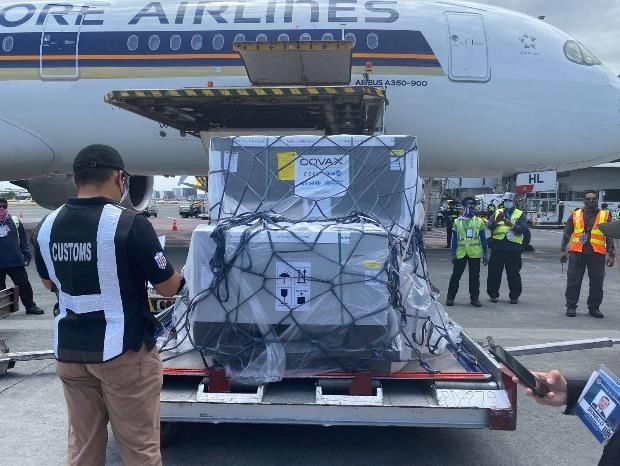
Philippines
             Coronavirus Disease 2019 (COVID-19) Situation Report #76
             10 May 2021
             Data reported by the Department of Health on 10 May 2021
While the local spread of COVID-19 has increased in April 2021, concerns on variants of concern and
interest continue to grow. WHO has supported the DOH Epidemiology Bureau in developing sampling
design to maximize the limited number of reagents and consumables. Technical assistance on the analysis
of biosurveillance data was also extended to augment outbreak response. In addition, assessment of
genomic sequencing capacity at RITM and PGC will commence to identify and address gaps in the process
and further optimize capacity.

Risk assessment, Surveillance and Contract tracing
Risk assessment
• To help prevent and control outbreaks in Local Government Units (LGUs), DOH, Department of the
    Interior and Local Government (DILG), the FASSSTER group and WHO in coordination with the
    National Task Force on COVID-19 are currently discussing a collaboration on anticipatory guidance for
    LGUs under the United Nations Development Programme’s (UNDP) initiative Pintig Lab. The initiative
    is a multi-stakeholder network of data scientists, epidemiologists, economists, and other field experts
    that synthesize data from the public and private sector into policy recommendations that can inform
    the government's response and recovery strategy against COVID-19.
• Due to an increase of cases in various regions in the country (i.e. Region IV-B, VI, IX, BARMM), the
    WHO Country Office has been working together with the different DOH Center for Health
    Development (CHD) offices to assess the increased trend of cases and the capacity of the health
    system in terms of laboratory testing and health care readiness should cases continue to increase.
Surveillance
• To strengthen surveillance by analyzing trends in overall mortality, the WHO Country Office conducted
    field and coordination work to obtain data on deaths in Quezon City and Pasay City in the NCR.
    Preliminary analysis showed that the number of cremations at least doubled in March and April
    compared to January and February among the funeral homes surveyed.
• To identify the risk of entry of the variant of concern B.1.617 from India, the WHO Country Office
    provided input to the DOH Epidemiology Bureau on the sampling strategy for conducting whole-
    genome sequencing of returning overseas Filipinos as well as in priority risk areas and sentinel sites.
Contact tracing and Management
• Baguio City has shared its data (raw case and close contact dataset) with the DOH-FASSSTER team.
   This allows a pilot run of the recently developed contact tracing module of the data analytics platform,
   which includes analysis and cluster mapping.
• The City Epidemiology and Surveillance UNIT’s (CESU) has piloted the utility of the enhanced TKC
   platform/digital solution for contact tracing in three barangays of Quezon City. The information
   system was able to collect data (push and pull data of cases from the repository) and to complement
   it with passive contact tracing data trough citizen reports and digital logbooks from QCPass
   (KyusiPass). Based on the success of the pilot run, the CESU proceeded with full implementation in all
   districts.

Risk Communication and Community Engagement
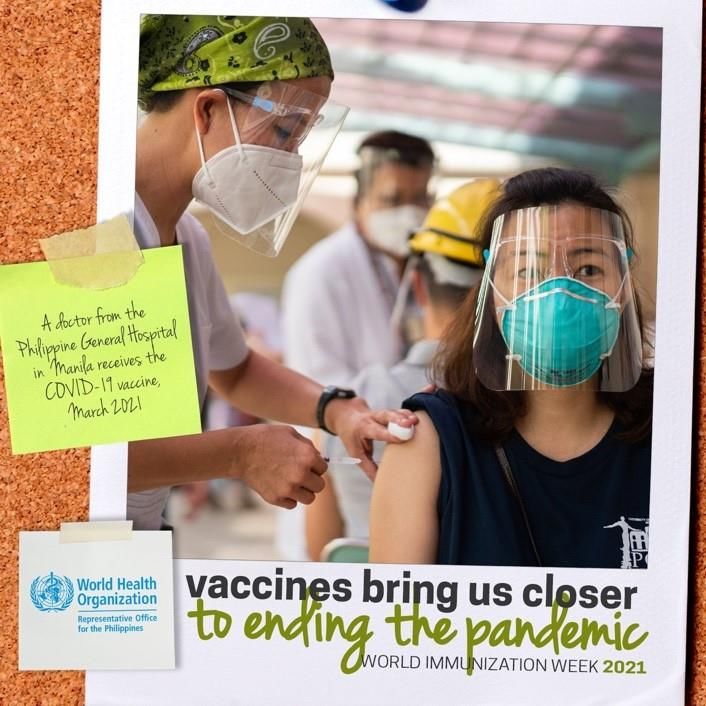
•   The Philippines celebrated World Immunization Week (WIW) from 24-30 April 2021 that aimed to
    promote the use of vaccines to protect people of all ages against disease. As part of WIW, and our
    continuous engagement with faith-based groups in the country, there was a vaccine awareness virtual

                                                                                                         3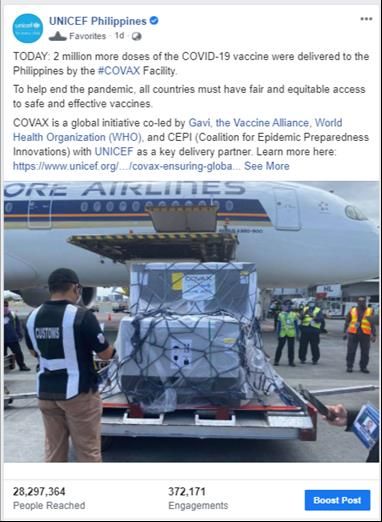
Philippines
            Coronavirus Disease 2019 (COVID-19) Situation Report #76
             10 May 2021
             Data reported by the Department of Health on 10 May 2021
    session with religious leaders of Philippine Children's Ministries Network. A media forum
    and a recognition of champions event was also held in collaboration with the DOH and UNICEF.
•   The WHO Country Office in the Philippines provided orientation trainings to the DOH and local task
    force crisis communication clusters on adverse events following immunization. The
    office also facilitated the risk communication and community engagement section of an After
    Action Review of the Humanitarian Response Plan.
•   World Hand Hygiene Day was celebrated on 5 May 2021. This year’s campaigned called on health care
    workers and facilities to achieve effective hand hygiene action at the point of
    care. This commemorative day also provided an important opportunity to reinforce the importance
    of regular hand washing amidst the recent surge of cases in the Philippines.
•   As part of our regional outreach, a risk communication and community engagement technical
    assistance plan was developed and shared with response authorities in Western Visayas.

                                                             We have sacrificed so much to keep our loved
                                                             ones and community safe from COVID-19.

                                                             Along with other measures like mask-wearing
                                                             and physical distancing, vaccines will help end
                                                             the pandemic and bring us closer again.

                                                             #VaccinesWork

Vaccines
•   As of 11 May 2021, 2,025,038 Filipinos have been vaccinated with their 1st dose vaccine against
    COVID-19 and 514,655 Filipinos have completed their 2nd dose within 3,688 vaccination sites in the
    country.
•   The 1st dose coverage of priority group A1 has increased by 0.7% (11,447 vaccinated) as of 11 May.
    1,195,381 frontline healthcare workers (HCW) in the Philippines, or 76.9% of the 1,554,122
    masterlisted eligible Priority Group A1 population, have received their first dose. Furthermore,
    355,242 HCW, or 22.9% of priority Group A1, have completed their 2nd dose of Sinovac during the
    said date.

                                                                                                        4
Philippines
             Coronavirus Disease 2019 (COVID-19) Situation Report #76
             10 May 2021
             Data reported by the Department of Health on 10 May 2021

                    Percentage of Vaccination Coverage – First Dose and 2nd Completed Dose, per
                    region for Masterlisted Eligible Population Priority A1 as of 11 May 2021

•   466,899 senior citizens (Priority Group A2), 353,842 individuals with comorbidity (Priority Group A3)
    and 8,916 frontline personnel in both public and private essential sectors (Priority Group A4) have
    received their 1st dose of vaccine against COVID-19. 25,070 senior citizens and 134,343 individuals
    with comorbidity in the country have already completed their 2-dose of Sinovac vaccine.
•   At day 10 of the second dose of Sinovac for senior citizens (priority group A2), the drop-out rate was
    55.6%, or a difference of 31,372, compared with day 1-10 of the first dose of Sinovac of the priority
    group A2.

Operations Support Logistics
•   The WHO provided technical assistance in updating/revising the WHO Supply Chain Sizing Tool and
    CCE Inventory Gap Analysis Tool for the COVAX CCE Support Application of the DOH. The Philippines’
    CCE application and accompanying documents have already been sent to the Independent Review
    Committee (IRC).
•   In response to a WHO donation of YH-830 Yuwell Bilevel Positive Airway Pressure (BiPAP) machines,
    the WHO Country Office will facilitate a training on the BiPAP machines for the DOH Health Facilities
    Bureau.
•   An official request received from DOH for Dexamethasone is currently being processed for local
    procurement.

Partner Coordination
The COVID-19 Humanitarian Response Plan (HRP), which supported the government of the Philippines in
providing critical health interventions and humanitarian assistance to the 5.4 million poorest and most
marginalized Filipinos, expired in March 2021 after one year of duration. Against this backdrop, UN OCHA
invited on behalf of the Humanitarian Country Team to an After-Action Review (AAR) on 5 May 2021.
During the meeting, more than 100 participants discussed successes, challenges and lessons learned in
the implementation of the COVID-19 HRP. The outcomes of the AAR will be included into a final report of
the COVID-19 HRP that is currently being prepared.

                                                                                                        5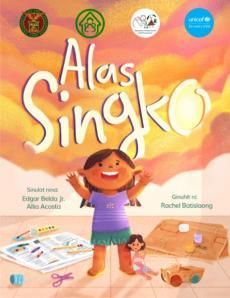
Philippines
             Coronavirus Disease 2019 (COVID-19) Situation Report #76
             10 May 2021
             Data reported by the Department of Health on 10 May 2021
Updates from UNICEF
Strategic Approach
On 8 May 2021, 2 million more doses of the COVID-19 vaccine were delivered to the Philippines by the
COVAX Facility. COVAX is a global initiative co-led by Gavi the Vaccine Alliance, World Health Organization
(WHO), and CEPI (Coalition for Epidemic Preparedness Innovations) with UNICEF as a key delivery partner.

Community Support
• On 22 April 2021, UNICEF supported a nationwide orientation on the revised Child Protection
   Minimum Standards in Humanitarian Action and on the updated 2020 version of the Philippine
   National Implementation Guidelines on Child Friendly Spaces. The latter includes guidance on
   infection prevention and control in the context of a pandemic. The orientation was organized by the
   17 Regional Child Protection Working Groups mentored by the National Child Protection Working
   Group (NCPWG). The NCPWG is co-chaired by the Council for the Welfare of Children, World Vision,
   and UNICEF. The orientation reached 8,077 parents, caregivers, and child protection workers.

•   UNICEF initiated multi-sectoral dialogues between various stakeholders from the government and
    international development organizations to plan for the resumption of in-person schooling in the
    country. These discussions fostered collaboration between the Department of Education (DepEd),
    Department of Health (DOH), the National Economic Development Authority (NEDA), USAID, and
    other members of civil society.

                                                                                                         6
Philippines
Coronavirus Disease 2019 (COVID-19) Situation Report #76
10 May 2021
Data reported by the Department of Health on 10 May 2021
• UNICEF and other Education partners has been advocating for teachers and school personnel to be
included at the top of the list for COVID-19 vaccines. They have now been moved up from priority
group B2 to A4.
• UNICEF and partners have released the digital version of the Alas Singko
storybook. It is a story of a young girl’s journey into adapting to the
changes brought about by COVID-19. This was developed in partnership
with UP Department of Family Life and Child Development, Early
Childhood Care and Development (ECCD) Council, DepEd Philippines
and Department of Social Welfare and Development, and is meant to
help young children cope with the challenges of pandemic while
continuing to learn at home. The e-book is available for download in
Filipino and English and as a coloring book here:
https://www.unicef.org/philippines/reports/alas-singko.
RCCE
• As a key delivery partner of the COVAX global initiative,
UNICEF shared the news of the arrival of the 2 million
doses of COVID-19 vaccines on 8 May which reached over
28 million people and received over 370,000 engagements
on Facebook.
UNICEF also issued a joint press release with DOH and
WHO on the arrival of the vaccines which was picked up by
25 online and print media. Link to the PR.
• UNICEF covered the arrival of the first batch of Pfizer
vaccines provided by the COVAX Facility with at least
193,000 doses on 10 May. The news reached over 3 million
users on Facebook. The joint press release was picked up
24 online and print media and is available here.
• In celebration of World Immunization Day, UNICEF posted
content on COVID-19 vaccination and immunization as part
of its continuous COVID-19 response and advocacy on the
importance of childhood immunization to fight
preventable diseases. The UNICEF Goodwill Ambassadors
also joined the campaign. View their messages here and
here. For press releases are available here:
https://www.unicef.org/philippines/stories/children-
have-right-health
https://www.unicef.org/philippines/press-
releases/vaccines-bring-us-closer-philippines-celebrates-
world-immunization-week-honor
• As of 5 May, UNICEF has reached 91.5 million Facebook
users with critical COVID-19 key messages.
7Philippines
Coronavirus Disease 2019 (COVID-19) Situation Report #76
10 May 2021
Data reported by the Department of Health on 10 May 2021
Logistics, Procurement, and Supply Management
Requesting update to UNICEF entries for this section. Updated entries are in red font.
Org Items Delivered Expected
Tents for triage and isolation purposes 72m2 and 42m2 83
Modular tents for isolation facility 200
Head cap 5,000
Goggles for health workers 5,000
Coveralls for health workers 72,380 5,000
Gown for health workers 5,000
Face shields 33,000
N95 masks for health workers 35,680 5,000
Surgical Masks 406,750 5,000
Surgical gloves, pair 5,000
Shoe covers, pair 5,000
Reusable cloth masks 76,500
Gloves, heavy duty, rubber/nitrile 1,000
UNICEF
Goggles, protective, indirect-side-venti 500
Apron, protection, plastic, reusable 500
Boots, rubber/PVC, reusable, pair 500
Coveralls for cleaning and disinfection personnel 1,000
N95 masks for cleaning and disinfection personnel 15,000
Cleaning and Disinfection kits 1,196 100
Water kits 2,738
Hygiene kits 7,540
Handwashing facilities 210
Temporary drinking water facilities 15
Temporary sanitation facilities 67
Chlorine pool testers for water quality monitoring 12
Bulk water storages/bladders 6
8You can also read


