Physics Illinois Undergraduate Programs - Department of Physics College of Engineering University of Illinois at Urbana-Champaign
←
→
Page content transcription
If your browser does not render page correctly, please read the page content below
Physics Illinois
Undergraduate Programs

                              Department of Physics
                              College of Engineering
       University of Illinois at Urbana-Champaign
The exceptional quality of our programs reflects
                  our strong commitment to undergraduate
                  education. Over the last 15 years, in
                  collaboration with our nationally recognized
                  Physics Education Research Group, our faculty
                  has reinvented the way undergraduate
                  physics courses are taught, with better hands-
                  on curricula, redesigned labs, and innovative
educational technologies.

Many of our students take advantage of the various undergraduate
research opportunities that, because we are part of a large
research institution, we are able to provide. These students broaden
their skill sets and gain invaluable experience working in the
laboratories of our world class researchers.

The study of physics will give you an understanding of the
fundamental rules that govern the physical world on a more
intimate and detailed level than any other scientific discipline.
Just what you do with this is ultimately up to you. Many of our
graduates go on to research and teaching careers in physics.
Others apply their understanding of physical systems, mathematics,
and computation to solve problems in medicine, engineering, and
business.

In order to support the diverse career goals of our students, we have
infused our programs with a variety of elective options. We offer four
distinct curriculum paths to bachelor’s degrees, one in the College
of Engineering and three in the College of Liberal Arts & Sciences.

Each year, we seek out the brightest, most highly motivated and
diverse group of rising freshmen—from Illinois, across the U.S., and
around the world—to join our Physics Illinois student body. We invite
you to check us out and apply.

                        —Professor Kevin Pitts, high-energy physicist,
                          Assoc. Head for Undergraduate Programs
At the Leading Edge
Physicists study, measure, and manipulate the fundamental interactions of matter,
energy, space, and time to solve scientific mysteries, reveal the workings of nature,
and expand our knowledge of the universe.

The Department of Physics at the University of Illinois at Urbana-Champaign is a
world leader in theoretical and experimental physics research and education, with an
illustrious history, a prestigious faculty, and outstanding students.

Research in physics at Illinois is fundamental to the development of today’s
technologies, including transistors, semiconductors, and superconductors. Advances
in magnetic resonance imaging, the development of computers and supercomputers,
applications of radar, and the growth of the Internet have all arisen directly from
discovery-driven research at Illinois.

Our students work alongside scientists at the leading edge of discovery and
innovation.
Research Opportunities
Physics majors may elect to engage in hands-on research, beyond what is included
in the core physics courses. An optional senior thesis for physics majors comprises
three semesters of integrated research and instruction. Or, students may apply to
faculty members for individual study projects. And finally, students who are eager for
an off-campus experience are encouraged to apply for summer internships at other
universities, national laboratories (such as Fermilab, Argonne, and Los Alamos), and
private companies across the country.

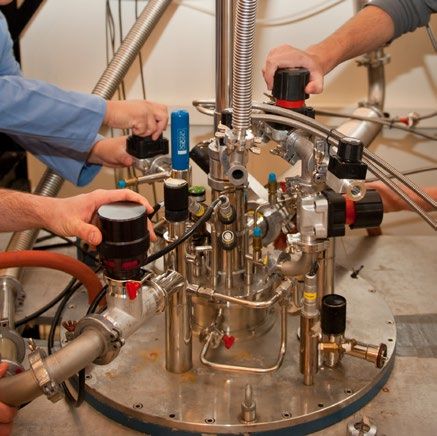
Cutting-edge research at Physics Illinois is focused primarily on condensed
matter physics, atomic, molecular, and optical physics, quantum information,
astrophysics/cosmology, biological physics, nuclear physics, high-energy physics,
and physics education research. Our faculty play leading roles in the Frederick Seitz
Materials Research Laboratory, the National Center for Supercomputing Applications,
and the Institute for Genomic Biology—all on the U. of I. campus.
Student Life
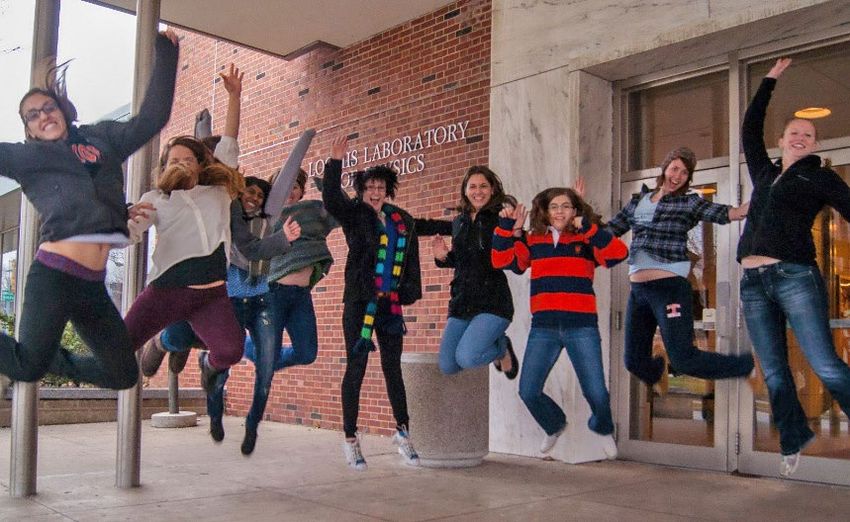
The department is home to three student-run clubs. Beyond that, the campus
is home to more than 1,100 registered student organizations. Whatever your
interests beyond physics, you’ll find new friends to share them at Illinois.

Physics Society (Physoc)
Physoc members share a common
interest in physics. Students from a
wide range of majors attend meetings
to expand their knowledge of physics,
to engage in community service, and
(sometimes) to blow things up.

Society for Women
 in Physics (SWIP)
SWIP provides opportunities
for its members to network
with students, faculty, and the
community through social,
academic, and philanthropic
activities. SWIP also reaches
beyond our campus to send its
members to conferences across
the country.

Physics Van
Physics Van members travel to
local grade schools and other
venues to perform fundamental
physics demonstrations that
have big “wow” factors. Through
community outreach, Van
members help children to see that
science is exciting and fun.
Career-Ready Graduates
An undergraduate degree in physics from the University          Some examples of
of Illinois will open doors for you, whatever your career    standard elective options
goals. We are ranked among the top ten departments           astrophysics/cosmology
in the U.S. by the National Research Council and             biological physics
are currently ranked number one in the nation in             computational physics
undergraduate engineering physics by U.S. News and           earth science/geophysics
                                                             environmental science
World Report. Our faculty includes a Nobel laureate,
                                                             materials science
ten members of the National Academy of Sciences, and         optical physics
thirty-four Fellows of the American Physical Society.        physical electronics
                                                             pre-med
As an undergraduate, you can customize your curricula        pre-law
                                                             professional physics
to fit your own career goals. You may choose from pre-
                                                             science writing
approved elective options or create your own course of       complex systems
study with the approval of an adviser.                       nuclear physics
                                                             energy & sustainability
About 40 percent of our graduates immediately enter
a graduate program in physics intending to pursue
a research-related career. Another 30 percent enter
graduate school (often a master’s degree program) in          Areas of graduate study
other fields. The remaining 30 percent enter directly into   pursued by our graduates
careers, finding employment opportunities throughout                (2011-2013)
the world in industry, government, schools and private       applied physics
organizations.                                               applied statistics
                                                             architectural acoustics
                                                             astronomy
                                                             biomedical engineering
                                                             computer science
                                                             electrical engineering
                                                             finance
                                                             geophysics
                                                             journalism
                                                             law school
                                                             material science
                                                             mathematics
                                                             neuroscience
                                                             nuclear Engineering
                                                             physics
                                                             secondary education
Employers who hired our graduates
                (2011-2013)
Accenture
Belvedere Trading
Chicago Tech Academy
CISCO Systems
CreateASoft
Crystal Lake Central HS
Department of Defense
Elk Grove HS
Epic
Google
Greenline Financial Technologies
HRL Laboratories
IBM
IMC Financial Markets Asset Management
Inservice Engineering
Intel
Jump Trading
Lake Forest Academy
Olenick & Associates
Qualcomm
Simplex Investments
Studio 222
Twitch, LLC
ULine Shipping Supply Specialists
US Military
ViaSat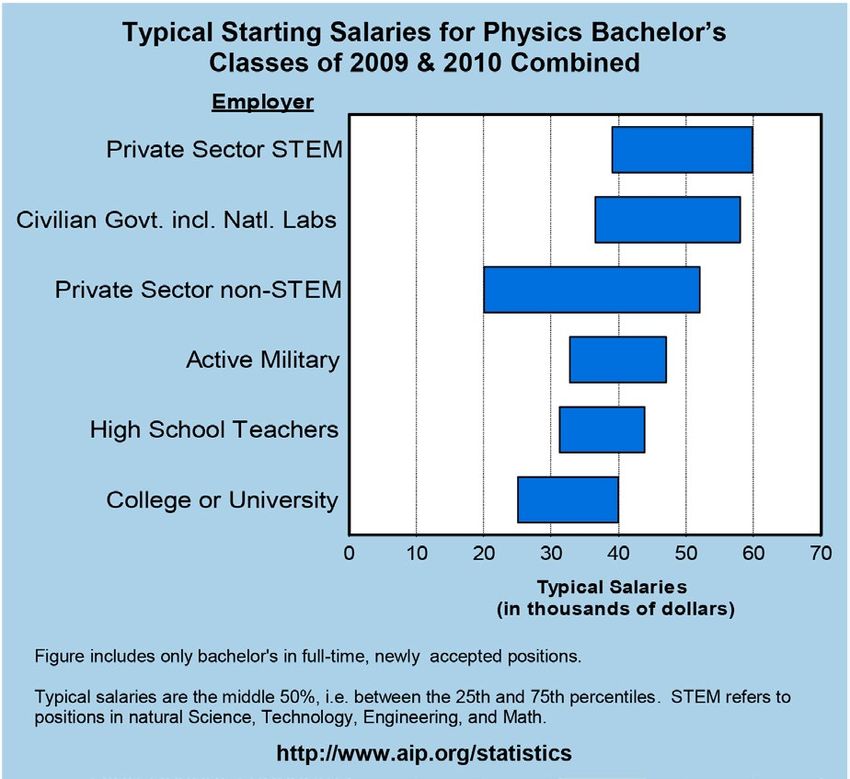
PHYSICS ILLINOIS
                               University of Illinois at Urbana-Champaign

                        At Physics Illinois, we believe a diverse faculty and
                        student body bring greater breadth of ideas and
                        wider possibilities for innovation. As a department,
                        we are committed to increasing the enrollment of
                        students from groups that have historically been
                        underrepresented in physics.
                             For more information

                       ▲
                             Department of Physics
                             (217) 244-2948
                             email: undergrad-info@physics.illinois.edu
                             http://physics.illinois.edu/

                             To arrange a campus tour

                       ▲
                             Campus Visitors Center
                             (217) 333-0824
                        ▲    email: visits@illinois.edu

                             To apply
                             Office of Admissions and Records
                             (217) 333-0302
                             http://admissions.illinois.edu/apply/app.html

All images in this publication are copyrighted by Physics Illinois, with these exceptions:
page 2, images 1 and 5 from the top, courtesy of the PHENIX experiment at RHIC,
Brookhaven National Laboratory; image 2 courtesy of the Dark Energy Survey, Fermi National
Accelerator Laboratory; page 6, starting salaries graph courtesy of the American Institute
of Physics Statistical Research Center; back cover, image 3 courtesy of the Theoretical
and Computational Biophysics Group, NIH Center for Macromolecular Modeling and
Bioinformatics, Beckman Institute, University of Illinois at Urbana-Champaign.

Printed on recycled paper with soybean ink.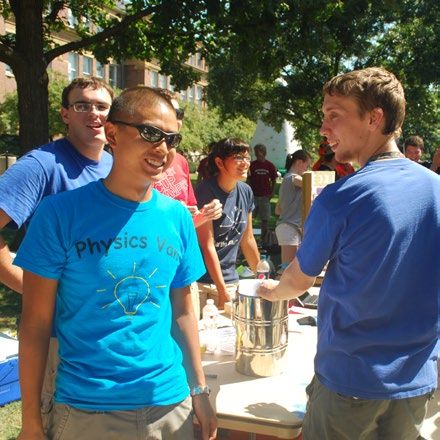
You can also read


