Picturing her calling - INSIDE - Canadian Mennonite
←
→
Page content transcription
If your browser does not render page correctly, please read the page content below
February 15, 2021   Volume 25 Number 4

                    Picturing her calling
                       Photo essay by Lois Siemens, pg. 14

                                                                                       INSIDE
PM40063104 R09613

                                                                 What are they doing with our money?   2
                                                                          A hymn by any other number 4
                                                                                  Focus on Camps 19-29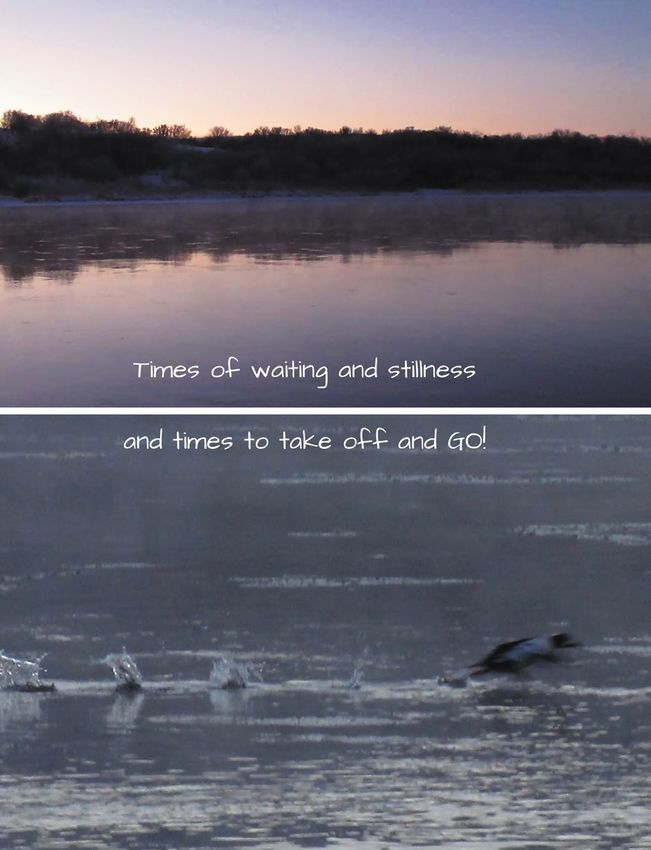
2                                                                                              Canadian Mennonite February 15, 2021

         editorial

          What are they doing                                                                • Supporting publishing projects for
                                                                                             curriculum and worship materials;
                                                                                             • Distributing books and other materi-

           with our money?
                                                                                             als that encourage faith development
                                                                                             • Supporting Mennonite schools and
                                                                                             camps, who in turn train new leaders;
                                                                                             • Setting priorities for working togeth-
                                   By Virginia A . Ho stetler                                er in nationwide efforts and guiding us
                                        E xe cutiv e Edito r                                 into new callings;
                                                                                             • Informing Mennonites about

                  T        he annual congre-
                           gational meeting is
                           moving along with
                    the usual reports and
    updates. Then it’s time to discuss next
                                                 Mennonite Church Eastern Canada (97).
                                                   The regional churches have an
                                                 agreement—a covenant—with each
                                                 other to form Mennonite Church
                                                 Canada. While the regional churches
                                                                                             ministries across Canada and overseas,
                                                                                             inviting prayer, volunteers and financial
                                                                                             support;
                                                                                             • Coordinating projects with other
                                                                                             Mennonite denominations in North
    year’s budget. Seeing the dollar amount      engage in their own ministries closer to    America;
    the congregation will forward to the         home, they also help in the ministries of   • Representing MC Canada in ecumen-
    regional church, a well-intentioned          the nationwide church. A small staff at     ical efforts for peace and justice;
    member stands up to ask the question:        the nationwide office carries out tasks     • Equipping and supporting Interna-
    What are they doing with our money           done on behalf of the larger church.        tional Witness workers to share God’s
    anyway?                                        Often larger visions for ministry         good news in China, Philippines, South
       A fair question. When you and I sit       depend on cooperation among the             Korea and Thailand;
    down regularly to write out cheques or       various parts, beyond our individual        • Cooperating with Anabaptist siblings
    do electronic transfers to our church, we    congregations. “Doing together what we      in other places to help them carry out
    know that some of that money will be         cannot do alone,” is how the MC Sas-        their ministries.
    passed on to ministries outside our          katchewan website expresses it. The
    congregation. We want those gifts to         regional and nationwide church struc-         The financial gifts you and I send to
    benefit our own community and to do          tures are in place to help us accomplish    our regional church help the church
    much good elsewhere in the world.            things that our individual congregations    carry out God’s mission in many places,
       A verse that comes to mind is 1 Peter     cannot do efficiently on their own.         close to home and thousands of kilo-
    4:10: “Each of you should use whatever         So, what’s happening with the money       metres away. So maybe the question isn’t:
    gift you have received to serve others, as   our congregations give to the larger        What are they doing with our money? A
    faithful stewards of God’s grace in its      church? Here are a few examples:            better question would be: What are we
    various forms.” It’s good to remind                                                      doing with God’s money?
    ourselves that our donations are God’s       • Helping churches find pastors;              In the coming weeks, the five regional
    money, an expression of God’s grace to       • Providing support to new                  churches will be holding their annual
    be shared beyond our own circles.            congregations;                              delegate sessions. With meetings
       Quick review: Mennonite Church            • Giving practical help for congrega-       happening online this year, you may be
    Canada is made up of five regional           tions to build new websites;                able to take part and hear more about
    churches (in former times called confer-     • Contributing toward the cost of your      what we—together—are doing with
    ences), that are geographically based.       Canadian Mennonite subscription;            God’s money. Check your regional
    Congregations in those areas are             • Encouraging connections between           church website for details.
    members of their respective regional         congregations;                                Canadian Mennonite will report on
    churches. They are Mennonite Church          • Organizing events for youth;              these meetings in upcoming issues. In
    British Columbia (with 29 congrega-          • Offering ongoing training and             the meantime, keep following other
    tions), Mennonite Church Alberta (12),       accountability for pastors;                 stories in our magazine, where you will
    Mennonite Church Saskatchewan (26),          • Planning events for inspiration,          see many examples of your/our/God’s
    Mennonite Church Manitoba (39) and           learning and spiritual growth;              money at work. l

                                                                     Printed in Canada

                   Award-winning
                        member
                                                                                             ISSN 1480-042X
contents
Canadian Mennonite Vol. 25 No. 4                                                                                                                             3

                                                                                                                     February 15, 2021 / Vol. 25, No. 4

 ABOUT THE COVER:                                                                  A hymn by any other
 “Times of waiting and stillness . . . and times to take off and go!”              number 	   4
 On the 10th anniversary of her pastoral ordination on Jan. 9, Lois                Bradley Kauffman tells
 Siemens went for a walk by the South Saskatchewan River and                       the story behind a
 began taking photographs. See a selection of them on pages 14                     well-loved hymn and
 and 15.                                                                           invites openness to how
                                                        PHOTO: LOIS SIEMENS        the Spirit works in the
                                                                                   worshipping community
 Liberating and recovering Anabaptist theology                             12
 David Driedger reviews two books that take a new look at
 Anabaptist theology and identity.

 'We had a huge spike'                                                     16
 Will Braun interviews farmers to learn about the effects of
 COVID-19 on their small operations.
                                                                              Regular features:
 Living in the moment (during COVID-19)                                    18 For discussion 6 Readers write 7 Milestones 7
 Young adults from Germany and France find meaning in Mennonite                   A moment from yesterday 8 Online NOW! 13
 Voluntary Service.                                                               ServiceLinks 28 Calendar 31 Classifieds 31

 Seven tips for creating engaging online events                            32 Transition in leadership Bob Boehr                                        8
 Pastor Anton Sidharta offers suggestions for involving participants
 online. See the back cover.                                                      'Our framing story' Ed Olfert                                         9

                                                                                  The practice of Lent Randolph Haluzy-DeLay                           10

                                                                                  Living in the middle Joshua Penfold                                  11

                                                    490 Dutton Drive, Unit C5,
                                                      Waterloo, ON, N2L 6H7       Canadian Mennonite Staff
                                                                                  Publisher, Tobi Thiessen, publisher@canadianmennonite.org
 Phone: 519-884-3810 Toll-free: 1-800-378-2524 Fax: 519-884-3331                  Executive Editor, Virginia A. Hostetler, editor@canadianmennonite.org
 Website: canadianmennonite.org                                                   Managing Editor, Ross W. Muir, managinged@canadianmennonite.org
   Facebook.com/Canadian.Mennonite @CanMenno @canadianmennonite                   Online Media Manager, Aaron Epp, onlinemgr@canadianmennonite.org
                                                                                  Editorial Assistant, Barb Draper, edassist@canadianmennonite.org
 Please send all material to be considered for publication to
                                                                                  Graphic Designer, Betty Avery, designer@canadianmennonite.org
 General submission address: submit@canadianmennonite.org
                                                                                  Circulation/Finance, Lisa Jacky, office@canadianmennonite.org
 Readers Write: letters@canadianmennonite.org
                                                                                  Advertising Manager, D. Michael Hostetler, advert@canadianmennonite.org,
 Milestones announcements: milestones@canadianmennonite.org
                                                                                  toll-free voice mail: 1-800-378-2524 ext. 224
 Calendar announcements: calendar@canadianmennonite.org
                                                                                  Senior Writer, Will Braun, seniorwriter@canadianmennonite.org
 publications mail agreement no. 40063104 registration no. 09613
                                                                                  B.C. Correspondent, Amy Rinner Waddell, bc@canadianmennonite.org
 return undeliverable items to: Canadian Mennonite,                               Alberta Correspondent, Joanne De Jong, ab@canadianmennonite.org
 490 Dutton Drive, Unit C5, Waterloo, ON, N2L 6H7                                 Saskatchewan Correspondent, Donna Schulz, sk@canadianmennonite.org
                                                                                  Manitoba Correspondent, Nicolien Klassen-Wiebe, mb@canadianmennonite.org
 Mission statement: To educate, inspire, inform, and foster dialogue on issues    Eastern Canada Correspondent, Janet Bauman, ec@canadianmennonite.org
 facing Mennonites in Canada as it shares the good news of Jesus Christ from an
 Anabaptist perspective. We do this through an independent publication and        One-Year Subscription Rates
 other media, working with our church partners.                                   Canada: $46 + tax (depends on province where subscriber lives)
                                                                                  U.S.: $68 International (outside U.S.): $91.10
 Published by Canadian Mennonite Publishing Service. Regional churches and
 MC Canada appoint directors to the board and support 38 percent of               Subscriptions/address changes
 Canadian Mennonite’s budget.                                                     (e-mail) office@canadianmennonite.org
 Board Chair, Henry Krause, hakrause@telus.net, 604-888-3192                      (phone) 1-800-378-2524 ext. 221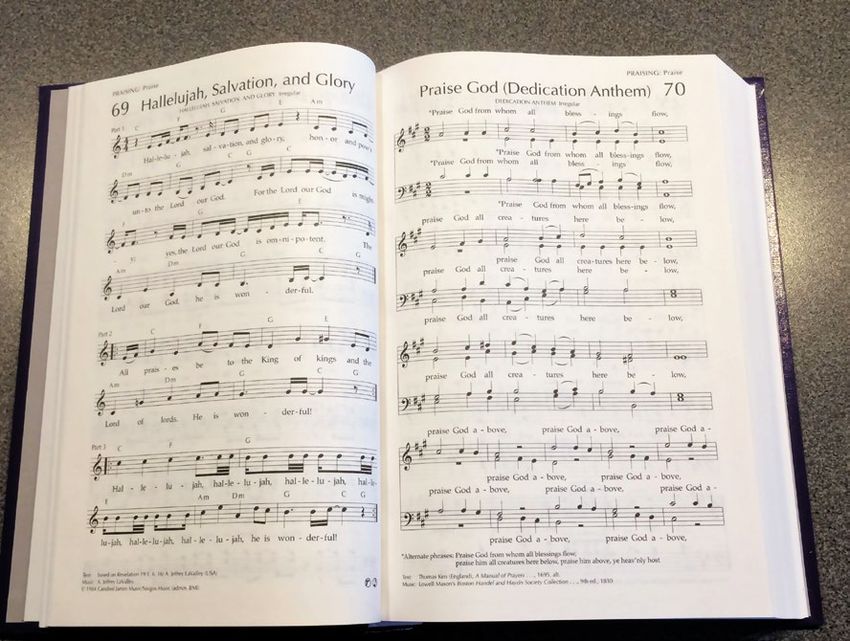
4                                                                                             Canadian Mennonite February 15, 2021

            feature

               A hymn by any
               other number            The story behind ‘Dedication Anthem’
                                                   By Br a d l e y K au f f man

                                           Mennonite Worship and Song Committee

                                                                                                    PHOTOS BY MERRILL MILLER
    Apart from communities in the eastern United States, where the song was previously known, Mary Oyer and her committee
    colleagues had presumed the song would appeal primarily to church choirs looking for a challenge.

    W      hen hymnologist Mary Oyer travelled from
           Uganda to Oregon to attend the 1969 Mennonite
    Church general assembly, she was surely filled with
                                                                  recalled in a recent telephone conversation. Apart from
                                                                  communities in the eastern United States, where the
                                                                  song was previously known, Oyer and her committee
    anticipation. She arrived in the second week of August        colleagues had presumed the song would appeal primar-
    to attend the dedication of a new denominational              ily to church choirs looking for a challenge.
    worship book, The Mennonite Hymnal (1969), which the             To her surprise, its appeal as a congregational song in
    General Conference Mennonite Church would also use.           gatherings of predominantly white Mennonites was
      As Oyer and her colleagues wondered which of these          immediate. “In retrospect, I would say ‘no wonder,’” she
    653 songs and 98 worship resources would find reson-          added. “People at that time were ready to sing something
    ance, a surprise lay in store. In that inaugural gathering    cheerful.” It was so galvanizing in the summer of 1969,
    around this collection, an unlikely standout emerged: a       Oyer recalled. “We ended every day of meetings by
    three-page 19th-century anthem tucked away in the             singing it.”
    “Choral Hymns” section, No. 606, “Praise God from                In the 1960s, most Mennonite congregations would
    Whom.”                                                        have been familiar with the Thomas Ken doxological text
      “The Virginians already knew it well,” 97-year-old Oyer     “Praise God from Whom All Blessings Flow” (1708), but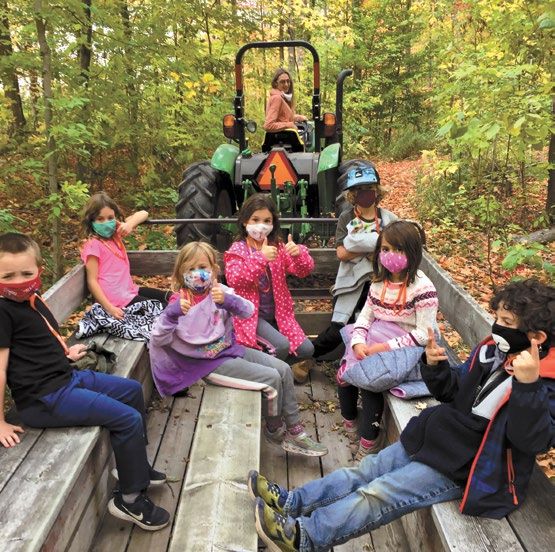
Canadian Mennonite Vol. 25 No. 4                                                                                                    5

 they would have sung it with the “OLD         a congregation into insiders who know    able” contemporary sources.
 HUNDREDTH” tune (frequently                   some of the history behind the song and     The 1970s would indeed see Mennon-
 referred to as “The Doxology”) from the       outsiders who do not—insiders who are    ites drawing on the influence of the
 1551 Genevan Psalter. This widely             familiar with four-part harmony and      Catholic reforms known as Vatican II,
 memorized setting served as a weekly          outsiders who are not.                   including simple choruses with guitar or
 sung benediction in the worship life of          It amounts to a cultural secret hand- piano accompaniment, and adopting
 many congregations.                           shake. We diminish the gifts of this songsongs representing greater diversities of
    With the emergence of a “new”              if we allow it to confuse or confound.   origin. Both of these developments are
 (though by 1969 well over a century old)         Some urged the Mennonite Worship      explored in the 1979 Sing and Rejoice
 way of singing a familiar text, worship-      and Song Committee that produced the     collection. The next hymnal committee
 pers would reach for a nickname to            new Voices Together hymnal to correct    (a joint effort between General Confer-
 differentiate the two.                        the 1992 treatment by assigning the      ence Mennonites, “Old” Mennonites
    Which “Praise God from Whom”?              song its “rightful place” between 605    and the Church of the Brethren) began
 No. 606!                                      and 607.                                 to take shape as early as 1983.
    When a hymn title like “Praise God            Editorial judgment ultimately reasoned   Throughout all of this change,
 from Whom” is ambiguous, often the            that backward-facing pride-of-place      Mennonite worshippers have developed
 tune name (traditionally printed in all       would diminish a potent story of the     and maintained an appetite for explor-
 caps) offers a path to clarity. The 1830      song. God’s Spirit will move in ways thating and adopting new songs and
 source material (published without            we cannot expect or prescribe. Further,  expressions of worship. Oyer’s study of
 attribution by the Boston Handel and          privileging a song so tied to white ethnic
                                                                                        East African songs, and the relation-
 Haydn Society) named this anthem              identity could serve to perpetuate insider
                                                                                        ships she would later forge with
 simply “doxology,” which did not help         versus outsider dynamics.                Christian musicians across Asia, would
 differentiate it for a 20th-century              Voices Together underscores the       influence the curation of Hymnal: A
 Mennonite audience. The 1969 hymnal           power of this song as a praise hymn by   Worship Book. And that movement
 committee must have anticipated this,         placing it in the Praise section, at No. toward worshipping with a global
 adding a secondary parenthetical to the       70. In fact, it anchors a succession of  church spread ecumenically.
 tune name: doxology (dedication               doxologies. No. 71 is the OLD HUN-          The innovations in church music that
 anthem).                                      DREDTH setting, which sits on a facing   were evident in the late 1960s through
    The qualifier, “dedication anthem,”        page with a newly composed “Alleluia”    the ’90s continue to thrive today. We see
 reveals the committee’s presumption           refrain (an optional tag to accompany    this in a proliferation of new hymn
 that the song would serve as a festival       No. 71) by Darryl Neustaedter Barg (No.  writers, increasingly versatile contem-
 hymn rather than one that would find          72), and a guide to signing “Alleluia” inporary worship styles and intercultural
 regular use in worship.                       American Sign Language (73).             songs. Twentieth-century hymnal
    The 1969 Mennonite Hymnal organ-                                                    committees had relatively small
 ized its contents by theme and musical        Musical innovations, blurring            numbers of living—or historical for that
 idiom. White gospel hymns and choral          boundaries                               matter—Anabaptist writers to include.
 anthems had their own sections. The             The placement of “Dedication Anthem” Those who curated Voices Together have
 next full-length denominational               in Voices Together reflects the ways     been energized by a groundswell of
 collection, Hymnal: A Worship Book            Mennonite communities are evolving,      Anabaptists creating art, words for
 (1992), centred the flow of worship in        expanding and singing new songs.         worship, songs, tunes and hymn texts.
 its theological and thematic distribution       The 1969 hymnbook, promoted as a          Karen Lafferty’s 1972 “Seek Ye First”
 of material.                                  conservative historical collection,      (included in Sing and Rejoice and
    Reinforcing this flow, “Dedication         landed amid a watershed moment in        Hymnal: A Worship Book) is an example
 Anthem,” which by then had had a              ecumenical church music. The commit- of a song from the early years of the
 23-year history of denomination-level         tee had completed its work in 1967, and, contemporary worship movement that
 adoption, was promoted to a place             by the time of publication in 1969, a    is still sung today. Following the
 much earlier in the collection (No.           significant renaissance of church music risk-taking trajectories of Sing and
 118), reflecting its function among           was underway. In his Aug. 5, 1969,       Rejoice, Hymnal: A Worship Book and
 songs of praise.                              review of the new hymnal in Gospel       its later supplements, Voices Together
    Some communities that valued the           Herald, the Mennonite Church maga-       included 35 songs from contemporary
 song, however, viewed this as a demotion.     zine, Ervin Beck noted that adopters of  worship publishers. Far from being
    It is easy, in retrospect, to understand   the hymnal might be wise to balance its confined to the idiom’s praise-and-wor-
 how a number became a de facto title.         conservatism (the bulk of the collection ship origins, these songs support a
 Today, though, announcing or referring        was material considered to be tried and range of expression across the Voices
 to that song by its number alone divides      true) with some form of more “dispos-    Together table of contents.
6                                                                                                  Canadian Mennonite February 15, 2021

      In a recent example of how idiomatic
    boundaries become blurred, All Sons
    and Daughters, a contemporary worship
    band, adapted the Prayer of St. Patrick
    from fifth-century Ireland in their 2014
    song, “Christ, Be All around Me.”
      When a worshipping community
    adopts a new hymnal, worshippers have
    new opportunities to grow the ways we
    worship together and expand the
    bounds of who is invited. As styles meld
    over time, labels begin to hold less
    significance.
      Not all contemporary worship music
    conforms to simple unison structures.
    Composer-songwriters like Bernadette
    Farrell (“Longing for Light,” 1993)
    occupy a musical space that ventures
    toward folk and popular idioms.
      The accessibility of singing in unison
    has been important for generations.
    Voices Together builds on a need for         Some urged the Mennonite Worship and
    balance between traditional and contem-      Song Committee that produced the new
    porary, unison and harmonized singing.       Voices Together hymnal to correct the
      History and tradition are important,       1992 treatment by assigning the song its
    and must be living and flexible to           ‘rightful place’ between 605 and 607.
    maintain positive impacts.
      “Dedication Anthem” does not have
    broad enough cultural accessibility to
    draw together a diverse 21st-century          ΛΛFor discussion
    church. But if we’re paying attention to
    the gifts of “Dedication Anthem,” we will     1. As you think of all the church hymnals you have used, which one has had the greatest
    remember that the Holy Spirit will move       impact on you? Where/how did you and your congregation learn to sing “Praise God
    in ways that worshippers and hymnal           from Whom” (No. 606 in The Mennonite Hymnal)? How do you explain the popularity
    committees cannot predict or prescribe.       of this song among Mennonites in the late 20th century?
      As members of Mennonite Church
    Canada and MC U.S.A. welcome a new            2. Bradley Kauffman explains that The Mennonite Hymnal (1969) had separate sections
    denominational song collection, let’s         for white gospel hymns and choral anthems. What would be some reasons for organizing
    wonder together and explore what              a hymnal this way, and why do you think later hymnals did not follow that pattern? How
    songs and worship resources draw a            would you organize songs in a hymnal?
    diverse church together. l
                                                  3. Kauffman comments that announcing or referring to a song by its number divides
                Bradley Kauffman served as        a congregation into insiders and outsiders, and becomes a “cultural secret handshake.”
                the project director and          Do you agree? How does your congregation work at balancing music that is familiar and
                general editor for Voices         nurturing with songs that are less familiar but perhaps more welcoming?
                Together since the
                Mennonite Worship and             4. Does your congregation sing more harmonized or unison songs? What are the benefits
    Song Committee launched its work in the       of each of these styles? Do you think church music is growing or declining in importance?
    summer of 2016.                               How do you think the Voices Together hymnal will be a blessing to the church?

    Originally published as “Make the             —By B arb D r ap er
    chorus swell,” in the Nov. 27, 2020, issue
    of Anabaptist World. Reprinted by               S ee related resources at
    permission.                                      www.commonword.ca/go/2199
Canadian Mennonite Vol. 25 No. 4                                                                                                      7
                                                                                                                            opinion
 ΛΛReaders write                                                    ΛΛMilestones
 LL Readers weigh in on MCC's research on                           Births/Adoptions
 National Socialism
                                                                    Friesen—Katrina Lynn Reesor (b. Dec. 1, 2020), to Wanda
 Re: “Committed to seeking a deeper                                 Wall-Bergen and Isaac Friesen, Waterloo North Mennonite,
 understanding: MCC begins research into                            Waterloo, Ont.
 historical connections to National Socialism,”                     Hamm—Maila Katherine (b. Nov. 22, 2020), to Emma and
 Feb. 1, page 13.                                                   Simon Hamm, Hope Mennonite, Winnipeg.
                                                                    Pauls—Levi Benjamin (b. Dec. 11, 2020), to Matt and Laura
 • Kudos, Mennonite Central Committee (MCC),                        Pauls, Hope Mennonite, Winnipeg.
 for beginning to face part of our history that may be              Weber—Elodie Jean (b. Oct. 1, 2020), to Maynard and
 quite shameful.                                                    Tiffany Weber, Community Mennonite, Drayton, Ont.
 Cr ai g A nder son (online comment)
                                                                    Weddings
 • Thanks, MCC leadership, for beginning to seek to
 tell the difficult truths of our past. This is not just            Bartel/Miller—Mitch Bartel (North Star Mennonite, Drake,
 about MCC. It is about our legacy of faith as Ana-                 Sask.) and Kelly Miller, in Saskaton, Jan 2, 2021.
 baptist Mennonites. The truth (and repentance) will                Martin/Shantz—Tyler Martin and Cheyenne Shantz, Com-
 set us free.                                                       munity Mennonite, Drayton, Ont., in Listowel, Ont., Sept. 26,
 Stephen Kris s (online comment)                                    2020.
                                                                    Shantz/Wideman—Ally Shantz and Kyle Wideman, Com-
 • Already the word “shameful” is being used before                 munity Mennonite, Drayton, Ont., in Alma, Ont., Nov. 14,
 we even start! Canadian Mennonites who did not                     2020.
 have to escape Soviet communism should be very,
 very careful before commenting.                                    Deaths
   If it wasn’t for the German army offering some
 protection, my parents and 12,000 others would have                Beck—Florence (nee Cressman), 89 (b. May 20, 1931; d. July
 been sent to Siberia, like my grandfather was, and                 1, 2020), Bethel Mennonite, Elora, Ont.
 perished. Think about that!                                        Cornelsen—Erwin, 101 (b. May 28, 1919; d. Dec. 26, 2020),
 Hor st Unger (online comment)                                      Sherbrooke Mennonite, Vancouver.
                                                                    Diller—Eva Margaret (nee Baker), 85 (b. Oct. 22, 1935; d. Jan.
 • There are historical societies everywhere that                   2, 2021), Wideman Mennonite, Markham, Ont.
 have the expertise and interest in history. I hope that            Driedger—Gilda (nee Sawatzky), 92 (b. Aug. 25, 1928; d. Jan.
 MCC is hiring professional historians.                             16, 2021), First Mennonite, Saskatoon.
   Why is MCC diversifying into history? Many                       Driedger—Leo, 92 (b. June 27, 1928; Dec. 28, 2020),
 count on MCC to meet human needs, like clean                       Charleswood Mennonite, Winnipeg.
 water, sanitation and so much more. There are so                   Dyck—Maria, 94 (b. Oct. 2, 1926; d. Jan. 1, 2021), Sargent
 many needs in the world, including needs here in                   Avenue Mennonite, Winnipeg
 Canada. What agency is carrying on the work of                     Ewert—Katy (Schmidt), 84 (b. Feb. 18, 1936; d. Dec. 30,
 meeting needs and setting up new things so that                    2020), Bethany Mennonite, Virgil, Ont.
 people can meet their own needs?                                   Fransen—Hilda, 88 (b. July 20, 1932; d. Jan. 19, 2021), Vine-
   I think that MCC should communicate with the                     land United Mennonite, Ont.
 constituency (us), as they used to call it, to answer              Grebe—Casey, 89 (b. Feb. 19, 1931; d. Aug. 2, 2020), Bergthal
 the questions that this article does not cover.                    Mennonite, Didsbury, Alta.
 Lois Epp (online comment)                                          Kehler—Henry Cornelius, 90 (b. March 5, 1930; d. Dec. 19,
   We welcome your comments and publish most letters from
                                                                    2020), Sargent Avenue Mennonite, Winnipeg.
   subscribers. Letters, to be kept to 300 words or less, are the   Klassen—Elsie (nee Bartel), 90 (b. July 18, 1930; d. Dec. 23,
   opinion of the writer only and are not to be taken as            2020), Foothills Mennonite, Calgary.
   endorsed by this magazine or the church. Please address
   issues rather than individuals; personal attacks will not         Canadian Mennonite welcomes Milestones announce-
   appear in print or online. All letters are edited for length,     ments within four months of the event. Please send
   style and adherence to editorial guidelines. Send them to         Milestones announcements by e-mail to milestones@
   letters@canadianmennonite.org and include the author’s            canadianmennonite.org, including the congregation name
   contact information and mailing address. Preference is            and location. When sending death notices, please also
   given to letters from MC Canada congregants.                      include birth date and last name at birth if available.
8                                                                                                   Canadian Mennonite February 15, 2021

                                                      From Our Leaders

                                 Transition in leadership
                                                               B o b B o ehr

    M         y first season of a church in an
              intentional pastoral transition
              process was as an associate
    pastor with my home church in Surrey,
    B.C.
                                                 the next incoming pastor, especially
                                                 after a beloved long-term pastor moves
                                                 on, quickly became the next outgoing
                                                 pastor. A transitional pastor may also be
                                                 hired in churches that have a history of
                                                                                               than a science. There is no single
                                                                                               formula that will make everyone happy,
                                                                                               and hiccups should be expected. We
                                                                                               had more than our fair share in my
                                                                                               home congregation, and I have had a
       I joined the church when it was first     cycling through pastors because no one        few missteps in my current role. A
    planted and was called to be the youth       ever seems to “fit.”                          pandemic during the transition process
    pastor in its 12th year of existence. The       Transitional leadership begins with        has not helped.
    church’s planting pastor heard God’s         creating closure on the past and ends            I take solace in the fact that I’m not
    call to another challenge in the 17th        with walking through a search process         the saviour of the church. It was not the
    year. Our congregation hired a transi-       for the next pastor. The stuff in the         previous pastor’s church and it will not
    tional pastor to walk with us through        middle is where things can get messy.         be the next pastor’s church. I am
    the process of good questions: Who           Change evokes emotions of anxiety for         convinced that Christ still loves his
    were we under our previous pastor?           some and excitement for others who            church and has a way to move things
    Where is God leading us next as a            have been waiting for this opportunity.       forward, as we express a little humility,
    congregation? What kind of leader will          Outreach Canada’s transitional             faith and love for one another in times
    help mesh those two realities?               leadership model suggests these               of transition. l
       My second season has been walking         conversations cycle around relationship
    with a church in Abbotsford after its        renewal (with God and each other),                          ob Boehr is transitional
                                                                                                            B
    pastor felt her time at the church had       vision, clarity and a healthy organiza-                    lead pastor of Emmanuel
    reached its completion after 25 years.       tional structure, while maintaining the                    Mennonite Church,
    This was different from my home              preaching, pastoral care and adminis-                      Abbotsford, B.C. He has
    church, with a different culture and new     trative duties, bathed in prayer and                       been part of Mennonite
    relationships for me to navigate. The        accompanied with good listening skills.                    Church B.C.’s church health
    church dynamics are different, but the       It is imperative to partner with the                       committee for many years,
    framework of the transitional process        congregation in all the tasks and to seek                  focusing on how churches
    remains the same.                            wisdom on when to focus on one task                        can be healthy in times of
       This concept of a transitional pastor     over another and when to hand some                         peace, conflict and
    may be a new concept for many. This          things off.                                                transition.
    position was created because, too often,        Transitional leadership is more an art

      A moment from yesterday
                                                                     In 1984, a local reporter interviews Gary Snider, dressed in clothes his
                                                                     grandfather wore when he arrived as an immigrant from the Soviet
                                                                     Union 60 years before. Three hundred people took part in this com-
                                                                     memorative walk, retracing the route of a group of 1924 Mennonite
                                                                     immigrants from a railway siding in Uptown Waterloo, Ont., to Erb
                                                                     Street Mennonite Church. Upon arriving at Erb Street, members of the
                                                                     Waterloo-Kitchener United Mennonite Church, formed by the immi-
                                                                     grants, presented a plaque in appreciation for the welcome they received
                                                                     in 1924. What historical walks should we be retracing today?

                                                                     Text: Laureen Harder-Gissing
                                                                     Photo: Mennonite Archives of
                                                                     Ontario                                             archives.mhsc.ca
Canadian Mennonite Vol. 25 No. 4                                                                                                                9

                                   In the Image                                                point out his opinions of the beast. He
                                                                                               offers strong opinions about the identity

                ‘Our framing story’                                                            of that beast. There is little about being
                                                                                               transformed, finding joy.
                                                                                                  Another friend sends daily medita-
                                        Ed O l fer t                                           tions as well. And while his spiritual
                                                                                               water comes from a slightly different

 T       he Jan. 10 bulletin at Tiefengrund How this family understands our place
         Mennonite Church included the
         following church family news:
 “Ed Olfert has officially retired and is
 now living the good life! In other news,
                                               in creation is now, to a significant
                                               degree, our responsibility.
                                                                                               stream, he writes as if his life depends
                                                                                               on it. I believe that is true, that there is a
                                                                                               desperation to his writing. He has
                                                  If we see our lives as hard, plagued by committed an offence that separates
                                               injustice, or if we live our lives steeped      him from his family, and he writes
 Ed was taken to hospital on Wednesday in anger, controlled by an unfair world                 about his faith to offer himself a beacon
 and was subsequently diagnosed with           around us, our stories will reflect that.       of hope, a reminder that he is still loved,
 type 2 diabetes and now has to alter his The generations that follow will wrap                an affirmation that he still has some-
 diet and take pills/insert needles for the themselves in that bitterness, and it will thing worthwhile to offer. His story,
 rest of his retirement. . . .”                be included in their framing story.             although very hard, is told with hope.
    The ambulance trip referred to was            We can, however, make other choices.            Can we do the same? Can our stories
 exactly one week into the highly                 The bulletin blurb I quoted earlier was      reflect  spiritual realities that are soaked
 vaunted good life.                            written by a family member. I delight at        in hope,   beauty and awe?
    My point is not to invite commisera-       the ability to tell stories, even hard stories,    I close with a recent family text, this
 tion. My life continues to be good. I’m       in a manner that lightens the telling, that     one   penned   by me: “Okay, so I’m pretty
 on to the next adventure.                     puts it into a healthy perspective. A book      sure  that  diabetes  hasn’t affected me
    In January, my online meditation           I published some years ago was designed         cognitively. . . .
 from Richard Rohr spent a week                to tell stories of hope and wonder, to             “But today I went for my walk around
 exploring the stories within which we         remind those who come after us that life        the edge of town. Put on my long
 find ourselves. A compelling term used is warm, is hopeful, is exciting, that                 underwear and the rest of my warm
 was “our framing story.”                      goodness comes to us through all of             outfit. About a block down the road,
    In 2014, the last of Holly, and my         creation. That goodness is always God.          hmmm, my knees are colder than they
 parents died. At the burial, a cousin            The news is good. If our stories are         should be for -12. Looked down. Yep,
 pointed out that it would now be up to        bitter, we have not yet arrived at the          forgot to put my pants back on.”
 us, as the most senior generation. I          place from which God calls. Certainly,             Let the ones who come after you
 understood that to mean that the family we have all not yet arrived, and we all               know that life is good, even when it’s a
 story would now be in our shepherding have a distance to go. Let the journey be little awkward. l
 care. What would carry on as the family part of the goodness.
 narrative—who we are, our place in the           An acquaintance regularly sends                                Ed Olfert (p2peho
 world—would be shaped by us.                  treatises that he has written, arguing his                        @gmail.com) is kept
    Even on that emotional day, I under-       points about the true church, while                               humble by those he loves
 stood the importance of that thought.         more-than-equal words are written to                              the most.

           Et cetera
 Women Talking adaptation takes shape
 Some big names are attached to the film adaptation of Miriam Toews’s 2018 novel, Women Talking.
 Deadline.com reported in December 2020 that Frances McDormand, known for her Academy Award-win-
 ning work in the films Fargo and Three Billboards Outside Ebbing, Missouri, will produce and star in the
 adaptation. Canadian filmmaker Sarah Polley, an Oscar nominee herself, will direct. Inspired by true
 events, Women Talking follows a group of women in a Mennonite colony in Bolivia as they struggle to
 reconcile their faith with a series of sexual assaults committed by the colony’s men. The film’s release
 date has not been announced.

 By Aaron Epp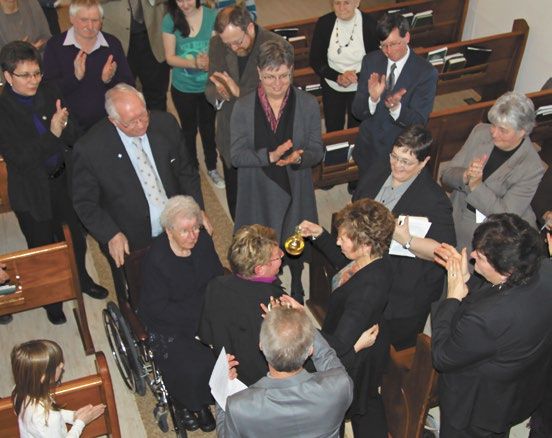
10                                                                                                Canadian Mennonite February 15, 2021

                                  Mind and Soul                                             for God to work in us. One new practice
                                                                                            is doing a social-media fast for Lent.

             The practice of Lent                                                           That's probably a good idea after
                                                                                            incessant “doomscrolling” for “new”
                                                                                            news over the past year. Fasting is a
                               R an d o l p h Halu z a-D eL ay                              reduction of something; abstinence
                                                                                            means refraining completely from that

I    like Lent. I wonder how many
     Mennonites practise this season in
     the church calendar. And if so, what
 they do.
    For western Christians, Lent begins
                                                organizations.
                                                  Lent has an obscure history, but it
                                                probably began around the time of the
                                                                                            thing.
                                                                                               In the Roman Catholic tradition,
                                                                                            Lenten fasting includes the abstaining
                                                Council of Nicea in AD 325 (along with from meat on Fridays and the reduction
                                                the Nicene Creed).                          of eating throughout the day. I already
 on Ash Wednesday, Feb. 17 this year,             In many ways, Lent is like Ramadan,       go full vegan on Fridays, as a practice of
 and lasts for six weeks (just over 40          which is also an act of discipline and is   detaching from meat-eating just a little.
 days, since Sundays are not included).         also intended to develop the believer’s     It means a one-seventh or 14-percent
 For Roman Catholics, that is through           discipleship. (This year Ramadan begins decrease in personal meat consumption.
 Thursday of Holy Week (April 1)—the            on April 12). The point is to practise like It’s a small action I do for environmental
 commemoration of the Last Supper. For an athlete for better performance. In                reasons (meat-eating is high-cost for the
 Protestants, Lent ends on Holy Satur-          this case, it is performance only in the    planet), and for reasons of global
 day. It’s even more complicated for            eyes of God, in the hope of running our solidarity (much of the world’s popula-
 Orthodox and other Christians. I asked race better. Lenten practice is a shadow tion cannot afford meat regularly).
 a Ukrainian friend about her Lenten            of deeper faithfulness.                     There are other “rules” about Lenten
 traditions and she sent me a message             Lent is also a time to practice detach- fasts, but it is important not to get
 longer than this column is allowed to          ment. Changing something reduces            bogged down in the details. The gospel
 be!                                            attachment to the way things already        of Christ is not a law-bound faith.
    Lent is intended to be a time of            are and provides an openness to new            The last thing to say about Lent is
 self-discipline and self-examination. For ways. If we give up something, we                what comes right before Lent starts:
 many people, Lent means “giving up             reduce our attachment to it.                Shrove Tuesday, Mardi Gras and various
 something.” It could also mean adding            I used to give up doughnuts. That was other “carnivals of excess.” Actually, I
 something that is worth deliberately           important because, in my skinny,            won’t say anything. But do bring on the
 cultivating: like increased Bible reading, younger, all-you-can eat days, eating           pancakes! l
 praying more often or writing a note of three doughnuts a day was a regular
 gratitude to someone each day.                 practice. You can imagine how Lent                           Randolph Haluza-DeLay
    Sometime over the past year I added a reduced my attachment!                                             has been involved in
 note in my calendar that my Lenten               Giving up doughnuts is obviously a                         Bridgefolk, a regular
 practice would be to pray with someone superficial example, but detachment                                  Catholic-Mennonite
 every day. I am always struck by how           from “the way things are” is an antidote                     dialogue.
 little we pray together, even when I have to sticking excessively to “the way we’ve
 worked directly for Christian                  always done things.” It opens new space

      Et cetera
 WCC commission publishes two volumes on moral discernment
 Current tensions within and between churches are often the result of disagreements over
 moral issues. Churches thus face challenges to preserve unity and meet obstacles to restore
 unity. Seeing the urgency of the matter, the World Council of Churches (WCC) Faith and Order
 Commission took up the task to assist the churches in finding a way to deepen mutual under-
 standing leading to dialogue. Churches and Moral Discernment. Vol. 1: Learning from Traditions
 (bit.ly/2L0JvW7) provides self-descriptions of how 14 different church traditions engage in
 moral discernment processes. Churches and Moral Discernment. Vol. 2: Learning from History
 (bit.ly/2YnsAQC) examines concrete historic examples of churches that have modified or
 changed their understanding of a specific moral issue, including Christian involvement in war
 and in peacebuilding.
 Source: World Council of Churches
Canadian Mennonite Vol. 25 No. 4 11
Tales From the Unending Story Sometimes I just wish everyone
would aim to live in the middle with me,
Living in the middle although we’d probably never get
anything done or ever have any interest-
ing conversations. At other times, I wish
J o sh u a Penfo l d I could just make a choice and run with
it. Better to be wrong, having moved
L ife is full of spectrums, and I often
struggle to find my place on them.
Some spectrums, like the light
spectrum from infrared through the
visible colours to ultraviolet, although
but more of a circle of connectedness,
so that there are no extremes, just
different but equally valid points. I
highly recommend exploring it.
I tend to see the legitimacy and value
somewhere and learned from my
mistakes, than done nothing. My
personal proverb the last year or so has
been: “The only thing worse than
making a bad decision is making no
fascinating, aren’t highly controversial. of nearly each and every perspective decision out of fear.”
Other spectrums, like our political or and can never seem to land anywhere Because I know the tricky and
theological views, can harbour very on certain spectrums of belief or value. exhausting path of the middle, I feel the
passionate and divisive lines. So I usually find myself sitting precar- wisdom of Agur in Proverbs 30: “Give
Spectrum has been employed to allow iously on the fence, somewhere in the me neither poverty nor riches, but give
a greater variety of possibilities in areas middle, with one foot in each possible me only my daily bread. Otherwise, I
that culturally were once thought of as camp. may have too much and disown you and
binary, offering shades of grey. This is sometimes a curse. I’m slow to say, ‘Who is the Lord?’ or I may become
There’s also a spectrum of Bible make decisions, I’m always afraid that poor and steal, and so dishonour the
translations mapping out whether a I haven’t considered something or name of my God.”
Bible leans more towards word-for- someone. I’m a terrible debater because The middle road is difficult and
word or thought-for-thought I’m always swayed by your point. ambiguous, even painful, as you feel the
translation. Movement in my life is slow because tension from both extremes. But often it
Using a spectrum to help visualize an decision-making is hard. On a personal- is valuable and beautiful, and blesses
idea or reality can be helpful for ity test I once scored a six out of 100 for others who lean far out one way or the
identifying, differentiating or “preferred pace of action.” Making other. In the case of Agur, to go too far
comparing. decisions can be challenging—or maybe on the wealth spectrum either way was
Sometimes even spectrums are painstaking or excruciating—see what I dangerous and potentially sinful. He
insufficient, and greater possibility is mean? prayed that he might live in the middle:
required. I find that wading through But, in other ways, living in the not too much, not too little. l
these possibilities is fascinating, but it middle is a wonderful blessing. I’m able
can also be exhausting and to listen, to empathize with most Joshua Penfold
overwhelming. people, even when our views are worlds (penfoldjoshua@gmail
Maybe it’s just me as an Enneagram 9. apart. I tend to be agreeable and able to .com) lives between
The Enneagram model of personalities bring people together. At its best, living Kitchener and Stratford,
is a great tool for understanding on the fence is active tension-holding, Ont.
yourself and others. It’s not a spectrum, not disengaged immobility.
Et cetera
A rom-com with a Mennonite
A Mennonite character figures prominently in a Manitoba-lensed movie released last year. Written
and directed by Winnipeg filmmaker Sean Garrity, I Propose We Never See Each Other Again After
Tonight is a romantic comedy about a Filipina woman and a Mennonite man who meet in the
depths of winter. “I just felt like those were two very essential communities in Winnipeg, and
they’re really under-represented communities, in a way,” Garrity told the Winnipeg Free Press in
March 2020, when discussing how he chose his characters’ backgrounds. The Globe and Mail
described the movie as “delightfully romantic . . . a fun, big-hearted time.” It’s available on
video-on-demand platforms.
Kristian Jordan stars as Simon Friesen
By Aaron Epp / Photo by Andrew Forbes in I Propose We Never See Each
Other Again After Tonight.12 Canadian Mennonite February 15, 2021
Book Review
Liberating and recovering
Anabaptist theology
Recovering from the Anabaptist Vision: New Essays in Anabaptist Identity and Theological Method.
Laura Schmidt Roberts, Paul Martens and Myron A. Penner, eds. Bloomsbury, 2020, 200 pages.
Liberating the Politics of Jesus: Renewing Peace Theology through the Wisdom of Women.
Darryl W. Stephens and Elizabeth Soto Albrecht, eds. Bloomsbury, 2020, 288 pages
Reviewed by David Driedger
Special to Canadian Mennonite
T he two most influential
attempts at Mennonite
self-definition in the 20th
century were Harold Bender’s
Anabaptist Vision and John
in terms of overall aim.
Recovering attempts
a broad reflection on,
and experimentation
with, Anabaptist
theology exists as a “contested
conversation.” The hierarchies
of authority are falling, and it is
a good time to enter the
conversation, so churches and
Howard Yoder’s The Politics of theology in general, individuals can find their voice.
Jesus. Both legacies have come while Liberating is a The remaining essays offer a
under scrutiny, with Yoder’s specific attempt at glimpse into that conversation,
more pointed due to the abuse women forming an placing strong emphasis on the
he levelled personally. adequate peace theology for the need for external relationships
Both theologies acted as a sort of present moment. of collaboration and accountability,
marinade in which Mennonite Recovering from the Anabaptist Vision whether in ecumenical or interreligious
churches, schools and leaders have is the culmination of a larger process of dialogue, acknowledging expressions of
soaked for decades, and so it is no small reflection on Anabaptist identity and theology women have been articulating,
thing to reckon with expressions that theological method, ranging broadly in or learning from queer and trauma-in-
have given the modern Mennonite style and content. The first three essays formed authors. Paul Doerksen
church its flavour. Both books explicitly address more formal aspects of the concludes the book with an account of
name these influences in their titles, theological method. Paul Martens sets the restlessness of theology, saying that,
signalling to readers that one cannot
simply start again from scratch or return
to some untainted past. To discern future While many essays in these books use traditional
steps, one must be aware of how past theological categories, many more have turned to lived
events still shape the present.
So what form do these theologies take experience as a component in Mennonite theology.
in the wake of Bender and Yoder?
Mennonite theology was previously the context, acknowledging the yearn- even as theology speaks with wonder,
distilled through the singular voice of ing of modern western Mennonites for conviction and fear, its speech must be
authoritative men. In contrast, these a renewed sense of identity, and how accountable to its limitations.
books are edited collections reflecting both Bender and Yoder offered refined, These essays are hesitant to make
diversity in terms of gender, race and elegant and powerful answers. Martens major substantive claims for Anabaptist
sexuality. The essays in Liberating are sees the new critical assessment of both theology establishing a relational or
exclusively by woman, so race and accounts as opening up new opportu- collaborative mode of theology beyond
ethnic diversity are given greater nities to revisit our connection to Anabaptist distinctives. This under-
attention. This diversity builds on the historical Anabaptism and the relation- standing helps avoid misguided quests
often-unfulfilled value of community ship between church and state. Martens for a fixed identity or kernel of truth
discernment within the Anabaptist concludes with the observation that, in around which to build theology, it
tradition. From here the books diverge this time of renewal, Anabaptist pushes us to acknowledge that we areCanadian Mennonite Vol. 25 No. 4 13
always being formed in a complex of
forces. Unless we take account of them,
we will likely be determined by them in Online Now!
at canadianmennonite.org
unhelpful or even harmful ways.
Given this framework, Liberating the Delivering food in the aftermath
Politics of Jesus can be read as an A Mennonite Central Committee partner is distributing
example of such a relational, collabora- monthly boxes of food to families in Beirut who were affected
tive approach. Peace theology is not by the massive explosion last summer.
built from a single male architect but is canadianmennonite.org/beirutaid
gathered from among the lives of a
diverse group of women. While this Spirit of MDS Fund continues
collection definitely understands its Mennonite Disaster Service has announced a new round of
relation to John Howard Yoder’s work funding from its Spirit of MDS Fund. It will provide grants worth
and legacy, it also acknowledges how up to $2,500.
women have always lived and embodied canadianmennonite.org/mdsspirit
Jesus’ political ways, but who can now
“simply get on with reconstruction work Reconciliation recommendations for worship
and produce new material.” Read about eight ideas for how your congregation can focus more
The book is divided into four parts, on justice and racial reconciliation on Sunday mornings.
the first addressing theological method canadianmennonite.org/blog/mrbp
in relation to women’s understanding on
matters of patriarchy, racism and Paul Bergman returns with new single
suffering. Part 2 offers three examples of Altona singer-songwriter Paul Bergman opens up about “I Just Want
lived peace theology in the contexts of to Walk in the Dark with You,” his first new music since 2015.
South Africa, Colombia and the U.S. canadianmennonite.org/newpbsong
Part 3 brings peace theology to bear on
the shattering realties of sexual violence,
correcting harmful notions of forgive-
ness and salvation, as well as emphasiz-
ing the solidarity that must happen,
even if all “facts” cannot be known.
Symbolically closing the chapter on a
larger era, the final part of the book
addresses the fallout of Yoder’s abuses
on the church and its institutions.
While many essays in these books use
traditional theological categories, many
more have turned to lived experience as
a component in Mennonite theology.
This may address past abuses and
limitations in Mennonite theology, but
experience is not self-evident and should
not become another foundation for
doing theology. Experience should be a
part of the “contested conversations” in
our theology. The examples of collabora-
tion, acknowledgment of suffering, and
struggle for justice and healing provided
in these books, offer tremendous
resources opening out into the next
generation of Mennonite theology. l
David Driedger is associate minister of
First Mennonite Church in Winnipeg.14 Canadian Mennonite February 15, 2021
people
Photo Essay
Picturing her calling
Saskatchewan pastor reflects on years in ministry through photographs
By D o n na S ch u l z
Saskatchewan Correspondent
SASKATOON
W hat she really wanted was a party,
but pandemic realities prompted
Lois Siemens to find another creative way
connecting to my ministry,” she says.
“I started looking for them and then
realized that they were everywhere.”
to celebrate the 10th anniversary of her As she took pictures, memories of
ordination. her 10 years of ministry came to mind,
Superb Mennonite Church, near Ker- prompting her to look for images that
robert, Sask., called Siemens to ministry, had to do with being surprised, trans-
and she was ordained there on Jan. 9, formed, reconciled or redeemed.
2011. Today she lives in Saskatoon, where “I definitely felt God’s Spirit at
she serves as spiritual-care coordinator work,” she says. “God was leading and,
at Bethany Manor, a retirement commu- in a way, comforting. I wanted a party.
nity founded by Mennonite churches in That was a loss. And then this came
Saskatoon and the area. as a kind of replacement.”
As a single woman, Siemens viewed Siemens couldn’t share her images
this anniversary much as a married and captions with her friends in
couple would view a wedding anniver- person, so she chose to share them
sary. And even though she couldn’t have on Facebook. "Thankful for the times I received support."
the party she had dreamed of, she felt she
needed to mark the occasion in some way.
On the morning of the anniversary,
Siemens went for a walk by the South
Saskatchewan River and began taking
photographs.
“I started realizing some of images were
"Finding surprises along the way: friendship,
questions, allies, teachers, beauty, resources,
answers to prayer, places to live, financial PHOTO COURTESY OF LOIS SIEMENS
resources, extra jobs." Friends and family surround Lois Siemens at her ordination in 2011.Canadian Mennonite Vol. 25 No. 4 15
“It was just as satisfying as having a people, but it was good to reflect on the All photos by Lois Siemens except where
party,” she says. “I missed [seeing] all the past 10 years.” l noted.
There were celebrations of death and life.
Lois Siemens’s ordination Scripture verse,
Psalm 86:12.16 Canadian Mennonite February 15, 2021
news
‘We had a huge spike’
Has the COVID-19 pandemic created lasting change for small farmers?
By Wi l l Br au n
Senior Writer
W hen COVID-19 struck last March,
farmers who sell food directly to
customers saw a rush on their products.
That was March and
April. To what extent
has the spring spike led
It seemed like people were just googling to a sustained change in
farms to go right to the source,” said Sarah attitudes toward food?
Martin-Mills of Growing Hope Farm in I asked four Mennonite
Cambridge, Ont. direct-market farmers
“We had a huge spike,” said Ben Martens in four provinces. The
Bartel of Grovenland Farm near Lanigan, people I spoke with said
Sask. interest in the food they
David Bunnett and his family raise cattle, provide has evened off at
pigs, and chickens—for meat and eggs—on a level somewhat higher,
about 160 hectares near Havelock, N.B. but not a lot higher, than
He said sales “shot through the roof” last in pre-pandemic times.
spring. People were “unsure” about going Martin-Mills said that
to grocery stores, so outdoor pick-up from if demand was at a base-
their porch was preferable. Demand came line of three out of 10
from existing customers as well as new pre-COVID, then hit 10
ones and lapsed ones. last spring, it would now
Many farmers sold out of their stock be around four-and-a-
quickly. But if you sell pork, beef or eggs, half. She guesses that
you can’t ramp up supply in short order. farms that did not have
So many direct-marketing farmers had to to turn away as many PHOTO COURTESY OF GROVENLAND
turn customers away once their existing customers early on due A meal at Grovenland Farm near Lanigan, Sask.
stock sold out. to lack of supply may see
greater sustained demand.
The dynamics for vegetable sales are dif-
ferent, in part because there were no local
vegetables available in March. Still, many
farms that offer a community-supported
agriculture (CSA) subscription model sold
out their pre-season orders more quickly
than in other years. This was the case for
the Metanoia Farmers Co-operative on the
grounds of Canadian Mennonite University
in Winnipeg.
Megan Klassen-Wiebe, who has been
part of Metanoia for nine of the 10 years it
has existed, said the co-op sold out its CSA
boxes after a May newspaper article about
increased interest in local food featured it.
She noted that one challenge Metanoia
faced last season was the availability of
PHOTO COURTESY OF GROVENLAND seeds, since there was a rush on seeds as
Bacon and sausage from Grovenland Farm near Lanigan, Sask. interest in gardening ballooned.Canadian Mennonite Vol. 25 No. 4 17
Although it is hard to gauge, she believes ΛΛNews brief ΛΛNews brief
there is some increase in demand for local
vegetables, but increasing production to Spiritual directors provide Edmonton First Mennonite
match it is complicated, largely by limited materials to pray with the Church has talent
growing space. scriptures for Lent
Other farmers faced similar challenges.
Grass-fed beef takes two years. Pigs take
nine months. Barns have limited space.
Additional labour may be a challenge.
Other COVID-19-related dynamics that
people mentioned include the Canada
Emergency Response Benefits payments
and reduced travel that resulted in more
money for people to spend on food, gaps
in availability of farm supplies (like green-
houses), booked-up abattoirs, the pressures
of school-aged kids learning at home, and This visual accompanies the printed PHOTO BY SUZANNE GROSS
more people in rural areas growing and Lenten Guided Prayer materials. Theo, an eight-year-old beagle-poodle
raising their own food (which, among other mix only sings when owner Robert
things, created a short supply of chicks). Kirchner, left, plays his flute. At the
At Growing Hope Farm, the pandemic Each year the Mennonite Spiritual Direc- talent show, Kirchner played “All These
put a stop to visits to the three-hectare tors of Eastern Canada prepare Lenten Endearing Young Charms” as Theo, who
farm. Marten-Mills said they used to have Guided Prayer materials for use by indi- is partial to Irish Tunes, sang for the
about 30 volunteers a week at the farm— viduals, churches and small groups Zoom crowd. Pictured at right is Suzanne
women from a nearby prison, students, during Lent. Rooted in the lectionary Gross.
people with developmental disabilities scripture texts for the season, and
and others. COVID-19 interrupted the inspired by the worship themes in
community-involvement aspect that is a Leader, a publication of MennoMedia Edmonton First Mennonite Church
key part of Growing Hope. that provides worship and other resourc- hosted a two-minute talent show on
Pandemic aside, I asked the four farmers es for church life, the Lenten Guided Zoom on Jan. 31. Emceed by Cara
what changes they have observed related Prayer materials invite participants into Baergen, wearing a black jacket and jazzy
to locally grown food over time. In short, a journey of “deeper engagement with red bow-tie, members were invited to
the answer is fairly steady, gradual growth. God, scripture, [self] and the world.” This share their talents—but only for
“Interest in buying local has been a slow, year, the materials entitled “Deep Calls two-minutes each. Acts included a
steady increase,” said Martens-Bartel. to Deep,” invite people to hear God’s call singing beagle-poodle mix named Theo;
Jeanette Sivilay, a former member of “from even greater depths of mystery a fashion show of crocheted clothing
the Metanoia Farm, focused her mas- and grace,” and to “be encouraged, in items by Ev Buhr; Lego creations made
ter’s studies on small-scale agriculture in the midst of uncertainty, to respond to, of thousands of pieces by Herman
Manitoba. Sivilay, who now serves as coor- and find security in, God’s call to rela- Neufeld; photos of home renovations;
dinator of the Winnipeg Food Council, said tionship, commitment, wisdom, healing, poetry reading; a tour of an eclectic
there are a lot more CSA farms in Manitoba growth and hope.” The materials include musical instrument collection; a cross-
than there were a decade or so ago. She prayer sheets for each of the six weeks stitch of planet Earth, completed after
takes particular encouragement from the of Lent, with questions for reflection, and 10 years by Joanne Moyer, (displayed
fact that a number of young farmers are several prayer activities. There are also by headlamp in homage to the lamp
starting families on the farm, an indication suggestions for small groups, including that was required to finish the piece);
of their confidence. an opening and closing liturgy, if people trampoline flips by Blake Lizette; and
The pandemic created an opening for choose to share the Lenten journey with dancing by Katelyn Lizette. A large
advocates of local food to build on this. others. The Mennonite Spiritual Direc- countdown clock was used to keep
“People re-thought a lot of things,” during tors of Eastern Canada is a partner each participant in check, and if partic-
the pandemic, she said, “including food.” organization of Mennonite Church ipants performed or shared their talent
Looking back at a window of dramatically Eastern Canada. Lenten Guided for more than two minutes, an elephant
increased interest that is perhaps closing to
some extent, she asked: “Did we capitalize
Prayer materials are available
from commonword.ca. would loudly trumpet. More than 60
people attended.
on this as much as we could have?” l —By Janet Bauman —Joanne De JongYou can also read


