Planning have compounded India's massive immunization challenge - Science
←
→
Page content transcription
If your browser does not render page correctly, please read the page content below
Downloaded from http://science.sciencemag.org/ on May 30, 2021
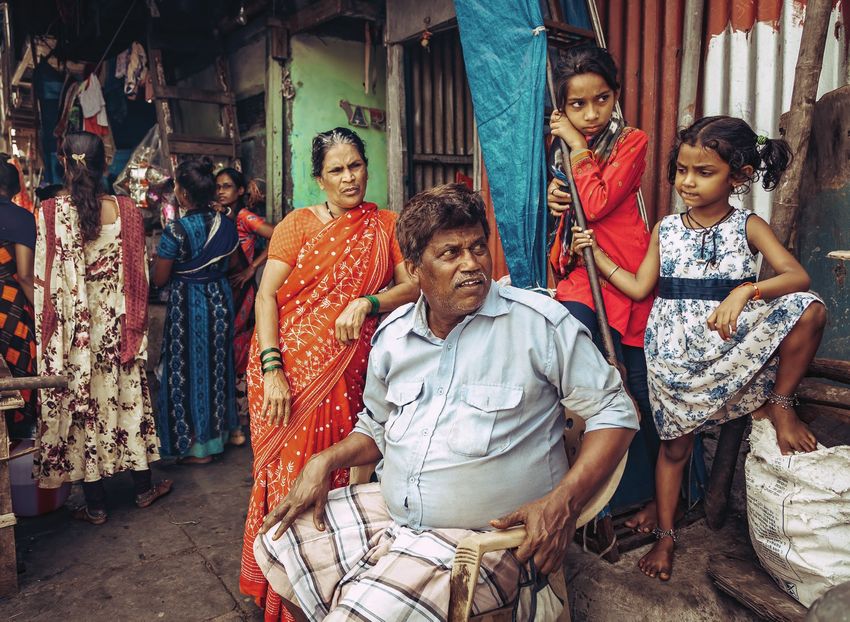
Wajid Kadar Khan, who lives in a
Mumbai slum, received a COVID-19
vaccine only because his job required
it. His wife, Mumtaz (left), says she
didn’t need one because “I have God.”

                                        DEADLY DELAYS
              Unexpected vaccine hesitancy, dose shortages, and poor government
               planning have compounded India’s massive immunization challenge

O
          n a Sunday morning in early April,                By Jon Cohen,                     COVID exists and that God will provide if
          as Mumbai was in a daze from the      in Mumbai, Vellore, and New Delhi, India;     something happens,” said Boomkar, who
          first weeks of a surge of COVID-19                                                  lives in the slum and works as a “barefoot
                                                    Photography by Raja Sengupta
          and had instituted nighttime cur-                                                   researcher” for the nongovernmental or-
          fews, Baliram Boomkar asked his           This story was produced in partnership    ganization Pukar, which conducts health-
          neighbors in the city’s Kaula Ban-                with the Pulitzer Center.         related studies and also tries to improve
          dar slum whether they wanted a                                                      living conditions. “They think it’s all poli-
          vaccine to protect them or had       spreading rumors. It’s all a lie.” A woman     tics.” The use of masks, despite the bare-
          received one. Some replied that      said she was afraid a clinic might test her    foot researchers distributing them and
they had been vaccinated but only because      for COVID-19, find she’s positive, and then    stressing their benefits, remained sparse.
their employers required it. One man said      force her to quarantine—as happened last          A month later, India’s COVID-19 surge
he’d get the shot if his company gave him      year. “I know I can’t avoid the vaccine, but   has become a tsunami, with hospitals
time off to recover from side effects. “CO-    I want to be the last in the queue.”           overwhelmed and funeral pyres burning
VID is nothing,” he said. “People are only       “Lots of people [here] don’t believe that    throughout the nights. Yet the country’s

900     28 MAY 2021 • VOL 372 ISSUE 6545                                                                           sciencemag.org SCIENCE

                                                              Published by AAAS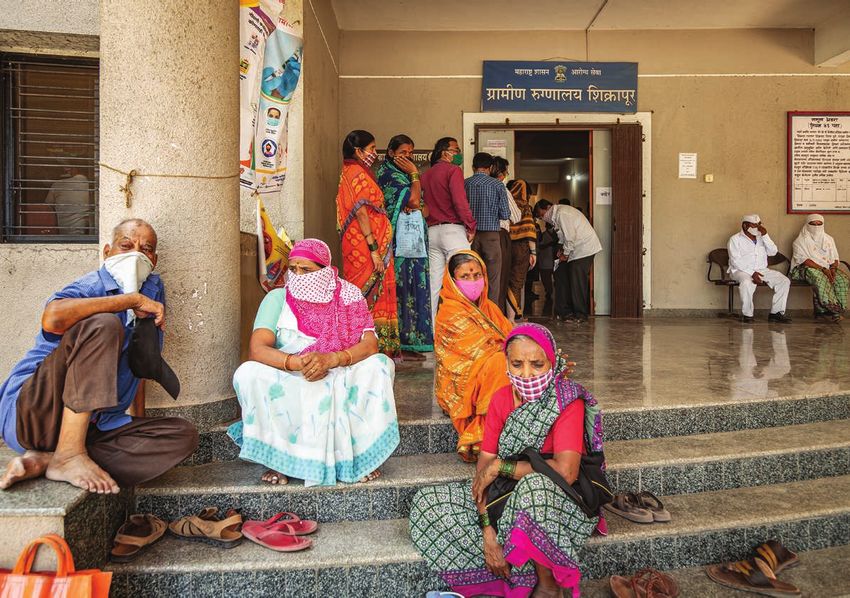
NEWS | F E AT U R E S | VACC INATING THE WOR LD

                        vaccination campaign is languishing, with
                        only 3% of Indians fully vaccinated as of
                        20 May. Widespread shortages of the shots
                        have forced some vaccination clinics to
                        shutter; at others, lines often form hours
                        before they open. Some states are limit-
                        ing doses to people older than 45, and to
                        extend supplies, the government has rec-
                        ommended stretching the intervals be-
                        tween shots of the country’s most heavily
                        used vaccine, Covishield, a version of the
                        AstraZeneca–University of Oxford vaccine
                        produced by the Serum Institute of India.
                        But supply is only half of the dilemma.
                           Delivering vaccines to India’s nearly
                        1.4 billion people means reaching remote,
                        difficult-to-access regions and tackling the
                        profound divides between the lower and
                        upper classes. And like almost everywhere
                        in the world, India has the perplexing chal-
                        lenge of vaccine hesitancy. It’s widespread

                                                                                                                                                                                        Downloaded from http://science.sciencemag.org/ on May 30, 2021
                        in Indian society, far from limited to the
                        slums that Pukar helps, but it is a new
                        problem here. “India never had vaccine
                        hesitancy” until COVID-19, says virologist
                        Shahid Jameel, who directs the Trivedi
                        School of Biosciences at Ashoka University.
                           Past mass vaccination campaigns in In-
                        dia focused on children. Adults, even the
                        wealthiest, do not routinely get immunized
                        against influenza, shingles, pneumococcal
                        disease, or anything else. “You won’t have
                        too many adults asking for a vaccine, and
                        you won’t have too many doctors prescrib-
                        ing it either,” says Renu Swarup, who heads
                        the government’s Department of Biotech-
                        nology. “There is a lot of advocacy that we
                        have to do to bring the public on board.”
                           Many blame a different surge for creat-
                        ing India’s unexpected reluctance toward
                        COVID-19 vaccines: the rumors that spread
                        constantly on social media. “It’s not a vac-
                        cine hesitancy that is deep rooted, like
                        in Europe or the United States,” says Sai
                        Prasad, an executive director at Bharat Bio-
                        tech, which makes Covaxin, the country’s
                        other COVID-19 vaccine. “This is literally     Baliram Boomkar (top), a “barefoot researcher” who lives and work in a Mumbai slum, has had trouble
                        due to disinformation or misinformation.”      persuading neighbors to wear masks or get a COVID-19 vaccine. But in some places in India, such as this rural
                        Among the false assertions in wide circu-      hospital in Shikrapur, a town outside of Pune, people wait in long lines to get their shots (bottom).
                        lation are that the vaccines make people
                        impotent, are worthless because some vac-      to make an appointment at a local site                    tos on social media and emphasized that
                        cinated people become infected, or even        through a single online portal, had vac-                  1600 unvaccinated staff had become in-
                        lead to death. “Adults are more finicky than   cinated just over 12 million people with a                fected and 12 had fallen critically ill, 99%
                        children: They change their minds thanks       first dose.                                               of doctors and 90% of nurses and other
                        to WhatsApp University and Twitter on a           Even health care workers, the first in                 hospital workers had received a shot.
                        second-by-second basis,” Prasad says.          line for shots, were slow to get them. At the                CMC is in Tamil Nadu, one of the
                                                                       Christian Medical College (CMC), Vellore,                 country’s most urbanized and indus-
                        INDIA BEGAN ITS VACCINATION program on         an esteemed training ground for doctors                   trialized states, and the tepid reac-
                        16 January, just 1 month later than the        and nurses that has five campuses with                    tion toward the vaccine extended to the
PHOTOS: RAJA SENGUPTA

                        United States and the United Kingdom.          more than 2700 hospital beds, 30% of the                  broader public On a morning in early
                        But there was little sense of urgency. The     staff still had not received a shot 6 weeks               April in Vellore, CMC vaccine researcher
                        nation wasn’t hit as hard by COVID-19 in       after the vaccination campaign began. By                  Gagandeep Kang walked downstairs from
                        2020 as many expected. By 1 March, India,      early April, after CMC administrators de-                 her office on the main campus to the hos-
                        which allows anyone eligible for a shot        cided to post their own vaccination pho-                  pital’s COVID-19 vaccination clinic for her

                        SCIENCE sciencemag.org                                                                                              28 MAY 2021 • VOL 372 ISSUE 6545      901
                                                                                        Published by AAAS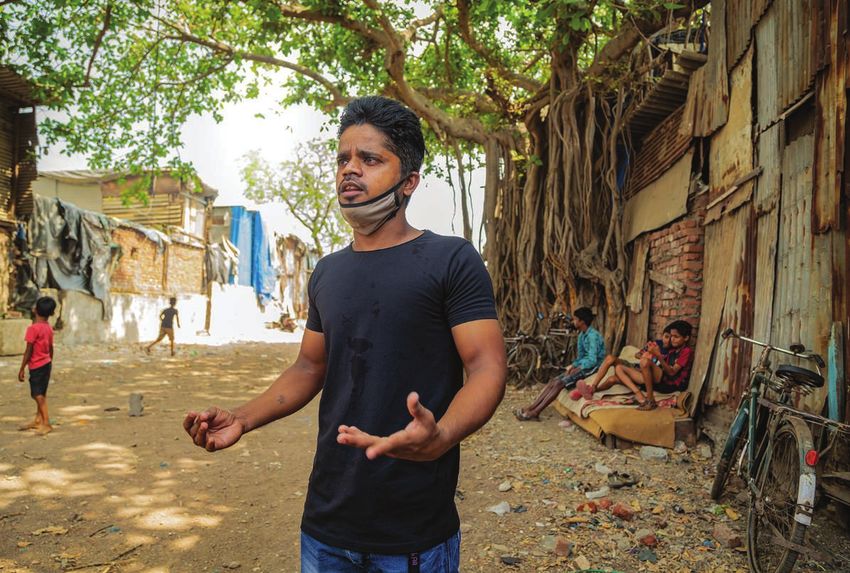
NE WS | F E AT U R E S | VACC INATING T HE WOR LD
A slow start that the company making Covaxin has yet
A combination of vaccine hesitancy, supply issues, and the government’s haphazard planning has to publish its efficacy data and reports that
thwarted India’s efforts to protect its large population from COVID-19. the version of Covishield used outside of In-
dia can cause clotting problems continued
60 Israel to feed some reluctance. But demand for
vaccine is growing, say researchers, some
of who speculate that many wealthier Indi-
50
ans would rush to get the messenger RNA
vaccines now only available abroad. “There
Fully vaccinated people (%)
40 have been few signs of hesitancy among the
United middle class and they are scrambling for
States
vaccine slots,” Kang now says.
30 United Neonatologist Anita Patil-Deshmukh,
Kingdom
who founded and runs Pukar, says that in
the Kaula Bandar slum, the surge has led at
20 least “a few” pandemic doubters to change
their minds, as they watched constant im-
Germany ages of crematoria on TV and had relatives
10
Brazil in their home villages become ill and unable
India to access care. But they remain exceptions.
0 “Most people are still reluctant to take [the
Downloaded from http://science.sciencemag.org/ on May 30, 2021
January 2021 February March April May vaccine]. Vaccinating people who live in the
slums is still a huge issue,” she says.
second dose. Kang paid her 250 rupees committal. “If it’s for our protection, we will The government needs to make it easier
CREDITS: (PHOTO) RAJA SENGUPTA; (GRAPHIC) K. FRANKLIN/SCIENCE; (DATA) OUR WORLD IN DATA REPOSITORY VIA JOHNS HOPKINS CENTER FOR SYSTEMS SCIENCE AND ENGINEERING
(about $3) and was vaccinated. But only a all take the vaccine,” said one villager, who for the poor, she says. “Most people in the
dozen other people sat in the outdoor wait- like the others was not eligible at the time. bottom of the pyramid do not possess the
ing area. No one took a selfie as they got the But there was little fear of the virus. “It’s not smartphones needed to do online registra-
shot or high-fived a nurse in thanks. Across going to come to us,” said one villager. Or tion, and those few who may possess it do
town that day in the Salavanpet neighbor- it’s simply harmless, the leader speculated. not know how to navigate the system,” she
hood government clinic where vaccine is “We might have got it and it would have says, adding that Pukar soon hopes to set up
free, only 22 people showed. The hospital gone without us knowing.” registration stations in Kaula Bandar.
had 370 doses in its refrigerator left from a Kang said the Indian government should
batch of 500 it had received 5 days earlier. IN MID-MAY, hopes rose that the devastating fulfill a commitment to setting up vaccina-
Tamil Nadu hadn’t yet been slammed by wave of COVID-19 was peaking in much of tion points within 2 kilometers of everyone.
this COVID-19 surge. But even in parts of India, but cases continued to climb in some “We’re a big country, and to reach people is
India where cases were mounting, the dis- areas, including Tamil Nadu. And varying challenging.” She suggests some areas may
ease wasn’t always perceived as a big threat. degrees of vaccine hesitancy remained. need vaccinators to go door to door. “In In-
“You’re in an environment where you see In wealthier, urban communities, the fact dia, in many places you have to think about
death so frequently,” says CMC head J. V. outreach programs because the most vul-
Peter, a critical care specialist. “When you nerable people are not going to get to vac-
see people dying due to other illnesses at a cination centers.”
higher frequency than COVID, why should Despite India’s huge population, the ef-
people pump their fists and say, ‘Hey, I’ve fort could pay off quickly, some research-
got my vaccine!’ or why should they push ers argue. “Trying to vaccinate everybody
towards getting a vaccine?” is not the point,” says Anurag Agrawal, a
Kang faults the government for not pulmonologist who heads the Institute of
“preparing the ground” earlier for a mas- Genomics and Integrative Biology, a divi-
sive adult immunization program. “The sion of India’s Council of Scientific and
systems were set up for 100 people a day at Industrial Research. India has a relatively
immunization centers,” she says. “We could large population of young people, who may
scale up to five times what we’re doing.” be less vulnerable to serious symptoms.
The challenges multiply in more rural If immunization becomes widespread in
areas. In Jawadhi Hills a few hours’ drive those who are 45 and older, particularly
away, Kang and others at her college have in those with conditions like diabetes and
a project at the rural village of Vallitha- obesity that can worsen COVID-19, hospi-
thankottai, helping the Malayali tribe with tal admissions and death will plummet,
everything from clinical services to im- Agrawal contends. He calculates this pop-
proved sanitation. The village’s 99 houses ulation only totals about 200 million—a
are nestled up a steep mountain road, and number India’s vaccine supply should soon
a few dozen members of the tribe gathered be able to cover.
one afternoon in their leader’s house to dis- “India does not really have a vaccine
cuss the pandemic with Kang and Science. problem,” he says. “It has a people’s out-
Only three villagers had been vaccinated, at A clinic at King Edward Memorial Hospital in Pune, India, look problem. And this upsurge may again
a clinic 5 kilometers away. Others were non- stamped the arms of its COVID-19 vaccine recipients. bring people back to reality.” j
902 28 MAY 2021 • VOL 372 ISSUE 6545 sciencemag.org SCIENCE
Published by AAAS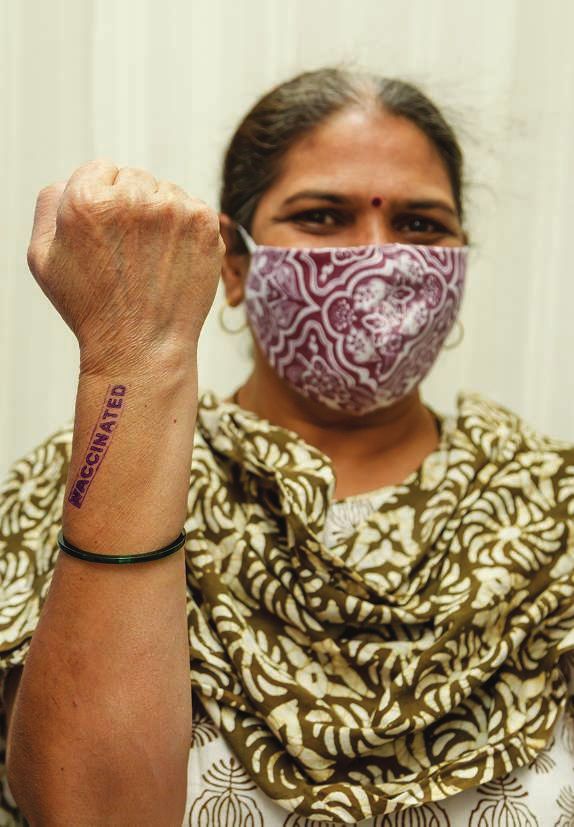
Deadly delays
Jon Cohen

Science 372 (6545), 900-902.
DOI: 10.1126/science.372.6545.900

                                                                                                                        Downloaded from http://science.sciencemag.org/ on May 30, 2021
  ARTICLE TOOLS                   http://science.sciencemag.org/content/372/6545/900

  PERMISSIONS                     http://www.sciencemag.org/help/reprints-and-permissions

Use of this article is subject to the Terms of Service

Science (print ISSN 0036-8075; online ISSN 1095-9203) is published by the American Association for the Advancement of
Science, 1200 New York Avenue NW, Washington, DC 20005. The title Science is a registered trademark of AAAS.
Copyright © 2021 The Authors, some rights reserved; exclusive licensee American Association for the Advancement of
Science. No claim to original U.S. Government Works
You can also read


