UNIVERSITY OF TRIESTE - DEAMS DEPARTMENT BACHELOR COURSE IN BUSINESS & MANAGEMENT - A.Y. 2020 - 2021 BLOCK 4
←
→
Page content transcription
If your browser does not render page correctly, please read the page content below
UNIVERSITY OF TRIESTE – DEAMS DEPARTMENT
BACHELOR COURSE IN BUSINESS & MANAGEMENT
A.Y. 2020 – 2021

BLOCK 4
Management of Innovation

INSTRUCTOR
Guido Bortoluzzi (Ph.D)

HOW TO BUILD AN INNOVATIVE
ORGANIZATION
PART 2

3

                        1

                        2

                        3

                        4

                        5

                        6

                        7
© 2009 John Wiley & Sons Ltd.
www.managing-innovation.com
4
3. KEY INDIVIDUALS
• Key individuals are those figures that have a critical importance in
driving the innovation process and turning an invention into an
innovation
• technical experts (when it needs to solve the impossible; technological
capabilities)
• organizational sponsor (procuring resources, convincing skeptics and critics;
over-optimistic; team management capabilities) -> process managers
• business innovators (understand the market; market-sensing capabilities)
• technological gatekeepers (informally bridge between the internal and external
environment; manage knowledge flows; interpersonal capabilities)5 KEY INDIVIDUALS AND TALENT MANAGEMENT
6

TALENT MANAGEMENT in UDINESE CALCIO

                       UP
             IN                    OUT
7 4. EFFECTIVE TEAM-WORKING • "Experiments indicate that groups have more to offer than individuals in terms of both fluency of idea generation and in flexibility of solutions developed" (Tidd and Bessant, 2011) • However...All that glitters is not gold
8

© 2009 John Wiley & Sons Ltd.
www.wileyeurope.com/college/tidd
9

TEAM-WORKING LIFE CYCLE
  Performance

                                                                                    g
                                                                               in
                                                                       r   m
                                                                  fr o
                             ng
                                  St

                           i                                 Pe
                                  o rm

                     r   m
                Fo
                                    in g

                                                      i ng
                                                r   m
                                           No

                                                             Time
10
PROMOTING EFFECTIVE TEAM-WORKING
• How to promote an effective team-working
• A clear, common and elevating goal
• Result-driven structure
• Open communication, clear coordination of tasks, clear roles and accountabilities,
monitoring performance, providing feedback, fact-based judgment, efficiency and
strong impartial management
• Competent team-members
• Unified commitment
• Effective teams have an organizational unity: members display mutual support,
dedication and faithfulness to the shared purpose and vision, and a productive
degree of self-sacrifice to reach organizational goals.11
PROMOTING EFFECTIVE TEAM-WORKING
• External support and recognition, popularity and social success
• Principled leadership
• Leaders provide clear guidance, support and encouragement, and keep
everyone working together and moving forward. In less creative teams, the
leader ‘. . . creates a situation where everyone is confused and afraid to ask
questions.’ Leaders ‘tear down people's ideas,’ ‘set a tone of distrust,’ and
‘stifle others who have ideas and energy to succeed.’ They ‘. . . keep all control,
but take no action’.12
PROMOTING EFFECTIVE TEAM-WORKING
• Participation in decision making
• engage the members of the team in the process of identifying the challenges
and opportunities for improvement, generating ideas and transforming ideas
into action
• Team spirit
• have fun with the team to build/reinforce the team spirit and the sense of
belonging
• Embracing appropriate change
• in order for teams to remain productive, they must learn how to make
necessary changes to procedures.13 EFFECTIVE TEAM-WORKING What to pay attention at: • Do not confuse GROUPS of INDIVIDUALS / TEAMS. • Do not confuse ENDS / MEANS. Managing teams is a time consuming activity. • Do not confuse FREEDOM / ANARCHY.
14

5. HIGH-INVOLVEMENT INNOVATION
• Motivation and commitment policies/routines taken over an
  extended period of time (Toyota and kaizen – continuous
  improvement; 3M’s 15% free time policy; brainstorming
  sessions; ideas contests; etc.)
• Significant impact on innovation and on firms’ quality
  performances
• Significant impact on sales growth and profitability
15

      Benefits and Costs of HII policies
    Performance Areas (% change)       Average across sample (N=754)
    Productivity improvement           15 (MIN: 12 - MAX: 20)
    Quality improvement                16 (MIN: 09 - MAX: 17)
    Delivery performance improvement   16 (MIN: 12 - MAX: 22)
    Lead time reduction                15 (MIN: 05 - MAX: 25)
    Product cost reduction             8 (MIN: 05 - MAX: 15)

   • LESS efficient firms benefit more from HII
     policies
   • BENEFITS are "expected"; COSTS are "sure"

SOURCE: CASE STUDY 3.6 PAG. 118-119 OF TIDD and BESSANT 2012
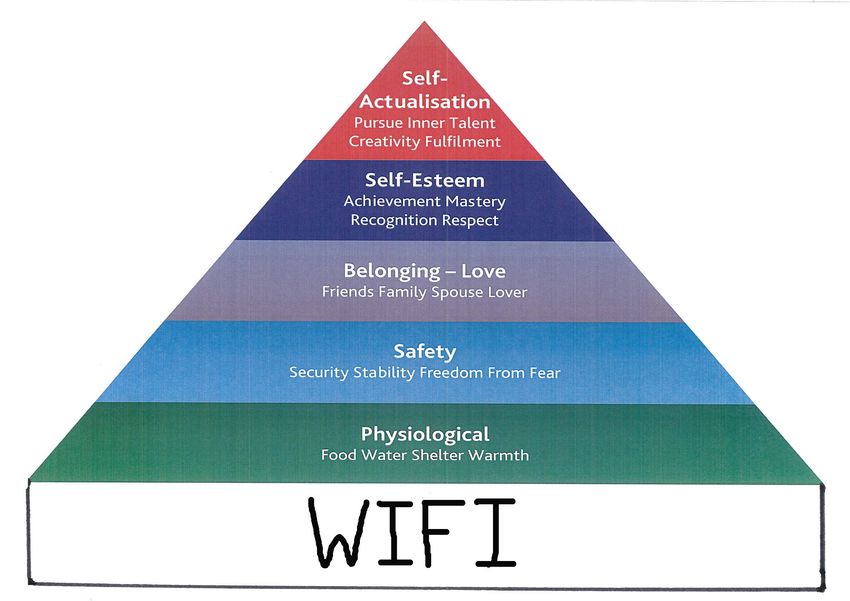
16 What drives employees motivation and commitment?
The Maslow’s pyramid of needs
                   Leading challenging and innovative
                   projects, exerting decision marking at
                   high level

                          Manage important projects, receiving
                          recognition from others, prestige

                                 Be part of a group,
                                 a (successful) team

                                        Having a job,
                                        permanent

                                               Getting money,
                                               somehow
18 ... to Herzberg
19

6. CREATIVE CLIMATE AND CULTURE
Culture = "it basically equates to the pattern of shared values, beliefs and agreed
norms which shape behavior"
Climate = “the recurring patterns of behavior, attitudes and feelings that
characterize an organization”

                                      C
           CULTURE
                                                ASSUMPTIONS:
                                CLIMATE
  A                                             1. The CLIMATE is easier to be
       CLIMATE                                     managed than CULTURE
                                                2. To a more creative climate
                                                   should correspond higher
                                                   innovation performances
                    CLIMATE
                                  B
20
BUILDING A CREATIVE CLIMATE
• Create trust and openness: let people feel 'emotionally' safe in
relationships
• everyone dares to put forward ideas and opinions
• fasten decision-making (good intentions of people can be assumed)
• facilitate problem-solving (motivate people in sharing/not hiding information)
• Create challenges and involvement: let people find joy and
meaningfulness in their work, they'll invest much energy
• - - - ch&inv -> people become apathetic about their work
• +++ ch&inv -> people show signs of 'burn out'
• 'optimal' ch&inv -> motivation
• Give support and space for new ideas
• insufficient time -> people concerned with their current projects and tasks.
Stress and frustration arise
• too much time -> too many ideas to evaluate, bureaucratic and un-effective
selections procedures21
BUILDING A CREATIVE CLIMATE
• Manage conflicts and debates
• Conflicts are normal: all organization have some level of personal tension.
• In a climate of trust and openness, conflicts can be constructive to avoid
"group think" effect
• In a different climate, professional conflicts can degenerate in personal
conflicts (that become, soon or later, group conflicts)
• Be tolerant towards uncertainty
• do not judge people -> evaluate ideas
• +++ risk taking -> too many ideas and projects; people get frustrated because
nothing is getting done
• --- risk taking -> people will "cover" themselves before taking a decision;
innovation processes are long and tedious
• Give independence (freedom) to people (who wants and deserves
it)reflected in how a company spends its time and sift through ideas or stage-gate systems for review-
ney. Truly innovative enterprises spend gener- ing and prioritizing projects
S U M M E Rand
2 0 0 9prototyping.
V O L . 5 0 N O. 4 22
sly on being entrepreneurial, promoting
ativity and encouraging continuous learning. Success The success of an innovation can be cap-
e values of a company are less what the leaders
SPRING 2013
tured at three levels: external, enterprise and personal.
V O L . 5 4 N O. 3
or what they write in the annual reports than In particular, external recognition shows how well a
at they do and invest in. Values manifest them- company is regarded as being innovative by its cus-
ves in how people behave and spend, more than tomers and competitors, and whether an innovation
how they speak. has paid off financially. More generally, success rein-
forces the enterprise’s values, behaviors
THE SIX BUILDING BLOCKS OF and processes, which in turn drive many
AN INNOVATIVE CULTURE Jaysubsequent
Rao and actions
Joseph andWeintraub
decisions: who will
When it comes to fostering innovation, enterprises
often give more attention to resources, processes be rewarded, which people will be hired
and measuring and which projects will get the green light.
success — the Kevin
more easily quantified,
J. Boudreau and Karim R. Lakhani
Resources Values
How Innovative Is Your
Building Blocks at Work
tools-oriented
innovation building Company’s
While our six building blocksCulture?
may seem
blocks — but less to
How to Manage
the harder-to-measure, Processes Behaviors
abstract, we find that truly innovative
companies always have at least one of the
Outside Innovation
people-oriented building blocks solidly in place.
determinants of
innovative culture —
values, behaviors Success Climate IDEO: Values and Behaviors For exam-
and climate. ple, few companies better exemplify
W SPRING 2013 SLOANREVIEW.MIT.EDUBUILDING
BUILDING ELEMENT FACTOR BLOCK
BLOCKS FACTORS ELEMENTS SURVEY QUESTIONS SCORE AVERAGE AVERAGE
Hungry We have a burning desire to explore opportunities and to create new things.
We have a healthy appetite and tolerance for ambiguity when pursuing new
Ambiguity
Entrepreneurial opportunities.
We avoid analysis paralysis when we identify new opportunities by exhibit-
Action–oriented
ing a bias towards action.
VALUES
Imagination We encourage new ways of thinking and solutions from diverse perspectives.
Creativity Autonomy Our workplace provides us the freedom to pursue new opportunities.
Playful We take delight in being spontaneous and are not afraid to laugh at ourselves.
Curiosity We are good at asking questions in the pursuit of the unknown.
Learning Experiment We are constantly experimenting in our innovation efforts.
Failure OK We are not afraid to fail, and we treat failure as a learning opportunity.
Our leaders inspire us with a vision for the future and articulation of opportu-
Inspire
nities for the organization.
Energize
Challenge Our leaders frequently challenge us to think and act entrepreneurially.
Model Our leaders model the right innovation behaviors for others to follow.
Coach Our leaders devote time to coach and provide feedback in our innovation efforts.
BEHAVIORS
Initiative In our organization, people at all levels proactively take initiative to innovate.
Engage
Our leaders provide support to project team members during both suc-
Support
cesses and failures.
Our leaders use appropriate influence strategies to help us navigate around
Influence
organizational obstacles.
Enable
Adapt Our leaders are able to modify and change course of action when needed.
Grit Our leaders persist in following opportunities even in the face of adversity.
Community We have a community that speaks a common language about innovation.
Diversity We appreciate, respect and leverage the differences that exist within our
Collaboration
community.
Teamwork We work well together in teams to capture opportunities.
Trust We are consistent in actually doing the things that we say we value.
Integrity We question decisions and actions that are inconsistent with our values.
Safety
CLIMATE
We are able to freely voice our opinions, even about unconventional or con-
Openness
troversial ideas.
No bureaucracy We minimize rules, policies, bureaucracy and rigidity to simplify our workplace.Simplicity
Accountability People take responsibility for their own actions and avoid blaming others.
Decision- Our people know exactly how to get started and move initiatives through
making the organization.
Champions We have committed leaders who are willing to be champions of innovation.
People Experts We have access to innovation experts who can support our projects.
Talent We have the internal talent to succeed in our innovation projects.
We have the right recruiting and hiring systems in place to support a culture
RESOURCES
Selection
of innovation.
Systems Communication We have good collaboration tools to support our innovation efforts.
We are good at leveraging our relationships with suppliers and vendors to
Ecosystem
pursue innovation.
Time We give people dedicated time to pursue new opportunities.
Projects Money We have dedicated finances to pursue new opportunities.
Space We have dedicated physical and/or virtual space to pursue new opportunities.
Generate We systematically generate ideas from a vast and diverse set of sources.
We methodically filter and refine ideas to identify the most promising oppor-
Ideate Filter
tunities.
Prioritize We select opportunities based on a clearly articulated risk portfolio.
Prototype We move promising opportunities quickly into prototyping.
PROCESSES
We have effective feedback loops between our organization and the voice
Shape Iterate
of the customer.
Fail smart We quickly stop projects based on predefined failure criteria.
Our processes are tailored to be flexible and context-based rather than con-
Flexibility
trol- and bureaucracy-based.
Capture
Launch We quickly go to market with the most promising opportunities.
Scale We rapidly allocate resources to scale initiatives that show market promise.
Customers Our customers think of us as an innovative organization.
Competitors Our innovation performance is much better than other firms in our industry.
External
Our innovation efforts have led us to better financial performance than
Financial
others in our industry.
Purpose We treat innovation as a long-term strategy rather than a short-term fix.
SUCCESS
Discipline We have a deliberate, comprehensive and disciplined approach to innovation.
Enterprise
Our innovation projects have helped our organization develop new capabili-
Capabilities
ties that we did not have three years ago.
Satisfaction I am satisfied with my level of participation in our innovation initiatives.
We deliberately stretch and build our people’s competencies by their partici-
Growth
Individual pation in new initiatives.
We reward people for participating in potentially risky opportunities, irre-
Reward spective of the outcome.26
7. EXTERNAL FOCUS
• Do not look only inside
• Keep open to external contributions
others...
suppliers and sub-
clients, retailers,
suppliers
consumers
service and
technology providersYou can also read


