Political Theory in Popular Culture - POSC 3421 - EP3 - Fordham ...
←
→
Page content transcription
If your browser does not render page correctly, please read the page content below
Political Theory in Popular Culture
POSC 3421 – EP3
Summer 2017
Professor Nicholas Tampio
Lowenstein 1001, MTWR 6-9 pm
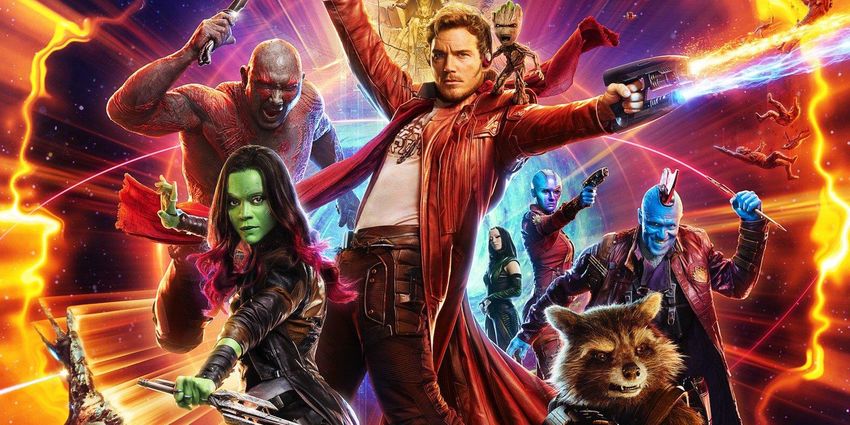
The Marvel Universe has provided the basis for several of the most popular movies of the
past decade, including the X-Men and Avengers series. Are these movies teaching
liberalism, conservatism, socialism, anarchism, fascism, multiculturalism, or something else
entirely? This course combines the study of political ideologies and cultural critique.
Required reading
Andrew Heywood, Political Ideologies: An Introduction, 6th Edition (Palgrave 2017),
ISBN-10: 978113760602
Subscribe to Marvel online for $9.99/month
Grading
Research paper
Part 1 10
Part 2 10
Part 3 10
Final paper and presentation 10
1Article presentation 10
Midterm 20
Final exam 20
Class participation (including templates) 10
As an EP course, students will write a 20-page research paper on a political theme in the
Marvel Universe. For the first three Mondays of the class, students will turn in a 5-page
paper on a political theme in the Marvel Universe (women’s rights, animal rights,
economic justice, the individual versus the community, toleration, nuclear power, religion,
etc.). The papers should discuss a Marvel movie, three reviews, and two academic articles.
Then, the final paper will add an introduction, a conclusion, and edits based on feedback
from the professor. See appendix for a template.
Article presentation: Each student is responsible for presenting a 20 minute Powerpoint on
an academic article or book chapter that describes:
The authors of the article
The background to the article.
The argument of the article
How it illustrates political theory in popular culture.
Your thoughts.
Course schedule
1. May 30 – Ideology and Ideologies
Political Ideologies, Chapter 1
What role do ideas play in politics? What is ideology? What is the difference
between the political left, right, and center? Do we still live in an ideological age?
Robert Gentner, “With Great Power Comes Great Responsibility”: Cold War
Culture and the Birth of Marvel Comics,” The Journal of Popular Culture, 40, no.
6 (2007): 953–978.
How the Cold War saved Marvel and birthed a generation of superheroes, AV
Club (2016).
Break into groups to read The Fantastic Four and The Incredible Hulk.
2. May 31 – Liberalism
Political Ideologies, Chapter 2
What are the origins and development of liberalism? What do liberals mean by
individualism, freedom, reason, justice, and toleration? What is the difference
between classical and modern liberalism?
Antonio Pineda and Jesus Jimenez-Varea, “Popular Culture, Ideology, and the
Comics Industry: Steve Ditko’s Objectivist Spider-Man,” The Journal of Popular
Culture, Vol. 46, No, 6 (2013): 1156-1176.
2 Break into groups to read Amazing Fantasy 15 (1962), or Spiderman origin stories
of Doctor Octopus in issue #3 (July 1963); the Sandman in #4 (Sept. 1963);
the Lizard in #6 (Nov. 1963); Electro in #9 (March 1964); and the Green Goblin in
#14 (July 1964)
3. June 1 – Conservativism
Political Ideologies, Chapter 3
What are the origins and development of conservativism? What do conservatives
mean by tradition, human imperfection, organic society, hierarchy and authority,
and property? What is the difference between paternalistic conservativism and
libertarian conservativism?
Marvel Comics: The Untold Story, Chapter 11
Watch first episode of Netflix episode of Daredevil.
4. June 5 – Socialism
Political Ideologies, Chapter 4
What are the origins and development of socialism? What do socialists mean by
community, cooperation, equality, and class politics? What is the difference
between socialism, communism, and social democracy?
Shannon Brown, “Silent Interlude: Signifiers of American Defeat, Decline, and
Repudiation in Marvel Comics’ G.I. Joe: A Real American Hero,” The Journal of
Popular Culture 48 (no. 1), 2015:.
Break into groups to read GI Joe.
Part 1 due.
5. June 6 – Anarchism
Political Ideologies, Chapter 5
What are the origins and development of anarchism? What do anarchists mean by
anti-statism, utopianism, anti-clericalism, and economic freedom? What is the
difference between collectivist anarchism and individualist anarchism?
John M. Trushell, “American Dreams of Mutants: The X-Men—‘‘Pulp’’ Fiction,
Science Fiction, and Superheroes,” The Journal of Popular Culture 38 (no. 1),
2004: 149-168.
Break into groups to read X-Men
6. June 7 – Nationalism
Political Ideologies, Chapter 6
What are the origins and development of nationalism? What do nationalists mean
by the nation, organic community, and self-determination? What is the difference
between liberal, conservative, and postcolonial nationalism?
Anika Hagley and Michael Harrison, “Fighting the Battles We Never Could: The
Avengers and Post-September 11 American Political Identities,” PS: Political
Science & Politics; 2014, Vol. 47 Issue 1, p120-124
Break into groups to read The Avengers.
37. June 8 – Midterm + Superheroes Decoded: American Legends
8. June 12 – Fascism
Political Ideologies, Chapter 7
What are the origins and development of fascism? What do fascists mean by anti-
rationalism, struggle, leadership and elitism, and ultranationalism? What is the
relationship of fascism to the state and racism?
Break into groups to read Captain America.
Part 2 due.
9. June 13 – Feminism
Political Ideologies, Chapter 8
What are the origins and development of feminism? What do feminists mean by
the political, patriarchy, sex and gender, and equality and difference? What is the
difference between liberal, socialist, radical, and third-wave feminism?’
Shenila Khoja-Moolji, “Comics as Public Pedagogy: Reading Muslim Masculinities
through Muslim Feminities in Ms. Marvel,” Girlhood Studies 8, no. 3 (2015): 22-
39.
Break into groups to read Ms. Marvel.
10. June 14 - Ecologism
Political Ideologies, Chapter 9
What are the origins and development of ecologism? What do ecologists mean by
ecology, holism, sustainability, and environmental ethics? What are the differences
between modernist, social, and deep ecology?
Tyler Scully and Kenneth Moorman, “The Rise of Vigilantism in 1980 Comics:
Reasons and Outcomes,” The Journal of Popular Culture 47, no. 3 (2014): 634-
653.
Break into groups to read The Punisher.
11. June 15 – Religious fundamentalism
Political Ideologies, Chapter 10
What are the origins and development of religious fundamentalism? What do
religious fundamentalists mean by modernity and religion as politics? What are the
similarities and differences between Islamic and Christian fundamentalism?
James Clements, Richard Gauvain, “The Marvel of Islam: Reconciling Muslim
Epistemologies through a New Islamic Origin Saga in Naif al-Mutawa's The 99,”
Journal of Religion and Popular Culture, Volume 26, Number 1, Spring 2014, pp.
36-70.
Watch The 99 Comics: Islamic Superheros alongside Marvel
12. June 19 – Multiculturalism
Political Ideologies, Chapter 11
4 What are the origins and development of multiculturalism? What do
multiculturalists mean by the politics of recognition, culture and identity, minority
rights, and diversity? What are the differences between liberal, pluralist, and
cosmopolitan multiculturalism?
Kenneth Ghee “Will the ‘Real’ Black Superhero please stand up?!”: A critical
Analysis of mythological and cultural significance of black superheroes” in Black
Comics: Politics of Race and Representation (eds) Sheena Howard and Ronald
Jackson III
‘Were all avengers now’: Community-building, civil religion and nominal
multiculturalism in marvel comics’ fear itself, European Journal of American
Culture Volume 35 Number 2
Part 3 draft due.
13. June 20 – A Post-Ideological Age?
Political Ideologies, Chapter 12
What is the end of ideology/history thesis? What are arguments for the persistence
of ideology?
Joel Gruber, “The Dharma of Doctor Strange,” Implicit Religion 18, no. 3 (2015).
Break into groups to read Doctor Strange.
14. June 21 – Marvel Cinematic Universe
Wikipedia entry
“Marvel Rules the Universe,” Fast Company, May 1, 2017.
15. June 22 – TBD
16. June 26 – Final exam + Superheroes Decoded: American Rebels
17. June 27 – No class. Work on final paper.
18. June 28 – Final paper due + presentations
19. June 29 – Final paper due + presentations
5Template for Reading a Comic Book
Title:
Publisher:
Year:
Writers:
Artists:
Editor:
Summarize the Plot:
What are the politics of the issue, broadly construed? You can focus on one issue
(feminism, Cold War politics, masculinity, environmentalism, race, etc). or several.
How does it reflect its era?
Other thoughts, e.g. about why the character is popular, why it had or has to change, how
it is distinctly American, or not; etc.
6Research Paper Structure
Title that indicates topic and thesis
I. Introduction
1. Hook: Tell an interesting story and then raise a provocative question, i.e. Is the
Marvel University feminist? Are the X-Men communists? Is the Marvel Universe
ahead of or behind the curve of transgender awareness? Does the Marvel Universe
maintain old-fashioned views of masculinity and is that a problem? Etc.
2. Map: Explain how you will answer the question by examining three Marvel movies.
Say why these movies are the right ones to answer your question.
II. Theme X in Marvel Movie 1
- Answer the big question
- Explain the plot of the movie
- Cite 3 reviews and 2 academic articles or book chapters. The academic sources
may be on the movie or the political issue, e.g. feminism.
- Consider the evidence in the movie that could support answering the question
the other way. Complexity makes the paper better.
- The last few paragraphs can discuss your view on whether the movie is good or
bad on the political issue.
III. Theme X in Marvel Movie 2
IV. Theme X in Marvel Movie 3
V. Conclusion
Articulate your own informed perspective. Answer the question that you raised in the
introduction. And then share your thoughts about whether the Marvel movies are a force
for good or bad, how they should be different going forward, etc. In general, the best way
to articulate your own perspective is to contrast it with those of other smart people in the
conversation. So if your paper is on how the Marvel Universe handles racism, engage with
other people who have written on the topic and explain how you agree and disagree with
them.
7You can also read


