POST OPIUM SURPASS POVERTY (PSP) - Social and economic rehabilitation of the former opium-poppy growing farmers - Alternative livelihood development
←
→
Page content transcription
If your browser does not render page correctly, please read the page content below
POST OPIUM SURPASS POVERTY (PSP)

                               Social and economic rehabilitation of the former
                               opium–poppy growing farmers

                               - Alternative livelihood development -

   UNITED NATIONS INDUSTRIAL      GOVERNMENT OF LAO PDR
   DEVELOPMENT ORGANIZATION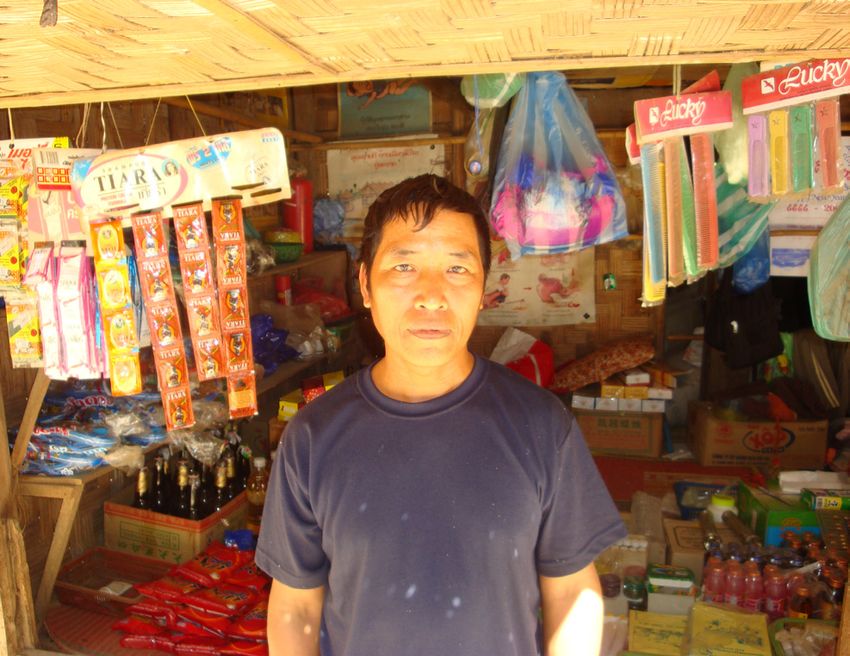
Background                                                               Lao PDR is the world’s third largest producer of illicit opium of
                                                                             which 50% is consumed locally. The Seventh Party Congress has
    The joint UNODC/UNIDO project of “Social and economic rehabili-          therefore established opium eradication as one of its national
    tation of the former opium – poppy growing farmers – Alterna-            priorities.
    tive livelihood development” is one of the responses of the Lao
    Government to the crucial development issues facing the country          Illicit opium production is linked with organized crime, which
    at present. The National name for the joint project is Post Opium        may result in undermining national security, stability and peace,
    Surpass Poverty, PSP, project, which is in the heart of northern Laos,   elements that are at the core of poverty eradication and providing
    in the Province of Oudomxay.                                             food security. In order to secure these development preconditions,
                                                                             the United Nations Trust Fund for Human Security, UNTFHS, is fi-
    The project’s objectives are streamlined with the government’s           nancing the project in order to promote drug reduction and elevate
    National Growth and Poverty Eradication Strategy, NGPES, which is        minimum living standards across targeted communities.
    an inclusive framework for growth and development with a special
    dual focus on promoting sustainable growth and alleviate poverty         Although opium cultivation has been reduced and Lao PDR is close
    with an overall objective to free the country from the status of a       to reaching its goal of eliminating opium, there is a concern about
    least developed country by 2020.                                         the sustainability of the eradication and its impact on former
                                                                             opium poppy growing communities.
2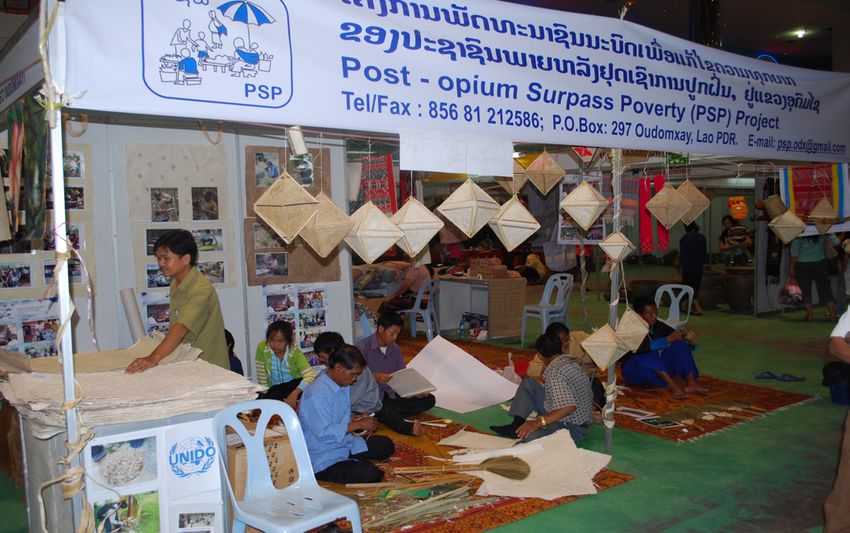
To address this situation, UNODC and Lao Government have out- remoteness of many of the target villages are effectively tackled on
lined a new national program strategy for the post-opium scenario by combining the technical expertise and comparative advantages
entitled “National Drug Control Masterplan (2009-20013)”. The aim of both organizations to assist the Lao Government in creating a
is t integrate the latter with the NGPES, which has been integrated better life for the Lao people.
with the Milennium Devlopment Goals (MDG), that will be reached
when the NGPES is realized. PSP project draws from the expertise of the two organizations,
UNIDO and UNODC, to foster development, in partnership, of
Provision of alternative livelihoods to match the opium elimination Northern Laos.
and the promotion of sustainable industrial development as a way
of alleviating poverty are the main objectives of UNIDO-UNODC
co-operation with the Lao government. While UNODC will contrib-
ute to a drug free environment and improved living conditions for
targeted communities by providing socio-economic development
and viable, legal alternatives to opium, UNIDO will provide techni-
cal assistance in order to enhance productive activities and build
trade capacity at village district and provincial level. In that sense,
the socio-economic constraints due to location, topography and
Village Productivity Groups participating to the Lao National Handicraft Festival 3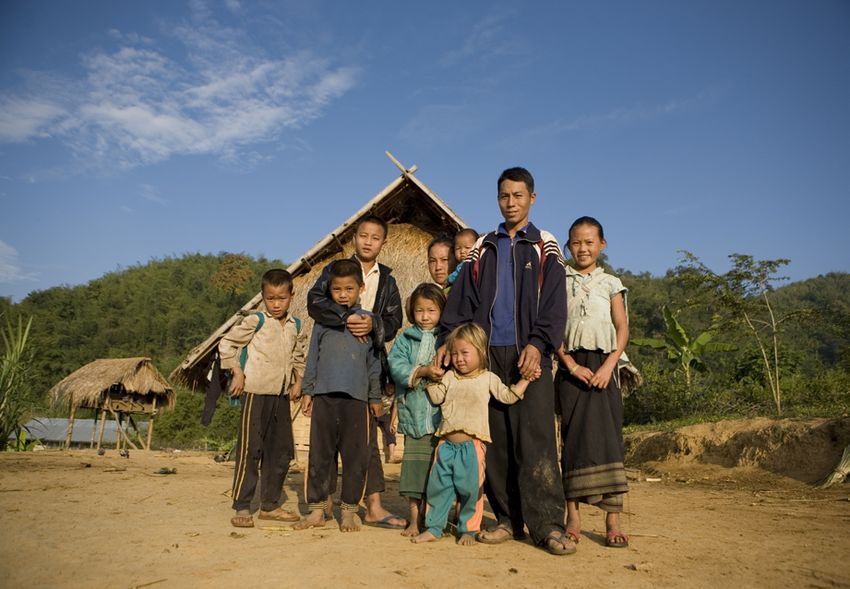
Project Objectives
                                                                           •   Preventive measures: Ensure that other drugs such as ATS are
    The PSP project has as its target areas three districts in Oudomxay:       prevented from taking the place of opium as a major health
    Xay, La and Houn with altogether 20 target villages assigned by            and social problem; prevent cross border and transit trafficking
    the provincial Government. The project has a dual focus in drug            of illicit substances.
    demand reduction and in alternative livelihood creation.
                                                                           For alternative livelihoods creation
    For drug demand reduction:                                             • Income generation: To increase the per capita income in a
    • Opium elimination: Create a sustainable human environment               sustainable manner and to enhance the rural households’
       that will enable illicit opium production to remain eliminated         capacity to generate income.
       with amelioration of living conditions of the communities
       involved.                                                           •   Sustainability of development: To strengthen the role of the
                                                                               private sector in macroeconomic growth and the generation of
    •    Treatment and support: Ensure coping strategies adopted by            employment opportunities.
         former opium farmers are consistent with proper environ-
         mental resource management practices; provide treatment to        •   Productivity and Marketing Center: To set up a focal point link-
         recovering addicts and prevent relapse.                               ing Village Productivity Groups and Private Sector.
4
•   Employment creation: To renew the links between formal/
    non-formal education and employment opportunities and to
    improve them by providing tailored non-formal vocational
    trainings to the communities with a special attention to the
    gender equality.

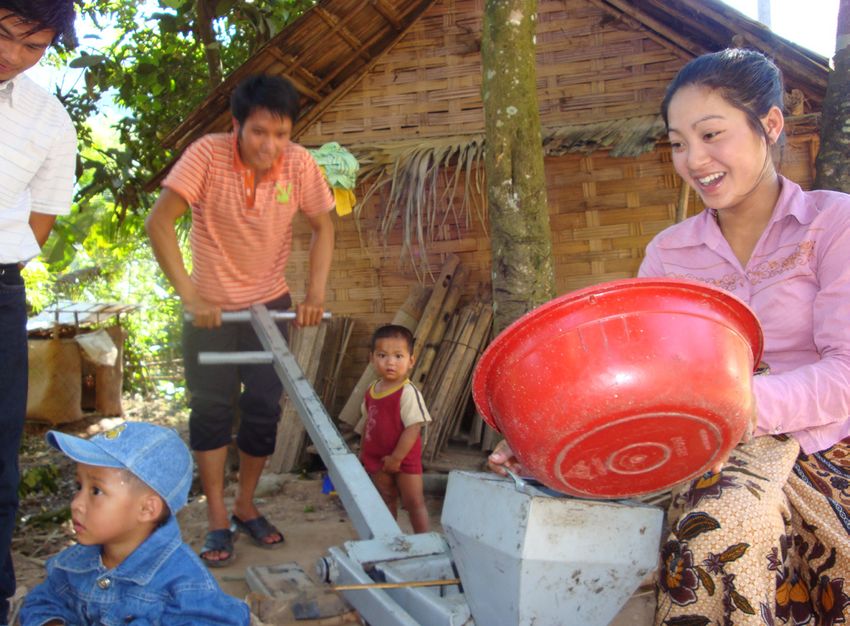
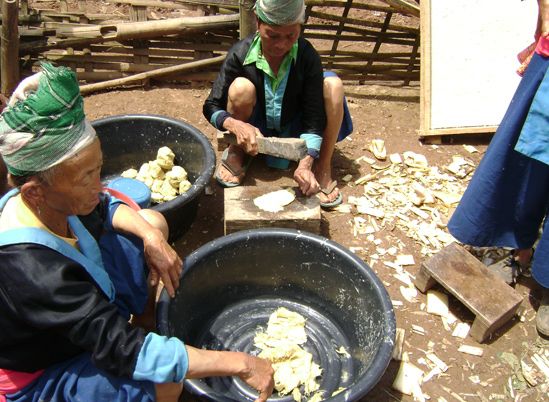
•   Entrepreneurship: To support the small scale domestic busi-     Pulping Bamboo in Ban Mai
    nesses in their start-up and to foster an enabling framework
    for the medium sized enterprises in the northern province.

•   Improve natural resource use and agricultural practices: To
    enhance the capacity of the rural communities wholly or
    partially dependent on forests and non-timber forest products
    for their living and for small-scale cash income.

                                                                    Preparing the bamboo fibers   5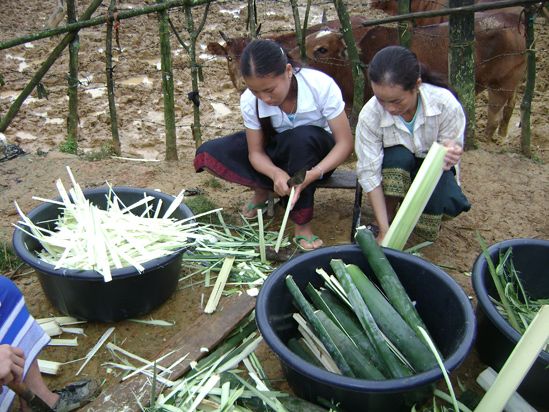
Implementation
                                                                            All technical as well as soft skills training courses are conducted by
    The project is implemented under the technical and administrative
                                                                            qualified trainers recruited by the project.
    supervision of the UNODC Country Office and the UNIDO Project
    Manager following UNIDO’s rules and procedures. A National
                                                                            To support and expand the project’s outputs, numerous short-term
    Project Director (NPD) is based in Oudomxay to liaise with donor
                                                                            consultants as well as subcontractors contribute to the project
    community and donor technical groups at national level.
                                                                            activities through their expertise.

    In the field, day-to day implementation is carried out by the Techni-
                                                                            Finally, a monitoring and evaluation survey at regular intervals is
    cal Advisors from UNODC and UNIDO in cooperation with local
                                                                            conducted at regularly intervals by an independent Non for-profit
    counter parts staff from the Lao National Committee for Drug Con-
                                                                            association (NPA) to asses the quality and efficiency of the project.
    trol and Supervision and from Ministry of Industry and Commerce.

    The project staff gathers in weekly meetings to plan and coordinate
    activities among the two organizations so to guarantee a smooth
    and effective implementation.
6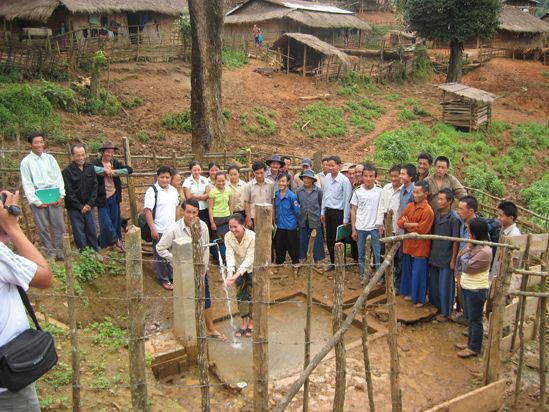
Improving papermaking technology          Lamp-making workshop

 Inauguration of water storage tank   Providing water supply in Ban Mai   7
Sesame oil processing by Mr. Bounthai

    Mr. Bounthai lives with his wife and 5 children at Houay chai village, La district, Oudomxay Province. He is a farmer and every year he and his
    family planted Job’s tears, galangal, sesame and mulberry/Posa tree for income generating activities. He could earn 7,889,000 kip per year and
    in addition, they collected broom-grass and bamboo shoots for about 800,000 kip. When the PSP Project came to his village, he actively col-
    laborated with the project staff and planned for more income gen-
    erating activities. He joined the sesame Village Productivity Group
    (VPG) and his group borrowed money from the Village Saving and
    Credit Fund. The sesame seed cost kip 8,000/kg and to produce one
    litre of sesame oil, he needs 6-7 kg of seeds. The sesame oil is sold
    to the Productivity and Marketing Centre (PMC) for Kip 140,000/
    litre, which sells the oil in Vientiane. Profits are used to pay back the
    loan and to provide additional income for the VPG members. With
    his strong leadership and commitment to the activity, the group
    intents to produce more oil in the future.

8                                                                                                  The Bounthai family pressing sesame
Setting-up a small shop by Mr. Bounlieng

Mr. Bounlieng is 54 year old and lives with his wife and 5 children in Houay chai village La district Oudomxay province. Mr. Bounlieng opened
a small shop at his house 10 years ago with only little capital. Thus, he has to do additional activities such as, maize planting, sesame and
peanut pressing and poultry raising. After the Village Savings and Credit Fund had been established in the village, he borrowed 800,000 kip to
                                                                               purchase goods for his shop. After 3 months, he paid back his loan
                                                                               plus interest (831,000 kip) to the VSCF and made 300,000 kip profit.
                                                                               In early January 2009, he received his second loan, amounting to
                                                                               1.3 million kip which he will repay after 3 months.

                                                                             Mr. Bounlieng loves his job and he will continue it because the
                                                                             experience has been good and it also brings additional income for
                                                                             his family. He is happy and he said that “VSCF provides a good op-
                                                                             portunity for all the villagers, including himself, to get some funds
                                                                             to invest in livelihood activities for poor people”.

                      Mr Bounlieng in front of his stall                                                                                              9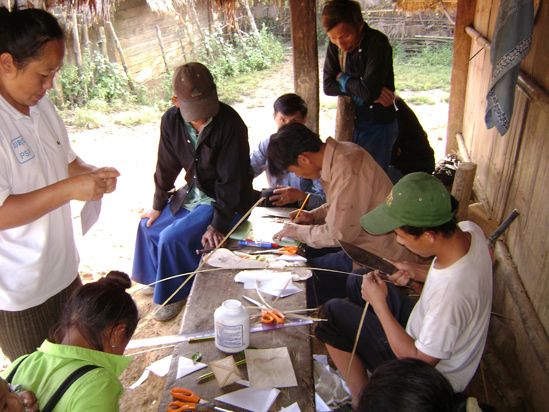
Three year project extending to 2010                                  •   2 nursery specialists hired to improve agricultural produc-
                                                                               tivity and guarantee sustainability of natural resources
     Achievements by end of March 2009                                     •   Marketing opportunities identified and 18 contracts pre-
     •     29 participants from 12 companies have participated in a            pared for VPGs
           traders meeting and new enterprise creation workshops           •   Productivity  and Marketing Centre, PMC, set up, with
     •     30 Village Productivity groups, in 16 target villages, parti-       inauguration Spring 2009
           cipating actively in the skills training and community		        •   20 Village Develoment Committees established
           development workshops                                           •   14 VSCF benefitting 831 households
     •     558 trainees have acquired new skills in agro-processing        •   145 drug addicts treated and rehabilitated within the com-
     •     37 technical training involving 445 members of  Village             munities
           Productiviy Groups                                              •   5120 people attended the drug awareness trainings con-
     •     5 soft skills training such as business skills and entre -          ducted at province, district and village level
           preneurship improvement training for Village Productivity 		    •   3 irrigations schemes for 32 families and supplying water to
           Groups and local traders                                            21.52 hectares of paddy field
     •     Provision of material, tools and processing equipment such      •   Provision of 3 rice banks, 2 village drug revolving funds and
           as pulping machines, procured and handed-over to the 		             micro-credit funds for 14 target villages
           VPGs                                                            •   Land use planning and land allocation in 7 villages benefit
10
                                                                               ting 720 families
• 6 villages provided with a completely constructed water • To enhance food security by tackling the issues of the
supply system benefiting 3770 people trained by shortening of the fallow period having a negative
water user comittees impact on soil fertility, yields, and food prodution in upland
• Training in primary health care conducted in 9 villages areas
• 1986 impregnated mosquito nets distributed in 20 villages • To sustain the income generation activities of the Village
• 1 market shelter for 4 villages constructed Productivity Groups, VPGs and the established Productivity
and Marketing Center
Further objectives: • To improve the market access of VPG products
• To enhance the coverage and operation of the social • To prevent the spread of Amphetamine Type Stimulants,
services ATS and minimize the risk of opium demand being replaced
• To improve or construct more infrastructure with ATS demand
• To reverse the trend of low percentage of women partici- • To address the gender inequality issues to avoid them from
pating in all socio-economic activities hampering the potential of the women to participate in the
• To combat the scarce employment opportunities worsening income generation activities
further in the coming years due to the rapid population • To develop a sustainable model for the use of the declining
growth by supporting the creation of small scale businesses forest resources, so as not to reduce the opportunity for
• To reverse the tendency of geographic isolation resulting generating income from them
11
in economic marginalization, especially in remote areasCONTACT INFORMATION:
OUDOMXAY VIENNA
National Project Director: UNIDO Contact:
Houmphanh Bouphakham Juergen Hierold
E-mail: houmphanh.bouphakham@gmail.com E-mail: j.hierold@unido.org
Phone: +856 (0) 81 21 25 86
UNODC Contact:
Deputy National Project Director: Cicero Dos Santos
Vanxay Bouthanavong E-mail: Cicero.Dos.Santos@unodc.org
E-mail: vanxay.bouthanavong@gmail.com
Phone: +856 (0) 81 21 25 86
VIENTIANE
UNIDO Contact:
Kheunkham Keonuchan
E-mail: Keonuchan@undp.org
Phone: +856 (0) 21 45 31 15
UNODC Contact:
Leik Boonwaat
E-mail: leik.boonwaat@unodc.org
Phone: +856 (0) 21 41 32 04
Mr Ju-Tong and his family, all beneficiairies of the PSP projectYou can also read


