PREPARING FOR THE EYFS REFORMS - WELCOME TO THIS WEBINAR! We are due to start at 1.30 pm - Schools Alliance for Excellence
←
→
Page content transcription
If your browser does not render page correctly, please read the page content below

PREPARING FOR THE
  EYFS REFORMS
   WELCOME TO THIS WEBINAR!
     We are due to start at 1.30 pm
For the best experience, we advise you to
    switch off other streaming devices
 Take a moment to test your own video
             and audio
       We will be with you shortly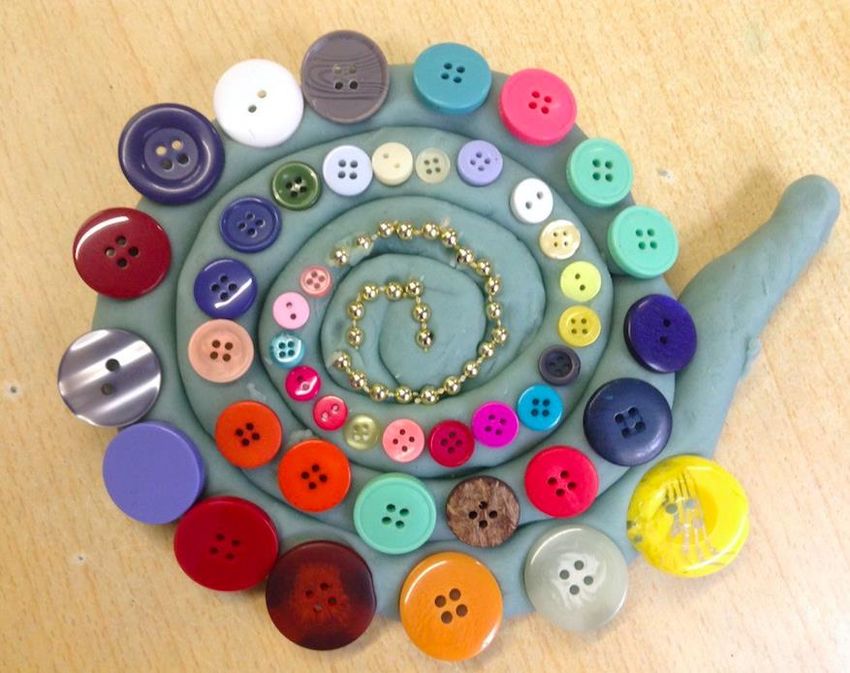
PREPARING FOR
THE EYFS REFORMS
PAULINE GOLDRICK
SAM ROSSER
SALLY CAVE
AMANDA PARDOE

EYFS REFORMS - AGENDA

                                   Section 2                    Section 3
      Section 1
                             Building your EYFS vision,
EYFS reforms basic facts      underpinning pedagogy         How to get started on
and Statutory Guidance.                                       implementation.
                              Development Matters -
 DfE outline of reforms           Julian Grenier             Our Early Adopter
                           Birth to 5 Matters -Sally Cave    Journey – Amanda
                                    Ofsted view
                                                                  Pardoe

                                                                                    3
A YEAR OF EYFS CHANGE AHEAD, PARTICULARLY FOR RECEPTION

                                         Over the year                       June 2022
        September 2021
                                  Implementation of new EYFS       Statutory EYFS Profile made for
  EYFS reforms become statutory
                                   framework, to achieve high       every child against new ELGs.
   alongside Reception Baseline
                                   quality learning plus revised   Submit to LA, to form national
              [ RBA]
                                       approaches to data.                     data set.

        Plus Covid recovery running through everything

                                                                                                     4
EYFS REFORMS – WHAT’S NEW?
          Revised EYFS Statutory            Revised non-statutory
                Framework                   Curriculum Guidance
          Revised Statutory Early            Birth to Five Matters
           Learning Goals [ELG]
                                             Development Matters

                                EYFS Profile
                         Exceeding judgement removed
                 Increased school responsibility for moderation
                      No LA moderation visits into schools

         But great EYFS practice remains the same!                   5
Section 1, the Learning and Development
Statutory Framework   Requirements outlines “what providers must do,
for the EYFS          working in partnership with parents, to promote the
                      learning and development of all children in their care to
                      ensure they are ready for Year 1”

                      The revised Educational Programmes in the 7 areas
                      “must involve activities and experiences as set out
                      under the areas of learning”

                      The new 17 Early Learning Goals [ ELGs] “defines what
                      children are expected to achieve by the end of EYFS.
                      They should not be used as a curriculum or in any way
                      limit the wide variety of rich experiences that are crucial
                      to child development.”

                                                                                    6
UNDERSTANDING THE EYFS REFORMS.
DFE - TWO KEY AIMS

• To improve outcomes at age 5,
  particularly in early language and
  especially for disadvantaged children.

• To reduce workload so teachers and
  practitioners can spend more time
  supporting and teaching children in
  their care.

.

                                           7
EYFS REFORMS – WHAT THE DFE IS AIMING TO ACHIEVE

       Transforming early years curriculum and assessment to
        focus on what matters most for children’s outcomes.

Early Language at the heart of a broad and holistic curriculum
• More depth added to each of the 7 educational programmes
• New Development Matters guidance, with a dedicated reception year section.

Effective assessment and a new approach to the EYFS Profile [EYFSP]
• Move away from an excessive tracking culture and evidence collection
• Move to two bands from three in EYFSP
• Removal of LA statutory moderation at EYFSP.
                                                                               8
17 EARLY LEARNING GOALS IN 7 AREAS OF LEARNING
KEY CHANGES

 Communication and           Personal, social and
                          emotional development –          Physical development –
 language – provides
                          new ELG on self regulation        separation of fine and
    more focus on          plus self care included in         gross motor skills
extending vocabulary.                 PSED.

                        Mathematics - greater focus     Understanding the world –                Expressive arts and
                        on a deep understanding of      technology removed as an ELG but      design – more clarity and
    Literacy –                                              remains in the educational
                        number to 10 and a new ELG                                               focus on developing
comprehension ELG       on number patterns. Shape,
                                                            programme, includes more
  now included            space and measure ELG
                                                          definition for different areas of   language throughout this
                                                         learning; science, geography and
                                 removed.                              history.                         area.

                                                                                                                      9
DFE
INTRODUCTION
TO THE EYFS
REFORMS
ADA SIMPSON – DFE, HEAD OF EYFS
QUALITY.
RECORDED 05/10/20
SECTION 2 – PREPARING FOR THE EYFS REFORMS

                           Building your EYFS vision and
                             .

                           underpinning pedagogy

                           Presentations about the non statutory
                           guidance

                           • Development Matters- Julian Grenier
                           • Birth to 5 Matters -Sally Cave

                           Ofsted view – Phill Minns HMI

                                                               11
What is it that we want for our
children in EYFS?
Strong EYFS Vision –
your bedrock for the Is this vision known and
EYFS reforms. understood throughout the school
or setting?
3 important questions
to consider.
Do all members of the EYFS team
live and breathe the vision
everyday?
12IMPLEMENTING THE EYFS VISION
RESEARCH POINTS TO SOME COMMON AGREEMENT OF HOW TO ACHIEVE GREAT
PRACTICE
Not one pedagogical approach, but
several blended and balanced
together
• EPPSE 2015 “Mixture of direct teaching and child
led, play-based exploration but always adapted to
meet the needs of the individual child.”
• SEED report 2015 “Build a curriculum around
what children are excited about, informed by on
going assessment”
• Getting it right in EYFS 2019 “Value of a balanced
approach which incorporates open ended play
alongside more structured learning and teaching”
13Highly skilled EYFS Team – so important for
implementing the reforms.
Strong knowledge of child
development and how young
children learn.
Adults who understand the power
of conversation with children –
“shared, sustained thinking”
Adults who recognise the
interconnectedness of young
children’s learning and weave it
together into a satisfying whole.
14CHARACTERISTICS OF EFFECTIVE LEARNING AND TEACHING
PLACE AT THE HEART OF YOUR VISION AND THE REFORMS
• Educational programmes forming
“The What” children the curriculum leading to the end
learn in EYFS point of EYFS, the ELGs.
• The Characteristics of Effective
“The How” children Learning and Teaching – how a child
learn in EYFS is learning and what adults might do,
and provide.
15CHARACTERISTICS OF
EFFECTIVE LEARNING AND
TEACHING
• Characteristics of Effective Learning and
Teaching have central importance to the
EYFS reforms.
• They form a “blue print” for developing
excellent EYFS practice, supporting adults
to encourage children to discover, think,
create and solve problems.
• Strong links with the new ELG of self-
regulation and executive function.
• Support the development of
communication and language skills which
form the basis for later literacy.
16EYFS REFORMS
UNDERSTANDING THE NON-STATUTORY CURRICULUM GUIDANCES
The Statutory framework The two non-statutory
provides a skeleton outline of Curriculum frameworks,
Schools and settings can
what schools and settings are Development Matters and
choose which guidance suits
legally required do in EYFS, Birth to 5 Matters sit alongside
them best.
but it does not contain much the Statutory Framework, to
detail of how to achieve this. support with implementation.
The new Development Matters , non-statutory curriculum guidance for the EYFS, is
available to support providers in their delivery of the EYFS learning and development
requirements.
As this document is non statutory, Ofsted and inspectorates of independent schools
will not have regard to it in carrying out inspections and it is up to providers to decide
how they approach the Curriculum.
EYFS Statutory Guidance 2021
17DEVELOPMENT MATTERS – NON STATUTORY
GUIDANCE – LED BY JULIAN GRENIER
Brief document overall.
Seven key features of Effective Practice.
Shortened Characteristics of Effective Teaching and
Learning
The prime and specific areas of learning are;
• Split into 3 age bands: Birth to 3 years, 3 & 4 years of
age, Reception
• Observation ‘checkpoints’ are also included but for
Prime areas only.
18UNDERSTANDING THE REVISED DEVELOPMENT MATTERS DR JULIAN GRENIER RECORDED 08/02/21
BIRTH TO 5 MATTERS – NON STATUTORY GUIDANCE
• Large document overall.
• Written by a coalition of early years
  sector bodies, updating the previous
  guidance.
• Areas of learning are organised into 6
  overlapping age bands.
• Excellent section on underpinning
  principles including the Characteristic
  of Effective Learning.

                                              20
BIRTH TO 5 MATTERS SALLY CAVE HEAD OF GUILDFORD NURSERY
BIRTH TO 5
 MATTERS
 EYFS GUIDANCE
 BY THE SECTOR, FOR THE SECTOR

www.birthto5matters.org.uk
The Early Years Coalition:
•   British Early Childhood
    Educational Research         •   Sector Endorsed Foundation
    Association (BECERA)             Degrees in the Early Years
•   Early Education                  (SEFDEY)
•   Early Childhood Forum        •   Sightlines Initiative
•   Early Childhood Studies      •   Montessori St Nicholas
    Degrees Network (ECSDN)      •   National Day Nurseries Association
                                     (NDNA)                               Downloadable PDF
•   Early Years Alliance                                                  To buy
•   Froebel Trust                •   National Education Union
                                                                          Online interactive
•   Keeping Early Years Unique   •   OMEP UK
                                                                          www.birthto5matters.org.uk
    (KEYU)                       •   Steiner Waldorf Schools Fellowship
•   LGBTQIA Early Years          •   TACTYC
The work of the coalition is
funded by Coalition partners,
CREC and the Cosy Fund.
Key points:
• Children have a right to play.
• Play, both indoors and outdoors, makes a powerful
contribution to children’s wellbeing, development and
Play
learning.
• In play children can become deeply involved as they take
When you remain
things they already know and combine them in new ways so true to your
that their understanding deepens. principles, your life
• Children choose to play, and are in charge of their play.
• Having freedom and time to play in an appropriately
is so much easier.
stimulating and resourced environment which is finely
tuned for babies, toddlers and young children supports
development and learning across all areas.
• Adults must have a deep understanding of how play of
different types supports children to develop and learn, and
be able to discuss this with parents.
Children have a right to play. Children’s right to play is
recognised as so vital to their wellbeing and development that it is
included in the United Nations Convention on the Rights of a
Child (1989). Play both indoors and outdoors is also a
fundamental commitment to children throughout the EYFS.The central importance of • Staff provide exciting experiences which
play: extend children’s interests and open up
new possibilities.
‘Play is the highest level of
• Children are given plenty of time and
child development. It is the
spontaneous expression of
space to play.
thought and feeling. • Children are offered resources that are
…It…constitutes the source of predominantly open-ended, made from
all that can benefit the child… natural materials, reusable and recycled;
At this age play is never trivial; they are always developmentally
it is serious and deeply appropriate and beautifully presented.
significant’. (Froebel in Lilley • Adults enrich the potential of play by
1967:84)
being sensitive co-players.The central importance of • Staff provide exciting experiences which
play: extend children’s interests and open up
new possibilities.
‘Play is the highest level of
• Children are given plenty of time and
child development. It is the
spontaneous expression of
space to play.
thought and feeling. • Children are offered resources that are
…It…constitutes the source of predominantly open-ended, made from
all that can benefit the child… natural materials, reusable and recycled;
At this age play is never trivial; they are always developmentally
it is serious and deeply appropriate and beautifully presented.
significant’. (Froebel in Lilley • Adults enrich the potential of play by
1967:84)
being sensitive co-players.• Support understanding of typical progression and child development • Start where children are, not with their age • Help identify where children need additional support • Useful in observation-assessment-planning
Exploring clay

Clay is a natural solid material
and it provides children with            Clay is an open-ended resource which
opportunities to understand              means it can be anything the children want
3D forms and thus supports               it to be.
their mathematical knowledge
and understanding.

                 Clay needs to be squeezed, squashed, twisted,
                 moulded if you want to change its shape.
Learning stories
Amir, you were interested in going down to Owl
room to look at the eggs and were happy to
watch them in their brooder box, but your
favourite bit by far, was when they were big
enough to come out of the box and be handled.
You loved having a chick on your legs, you
laughed and tried to copy the squeaking noise
they made. When you had a turn another day
you were laughing again and said “Yay!”
We talked about how gentle we have to be
when handling animals.USEFUL INFORMATION • www.birthto5matters.org.uk • www.early-education.org.uk • www.developmentmap.co.uk • Learning Stories – Guildford Nursery School and Family Centre, Guildford, Surrey UK (guildfordnscc.surrey.sch.uk)
TAKE A BREAK!

                34
OFSTED UPDATE ON EYFS REFORMS PHIL MINNS HMI RECORDED 08/02/21
SECTION 3 – PREPARING FOR THE EYFS REFORMS
GETTING STARTED
.

• Feedback from Early Adopter
  schools
• Our Early Adopter Journey –
  Amanda Pardoe, Onslow Infants.
• Ideas for beginning
  implementation.

                                             36
EARLY ADOPTER SCHOOLS IN SURREY
– SOME OF THEIR COMMENTS.
Moving away
from the adult
led ownership
of learning
We have given Take your towards a
ourselves child - led
permission not foot of the
to be endlessly gas, slow focus.
busy, instead we down and be
use the time to more
talk to the Don’t panic!
children. Don’t try to reflective.
change
Scaling back everything all
on tasks and at once.
jobs to
increase our
“in the
moment”
interaction.
37EARLY ADOPTER SCHOOLS – EMERGING ISSUES
Our data system Finding it hard
now doesn’t fit to simplify our
in with whole
data process,
school data
SMT currently
drops and book We have to
looks ect. baffled!
use tapestry in
a different
way.
Modifying
I feel anxious
that not much expectations.
is changing, but
perhaps this
could be ok.
38OUR EARLY ADOPTER JOURNEY – ONSLOW INFANTS AMANDA PARDOE, DEPUTY HEAD AT ONSLOW INFANTS
ONSLOW INFANTS
 OUR INITIAL THOUGHTS - SEPTEMBER 2020
• New guidance is the minimum – the sky’s the limit! What DOES YOUR SCHOOL OFFER EACH CHILD?
     • Lots of talk about writing new whole curriculum plans – this should be ‘in the moment’ and focused around your knowledge of every
       child. Skill progression is key. A balance of the two.

• Moving away from using Development Matters as a ‘checklist’. Remembering it is just guidance.
     • Birth to 5 Matters vs Development Matters.

• Evaluating how we gather evidence in line with the new guidance e.g. less emphasis on collecting evidence for all areas, more focus on
  teacher knowledge and reducing workload.

• Liaising with Tapestry to work out how to add observations using the new curriculum.

• Looking at how to keep SLT happy when there is much less emphasis on gathering evidence and data. Concerns around monitoring and
  links to performance management.
ONSLOW INFANTS
WHAT WE HAVE DONE SO FAR
Observation and assessment:
• One in-depth assessment in the Autumn term to identify starting points and next steps. September 2021
Baseline to consider next year.
• Data points: October half term (baseline), February half term and EOY – working at or below in the 17 areas.
No longer 40-60 emerging etc. This also keeps SLT happy. Identifies those children who we focus on.
Provision and curriculum:
• Nothing has changed about what good, high-quality EYFS provision should look like!
• Enabling environments is key e.g. continuous provision, loose parts play, open-ended resources. Going into
their play and observing when to question/extend (not interfering).
• Enhancements – focus on skill development, not outcomes.
• Reduce adult-led activities. More time with them in play.
• Timetable – ensuring the longest amount of time devoted to play. Carpet times at start and end – not breaking
up play.
• Termly overarching themes, not half termly topics.Tapestry learning journeys:
• Quality over quantity.
• Reduction in time spent uploading.
• Skills and processes vs outcome.
• No longer ticking off statements within age bands. Selecting the area of learning using
‘flags’ only.Onslow Infants – Our Next steps • End of year assessment against new ELGS – moderation across classes? We will use exemplification materials when published. • How to report to Y1 including windscreen approach – removal of exceeding? (getting Y1 ready for the child and not the child ready for Y1) • Continued CPD – staff expertise is key to getting this right. They need to be highly knowledgeable on the curriculum, but also in how to interact with children to move them on in their learning. • Training for the whole school – subject leaders and SLT need to know what to expect and how to ‘monitor’ in a world with less tracking and evidence gathering. • Sharing good practice with other schools. • Continued evaluation of practice and environments. • Don’t reinvent the wheel!!
GETTING GOING WITH THE EYFS REFORMS.
SOME STARTER ACTIONS FOR THE SUMMER TERM TO
CONSIDER.

 Plan out lots of        Ensure everyone                                                 Create an
                                              Designate a couple
    extra EYFS           has a copy of the                             Discuss the
                             Statutory
                                                 of meetings to                         Action Plan,
  meetings over                               looking at the new        changing
   this term, to           Guidance plus                                                chunking up
                                                  educational       expectations for
 keep staff / TAs
                           Development
                                               programmes and       assessment with     actions into
                         Matters / Birth to                                               Autumn,
  informed and                                 ELGs, identifying       SMT- what
                         5 Matters. Which
    involved .                                  any gaps in your      needs to go?       Spring and
                         are you going to
                                                    provision
                               use?                                                    Summer term.

                    “Aim for your EYFS team to feel enabled through
                     great training, inspiring meetings and feeling valued”
                           Matthew Sayer Early Excellence 16/03/2021

                                                                                                       44
EYFS REFORMS
FINAL WORD FROM OFSTED - SOME REASSURANCE
“ 1st September 2021 is just the start of the
journey for implementing the changes, and
not the finish line”
08/02/2021 Phil Minns HMI.
4546
Questions from
chatFURTHER EYFS TRAINING – SUMMER TERM
BOOKING DETAILS ON THE SAFE WEBSITE
EYFS Profile Refresher
EYFS Profile workshop training New to Reception –
Reforms Special using the EYFS Profile
22nd / 23rd May
10th – 20th May 9th / 10th June
Transition EYFS Nursery EYFS 1 to 1 surgery
to Key stage 1 network reforms/assessment
Julie Fisher Reforms Special 14th / 17th June
19th May / 9th June 26th / 27th May
47p.goldrick@schoolsallexcel.com s.rosser@schoolsallexcel.com
You can also read


