Primary Care Network Planning and Implementation Guide
←
→
Page content transcription
If your browser does not render page correctly, please read the page content below
Primary Care Network
Planning and Implementation Guide
July 2019
Version 1.0
Primary Care Network | Planning & Implementation Guide

Table of Contents
Introduction ................................................................................................................................................ 4
Section 1: Change Management, Engagement and Cultural Safety ................................................. 9
Section 2: Clinical Programs and Services ........................................................................................... 11
Section 3: Planning for and Hiring Interdisciplinary Team Members ............................................ 13
Section 4: Interdisciplinary Team-based Care Plan ........................................................................... 21
Section 5: Collaborative Governance and Management Approach ............................................... 30
Section 6: Quality Improvement Plan .................................................................................................. 33
Section 7: Funding Process .................................................................................................................... 34
Section 8: Information Technology Plan ............................................................................................. 38
Section 9: Growth Plan ........................................................................................................................... 42
Section 10: Evaluation and Reporting .................................................................................................. 43

                                                                  Page 2
                                                   Version 1.0 – Last Updated July 2019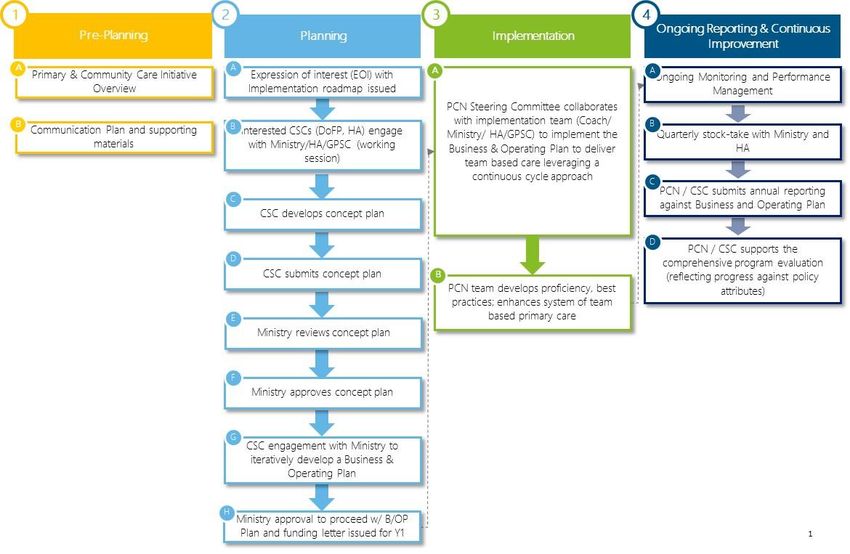
Primary Care Network | Implementation Guide

               Page 3
Version 1.0 – Last Updated July 2019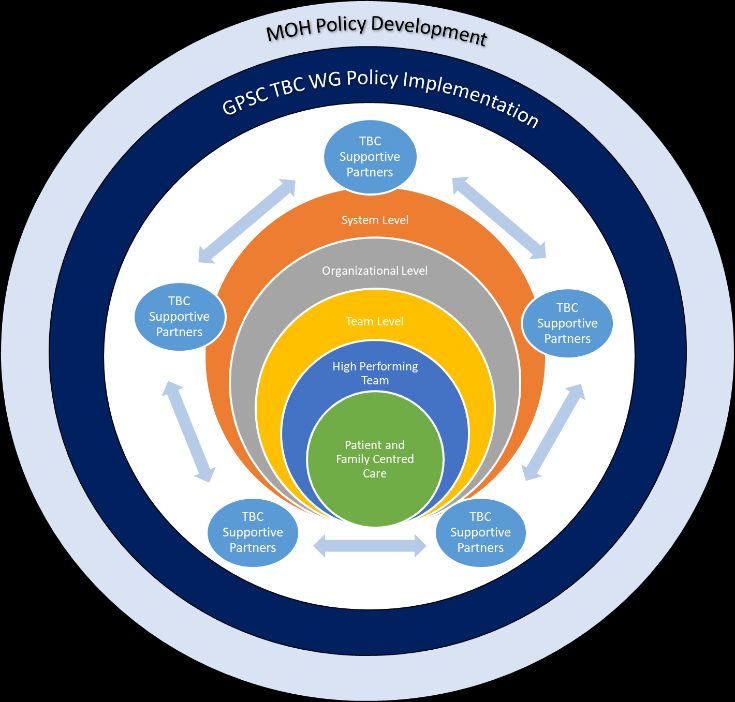
Primary Care Network | Implementation Guide

Introduction

Background on the Primary and Community Care Initiative
Despite initiatives over the past several years to improve primary care in BC, there is still a large number
of patients in the province that do not have appropriate access to primary care services. Announced in
Spring 2018, the Government of BC’s Primary and Community Care Strategy is focused on improving the
everyday health care services that British Columbians rely on. Through interdisciplinary team-based care
the Ministry of Health (the Ministry) will fund and recruit more health care professionals into the health
system and ensure patients are at the centre of health care delivery.

The strategy includes, where feasible, interdisciplinary team-based family practices and primary care
clinics for patients located throughout the province, where physicians and nurse practitioners work
alongside other health professionals to provide complete care to patients. These practices and clinics -
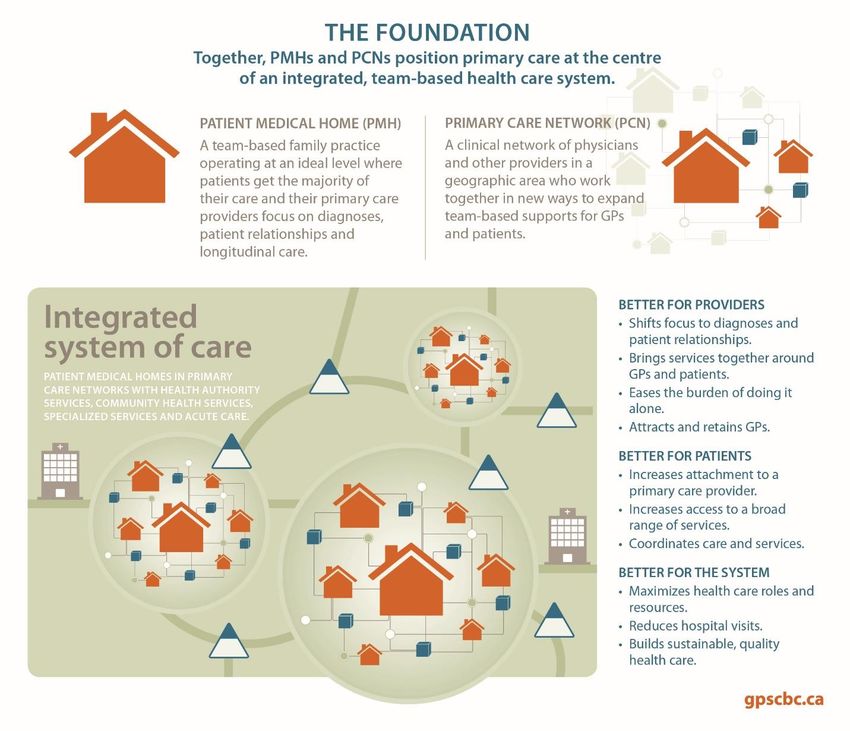
called patient medical homes – will work as part of a larger geographical Primary Care Network (PCN) –
connecting with other clinics, health authority (HA) services (such as public health clinics, mental health
and substance use services and community services) to make sure that patients have seamless access to
all the care that they need. It is important to note that in some regions the interdisciplinary teams may
not be co-located, and delivery models may be adapted accordingly.

                                                 Page 4
                                  Version 1.0 – Last Updated July 2019
Primary Care Network | Implementation Guide
The Ministry of Health is also developing Urgent and Primary Care Centres (UPCCs), which will provide
opportunities for patients to access care in the evenings or on weekends and will help patients who do
not have a family doctor or nurse practitioner become attached to regular care. The Ministry will also
continue to expand the Community Health Centre (CHC) model in the province – these are community-
led clinics, focusing on interdisciplinary team-based care, and generally also include social services. With
this plan, frail seniors, adults with complex medical needs, and individuals with mental health and
addiction challenges can access timely care in the community through specialized community services,
coordinated by a central point of contact for patients within a geographical area.
In addition, the Ministry and First Nations Health Authority (FNHA) have identified joint interests to
advance interdisciplinary team-based primary health care and models of governance that ensure First
Nations’ interests and participation are at the core of design and delivery of health and wellness
services. These services will embody culturally safe, team-based, interdisciplinary health care that
increases access and attachment closer to home.
Evidence has shown that interdisciplinary team-based care puts the patient at the centre of their care.
When implemented effectively the result is a patient and family-centred system that is provided by
Page 5
Version 1.0 – Last Updated July 2019Primary Care Network | Implementation Guide
physicians, nurse practitioners, allied health providers other health professionals who are working
together effectively in a collaborative way to deliver appropriate care for patient needs.
Guiding Principles
At a provincial level, a key to the success of the Primary and Community Care initiative is grassroots,
community driven work coming together with provincial policies and systems. As communities plan and
implement, there are guiding principles to help ensure success:
Empower local decision making that responds to community needs – wherever possible, support
local conversations at collaborative services committees (CSCs) or PCN Steering Committees to
address issues, instead of having one partner take their issue to a higher body (i.e. GPSC or
MoH)
Enable collaborative decision making between partners
Be inclusive of all providers and partners, including physicians, nurse practitioners, nurses, allied
health providers, Indigenous peoples, patients and families, divisions, health authorities, partner
services
Respect all providers and ensure they are involved in decisions that will affect them
Support connections to other services/resources/providers where appropriate
Embed a trauma-informed and culturally safe approach to delivering care
Engage patients meaningfully and incorporate their feedback to improve primary care
Ensure care delivery respects and meets the needs of providers and patients
Work towards achieving agreed upon outcome measures, in line with eight PCN attributes
Acknowledge and build on the strong foundation of previous local, regional and provincial work
(e.g. GP for Me) and existing structures (e.g. Divisions, CSCs, GPSC, etc.)
About This Planning and Implementation Guide
A number of partners that are currently involved in establishing primary care networks (PCNs) are keen
to access information and resources to assist them to plan and implement PCNs in their communities.
To support Wave 1 and Wave 2 communities as much as possible at this time, we are sharing an early
version of the provincial Primary Care Network Planning and Implementation Guide.
It contains information and guidance for Wave 1 and Wave 2 communities relating to PCN planning and
implementation; including key activities, roles and responsibilities, hiring, funding, evaluation, and more.
The Ministry of Health (Ministry) and General Practice Services Committee (GPSC) are working together
to update this guide and add content to create a more comprehensive resource for all communities. We
expect version 2.0 to be available this fall and will keep partners informed about its release.
This guide incorporates lessons learned from the PCN planning and implementation process, along with
continuous improvements that have been made by partners along the way. Additional key learnings /
improvements from subsequent waves will be incorporated into future versions to increase
comprehensive guidance for all communities and partners involved in PCNs.
Page 6
Version 1.0 – Last Updated July 2019Primary Care Network | Implementation Guide
The diagram on the following page is an overview of a consistent and provincially standardized approach
for implementing an integrated system of team-based primary and community care. One of the core
principles of the strategy is to ensure that the implementation approach is a truly collaborative and
inclusive one, between the Ministry and Doctors of BC through the GPSC, divisions of family practice,
and health authorities, among other partners.
The four phases of the approach described provide PCN communities with a detailed view of the key
steps involved in planning, implementing and operating a team-based care service delivery model.
Wave 1 and 2 PCN communities will use a modified version of this implementation approach.
This Planning and Implementation Guide will be augmented and refined for future waves based on
further enhancement to the PCN development process, and on feedback received from Wave 1
communities.
Page 7
Version 1.0 – Last Updated July 2019Primary Care Network | Implementation Guide
Page 8
Version 1.0 – Last Updated July 2019Primary Care Network | Implementation Guide
Section 1: Change Management, Engagement and Cultural
Safety
Introduction
This section provides Wave 1 communities with guidance on change management and engagement for
PCN implementation.
Change management plan
Shifting primary care practices towards greater use of team-based care and a networked approach may
be a significant change that requires change management activities to support.
The following activities are considered change management to support the transition to full PCN
implementation / operations and may be funded by the Ministry:
Clinical service model development, including transition to team-based models of care and
development of team workflows, protocols and integration within family physician (GP)
practices, and nurse practitioner (NP) practices
Supporting and facilitating cross provider service delivery
Recruitment and training for GPs, NPs, nursing and allied health providers
Integration of allied health providers and nursing professionals as approved within the service
plan
Patient engagement
Community partner engagement
Communications, including public awareness, advertising, and marketing
Engagement with Indigenous Health organizations
Evaluation
Attachment process through the centralized provincial waitlist once operational
Nurse practitioner integration
Costs associated with activities provided by other entities within the health system are considered out-
of-scope for PCN funding. These include:
Additional funding for GP engagement and GP participation in implementation of PCN to be
considered by the GPSC
Division resources (e.g. the executive director’s salary) that are covered by division
infrastructure funding
Health authority staff costs to be managed from within health authority global budgets.
Cultural safety plan
A core attribute of PCNs is that care is culturally safe and appropriate. Communities are asked to
develop a plan to facilitate the cultural safety learning process for physicians, staff and other providers
within approved PCNs. This includes the number of physicians, staff and other providers within the PCN
that currently have, or will complete, the Provincial Health Services Authority (PHSA) San’yas Indigenous
Cultural Safety Training and / or regional-specific training by HAs by the end of FY19/20. Communities
are encouraged to use the Indigenous Engagement and Cultural Safety Attribute Guidebook to support
Page 9
Version 1.0 – Last Updated July 2019Primary Care Network | Implementation Guide
the development of plans, which will be available this summer and will be available on the PCN toolkit
site.
Communications plan
Communication and engagement play an integral role in supporting the work already underway and are
critical to the implementation of the overall strategic direction of the PCN. The PCN service plan
development process requires considerable engagement with community and provider partners. It is
important that PCNs continue to grow and strengthen these local connections, including with specialist
physicians, acute services and specialized community services, to advance the goals of primary and
community care as well as the effective operations of the PCN.
It will be the role of PCN Steering Committees – supported by overarching messages, resources, and
templates provided by the Ministry Stakeholder Engagement Team and GPSC Communications group –
to work together to develop a community and partner engagement and communications plan for their
local PCNs. Elements include identifying stakeholders, developing local key messages, establishing
review and approval processes, etc.
For PCNs to be effective within the community, they will require input and commitment from of a wide
range of stakeholders who need to be involved, or informed, in the process from its earliest stages of
development and planning through to implementation and operations.
PCNs will be supported to have dedicated websites, which include information about participating
clinics, locations and hours, and services available. Health Link BC will develop the websites using
provincially standardized templates, in collaboration with the participating PCNs who will be required to
provide information and updates for this site once developed. Additional information regarding this
process will be communicated as it becomes available.
Page 10
Version 1.0 – Last Updated July 2019Primary Care Network | Implementation Guide
Section 2: Clinical Programs and Services
Introduction
This section provides an overview of the types of comprehensive primary care services that may be
delivered within a PCN.
Enhanced primary care program description
PCNs will provide comprehensive care and coordination of care with a set of core services. These
primary core services and their respective key priority populations are outlined below:
Population Primary Care Services
a. Staying 1. Services to improve health literacy, self-care, self-management and
Healthy patient activation
2. Services and activities that contribute to public health efforts in support
of improving population health status, including supporting healthy
public policy development, enhancing health supporting environments
and promoting development of healthy communities
3. Health assessment of the PCN population including the identification of
high-risk sub-populations
4. Implementation of the Lifetime Prevention Schedule (LPS) for the PCN
population and other appropriate clinical practice guidelines for high-
risk sub-populations identified through the PCN population health
assessment, throughout the life-course
5. Provision of nutrition education and counselling with a focus on
prevention according to established guidelines and guidance
6. Reproductive care according to established guidelines:
a) promote sexual health, including prevention and management
of sexually transmitted infections
b) health promotion services and supports before, during and
after pregnancy
c) low-risk maternity care
d) antepartum and postpartum care
e) contraception, safe abortion services and post-abortion care
b. Getting Better 1. Diagnosis, assessment and treatment services for acute illness
2. Access to diagnostic services, including point-of-care testing where
practical
3. Basic in-office emergency services
4. Referrals to specialty services with follow-up
5. Linkages to community-based resources, including peer and group
support
c. Living with 1. Outpatient diagnostic imaging and laboratory services, as appropriate
Illness or 2. Early detection, intervention and education
Disability 3. Support for self-care
4. Guideline-based chronic disease and chronic pain management and
service coordination
Page 11
Version 1.0 – Last Updated July 2019Primary Care Network | Implementation Guide
5. Post-cancer treatment care and support
6. Pre- and post- surgical care (e.g. pre-habilitation, risk factor reduction,
optimization and rehabilitation services)
7. Local surgical services, as appropriate
8. Use of existing standardized care pathways (e.g. hip surgery)
9. Ongoing health monitoring, including medication
10. Home support for people with mild to moderate complex conditions
and frailty
11. Support for care provided in hospital and long-term care facilities
12. Care for people with mental health and substance use problems:
a. screening, assessment and management for people with mild
to moderate conditions/disorders and stable severe or complex
conditions/disorders including concurrent physical health
conditions
b. individual, group and on-line counselling
c. pharmacological treatment including opioid agonist treatment
services and medication monitoring
d. rapid access to crisis intervention services
e. provision of harm reduction resources and services
f. implementation of tools to increase resilience
d. Optimally 1. Serious illness and quality of life conversations
Coping with 2. Palliative approach to care (e.g. pain management)
End of Life 3. Support for the terminally ill
4. Referral to medical assistance in dying services on request
Preventive care is part of the core attributes of the provision of comprehensive care. PCNs will continue
to actively consider opportunities for enhanced preventive care to meet the identified needs of their
population. Reference to the Primary Care Networks’ Planning Guide for Preventive Health Care will
support this work. A continued planning relationship with a local Medical Health Officer to provide
public health and prevention consultation services and linkages to regional and provincial level public
health staff to support local preventive services delivery will be important as well.
Page 12
Version 1.0 – Last Updated July 2019Primary Care Network | Implementation Guide
Section 3: Planning for and Hiring Interdisciplinary Team
Members
Introduction
This section provides guidance related to the critical activities involved in the hiring and management of
interdisciplinary team members. It also provides an overview of the roles and responsibilities of key
partners involved in the collaborative process of staffing and managing PCNs.
As part of the Province’s primary care strategy, GPs, NPs, RNs, and various allied health providers, will
be hired to work together within the various models of care (PMH, UPCC, CHC, etc.) throughout PCNs.
This section outlines processes to ensure that recruitment, retention and management activities can be
initiated in a timely manner.
As partners, the Ministry and Doctors of BC through the GPSC, divisions of family practice (DoFP), health
authorities, First Nations (FN) communities, unions, and individual physicians and clinicians will work
together to create interdisciplinary teams (e.g. physicians, nurse practitioners, nurses, and allied health
providers) in a variety of primary care settings and delivery models. This process will be a learning
experience for all involved. A focus on continuous improvement will guide the approach to recruitment,
retention and management of staff to enable team based primary care.
PCN Steering Committees are responsible collaboratively for hiring and matching GPs, NPs, and nursing
and allied professionals to the PCN. Divisions will take the lead on matching GPs and NPs with
appropriate clinics; while HAs are responsible for working with divisions to do the hiring of RNs and
other professions/occupations to teams, within various primary care settings. HAs will use their
established infrastructure, systems, and internal services (e.g. human resources (HR), finance and
information technology (IT) capability) to support, manage and lead a wide variety of staff.
Across the province, divisions and health authorities are working hard to plan and implement primary
care networks. This work is resource intensive and significant effort is required to ensure PCNs can
recruit and hire for their net new positions. The Ministry is building out capacity with dedicated teams to
help support health authorities and divisions as they look to hire and staff new FTEs per approved
service plans.
All partners will work together to establish the clinical, administrative and joint leadership structures
necessary to support this on-going collaboration. Among other matters that the local partners might
choose to address, the following areas should be addressed:
Partner and/or practice/ clinic input into
o development of the team roles and responsibilities
o the selection process of team members including allied health providers and nursing
o the development and provision of orientation to the team, the program, and/or the
clinic
o operating policies, protocols, and practices.
Key contacts for both the clinic and the health authority for on-going coordination and leadership.
Population information, concerning health trends, and joint assessment of patient population
needs, to help determine appropriate clinical team roles and skill set requirements.
Page 13
Version 1.0 – Last Updated July 2019Primary Care Network | Implementation Guide
Mechanisms for information sharing and access to records needed to provide the services.
The following attributes, principles and definitions should be used to guide the shared responsibility to
deliver high quality (i.e. effective, accessible, acceptable, appropriate, and safe) team-based primary
care services:
Person-Centred Care: A person and family centred approach that is culturally appropriate rooted in
a commitment to providing longitudinal primary care services across health care settings
Team-Based Primary Care: An ongoing collaboration among a connected interdisciplinary group of
clinical providers with a particular focus on providing seamless, streamlined, proactive primary care
Equity, Scalability, Sustainability: Equitable allocation of resources amongst PCNs, scalability
across the province, and longer-term sustainability
Quadruple Aim: Based on achieving the Triple Aim of improved patient and provider experience,
population health, and cost effectiveness
Inter-professional Team (IPT): A group of health care providers who work together in a
coordinated and integrated manner with patients and populations to achieve health care goals
Employer: The employer for IPT members will be the health authority, which will retain the
employment relationship with each employee, including, but not limited to, role definition, hiring,
performance management, development, promotion, compensation/benefits, and scheduling.
While the health authority retains the employment relationship as described above, others
including the division and community can and should be involved in the process and
recommendation
Collaboration: The details of collaboration may differ across various scenarios, but are anticipated
to include mechanisms to support regular communication among the collaborating organizations
to ensure mutual input in skill mix planning, clinical development, selection processes and team
building, in the context of an interdisciplinary team-based approach to care
Please see Section 4 for more detailed information and guidance on the model and supports for team-
based care within PCNs.
Two critical success factors will facilitate the hiring of staff required to implement effective team-based
care:
1. The work will be dependant on existing stakeholder relationships and ways of working
where they are established and well functioning. In the spirit of collaborative delivery, the
Ministry will seek to avoid being overly prescriptive and will allow local partners and service
providers to work together to deliver the primary care services needed in their respective
communities.
2. There are existing policies and collective agreements in place for recruiting, retaining and
managing health professionals. These will serve as the guidelines and regulations within
which the primary care partners will work collaboratively on nursing and allied health
provider recruitment and retention.
Page 14
Version 1.0 – Last Updated July 2019Primary Care Network | Implementation Guide
Key activities
The following guidelines support the process of staffing for PCN communities, health authorities, DoFP,
partners and local clinics as they work to operationalize the teams and FTEs approved in their service
plans.
After communities receive an approved service plan, there are a set of key activities that should be
addressed to begin the staffing process for their PCN. The below illustrative lifecycle structure contains
guidance on how to initiate these key activities, and broadly categorizes them as set-up, recruitment,
retention and management. For the hiring process to be executed in accordance with approved plans, it
is important for PCNs to be aware of and factor in local variability in resource availability and staffing
timelines.
1. Set-up 2. Recruitment 3. Retention 4. Management
1. Set-up
A number of activities should be initiated following receipt of an approved service plan in order to
enable the recruitment of GPs, NPs, nurses and allied health providers.
Activity Lead
Mobilize internal governance structures to enable the PCN Steering Committee / Leadership
recruitment of resources through the PCN – Upon
Service Plan Approval
Establish contact with respective HA HR Manager and PCN Steering Committee / Leadership
local DoFP – Upon Service Plan Approval
Recruitment of PCN Manager – Target timeline of two Local DoFP to lead with the support of
months following Service Plan Approval the Collaborative Services Committee
(CSC)
Through the HA HR Manager, establish contact and PCN Manager (once hired this should be
relationship with the HA VP Medicine, VP HR and HA an immediate priority)
PCN Lead
Confirm the physical locations of PCN clinics to prepare PCN Manager
for the development of job postings.
2. Recruitment
Divisions of family practice, health authorities (through their Department Medical Affairs) and Health
Match BC are responsible for the recruitment of GPs and NPs as approved in the service plan. Health
authorities (through their Departments of Human Resources) working with local clinics and / or partners
are responsible for hiring/selecting unionized staff, in accordance with collective agreements and based
on the needs outlined by the partners in the service planning process. HAs will work closely with all their
PCN partners to develop collaborative processes that work for them and include all relevant
stakeholders in the recruitment and selection processes for staff.
Page 15
Version 1.0 – Last Updated July 2019Primary Care Network | Implementation Guide
The below table lists recruitment-related activities for each of the various professions that will support
the delivery of team-based care in PCNs.
Medical Professional Process
GPs & NPs 1. PCNs will receive service plan approval including confirmation of
the approved number of contract GPs and NPs to recruit
2. The PCN Manager will work with the HA HR Manager to recruit
appropriate resources through the existing Health Match BC
system, following established processes
For more information on the Health Match BC process,
refer to the following link
3. The HA HR Manager, under the direction of their medical affairs
department, will work with the PCN Manager to set up and
execute contract opportunities (process will vary for Alternative
Payments Program [APP] vs Fee-for-service [FFS])
Nursing & Allied Health 1. PCNs will receive service plan approval including confirmation on
Providers the approved number of Nurses and Allied Health providers to hire
2. The HA HR Manager will provide the PCN Manager with the
relevant generic job descriptions
3. The PCN Manager will tailor where necessary the job descriptions
based on PCN-specific needs, in partnership with clinics, and send
it to the HA HR Manager for final review
4. The HA HR Manager will review job description to ensure
adherence to existing collective agreements
5. The HA HR Manager will share the posting with the HA to post and
create a pool of eligible candidates
Adjusting Resource In some cases, PCNs may face local challenges that impede the
Allocation from Approved recruitment of the health professionals that have been approved
Service Plan in their Service Plans
In recognition of this, the Ministry will provide clinics the flexibility
of adjusting their Service Plan resource allocations (i.e. “swapping”
planned resources with different resources that appropriately suit
community needs and resource availability) to optimize funding
with prior approval from the Ministry
Process: The expectation is that the PCN Manager will work with
HAs, local DoFP and Ministry Liaison as required to receive
Ministry approval
3. Retention
Job satisfaction of new staff is a critical enabler of the successful implementation of the team-based care
model. Once new resources are deployed, all partners are expected to play a part in driving the change
management and continuous quality improvement approach necessary to proactively manage staff to
ensure their satisfaction within the new team-based environment.
The PCN Manager in collaboration with the HA HR manager and the division of family practice will
manage the resolution of issues raised by GPs, NPs, nurses and allied health providers. If there are
general clinical concerns or questions that GPs, NPs or other health providers at the clinic or in the
Page 16
Version 1.0 – Last Updated July 2019Primary Care Network | Implementation Guide
community have about the service delivery, then they should engage with the PCN Manager to address.
If these discussions do not resolve the concern, the HA HR Manager can be involved. This approach
allows clinicians (GPs and NPs) to focus on providing patient care, and not on managing staff.
Process
Change Management PCN Manager will work with relevant professional practice teams (and
HA HR Manager where appropriate) to share and distribute change
management tools and materials covering the communications,
expectations and execution of team-based care.
Professional Practice PCN Manager in collaboration with the HA HR Manager will administer
Support and professional practice support and development, delivered by the
Development relevant professional practice teams.
The HA and relevant professional practice teams, in consultation with
the clinic, are responsible for clearly describing and communicating
performance standards for nursing and allied health providers and
ensuring the appropriate training and orientation, as well as the
necessary resources, supplies and equipment, are provided to staff to
enable successful performance. For GPs and NPs this role will be
fulfilled by the PCN Steering Committee.
4. Management and Administration:
As it relates to the management of net new resources, HAs will largely be responsible for payroll and
benefits administration, as well as ongoing HR and performance management of employees deployed in
a PCN, in accordance with applicable collective agreement requirements.
Management-related activities – broadly categorized as payment, scheduling, performance
management and service delivery – vary by medical professional, as described below.
Medical Activity Process
Professional
GPs & NPs Payment Alternative Payment Program (APP)
Once the contract is executed, finance makes
payments as set out in the schedule of the
contract.
Scheduling With input and from clinics, the PCN Manager will
facilitate matching of GPs and NPs with
opportunities including scheduling of days and
hours of the week
If a GP/NP is embedded in a clinic, the scheduling
activity may be delegated to the clinic (working
within the parameters of the service contract)
Performance Management Questions over competency or safety would
result in escalation to relevant College per
existing processes
Service Delivery PCN Manager / PCN Steering Committee would
drive the dissemination of change management
Page 17
Version 1.0 – Last Updated July 2019Primary Care Network | Implementation Guide
tools and communications to enable and manage
expectations about the new team-based care
work environment
A continuous improvement approach should be
used to ensure that service delivery models meet
the needs of all practitioners
Nursing & Allied Payment Pay (i.e. salaries, benefits) for nurses and allied
Health Providers health providers will be executed as per the
appropriate collective agreements, through the
HA
Scheduling Clinics within the PCN will define their staffing
needs to cover the schedule per FTE levels
approved within service plan
The HA PCN lead and HR Manager will work with
the HA to ensure that required staffing is
provided per the service plan approval
The HA HR Manager will ensure that the
collective agreement is applied when scheduling
and backfilling staff
Performance Management The HA HR Manager is responsible for the
performance management of nurses and allied
health providers as per the relevant collective
agreements
Labor Relations Issues HA HR Manager to ensure that operations are
consistent and compliant with the relevant
collective agreements
Service Delivery PCN Manager or PCN Steering Committee will
disseminate change management tools and
communications to enable and manage
expectations about the new team-based care
work environment
Roles and accountabilities
A number of key stakeholders are involved in the set-up, recruitment, retention and management of net
new resources approved for PCNs. The below table provides a description of the accountabilities and
responsibilities for each of these key roles.
Role Accountabilities
Support recruitment of GPs and NPs in partnership with DoFP and Health
Match BC; however, the primary point of contact will be the HA HR Manager
HA VP of
(representing VP of Medicine)
Medicine
Administer the GP and NP service contracts with respect to managing all
HA
elements associated with contract management in partnership with the DoFP
HA VP of Through the HA HR Manager recruit, schedule, retain and manage nursing and
Human allied health providers within full service primary care clinics, in partnership
Resources
Page 18
Version 1.0 – Last Updated July 2019Primary Care Network | Implementation Guide
with clinics and the PCN Manager, consistent with the service delivery needs
and plan.
Work with unions and community-level professional associations to
understand the resource needs of nursing and allied health providers
Work collaboratively with the PCN Manager and be their primary point of
contact with the HA
HA HR
Provide the PCN Manager template job descriptions and ensure that submitted
Manager
job descriptions do not violate collective bargaining agreements or any existing
contractual obligations
Understand Service Plans for all relevant geographical areas in partnership
with the DoFP
Work collaboratively with the HA Departments of Human Resources and
HA PCN Leads
Medical Affairs to monitor progress of PCN Implementation Plan – particularly
on multi-year staffing plans
Provide support for issue resolution with changes to the plan (i.e. “swapping”)
Working collaboratively with regional PH staff and the PCN Manager to
Medical provide ongoing epidemiological data analytics support, linkages to local and
Health Officer regional public health services, and support for maternity care planning and
redesign efforts
DoFP are responsible for supporting and engaging their GP members in
enhancing primary care services and provider satisfaction in local
communities.
Facilitating appropriate representation of DoFP in PCN Steering Committee
Receive funding from the General Practice Services Committee (GPSC) through
the Physician Master Agreement to implement GPSC funding initiatives, such
as the implementation of PMHs.
Participate in Interdivisional Strategic Councils and provide input to GPSC /
Doctors of BC (DoBC) about policy and practice issues related to
implementation of PMHs, CHCs, UPCCs and PCNs in local communities and
with the development of SCSPs. They are also specifically responsible for:
o Advising members on local, regional and provincial direction and
issues related to implementation of PMHs, CHCs, UPCCs and PCNs in
Divisions of Family local communities and with the development of SCSPs
Practice (DoFP) o Bringing forward collective feedback from members related to local,
regional and provincial direction and implementation of PMHs, CHCs,
UPCCs and PCNs in local communities and with the development of
SCSPs
o Supporting GPs participating in the creation and governance of PCNs in
local communities
o Developing local relationships and partnerships with the health
authority; may develop partnerships with non-HA operated
community partners and municipalities in support of achieving goals of
the PCN.
o Assist with the recruitment and matching of GPs and NPs to existing
primary care clinics.
May develop partnerships with non-HA operated community partners and
municipalities in support of achieving goals of the PCN.
Page 19
Version 1.0 – Last Updated July 2019Primary Care Network | Implementation Guide
The committee established under the guidance of the CSC that oversees the
establishment and ongoing operations of the PCN in accordance with PCN
Service Plan and Service Plan Approval for the purpose of implementing and
coordinating the operations of the PCN. The committee reports to the CSC to
ensure ongoing community coordination and partnership, and is minimally
comprised of local patient representatives, local First Nations representatives,
physician representatives from local primary care practices, nurse practitioner
representatives, the Division of Family Practice and the local regional Health
PCN Steering
Authority.
Committee
We also recommend including additional groups in the steering committee, to
PCN
ensure that the PCN is representative of the community and of the health care
providers delivering services. Other groups that should be included wherever
possible are:
o Community specialists
o Community organizations
o Midwives
o Allied Health Provider representatives
Lead staff person, hired by local DoFP, who manages PCN operations and is the
PCN Manager primary point of contact for the PCN
Overseen by PCN Steering Committee
Collaborative Services Committees are partnerships between the health
authority and the Division of Family Practice. They are co-led by the local HA
primary and community care lead and the DoFP leadership. They are
responsible for:
o Providing collaborative input into local development and
implementation of services within the PCN geographical service area,
across the health service continuum
Collaborative
o Governing local PCNs by forming the PCN Steering Committee, in
Services
collaboration with local FNs
Committees (CSC)
o Facilitating broad engagement of providers and key community
partnerships including local FNs service provider organizations, nurse
practitioners, community groups, and other community service
providers
o Applying PCN, PMH, UPCC, CHC, SCSP policy framework to local
circumstances, as applicable
Please refer to the Ministry of Health’s PCN Q&A documents (“Primary Care Networks – GP and NP
Contracts and Compensation” and “Building Teams in a Primary Care Network”) for further information
on HR/LR matters, or contact your HA HR Manager.
Page 20
Version 1.0 – Last Updated July 2019Primary Care Network | Implementation Guide
Section 4: Interdisciplinary Team-based Care Plan
Introduction
Interdisciplinary team-based care (TBC) provides an opportunity to increase patient access to high
quality primary health care in British Columbia. Working in teams is foundational to accessing safe,
effective, high quality primary and complex chronic care that meets the quadruple aim1.
Evidence shows that TBC is a fundamental building block for optimal primary care systems and patient
medical homes2. As such, the Ministry of Health (Ministry) and GPSC are committed to providing
support to communities implementing team-based approaches.
This section sets out:
1. Information on best practices for collaborative TBC
2. Information on available resources and supports for PCN communities from the GPSC, the
Ministry, health authorities (HAs), and others
3. Information on future steps for support
A definition of team-based care
Team‐based care is the provision of health services by a group of providers who work together in a
coordinated and integrated manner with persons, families and populations to enhance and maintain
health and wellness. Effective interdisciplinary teams display collective competency, shared
responsibility, accountability, leadership, and active participation of each team member involved to
achieve coordinated, high quality care. Teams are designed and operated in a way that recognizes the
importance of longitudinal relationships between patients and a primary care physicians or nurse
pracitioners leading to improved care experiences and outcomes overall.
A new way of working
TBC is a foundational attribute of the patient medical home (PMH) that supports the provision of
longitudinal, comprehensive, quality care. It is the building block of primary care networks. It is also a
new way of working for many providers. Working in an interdisciplinary team-based environment
requires a culture of relationship-building, collaboration and coordination by multiple health care
disciplines to deliver person-centred care. TBC is an evolving model of service delivery that will provide
the platform for PCNs to organize teams of providers to increase patient access and attachment to
regular primary care physicians and nurse practitioners and better support the unique needs of the
entire community. PCNs will meet local health needs ensuring that patients get the right care at the
right time by the right provider.
It is important to communicate the value and benefits of TBC to patients and practitioners. This will
include local partnerships between clinics and health care providers including family physicians, HAs,
nurse practitioners, First Nations and other community health providers. Health professionals are
already familiar with working with other disciplines in a variety of settings, from offices to hospitals, to
community services, and in some cases in developed teams. However, it is possible to improve the care
1
Annals of Family Medicine (Dec 2014). From Triple to Quadruple Aim: Care of the Patient Requires Care of the Provider.
2
Association of Family Health Teams of Ontario (2015). Optimizing the value of team-based primary care. Review of the literature
Page 21
Version 1.0 – Last Updated July 2019Primary Care Network | Implementation Guide
of the patient, and the satisfaction of the health professionals, by improving how everyone works
together.
Team-based care guiding principles
A review of evidence and best practices highlights ten core guiding principles3 to enable PCNs to
establish, replicate and evaluate effective interdisciplinary teams in all primary care models.
The following principles apply to the health care system and are also reflected in the PMH model. The
supports are designed to help teams address the principles appropriate to their situation.
Recognizes the importance of longitudinal relationships with a primary care
Longitudinal
physicians or nurse practitioners that supports relational continuity of care for,
Relationships
and with, patients leading to improved care experiences and outcomes overall.
The care team should consider the person as a whole beyond the presenting
health issue - centering care on the health needs of the individual, their families
Person-
and their community with the objective of providing high quality care, improving
Centered Care
the overall patient experience and engaging them as full partners in their care
and in the development of team-based service delivery models.
Patient and Actively engage patients and community stakeholders in the development,
Community implementation and evaluation of the model for TBC and related infrastructure
Engagement as applicable to allow for high-functioning teams.
Quality services known to achieve positive health outcomes that matter to
patients and families are accessible, acceptable, appropriate and safe. Team
Quality Care approaches are embedded in individual care models for chronic conditions, in
addition to tailored care plans to ensure patients have the right providers and
services at the right time and place.
Interdisciplinary teams adopt an integrated and comprehensive shared-care
Integrated and model for service delivery, built on a culture of trust, collaboration, and open
Comprehensive and transparent communications. There is a shared responsibility by all team
Shared Care members to adopt this model of care whereby health promotion and disease
prevention drives all policy and system redesign.
Every team member brings a unique, but intersecting, knowledge base and
Clearly Defined skillset to the care team. Defined roles and responsibilities help set clear
Roles and expectations and support optimal use of team member skills and abilities to
Responsibilities maximize team effectiveness and quality outcomes and experiences of care (for
patients and providers).
3
Mitchell P, Wynia M, Golden R. et al. Core Principles & Values of Effective Team-Base Health Care. Institute of Medicine. October, 2012.
Page 22
Version 1.0 – Last Updated July 2019Primary Care Network | Implementation Guide
Innovative & Highly effective teams at all levels continually reflect on team functioning, build
Iterative in feedback mechanisms to learn from successes and failures to improve
Approaches performance, and inform the development of innovative care delivery solutions
that Support QI that are responsive to evolving patient care and population health needs.
Delivery of a high-performing, financially sustainable healthcare delivery system
Value-Based
requires optimal use of high-performing teams to advance the implementation
Care
of evidence-informed approaches and enable the achievement of the Triple Aim.
A health equity lens should be considered when planning team-service delivery
Health Equity
with particular emphasis on improving access to care for vulnerable and
& Improved
marginalized populations. A focus on culturally safe and trauma-informed care is
Access to Care
also prioritized.
Intentionally introducing TBC in a healthcare system requires specific attention
Change to change management principles, such as ensuring support from stakeholders,
Management implementing small incremental change over time, and providing rapid feedback
cycles.
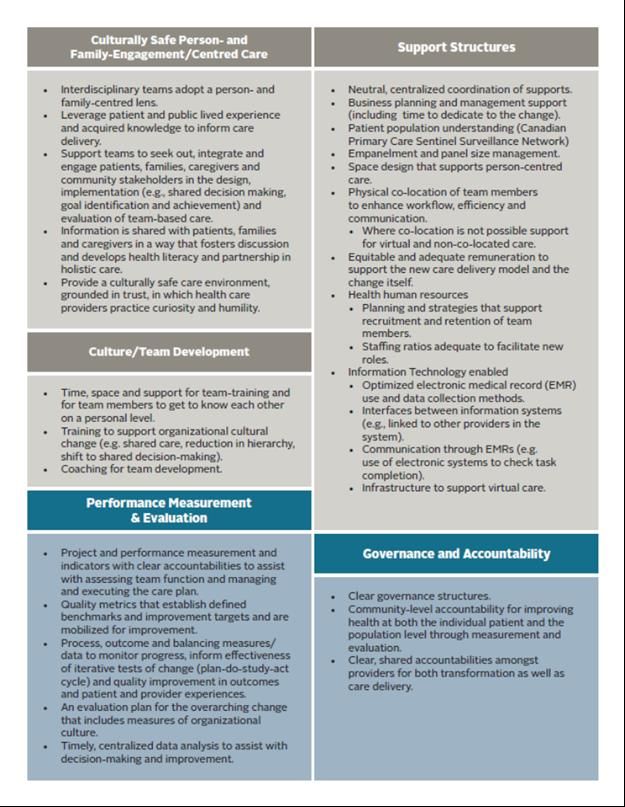
Team-Based Care Enablers
A number of team-based care enablers were established at the Provincial TBC Leveraging Partnerships
meeting that was held on April 30,th 2019 at the BC Patient Safety & Quality Council. These are intended
to be a first draft to start the dialogue in the newly formed GPSC TBC Working Group on the enablers
required to support a transition to a more robust team based care model.
Page 23
Version 1.0 – Last Updated July 2019Primary Care Network | Implementation Guide
Page 24
Version 1.0 – Last Updated July 2019Primary Care Network | Implementation Guide
Support for team-based care implementation
The Ministry is committed to:
1. Developing effective policy that provides clear direction on the TBC Strategy. The existing policy will
be updated after consultation with the GPSC TBC Working Group set out below.
2. Co-chairing the GPSC TBC Working Group, a joint collaborative between MOH and Doctors of BC,
and including interdisciplinary partners that collectively will provide leadership and strategic
direction to support and enable high-functioning TBC. The GPSC TBC Working Group is tasked to
define and support an interdisciplinary TBC approach and will include membership from supportive
organizations in order to deliver this mandate. A number of TBC supports already exist which can be
leveraged to support TBC implementation. The GPSC TBC WG will work to ensure the strategic use
of available resources that meet various learning styles and support the diverse needs of practice
teams across BC. These include tools developed by the GPSC’s Practice Support Program (PSP),
Divisions of Family Practice, the UBC Innovation Support Unit (UBC-ISU), the BC Patient Safety &
Quality Council (BCPSQC), UBC Health, and HAs.
3. Providing TBC support to:
PCN Wave 1 communities
Accelerate and sustain the integration of supports into the planning and implementation
process for PCN Waves 2 and beyond
Primary care physicians and nurse practitioners, to support them with integrating other care
providers into practices
Special attention will be given to the PMHs and the PCNs, as they are the mechanism by which
primary care will be transformed, as PCNs are spread across the Province. However, the MOH
recognizes that health care is a spectrum and the foundational components and supports required
for team-based care will need to be accessed broadly including in Specialized Community Services
Programs.
Page 25
Version 1.0 – Last Updated July 2019Primary Care Network | Implementation Guide
TBC Framework
The TBC Framework was developed by the MOH in an effort to clarify governance and scope of the TBC
work. It is anticipated that the MOH will modify this once the work becomes more clearly defined.
Team-based care priority implementation supports
Starting with the Wave 1 PCNs, all communities are encouraged to take advantage of the following
currently available supports:
1. TBC Mapping
UBC-ISU has been established at the University of British Columbia through the Department of Family
Practice to connect, engage, and work with groups who are actively involved in innovation in
community-situated, team-based care in BC.
What is the ISU Team Mapping Method?
UBC-ISU has created the Team Mapping Method to help team explore how best they could be
structured to deliver TBC. This highly interactive process has three steps:
a. Preparation: UBC-ISU work with PCN Wave 1 sites to understand key characteristics of their
community and project(s). This includes: PCN TBC goals, expected patient population,
available provider roles, existing community resources, and options to include (e.g.
location/space). UBC-ISU takes this information to plan the mapping sessions, including a set
of simulated patient cases (aka. personas). They leverage data on expected patient
population where available to help shape the planning activities.
b. Team Mapping Sessions: Building on the preparatory work, the mapping sessions are
structured as a series of facilitated sessions in PCN communities with stakeholders to
explore team structure. UBC-ISU facilitators engage with a multidisciplinary group to map
Page 26
Version 1.0 – Last Updated July 2019Primary Care Network | Implementation Guide
out care teams and circles of care options for a range of personas. These highly interactive
sessions help providers understand how best to work together. The sessions help build a
sense of cohesion and consensus, as providers explore and discuss options in the context of
TBC.
c. Recommendation Report: After the mapping session, UBC-ISU provides a report with
recommendations to help decide on the team composition best suited to the PCN.
2. Practice Support Program – Small Group Learning Sessions and In-Practice Coaching
Through the GPSC, the PSP offers a seven-part series of in-person small group learning sessions for
family practices and teams, supported by practice coaching. Based on the Canadian Interprofessional
Health Collaborative’s Interprofessional Competency Framework, each 2.5 hour session supports
primary care teams in developing key competencies to build successful team-based care into practice.
Each interactive session in open to all doctors and members of the practice team and is facilitated and
supported by follow-up practice coaching tailored to meet the needs of the team.
The seven-part series covers the following competencies:
Foundations: introducing TBC competencies, role clarification and medico-legal liability
Patient-Centred Care: developing a team that enhances quality patient care
Interprofessional Communication: understanding individual styles and building effective
interpersonal communication
Team Functioning: developing strategies and mechanisms to work together
Interprofessional Conflict Management: understanding and resolving interpersonal conflict
Collaborative Leadership: understanding the characteristics and benefits of collaborative
leadership
TBC Practice Approach: integrating content to support the development of a TBC approach for a
practice team
Each inclusive and interactive session is certified by the College of Family Physicians for up to 48
Mainpro+ credits and compensation is provided for action planning efforts.
3. Online Modules
UBC Health has developed online modules to support a shared vision of TBC. The TBC on the Run Online
Module Series will form part of the TBC supports.
These modules follow the National Inter-professional Competency Framework (www.cihc.ca) and
provide an integrated approach to describing the competencies required for effective collaboration in
healthcare. The TBC on the Run Module Series includes one module for each competency domain. The
six competency domains highlight the knowledge, skills, attitudes and values that shape the judgments
essential for collaborative practice.
Foundations of Team-Based Care: A foundational module that provides an overview of concepts
and principles related to TBC and collaborative practice. The module provides a foundation for
further learning in the area of collaborative practice. Subsequent modules in the series focus on
one of the competency domains in the National Inter-professional Competency Framework
Page 27
Version 1.0 – Last Updated July 2019Primary Care Network | Implementation Guide
Inter-professional Communication: Addresses this foundational competency for collaborative
practice and patient-centred care
Patient-Centred Care: Patient / Community / Family-Centred Care which demonstrates how
patient-centred care is more effective when delivered by an interdisciplinary team and how
patients and families need to be integrated into the team to set and achieve their goals
Role clarification: Helps learners explore who to collaborate with, in what situations, when, in
what contexts, where, how, and why
Team functioning: Focuses on how different groups need to work together differently based on
who they work with, what their patient’s needs are, and where they work
Inter-professional conflict management: Stresses the unique characteristics of inter-
professional conflict and highlights how, when managed effectively, this conflict can enhance
shared decision-making and lead to better outcomes
Collaborative leadership: Provides tools and strategies to ensure each healthcare professional is
prepared to take on a leadership role when their skills and knowledge are paramount
Future Team-Based Care Supports
There is a recognition that further capacity must be built to address needs such as coaching, quality
improvement training, and access to resources in a consistent or centralized fashion. The GPSC TBC
Working Group is working with stakeholders to address needs for further TBC support and ensure
supports are available to all interdisciplinary team members. Support will be specific to community need
and focused on the provision of change management, quality improvement training, and knowledge
sharing within, and between, the practices.
It is critical to ensure that future TBC supports help to:
Align with needs of practitioners to support care to patients
Is available to all health care professionals on the team
Provide a central “hub” to share solutions and best practices
Build local capacity to facilitate the uptake and implementation of supports in primary care
practices
Evaluate learning and foster ongoing improvement in collaboration with the Primary and
Community Care Research Advisory Committee
Provide opportunities for provincial-level coordination of work to advance primary and
community care
Create and curate province-wide resource development that leverages shared learning to
minimize the duplication of efforts
Facilitate topic specific network “nodes” to support, align and advance specific areas of primary
care such as TBC, change management, and quality improvement
Support virtual and face‐to‐face collaboration and learning opportunities in the form of regular
interactive webinars, topic-specific workshops and an annual in‐person primary and community
care integration day
Advance communication and sharing through communication channels (web, newsletters, social
media)
Page 28
Version 1.0 – Last Updated July 2019You can also read


